Sweet Home (スウィートホーム, Kiyoshi Kurosawa, 1989)

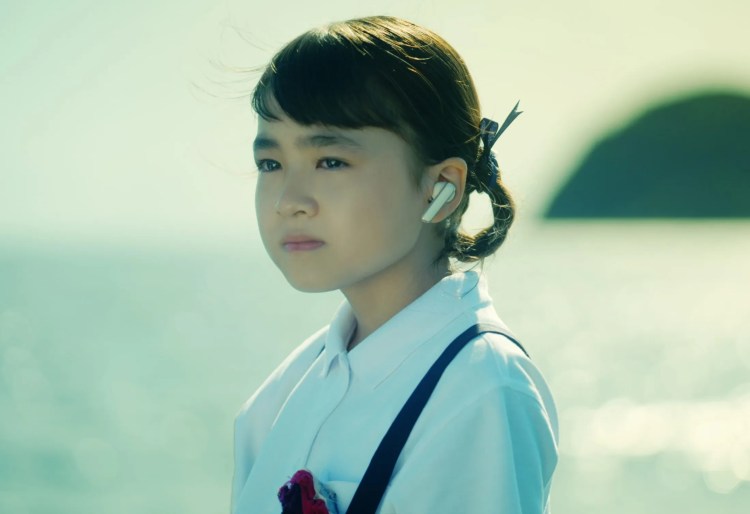
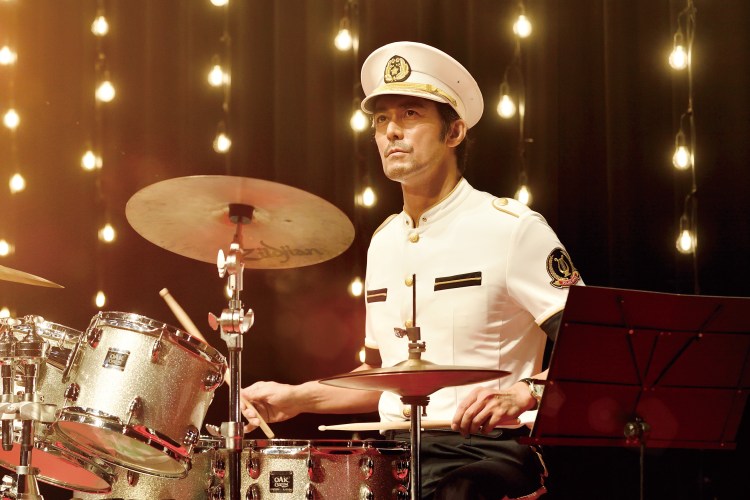
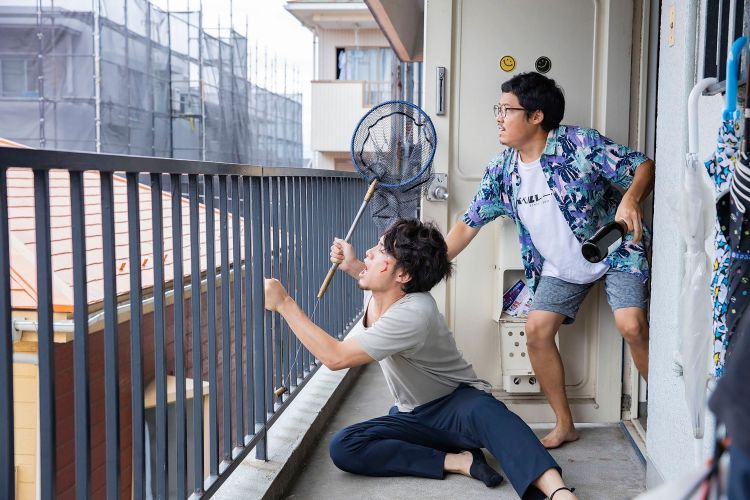
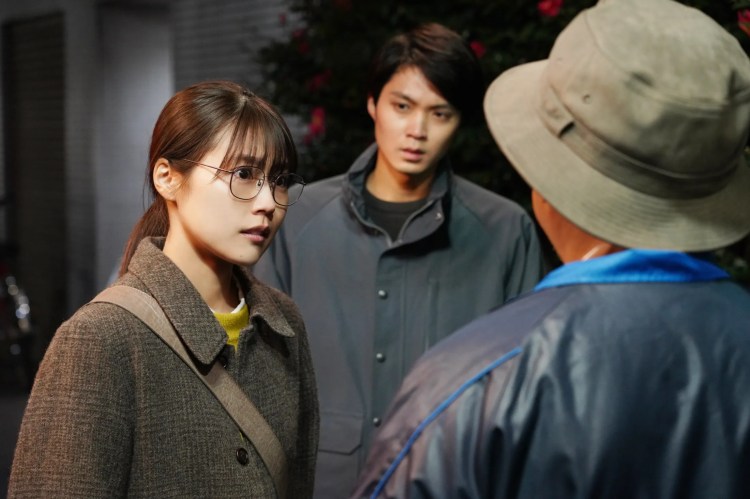
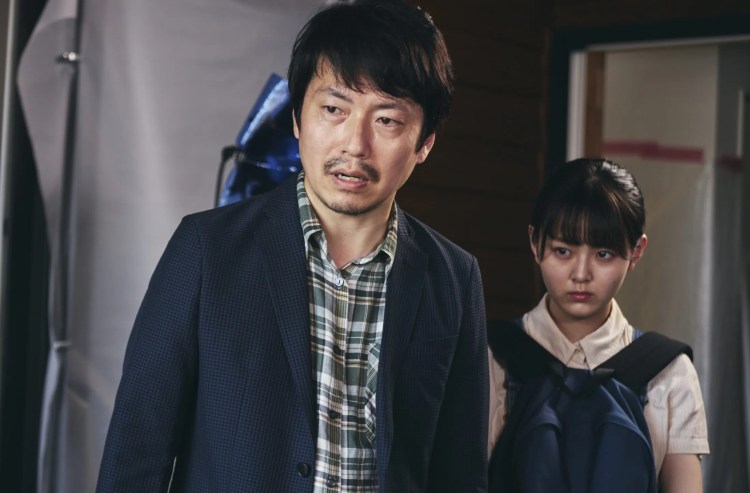
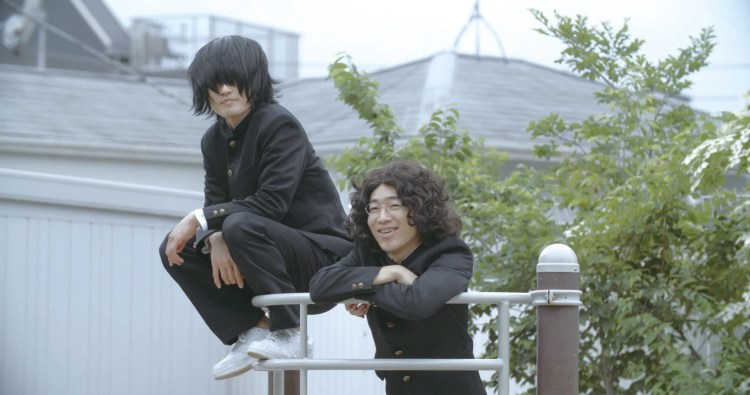
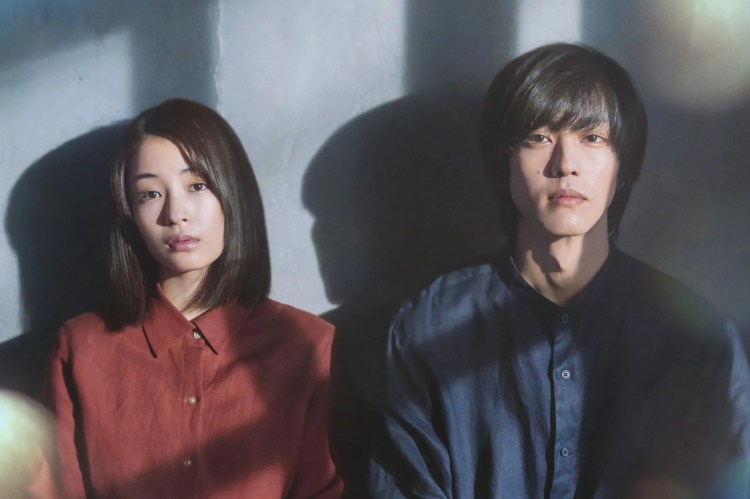
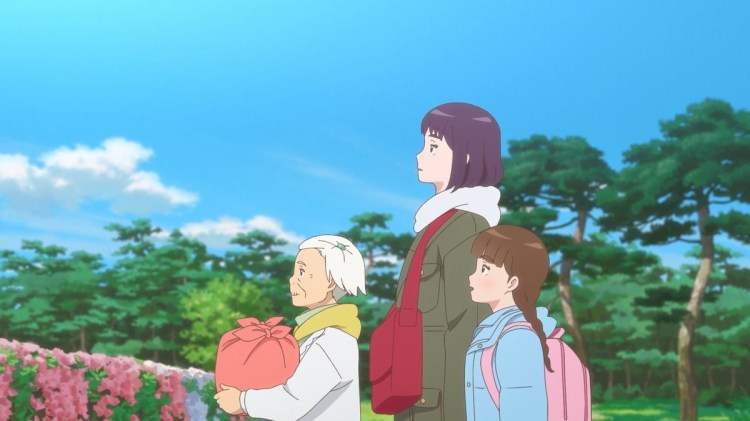
A documentary film crew hoping to discover long-hidden frescos by an artist with a tragic history find themselves on a quest to resurrect the traditional family in unlikely horror comedy Sweet Home (スウィートホーム). Written and directed by Kiyoshi Kurosawa, the film shares many of the hallmarks of his later career in his preoccupation with what lurks in the shadows, yet produced by Juzo Itami who also stars and apparently reshot some scenes himself it also mines a deep seam of ironic humour harking back to classic serials and contemporary kids adventures in the same way as Hiruko the Goblin among others would do just a few years later. 

This strain of irony is perceptible in the opening scenes in which producer Akiko (Nobuko Miyamoto) appears in an elegant ’40s-style outfit more in keeping with an archeological dig than a haunted house adventure, her later attire strongly recalling that seen in Indiana Jones. The gang are waiting by their military-style jeep seemingly in the middle of a sandstorm while chief producer Kazuo (Shingo Yamashiro) is busy at the municipal office trying to get permission to enter the Mamiya Mansion which has been shut up for the last 30 years since the death of legendary artist Ichiro Mamiya who is the subject of their documentary. A diffident man as his daughter jokes, Kazuo finds it difficult to make headway until a slightly more cynical employee takes over the negotiations and hands over the key with the rationale that they’ll either find out the house isn’t haunted after all in which case they can turn it into a museum, or that they’ll get some tidy publicity out of the horrifying deaths of all concerned. 

A western-style gothic mansion, the house is itself as imposing as it is ominous even without swirling mists or hovering gloom. Once inside the crew find what they’re looking for, a beautiful fresco with the title “home sweet home” painted in a corner. All we’re told about Ichiro is that he died in the house, but when all is said and done he, like Kazuo, is not terribly important and it is not his death which has cursed the mansion but that of his wife. The sweet home the couple had dreamed of was coming to fruition with the long-awaited birth of a child whose life was to inspire frescos on the remaining walls only tragedy struck. As a toddler the child somehow climbed into the furnace and was burnt alive when his unknowing mother ignited it. She then went mad, kidnapping other children and apparently burning them so her child would not be lonely before eventually throwing herself in too.

Perhaps uncomfortably, Sweet Home leans in to the kind of maternal questioning common to the genre as it considers the formation of a new family in the awkward romance between the shy widower Kazuo who has brought his teenage daughter Emi (Nokko) along on the job, and capable producer Akiko who is repeatedly questioned about marriage, children, and the reasons she currently has neither of them. Keying in to the terror of the house, Emi reveals that as she grows older the memories of her birth mother begin to fade to the extent that she can barely make out her outline, envisioning her merely as an indistinct light. She is prepared to accept Akiko as second mother, offering her the dress which her own mother used to wear only for Akiko to diffidently refuse on the grounds that the dress should be worn by Emi as her mother would have wanted perhaps hinting at the way Emi often treats her father as a clueless child in need of mothering himself. 

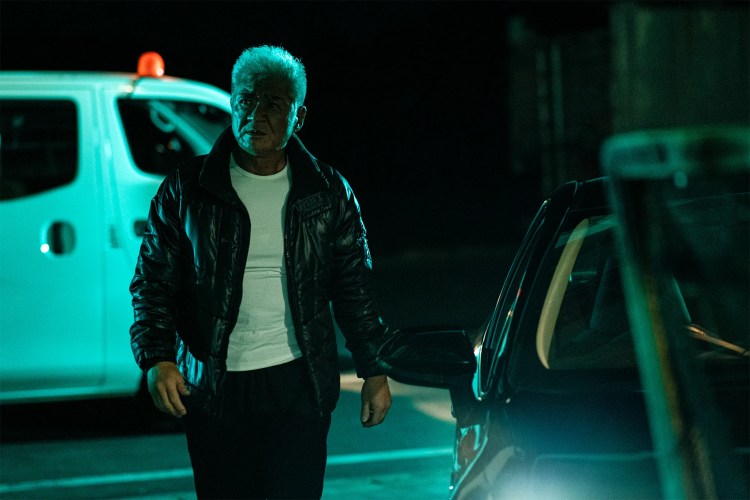
Nevertheless, it’s the dress of maternity that Akiko must finally put on in order to claim the maternal space in venturing back into the haunted house in order to save Emi from becoming another playmate for Mrs Mamiya’s child. Rather than Kazuo, who proves rather ineffectual, she is guided by a weird old man, Yamamura (Juzo Itami), from the petrol station who apparently knows all about fighting ghosts but bluntly tells her she has no chance of success because she is not a mother herself and cannot understand the pain of a mother who has lost a child nor the magnetic pull between a childless mother and motherless child. In order to defeat the vengeful spirit, Akiko must fully embrace the role of the mother, easing the spirit’s pain with maternal compassion in returning to her what was lost. Her child restored to her, the spirit takes on the appearance of the Holy Mother ascending to Heaven bathed in golden light lifting the shadowy gloom that cursed the house. 

Even so there is something insidious in the fact that as Yamamura says if you attempt to fight shadow with light all you get is more of the same, the crew trapped in the house with no means of defence against the encroaching darkness. This unknown, shadowy sense of threat, of being swallowed by darkness, is a key harbinger of a Kurosawa’s signature style as well as a clear evocation of the gothic dread focused on the house with the ironic failure of the “sweet home” dream which is in essence what Akiko, Kazuo, and an Emi are chasing as they try to escape the haunted mansion. Ironically enough, Sweet Home has become best remembered for fathering a video game which eventually led to the Resident Evil series while Kurosawa himself has all but rejected the film claiming Itami’s later interventions undercut his directorial vision. Featuring effects work by Dick Smith, the horror is visceral and disturbing at one point a man’s face melting, his skin slipping from his bones, while the score is cheerfully whimsical in keeping with the absurd lightness of tone that recalls classic teen adventures before heading into the fable-like conclusion in which Akiko must wrest her surrogate child from a vengeful spirit through maternal exchange. Having served its purpose the mansion implodes, freeing not only the spirits trapped inside but the new family now freed of the weight of traditional mores to embrace their new connection founded on love and empathy rather than duty or convention.


Original trailer (no subtitles)

Imaginur (Nik Amir Mustapha, 2022)

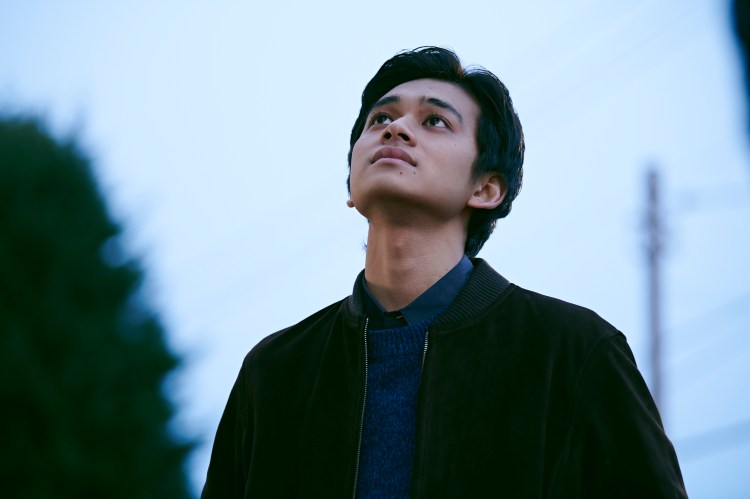
“It’s a pickle, isn’t it? Trying to remember what you don’t know you’ve forgotten.” So says the father of the hero of Nik Amir Mustapha’s touching sci-fi romance, Imaginur. It is however his son who’s trying to piece things back together while seemingly stuck in a maddening time loop chasing the ghost of lost love and searching for his “happy place”, the safest place he can imagine that will reconnect him with who he really is. 

Zahul seems to be haunted by fleeting glimpses of a woman whose face is hidden. After being involved in a traffic accident, he fetches up at the hospital but is there with his elderly father who is living with dementia. An elderly lady gives him a card for a special service called Hypnotica run by a mad scientist named Ramil who claims he can use hypnosis to cure Zahul’s panic attacks the most recent of which caused him to abandon his father in a supermarket after an awkward interaction with his ex. Ramil tells him that they’re simply going to revisist old memories with a new perspective to solve the cause of his anxiety but we can’t be sure when or if Zahul has actually left the state of hypnosis. Unable to remember or get a firm grasp on his reality he becomes panicked and short tempered, eventually paranoid and rambling about people trying to steal his brain.

Even so as someone puts it, his quest for Nur, a woman he meets at a burger stand, is also a quest for light and the path back towards himself in reclaiming his past even if it comes with the pain of loss on waking up to the reality. “This is what becomes of our lives” the sympathetic elderly woman laments of Zahul’s father, only for Zahul to reply that there’s no point resisting, but resisting is in a sense what he’s been doing trying to push through to a more concrete reality unwilling to accept the first or even second iteration of a moment in time but looking for the essential truth of it. 

What his father tells him is that the answer is what we feel in out hearts, that there’s nothing so important as feeling except perhaps the memory of it. That is in a sense what Zahul is chasing, trying to reorient himself through emotional logic while simultaneously reluctant as if avoiding something he doesn’t know that he’s forgotten. Meanwhile, he becomes increasingly paranoid about the shadiness of Ramli’s operation which even he calls a “pseudoscience” wondering if he’s caught up in some kind of conspiracy while convinced they’re trying to steal his brain or at least mess with it to drive him out of his mind. 

Yet it all seems to come back to a choice he didn’t and didn’t make watching the mysterious woman head towards a station with a suitcase but getting hit by a car before reaching her. “Remember me” she plaintively asks in the shared space of his mindscape, perhaps a phantom of his imagination but also a real woman he didn’t know he’d forgotten who holds the key to everything he is. “You live inside your head a little too much” Nur tells him, and she’s absolutely right while ironically advising him to find his happy place little knowing that perhaps he has and they’re already in it. 

Oneiric and elliptical, the film’s fragmentary dream logic in which Zahul is forced to relive a series of moments from getting a parking ticket to being at the hospital eventually builds towards a moving moment of cohesion as Zahul manages to find himself again accepting both love and loss along with memory in all of its emotional intensity. Opening with a classic hypnotic spiral, there’s a kind of charm in Nik Amir Mustapha’s retro production design in the lo-fi hypnotism headsets Ramil alarmingly claims turn off part of the brain along with the softened colour palate that lends a note of nostalgia to what we assume to be the present day. In any case there is something genuinely touching in Zahul’s determination to reclaim himself through remembering lost love and discovering the eternal in transient moments of happiness.  


Imaginur screened as part of this year’s New York Asian Film Festival.

Teaser trailer (English subtitles)

Images: © 2022 Lumatic Films.

Next Sohee (다음 소희, July Jung, 2022) [Fantasia 2022]

“She just went quietly” an older woman running a cafe explains to a police officer against all advice attempting to investigate the suicide of a young woman in July Jung’s long-awaited A Girl at My Door followup, Next Sohee (다음 소희, Daeum Sohee). In the end, Sohee (Kim Si-eun) did indeed go quietly, cowed into submission by the apparent hopelessness of her life amid the grinding crushingness of contemporary capitalism while even the policewoman who shares her fiery sense of outrage comes to a similar conclusion on uncovering the endemic abuses of the modern society. 

Jung devotes the entire first half of the film to Sohee’s slow burn disintegration as a high schooler selected as an “extern” for a call centre business while dreaming of becoming a dancer. These exploitative work experience programs are technically part of Sohee’s high school education and dropping out of them incurs the possibility of not graduating along with being “red tagged” by the school in a lesson in banishment room tactics which sees the kids forced to perform menial tasks such as cleaning the toilets while wearing clothing that marks them out as a failure who has brought shame on their institution. A proud young woman, Sohee is thought of as mentally strong and academically earnest originally excited by the extern opportunity which the teacher sells to her as being a cut above, she being the first of their students to land a position at a “major” company which is also feather in his own cap. 

Later Yoojin (Bae Doona), the policewoman who briefly met Sohee at a dance class, asks the teacher why he didn’t bother to investigate what was really going on at the call centre but he only tries to shift the blame explaining that he needs to find good jobs for other kids to maintain the school’s rankings which means keeping on the good side of employers. As Sohee sat vacantly and cried having attempted to take her own life, he dismissed her concerns and told her to work harder. Each time Yoojin interviews an authority figure they tell her it’s not their fault, it’s the system, while blaming Sohee for having “attitude problems” and pointing out that she should have just quit if she wasn’t up to the job. 

But Sohee couldn’t quit in part because of the shaming culture that surrounded her in which she’s constantly reminded that her actions have negative consequences for others. Firstly she’s told that her subpar performance brings down their team’s rankings, then shunned by her colleagues because her top scores are pushing up the targets for everyone else. She doesn’t want to let her teacher down by quitting, and even on trying to explain to her parents after her first suicide attempt is simply told to work harder under the fallacy that if you obey all the rules and work hard you’ll be alright. The call centre is almost entirely staffed by externs, in the main teenage girls, who are made to listen to irate customers verbally abuse or sexually harass them while instructed that they must do whatever possible to stop them cancelling their accounts. The call that breaks Sohee comes from a sobbing father who wants to cancel because his child has died so he doesn’t need the service anymore but she still has to try and sell him a new TV package while giving him the run around on the contract cancellation. 

Because the externs have a high turnover, the company defers payment of their bonuses to discourage them from leaving while continuously docking their wages reminding them of the clauses in the contract they signed which state that remuneration is subject to change. Sohee was in fact forced to sign two different contracts so the company could get away with paying her below minimum wage which is a violation of what little labour law actually exists while as these are essentially children who’ve signed contracts they don’t understand because their teachers and parents told them to they have no idea of their rights but are gradually realising they’re being exploited and there’s nothing they can do about it. Sohee was thought of as the type to fight back, and she was, she did, but in the end she went quietly because what else could she have done. 

She went quietly from the dance class where Yoojin first encountered her too, but does not pass so quietly from her mind. Yoojin asks why it was that she danced given there’s no gain to be had by it, she was too old to become a K-pop star and there’s no money in dancing but for her there was perhaps freedom and a small act of rebellion in the use of her physical body for something other than labour. An inspector who calls, Yoojin shares Sohee’s “attitude problems” and refuses to let the case rest realising that the poor kids at the below average schools are being forced into employment that is almost entirely unregulated while the companies that exploit them paint themselves as the victim, pressuring employees and bereaved family members into signing documents denying any wrongdoing. Betrayed by the company, Sohee first refuses to sign but in the end she does so, quietly, and at the cost of her integrity. Yoojin too is eventually forced to sign a form and put her name to something she believes is not quite true. Sohee’s death was as she puts it a workplace accident, or perhaps a slow motion murder, and “nobody gives a damn” because she was just a teenager with a “bad attitude” who went quietly because no one would have listened to her anyway. 


Next Sohee screened as part of this year’s Fantasia International Film Festival.

International trailer (English subtitles)
Ribbon (Non, 2022)

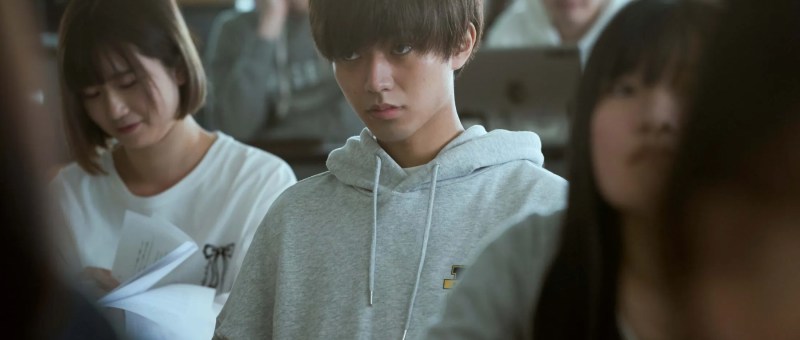
What is the place of art amid a global crisis? A young student finds herself wrestling with her sense of purpose uncertain if art is more necessary than ever before or a completely worthless waste of time that could be better used dealing with the situation on a more practical level. Written, directed, and edited by actress/singer Non, Ribbon is a response to pandemic anxiety but also a meta drama about an artist reclaiming a sense of confidence in their work along with their right to make it even if not widely understood. 

As the film opens, art student Itsuka (Non) is lugging a series of paintings and art equipment back to her university for the upcoming graduation exhibition, only the exhibition has just been cancelled because the university will be closing its doors the following day due to the COVID-19 pandemic. Itsuka has to cart all her stuff home again, but she’s luckier than some she witnesses who are left with no choice other than to destroy the precious works of art into which they’ve poured four years of their lives because they can’t store them and neither can the university. 

Watching her fellow students in tears as they crush, tear, and bludgeon their projects Itsuka can’t help but wonder what separates her painting from “trash”, seeing these precious pieces dismembered and left out for the binmen. The feeling is compounded when her mother (Misayo Haruki) pays her a visit, clad in a homemade hazmat suit, and throws the painting out justifying herself that as it had stuff stuck on it she thought it was just something she’d made messing around, more like a child’s collage than a serious piece of “art”. Unable to accept her mistake, Itsuka’s mother defensively doubles down leading to a climactic argument and the visits of other family members including her father (Daikichi Sugawara) who arrives with a social distancing pole and her sister (Karin Ono) who now dresses like an assassin each armed with passive aggressive peace offerings but ultimately seeking validations that her mother was right to dismiss her incomprehensible art. 

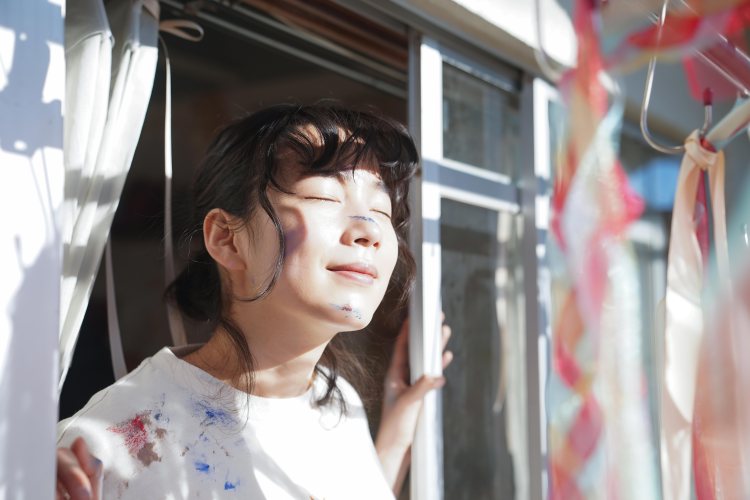
While her friend Hirai (Rio Yamashita) is later caught sneaking into uni to work on her much more conventional piece, a large canvas painting featuring a young girl in a forest with giraffes and leopards, Itsuka has been unable to find the desire to paint. The painting, a mixed media portrait of a young woman surrounded by ribbons, sits looking down on her taped to the wall but she can’t get away from the idea that perhaps her work really is “trash” and she’s just been wasting her time on something meaningless that other people don’t understand or care about. The feeling is compounded when she’s informed that the job offer she had from a design firm for after graduation has been rescinded due to COVID uncertainty. Only when she accidentally reconnects with a middle-school classmate (Daichi Watanabe) who had praised her work does she begin to rediscover its value not least in allowing her to vent her frustrations not only with the pandemic-era society and its isolating anxieties, but the conservative ideas embodied by her mother’s constant complaints about her “attitude” reminding her she’ll never get married if she carries on as she is.  

“This is what our frustration looks like” she explains incorporating her friend’s fractured painting to turn her formerly chaotic apartment into an installation covered in the ribbons which had previously swarmed around her. Opening with scenes of the deserted university peopled with broken statues, headless mannequins, and crude drawings on walls, Non captures a sense of the lonely despair of the early days of the pandemic allowing these now empty places to seem almost haunted by an eerie sense of absence. There is an unavoidable absurdity in the constant masking, obsession with social distance, and spraying anything and everything with sanitiser but also a care beneath the anxiety in the concern for others’ safety as well as one’s own. “Heavy” is how Itsuka frequently describes her situation not only the physical weight of her work but its spiritual burden along with her despair and anxiety for her uncertain future, but learning to bear it allows her to rediscover a purpose and value in art not despite but because of the times in which she lives. Quirky and heartwarming, Non’s accomplished directorial debut is not only a snapshot of ordinary life in a pandemic, but a meta tale of a young woman reclaiming her right to create and vent her frustrations towards a sometimes restrictive society. 


Ribbon screened as part of this year’s New York Asian Film Festival.

Original trailer (English subtitles)

Images: ©︎”Ribbon” Film Partners

Mercenaries from Hong Kong (獵魔者, Wong Jing, 1982) [Fantasia 2022]

A former mercenary’s bid for revenge having failed in his responsibilities soon goes awry in Wong Jing’s third directorial feature Mercenaries from Hong Kong (獵魔者). As is constantly pointed out to the hero, perhaps he’s not so different from his target with his very selective brand of justice and morality. After all maybe the difference between medicine smuggler and drug trafficker is largely semantic and taking revenge after the fact hardly makes up for the failure to protect the innocent from a world you’ve helped create. 

Li Lok (Ti Lung) is a pretty big figure on the underworld scene and as the ultra macho title sequence reveals a former mercenary who served in Vietnam. In the daring opening scene he sneaks into a gang hideout disguised as a telephone repairman and takes out a gangster in the middle of drugging a young woman whom he and his friend intend to rape and then murder. But Li Lok isn’t here to save the girl and in fact he doesn’t. He’s there because the gangster has done this kind of thing before and the previous victim was his 15-year-old niece whose care he had been entrusted with by his late brother before he passed away. Later one of his comrades will make a similar request of him and he will fail again apparently taking little stock of his responsibilities. 

Nevertheless, having knocked off the gangster annoys local big boss Shen who intends to have Li Lok eliminated but Hong Kong’s richest woman Ho Ying (Candice Yu On-On) convinces him not to because she has a job for Lok assassinating a top Thai assassin who killed her father and is now apparently blackmailing her with a cassette tape full of corporate secrets. All Lok needs to do is round up a posse and head to Cambodia where “the devil” Naiman (Ching Miao) is hiding out, kidnap him, and retrieve the tape to receive a massive life-changing payout while permanently getting Shen off his back. It all sounds like a pretty good deal to Lok along with the former buddies he recruits to join him who are all trapped in desperate poverty one with a sick little girl who desperately needs a kidney transplant. 

This is a Wong Jing film and perhaps there’s no need to dig too deeply into it, but there is something in the power Ying wields over Lok and his team by virtue of her wealth and privilege that speaks to the city’s growing inequality though it’s also true that perhaps the guys have all fallen low through their mercenary choices and are now unable to get a foothold in the contemporary society without resorting to crime. Yet perversely, Ying leverages Lok’s chivalrous sense of honour as part of her plan playing damsel in distress rather than dangerous femme fatale while he assumes he’s on a righteous mission planning to turn Naiman over to the authorities rather than just killing him while little caring that his actions threaten to destabilise an already chaotic situation in Cambodia. 

When one of the sworn brothers of the gangster that Lok killed in revenge is killed coming after him even after the truce, Lok is irritated that he died unnecessarily as if it offends his sense of justice that this man was not protected better by Shen. Yet as Naiman keeps pointing out to him, he’s no saint and perhaps no different. He could have saved the girl in the gang hideout but chose not to, escaping by jumping out of a window onto a van waiting below and riding off on a motorcycle (which is admittedly impressive). He claims to hate drug dealers but profited off war and misery in smuggling medicines across the border from Thailand into Cambodia even if he could tell himself he was running a kind of humanitarian service. Meanwhile Ying who is obviously involved in something shady if she’s dealing with people like Lok and his team, paying for their weapons and equipment which presumably includes the series of identical outfits the guys sport like some violent middle-aged boy band, wins an Outstanding Woman award and ironically pledges to use some of her wealth to fund community-based anti-drug programs. 

Li Lok may in a sense emerge victorious but also exactly where he started in failing to protect an innocent girl from a mercenary world. The Cantonese title might more literally be something like Devil Hunters, but Lok and his guys are certainly a mercenary bunch desperate to escape their poverty and hopelessness even if they may stand for a kind of justice and honour in brotherhood. This being a Wong Jing film there is plenty of crass humour including some that is very of its time along with gratuitous sex and female nudity but also a series of incredibly impressive action scenes and a bleaker than bleak conclusion which may suggest that the Loks of the world will be unable to protect the next generation from the violence they themselves have unleashed. 


Mercenaries from Hong Kong screened as part of this year’s Fantasia International Film Festival.

Original trailer (English subtitles)

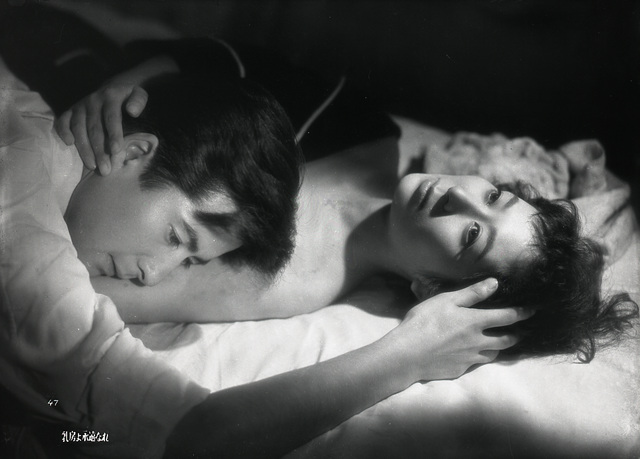
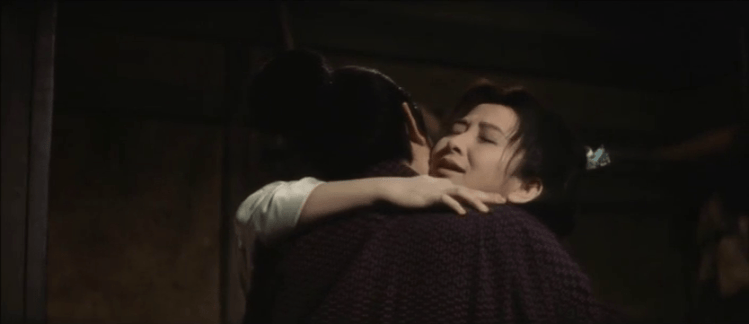
Stepbrothers (異母兄弟, Miyoji Ieki, 1957)

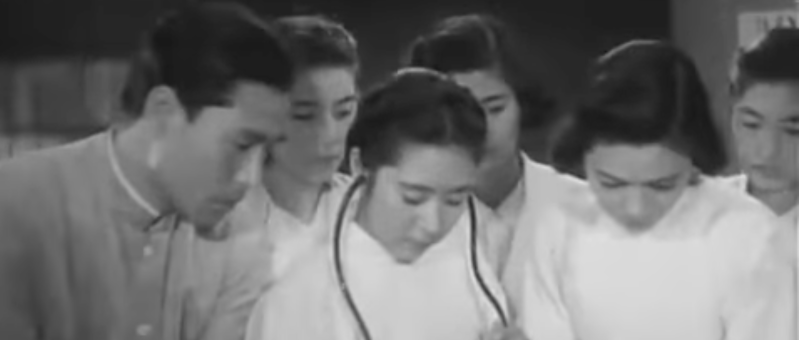
The destructive effects of militarist folly are borne out in the fortunes of one bifurcated family in Miyoji Ieki’s impassioned social drama, Stepbrothers (異母兄弟, Ibou Kyodai). Ieki had joined Shochiku in 1940 and served as an assistant director to Minoru Shibuya making his directorial debut in 1944 taking over a project Shibuya had begun before being drafted, Torrent. After the war he became the head of the studio’s union and was subsequently dismissed during the Red Purge of 1950. Adapted from the novel by Torahiko Tamiya, Stepbrothers was produced by Dokuritsu Eiga which became a kind of refuge for left-leaning directors and makes a direct attack on lingering feudalism and the militarist past. 

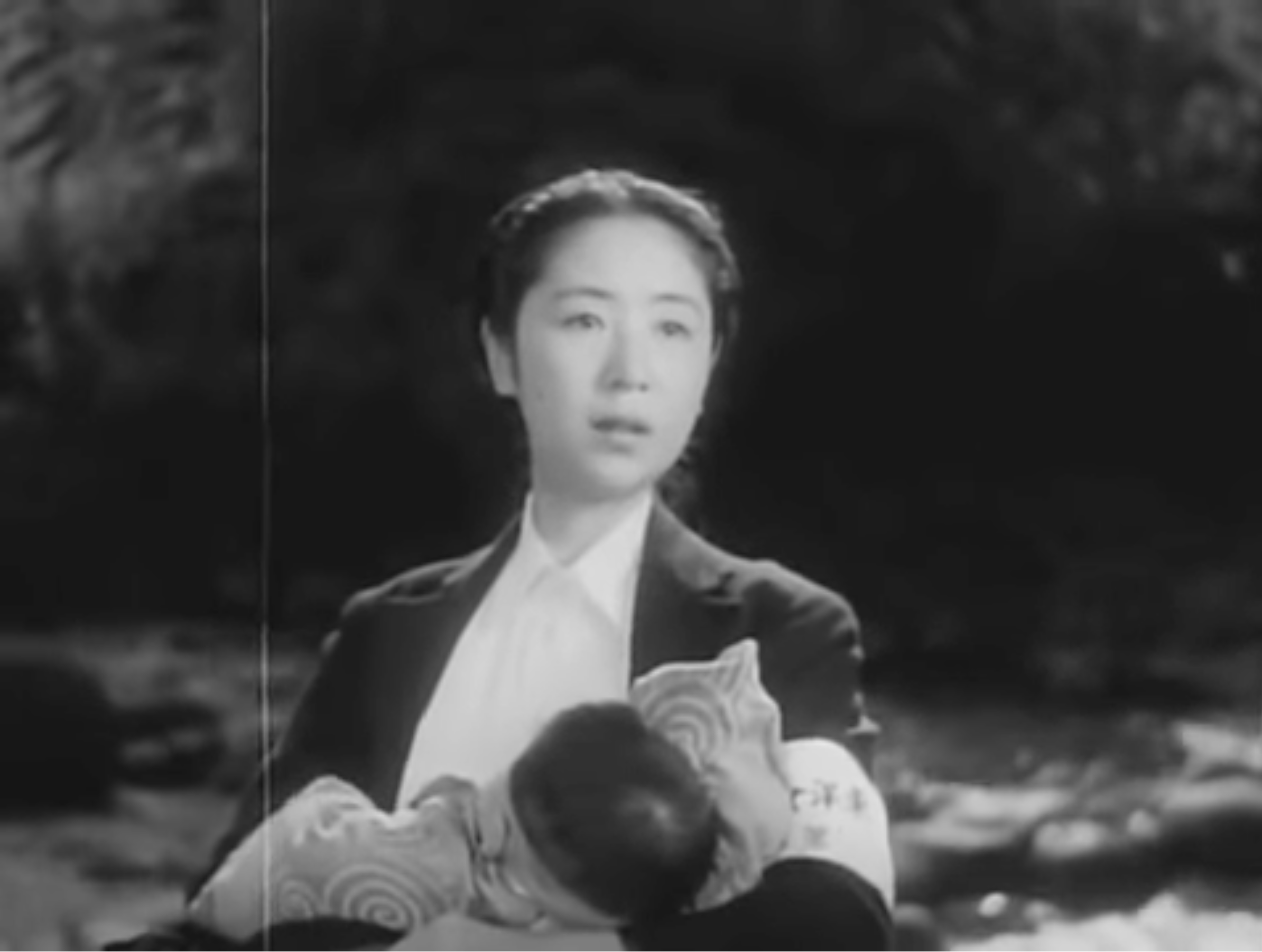
Spanning 25 years, the film opens in 1921 with pompous military officer Hantaro Kido (Rentaro Mikuni) riding his horse before immediately slapping his stableboy on dismounting apparently dissatisfied with his service in insisting there is something wrong with one of the horse’s shoes. This fear is later confirmed by the new maid he has just hied, Rie (Kinuyo Tanaka), who is the daughter of a recently deceased carriage driver. She has been hired because Hantaro’s wife is chronically ill and bedridden, no longer able to care for their two brattish sons Ichiro and Gojiro who imitate their father by pointing swords and guns at people while ordering them around. After asking Rie to check on the horse and observing her treating it with tenderness before pointing out the problem with its shoe unprompted, Hantaro loses control of himself, pushes her into the straw, and rapes her. With nowhere to turn Rie goes to the family friend who got her the job who discourages her from having an abortion and tries to make Hantaro take responsibility but he refuses to compensate her finally scoffing that there’s no way he would marry the mere daughter of a carriage driver. 

Challenged by his superior officer, however, he pledges to do just that in order to save the honour of the Kido family along with that of the regiment but is soon sent off to a less prestigious provincial position. In appointing Rie as a maid, Hantaro had expounded at length on his family lineage as guardians of a particular style of kendo, but there’s no denying that he has acted dishonourably while Rie is forced to marry the man who raped her and is then rendered little more than an unpaid servant in his home who is essentially raped every night for the remainder of her married life. After giving birth to the baby, a son Yoshitoshi, she has another some years later, Tomohide, but she and her children are not regarded as members of the family and are forced to sleep in the kitchen. Ichiro and Gojiro still call her Rie rather than mother and order her around like a servant while Hantaro simultaneously rejects her sons and insists they follow the family tradition by becoming fine soldiers. 

A poignant scene sees Gojiro looking on at Rie as Yoshitoshi and Tomohide cheerfully play cards with some of the servants one New Year implying he may in fact miss maternal closeness but is unable to express it because of his father’s code of manliness later tearfully asking his brother for memories of their mother when they are both grown men. The difference between the boys can seen in their names, those of Hantaro’s sons from his first marriage meaning something like “first son boss” and “strong second son” while those of Rie’s sons are much warmer, Yoshitoshi using the characters for good and benefit, and Tomohide’s wisdom and excellence. Ichiro and Gojiro continue to mercilessly bully Yoshitoshi and Tomohide, insulting them as sons of mistresses a term which Yoshitoshi does not fully understand but instantly associates with the way his family has been treated as other and inferior, confined to the parts of the house otherwise occupied by servants. When he says he’s no desire to become a soldier, Hantaro locks him in the cupboard under the stairs and seemingly never talks to him again. 

Rie tells him that he will understand her actions when he’s older but he continues to blame her for them, angry that could not reject Hantaro’s authority to protect him nor would she escape the situation by simply leaving it. His criticism is unfair and ignores her continued suffering given the reality that as a young woman with no family or fortune she is left with no means of supporting herself that would make it possible to escape. But he may also have a point in that she is also the product of a feudal and patriarchal society and is spiritually unable to refuse Hantaro’s corrupt authority over her even as he dismisses her as a carriage driver’s daughter and her sons as unworthy by his name. She suffers and placates him to protect them but Yoshitoshi sees only her complicity. 

Yet Hantaro’s pompous austerity which is also the code of the age later destroys him. He prattles on about his supposed military prowess while telling one of his sons that soldiers should be thought of as pawns to be sacrificed for the emperor only to lose both of them to the inevitable defeat. Portraits of his two sons sit proudly under a map of the Japanese empire now shorn of the flags he’d pinned to mark their victories, while Rie’s are hidden away on the shelf of a cupboard itself one of the few pieces of furniture they had not sold to survive in the difficult post-war period. Hantaro had rejected Tomohide (Katsuo Nakamura) who craved his approval because he was in poor physical health and therefore unable to fulfil his vision of manliness but it is he who alone survives having rejected his name after his father beat him for singing and sent Haru (Hizuru Takachiho), the cheerful servant girl he loved, away to be sold off to a brothel by her impoverished family. 

When Tomohide returns home after some years of wandering to a mother who thought him dead only for Hantaro to reject him, his only living son, Rie finally finds the strength to reject his authority. This time she refuses to leave, insisting that the house is rightfully Tomohide’s and he should not surrender it to a Hantaro who is now beaten and defeated, a pitiful old man who can barely walk and is perhaps consumed by the humiliation of his life’s folly. It’s his hypocrisy and moral cowardice along with the cold austerity of mindless militarism that have ruined all their lives, yet in Tomohide who truly crossed the barriers of class in continuing to help Haru with her chores there is a hope for a new future as his mother and he fill the bath together and assume ownership in equality of the home which has always been their own. 


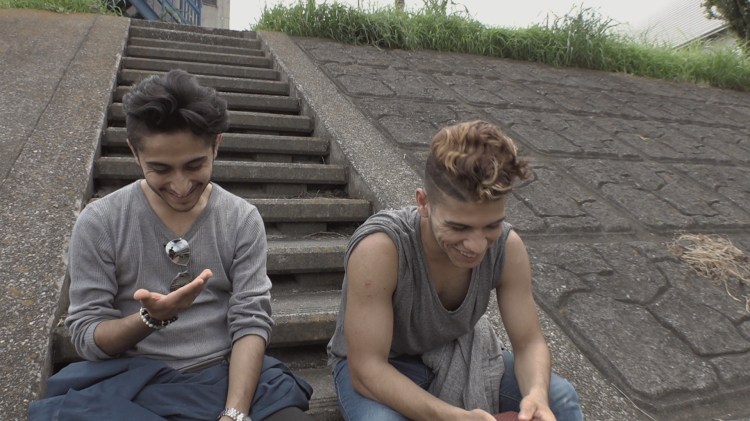
Mama’s Affair (阿媽有咗第二個, Kearen Pang, 2022)

A middle-aged woman finds her desire to take back her life after the failure of her marriage frustrated by her teenage son’s resentment and the lingering patriarchal social codes of the contemporary society in Kearen Pang’s familial dramedy Mama’s Affair (阿媽有咗第二個). The “affair” of the title is an ironic take on her new maternal relationship with a young man she takes under her wing framing it as in a way cheating on her son which is clearly the way he feels about it, while it’s clear that some still view her desire to find fulfilment outside of her role as a wife and mother as a betrayal of her family. 

Before her son was born, Mei-fung (Teresa Mo Shun-kwan) was a top talent manager at a record label but gave up her job at her husband’s insistence after suffering a miscarriage. With her son, Jonathan (Jer Lau of boyband Mirror), about to graduate high school and hoping to get into Cambridge University, she decides to re-enter the world of work but soon discovers that those she once helped in their careers are not necessarily keen to repay the favour. An old associate more or less laughs her out of the room suggesting she’s simply too old for the music business and recommends she join another old friend at his music company which turns out to be a school for small children. She takes the job anyway and quickly bonds with the two younger employees who introduce her to Fang Ching (Keung To of boyband Mirror), a young man with a prodigious talent for song and dance that has Mei-fung thinking of getting back into the management game.  

Though Jonathan had mostly reacted with indifference to his mother’s decision to return to work, claiming that he’d long wanted more independence anyway, he can’t seem to let go of a sense of resentment towards Ching which is compounded by his confusion surrounding the status of his parents’ marriage which it seems had long gone cold. His father Yan has moved out and though Jonathan doesn’t know it is having a baby with an old friend of his mother’s all of which informs his feelings of displacement as if he’s been pushed out of the family circle fearing that Mei-fung has gone out and got herself a new son who admittedly seems to appreciate her more. Displaced from his own family by tragic circumstances, Ching does indeed value the small things Jonathan has begin to resent in teenage angst yet is also unexpectedly sensitive and mindful of the ways in which his relationship with Mei-fung and presence in the household may be affecting Jonathan who is still struggling to come to terms with his parents’ decision to end their marriage without even really telling him. 

In an another ironic note it’s Mei-fung’s maternity which is positioned as her key strength as a manager, quietly lending support and encouragement that allows Ching to reach his full potential. On Ching’s arrival to the studio a mother had come in to the school with her young son who was bawling his eyes out because he wanted to join a dance class but the mother wouldn’t let him because she said he was too fat and would only embarrass himself only to be proved wrong when Ching invites him to try out on the dance floor demonstrating both the damage that can be done by a judgmental parent and the positive influence of an actively supportive environment. While Mei-fung keeps telling Jonathan he needs to learn to look after himself, she patiently nurtures Ching and eventually encourages to him sort out his complicated feelings towards his family while helping him achieve his dreams as an artist. 

In some ways, Mei-fung never really transcends the role of mother or escapes the tendency to define her role in relation to the two boys while somewhat resentful of all she was forced to give up because of the patriarchal, authoritarian mindset of the husband who later left her for a younger woman. Jonathan and Ching eventually sort things out through a good old fashioned fist fight generating a kind of brotherhood that leaves each of them equally displaced but also finding firmer footing more secure in their roles and relationships. “No one can handle everything alone” Ching wisely advises, as each of the trio develops a kind of independence founded on mutual solidarity, Mei-fung reclaiming her right to an individual life while giving each of the boys the courage to go off and pursue their destinies through the superpower of maternal love. 


Mama’s Affair is in UK cinemas from 19th August courtesy of CineAsia.

UK trailer (English subtitles)

Stellar: A Magical Ride (스텔라, Kwon Soo-kyung, 2022) [Fantasia 2022]

A cynical man learns to forgive the father he resented for abandoning him while on a road trip in his banged up ‘80s Hyundai Stellar in Kwon Soo-kyung’s quirky dramedy, Stellar: A Magical Ride (스텔라, Stellar). Not everyone is suited to being a parent, as he’s fond of saying not incorrectly, but even if his father’s love was imperfect it doesn’t mean it wasn’t there and just because he feels his own father failed him it doesn’t mean he’d do the same to his own child.

Young-bae (Son Ho-jun) makes a living repossessing luxury cars on behalf of shady gangsters. After unwisely entrusting a Lamborghini to his childhood friend Dong-sik (Lee Kyu-hyung) who now runs a logistics company, Young-bae’s life is derailed when he goes awol leaving him to deal with his violent boss. Meanwhile, he’s just found out his wife might be pregnant after stumbling on a pregnancy test in their bathroom and his sister has been in contact to let him know their estranged father has passed away. After the gangsters track him down to the funeral, he manages to make a daring escape by taking off in his father’s old Hyundai Stellar which is not exactly the most ideal getaway vehicle seeing as Young-bae struggles to get it over 30 and the driver’s side door doesn’t open anymore. 

In a way there might be a reason for that, Young-bae both driver and passenger as he shifts over into his father’s old seat at the wheel. For some reason he finds himself talking to the car without really understanding why while the car itself always seems to come to his rescue just at the right moment as a magical twinkling plays in the background. It’s difficult to avoid the interpretation that the car is possessed by his father’s spirit, though it may equally be the manifestations of Young-bae’s childhood memories as he remembers a happier time in his life when he spent time with his father in the car which he described as his family’s “star”. 

“Becoming a father is easy, but living as one is hard” Dong-sik laments having been somewhat humiliated in front of his own kids little knowing that Young-bae is facing just this dilemma as he tries to come to terms with impending fatherhood. As an older man looking back on traumatic childhood memories, he gains a new perspective if perhaps still struggling to forgive his father for abandoning him only later coming to the realisation that he may have shown his love in a different way in thinking that the best thing for his family might be to remove himself from it. 

The root cause of all these problems is however debt. Young-bae resents his father for getting into trouble with loansharks after a traffic accident disrupted his taxi business, while the reason Dong-sik double-crossed him with the car is because he is deeply in debt himself. Even a farmer’s wife he meets explains that they’re alive because they can’t die, now in masses of debt following several poor harvests and the onset of her husband’s lumbago. Young-bae technically makes a living off debt given that the reason most of these cars are being repossessed is that their owners have fallen into financial difficulty. One such man Young-bae targets is currently living in the car when he tries to repossess it having lost his life savings and everything he owned trying to pay for medical treatment for his wife. Young-bae unsympathetically tells him that he hates irresponsible and incompetent fathers projecting memories of his own onto him while unable to show any kind of compassion or mercy for the difficulties he is facing. As the film opens, he helps save a man who was planning to take his own life but only so he can get his signature on the repossession papers before he passes away. 

Literally having to take his father’s perspective by sitting in the driving seat of his car while interrupted by nostalgic songs from the tape deck which seems to have a mind of its own, Young-bae comes to an acceptance of paternity while making peace with his father’s memory. A quirky road trip movie with a series of strange characters who all have important lessons for Young-bae about the nature of friendship and family, Stellar is certainly a magical ride through frustrated grief and paternal anxiety finally arriving at a place of warmth and safety free of past trauma and resentment in the driving seat of a beaten up family car. 


Stellar: A Magical Ride screened as part of this year’s Fantasia International Film Festival.

International trailer (English subtitles)

Return to Dust (隐入尘烟, Li Ruijun, 2022)

“You were used by others for most of your life, haven’t you had enough?” a farmer asks on parting with his faithful donkey as it hesitates to leave him, but might as well be asking the question of himself. Set in 2010, Li Ruijun’s peaceful rural drama Return to Dust (隐入尘烟, yǐn rù chén yān) paints a bleak picture of life on the margins of the modern China in which the old ways are literally being eroded while the promised modernity has yet to materialise. 

Middle-aged farmer Fourth Brother Iron (Wu Renlin) is a quiet and soulful man often exploited by his family members being the youngest of four brothers the elder two along with the parents having already passed away. Essentially wanting to be rid of him, his brother arranges a marriage to a local woman, Guiying (Hai Qing), whose family are also keen to offload her as she has a disability which has left her incontinent and unable to bear children. Neither she nor Iron say very much of anything but passively accept the marriage moving in together in one of the abandoned houses in their village. 

As villager had put it, Guiying had lived a horrible life shut up in a shed, beaten, and abused by her brother all her life. She thought Iron would make a good husband after seeing him comfort his donkey after his brother had beaten it and he does indeed begin taking good care of her even while it is clear the other villagers do not always accept Guiying, calling her a “wretched thing” or “useless idler” when she wets herself or is seen riding on Iron’s donkey cart. Slowly bonding through common purpose and mutual compassion, this marriage which could have meant only more misery for each of them becomes one of the few sources of joy in their lives. On moving properties, Iron cheerfully puts up the double happiness wedding character above their bed expressing the warmth which will fill the previously drafty home they will share together. 

But life is hard in rapidly depopulating rural China. Many of the houses in the village are vacant, abandoned by those who’ve either migrated to the city or other rural communities with better opportunities. The government has instituted a policy of countryside renewal in which it will offer generous compensation for demolition or renovation of traditional homes which of course brings many of those who had left back with the intention of claming the free money for demolishing their abandoned properties. But for a man like Iron the policy ironically backfires pushing him into a cycle of continual displacement taking shelter in one abandoned property after another forced to move on when the owners return and ask him to leave. Pained, he asks one to hold off just a few days so a newly hatched swallow nesting under the roof of his home will be strong enough to fly away but the man is unsympathetic, insisting that he has no time to spare and must return to the city as soon as possible. The bulldozer goes in seconds after Iron and Guiying have picked up their cart. 

Patiently baking mud bricks, the couple resolve to build their own home and farm their own land. So long as you do not betray the soil the soil will not betray you, Iron soulfully suggests yet his earthy rationalisation when Guiying sadly holds up a failed sapling that it will be fertiliser for the others sounds like a description of his own life. His status in the village is unbalanced when it turns out he has a rare blood type and is more or less forced to offer blood transfusions to a thuggish local businessman who owes the villagers both rent on the land he’s leased from them and wages which he’s not paying on the grounds that he’s ill and needs to sell the grain before he can settle. Bled dry, Iron receives small gifts from the man’s son such as a coat for Guiying he couldn’t afford to buy and accepts on the condition that it’s a loan, and a fancy dinner neither of them seem very comfortable with eating. 

Because of his new connections, his brother, having not invited him to his son’s wedding banquet, fetches up and tries to intimidate Iron into getting an apartment in the city he clearly intends his son and daughter-in-law to live in. Bemused on looking out on the flat’s view of endless fields, Iron asks what he’s supposed to do with his chickens, the pigs, and the donkey, but the civil servants who are filming him presumably for propaganda purposes to show how people’s lives have been changed through the scheme, just laugh while his brother and sister-in-law mutter about the kitchen considering the suitability for the new couple. Iron signs all his bills with a thumbprint implying that he probably cannot write and perhaps cannot read. As he later puts it, what’s a peasant to do without land? The new future cannot look the same for everyone, and to succeed it will have to do away with the idea that the urban is inherently superior to the rural. 

Continually displaced, Iron and Guiying accept their hardship with quiet dignity, stoically getting on with their lives while others only seek to exploit and misuse them. A brief scene of Iron setting up a box of lights to hatch chickens for Guiying to raise in place of the children they’ll never have adds a sense of wonder to their humble home while the compassion and kindness they show to the natural world would have perhaps repaid them if it had not been for the cruelties and contradictions of the modern China in which the rural has long been sacrificed in favour of increasingly consumerist cities. Iron pays his debts and prepares to move on though even in these vast plains it seems there is little space for him. 


Return to Dust screened as part of this year’s Edinburgh International Film Festival and will be released in UK & Ireland on 4th November courtesy of Modern Films.

International trailer (English subtitles)
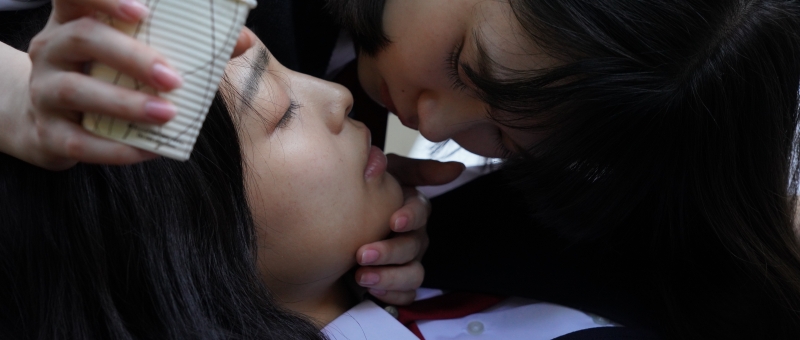
Intimate Stranger (親密な他人, Mayu Nakamura, 2022)

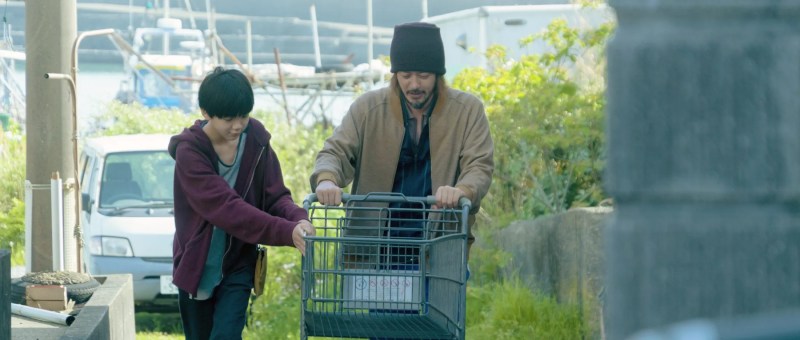
“This society pampers men too much, no matter their age” according to a middle-aged woman searching for her missing son, yet in many ways it’s the primacy of the mother and maternal neglect that drive Mayu Nakamura’s eerie psychological chiller, Intimate Stranger (親密な他人, Shinmitsuna Tanin). Perhaps in some ways, that’s what a mother and a son should become, of course close and loving yet each with their own lives unknown to one another but for Mrs Ishikawa those boundaries have perhaps become corrupt in her overwhelming need to embody the maternal ideal. 

Mrs Ishikawa (Asuka Kurosawa) lives alone and is searching for her grown-up son, Shinpei, who went missing a year ago. She has a job in shop selling baby clothes and accessories but is described by other staff members as a bit strange though they continue to invite her to afterwork gatherings knowing she won’t come. One day she gets a call from a young man, Yuji (Fuju Kamio), who says he has information about Shinpei but in reality is part of a gang running “ore ore” scams who are also looking for him because he previously worked with them. Yuji’s purpose in approaching Mrs Ishikawa is to get info out of her, but she’s a little bit ahead of him and manages to plant the seeds of a dark seduction. 

Seduced is what Yuji eventually is in a discomforting mix of the erotic and the maternal. Casting shades of Vertigo, Mrs Ishikawa persuades him to move into her apartment, sleep in Shinpei’s room, and wear his clothes keeping him a virtual prisoner while forcing him into the role of her surrogate son. As we later discover, Yuji was a teenage runaway seemingly abandoned by his mother and craves maternal affection but is ashamed of admitting and fearful of accepting it all of which would make him ideal prey for a woman like Mrs Ishikawa who at all rates seems to need a son to feel herself complete. 

At the shop where she works, Mrs Ishikawa transgressively sniffs and fondles clothes for newborn infants while at one point driven to distraction by a crying child temporarily separated from its mother to the point that she inappropriately picks it up. She appears to be totally consumed by the maternal image and to that extent or else because of some previous trauma becomes extremely hostile when confronted with her sexuality. Her horror on being picked up by a gigalo when expecting to meet a man with info about Shinpei might be understandable, but the glee on her face after slashing a man with a straight razor when he attempted to attack her is less so while Yuji’s eventual confusion about the nature of their connection highlights the discomforting intersection of the maternal and the erotic. 

We have to wonder if Shinpei simply decided to escape the grasp of an overbearing mother who could not bear to accept that her son was now a man, or if Yuji’s suspicions that he may have met a darker fate are more than mere reflections of his own fear of maternal connection. Yet like story of the bluebird of happiness that Shinpei was apparently fond of telling, perhaps each of them for a time found what they needed in the other only to lose it again on identifying the darkness that underlines their relationship. 

Listening to a report on the news, Mrs Ishikawa explains that “ore ore” scams only happen in Japan because nowhere else would a parent drop everything and run cash in hand when told a grownup son is in financial trouble which might in a sense be unfair save for the urgency, similar scams circulate via text and messaging apps in many countries. Yet the scam hints at this same level of disconnection, that the often elderly targets cannot tell that it is not their son or grandson’s voice on the phone nor realise that the information they’re being given does not make sense so estranged have families become. The coronavirus pandemic meanwhile only makes the scammers’ job easier given the loneliness of enforced isolation coupled with generalised masking which decreases the level of intimacy on both sides dehumanising the target while allowing the scammer to further conceal their identity. 

Mrs Ishikawa is in a sense wearing a permanent mask, consumed by the maternal ideal and unable to conceive of herself as anything outside of a mother. There is something unsettling and vampiric in her need as she at one point sucks blood from her finger and wields her razor with dangerous affection when offering Yuji the closest shave he’ll ever have but also a deep sadness that like the bluebird of happiness that which she most wants is always going to fly away from her one way or another. The uncanniness of the desaturated colour palate adds a further note of dread to the noirish tale of a young man seduced by Oedipal desire and drawn as much towards death as love.


Intimate Stranger screened as part of this year’s New York Asian Film Festival.

Original trailer (no subtitles)
Images: © Siglo/Omphalos Pictures