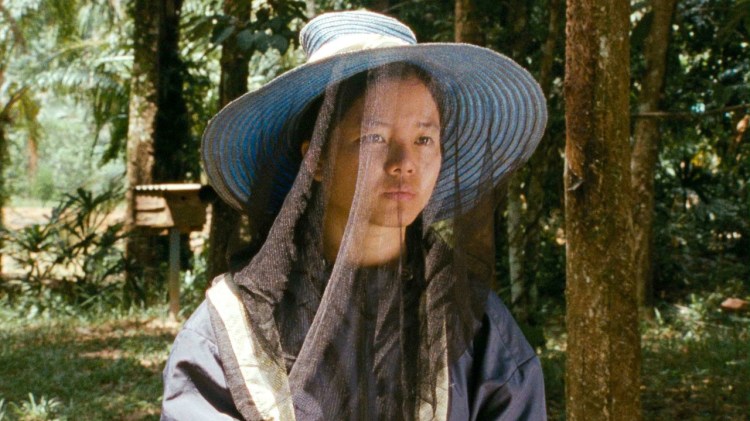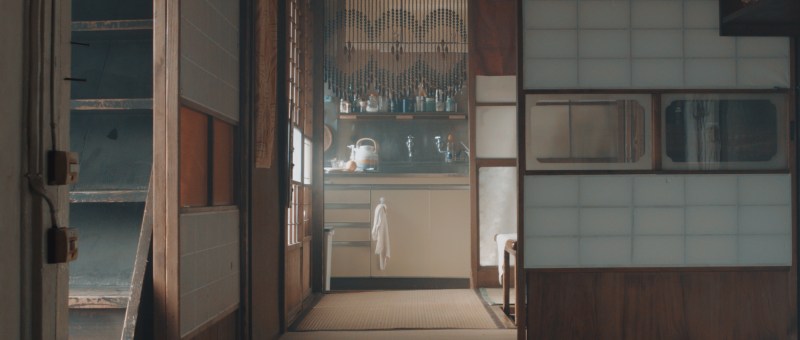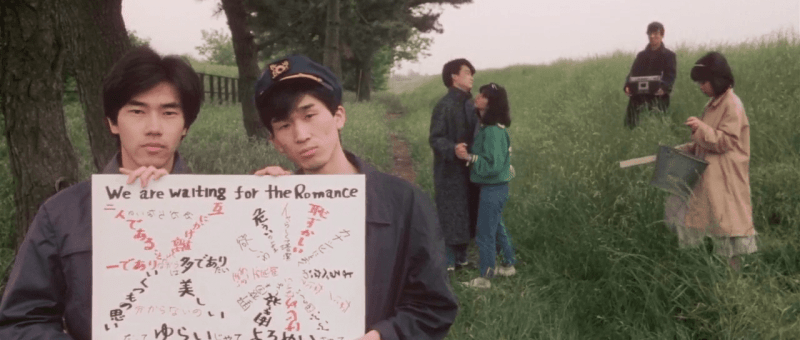

Ne Zha (哪吒之魔童降世, Jiaozi, 2019)

2755835c-570e-44bc-b2f2-515f706369bd_64fa474eb6b5a53c36be9bcd9311f283ce949be6_w1290_h1905Can you choose who you are, or is your identity constructed by accidents of birth and the society all around you? It’s a complicated question and even more so if you happen to have been born part demon thanks to a cosmological mixup. An origin movie of sorts for the titular hero familiar to most from classical Chinese folklore, Ne Zha (哪吒之魔童降世, Nézhā zhī Mótóng Jiàngshì) asks just that through the story of an extremely naughty, all powerful little boy who might be evil or just misunderstood and resentfully lonely because of the prejudice held against him by those fearful of his differences.

The trouble begins with the Chaos Pill which can pull power from sun and moon equally, threatening the integrity of the universe itself. Thankfully, the Heavenly King manages to split it into the Demon Pill and the Spirit Pill, enclosing both inside a lotus flower. He intends to send the Spirit Pill into the third son of general Li Jing (Chen Hao) and has put a curse on the Demon Pill so that it will be destroyed by lightening in three years’ time. Predictably nothing goes to plan because drunken deity Taiyi Zhenren (Zhang Jiaming) fails to stop the evil Shen Gongbao (Yang Wei) sending his minions in to steal the Spirit Pill and use it for his own ends. The Demon Pill ends up in the son of Li Jing, Ne Zha (Lü Yanting), who emerges from his mother’s womb as a bouncing ball of flesh before transforming himself into a small boy and proceeding to wreak havoc all over town.

Doting parents Li Jing and Madam Yin (Lü Qi) refuse to believe their son is all “bad” but recognise that they have a duty to the townspeople who are quickly fed up with Ne Zha’s antics and traumatised by years of being terrorised by “demons”. They would rather do away with the irascible little rascal, but could it be that he’s just bored and lonely? Given the increased demon threat, Madam Yin is often away slaying things and regrets she doesn’t have more time for her son while the other kids are afraid of him, both for quite rational reasons and also because his main way of making friends is quite mean. Increasingly resentful at being shunned as a “demon”, Ne Zha strikes back at the villagers in ways which are really just naughty rather than actually “evil” but obviously aren’t going to win him any friends.

Having failed to get help from the Heavenly Father who has predictably waltzed off for a bit as gods seem to do anytime there’s an actual problem in the mortal realm that they probably caused through inefficient planning, Li Jing decides to lie to his son that he’s really the Spirit Pill and has a duty to slay demons and help mankind. The deception begins to work. Imprisoned in a painting where Zhenren tries to teach him useful magic, Ne Zha takes his new responsibilities seriously, eventually escaping and trying to rescue a little girl who has been kidnapped by a water troll. Sadly, he goes about it all wrong and the townspeople embrace their prejudice to jump to the conclusion that he kidnapped the kid himself and has become even more dangerous.

Meanwhile, evil Shen Gongbao faces a similar problem as a deity shunned because he’s jaguar spirit who took human form. Allying with the villainous Dragons who have been given an ironic punishment to run a prison from which they can’t escape either, he gives the Spirit Pill to their bright hope Ao Bing (Han Mo) who, mirroring Ne Zha, struggles to accept his “evil” parentage and continues to do good and noble things behind his parents’ backs. Meeting by chance, the pair became friends but inevitably have to do battle before realising that they are two halves of one whole and thus represent a kind of salvation in linking hands rather than raising them.

Ao Bing, despite himself, is the more filial in that he thinks he has to accept the “destiny” his parents have given him as a liberator even if he doesn’t quite agree with their methods or reasoning. Ne Zha, by contrast, concludes that his fate is to resist his fate. He might not win, but he’ll fight it all the way and decide for himself who he is rather than allowing others to tell him. Genuinely funny, filled with amusing gags, and packed full of heart, Ne Zha is a gorgeously animated family fantasy and an impassioned advocation for living by your own principles while refusing to be bound by the unsolicited opinions of others.


Currently on limited cinema release courtesy of Cine Asia in the UK, and Well Go in the US.

Original trailer (English subtitles)
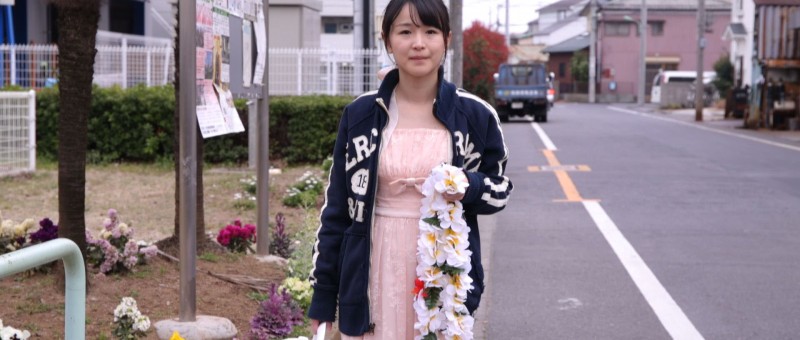
Love and Goodbye and Hawaii (恋とさよならとハワイ, Shingo Matsumura, 2017)

Love and Goodbye and Hawaii poster 1“To end something requires more courage than anything else” the conflicted heroine of Shingo Matsumura’s Love and Goodbye and Hawaii (恋とさよならとハワイ, Koi to Sayonara to Hawaii) is told by her well-meaning ex, but it’s a lesson she’s struggling to learn. Life may very well be a “road made of decisions”, but Rinko (Aya Ayano) doesn’t know how to make them and is rapidly becoming aware that if you don’t hit the relevant dialogue box fast enough they will largely be made for you. Less a tale of romantic confusion, Love and Goodbye and Hawaii is a young woman’s gradual path towards accepting that her attachment to the status quo is as much about the fear of moving forward as it is the pain of faded love.

Office worker Rinko has been living with her graduate student boyfriend Isamu (Kentaro Tamura) for the last three years. To all of their friends, they seem to have the perfect relationship but what no one knows is that, though they continue to live together, the couple broke up some months previously. Seeing as it was Isamu’s apartment in the first place, Rinko plans to move out as soon as she’s saved enough money to find somewhere new in the precarious Tokyo housing market, but then again now that they’re no longer “together” the arrangement has become so comfortable that there’s really no hurry to make a change. Matters come to a head, however, when Rinko discovers that a fellow student at Isamu’s university has taken a liking to him, and it seems he to her.

Despite having been broken up for almost six months, Rinko hasn’t quite accepted that it’s over. She demurs when her friends ask her if she’ll be getting married soon, only latterly admitting that they’ve technically broken up, and explaining that she really has it good now because it was too “heavy” before which is why they fought all the time. Now that there’s “nothing” to fight over and they’ve gone back to being platonic friends it’s all so much easier. Too easy, in fact, which why she isn’t really ready to move on.

Rinko’s unconventional living arrangements seem extremely strange to her friends. “Break up like normal people and never see him again” her friend tells her, offering her a space on the sofa if it’s money that’s the issue. Not that money’s not a problem, but even when well-meaning people offer financial help to end this “weird” situation, Rinko doesn’t really want to take it. She tells her friend that relationships are like driving and you don’t want to jump on the breaks incase they jam and you end up on the skids, but as her perceptive younger sister points out perhaps she just wants to get back together and doesn’t know how to go about it.

Analogies are something Rinko seems to have a taste for, unable to state her feelings plainly in a way others will understand she wraps them up in a more palatable narrative. So it is that she ends up telling her friend’s drunken younger sister that with Isamu she felt like she was CD no other player had worked out how to play. She figured out she liked the sound inside her when she was with him, but time moves on and it feels like she’s still a CD but Isamu is now an iPod and she doesn’t really know what to do with that. What she’s trying to say is that they’ve grown apart, but what she hasn’t quite admitted to herself is that maybe it’s not Isamu that she’s afraid of leaving but the vision of herself as reflected in him.

“Show your real self, put your real feelings out there” the younger woman tells her, but that’s something that doesn’t necessarily get easier with age. Finally gathering the courage, Rinko makes her way back to Isamu for a “serious talk”, only to run into her romantic rival but contrary to expectation the two women find that they have no interest in competition and only wish each other well. Rather than that “serious talk” however, Rinko ends up trying to sort out her romantic dilemma through the familiar medium of a walking race which does at least allow the diffident Isamu to make his feelings plain without actually having to say anything. Sometimes actions are kinder than words, and easier to understand. What Rinko needs to learn is that you can find self acceptance without needing to see it reflected in someone else, and that fear of moving forward is not a good reason for holding back. A quiet and melancholy look at life after love, Love, Goodbye and Hawaii is a gentle ode to the art of moving on with no hard feelings, looking straight ahead.


Original trailer (English subtitles)

Sandakan No. 8 (サンダカン八番娼館 望郷, Kei Kumai, 1974)

Sandakan 8 posterSome might argue that Japanese cinema has often been reluctant to examine the nation’s traumatic 20th century history with the proper rigour, but even if subtle and coming from unexpected angles there have been many and varied attempts to ask questions about the lingering consequences of feudalism. Sandakan No. 8 (サンダカン八番娼館 望郷, Sandakan Hachiban Shokan: Bokyo), inspired by a true life account of a woman unwittingly sold into sexual slavery as a child at the turn of the century, is not only a condemnation of socially approved people trafficking and its role in building the short-lived Japanese empire but a mild provocation of the contemporary society which refuses to engage with its traumatic past.

In the contemporary era, graduate student Keiko Mitani (Komaki Kurihara) is engaged in researching the “karayuki-san” – Japanese women who were sold into sexual slavery throughout Asia in the early 20th century. Almost forgotten, the karayuki-san are a taboo subject and even those still living in the areas from which women and girls were sent away are unwilling to speak of them. By chance, however, Keiko runs into an old woman in a cafe who speaks with a standard Tokyo accent and tells them that she spent most of her life “abroad”. Quickly realising she doesn’t mean she was a diplomat’s wife, Keiko wonders if the woman might be have been a karayuki-san and delays her return to Tokyo in order to find out.

There is something, it has to be said, ironically exploitative in Keiko’s determination to get the old woman, Osaki (Kinuyo Tanaka), to open up about a subject on which she so obviously does not want to be drawn. A visit to Osaki’s home reveals her to be living in a run-down hovel on the edge of town which is filled with stray cats whom Osaki feeds because “they’re all abandoned, but still they have to live”. Keiko gets herself brownie points by reacting politely to Osaki’s reduced living situation, eventually staying three weeks during which time she gradually teases out Osaki’s sad life story. Finally asking if there wasn’t anything Osaki might have liked to know about her, Keiko’s hypocrisy is fully brought home to her when Osaki admits that no one was more curious about Keiko than she was but that “people have reasons for not confiding in others” and if it’s something you need to ask about then it’s probably something that the other person may not want to share. In any case, Osaki seems to have known Keiko had an ulterior motive but does not regret sharing her story and has no worries about what Keiko might do with it as long as she makes sure to tell the truth.

The truth, in a sense, seems to be something the villagers feel themselves well acquainted with which is why Osaki lives in a shack on the edge of town. Tricked into sexual slavery as a child by an amoral people trafficker who lured her with promises of money to be made overseas, Osaki found herself in Borneo and a prisoner of “Sandakan No. 8” which was one of 10 numbered brothels on the island largely catering to Japanese travellers overseas, facilitating the expansion of the Japanese empire as accidental emissaries and ports of call. When Osaki was a child, Japan was a poor country and it was considered normal to sell one’s daughter in order to feed a family. Working overseas carried with it a kind of cache though no one, except perhaps her brother, seems to be fully aware of what Osaki is going to and she herself has not in any way chosen or consented to become a sex worker. When she eventually returns to Japan, she finds herself unwelcome in her brother’s house, which her money paid for, because of the shame associated with those who have “worked away”. Even 50 years later, she finds herself living alone, all but disowned by her only son, on the outskirts of her childhood village ostracised by the “respectable” townspeople who don’t for a second believe Osaki’s quick introduction of Keiko as her daughter-in-law.

The daughter-in-law deception is only one heartbreaking aspect of the complex relationship between the two women who are each, in a sense, hiding something from the other but end up forming a genuine connection anyway. Intensely lonely and having lived a life filled with suffering, Osaki is willing to pay for company with her story while Keiko is, not quite deliberately, using her loneliness against her in an attempt to earn her trust and get her to reveal her secrets. Nevertheless, Keiko is able to mine a rich and deep seem of 20th century trauma through the tragic story of just one woman which reaches out to hundreds like her some of whom rest in a graveyard in the forests of Borneo with their backs forever to Japan. The enemy is, once again, poverty more than it is patriarchy or even feudalism, a problem less of the essence in the rapidly improving post-war economy, but as Kumai is keen to point out, this system of state sanctioned people trafficking (finally outlawed only once Japan’s status on the world stage began to rise) had far wider implications than it might be thought which still echo into the present day and perhaps beyond if not for the efforts of women like Keiko who do not wish to forget.


Original trailer (no subtitles)

No Regret (후회하지 않아, Leesong Hee-il, 2006)

No Regret poster“Why do we have to be so miserable?” a frustrated cabaret bar owner exclaims part-way through a harebrained scheme to get both money and revenge against a lover’s betrayal and a relentlessly unfair society. The debut feature from Leesong Hee-il, No Regret (후회하지 않아, Huhoehaji Anha) is regarded as Korea’s first explicitly gay film from an out gay director but is as interested in social disparity and multiple oppressions as it is in contemporary gay life in a sometimes unforgiving Seoul.

Our hero, Su-min (Lee Yeong-hoon), is an orphan recently ejected from the orphanage after turning 18 and leaving high school. Like many young men in his position, Su-min has been effectively hung out to dry and has very little chance of making much of a life for himself. Quietly angry, he works hard in a factory by day, and studies at a cram school at night, hoping to make enough money to apply for college and ensure a better life for himself. He also has another part-time job as a “designated driver”, getting drunk people and their cars back home in one piece. One particular job, however, changes his life forever when he arrives to meet Jae-min (Kim Nam-gil) who, apparently, seems to fall in love with him at first sight. Despite perhaps being flattered, Su-min hesitates but turns down Jae-min’s overtures, either simply afraid and still uncomfortable with his sexuality or resentful of the awkward power dynamic between them.

The problematic power differential raises its head again when Su-min realises that Jae-min is the factory boss’ spoilt chaebol son seconds after learning he and his friend, both of whom are “casual” rather than “regular” employees, have been let go in a mass layoff. Jae-min, still smitten, pulls strings and makes sure Su-min keeps his job, but Su-min isn’t comfortable with being indebted in that way or of taking another man’s place just because the boss has taken a fancy to him so he quits in anger and does his best to shake Jae-min off his trail. Jobs are hard to come by for uneducated poor boys, and after a spell washing dishes proves unsuccessful he finds himself giving in and taking a job in a host bar karaoke box offering illicit sexual services to select clientele.

Su-min, as he later suggests to Jae-min, is perhaps freer than most to embrace his sexuality given that he has no family to disapprove of him. He is, in a sense, dependent on the feeling of solidarity he has with the other orphans, like his ladies’ man roommate who despite offering to take Su-min to a brothel so he’ll realise what he’s missing out on is actually broadly supportive of Su-min’s sexuality, but is afraid more of them discovering his “fall” into sex work than of them realising he is gay which most of them seem to have done already. In any case, it’s perhaps unsurprising that he personally continues to struggle with his sexuality given his extreme youth even after becoming used to life at the club and the financial benefits it can bring.

As the “madame” tells him, though he’s gay himself he doesn’t hire “gay” guys and it remains true that most of the other sex workers are straight men who are only in the business because they have no other way of making money. Jae-min, meanwhile, feels himself at least a prisoner of his privilege as he repeatedly fails to standup to his domineering mother who has arranged a marriage with a suitable young woman despite knowing that her son is gay. Well educated and wealthy, Jae-min has accepted his sexuality but is unable to embrace it or to break free of the patriarchal social codes which insist that, especially considering he is an only child, he has a responsibility to obey his parents’ wishes by living up to their conservative values, marrying a woman, providing an heir, and taking over the company. Jae-min’s mother even later tells him that she doesn’t care if he continues to sleep with men, but that he must marry the woman she’s chosen for appearance’s sake, little caring for the emotional wellbeing of the oblivious fiancée she is about to condemn to a loveless marriage.

Jae-min continues to chase Su-min who continues to rebuff him until finally seduced, but a note of darkness remains at the centre of their relationship in Jae-min’s self loathing and Su-min’s resentful sense of inferiority. An accidental betrayal born of momentary weakness and followed by an eventual breakthrough leads to a very dark place indeed as the wounded parties decide to take misplaced revenge, against an oppressive society as much as against those who have wronged them. Nevertheless, a kind of “equality” is perhaps achieved through wounds given and received giving way to a more openhearted connection albeit one with a dark genesis. An important step forward in representation, Leesong Hee-il’s indie drama is an oddly hopeful romance in which the heroes eventually succeed in becoming themselves in defiance of the societal oppression all around them.


US trailer (English subtitles)

Bright Future (アカルイミライ, Kiyoshi Kurosawa, 2003)

Bright future posterThe cinema of the late ‘90s and early 2000s is one defined by alienated youth kicking back against a stagnant society in which they see no place for themselves now that the dull and conventional salaryman world of their parents can no longer offer security in place of fulfilment. Kiyoshi Kurosawa’s early masterpieces had edged towards the nihilistic, embracing this sense of generational hopelessness but finding perhaps glimmers of possibility in the longing for escape no matter how far off. Bright Future (アカルイミライ, Akarui Mirai), shifting away from the genre fare which had made his name, does something much the same but perhaps even bleaker in its melancholy acceptance of intergenerational disconnection.

Our two heroes, Yuji (Joe Odagiri) and Mamoru (Tadanobu Asano), have workaday jobs at a factory which they find fulfilling only in their emptiness. The guys have found a fan in the factory’s ageing boss, Fujiwara (Takashi Sasano), who begins giving them special jobs and trying to hang out with them while promising a special signing bonus should they agree to become regularised employees. Bonding in their resentment towards men of Fujiwara’s age who romanticise their youth while exercising paternal authority and entitlement, the two hatch their revenge on an unforgiving society through the strange plan to acclimatise their pet jellyfish to life in modern Tokyo.

The jellyfish, closely associated with the ethereal Yuji, becomes a kind of symbol of the “bright future” the two young men fear will elude them. They, like the jellyfish, have tried to acclimatise themselves to living in the otherwise hostile environment of contemporary Tokyo but also accept that the ability to survive may not be enough and it may eventually be necessary to remove oneself from an unforgiving society until such time as it is possible to return.

This or something like it seems to be Mamoru’s key philosophy as the owner of the jellyfish and the chief architect of the “bright future” both men dream of – literally in the case of Yuji who is the idea’s unwilling prophet. Mamoru has, for reasons unknown, decided to take the strangely melancholic Yuji under his wing, eventually entrusting sole custody of the jellyfish to him in an attempt to force him to look after “himself”. In service of this ideal and perhaps of Yuji’s unwilling visions, Mamoru takes more immediate revenge against the literal Fujiwara – murdering his boss and his wife (Marumi Shiraishi) in their well appointed middle-class home (only their small daughter is spared). Yuji interprets this gesture as protective seeing as he himself had found the bodies after wandering into the Fujiwara home with violence on his mind, but misinterprets Mamoru’s intentions for him in disappointing his mentor by insisting that he is prepared to “wait” for him rather than take this cue to step up and take control of his own life’s direction. 

Yuji is indeed, like the majority of heroes in turn of the century Japanese cinema, entirely directionless. He appears to have no surviving family in the older generation, only an exasperated sister who does her best to help but doesn’t know how, attempting to straightjacket him into a salaryman world of conventional success with an office boy job at her understanding company. A strange young man, Yuji has has vivid dreams and a need for control and routine – it’s the closure of the local bowling lanes which sends him round to the Fujiwara’s in a calm yet violent rage while repeatedly losing in a video arcade to his sister’s boyfriend also sends his insecurity into overdrive. He once dreamt of a “bright future” but now sees only darkness. Stepping up onto the roof of a building in which he is learning to find a home, he is forced to admit that despite attempting to look far into the distance he can’t see much of anything at all from where he is right now.

Yet for all his resentment towards men like Fujiwara, it’s a father figure which eventually begins to push him in a more positive direction. Mamoru’s father Shinichiro (Tatsuya Fuji) takes his son’s vulnerable best friend under his wing, giving him a home and a purpose as he begins to teach him how to repair things that might ordinarily be thrown away. Shinichiro’s previous assistant quit because he saw no future in this line of work, but Yuji seems to delight in the repurposing of the previously useless for arcane ends even if his chief contribution is a continuation of his jellyfish experiments. Shinichiro, superficially supportive, cannot understand the obsession with the jellyfish. Attempting to reassure a thwarted Yuji, he asks him what exactly the jellyfish could achieve in a world so resistant to real change yet he also berates him with the impassioned impotence of age in decrying his contemptuous dismissal of the reality which, after all, belongs to men like Shinichiro who will demand respect while offering very little in return.

The jellyfish find they can’t live in Tokyo, but youth adopts a different solution as it runs rampant with out purpose or direction but seemingly delighting in meaningless anarchy. A group of teens Yuji runs into wear identical Che Guevara T-shirts while sporting light-up microphone headsets as they wander round the city kicking cardboard boxes and laughing as they go, like overgrown children with no clear forward path before them. Age and youth seem primed to exist in differing realities, perpetually unable to understand each other while youth struggles to find direction in the absence of parental guidance. Ironic in the extreme, the “bright future” here seems to exist only as a vague hope but, perhaps, the only guiding light in an ever darkening world.


Original trailer (English subtitles)
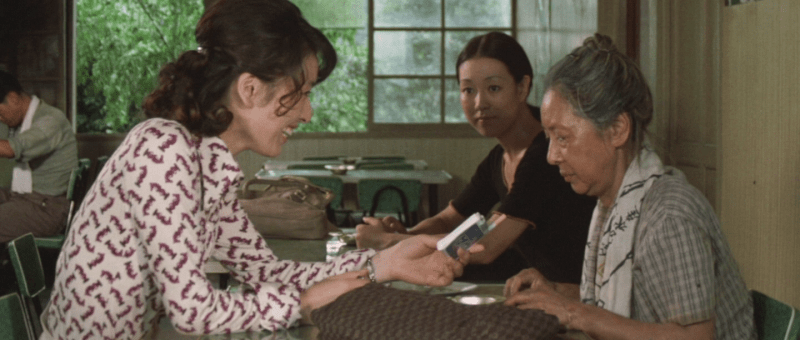
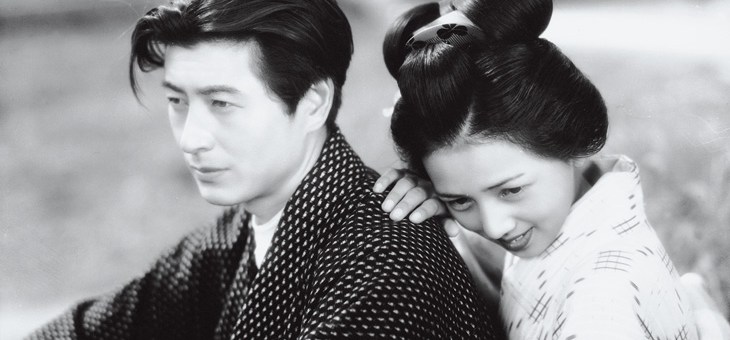
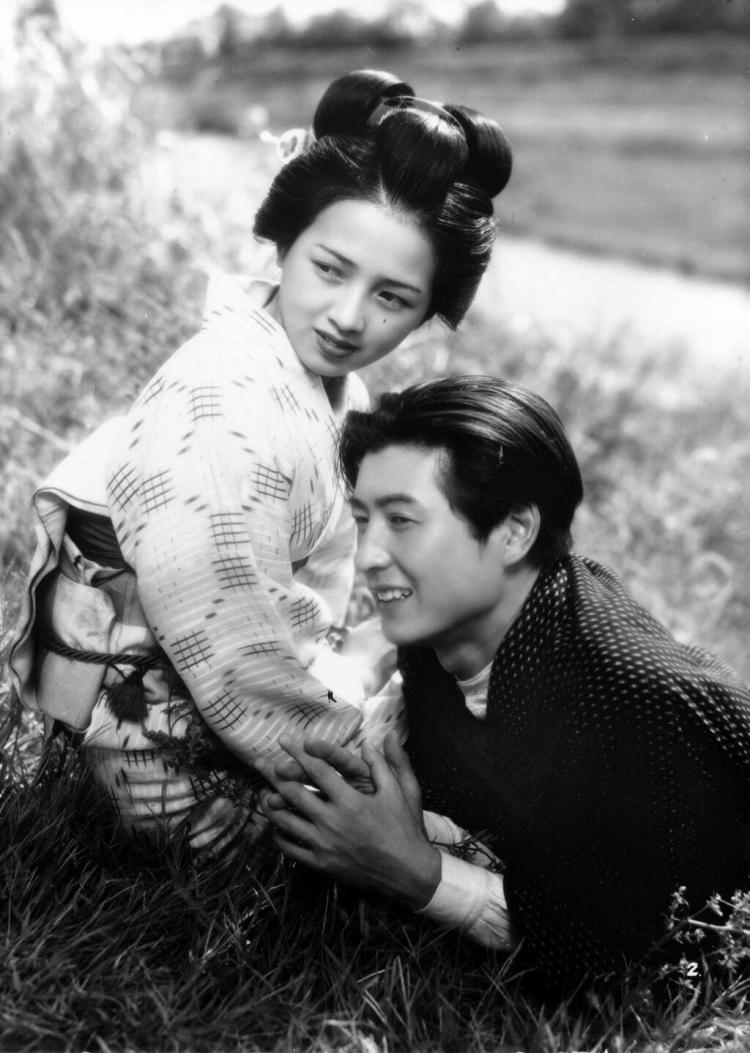
Apostasy (破戒, Keisuke Kinoshita, 1948)

Hakai still 1For all his good hearted humanism and intense belief in the simple power of human goodness, the films of Keisuke Kinoshita can also be surprisingly conservative, most particularly in their attachment to the old, pre-war Japan which they often see as unsullied by the corruption and ugliness of the militarist era. A new constitution film, Kinoshita’s adaptation of the Toson Shimazaki novel The Broken Commandment, The Apostasy (破戒, Hakai), opens with a series of bold titles proclaiming “Freedom and equality”, and “respect for human rights” before breaking into an attack on the persistent feudalism which has managed to survive into the new era along with prejudice and contempt. Zooming back to the missed opportunity of Meiji-era liberation, Kinoshita too remains somewhat ambivalent about the the decline of a social order in a Chekhovian lament for the rise of the petty middleman and the fall of noble aristocracy.

In Meiji 35 (1902), despite the advent of the Meiji Restoration and abolishment of the class system, prejudice against the “burakumin” – untouchable “outcasts” who lived in isolated settlements and (historically) made their living in occupations connected with death, was still very much in existence. This is all too apparent to Segawa (Ryo Ikebe). A bright young man, Segawa’s father sent him out of their village to make something of himself with the solemn promise that he must never reveal his burakumin origins to anyone. The world being as it is, however, Segawa is conflicted especially as he has fallen in love with his mentor’s daughter Oshiho (Yoko Katsuragi) and wonders if it would be fair to marry a non-burakumin woman without telling her truth and live with the threat of discovery forever over their heads.

The Broken Commandment would later be adapted again by Kon Ichikawa whose focus is, perhaps quite surprisingly, very different to that of Kinoshita who, uncharacteristically, chooses to prioritise class concerns over the right to live freely and honestly in a compassionate society. Ichikawa’s adaptation deliberately widens the implications of Segawa’s dilemma, making it plain that he is talking not just about burakumin rights but directly to all oppressed peoples and most particularly to those who feel obliged to keep their true natures a secret in an oppressive and conformist society. Strangely, Kinoshita chooses not to engage with this theme which might otherwise seem tailor made for his persistent concerns if perhaps a little close to home, preferring to focus not on Segawa’s gradual shift into accepting his own identity and hearing the call to activism but on the reactions of the changing world around him which seems to be imploding while besuited upstarts enact their petty revenge on the chastened nobility.

This is most clearly seen in the unfair treatment of Segawa’s mentor and landlord, Kazama (Ichiro Sugai) – a former samurai and until recently the local school teacher. Mere months away from his retirement, Kazama has been instructed to resign so that the school will not need to pay his pension while his position has been taken by a pushy local man with limited education whose sole claim to the job is being of the people. Kazama is understandably resentful but stoic. Segawa’s liberal colleague, Tsuchiya (Jukichi Uno), takes the school board to task for its unreasonableness and underhanded attempt to save money by forcing an old man out of his position with no thought for his 30 years of service. Though Tsuchiya might be broadly in agreement with the changes taking place in Meiji-era society, he too worries about the greedy upstarts usurping privilege rather than seeking to eradicate it.

Stepping back for second, Apostasy is a post-war film designed to echo the egalitarian philosophies of the new constitution drawn up under the American occupation. It is then somewhat subversive that our villains are the Westernised lower middle classes of Meiji-era society who seem to have embraced “modernity” by dressing in suits but refuse to abandon ridiculous ancient prejudices such as that towards burakumin, doubtless because those prejudices largely work out in their favour. It would be tempting to read these prejudices as foreign imports, but that against the burakumin is wholly Japanese and truth be told somewhat backward in contrast to (the kimono’d) Tsuchiya’s forward looking socialist beliefs which superficially at least seem more in keeping with the age.

Yet it is in some senses Segawa himself who struggles to emerge from the feudal yoke. His promise to his father is a sacred vow underlined by loss and sacrifice. He feels it is his duty to live as his father wished, as a “normal” Japanese citizen in success and comfort, but also begins to become acutely aware that to do so may be cowardly and selfish. If he chooses to keep his promise to his father and never reveal himself as a burakumin, he will be complicit with the systems which oppress him and thereby ensure those like him will always be oppressed. His awakening comes, in a sense, from a second father – Inoko (Osamu Takizawa), a burakumin who has come out of the closet and loudly fought for burakumin rights along with the general liberty of all oppressed people. Caught between two fathers and his growing love for Oshiho, Segawa remains lost while one of the suited proto-militarists threatens to out him leaving him floundering in the face of intense social stigma and the possibility that those he loves may turn against him.

Segawa has to free himself or risk becoming like Kazama – a man haunted by the feudal past, as Tsuchiya puts it. Kazama himself is painted in broadly sympathetic terms, forced to endure the melancholy fate of being eclipsed by a Lopakhin-esque member of the insurgent middle-classes, but his prejudice is later exposed despite his original support of Segawa when he notices one of the suits smirking at him and instantly feels humiliated, turning his impotent rage back on the outcast as if his presence further dishonours him as a samurai. Segawa’s aim as a teacher had been to teach his children the power of individual thought, which would seem to be the best weapon against prejudice but his message has been cut off at source thanks to the self-interested school board who have been all to quick to claim the benefits of modernity with none of the responsibility. Resolved to fight for a freer future, Segawa finally accepts his responsibility as a burakumin spokesman in the knowledge that his calling is to educate and that only through education can anything ever change. The lessons of Meiji may have gone unheeded, but the opportunity presents itself again to abandon the feudal past in favour of an egalitarian modernity built on fairness and compassion rather than obligation and oppression.


Titles/opening (no subtitles)

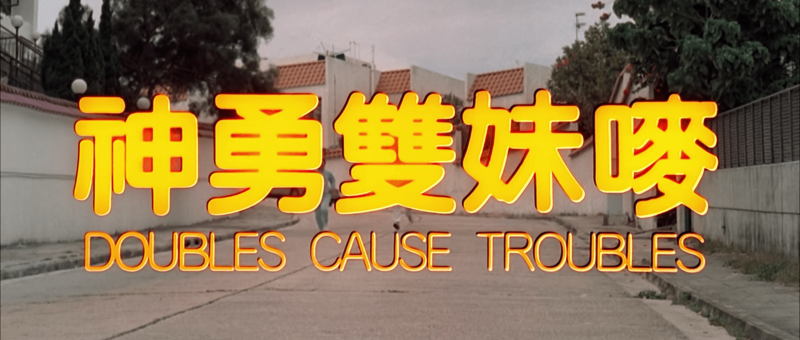
Doubles Cause Troubles (神勇雙妹嘜, Wong Jing, 1989)

Doubles cause troubleWould you be willing to live with someone you hate for a whole year just to get a share in an apartment? According to the sheer prevalence of this plot device in comedies throughout the ages, the chances are most people would, especially in a city like Hong Kong where competition is fierce. In any case the duelling cousins at the centre of Wong Jing’s disappointingly normal farce Doubles Cause Troubles (神勇雙妹嘜) find themselves doing just that, only the situation turns out to be much more complicated than one might imagine.

When self-centred nurse Liang Shanbo (Carol “Do Do” Cheng Yu-Ling) receives a visit from a lawyer informing her that her grandmother has passed away she’s a little put out because the old lady owed her money. She’s comforted with the news that she’s been left an apartment, but less so when she learns there’s a catch. Shanbo’s grandma really wanted her to patch things up with her cousin, actress Zhu Yingtai (Maggie Cheung Man-Yuk), and has left the apartment to both of them with the caveat that they have to live there together for a period of one year after which they can sell it and inherit 50% of the proceeds each or else it’ll all go to charity. Neither Yingtai or Shanbo is very happy about the idea but it’s too good an opportunity to pass up and after all, it’s only for a year. When they arrive, however, they discover there’s another tenant – Ben (Poon Chun-Wai), a suave businessman who leaves them both smitten. Ben, it turns out, is not quite what he seems and staggers home on the first night to die in Yingtai’s arms after muttering something about a code.

Unlike most Hong Kong comedies of the era, Wong plays things disappointingly straight while remaining as broad as it’s possible to be. Odd couple Shanbo and Yingtai bicker and trade childish insults while throwing themselves first at the handsome Ben and then at his equally good-looking “brother” Sam (Wilson Lam Jun-Yin) without really giving too much thought to anything else that’s going on until they find themselves well and truly embroiled in a conspiracy. It turns out that Ben had been involved in a smuggling operation in which he betrayed his team and made off with a priceless Taiwanese “national treasure” that the rest of the gang would like to recover which is why Shanbo and Yingtai are being followed around by a “flamboyant” rollerskating henchman and a butch female foot-soldier.

The political realities of 1989 were perhaps very different, but there is an unavoidable subtext in the fact that the dodgy gangsters are all from the Mainland and are desperate to get their hands on a precious Taiwanese national treasure (which they intend to sell for a significant amount of money). The girls find themselves with ever shifting loyalties as they reassess Ben, come to doubt Sam, and fall under the influence of mysterious “inspector” Xu (Kwan Ming-Yuk) whose warrant card is “in the wash”. Completely clueless, they are helped/hindered by useless petty gangster Handsome (Nat Chan Pak-Cheung) and his henchman Fly (Charlie Cho Cha-Lee) who’ve been chasing Shanbo all along while Yingtai falls victim to Wong himself in one of his characteristically sleazy cameos as a lecherous businessman who has toilets instead of furniture in his living room and a boxes full of date rape drugs behind the bar (poor taste even for a Wong Jing movie).

Of course the real message is that blood ties and immediate proximity to danger can do wonders for a “difficult” friendship and so granny gets her wish after all even if not quite in the way she might have planned. Then again, why was Ben staying in her luxury apartment in the first place? Who can say. Setting a low bar it may be, but Doubles Cause Troubles is not even among Wong Jing’s funniest comedies though it does have its moments mostly born of sheer absurdity and enlivened by the presence of a young Maggie Cheung alongside a defiantly committed cast desperately trying to make the best of the often “risible” material.


Currently streaming via Netflix in the UK and possibly other territories too.

Celestial pictures trailer (English/traditional Chinese subtitles)

BFI London Film Festival Confirms Complete Programme for 2019

House of Hummingbird 6The BFI London Film Festival returns for 2019 with a packed programme of the best in recent international cinema. As usual the lineup includes an impressive selection of East Asian hits including Takashi Miike’s Cannes crowd pleaser First Love and sensitive Busan breakout House of Hummingbird.

Bhutan

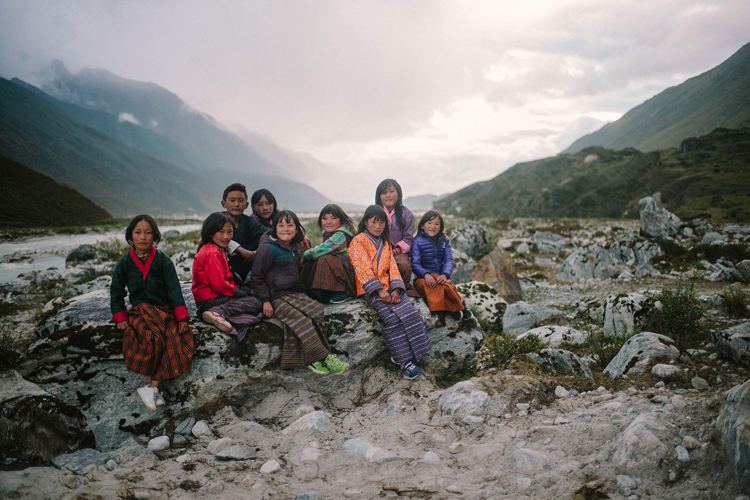
LUNANA- A YAK IN THE CLASSROOM

  • Lunana: A Yak in the Classroom – a frustrated teacher is dismayed to learn he’s being sent to a remote mountain outpost but is eventually won over by the kids.

China

White Snake Banner

  • So Long, My Son – Beijing Bicycle‘s Wang Xiaoshuai returns with a chronicle of the Chinese family from the ’80s reforms to the present day.
  • To Live To Sing – the leader of a struggling Sichuan Opera troupe tries to stave off eviction through impressing a local bureaucrat.
  • White Snake – beautifully animated “prequel” to the classic Lady White Snake folktale. Review.
  • Lucky Grandma – A Chinese-American grandma gambles away her life savings and ends up in the middle of a gang war after unwittingly stealing from Chinese gangsters!

Japan

Miike first love

  • 37 Seconds – a manga artist with cerebral palsy sets out to claim her independence through embracing her sexuality.
  • First Love – a boxer with a brain tumour falls for a trapped sex worker in the latest anarchic crime thriller from Takashi Miike.
  • To the Ends of the Earth – Kiyoshi Kurosawa reunites with recent muse Atsuko Maeda as a lost TV presenter goes searching for herself while filming in Uzbekistan.
  • Family Romance, LLC – Tokyo-set drama from Werner Herzog revolving around a rent-a-relative business.
  • Earthquake Bird – Alicia Vikander stars as a Tokyo-based translator in bubble-era Tokyo who finds herself at the centre of a series of murders.

Mongolia

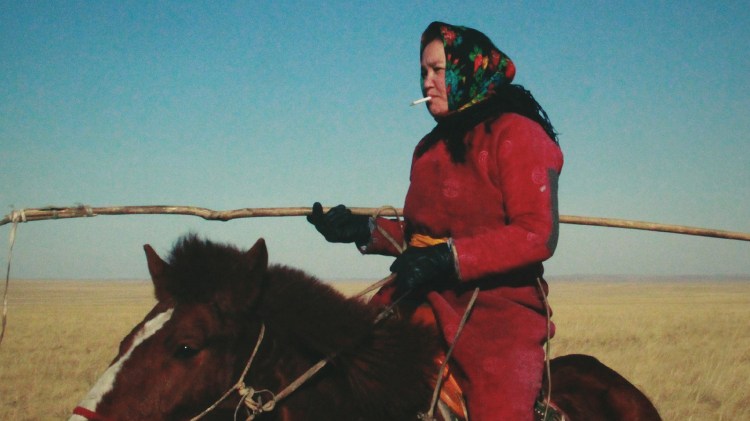
Öndög 

  • Öndög – a local herdswoman is brought in to take care of a wolf when the police discover a dead body.

Philippines

Overseas]

  • Overseas – Yoon Sung-a’s documentary exploring the lives of Filipina women working overseas.

Singapore

Wet season still 1

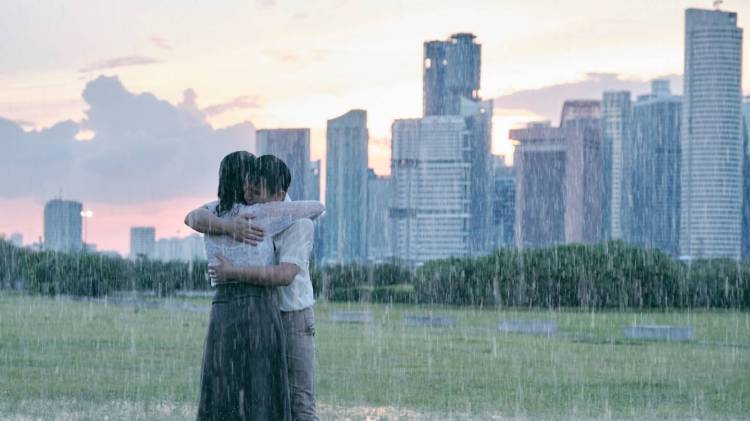
  • Wet Season – Ilo Ilo’s Anthony Chen returns with a monsoon tale in which a Mandarin language teacher is drawn to one of her students.

South Korea

Maggie still 1

  • The Dude in Me – body swap comedy in which a jaded gangster gets a second chance to set things right when he swaps bodies with a mild-mannered teen. Review.
  • Heart – the latest from Bitch on the Beach‘s Jeong Ga-young in which she stars as a filmmaker who tracks down a married former lover for some additional advice about extra-marital affairs.
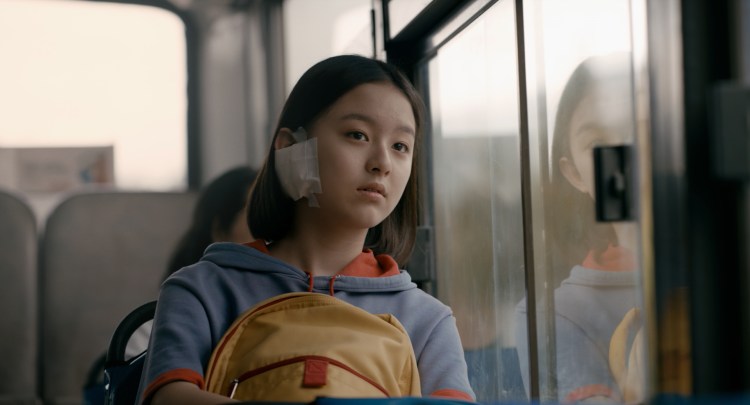
  • House of Hummingbird – a teenage girl from a problematic home finds inspiration in her enigmatic Chinese teacher in Kim Bora’s beautifully observed debut. Review.
  • The House of Us – Yoon Ga-eun’s The World of Us followup in which a young girl trying to get her parents to patch things up becomes a big sister figure to two other kids.
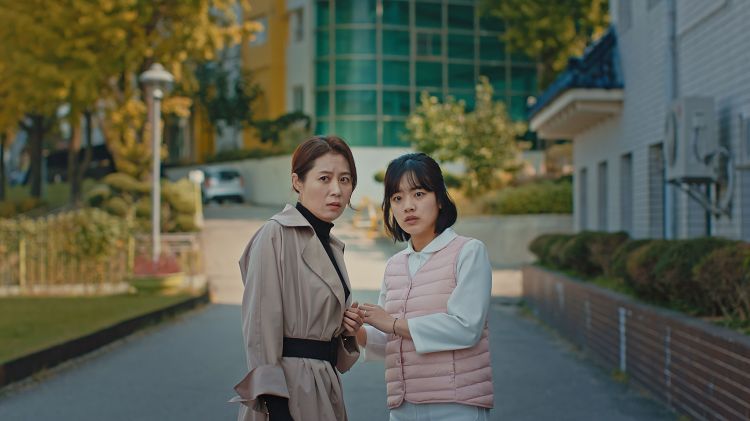
  • Maggie – surreal drama narrated by a catfish in which a conflicted nurse explores the interplay of truth and trust. Review.

Thailand

KRABI, 2562

  • The Cave (Thailand) – dramatisation of the international rescue operation of a team of young football players trapped in a Thai cave.
  • Hope Frozen – documentary following the parents of a little girl who died of a brain tumour as they try to reconcile their decision to opt for cryogenic preservation with their Buddhist beliefs.
  • Krabi, 2562 – Anocha Suwichakornpong and Ben Rivers team up for an unusual portrait of the Thai tourist town.

The BFI London Film Festival takes place at various venues across the city from 2nd – 13th October 2019. Full details for all the films as well as screening times and ticketing information are available via the official website. Priority booking opens for Patrons on 3rd September, for Champions on 4th September, and Members 5th September, with general ticket sales available from 12th September. You can also keep up to date with all the latest news via the festival’s Facebook page, Twitter account, Instagram, and YouTube channels.

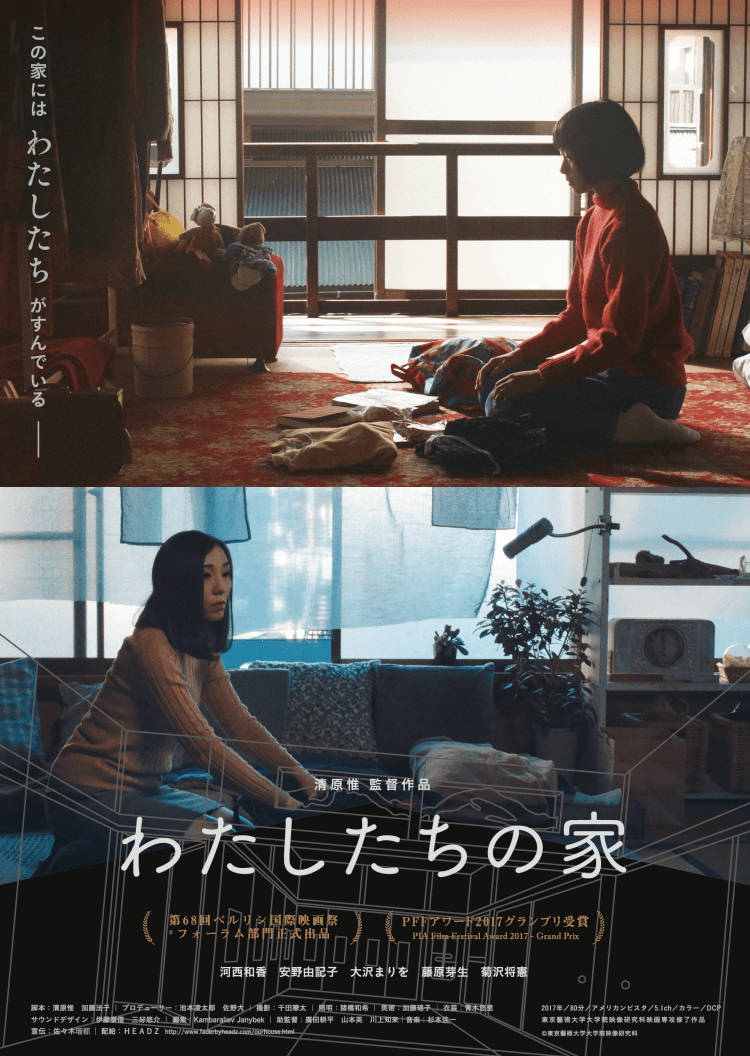
Our House (わたしたちの家, Yui Kiyohara, 2017)

our house posterIs the definition of “space” defined by absence as much as presence? Do we carve out pieces of the world to inhabit, or simply shift into an idea of place which we construct entirely around ourselves? Yui Kiyohara’s feature debut Our House (わたしたちの家, Watashitachi no Ie), completed as part of her graduation project for a masters at Tokyo University of the Arts, hints at the eeriness of a shared existential continuum as four women bridge inter-dimensional connections while living in the “same” two-storey house in Yokohama.

We begin with 14-year-old Seri (Nodoka Kawanishi) dancing cheerfully with a few of her friends presumably on a sleepover wearing incongruously old-fashioned nightgowns like the heroines of a gothic boarding school drama. The fun stops however when Seri thinks she hears a funny noise, half convinced the house is haunted. Her friends tell her it’s all in her mind, but something seems odd and she can’t seem to shake the sense of presence in the house.

Part of that might be because, though Seri’s father appears to have left long ago, she still dwells on his memory and perhaps feels the echo of him in their family home. It may seem particularly poignant to her right now because her mother, Kiriko (Yukiko Yasuno), has found a new man – Takashi (Toshio Furuya), who drives the local rubbish truck. Kiriko wants to get married again, and Seri, entering adolescence herself and playfully teasing her friend about a possible romance, cannot quite accept that her mum’s moved on.

Changing tack, a young woman wakes up on a ferry with seemingly no memory of how she got there or of her previous life aside from her name, Sana (Mariwo Osawa). Another woman on the boat, Toko (Mei Fujiwara), stops to ask if she’s alright and then offers to let her stay at her place, which happens to be an identical house to the one in which Seri and her mum live, until she remembers who she is.

Though Seri’s story has its whimsy, it remains firmly within the realms of the natural while there’s something decidedly odd about the world Toko and Sana inhabit. There is, however, a strange symmetry to their relationships. Both sets of women are keeping things from one another if for slightly different reasons. There are after all secrets which must exist between a teenage girl and her mother, so perhaps Kiriko doesn’t quite discuss her relationship with Takashi with her daughter, and Seri doesn’t talk to her mother about the kinds of things she talks to her friend about, but there are also additional communication difficulties in their shared reluctance to talk about the “ghost” of Seri’s absent father or about Seri’s various anxieties which manifest in her preoccupation with a possible haunting.

With Toko and Sana there is of course the issue of amnesia, but in this case it’s Toko who appears to be keeping secrets in her well concealed paranoia and illicit activities which see her handing over plain envelopes in dingy corridors and asking pointed questions about water pollution. Does she know more about Sana than she lets on, or is Sana perhaps a spy herself faking her amnesia to get close to Toko? In any case, Toko seems to want to keep her around, letting her know she can stay for as long as she wants, but it’s not entirely clear if that’s altogether a good thing or if Toko has more or less kidnapped a friend to keep safely at home. When she recommends drinking from the bottled water in the fridge rather than from the tap, we’re apt to wonder which source it is that might be “polluted”.

In that sense, both environments, hitherto exclusively female spaces, are eventually “polluted” by unexpected male intrusion. The spectre of Seri’s father may be ever present in the home, but it’s Takashi who places a strain on the relationship of mother and daughter, whereas Sana’s coffeeshop buddy Natsuki (Masanori Kikuzawa) sets off Toko’s alarm bells in more ways than one as he simultaneously encourages her to doubt her new friend, become jealous on an emotional level, and then anxious on a professional one as she wonders if Natsuki has befriended Sana to get into the house and look for a mysterious “something” she quickly tells him is no longer there. 

“Things embedded in the mind can never be lost” Toko reassures Sana, but also affirms that “nobody can prove who they are”, which might be true but doesn’t do much to help her identity-shorn friend. Natsuki too, claiming that Sana resembles someone he used to know, describes his old acquaintance as if she were “filled with a light that can’t be seen” perhaps alluding to the hidden depths he could only be aware existed within her but was never permitted to see. Toko says she lives the way she does so that she “won’t be defeated by gravity” but offers no reply when asked if she knows of anyone who has ever successfully defied it.

What we’re left with, is two mutually dependent realities though we’ve no way of knowing if each is located in the same temporal space or if one is past and another future. There’s a curious timelessness to Seri’s innocent world of birthday parties and walking on the beach with a friend, whereas Toko’s odd attire and slightly robotic manner of speaking hint towards a kind of retro futurism. The space, it seems, remains the same. Seri’s aunt, looking around, notices cracks in the walls but admires the house’s resilience prompting Kiriko to describe it as “still healthy”, as if it were a living entity which envelops them rather than a space they shape themselves. Yet the space is what connects them, one location existing at an intersection between two worlds. Events mirror each other, actions begin to have effect on each side though unknowingly. The curious symmetry might go someway to explaining life’s uncanniness, the sense of echoing we all feel on entering a dark and empty room, but it also provides a mechanism for harmony as items find themselves transferred to the place in which they are most needed. The space defines itself, but then perhaps it really is all “our house” – a shared universe in which we remain aware of each other but painfully unable to connect.


Available to stream via Mubi (UK) until Sept. 27.

Original trailer (English subtitles)
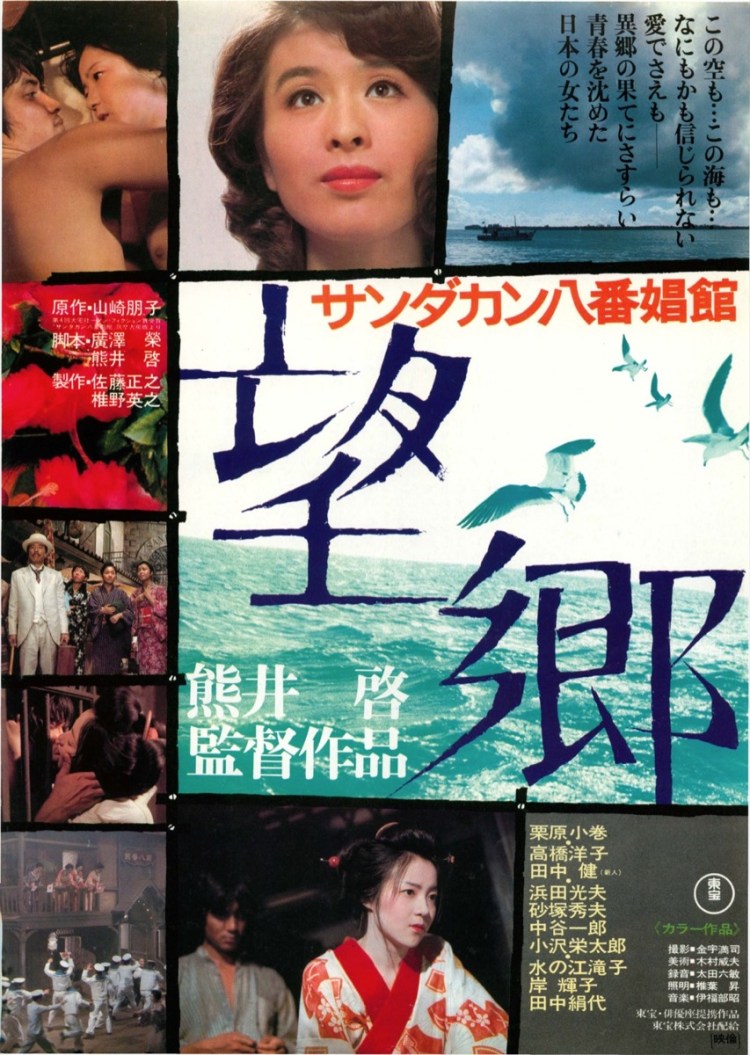
Bumpkin Soup (ドレミファ娘の血は騒ぐ, Kiyoshi Kurosawa, 1985)

Bumpkin soup posterLike many directors of his generation, Kiyoshi Kurosawa began his career in “pink film” – mainstream softcore pornography produced to a strict formula. His debut had been made for Director’s Company, an independent production house which offered creative freedom to young and aspiring filmmakers. He then tried to move into the studio system by directing for Nikkatsu’s Roman Porno, but the film was rejected for not quite living up to the demands of the genre. Bumpkin Soup (ドレミファ娘の血は騒ぐ, Do-re-mi-fa-musume no Chi wa Sawagu, AKA The Excitement of the Do-Re-Mi-Fa Girl) was then purchased from Nikkatsu and released independently as his second film, earning Kurosawa something of a reputation as a contrarian. Though the film contains its fair share of nudity and strange sexual shenanigans, it is easy to see why it did not fit the Roman Porno remit thanks to its bizarrely absurdist tone and often nonsensical French New Wave-inspired post-modernism.

The film begins with the heroine, Akiko (Yoriko Doguchi), walking into a Tokyo university campus in search of her small-town boyfriend, Yoshioka (Kenso Kato). Yoshioka is not, however, where he said he would be – he rarely turns up to lessons and has been absent from the music club he said he had joined for some time. Determined and undaunted, Akiko continues to look for him, encountering various strange people and events including a psychology professor intent on exploring the depths of shame.

After meeting sexually obsessed female student Emi (Usagi Aso), Akiko remarks that the university campus is like a permanent festival, or perhaps an amusement park. It certainly seems to be some sort of continuous orgy as seen though the eyes of simple country girl Akiko who has, after all, only come here in search of lost love. Carrying around a walkman with a tape featuring Yoshioka’s music, she devotes herself to finding her beau but eventually sniffing him out, discovers that he’s not the man she thought he was. Truth be told, Yoshioka does not seem like much of a catch. A randy college student, he has more or less forgotten all about Akiko while he pursues just about everyone else on campus instead of going to lessons.

Latterly, Akiko comes to the realisation that she thought she was looking for an adventure leading to love, but perhaps what she really wanted was love leading to an adventure. She left the country behind, travelled to the city, transgressed borders and entered the university where she was sure she would find answers but has discovered only more questions. Akiko feels herself at odds with her new environment, unable to understand the strange grammar of the university world where people seem to talk mostly about themselves. She does, however, seem strangely taken with the befuddled professor Hirayama (Juzo Itami) whose attempts to explore the nature of shame are derailed by the “shamelessness” of the modern student.

Hirayama’s big idea is that shame is all a sham. That the custom of hiding the parts of the body we have been taught to be ashamed of is a kind of deception in itself. He hopes that in the future people will live “nakedly” without feeling the need to hide anything at all, or at least that it will be impossible to tell from the outside which parts of themselves someone might be ashamed of. In order to pursue his theories, the professor is currently engaged in experiments to provoke an “extreme shame mutation” – something which his students later undertake alone but are unable to fulfil because their subject, Emi, appears to get off on the very things they considered shameful and embarrassing which, in turn, turns them all on. So in one way a very successful experiment, but in another not. In any case, Hirayama comes to the conclusion that only Akiko, with her innocent country ways, will be capable of showing him true shame which is how she eventually becomes mixed up in his “research”.

Most obviously inspired by mid-career Godard, Kurosawa adopts a post-modern, absurdist approach satirising left-wing student politics and youthful intensity while inserting random moments of song and dance along with explicit (and often odd) sexual  content that was likely still not quite enough to make it worthy of the Roman Porno name. A strange subplot pits the psychology student against a gang of mute performance artists led by a girl banging a bucket with a stick, which eventually leads to the act of nihilistic revolution which closes the film with a lullaby sung by a girl wielding a gun. What does it all mean? That shame is just a tool of social oppression, that one should make one’s own decisions without blindly following “thinkers”, that young people destroy themselves in pointless acts of revolution? Who can say, perhaps it isn’t very important but Kurosawa certainly has his fun while exploring the innocence/experience divide.