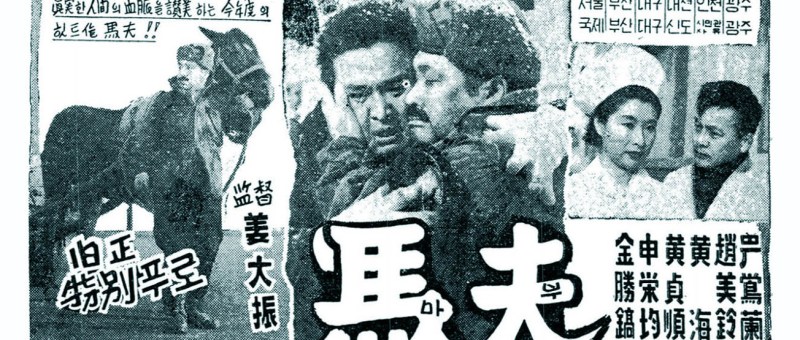
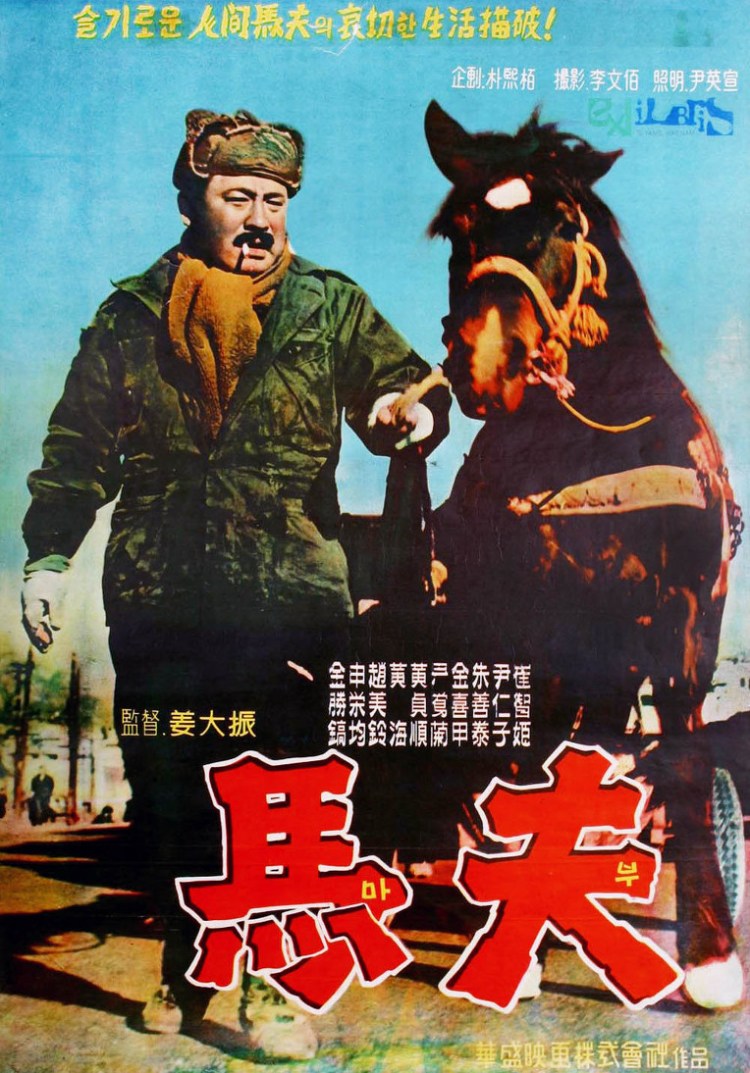
A Coachman (馬夫 / 마부, Kang Dae-jin, 1961)

A coachman poster 1The Korea of 1961 was one of societal flux, mired in post-war poverty but striving towards a brighter economic future. The rising tides of affluence had given birth to a new middle-class with the old feudal attitudes while others were largely left behind on the shores of prosperity. Kang Dae-jin’s A Coachman (馬夫 /마부, Mabu), the first Korean film to win a major international award with the Silver Bear Extraordinary Jury Prize at the 1961 Berlin Film Festival, finds itself at just this juncture as an old man pulling a horse and cart is forced to face up the automobile age while worrying what is to become of his family in the perilous modern society.

Ageing patriarch Chun-sam (Kim Seung-ho) has been guiding a horse and cart since his father died in Manchuria when he was 14. Technically speaking, he is not the owner of his horse, Dragon, but operates it on behalf of the owner, the mistress of an upper middle-class salaryman. As business is slow, she is always threatening to sell the horses which would leave Chun-sam and the other coachmen without a means to support themselves. Meanwhile, Chun-sam’s four children whom he raised alone after his wife passed away at a young age are each looking for different ways out of their impoverished existence. Chun-sam married off his eldest daughter Ok-nyeo (Jo Mi-ryeong) who is deaf and mute to a man he saved during the Korean War but he is abusive and treats her like a servant while openly inviting his mistress into their home. Oldest son Su-eop (Shin Young-kyun) is currently studying to retake the bar exam for the third time, middle daughter Ok-hee (Um Aing-ran) has begun dating a shady salaryman, and youngest boy Soo-up has become a high school delinquent.

Kang opens with an exciting sequence following Soo-up who has attempted to steal a bicycle as he tries to escape from its owner chasing him. Returning home covered in mud, slowing to a walk and putting his student’s cap back on to avoid suspicion, he makes his way from the modern houses of the new city back through traditional Korean homes towards his rather makeshift family abode which they share with the horse stabled in a side room. Chun-sam is obviously not a wealthy man, but the family bear their struggles with fortitude, perhaps to some extent avoiding each other but rarely arguing directly. Even the news that Ok-hee has once again quit her latest job, working in a cafe, in record time is greeted with exasperated acceptance rather than anger or resentment.

Ok-hee quit the cafe to fall in with her ultramodern friend Mi-ja (Choi Ji Hee) who has arranged a double date with a pair of sleazy executives, telling them that Ok-hee is a university graduate and daughter of a wealthy CEO. Intensely ashamed of her working class background as a mere coachman’s daughter, Ok-hee tries to catapult herself into the middle classes by weaponising her sex appeal, too proud to take the long way round through honest work. She rejects the attentions of family friend Chung-soo (Hwang Hae) who is good and kind because he is only a driver, taking little notice of his earnest warning that nothing good ever comes of hanging around with shady types like her boyfriend. He keeps trying to persuade her to take a job in a nearby factory, but she still thinks she’s above that kind of life and is convinced she can get the executive to marry her.

Chang-soo’s interest is of course romantic, but the advice he gives her is honest and altruistic. Unlike his unsavoury money lender father, Chang-soo is a salt of the earth type, but good men are hard to find and trying to escape poverty through marriage is a road fraught with danger as Ok-nyeo discovers. Chun-sam thought he’d done the right thing in marrying her off, believing a match would be hard to come by because of her disability and worrying she’d be left alone with no-one to look after her, but she is forced to endure mistreatment and humiliation at the hands of her husband. Ok-nyeo repeatedly returns to her family home, only able to show them the bruises to explain what’s happening, but Chun-sam always sends her back unable to break with the old patriarchal rules which insist that once married she must forever remain this man’s wife.

Chun-sam faces a similar dilemma of his own when he strikes up a tentative relationship with the kindly maid at his boss’ mansion who often heats up rice wine for him and goes out of her way to give him little treats. The odious moneylender is also after Suwon (Hwang Jung-seun) who is considered “old” to be unmarried at 37, but she favours Chun-sam because, as she says, she has always known him to be a “good man”. The “courtship”, if you could call it that, is innocent in the extreme with Suwon largely taking the lead while Chun-sam lags bashfully behind, childishly excited but also embarrassed because he cannot afford a wife and would be ashamed to ask her to share his life of poverty.

Looked down on by everyone, Chun-sam is forced to go cap in hand to his employer where he is made to “know his place” and reminded he is “just a coachman” with no right to talk back. When Hwang, the boss’ lover, injures Chun-sam through reckless driving, Su-eop becomes fed up with persistent feudalism and intends to have a polite word but is quickly shut down, reminded that he is nothing more than coachman’s son and told that his dreams of becoming a lawyer are not only unrealistic but an offence to the social order.

Su-eop alone takes the conventional route out of poverty in pursuing education and a steady government job, but is repeatedly told that he’s getting above himself and should be content with becoming a coachman like his dad, despite the fact that being a coachman is already close to an obsolete profession given the increasing affordability of the motorcar. He alternates between guilt and despair, wondering if he’s being irresponsible in pinning all his hopes on the bar exam and worrying that he’s not doing enough to support the family.

Yet Chun-sam, forced to consider his own obsolescence, is keen for him to succeed, not only because the family needs him to make a success of himself but because he wants his son to have a better kind of life than he had taking full advantage of the possibilities of the new society. Though their lives are hard, Chun-sam and his family remain kind and honest (even Ok-hee and Suo-up eventually conclude that hard work is the way after all), bonding with others of the same mindset like the maid Suwon who eventually quits her job in protest, and Chang-soo who rejects his father’s underhanded venality for simple human decency. United by friendly solidarity, the family is repaired and resolves to live on as a tiny unit of cheerful resistance against the feudalistic greed and selfishness of the modern society.


A Coachman was screened as part of the 2019 London Korean Film Festival.

Five Flavours Confirms Complete Programme for 2019

Fly Me to the Saitama still 1Poland’s premier showcase for East Asian cinema Five Flavours has confirmed the complete lineup for its 13th edition to take place in Warsaw from 13th to 20th November, 2019. This year’s festival will have a special focus on contemporary Japanese indie cinema as well as a mini retrospective dedicated to Hong Kong’s Fruit Chan.

Bhutan 

red phallus still 1

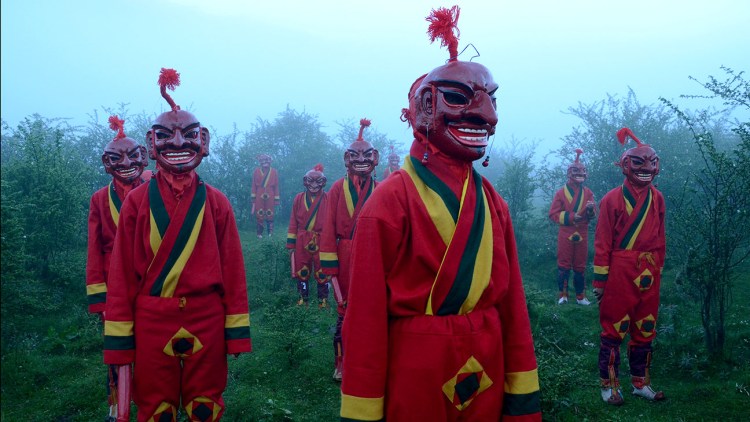
  • The Red Phallus – a 16-year-old girl is mocked by her peers because her father carves wooden phalluses for a living.

China

jinpa 1

  • Balloon – Tibetan-language drama from Pema Tseden (Jinpa) following a sheep farming family.
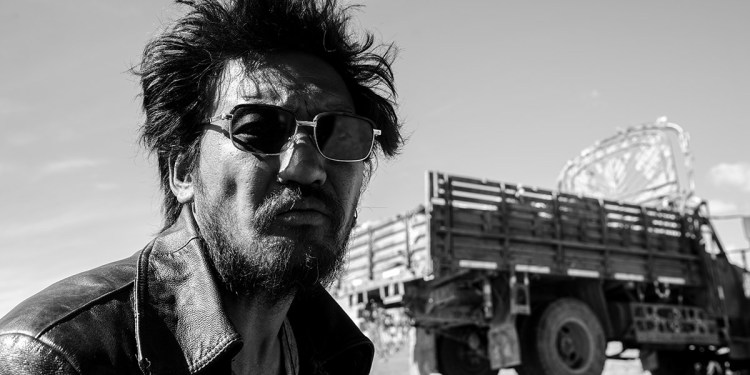
  • Jinpa – philosophical Tibetan western in which a truck driver picks up a vengeful drifter. Review.
  • To Live to Sing – the leader of a struggling Sichuan Opera troupe tries to stave off eviction through impressing a local bureaucrat. Review.

Hong Kong

Still human 1

  • Dumplings – Fruit Chan’s contribution to the Three Extremes omnibus movie in which an ageing TV star hopes to regain her mojo through rejuvenating dumplings. Fruit Chan Retrospective.
  • Durian Durian – a mainland woman comes to Hong Kong to make a living as a sex worker and befriends a local dish washer. Fruit Chan Retrospective
  • Fagara – a young woman discovers the existence of two half-sisters, one from Taiwan and the other mainland China, following the death of her estranged father.
  • Hollywood Hong Kong – a mainland sex worker infiltrates an obese family. Fruit Chan Retrospective
  • Little Cheung – a little boy rides around Hong Kong delivering for his parents’ restaurant. Fruit Chan Retrospective
  • Made in Hong Kong – Fruit Chan’s landmark handover movie. Review. Fruit Chan Retrospective
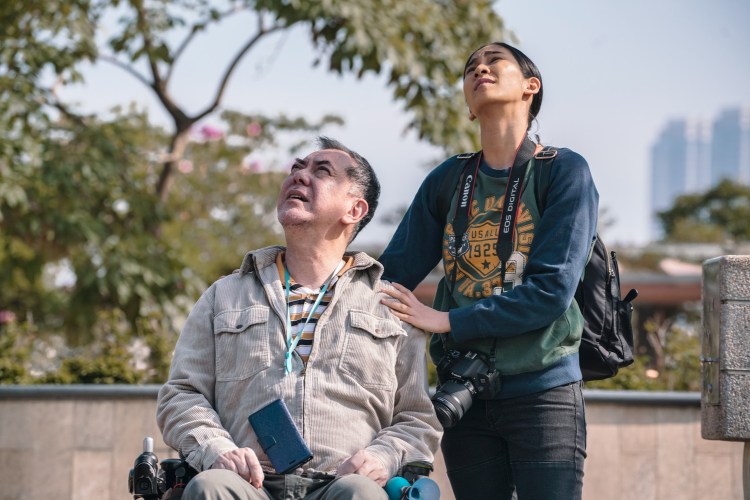
  • Still Human – a grumpy old man makes an unexpected connection with his Filipina carer. Review.
  • Three Husbands – latest from Fruit Chan in which a young woman lives a life at sea with her three husbands. Fruit Chan Retrospective.
  • Throw Down – 2004 Johnnie To classic starring Louis Koo as a former judo champion now a depressed musician and club manager.

Japan

And your bird can sing still 1

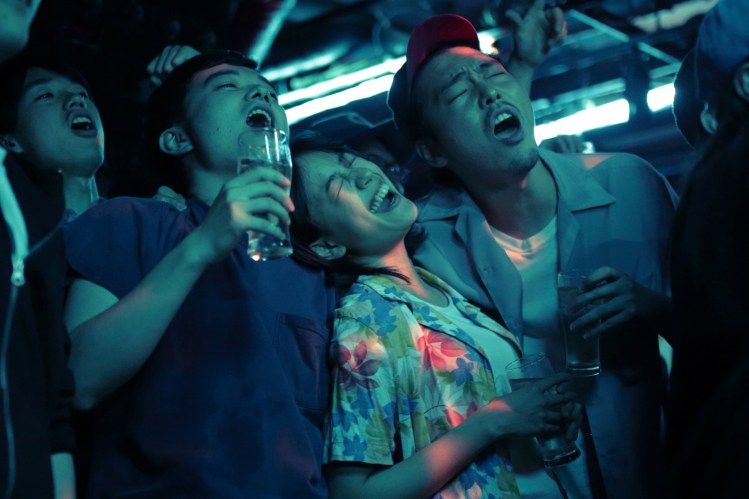
  • And Your Bird Can Sing – three melancholy slackers struggle to accept love in Sho Miyake’s adaptation of the Yasushi Sato novel. Review.
  • Blue Hour – a young woman takes her best friend on a roadtrip to her home town but finds old wounds reopening on reuniting with her family. Review.
  • Bone Born Bone – Unmarried pregnant daughter Yuko scandalises her community when she returns home to participate in the bone washing ritual in the second feature from Okinawan comedian Toshiyuki Teruya. Review.
  • Demolition Girl – a high school girl dreams of escaping her small town existence by getting enough money for uni through niche fetish videos of her smashing things. Review.
  • Flowers of Evil – splatter director Noboru Iguchi adapts Shuzo Oshimi’s nihilistic high school manga.
  • Fly Me to the Saitama – absurdist comedy in which the residents of Saitama have become an oppressed minority. Review.
  • Going the Distance – Forced to choose between his wife-to-be, and a “brother” who grew up with him in the same orphanage, Asahi’s life reaches a crisis point in this comedy/drama debut from Yujiro Hamamoto.
  • Mr. Long – a Taiwanese hit man is adopted by a small town in Sabu’s melancholy drama. Review.
  • One Cut of the Dead – Real zombies mess up the shoot for a horror movie in Shinichiro Ueda’s hilarious comedy. Review.
  • The Gun – Masaharu Take adapts Fuminori Nakamura’s nihilistic novel in which a young man’s life changes when he picks up the gun of a fallen yakuza. Review.

Korea

Door lock banner

  • Believer – Korean remake of Johnnie To’s Drug war. Review.
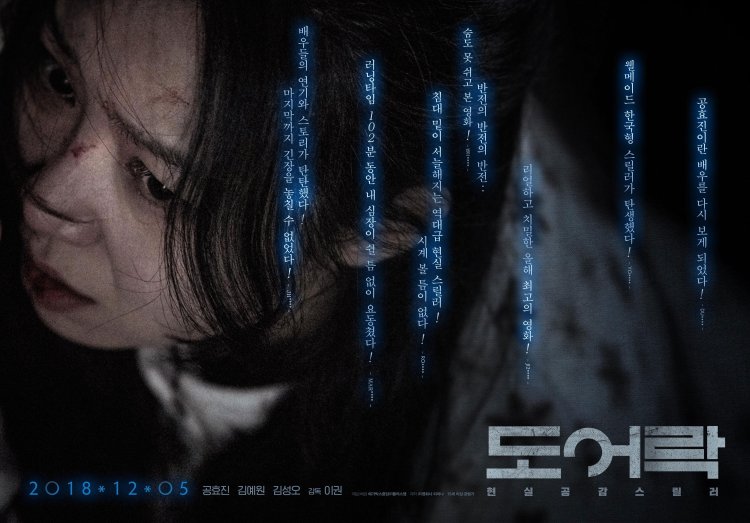
  • Door Lock – remake of Spanish film Sleep Tight in which a woman living alone suspects a stranger has been breaking in to her home. Review.
  • Maggie – surreal drama narrated by a catfish in which a conflicted nurse explores the interplay of truth and trust. Review.
  • The Odd Family: Zombie on Sale – comedy in which a family’s life is disrupted when dad gets bitten by a zombie. Review.

Taiwan

Nina Wu still 1

  • Heavy Craving – a lunch lady hoping to lose weight strikes up unexpected friendships with a deliveryman and cross-dressing student.
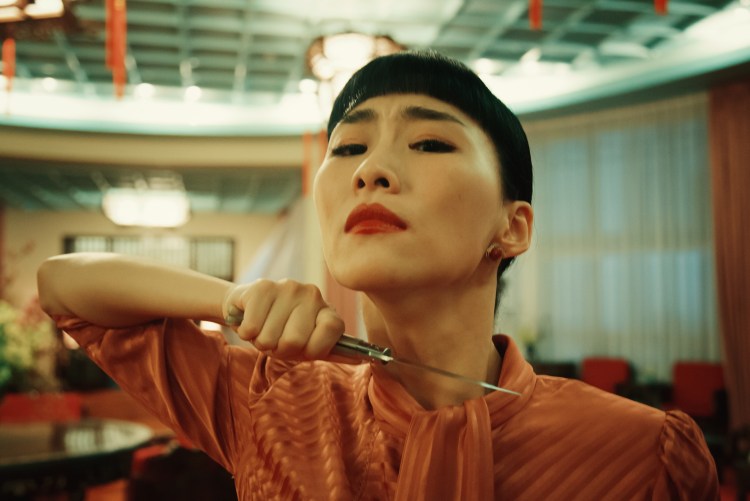
  • Nina Wu – psychological drama from Midi Z in which an actress gets her big break but is forced into uncomfortable situations by a difficult director.

Singapore

Wet season still 1

  • Repossession – an ordinary man’s life becomes a nightmare when he loses his cushy corporate job.
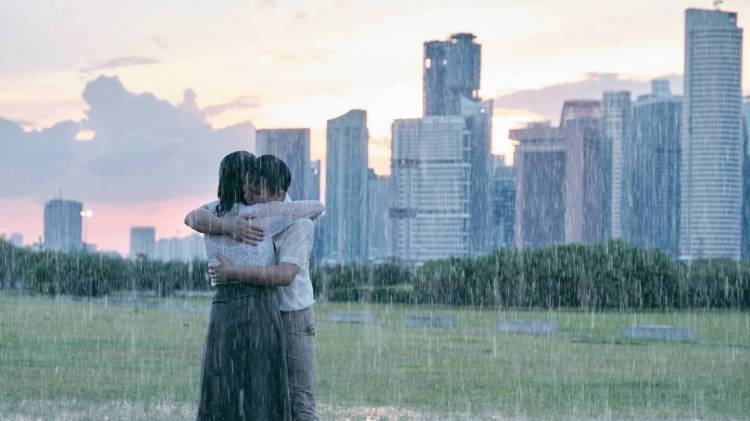
  • Wet Season – Ilo Ilo’s Anthony Chen returns with a monsoon tale in which a Mandarin language teacher is drawn to one of her students. Review.

Thailand

Inhuman Kiss banner 1

  • BNK 48: Girls Don’t Cry – Thamrongrattanarit Nawapol interviews members of the Thai idol group.
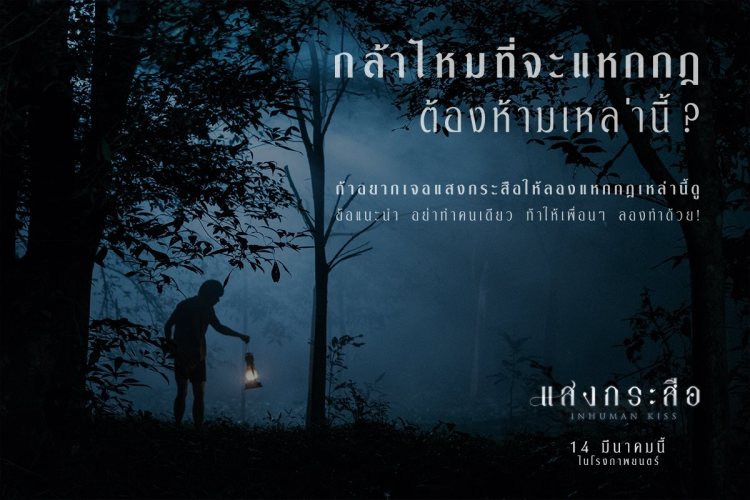
  • Krasue: Inhuman Kiss – an innocent village girl discovers she is a victim of a strange curse in which her head detaches from her body to hunt for blood! Review.
  • Where We Belong – friendship drama starring members of Thai supergroup BNK48.

Vietnam

Furie still 1

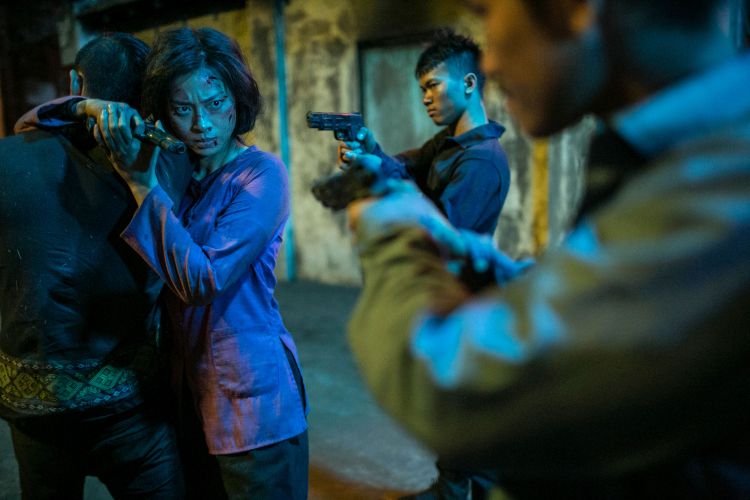
  • Furie – some thugs make a very bad decision when they kidnap a former gangster’s daughter.

Five Flavours takes place in Warsaw from 13th to 20th November 2019. More information on all the films as well as screening times and ticketing links can be found on the official website, and you can keep up to date with all the latest news via the festival’s Facebook Page, Twitter Account, Instagram, and YouTube Channels.

My Dear Liar (受益人, Shen Ao, 2019)

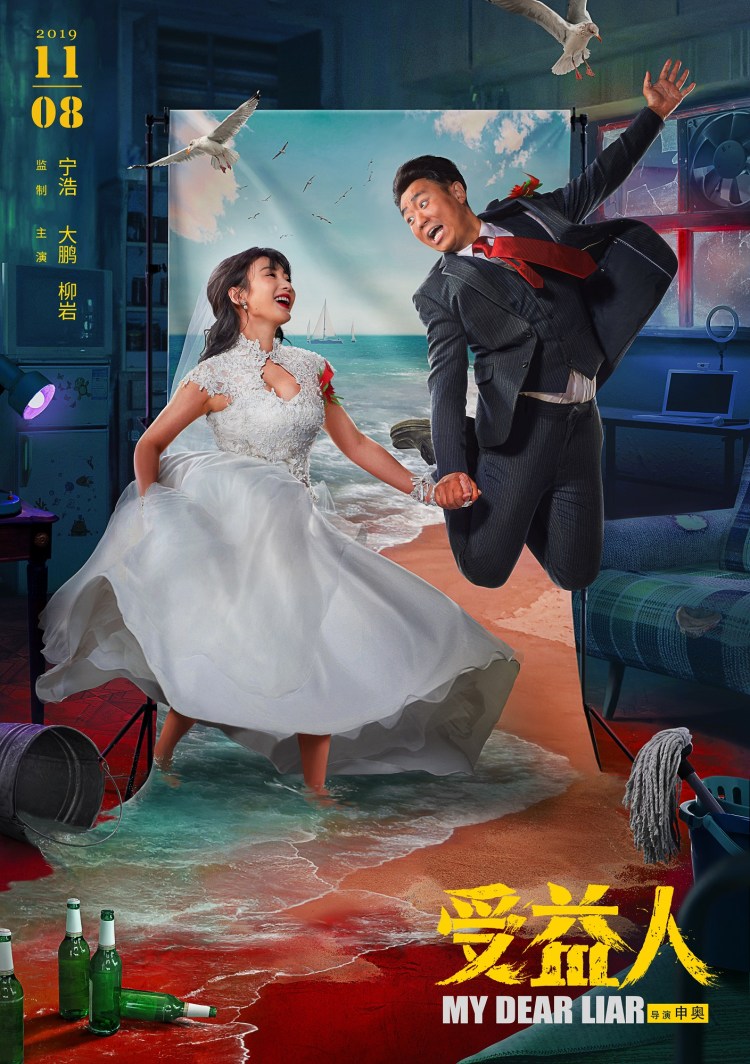
My Dear Liar poster 1The Chinese censors board can sometimes be unpredictable, but the one thing that remains absolutely certain is that crime cannot pay in a contemporary mainland movie. That’s why so many recent films from China end with an incongruous piece of on screen text telling us how long everyone is going to jail for after being convicted of the crimes we just saw them commit, often with a supplementary paragraph expressing their remorse and hope to make it up to the people and the party. All of this merely makes the existence of unconventional, dark rom-com My Dear Liar (受益人, Shòuyìrén) even more improbable than it already seemed seeing as the entire conceit is the murder of an innocent woman for financial gain.

Shen opens with childhood friends Zhong (Zhang Zixian) and Hai (Da Peng) rehearsing the story they will give to the police assuming their plan comes off. Zhong, an accountant, has been part of a large scale embezzlement scam which is currently under investigation. He needs to find a large amount of money quickly to cover up his crimes, getting together with Hai, a widowed single-father to a little boy with severe asthma, to commit small acts of minor extortion. When their random schemes stop paying the bills, Zhong makes a radical suggestion – insurance fraud. He proposes that Hai marry an internet web streaming star named “Foxy Fairy” (Liu Yan) so that he can start an affair and then drive over a bridge with her on the back of his motorcycle to collect the life insurance pay out. This whole plan hinges on the fact that Zhong knows Foxy Fairy can’t swim because she mentioned it on one of her live streams.

As plans go, it could use some work. Neither Zhong nor Hai seem to be particularly worried about the fact that they’re plotting to deceive and then murder a young woman solely for financial gain. Hai, who otherwise seems sweet and naive, is expected to live with and pretend to love a woman he is going to kill for money. One gets the impression he’s been doing Zhong’s bidding since they were kids without really thinking about it, but you’d expect him to at least ask a few more questions about being involved in an elaborate conspiracy to murder aside from clarifying that he won’t be expected to off her himself (except that he might, because Zhong’s plan isn’t as “watertight” as he first thought it to be).

Hai’s motivation for going along with all this, besides wanting to help the sociopathic Zhong, is his son’s health. Perhaps surprisingly, the film makes an implicit criticism of the declining air quality in the modern Chinese city, almost as a sort of metaphor for a moral decline coupled with a critique of increasing social inequality in suggesting that this is a problem which disproportionately affects the poor not least because they cannot afford to buy expensive machinery to improve it. Hai’s wife apparently died of a lung complaint, and his son Yoyo is in constant discomfort because living above the smoky internet cafe where Hai works irritates his asthma. In the park one day, Hai runs into a sales point for a new development, Diamond Bay, built out on the coast where they promise access to clean air. It sounds like a dodgy timeshare pyramid scheme, but it’s the only source of hope in Hai’s wretched life and so he sets his heart on getting enough money together for a luxury condo on the beach where Yoyo could breathe freely.

To get it, he sends his son away and makes an unconvincing attempt to play the part of “Big Ben” – one of China’s new brand of sleazy millionaires and a character apparently played by Zhong online for some time in order to romance the money hungry Foxy Fairy through her live stream channel. Why exactly Zhong picked her isn’t clear, save that he hopes to exploit her greed, justifying the scam with the rationale that she is also a “fraud” extorting money from her deluded fans under false pretences. Lacking the resources and an ill fit for the “Big Ben” mould, Hai struggles to win “Miaomiao’s”, to go by her “real” name, heart, but eventually begins to fall for her after seeing the woman underneath the makeup.

Once married, Miaomiao quickly slides into the conventional roles of wife and mother, even bonding with little Yoyo who makes an unscheduled reappearance mid-scam. Despite her rabidly consumerist online persona, it turns out that what Miaomiao wanted wasn’t riches but the warmth of a family home which is something she’s unexpectedly found living in the cramped apartment above the internet cafe. She remains completely clueless as to Hai’s true motives and desperately tries to make the marriage work, even going on TV to talk about what a good man her husband is.

One begins to wonder if Miaomiao is going to turn the tables on the scheming guys, but her big secret is just that she’s actually “nice” and wants to settle down for a conventional home life she assumed might have already passed her by. Hai hypocritically tells his son who keeps forging his signature on subpar report cards that the most important thing about being a man is “honesty”, but continues lying to Miaomiao right until the very end, getting cold feet only moments before it’s too late. Addressing some fairly subversive themes from the clean air issue to social inequality, institutionalised property fraud, corporate corruption, and organised embezzlement, My Dear Liar nevertheless refuses to engage with the deeply troubling nature of its central conceit even when indulging in the incongruous sweetness of its otherwise “wholesome” romance.


Currently on limited release in UK cinemas courtesy of CMC Pictures.

International trailer (English subtitles)

Better Days (少年的你, Derek Tsang, 2019)

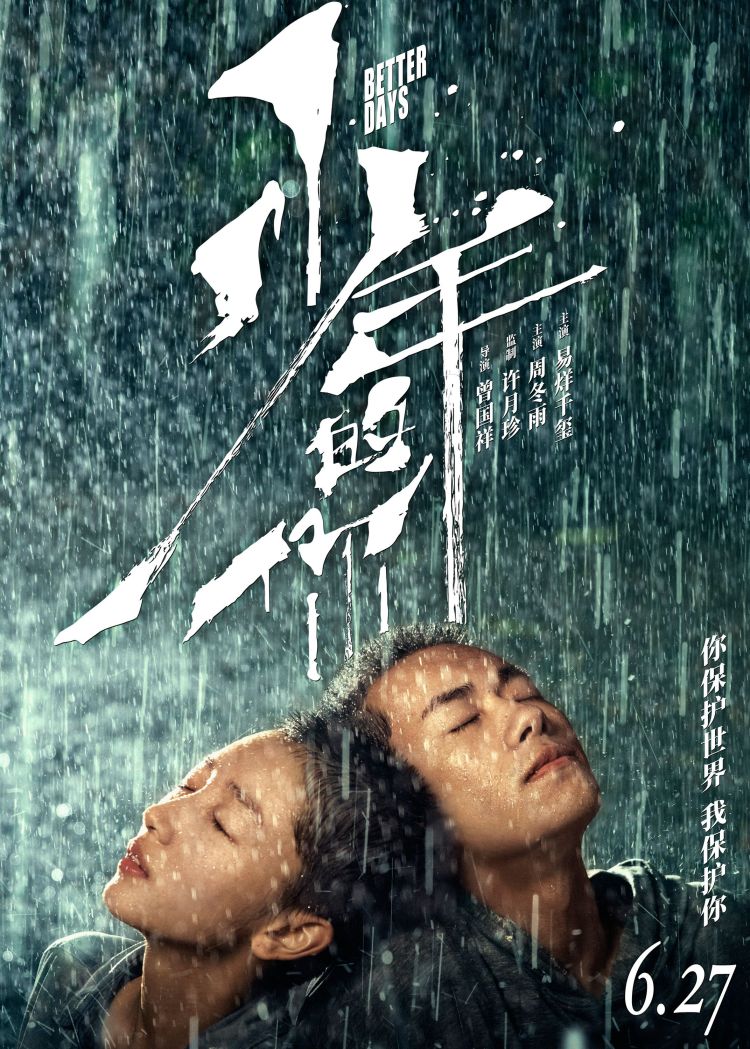
Better Days poster high resWith the Chinese censors board seemingly on high alert, the news that yet another highly anticipated film from an internationally acclaimed director has been pulled from its prime festival slot for “technical reasons” comes as no surprise. Derek Tsang’s Better Days (少年的你, Shàonián de Nǐ) proved an early Berlin casualty, missing out on the festival season in its entirety while gaining approval for a regular release in June only to be abruptly pulled three days before the film was set to open nationwide. Finally making its way into multiplexes all over the world (largely thanks to its boyband star), it’s clear that concessions have been made but it’s not difficult to see why the censors might have been nervous given that Tsang, while perhaps coy, is not afraid to paint his two tragic protagonists as bullied by their society, victims of a series of concentric social ills which define the modern China.

Opening with a brief, melancholy framing sequence featuring the older Chen Nian (Zhou Dongyu) teaching English in a small provincial classroom, Tsang flashes back to 2011 when she was a mousey student studying at a top cram school while preparing for China’s gruelling two-day Gaokao university entrance exams. Nian shuts out the rest of the world and buries herself in books, but is jolted out of her trance-like dedication when a classmate, Hu Xiaodie (Zhang Yifan), jumps from the school roof into the courtyard below. Wanting to remain distant yet somehow moved, she attracts the wrong kind of attention with a gesture of kindness, placing her school jacket over Xiaodie’s ruined face to protect her from the cruel gaze of the smartphone cameras trained on her contorted body with a strange kind of hungry triumph.

Questioned by the police, Nian denies that she and Xiaodie were friends, refusing to disclose any information which might explain what led her to take her own life. Nian, however, is perfectly aware of what made her do it, because she too is one of a small group of students terrorised by a trio of rich kids led by the sociopathic Wei Lai (Zhou Ye). Now that Xiaodie is out of the picture, Nian is first in the firing line. Along with a male student apparently also among the bullied, Nian had believed that the bullying was just something she’d have to endure until she’s done with Gaokao and graduates into adulthood, but with the violence and cruelty escalating she decides to try getting help from the authorities.

The authorities, however, are largely absent. Despite concrete evidence that Wei Lai and her friends hounded Xiaodie to her death, the girls are merely given a slap on the wrist, suspended from school still but allowed to take the Gaokao with no further action taken because, after all, they’re still young and have their whole lives ahead of them. The irony is that the tannoys at this expensive cram school blast out the message that life isn’t fair but the Gaokao is, as if it were some great leveller giving equal opportunity to all rather than advantaging those who have the most money to throw at. Wei Lai is a young woman from a wealthy family who feels herself entitled to success and resentful of those who might eclipse her through talent alone while deeply believing that her money gives her the right to do whatever she pleases. She makes Nian’s life a misery in order to assert a power she does not really have, bullied herself at home by a father apparently dissatisfied with her lack of academic results.

Parents, like teachers and policemen, are generally distant figures of authority, bullying their kids into academic success through a combination of shaming and violence. Nian is singled out for bullying partly for being from the “wrong” socioeconomic background, the child of a single mother currently on the run from debt collectors and selling potentially harmful black-market cosmetics to get by. Unlike some of the other parents, Nian’s largely absent mother encourages rather than disciplines her but is too far away to offer much in the way of support or protection and quite clearly views her daughter’s academic success as her own salvation. Nian cannot ask her mother for help, nor can she turn to the school who have already made it clear they’ll bend over backwards to back the rich kids, or to the police who profess they can’t do anything because they always end up looking for someone in loco parentis and finding no one there.

That is perhaps why Nian ends up turning to the unconventional source of protection, bad boy Bei (Jackson Yee). Himself a victim of bullying in being abused and then abandoned by his parents, Bei, a noble street punk, though rough and unpredictable swears to protect her with his fists, willing to take a beating to do it (and eventually far more) if necessary. Bonding in their shared sadness, Bei realises that Nian has one shot but she could still get out and escape the misery of poverty whereas there is no way out for him.   

Nian tells the policemen investigating Xiaodie’s death that there is no room for friendship among those single-mindedly studying for the Gaokao, but slowly opens up to Bei while beginning to address her deep seated feelings of guilt and resentment in her complicity with social oppression. Grateful that it wasn’t her, she let Xiaodie suffer. Meanwhile, another student knowing herself to be a potential victim wilfully joins in with the bullies in the hope they’ll leave her alone only to find herself next in the firing line while Nian is protected by the shadow of Bei. Awakening to her social responsibility now that she is no longer alone, Nian resolves to try and help the other girl by bringing her into her circle of protection but finds herself betrayed by the girl’s failure to overcome her fear in order to reject her complicity.

Nian is repeatedly told that Gaokao is the doorway to adulthood, that all she has to do is endure until it’s over and she’s “free”. Sympathetic police detectives lament that empathy is something you learn only when grownup while simultaneously convinced that only those as young and naive as Nian and Bei would willingly sacrifice themselves for one another. Tsang begins in the realms of moody, achingly cool nihilistic youth drama in which there can be no way out for our doomed lovers, but soon segues into something more palatable to the censors in once again victim blaming the teens, suggesting that their problems are partly of their own making in their resistance to benevolent authority, refusing to trust an earnest, emotionally astute police detective intent on saving them from themselves.

Rather than accept that the tyranny of the Gaokao, increasing social inequality, entrenched authoritarianism, a shame culture, and an epidemic of absentee parenting in the midst of China’s go for broke economic development, are creating a pressure cooker society in which cruelty and violence are the only inevitability, the film ends on an incongruously rosy note which emphasises our collective responsibility to combat bullying (aided by the state whose efforts to tackle it are detailed in an awkward propagandist coda) while uncomfortably implying that it too is something that ends in childhood. Nian resolves to protect the world, as if she could solve all of society’s ills through solidarity alone, but emerges with little more than world weary resignation to its refusal to protect her. Still, in a world of unreliable authority figures and hopeless futures, solidarity’s better than nothing and as likely as anything else to lead to Better Days ahead.


Currently on limited release in UK, Australian, and New Zealand cinemas courtesy of Magnum Films, and in the US from Well Go.

Trailer (English subtitles)

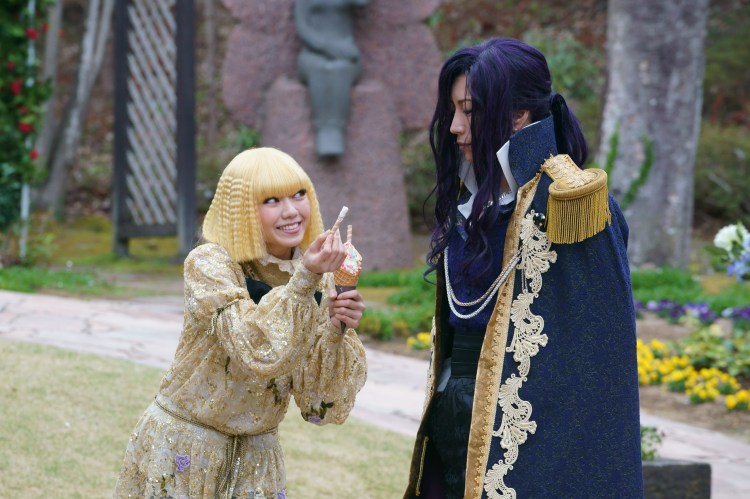
A Boy and Sungreen (보희와 녹양, Ahn Ju-young, 2018)

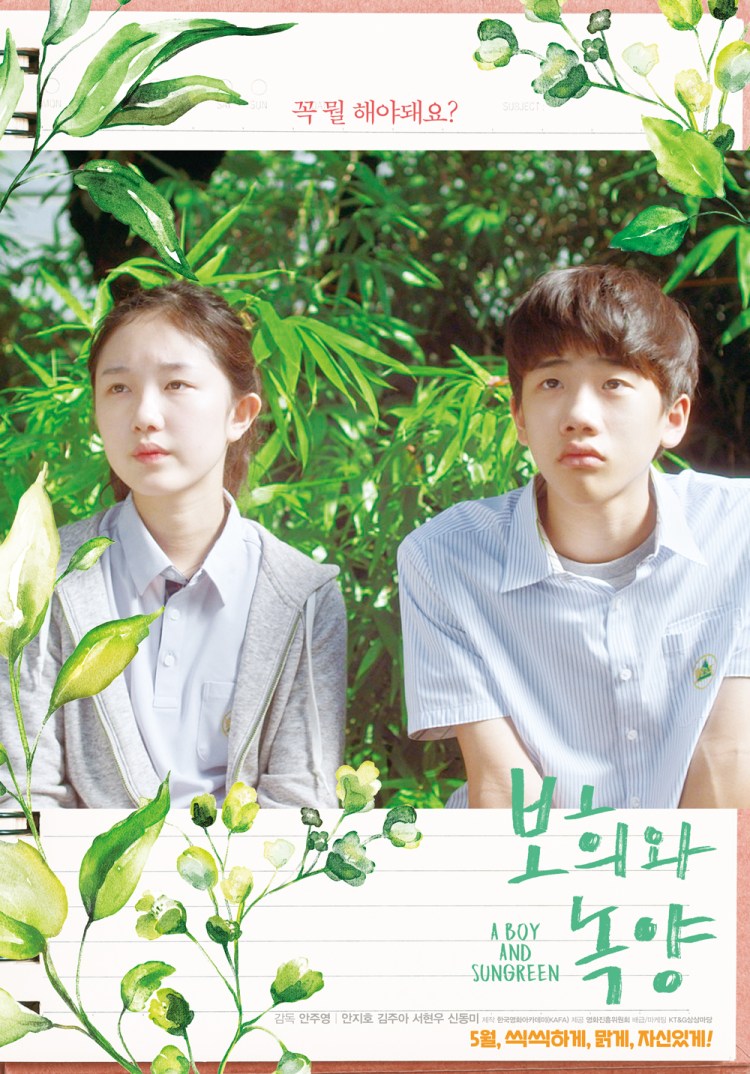
A boy and sungreen poster 1Figuring out who you are is a normal part of growing up, but if you start to suspect that parts of the puzzle have been kept from you it can become an even more complicated business. The hero of Ahn Ju-young’s delightfully charming debut A Boy and Sungreen (보희와 녹양, Boheewa Nokyang) thought he was doing OK. Maybe he worried that he was a little bit weedy and resented being picked on by the snooty kids at school, but he always had his good friend Nok-yang (Kim Ju-a) to hide behind and she always had his back. Realising that his mum (Shin Dong-mi) may have a new romance on the cards entirely destabilises his worldview, sends his anxiety into overdrive, and reawakens a series of as yet unresolved abandonment issues resulting from losing his father at a young age.

What Bo-hee (Ahn Ji-ho) discovers on “running away” to visit a woman he kind of remembers might be his half-sister, is that his mother might have lied to him and the father he thought was dead might actually still be alive. Together with his best friend Nok-yang, he resolves to investigate and find out if his father is still out there somewhere, if he still thinks of him, what sort of man he might be, and, crucially, why he chose to abandon his son. Still upset with his mother and childishly resentful, Bo-hee avoids going home and installs himself at his “half-sister” Nam-hee’s (Kim So-ra), an air hostess who turns out to be a cousin temporarily taken in by Bo-hee’s mum when she ran away from home as a teenager, where is he is cared for by her surprisingly supportive boyfriend Sung-wook (Seo Hyun-woo).

Tellingly, Sung-wook is also an orphan with no family, raised in an orphanage with no parental models yet easily slipping into a positive paternal role. Both Bo-hee and Nok-yang are being raised in single parent families, Bo-hee believing until recently that his father had died, while Nok-yang lost her mother in childbirth and lives with her salty grandma and distant father. In conservative Korean society they each experience a degree of stigma for not having the “full” complement of parents with some of the snooty kids at school even assuming that’s why they’re friends, but the pair largely rejoice in each other’s company and have learned to pay them no mind.

Meanwhile, Bo-hee is experiencing strange anxiety-like attacks which eventually turn out to be something more serious, but neatly underline his intense adolescent confusion. Finding out his mother has a boyfriend not only forces him to confront his father’s absence, but also deepens the sense of anxious rootlessness he feels as someone without an extended family network. As Nok-yang somewhat insensitively puts it, what if the boyfriend turns out to be an “evil stepmother” and pushes him out of his family home, where will he go then? That kind of thinking is what leads him to track down Nam-hee, “certain” that she won’t turn him away because, he believes, they share the same father.

Despite maintaining an intense belief in the power of blood connection, Bo-hee remains distrustful of the idea of family and uncertain in his own identity. Even his name, which is really just “Boy” like the unnamed protagonist of a young adult novel, bothers him in that is uncomfortably close to slightly rude word, not to mention being somewhat unusual. Nok-yang has an unusual name too, but hers has a lovely, if sad, story behind it about her dad seeing rays of sunshine through the trees on the way home from the hospital and deciding to name her after that, whereas Bo-hee’s seems to be random. Thanks to his quest to track down his dad, Bo-hee finally comes to understand the meaning behind his name and accept himself for himself rather than longing to be just like everyone else.

Like all small children, Bo-hee thought everything that happened in his life was somehow his fault, that his dad left because of something he did or that there was just something wrong with him that his dad couldn’t love. What he realises is that his father’s decision was his father’s and nothing to do with him. It wasn’t his fault that his father left and there is nothing about him that means anyone else in his life is likely to leave without warning. In a roundabout way, looking for his dad helps to rebuild a sense of the family he didn’t think he had, becoming more secure in his relationship with his mother, bonding with Sung-wook and Nam-hee, and remembering that whatever happens he and Nok-yang will always be there for each other.


A Boy and Sungreen was screened as part of the 2019 London Korean Film Festival.
International trailer (English subtitles)

Piagol (피아골, Lee Kang-cheon, 1955)

piagol poster 1Under the oppressive regime of Park Chung-hee, “anti-communism” became a national policy and all films, at least implicitly, had to display anti-communist sentiment. In the 1950s, however, despite the immediacy of the war’s end, there might have been more room for nuance. Then again, perhaps not. Lee Kang-cheon’s Piagol (피아골), released just two years after the events it depicts, was among the first to concern itself with the North Korean partisans and was subsequently banned for its supposedly sympathetic depiction of communist guerrilla fighters, finally released only with the addition of the South Korean flag superimposed over the closing scene in order to suggest that the sole surviving partisan had decided to walk towards freedom.

Led by hardline Captain Agari (Lee Ye-chun), the partisans are in a sorry state. The truce has been signed and the war is “over” (or, at any rate, as “over” as it is now). They know no further reinforcements from China or the Soviet Union will be forthcoming, but have decided to continue fighting anyway. Holed up on Mount Jiri, the partisans are involved in an internecine guerrilla conflict with the encroaching South Korean and American forces, but are determined to root out “reactionary” elements and have been taking brutal revenge on local villages they believe to have “betrayed” them to the authorities.

Unlike the later anti-communist films, Lee’s partisans are not rabidly evil or gleefully sadistic but they are casually cruel and wilfully heartless. After the escape sequence which opens the film, a roll is called recording a casualty and a lost rifle. Captain Agari is much more worried about the gun than the man, eventually executing the soldier who dropped it after being shot in the arm for dereliction of duty. Agari’s actions are even harder to defend given that he knows there will be no further reinforcements and he’s down to a handful of men already, but neatly exemplify his lack of human feeling and intense need to enforce both dominance and ideological purity.

Convinced that someone in a nearby village is acting as an informant for the South, Captain Agari decides to carry out a raid to rid it of “reactionary” elements, which is a thinly veiled excuse to sack it. Not all of the partisans are entirely on board, especially as some of them hail from this village originally and have family members still living there. During the raid, Lee focuses on cowardly Captain Agari hiding in a nearby temple while Buddhist statues seem to be giving him the hard stare, before shifting to the same temple now in flames. A baby cries and crawls over the half naked body of its mother, raped and left for dead. Meanwhile, teenage recruit Il-dong (Cho Nam-suk) searches for his mum only to find her dying of a bullet wound in the street. Half delirious she asks him why he shot his own mother while all he can do is cradle her as she dies. Cold as ice partisan Ae-ran (Roh Kyung-hee) blows her whistle to tell him to get moving and brushes off the disapproval of sensitive intellectual Chul-soo (Kim Jin-kyu) with an affirmation that all actions to eradicate reactionaries should be praised.

Ae-ran is one of only two female partisans and seems to have something of a vendetta against the other, Soju (Kim Young-hee), who is berated by Captain Agari for being weak and womanly, “too wimpy for the communist party”. Breaking down in tears, Soju is raped by Agari who, a few moments later, is handed a commendation for heroism from the guerrilla commander and has her transferred to HQ out of the way. Unlike Soju, Ae-ran is presented as overly masculine, tough and unforgiving but, crucially, able to defend herself against Agari and successfully resist his advances. She is, however, softened by the quiet expression of desire for sensitive romantic Chul-soo whom she describes as “like a poet in fairyland”, and is unique among the partisans for her eventual acceptance of defeat as she urges to Chul-soo to go down the mountain and surrender to take advantage of the amnesty proposed by Southern forces, remaining reluctant to go herself in believing there is no way back for her after all she has done in the mountains.

Ae-ran has indeed done quite a lot in the mountains and none of it good. Chul-soo may lament that he has already lost his humanity despite being the only partisan to regularly voice dissent, but Ae-ran does not appear to have had very much of it in the first place. Still, she is “a survivor”. Given that we’ve seen them repeatedly commit atrocities and eventually destroy each other out a series of petty resentments, attempts to cover up crimes, and revenge born of sexual jealousy, you could hardly say that the communists have been shown in a very positive light, but audiences at the time failed to identify the film as sufficiently “anti-communist” because they couldn’t be sure that Ae-ran’s ideological disillusionment had led her to choose freedom in the South, rather than it simply being a case of physical desperation. Unlike the anti-communist films of the ‘60s, Lee refuses to demonise the partisans, depicting them as ideologically committed, cruel, and heartless, but also flawed and human as they succumb to despair on realising they have been abandoned by their nation, marooned in the South somewhere between death and freedom. In this at least, they are victims of their ideology, ruined by emotional austerity and betraying their own revolution even as they attempt to enact it.


Piagol was screened as part of the 2019 London Korean Film Festival.

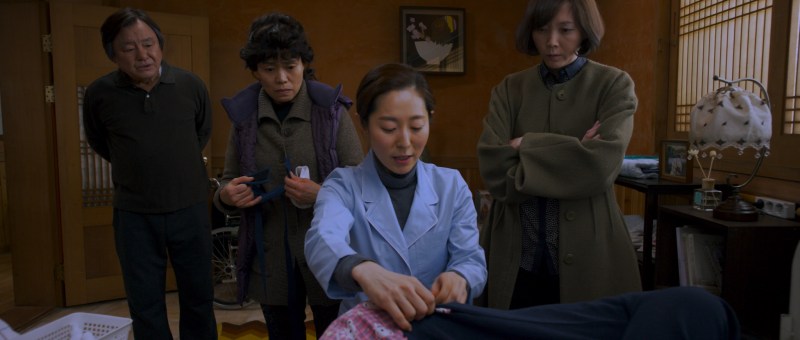
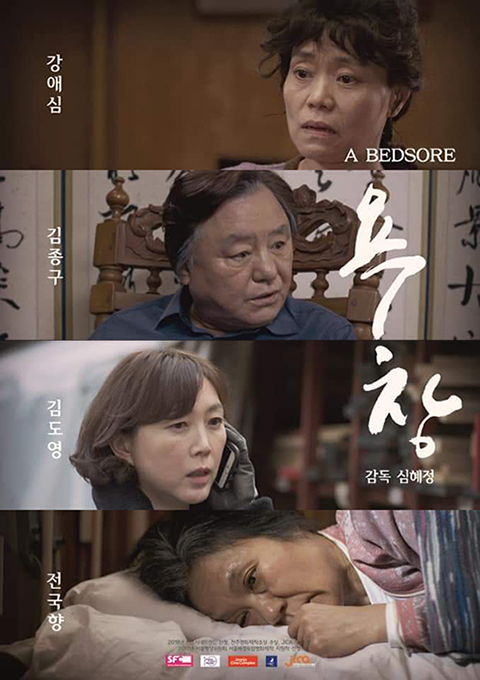
A Bedsore (욕창, Shim Hyejung, 2019)

bedsore posterFamily is supposed to be about mutual responsibility, according to oldest daughter Ji-soo, but in a culture as fiercely patriarchal as Korea’s, there may be differing interpretations of what “responsibility” entails. Shim Hyejung’s A Bedsore (욕창, Yokchang) uses the titular ailment as a metaphor for the festering wounds at the centre of familial relationships, an irritating and potentially dangerous pressure ulcer born of something sitting too long in the same place unaddressed and unresolved. Intensely lonely and unable to connect, the family members struggle with the demands of what it means to be a family and find themselves more often than not guilty and resentful in their filial obligations.

Grandma Gil-soon (Jeon Gukhyang) is bedridden following a cerebral haemorrhage and largely unable to communicate though obviously very much present. The family has hired a live-in carer/housekeeper to look after her as well take care of the domestic tasks because retired patriarch Chang-sik (Kim Jonggu) is a traditional sort which means he’s entirely unable to fend for himself. The trouble starts when Mrs Yu (Kang Aesim) discovers Gil-soon has a nasty bedsore on her back. Rather than deal with it himself, Chang-chik rings his daughter Ji-soo (Kim Doyoung) to come and look in on them, but despite her obvious distress in worrying that perhaps her mother is not receiving proper care and may be in pain, she is also dealing with a moody teenage daughter and a husband who may be having an affair. She wonders why her dad always calls her and not her brother Moon-soo (Kim Jae-rok) or his wife. And then there’s the golden boy middle brother Yong-soo who was the apple of his father’s eye but has made a mess of his life and is currently living as an undocumented migrant in America after doing a midnight flit.

The most obvious problem in the Kang household is that Chang-sik is a product of his times. He does almost nothing to care for his wife and fully expects that a woman will take care of it and him. When there is a problem, he summons Ji-soo and/or his daughter-in-law, never his son, and expects them to take over. He cannot cook or clean and “requires” a woman to fulfil those functions for him so that he can live like a man. This attitude has perhaps contributed to his ongoing confusion regarding Mrs Yu with whom he is on friendlier terms than might be wise for someone who is technically an employee. Somewhere between authoritarian father and jealous suitor, he grows resentful towards her for going out on her days off and irrationally irritated when he realises she may have a boyfriend, eventually leaving Gil-soon on her own to spy on Mrs Yu in a quiet bar where she likes to go dancing.

Though we might initially feel sorry for Chang-sik because he seems so incredibly lonely now that he can no longer communicate with his wife, he quickly loses our sympathy as we realise that it is largely self-pity and that as lonely as he might be, it must be so much worse for Gil-soon who is often left all alone in her room with no stimulation though we can clearly see that she is present and able to engage with the world around her. Mrs Yu does her best to look after her, but is not a trained carer just someone in desperate need of a job. Being an undocumented Korean-Chinese migrant worker also places her in an awkward position with the miserly Chang-sik who, while not a bad man or abusive employer, does perhaps think he has more leverage to exploit her because of her precarious immigration status. We wonder what Gil-soon’s married life must have been like, and if Chang-sik thinks of her as an individual or merely as a woman to be swapped out and replaced now that she can no longer serve him, especially when he announces a bizarre plan to divorce his wife and marry Mrs Yu to make her a legal citizen and ensure she stays in the household.

That particular bombshell obviously does not go down well with the kids, particularly Ji-soo on whom most of the additional burden of care has fallen. She tries to reason with her dad, but he doubles down on the patriarchal norms, telling her it’s all her fault for not pulling her weight as a daughter while she quite reasonably reminds him he had three children but expects her drop everything and sit by her mother’s bedside 24/7. Like her parents and Mrs Yu, Ji-soo is also lonely even within her own family, pushed out by her teenage daughter who keeps bringing her “friend who is a boy” home to play, and her husband who keeps “working late” and takes private phone calls from a young woman. Meanwhile, Moon-soo’s wife does her best to keep the peace between her husband and the father with whom he so obviously does not get on. Though he feels sorry for his mother, Moon-soo seems to be over this whole family thing and ready to sever ties, but that doesn’t stop the couple having a mini panic about the inheritance if their dad goes ahead and marries Mrs Yu after their mum passes away.

The bedsore becomes a metaphor for all the pent up pressures involved with living in a patriarchal social system which expects women to shoulder all domestic burdens. Even Mrs Yu is only working abroad because her husband in China had a stroke and her son can’t find work so she needs to send money home while someone else looks after her grandson. Chang-sik’s first reaction to Ji-soo’s suggestion that perhaps it might be time to think about putting Gil-soon into a home where she can be cared for properly is to ask “what about me?”, not outraged by the suggestion that he is failing in the duty of caring for his wife or seriously concerned for her welfare, but selfish and self-involved. In the end, Chang-sik will discover his house is full of smoke from a fire that’s been smouldering all these long years and dissipating it may take more than merely opening some windows to let it all air out.


A Bedsore was screened as part of the 2019 London Korean Film Festival.

Short interview with director Shim Hyejung from the Jeonju International Film Festival.

Goryeojang (고려장, Kim Ki-young, 1963)

Goryeojang hanging bannerWhat happens to the marginalised in times of trouble? Nothing good, might be the answer. To exist outside of the group, to be in some way other, is to be rendered vulnerable but there can also be a kind of strength in involuntary independence. Like the Japanese Ballad of Narayama, Kim Ki-young’s Goryeojang (고려장) envisages a world in which the old are expected to sacrifice themselves for the young, but unlike either Keisuke Kinoshita or the later Shohei Imamura, Kim struggles to find nobility in adherence to such a cruel and inhuman tradition.

Kim opens with a contemporary TV panel discussion on overpopulation (a key concern of the day) which strays uncomfortably into comparison with vermin, leading one expert to contribute that when short of food rats eat each other in order to survive so perhaps people should too. Moving swiftly on, the host turns to a historian who explains that in the distant past during times of war or famine, there was a tradition of abandoning the over-70s on mountains to reduce the burden on the rest of society.

Kim then shifts to the main narrative which takes place in the feudal “Goryeo” era. During a time of scarcity, a lord married four times already scorns the local shamaness to marry a young and beautiful widow with a young son. The shamaness claims that the lord’s 10 sons from his previous marriages are to blame for the failure of the relationship and vows revenge on the entire family. Meanwhile, new wife Keum (Ju Jeung-ryu) struggles to adjust herself to the household and is warned that none of the previous wives managed to endure it very long. Though the lord accepts her son Guryong as his own and tries to integrate him with his 10 new brothers, the boys fiercely reject him, especially when they hear about the shamaness’ curse which states that he is destined to kill them at some unspecified point in the future. The abuse culminates in an attempt to assassinate Guryong with a snake bite. He survives but is left with a lame leg. Keum realises she cannot stay in the lord’s house, and so he gives her a small plot of land and some money to support herself and her son.

20 years pass, during which time Guryong (Kim Jin-kyu) has managed to make a life for himself but the brothers are still obsessed with getting back the land that was given to him. When they find out that Guryong has amassed enough resources to consider marrying despite the fact that he is disabled and therefore considered undesirable, their rage intensifies. Guryong meanwhile has been trying to keep to himself, but is brokenhearted in unrequited love for a woman, Gannan (Kim Bo-ae), who rejects him because of his disability. He is eventually married off to a woman who is mute, considered a socially acceptable match for both, but the brothers kidnap and rape her in an attempt to extort Guryong for the deeds to the land. Unable to tell anyone what’s happened, she murders her attacker. Faced again with cruel tradition, Guryong does not resist. 

After that, he goes back to minding his own business, but there are customs he will not follow including that of abandoning his mother on the mountain. 15 years later, drought and famine strike again. Keum worries that she is the cause and Guryong’s refusal to take her to the mountain has angered the gods. As supplies dwindle, the brothers make the most of their feudal powers, restricting access to the local well which is technically on their land, exchanging water for potatoes which are the only available source of food. Guryong, meanwhile, has spent the last few years quietly working away and has quite a sizeable crop of his own which makes him a rather wealthy and powerful figure, once again irritating the brothers. It’s at this point that a starving Gannan, now the mother of nine children, reappears and is forced to throw herself on Guryong’s mercy.

Marginalised because of his disability and fatherless status, Guryong has had to learn to survive alone and has prospered because of it, yet others regard him as a potential drain on their resources, an ill omen or harbinger of doom forever associated with the shamaness’ curse. With little to eat, people are forced to put their prejudices to one side but do so superficially. Gannan’s husband, dying of hunger, urges her to seduce Guryong and if possible marry him before he dies so that she won’t have to obey the custom of waiting three years in mourning before marrying again. Gannan is minded to sell her body, if that’s what it takes, but still reluctant to sell it to Guryong. In another case of socially acceptable partnering, she eventually sells one of her children to Keum to raise as a ward – Yeon, who is “imperfect” because of her pockmarked face.

Like Guryong, Yeon is brave and defiant, in some senses emboldened by her difference. She volunteers to go to Guryong because her siblings bully her over her face, but thinks nothing of cheerfully mocking Guryong’s limp or of talking back while playing the part of a servile daughter-in-law. She does, however, remain loyal to Gannan, stealing potatoes to sneak back to her family. The arrangement fails only when Keum decides it’s time to absent herself, that her presence is preventing Guryong uniting with Gannan and her children, but Guryong refuses to swap a mother for a wife and angrily rejects Gannan, beating her and the child believing them to have orchestrated a plot to get rid of Keum.

With the brothers hoarding food and Guryong keeping well out of it, the only solution proposed by the villagers involves the human sacrifice of a child. Guryong struggles to believe that they would really go that far, but finds himself again in the firing line when the brothers frame him for a murder and leave him at the mercy of the shamaness and her sacred tree. Spared only on the condition that he give in and take Keum to the mountain where she will pray for rain, he is forced into complicity with the cruelty of his times but his rage on his return knows no bounds. Realising he has been betrayed once again, he fulfils the shamaness’ prophecy, but is shaken by the words of one of the 10 as he attempts to stay his violence, insisting that they are not bad people and must embrace each other as brothers. He blames everything on the shamaness and her curse, which is of course a matter of a woman scorned. Guryong doesn’t quite buy that, the brothers were cruel to him because they could be even if the root cause was their father’s moral transgressions in his many marriages. He does, however, awaken to the inherent corruption of the world in which he lives embodied by the tyrannical authority of the shamaness and “Divine Spirit” manifested as the tree from which transgressors are hanged.

Kim never closes his framing sequence, the dark humour of the contemporary opening merely an introduction, but obliquely references the April Revolution of 1960 as Guryong takes an axe to the tree and frees himself from the shamaness’ control. According to Guryong, the tree kept the small evil out, but let the big one in. Taking the children by the hand, he leaves. “If there is someone to teach us, we can grow anything”, he tells them, it’s time to plant some seeds. Claiming his own freedom and rejecting his marginalisation, he steps forward into a better world out of the mountain’s shadow and free from the terrible tyranny of “tradition”. 


Goryeojang was screened as part of the 2019 London Korean Film Festival. The new 4K restoration will also be released on blu-ray by the Korean Film Archive on 14th November.

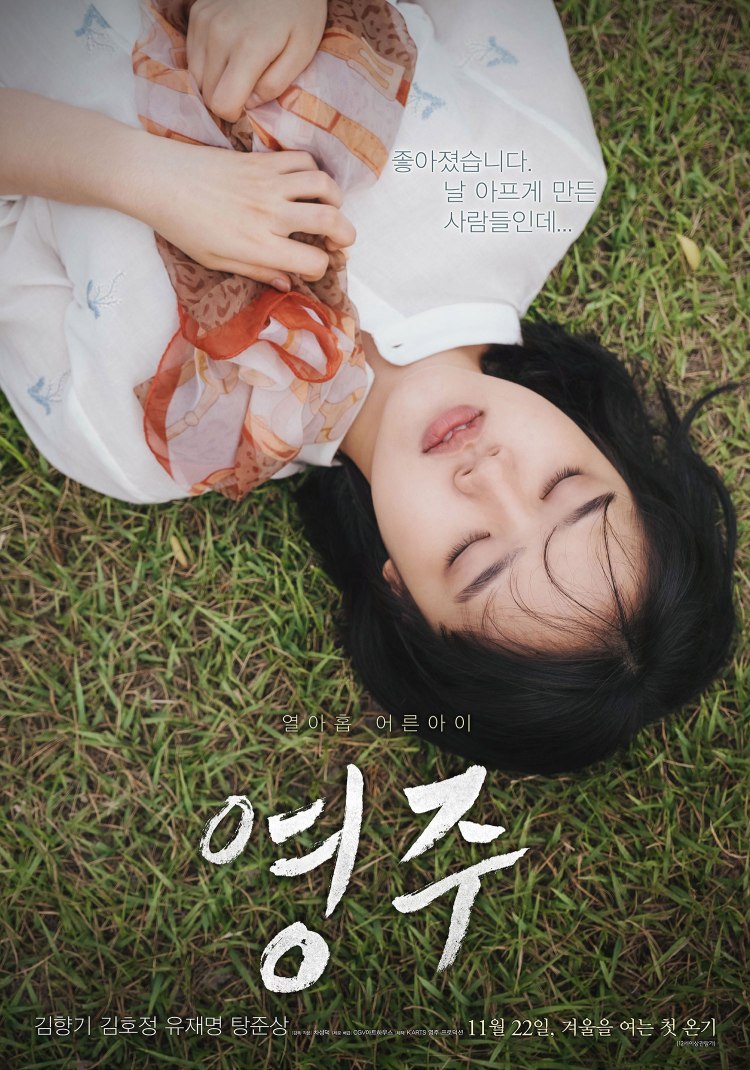
Youngju (영주, Cha Sung-duk, 2018)

Youngju poster 1In the midst of a changing society, the Korean family has come increasingly under the microscope. Where festival favourite Last Child took a pair of grieving parents and saw them unwittingly bond with the boy involved with their own son’s death, Cha Sung-duk’s sensitive indie debut Youngju (영주) finds an orphaned young woman turning to the man who caused the accident which killed her parents in search of some kind of reparation but unexpectedly discovering him to be good and kind if carrying his own burden. Yearning for the warmth of family, she wonders if it would be alright to leave the past behind and embrace this new chance of togetherness, but the truth will out and once known may make her bright new future an impossibility.

19-year-old Youngju (Kim Hyang-gi) lost her parents five years ago and, despite being a minor under Korean law, is the legal guardian for her 15-year-old brother Youngin (Tang Joon-sang). She’s given up her schooling to do a host of part-time jobs in order to support the pair of them while hoping to save for Youngin’s college education, but she’s also being hounded by a domineering aunt who keeps trying to sell the family home out from under her more it seems out of a sense of greed and entitlement than concern for the kids’ wellbeing. Alternating between telling Youngju she needs to take more responsibility and shutting her down by instructing her to “leave these things up to the adults” the aunt is a problematic presence in the kids’ lives leaving them technically not without family but deprived of the support that Korean society expects a family to provide. On a car ride home, Youngju’s aunt tells her to give up and think of her as a mother, only for Youngju to snap back that she’s no longer a child and has no need of a one. The aunt’s “have it your own way” attitude implies she’s made the right decision, but young as she is Youngju can’t know that it doesn’t matter how old you are, everyone still needs a mother at one time or another.

She begins to find one in an unexpected place after hitting rock bottom when Youngin falls in with a bad crowd and gets himself into trouble. As he’s underage, the matter can be settled with a fine, but the kids don’t have that kind of money and Youngju’s attempts to get it lead only to humiliation and betrayal. Resentful of her circumstances, she decides to track down the truck driver who fell asleep at the wheel and caused the traffic accident that killed her parents, hoping to take some kind of revenge by somehow making him pay. Once there she ends up getting a job in their family-run tofu shop where the man’s wife, Hyang-sook (Kim Ho-jung), takes to her immediately with maternal warmth even jokingly referring to her as her younger daughter with a regular customer while delighting in cooking up extra meals for to take home and share with her “family”.

Of course, what Hyang-sook doesn’t know is that Youngju has no family other than Youngin who is trapped in youth detention until she can get the money to get him out. Though the relationship between the siblings is understandably close because they have no one else, it’s also fraught with difficulty and confusion, Youngin feeling guilty and resentful of his older sister’s sacrifices on his behalf, wondering if she’s ashamed of him for not being more help and for constantly getting into trouble. Youngju, meanwhile, keeps her new work family a secret, merely telling her brother that she got the money she needed from her boss rather than their horrible aunt, replying to his question about why anyone would lend them money out of the goodness of their hearts with only “they’re good people”.

The Kims are indeed “good people”, despite whatever preconceptions Youngju might have had about them. Hyang-sook is good and kind, practicing true Christian values of love and forgiveness. Realising that Youngju meant to steal from them, she simply gives her the money because she can see that she’s a “good kid” and seems to be in some kind of desperate difficulty with which she’d like to help her. Hyang-sook takes the melancholy young woman to her heart like a daughter, but Youngju remains uncertain that her forgiveness could extend to the extent of her lies if she knew the real reason she arrived in their lives. Increasingly guilty, she finds herself feeling that she needs to tell the truth but knowing that if she does the fragile sense of family she’s found with the Kims may be irreparably broken. 

Under the Kims’ influence, Youngju encourages her brother that he too needs to try to be better, that they should try “live a better life”, but he understandably feels betrayed by her desire to look for family somewhere else, rejecting their parents’ memory and siding with the architect of all their misfortune. Having made peace with her own tragedy, Hyang-sook may say there’s no point blaming anyone but obviously feels a deep-seated sense of vicarious guilt that for all her pity may make it impossible for Youngju to return to that same level of intimacy as daughter unconditionally loved and supported by kind and forgiving people. In the opening scene, Youngju jokingly asked her brother which of their parents he’d most like to bring back and picked her dad because he was going to take them to a theme park, but it’s grief for her mother(s) that finally overwhelms her, convincing her perhaps that now she really is alone. Even so, the sun rises again and we get the impression that Youngju will be alright in the end, walking sorrowfully off towards a “better life” but perhaps resolved to doing so with no one by her side.


Youngju was screened as part of the 2019 London Korean Film Festival.

Original trailer (English subtitles)

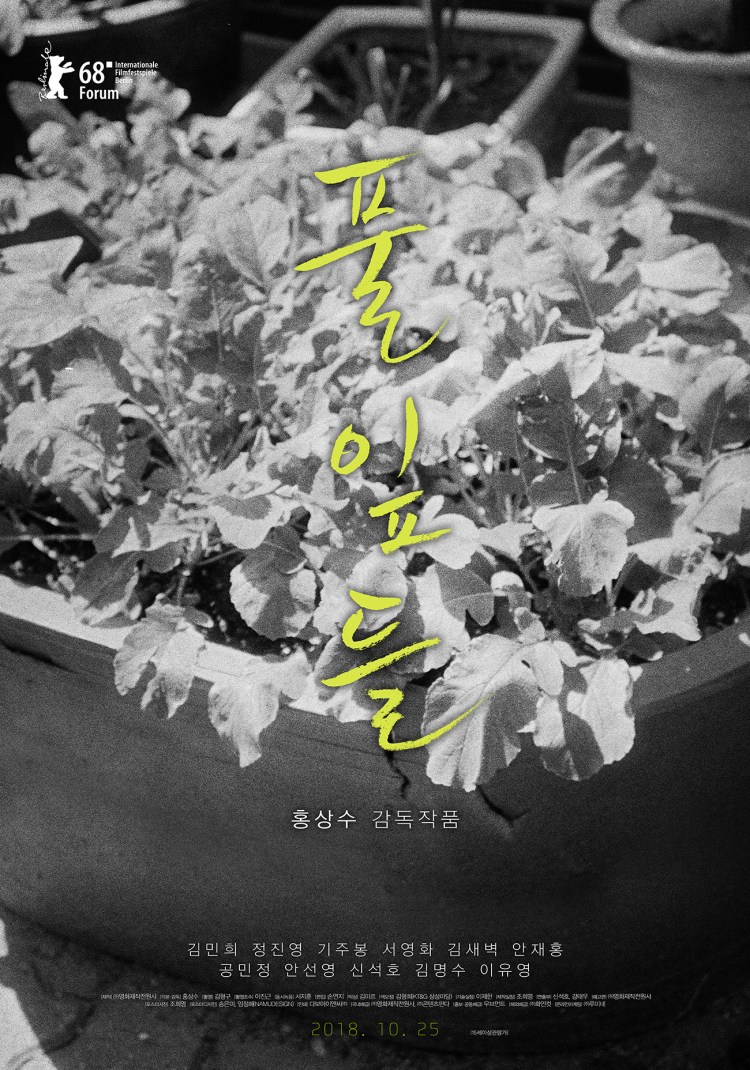
Grass (풀잎들, Hong Sang-soo, 2018)

Grass poster 1You don’t meet nice girls in coffee shops, at least according to the melancholy narrator of a Tom Waits song recalling the flighty lover too free spirited for his wholesome hometown. Like one of the rundown dive bars in Waits’ conceptual universe, the cafe at the centre of Hong Sang-soo’s Grass (풀잎들, Pul-ip-deul) attracts its fair share of lonely drinkers looking for somewhere quiet to pour out their sorrows. Ostensibly a tale of simple eavesdropping abetted by the presence of a laptop, Hong’s narrative is at his most defiantly reflexive as it forces us to question the order of its reality and, in passing, our own.

Unnamed until the closing credits, Areum (Kim Min-hee) sits in a quiet cafe, tucked away in a corner tapping on her laptop and convincing herself she is an invisible observer of the world around her. Listening in on the various conversations of the other customers, she waxes philosophical on life, love, death, and distance by means of a beautifully poetic interior monologue but tells a fellow patron that she is not a writer, only writing, sort of a diary, but not a diary, something unusual for now. The irony is that though Areum feels herself to be far removed from those she is observing, they often complain that they feel “watched” or at any rate anxious under her intense yet abstracted gaze, sometimes challenging her but backing down when faced with her almost total lack of interest in interaction.

The patrons, almost echoes of themselves, are comprised of three couples – one in youth, one middle-age, and one approaching their twilight years. The men drink something cold in a tall glass with a straw, and the women something warm from a pleasantly round cup and saucer. Each of the men is an actor, while at least one of the women is a writer, though all of their conversations have their particular quality of awkwardness with the men largely trying to extract something from the women be it love, or forgiveness, or relief.

Finding herself in an awkward situation familiar to any woman who’s ever tried to work in a coffee shop on her own, Areum is approached by the middle-aged actor (Jung Jin-young) apparently trying to write a screenplay, and propositioned for advice. Having tried and failed to lure his wily writer friend (Kim Sae-byuk) on a 10 day retreat to “collaborate”, he asks Areum if he can come and “observe” her. She turns him down by saying she has a boyfriend, only for the actor to ask to talk to him for his permission, to prove he’s “not some kind of strange guy”.

The older actor (Gi Ju-bong), meanwhile, casually tells his companion (Seo Young-hwa) that he’s recently come out of hospital following a suicide attempt after trying to kill himself for love. Trying to move the conversation on, she tells him that she’s recently moved to a small house near the mountains, but realises her mistake when he fixates on the incidental detail that she’s got a spare room. Brushing off her reticence about a roommate, he repeatedly states that he’s got nowhere else to go in the hope that, as Areum says in her caustic voiceover, she will take pity on him and allow him to live the life of Riley on her dime. The friend is clearly distressed, she doesn’t want this man in her house (her equally strained looks when someone else tries to offer him a room suggest she’s reason to believe he’s trouble) but feels obliged to keep apologising for her refusal to acquiesce to his quite unreasonable request.

According to the maybe fiancée of Areum’s brother, men are cowards when it comes to pain or the need to end things. Areum seems to agree, but has a fairly cynical view on the entirety of human relationships, berating the pair for irresponsibly intending to marry on “love” alone. “We only loved each other” another sad young woman insists while harangued by a drunk middle-aged man intent on blaming her for the suicide of her late lover, neatly reversing the dynamics of the young couple from the cafe arguing about their shared sense of guilt over the death of a friend.

Areum wonders if it’s possible to fall in love with an innocent heart if you’re carrying the weight of someone else’s death. “You insignificant things” she warns the youngsters newly in love “you’ll die someday”, neatly ignoring the fact that so will she. Or perhaps this world will die with her. We begin to wonder if any of this is real or merely a series of manifestations of Areum’s cafe musings, reconstructions of the lives of others imagined from snippets overheard from adjacent tables. Adjacent tables is where Areum’s preferred to be, observing not partaking, a lonely ghost in this haunted cafe where lost souls come to ease their burdens. Yet, finally her resistance crumbles. She accepts an offer of soju and joins the gathering, abandoning her lofty pretensions of distance for a taste of togetherness. “In the end people are emotions…And I long for them now” she realises. “Is it real? It would be nice if it were”.


Grass was screened as part of the 2019 London Korean Film Festival.

Original trailer (English subtitles)