A Confession Expecting a Rejection (거절을 기대하는 고백, Park Jeong-hoon, 2017)

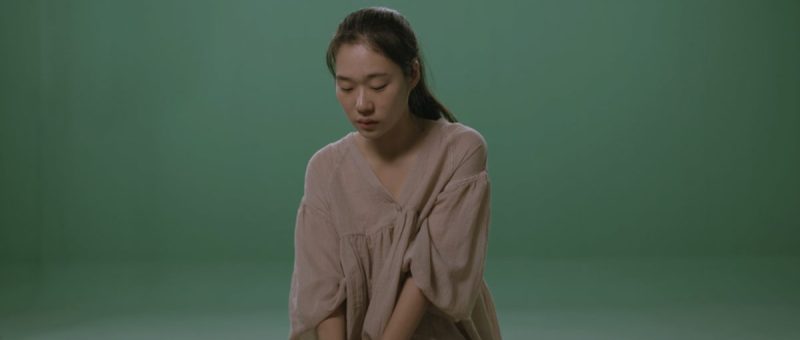
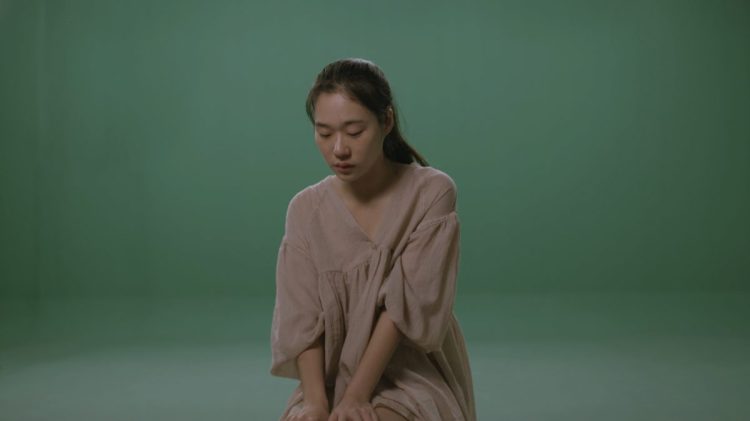
Confession Expecting a Rejection still 1“You’re not going to put this on the internet, right?” – a question asked by each of the interviewees in Park Jeong-hoon’s minimal yet riveting exploration modern mores A Confession Expecting a Rejection (거절을 기대하는 고백, geojeol-eul gidaehaneun gobaeg). Shot against green screen with a static camera and under a one take conceit, Confession interrogates everything from cinema as an art form and objective and subjective realities to social media, revenge porn, and romance among the young. Despite, or perhaps because of, the almost hypnotic lack of motion, Park’s meditations take on a surreal, almost mythic quality as interviewee and interviewer (seen or unseen) unwittingly dissect themselves before the passive lens of a seemingly unrecording camera.

The film opens with the camera “running” as its two operators chat amongst themselves whilst waiting for their interviewee. These interviews seem to be conducted weekly and are something to do with a university film club whose “director” is apparently somewhat pretentious and too much of a self-centred perfectionist to survive in less tolerant industries. Anyway, the first interviewee, Kyung-woo, joined the film group a few weeks ago and is, in the opinion of the men behind the camera, “a bit weird”.

Kyung-woo arrives and sits on a stool we can’t actually see because of the green screen. He seems nice enough – large round glasses, floppy hair, loose beige T-shirt. He starts chatting, introduces himself and reveals the unusual fact that he is already married. The interviewers are surprised and question him further, discovering Kyung-woo’s wife is currently living abroad, they had no wedding ceremony, and did not register their union with the government. At this point Kyung-woo’s demeanour changes, he seems spaced out but also intense as he begins to explain about meeting his wife at a “religious gathering” and how “the ancestors” that other people can’t see tell him who might be a good person to try “recruiting”.

During the short pause after Kyung-woo’s strange story, the guys behind the camera have a brief discussion about social media and a sex tape which has just gone viral – presumably an act of revenge porn. The next interviewee, Da-jeong, rushes in and ends their discussion. Unlike with Kyung-woo, one of the interviewers asks if Da-jeong would like a mirror to check her appearance before they start recording to which she seems surprised and laughingly declines – “it’s not as if I’ve come here to look pretty” she says. The same interviewer chit-chats about her part-time job as a tutor but is stunned into silence to realise she’s been tutoring a young man rather than a little girl. Unsurprisingly, interviewer 1, Han, will try and confess his love to her while interviewer 2, Jeong-gong, is out of the room.

Jeong-gong is, in fact, the boyfriend of Da-jeong whose previously cheerful demeanour dissipates just as Kyung-woo’s had only this time when faced with the increasingly intimidating presence of Jeong-gong. Da-jeong is trying to break up with Jeong-gong, but he refuses to listen. Explaining how “worried” it makes him when she doesn’t immediately answer her phone, Jeong-gong goes on to explain about a date but Da-jeong cuts him off – she won’t be coming, she doesn’t want to see him anymore. Jeong-gong ignores her, says she’s just in a mood and will change her mind after they get something to eat the next day. The implication is that Da-jeong has tried to do this before but has always backed down and intends today to be different. Unlike Kyung-woo’s rather strange tale of cults and early “marriage”, Da-jeong’s segment descends into brutal relationship drama as Jeong-gong’s increasingly manipulative behaviour keeps her from just up and leaving.

Park plays with the medium expertly. Making fantastic use of sound design to create a literally “unseen” world behind the camera, Confession allows its two interviewers to bicker irritatedly about their film course which teaches how to “see” in “layers”, picking up “emotional evidence” that the casual viewer might miss. Discussing the seen and the unseen along with the various “ranks” of student, the boys are beginning to sound just as surreal as Kyung-woo’s batty cultism. Talk of social media also smacks of cult with its “followers”, rituals, and precisely defined social codes but the conversations are essentially elliptical ending with a brief coda which returns us to origin as Da-jeong meets Jeong-gong and flicks the camera’s on switch herself, making a confession of love that ends in a promise we know will be broken.


Screened at the London Korean Film Festival 2017.
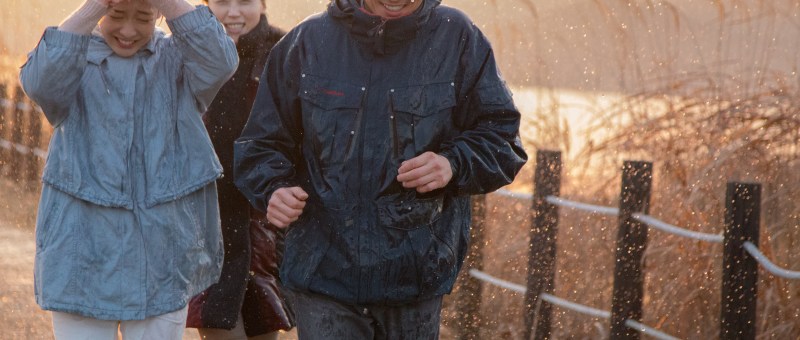
 

Come, Together (컴, 투게더, Shin Dong-il, 2017)

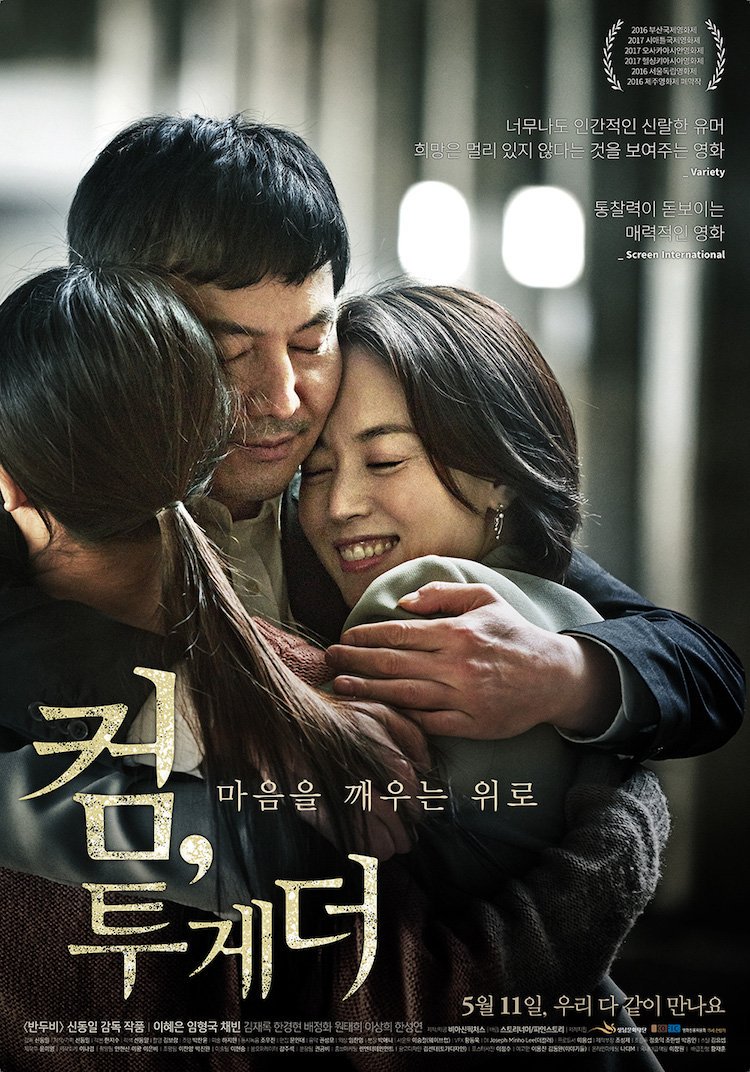
come, together posterToo fast, too loud, too bright. The pressure cooker society threatens to explode in Shin Dong-il’s sympathetic portrayal of one family’s period of crisis in Come, Together (컴, 투게더). When sorrows come they come not single spies but in battalions – redundancy (of several kinds), betrayal, anxieties academic and financial, the Parks have more than their fare share to deal with but the cumulative effect of their individual troubles quickly overwhelms their ordinary, middle-class existence, exposing the tiny fractures in its foundation hitherto papered over by chasing the dream of materialism.

From the outside the Parks are just like any typical middle-class family. They live in a nice apartment with a greenhouse balcony and plenty of space for three. Dad Beom-goo (Lim Hyung-guk) is a moderately successful salaryman, but his world collapses when he’s abruptly let go in the most insensitive of ways by his slimy boss. Mum Mi-yeong (Lee Hye-eun) is a credit card saleswoman who earns by commission and is well used to the hard sell. Teenage daughter Han-na (Chae Bin) has taken a year out to retake her university entrance exams but is now in limbo after not doing well enough to be accepted but having been ranked 18th on the waiting list, anxiously waiting to find out if enough people decide to decline the place she is so desperate to win.

Beom-goo losing his job of 18 years is not just humiliating and embarrassing, but as the family are already in huge debt it is also extremely worrying. As a middle-aged man, it’s unlikely Beom-goo is going to be able to find a comparable position in Korea’s competitive labour market where switching companies is still not the norm and most employees are hired right out of college. Having spent the last 18 years debasing himself to flatter his bosses, it’s galling in the least to realise he’s simply been replaced with a younger, cheaper employee he himself helped learn the ropes. Deprived of his breadwinner status, Beom-goo is supposed to be doing the housework but the boredom quickly gets to him and he spends most days lounging around in his pants lamenting his sorry state. That is until he meets the man from upstairs (Kim Jae-rok) who happens to be in a similar position and begins to lead Beom-goo astray before hinting at a much darker course for himself than the one he’s set Beom-goo on.

Mi-yeong is now the sole provider but her work is extremely stressful – not just the high pressure world of sales, but the bitchy, backstabbing atmosphere in the mostly female office. The job is to get people to sign up for credit cards they don’t really need and probably can’t afford, adding to the pressures of the consumerist society which have already landed the Parks in financial difficulty themselves. Mi-yeong is good at her job, she knows how to get people to sign on the dotted line but she’s also desperate enough to risk breaking the rules. When she’s undercut by a colleague whose situation she has misread, Mi-yeong takes it extremely personally, vowing revenge not just on the colleague but on the boss who refused to back her up and the client who betrayed her.

Mi-yeong’s rage and resentment are to have tragic, unforeseen consequences, threatening to deliver everything she’d dreamed of but at a terrible price. Han-na faces a similar dilemma as she finds herself staring at the list of 17 people in the queue in front of her and silently hoping some of them get hit by busses. The tense atmosphere at home only adds to Han-na’s stress levels as Beom-goo’s increasing impotence finds him playing father of the house like never before and deliberately undermining her sense of self esteem by repeatedly bringing up her failure to get into college. Unlike either of her parents, Han-na does at least have a positive influence in her life in the form of friend Yoo-gyeong (Lee Sang-hee), whom both her parents disapprove of because of her deliberate choice to live outside the mainstream.

Yoo-gyeong, though only in her early ‘20s, owns her own store selling leather bracelets and uses the proceeds to fund her free spirited lifestyle of taking off backpacking across whichever land takes her fancy. When Han-na says she wishes she could live like Yoo-gyeong, Yoo-gyeong bristles, insisting that she’d support whichever decision Han-na makes but that she ought to live her own life the way she wants rather than emulating someone else. Also, by way of an aside, she points out that people seem to assume she does exactly as she pleases but that’s not quite the case. In fact, it may be that Yoo-gyeong is, in a sense, forced to live a life outside of the mainstream simply by virtue of who she is and that her frequent flights to pastures new are a kind of escape or of running away from various social pressures at home.

Irrespective of whether or not they get what they thought it was they wanted, each is forced to reassess their way of living, realising that their relentless pursuit of material gain and the socially accepted definition of success has only made them miserable. Rather than continuing down the road to ruin, the Parks decide to choose happiness by simply dropping out, resetting their lives with the intention of doing what it is they want to do rather than what it is they think they’re supposed to. Waking up from a conformist delusion reawakens the freedom to embrace individual desires but it also restores the family to its previously happy state, released from the strain of modern life in favour of simpler, more essential pleasures.


Screened at the London Korean Film Festival 2017.
Original trailer (select English subtitles from captions menu)

The Outlaws (범죄도시, Kang Yoon-sung, 2017)

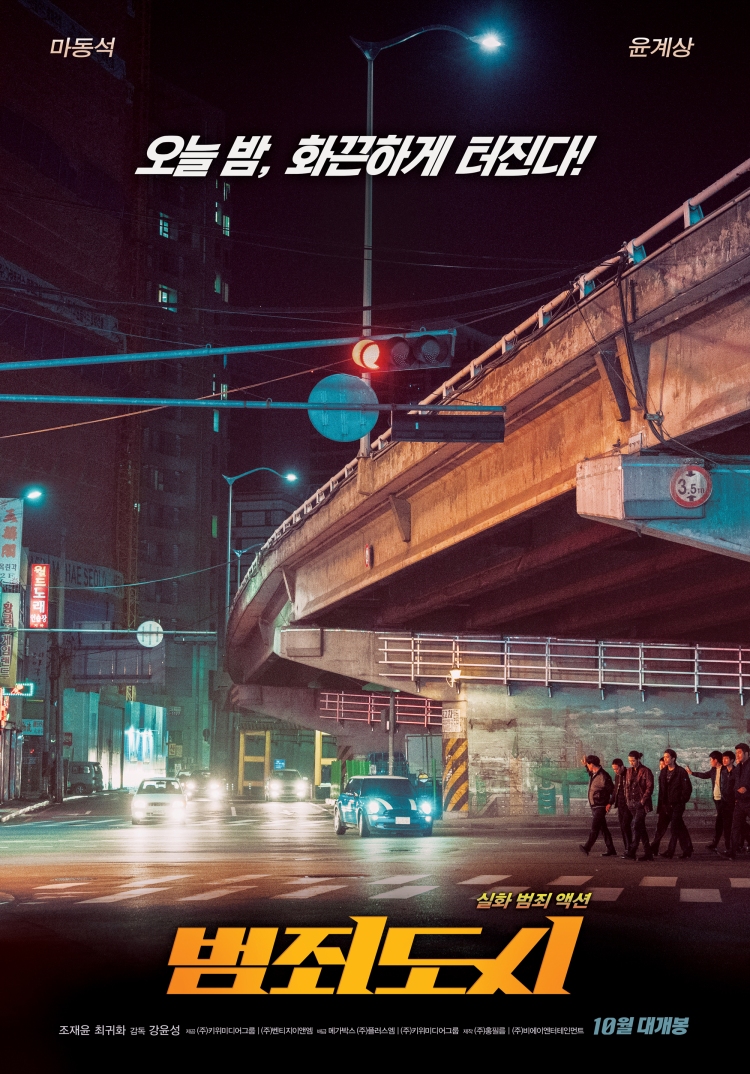
The outlaws posterBack in 2004, a hero cop made the headlines by cleaning up Chinatown when he took into custody 32 known gang members in Seoul’s Garibong district. Based on the real life case, The Outlaws (범죄도시, BumJoedoshi, AKA Crime City), is the debut feature from Kang Yoon-sung in which Ma Dong-seok adds goodhearted yet compromised policeman to his list of increasingly impressive leading performances. Truth be told the role does little to stretch his current range but fits comfortably into Ma’s well worn persona of noble bruiser as he plays fatherly commander to his fiercely loyal team and avuncular mentor to a brave boy in the district who wants to help free the area from the dangerous gang violence which leaves not just businesses but lives under threat.

Ma Seok-do (Ma Dong-seok) is the only force stopping Garibong from descending into a hellish war zone of gang violence and destruction. A local resident, Ma is well respected in the area and knows the territory well enough to navigate its various challenges. Rather than take on the gangs wholesale he attempts to placate them, brokering an uneasy equilibrium which keeps the violence contained and helps to protect ordinary people from its effects. All of that goes out the window when a new threat arrives in the form of vicious gangster Jang Chen (Yoon Kye-sang) and his two minions whose methods are unsubtle in the extreme, ending with rival gang bosses chopped up and placed inside suitcases over nothing more than a trifling gambling debt.

Jang is a new and terrifying threat because he sees no need to play by the “rules”. A peace cannot be brokered with him and he cannot be reasoned with. Ma knows the time has come for action but even with police resources behind him is ill equipped to become, in effect, Garibong’s latest gang leader. To this end he makes a surprising decision – asking the residents for help. The residents, however, remain terrified. How can he ask them to inform on gangsters to whom they’re still paying protection money? Ma’s promise is a big one – to do what no one thought could be done in neutralising the organised crime threat by conducting a mass arrest of foot soldiers from across the gangland spectrum.

Ma Dong-seok makes fantastic use of his trademark sarcasm as the regular neighbourhood guy who also happens to be a top cop. Kang mixes a fair amount of humour into an otherwise dark and violent tale such as the recurrent presence of two lowly pamphleteers who are eventually pressed into more serious service for Ma, his trickery and manipulation of a suspect (which is also a way to save him from a death sentence on being sent back to China), and Ma’s love of drunken karaoke and lamb skewers with the boys. Ma thinks nothing of arming a gangster with a stab vest, setting up another in a public bath, or playing gangland politics for all they’re worth, but when it really counts he’s as straight as they come, protecting the residents of Garibong like the lone sheriff of some outpost town, equal parts officer of the law and disappointed dad.

The incongruously comical tone harks back to the ‘70s maverick cop golden age in which the lines between law breaker and law enforcer were always blurred but you knew who the good guys were because they had all the best lines. If Kang is aiming for this branded mix of grit and humour he doesn’t quite find it and the comedy sometimes undercuts his more serious intentions but it is undeniably good fun all the same. Ma Dong-seok’s warmhearted maverick is quite rightly the star of the show, but his rivalry with Yoon Kye-chang’s Jang Chen fails to ignite with Chen never quite seeming as menacing as intended. Nevertheless even if Kang’s gangland action comedy has little to add to an already crowded arena, it does at least provide a fitting showcase for Ma’s talents in its sarcastic, world weary policeman who may have one foot on the wrong side of the law but always acts in the name of justice.


Screened at the London Korean Film Festival 2017.

Original trailer (English subtitles)


The Day After (그 후, Hong Sang-soo, 2017)

The day after posterHong Sang-soo, perpetually introspective, is having an especially reflective 2017. Releasing three films in quick succession, each of which star new muse Kim Min-hee, Hong seems unusually keen to turn the camera directly on himself and not least in his choice of star. In On the Beach at Night Alone, Kim played an actress in flight from the fallout of a destructive affair with a married director (a stand-in for Hong who never appears on screen), but in The Day After (그 후, Geu Hu), she plays an aspiring writer and free spirited bystander to an equally messy affair between a married publisher and his younger female assistant. Like many of Hong’s heroes (which often seem to be stand-ins for himself), Bongwan (Kwon Hae-hyo) is a cowardly, deluded womaniser who refuses to face his self-involved disaffection in favour of burying himself in youth and prettiness.

Bongwan has developed a habit of getting up early and leaving the house as soon as possible. His wife (Jo Yoon-hee) finds this odd after a couple of decades of married life and decides to ask him about it over a hurried breakfast. She is patient and half playful, but Bongwan is anxious and embarrassed. He refuses to answer, laughing the questioning off until his wife later texts him to apologise for her “overreaction.” Overreacting is something she will get to later, but for now Bongwan is about to have an informal meeting with a potential new assistant. His wife was not wrong after all, Bongwan had been having an affair with a girl from work, Chang-sook (Kim Sae-byuk), who has now left in order to move on with her life after realising Bongwan is too spineless to ever leave his family.

New girl Areum (Kim Min-hee) is an aspiring writer with good credentials who comes highly recommended by a Professor Bongwan has huge respect for but that’s not why he hires her. He hires her because she fits neatly in the space vacated by absent lover Changsook, is quite pretty, and strokes his vanity by expressing her admiration for his writing even though he mainly does criticism rather than “real” writing these days. Bongwan’s lascivious ways are immediately obvious in his first conversation with Areum which shifts from relaxed interview to personal chit-chat in which he asks her slightly insensitive questions about her family history, grasps her hand without warning and then later stops to remark on just how lovely he thinks her hands are. They change registers from the formal to the informal right away as Bongwan instructs Areum not to refer to him as the president but as a boss (they’re equals, but he’s in charge). He buys her dinner, pushes her to drink, and flirts with her, but Areum is ahead of him and neatly deflects his growing interest.

Areum moves the conversation to a higher level by asking Bong-wan exactly why it is he’s alive. Bongwan, not as much of the contemplative sort as he seems, waffles on for a bit but doesn’t really know, he was born after all and then…. “And then” is the English title of the Japanese novel, Sorekara by Natsume Soseki (adapted into a fine film by Yoshimitsu Morita in 1985), from which the film draws its Korean title. The hero of Soseki’s novel, Daisuke, is the son of a wealthy family whose ennui is so deep that he finds himself needing to place a hand on his chest to check that his heart is still beating. Daisuke had been in love in his youth but never said anything, telling himself it was out of a sense of chivalry towards a friend in love with the same girl. Years later he realises his notions of “chivalry” were all affectation, a deluded way of papering over his cowardice and fear of rejection. That Bongwan eventually decides to give this particular book to Areum is quite telling in his obvious identification with Daisuke who also failed to speak his heart and faced a difficult decision in considering whether to abandon the life of comfort he had always known to strike out on his own in the name of love.

Bongwan wheedles and defers, squirming like a child caught with chocolate round his mouth yet claiming to know nothing about the missing biscuits. His long suffering wife, finding evidence of a possible attachment to another woman, “overreacts” in grand style by physically abusing Areum, assuming her to be the missing Changsook. Hong plays his usual game with timelines, keeping the present uncertain as Changsook repeatedly reappears in life or in memory. It’s clear that for Bongwan these three women are almost interchangeable, no matter what he might say as regards his grand romance with his much younger female assistant who quite rightly points out his extreme moral cowardice in an emotional outburst over an awkward dinner. In a typically Hong-ian touch of meta-comedy, Bongwan may even have forgotten the entirety of the strange day he spent with Areum who later echoes his wife’s words to the effect that his “face looks different”. Areum, however, like most of the characters Kim has played for Hong, eventually wins out in her free spirited sunniness, taking her great belief in the world’s beauty with her, leaving Bongwan to enjoy his black-bean noodles of misery inside in the prison of his own making.


Screened as the opening night gala of the London Korean Film Festival 2017.
Original trailer (English subtitles)

Clothes of Deception (偽れる盛装, Kozaburo Yoshimura, 1951)

「偽れる盛装」(C)KADOKAWA1951

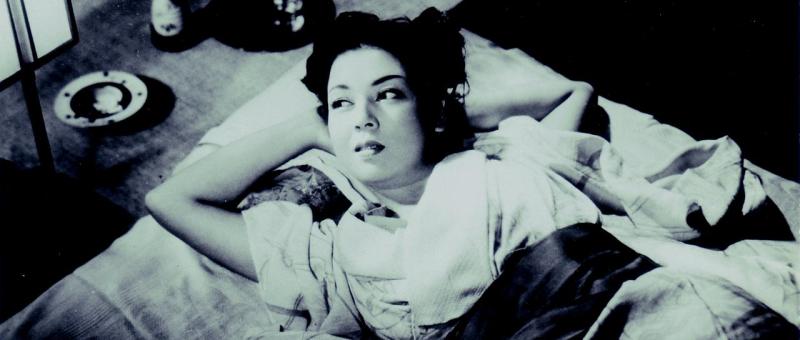
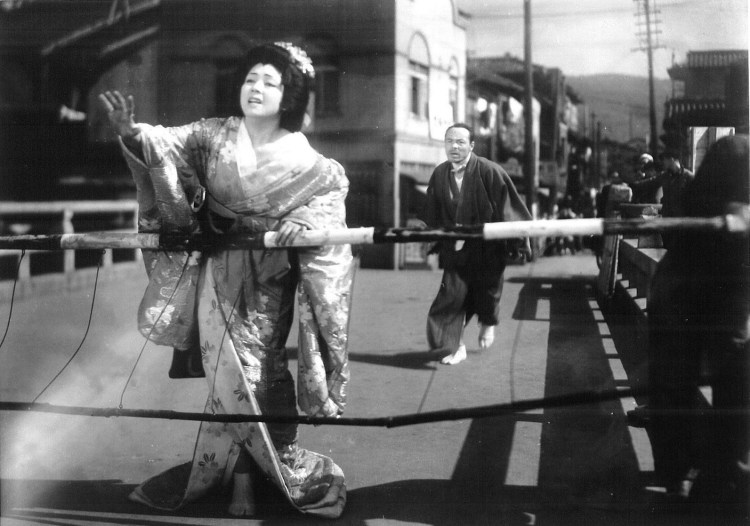
「偽れる盛装」(C)KADOKAWA1951Japan at a crossroads. East/West, past/future becomes a conflict between Kyoto and Tokyo in Yoshimura’s exploration of two women pulled in surprisingly contradictory directions in the new post-war world, Clothes of Deception (偽れる盛装, Itsuwareru Seiso). Working from a script by Kaneto Shindo, Yoshimura frames his tale as one of progress and resistance but the divisions are not as simple as they first seem. Machiko Kyo turns in another wonderfully nuanced performance as a Kyoto geisha trapped by the unchanging nature of her city yet yearning for an end to its slavish devotion to tradition.

Kumicho (Machiko Kyo) is the daughter of a longstanding geisha house currently operated by her mother. Though working as a geisha, Kumicho is not universally popular with the older generation thanks to her money first attitude which sees her prioritise earnings potential through having an unlimited number of clients rather than relying on a single patron. Kumicho is tough where geishas are generally soft and accommodating. She doesn’t take orders or nonsense from anyone, not least her push over of a mother.

Kumicho’s sister, Taeko (Yasuko Fujita), is not involved in the geisha trade and has a regular office job in the local tourist office. Unlike Kumicho, Taeko is mild mannered and reserved, dressing in regular Western fashions and travelling everywhere by bicycle. Taeko is engaged to a colleague, Koji (Keiju Kobayashi), who just happens to be the adopted son of another geisha house run by a woman with a long standing grudge against her mother.

Kyoto, a former capital, is famous for its historical qualities – a living museum to old-time Japan, but as a friend visiting from Tokyo points out perhaps that’s not altogether a good thing. Unlike Tokyo, Kyoto escaped much of the wartime destruction allowing it to be seen as a symbol of cultural resilience but lack of destruction also robs of it the chance for rebirth. History has survived, but so have lots of “tired old ideas”, according to Taeko’s friend Yukiko who urges her to forget the stagnant city and head for pastures new in Tokyo where the exciting post-war future is already underway.

Those old fashioned ideas are embodied within the rigid codes of the geisha world which Kumicho, on the surface the more traditional of the sisters but in actuality less so, has been breaking. Kumicho cares about money and she cares about survival which has made her unsentimental. Despite being involved in the “traditional” Kyoto occupation with all of its elegance and complicated ritual, Kumicho is a modernist who secretly hates the trade and holds each of her customers in deep contempt. Thus she thinks her mother, Kiku (Hisako Takihana), is a soft touch for continuing to bankroll the feckless son of her former lover, but is as heartbroken as anyone when one of the geishas becomes gravely ill. Kumicho’s manner maybe brash and brassy but her heart is as warm as her mother’s who continues to visit the widow of her former patron and makes sure the sickly geisha is cared for properly without resenting either the costs involved or the loss of earnings.

Taeko’s engagement to Koji opens up old wounds and exposes the less genial side of geishadom in the grudge bearing rivalry of Kiku and Koji’s mother Chiyo (Chieko Murata). Chiyo tries to put the kibosh on Taeko’s marriage as a way of getting back at Kiku, claiming that Taeko simply isn’t good enough for her son, but her authority is also dependent on those tired old ideas of hierarchy and filial piety. Koji, an adopted child, feels himself beholden to his mother’s needs in having been raised exclusively to fulfil them and vacillates in indecision regarding his marriage. Spineless and cowardly, Koji cannot find the strength to tell his mother no but also refuses to definitively break things off with Taeko.

Younger than Kumicho and a part of the “modern” world thanks to her regular office job in the tourist office, Taeko is comparatively more socially conservative reacting with horror when the increasingly strained Koji makes desperate, aggressive advances towards her whilst refusing to confirm his intention to marry against his mother’s wishes. Taeko and Koji have imprisoned themselves within Kyoto’s oppressive system of social codes in refusing to seize their chance of individual happiness and stride forward into the bright future being offered everywhere else except in the unchanging city.

Kumicho’s machinations eventually land her in hot water when an obsessed client ruins himself and then turns violent, demonstrating the less publicised dangerous side of life in the geisha trade. Kyoto, with all of its elegant refinement, can still be a place of rancour and regret where decades old grudges and more recent resentments threaten to disturb the peace. Kumicho’s innovations have shown up the geisha trade for what it is through her thoroughly unsentimental seduce and discard philosophy but she is, if nothing else, essentially truthful in her “modern” desire to call a spade a spade. The old ways are changing, though perhaps not fast enough. Kyoto, with its rigidity and stagnation is eventually rejected as Kumicho, unable to extricate herself, makes sure that her sister is first in line for all the opportunities the new world has to offer – by sending her to Tokyo, the capital of the future.


Screened at BFI as part of the Women in Japanese Melodrama season.

Wedding Ring (婚約指環 (エンゲージリング), Keisuke Kinoshita, 1950)

(c) Shochiku Co., Ltd

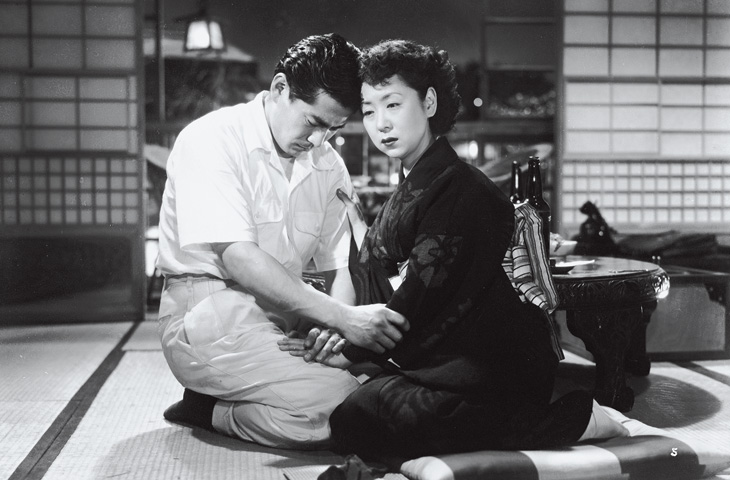
wedding ring still 2Many things have changed in the post-war world, but not everything and even with the new freedoms there are some lines which cannot be crossed. Keisuke Kinoshita made his career considering where these lines are and examining the lives of those who find themselves standing in front of them. Starring the veteran actress Kinuyo Tanaka who also produces the film, and the very young and fresh faced Toshiro Mifune, Wedding Ring (婚約指環 (エンゲージリング), Konyaku Yubiwa (Engagement Ring)) is a classic melodrama filled with forbidden love, repressed passion, and societal constraints but Kinoshita brings to it his characteristic humanity expressing sympathy and understanding for all.

Noriko (Kinuyo Tanaka) has been married seven years but her husband, Michio (Jukichi Uno), was drafted shortly after the wedding and was not repatriated until two years after the war ended. A year after he returned, Michio fell ill and has been on extreme bed rest ever since. After her father-in-law’s retirement and her husband’s illness, running of the family jewellery store fell to Noriko and so she spends the week in Tokyo taking care of business and comes back to the seaside fishing village of Ajiro where Michiro lives for the benefit of his health at the weekends. Consequently, though the couple care for each other, the marriage has never really been given the chance to take hold and they remain more companions or good friends than husband and wife.

Things change when Michio gets a new physician, Dr. Ema (Toshiro Mifune), who literally falls into Noriko’s lap during a packed bus ride from the station. Where Michio is sickly and weak, Ema is physically imposing and in robust health. Ema lives in the peaceful resort town of Atami which is on the train route from Ajiro to Tokyo meaning that Noriko and Ema sometimes wind up on the same train, developing an obvious attraction to each other which they both know to be impossible but cannot bring themselves to abandon.

In many ways Noriko is the archetypal post-war woman – strong and independent she runs the family business singlehandedly and lives alone in the city while her husband remains in the country busying himself with writing poetry. Despite the difficult circumstances, Noriko is not particularly unhappy save being unfulfilled and perhaps craving the physical intimacy her husband can no longer offer her. Her first meeting with Ema brings something in Noriko back to life as she swaps her dowdy, dark coloured suits for looser, more colourful clothing and walks with a new found spring in her step.

This change in his wife has not escaped the attention of Michio who astutely notices that she seems to be “glowing” – a development he silently attributes to the presence of Dr. Ema. Michio does his best not to resent the doctor but internalises a deep seated feeling of guilt and inadequacy as he realises that he can no longer provide what his wife needs and has become an obstacle to her happiness. A sensitive man apparently marked by his wartime experiences, Michio is angry and jealous but also resents himself for feeling that way, deepening his depression and conviction that he is nothing but a burden to his wife who deserves a full marriage with a man who can satisfy all of her needs and desires.

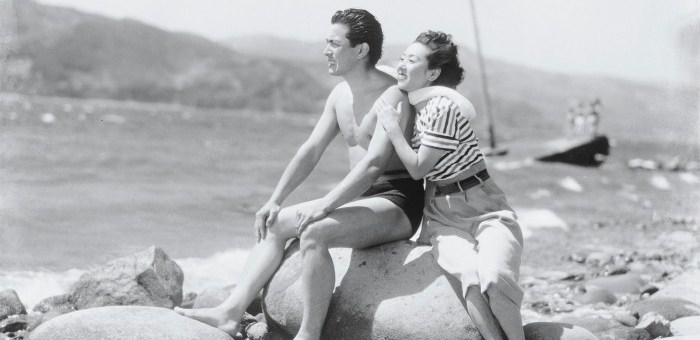
Desire is certainly something Noriko feels as she gazes at Ema’s powerful hands, broad shoulders, and athletic physique. Clasping his sweaty jacket to her breast in desperation eventually gives way to accidentally bold physical contact as hands catch hands and Noriko finds herself caressing Ema’s shoulder as he prepares to dive back into the sea dressed only in his woollen trunks. Ema feels the same attraction but also understands that it cannot be, not least because he is Michio’s physician and has begun to have idle fantasies of being unable to save him, freeing Noriko from her unfulfilling marriage so they can finally be together. Both sensible people, Noriko and Ema are eventually able to discuss their feelings and social responsibilities in a mature fashion, agreeing that they cannot act on their desires even if they find them hard to relinquish.

Rather than wedding ring, the Japanese title of the film more accurately refers to an engagement ring. Noriko’s wedding ring never comes off, but the engagement ring with its large stone comes to represent her shifting allegiances. Discovering the ring abandoned on the dresser, Michio begins to understand he is losing his wife to the strapping young doctor whose healthy, powerful body he cannot help but envy. The camera seeks out Noriko’s hand, with or without the shiny diamond of the engagement ring, quickly signalling the current direction of her desires.

Michio, who cannot give full voice to his emotions, expresses himself through tanka poetry, something which the equally sensitive doctor can also understand and later makes use of himself in communicating the inexpressible delicacy of his feelings to the married woman with whom he has fallen in love. Torn between love and duty, Noriko and Ema battle their mutual passion while Michio battles his sense of self and feelings of ongoing inadequacy but Kinoshita refuses to condemn any of them, rejecting an angry showdown for a nuanced consideration of personal desire versus social responsibility. The conclusion may be conservative, but the journey is not as the trio eventually part friends even if with lingering sadness in accepting the choice that has been made and resolving to move forward in friendship rather than rancour.


Screened at BFI as part of the Women in Japanese Melodrama season.

Opening scene (no subtitles)

Creative Visions: Hong Kong Cinema 1997-2017

paradox posterThe latest in a series of events marking the 20th anniversary of the Hong Kong handover, Creative Visions: Hong Kong Cinema 1997-2017 will feature free screenings of nine films from the last 20 years including three UK premieres taking place from 17th to 19th November.
Paradox

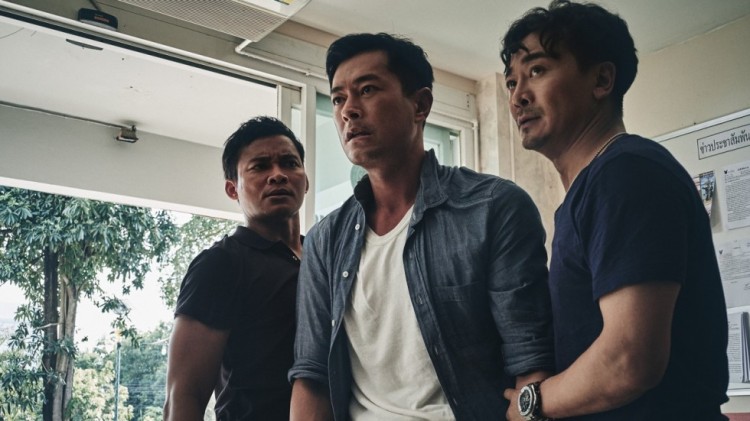
paradox still 2The latest instalment in Wilson Yip’s SPL series stars Louis Koo as a Hong Kong cop on a mission to rescue his daughter from Thai kidnappers. Co-star Gordon Lam will be in attendance to present the film’s UK premiere.

Ordinary Heroes

ordinary heroes still 1Ann Hui’s 1999 drama documents the struggle of a group of idealists fighting for the rights of boat people and their mainland wives.
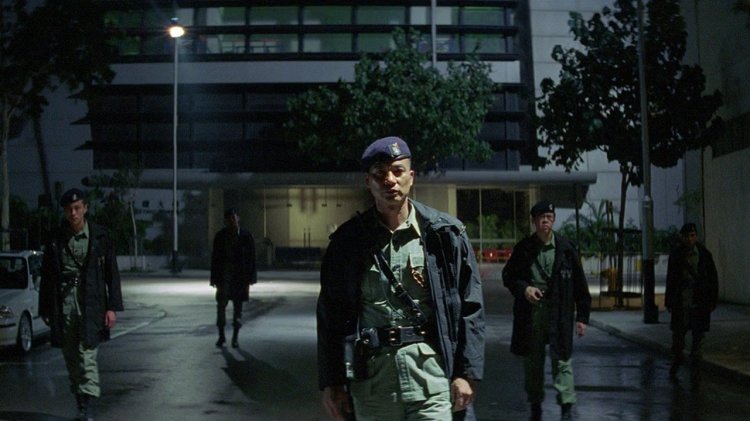
PTU

ptu still 1Simon Yam and Lam Suet star in Johnnie To’s missing gun thriller.

Mad World

mad world still 1Eric Tsang plays the estranged father of a young man (Shawn Yue) recently released from psychiatric care in Wong Chun’s powerful debut. UK Premiere.

Gallants

gallants horizontalA tribute to the kung-fu classics of the ’60s and ’70s, 2010’s Gallants follows two martial artists patiently waiting for their master to wake up from the coma he’s been in for the last 30 years. Co-star Gordon Lam will be in attendance.
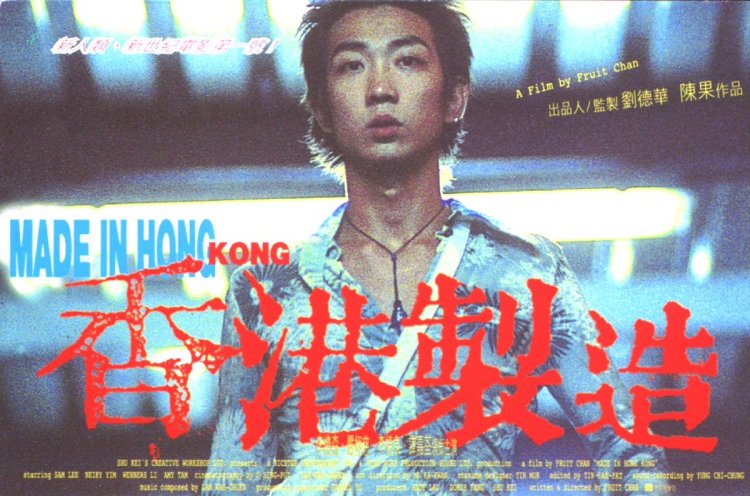
Made in Hong Kong

made in hong kongFruit Chan’s 1997 story of tragic youth in its 2017 restoration which premiered at the Udine Far East Film Festival.

Echoes of the Rainbow

echoes of the rainbow still 1.jpgDirector Alex Law paints an autobiographical tale of growing up in a working class family in late ’60s Hong Kong.

Trivisa

Trivisa still 1Three infamous criminals smuggle themselves into Hong Kong for the biggest heist ever in a crime thriller produced by Johnnie To and directed by three proteges from his Fresh Wave short film programme.

The Brink

the brink still 1A grizzled cop chases a gold smuggling fisherman through storms literal and metaphorical in Jonathan Li’s feature debut. UK premiere – Co-star Gordon Lam will be in attendance.
The screenings take place from 17th to 19th November at Ham Yard and Soho Hotels and are free to attend but places must be booked in advance via Eventbrite. You can book one ticket only for each film and for a maximum of four films per person.

In addition to the London event, Creative Visions will also visit Udine, Vancouver, Toronto, Berlin, Seoul, Moscow, Paris, Manchester and Prague.

Reset (逆时营救, Chang, 2017)

reset posterTime travel – the solution to all one’s problems. Or is it? Chinese thriller Reset (逆时营救, Nì shí yíngjiù) is helmed by Korean director Chang (AKA Yoon Hong-seung) but it’s also produced by Jackie Chan and is very much in the vein of his recent projects in its non-sensical sci-fi setup and troubling conservative messages. Reset casts a female scientist as its heroine but uses the crisis to explore her ongoing guilt as a single mother with an intense workload who has chosen to dedicate herself to both her work and her son without remarrying. Despite the action packed drama in which Xia Tian plots, shoots, and stabs her way back to her son, the message which is ultimately delivered is that you can’t go back in time and mothers should just give up everything to be with their kids 24/7.

In the near future, the existence of parallel worlds has been confirmed but early research into time travel has been derailed after test subjects transported between universes descended into mindless violence destroying each other and valuable data. Xia Tian (Yang Mi) works for one of the big companies still investigating parallel world theory and has just made a major breakthrough in “projecting” test subjects into the recent past. In order to steal her research for a rival company, Xia Tian’s young son Doudou is kidnapped by mysterious men who give her a limited amount of time to hand over the top secret documents. Xia Tian’s first attempt to rescue her son fails, leading her to make personal use of her findings and travel into the past to change the future.

Reset starts as it means to go on with Xia Tian having a heart to heart with her boss and mentor (King Shih-Chieh) who reminds her that it’s been ages since she broke up with Doudou’s dad and its high time she find someone new. Xia Tian, embarrassed, says she’s dedicating herself entirely to Doudou and doesn’t need anyone else. The bond between mother and son is the focus of the film (though Xia Tian’s clinginess may become an ongoing problem as Doudou grows up) as Xia Tian travels through time to ensure the survival of her little boy no matter how morally compromised she may eventually become.

Use of the time machine apparently has certain side effects, as the first experimenters discovered. The original Xia Tian was a sweet, innocent woman way out of her depth with these fearsome, amoral gangsters but Xia Tian 2 is much more savvy, chloroforming the “nice” version of herself and taking over with the power of hindsight to help her get out of the building before all hell breaks loose. Xia Tian 3, however, has taken things too far, acting without any kind of concession to morality and suddenly becoming some kind of major action star with special forces training for no given reason. There might be a clever point about Xia Tian’s various conflicting roles but Reset doesn’t want to make it so much as have Xia Tian help/hinder herself in a selfish tug of love to save little Doudou who just wants to go home to his mum.

Non-sensical as it is, Reset picks up when it hits its action heavy final third in which Yang Mi, more often seen in sweetly romantic roles, acquits herself well enough as a fiery action star filled with maternal rage. The various layers of the resets generally hang together as the three Xia Tians cross each other’s paths to get Doudou to safety, only to belatedly realise that only one of them can really stay with him forever.

Maternal love is the machine which drives the story forward but it’s also the most problematic element in its partial insistence than Doudou’s fate is somehow Xia Tian’s fault for daring to use her finely tuned brain for the common good rather than just staying home and reading comics with her little boy like a mother should. It’s difficult to escape the conclusion that the lesson is women shouldn’t work, rather than corporations are inherently untrustworthy and that time travel creates problems for everyone (not least editors and scriptwriters) and should generally be avoided. Despite high production values, interesting production design, and an impressive (or is that three impressive) performance(s) from Yang Mi, Reset’s strong action credentials cannot compensate for its unpalatable conservative message and non-sensical science fiction narrative.


Screened at the London East Asia Film Festival 2017.

International trailer (English subtitles)

V.I.P. (브이아이피, Park Hoon-jung, 2017)

V.I.P. posterIn New World, Park Hoon-jung provided a bleak overview of creeping corruption with the absolute certainty that the forces of darkness will always win over those of the light, but with V.I.P. (브이아이피) he turns his attentions away from South Korea’s hellish gangland society to examine the effect of geopolitical concerns on the lives of ordinary citizens. He does this by positioning South Korea’s two biggest international concerns – America and The North, as twin manipulators with his home nation caught in the middle, trapped between the need to preserve allies and defend against enemies. The “enemy” here is a sociopathic serial killer allowed to get away with his crimes at home because of his elite status and then again abroad as a key informant of the American intelligence services.

Beginning at the end with a weary man accepting a gun and striding into a rundown building in Hong Kong, Park jumps back a few years to North Korea where an innocent schoolgirl is grabbed by a gang of three boys on a peaceful country road. Not only do they brutally rape and kill the girl, but they even go so far as to massacre her entire family. Police Chief Lee (Park Hee-Soon) identifies the killer as Kim Gwang-il (Lee Jong-Suk), son of a high ranking official. His boss closes the case; Gwang-il is untouchable. Lee is demoted and sent to a fertiliser plant.

A couple of years later similar crimes begin occurring in the South and maverick policeman Chae (Kim Myung-min), temporarily reinstated after being suspended for his violent ways, is handed the case after his superior apparently “commits suicide”. Like Lee, who eventually makes contact with Chae having followed his quarry to the South, Chae identifies Gwang-il and is prevented from arresting him but this time by South Korean intelligence services who were partly responsible for Gwang-il’s defection working closely with America’s CIA and the very greasy Agent Gray (Peter Stormare).

Like many Korean films of recent times the central point of concern is in the ability of the rich and powerful to do whatever they please and get away with it because their special status makes them untouchable. Park scores a double a whammy when he casts his villain both as an elitist and as a North Korean though he draws no connection between life in a brutalising regime and the desire to inflict violence.

This is a violent tale and the violence on show is sickening, often needlessly so. After showing us the aftermath of what happened to the innocent teenage girl in the prologue and then to her entire family including a five year old brother, there was really no need to go into detail but Park eventually includes a horrifying scene of Gwang-il garrotting his victim in an elegant drawing room right underneath the portraits of the Kims hanging proudly on the wall. The scene is problematic for several reasons but the biggest of them is in the depiction of the naked female body covered in blood and bruises while Park’s minions stand naked around her, pale and unstained by her blood, each of the actors carefully hiding their genitals from the camera. The victim, who has no lines other than a final plea not to kill her, is the only real female presence in the film save for one female police officer who is seen briefly and only appears to become another potential victim for Gwang-il.

The real ire is saved not for Gwang-il but for the intelligence services who lack the backbone to stop him. The Americans, or more precisely a need to placate them, are the major motivator – a fact which takes on additional irony considering Gwang-il is the North Korean threat the US is supposed to be helping to mitigate. It remains unclear why the CIA would be allowing Gwang-il free reign to live as a regular citizen given that he supposedly has important information regarding North Korean finances which is the reason the Americans are helping him defect, rather than keeping him safely contained and preventing him from committing heinous crimes all over the world which, apart from anything else, threaten to cause huge embarrassment to everyone involved. Still, Agent Gray lives up to his name in his general sleaziness and the intense implication that he is playing his own long game which may have nothing to do with country or protocol.

Park’s decision to structure the film in several chapters each with a different title card often works against him, taking the momentum of his procedural and occasionally proving confusing. Loosely, Park ties the stories of three men together – the idealistic North Korean officer who wants to see justice done, the grizzled cop with a noble heart, and the conflicted NIS officer realising the unforeseen consequences of his attempts to play politics for career advancement, but he fails to weave their fates into anything more than an extremely pessimistic exploration of hidden geopolitical oppression. Final shootout aside, V.I.P. is a grimy, politically questionable thriller which irritates in its narrative sluggishness and leaves a sour taste in the mouth in its own indifference to its villains’ crimes in favour of his V.I.P. status as the representative of an entirely different existential threat.


Screened at the London East Asia Film Festival 2017.

Original trailer (no subtitles)

Before We Vanish (散歩する侵略者, Kiyoshi Kurosawa, 2017)

©2017 BEFORE WE VANISH FILM PARTNERS

before we vanish posterKiyoshi Kurosawa is getting sentimental in his old age. In Journey to the Shore and Real, brokenhearted, left behind spouses went on long and difficult journeys of grief and salvation. In Before We Vanish (散歩する侵略者, Sanpo Suru Shinryakusha) we receive a visitation that presages our doom but wishes to know us before we go. An alien invasion movie which takes its cues from Invasion of the Body Snatchers and They Live, Kurosawa’s quirky drama is less about the enemy within than the hidden existential threat of a failure to understand oneself. As the Japanese title suggests, these invaders are merely out for a stroll, making time to smell the flowers before the big lawnmower arrives to cut them all down.

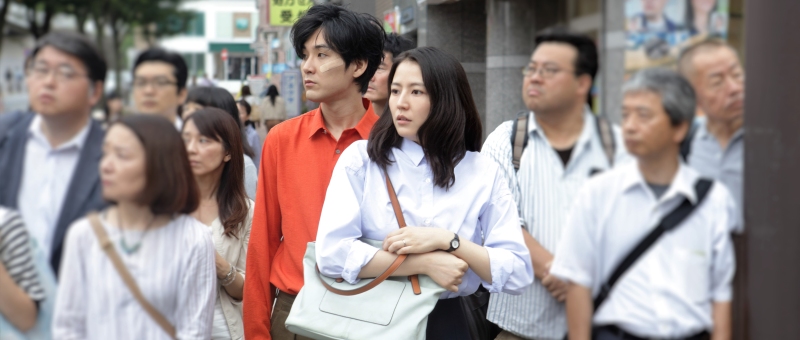
Strange events are afoot in Tokyo. A high school girl wanders home with a pair of goldfish in a plastic bag before brutally murdering her entire family, gazing at the scene of carnage with a beatific smile. Meanwhile, the estranged wife of Shinji Kase (Ryuhei Matsuda), Narumi (Masami Nagasawa), has been sent for to claim her presumably amnesiac husband from a medical facility. Shinji was brought in after wandering the streets cluelessly and seems to have lost certain sections of his memory. The doctor’s diagnosis is uncertain but leans towards some kind of temporary psychotic break or early onset Alzheimer’s. In any case, he is now Narumi’s responsibility, much to her consternation. Across town a down on his luck journalist (Hiroki Hasegawa) covering the brutal family murder finds himself the designated “guide” to another strange young man, Amano (Mahiro Takasugi), who seems to have done something very untoward to his parents.

These three “strangers” are really invaders from outer space – something which they freely confess to anyone who will listen, only everyone assumes they are joking. Exactly why they want to destroy the Earth is never revealed, nor is the the reason for the strange mission undertaken by the three researchers acting as the vanguard for the upcoming invasion. These three have been tasked with a thorough investigation of “humanity” in which they must learn and acquire certain “concepts”. They do this by requiring the subject to visualise their thinking behind a word or phrase and then tapping the head to pinch it causing that concept to be removed from the person’s interior cosmology.

The aliens learn as much from the effect of removing the concept as they do from its explanation. This being Japan, it’s not surprising that the first concept Shinji removes is that of “family” which he takes from Narumi’s younger sister, Asumi (Atsuko Maeda). Asumi had decamped to Narumi’s after an argument with her parents over their railroading her into a mainstream life she doesn’t really want. The removal of the concept of family means Asumi no longer needs to be bound by hollow obligation but her sudden coldness towards her sister immediately invites a series of other questions as to the true nature of their relationship. Similarly, Shinji removes a concept of “possession” from a young man. The young man does not immediately lose understanding of the word, but the concept ceases to be important to him. He is, in a sense, freed from the burden of materialism. Paying an unexpected visit to Narumi’s workplace and meeting her boss who, it seems, has just belittled her work on an important project after she rebuffed his attempt at sexual harassment, Shinji removes his concept of “work” leading him to play aeroplanes all around the office like an overexcited child.

There are positive effects of losing some of these centrally held ideas even if their loss seems tragic or painful on the surface. They are, however, what make us human whether that be attachment to family or an irrational desire to devote all to work and ceaseless acquisition. The final, most elusive concept is that of love – something alien and fascinating to the visitors which they find impossible to harvest due its essentially nebulous nature. Despite being part of a uniform hive mind, the invaders have each developed unique personality traits as a consequence of their “human” lives – the schoolgirl craves violence and destruction, Amano fatherly friendship, and Shinji something close to love with his own “guide” in the form of Narumi whose love for her husband apparently endured despite his betrayal.

Far from the gloomy nihilism of Pulse in which death is eternal loneliness, Before We Vanish suggests that what will survive of us is love. Salvation does, however, require a sacrifice which provokes the film’s romantic conclusion in which the absence of love becomes the “eternal loneliness” promised by Pulse but is tempered by patience and devotion. A gleefully absurdist exploration of the human soul, Before We Vanish finds Kurosawa at his most optimistic affirming the power of the human spirit at its most indestructible.


Screened at the London East Asia Film Festival 2017.

International trailer (English subtitles)