Boy in the Pool (보이 인 더 풀, Ryu Yeon-su, 2024)

If you know you’ll never be the best, is it better to give up right there and then or to continue but out of simple enjoyment rather than ambition? For Seok-young, the second option doesn’t make any sense. It’s just a waste of time to pursue something that you have no aptitude for when there are those born with natural abilities that you could not hope to equal no matter how hard you tried. But as much as she claims quitting doesn’t make you a loser, there is something a little sad in the idea of abandoning something you once loved simply because other people were better at it than you were.

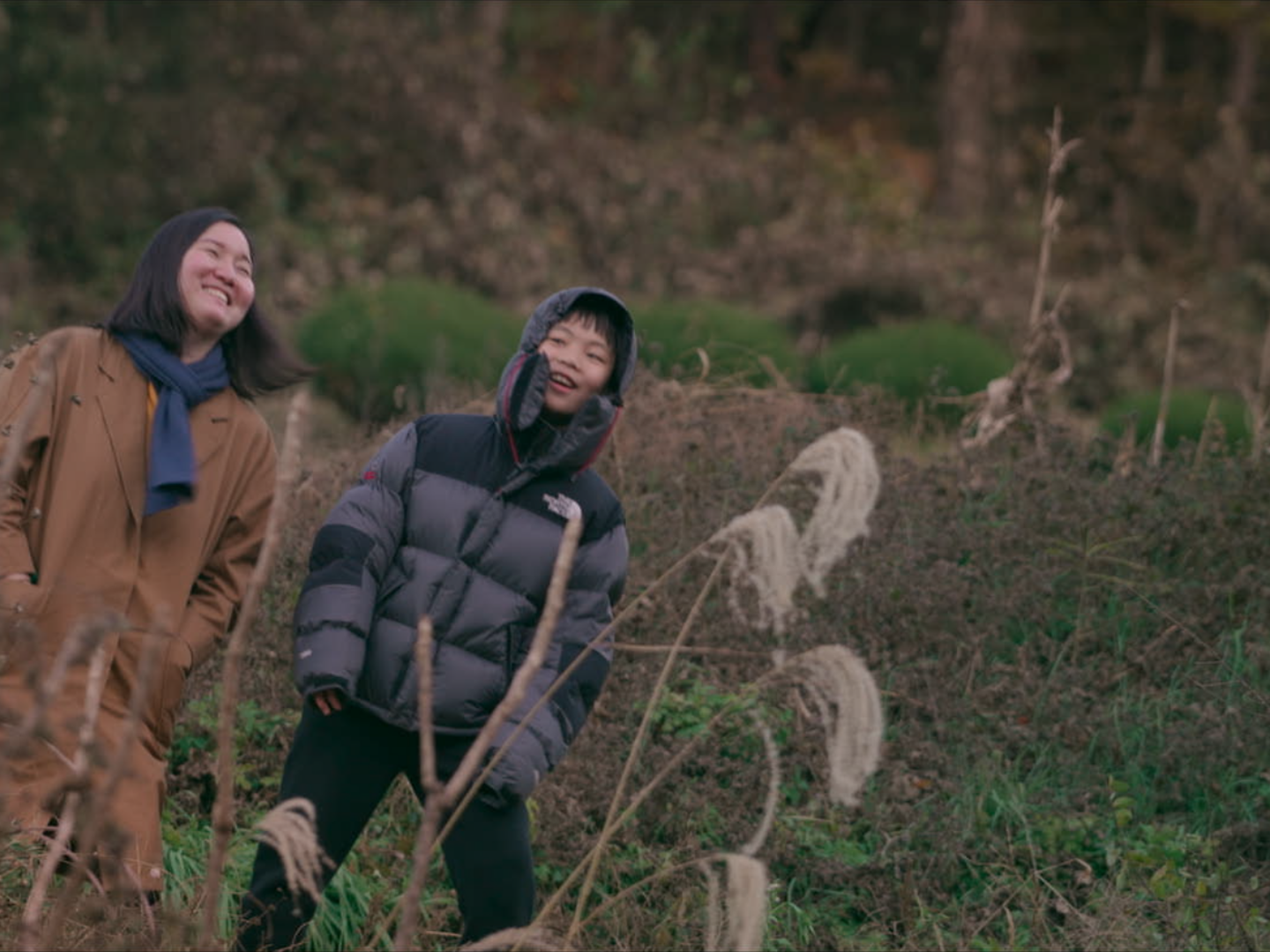
At 13 years old, Seok-young is a swimming obsessive and very proud of the fact that she recently won a trophy. One of the reasons she’s so upset she and her family are moving back to her mother’s hometown following her parents’ divorce is that she’ll have to leave her swimming club and is worried there either won’t be one in the rural backwater or that the other kids won’t be at her level. Unable to make headway at the pool, she goes swimming in the sea instead only to be struck by a foot cramp and rescued from drowning by sullen local boy Woo-joo. Though he angrily runs away from her and says he hates swimming, the two later bond over their shared love of the sport and outsider status. But Woo-joo turns out to be a prodigy and much better than Seok-young meaning that he’s soon picked up by a coach to train in Seoul and Seok-young quits swimming in a fit of pique.

There’s a gentle yet contradictory theme running through the film of allowing your fear of not being good enough to rob you of the joy of doing something just because you enjoyed it. Seok-young seems to quit a lot of things, and as a high schooler is left home alone when her sister too goes to Seoul to train as a concert pianist. She is diffident and aloof in her relationship with Woo-joo, never revealing her true feelings but pushing him away and needling him in his own insecurity as a backwards way of reassuring him that he has the talent to succeed. Meanwhile, he is carrying a secret that makes him doubt his talent and feel self-conscious in the pool, afraid to reveal himself and as it turns out with good reason. Only Seok-young knows and is completely unfazed by his difference, recognising it as the thing that makes him unique while stopping short of admitting that she does indeed think there’s something more to him than swimming and would like him even if never swam again. 

Nevertheless, there’s something quite upsetting about the idea that Woo-joo would have to sacrifice what makes him unique not only to succeed but simply to be able to fit in. He lives with a sense of being different, and is perhaps also bullied and discriminated against because he’s being raised by his grandmother, something else which Seok-young just accepts without question. Seok-young, meanwhile, is displaced amid her parents divorce and humbled by the realisation that she may have overestimated her talent for swimming. She continues to vacillate and unlike those around her flounders for direction. Another boy who’s interested in her reveals that he kept going to the swimming club just for fun even after realising there was no way he could be as good as someone like Woo-joo, but Seok-young seems to retreat into herself in her insecurity. She’s afraid to keep going or try new things out of fear she won’t be good enough rather than simply doing her best and having a good time. 

But as she says, quitting doesn’t make you a loser and giving up something that isn’t making you happy can be a victory in itself as she perhaps discovers in returning home less in defeat than in search of something more. Woo-joo too seems to have found his niche, now whole again and all of himself while no longer submitting to the pressure of needing to achieve something more for others than himself that had ruined whatever joy he may have found in swimming. The message of Ryu’s gentle drama is less one of knowing your limitations than avoiding letting the fear of failure prevent you from doing something you love or conversely walking away from something that isn’t working while finally gaining the courage to chase after what it is you really want.


Boy in the Pool screens as part of this year’s Cinema at Sea.

Trailer (English subtitles)

Next Stop, Somewhere (別來無恙, James Lee, 2025)

What does “freedom” actually mean? Will money buy it for you or just result in another kind of prison in which you cannot really say you’re free because you don’t feel like you have the choice to leave? Leaving is really at the centre of James Lee’s sensitive drama Next Stop, Somewhere (別來無恙, biéláiwúyàng) in which the protagonists of parallel stories have both left their homelands not altogether by choice in search of a greater freedom that they nevertheless struggle to find.

Hong Kong actor Huang (Anthony Wong Chau-sang) has left Hong Kong in search of political freedom in the wake of the Umbrella Movement, but is immediately constrained by coronavirus quarantine on his arrival in Taiwan. He is constantly trying to get in contact with a man called James who also seems to be in some political trouble and is not always able to answer, which is a problem because James is supposed to be handling the transfer of his money out of Hong Kong. Huang might be “free” of political oppression, but in reality one is never “free” without money and arguably not even then because of the necessity of acquiring it. That seems to be part of the problem for his maid at the hotel, Xiao Qian (Angel Lee), who feels trapped in a relationship that no longer seems to be working while unable to leave it because neither of them can afford the rent on their own.

Xiao Qian’s relationship is with another woman and perhaps it could be argued that in Taipei she at least has the freedom to live with the person she loved, though on the other hand she pointedly refuses to explain when her girlfriend Bae shows up at the hotel looking for her after she stops answering her calls or messages. Bae also seems to have mental health issues that also perhaps prevent Qian from leaving her, though she continues to treat her coldly and repeatedly refuses her requests for intimacy. It seems that Qian wanted to study abroad in America, but so far has been unable to go. A $100 bill to her represents another kind of freedom, though as she later says to Huang in the end freedom about having the choice to leave.

A $100 bill meant freedom for Kim (Kendra Sow) too, but like Huang she finds herself trapped by the realisation that the note did not represent what she was led to believe it would. Not entirely of her own choice, Kim leaves Vietnam to become the mail order bride of a Malaysian man who claimed to be a wealthy businessman in his 40s but in reality is a market trader quite a bit older than that. Mr Li (Mike Chuah) is totally besotted with his new brides, telling his friends that there were cheaper girls available but his is the prettiest. But in the end he’s trapped by this situation too. It’s clear he hadn’t thought through the reality and was acting out a kind of romantic fantasy. Young and naive, Kim recoils from his touch and building a relationship with her is impossible because she doesn’t speak Mandarin and he doesn’t know Vietnamese. They’re hassled by immigration officials and Mr Li’s irate mother who berates Kim insisting that they only brought her here to have a son and heir so she’s not fulfilling her obligations. For his part, Mr Li is partly sympathetic in that it’s clear he has no desire to force himself on Kim and hurt, if understanding, that she rejects him. When he eventually does try to force her, he can’t go through with it because of the sight of her tears. 

As her mother-in-law feared she might, Kim finds release though a growing relationship with the immigration officer who’s closer to her in age and also an outsider, rejected by Mr Li’s mother on the grounds of his ethnicity. Through love, she finds another kind of “freedom”, but with it constraint and it remains unclear how this situation will play out even as, like Huang, she surrenders the $100 bill to someone who needs it more. To pass time in quarantine, Huang orders a copy of Mishima’s Temple of the Golden Pavilion, a book about a young monk who sets fire to the temple because he can’t bear the existence of something so beautiful in this profane world. Having not yet finished the book after Huang lent it to her, Qian asks him why the boy did it and he replies that perhaps he felt trapped and that only by burning the temple down could he be free. To that extent, for each of them “freedom” means burning the world behind you and never looking back, if only in a purely symbolic sense in finding the courage to leave a dissatisfying situation, no matter how impossible that might seem, along with the willingness to look for happiness somewhere else. 


Next Stop, Somewhere screens as part of this year’s Cinema at Sea.

International trailer

Chang’an (长安三万里, Xie Junwei & Zou Jing, 2023)

It’s a strange thought, in a way, that poetry could save a nation. In reality, it didn’t quite. The An Lushan rebellion significantly weakened the Tang dynasty and contributed to its rapid decline. Nevertheless, Tang was an era in which art, culture, and freedom of thought all flourished. Animated feature Chang’an (长安三万里, Cháng’ān Sānwànlǐ), named for the imperial capital of that time, attempts dramatise the era through the lives of its poets and the eyes of Gao Shi (Yang Tianxiang) reflecting on his youthful and often distant friendship with the legendary Li Bai (Ling Zhenhe) whose poems are still recited by the school children of today.

As the film opens, Gao Shi is an old man and embattled general staring down inevitable defeat at the hands of the invading Tubos emboldened by the weakening of borders following the failed An Lushan rebellion. But that’s not the reason he’s being visited by an imperial inspector who is far more interested in his relationship with Li Bai and the political importance it may have gained. Through this framing sequence, Geo Shi narrates the previous 40 years of history as he and Li Bai each age and take different paths in life while maintaining a distant if deeply felt friendship.

To that extent, Guo Shi is the earnest and practical son of a once noble house attempting to resurrect his family legacy, while Li Bai is a free spirited libertine attempting to overcome his lowly birth as the son of a wealthy merchant to gain government office through his skill as a poet. Then again, as future great poet Du Fu (Liu Jiaoyu / Sun Lulu) remarks, in this age poetry is something anyone can do and distinguishing oneself through it is no mean feat. It is however the only option for a man like Li Bai and the film in part seems to be an advocation for meritocracy in which those of ability would be free to prosper without needing to rely on social standing or personal connections. Despite the supposedly classless society of the modern day, this world may not yet have emerged. Another hopeful laments that she alone of her brothers inherited military skill yet as a woman there’s no door that is open to her to serve her country. 

Serving one’s country is the virtue that Gao Shi praises most highly and in effect his life’s purpose while Li Bai’s is more personal advancement and the perfection of his art. His poems are often melancholy and reflect on a sense of loneliness and longing for home, or else raucous celebrations of the art of drinking. Gao Shi does not approve of Li Bai’s party lifestyle and his debauchery later places a strain on their friendship. The film tacitly implies that this decadent behaviour is behind the decline of Tang, but also the reason that art and culture flourished amid a sense of destruction and despair. Having learned a few lessons in underhandedness from Li Bai, Geo Shi in effect restores order, albeit temporarily, through strategy and courage, while Li Bai first chooses isolation and then in its opposite after being pardoned for an apparently accidental and entirely thoughtless act of treason.

But what the film is keen to emphasise is the deep-seated friendship, or perhaps more, between the two men that makes the victory possible suggesting that a society needs both practicality and art to survive, not that Gao Shi was not a great poet himself if one well aware that Li Bai surpassed him in skill and keen support his success. Even so, as Gao Shi points out, a poet is not always an easy thing to be and in his old age those who once drank with Li Bai are either dead, one beaten to death at the age of 70, exiled or imprisoned. In a sense, both men achieve their aims if perhaps not in the way they intended. Gao restores his family name, and Li Bai finds a kind of immortality in his work that he otherwise failed to find spiritually in devoting himself to Taoism. The often beautifully rendered backgrounds capture a sense of a society on the brink of eclipse, such as the striking beauty of Gao Shi’s first entry to Yongzhou with its blossoming cherry trees lit by the warm light of lanterns under a full moon, only to turn to darkness on his return amid the twilight of the Tang dynasty. 


Dazzler Media presents Chang’an in UK and Irish cinemas from 28th February.

UK trailer (Mandarin with English subtitles)

River Returns (光る川, Masakazu Kaneko, 2024)

At the beginning of Masakazu Kaneko’s River Returns (光る川, Hikaru Kawa), a little boy asks his father where water comes from. It’s one of those questions that children ask but adults find difficult to answer. In any case, his father tells him that it comes from the sky, travels down leaves and branches, and then makes its way to the river. But what if all the trees are felled, the boy asks. His father tells him not to worry, they only cut down “useless” trees in order to plant “money-making” ones in their place.

This is the conflict at the centre of the film and to some extent that at the centre of all of Kaneko’s films so far in the changing relationships between man and landscape. The boy, Yucha (Sanetoshi Ariyama), is too young to fully understand what’s going on but has an inkling that might not be good for his beloved mountain which is somehow linked with the fate of his sickly mother, Ayumi (Kinuo Yamada). His father, Haruo (Tomomitsu Adachi), is one of the younger men in the village in favour of a plan to sell off the mountain for industrial construction with the building of a modern roadway and a dam project which he says will make everyone in the village rich. It’s 1958, and the nation is fast recovering from post-war privation. The population is increasing. New homes will need to be built so there’s money in timber. He wants to use some of it to treat Ayumi’s illness, but his mother has her doubts even if her son dismisses them as backward superstition. 

Haruo worries that their old-fashioned, rundown home may not survive a severe typhoon nor the flooding that often accompanies them. If you fear floods, then cutting down trees is obviously not a good idea and there is something quite unsettling about the imposition of the dam that would interfere in this ancient and natural process that keeps the rivers flowing. Yet this particular river also has a quasi-mystical quality that Yucha learns of from his grandmother and a kamishibai storyteller who recounts a local folktale about a girl who drowned herself in the pool at the river’s source after falling in love with a nomadic mountain woodcutter. It is said the girl’s despair sometimes brings about terrible floods and that the one who receives a wooden bowl from the river must return it full or a loved one will be taken by the waters.

Yucha had been worried about this before, frightened that his mother would not be able to escape the rising waters because of her illness. What he learns is that time flows differently at the source and in temporal terms, this river also flows backwards. He becomes a kind of conduit and saviour of the mountain in going back to right a wrong, ensuring that man and landscape are joined once again and can live in a more natural harmony. By saving the mountain, he can also save his mother whose condition it is implied is partly caused by a corrupted modernity. Haruo could not save her with money gained by nature’s destruction, only by restoring nature itself and making a commitment to keep the pool as clear and blue as the cormorant’s eye. 

The nomadic woodcutters after all know that too much felling ruins the mountain which would take generations to recover. They kneel and pray after felling their trees and respectfully move on at the full moon. Kaneko structures his tale elliptically, like a river that constantly returns in which all is a harmonious cycle that man threatens to interrupt, arrogantly thinking that it can improve upon nature. The middle part of the film is a lengthy flashback transitioning out of the kamishibai folktale set sometime in the feudal past in which even then there was division between the “civilisation” represented by the village and the natural world of the mountains which would be healed in the union of Oyo and the woodcutter Saku and is opposed both by the mountain nomads and Oyo’s widowed father Tsunekichi (Ken Yasuda). Only the mute boy can in the end resolve this romantic tragedy and ensure the river continues to flow. Elegantly lensed to capture the majestic quality of the mountain landscape, River Returns is a timely reminder of the importance of protecting the natural environment which in return will also protect us. 


River Returns screens as part of this year’s Cinema at Sea.

Trailer (English subtitles)

The Love in Okinawa (琉球之戀, Lin Fu-Ti, 1968)

Though he may be captain of his own boat, a young man finds himself powerless in the matters of love in Lin Fu-Ti’s Taiyupian romance, The Love in Okinawa (琉球之戀). Long thought lost and recently restored from a Mandarin-dubbed print discovered in San Francisco’s Chinatown, the film was a collaboration between Taiwan and locally based film companies completed shortly before the islands’ return to Japanese sovereignty after an extended period of American occupation. Though the two nations share a degree of common ground in their experience of Japanese colonialism, the film seems to suggest that nothing really good comes of trying to do business here and events might have progressed differently if the family had not delayed its return to Taiwan.

Nevertheless, the real problem is that Hung-hai is a boat captain who in theory possesses the total freedom of the wide open seas yet he is unable to defy his father and marry the woman he loves out of a sense of filial piety. Hung-hai and Hsui-ling were childhood friends and their fathers were once like brothers only to be forced apart by a business dispute ending in a court case which Hung-hai’s father lost. Hsiu-ling’s father’s business later went bust anyway and he has been dead for several years but Hung-hai’s father still harbours fierce resentment towards him. The family went through a period of financial hardship following the court case during which Hung-hai’s mother worked herself to the bone gathering money for their new start. Hung-hai’s father blames his former friend for hastening his wife’s early death which is why he can’t accept Hsiu-ling, to whom he was once like an uncle, as his daughter-in-law.

But on the other hand he also has his own plans for his son’s life which include marrying Yoshiko. Yoshiko is the current “Miss Okinawa” and a minor celebrity who appears on television singing Japanese songs such as Mari Sono’s 1966 hit Yume wa Yoru Hiraku. She is always dressed in kimono, while Hsui-ling wears more westernised contemporary fashions but is later seen in more recognisably Chinese-style after her return to Taiwan. To that extent, Yoshiko represents a closer union with the growing economic powerhouse of Japan as mediated through Okinawa, while Hsui-ling represents an unsullied Taiwan yet one still restrained by increasingly outdated notions of filiality.

Eventually, after a series of ironies, Hung-hai’s father is forced to admit that his authoritarianism and refusal to allow his son to chart his own destiny has destroyed his family’s future. Unable to marry Hsui-ling who thinks that he has married Yoshiko after seeing her announce their engangement on television while he was away on his boat, Hung-hai falls into depression and takes to drink. Though he had long favoured Hung-hai to take over the business over his older son Ah-qin who has a physical disability and was therefore left behind in Taiwan to babysit the domestic business, Hung-hai’s father begins to realise the mistakes he has made and that in this ruined state Hung-hai will never amount to anything nor prove a worthy heir for his business empire.

Ah-qin, meanwhile, is oblivious to all this and the soul of kindness and decency. In some ways, he might play into a stereotypical vision of disabled people as saintly and innocent, yet is unwittingly drawn into his brother’s romantic drama knowing nothing of his father’s animosity towards Hsui-ling and her family nor of his brother’s love for her which is the cause of his depression. He wants only for everyone in his family to be happy, and in the end is willing to sacrifice his own happiness to facilitate it (which is a paradoxical expression of “positive” filiality). Hung-hai had suggested simply running away and eloping to Taiwan but Hsui-ling’s mother was on her deathbed and neither of them really had the stomach to abandon their parents in a “foreign” land. Thus this kind of filiality that divides the lovers is nothing but destructive. Not only does it ruin the family entirely, disrupting the relationship between the brothers as well as between father and sons, but leads only to futility and heartbreak in which true freedom is found only in death.


The Love in Okinawa screens as part of this year’s Cinema at Sea.

Trailer (Traditional Chinese / English subtitles)
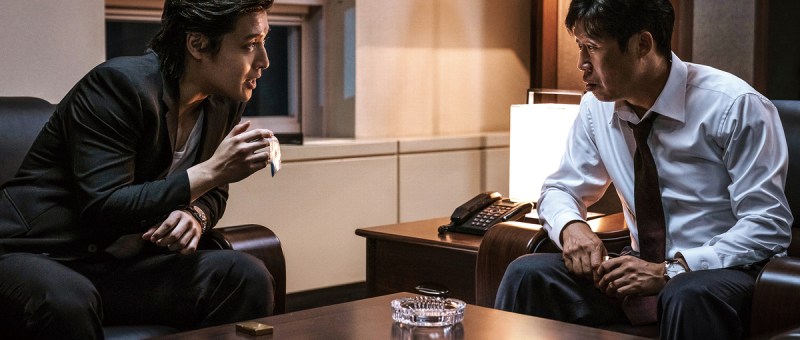
99% Cloudy… Always (99%、いつも曇り, Midori Sangoumi, 2023)

Why do some people feel themselves entitled to ask insensitive questions at emotionally delicate moments? Kazuha (Midori Sangoumi) may have a point when she calls her oblivious uncle a bully when a lays into her about having no children at the first memorial of her mother’s passing, but still his words seem to wound her and provoke a moment of crisis in what otherwise seems to be a happy and supportive marriage.

Kazuha is a very upfront person and fond of directly telling people that she thinks she has stopped menstruating so she doesn’t think she could have a child now even if she wanted one. One of the other relatives, however, suggests that her husband, Daichi (Satoshi Nikaido), may feel differently which somewhat alarms her. The questioning had made her angry and offended, not least by the implication that a woman’s life is deemed a success only through motherhood and that those who produce no children are somehow “unproductive”, but it was all the more insensitive of her uncle to bring it up given that Kazuha had suffered a miscarriage some years previously.

The miscarriage itself appears to have resulted in some lingering trauma that’s left Kazuha with ambiguous feelings towards motherhood. Having been bullied and excluded as a child because she is autistic, Kazuha is reluctant to bring a child of her own into the world in case they too are autistic and encounter the same kind of difficulties that she has faced all her life. As the film opens, she’s trying to get in touch with someone about the results of a recent job interview but getting flustered on the phone and asking what may be perceived as too many questions all in one go. She does something similar while trying to enquire at a foster agency about a clarification of their guidelines as to whether she would be eligible to adopt as an autistic woman which she fears she will not be. It just happens that no one is available to talk to her that day as they’re all at an outing leaving only a member of the admin team behind to man the desk while Kazuha repeatedly asks the same question in the hope of a response. 

The truth is, Kazuha might have liked to raise a child but not her own while for Daichi it’s the opposite. He may still want to have a biological child but is not particularly interested in raising someone else’s. This question which has reared its head again at a critical moment immediately before it may be too late places a strain on their marriage as they contemplate a potential mismatch in their hopes and desires for the future. Daichi is reminded he has no other remaining family as his younger sister passed away of an illness some years previously and his parents are no longer around either. As he tells a younger woman at work, Kazuha is his only family while others needle them that there’ll be no one there for them in their old age should they remain childless. 

Part of the issue is a lack of direct communication as Daichi talks through his relationship issues with a colleague in trying to process Kazuha’s revelation that she felt relieved after the miscarriage given her guilt and anxiety that the baby would also be autistic which is not something that had previously occurred to him nor that he particularly worried about. The film seems to hint that Daichi has the option of moving on, perhaps entering a relationship with his younger colleague, if his desire to have a biological child outweighed that to stay with Kazuha while that is not an option for Kazuha herself who is left only wondering if she should divorce him so he can do exactly that. In flashbacks, we see her reflect on some of her past behaviour and realise that she may have inadvertently hurt someone’s feelings in speaking the truth and been shunned herself because of it. Even so, she has a warm community around her who love her as she is and are in effect an extended family. The accommodation that she finds lies in fulfilling herself through art and building a relationship with her nephew while also helping and supporting those around her. It may be cloudy 99% of the time, but there’s still a glimmer of light and a radiance that surrounds Kazuha as she embraces life as she wants to live it rather than allow herself to be bullied by belligerent uncles and the spectres of social expectation.


99% Cloudy… Always screens as part of this year’s Japan Foundation Touring Film Programme.

Trailer (English subtitles)

Hope (望み, Yukihiko Tsutsumi, 2020)

What would you prefer, that your son is alive but a murderer, or that he’s dead but blameless? That’s the dilemma faced by the family at the centre of Yukihiro Tsutsumi’s Hope (望み, Nozomi) who find themselves wondering if they really knew their son at all or had been deluded by an image of familial harmony that was only ever superficial. Meanwhile, they’re also at the centre of a media storm, on the receiving harassment from the press and neighbours, along with the potential financial strain of lost business and fracturing relationships in the local community.

Teenage daughter Miyabi (Kaya Kiyohara) tells her father that she’s read online some families have to move after a relative becomes involved with a crime, that they lose their jobs and place in the community. She’s been studying hard to get into a top high school and is worried that they may not now accept her even if she passed the exam because of something her brother may or may not have done. Some might say that a being a part of the family means that you live or die together, but there is a persistent sense of unfairness felt by all they are being made to suffer because of something over which they had and have no control.

Tadashi (Koshi Mizukami) never explained of this to them and it’s true that he had been behaving differently, was sullen, stayed out all night coming home with bruises, and had in fact recently purchased a knife but it’s difficult for them to believe that he could really have gone on the run after murdering a classmate. At the beginning of the film, architect Kazuto (Shinichi Tsutsumi) had shown off their warm family home to some prospective clients remarking that they wanted to ensure close relationships with the their children and that the design is a good opportunity to plan ahead for the next 10 or 20 years but perhaps there’s something a little hubristic in that statement. Kazuto is trying to sell an image of familial bliss that his house design can bring, but when he knocks on Tadashi’s door the boy is rude and resents the intrusion. Typical teen behaviour, the clients might think, but still it’s a minor crack in the edifice of the image of a perfect family.

But for all that it’s Kazuto who most strongly resists the idea that Tadashi may really have killed his friend and clings fast to the hope that he may be a victim too even though, as mother Kiyomi (Yuriko Ishida) points out, that might mean that he’s already dead and was killed alongside him. For Kiyomi, she just wants Tadashi, whose name means “correctness”, to be alive even if that means he really did do it. If that were the case, the family would also face constant harassment for the rest of their lives, Tadashi would be in prison for the next 15 years, and they would likely have to compensate the other family financially for the boy’s lost future and 50+ years’ worth of lost earning potential. None of that matters to her so long as Tadashi is alive, but to Kazuto it seems more important that Tadashi not be guilty and he reclaim the image he had of his son as a good and honest young man rather than a delinquent killer and bully.

Investigations among the teens turn up contradictory reports, some saying that Tadashi was aloof and arrogant while a group of girls insist on his innocence and even contemplate going to the police to help clear his name. What’s clear is that everyone seems to have taken football far too seriously and a situation among hotheaded young men went way out of control. As a policeman later says, problems often occur at this age because children who are mature enough to think for themselves start wanting to solve their own problems without worrying the adults around them but don’t always know the best way to do it and end up making everything worse. The irony may be that in the end Tadashi may indeed restore a sense of hope for his family that they can turn things around and regain a more genuine sense of familial harmony no matter what the outcome may be.


Hope screens as part of this year’s Japan Foundation Touring Film Programme.

Trailer (English subtitles)

The Scoop! (新米記者トロッ子 私がやらねば誰がやる!, Keiichi Kobayashi, 2024)

The print media industry in Japan has often come in for criticism because of its perceived toothlessness in which it is often afraid of speaking truth to power lest it lose its access. Of course, as we’ve seen all too well just recently, that’s not a problem limited to Japan, but it’s something that’s preoccupied the students at the centre of Keiichi Kobayashi’s teen drama The Scoop! (新米記者トロッ子 私がやらねば誰がやる!, Shinmai Kisha Torokko: Watashi ga Yaraneba Dareka ga Yaru) whose unofficial newspaper club is threatened by the school because of its tendency to expose scandal and oppose the elitism which has otherwise taken over the institution.

Yui (Karin Fujiyoshi) only enrolled here because of the famous literature club and the possibility of meeting her idol, Konoha Midorimachi, the winner of a prestigious student writing competition. But as she quickly finds out, the Literature Club is pretty high up in the school hierarchy and only really open to those in the “advanced” class. All of its members wear red scarves to distinguish them from the other students who wear blue. You have to take a test to get in, but Yui’s dreams end before they’ve even started when she’s hit by a rogue drone and knocked out. They won’t let her retake the test because they say it would be unfair to the other students, but the club president, Mari (Rinka Kumada), has another proposition for her. It turns out that Konoha Midorimachi isn’t a member after all but a mysterious person using a pen name. Mari wants to know who it is too so she suggests they team up to find out. Following a lead to the unofficial Newspaper Club, Mari advises Yui to sign up there and win their trust to find out Konoha’s true identity on the promise of being admitted to the Literature Club once she’s solved the mystery.

Yui isn’t really happy with this plan in part because the Newspaper Club has a bad reputation for being a bunch of cranks and nerds. The Newspaper Club isn’t really all that keen on talking about Konoha either but is glad to have Yui on board while she also begins to embrace the opportunity to hone a different side to her writing skills. While there, she’s confused by the tactics employed the editor, Kasane (Akari Takaishi), whom she describes as more like a con-artist than a journalist as she employs some unorthodox methods to get to the truth, but also wakes up to the myriad problems at the school and comes to understand that the newspaper is necessary for exposing them. 

This does not, however, endear them to the headmaster, Numahara (Masahiro Takashima), who is a fascistic elitist intent on ruling the school with an iron fist. Backed into a corner, he agrees to make the Newspaper Club “official” with funding from the school but only as a gambit to control it. If Kasane accepts his offer, they will have to abide by his rules which means puff pieces and propaganda only. “Submit to me,” he snarls, inappropriately pinning the teenage Kasane to a wall while making her an ultimatum to join his side or get the hell out. “Women should be compliant,” he advises shortly before Kasane socks him on the jaw. What happens after that is a neutering of the paper while Numahara strengthens the elitism of the school by deepening the privileges held by the so-called “advanced” class represented by the Literature Club. 

The Japanese title of the film is the more evocative “Rookie Reporter “Trolley”: If I don’t do it, who will?” As Kasane had said to Numahara, silence changes nothing. Kasane later claims that she started the Newspaper Club because she lost faith in the power of fiction, but also wanted to bring about real change and expose Numahara’s corruption. Though their paper is suppressed, they do eventually manage to bring about something like a more egalitarian revolution and expose Numahara for what he really is by using the same tactics he used against them. In some ways, it’s an allegory for the wider society and an advocation for the power of journalism to bring about real change by refusing to shrink from the truth or be cowed by those in power, as much it is a coming-of-age tale in which the heroine learns that things aren’t always what they seem and a club that’s founded on the principle of excluding others isn’t one you want to join.


The Scoop! screens as part of this year’s Japan Foundation Touring Film Programme.

Trailer (English subtitles)

What Happened to Our Nest Egg!? (老後の資金がありません!, Tetsu Maeda, 2021)

A minor controversy erupted in Japan in 2019 when then finance minister Taso Aso issued a statement recommending that couples should have 20 million yen (£104,620 total at the time of writing) saved for their retirement on top of the state pension in order to live a comfortable life in old age. All things considered, 20 million yen actually sounds like quite a low sum for two people who might live another 30 years post-employment. Nevertheless, Atsuko (Yuki Amami) and her husband Akira (Yutaka Matsushige) are now in their mid-50s and don’t have anywhere near that amount in savings. They’re still paying off their mortgage and though their children are grown-up, neither of them seem to be completely independent financially and both still live at home. 

Tetsu Maeda’s familial comedy What Happened to Our Nest Egg!? (老後の資金がありません!, Rogo no shikin ga arimasen!) explores the plight of the sandwich generation which finds itself having to support elderly relatives while themselves approaching retirement and still needing to support their children who otherwise can’t move forward with their lives. Seeing an accusatory ad which seems to remind her personally that even 20 million yen isn’t really enough when you take into consideration the potential costs of medical treatment or a place in a retirement home, Atsuko has a sudden moment of panic over their precarious financial situation. The apparently sudden death of Akira’s 90-year-old father acts as a sharp wake up call especially as Akira’s apparently very wealthy but also selfish and materialistic sister Shizuko (Mayumi Wakamura) bamboozles him into paying for the entirety of the funeral while pointing out that they’ve been footing most of the bill for the parents’ upkeep over the last few years.

There was probably a better time to discuss the financial arrangements than with their father on his deathbed in the next room, but in any case Shizuko doesn’t pay attention to Atsuko’s attempt to point out they’ve been chipping in too. Akira’s mother Yoshino (Mitsuko Kusabue) also reminds them that their family was once of some standing and a lot of people will be attending the funeral so they need to make sure everything is done properly. The funeral arranger is very good at her job and quickly guilts Atsuko into spending large sums of money on pointless funeral pomp to avoid causing offence only to go to waste when hardly anyone comes because, as she later realises, all of the couple’s friends have already passed away, are bedridden, or too ill to travel. 

Yoshino is however in good health. When Shizuko suddenly demands even more money for her upkeep, Atsuko suggests Yoshino come live with them but it appears that she has very expensive tastes that don’t quite gel with their ordinary, lower-middle class lifestyle. Having lived a fairly privileged life and never needing to manage her finances, Yoshino has no idea of the relative value of money and is given to pointless extravagance that threatens to reduce Atsuko’s dwindling savings even more while in a moment of cosmic irony both she and Akira are let go from their jobs. Now they’re in middle age, finding new ones is almost impossible while their daughter suddenly drops the bombshell that she’s pregnant and is marrying her incredibly polite punk rocker boyfriend whose parents run a successful potsticker restaurant and are set on an elaborate wedding.

The film seems to suggest that Atsuko and Akira can’t really win. They aren’t extravagant people and it just wasn’t possible for them to have saved more than they did nor is it possible for them to save more in the future. Instead it seems to imply that what they should do is change their focus and the image they had of themselves in their old age. One of the new colleagues that Akira meets in a construction job has moved into a commune that’s part of the radical new housing solution invented by his old friend Tenma (Sho Aiwaka). Rather than building up a savings pot, the couple decide to reduce their expenses by moving into a share house and living as part of a community in which people can support each other by providing child care and growing their own veg. Yoshino too comes to an appreciation of the value of community and the new exciting life that she’s experienced since moving in with Atsuko. It may all seem a little too utopian, but there is something refreshing in the suggestion that what’s needed isn’t more money but simply a greater willingness to share, not only one’s physical resources but the emotional ones too in a society in which everyone is ready to help each other rather than competing to fill their own pots as quickly as possible. 


What Happened to Our Nest Egg!? screens as part of this year’s Japan Foundation Touring Film Programme.

Trailer (English subtitles)

Cinema at Sea Announces Complete Programme for 2025

Cinema at Sea – Okinawa Pan-Pacific International Film Festival has announced the full programme for its second edition which runs 22nd February to 3rd March, 2025. This year’s festival opens with Ocean Elegy: The Tragedies of Mudan and Ryukyu, a documentary exploring the Mudan incident, and closes with New Zealand drama, Tinā. The festival will also feature a special focus on Maori filmmaker Mike Jonathan.

Here are the East Asian features screening in this year’s programme:

Indonesia

  • Tale of the Land – drama revolving around a young woman who believes she is living with a curse that prevents her from setting foot on land.

Japan

  • Asia is One (1973) – the Nippon Documentarist Union explore the destructive legacies of imperialism and exploitation through the stories of migrant workers in the Okinawan islands. Review.
  • BOuQuET – experimental drama directed by actress Sahel Rosa.
  • Enlightenment – drama revolving around a man who uses media to escape reality.
  • Paradise of Solitude – human drama in which a blocked writer receives a letter from a woman looking for lost love.
  • River Returns – poetic and elliptical drama from Masakazu Kaneko in which a little boy goes on a journey into the folkloric past.
  • Rules of Living – drama in which a woman opens her home to a befuddled tourist.
  • Step Out – Okinawa-set drama from Yukihiko Tsutsumi following a young man who dreams of dancing.
  • YUUHO:No Border – documentary focusing on disability activist Yuuho.

Malaysia

  • Next Stop, Somewhere – two people head abroad in search of freedom only to end up trapped by pandemic quarantine and a loveless marriage.

Philippines

  • Gensan Punch – drama from Brillante Ma Mendoza in which a Japanese boxer heads to the Philippines after he is rejected by the Japanese Boxing Association on the grounds of his disability.

South Korea

  • Boy in the Pool – gentle drama about a boy a girl who meet at the pool but then take different paths in life.
  • Okinawa Blue Note – a best-selling Korean romance novelist travels to Okinawa only to experience unexpected complicattions.

Taiwan

Thailand

  • Rivulet of Universe – mystical drama in which a Cambodian migrant worker meets a young couple with relationship issues mirroring those of an ancient myth.

Cinema at Sea – Okinawa Pan-Pacific International Film Festival takes place at cinemas across the islands 22nd February to 3rd March 2025. The full programme can be found on the official website while you can also follow Cinema at Sea on FacebookInstagram, and X (fomerly known as Twitter).