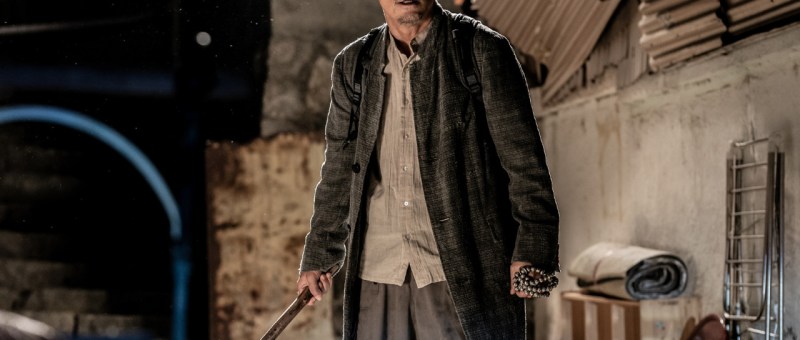
Johnny Keep Walking! (年会不能停!, Dong Runnian, 2024)

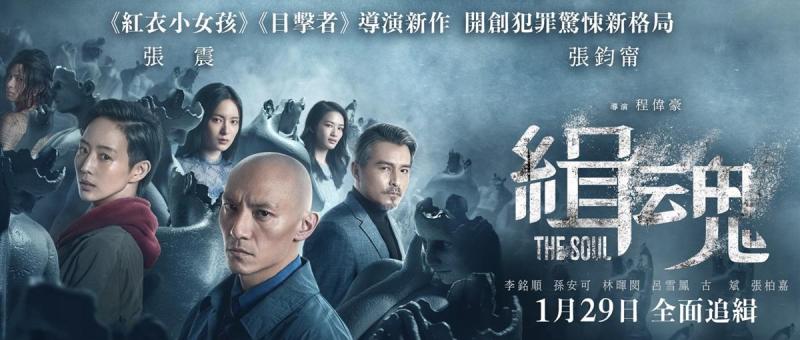
A satirical morality tale, Dong Runnian’s incredibly witty comedy Johnny Keep Walking! (niánhuì bùnéng tíng) sees a bumpkinish middle-aged factory worker still filled with an idealism that seems outdated even in the late 90s transferred into a lion’s den of corporate greed and dubious morality while ultimately expressing the younger generation’s increasing dissatisfaction with the inherent unfairness of corporate life in modern China. Ironically turning Tom Chang’s 1988 hit My Future is Not A Dream into a rallying cry from disillusioned youth, the film nevertheless places its faith in the moral generosity of a fat cat factory owner who struck gold in the nation’s 90s reforms but has largely forgotten those who helped him get there.

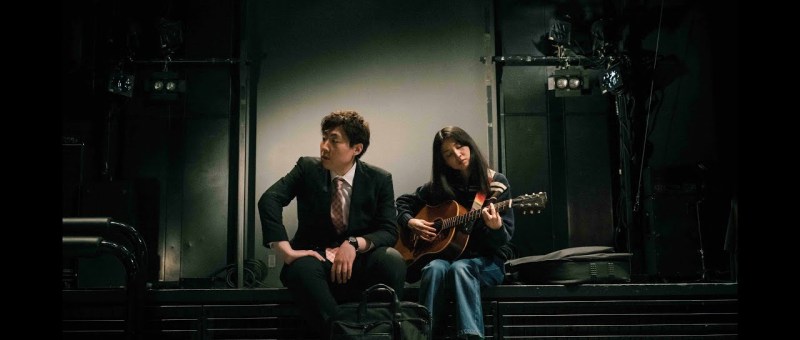
Key among them would be Jianlin (Da Peng) whom we first see trying to fix the disco ball at the factory’s 1998 gala and being asked to sing a song instead. 20 years pass with Jianlin still living the life of a model factory worker stuck on the same old salary while applying to perform in the company’s annual gala has become his only joy in life. Meanwhile, the factory owner has gone on to head an increasingly powerful multi-national company leaving Jianlin and those like him far behind deprived of the successes that the modern China has to offer. 

This is in part a paean for those left behind by the economic reforms of the 1990s which saw the end of the old factory system with mass unemployment and displacement amid frequent plant closures. Jianlin’s is still open, but devoid of the sense of comaradie that mark the opening scenes. His scheming floor manager, Zhangzi is trying to engineer a transfer to head office so that his son could attend a better school in the city and has been helping a series of corporate lackeys defraud the company, in addition to paying a direct bribe, in return for a job offer. A drunken mix up by office party boy Peter (Sun Yizhou) results in Jianlin being hired instead in a shock move that proves inexplicable to all. 

Jianlin is such an innocent that he thinks the reason he’s been given a huge promotion is because he was employee of the year for 12 years straight and the company probably want to send a message to the youngsters that hard work really will be rewarded. Of course, the opposite is true. HR manager Magic (Bai-Ke) quickly spots the mistake but is prevented from fixing it because it would get them all into trouble, and while it’s obvious to most people that Jianlin has no idea what he’s doing they choose to say nothing because they assume he must be a nepotism hire and they want to stay in the boss’ good books. Everyone at the company uses an English name with Jianlin rechristened “Johnny” though he understands no English and struggles with Chinese business jargon having no idea what people mean when they go on about “aligning the details”. Charged with firing someone under the company’s radical new “optimisation” programme, he takes the word at face value and gives them a promotion and a raise instead.

In fact, much of the film is him muddling along like typical middle-manager promoted beyond his abilities. He’s advised that good management is all about setting employees against each other so they forget about resenting you while basically delegating all your tasks to your subordinates who will be only too happy to help in order to curry favour. Slowly corrupted, Jianlin beings to play along, taking all the perks of corporate success while signing documents he couldn’t understand even if he actually read them.

Nevertheless, he develops a kind of team spirit with Magic, a man stuck in a mid-career rut because of his lack of skill at office politics, and Penny temp whose perpetually kept on the hook rather than being given full employee status so that the company can exploit her more. Penny also suffers sexual harassment at the hands of the party happy Peter with Jianlin getting her out of a sticky situation by telling her to finish a report and drinking with Peter himself. Together, and with the assistance of the workers at the factory and others about to be unceremoniously fired as part of the cost cutting enterprise, they attempt to expose corporate corruption and stage a protest against unfair working practices but the only saviour they have to turn to is the company president strongly suggesting a return to the old factory days which, it is implied, were much more wholesome and innocent. In any case, justice eventually wins out with the good rewarded and the bad getting their just desserts though it doesn’t do too much to tackle the inherent and quite ironic rottenness of the system in which the worker has been reduced to a mere tool to be used and discarded by a faceless and uncaring corporate entity. 


International trailer (English subtitles)
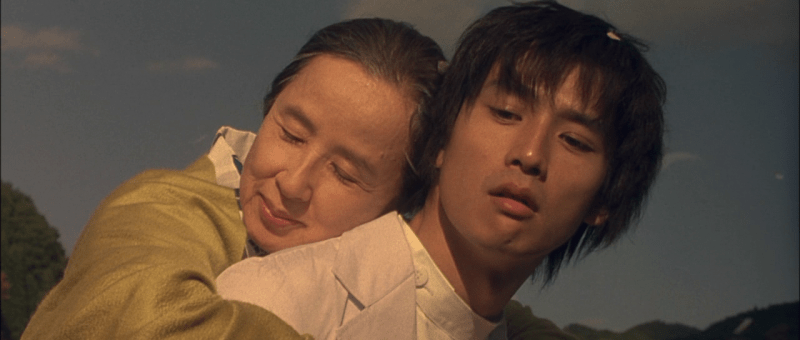
My Future is not a Dream (Tom Chang)

Endless Desire (果しなき欲望, Shohei Imamura, 1958)

In the noir films of the immediate post-war era, the protagonists are often haunted by an inescapable past that prevents them from moving on into the new democratic Japan. But in Shohei Imamura’s Endless Desire (果しなき欲望, Hateshinaki Yokubo) the situation is ironically reversed as a group of former soldiers who on the surface of things at least seem to have made moderately successful lives for themselves reunite to dig up buried treasure from the dying days of the war greedy for a little more glamour than the world has seen fit to show them.

Their venal amorality is directly contrasted with the bumbling earnestness of Satoru (Hiroyuki Nagato), a young man who fears his childhood sweetheart, butcher’s daughter Ryuko (Sanae Nakahara), is going to marry another man because he is unemployed and cannot find a job in the still difficult if steadily improving post-war economy. As such, he’s incredibly excited by the opportunity to get into the real estate business, wandering around town dressed in a suit and carrying a briefcase to scout properties or otherwise doing odd jobs for the gang, which is a shame because unbeknownst to him the business is a sham set up as a front by the crooks who’ve rented a vacant shop from Satoru’s land shark dad so they can tunnel their way to the treasure which they think is buried under Ryuko’s butcher’s shop. 

The changing nature of the times is rammed home by the fact that the shopping district, which stands atop the site of the former military hospital where the gang buried a barrel full of stolen morphine at the end of the war ten years previously, is itself about to be torn down. Effectively a post-war shantytown, the area is now ripe for redevelopment with the economy beginning to bounce back thanks to the stimulus of the Korea War. The post-war era is not quite “over”, but it’s definitely on its way out which makes the gang’s determination to recover the stolen morphine all the more ironic especially as the market for hard drugs may not be as a lucrative as it once was not to mention to the logistical difficulties of turning it into cash. 

Nevertheless, the desire for it immediately sets the gang against each other. The problem is that the lieutenant, Hashimoto, who set the whole thing up has apparently died and extra person has turned up to claim some of the loot despite the gang members having been told there should only be three of them. They were not particularly close in the war and cannot exactly remember each other while Hashimoto had them all work separately without knowing who else was on board so they don’t even know which one of them is the potentially uninvited guest. Meanwhile, the presence of a woman, Shima (Misako Watanabe), who claims to be Hashimoto’s sister sets them all on edge with masculine jealously as she sometimes gleefully plays the femme fatale later even trying to seduce the innocent Satoru, convincing him she’s a victim of domestic violence in need of rescue in an attempt to quiet his concerns over what might be going on at the shop. 

The fact is that none of the gang members can really claim to be desperate, all are simply greedy and selfish silently plotting to keep all the money for themselves rather than share it. One of them is eventually crushed under the barrel, an embodiment of their insatiable desire, but with their dying breath insists it’s theirs and no one else can have any. As old man later says, this kind of greed only leads to a bad end unlike the greed he’s patiently practiced over decades which seems to be taking a little here and there where you find it such as asking Shima for some extra money for “helping” her before asking the police about a reward and turning her in anyway.

Even Satoru’s dad is “greedy”, renting the crooks a shop he new would soon be knocked down and then complaining when his tenants try to take the tatami mats and shoji doors they’d paid for themselves out of his property. Greed maybe the way of the world, at least for those who unlike the diffident Satoru do not lack for self-confidence, but endless desire has only one reward. Darkly comic and often deeply ironic, Imamura plays with a noirish sense of fatalistic retribution but finally returns to a sense of childish innocence in the bumbling courtship of Satoru and Ryuko who may be her own kind of femme fatale playing two suitors against each other while refusing to be dominated by any man but nevertheless riding off into the sunset on her bicycle with a diffident Satoru chasing along behind her.


Blue Giant (Yuzuru Tachikawa, 2023)

There’s something quite poignant in the central themes of Yuzuru Tachikawa’s impassioned jazz anime Blue Giant that these very young men have decided to dedicate themselves to art that even they describe as dying. At their earliest meeting, saxophone player Dai (Yuki Yamada) and pianist Yukinori (Shotaro Mamiya) have a minor disagreement with Yukinori critical of the musicians he was previously playing with describing them as old and their lack of innovation as the reason that the art is decline but according Dai they are also the bearers of its legacy and the ensures of its survival.

It’s an ironic moment at least in that Yukihiro will also later be criticised for a “boring” performance style that plays it safe by concentrating on technical proficiency as opposed to the unbridled anarchy embodied by Dai whose determination to become the world’s greatest jazz player comes off as earnest more than arrogant and a mark of his intense self-belief which also generous and kind rather than jealous or petty. Like many anime heroes, Dai is a young man making the journey to the city and struggling to fulfil his dreams amid its various pressures. On arrival in Tokyo he struggles to find somewhere to practice that is both free of city noise and unlikely to disturb those around him but eventually discovers a small oasis not so different from the riverbank he played by in Sendai. 

We’re often reminded that music can be a lonely profession with the implication that Dai has had to sacrifice other areas of his life to dedicate himself to perfecting his art but has achieved surprising skill for only three years experience. Yukinori began playing at four and is envious of an innate talent he doesn’t believe he has or at least to the same extent as Dai. Then again, it may just be that his talent lies elsewhere and he has not yet quite discovered it. Rather than a musical rivalry the pair fall into a mutually beneficial rhythm in which they encourage each other to improve even if as Yukinori said jazz bands aren’t intended to stay together for long and are only ever more like stepping stones to somewhere else.

Their brotherhood is further tested by Dai’s decision to bring in his equally dejected friend Tamada (Amane Okayama) as their drummer despite his never having played the drums before insisting that it would be wrong to frustrate his newfound interest in music. Like the others, Tamada is struggling to rediscover himself after working hard to get into a university in Tokyo but bored by his lectures and disappointed in his fellow students who already seem to be playing the salaryman game. He’s drawn to music in part because of Dai’s love for it and it does seem to be his passion rather than jazz itself that wins over new converts to the supposedly dying art.

Dai claims to have fallen for jazz because it’s “hot” and “intense” and allows him a means to express himself in freely in a way that becomes almost infectious in its dynamism. Adapted from Shinichi Ishizuka’s manga, the animation emphasises the physicality of performance and the strength and stamina required to become a successful musician though the use of rotoscoping for additional authenticity sometimes seems oddly static and uncanny while largely at odds with the more expressive aesthetics with which the background drama is imbued. Even so Tachikawa echoes the freewheeling nature of the medium through drifting off into abstract, psychedelic sequences that attempt to visualise the transcendent and liberating quality of jazz.

Much of that featured in the film is composed by international jazz pianist Hiromi Uehara which lends a kind of irony to Yukinori’s growing realisation that his piano is the weak link as long he remains unable to unlock his potential and express himself freely through music rather than fallback on the safety and security of tried and tested techniques. In any case, it’s the relationships between them that propel the boys forward towards their respective destinies which may or may not coincide but are as much founded on friendship and solidarity as they are on a love of music.


Blue Giant opens in UK cinemas on 31st January courtesy of Anime Limited.

International trailer (English subtitles)

Images: © Blue Giant Partners

Godspeed (人生路不熟, Yi Xiaoxing, 2023)

An earnest young man does everything he can to try and impress his traditionalist father-in-law-to-be but just can’t seem to catch break in Yi Xiaoxing’s charming road trip comedy, Godspeed (人生路不熟, rénshēnglùbùshú). Seemingly a representative of contemporary youth who find themselves facing pressure from above with not only disapproving parents but exploitative bosses breathing down their necks, Yifan (Fan Chengcheng) is a classic mild mannered guy who’s been beaten down and bullied all his life but finally finds the courage to stand up for himself while battling to prove his worth to his girlfriend’s dad. 

The reason Donghai (Qiao Shan) objects to Yifan is at heart the obvious one that he can’t really accept the idea of his daughter getting married and in the end no man will ever be good enough to change his mind. But it’s also true that truck driver Donghai is an old fashioned man’s man with very strong ideas of traditional masculinity that Yifan is never going to live up to. Tall, skinny, and a glasses wearer, Yifan is a programmer at a games studio where he’s exploited by their smarmy boss who instantly turns down the game he’s made himself and tells him to pirate the latest successful games from other companies and rip them off instead. His problem is that Donghai thinks games are “immature” so his girlfriend Weiyu (Zhang Jinyi) has advised him to be economical with the truth when her father inevitably asks about his career prospects. 

It has to be said that it’s not practical to lie about something as fundamental as a job when you’re intending on forging a longterm relationship with someone, but Yifan is very focussed on the present moment and at least making a good impression on Donghai so that he’ll accept him as a son-in-law. In fact, Yifan hasn’t actually proposed yet and was planning on doing it after meeting the parents and attending the 80th birthday celebrations of Weiyu’s grandfather but things get off to a bad start when he accidentally locks Donghai in a butcher’s freezer after minor misunderstanding causing him to become fused with some giant slabs of pork. Donghai doesn’t like his “childish” fashion sense, so Yifai switches to smart shirts and trousers to try to please him but is never really sure if Donghai appreciates the way he’s changing to live up to his idea of “maturity” or in fact thinks less of him for it in his infinite desire to please. 

“You’re going the wrong way,” Weiyu’s mother Meimei (Ma Li) tries to tell Donghai in a more literal sense as she and Weiyu end up taking their car with Yifan and Donghai in the truck because Donghai insisted there wasn’t enough room for Yifan and the family dog. Donghai is afraid that Weiyu will “go the wrong way” with a man like Yifan, but is also going down a dangerous road himself in refusing to accept that his daughter has grown up and can make her own decisions as regards her romantic future. He wanted her to marry childhood friend Guang (Chan Yuen) who has since become incredibly wealthy, but even he is later exposed as a poser who has also “lied” about his financial circumstances in what seems to be an ongoing rebuke of the obnoxious superrich also exemplified by Donghai’s arrogant frenemy and his high tech caravan not to mention spoilt grandson with a Western name. 

Yet what Yifan comes to realise is that there is no “right way” except his own and it’s time for him to stop simply accepting the injustices of the world around him as Donghai has also been doing in appeasing a gang of petrol thieves who’ve been terrorising trucker society for the last few years. Together, they each begin to break free of their decade’s long inertia, Yifan deciding to be his own man and a “company owner” after all and Donghai embracing the freedom of retirement and the open road on going on a second road trip honeymoon with Meimei. The older generation has to learn to let the other one go, stepping back and getting out of the way of their children’s happiness, while simultaneously regaining a kind of independence to start a new life of their own. Flat out hilarious in its improbable mishaps but also poignant and heartfelt in its central relationships, the film’s zany sense of optimism and possibility become a winning combination as Yifan discovers the courage to step into himself and be his own man no longer beholden to a bullying society.


International trailer (Simplified Chinese / English subtitles)

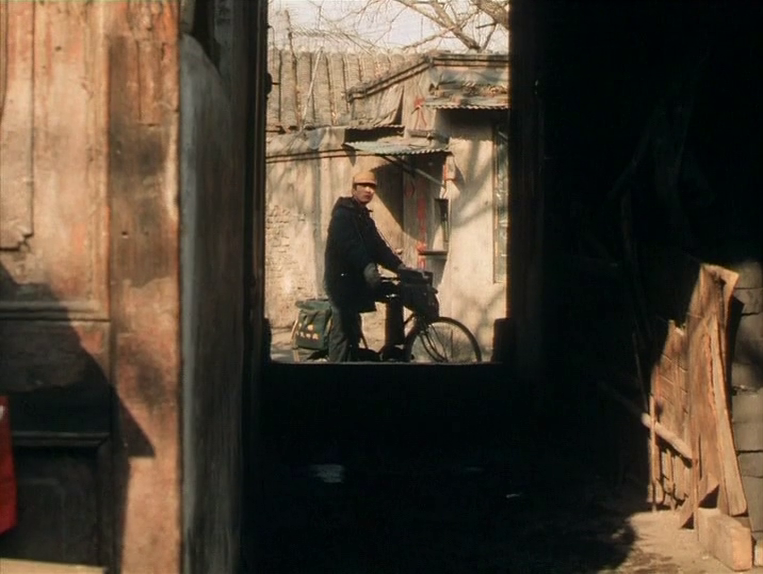
Wait and See (あ、春, Shinji Somai, 1998)

In the opening sequence of Shinji Somai’s Wait and See (あ、春,  Ah haru), a large grey cat growls as it creeps through a suburban home and out into the garden where it sits outside a henhouse and loudly miaows at the birds trapped inside. In many ways, this is exactly what’s about to happen to the Nirasakis when a prodigal father suddenly returns to disrupt the life of his incredibly dull and emotionally distant son. 

Hiroshi (Koichi Sato) is the epitome of the ideal salaryman and seems to be living a charmed life having married into his wife’s wealthy family but under the surface nothing is quite as it seems to be. His wife Mizuho (Yuki Saito) seems to be suffering with some kind of mental distress and Hiroshi often appears indifferent or even cold towards to her. At the memorial service for his late father-in-law, Mizuho’s mother (Shiho Fujimura) and aunt (Chisako Hara) reflect on the late patriarch in less than favourable terms remarking that “everything was half measures” with him. He didn’t commit himself fully to either his family or his career and consequently achieved success with neither. 

The implication is that Hiroshi is much the same, simply going through the motions whether at work or at home and largely closed off to his wife at one point even drawing a curtain and leaving her in the dark to escape a conversation. “He never tells you anything” Mizuho’s mother points out after reading in the paper that the company where Hiroshi works may be in financial trouble, while Mizuho too complains that he never discusses anything with her only announcing the results when it’s already finished. 

Hiroshi had always believed his own father to have died when he was five years old, so it’s quite a surprise when the gnomish Sasaichi (Tsutomu Yamazaki) accosts him in the street and claims to be his long lost dad. Like the cat outside the henhouse, he’s set to create a disturbance but not quite the one everyone assumes it will be. Hiroshi’s mother Kimiyo (Sumiko Fuji) warns him that his crass working class dad will only cause embarrassment in the refined elegance of the upper-middle-class family he has married into. Yet Mizuho and her mother actually find Sasaichi quite amusing for the first couple of days, the mother very impressed by Sasaichi’s unreconstructed manliness which she finds so in contrast to the comparatively meek Hiroshi. Sasaichi fixes the leaky bath and sticking door that Hiroshi never got round to symbolising his lack of regard and inability to care for his home, which is in a sense ironic because Sasaichi was never really able to take care of anything. 

Sasaichi later explains that he left because his business failed and he ended up with debts to loansharks so he divorced Kimiyo and moved away to prevent them coming after her money. A fatherless son, Hiroshi struggles to construct the image of himself as a father and cannot create intimate relationships with people, but has settled for fulfilling the role of a successful member of society who can support a family financially even though the sense of himself as a provider is an illusion as his wife’s generational wealth already guarantees them a comfortable existence. Even so, this being the difficult post-bubble economy Hiroshi lives with a sense of economic anxiety but buries his head in the sand refusing to listen to a more savvy friend who can see the writing on the wall and tries to convince him to take a job at another company where he’s just secured a position for himself. But Hiroshi is afraid of change and ironically clings fast to his corporate family even while fearing it will leave him. 

He desperately doesn’t want to think that he is like Sasaichi, that he may fail his family by failing in his career or that he too is an uncouth, unrefined country bumpkin incapable of taking care of himself let alone anyone else. The again perhaps they’re more alike that he’d like to think. Hiroshi and Mizuho object when they realise Sasaichi’s been teaching their son Mitsuru (Keita Okada) how to play craps, but as his friend points out stockbroking is also really just legitimised high stakes gambling. He too wanders around until late at night because he doesn’t want to go home and makes his wife worry so she has to take sleeping pills .

Yet there’s also a side of him that is still the gentle boy from the country as he painstakingly raises chicks in the back garden. In the end, it’s Sasaichi who shows them the maternal warmth they need to grow, gestating the eggs in a pouch inside his haramaki only for them to hatch at the most ironic moment. Hiroshi gives his son a brief life lesson in explaining that the chicks that hatch from these eggs will go on to lay their own in a circular process of renewal just as he is passing on knowledge from his childhood to the next generation. The film begins and ends with a ritual of mourning, though Somai takes us through the passing season moving from Setsubun to Hinamatsuri as Sasaichi continues to outstay his welcome while attempting to repair his corrupted paternity. “Don’t worry, life will go on,” Mizuho reassures a more open Hiroshi finally coming to terms with his anxieties and willing to share them with his family in full knowledge of who he is as a man and a father in a world that’s anything but certain.


Original trailer (no subtitles)

The Starting Point (원점, Lee Man-hee, 1967)

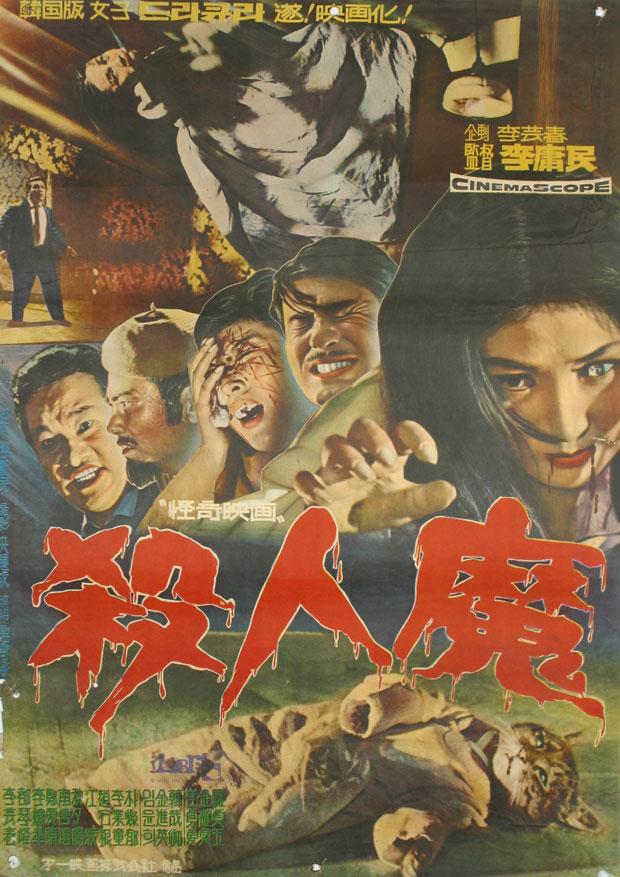
A hired thug and a sex worker dreaming of a new life are set on a collision course at mountain retreat in Lee Man-hee’s noirish thriller, Starting Point (원점, Wonjeom). A melancholy existential drama, the film nevertheless has a darkly comic absurdity and becomes for a time almost a satire of changing sexual mores and the anxiety surrounding the post-war population explosion while simultaneously hinting at corporate corruption in economically straitened times. 

Played in near total silence, the opening pre-credits scenes find the otherwise unnamed (the name given in the promotional material is never spoken) lackey (Shin Seong-il) raiding an office building with the intention of retrieving some mysterious documents the people who hire him later claim threaten to expose their “seven-year-secret”. The Lackey takes time to smoke a cigarette and read through some of the papers before putting them into a briefcase to make his escape but is soon met by a man with a rifle who challenges him. A fight ensues on the staircase from which the Lackey is able to escape, activating a rolling gate to get out of the building. But the other man keeps coming after him, managing to cling on the briefcase while his neck is crushed by the unstoppable motion of the shutter. 

Mirroring him, the unnamed Sex Worker (Moon Hee) is also intruded in a wordless sequence shot with the kind of realism seen in American independent and European arthouse cinema as she stares forlornly at the pretty dresses behind the glass in a small boutique before sadly making her way towards a streetlight near the Choseon Hotel where she wordlessly picks up a customer through suggestive looks and gestures. 

The Lackey knows too much, which is why his bosses want to take him out but for unclear reasons Mr Choi comes up with a bizarre and convoluted scheme which involves hiring the Sex Worker to pose as the Lackey’s wife during a honeymoon getaway to Mt. Seorak. What the Lackey thinks is going on or why the mountain is important is never really explained just like the nature of the seven-year-secret, but once there the film changes tack becoming a kind of ensemble mystery as the various guests each become suspicious of one another while the Lackey and the Sex Worker slowly fall in love for real perhaps bonding their mutual sense of existential peril and outsider status. 

In the liminal space of the mountain, both fear rejection by those around them who come to represent mainstream society, the Lackey because he has killed and Sex Worker because of her profession. Ironically, one of the other guests is a dodgy gynaecologist who makes a point of saying that most of his clients are sex workers from around the Choseon Hotel at least implying that he regularly performs abortions. He recognises the Sex Worker as a previous patient and tries to take advantage of her sexually but commits a breach of medical ethics by leaking her profession to the rest of the group who then shun her. When the planned camping trip encounters a snag seeing as only two tents have been provided and the obvious solution is for men to take one and the women the other, the women all immediately leave on the Sex Worker’s arrival refusing a share a space with a “fallen woman” in case they are somehow tainted by her shame. 

But then, the goings on at the mountain inn are strange in themselves. A middle-aged man who inexplicably doesn’t seem to have encountered a transistor radio before accidentally tunes into a news broadcast discussing the effectiveness of the contraceptive pill while the young people dance with wild abandon to music they don’t really understand. Meanwhile, the gynaecologist wades in when another of the women experiences terrible stomach pains insisting that he is “familiar with women’s issues” and informs the husband that his wife is pregnant which is confuses him because they only married the day before and he’s been a good boy so the news is perplexing. He spends the rest of the film counting dates on his fingers and at one point attempts to hang himself certain that his wife must have slept with another man before their wedding instead of maybe considering that the dodgy gynaecologist may be mistaken.  

When the couples are divided into separate tents, one guest quips that it’ll be good for keeping the birth rate down hinting at an anxiety about a new sexual freedom among the young coupled with the impact of the ongoing baby boom and its economic implications. The gynaecologist’s wife is the first to join in with the youngsters, but she’s also a rabid penny pincher making sure the newlywed husband pays for her husband’s treatment of his wife while intensely jealous constantly trying to keep the randy doctor’s attention off the other women. The sense of economic anxiety is echoed in the Sex Worker’s melancholy longing onto looking into the shop window while dreaming of opening her own hair salon though sex work is the only way she can support herself and leaves her with intense shame that like the Lackey exiles her from mainstream society. 

As she says while embracing her covert identity as a cheerful newlywed, she’s been looking up all her life and would like to look down for once which she ironically does atop the stairway on which the Lackey fights his existential battle with Choi and his minions. They each want to find a way to get off the mountain and return to the world, but are prevented from doing so by the forces that pursue them and will not let them go. Finally questioned, the Sex Worker is forced to admit that she knows nothing about the Lackey, not his name or where he lived or what he did for a living, only that he did not hate her which is as close to a declaration of love as it might be possible to get in this cold and dark world of exploitation and violence. Lee films with a noirish intensity and melancholy fatalism as the pair attempt to fight back against the forces which constrain them with the pureness of their love but later discover that, as they feared, all that is left to them are painful memories of momentary happiness. 


Under the Light (坚如磐石, Zhang Yimou, 2023)

The irony at the centre of Zhang Yimou’s Under the Light (坚如磐石, jiānrúpánshí) is that it takes place in a neon-lit city of eternal visibility, though of course where you have light you’ll also find shadows. Even so, it appears he’s trying to make a point in the plain sight nature of political corruption and it’s connections with organised crime. At heart it’s a tense cat and mouse game between two men who share some kind of sordid past, but also of how it’s the next generation that often pay in the infinitely corrupted paternity of the contemporary society.

Zhang opens with a hostage crisis as a man hijacks a bus and threatens to blow it up if he doesn’t receive a visit from deputy mayor Zheng Gang (Zhang Guoli). Zheng attends but his policeman son Jianming (Lei Jiayin), currently assigned to the tech division, notices that the bomb can be detonated remotely and it doesn’t appear the hostage taker knew that it was real. In any case, all is not as it seems and as Zheng is soon squaring off against shady businessman Li Zhitian (Yu Hewei) who invites Jianming to dinner and puts on a show by blackmailing another business owner with a sex photo before forcing him to put his hand in boiling oil. 

In contrast to his ruthless exterior, Zhitian dotes on his grown up daughter currently pregnant with her first child and about to be formally married to his business heir David (Sun Yizhou). Jianming meanwhile has a complicated relationship with his father by whom he feels rejected in part because he’s adopted. Zheng also appears to be meeting with a mysterious young woman for unclear reasons, later hinting that she’s a kind of daughter figure someone at some point asked him to protect. In a strange and probably unintended way, it’s this parental quality of protection that has been disrupted by ingrained corruption and is then re-channeled in a desire to protect society in general. When it’s all over, Jianming asks his bosses why they trusted him to make the right decision, and they tell him it’s because he told them he wanted to be a “true policeman” for the people.

Apparently stuck in limbo for four years because of censorship concerns, the propaganda thrust of the film centres on the crackdown against political and judicial corruption. Zheng is engaged in a political project to target corrupt officials but is heavily implied to be on the wrong side of the fence himself which would explain his connection with Zhitian, a supposedly self-made man who keeps a heavy pole in his living room to remind him of his roots as a lowly porter in a rural town before taking advantage of the ‘90s economic reforms to make himself wealthy beyond his wildest dreams. 

They each have hidden secrets which Jianming becomes determined to drag into the light while working with the anti-corruption officers in his precinct, as well as old flame Hui-lin (Zhou Dongyu). Zhang adds in some distinctly retro comedy vibes not least in the frustrated romance of Jianming and Huilin who at one point dangle dangerously off a building while she later bites back, “don’t deprive me of the chance to protect you. It’s what they call love” when firing a pistol at a bunch or marauding bad guys. Yet the comedy seems incongruous with infinite bleakness of the resolution in which once again the children are made to suffer as Jianming comes to a greater understanding of his origins. 

In an ironic touch, the villains are later revealed to have been dyeing their hair which is in reality already white though they are not really all that old. Playing into the themes of duplicity, it also hints at the central message that the older generation must recede and the young, like Jianming, learn to find an accommodation with their failures in order to reclaim a sense of justice. Then again, the film itself is quite duplicitous with a series of glaring plotholes including a giant one relating to the DNA identification of a missing woman whose body is finally dragged into the light. Huiling warns Jianming that there are some boxes it’s better not to open. At the film’s conclusion he may wish he’d listened, but his job is to drag truth into the light and not least his own. In any Zhang’s infinitely bright, ever illuminated city of neon and glass has a host of hidden darkness only temporarily exorcised by the unusually lengthy parade of the now standard title cards explaining that the wrongdoers were caught and punished while deprived of their ill-gotten gains no matter how much it might seem that crime really does pay.


International trailer (Simplified Chinese / English subtitles)

Japan Academy Film Prize Announces Nominees for 47th Edition

The Japan Academy Film Prize, Japan’s equivalent of the Oscars awarded by the Nippon Academy-Sho Association of industry professionals, has announced the candidate list for its 47th edition which honours films released Jan. 1 – Dec. 31, 2023 that played in a Tokyo cinema at least three times a day for more than two weeks. This year’s front runner is Godzilla Minus One which picks up 12 nominations while the latest from veteran director Yoji Yamada, Mom, Is That You?!, follows closely behind with 11. The awards ceremony takes place 8th March at Grand Prince Hotel Shin Takanawa.

Picture of the Year

Animation of the Year

  • Kitaro Tanjo – GeGeGe no Nazo
  • The Boy and the Heron
  • Totto-Chan: The Little Girl at the Window
  • Detective Conan: Black Iron Submarine
  • Blue Giant

Director of the Year

  • Wim Wenders (Perfect Days)
  • Hirokazu Koreeda (Monster)
  • Yoichi Narita (Till We Meet Again on the Lily Hill)
  • Tatsuya Mori (September 1923)
  • Takashi Yamazaki (Godzilla Minus One)

Screenplay of the Year

  • Toshimichi Saeki, Junichi Inoue, Haruhiko Arai (September 1923)
  • Michio Tsubaki (Shylock’s Children)
  • Masahiro Yamaura, Yoichi Narita (Till We Meet Again on the Lily Hill)
  • Takashi Yamazaki (Godzilla Minus One)
  • Yoji Yamada, Yuzo Asahara (Mom, Is That You?!)

Outstanding Performance by an Actor in a Leading Role

Outstanding Performance by an Actress in a Leading Role

  • Haruka Ayase (Revolver Lily)
  • Sakura Ando (Monster)
  • Hana Sugisaki (Ichiko)
  • Minami Hamabe (Godzilla Minus One)
  • Sayuri Yoshinaga (Mom, Is That You?!)

Outstanding Performance by an Actor in a Supporting Role

  • Hayato Isomura (The Moon)
  • Kentaro Ito (Till We Meet Again on the Lily Hill)
  • Yo Oizumi (Mom, Is That You?!)
  • Ryo Kase (Kubi)
  • Masaki Suda (Father of the Milky Way Railroad)

Outstanding Performance by an Actress in a Supporting Role

  • Sakura Ando (Godzilla Minus One)
  • Aya Ueto (Shylock’s Children)
  • Mei Nagano (Mom, Is That You?!)
  • Minami Hamabe (Shin Kamen Rider)
  • Keiko Matsuzaka (Till We Meet Again on the Lily Hill)

Outstanding Achievement in Cinematography

  • Ryuto Kondo (Monster)
  • Akira Sako (Kingdom III: Flame of Destiny)
  • Kozo Shibasaki (Godzilla Minus One)
  • Masashi Chikamori (Mom, Is That You?!)
  • Takeshi Hamada (Kubi)

Outstanding Achievement in Lighting Direction

  • Eiji Oshita (Monster)
  • Hiroyuki Kase (Kingdom III: Flame of Destiny)
  • Nariyuki Ueda (Godzilla Minus One)
  • Masato Tsuchiyama (Mom, Is That You?!)
  • Hitoshi Takaya (Kubi)

Outstanding Achievement in Music

  • Hiromi (Blue Giant)
  • Takeshi Kobayashi (Kyrie)
  • Ryuichi Sakamoto (Monster)
  • Naoki Sato (Godzilla Minus One)
  • Akira Senju (Mom, Is That You?!)

Outstanding Achievement in Art Direction

  • Anri Johjo (Godzilla Minus One)
  • Yukiharu Seshimo (Kubi)
  • Takashi Nishimura (Mom, Is That You?!)
  • So Hashimoto (Legend & Butterfly)
  • Keiko Mitsumatsu, Seo Hyeon-seon (Monster)

Outstanding Achievement in Sound Recording

  • Kentaro Suzuki (Till We Meet Again on the Lily Hill)
  • Yasuo Takano (Kubi)
  • Hisafumi Takeuchi (Godzilla Minus One)
  • Kazuhiko Tomita (Monster)
  • Shota Nagamura (Mom, Is That You?!)

Outstanding Achievement in Film Editing

  • Norihiro Iwama (Till We Meet Again on the Lily Hill)
  • Takeshi Kitano, Yoshinori Ota (Kubi)
  • Hirokazu Koreeda (Monster)
  • Hiroshi Sugimoto (Mom, Is That You?!)
  • Ryuji Miyajima (Godzilla Minus One)

Outstanding Foreign Language Film

  • Killers of the Flower Moon
  • Barbie
  • Driving Madeleine
  • Mission: Impossible – Dead Reckoning Part One
  • Tar

Newcomer of the Year 

  • Aina The End (Kyrie)
  • Hiyori Sakurada (Our Secret Diary)
  • Nanoka Hara (Don’t Call it Mystery)
  • Haruka Fukuhara (Till We Meet Again on the Lily Hill)
  • Ichikawa Somegoro VIII (The Legend & Butterly)
  • Soya Kurokawa (Monster)
  • Fumiya Takahashi (Our Secret Diary)
  • Hinata Hiiragi (Monster)

Special Award from the Association

  • Koji Omura (hair and makeup)
  • Yumiko Kuga (casting)
  • Teruyuki Hyakusoku (Steenbeck editing table sales, maintenance, inspection, and repair)
  • Keizo Murase (special effects model sculptor)

Award for Distinguished Service from the Chairman

  • Norimichi Ikawa (art director)
  • Masaharu Ueda (cinematographer)
  • Akira Kobayashi (actor)
  • Tadashi Sakai (art director)
  • Yoichi Higashi (director)
  • Kazuo Yabe (lighting)

Special Award from the Chairman

  • Ryuichi Sakamoto (composer)
  • Shuji Abe (producer)

Special Award

  • Cine Bazar 
  • Tokyo Laboratory

Sources: Japan Academy Film Prize official websiteEiga Natalie

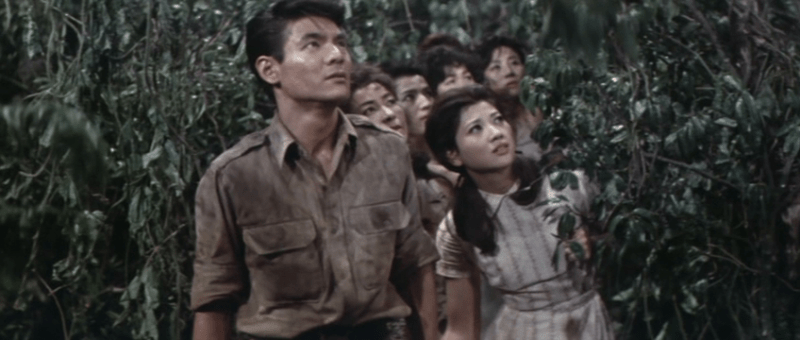
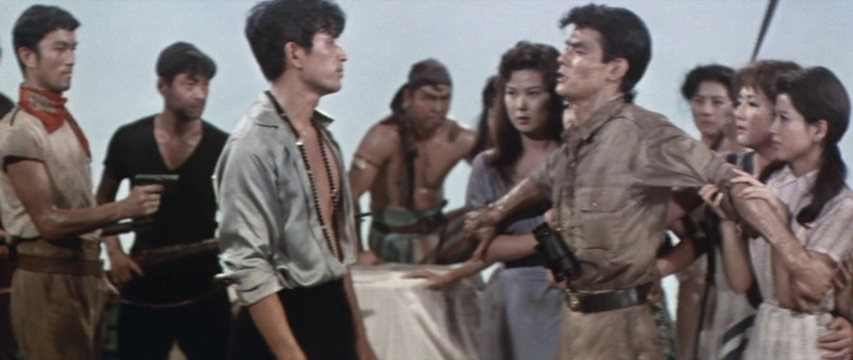
The Target of Roses (薔薇の標的, Kiyoshi Nishimura, 1972)

One of a series of internationalist conspiracy thrillers arriving in the early 1970s, Kiyoshi Nishimura’s Target of Roses (薔薇の標的, Bara no Hyoteki, AKA Red Target) finds itself at a particular moment of paranoid anxiety. In the immediate wake of Asama-Sanso, its villains are a band of revolutionaries hiding out in the mountains behind the shield of “New Religion” as they plot the over throw of the state. Yet these villains are not left-wing former student protestors but Nazi holdovers branding themselves as the “Fourth Reich” while insisting that they are not “fascists” but merely trying to create a new world order free of “corrupt governments”. 

The hero, Akira, in keeping with similar roles Yuzo Kayama played in this period, is a former Olympic sharpshooter who fled to America after being implicated in the death of a teammate. You can tell that things haven’t been going well for him by the terrible mutton chops haircut he is forced to wear throughout the film, but his problem seems to be that he has lost all interest in living. That’s one reason he’s recruited by the Fourth Reich’s local leader Tachibana who theorises that Akira is a man who lives for the gun and is good as dead without one. He and his one-eyed associate Nomura (Toby Kadoguchi), a former sharpshooter himself, begin training him with various strange exercises never revealing their true purpose until asking him to shoot a prisoner they’ve tricked into trying to escape from their secret base. Realising the target is human Akira refuses but then changes his mind shooting the man at much closer range as he runs through a forest. 

Meanwhile, foreign photographer Robert (Ralph Jesser) and his assistant Ling Ling (Taiwanese actress Chen Chen) accidentally end up finding the secret camp after becoming lost in the forest, Robert returning later to investigate and take more photos. Akira is then sent to Hong Kong where the pair have travelled to visit the grave of Ling Ling’s brother, a war photographer killed by a landmine in Laos, in order to take out Robert before he exposes their operation in the newspapers. Never asking any questions of his new job, Akira is unexpectedly moved on seeing Ling Ling’s distress over Robert’s body, later striking up a relationship with her when she too becomes a target for the Fourth Reich. 

In a surprising contrast to similar contemporary crime thrillers, Hong Konger Ling Ling represents a kind of innocent beauty as symbolised in her interest in photographing flowers rather than the war zones covered by her brother. At one point she and Akira are even seen tiptoeing on the railway tracks just like innocent lovers only for Akira to then reflect on the sight of an obsolete steam train likening it to himself, abandoned and destined to be torn to pieces. His love for Ling Ling gives him new reason to live, breaking the nihilistic spell which he claims had led him to want to destroy everything. To that extent Tachibana is correct when he says that Akira has no interest in the future of mankind, but he has become determined to preserve the world of two which exists between himself and Ling Ling which leads him to oppose The Fourth Reich, of whose activities he had been previously ignorant. 

It has to be said that Nishimura’s repurposing of Holocaust imagery, the failed “trainees” of the Fourth Reich’s re-education programme driven to vacant madness and piled up on wooden bunk beds later to be gassed and burned on mass funeral pyres, may be a little inappropriate in its accidental flippancy. Nomura’s claim that the Fourth Reich is not a resurrection of fascism is somewhat disingenuous even if they seem to have no other ideology than their weird super soldier brainwashing programme designed to create some kind of new society, later suggesting that the conspiracy already has assets within the Japanese government. Yet Akira is indifferent to fascism, as Tachibana had framed him a man of the gun born only to pull a trigger a function he later uses in order to convince him to destroy himself. Often marred by overly theatrical dialogue rendered in sometimes awkward English which plays much less well than it might in Japanese, Target of Roses remains a little on the pretentious side despite Nishimura’s characteristic artistry but nevertheless embraces its nihilistic philosophy in the vast emptiness of its internecine conclusion. 


Blue Ribbon Awards Announces Winners for 66th Edition

The Blue Ribbon Awards, presented by film critics and writers in Tokyo, has announced the winners for the 66th edition which honours films released in 2023. This year’s big winner was Godzilla Minus One which picked up best film, actor, and supporting actress while Yuya Ishii took the Best Director award for his films The Moon and Masked Hearts.

Best Film 

Best Director

  • Yuya Ishii (The Moon, Masked Hearts)
  • Hirokazu Koreeda (Monster)
  • Daishi Matsunaga (Egoist)
  • Takashi Yamazaki (Godzilla Minus One)
  • Yoji Yamada (Mom, Is That You?!)

Best Actor

  • Goro Inagaki ((Ab)normal Desire)
  • Ryunosuke Kamiki (Godzilla Minus One, We’re Broke, My Lord!)
  • Ryohei Suzuki (Egoist, Tokyo MER: Mobile Emergency Room)
  • Masahiro Higashide (Winny, The Flower in the Sky, Trapped Balloon)
  • Kenichi Matsuyama (Do Unto Others)
  • Koji Yakusho (Perfect DaysFather of the Milky Way Railroad, Familia)
  • Ryusei Yokohama (One Last Bloom, The Village)

Best Actress

  • Haruka Ayase (Revolver Lily)
  • Sakura Ando (Bad Lands)
  • Mayu Matsuoka (Masked Hearts)
  • Rie Miyazawa (The Moon)
  • Sayuri Yoshinaga (Mom, Is That You?!)

Best Supporting Actor

Best Supporting Actress

  • Sawako Agawa (Egoist)
  • Haru Kuroki (Ichikei’s Crow: The Movie, The Village, Okiku and the World, Fly On, Kyrie)
  • Yuko Tanaka (Monster)
  • Fumi Nikaido (The Moon)
  • Kanna Hashimoto (One Last Bloom)
  • Minami Hamabe (Godzilla Minus One, Shin Kamen Rider)
  • Haru (Analog)
  • Suzu Hirose (Kyrie)

Best Newcomer

Best Foreign Film

  • Living
  • Air
  • Everything Everywhere All at Once
  • A Man Called Otto 
  • Gran Turismo
  • The Super Mario Bros. Movie
  • Tar
  • Napoleon
  • Barbie
  • Mission: Impossible – Dead Reckoning Part One

Source: Sponichi