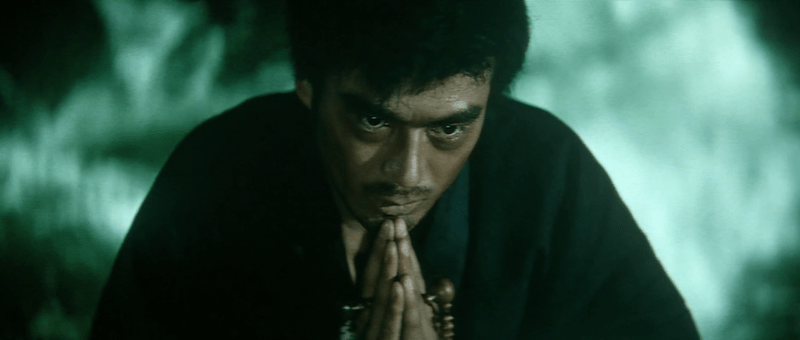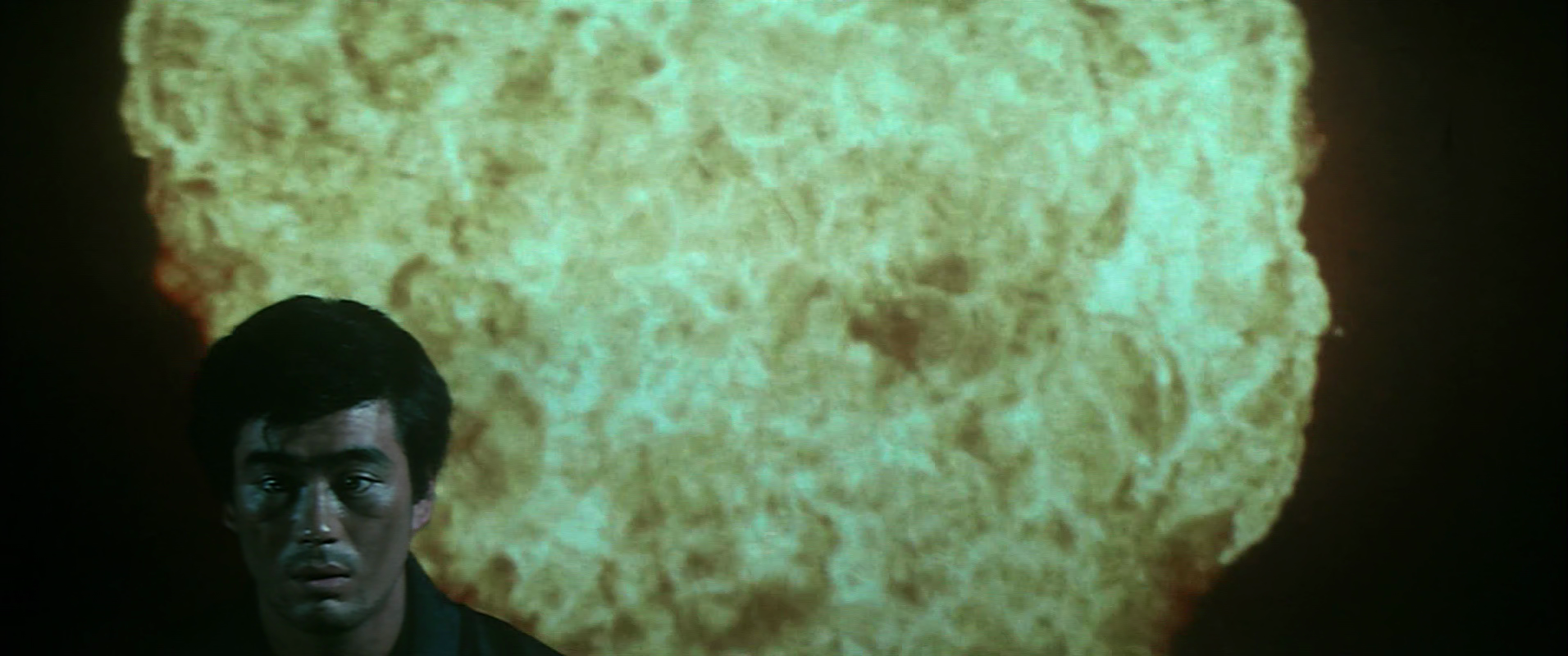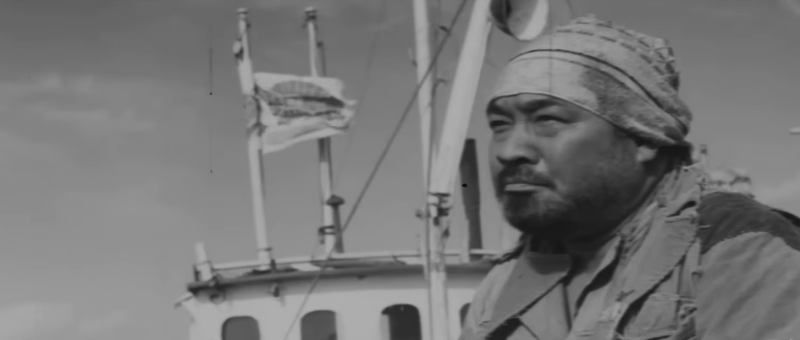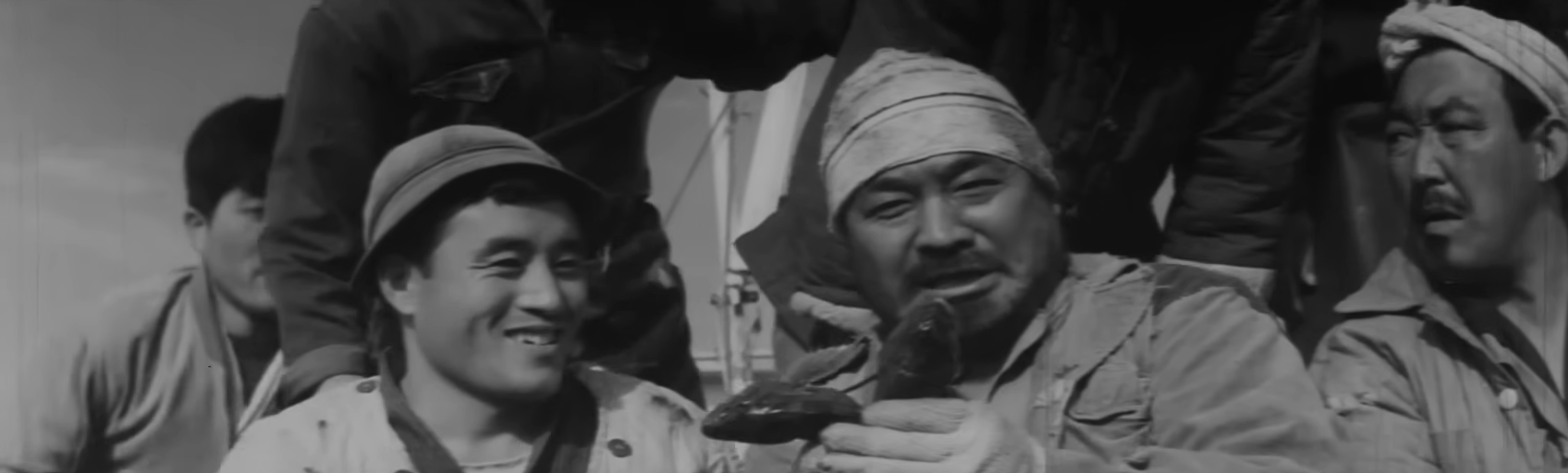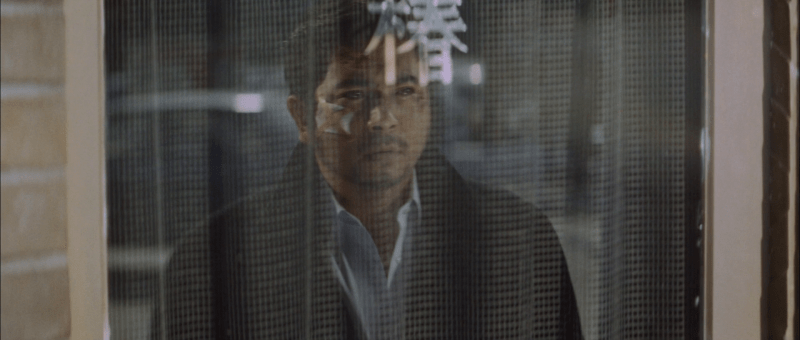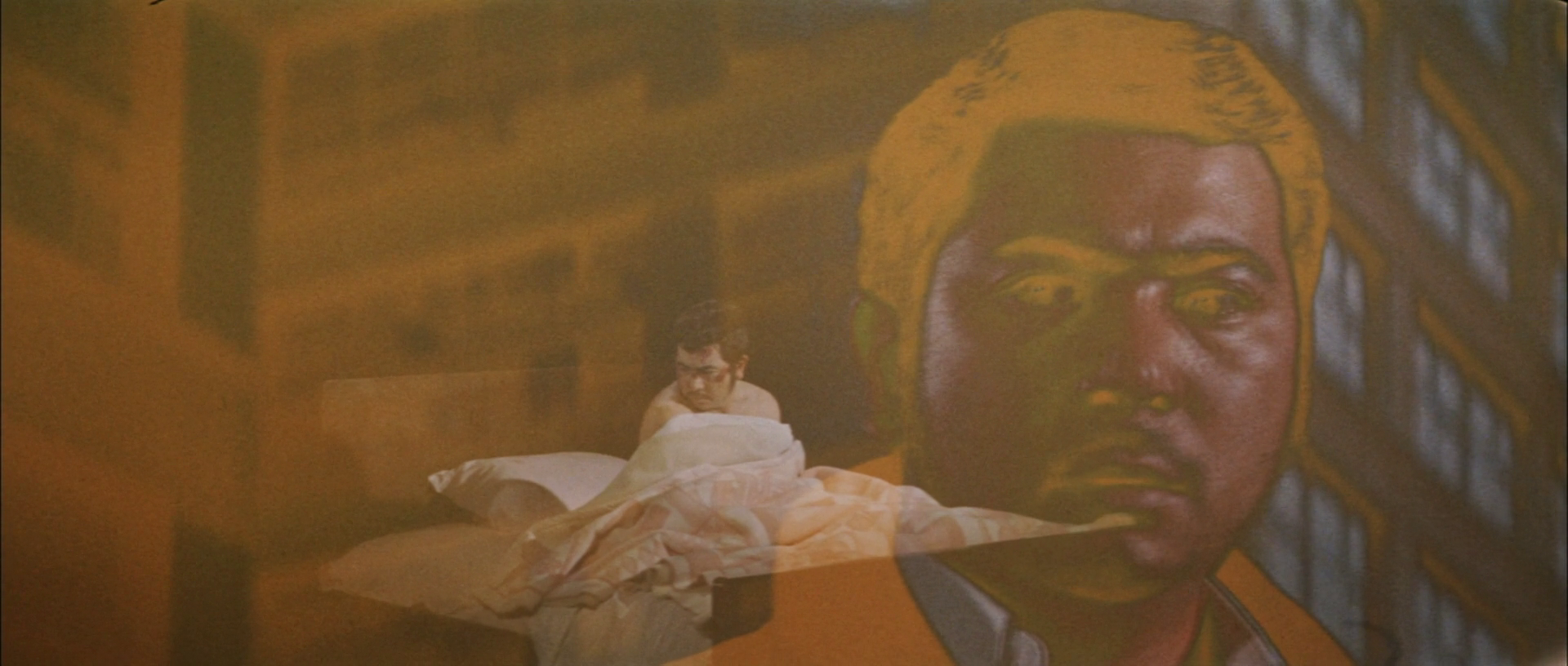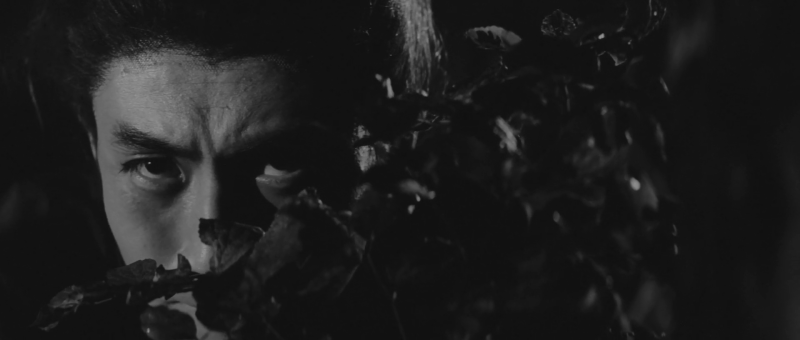
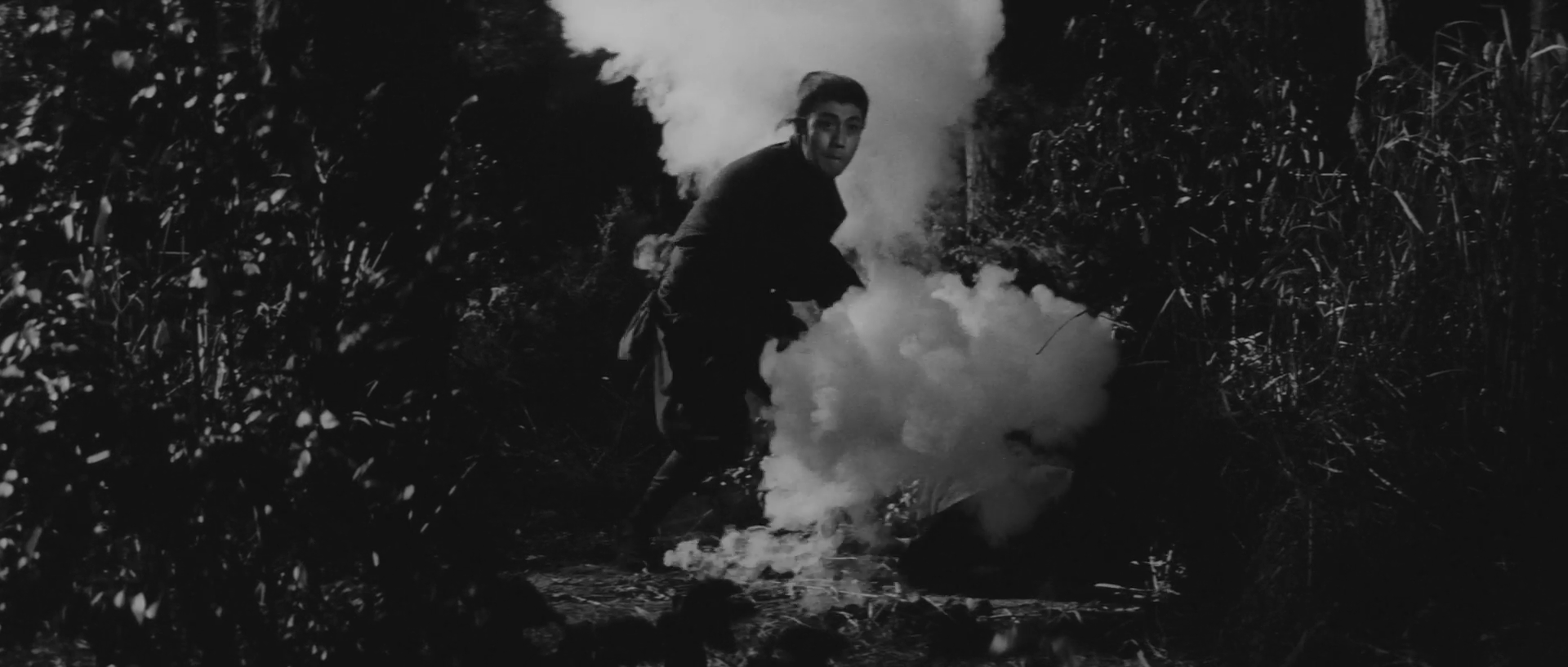
Ninja’s Mark (忍びの卍, Norifumi Suzuki, 1968)

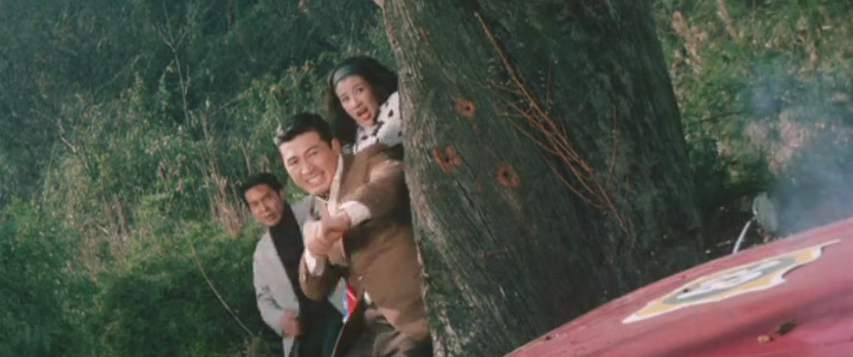
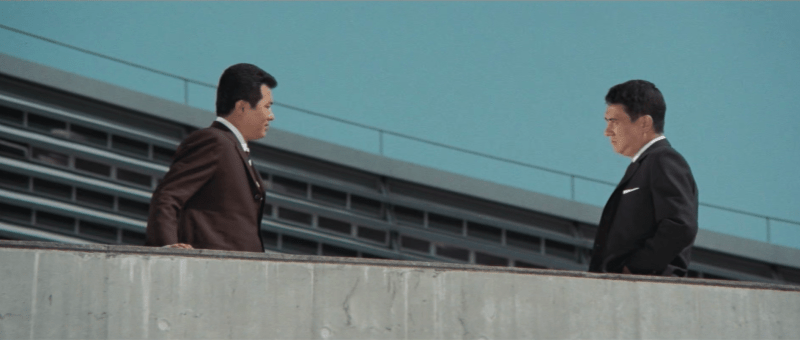
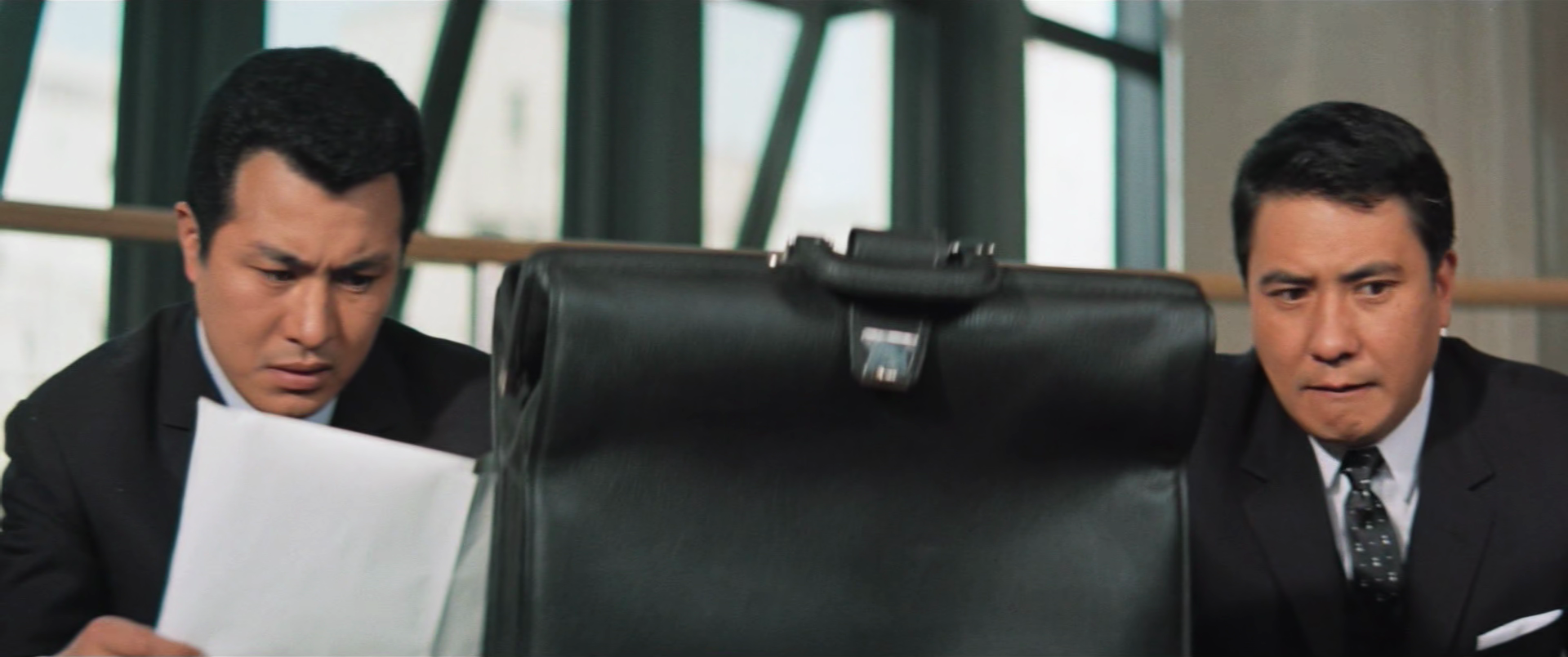
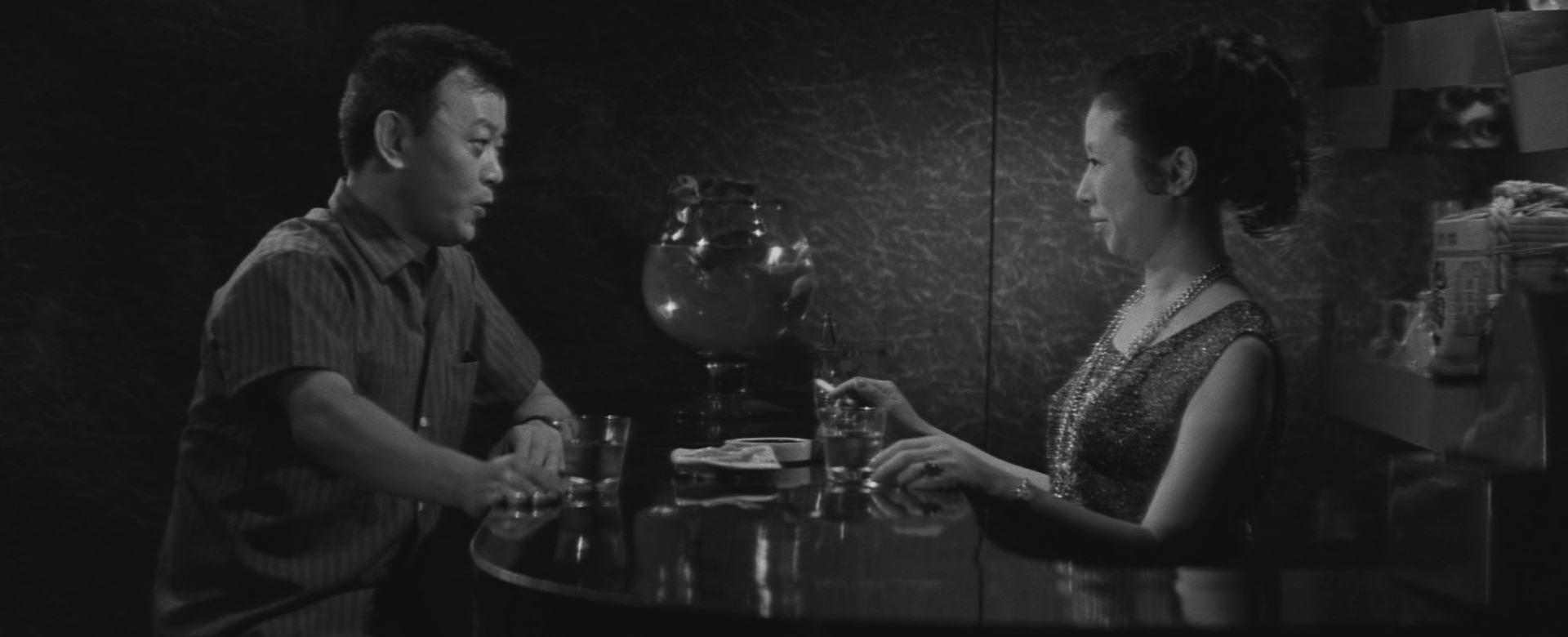
Many have tried to end the Tokugawa line. Few have done so by covering a courtesan’s legs in fish scales to put the Shogun off his stride. Based on a book by Futaro Yamada, Norifumi Suzuki’s Ninja’s Mark (忍びの卍, Shinobi no Manji) is at heart a romantic tale in which love is “part of the game” but also apparently the one trick a ninja can’t escape. Perhaps that’s why Shogun Iemitsu at the comparatively late age of 30 has failed to produce an heir with any of the beautiful yet emotionally distant courtesans of the inner palace many of whom also seem to be ninjas, therefore provoking a constitutional crisis.

Aside from that, it seems the ninja plot is a kind of revenge against the Tokugawa carried out by the last remnants of a house that was dissolved by the Toyotomi. There are in fact three ninja clans all clustering around the palace, Iga, Koga, and Negoro, each of whom have different kinds of skills. Technically, some of them are in the employ of the Shogun’s disinherited younger brother Tadanaga (Shingo Yamashiro), but others of them are working strictly for themselves and their revenge. In any case, their plan is to prevent Iemitsu from fathering an heir by putting him off sex essentially by making it freaky (in a bad way). Thus one of the ninjas uses his ability to transform objects so that the courtesan’s legs are covered in fish scales. Another plan sees a ninja body swap with one of the women so that Iemitsu’s sperm ends up inside him where it obviously has nowhere to go. Meanwhile others hatch a plan to steal some of Tadanaga’s seed to use on the women in the inner palace to cover up Iemitsu’s potential infertility seeing as it is after just as good being of the Tokugawa line. 

This particular ruse is suggested by Toma (Isao Natsuyagi), the disenfranchised former member of the Yagyu school turned ninja ronin they bring in to solve the problem. He quickly homes in on Kageroi (Hiroko Sakuramachi), a female ninja, as the villainess whose special power is poisoning men with love and desire by means of the spider lily plant. But as Toma points out to her, she is also a prisoner of her skill in that if she were to fall in love she would inevitably kill her lover. Of course, he survives her first attempt to kill him, leading her to fall in love with Toma and become conflicted in her mission while he plays on her emotions to escape but eventually realises they may be more genuine than he first realised. 

In this, Suzuki brings some of his trademark romanticism particularly in the colourful art nouveau aesthetics and frequent use of rose imagery. Though the film is clearly designed to lean into the erotic with frequent use of nudity and salacious scenes including a brief moment of lesbian seduction, it eventually heads towards romantic tragedy in which the debauched and nihilistic Toma and the wronged Kageroi discover a love made impossible by their ninja code and the times in which they live. Having been ordered to kill her, Toma declares that he will marry Kageroi in the next life and returns to her the Buddhist Manji that is the “ninja mark” of the title. 

Nevertheless, the dialogue is often suggestive as in Kageroi’s curse that Toma’s “sword” will rot, while it’s also Toma’s “sword” that alerts him to the danger she presents. Toma too claims to derive his ninja powers from his “sword” having apparently concentrated them by repressing his sexual desire and swearing off women. He says that he seals all his “distracting” thoughts into a virgin, closing off all her senses and placing her into a coma until he breaks the spell. Even so, he admits that without his “sword” he is just a man, and as a man claims to love Kageroi, but as long as he has his “sword”, and she her “lily”, their love is impossible. 

But this repressed love seems to pose less threat to the social order than the lack of it in Iemitsu who is bored with his courtesans and cannot conceive an heir. Constitutional crisis is averted only through a little ninja trickery and a convenient ruse to overcome Iemitsu’s infertility so that in time he produces five sons and a daughter, which honestly seems like it might just present another set of problems in about 30 years’ time. Like similarly themed ninja pictures, Suzuki makes good use of surrealist imagery and colour play alongside the kind of onscreen text later used in jitsuroku yakuza films to name each of the ninja’s key skills and which clan they belong to. What he always returns to, however, is the sense of romantic tragedy in a world seemingly poisoned by ambition in which love itself is rendered an impossibility. 


*Norifumi Suzuki’s name is actually “Noribumi” but he has become known as “Norifumi” to English-speaking audiences.

Whirlpool of Flesh (おんなの渦と淵と流れ, Ko Nakahira, 1964)

A intellectual professor and his wounded wife find themselves trapped in a toxic marriage after returning from Manchuria in Ko Nakahira’s fatalistic drama, Whirlpool of Flesh (おんなの渦と淵と流れ, Onna no Uzu to Fuchi to Nagare). Set in the late ‘40s, the film does indeed position Manchuria as a point of corruption while otherwise suggesting that Japan itself has been emasculated by the Occupation, but otherwise demonstrates how the couple drag each other into a cycling whirlpool of jealousy and obsession that it seems neither of them are really equipped to understand let alone escape.

Claiming to have been struck by her bright and smiling face in her omiai photo, Keikichi (Noboru Nakaya) married Sugako (Kazuko Ineno) in Manchuria without actually meeting her before the wedding. Apparently uninterested in sex, Keikichi was a virgin on their wedding night but harbours doubts Sugako may not have been. In any case, he seems put out that Sugako is not in his opinion his intellectual equal. He chances on her diary in which she details how bored she is by his constant lectures about English literature and that she feels him to be more schoolteacher than husband, but he merely scoffs that it’s not particularly well written. He begins to suspect that she’s sleeping with customers who come into the speakeasy she opens in their home during the days between the Russian invasion and repatriation and succumbs to a generalised sense of impotence hiding out in his room upstairs reading while she takes care of business below. 

In the present day, convinced that she’s having an ongoing affair with a merchant, Otani (Kazuo Kitamura), Keikichi pretends to go to a hot springs resort and then sneaks back to spy on her from an adjacent room. Though he feels no desire for her as his wife, through the eyes of these other men he rediscovers a sense of Sugako as the woman from the photograph for whom he does feel some attraction and satisfies his latent sexual desires through watching her sleep with Otani. As an escape from the war, he’d been working on a translation of Shakespeare’s Troilus and Cressida the heroine of which he seems to superimpose on Sugako in wondering if she is a faithless woman or true, angel or devil. 

Yet from Sugako’s point of view, she begs him for physical intimacy which he refuses to grant despite his jealousy over her relations with other men. Traumatised by her sexual abuse at the hands of her uncle, Sugako believes that she has a body designed to satisfy men’s desires and is drawn into meaningless, and often transactional, sexual relationships. When Keikichi later questions her, it seems she doesn’t remember any of them in detail for to her they were simply “men” and nothing more. The situation is somewhat complicated by the fact that her uncle was a scholar of Chinese literature, which in part aligns him with Keikichi, but also points back to Manchuria as a source of corruption though coming uncomfortably from the opposite direction. 

Sugako equates this corrupted sexuality with the great emptiness inside her that frequently leads to thoughts of suicide. Nakahira constantly shows us shots of Keikichi’s knife as if implying some kind of violence is inevitably going to take place, though in the end it signals nothing so much as Keikichi’s impotence. Then again, the emptiness is also linked to a sense of despair in Japan’s defeat that is manifested most obviously in the house next-door where the widowed mother may have been having an affair with Sugako’s uncle and unsubtly tries to blackmail her by threatening to expose the secret of her sexual abuse about which she had tried to tell Keikichi but he had refused to listen. The daughter has become a sex worker catering to American servicemen to support the family while her brother, Kenichi (Tamio Kawachi), allows her to sacrifice herself for him justifying himself that it’s for the greater good as he’ll eventually become a doctor and save countless other lives. He’s also masquerading as a Christian to get a scholarship to an American university through the church which is all very contradictory not to mention selfish and cynical. The sister, meanwhile, appears to have lost her mind and frequently rants and raves, blaming her mother by claiming that walking in on her with Sugako’s uncle permanently corrupted her sense of self and sexuality. Like Sugako, she exorcises her trauma through abusing her body, in her case through sex work with “nasty GIs who don’t always pay.”

Keikichi refers to this as “post-war nihilism” like the frequent strikes and workers parades that take place around him, but partially repairs his sense of masculinity after moving to Tokyo and getting a job. At work he meets another young woman who is a mirror of the young lady from next-door in that she was also repatriated from Manchuria where her father was a member of the government. With her mother dead and father unable to work, Shimura (Kaori Taniguchi) also supports her family with her secretarial job and often goes without lunch herself to make ends meet. Keikichi notices this and offers her his bento claiming to be feeling unwell, but fails to notice how his pity wounds her dignity even if he meant in kindness while acknowledging that he’s never known hunger. Unlike the mismatched Sugako, Keikichi and Shimura are an ideal match. She also wanted to study English literature and can meet him on his level discussing politics and culture though he does not seem to be aware that he is attracted to her and acts almost paternally in offering to pay her university fees to help her escape her life of poverty, echoing Sugako’s claims that he had become her “little boy” rather than her husband. 

The irony is that Sugako insists Keikichi, who does little but look down on her and alternately complain that she’s either impure or unattractive, is the only man she’s ever loved and blames his lack of sexual interest in her on the unresolved trauma of her childhood abuse. Having asked Kenichi to help her get her hands on some cyanide, she is shocked and disgusted when despite his need he rejects her money and asks for her body instead. He insists that it’s “only the friction of mucus membranes” and that she might as well sleep with him first if she’s going to die, though her refusal is in part a desire to die “pure” and finally overcome the emptiness and despair inside her. This inability to reconcile herself is also aligned with Keikichi’s vision of “post-war nihilism” and suggests that in the end this trauma can’t be healed and must necessarily lead to destruction. Meanwhile, Keikichi seems to have discovered a path towards his rebirth in his friendship with Shimura only to potentially have the rug pulled from under him. His new future too, may end up poisoned by Sugako’s unilateral decision to facilitate it. Dark and twisted in true Nakahira fashion, the film paints the post-war society itself as a deepening whirlpool from which there is no escape or at least not for those like Keikichi and Sugako forever locked in a deathly embrace and drawn ever deeper into the waves.


Sunset Over the Horizon (夕陽西下, Lin Fu-Ti, 1968)

Shot at the same time as The Love in Okinawa, Sunset Over the Horizon (夕陽西下) is another Okinawan and Taiwanese co-production directed by Lin Fu-ti assumed lost until its discovery in San Francisco’s Chinatown in a Mandarin-dubbed print. Unsurprisingly, it features many of the same cast members and locations and even has a similar theme of impossible love but is more ambitious in scope incorporating both dream sequences and flashbacks to explore the changing relationship between Japan and Taiwan.

Lin opens the film with its conclusion as Shizuko watches a boat silently depart carrying away her love, the much older pastor/penniless painter Ching-wen who has made the decision to return to Taiwan having finally faced, if not quite come to terms with, his traumatic past at the end of the war and Taiwan’s “liberation” from Japanese colonisation. Japan had conquered Taiwan by force in 1895, but otherwise ruled with much less of an iron fist than it did in other areas of its empire. Lin seems to be making a minor point in dramatising the moment of “liberation” as one of conflicting emotions as the Japanese flag is slowly lowered and that of the KMT, another colonising force, rises in its place meaning that the island is not really “liberated” at all, merely changing hands and to a regime that became more oppressive than that which preceded it had been. 

The irony is that it’s this “liberation” that disrupted his romantic future as a young Taiwanese student in love with the daughter of a Japanese general. With the end of the war, the Japanese must leave Taiwan and so his love must go with them and return to the mainland. She asks Ching-wen to come with her, but he refuses. He is unwilling to leave his nation and his family, though we can see he did so years later and traveled to her hometown of Okinawa though she ultimately chose to take her own life out of a sense of despair and futility. She could not return to Japan with Ching-wen nor stay with him in Taiwan either and so to her the only answer, the only real “liberation,” lay in death.

Shizuko later posits something similar even if her dilemma is different. Her businessman father wants her to marry the son of a local factory owner so that he will support his business but Shizuko refuses because she wants to fall in love and does not seem to like her father’s chosen suitor. The situation is somewhat complicated by the fact that Shizuko is a child of her father’s first marriage and is therefore resented by her stepmother who wants her to leave the family as quickly as possible. In some ways this dynastic union represents a decision to embrace the more consumerist future that Japan in the later 1960s represents. Ching-wen on the other hand despite his ruination represents something purer and more spiritual that is less materialistic and rooted in sincere emotion. Shizuko insists that the businessman may buy her body but never her heart, but that seems perfectly fine to him because it seems he’s not all that bothered about her heart and just wants to possess her like a trophy. Frustrated by her objections, he continues to offer greater sums of money and later tells his underling, who looks horrified, that he plans to keep her locked up at home.

But there are other forces which stand in the couple’s way such as the inappropriate 18-year age gap considering that Shizuko is only 19 years old meaning she was born around the time Ching-wen’s first love died (probably at around the same age). It appears that Ching-wen is protestant preacher and so there’s no religious reason why he should not be married, but it’s clear that he has a serious alcohol problem and is a broken, ruined shell of a man unable to bear the romantic heartbreak he endured as a student and has presumably been atoning for ever since. Given all of this, there is no real explanation for the love that exists between them in the first place save for physical attraction (which is less likely given Ching-wen’s unkempt appearance) or a meeting of souls. In the end the theme seems to be moving on from the past and we realise that the lovers cannot be together because Japan and Taiwan must in effect go their separate ways. Though Shizuko too says she longs to return to Taiwan (when she lived there is not explained), she must fulfil her duty to her father by marrying the Japanese businessman. Over the horizon, there is only ever a sunset with no real indication of a happier future in the distance only futility and endurance if also a new beginning in moving on from the traumatic past.


Sunset Over the Horizon screened as part of this year’s Cinema at Sea.

Trailer (English subtitles)

The Love in Okinawa (琉球之戀, Lin Fu-Ti, 1968)

Though he may be captain of his own boat, a young man finds himself powerless in the matters of love in Lin Fu-Ti’s Taiyupian romance, The Love in Okinawa (琉球之戀). Long thought lost and recently restored from a Mandarin-dubbed print discovered in San Francisco’s Chinatown, the film was a collaboration between Taiwan and locally based film companies completed shortly before the islands’ return to Japanese sovereignty after an extended period of American occupation. Though the two nations share a degree of common ground in their experience of Japanese colonialism, the film seems to suggest that nothing really good comes of trying to do business here and events might have progressed differently if the family had not delayed its return to Taiwan.

Nevertheless, the real problem is that Hung-hai is a boat captain who in theory possesses the total freedom of the wide open seas yet he is unable to defy his father and marry the woman he loves out of a sense of filial piety. Hung-hai and Hsui-ling were childhood friends and their fathers were once like brothers only to be forced apart by a business dispute ending in a court case which Hung-hai’s father lost. Hsiu-ling’s father’s business later went bust anyway and he has been dead for several years but Hung-hai’s father still harbours fierce resentment towards him. The family went through a period of financial hardship following the court case during which Hung-hai’s mother worked herself to the bone gathering money for their new start. Hung-hai’s father blames his former friend for hastening his wife’s early death which is why he can’t accept Hsiu-ling, to whom he was once like an uncle, as his daughter-in-law.

But on the other hand he also has his own plans for his son’s life which include marrying Yoshiko. Yoshiko is the current “Miss Okinawa” and a minor celebrity who appears on television singing Japanese songs such as Mari Sono’s 1966 hit Yume wa Yoru Hiraku. She is always dressed in kimono, while Hsui-ling wears more westernised contemporary fashions but is later seen in more recognisably Chinese-style after her return to Taiwan. To that extent, Yoshiko represents a closer union with the growing economic powerhouse of Japan as mediated through Okinawa, while Hsui-ling represents an unsullied Taiwan yet one still restrained by increasingly outdated notions of filiality.

Eventually, after a series of ironies, Hung-hai’s father is forced to admit that his authoritarianism and refusal to allow his son to chart his own destiny has destroyed his family’s future. Unable to marry Hsui-ling who thinks that he has married Yoshiko after seeing her announce their engangement on television while he was away on his boat, Hung-hai falls into depression and takes to drink. Though he had long favoured Hung-hai to take over the business over his older son Ah-qin who has a physical disability and was therefore left behind in Taiwan to babysit the domestic business, Hung-hai’s father begins to realise the mistakes he has made and that in this ruined state Hung-hai will never amount to anything nor prove a worthy heir for his business empire.

Ah-qin, meanwhile, is oblivious to all this and the soul of kindness and decency. In some ways, he might play into a stereotypical vision of disabled people as saintly and innocent, yet is unwittingly drawn into his brother’s romantic drama knowing nothing of his father’s animosity towards Hsui-ling and her family nor of his brother’s love for her which is the cause of his depression. He wants only for everyone in his family to be happy, and in the end is willing to sacrifice his own happiness to facilitate it (which is a paradoxical expression of “positive” filiality). Hung-hai had suggested simply running away and eloping to Taiwan but Hsui-ling’s mother was on her deathbed and neither of them really had the stomach to abandon their parents in a “foreign” land. Thus this kind of filiality that divides the lovers is nothing but destructive. Not only does it ruin the family entirely, disrupting the relationship between the brothers as well as between father and sons, but leads only to futility and heartbreak in which true freedom is found only in death.


The Love in Okinawa screens as part of this year’s Cinema at Sea.

Trailer (Traditional Chinese / English subtitles)

Bonds of Love (愛のきずな, Takashi Tsuboshima, 1969)

On a rainy night, a salaryman trapped in a loveless marriage and unsatisfying career chances on a beautiful woman dressed in kimono waiting by the side of the road. He decides to double back and offer her a lift, which she ill-advisedly accepts, but as it turns out he is actually the one in danger. Adapted from the Seicho Matsumoto short story Tazutazushi, The Bonds of Love (愛のきずな, Ai no Kizuna) has underlying misogyny that paints the woman at its centre as a sort of elemental spirit who bewitches men and leads them to their doom even while the hero himself is selfish and insecure, mired in an inferiority complex and incapacitated by wounded male pride.

The fact that Ryohei (Makoto Fujita) is already married comes as a bit of a shock, abruptly revealed as it is by the nameplate on the suburban home he returns to after a date with Yukiko (singer Mari Sono) having told her that he lives alone at the company dorm. It seems obvious that he’s dissatisfied with his domestic life and fed up with his overly materialist wife Sanae (Chisako Hara) whose constant gripes only seem to needle at his sense of inadequacy. Today, she’s misplaced an expensive ring he’d used his annual bonus to buy her and when he notices it simply sitting next to the sink, she remarks that it’s not all that nice anyway. Ryohei at least feels that she resents him for not being more successful and having the financial power to buy her the frivolous gifts and status symbols she clearly desires. The power dynamic is in any case unbalanced because Sanae is the daughter of his boss which means she in effect has total control over his career. One word to her father, and he’s toast, but at the same time she can only help him so far with his advancement despite nagging him constantly about his future prospects. Meanwhile, the other men at the office make fun of him. They describe Ryohei as an idiot who’s only in his position by virtue of being the boss’ son-in-law. 

This of course further needles at his wounded male pride, but dating Yukiko, who adores him completely, on the side restores his sense of masculinity. After he claims to have been staying out late playing mahjong, Sanae cautions him that one of his colleagues is being transferred because of his gambling and womanising habits. At his leaving do, Miyata (Sachio Sakai) lays into Ryohei and says he’s the one who taught him how to pick up women and pretend to be single as if this is the way they overcome their sense of impotence while under the company’s thumb. Ryohei appears not to like him, perhaps because he reflects the qualities in himself he is least proud of. The news of his transfer therefore spooks Ryohei knowing that the same fate may befall him if his affair with Yukiko is exposed. 

But when Sanae does eventually suspect he’s cheating on her and complains to her mother, the boss rings Ryohei and basically tells him not to worry about it because a man’s not a man if he doesn’t play around. The conflict that Ryohei has is essentially one of conflicting masculinities, the one in which he is effectively emasculated but defines his status through a hierarchical relationship with other men within the corporate structure, and the other in which he defines it through romantic conquest which also represents a kind of freedom. But being a fairly conventional man, in the end Ryohei cannot bear to have his salaryman persona ripped away from him and will do whatever it takes to maintain his relationship with his wife and by proxy his boss to preserve his career.

Realising Yukiko poses a threat to that, he decides the only solution is to kill her but it’s also true that he’s confronted by a much more robust vision of masculinity in the form of her estranged husband Kenji (Makoto Sato) who went to prison after stabbing another man in a jealous rage. It’s clear that Ryohei is afraid of Kenji and definitely doesn’t want to end up getting stabbed. His “love” for Yukiko does not stand up to that kind of scrutiny and it’s her assertion that she’s going to tell Kenji all about their affair and ask for a divorce that shifts him into crisis mode. After all, he’s in flight from domesticity. Leaving Sanae, and with it destroying his career might not solve his problems even if what he eventually chooses is just that, to be free of the burden of the salaryman dream and move to a small town to open a shop with a woman who is in thrall to him and therefore continually submissive and loving in contrast to Sanae who only ever makes him feel small.

Yet, we can’t actually be sure how much of what happens later is actually real or just Ryohei imagining things because of his guilty conscience and continuing sense of inadequacy. Essentially, he gets a second chance to make better choices and finally gains the courage to abandon his salaryman persona only to be immediately confronted by both his transgressions and violent masculinity. Tsuboshima crafts an atmosphere of malevolence and noirish dread coupled with a spiritual sense of retribution born of the constant rains and gothic thunderstorm that heralds the final confrontation in which Yukiko is herself a harbinger of death leading weak willed men towards their doom to which they go all too willingly. 


Eleven Samurai (十一人の侍, Eiichi Kudo, 1967)

“If no one denounces the absurdity of this world, then our descendants will keep suffering,” a soon-to-be ronin insists in Eiichi Kudo’s revengers tragedy, Eleven Samurai (十一人の侍, Juichinin no Samurai). It seems clear from the outset that their actions will have little effect no matter whether they succeed or fail because the enemy is feudalism which may be approaching the end of its life but is definitely not dead yet. They can at least attempt to avenge their clan even if they can’t save it while refusing to let an entitled, selfish lord get away doing whatever he likes just because he happens to be the son of the former shogun and brother of the current one.

The opening scenes see Nariatsu (Kantaro Suga) chasing a deer having declared himself a “real hunter”. He ignores the cries of his men to watch where he’s going and sails over the border into the territory of Oshi which amounts to an invasion seeing as he is armed and has no permission to be there. The deer gets away, but Nariatsu shoots an old woodcutter whom he felt to be in his way with his bow and arrow. The Lord of the Abe clan that rules Oshi immediately takes him to task and tells Noriatsu that his behaviour is unbecoming for the son of the former shogun. He’s committed a murder in their territory, but they’re prepared to let it go as long as he leaves as soon as possible. But Nariatsu doesn’t like being told what to do and simply shoots the lord in the eye, potentially sparking a diplomatic incident. 

The Abe clan try to lodge a complaint in Edo, but are shut down by courtier Mizuno (Kei Sato) who fears that to acknowledge an event such as this would damage the moral authority of the Tokugawa regime. He decides to cover the whole thing up by claiming it was the Abe clan who insulted Noriatsu. The Abe clan will then be dissolved, and Oshi essentially gets nationalised. All of which suits Nariatsu just fine because he wants to take control of Oshi and expand his territory anyway. Part of his petulance seems to stem from the fact that he feels hard done by with such a small inheritance when his brother became the Shogun and received multiple fiefdoms. The previous Shogun, Tokugawa Ieyoshi, had produced an unusual number of children which became quite a problem in that he had to find lands for them all and eventually hastened the demise of the shogunate because of the additional strain. 

But Nariatsu is also an overgrown child who has no idea how to do anything for himself and no concern for the feelings or fortunes of others. When instructed to do something he doesn’t want to, Nariatsu petulantly stamps his feet and complains, and when his actions are challenged he simply replies that he’ll be telling his father. In fact, he is so infuriating that it’s likely most of his men secretly want him dead too, including his chief adviser Gyobu (Ryutaro Otomo) who was once the General Inspector but is now expected to babysit this absolute buffoon. Even though Nariatsu knows the Abe clan will be trying to kill him, he still sneaks out to the red light district and gets blind drunk with geisha which in itself is conduct unbecoming for a high ranking samurai such as himself. 

As such, he represents almost everything that’s wrong with the feudal order while Mizuno represents the rest. It’s Mizuno that secretly plots against the plotters, manipulating them into giving up their assassination mission by claiming to have switched sides only to backtrack and reveal he’s actually still working for Nariatsu fearing a reputational loss for the Tokugawa. Chief revenger Hayato (Isao Natsuyagi) is also banking on this fear of reputational damage, certain that the Shogunate won’t be able to bear the humiliation of Nariastsu being killed by a ronin so will instead claim that he died from an illness. Vowing to avenge the clan, Hayato righteously gives up his position to become one so that the Abes won’t be linked to the crime and is joined by 10 more similarly annoyed samurai. Six of them are already “dead” having been asked to commit seppuku for recklessly attacking Nariatsu on their own and blowing the whole operation. 

Hayato at least believes this to be a suicide mission. He leaves his loving wife and home and allows people to think he’s run off with Nui (Eiko Okawa), the younger sister of one of their number who died before he could join them. They do this because they think it must be done, and also because if no one stands up to samurai oppression it will never end. Wandering peasant Daijuro (Ko Nishimura) agrees with them. He wants revenge on the samurai for raping his sister after which his father and brother took their own lives. Nariatsu is as good as anyone else and he does very much need to die. 

But despite Daijuro’s homemade cannons, nothing quite goes to plan. Kudo sets his final battle in an atmospheric, misty valley that is an obvious stand in for the underworld. Hayato may succeed in killing Nariatsu but it’s a pyrrhic victory. Though he vowed “to put an end to this ridiculous world,” a samurai cannot really win this battle. It’s Daijuro who eventually walks off with Nariatsu’s head, symbolically decapitating the shogunate which the closing titles confirm was mortally wounded by this incident. With his striking black and white cinematography, Kudo does indeed paint this samurai world as a hellish place ruled over by an infinitely corrupt and self-interested authority. The nihilistic futility of it all is emphasised by the figure of a grown man sitting like a small child and splashing his sword in a puddle while surrounded by dead bodies. There might be a way out of this, but not for the samurai, only for those who will come after and perhaps finally be free of this world’s absurdity.


The Greatest Challenge of All (喜劇 一発勝負, Yoji Yamada, 1967)

A prodigal son rocks the social order in Yoji Yamada’s anarchic nonsense comedy, The Greatest Challenge of All (喜劇 一発勝負, Kigeki: Ippatsu Shobu). The greatest challenge may be trying to manage Kokichi (Hajime Hana), a roguish Del Boy-like figure with an impossible dream of striking it rich. While in some senses he anticipates the equally  anarchic yet basically goodhearted Tora-san, he also represents a modernising and aspirant Japan determined to leave behind dusty old tradition for a new “deluxe” future.

Having taken to the road after being disowned by his conservative father (Daisuke Kato), Kokichi returns 15 years  later a middle-aged man with seemingly nothing to show for his many years of wandering. He has no idea that he has a daughter, Mariko, by a local woman that his parents took in and raised as if she were theirs which was not an especially uncommon solution to the problem of illegitimate birth in the post-war era. Nor did he know his mother had passed away before walking in on her annual memorial service. This sense of parental disconnection one level reflects a lack of filiality that marks him out as a “modern” man uninterested in these familial obligations or a sense of duty towards his family, but it’s also true that it’s to family that he’s returned having mellowed in middle-aged and in a way looking to settle down.

In any case, his life seems to have been a series of crazy episodes from briefly becoming a sumo wrestler to meeting a mysterious woman on a bridge who gets him a job as a snake charmer. When two yakuza types kick up a fuss about not being able to have their usual room at the inn during his mother’s memorial service, Kokichi manages to frighten them off just with bluster, hinting at the way he may have lived for the last 15 years. He also has two friends who turn up to see him, one of whom is a former yakuza who refers to Kokichi as if were his boss and they were a little trio of crime-adjacent buddies.

But it does appear that Kokichi has come with a business plan in mind, convinced that he can find the source of a hot spring in the town and build a resort hotel on top of it. To do this, he tries to convince his father to sell him his land and the inn the family run so he can knock it down and build a “deluxe” modern, Western-style hotel in its place. Kokichi’s father obviously isn’t keen. This inn has been in the family for generations, he really wouldn’t want to ruin that and especially not for one of Kokichi’s harebrained schemes. Yet again this brings us back to the battle between the conservatism of Koikichi’s father, and Kokichi’s own consumerist modernism that is more individualistic and no longer sees beauty in the past, only backwardness and stagnation. When he finally does find his hot spring, he builds a vast modernist complex with a botanical water park housed in a giant Hawaiian-themed conservatory complete with dancing hula girls. 

His corrupting presence is most discernible in the changing role of Fumi (Tanie Kitabayashi), the family’s housekeeper who generally dressed in kimono but on moving to Kokichi’s mansion she begins wearing Western dress. Fumi had at one time left the family because Kokichi had unwittingly forced her to betray it in helping him get his hands on a precious family heirloom to pawn as capital for his new business venture. Having done so brings her to a confrontation with the contradictions of her role within the family, both a surrogate mother to Kokichi and also a servant who is expected to abide by a certain code with not stealing from your employers a key tenet. She feels she can no longer look Kokichi’s father in the eye and must now return to her home in the country even though she has likely not seen it since she was a young woman. Having undergone this change, she can no longer return to the inn but is brought back to Kokichi’s modernist home once he strikes it rich. 

But Kokichi too is later confronted by hypocrisies of his own position as a free-spirited man and finally a father on learning the truth about Mariko. Hanging out at the hot spring, the 16-year-old Mariko has attracted the attentions of a couple of fashionable young men and wants to leave with them to visit Tokyo. Despite the intrusion of the modern in the hot springs resort, Mariko doesn’t want to stay in this “deadbeat” town and longs for the bright lights of the big city. Kokichi’s father understandably says no, but Kokichi is originally all for it, perhaps seeing his own desire to be free of his father’s oppressive authority. However, he soon changes his tune on assuming his paternity. He too tells Mariko she can’t go and strikes her for talking back. But just as he had, she leaves anyway. His modernity is no longer modern enough, and the young will always walk towards the future.

One exception might be Kokichi’s painter sister Nobuko (Chieko Baisho) who appears to be happy enough living at the inn and with seemingly no intention of marrying which might be her own kind of rebellion against traditional mores. While other similarly themed films may have emphasised the importance of hard work and the reality of the salaryman dream, this one suggests that it really is possible to bumble along and then strike it lucky but also that you never really travel as far from home as you might think. The desire for patriarchal control rises in Kokichi, but is now ineffectual. Though he didn’t raise her, Mariko is a child of the world he’s created and simply chooses to leave with a final sock in the eye to traditional filiality. 


Trailer (no subtitles)

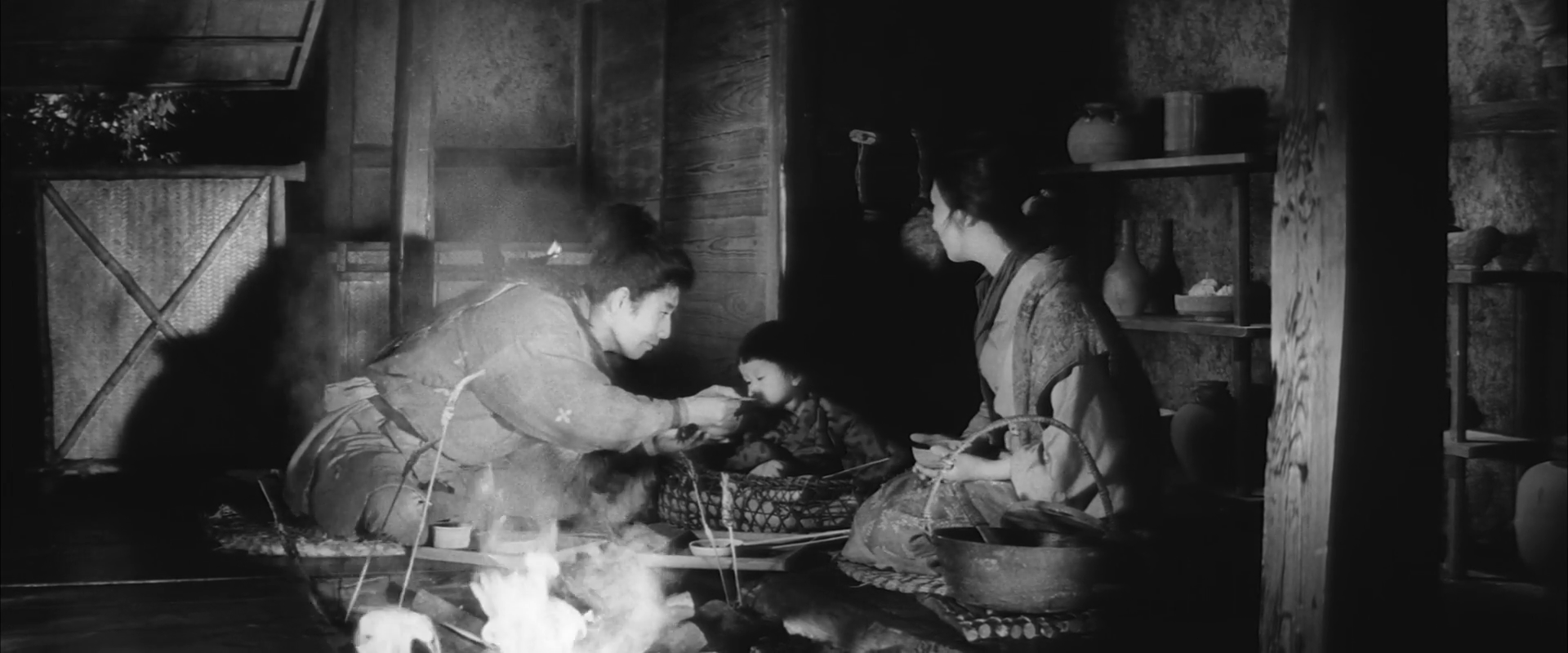
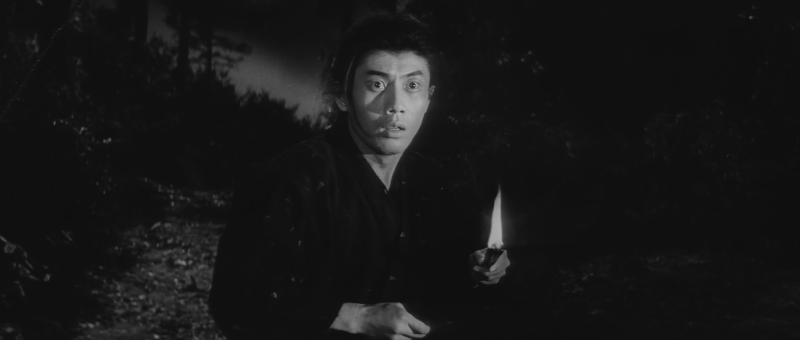
Castle of Owls (忍者秘帖 梟の城, Eiichi Kudo, 1963)

A surviving member of the Iga clan swears vengeance on Toyotomi Hideyoshi only to slowly come to the realisation that the best revenge is living well in Eiichi Kudo’s ninja drama, Castle of Owls (忍者秘帖 梟の城, Ninja Hicho: Fukuro no Shiro). Adapted from the novel by Ryotaro Shiba, the film is somewhat unusual in its positivity in allowing its hero to first reject the codes by which he was raised and then those of the prevailing times in eventually choosing love and happiness over the internecine obligation to gain vengeance against a corrupt social order.

Hoping to solidify his grip on power, Oda Nobunaga has his right-hand man Toyotomi Hideyoshi massacre the Iga clan of ninjas who are then almost entirely wiped out. Juzo (Ryutaro Otomo) and his friend Gohei (Minoru Oki) both survive, but Juzo’s entire family is brutally murdered while his sister takes her own life after being gang raped by Hideyoshi’s soldiers, using her final breath to tell her brother to avenge her. Overwhelmed by grief, Juzo is chastised by veteran ninja Jiroza (Kensaku Hara) for his show of emotion. He reminds him that a ninja should be as unbreakable as stone and that he should abandon all human sentiment. Juzo, however, insists that he may be a ninja but is also human and refuses to apologise for his feelings. 

This is it seems the major conflict. Jiroza has already signalled his own heartlessness and practicality when he advised the surviving ninja to flee, for escape is less dishonourable than death. Those who refuse are welcome to surrender, and those who cannot run must be left behind to their fate. For Jiroza, all that matters is survival for both himself and his small daughter Kizaru (Chiyoko Honma) who is currently tied to his back (no mention is made of her mother, perhaps she had already passed away). Now that his family are dead, Juzo has a new mission and reason for survival insisting that what the living can do for the dead is vengeance, though in his case it is personal rather than principled for he mostly wanted revenge for his sister rather than the Iga clan as a whole or anything it represents which he otherwise seems to be at odds with. 

10 years later, Oda Nobunaga has already been bumped off in an act of betrayal by one of his own men leaving Toyotomi Hideyoshi in charge and now the target for Juzo’s revenge. Around this time, Hideyoshi is planning an invasion of Korea against the advice of most of his courtiers in order to legitimise his rule through imperial ambition and military dominance. Juzo has been trying to assassinate him, and has apparently failed five times already. A surprise visit from Jiroza and his now teenage daughter involves a job opportunity promising a monetary reward should he succeed, but Juzo is wary. The merchant who hires him says he wants Hideyoshi out of the way because a war in Korea will damage his business prospects, but as Juzo points out Hideyoshi’s death will leave a power vacuum resulting in another civil war. The merchant, however, giggles childishly and remarks that domestic wars are good for business, leading Juzo to suspect he’s here on behalf of Tokugawa Ieyasu, the most likely to assume power in the event of Hideyoshi’s death.

The irony is though Juzo very definitely wants Hideyoshi dead, when someone else suggests it he becomes conflicted because he knows it will lead to another period of chaos in which even more people will die. Meanwhile, a ninja’s allegiance should belong to his client, who is always the highest bidder, so this is both a win-win situation and a mild conflict of interest. Conversely, Gohei (Minoru Oki), who was betrothed to Kizaru, has apparently betrayed the clan and taken a position as a retainer for one of Hideyoshi’s lords. He agrees to betray the Iga, inform on the plan to assassinate Hideyoshi, and even bring in Juzo in return for a 300-koku stipend and a shot of advancement under the new regime.

Now, on one level this might be understandable. Japan has emerged from a couple of hundred years of constant warfare, there’s no place for ninja in a world of peace as former Iga man Mimi (Tokue Hanasawa) remarks revealing that he’s survived the last 10 years through begging. It’s also understandable given that a ninja is expected to be duplicitous and act in self-interest. Even Juzo applaud’s Jiroza’s ninjutsu on realising that he’s teamed up with Gohei to betray him in order to take out the leader of the Koga ninjas. In essence, he’s only really done what Juzo later does but also the opposite in choosing his individual happiness through betraying those around him to throw his lot in with the person who murdered his entire clan. 

Juzo meanwhile is shaken by his unexpected attraction to female ninja Kohagi (Hizuru Takachiho), a daughter of the Koga,  who like him finds herself conflicted in her mission because of her growing affection for Juzo. Kohagi asks him if they really have to live on hate when they could live happily together instead, but even while conflicted Juzo can’t bring himself to let go of the idea of vengeance and is haunted by images of his friends and family dying. Even so, having decided to give up on a happy future and risk his life to kill Hideyoshi he finds that it ceases to matter. Confronting him, his hatred melts away. He begins to recognise the futility of revenge and that it would be silly to cause a war and make a merchant rich to prove a point. Gohei, meanwhile, pays a heavy price for his choices when his lord disowns him. Even when Juzo comes to rescue him from jail, he laughs that he’s caught him at last. Having escaped from the Iga life to live in the sun, he finds himself in darkness once again. Juzo, however, rides off into the sunshine with Kohagi to live in peace that’s divorced from the wider world. They choose to exile themselves from this world of darkness and duplicity, to live freely in the sunlight rather than be consumed by the internecine codes by which they were raised. Kudo films his ninja battles in near total silence with an almost balletic intensity and paints this world as one of infinite mistrust and uncertainty but equally affirms that it is possible to simply walk away and choose happiness over duty or hate.


Genocide (昆虫大戦争, Kazui Nihonmatsu, 1968)

In the early 1960s, tokusatsu movies had begun to slide towards something which was much less serious than the early days of the genre, but as the decade went on others edged in the direction of the ‘70s paranoia thriller expressing a nihilistic view of contemporary Cold War geopoliticking. Given the rather provocative English title Genocide (昆虫大戦争, Konchu daisenso), as opposed to the more recognisably genre-inflected “great insect war”, Kazui Nihonmatsu’s wasp-themed disaster film is part anti-nuclear eco-treatise and part anti-US spy movie.

Then again, the film’s secondary hero, Joji (Yusuke Kawazu), a Japanese man obsessed with collecting rare insects he sends alternately to a researcher in Tokyo and a foreign woman living locally, cannot exactly claim the moral high ground. When he spots a US bomber falling out of the sky and runs to investigate the descending parachutes, he’s in the middle of tryst with Annabelle (Kathy Horan) while his wife waits for him patiently at home. Not only that, he picks up an expensive watch dropped by one of the airmen and attempts to sell it, he later claims to buy something nice for his wife, Yukari (Emi Shindo). Meanwhile, the voice of reason Dr. Nagumo (Keisuke Sonoi) is also seen conducting experiments on animals, injecting insect venom into a squirming guinea pig while explaining that the toxin affects the nervous system and causes madness and death. 

For all his own moralising, it’s this callous and selfish disregard for life which caused so many problems. The insects have apparently become fed up with human volatility and have decided that they don’t care what humans do to each other but they won’t go down with us in a nuclear war so the only solution is total eradication. The film’s true moral centre, the innocent Yukari, had tried to stop Joji capturing insects, reminding him that “insects have babies too,” while unbeknownst to him the insects he’d been capturing for Annabelle had been used for her sinister experiments to “breed vast numbers of insects that drive people mad and scatter them across the world.”

Annabelle’s quest is one of revenge, claiming that she doesn’t trust humans and likes insects because they don’t lie. She’s currently working with Communist spies supposedly researching deadly nerve toxins but with no loyalty to the regime, only the desire for the eradication of humanity in revenge for the murder of her parents in the holocaust. The Americans, meanwhile, only care about getting the H-bomb that the downed bomber had been carrying, eventually admitting that they’re considering simply detonating it to wipe out the insect threat in total indifference to the lives of those who live on the islands. When Nagumo challenges him, the American officer pulls a gun. One of the soldiers refuses the command to detonate, but is then killed. 

The Americans reject the idea that it was “insects” that brought the plane down, but tell on themselves on insisting that the airman onboard was hallucinating having become addicted to drugs to help him overcome his fear of combat situations. The insects do indeed cause him to hallucinate but with flashbacks back to his time in Vietnam, loudly exclaiming that he won’t go back there before asking for more drugs and being injected by a medic. The American officers claim they’re fighting for “freedom and independence,” but it rings somewhat hollow and is immediately challenged by Nagumo. “Sacrifices must be made in war,” they retort when he points out that detonating the bomb will not only kill everyone on the islands but irradiate the rest of Japan, wiping out the Japanese as if they too were merely insects. 

Even so, Nagumo too wants to wipe out the insects rather than consider the implications of their concern or find a way to live with them. Annabelle might have had a point when she said that human beings only knew hate despite her entirely twisted and exploitative plan to use the insects to complete her mission of eradicating humanity. In any case, in contrast to other similarly themed films, Nihonmatsu keeps things fairly realistic despite the outlandishness of the narrative, frequently cutting back to closeup footage of an insect biting into human flesh with its pincers before ending on an image of a nihilistic and internecine destruction that suggests there may be no real hope for us after all.


Let’s Have A Dream (九ちゃんのでっかい夢, Yoji Yamada, 1967)

Convinced he’s dying of a terminal illness, a young nightclub singer yearns for death in Yoji Yamada’s romantic farce, Let’s Have a Dream (九ちゃんのでっかい夢, Kyu-chan no Dekkai Yume). In fact, the Japanese title is “Kyu’s Big Dream,” directly putting the name of the star into the name of the picture though he does in fact play a character called “Kyutaro” whose music career is starting to take off just as he convinces himself that his life is hopeless. Best known for “Ue o Muite Aruko”, Kyu Sakamoto was a huge singing star throughout the 1960s until his death in a plane crash at the very young age of 43.

Based on a novel by Nobuhiko Kobayashi who was working with Sakamoto on a television show at the time (and asked for a pseudonym because he wasn’t sure how the movie would turn out), the film is however partly an exploration of the nation’s growing internationalism. Indeed, the film opens with the Pan Am logo and then immediately travels to Switzerland where an elderly lady is dying having apparently never married or had children but still attached to the memory of her first love, a man from Japan. Accordingly, she decides to leave her entire fortune to that man’s grandson, Kyutaro (Kyu Sakamoto), which comes as a total shock to her closest living relative, “The wicked Mr Edward Allan Poe.” Her butler then vows to travel to Japan to tell Kyutaro the good news, but ends up sitting next to the hit man Edward Allan Poe hires on the plane.

But Kyu has already hired a hitman to take himself out because he thinks he’s suffering from a terminal disease and feels nothing other than fear and hopelessness. Though all he wants to do is die, he is unable to take his own life and so has decided this is the best way. He’s also in love with a childhood friend who works in a diner at the docks, but unbeknownst to him Ai (Chieko Baisho) has just got engaged to their other friend Kiyohiko (Muga Takewaki), a sailor. To add to the sense of European romanticism, Kyu writes long notes to himself about his sadness and melancholy all while the countess’ right-hand man continues to refer to him as the luckiest man in the world. 

In a running gag, the hitman speaks mainly in French and the Countess’ butler in cod German hinting at a new kind of internationalism. The hitman Kyu hires through shady local guy Pon (Kanichi Tani) is, however, much less sophisticated. He can’t afford a gun and fails to kill Kyu several times in other ways usually injuring himself in the attempt which again makes Japan look somewhat inferior to the rest of the world just as the opulent vistas of the Countess’ castle contrast so strongely with the down and dirty nature of the docks where Kyu lives and works. 

Despite being so desperate to die, Kyu pulls away when the hitman he hired tries to kill him which along with his inability to take his own life may suggest that he really does want to live after all. Though she evidently does not return his romantic feelings, Ai clearly cares for him deeply describing Kyu as like oxygen for her while trying to get to the bottom of what’s with wrong with him but it takes Kyu a little longer to figure out that people care about him even if not quite in the way he was hoping they would. Even so, there’s no denying the farcical quality of all that’s befallen him as he finds himself “the luckiest man in the world,” caught between two hitmen, and staving off eventual romantic heartbreak.

Still, even this plays into the melancholy sense of romanticism and elliptical ending as Kyu eventually gets to fulfil one of his big dreams by going to Europe and getting to live the life of a heartbroken count from a 19th century romantic novel. As a vehicle for Sakamoto, the film also features several of his songs along with dance routines and some otherwise goofy clowning while Chieko Baisho also performs a short but sweet rendition of My Bonnie Lies Over the Ocean. It’s all undoubtedly very silly but somehow heartfelt and wholesome for all its buried melancholy and deeply felt romanticism. 


Original trailer (no subtitles)