Youth of the Beast (野獣の青春, Seijun Suzuki, 1963)

youth of the beast posterSeijun Suzuki had been directing for seven years and had made almost 20 films by the time he got to 1963’s Youth of the Beast (野獣の青春, Yaju no Seishun). Despite his fairly well established career as a director, Youth of the Beast is often though to be Suzuki’s breakthrough – the first of many films displaying a recognisable style that would continue at least until the end of his days at Nikkatsu when that same style got him fired. Building on the frenetic, cartoonish noir of Detective Bureau 2-3: Go to Hell Bastards!, Suzuki once again casts Jo Shishido in the the lead only this time as an even more ambiguous figure playing double agent to engineer a gang war between two rival hoodlums.

Suzuki opens in black and white as the bodies of a man and a woman are discovered by a small team of policemen. Finding a note from the deceased female which states that she settled on taking her own life because she loved her man and thought death was the only way to keep him, the police assume it’s an ordinary double suicide or perhaps murder/suicide but either way not worthy of much more attention, though discovering a policeman’s warrant card on the nightstand does give them pause for thought.

Meanwhile, across town, cool as ice petty thug Jo Mizuno (Jo Shishido) is making trouble at a hostess bar but when he’s taken to see the boss, it transpires he was really just making an audition. The Nomoto gang take him in, but Mizuno uses his new found gang member status to make another deal with a rival organisation, the Sanko gang, to inform on all the goings on at Nomoto. So, what is Mizuno really up to?

As might be expected, that all goes back to the first scene of crime and some suicides that weren’t really suicides. Mizuno had a connection with the deceased cop, Takeshita (Ichiro Kijima), and feels he owes him something. For that reason he’s poking around in the local gang scene which is, ordinarily, not the sort of world straight laced policeman Takeshita operated in which makes his death next to a supposed office worker also thought to be a high class call girl all the stranger.

Like Detective Bureau 2-3: Go to Hell Bastards!, Youth of the Beast takes place in a thoroughly noirish world as Mizuno sinks ever deeper into the underbelly trying to find out what exactly happened to Takeshita. Also like Detective Bureau 2-3: Go to Hell Bastards!, Youth of the Beast is based on a novel by Haruhiko Oyabu – a pioneer of Japanese hardboiled whose work provided fertile ground for many ‘70s action classics such as The Beast Must Die and Resurrection of the Golden Wolf, but Suzuki’s ideas of noir owe a considerable debt to the gangster movies of the ‘30s rather than the moody crime dramas of twenty years later.

Jo Shishido’s Mizuno is a fairly typical ‘40s conflicted investigator, well aware of his own flaws and those of the world he lives in but determined to find the truth and set things right. The bad guys are a collection of eccentrics who have more in common with tommy gun toting prohibition defiers than real life yakuza and behave like cartoon villains, throwing sticks of dynamite into moving cars and driving off in hilarious laughter. Top guy Nomoto (Akiji Kobayashi) wears nerdy horn-rimmed glasses that make him look like an irritated accountant and carries round a fluffy cat he likes to wipe his knives on while his brother Hideo (Tamio Kawaji), the fixer, is a gay guy with a razor fetish who likes to carve up anyone who says mean stuff about his mum. The Sanko gang, by contrast, operate out of a Nikkatsu cinema with a series of Japanese and American films playing on the large screen behind their office.

The narrative in play may be generic (at least in retrospect) but Suzuki does his best to disrupt it as Mizuno plays the two sides against each other and is often left hiding in corners to see which side he’s going to have to pretend to be on get out of this one alive. Experimenting with colour as well as with form, Suzuki progresses from the madcap world of Detective Bureau 2-3: Go to Hell Bastards! to something weightier but maintains his essentially ironic world view for an absurd journey into the mild gloom of the nicer end of the Tokyo gangland scene.


Original trailer (no subtitles)
A Chain of Islands (日本列島, Kei Kumai, 1965)

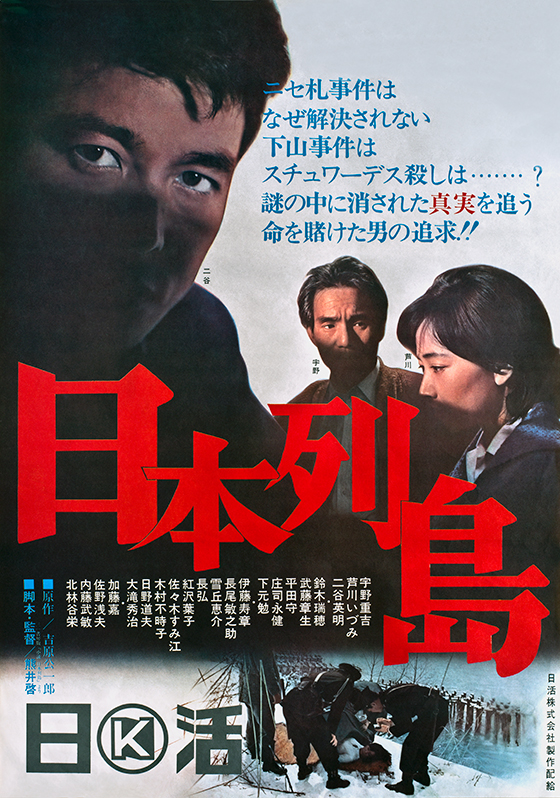
nihon retto posterKei Kumai made just 19 films films in his 40 year career, but even since his earliest days he ranked among the most fearless of directors, ready to confront the most unpleasant or taboo aspects of contemporary Japan. His first film, The Long Death, interrogated wartime guilt through drawing inspiration from a real life 1948 mass poisoning case in which materials manufactured in a Manchurian lab may have led to the deaths of post-war civilians. Having begun in this possibly controversial vein, Kumai pressed on with 1965’s A Chain of Islands (日本列島, Nihon Retto, AKA The Japanese Archipelago) which he set in 1959 as Japanese youth protested the renewal of the ANPO treaty which placed Japan under the military protection of the American Armed forces in return for allowing the presence of those forces on Japanese soil.

Despite the contemporary setting Kumai opens with a explanatory voice over detailing the depth of the American military presence and the function of the CID which exists solely to investigate crimes committed by American servicemen. The CID is staffed by both Americans and Japanese nationals who, the voiceover explains, often feel conflicted in stepping onto American soil each morning as prolonged exposure gradually erodes their sense of difference and finally of “Japaneseness”. Akiyama (Jukichi Uno) is a translator/investigator at CID and he’s about to be handed an unusual request from his boss – reopen a cold case from the previous summer in which an American Sergeant was found floating in Tokyo bay. Akiyama’s new boss was a friend of the late soldier and would like to know what happened.

Akiyama’s investigations lead him down a dark path of corruption, murder, conspiracy, and governmental complicity. Beginning to investigate the case, Akiyama discovers that nothing is quite as it seems. A couple of policeman from the original investigation arrive to help him and echo their frustrations with the way the case was handled. Despite the police investigation, the American authorities did their best to interfere – commandeering the body and claiming jurisdiction in contravention of Japan’s standing as a sovereign nation. The Americans are no longer occupying forces but honoured guests who should obey international protocol in cases like these, but they rarely do. Despite the existence of the CID, crimes by American servicemen are generally covered up as the military insists the matter will be dealt with internally only for suspects to be suddenly “transferred” overseas.

Sgt. Limit was, however, one of the good ones and Akiyama’s investigation seems to point towards a murder and cover up instigated because Limit had got too close to the truth in investigating a sudden flood of counterfeit cash. The Americans, to the surprise of all, are only the middle man in the grand conspiracy which leads right back to the dark heart of Japan and the vast spy networks operated during the militarist era. As might be expected, these valuable networks are left wide open with the collapse of Japanese fascism but are perfectly primed to facilitate widespread crime spanning the Asian world and all with the tacit approval of the American and Japanese states.

Kumai also implicates the spy ring in a series of “mysterious” rail incidents, but makes sure to reserve some of his ire more the more usual injustices. Akiyama is caring for his young nephew whose father was killed in mining explosion which has claimed the lives of nearly every young man in the village leaving his sister unable to cope with her children alone. He is also battling a personal tragedy which is intensely connected to his decision to join CID which is currently inundated with cases of rape and murder in which American servicemen are implicated. The “foreign” becomes suspect but mostly for its hypocrisy as in the Catholic priest who becomes a major suspect in subverting the legitimate devotion of a Godly woman who only sought to live under the Christian teachings of love and kindness, while the American forces claim to stand for honour and justice but actively facilitate organised crime at an interstate level to further the progress of Capitalism whilst also facilitating civil unrest in volatile nations for financial and political gains.

That all of this happens immediately before the renewal of the ANPO treaty is no coincidence and Kumai even includes aerial footage of the mass protests filling the streets around the Diet building as the youth of Japan question why their nation has seen fit to make itself so complicit in the questionable foreign policy of another country. The outcome looks bleak for our protagonists who discover themselves to be mere pawns at the mercy of greater forces which cannot be circumvented or denied, but just as it all looks hopeless a new hope arises. Pledging to fight harder and continue the work which has been started, those left behind dedicate themselves to equipping the young with the tools to build a happier, fairer world in contrast to the one they seem primed to inherit from those who should know better. The final sequence shows us a young woman walking gloomily past the Diet building which seems to be looming over her as a veritable symbol of oppression but then her face brightens, her step quickens and she leaves the Diet far behind to walk forward towards the work which awaits her. 


A comprehensive overview of the 1960 ANPO protests.

Horse-Year Bride (말띠新婦 / 말띠신부, Kim Ki-duk, 1966)

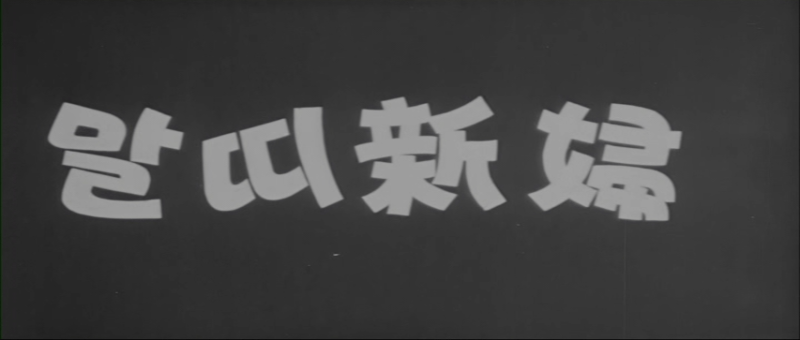
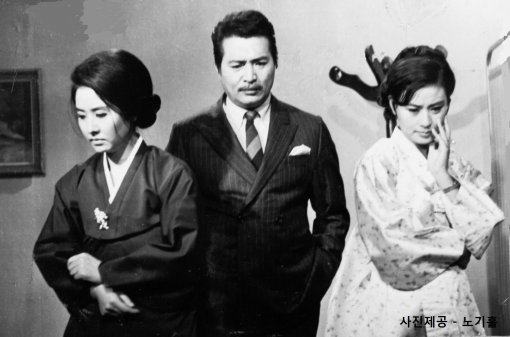
In the relatively conservative Korean society of 1966 it’s surprising that film like the Horse-Year Bride (말띠新婦 / 말띠신부, Maltti Sinbu) could have been made at all. On the one hand it embraces and subverts common notions of gender by positioning its “horse year women” as somehow deviant from the norm, difficult to deal with and undesirable, but also places them centerstage as individuals making independent choices in their own lives rather than simply trailing along behind their men. Technically the second in a trilogy of films, the first and last being directed by Lee Hyung-pyo, Kim Ki-duk’s Horse Year Bride is a raucous sex comedy, tame by modern standards but transgressive by those of the time. Adopting a mild, if ironic, issue movie stance, Kim also satirises social attitudes to “horse year women” and councils against a trend of aborting babies set to be born in the year of the horse lest they be female and turn into vicious harridans.

The film opens with a wedding in which middle-aged (presumably 35 or 36 year old) Bok-soon (Hwang Jung-seun) marries the extremely miserable looking professor Seok-du (Park Am). The wedding photographer who later turns out to be a horse woman herself and a private eye is surprised to notice that Bok-soon has horse’s hoofs rather than fancy shoes under her wedding dress. A fortune teller (Kim Hee-kap) then introduces us to his matchmaking service and claims the wedding we have just witnessed is a result of his best ever match before introducing us to two more couples – Soo-in (Nam Mi-ri) whose husband Sang-won (Yoon Il-bong) has gone full on domestic to look after her while she’s pregnant, while Mi-hae (Um Aing-ran), also pregnant, fends off the sexual advances of her frustrated husband Keun-ho (Shin Seong-il). The two as yet unmarried horses include the aforementioned private detective, Young-hee (Bang Seong-ja), and a dancer, Suk-ja (Choi Ji-hee), who is engaged but not above making use of her sex appeal for material gain.

Bok-soon, one horse cycle ahead of Soo-in and Mi-hae, laments her long period of matronly virginity and is keen to make up for lost time. Seok-du, however, is not exactly a love machine and is completely worn out by his wife’s appetites, even going so far as to return to the fortune teller and complain that his excellent matchmaking has turned him into an exhausted sex slave. The matchmaker suddenly grabs a picture of Napoleon and has a novel explanation for where the famous general’s hand might be. Anyway, his advice is to practice yoga to increase stamina and keep Bok-soon happy.

Meanwhile, Soo-in and Mi-hae have both lied to their husbands about being pregnant in order to avoid sex so that they don’t conceive a daughter that, like them, will be born in the year of the horse. This particular “White Horse” year is thought to be especially inauspicious and daughters born as White Horses will apparently be total nightmares and have terrible lives. The two relationships send up various culturally accepted norms of martial gender roles as the women both manipulate their husbands to get their own way. Soo-in’s Sang-won is so solicitous about the pregnancy that he’s put Soo-in on virtual bed rest and blossomed into a mother hen clucking around doing the housework but making a total mess of it (because, after all he’s a man, and men aren’t “built” for this sort of thing). Mi-hae’s problem is the opposite in that Keun-ho’s sexual needs are a constant source of frustration to him in which he resorts to pounding a giant mortar in an unsubtle attempt to relieve his pent-up energy. Bok-soon too is subtly manipulating Seok-du by feeding him an “aphrodisiac” and secretly practicing yoga herself to get the most out of her married life.

Unmarried Suk-ja attempts to manipulate men by promising more than she means to give but finds herself in hot water with a grumpy salaryman (Joo Sun-tae) who seems determined to take what he thinks he’s owed. Suk-ja later pays heavily for her rejection but the other women rally to her side to take revenge on the lecherous businessman whom they regard as “human scum” and intend to “re-educate” to treat women better. The vengeful band of women taking revenge on the male sex with each of its various double standards and chauvinistic assumptions derives part of its humour from the relative lack of power available to them but does manage to make a sensible point about the sexist world they inhabit.

Eventually, when the women have given up their power and allowed themselves to become pregnant by their men, even the doctor at the hospital assumes they will want abortions to avoid the threat of White Horse daughters. By this point the women have also resolved that there’s nothing wrong being Horse Women or even White Horse Women, with women excising power (even if in necessarily feminine ways), or with enjoying full relationships with their husbands, but they’re still bound by otherwise typical ideas of female gender roles in the importance of maternity and dream their daughters will be Miss Koreas rather than great scholars or forces for good in the world. The doctor raises an interesting point when he suggests the fear of White Horse Women is an unwelcome foreign import from Japan which both paints it as another symptom of colonial corruption and ignores the fact that the reasons for the ongoing stigma are part of the essential social fabric of Korea. He does, however, find some darkly comic reasons against abortion in citing the economic effects of empty schools and lonely classrooms while also suggesting the women’s daughters may have an easier ride thanks to the lack of competition.

In contrast to his previous films, Kim adopts a youthful, pop-culture infused approach which makes frequent use of domestic and foreign pop music with a lengthy animated title sequence plus extended scenes of music and dance often unconnected to the main drama. Extremely frank in its treatment of modern sexual relations, Horse-Year Bride is an unlikely ‘60s Korean sex comedy filled with silly gags and slapstick humour but proves an extremely effective satire of the complicated social mores of ‘60s Korea.


Available on DVD as part of the Korean Film Archive’s Kim Ki-duk box set. Also available to stream online for free via the Korean Film Archive’s YouTube Channel.

North and South (南과北/남과북, Kim Ki-duk, 1965)

north and south poster

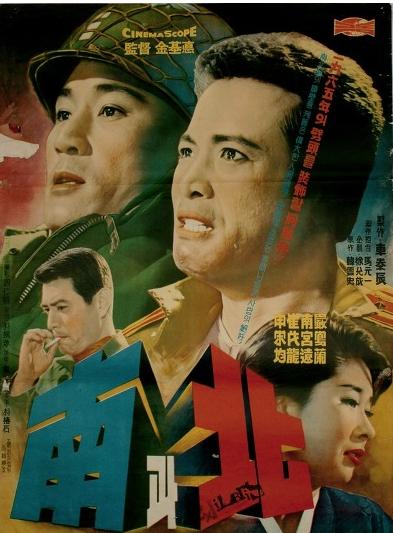
Melodrama has often been an unfairly maligned genre, dismissed as pandering to the sentimental or engaging in frivolous emotion but to do so misses the undercurrent of social questioning that such films often entail. Korea has made the melodrama its own – indeed, though genre is often a more fluid matter in Korea than it is elsewhere it’s difficult to find films of any kind which are completely devoid of melodramatic themes. It’s less of a surprise therefore to find that Korean cinema turns to melodrama to examine one the nation’s most pressing concerns – the relationship between North and South. Kim Ki-duk’s North and South (南과北/남과북, Namgwa Buk) is the story of a woman caught between two men, two nations, and two eras but it’s mediated through the story of a noble North Korean who has battled all in the name of love, left his family, his home, his country only to find that he is too late and the world has already left him behind.

The film begins with capture of a North Korean soldier in November 1952, the middle of the Korean War. Following normal procedure, the soldier, Major Jang Il-gu (Shin Young-kyun) is taken in for questioning but the major matter on his mind is the lady in the photograph he keeps brandishing to everyone he meets. Rather than political disaffection, Il-gu has defected to the South in the name of love – he’s looking for a woman he regarded as his wife, the mother of the son he has never seen. The South Korean officers are less than sympathetic, they’ve been noticing increased activities on the frontiers and they want to know some concrete military details before they even agree to admit Major Jang, but Il-gu won’t talk until they promise to help him look for Eun-ga (Um Aing-ran) – the woman for whom he has betrayed his comrades.

Captain Lee Hae-ro (Choi Moo-ryong), otherwise sympathetic to Il-gu’s plight, runs into a problem when elements of Il-gu’s story start sounding all too familiar. In a coincidence too staggering to believe, Eun-ga is Hae-ro’s wife. Originally reluctant to marry him, Eun-ga had explained that she had a son already and was waiting for the child’s father (to whom she was not “legally” married) from whom she had been separated by the 38th parallel. Lee was patient and persistent, he told Eun-ga that she was free to leave him should her long lost love return (never believing it was possible) and that he was content to look after her until that day came or, should he be so fortunate, for the rest of his life. Now Il-gu has arrived as if to punish him for disrupting this fairytale of doomed romantic love.

Unlike many films of the time, Kim is not interested in demonising the North so much as emphasising the tragedy of Korea’s division. Eun-ga and Il-gu are divided by more than just politics. Eun-ga was the middle-class daughter of a wealthy doctor, Il-gu was the son of one of their servants. Their love was not possible even before the war, but still it blossomed. Growing up together, Il-gu and Eun-ga experienced the quintessentially innocent taste of first love, vowing to stay together even in the face of fierce parental opposition and social convention, but it is the war which eventually seals their fate. Il-gu, not wanting to be conscripted into the Japanese army hides out in a shack where Eun-ga, the only person to know his whereabouts, spends a fateful night with him during which time their child is conceived.

Dreaming only of being re-united with his “wife” and child, Il-gu has been carrying around a picture of Eun-ga and looking for an opportunity to defect ever since the erection of the 38th parallel. Abandoning everything in the name of love, he has left his mother alone in the North and risked his life in hope of seeing Eun-ga once more. Hae-ro, a romantic man himself, is intimidated by Il-gu’s passion. The great, fated love he’d imagined for himself in marrying the nurse who had saved him at his lowest ebb suddenly pales in comparison to Il-gu’s willingness to sacrifice his life in pursuit of a true love dream. Understating Il-gu’s feelings, Hae-ro finds himself in a terrible position, worried that his love will leave him, feeling guilty for pestering her into a marriage she may not have really wanted, and unsure whether he should even tell Il-gu and Eun-ga that he holds the key to their long delayed reunion. Il-gu remains resolute, demanding love or death, but Hae-ro vacillates, drinks himself into solipsistic misery, and indulges his own weaknesses which are only made worse by Il-gu’s continued heroism.

Immediately before the final sequence in which the trio are forced to confront their emotionally difficult situation, Il-gu is threatened with a gun but refuses to give up any information without proof he can meet Eun-ga. Believing all hope to be lost, he asks only to be allowed to go up a mountain to die but is moved by the compassion of intelligence officer Kwon (Namkoong Won) who alone is committed to delivering Eun-ga and eventually gives up his information even though it pains him to betray his own comrades. In an impassioned debate with Kwon, Il-gu gives voice to the film’s overarching message in reminding him “Are we not all brothers”. Kwon, counters that the reason they fight is in service of Il-gu’s quest – it’s precisely so that he can come here, speak freely, and pursue his love unhindered. The “South” is winning, in a sense, but the message of brotherhood and understanding between men is the one which is delivered with the most clarity.

Understanding between men is indeed the theme of Hae-ro and Il-gu’s eventual meeting. Eun-ga’s torment is relegated to background detail as she sobs her heart out in the corner in the unfairness of her impossible situation. Her heart has always belonged to Il-gu and she feels herself to have betrayed him, betrayed love, in marrying an admittedly good and kind man out of reasons of practicality rather than passion. Coming to understand the situation, Il-gu responds with compassion and understanding even in the middle of his own heartbreak. He bitterly regrets his journey and wishes Hae-ro had told him Eun-ga was now his wife rather than allow him to hurt her by suddenly reappearing and breaking her heart all over again. Witnessing Il-gu’s magnanimity, Hae-ro is also moved, offering to step back and allow Il-gu to return to the family he may have lost. Both men recognise the goodness of the other, want nothing more than the best outcome of the situation for Eun-ga and her son, and are committed to moving forward with sensitivity in trying to minimise the emotional pain inflicted on the innocent Eun-ga who continues to suffer through no fault of her own.

The “fault” falls on the 38th parallel which, as Il-gu explains during a painful first meeting with his unknowing son, is “the worst thing ever made by stupid men”. The situation is indeed impossible, there is no easy answer for Eun-ga who will have to choose between past love and a present commitment (or, uncomfortably, have that decision made for her by her respective lovers). Kim dramatises their anguish perfectly through the extraordinary performances of his cast during the drawn out, painful encounter in which they attempt to forge a way forward, but Eun-ga, who stands in for her nation, stands to lose all when this same fierce love and understanding between men may cost her everything in tragic gestures of love and sacrifice.


Available on DVD as part of the Korean Film Archive’s Kim Ki-duk box set. Not currently available to stream online.

Five Marines (五人의 海兵 / 5인의 해병, Kim Ki-duk, 1961)

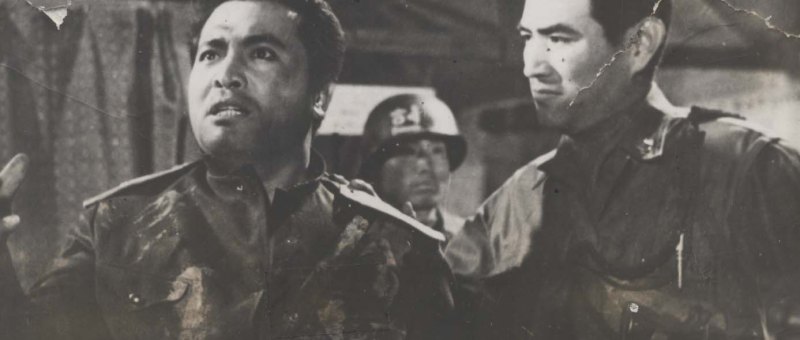
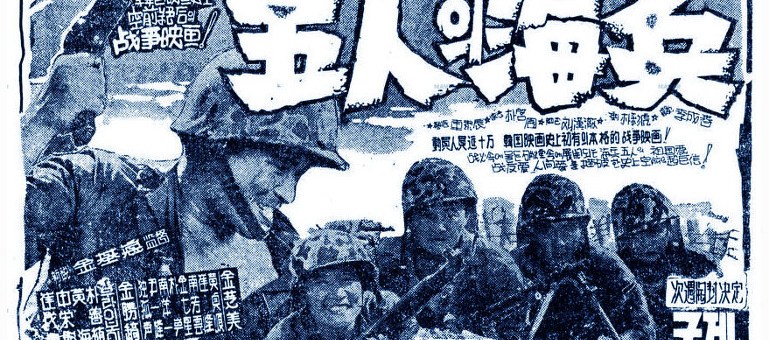
Five Marines posterKorean War films have a very particular tone and flavour often absent from those from elsewhere. As sad and despairing as they can be across the world, war films are generally the realm of macho heroism, men bravely holding back tears and charging forth with unrestrained rage in a quest to avenge their fallen comrades. Korean War films, however, like the majority of the nation’s cinematic output, are tinged with melodrama. These men wail, talk about their mothers, and worry for the future while forging intense bonds of homosocial brotherhood and becoming a battlefield family. The debut feature from Kim Ki-duk, Five Marines (五人의 海兵 / 5인의 해병, O in-ui haebyeong) is a prime example of this approach, eschewing combat scenes for behind the lines ensemble drama as ordinary men attempt to come to terms with the extraordinary situation of war.

Stock footage of the battlefield eventually gives way to a small squadron of marines digging trenches and at constant risk of ambush by Chinese forces. The main drama revolves around lieutenant Deok-su (Shin Young-kyun) who is the son of the company commander but there has long been bad feeling between the two men as Deok-su has always felt that his father favoured his brother, Deok-han (Choe Bong), and never really loved him. Meanwhile we’re introduced to another four marines – intellectual Jeong-guk (Choi Moo-ryong), Ju-han (Flyboy / Gwak Gyu-seok) – a father of five from Seoul, farm boy Yeong-seon (Park Nou-sik), and mother’s boy with anger issues Hun-gu (Hwang Hae). Following the death of two comrades, the squad of five is sent on a daring missing into enemy territory to blow up an arms depot through which they aim to make the sacrifice their friends have made in some way meaningful.

Made just eight years after the end of the Korean War and apparently commissioned by the Marine Corps in the wake of the May 16 military coup which initiated the dictatorship of Park Chung-hee, Five Marines takes a very different approach to that seen in other contemporary war films such as Lee Man-hee’s The Marines Who Never Returned. Though in no way particularly jingoistic or warmongering, it would be difficult to describe Five Marines as an “anti-war” movie, not least because it avoids depicting scenes of combat until the final mission in which, as expected, some or all of the heroes will fall valiantly defending their fellow Koreans as well as their friends.

Jeong-guk, the college educated enlisted man, originally considers himself to be taking part in the pantomime of war, going along with the ridiculous sham of soldiering, but when a fellow soldier – a young boy who spends his time rewriting a poetic confession of love he doesn’t quite have the nerve to send to the girl he left behind, falls in front of him, Jeong-guk suddenly wants to join the fight for real. The idea of militaristic patriotism is then subtly reinforced if not quite sold with patriotic fervour. The necessity of the sacrifice is never questioned and the idea of doing one’s duty remains paramount even if it is also clear that the war has taken these men out of their familial environments leaving their women at home alone and, perhaps, defenceless.

Kim explores the peacetime lives of each of the men through flashback with the consequence that we get to know and care for them as people rather than as combatants. We rejoice with Jeong-guk when he hears he’s going to be a father, share Ju-han’s amused frustration when his wife includes all their bills in his mail, and worry with Hun-gu when his usual letters have not arrived. During their down time, the men discuss women but with more tenderness than expected – save for Yeong-seon’s rather lewd (and apparently fabricated) story of his wedding night for which he is rightly taken to task by his stern company Sergeant. Rather than focussing on the negatives of military service, Kim emphases the warmth and friendship among the men who forge deeper and stronger connections precisely because of the ever present threat of death.

When the final mission rolls around, Kim allows the action to take centre stage as the five man squad plots and executes a daring raid which does not quite go to plan and eventually erupts into a more conventional fire fight. Marrying the demands for macho battle scenes with the emotional quality of melodrama, Kim allows the men to sort out their emotional difficulties, shedding both blood and tears in equal measure. More emotional drama than action packed celebration of the glory of war, Five Marines may not quite be what the Marine Corps had in mind but perhaps serves their purpose anyway in reinforcing the positive ideas of camaraderie and patriotism whilst telling the stories of ordinary men and extraordinary heroism.


Available on DVD as part of the Korean Film Archive’s Kim Ki-duk box set. Also available to stream online for free via the Korean Film Archive’s YouTube Channel.

Love Me Once Again (미워도 다시 한번, Jung So-young, 1968)

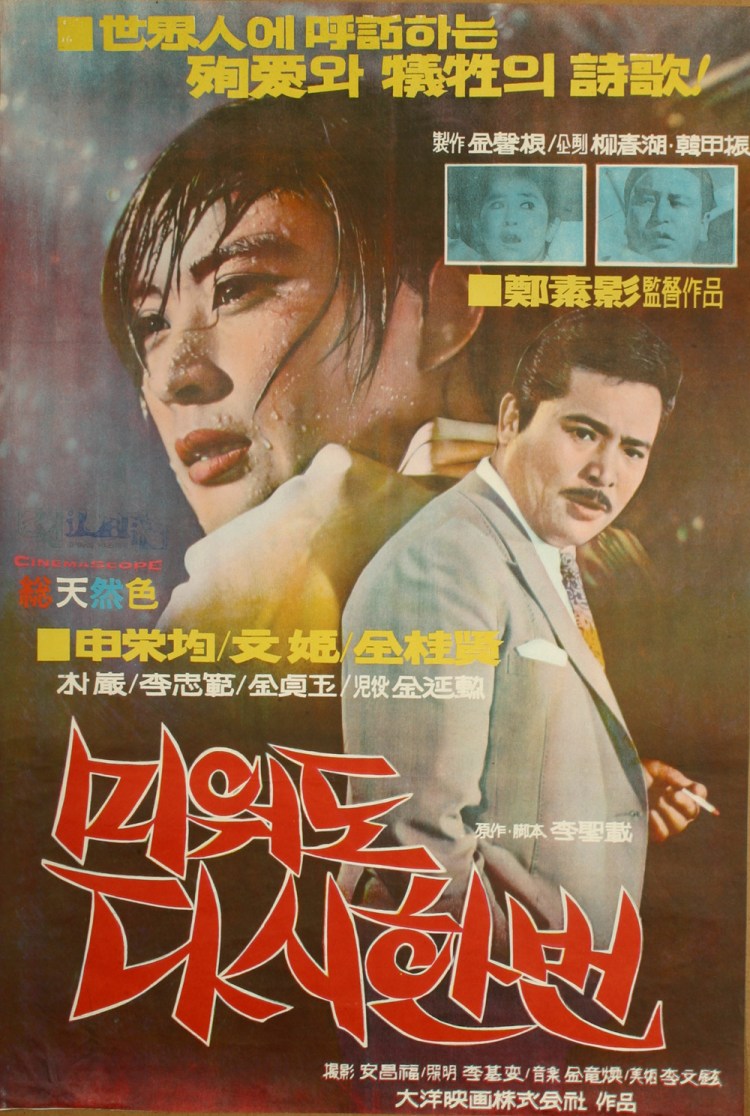
love me once again posterBy the late 1960s, Korean society was caught in a moment of intense social change. Though under the oppressive authoritarian regime of Park Chung-hee, the strict censorship regulations of the early 1970s had not yet taken effect and the 1962 Motion Picture Law which encouraged a shift towards commercial cinema intended for mass entertainment created a fertile ground for melodrama which itself enabled subtle commentary on modern society. The first in what would become a long running series with two sequels and a number of remakes stretching into the 1980s, Love Me Once Again (미워도 다시 한번, Miweodo Dasi Han Beon) is a prime example. A box office hit and pop culture phenomenon, Love Me Once Again is a somewhat unusual entry the melodrama canon in its broadly sympathetic treatment of adultery and attitude towards children born out of wedlock.

The film begins in the present as family patriarch Shin-ho (Shin Young-kyun) enjoys a pleasant family Sunday fishing with his son and picnicking with his wife (Jeon Gye-hyeon) and daughter but the scene is quickly interrupted by a servant who comes to fetch Shin-ho to greet an urgent visitor to the house. The visitor turns out to be an old friend of Shin-ho’s who has a distressing message for him – Hye-young (Moon Hee), a young woman with whom he had an affair eight years previously, is back in town and would like to meet.

Flashing back eight years, Hye-young is a young kindergarten teacher living in the lodging house where Shin-ho is staying while working away from home. The pair become friends and everyone seems to assume they are a couple, though Shin-ho insists Hye-young is just a friend. Nevertheless, he eventually begins an affair with her leading Hye-young to turn down a marriage arranged by her parents. Though Shin-ho discourages her to do this, Hye-young has no idea he is already married with two children and believes he will marry her at some point in the future. Shin-ho plans to tell Hye-young about his wife but can’t bring himself to do it, allowing her to find out in the worst possible way when his wife arrives with both kids in tow. Realising she’s been duped and feeling in the way, Hye-young takes off without warning leaving only a letter wishing Shin-ho well and letting him know that she is pregnant with his child and intends to raise it alone.

Hye-young is certainly a very “modern” forward thinking woman though she is also morally upright, only embarking on a relationship with Shin-ho because she believes he is the man she will spend her life with. Her family had arranged a marriage for her and express their frustration with Hye-young for not returning home immediately in a letter which also makes plain that they will suffer embarrassment if she refuses the marriage altogether – which she does. When she returns home pregnant with Shin-ho’s child, her brother (who seems to be the head of the family), throws her out. Hye-young’s mother seems more sympathetic, but is powerless to help. Hye-young will have to manage on her own without the assistance of friends or family.

Eight years on she has a lovely little boy, Young-shin (Kim Jung-hoon), whom she has raised alone in hardship but not unhappiness. Encouraged by her brother and seeing how Young-shin looks on enviously at other little boys playing with their fathers on the beach, Hye-young begins to wonder if it might not be better to have Shin-ho raise Young-shin alongside his other two children in a middle-class family home. As Shin-ho’s son he would have a life of material comfort, a paternal input, and be free of the stigma of being the illegitimate child of an unmarried single mother.

Though the situation is difficult, it is handled with calm and maturity on all sides, not least from Shin-ho’s wife who takes a while to think hard on the situation and then agrees to look after Young-shin but only as a full adoption. She asks that Hye-young refrain from writing to or seeing her son, leaving him entirely in the family’s care. Hye-young has made her decision and agrees that may be for the best, even declining the offer of written updates from Shin-ho’s best friend. Once Young-shin has become a part of Shin-ho’s family, his wife truly does her best to make him feel at home as the third of her children, treating him kindly and taking the older two to task for teasing their “baby brother”. The children however are not quite so accepting with Shin-ho’s eldest son particularly hostile, bullying little Young-shin mercilessly even though he has done nothing to provoke his anger other than try to be friends with him. Getting a new little brother is perhaps particularly hard for the children who now have to share everything with a virtual stranger, but despite the efforts of Shin-ho’s wife, she just can’t seem to make them accept him.

Shin-ho, feeling awkward and guilty, is not quite as committed as his wife is to making the new family work. He tries to treat Young-shin as his son, but never quite connects with or makes him feel at home. The major problem is that the family all insist Young-shin must forget about Hye-young and commit fully to his new family as they are committing to him but that’s a lot to ask for an eight year old boy who quite fairly misses his mother and does not understand why he is not allowed to see her. A crisis occurs when Shin-ho angrily confiscates a locket Hye-young had given Young-shin containing her photo as a memento, sending him off on a long journey trying to find a way back to his mother. Being only eight, Young-shin has no idea how to go about finding her bar knowing the name of the town where he used to live. Roaming around the city all alone calling his mother’s name, Young-shin stays out all night. Shin-ho and his wife are sick with worry, searching for him in the pouring rain, but when he finally returns drenched and miserable, Shin-ho treats him only with anger and not with tenderness.

Meanwhile, Hye-young is struggling to come to terms with her decision to “abandon” her son, having bad dreams that Young-shin is being mistreated or is miserable, missing her as much as she misses him. Obeying the family’s request to stay away, Hye-young cannot resist coming to visit and observing from far away, hoping to catch a glimpse of her son and find out if he is well and happy. Unfortunately she turns up just as he’s gone out looking for her and spots him cowering outside Shin-ho’s house, drenched in the rain. Afraid to go near him she urges him to go inside, calling out from the shadows only to be spotted by Shin-ho as she makes her escape.

Rather than wallow in misery, Jung does not refuse the inherent melodrama of the situation but addresses it realistically and with a degree of maturity and patience most real life situations can only aspire to. Hye-young believes that Shin-ho hates herself and her son and will never be able to accept them as members of his family, but even so he does appear to have developed at attachment to Young-shin and hopes that he can maintain contact with him even if it remains clear Young-shin cannot remain in their home. Shin-ho’s wife too makes a point of not blaming Young-shin for her husband’s mistake and displays compassion for Hye-young who meant her no harm and has incurred only suffering as a result of her involvement with Shin-ho. Where most melodramas would punish Hye-young for her transgressions, Jung is kinder to her, never condemning her for her “immoral” behaviour in sleeping with Shin-ho before marriage and making it clear that her decision to live independently as a single woman and raise Young-shin alone is not only valid but correct and to be supported. A controversial attitude for the Korea of 1968 but one which declares itself on the side of modernity rather than adherence to traditions which more often than not create more problems than they solve.


Available to stream for free via the Korean Film Archive’s YouTube Channel.

Hibari Ohako: Benten Kozo (ひばり十八番 弁天小僧, Yasushi Sasaki, 1960)

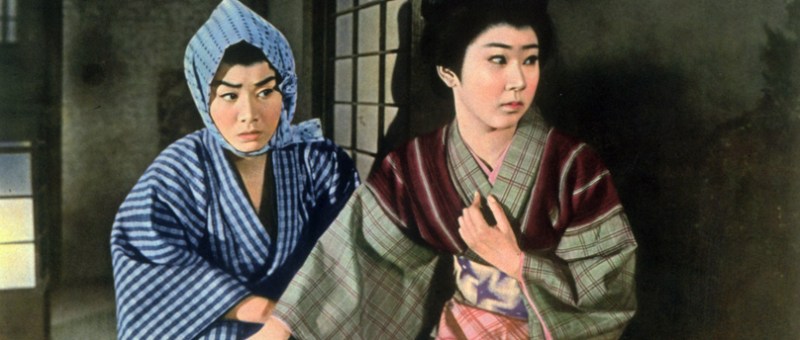
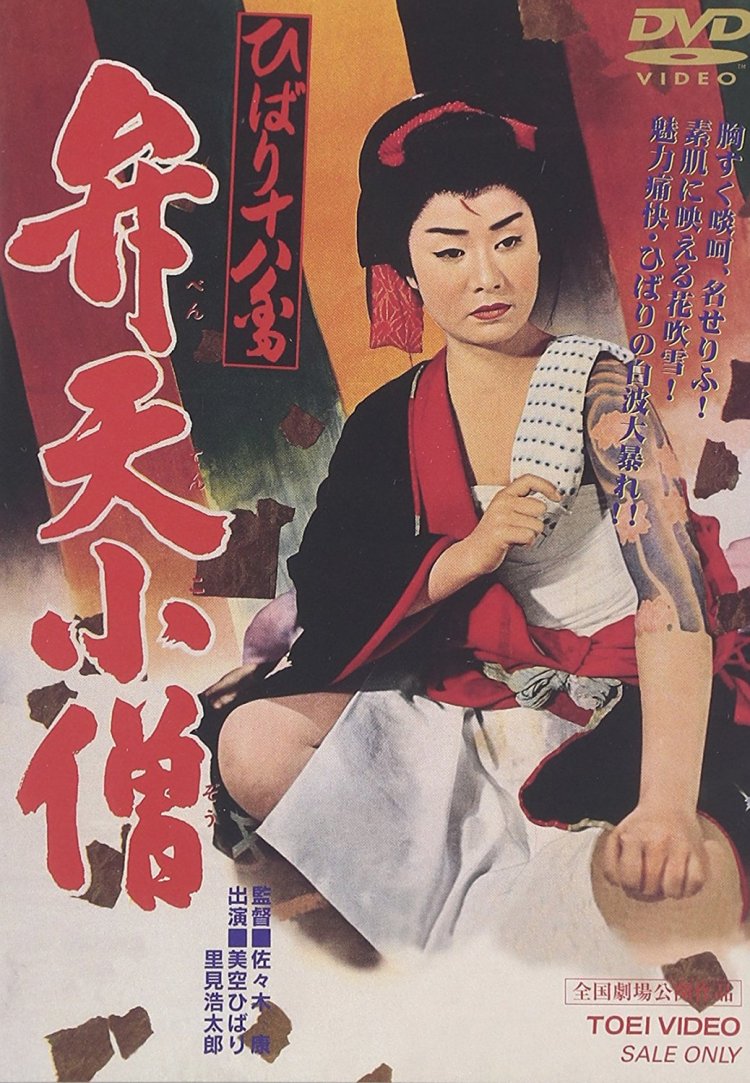
Benten Kozo dvd coverStarting out as a child actress, Hibari Misora was one of the biggest singing and acting stars of the post-war period whose songs are often pointed to as embodiments of the era’s melancholy yet determined spirit. Though it’s her singing career which has perhaps had the most historical impact, Misora made an immense number of films most of them in ’50s and ‘60s, many typical star vehicles of the time – silly comedies and softer musicals, usually finding an opportunity or two for a song even in straight drama. Hibari Ohako: Benten Kozo (ひばり十八番 弁天小僧), released in 1960 for Toei, is very much of this mould and showcases another somewhat interesting facet of Misora’s career in her readiness to play ambiguous gender roles.

Based on the well known kabuki play, Benten Kozo, which had also been adapted two years previously in a version starring male actor Raizo Ichikawa, Sasaki’s film stars Hibari Misora in the title role – a 13 year old boy who was given up at birth to be raised in a temple which specialises in performing Noh theatre. Kikunosuke (Hibari Misora) is their star, but there’s a dark side to temple performing companies in that they’re dependent on donations and it’s accepted practice to allow wealthy patrons to do whatever they like with the talent, no matter their age or gender. Kikunosuke knows this and isn’t having any of it. Pushed into a room with a lecherous, overly made-up older woman, Kikunosuke balks at the old monk’s attempts to pimp him out and tries to leave, much to the monk’s disappointment.

Unfortunately, just as Kikunosuke is leaving, a thief arrives to steal the money meant for the monk and kills the old woman in the process. Kikunosuke kills the thief but is accused of killing the old woman too and is forced on the run. Tracking down his birth mother, Ofuji (Mitsuko Miura), Kiku thinks he’s found a home but is betrayed, at which point he adopts the name “Benten Kozo” (lit. “Benten Kid” where Benten is the name of the goddess at the temple where he was raised) and joins a gang of Robin Hood-style outlaw thieves.

Like many period films of the time, Benten Kozo revolves around exposing the corruption of the samurai order. In this case, it’s a salt scam – the samurai elders have been stockpiling salt to push the price up, endangering the lives of ordinary people for their own financial gain and thinking nothing of it. The thieves, led by later Lone Wolf and Cub star Tomisaburo Wakayama, are dedicated to robbing the rich to feed the poor but they also aim to expose those in power for the reckless bullies they really are. Benten Kozo joins the “Shiranami Five Alliance” both out of self preservation and out of genuine sympathy with their cause, eventually encountering the same corrupt monk who turned a blind eye to his attempted molestation when he intervenes to save a woman forced into prostitution to pay her father’s debt whom the monk was attempting to rape.

Benten Kozo listens to the woman’s story and decides to give her his savings (which he no longer wants after being betrayed by his mother for whom he’d been saving the money) to pay off her family debt. In fact the pair met earlier when Benten Kozo was on the run and she helped him hide from the authorities. The woman, like several in the film, falls for Benten Kozo’s androgynous charms though he remains resolutely noble and indifferent. Benten Kozo would originally have been played by a male actor on the kabuki stage which did not allow female performers. The “onnagata” or actors who specialised in playing women were often effeminate younger men or boys much like Benten Kozo himself who plays these skills to the max throughout the film.

Hibari Misora, with her low, husky voice, effortlessly switches between the elegant upperclass women Benten Kozo impersonates on stage and in service of the gang’s scams, and the rough and ready dialect of a street ruffian. In a shocking display of bravado, Benten Kozo drops the top of his kimono to show his off his tattoos proving once and for all that he’s no lady but still his appeal lingers perhaps precisely because of his gender ambiguity.

Benten Kozo is not a musical but finds two occasions for Misora to sing – once as Benten Kozo takes off on the road, and the other at the end as he paddles a boat away back to his new found friends. The film ends with a giant mass brawl and also provides ample scope for Misora to escape across roof tops and fight off the unjust but it’s otherwise fairly straightforward fare and not exactly among the singer’s most memorable outings. It is however generally entertaining and interesting enough in its central theme of woman playing man playing woman to warrant attention from more than just diehard Misora fans.


Hibari Misora singing Benten Kozo in concert some years later.

The Shape of Night (夜の片鱗, Noboru Nakamura, 1964)

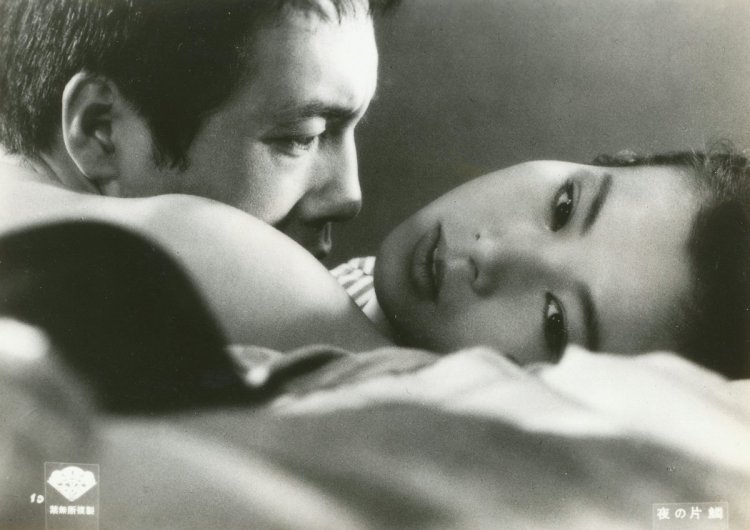
(C) Shochiku 1964Despite having two films nominated for a best foreign language Oscar and a handful of foreign festival hits under his belt, Noboru Nakamura has been largely forgotten by Western film criticism though a centennial retrospective of three of his most well regarded films at Tokyo Filmex in 2013 has helped to revive interest. The Shape of Night (夜の片鱗, Yoru no Henrin), Nakamura’s 1964 Shochiku melodrama focussing on the suffocating life of a young woman pulled into the Tokyo red light district, was one of the three newly restored films featured and was also screened in Berlin and Venice to great acclaim. Making full use of its vibrant colour palate, The Shape of Night paints its city as a constant tormentor filled with artificial light and false promises.

As we meet her, melancholy street walker Yoshie (Miyuki Kuwano) has been trapped in her dead end existence for six years and has lost all hope of living a “normal” life filled with love and happiness. A chance encounter with a supercilious client, Fujii (Keisuke Sonoi), prompts her into a series of recollections in an effort to explain exactly how it was she ended up in such a sorry state. As the eldest daughter of a poor family Yoshie left school early to work in a factory (making those neon tubes you see everywhere) while supplementing her income by working as a barmaid (not a hostess, just a girl behind the bar). Just shy of her 20th birthday, she meets a handsome “salaryman”, Eiji (Mikijiro Hira), who starts coming to the bar regularly to see her. The pair became a couple, and then lovers, and then cohabiters, but Eiji isn’t a “salaryman” so much as a low level gangster with a gambling problem whose street name is “princess”. Continual losses put Eiji in a tight spot with his crew and he begins borrowing money from Yoshie before asking her to prostitute herself to get him out of a hole. Thinking it will just be a one time thing, Yoshie resolves to make a sacrifice for her man but, of course, it wasn’t a one time thing.

Yoshie’s story is a sadly familiar one – an innocent woman duped by a duplicitous man whose empty promises aim to mask his continued fecklessness. Eiji, despite his smart suits and coolly confident attitude, is unlikely to make much of himself in the yakuza world yet is as tied into its hellish system of loyalty and reciprocity as Yoshie is in her non-marriage to the man she thinks she loves. Seeking constant approval, Eiji thinks nothing of living off a woman and his childishly excited smile on re-entering the apartment after Yoshie has sacrificed herself to save his face is a grim reminder of his priorities. When pleading doesn’t work Eiji turns violent, prompting Yoshie to finally consider leaving him but she’s too late – the yakuza world has already got its hooks into her and any attempt to escape will be met with terrifying resistance.

Fujii may seem as if he presents another option for Yoshie, a chance for a better, kinder existence but he too is merely another man trying to tell her how she should live her life. Hypocritical at best (as he freely admits), Fujii pays Yoshie to “ease his sexual urges” but expresses disgust and disapproval of her lifestyle and seeks to “save” her from her life of humiliating immorality, “purifying” her just like the dam he is building is supposed to do to the Sumida river. Fujii’s obvious saviour complex is worrying enough in itself though there is also the additional worry of what his “salvation” may entail if Yoshie decides to make a break from her yakuza chains and run off to the comparative safety of provincial Hokkaido. Fujii may claim to have fallen in love with her, but so did Eiji and who’s to say Fujii’s idea of wedded bliss will be any better than Eiji’s brutal reign as a common law spouse.

The situation is further complicated by Eiji’s gradual shift from a violent, overbearing, abusive boyfriend to a genial figure of gentle domesticity and what that shift later provokes in Yoshie. Rendered physically impotent by an incident during a gang fight, Eiji is literally and figuratively emasculated. Though his sudden inability to satisfy Yoshie originally provokes his jealously, it soon robs him of his violent impulses and turns Eiji into a willing housewife who dutifully does the couple’s washing and prepares the meals much to Yoshie’s consternation. This transformation is what finally kills her love for him, but still Yoshie cannot find it in herself to sever her connection with the man who has been the cause of all her suffering. Not quite hate or loathing, Yoshie’s burned out love has become a burden of care as she finds herself duty bound to look after a man she now believes incapable of looking after himself.

While Yoshie and Eiji sit in a bar one night after “work”, the television plays a report featuring the sad news of the death of a female student at the ANPO demonstrations. Prompting Yoshie to exclaim “what is ANPO anyway?”, the news report lays bare just how isolated her life as become – as all of Tokyo is aflame with with righteous indignation and the streets are filled with the largest protest in living memory, Yoshie is trapped in her tiny neon world which promises so much and delivers so little.

Nakamura makes fantastic use of sound design to capture Yoshie’s interior world – the background music rising over the droning voice of a boring client who hasn’t quite made up his mind, the radio cutting out at intense moments of violence, the terrible clanging of Eiji’s geta on the iron staircase which leads to his flat. Fading into blue dissolves of memory, Nakamura makes a hellish wonderland of nighttime Tokyo whose flashing neon lights, crowded bars and oddly darkened streets turn it into a prison of dubious delights. Finally making a drastic decision, Yoshie attempts to free herself from her burdens and sever the chains which bind her to her misery but in cutting the cord she finds the knots tightening, realising she will never be released from the source of all her suffering.


Screened at BFI as part of the Women in Japanese Melodrama season.

Freezing Point (氷点, Satsuo Yamamoto, 1966)

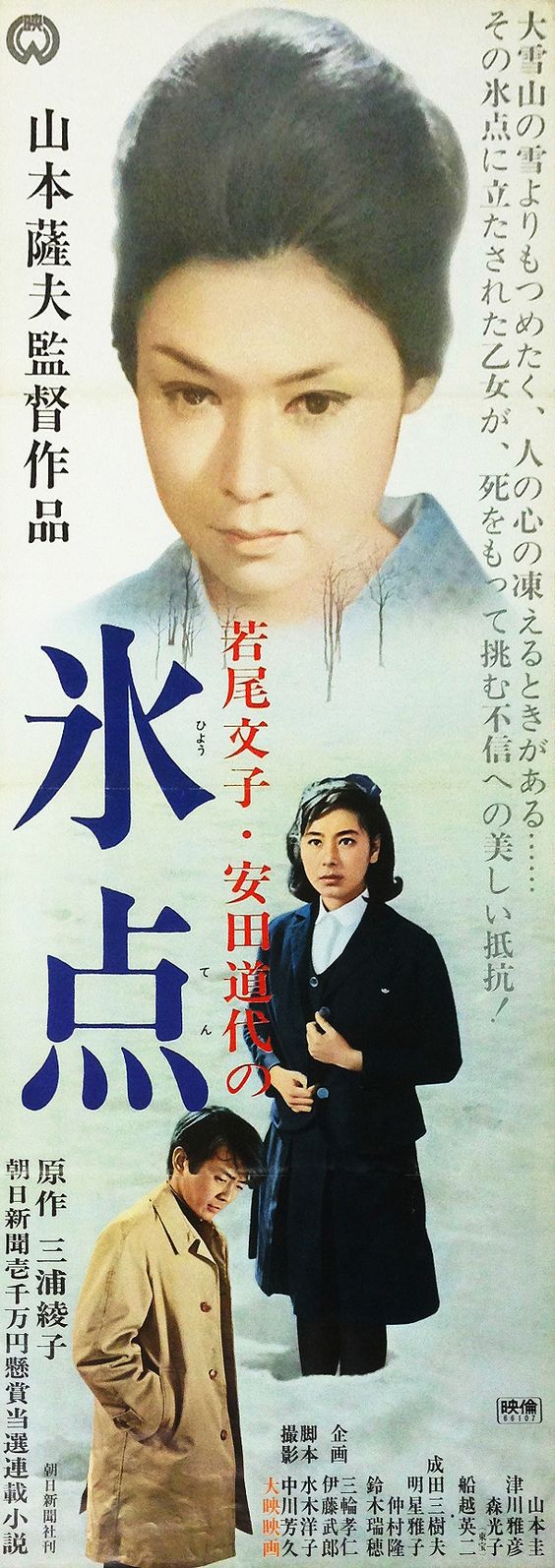
freezing point posterRevenge is a dish best served cold, so they say, but just how cold can you go before your own heart freezes over? Based on a novel by Ayako Miura, Freezing Point (氷点, Hyoten) is a somewhat unusual family drama centring on parental responsibility, familial love, and the necessity of forgiveness following betrayal and tragedy. Maintaining Miura’s characteristic Hokkaido setting with its appropriately snowbound vistas, Yamamoto sidesteps the author’s Christianising viewpoint whilst embracing her views on the nature of sin and the innocence of children.

Ophthalmologist Keizo (Eiji Funakoshi) returns home one day to find his wife, Natsue (Ayako Wakao), playing the piano, seemingly in a kind of self involved rapture. The maid has taken their son, Toru, out, and their daughter, Ruriko, is supposedly playing outside. Only, she isn’t – Ruriko has gone missing. Some time later they find the little girl’s body at the riverside, apparently strangled. The killer is caught and commits suicide in prison. Natsue has a breakdown and spends some time in a hospital but on her release Keizo decides to adopt a baby to help her recover from losing Ruriko.

More exactly, Keizo is torn between altruistic, humanist values and a deep and cruel desire for revenge on the wife he believes neglected their daughter while she entertained a lover at home. Keizo’s plan is to adopt the now orphaned baby girl of the man who murdered his daughter both as a way of proving himself a good, forgiving person and of getting his own back on his wife by forcing her to raise a murderer’s child, only revealing the truth once she has come to love it like her own.

Natsue’s heart truly is broken by the death of her daughter. It’s not exactly unusual for small children to be playing outside in ‘60s Japan – in this Natsue is not at fault. Here is the first grain of “sin” – there was indeed someone else in the house that day, another doctor from Keizo’s hospital, Murai (Mikio Narita). What exactly happened is not clear but Keizo is convinced the pair have been having an affair for some time and assumes his wife had asked the maid to take their son out and put Ruriko outside so that her lover could visit unseen. Natsue is also unable to bear any more children due to complications with a previous pregnancy and Keizo seems to think she gave herself free reign in having an affair seeing as there could be no “consequences”. Keizo’s “revenge” is as much about his betrayal as a husband as it is resentment in holding his wife responsible for the death of their daughter even though, as another friend points out, unexpected, random events occur all the time and this one was no one’s fault but the killer’s.

Parenthood, or more specifically motherhood, becomes a persistent theme as Natsue becomes pre-occupied with being a “good mother”. Time moves on and the baby, Yoko (Michiyo Okusu billed here as Michiyo Yasuda), grows up only for Natsue to discover the truth by accident after she finds a letter Keizo had written to a friend in which he expresses his inability to love Yoko knowing what she is. Yoko is not and cannot be responsible for her father’s crime but its effects are visited on her as she is branded a “murderer’s child” or a carrier of “murderous genes”. Once Natsue knows the truth the relationship changes and becomes one of artificial game playing as she and Keizo tiptoe around the issue, each unwilling to give the other the satisfaction of knowing that the game is up. Yoko realises she must be an adopted child but remains cheerful, kind, and innocent, not wanting to be a burden to the family to which she is desperate to belong.

Matters come to a head when Yoko approaches adulthood. Brother Toru (Kei Yamamoto), overhearing his parents’ ugly argument, discovers Yoko is not his blood sister and develops complicated, inappropriate romantic feelings for her (feelings which his mother almost wants to encourage if only as a kind of revenge against Keizo). Meanwhile, he also brings home a university friend, Kitahara (Masahiko Tsugawa), as a possible suitor for her and way out of this dead end tragic love story. Natsue tries to put an end to this by literally getting in the middle of it – cutting off the correspondence between Yoko and Kitahara before trying it on with him herself either as a way of frightening him off completely or positioning herself as a direct rival to her adopted daughter. Rival she already is in the eyes of her son, and also perhaps those of Keizo whose eyes linger on the daughter he couldn’t force himself to love a little too long in realising she is no longer a child and no blood relation. Thus it comes as a relief to him when a family friend offers to make Yoko her heir, paying for a college education or foreign travel if those are things Yoko would like to do.

Yoko, however, wants nothing more than to stay with her family forevermore. This is a common sentiment from a daughter in a family drama, one which usually changes when an appropriate marriage partner is found, but it means more for Yoko whose single concern is feeling unwanted by her parents whilst also feeling grateful to them for taking her in. Her romance with Kitahara provokes a revelation which leaves her feeling internally destroyed. A classically “good” person, she did not want to see any “bad” in herself but now finds out her birth father committed a heinous, senseless crime against people she loves. This, she says, is the freezing point of her heart. Realising that “sin” is everywhere and even if it hadn’t been her father there would be other instances of wrongdoing somewhere in her lineage she feels as if her heart is frozen, her spirit killed, and she can no longer continue.

Of course, there are more revelations to come provoked by yet another tragedy which threatens to bring the whole thing full circle. Nobody expected or intended this as a result of their own petty desires for revenge, but then all they really thought about was themselves and the way they’d been slighted. Keizo asked his doctor friend who facilitated his adoption whether there existed two people in the world who’d be able to love the child of the man who’d killed their own. His friend is sure such people do exist (though it turns out he had his own solution to this particular problem), but Keizo’s desires are less about trying to prove himself one of them than exacting the most painful kind of emotional wound on a wife he feels has humiliated him. This family is a fraud and the only “innocent” member is the adopted daughter whose capacity for goodness they have in part destroyed. Bleak, probing, and extremely uncomfortable, Yamamoto’s adaptation of Miura’s novel is an artfully composed dissection of family values, such as they are, in the post-war world.


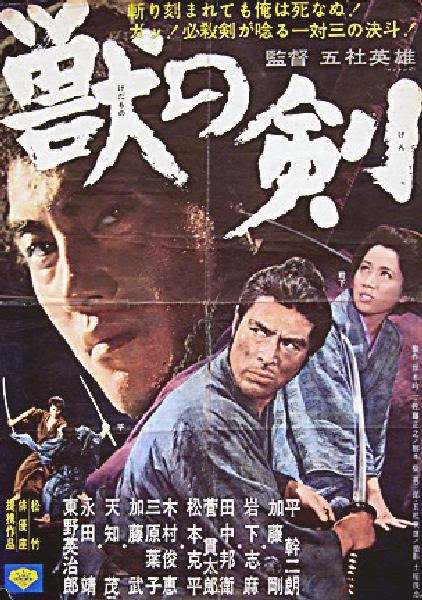
Sword of the Beast (獣の剣, Hideo Gosha, 1965)

sword of the beast posterHideo Gosha’s later career increasingly focussed on men at odds with their times – ageing gangsters who couldn’t see their eras were ending. His second feature, Sword of the Beast (獣の剣 Kedamono no Ken), is much the same in this regard but its youthful hero knows perfectly that change is on the horizon. Gennosuke (Mikijiro Hira) tries to ride that change into a better, more equal future but the forces of order will not allow him. The cinematic samurai world of the post-war era is no longer that of honourable men, manfully living out the samurai code even when it pains them to do so. It is one of men broken by oppressive feudal rule, denied their futures, and forced to betray themselves in service to systemic hypocrisy. Yet even if men think of reforming the system, they rarely think to escape it unless it actively spits them out.

When we first meet Gennosuke, he’s crawling around in a muddy grass field, dishevelled and hungry. A lone woman spots him and plies her trade leading Gennosuke to embrace his baser instincts and give vent to his lust, but the pair are interrupted by the sound of approaching horses. Gennosuke is on the run from his clan for his part in the murder of a lord. His pursuers scream at him, “have you no pride?”, lamenting his lack of stoical resignation to one’s fate so central to the samurai ideal. “To hell with name and pride” Gensosuke throws back, “I’ll run and never stop.”

Gennosuke’s odyssey leads him into the path of petty bandits who’ve been swiping gold out of the local river. Unbeknownst to them, a couple from another clan have been living an isolated life in a small cottage where they too have been skimming the Emperor’s gold, only they’ve been doing it for their lord. The man, Jurota (Go Kato), is excited about this work because he thinks when it is completed he’ll finally be accepted as a true samurai and the future for himself and his wife, Taka (Shima Iwashita), will be much brighter. He is quite wrong in this assumption.

Gennosuke, it is later revealed, committed his fateful act of murder upon the assumption that he was part of a revolutionary vanguard, removing cruel and corrupt lords from their positions so fairer minded, decent men could rule in their stead. Instead he realises he’s been rendered a disposable pawn in a political game and that the new master he believed would usher in a brighter future only envisaged one for himself. Jurota has been duped in much the same way, asked to do something illicit, immoral, and against the samurai code under the assumption that he will finally be accepted as “one of us”. He has not considered the corruption of those he wants to join, and does not see that his crime likely means he cannot be allowed to live.

Gennosuke and Jurota are cynical men who nevertheless possess true faith in the way of the samurai. Exiled from his clan, Gennosuke is a wandering beast who pretends not to care about the people he meets, but ends up saving them anyway. Yet if Gennosuke has been “freed” from his illusions, Jurota’s devotion to them makes him a less heroic figure. When Taka is captured by bandits who threaten her life, Jurota has a difficult decision to make – surrender the gold or his wife. Jurota chooses poorly and abandons his wife to a fate worse than death at the hands of uncivilised ruffians. Taka finds this hard to forgive. No longer wishing to stay with a man who values her so lightly she turns to Gennosuke – her accidental saviour, and reveals to him that she longs to become “a beast” like him. Now “freed” of her own illusions as regards her husband’s love, their shared mission, and the fallacy of their future together as noble samurai, Taka is prepared to exile herself from the samurai world as Gennosuke has, but, as he tells her, the wife of a retainer cannot choose the life of a beast.

This world of samurai is facing its own eclipse. The Black Ships have arrived, the spell has been broken, and the modern world awaits. Gennosuke can see this future, he tried to grasp it in the murder of his lord, but it is not here yet. Gennosuke’s friend, Daizaburo (Kantaro Suga), is duty bound to take his revenge as the fiancé of the murdered lord’s daughter though he’d rather not do it, and does so only to give Gennosuke an “honourable” death. The daughter, Misa (Toshie Kimura), is understandably angry and filled with hate but she pays dearly for her vengeance. Following their ordeal, neither Daizaburo or Misa can return to their clan. They are also “freed”, their illusions broken, their debts forgiven. Breaking with the burden of their past, they would now follow Gennosuke into his new world, even if none of them know exactly where they’re going.

These private revolutions amount to a kind of deprogramming, reawakening a sense of individual agency but one which is unselfish and carries with it the best of samurai honour. Gennosuke may be a “beast” on the run, reduced to a creature of needs rather than thoughts, but there’s honesty in this uncivilised quest for satisfaction which leaves no room for artifice or hypocrisy. It may be a rough world and lonely with it, but it is not unkind. To hell with name and pride, Gennosuke will have his honour, even as a nameless beast, a self-exile from a world of cruelty, greed, and inhumanity.


Original trailer (no subtitles)