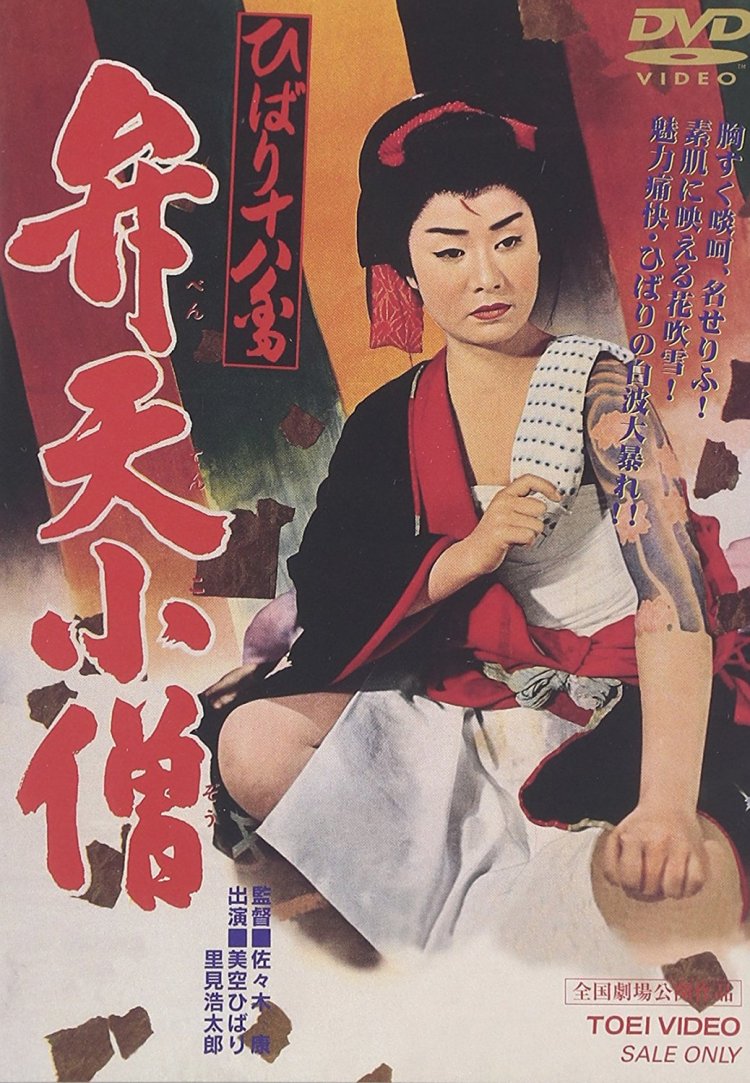
The Shape of Night (夜の片鱗, Noboru Nakamura, 1964)

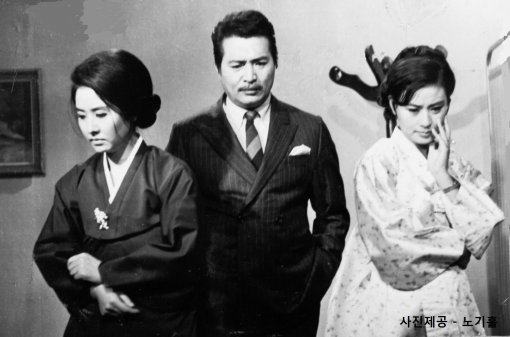
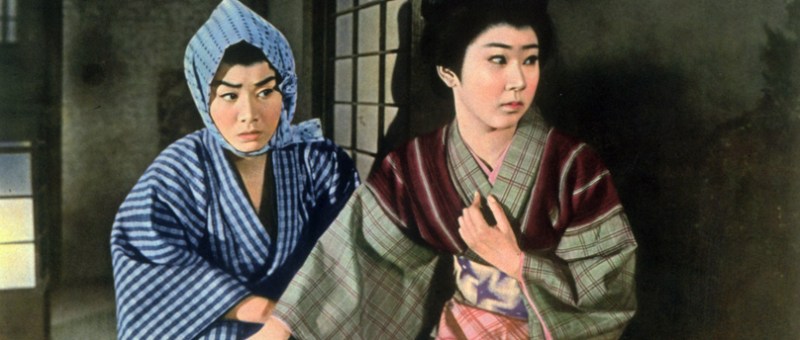
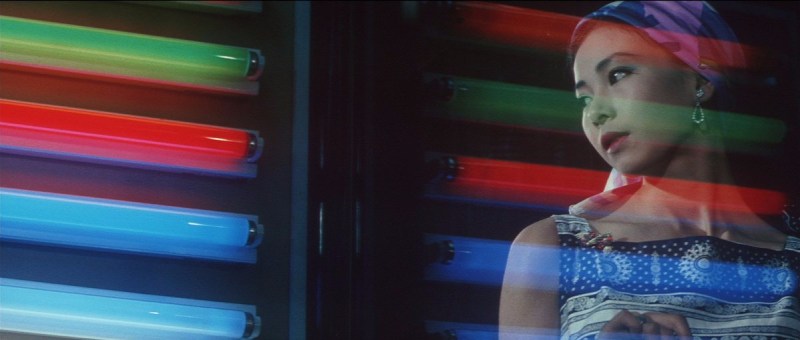
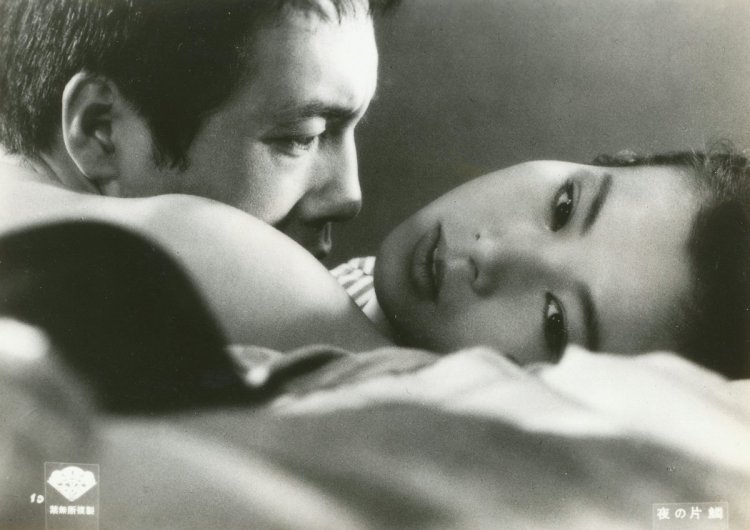
(C) Shochiku 1964Despite having two films nominated for a best foreign language Oscar and a handful of foreign festival hits under his belt, Noboru Nakamura has been largely forgotten by Western film criticism though a centennial retrospective of three of his most well regarded films at Tokyo Filmex in 2013 has helped to revive interest. The Shape of Night (夜の片鱗, Yoru no Henrin), Nakamura’s 1964 Shochiku melodrama focussing on the suffocating life of a young woman pulled into the Tokyo red light district, was one of the three newly restored films featured and was also screened in Berlin and Venice to great acclaim. Making full use of its vibrant colour palate, The Shape of Night paints its city as a constant tormentor filled with artificial light and false promises.

As we meet her, melancholy street walker Yoshie (Miyuki Kuwano) has been trapped in her dead end existence for six years and has lost all hope of living a “normal” life filled with love and happiness. A chance encounter with a supercilious client, Fujii (Keisuke Sonoi), prompts her into a series of recollections in an effort to explain exactly how it was she ended up in such a sorry state. As the eldest daughter of a poor family Yoshie left school early to work in a factory (making those neon tubes you see everywhere) while supplementing her income by working as a barmaid (not a hostess, just a girl behind the bar). Just shy of her 20th birthday, she meets a handsome “salaryman”, Eiji (Mikijiro Hira), who starts coming to the bar regularly to see her. The pair became a couple, and then lovers, and then cohabiters, but Eiji isn’t a “salaryman” so much as a low level gangster with a gambling problem whose street name is “princess”. Continual losses put Eiji in a tight spot with his crew and he begins borrowing money from Yoshie before asking her to prostitute herself to get him out of a hole. Thinking it will just be a one time thing, Yoshie resolves to make a sacrifice for her man but, of course, it wasn’t a one time thing.

Yoshie’s story is a sadly familiar one – an innocent woman duped by a duplicitous man whose empty promises aim to mask his continued fecklessness. Eiji, despite his smart suits and coolly confident attitude, is unlikely to make much of himself in the yakuza world yet is as tied into its hellish system of loyalty and reciprocity as Yoshie is in her non-marriage to the man she thinks she loves. Seeking constant approval, Eiji thinks nothing of living off a woman and his childishly excited smile on re-entering the apartment after Yoshie has sacrificed herself to save his face is a grim reminder of his priorities. When pleading doesn’t work Eiji turns violent, prompting Yoshie to finally consider leaving him but she’s too late – the yakuza world has already got its hooks into her and any attempt to escape will be met with terrifying resistance.

Fujii may seem as if he presents another option for Yoshie, a chance for a better, kinder existence but he too is merely another man trying to tell her how she should live her life. Hypocritical at best (as he freely admits), Fujii pays Yoshie to “ease his sexual urges” but expresses disgust and disapproval of her lifestyle and seeks to “save” her from her life of humiliating immorality, “purifying” her just like the dam he is building is supposed to do to the Sumida river. Fujii’s obvious saviour complex is worrying enough in itself though there is also the additional worry of what his “salvation” may entail if Yoshie decides to make a break from her yakuza chains and run off to the comparative safety of provincial Hokkaido. Fujii may claim to have fallen in love with her, but so did Eiji and who’s to say Fujii’s idea of wedded bliss will be any better than Eiji’s brutal reign as a common law spouse.

The situation is further complicated by Eiji’s gradual shift from a violent, overbearing, abusive boyfriend to a genial figure of gentle domesticity and what that shift later provokes in Yoshie. Rendered physically impotent by an incident during a gang fight, Eiji is literally and figuratively emasculated. Though his sudden inability to satisfy Yoshie originally provokes his jealously, it soon robs him of his violent impulses and turns Eiji into a willing housewife who dutifully does the couple’s washing and prepares the meals much to Yoshie’s consternation. This transformation is what finally kills her love for him, but still Yoshie cannot find it in herself to sever her connection with the man who has been the cause of all her suffering. Not quite hate or loathing, Yoshie’s burned out love has become a burden of care as she finds herself duty bound to look after a man she now believes incapable of looking after himself.

While Yoshie and Eiji sit in a bar one night after “work”, the television plays a report featuring the sad news of the death of a female student at the ANPO demonstrations. Prompting Yoshie to exclaim “what is ANPO anyway?”, the news report lays bare just how isolated her life as become – as all of Tokyo is aflame with with righteous indignation and the streets are filled with the largest protest in living memory, Yoshie is trapped in her tiny neon world which promises so much and delivers so little.

Nakamura makes fantastic use of sound design to capture Yoshie’s interior world – the background music rising over the droning voice of a boring client who hasn’t quite made up his mind, the radio cutting out at intense moments of violence, the terrible clanging of Eiji’s geta on the iron staircase which leads to his flat. Fading into blue dissolves of memory, Nakamura makes a hellish wonderland of nighttime Tokyo whose flashing neon lights, crowded bars and oddly darkened streets turn it into a prison of dubious delights. Finally making a drastic decision, Yoshie attempts to free herself from her burdens and sever the chains which bind her to her misery but in cutting the cord she finds the knots tightening, realising she will never be released from the source of all her suffering.


Screened at BFI as part of the Women in Japanese Melodrama season.

Freezing Point (氷点, Satsuo Yamamoto, 1966)

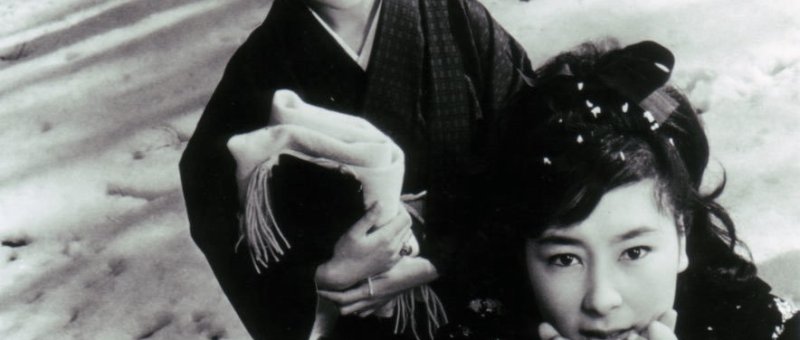
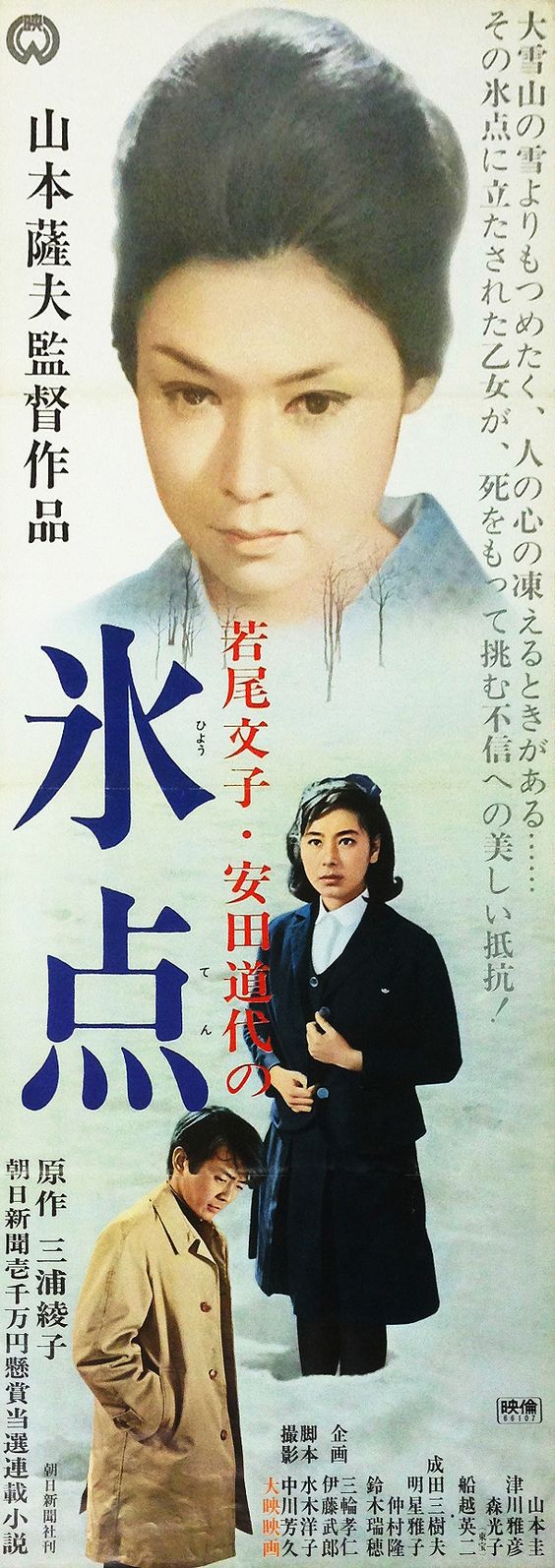
freezing point posterRevenge is a dish best served cold, so they say, but just how cold can you go before your own heart freezes over? Based on a novel by Ayako Miura, Freezing Point (氷点, Hyoten) is a somewhat unusual family drama centring on parental responsibility, familial love, and the necessity of forgiveness following betrayal and tragedy. Maintaining Miura’s characteristic Hokkaido setting with its appropriately snowbound vistas, Yamamoto sidesteps the author’s Christianising viewpoint whilst embracing her views on the nature of sin and the innocence of children.

Ophthalmologist Keizo (Eiji Funakoshi) returns home one day to find his wife, Natsue (Ayako Wakao), playing the piano, seemingly in a kind of self involved rapture. The maid has taken their son, Toru, out, and their daughter, Ruriko, is supposedly playing outside. Only, she isn’t – Ruriko has gone missing. Some time later they find the little girl’s body at the riverside, apparently strangled. The killer is caught and commits suicide in prison. Natsue has a breakdown and spends some time in a hospital but on her release Keizo decides to adopt a baby to help her recover from losing Ruriko.

More exactly, Keizo is torn between altruistic, humanist values and a deep and cruel desire for revenge on the wife he believes neglected their daughter while she entertained a lover at home. Keizo’s plan is to adopt the now orphaned baby girl of the man who murdered his daughter both as a way of proving himself a good, forgiving person and of getting his own back on his wife by forcing her to raise a murderer’s child, only revealing the truth once she has come to love it like her own.

Natsue’s heart truly is broken by the death of her daughter. It’s not exactly unusual for small children to be playing outside in ‘60s Japan – in this Natsue is not at fault. Here is the first grain of “sin” – there was indeed someone else in the house that day, another doctor from Keizo’s hospital, Murai (Mikio Narita). What exactly happened is not clear but Keizo is convinced the pair have been having an affair for some time and assumes his wife had asked the maid to take their son out and put Ruriko outside so that her lover could visit unseen. Natsue is also unable to bear any more children due to complications with a previous pregnancy and Keizo seems to think she gave herself free reign in having an affair seeing as there could be no “consequences”. Keizo’s “revenge” is as much about his betrayal as a husband as it is resentment in holding his wife responsible for the death of their daughter even though, as another friend points out, unexpected, random events occur all the time and this one was no one’s fault but the killer’s.

Parenthood, or more specifically motherhood, becomes a persistent theme as Natsue becomes pre-occupied with being a “good mother”. Time moves on and the baby, Yoko (Michiyo Okusu billed here as Michiyo Yasuda), grows up only for Natsue to discover the truth by accident after she finds a letter Keizo had written to a friend in which he expresses his inability to love Yoko knowing what she is. Yoko is not and cannot be responsible for her father’s crime but its effects are visited on her as she is branded a “murderer’s child” or a carrier of “murderous genes”. Once Natsue knows the truth the relationship changes and becomes one of artificial game playing as she and Keizo tiptoe around the issue, each unwilling to give the other the satisfaction of knowing that the game is up. Yoko realises she must be an adopted child but remains cheerful, kind, and innocent, not wanting to be a burden to the family to which she is desperate to belong.

Matters come to a head when Yoko approaches adulthood. Brother Toru (Kei Yamamoto), overhearing his parents’ ugly argument, discovers Yoko is not his blood sister and develops complicated, inappropriate romantic feelings for her (feelings which his mother almost wants to encourage if only as a kind of revenge against Keizo). Meanwhile, he also brings home a university friend, Kitahara (Masahiko Tsugawa), as a possible suitor for her and way out of this dead end tragic love story. Natsue tries to put an end to this by literally getting in the middle of it – cutting off the correspondence between Yoko and Kitahara before trying it on with him herself either as a way of frightening him off completely or positioning herself as a direct rival to her adopted daughter. Rival she already is in the eyes of her son, and also perhaps those of Keizo whose eyes linger on the daughter he couldn’t force himself to love a little too long in realising she is no longer a child and no blood relation. Thus it comes as a relief to him when a family friend offers to make Yoko her heir, paying for a college education or foreign travel if those are things Yoko would like to do.

Yoko, however, wants nothing more than to stay with her family forevermore. This is a common sentiment from a daughter in a family drama, one which usually changes when an appropriate marriage partner is found, but it means more for Yoko whose single concern is feeling unwanted by her parents whilst also feeling grateful to them for taking her in. Her romance with Kitahara provokes a revelation which leaves her feeling internally destroyed. A classically “good” person, she did not want to see any “bad” in herself but now finds out her birth father committed a heinous, senseless crime against people she loves. This, she says, is the freezing point of her heart. Realising that “sin” is everywhere and even if it hadn’t been her father there would be other instances of wrongdoing somewhere in her lineage she feels as if her heart is frozen, her spirit killed, and she can no longer continue.

Of course, there are more revelations to come provoked by yet another tragedy which threatens to bring the whole thing full circle. Nobody expected or intended this as a result of their own petty desires for revenge, but then all they really thought about was themselves and the way they’d been slighted. Keizo asked his doctor friend who facilitated his adoption whether there existed two people in the world who’d be able to love the child of the man who’d killed their own. His friend is sure such people do exist (though it turns out he had his own solution to this particular problem), but Keizo’s desires are less about trying to prove himself one of them than exacting the most painful kind of emotional wound on a wife he feels has humiliated him. This family is a fraud and the only “innocent” member is the adopted daughter whose capacity for goodness they have in part destroyed. Bleak, probing, and extremely uncomfortable, Yamamoto’s adaptation of Miura’s novel is an artfully composed dissection of family values, such as they are, in the post-war world.


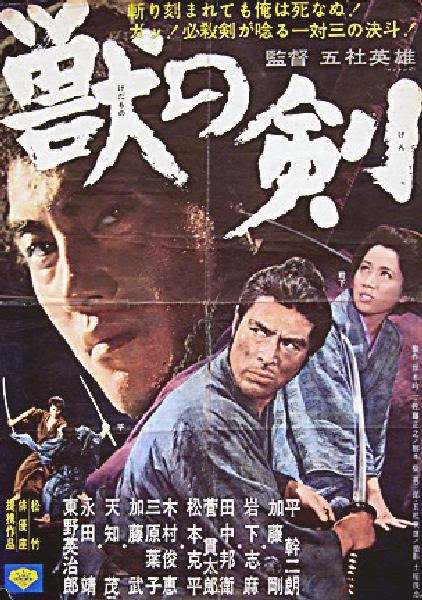
Sword of the Beast (獣の剣, Hideo Gosha, 1965)

sword of the beast posterHideo Gosha’s later career increasingly focussed on men at odds with their times – ageing gangsters who couldn’t see their eras were ending. His second feature, Sword of the Beast (獣の剣 Kedamono no Ken), is much the same in this regard but its youthful hero knows perfectly that change is on the horizon. Gennosuke (Mikijiro Hira) tries to ride that change into a better, more equal future but the forces of order will not allow him. The cinematic samurai world of the post-war era is no longer that of honourable men, manfully living out the samurai code even when it pains them to do so. It is one of men broken by oppressive feudal rule, denied their futures, and forced to betray themselves in service to systemic hypocrisy. Yet even if men think of reforming the system, they rarely think to escape it unless it actively spits them out.

When we first meet Gennosuke, he’s crawling around in a muddy grass field, dishevelled and hungry. A lone woman spots him and plies her trade leading Gennosuke to embrace his baser instincts and give vent to his lust, but the pair are interrupted by the sound of approaching horses. Gennosuke is on the run from his clan for his part in the murder of a lord. His pursuers scream at him, “have you no pride?”, lamenting his lack of stoical resignation to one’s fate so central to the samurai ideal. “To hell with name and pride” Gensosuke throws back, “I’ll run and never stop.”

Gennosuke’s odyssey leads him into the path of petty bandits who’ve been swiping gold out of the local river. Unbeknownst to them, a couple from another clan have been living an isolated life in a small cottage where they too have been skimming the Emperor’s gold, only they’ve been doing it for their lord. The man, Jurota (Go Kato), is excited about this work because he thinks when it is completed he’ll finally be accepted as a true samurai and the future for himself and his wife, Taka (Shima Iwashita), will be much brighter. He is quite wrong in this assumption.

Gennosuke, it is later revealed, committed his fateful act of murder upon the assumption that he was part of a revolutionary vanguard, removing cruel and corrupt lords from their positions so fairer minded, decent men could rule in their stead. Instead he realises he’s been rendered a disposable pawn in a political game and that the new master he believed would usher in a brighter future only envisaged one for himself. Jurota has been duped in much the same way, asked to do something illicit, immoral, and against the samurai code under the assumption that he will finally be accepted as “one of us”. He has not considered the corruption of those he wants to join, and does not see that his crime likely means he cannot be allowed to live.

Gennosuke and Jurota are cynical men who nevertheless possess true faith in the way of the samurai. Exiled from his clan, Gennosuke is a wandering beast who pretends not to care about the people he meets, but ends up saving them anyway. Yet if Gennosuke has been “freed” from his illusions, Jurota’s devotion to them makes him a less heroic figure. When Taka is captured by bandits who threaten her life, Jurota has a difficult decision to make – surrender the gold or his wife. Jurota chooses poorly and abandons his wife to a fate worse than death at the hands of uncivilised ruffians. Taka finds this hard to forgive. No longer wishing to stay with a man who values her so lightly she turns to Gennosuke – her accidental saviour, and reveals to him that she longs to become “a beast” like him. Now “freed” of her own illusions as regards her husband’s love, their shared mission, and the fallacy of their future together as noble samurai, Taka is prepared to exile herself from the samurai world as Gennosuke has, but, as he tells her, the wife of a retainer cannot choose the life of a beast.

This world of samurai is facing its own eclipse. The Black Ships have arrived, the spell has been broken, and the modern world awaits. Gennosuke can see this future, he tried to grasp it in the murder of his lord, but it is not here yet. Gennosuke’s friend, Daizaburo (Kantaro Suga), is duty bound to take his revenge as the fiancé of the murdered lord’s daughter though he’d rather not do it, and does so only to give Gennosuke an “honourable” death. The daughter, Misa (Toshie Kimura), is understandably angry and filled with hate but she pays dearly for her vengeance. Following their ordeal, neither Daizaburo or Misa can return to their clan. They are also “freed”, their illusions broken, their debts forgiven. Breaking with the burden of their past, they would now follow Gennosuke into his new world, even if none of them know exactly where they’re going.

These private revolutions amount to a kind of deprogramming, reawakening a sense of individual agency but one which is unselfish and carries with it the best of samurai honour. Gennosuke may be a “beast” on the run, reduced to a creature of needs rather than thoughts, but there’s honesty in this uncivilised quest for satisfaction which leaves no room for artifice or hypocrisy. It may be a rough world and lonely with it, but it is not unkind. To hell with name and pride, Gennosuke will have his honour, even as a nameless beast, a self-exile from a world of cruelty, greed, and inhumanity.


Original trailer (no subtitles)
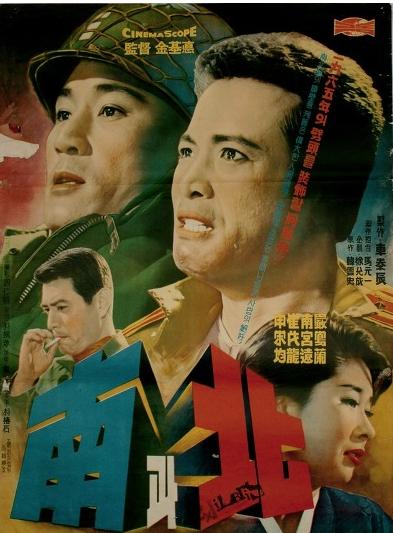
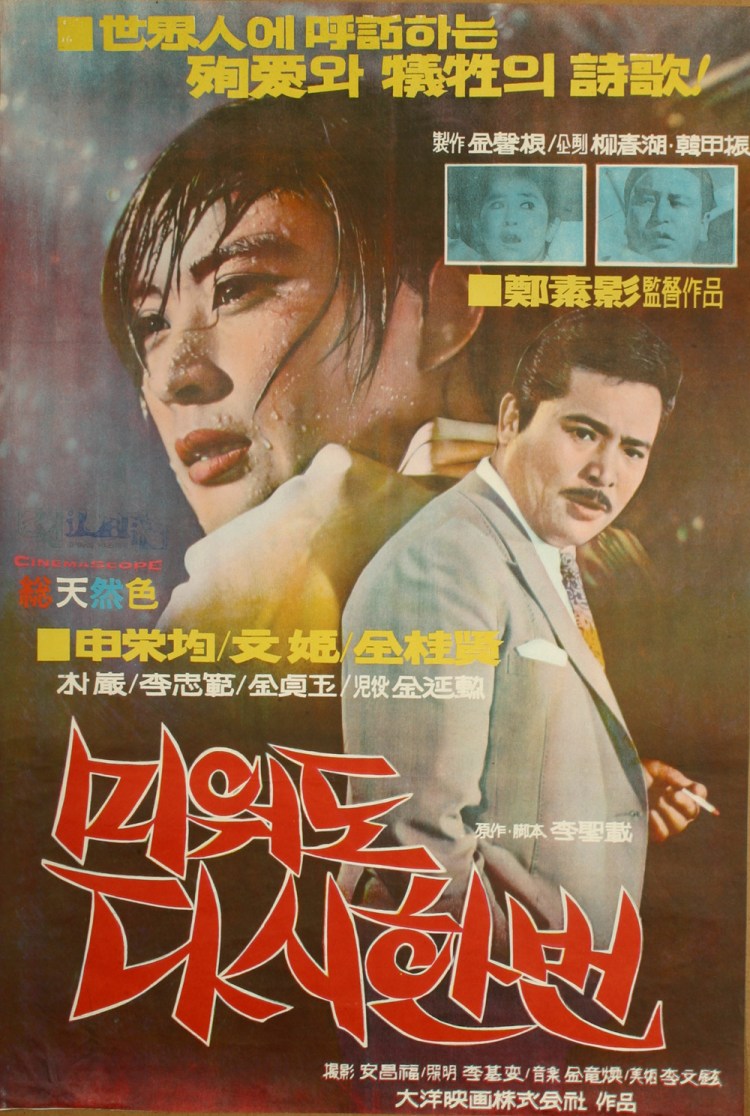
Barefooted Youth (맨발의 청춘, Kim Ki-duk, 1964)

barefooted Youth posterThe “Seishun Eiga” or youth movie had long been a staple of Japanese cinema by the time the short-lived “Sun Tribe” movement took hold in the mid-1950s, but, for understandable reasons, it did not make its way to Korea until a decade or so later. When it comes to so called “adolescent films”, Kim Ki-duk’s 1964 Barefooted Youth (맨발의 청춘, Maenbaleui cheongchun) is hard to beat. The film had, in fact, been filtered through Japanese cinema as its star Shin Seong-il – then riding high as a youth idol and wanting to star in as many youth movies as he could before his era came to an end, had seen Ko Nakahira’s Dorodarake no Junjo which starred ’50s idol Sayuri Yoshinaga alongside her frequent co-star Mitsuo Harada in a tragic tale of love across the class divide (this enduring story was later remade in 1977 with another idol, Momoe Yamaguchi, as the female lead). Shin was keen to star in a remake of Dorodake no Junjo and petitioned his studio to set it up. The plot of Kim’s version is almost identical and was widely seen as a deceitful remake at the time of its release, but that’s not to say it failed to speak of a certain kind of hopelessness among the young people of Korea battling valiantly against an unforgiving society.

Petty gang errand boy Du-su (Shin Seong-il) has been sent on an important mission to deliver some smuggled watches to a fence. On his way out, his boss reminds him not to get into unnecessary fights and risk being late for this very important date. Du-su ignores him and comes to the defence of two nervous middle-class girls in the middle of being mugged by thugs of a different nature. One of the other thugs has a knife and stabs Du-su in the stomach, causing him to drop the prosthetic arm he’s been wearing “as a joke” as well as one of the watches. Turning the knife back on the attacker, Du-su gets away and eventually delivers the goods.

This event profoundly alters Du-su’s future prospects, firstly because he’s brought himself to the attention of the police and also risked putting them on the gang’s trail if the police have picked up the missing watch and discovered it’s a smuggled Hong Kong knock off that might be connected to Du-su. Secondly, the woman Du-su saved, an Ambassador’s daughter called Johanna (Um Aing-ran), is overly grateful and quickly becomes attached to him. 

Johanna is everything Du-su is not – wealthy, cultured, elegant, and religious. Her world could not be more different than Du-su’s yet there is an inescapable bond that exists between them. Unlike many class difference love stories, both parties move closer towards the centre, trying out the other’s world and finding it different but perhaps not impossible. After their first few hours together when Johanna finds her way to Du-su’s run down flat in a lower class neighbourhood, Du-su puts on a Beethoven record at his local club (much to the consternation of the other patrons) and orders himself a glass of juice, while Johanna swaps her usual bible based bedtime reading material for an English language boxing magazine and takes her first swigs of whisky directly from the bottle.

However, trying out the other world for real does not go as well – Du-su, having overdone it with a formal tail coat, falls asleep at a concert, while Johanna finds it difficult to adjust to the rowdiness of the boxing ring. When Johanna finally takes Du-su home, hoping her mother will help him find an honest job so he can go straight, his presence is met with horror and a meal with a hoped for ally goes about as wrong as it possibly could, exposing Du-su’s lack of sophistication as he picks up a steak to eat with his hands (not being confident with a knife and fork), and then spills water all over the hostess who points out his lack of employable skills. 

Trapped on all sides – by the gangsters worried he’ll expose them, by his origins as the son of a prostitute and a man who died in jail, and by the general lack of opportunities for poor boys in economically straightened 1960s Korea, Du-su has nowhere left to go. Johanna is also trapped, in a sense, by a prospective arranged marriage and an overbearing but well meaning mother determined to send her abroad to save her from her reckless amour fou. Du-su, facing prison and life in a gang, and Johanna facing losing love for respectability, have hit an impasse. Having managed to transcend their class differences on a personal level, they see no way they can ever be together and if they cannot be together in life then they see no option but to escape from a world which has no place for them.

The economic inequality and enduring inviability of their love is signalled in the closing scenes in which Johanna’s funeral procession is several miles long with flowers and hearses and a crowd of mourners dressed in white. Meanwhile, Du-su’s body, barefoot and covered by a sheet on the back of a cart being pulled by his grief-stricken friend, is unattended. Not only could they not be together in life, they are forever separated even in death. As in the title of the Japanese film (taken directly from the book which inspired it), it is the lovers’ “purity” which comes to define them and adds extra poignancy to their fate. Du-su and Johanna share a single kiss but Kim obscures it from view, photographing the pair through a window pane in which the crossbars once again divide them. When the bodies are discovered, the first question that is asked is if they had had sex before they died – the answer is a resounding “no”, to which the man replies “good, I’m glad” though he is not especially referring to the poetry of their chastity in death but some kind of pointless and retrospective moral judgement on the “illicit” quality of their relationship.

Unlike the respective Japanese versions which tend to pivot around the leading actress (here Shin is the star, but both the actresses in the 1963 and 1977 versions were the headliners) Barefooted Youth tilts towards Du-su who literally becomes the “barefooted youth” of the title on his funeral cart, causing his friend (whose feelings are perhaps more than those of brotherhood) to remove his own shoes and place them on Du-su’s icy feet, trudging through the snow in his socks remarking that Du-su’s burial is witness to a greater and warmer love than the superficial flashiness of Johanna’s procession. Having resented Johanna for taking his friend away, he now respects her for joining him in death. The tragic end of these two young people is not only a romantic tale of doomed love, but an indictment of an unforgiving society in which social inequality, entrenched social codes, and the rigidity of the older generation have destroyed youth’s expectations of a brighter future. Du-su’s final advice to his friend is to live his life to the fullest and die without without regrets while he dreams only of being like a white crane flying in the blue sky, a pure soul enduring in eternity.


Available to watch on the Korean Film Archive’s YouTube channel and as part of the Kim Ki-duk DVD box set.

Samurai Rebellion (上意討ち 拝領妻始末, Masaki Kobayashi, 1967)

samurai rebellion posterIf Masaki Kobayashi had one overriding concern throughout his relatively short career, it was the place of the individual with an oppressive society. Samurai Rebellion (上意討ち 拝領妻始末, Joi-uchi: Hairyo Tsuma Shimatsu), not quite the crashing chanbara action the title promises, returns to many of the same themes presented in Kobayashi’s earlier Harakiri in its tale of corrupt lords and a vassal who can no longer submit himself to their hypocritical demands. On the film’s original release, distributor Toho added a subtitle to the otherwise stark “Rebellion”, “Hairyo Tsuma Shimatsu”, which means something like “sad story of a bestowed wife” and was intended to help boost attendance among female filmgoers who might be put off by the overly male samurai overtones. The central conflict is that of the ageing samurai Isaburo (Toshiro Mifune), but Kobayashi saves his sympathy for a powerless woman, twice betrayed, and given no means by which to defend herself in a world which values female life cheaply and a woman’s feelings not at all.

Having the misfortune to live in a time of peace, expert swordsman Isaburo has only the one duty of testing out the lord’s new sword (which he will never draw) on a straw dummy. He and his friend Tatewaki (Tatsuya Nakadai) are of a piece – two men whose skills are wasted daily and who find themselves at odds with the often cruel and arbitrary samurai world, refusing to fight each other because the outcome would only cause pain to one or both of their families. Isaburo has two grownup sons and dreams of becoming a grandpa but needs to find a wife for his eldest, Yogoro (Go Kato). He wants to find a woman who is loyal, loving, and kind. As a young man Isaburo was “forced” into marriage and adopted into his wife’s family but has been miserable ever since as his wife, Suga (Michiko Otsuka), is a sharp tongued, unpleasant woman whose only redeeming features are her stoicism and dedication to propriety.

It is then not particularly good news when the local steward turns up one day and informs Isaburo that the lord is getting rid of his mistress and has decided to marry her off to Yogoro. News travels fast and though others may appear jealous of such an “honour”, Isaburo is quietly angry – not only is he being expected to take on “damaged goods” in a woman who’s already born a son to another man, but they won’t even tell him why she’s being sent away, and the one thing he wanted for his son was not to end up in the same miserable position as he did. Nevertheless when Isaburo repeatedly tries to decline the “kind offer”, he is prevented. A suggestion quickly becomes an order, and Yogoro consents to prevent further conflict.

Against the odds, Ichi (Yoko Tsukasa) is everything Isaburo had wanted in a daughter-in-law and even puts up with Suga’s constant unkindness with patience and humility. Eventually she and Yogoro fall deeply in love and have a baby daughter, Tomi, but when the lord’s oldest heir dies and Ichi’s son becomes the next in line, it’s thought inappropriate for her to remain the wife of a mere vassal. Summoned to the castle, Ichi is once again robbed of her child but also of her happiness.

Ichi’s tale truly is a sad one and emblematic of the fates and positions of upperclass women in the feudal world. Having had the misfortune to catch the lord’s eye, Ichi tries to decline when the steward shows up to take her to the castle, reminding him that she is already betrothed. Sure that her fiancé will protect her, Ichi says she’ll go if he agrees never thinking that he would. Betrayed in love, Ichi is sold to the castle to be raped by the elderly Daimyo who views her as little more than a baby making machine and faceless body to do with as he wishes. When she returns from a post-natal trip to the spa and discovers the lord has already taken a new mistress, her anger is not born of jealously but resentment and disgust. This other woman is proud of her “position” at the lord’s side when she should be raging as Ichi is now, at her powerlessness, at the male society which reduces her to an object traded between men, and at the rapacious assault upon her body by a man older than her father.

Isaburo is also raging, but at the cruel and heartless obsession with order and protocol which has defined his short, unhappy life. Having been a model vassal, Isaburo has lived a life hemmed in by these rules but can bear them no longer in their disregard for human feeling or simple integrity. Isaburo says no, and then refuses to budge. Having retired and surrendered control of the household to Yogoro, Isaburo leaves the decision to his son who refuses to surrender his wife and swears to protect her from being subjected to the same cruel treatment as before. The samurai order is not set up for hearing the word “no”, and the actions of Isaburo, Yogoro, and Ichi threaten to bring the entire system crashing down. Love is the dangerous, destabilising, manifestation of personal desire which the system is in place to crush.

Isaburo’s rebellion, as he later says, is not for himself, or for his son and daughter-in-law whose deep love for each other has reawakened the young man in him, but for all whose personal freedom has been constrained by those who misuse their power to foster fear and oppression. Having picked up his sword, Isaburo will not stand down until his voice is heard, fairly, under these same rules that the authority is so keen on enforcing. He does not want revenge, or even to destroy the system, he just wants it to respect him and his right to refuse requests he feels are unjust or improper. Like many of Kobayashi’s heroes, Isaburo’s fate will be an unhappy one but even so he is alive again at last as the fire of rebellion rekindles his youthful heart. Those caught within the system from the venal stewards and greedy vassals to the selfish lords suddenly terrified the Shogun will discover their mass misconduct are dead men walking, sublimating their better natures in favour of creating the facade of obedience and conformity whilst manipulating those same rules for their own ends, yet the central trio, meeting their ends with defiance, are finally free.


Available with English subtitles on R1 DVD from Criterion Collection.

Original trailer (English subtitles – poor quality)

Alone Across the Pacific (太平洋ひとりぼっち, Kon Ichikawa, 1963)

Alone Across the PacficKon Ichikawa made two sorts of movies – the funny ones and the not so funny ones. Despite the seriousness of the title, Alone Across the Pacific (太平洋ひとりぼっち, Taiheiyo hitori-botchi) is one of the funny ones. Like many of Ichikawa’s heroes, Horie is a man who defies convention and longs for escape from the constraining forces of his society yet is unable to fully detach himself from its cultural norms. Based on the real life travelogue of solo sailor Kenichi Horie, Alone Across the Pacific is less the story of a man battling the elements, than a cheerful tale of a man battling himself in a floating isolation tank bound for the “land of the free”.

Kenichi (Yujiro Ishihara) is a strange man. He has few friends (aside from the family dog, Pearl) and is obsessed with the idea of running away to sea. Inspired by the tales of other intrepid sailors, his dream is to sail all alone across the Pacific Ocean from Osaka to San Fransisco. Despite the fact that it is illegal for small boats to leave Japanese waters (and that he is too impatient to wait for his passport to come through), Kenichi has custom made his own yacht, one without an engine, and has set off on his longed for voyage under the cover of darkness.

Rather than filming Kenichi’s journey naturalistically, Ichikawa opts for an adventurer’s tale as Kenichi provides an ironic voice over detailing some of his naive failings as a rookie sailor undertaking such a daunting mission. Each of Kenichi’s crises links back to a memory from his shore life, reminding us why he’s on this journey in the first place. Kenichi’s struggles are the same as many a young man in post-war Japan and, in fact, many of those previously played by the poster boy for youthful rebellion, Yujiro Ishihara.  Unwilling to live a life hemmed in by the predetermined path of a job for life, wife, children and total social conformity, Kenichi longs to be free of his cultural baggage by abandoning his civility during a long process of isolation therapy free of overbearing fathers, fretting mothers, indifferent sisters and a generally noisy world.

Kenichi’s father (Masayuki Mori) is the very personification of authority, berating his son for his fecklessness and pointless obsession with sailing – a sport a working class boy like Kenichi can barely afford. Kenichi’s determination to achieve his goal sees him leave school early, take a job in his father’s workshop only to quit suddenly for a more lucrative one delivering luggage for a travel agents, and quitting that too to work full time on his boat. While his father huffs and puffs his mother (Kinuyo Tanaka) worries, hoping her mad son won’t really go through with it but knowing that he will.

When Kenichi finally reaches San Fransisco, he’s assaulted by congratulatory voices from all directions. Towed into harbour by a motor boat, Kenichi first has to deal with mundane problems like the customs patrol wanting to know if he’s got any fruit left on the boat before a crowd gathers to shake his hand asking where he’s come from and why, what he wants to do now, and praising him for his daring feat of solo sailing glory. In Japan however, things are different. Dragged out for an interview by the press, Kenichi’s worried mother avows that she’s just happy to know her son is safe while his father bows deeply and reassures everyone that he will absolutely put a stop to any such random acts of individualism his wayward son may attempt in the future. 

Kenichi evades the twin pulls of his mother’s apron strings and his father’s handcuffs by taking off alone but even at sea he’s never free of his cultural programming, checking the wide empty ocean before removing his clothes and then stepping back down into the cabin to finish the job. Kenichi’s failure to acquire a passport is an ironic one seeing as part of what he’s running from is being Japanese but even as his quest is one for self determination it is also intensely selfish and self involved. In this Kenichi commits the ultimate act of individualism, caring nothing for the thoughts and feelings of others in the all encompassing need to achieve his goal. Kenichi may have found a home at sea, but on land he’s caged once again, a prisoner both of social conformity and his own need to defy it.


Available on R2 DVD from Eureka Masters of Cinema.

Original trailer (no subtitles)
North Sea Dragon (北海の暴れ竜, Kinji Fukasaku, 1966)

north sea dragon dvd cover.jpgAt the beginning of the 1970s, Kinji Fukasaku’s Battles Without Honour and Humanity would put the ninkyo eiga firmly to bed, but in the mid-1960s, they were still his bread and butter. Fukasaku’s earlier career at Toei leant towards the studio’s preference for youthful rebellion but with a stronger trend towards standardised gangster tropes than the countercultural thrills to be found in similar offerings from Nikkatsu. For Fukasaku the rebellion is less cool affectation than it is a necessary revolt against increasing post-war inequality and a constraining society though, as the heroes of If You Were Young, Rage or Blackmail is My Life find out, escape can rarely be found by illicit means. Jiro, the prodigal son of North Sea Dragon (北海の暴れ竜, Hokkai no Abare-Ryu), finds something similar even whilst conforming almost entirely to Toei’s standard “young upstart saves the village” narrative.

Jiro (Tatsuo Umemiya), dressed in white with jet black sunshades, nonchalantly walks into his childhood fishing village filled with a sense of nostalgia and the expectation of a warm welcome. The village, however, is much changed. There are fewer boats around now, and the fishermen are all ashore. Arriving at his family home he discovers they now live in the boat shed and his mother doesn’t even want to let him in. Jiro, as his outfit implies, has spent his time away as a yakuza, and his family want little to do with him, especially as his father has been murdered by the soulless gangsters who are currently strangling the local fishing industry.

The local fishermen are all proudly tattooed but they aren’t yakuza, unlike the tyrannical son of the local boss, Gen Ashida (Hideo Murota), who carries around a double barrelled shotgun and fearsome sense of authority. The Ashidas have placed a stranglehold around the local harbour, dictating who may fish when and extracting a good deal of the profits. An attempt to bypass them does not go well for Jiro’s mother who is the only one brave enough to speak out against their cruel treatment even if it does her no good.

When Jiro arrives home for unexplained reasons he does so happily, fully expecting to be reunited with his estranged family. Not knowing that his father had died during his absence, Jiro also carries the guilt of never having had the opportunity to explain himself and apologise for the argument that led to him running away. An early, hot headed attempt to take his complaint directly to the Ashidas ends in disaster when he is defeated, bound, and whipped with thick fisherman’s rope but it does perhaps teach him a lesson.

The other boys from the village – Jiro’s younger brother Shinkichi (Hayato Tani) and the brother of his childhood friend Reiko (Eiko Azusa), Toshi (Jiro Okazaki), are just as eager as he is both to avenge the death of Jiro’s father and rid the village of the evil Ashida tyranny. Jiro tries to put them off by the means of a good old fashioned fist fight which shows them how ill equipped they are in comparison with the older, stronger, and more experienced Jiro but their youth makes them bold and impatient. The plot of Toshi and Shinkichi will have disastrous consequences, but also acts as a galvanising force convincing the villagers that the Ashidas have to go.

Jiro takes his natural place as the hero of a Toei gangster film by formulating a plan to undermine the Ashidas’ authority. His major strategic decision is to bide his time but he also disrupts the local economy by attempting to evade the Ashida net through sending the fisherman to other local ports and undercutting the Ashida profit margin. As predicted the Ashidas don’t like it, but cost themselves a crucial ally by ignoring the intense bond between their best fighter and his adorable pet dog. Things do not quite go to plan but just as it looks as if Jiro is about to seal his victory, he stays his sword. The Ashidas’ power is broken and they have lost enough already.

Fukasaku’s approach tallies with the classic narrative as the oppressive forces are ousted by a patient people pushed too far finally deciding to fight back and doing so with strategic intelligence. It is, in one sense, a happy ending but not one without costs as Jiro looks at the restored village with the colourful flags of fishing boats enlivening the harbour and everyone going busily about their work. He knows a sacrifice must be made to solidify his mini revolution and he knows who must make it. Like many a Toei hero before him, he prepares to walk away, no longer welcome in the world his violence has saved but can no longer support.


Original trailer (no subtitles)

Savage Wolf Pack (野獣を消せ, Yasuharu Hasebe, 1969)

savage wolf pack posterYasuharu Hasebe was a key player in Nikkatsu’s pre-Roman porno stab at groovy youth gone wild responsible as he was for 3/5ths of the Stray Cat Rock series. Yet even before launching the seminal cycle, he was busy sowing the seeds of Pinky Violence in Nikkatsu’s regular action output. Savage Wolf Pack (野獣を消せ, Yaju wo Kese), released in 1969, features many of the same motifs as his later work in its beatniky setting, mildly anti-American sentiment, and general counter cultural milieu along with a propensity for shockingly nasty sex and violence. Hasebe manages to include all of this within the confines of a Nikkatsu Action movie which would normally hold back from such extreme fare, painting a nightmarish vision of lawless youth and out of control cruelty.

A vicious biker gang chases a young girl down into an abandoned field where the lackeys gang rape her while the chieftain (Tatsuya Fuji) and his lady (Mieko Tsudoi) look on from their custom jeep with a strange bat symbol attached to the front. Once they’ve finished what they came for the gang simply leaves and the young woman, battered, bruised and broken picks up a discarded Coke bottle and smashes it to slash her wrists.

Meanwhile, big game hunter Tetsuya (Tetsuya Watari) has returned from Alaska to find his hometown much changed. The violated woman, Satoko (Mari Yoshioka), is Tetsuya’s younger sister though the identity of her attackers is not yet known. Ironically enough, Tetsuya himself encounters the gang by chance while they’re in the business of running another girl, Kyoko (Meiko Fujimoto), off the road. He turns back, confronts them, and rescues the woman but continues to encounter the gang until Kyoko is eventually captured, as is he when his valiant rescue attempt fails.

The gang at the centre of Savage Wolf Pack is genuinely nasty. There’s nothing noble or aspirational in their drop out, delinquent lifestyle. They make their living by fencing stolen booze to a local nightclub and threatening violence to anyone who gets in their way. The entire town is frightened of them, even the old man who owns the garage where Tetsuya lives urges him not to get mixed up in their business as they have the surrounding area under complete control.

As later becomes apparent the gang’s casual attack on Satoko is not an isolated incident, but a symptom of their way of life. Just as Tetsuya hunts down big game in the frozen expanses of Alaska, the gang stalk, chase, run down and devour their prey for nothing more than the thrill of subjugating another human being. The attack is as brutal as it is mundane, once done it hardly matters to them.

Tetsuya starts out as the unshakeable hunter, a solitary figure unwilling to get involved with a local girl who might take him away from the beautiful simplicity of his life as sniper in the shadows. Kyoko apparently falls for him straightaway thanks to his knight in shining armour act though ironically enough it’s she who’s been struggling to assert her own independence after running away from her wealthy politician father’s home in protest at an arranged marriage. Tetsuya proves a poor protector, allowing her to be captured through his own indifference and then failing to save her from the gang’s bestial appetite for cruelty. Though Hasebe hangs back from excessive depictions of sexual violence and its fetishisation as seen in other films of the era, Kyoko’s sudden desire to give herself to Tetsuya mere hours after being kidnapped, humiliated, and gang raped seems unlikely and an odd resolution to their already bizarre romance.

What starts out not so far from Gangster V.I.P eventually runs into horror territory as Tetsuya takes his all-powerful gun to the beatnik drop out biker gang preying on all the women in his life. The final battle is bloody and visceral in the extreme as bits of brain stain the walls and intestines tumble from open stomachs. Tetsuya hunts the gang with bear traps and picks them off from afar with his sniper rifle, reducing them to the rampant beasts they really are.

Yet the world itself is a dark one. One theory behind Satoko’s death is that she was perhaps attacked by GIs from the nearby base and it’s no coincidence that she slashes her wrists with a broken Coke bottle or that a Coca Cola billboard is later used for target practice. Another of the gang’s would be victims is the wife of a high-ranking GI who is not currently around leaving her to enjoy the company of various men while he is away – something the biker gang choose to exploit. The biker gang is, perhaps, a symptom of the ongoing corruption of traditional culture by imported Western values as they indulge their delinquent, drug fuelled, individualist lifestyle to its horrifying, destructive limit.

Tetsuya is later forced to surrender to the Americans and presumably submit himself to whatever punishment is appropriate for clearing up town. Kyoko seems to have rediscovered an ability of self-assertion as she vows to stand up to the father she’s repeatedly blamed for her current situation rather than running away, inspired by Tetsuya’s heroic defiance against the offensive hubris of the biker gang. Unlike the majority of Nikkatsu Action movies, Tetsuya does not emerge as a hero but merely as a survivor, caged and robbed of his own autonomy even if ultimately victorious in ridding his nostalgic childhood home of corrosive, drug addled crazed youth.


Assassin (암살자, Lee Man-hee, 1969)

Lee Man-hee Assassin vertical

Lee Man-hee thought he’d made an “anti-communist” film in 1965, but apparently he was wrong. The Seven Female POWs was severely edited and retitled Returned Female Soldiers when eventually released, meanwhile Lee did some jail time for supposedly breaking the law in his sympathetic depiction of leftist soldiers. In 1969’s Assassin (암살자, Amsalija) he takes no chances. Set directly after the liberation, Assassin makes no attempt to deny that this was a cruel and chaotic time in which loyalties were to be questioned and honour mourned.

The hardline communists have a problem. One of their top generals, Nam (Park Am), is about to defect and ally with the ruling regime. They need to get rid of him in a hurry. Their plan is to hire an assassin and frame “the Right” before Nam can defect. The Assassin (Jang Dong-hui) they call on is the number one pro but some worry he’s too softhearted for what they have planned. Despite his cold hearted profession, the Assassin has been raising the daughter of a man he killed nine years ago as his own and will not take being dragged away from her at short notice kindly,

Though the communist agents turn up somewhat ominously – one hiding out and lending an umbrella to the Assassin’s little girl and the other inviting himself into the house, they do not directly threaten the Assassin or even offer him money when he tries to turn them down. He eventually decides to take the assignment only on hearing the target’s name and realising he would make a perfect addition to his hit list firstly because they have an old score to settle and secondly because the Assassin has long wanted to see the face of a man meeting his death bravely as he pulls the trigger.

Shooting in colour and with a more experimental mindset, Lee’s use of time is strange and bewildering. The entire enterprise takes place over one night yet much of the outdoor scenes are in daylight. He stages two monologues as a conversation by cutting between two different couples on boats – the Assassin recounting his childhood to a communist foot soldier, and Nam having a heart to heart with his lady love. Meanwhile, Lee also cuts back to the Assassin’s home where the innocent little girl is chatting playfully with another of the communist goons who has been sent to keep an eye on (and then perhaps eliminate) her while her father is out on the job.

Lee begins with a voice over stating that the film will expose the truth about communist violence, instantly locating its own political intentions. The communists are a bad bunch who have no honour, no loyalty, no compassion, and no interest in anything other than their own cause. The cause itself is thereby rendered irrelevant through their own hypocrisy. In order to get the job done, the communists have recruited a local boy to drive the boat and carry messages. They’ve promised him a place in a good school in Seoul. Needless to say they will not be honouring that promise. No one can know of this job – it’s supposed to be a rightest plot, and so all loose ends must be eliminated, including those currently members of the communist faction. 

The Assassin does not approve of this. His ideas are old fashioned and he believes in a kind of code even within the darkness of his own profession. The Assassin’s only joy is in his little girl – really the daughter of a man he murdered. This is both proof of his adherence to his code of honour and to his generally compassionate nature. Nam is much the same. He has his code too, though it has recently been ruptured by the intrusion of love. Before, he could have said anything but now he’s found love he’s happy to go and will bear his sentence with dignity. Strangely, neither Nam nor the Assassin pause to consider what will happen to the women in their lives when they are gone, even if it is these women and their relations with them that have humanised their otherwise calculating hearts.

The Assassin’s little girl remains completely unaware of her adopted father’s profession or of the danger posed by a man she doesn’t know sitting at her bedside fondling a gun. Her one request of her father is that he bring her back an apple with the leaves still on it – a symbol of her own innocence and naivety, but the apples he picks for her are later smashed to smithereens under a communist’s boot. The communist gets his own comeuppance (these communists do seem to be quite a dim bunch, gleefully felling their fellow officers yet never guessing they may be next), but Lee’s rather unsubtle message is clear as “the left” stomps all over any and all signs of love, compassion, innocence or beauty.

Unlike Lee’s other films this one ends with a heavy handed voice over but no “The End” – presumably the story of the struggle against communism is not yet finished. The story is an old one, men who live by the sword die by the sword – they know this and accept it almost as a religious rite. Both Nam and the Assassin know their place within this cycle and so they submit to it with bravery and stoicism whereas the strangely manic villain attempts to run from his fate but fails miserably. Lee experiments with time and form, perhaps attempting to move past the obvious propaganda element of the project but never manages to escape it. Still, The Assassin is oddly moving in its final moments even if tinged with cynicism and a sense of the world’s cruelty untempered by Lee’s generally forgiving melancholy.


Assassin is the fourth and final film in The Korean Film Archive’s Lee Man-hee box set which comes with English subtitles on all four films as well as a bilingual booklet. Also available to stream online via the Korean Film Archive’s YouTube Channel.

A Day Off (휴일, Lee Man-hee, 1968)

vlcsnap-2017-08-09-23h50m27s782Prolific as he was, Lee Man-hee had his fair share of troubles with the censors throughout Korea’s turbulent 1960s, most famously with his arrest for breaking anti-communism laws with The Seven Female POWs which was later heavily edited and released as Returned Female Soldiers (perhaps a neat nod back to Lee’s mega hit, The Marines who Never Returned). Before that, however, Lee’s poetic meditation of the difficulties of being young in the increasingly heartless capital, A Day Off (휴일, Hyuil), was banned altogether for painting an all too gloomy picture of modern life and love. Though modern Korean cinema has gained itself a reputation for gloominess, that of the gloomy years was still expected to be, in some way, “inspirational”. Refusing to end on a happier note, Lee shelved the film leaving it unseen until rediscovered for a retrospective in 2005.

The elliptical narrative begins with Huh Wook (Shin Seong-il), trapped by another listless Sunday and remembering a girl he used to spend them with, Ji-youn (Jeon Ji-youn). Huh Wook and Ji-youn can only meet on Sundays. They count down the hours until they can be together again but then when the day closes they almost wish they’d never met at all. Neither of them have any money – Huh Wook can’t even afford a cup of coffee, let alone a wife. The relationship reaches a crisis point when Ji-youn, whose constitution is weak, becomes pregnant.

Huh Wook and Ji-youn’s conversation is raw and painful, filled with half spoken thoughts and an unwillingness to confront the depth of their despair. The couple half discuss their predicament with the assumption that they are talking about a child they cannot afford to have and an abortion they cannot pay for but it turns out the operation that Ji-youn means may be for an unrelated illness. When they finally see a doctor he advises that Ji-youn have an abortion because her health is so poor that she would likely not survive a pregnancy.

This is a city which is rapidly expanding, living conditions and opportunities should be improving but for the left behind like Huh Wook and ji-youn Sunday is all they have to live for, and so they can hardly stand it. Their situation is so hopeless, so filled with despair that there is nothing at all waiting for them but a perpetual cycle of work and release. While Ji-youn is in hospital, Huh Wook wastes time at a bar where he gets chatting to another woman. They talk, they drink, they spend the night together in a derelict building before Huh Wook is woken by church bells and remembers poor Ji-youn lying in hospital, fighting for her life.

Huh Wook is the more romantic but also the least willing to confront the situation. He criticises Ji-youn for her silence but she fires back at him with a description of an idealised life she knows they can’t have – a nice house, flowers in the garden, and yes, children. An ordinary dream but one she knows will never be a reality. Huh Wook leaves her alone to try and borrow money, wasting one of their precious Sundays. His friends have all found different kinds of release – the first is a womaniser but flat refuses Huh Wook money he assumes is for an abortion, the second is a drunk who advises him to have the baby and spend the money on drink, and the third is a wealthy man with a live-in maid. Huh Wook never gets round to asking him for the money but steals it from his jacket while he’s in the bath. 

Completed in 1968, A Day Off has echoes of Antonioni in its beautifully empty cinematography and bleak view of human relationships in an increasingly modern world. Huh Wook and Ji-youn appear to have a deep and genuine connection but their existence is so fraught with financial and social difficulties that the future is always an impossibility and, in a sense, already the past. Huh Wook wanders alone. Beaten up by the friend he stole the money from, he’s tired, bloody, and worn out. Yet all he feels is relief. All his hope is gone and now he’s free of its burden, left with nothing other than the false promise of a new dawn on the unforgiving streets of Seoul.


A Day Off is the third in The Korean Film Archive’s Lee Man-hee box set which comes with English subtitles on all four films as well as a bilingual booklet. Also available to stream online via the Korean Film Archive’s YouTube Channel.