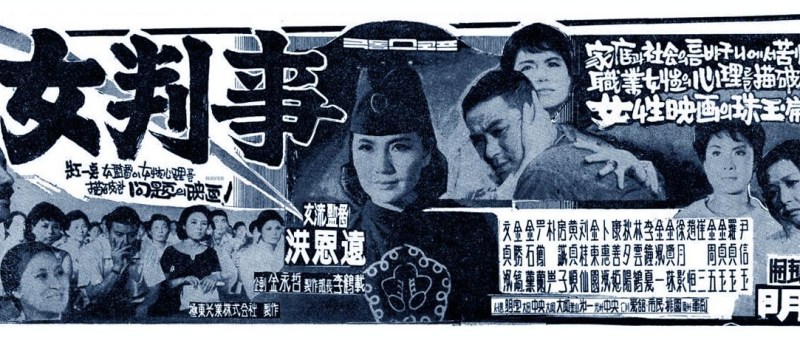
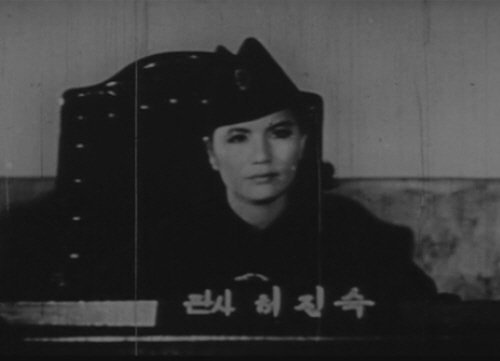
The 1960s were a time of great social change the world over, but while Doris Day was showing the world how to have it all (to a point, at least), not everywhere found the idea of women’s liberation quite so aspirational. In the comparatively more liberal period before the Motion Picture Law brought in by Park Chung-hee there had indeed been a fair few films challenging persistent misogyny and advancing the cause of equality, but there had also been those which ran the other way and pushed an intensely conservative message. Han Hyung-mo’s A Female Boss from 1959, for example, centres around a seemingly successful female editor of a woman’s magazine whose business is in trouble. Eventually she ends up marrying an employee and becomes a housewife, neatly reinforcing the idea that women do not belong in the work force. Three years later and just just before the advent of a more stringent censorship environment, Hong Eun-won’s A Woman Judge (女判亊 / 여판사, Yeopansa) takes a much more positive attitude to the idea of women having the right to personal fulfilment outside of the home but again only to a point and only partially.
Jin-suk (Moon Jeong-suk), a youngish woman from a humble home, is studying for the judges’ exams. Though her father is supportive and encourages her to study, Jin-suk’s mother (Hwang Jung-seun) worries – she cannot envisage a life for a woman who does not marry and doesn’t want her daughter to end up alone, unhappy, and isolated. Jin-suk also finds unexpected resistance from her childhood sweetheart, Dong-hoon (Park Am), who makes a motion to solidify a long held but never spoken promise that the pair would marry but only on the condition that Jin-suk give up her intentions of becoming a judge and agree to be solely his wife. Jin-suk, of course, refuses. Meanwhile, a construction magnate who caught sight of her on the road has taken a liking to her which is only deepened when he reads of her success in the papers. He becomes determined to get Jin-suk to marry his son, Gyu-sik (Kim Seok-hun), and add some sophisticated modernity to his otherwise soulless home.
The great surprise (or perhaps it is in its own way unsurprising) is that Jin-suk’s greatest supporters are two middle-aged men – literally her patriarchal elders in the form of her own father and her father-in-law. Each of the two men is impressed by Jin-suk’s fortitude and intelligence, they believe in her and want her to succeed. The women, however, feel quite differently. Jin-suk’s mother is caring and supportive but locked into the social codes of her youth, unable to envisage a successful life for a woman which does not involve marriage or children. Jin-suk’s mother-in-law by contrast is harsher, actively resenting Jin-suk’s insistence on maintaining her career and seeing it as a rejection of the idea of the good wife. The most surprising enemy, however, is Jin-suk’s new sister-law, Geum-won, who, despite being a modern woman exhibits extremely conservative values even at one point berating Jin-suk for not showing the proper respect to her husband and failing in her wifely duties. Women oppress other women, making it almost impossible to break free of the conspiratorial forces of a conservative social order even when there are women as brave and determined as Jin-suk willing to pave the way.
That said, Jin-suk is only prepared to go half the distance. She marries and then resigns herself to double duties, insisting that she can manage both a career and a home with no support. There is no suggestion of a rebalancing of the domestic world, no one asks anything of Jin-suk’s petulant husband Gyu-sik other than he do what he’s told. Gyu-sik married Jin-suk knowing she would prioritise her career, but it’s less the fact that she works that begins to irritate him than her growing “celebrity” as “the woman judge” coupled with the paternal oppression he too feels as his father’s son. Even though he is head of accounts, his secretary won’t cash his checks without his dad’s signature – he’s not “in charge” at home or at work and feels himself increasingly emasculated. Which is perhaps why he lets his sister manipulate him into an affair with his mousy secretary who conforms much more strongly to the feminine ideal and therefore allows him to feel like “a man”.
The affair between Gyu-sik, and his lonely secretary, Miss Oh, eventually turns dark and leads the pair to consider double suicide. Gyu-sik, a coward, is unwilling to leave his “unhappy” marriage but Miss Oh does not want to end up a perpetual mistress. The first case Jin-suk presides over is a divorce in which a man has cited his own adultery to divorce his wife because she works too much. Obviously, Jin-suk does not approve of his reasoning but it’s the accomplice who becomes unexpectedly sympathetic. Jin-suk asks her if she knew her lover was married to which she says she did not and that had she known she would never have become involved with him. When the woman affirms that she only slept with the man because she believed they would be married, Jin-suk asks her a perhaps cruel question with a wry smile – if she thought the same thing with each and every man she had ever slept with (implying there must have been many in an unintentional act of slut shaming). Rather sadly, the woman replies that yes she did – she may be naive, but she loved them all and firmly believed they would marry her only to be let down just as she’s being let down now.
Such is the difficult position in which women find themselves in a liberalising but not liberal society. One of Gyu-sik’s friends even petitions him to get Jin-suk to help him get rid of a paternity suit filed by a girl he’s got into trouble while engaged to marry someone else and has now disowned. In fact one of the frustrations fuelling Gyu-sik’s resentment is that he has become a mini conduit to Jin-suk as just about everyone attempts to make use of the familial connection to ease their legal woes, little knowing that Jin-suk is not that kind of judge. She entered the law to heal society like a doctor heals the sick, but begins to doubt herself when the disorder in her own home threatens to boil over.
Disorder shifts into murder. A surprising second act twist puts us back in the realms of the courtroom drama as Jin-suk finds herself first a suspect and then presumed an intended victim before being forced to interrogate, literally, her own family and prove her devotion to it in the process. Though it’s Jin-suk determination, perseverance and legal skill coupled with compassion and emotional intelligence that eventually save “the family”, the jury is still out on whether she will be allowed to continue her legal career or be forced to give it up to fully repair the fracturing family home. While Jin-suk is committed to the idea that all women have the right to fulfil their potential, she too is wedded to the patriarchal ideas of the home and family and never truly considers living outside of them, only insisting on being allowed to continue working as a wife if not, ultimately, as a mother (though it is also interesting that she never suggests her career necessitates a rejection of those things or that there is an active choice available to her). A Woman Judge provides a fascinating insight into the prevailing social codes of Korean society in the early 1960s, even if taking only small steps towards a larger goal.
A Woman Judge was screened as part of the Rebels With a Cause season of free film screenings at the Korean Cultural Centre London. You can also stream the film for free via the Korean Film Archive’s YouTube Channel.

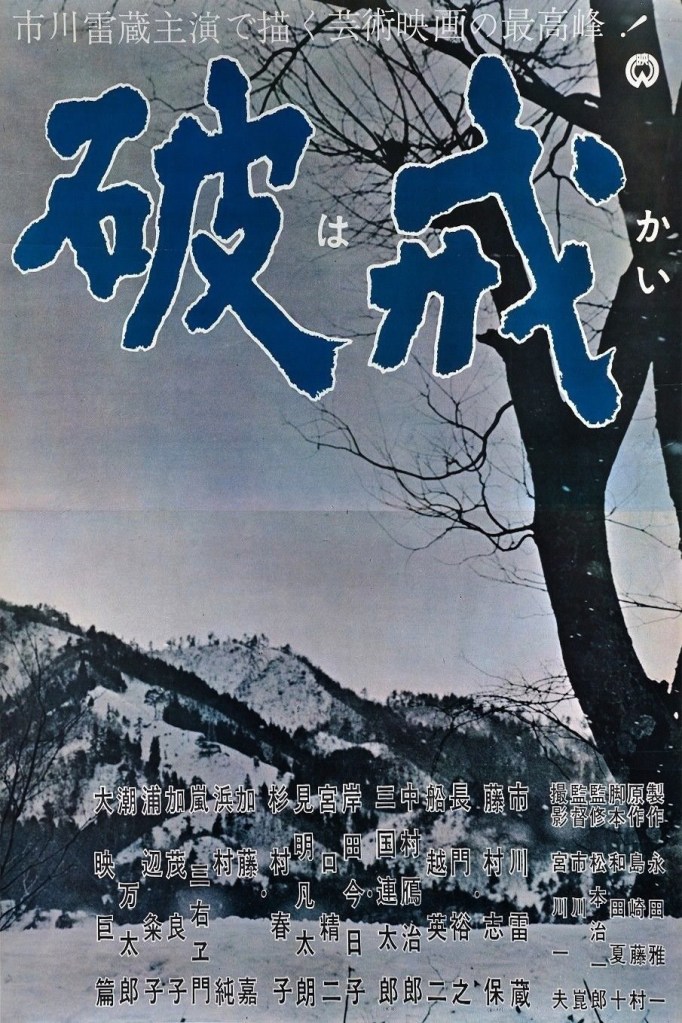 Kon Ichikawa’s approach to critiquing his society was often laced with a delicious slice of biting irony but he puts sarcasm to one side for this all too rare attempt to address the uncomfortable subject of Japan’s hidden underclass – the burakumin. The term itself simply means “people who live in hamlets” but from feudal times onwards it came to denote the kinds of people with whom others did not want to associate – notably those whose occupations dealt in some way with death from executioners and undertakers, to butchers and leatherworkers. Though outright discrimination against such people was outlawed during the Meiji restoration, social stigma and informal harassment remained common with some lingering tendency remaining even today.
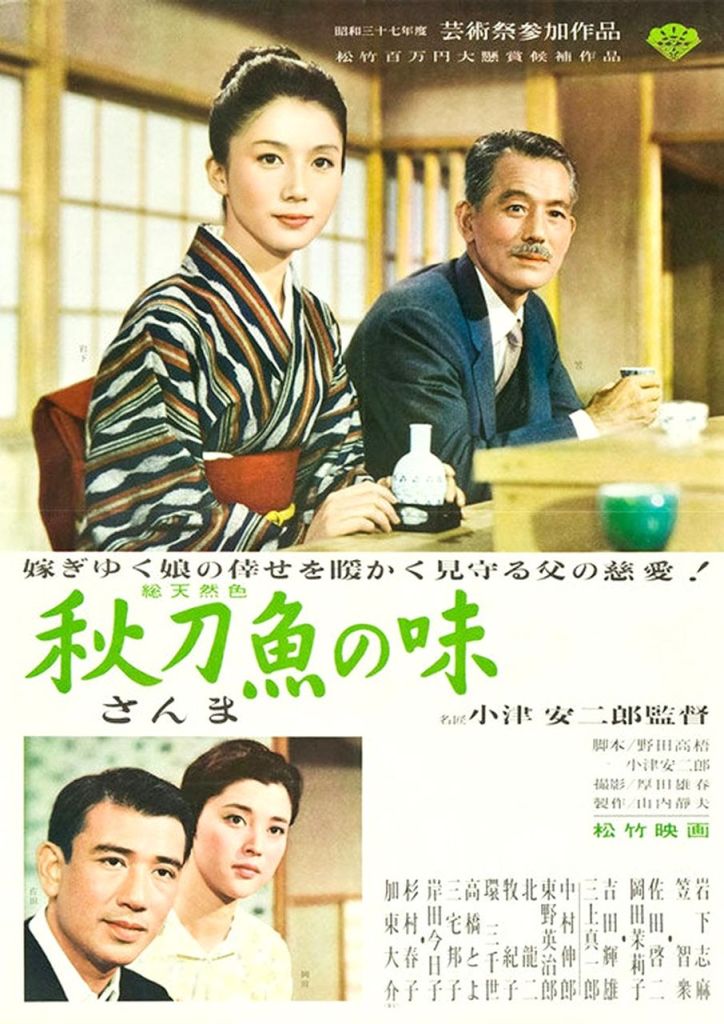 An Autumn Afternoon (秋刀魚の味, Sanma no Aji) was to be Ozu’s final work. This was however more by accident than design – despite serious illness Ozu intended to continue working and had even left a few notes relating to a follow up project which was destined never to be completed. Even if not exactly intended to become the final point of a thirty-five year career, An Autumn Afternoon is an apt place to end, neatly revisiting the director’s key concerns and starring some of his most frequent collaborators.
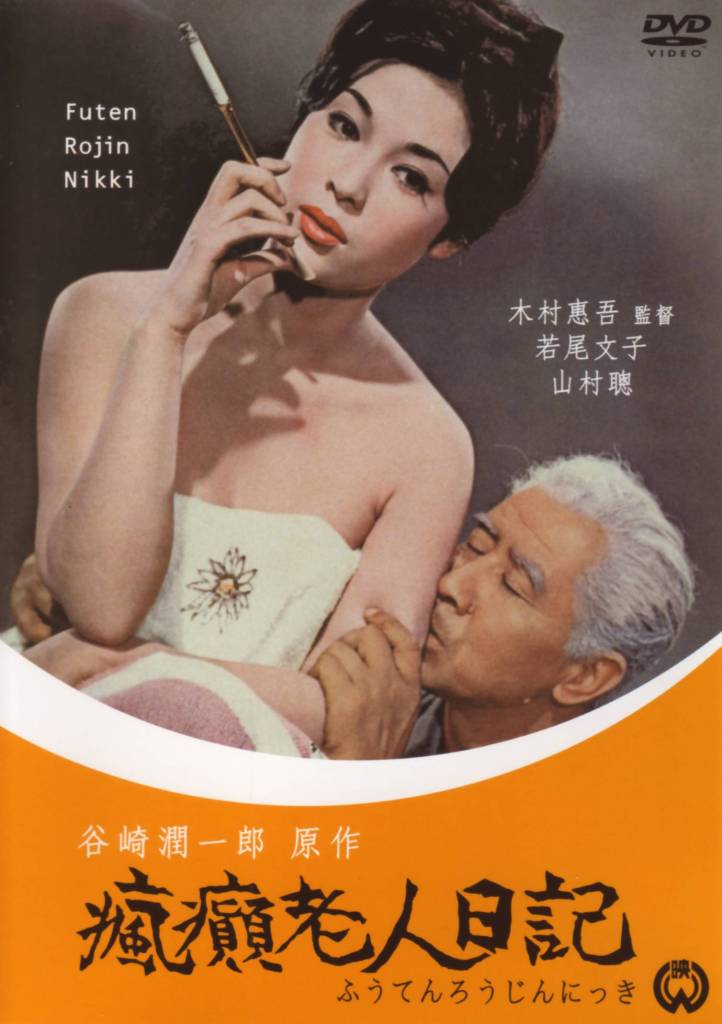 Junichiro Tanizaki is giant of Japanese literature whose work has often been adapted for the screen with
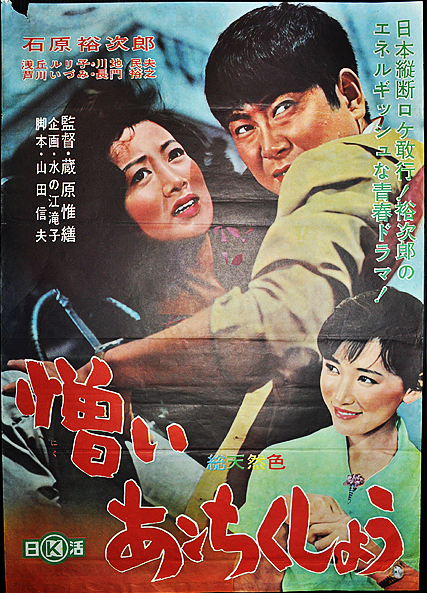
 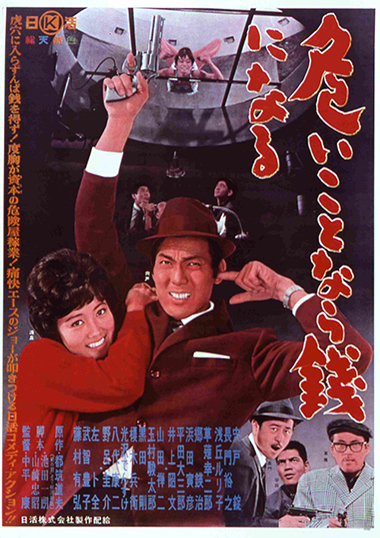 Where there’s danger, there’s money! Or, maybe just danger, who knows but whatever it is, it certainly doesn’t lack for excitement. Ko Nakahira is best known for his first feature, Crazed Fruit, the youthful romantic drama ending in speed boat murder which ushered in the Sun Tribe era. Though he later tried to make a return to more artistic efforts, it’s Nakahira’s freewheeling Nikkatsu crime movies that have continued to capture the hearts of audience members. Danger Pays (AKA Danger Paws, 危いことなら銭になる, Yabai Koto Nara Zeni ni Naru) is among the best of them with its cartoon-like, absurd crime caper world filled with bumbling crooks and ridiculous setups.
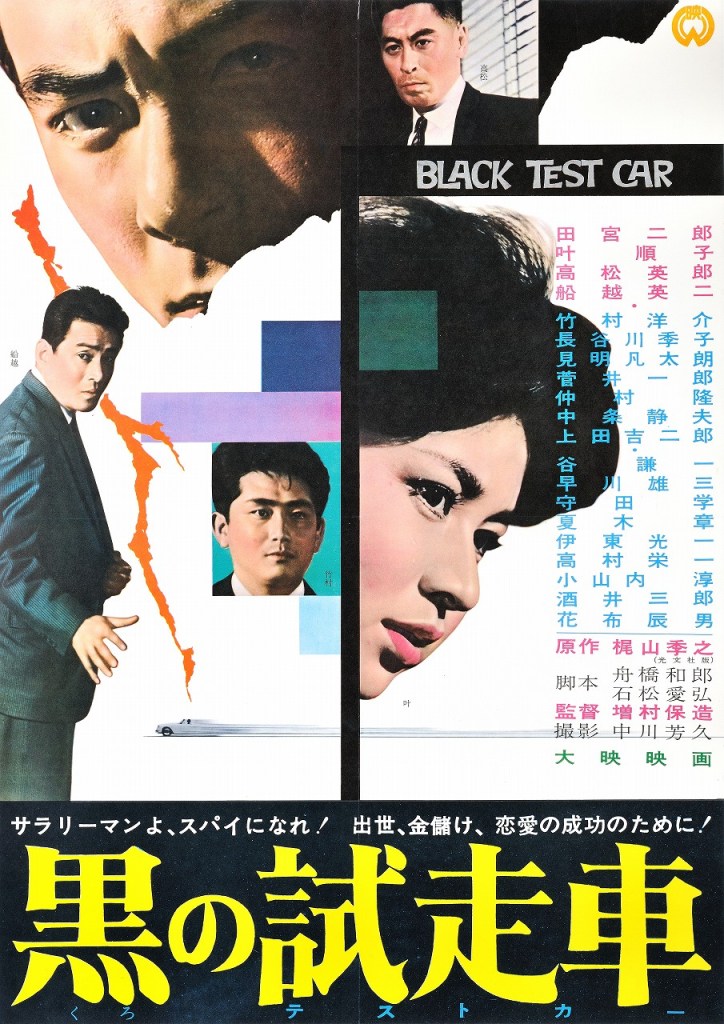 The automobile business is a high stakes game. Do you want to play faster, shinier and sleeker, or safer, family friendly and reliable? Family cars are the best sellers – everyone one wants something that’s reliable for getting to work every morning, getting the grocery shopping done and that you won’t worry about taking your kids to the park in. However, it’s the 1960s and lifestyles are shifting, men (in particular) are marrying later and they want to have fun before they do – hence having quite a lot of disposable income they can blow on a flashy two-seater sports car with no wife to complain about it. Tiger have just finished a new prototype called the Pioneer they plan to launch as a revolution in commercial sports cars which is super speedy but with the convenience of an everyday sedan. However, the Yamato company are also set to launch a new car and it keeps looking suspiciously like the Pioneer – does Tiger have a mole?
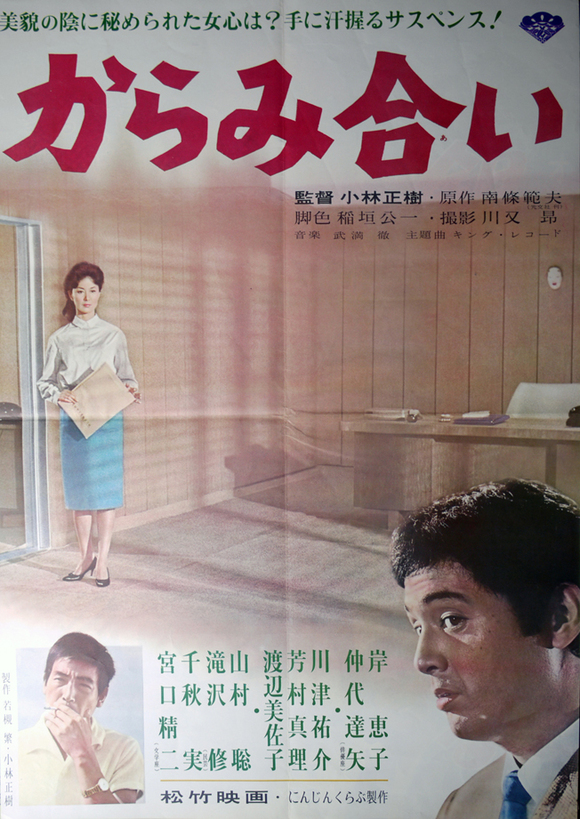 Kobayashi’s first film after completing his magnum opus, The Human Condition trilogy, The Inheritance (からみ合い, Karami-ai) returns him to contemporary Japan where, once again, he finds only greed and betrayal. With all the trappings of a noir thriller mixed with a middle class melodrama of unhappy marriages and wasted lives, The Inheritance is yet another exposé of the futility of lusting after material wealth.
 Windows on Worlds