The Limit of Sleeping Beauty (リミット・オブ・スリーピング・ビューティー, Ken Ninomiya, 2017)

the limit of sleeping beauty posterCan you escape the past by evading it? The heroine of Ken Ninomiya’s The Limit of Sleeping Beauty (リミット・オブ・スリーピング・ビューティー) does her best to find out as she approaches the point at which she can no longer bear the weight of all her sorrows. A rising star of the Japanese indie scene, Ken Ninomiya had some minor festival exposure with his first film, post-apocalyptic cyberpunk drama Slum-polis, back in 2015 before making a complete about turn in releasing a terse mockumentary about a resilient actor hammering on the door of Japanese show business. Sleeping Beauty was, apparently, originally conceived as a mid-length picture before producers suggested expanding it into a full length feature and in many ways marries the twin concerns of Ninomiya’s earlier films in its high concept examination of a fracturing psyche unable to let the past go and move on from trauma and disappointment.

At 19, Aki (Yuki Sakurai) ran away from a bad family situation and ended up in Tokyo with the hope of becoming an actress. With nowhere else to go she wandered into a random bar which is where she met the love of her life, Kaito (Issey Takahashi) – a melancholy photographer and owner of cabaret club Aurora. Kaito takes her in and she begins working at Aurora as a magician’s assistant but ten years pass and, as a TV presenter later put it, it’s unheard of for a Japanese actress to make it in her 30s.

Her mind fracturing, Aki is often accompanied by “Butch” (Nino Furuhata), a strange clown with a scary white face who appears alternately supportive and enabling. Complaining that she feels unstuck in time, Butch reminds her that the idea of time as linear flow is a misconception and that all moments are indeed one moment which is one reason Aki never quite knows “when” she is. Accepting this fact she asks to be taken to the time at which she was happiest, only to be told that emotional time is not necessarily in sync with one’s perception of temporality. Nevertheless, her mind flies back to her first meeting with Kaito who we later surmise is no longer in her life but continues to define it all the same.

The picture we get of Aki is of a woman attempting to bury herself and her disappointments by revelling in a pleasant memory and then using it as raw material to read herself into an idealised version of her current life only one which is still marred by the tragedy of losing Kaito. Ninomiya opens with an orgy in dingy sex club where everyone is wearing creepy carnival masks and the older Aki is sporting a nasty bruise on her chin. The bruise, we later discover, was earned in a nasty encounter with a lascivious producer engineered by a soulless manager who promised her a career but in effect sold her to a man who assaulted and humiliated her. This final humiliation is only one of many acts of degradation that Aki suffers in her quest to make it as an actress – one of only two things Kaito urged her to do before disappearing from her life forever.

Unable to cope with the weight of lost love, defeated dreams, and a wasted youth Aki’s mind splinters into fragments, creating the strange entity known as Butch whom she seems to want to get rid of but cannot bear to be without. Aki’s quest is one of reintegration in which she must find the strength to put herself back together again and finally set light to the past, waking up from her self imposed slumber.

Kaito wants her to know the world is still wonderful, but his message seems curiously perverse considering his final course of action and Aki’s continuing descent into a spiral of depression, exploitation, and mental instability. Fantasy and reality remain hopelessly blurred, only gradually separating and becoming distinct as Aki begins to put herself back together. Ninomiya improves on Slum-Polis with similarly detailed production design and world building but occasionally allows his taste for music video aesthetics to slide into the indulgent with the success of such sequences depending on the viewer’s taste for the overused main titles song, Hummingbird by Kyla La Grange. Nevertheless there’s no disputing Ninomiya’s ambition and originality even if there is something unsettling in his urgency to inhabit the world he seems to be critiquing.


Original trailer (no subtitles)
Manta Ray (กระเบนราหู, Phuttiphong Aroonpheng, 2018)

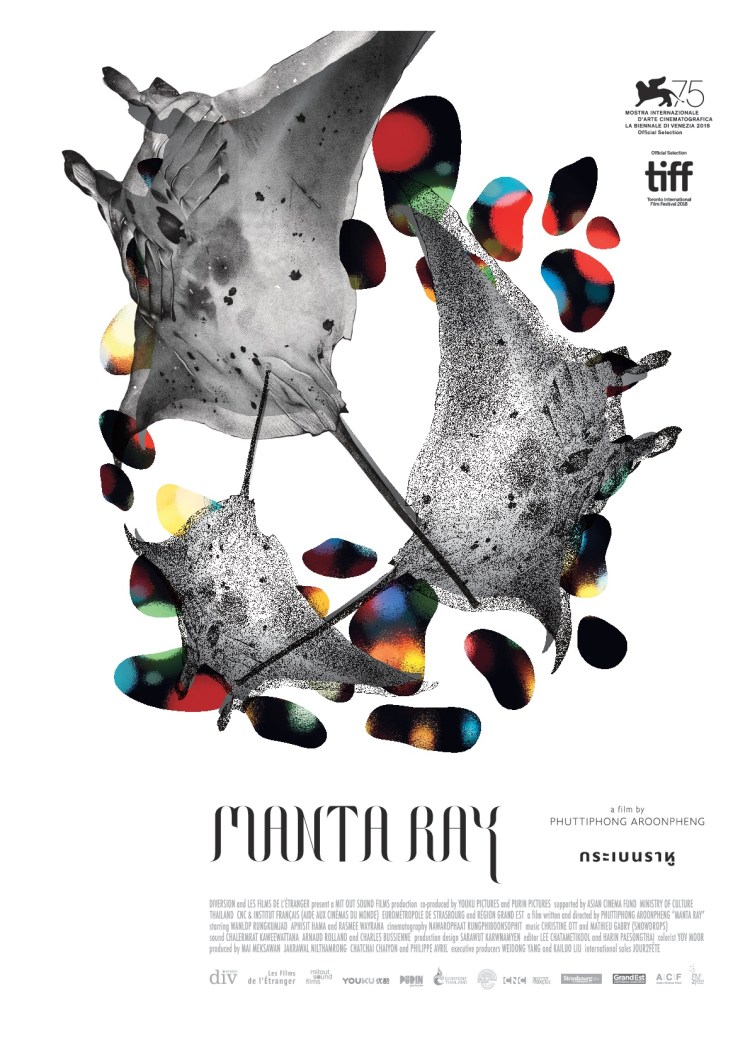
manta ray posterManta Ray (กระเบนราหู, Kraben Rahu), the directorial debut from Thai cinematographer Phuttiphong Aroonpheng, begins with a dedication to the Rohingya – a group some have described as the most persecuted on Earth, rendered technically stateless and brutally oppressed in their homeland of Myanmar. Many have attempted to escape, often to Thailand, but rarely find safe harbour instead becoming victims of governmental persecution or vicious human traffickers. Manta Ray is a poetic mediation on displacement and identity, but also on the various ways in which neglect of the other is also neglect of the self.

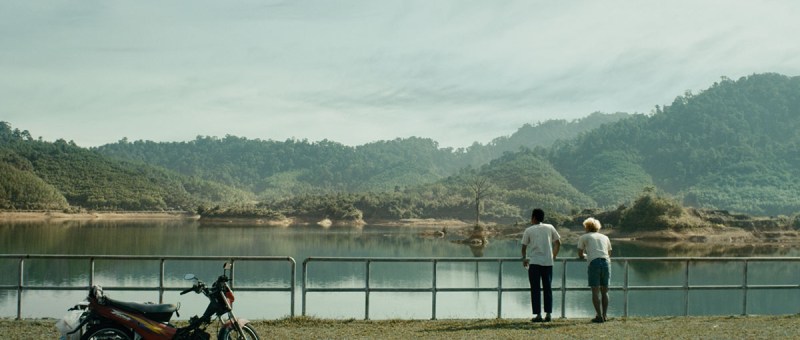
A young fisherman (Wanlop Rungkamjad) with a shock of blond hair gets up to some shady business in a forest but later turns humanitarian when he discovers a badly wounded man lying by the riverside. Discovering the man is still alive, the fisherman takes him to a backstreet doctor and then to his home where he nurses him back to health. As the man cannot speak and possibility does not understand what is being said to him, the fisherman rechristens him Thongchai (Aphisit Hama) after a classic Thai pop star. Despite the absence of verbal communication, the two men begin to bond and the fisherman teaches Thongchai how to live a life like his – how to fish, how to dive, how to find colourful stones in the forest and how to use them to call the manta rays which shelter in a nearby cove after a storm and are soon on their way once the storm has passed. Their peaceful co-existence is soon ruptured when the fisherman fails to return home, leaving Thongchai alone to inherit his life, slipping accidentally into the now vacant space the fisherman left behind.

The film’s earliest stretches serve as a beautiful tale of wordless connection in which the fisherman, perhaps in contrast to what we might expect given the darkness of his activities as glimpsed in the opening scenes, decides to be kind and rescues a man near death, literally giving him a new life and a place in his home for as long as he wants or needs it. Thongchai says nothing, perhaps he cannot speak in any language and probably does not understand the meaning of the fisherman’s words but seems to understand him all the same. Gradually the fisherman brings Thonghcai back to life through passing bits of his own back to him, relating his sad life story of the wife who left him for another man but himself remaining silent about whatever it is he does with the shady crew of a fishing boat out on the water. It is perhaps his sense of compassion which spells his doom – when he tells his “boss” that he doesn’t want to do “that” any more, the fisherman “mysteriously” goes missing at sea.

Thongchai does not steal the fisherman’s identity, but merely inherits a space which had been left vacant by another recently displaced person. He stays in the house and waits for his friend’s return, takes up his friend’s job, and then eventually begins living with the fisherman’s pregnant ex-wife (Rasmee Wayrana) who completes his transformation by dressing him in the fisherman’s clothes and dying his hair a bright gold that shines just like the stones in the forest. The fisherman and Thongchai merge and become one, sharing a single identity until the fisherman himself washes up, injured and bearing the scars of his long journey home.

Yet the forest is always there, waiting, and all roads lead back to it in Phuttiphong Aroonpheng’s elliptical tale. Thongchai digs but finds only death and emptiness, the colourful lights he softly danced to with the fisherman eerily echoed by the forest’s grim ghostliness and the glittery horror that stalks its natural beauty. Like the manta ray, Thongchai – a man without a name or a language, may be destined to a life of lonely floating broken by brief periods shelter and connection, always waiting for the storm to pass. Poetic and filled with images of extreme beauty, Phuttiphong Aroonpheng’s melancholy debut is a poetic meditation on identity and dislocation, arguing strongly for empathy and human warmth over fear and self-interest in an often cruel existence.


International trailer (English subtitles)

Woman in Witness Protection (マルタイの女, Juzo Itami, 1997)

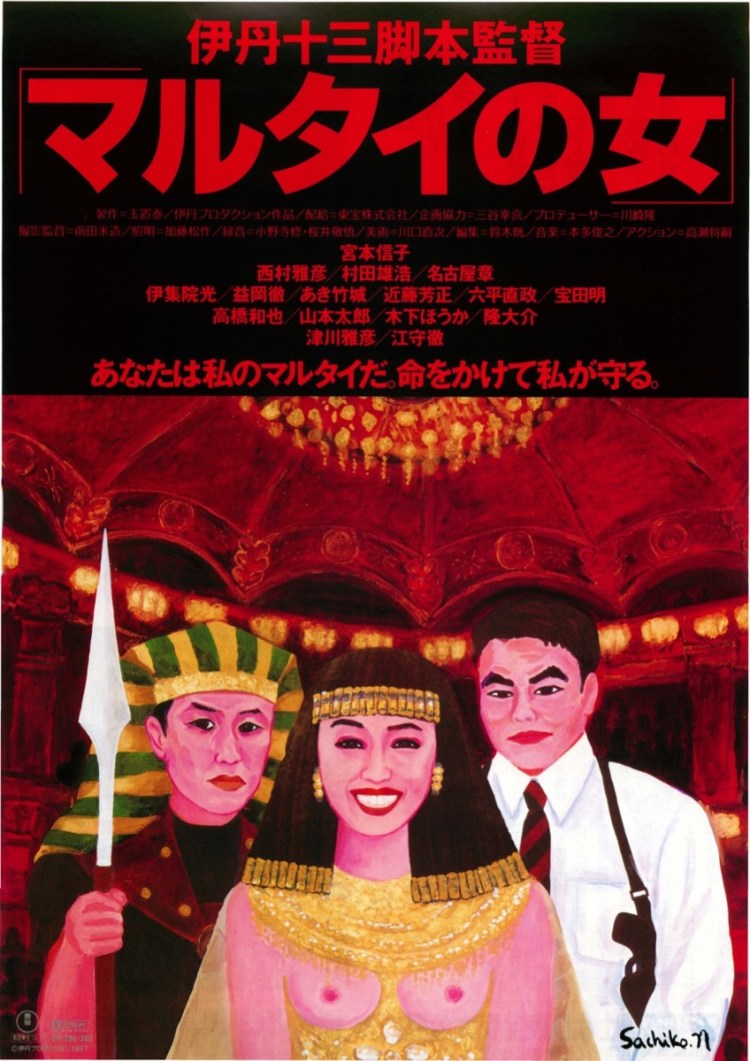
woman in witness protection posterJuzo Itami’s fearless taste for sending up the contradictions and hypocrisies of his home nation knew no bounds, eventually bringing him into conflict with the very forces he assumed so secure it was safe to mock – his 1992 film Minbo led to brutal attack by a gang of yakuza unhappy with how his film portrayed the world of organised crime. Woman in Witness Protection (マルタイの女, Marutai no Onna), continuing the “Woman” theme from previous hits A Taxing Woman and the more recent Supermarket Woman, would be Itami’s final feature as he died in mysterious circumstances not long after its completion and like Minbo it touched an open nerve. In 1997, crazy cult violence was perhaps no laughing matter nor as ridiculous as it might have seemed a few years earlier, yet Itami makes the actions of brainwashed conspirators the primary motivator of a self-centred actress’ gradual progress towards accepting the very thing his previous films might have satirised – her civic duty as a Japanese woman.

Itami breaks the film into a series of vignettes bookended by title cards beginning with the first which introduces us to our leading lady – Biwako Isono (Nobuko Miyamoto). Biwako is currently in rehearsals for an avant-garde play about giving birth (“a woman’s moment of glory”) during which she reduces her assistant to tears prompting her resignation, decrying Biwako’s self-centred bitchiness as she goes. Chastened, Biwako spends the evening doing vocal exercises outside her apartment which is how she comes to witness the botched murder of a lawyer by a crazed cultist (Kazuya Takahashi) during which she is almost murdered herself and only survives because the killer’s gun jams. As the only witness Biwako suddenly becomes important to the police which works well with her general need for attention but less so with her loathing for hassle. Seeing as Biwako is a famous actress, her involvement also precipitates increased press interest for the murder and accidentally threatens the ongoing police investigation not least because Biwako likes to play up for the camera and isn’t quite sure how best to deal with her divided responsibilities. With the killer still at large, the police decide to give Biwako protection in the form of two detectives – Chikamatsu (Yuji Murata), a cultured man who’s a big fan of Biwako’s stage career, and Tachibana (Masahiko Nishimura), a rather stiff gentleman who never watches films and rarely indulges in entertainment.

Bringing up cult violence in 1997 just two years after Japan’s only real terrorist incident perpetrated by a crazed cult, might be thought taboo but taboo was not something that Itami had ever run away from. Crazed cults had also popped up during A Taxing Woman’s Return though back then they mostly represented the hypocrisy of the new yakuza as a front for organised crime that thought nothing of bleeding vulnerable people dry while feeding them a lot of semi-religious claptrap to make them feel a part of something bigger while the bubble economy continued its puffed up attempts to make them feel inadequate. This time around our cultists are less well drawn but clearly a collection of unlucky people duped into believing the strange philosophies of the “Sheep of Truth” which teach that the world can only be saved by its followers dividing the world into white sheep and black sheep. Like the policeman and later Biwako, the killer believes he is only doing “that which must be done” in the best interests of the world. He is unaware of the cult’s shadiness and shocked when their lawyer threatens his family in an effort to convince him not to talk once the police have managed to break his programming, ironically through exactly the same methods – manipulating his feelings towards his wife and son.

The cult is however merely background to Biwako’s ongoing character drama. Despite experiencing emotional trauma from witnessing a murder and then being threatened herself, Biwako enjoys being the centre of the attention with the police as well as the warm glow she feels in being able to help them with their enquiries, but balks at the additional hassle of having to be involved in the trial (even if she would be given quite a sizeable platform as a witness in a high profile court case). She resents having the two policemen follow her around – especially as she has quite a busy schedule which includes an affair with her married manager. Nevertheless she gradually allows them into her life with Tachibana even making his stage debut as spear carrier in a production of Anthony and Cleopatra. Tachibana’s steadfast defence of her person even at the risk of his own life begins to teach Biwako a few things about civic responsibility and the importance of duty, even if her final moment of realisation is another of her staged set pieces in which she conjures a poignant monologue from the accidentally profound mutterings of Tachibana, a little of Cleopatra, and the earlier line from the maternity play repurposed as she affirms that testifying against the cultists will be her “moment of glory”.

Rather than end on Biwako’s sudden moment of enlightenment, Itami cuts to an ironic epilogue in which a police detective watching the movie we have just seen complains about its authenticity while emphasising that no one in protective custody has ever been attacked. A little tongue in cheek humour from Itami that is followed by the more usual disclaimer before the credits resume, but perhaps anticipating another dose of controversy from both law enforcement and cult devotees. Lighter in tone and noticeably less surreal than some of Itami’s earlier work, Woman in Witness Protection is the story of a vacuous actress learning the purpose of her stage as her particular brand of artifice meets that of the less innocently self-centred cultists head on and eventually becomes the best weapon against it.


Original trailer (no subtitles)

Psychic Kusuo (斉木楠雄のΨ難, Yuichi Fukuda, 2017)

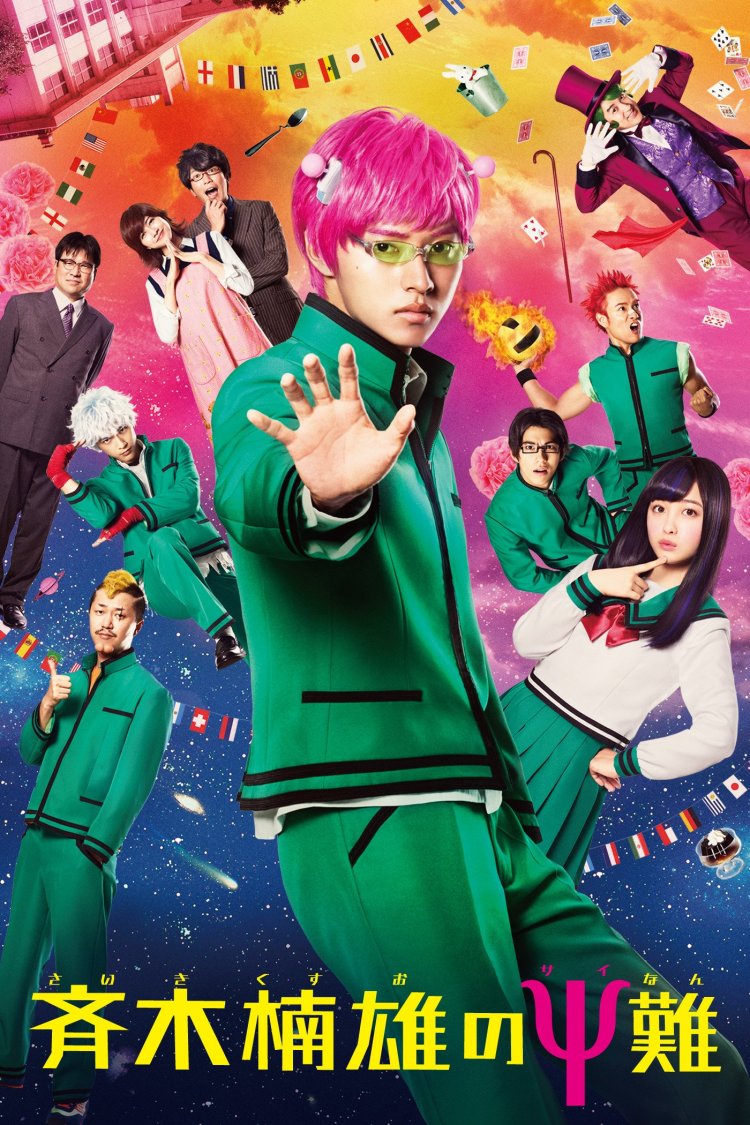
psychic kusuo posterMany may bristle at an attempt to label director Yuichi Fukuda an auteur, but you can’t argue with the fact that he’s developed something of a house style. That house style may have just catapulted him to the top of the box office with two successful movies inspired by the gag filled Gintama, but outside of his big budget studio efforts he’s something of an acquired taste. Take Hentai Kamen, for example. For some a hilariously perverse super hero adventure comedy. For others one childish joke stretched out for 90 minutes. Psychic Kusuo (斉木楠雄のΨ難, Saiki Kusuo no Sainan), coming from the same general area as the phenomenally successful Gintama in adapting an absurdist gag manga only this time one by Shuichi Aso, undoubtedly belongs in the latter category.

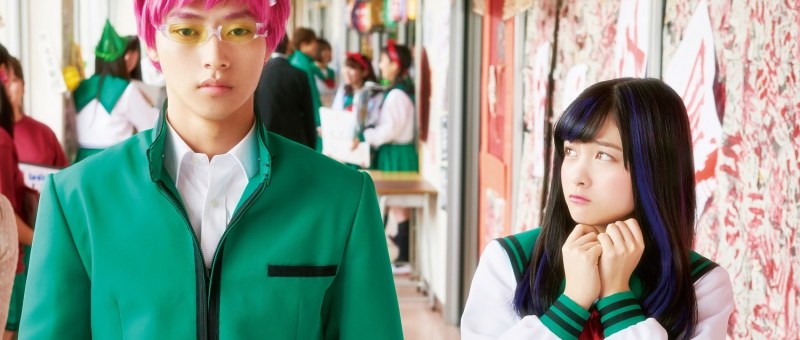
16-year-old Kusuo Saiki (Kento Yamazaki) is the most powerful esper on Earth. Seeing as he was born to a lovely, hippyish couple who didn’t mind that he was a bit strange, Saiki grew up appreciating his superpowers for what they are but also mindful that they could cause him a problem if they got out of hand. He uses his powers to hypnotise those around him so that they don’t notice his neon pink hair or the antennas in his head which keep his emotions in check and prevent him accidentally destroying all of Tokyo. Nevertheless, it is quite a bother to be burdened by unnatural abilities especially in that it makes life extremely dull not to mention a little stressful when you can hear everything everyone is thinking in every tiny detail.

The big problem is that Saiki is coming up on his first high school culture festival. Saiki is not big into celebrations and hanging out with other people so what he likes about festivals is that no one’s going to miss him so he can escape for a little me time. The last few festivals, however, have each descended into chaos and if it happens again this year they’re going to be cancelled for good. In order to save his precious haven of relaxation, Saiki will have to forgo it this time to make sure no one starts any trouble.

Fukuda began his career writing skits for TV variety shows and the humour in his films is indeed very specific and of the kind familiar to fans of Japanese television comedy, which is to say it is extremely broad and somewhat meta with frequent breaking of the fourth wall. The major antagonist of Psychic Kusuo is conceited high school classmate Kokomi (Kanna Hashimoto) who is accounted by all as the school’s number one beauty and knows it. As he’s able to read minds, Saiki knows she’s in no way as pretty on the inside and makes a point of ignoring her. Of course, this only ends up attracting her attention because she’s incapable of accepting that there’s a boy who doesn’t instantly sigh on catching sight of her. In keeping with Fukuda’s over the top approach, Kokomi becomes little more than a collection of preening looks alternating between calculated cuteness and outright bunny boiler villainy.

Meanwhile, Fukuda throws in a series of in jokes and random references to other franchises from Assassination Classroom to Dragon Ball, piling absurdity on top of absurdity through a series of possible crises as yankees from another school threaten to cause a ruckus and the Dark Reunion turn up to prosecute their conspiracy on school grounds. Meanwhile a creepy stage magician and his surprisingly sprightly mother/assistant take credit for all the strange goings on and Saiki accidentally ends up marooned in space.

Yet the problem is that it just isn’t very funny or particularly interesting. It comes to something when the most entertaining part of the movie is Saiki’s extremely nice parents and their unflappable acceptance of the strange goings on which often befall their family. Over reliant on reaction shots and schoolyard humour, Psychic Kusuo may play well to Fukuda’s many fans, those familiar with the anime or manga, and lovers of TV variety skits but anyone else may find themselves scratching their heads at its decidedly lowbrow, scattershot attempt at humour and longing for an end to its considerably dubious charms.


Original trailer (no subtitles)

Missing Johnny (強尼.凱克, Huang Xi, 2017)

missing johnny poster 2“When people are too close they forget how to love each other” – so claims a lonely soul at the centre of Huang Xi’s debut Missing Johnny (強尼.凱克, Qiáng ní. Kǎi kè). A Taipei tale of urban disconnection, Missing Johnny is defined by mysterious absences and dangling connections as its three melancholy protagonists try to break free of their various obstacles to move towards a more fulfilling future. Family becomes both tether and support, a source of friction for all but very much a part of a the vice-like grip the traditional society is wielding over their lives. Yet there is hope for genuine connection and new beginnings even if you have to get out and push.

Casual labourer Feng (Lawrence Ko) has returned to Taipei after a failed venture only to see his car repeatedly break down, forcing him to seek help from a childhood friend. Meanwhile, Hsu (Rima Zeidan), a young woman living alone, fills her life with colourful birds which attract the attention of her landlady’s son, Li (Sean Huang) – a mildly autistic young man who finds it difficult to manage his life but resents his mother’s attempts to manage it for him. When Hsu’s newest parrot makes a bid for freedom, she enlists Li and Feng who has taken a job working on a nearby apartment to help her “rescue” it, sparking a series of connected epiphanies among the otherwise disparate group.

Each of them is, in someway, trapped. Feng is trapped by his difficult familial circumstances and resultant lack of social standing. His parents divorced when he was young and he came to the city alone for high school, forming a close bond with his teacher, Chang (Chang Kuo-chu), and his son, Hao (Duan Chun-hao). Feng is now welcomed as a member of their family but the Changs are not a happy bunch. Mr and Mrs Chang argue endlessly, usually ending with one of them asking for a divorce and Mr. Chang certainly seems to be a “difficult” older gentleman who requires all around him to walk on egg shells lest they say the wrong thing and set him off. Most of his scorn is reserved for Hao whom he regards as a disappointment in not having repaid on his investment. Divorced with a son and boomeranged back home, Hao resents his father’s moodiness and longs to move back out again but with things as they are, possibilities seem slim.

Money becomes a bone of contention for all. Hsu is involved in a long distance relationship with a controlling salaryman who tolerates her love of birds but doesn’t really want to be involved with them. It’s obvious the relationship has all but run its course and Hsu probably wants to end things but doesn’t quite have the energy so just doesn’t make as much time for him as perhaps she once did. Eventually we discover the boyfriend is married to someone else – a wealthy woman he married for her money which he now uses to “support” Hsu, her birds, and her business. Hsu’s boyfriend thinks the money he’s “invested” in the relationship means he’s bought something concrete, throwing it back in Hsu’s face just as Mr. Chang did to Hao. All he can offer her is a mistress’ life but he resents her desire to be free and expects her to be available to him whenever he wants as part of a reciprocal relationship. Mistaking the passage of money for genuine connection may be an ancient failing, but it seems one unlikely to go away.

Feng wants to build a family, despite himself, just a happier one than those he’s known while Hsu and Li are trying to assert their independence in a world which doesn’t quite want to give it to them. Li is almost a grown man but he can’t deny his mother’s suggestion that he needs some help here and there just to get by and that his life really does become confusing when he fails to read the notes she leaves for him reminding him what it is he’s supposed to do today. Like any young man, however, he wants to be free of his mother’s control to pursue his own destiny even if it might mean he gets lost along the way. His mother understands this, but she worries. She doesn’t stop him going but is hurt by his selfish refusal to accept that he causes her pain by wandering off for days on end without sign or warning.

And then what of “Johnny”? Hsu keeps getting calls on her mobile from various people looking for “Johnny” – presumably the same Johnny but really there’s no way to tell. Someone is missing him, anyway. Li asks Feng a philosophical question. He wants to know if birds in flight are still or in motion. A bird, flying, seems to be moving but it occupies a fixed point and is therefore “still” from moment to moment. The same could be said of our three protagonists, each living lonely lives of spiritual inertia carried along only by the rhythms of city life. Thanks to a missing parrot, however, they might finally find the courage to take flight even if they seem to stall at the beginning of their journeys.


Missing Johnny was screened as part of the 2018 New York Asian Film Festival.

Promo video (English subtitles)

Colors of Wind (風の色, Kwak Jae-yong, 2017)

colors of windCan there be two people in the world who so exactly resemble each other but have entirely indifferent, interwoven fates? They say that if you meet your doppelgänger one of you will die, that the world cannot permit two such persons to live. Colors of Wind (風の色, Kaze no Iro), the second Japanese language film directed by The Classic’s Kwak Jae-yong is not sure about doppelgänger theory but is certifiably obsessed with dualities and most particularly in the way that they relate to romantic fulfilment and the necessary shifts in identity that it often entails.

In the present, the melancholy Ryo (Yuki Furukawa) has locked himself away for the past 100 days in mourning for his girlfriend who ghosted him and then apparently took her own life in snowy Hokkaido. Yuri (Takemi Fujii) had always had a kind of fragility about her, insisting that she’d soon “disappear” but that there was another girl who looked like her living in Hokkaido who was far happier and far cleverer than she would ever be. After she died and Ryo “cocooned” himself away, he wakes up and walks into his favourite restaurant only to find the old couple that ran it have retired and the place is reopening as a magic club. Not only that, the previous owners were keeping a suitcase for him which they instructed the new barman to pass on with the caveat that Ryo would probably not even remember that he left it there. The case turns out to be full of clues to a life a he never knew – pictures of a girl of who looks like Yuri, a diary, and a handful of other trinkets. Newly taken with the world of magic, Ryo trains himself to become a top magician before setting off for Hokkaido and encountering another Yuri, only calling herself Aya, who thinks that he is returned spirit of her former boyfriend Ryu – a magician who went missing during a complicated magic trick three years previously.

Colors of Wind hinges on the notion of love as the greatest act of magic, by which it presumably means something inexplicable and wondrous rather than an insincere act of ostentation. Love, it seems to say, fundamentally rewrites the identity of the lover but then again, if one is really “in love” perhaps “identity” in any real sense ceases to matter aside from a need for integration that allows the formation of a new self which can accommodate the extreme selflessness which true love requires.

Love as an act of transformation is a motif which recurs throughout. Grief-stricken, Ryo “cocoons” himself away for 100 days as if waiting to emerge as something else, a new man with a clean slate waiting for a new identity. Meanwhile, Aya continues to pine for her missing magician, half convincing herself that Ryo is Ryu while her mind fractures itself in wondering if her new love is a betrayal of her old. Unable to accommodate the romantic impurity of falling in love with two different men, albeit ones who look identical and have much more than that in common, Aya’s loves create two mutually exclusive souls doing battle for headspace while all Ryo can do is watch as he too battles ghosts on all sides, pining for Yuri while falling for Aya as she yearns only for Ryu.

As the magician behind the bar affirms, meeting one’s doppelgänger does not necessarily spell death – there are many ways for two of the same to survive if only you want to find them, but then love often requires a sacrifice and one thing must fall if another is to rise. These “dopplegängers” are of a more spiritual kind, souls which wander and must be brought home, but in order to love the self must be whole. To escape their cycles of melancholy rumination, the pair decide on new identities for their new love, pinching the roles of Leon and Mathilda from the classic hitman movie in an attempt to bid Aya/Yuri and Ryo/Ryu goodbye but a deeper integration of a more authentic self will be necessary for a concrete resolution, requiring a series of choices and selfless, altruistic love.

Shot entirely in Japan and with an entirely Japanese cast, Colors of Wind nevertheless has a recognisably Korean sensibility in its melancholy, philosophy-tinged melodrama which hinges on the ineffabilities of love and identity. Trapped and drowning, Ryo has to literally unchain his heart and open the door to his soul to let the love flood in but does so perhaps at a price, permitting another identity to merge with his own as he prepares to integrate past loves and new into one romantic whole. Beautiful, if occasionally obscure, Colors of Wind fully succeeds in Kwak’s goal of paying tribute to classic melodrama in its tale of love and sacrifice, self and selflessness, and the transformative qualities of romance, but does so with a playful heart as it takes in the picturesque snows of Hokkaido and the contrived charms of man made magic.


Original trailer (no subtitles)

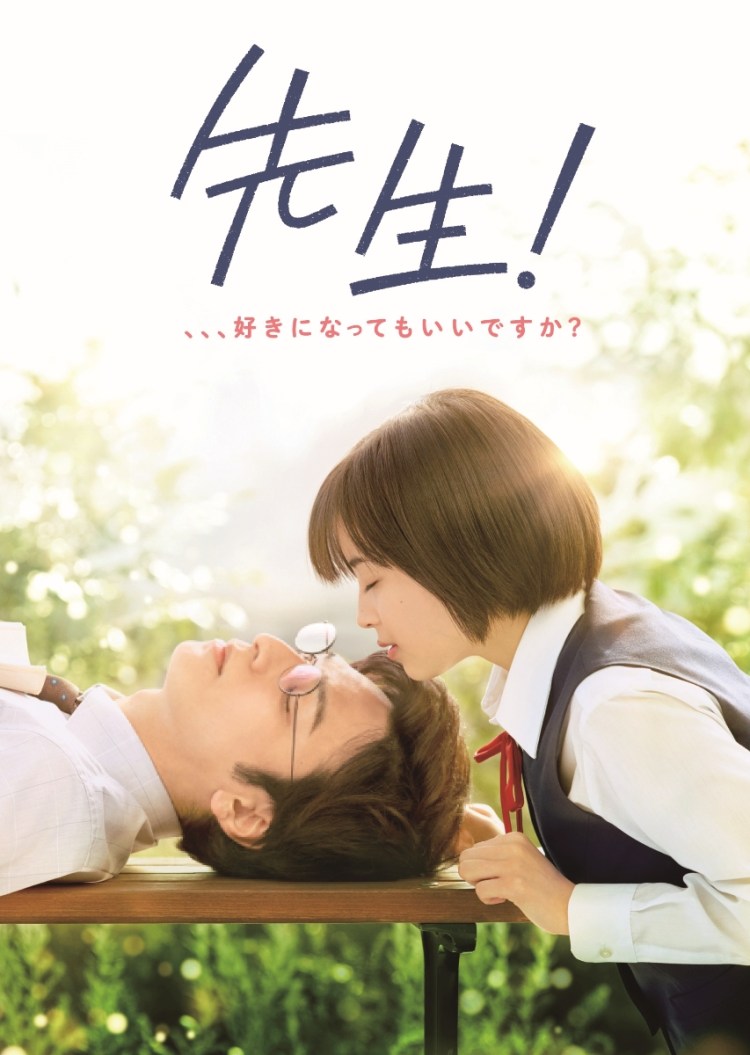
My Teacher (先生!、、、好きになってもいいですか?, Takahiro Miki, 2017)

My Teacher posterJapanese cinema is having a mini moment of shojo crisis in its awkward obsession with student/teacher romance. While similarly themed age-gap “romances” such as After the Rain might have been better able to navigate the difficult seas of misplaced adolescent affection, Narratage and latterly My Teacher (先生!、、、好きになってもいいですか?, Sensei! …Suki ni Natte mo ii Desuka?), seem to have gone in a less palatable direction in accidentally implying that our squeamishness with these obviously inappropriate attachments might not be justified. The latest from romantic melodrama veteran Takahiro Miki, My Teacher is a perfect exemplification of the inherent problems with shojo romance and, in this case somewhat ironically, its inability to process the implications of a necessarily romantically naive perspective.

Our heroine, Hibiki Shimada (Suzu Hirose), is a shy, awkward teenager with a hopeless crush on her handsome, if somewhat aloof, history teacher, Mr. Ito (Toma Ikuta). Unlike her classmates, Hibiki has been slow to a romantic awakening and confused by her friends’ various and rapidly changing crushes. Nevertheless, like her best friend Chigusa (Aoi Morikawa), Hibiki has begun to develop feelings for a teacher – Ito whose gruff exterior hides a considerate heart. Mistaking his general kindness for an extension of personal affection, Hibiki has fallen in love and even whilst knowing that there is something not quite acceptable about her feelings decides to pursue her inappropriate crush in the manner only a naive schoolgirl can.

Ito, as expected, turns down Hibiki’s confession with weary resignation. A kind man who seems to limit his interactions with other humans in order to avoid becoming over involved, he is aware of the delicacy of the situation but also of its dangers as regards his own standing as an educator and responsible adult. He wants to protect his student, emotionally and physically, but is at a loss as to how to handle his dilemma without causing her further distress. Consequently, he fails to definitively shut down a tricky set of circumstances in good time, allowing to Hibiki to bamboozle him into an awkward bargain in which she asks him if her crush will be “OK” if she manages to score over 90% on the upcoming test. Surprised, Ito laughs and reminds her of her woeful results in the previous midterms. Understanding that she’s been turned down, Hibiki nevertheless regards Ito’s awkward laughter as a flicker of possibility and continues on in hope.

Had My Teacher continued in the same vein, with Mr. Ito valiantly attempting to guide Hibiki towards a healthier romantic consciousness while remaining mindful of the tenderness of her feelings and the delicacy of the situation as a whole, it might have entered more interesting and less problematic thematic territory. Unfortunately, it remains firmly rooted in shojo romance in which the heroine’s innocent desires must be recognised and so Mr. Ito’s nobility eventually crumbles as he begins to fall for the “earnest”, “awkward” schoolgirl and forgets his “position as a teacher”, finally giving in to “temptation” even if he then agrees that the responsibility for his transgression must rest entirely with him. Ito attempts to remove himself from the situation in recognition of the harm he may be causing, but the film won’t let him because it needs a resolution that is “romantic” rather than “realistic”.

“Realism” rears its head when the inappropriate relationship between the pair is eventually uncovered and Ito hauled before a staff committee to explain himself but the school’s understandable decision that he must be summarily fired for gross misconduct is undercut by its presentation as an act of unavoidable tragedy that fails to make a distinction between “genuine feeling” and “abuse of position”, conveniently forgetting that in these kinds of cases that is not a distinction that it is useful to make. Chigusa, trying to encourage her friend in her great romance, affirms that there is no one in the world it is not OK to love, which might have some truth in it seeing as love itself is rarely wrong, but there are instances where acting on that love would be and a teacher/student relationship is definitely one of them especially where the student is still a minor.

Indeed, the kids resent the fact that everyone treats them as children but they are, as a similarly exasperated teacher tries to explain to them, not yet adults as exemplified by their consistently self-centred perspectives which prevent them from realising the difficult position in which their decision to air their inappropriate feelings places those whom they claim to love. This dawning realisation is heralded as the pathway to adulthood in finally coming to an acceptance of the individual’s place within a community bound by ethical rules and the responsibility one has towards the feelings of others most particularly when they conflict with one’s own. It is however undercut by the irresponsible decision to push the innocent romance to its “natural” conclusion even if it has the decency to wait until after graduation until it does so. Ethically questionable as it is, Miki’s obvious talents are not in question and his beautifully composed emotionally moving aesthetics are out in force but only serve to emphasise the uncomfortably naive sensibilities of the source material.


International trailer (English subtitles)

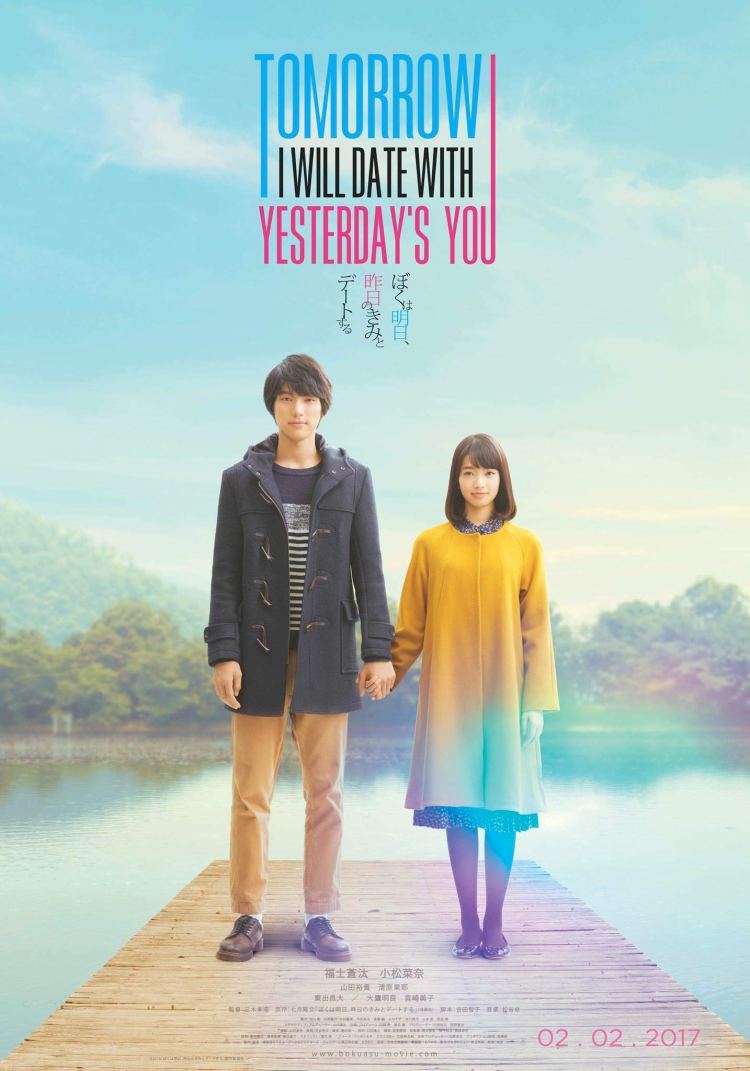
My Tomorrow, Your Yesterday (ぼくは明日、昨日のきみとデートする, Takahiro Miki, 2016)

Tomorrow I will date with yeaterday's you posterLike the Earth and the Moon, are lovers destined to move past and away from each other, sharing the same space only for a cosmic instant yet forever connected by the arc of their existences? It’s a heavier question than you’d expect from your average romantic melodrama. My Tomorrow, Your Yesterday (ぼくは明日、昨日のきみとデートする, Boku wa Asu, Kino no Kimi to Date Suru), another finely crafted tragic romance from genre master Takahiro Miki, is a kind of sci-fi “junai” in which the barriers to romantic fulfilment aren’t cultural or societal or medical, but cosmic in that our star-crossed lovers occupy opposing temporal realms which conspire against their union while also carving it into the arc of the spacetime continuum like a cruel existential joke.

At 20, art student Takatoshi (Sota Fukushi) spots the beautiful Emi (Nana Komatsu) on his morning commute. Hit by a thunderbolt, he falls for her instantly but is shy and diffident. Despite himself, Takatoshi decides that if she alights at the same station as him then it’s really meant to be and he can’t not at least try talking to her. Alight she does and he chases after her as best he can only for his cheerful attempt to ask for a phone number to be rebuffed by the ultimate excuse that she doesn’t have one. Surprisingly, Emi’s claim turns out to be the truth rather than an attempt to politely decline his attentions, though Takatoshi is surprised that his attempts at romance eventually provoke a few tears from the visibly moved Emi. The pair eventually start dating and are well into the world of young love when Emi reveals her secret – she is from a parallel universe where time runs in the opposite direction. Takatoshi’s future is her past, and her past his future. Their universes only overlap every five years for a maximum of 30 days and so this is their one and only shot at true love.

Miki begins in true romantic fashion as Takatoshi giddily pursues his first, idealised romance only latterly beginning to see signs of trouble on the horizon in Emi’s sometimes quirky behaviour and strange ability to predict the future. They walk through the usual steps towards becoming a committed couple, finally dropping the honourifics in  mutual recognition of their deepening bond, but every decisive step reduces Emi to tears in a fashion that runs beyond the merely cute or girlish. Takatoshi, young, naive, and in love, finds his mild suspicion vindicated when he discovers Emi’s diary which seems to run in reverse order and mainly contains entries for dates which have not yet happened.

Gradually, Takatoshi begins to realise that he and Emi exist on opposing planes, destined forever to orbit each other with only this brief moment of connection to sustain them. He muses on whether moving past each other is the natural path of a romance before learning to accept the transitory nature of love so that he might appreciate this brief gift he’s been given even in the knowledge that it will soon be over. Briefly petulant, he resents Emi’s dependence on the diary, filled as it is with “facts” from his 25-year-old self gleaned during a “previous” meeting, wondering if she is merely going through the motions of their predetermined romance and spoiling his vision of easy, serendipitous love in the process.

Privileging his own perspective, Takatoshi comes late to the realisation that Emi has been making a series of sacrifices on his behalf and that their strange romance is likely to prove much more painful for her than it will for him. Their relationship is built not on “shared” memories, but only in their brief moments of togetherness as they actively forge a present for themselves which is distinct from their two worlds of past and future. Like the diverging points which heralded their meeting, they are travelling in different directions – every first for him is a last for her as their moments of joy and pain become strange mirrors of their eventual heartbreak. Nevertheless, each eventually comes to the realisation that their love is worth enduring despite its inevitably sad end and that something of it is destined to remain even in the entropic melancholy of their love story. An old fashioned romance in every sense, My Tomorrow, Your Yesterday offers a surprisingly deep appreciation of true love anchored by mutual understanding and emotional equality even if it acknowledges that the world is cruel and that love is unlikely to survive as anything more than a bittersweet memory.


Original trailer (no subtitles)

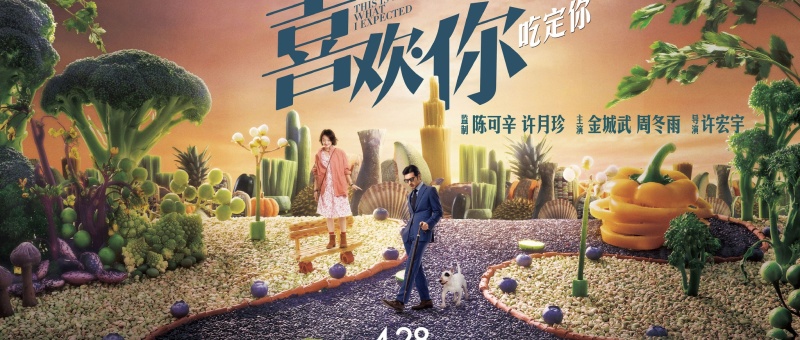
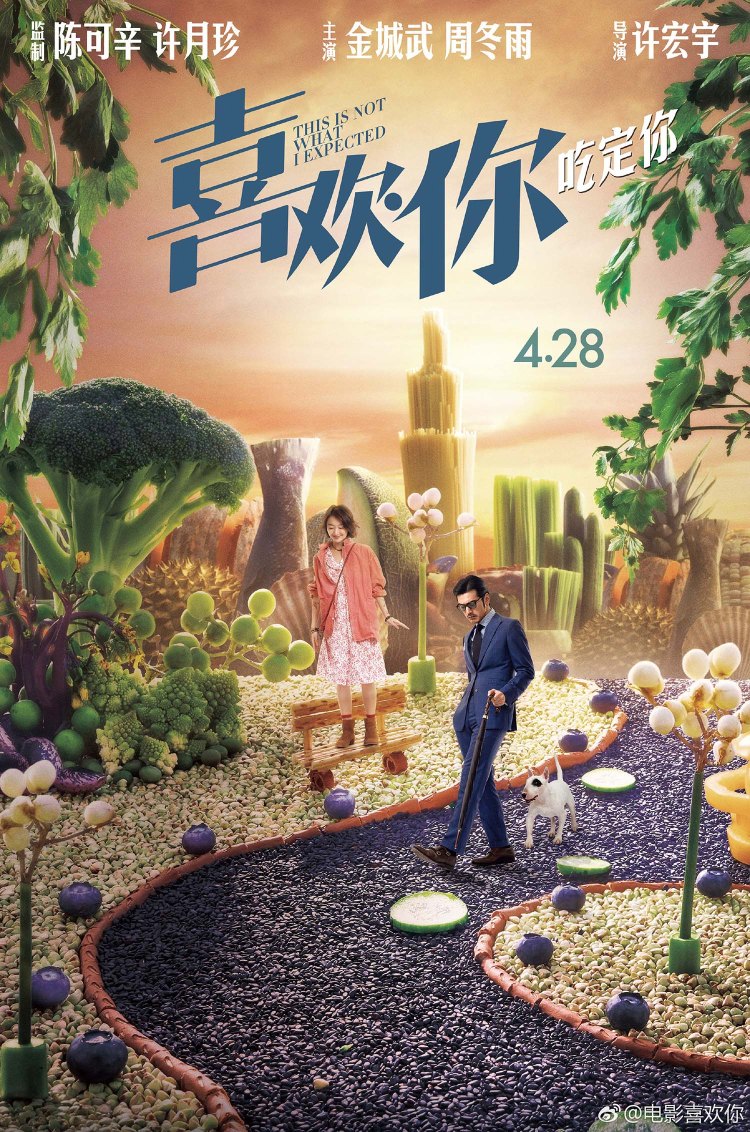
This Is Not What I Expected (喜欢你, Derek Hui, 2017)

This is not what i expected poster 1The way to a man’s heart is through his stomach, as they say, but the course of true love never did run smooth. The debut directorial feature from editor Derek Hui, This is not What I Expected (喜欢你, Xǐhuan Nǐ) is, to be frank exactly what you’d expect it to be but that only works in its favour. A classic tale of opposites attracting, This is Not What I Expected takes its cues from The Shop Around the Corner only this time it’s not pen pals and music boxes but big business and culinary communication.

Ditzy chef Gu Shengnan (Zhou Dongyu) has been having an affair with her caddish boss whom she decides to teach a lesson by carving a rude message into the bonnet of his car. Only, in a motif which will be repeated, she got the wrong one and has actually left her mark on the car of uptight international hotel magnate Lu Jin (Takeshi Kaneshiro). Jin is after some new hotels to acquire so where should he fetch up at other than the one where Shengnan works? Jin hates pretty much everything about the second rate establishment including the food which is when Shengnan’s sleazy boss asks her to cook up something special to stop Jin from leaving. Cleverly analysing the leftovers from Jin’s rejected meals, she cooks him something to remember and succeeds in capturing his heart. Intrigued, Jin decides to stay on the condition that Shengnan cook all his meals from now on. However, Jin has no idea that Shengnan is the culinary mastermind he can’t stop thinking about and is increasingly irritated by all of their bizarre encounters.

Despite their superficial differences, Shengnan and Jin are perfectly in tune, their culinary messages perfectly understood by each on an elemental level. In real life, however, things are quite different. Jin, a ruthless if eccentric businessman with a mania for precision and a terror of anything remotely out of place, finds Shengan’s happy go lucky, disaster prone existence particularly difficult to understand. Hoping to escape her, he even gives Shengnan an electronic tag that will set off an alarm whenever she’s close by so the pair can avoid each other and the chaos that seems to happen when they meet.

Meanwhile, the conflicts continue to expand in the background. Shengnan doesn’t have much of an issue still being single past the socially acceptable age, but worries that she’s not getting anywhere in her career and will be stuck sous-cheffing forever despite her obvious talents while getting her heart broken by sleazy players like her odious, ambitious boss. Rosebud, the ironically named hotel, is hardly a top tier establishment and probably too much bother for Jin to consider taking on if weren’t for his strange fascination with the cook. His extended stay is beginning to raise eyebrows with his coldhearted father/boss while a mild conflict begins to flicker in his heart when he realises the business plan requires firing the entire kitchen staff and hiring a three star Michelin chef.

Hui does perhaps over egg the pudding in creating a “romantic” rival for Shengnan once she discovers that Jin also employs a (female) “private chef” whose return from vacation might explain why he abruptly stopped dropping by the hotel (and her apartment where he’d virtually moved himself in). The lines between desire and hunger remain increasingly blurred as the two women resentfully vie for the position of tastemaker, tussling over which of them understands Jin better and truly deserves to be the one providing him with sustenance. Yet as the personal chef finally comes to realise (a few steps ahead of Jin), what Jin’s hungry for is no longer just food, what he needs is something more organic than a contractual relationship.

Jin is, in a sense, an embodiment of heartless modern capitalism, raised to be “despised” in order to preserve “solitude” and a “clear mind”. Jin’s austere father is all about order and control, he doesn’t like the emotional because it’s irrational and unpredictable, but the straw that finally breaks Jin’s back is when he tells him that the food at the hotel can’t be “too good” because it would be “distracting” for the clients. For the first time, Jin begins to question his ideology and realises that perhaps it wasn’t so much that he enjoyed eating alone as that he convinced himself he did to avoid thinking about the fact that no one wanted to eat with him. An epiphany born of a strange blow fish fever dream shows him that life in Shengnan’s world, for all of its problematic chaos, could be charming not to say warm even in the rain. It’s not what he expected, but it’s good – like an expertly prepared meal, best to savour it while it lasts.


Original trailer (English/Traditional Chinese subtitles)

Neko Atsume House (ねこあつめの家, Masatoshi Kurakata, 2017)

mihon_neko_chirashi_BzenIt’s important to note that cats are living beings and not playthings for humans though they do seem know just what it takes to manipulate our affections. Neko Atsume started life as a popular smartphone game in which the aim is to “seduce” various types of cats to come into your garden so you can catalogue them. The game is just about collecting things and otherwise has no real narrative so it’s not the first one you’d think of for a movie adaptation, but then it does have the all powerful allure of cats being cats.

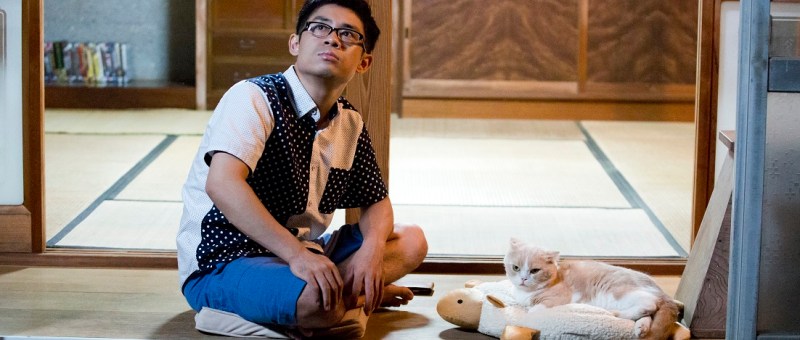
The movie revolves around blocked writer Masaru (Atsushi Ito) who scored a big hit with his debut work but is floundering in the high pressure world of serialised novels and has already skipped the last two editions. His editors are getting antsy – the truth is the series is boring, a simple college love story the like of which has been seen a million times before. What the suits think is…Masaru should turn his protagonist into a zombie! Understandably, he is not very keen on the idea, and neither is his junior editor Michiru (Shioli Kutsuna), but they need ideas and they need them fast. Unfortunately, Masaru doesn’t have any and so, after a strange meeting with a “fortune teller”, he decides to move to the country to get away from it all. The only problem is, his new home seems to be full of stray cats…

Neko Atsume House (ねこあつめの家, Neko Atsume no Ie) isn’t particularly trying to do very much beyond its rather restrictive title, though it does its best to set up Masaru’s internal dilemmas before he finds himself becoming a crazy cat man out in the middle of nowhere. Like many a youngster he’s been beaten down by early success and the subsequent pressure to repeat it. Where he’s going round in circles with a cliched story of young love, his contemporary who put out a less successful debut at the same time as Masaru’s, has gone on to score billboard worthy hits and become a rising star of the literary scene. At a particularly low point, Masaru even tries to add a few positive comments underneath his own work in the hope of digging up fans but only kicks the hornets nest of abuse as the mean spirited readers seem to know right away the only person who would say anything nice about his work is Masaru himself.

In touch of the meta, it’s Masaru who is the zombie, chowing down on the remains of his artistic integrity in order to save some semblance of a career. Of course, it doesn’t work. Unable to get any real writing done, Masaru becomes increasingly obsessed with the stray cats outside, eventually building them an entire mini paradise so they’ll come and keep him company while he’s busy not writing. In true fatalistic fashion, it turns out that Masaru has loved cats all along. He just forgot about it, and that’s one of the reasons he can’t write. Then again, perhaps it was just as Michiru, who never lost her faith in him, had said – he had to learn to be free like the cats in the garden in order to get his creative juices flowing again. At any rate, an up close observation of the lazy lives of pampered kitties begins to bring him closer to the human world, especially when he ends up working for the crazy (in a nice way) lady (Tae Kimura) who runs the local feline grooming centre and has to up his people skills as well as his cat man ones.

The latest in a long line of low budget dramas in which a conflicted creative exiles themselves from “real” life to get their mojo back, Neko Atsume House is at least the nicest in which Masaru’s petulance only really stretches to one unkind conversation with Michiru before he begins figuring out how to fix his many and various personal problems. Otherwise, the draw is the cats who are generally content to let it all hang out. Superficial, if charming, Neko Atsume House knows its target audience and proves a delectable enough treat to attract its very own cohort of cat collectors ready for cataloguing.


Original trailer (no subtitles)