My Teacher (先生!、、、好きになってもいいですか?, Takahiro Miki, 2017)

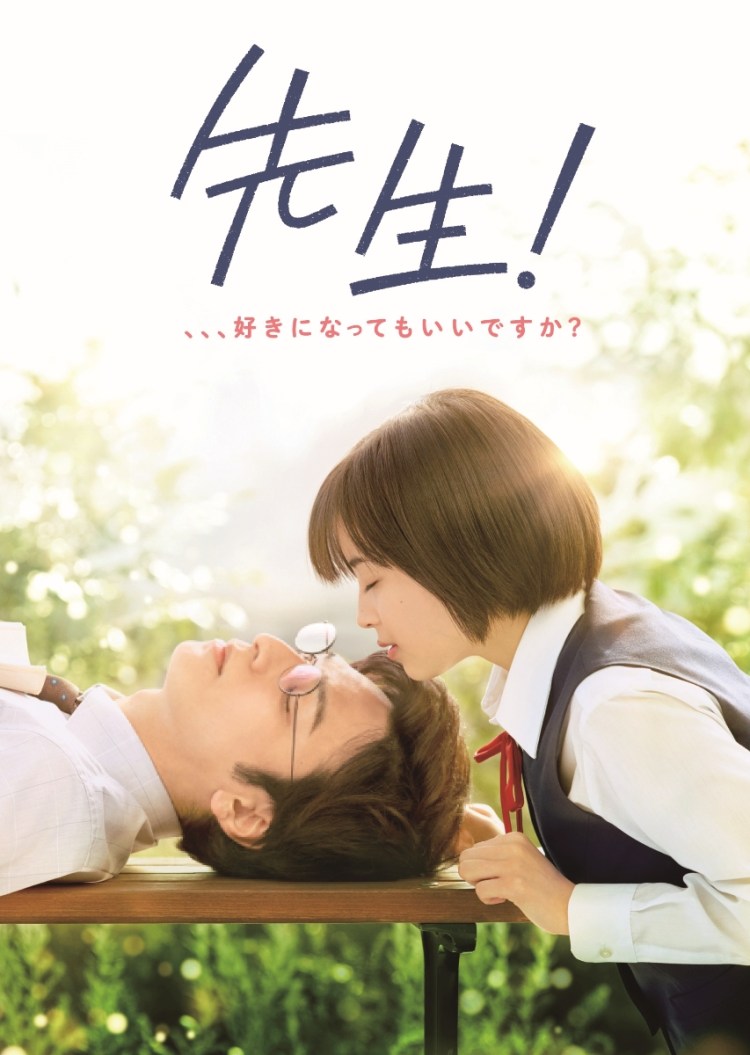
My Teacher posterJapanese cinema is having a mini moment of shojo crisis in its awkward obsession with student/teacher romance. While similarly themed age-gap “romances” such as After the Rain might have been better able to navigate the difficult seas of misplaced adolescent affection, Narratage and latterly My Teacher (先生!、、、好きになってもいいですか?, Sensei! …Suki ni Natte mo ii Desuka?), seem to have gone in a less palatable direction in accidentally implying that our squeamishness with these obviously inappropriate attachments might not be justified. The latest from romantic melodrama veteran Takahiro Miki, My Teacher is a perfect exemplification of the inherent problems with shojo romance and, in this case somewhat ironically, its inability to process the implications of a necessarily romantically naive perspective.

Our heroine, Hibiki Shimada (Suzu Hirose), is a shy, awkward teenager with a hopeless crush on her handsome, if somewhat aloof, history teacher, Mr. Ito (Toma Ikuta). Unlike her classmates, Hibiki has been slow to a romantic awakening and confused by her friends’ various and rapidly changing crushes. Nevertheless, like her best friend Chigusa (Aoi Morikawa), Hibiki has begun to develop feelings for a teacher – Ito whose gruff exterior hides a considerate heart. Mistaking his general kindness for an extension of personal affection, Hibiki has fallen in love and even whilst knowing that there is something not quite acceptable about her feelings decides to pursue her inappropriate crush in the manner only a naive schoolgirl can.

Ito, as expected, turns down Hibiki’s confession with weary resignation. A kind man who seems to limit his interactions with other humans in order to avoid becoming over involved, he is aware of the delicacy of the situation but also of its dangers as regards his own standing as an educator and responsible adult. He wants to protect his student, emotionally and physically, but is at a loss as to how to handle his dilemma without causing her further distress. Consequently, he fails to definitively shut down a tricky set of circumstances in good time, allowing to Hibiki to bamboozle him into an awkward bargain in which she asks him if her crush will be “OK” if she manages to score over 90% on the upcoming test. Surprised, Ito laughs and reminds her of her woeful results in the previous midterms. Understanding that she’s been turned down, Hibiki nevertheless regards Ito’s awkward laughter as a flicker of possibility and continues on in hope.

Had My Teacher continued in the same vein, with Mr. Ito valiantly attempting to guide Hibiki towards a healthier romantic consciousness while remaining mindful of the tenderness of her feelings and the delicacy of the situation as a whole, it might have entered more interesting and less problematic thematic territory. Unfortunately, it remains firmly rooted in shojo romance in which the heroine’s innocent desires must be recognised and so Mr. Ito’s nobility eventually crumbles as he begins to fall for the “earnest”, “awkward” schoolgirl and forgets his “position as a teacher”, finally giving in to “temptation” even if he then agrees that the responsibility for his transgression must rest entirely with him. Ito attempts to remove himself from the situation in recognition of the harm he may be causing, but the film won’t let him because it needs a resolution that is “romantic” rather than “realistic”.

“Realism” rears its head when the inappropriate relationship between the pair is eventually uncovered and Ito hauled before a staff committee to explain himself but the school’s understandable decision that he must be summarily fired for gross misconduct is undercut by its presentation as an act of unavoidable tragedy that fails to make a distinction between “genuine feeling” and “abuse of position”, conveniently forgetting that in these kinds of cases that is not a distinction that it is useful to make. Chigusa, trying to encourage her friend in her great romance, affirms that there is no one in the world it is not OK to love, which might have some truth in it seeing as love itself is rarely wrong, but there are instances where acting on that love would be and a teacher/student relationship is definitely one of them especially where the student is still a minor.

Indeed, the kids resent the fact that everyone treats them as children but they are, as a similarly exasperated teacher tries to explain to them, not yet adults as exemplified by their consistently self-centred perspectives which prevent them from realising the difficult position in which their decision to air their inappropriate feelings places those whom they claim to love. This dawning realisation is heralded as the pathway to adulthood in finally coming to an acceptance of the individual’s place within a community bound by ethical rules and the responsibility one has towards the feelings of others most particularly when they conflict with one’s own. It is however undercut by the irresponsible decision to push the innocent romance to its “natural” conclusion even if it has the decency to wait until after graduation until it does so. Ethically questionable as it is, Miki’s obvious talents are not in question and his beautifully composed emotionally moving aesthetics are out in force but only serve to emphasise the uncomfortably naive sensibilities of the source material.


International trailer (English subtitles)

My Tomorrow, Your Yesterday (ぼくは明日、昨日のきみとデートする, Takahiro Miki, 2016)

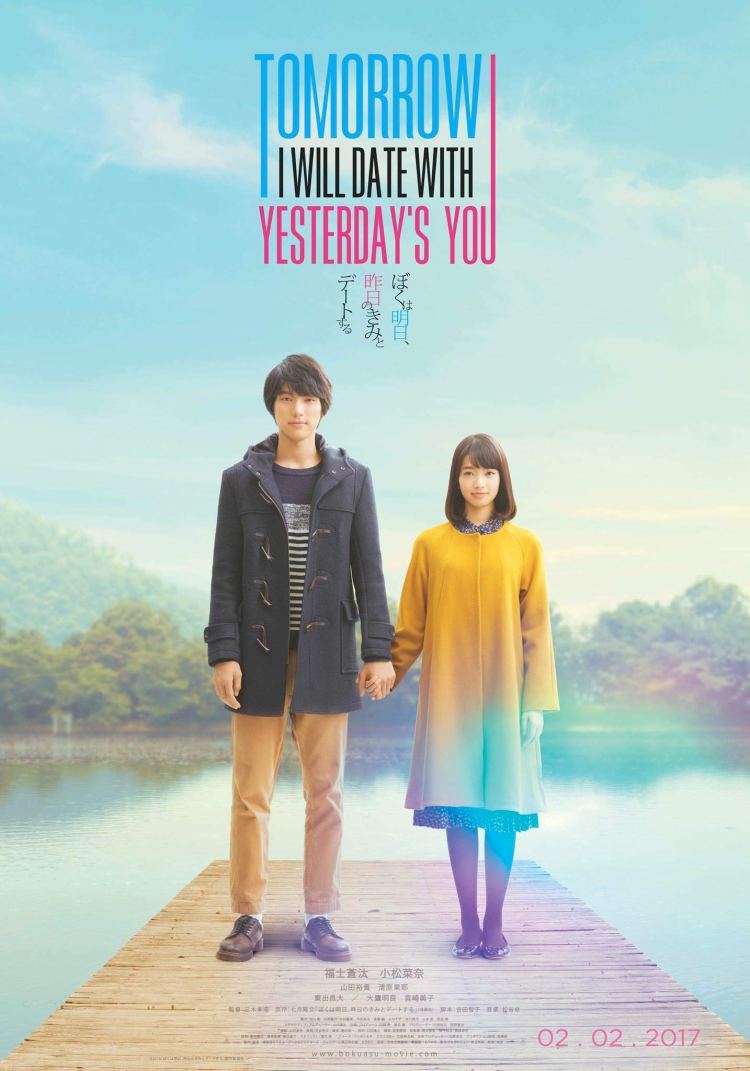
Tomorrow I will date with yeaterday's you posterLike the Earth and the Moon, are lovers destined to move past and away from each other, sharing the same space only for a cosmic instant yet forever connected by the arc of their existences? It’s a heavier question than you’d expect from your average romantic melodrama. My Tomorrow, Your Yesterday (ぼくは明日、昨日のきみとデートする, Boku wa Asu, Kino no Kimi to Date Suru), another finely crafted tragic romance from genre master Takahiro Miki, is a kind of sci-fi “junai” in which the barriers to romantic fulfilment aren’t cultural or societal or medical, but cosmic in that our star-crossed lovers occupy opposing temporal realms which conspire against their union while also carving it into the arc of the spacetime continuum like a cruel existential joke.

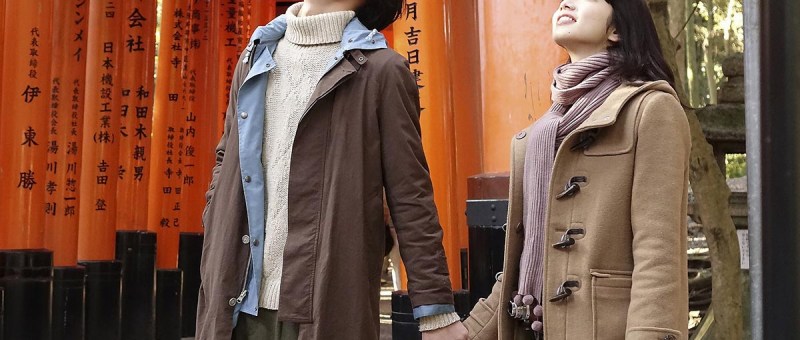
At 20, art student Takatoshi (Sota Fukushi) spots the beautiful Emi (Nana Komatsu) on his morning commute. Hit by a thunderbolt, he falls for her instantly but is shy and diffident. Despite himself, Takatoshi decides that if she alights at the same station as him then it’s really meant to be and he can’t not at least try talking to her. Alight she does and he chases after her as best he can only for his cheerful attempt to ask for a phone number to be rebuffed by the ultimate excuse that she doesn’t have one. Surprisingly, Emi’s claim turns out to be the truth rather than an attempt to politely decline his attentions, though Takatoshi is surprised that his attempts at romance eventually provoke a few tears from the visibly moved Emi. The pair eventually start dating and are well into the world of young love when Emi reveals her secret – she is from a parallel universe where time runs in the opposite direction. Takatoshi’s future is her past, and her past his future. Their universes only overlap every five years for a maximum of 30 days and so this is their one and only shot at true love.

Miki begins in true romantic fashion as Takatoshi giddily pursues his first, idealised romance only latterly beginning to see signs of trouble on the horizon in Emi’s sometimes quirky behaviour and strange ability to predict the future. They walk through the usual steps towards becoming a committed couple, finally dropping the honourifics in  mutual recognition of their deepening bond, but every decisive step reduces Emi to tears in a fashion that runs beyond the merely cute or girlish. Takatoshi, young, naive, and in love, finds his mild suspicion vindicated when he discovers Emi’s diary which seems to run in reverse order and mainly contains entries for dates which have not yet happened.

Gradually, Takatoshi begins to realise that he and Emi exist on opposing planes, destined forever to orbit each other with only this brief moment of connection to sustain them. He muses on whether moving past each other is the natural path of a romance before learning to accept the transitory nature of love so that he might appreciate this brief gift he’s been given even in the knowledge that it will soon be over. Briefly petulant, he resents Emi’s dependence on the diary, filled as it is with “facts” from his 25-year-old self gleaned during a “previous” meeting, wondering if she is merely going through the motions of their predetermined romance and spoiling his vision of easy, serendipitous love in the process.

Privileging his own perspective, Takatoshi comes late to the realisation that Emi has been making a series of sacrifices on his behalf and that their strange romance is likely to prove much more painful for her than it will for him. Their relationship is built not on “shared” memories, but only in their brief moments of togetherness as they actively forge a present for themselves which is distinct from their two worlds of past and future. Like the diverging points which heralded their meeting, they are travelling in different directions – every first for him is a last for her as their moments of joy and pain become strange mirrors of their eventual heartbreak. Nevertheless, each eventually comes to the realisation that their love is worth enduring despite its inevitably sad end and that something of it is destined to remain even in the entropic melancholy of their love story. An old fashioned romance in every sense, My Tomorrow, Your Yesterday offers a surprisingly deep appreciation of true love anchored by mutual understanding and emotional equality even if it acknowledges that the world is cruel and that love is unlikely to survive as anything more than a bittersweet memory.


Original trailer (no subtitles)
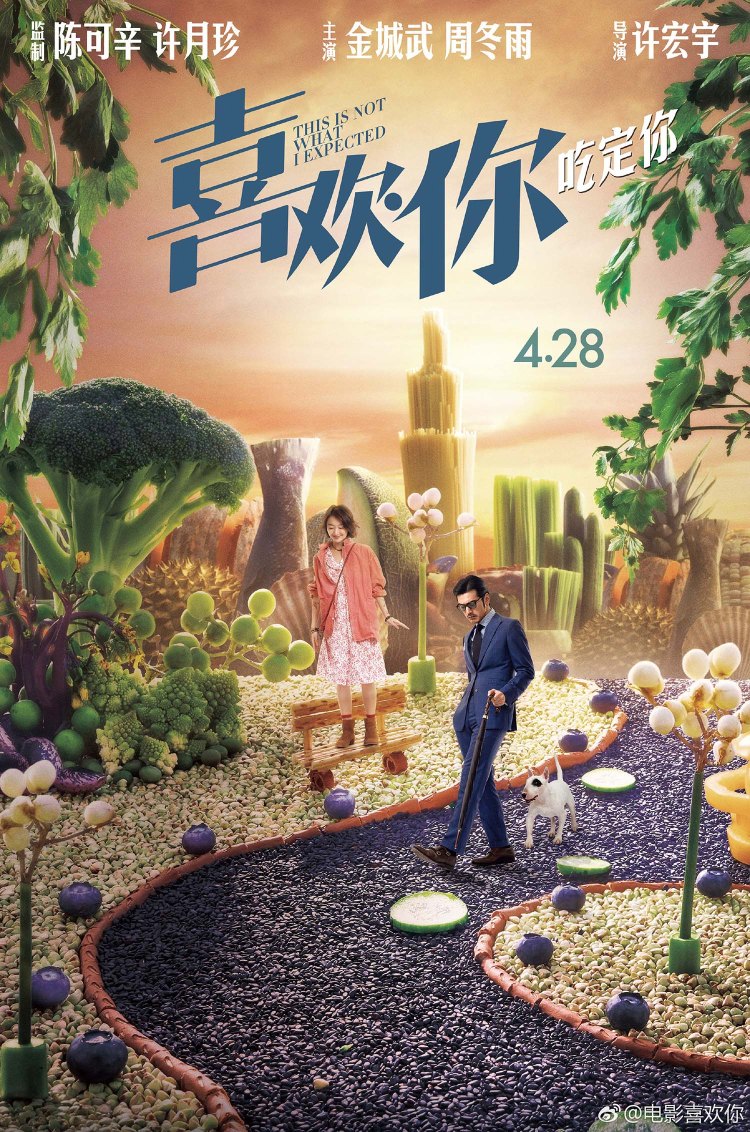
This Is Not What I Expected (喜欢你, Derek Hui, 2017)

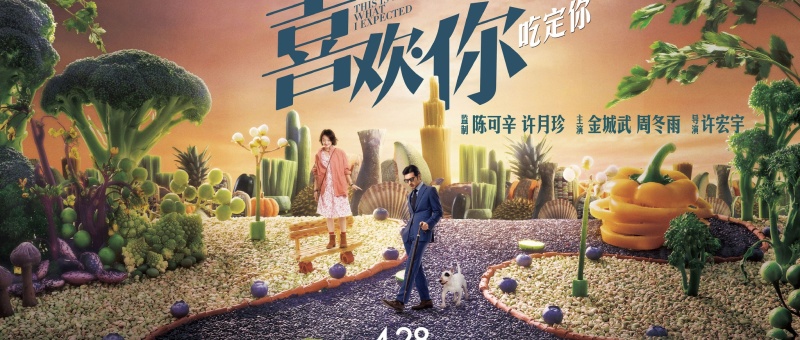
This is not what i expected poster 1The way to a man’s heart is through his stomach, as they say, but the course of true love never did run smooth. The debut directorial feature from editor Derek Hui, This is not What I Expected (喜欢你, Xǐhuan Nǐ) is, to be frank exactly what you’d expect it to be but that only works in its favour. A classic tale of opposites attracting, This is Not What I Expected takes its cues from The Shop Around the Corner only this time it’s not pen pals and music boxes but big business and culinary communication.

Ditzy chef Gu Shengnan (Zhou Dongyu) has been having an affair with her caddish boss whom she decides to teach a lesson by carving a rude message into the bonnet of his car. Only, in a motif which will be repeated, she got the wrong one and has actually left her mark on the car of uptight international hotel magnate Lu Jin (Takeshi Kaneshiro). Jin is after some new hotels to acquire so where should he fetch up at other than the one where Shengnan works? Jin hates pretty much everything about the second rate establishment including the food which is when Shengnan’s sleazy boss asks her to cook up something special to stop Jin from leaving. Cleverly analysing the leftovers from Jin’s rejected meals, she cooks him something to remember and succeeds in capturing his heart. Intrigued, Jin decides to stay on the condition that Shengnan cook all his meals from now on. However, Jin has no idea that Shengnan is the culinary mastermind he can’t stop thinking about and is increasingly irritated by all of their bizarre encounters.

Despite their superficial differences, Shengnan and Jin are perfectly in tune, their culinary messages perfectly understood by each on an elemental level. In real life, however, things are quite different. Jin, a ruthless if eccentric businessman with a mania for precision and a terror of anything remotely out of place, finds Shengan’s happy go lucky, disaster prone existence particularly difficult to understand. Hoping to escape her, he even gives Shengnan an electronic tag that will set off an alarm whenever she’s close by so the pair can avoid each other and the chaos that seems to happen when they meet.

Meanwhile, the conflicts continue to expand in the background. Shengnan doesn’t have much of an issue still being single past the socially acceptable age, but worries that she’s not getting anywhere in her career and will be stuck sous-cheffing forever despite her obvious talents while getting her heart broken by sleazy players like her odious, ambitious boss. Rosebud, the ironically named hotel, is hardly a top tier establishment and probably too much bother for Jin to consider taking on if weren’t for his strange fascination with the cook. His extended stay is beginning to raise eyebrows with his coldhearted father/boss while a mild conflict begins to flicker in his heart when he realises the business plan requires firing the entire kitchen staff and hiring a three star Michelin chef.

Hui does perhaps over egg the pudding in creating a “romantic” rival for Shengnan once she discovers that Jin also employs a (female) “private chef” whose return from vacation might explain why he abruptly stopped dropping by the hotel (and her apartment where he’d virtually moved himself in). The lines between desire and hunger remain increasingly blurred as the two women resentfully vie for the position of tastemaker, tussling over which of them understands Jin better and truly deserves to be the one providing him with sustenance. Yet as the personal chef finally comes to realise (a few steps ahead of Jin), what Jin’s hungry for is no longer just food, what he needs is something more organic than a contractual relationship.

Jin is, in a sense, an embodiment of heartless modern capitalism, raised to be “despised” in order to preserve “solitude” and a “clear mind”. Jin’s austere father is all about order and control, he doesn’t like the emotional because it’s irrational and unpredictable, but the straw that finally breaks Jin’s back is when he tells him that the food at the hotel can’t be “too good” because it would be “distracting” for the clients. For the first time, Jin begins to question his ideology and realises that perhaps it wasn’t so much that he enjoyed eating alone as that he convinced himself he did to avoid thinking about the fact that no one wanted to eat with him. An epiphany born of a strange blow fish fever dream shows him that life in Shengnan’s world, for all of its problematic chaos, could be charming not to say warm even in the rain. It’s not what he expected, but it’s good – like an expertly prepared meal, best to savour it while it lasts.


Original trailer (English/Traditional Chinese subtitles)

Neko Atsume House (ねこあつめの家, Masatoshi Kurakata, 2017)

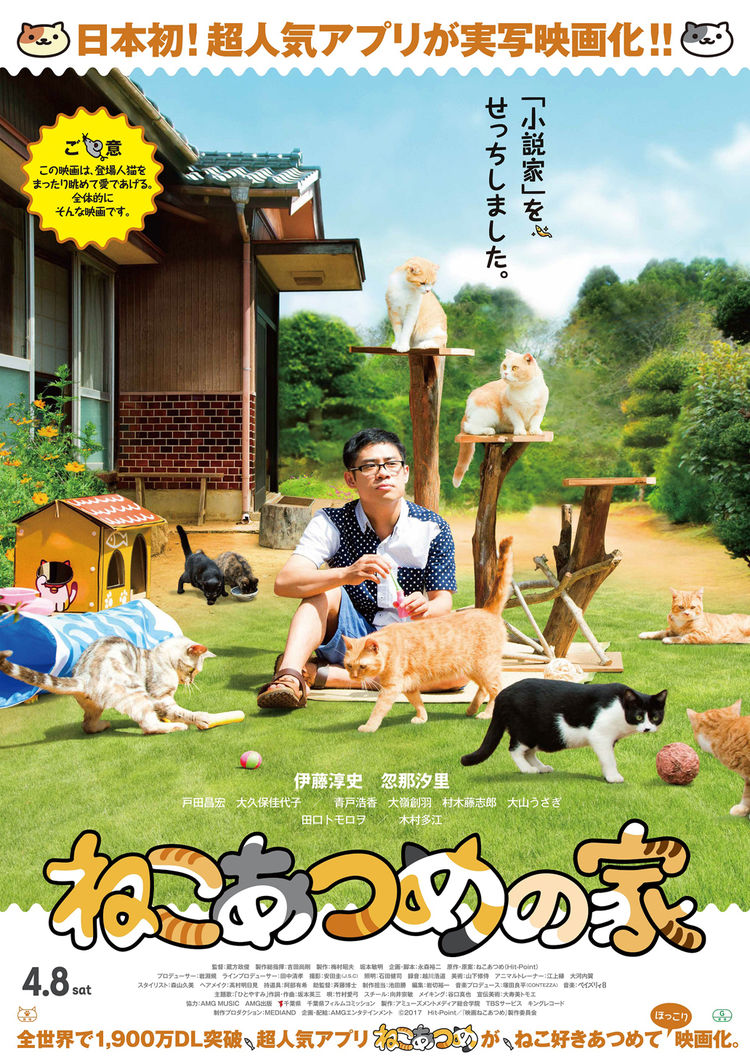
mihon_neko_chirashi_BzenIt’s important to note that cats are living beings and not playthings for humans though they do seem know just what it takes to manipulate our affections. Neko Atsume started life as a popular smartphone game in which the aim is to “seduce” various types of cats to come into your garden so you can catalogue them. The game is just about collecting things and otherwise has no real narrative so it’s not the first one you’d think of for a movie adaptation, but then it does have the all powerful allure of cats being cats.

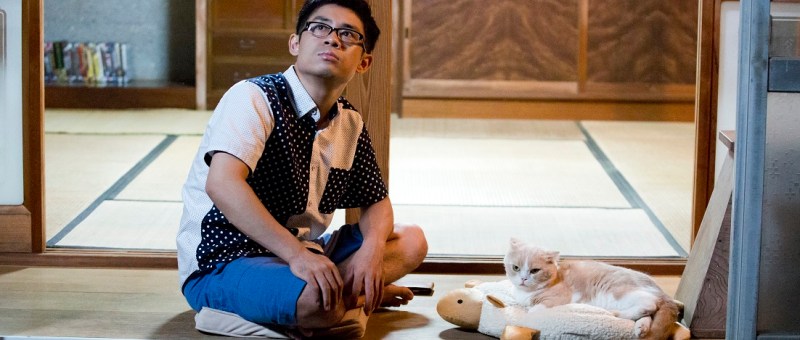
The movie revolves around blocked writer Masaru (Atsushi Ito) who scored a big hit with his debut work but is floundering in the high pressure world of serialised novels and has already skipped the last two editions. His editors are getting antsy – the truth is the series is boring, a simple college love story the like of which has been seen a million times before. What the suits think is…Masaru should turn his protagonist into a zombie! Understandably, he is not very keen on the idea, and neither is his junior editor Michiru (Shioli Kutsuna), but they need ideas and they need them fast. Unfortunately, Masaru doesn’t have any and so, after a strange meeting with a “fortune teller”, he decides to move to the country to get away from it all. The only problem is, his new home seems to be full of stray cats…

Neko Atsume House (ねこあつめの家, Neko Atsume no Ie) isn’t particularly trying to do very much beyond its rather restrictive title, though it does its best to set up Masaru’s internal dilemmas before he finds himself becoming a crazy cat man out in the middle of nowhere. Like many a youngster he’s been beaten down by early success and the subsequent pressure to repeat it. Where he’s going round in circles with a cliched story of young love, his contemporary who put out a less successful debut at the same time as Masaru’s, has gone on to score billboard worthy hits and become a rising star of the literary scene. At a particularly low point, Masaru even tries to add a few positive comments underneath his own work in the hope of digging up fans but only kicks the hornets nest of abuse as the mean spirited readers seem to know right away the only person who would say anything nice about his work is Masaru himself.

In touch of the meta, it’s Masaru who is the zombie, chowing down on the remains of his artistic integrity in order to save some semblance of a career. Of course, it doesn’t work. Unable to get any real writing done, Masaru becomes increasingly obsessed with the stray cats outside, eventually building them an entire mini paradise so they’ll come and keep him company while he’s busy not writing. In true fatalistic fashion, it turns out that Masaru has loved cats all along. He just forgot about it, and that’s one of the reasons he can’t write. Then again, perhaps it was just as Michiru, who never lost her faith in him, had said – he had to learn to be free like the cats in the garden in order to get his creative juices flowing again. At any rate, an up close observation of the lazy lives of pampered kitties begins to bring him closer to the human world, especially when he ends up working for the crazy (in a nice way) lady (Tae Kimura) who runs the local feline grooming centre and has to up his people skills as well as his cat man ones.

The latest in a long line of low budget dramas in which a conflicted creative exiles themselves from “real” life to get their mojo back, Neko Atsume House is at least the nicest in which Masaru’s petulance only really stretches to one unkind conversation with Michiru before he begins figuring out how to fix his many and various personal problems. Otherwise, the draw is the cats who are generally content to let it all hang out. Superficial, if charming, Neko Atsume House knows its target audience and proves a delectable enough treat to attract its very own cohort of cat collectors ready for cataloguing.


Original trailer (no subtitles)
Looking for Lucky (寻狗启事, Jiang Jiachen, 2018)

Looking for lucky posterA literal shaggy dog story, Jiang Jiachen’s Looking for Lucky (寻狗启事, Xún Gǒu Qǐshì) is not just the tale of one hapless young man’s attempt to regain his mentor’s approval in the form of his prize pooch, but of that same man’s desperation for a “lucky” break that will set him on a path to middle-class success without the need to debase himself through bribery. A melancholy exploration of the perils and pitfalls of youth in Modern China Jiang’s indie dramedy finds little to be optimistic about, save the faith that nature will run its course and perhaps you will end up where you’re supposed to be even if you have to go on a wild dog chase to get there.

Zhang Guangsheng (Ding Xinhe) is an ambitious grad student from a humble background. With graduation looming, he’s preoccupied about turning his educational investment into a solid job opportunity. Luckily he’s spent the last three years playing errand boy for his professor, Niu, who has all but promised him a cushy faculty job as long as he continues to play his cards right. Everything starts to go wrong when Guangsheng is asked to dog-sit while Niu is away and unwisely delegates the responsibility to his drunken grumpy father (Yu Hai) who loses him after the dog supposedly bites a stuck up little boy who was teasing him. Guangshang does his best to find the dog before Niu gets home, even succumbing to buying a new dog just in case, but all to no avail.

The reason Guangshang needs to find the dog isn’t just guilt and embarrassment at having potentially caused emotional distress to someone he respects, but because he knows that the failure to cope with this minor level of responsibility may ruin his relationship with Niu. Again, the relationship itself is not what’s important so much as what it can do for his career prospects. Guangshang is from a humble background and lacks the resources to buy his way to success as other young people often do – an endorsement from someone like Niu is his only chance to catapult himself into a steady middle-class life. Thus he’s spent the last three years bowing and scraping, debasing himself to be Niu’s go to guy and now it’s all going to out of the window thanks to his dad’s mistake.

A neurotic intellectual, Guangshang’s relationship with his polar opposite of a father is already difficult even before the dog incident. Guangshang’s dad is one of China’s many “laid off workers”, unceremoniously made redundant from a job for life as part the nation’s longterm economic modernisation. An embittered, angry man Guangshang’s dad quarrels with everything and everyone, sees scams everywhere, and has a much more cynical, world weary belief system than his kindhearted, idealistic son. The pair do, however, have something in common in their striving to live “independently” on their own skills alone. Abhorring the corruption of their society in which nothing is done fairly and money rules all, they each stubbornly refuse to give in and do things the “normal” way, not wanting the kind of success than can be bought.

Guangshang might be prepared to humiliate himself by playing servant, but he has his pride and doesn’t like seeing his poverty deployed as a weapon against him – especially by a “wealthy” friend who has looked at all the files and “admires” Guangshang’s perseverance, nor by his mother and her immensely calm second husband who are only too happy to give him the money to “buy” a university position, but not to help his father when he gets himself into trouble (again). Yet what Guangshang eventually discovers is that he has not lived as far from the systems of corruption as he had assumed – a realisation that both bolsters and destroys his sense of self confidence as he begins to understand his father’s true feelings while his sense of security in his academic prowess threatens to implode.

Everybody wants something – usually money, sometimes advancement, but no one can be trusted and nothing is done for free out of the goodness of one’s heart. Guangshang, without money, pays in other ways and then is cruelly undercut by someone else forced to do the same only in a sadder, even more morally dubious fashion as Niu is exposed for the corrupt figure he really is despite his “scholarly” standing. “Let nature take its course” Guangshang is urged by a fortuneteller he turns to in desperation for an indication of the whereabouts of his missing dog, but Guangshang is a young man in a hurry and has no time to wait around for a less than enticing fate. Yet for all the suffering and petty disappointments, justice is eventually served, patience rewarded and the virtuous victorious. Maybe it does all come right in the end, so long as you’ve the patience to let the dog off the leash and enough faith to see him safely home.


Looking for Lucky was screened as part of the 2018 New York Asian Film Festival.

Original trailer (English subtitles)

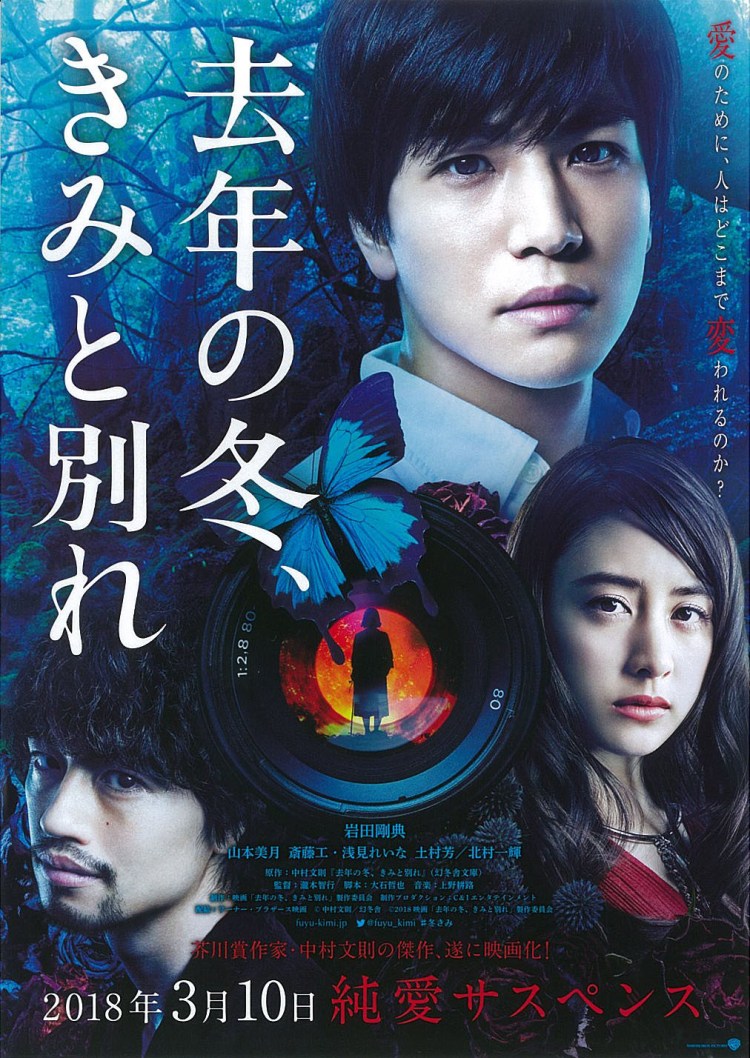
Last Winter, We Parted (去年の冬、きみと別れ, Tomoyuki Takimoto, 2018)

Last Winter we Parted posterAmong the most promising young writers of Japan, the work of Fuminori Nakamura is, it has to be said, extremely dark. Adapted by Grasshopper’s Tomoyuki Takimoto, Last Winter We, We Parted (去年の冬、きみと別れ, Kyonen no Fuyu, Kimi to Wakare) is as poetic an exploration of the dark side of desire as its title implies. Parting is, it turns out, not so much sweet sorrow as a wrenching act of existential dissonance that requires an absenting of the self and the creation of a new dark entity rising from the ashes of a once pure soul.

The tale begins in flames as a blind model, Akiko (Kaho Tsuchimura), burns to death in the studio of a respected photographer, Kiharazaka (Takumi Saito). Kiharazaka claims the fire was an accident and that he tried to save the victim but was not able to. Others claim that Kiharazaka had kidnapped Akiko and held her prisoner before deliberately setting fire to her in order to photograph a body burning alive. Released on a suspended sentence, Kiharazaka remains the focus of media attention which is where freelance writer Yakumo (Takanori Iwata) enters the picture. He is convinced Akiko’s death was not an accident and fascinated by an eerily oppressive photograph taken by Kiharazaka has approached a mainstream news organisation with a pitch for a book profiling the famously enigmatic figure with the ulterior motive of exposing the darkness of his soul.

The exposure of the authentic is the concern that binds Yakumo and Kiharazaka in a mutually destructive act of artistic inquiry. Kiharazaka’s most famous and only real success of a photograph features a whirl of butterflies that feels oddly like drowning as if pulled towards something dark and oppressive. Like the butterflies he observed, Kiharazaka instils fear while beguiling, a good looking man who seems to make a habit of luring vulnerable women into his web of destruction with a promise of intimate recognition, that he alone is able to truly see them and bring their true selves to the surface in act of artistic connection. Inspired by Akutagawa’s Hell Screen, he photographs only what he sees but craves darkness and violence, eventually, as Yakumo fears, allowing his need for fiery visions of hellish brutality to push him into heinous acts of human cruelty.

Meanwhile, Yakumo searches for an explanation behind Kiharazaka’s unsettling nature, trying to expose his own true face through (ostensibly) less violent means. He discovers that Kiharazaka and his sister Akari (Reina Asami) were orphaned after a violent attack in their home during which they were also injured. He hears that they may have endured years of abuse and cruelty at the hands of their father and that both are in some way warped, locked into an incestuous world of pain and suffering. A high school friend warns him that Kiharazaka has a magpie-like tendency to steal the things of others and that Akiko probably had a boyfriend which is what made her sparkle to Kiharazaka’s monstrous eyes. Still, Yakumo dangles his own fiancée, Yuriko (Mizuki Yamamoto), in front of the dangerous man as if daring him to take her while Kiharazaka declares himself captivated by her failure to know her “true self” which only he can expose.

Of course, not all is as it seems and there are several layers of “truth” in play as Yakumo continues his investigation and becomes further entangled in the spiderweb of Kiharazaka’s warped existence. Later, hearing from Akiko, she reminds us that there are other ways of “seeing” and that in the end she was not the one who was “blind” to the reality. Akiko’s boyfriend lost her precisely because he feared doing so, became over protective and patronising, and ruined their true connection through an over anxious preoccupation with unseen threat. Love can constrain as well as liberate, it makes people do dark things in its name and provokes chaos and confusion in place of happiness and harmony. Like the butterflies it can beguile while instilling fear.

Yet that same darkness also fuels art as in Kiharazaka’s distressing photographs and Yakumo’s all encompassing need to fulfil his “dream” of becoming an author. Vengeance takes many forms but all of them are destructive and in order to achieve it, one must enact a murder of the self leaving nothing behind other than a burnt out husk once the bloody business is done. A wretched tale of inescapable torments, the legacy of violence, frustrated loves, and the dark side of desire, Last Winter, We Parted is a suitably poetic exploration of the nihilistic despair in the hearts of its corrupted heroes living for love but only through a spiritual death.


Original trailer (no subtitles)

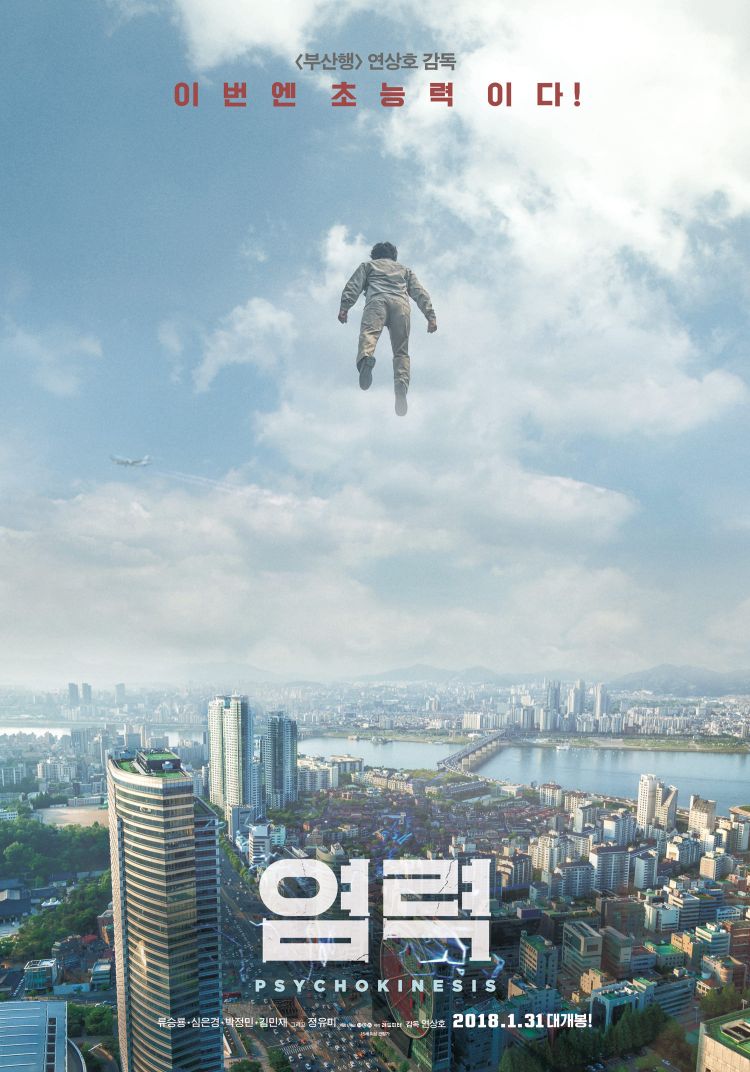
Psychokinesis (염력, Yeon Sang-ho, 2018)

Psychokenesis posterThe animated world of Yeon Sang-ho is dark and cynical, finding only fear and anger in the hopeless vision of contemporary Korea that his films continue to paint. His first live action feature, Train to Busan, began to see a little light as its jaded protagonist finally rediscovered his humanity while the innocent were eventually allowed to find a degree at least of rescue. Psychokinesis (염력, Yeomlyeok), in once sense, continues the theme in centring itself on another of Korean cinema’s bad dads, one so morally corrupted that he rejects all responsibility to others and lives only for the self-indulgent pleasure of the petty scam. Given superpowers, his thoughts turn to finance but eventually lead to an opportunity to right himself in societal eyes by reconnecting with his estranged daughter and accepting his responsibility as a family man.

Seok-heon (Ryoo Seung-Ryong) left his family when his daughter was only ten years old. These days he makes a living as a (lazy) security guard while supplementing his income by pilfering coffee and toilet paper from the company. After drinking spring water from a mountain shrine which, unbeknownst to him, has recently been struck by a mysterious meteoroid, Seok-heon realises he has developed the power of psychokinesis but is only really interested in how it might benefit him financially. That said, Seok-heon’s thoughts do not turn to crime, but to fame – he thinks it might make a good magic act and has heard there can be a lot of money to be made on the circuit.

Shortly after his magical revelation, Seok-heon gets a call from Ru-mi (Shim Eun-kyung) – his now grown up daughter who had been running her own very successful fried chicken restaurant until the shop was compulsory purchased to make way for a shopping mall intended to cater for Chinese tourists. Ru-mi and some of the other shopkeepers have been engaged in a resistance movement, refusing to let their property be taken until they have received fair compensation. During an altercation with the thugs sent in to evict them by force, Ru-mi’s mother was killed – which why is she called, to invite her long lost father to the funeral. Though Seok-heon is not exactly keen to get involved, he eventually realises that his new found abilities might prove useful and help him restore himself in his daughter’s judgemental eyes.

As in Train to Busan, Seok-heon is a cynical and jaded father but this time he’s one very much down on his luck, one of life’s losers whose decision to accept defeat has been lifelong and total. Faced with Ru-mi’s cohort of resistance members, he publicly refuses to help, pointing out that their battle is doomed to failure and it would be better to just give up now. Ru-mi, apparently still capable of additional disappointment, reminds her father that this is what he does – when things look grim he runs away. Ru-mi refuses to be like her dad, and therefore refuses to give up without a fight.

Yeon once again injects some background social criticism into an otherwise friendly tale of dead beat dads and the power of community. Echoing the Yongsan tragedy, Yeon makes the destruction of a neighbourhood to build a shopping mall for tourists his battleground as Ru-mi and her fellow resistance members hole up behind a barricade throwing Molotov cocktails at the police and trying to avoid a fight with the thugs who work for the corrupt construction company behind the whole affair. To make matters worse, Yeon takes us past the site of so much drama at the film’s conclusion, showing us an empty lot, a scar on the landscape memorialising the senselessness of corporate greed which eventually eats itself and stifles any kind of progress economic or social. Ru-mi and the others are powerless to resist their eviction but insist on the compensation they ought to be entitled to which would allow them to begin their businesses again elsewhere so they can continue to earn a living.

Seok-heon is the archetypal apathetic man who thinks it’s pointless to resist and is content to live in as corrupt a way as his society permits. He refuses his responsibility to others, walking past the cleaner being threatened for taking the “free” coffees from the lobby he convinced her were OK to take whilst lamenting her “stupidity” for inexpert pilfering. Battered and defeated, Seok-heon rejoices in pettiness, getting his kicks by shirking at work and getting one over on the bosses by stealing. His first thought on getting powers isn’t their capacity for good, but nor is it a lust for power or revenge, he merely wants to show off a little and earn big bucks – his crime is petulant self-indulgence, not active villainy. Reuniting with his daughter and witnessing her fighting for something she believes in, Seok-heon begins to rediscover his long buried heroism finally becoming a father worthy of his daughter’s respect.

It’s not all plain sailing however as the corporate stooges are not just thuggish but clever and devious. Figuring out that the twin issues to evicting the protestors are the unsolved murder of Ru-mi’s mother and Seok-heon’s superpowers, they set about undermining both – setting up a patsy for the crime and attempting to blackmail Seok-heon by leaking footage of his powers to the news in the hope that the country turns against him. Unable to explain his unusual abilities, TV news pundits do what they always do – blame North Korea, and insist he must be some kind of spy and/or infiltrator.

Working with a much lower budget, Psychokinesis is a lighter affair than might be expected, essentially mixing a hapless dad narrative with a superhero origin story but with a more cheerful tone than one usually associates with Yeon. As expected, you can’t fight city hall and Seok-heon’s assertion that the battle was always a losing one may prove to be correct but what he discovers is that is not necessarily a reason to just give up and walk away. Even if one plan fails, there may be other ways to “succeed” so long as there are enough people willing to stand up for what’s right whilst holding fast to each other, committed to building something better rather than just to tearing something down.


Psychokinesis is currently streaming worldwide via Netflix.

Original trailer (Korean subtitles only)

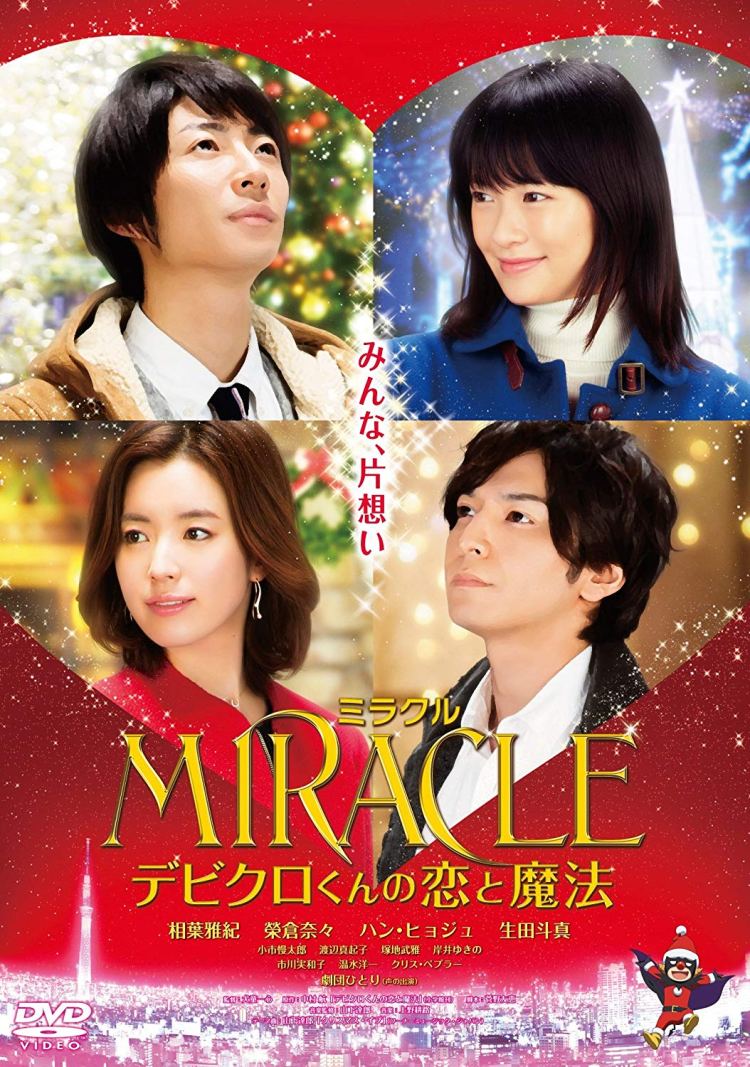
Miracle: Devil Claus’ Love and Magic (MIRACLE デビクロくんの恋と魔法, Isshin Inudo, 2014)

Miarcle devil claus posterChristmas is a time for romance, at least in Japan, but thanks to the magic of the season it can also be confusing. For one nerdy aspiring mangaka at the centre of Isshin Inudo’s Miracle: Devil Claus’ Love and Magic (MIRACLE デビクロくんの恋と魔法, Miracle Devil Claus-kun no Koi to Maho) it’s about to become very confusing indeed as he becomes convinced a prophecy he himself made up when he was a child is actually coming true. Cross-cultural love, lifelong longing, frustrated dreams, and misconstrued realities threaten to derail fated romance but never fear – it is Christmas after all, and even evil Santa has his heart in the right in place as long as anyone is prepared to really listen to him.

Hikaru (Masaki Aiba) and Anna (Nana Eikura) have lived across the street from one another all their lives and been friends as long as either of them can remember. These days, Hikaru is chasing dreams of manga success while working in a bookstore, and Anna is an aspiring artist specialising in large scale metal work. 20 years ago, Hikaru made up the figure of Devil Claus who is the embodiment of Santa’s emotional pain on being forgotten and abandoned for 364 days of the year. Seeing as no darkness can be permitted in the heart of Santa, Devil Claus evolved into his own pixie-like creature and now mostly stars in the cute, inspirational posters Hikaru illegally pastes all over town.

Devil Claus is also a big part of a prophecy Hikaru revealed to himself in which he believed Devil Claus would eventually lead him to the “Goddess of Destiny” who will appear dressed in red with the moon at her back, carrying knowledge of the future and accompanied by a leopard! It is quite a list and so when Hikaru bumps into an extraordinarily beautiful woman wearing a red coat, carrying a wooden leopard in one hand, and a collection of books about “the future” in the other, he comes to the obvious conclusion. In a coincidence worthy of the movies, it just so happens that the woman is Seo-yon (Han Hyo-Joo), a Korean artist in charge of organising a large scale Christmas display which is also the project Anna has been working on.

Predictably enough, Anna has long been in love with the completely clueless yet pure hearted Hikaru. Ironically, Hikaru thinks of Anna as a big sister who has always protected him when he is so obviously unable to stand up for himself, but though she berates him for his lack of backbone she is the one too embarrassed to confess her real feelings and has been patiently waiting for him to finally notice her all her life.

Nevertheless, this particular plot strand takes a strange turn when Anna figures out that Hikaru’s “Goddess of Destiny” is almost certainly Seo-yon. Despite her own feelings she does her best to fulfil Hikaru’s dreams but Inudo frames her behaviour strangely – Anna acts coldly towards Hikaru, while gazing somewhat longingly at Seo-yon who seems to literally sparkle as the sun shines ever behind her. It would be easy to come to the seemingly obvious conclusion that Anna has a different reason for being irritated with Hikaru and his current romantic pre-occupation (why exactly does she already have the book Seo-yon has been wanting before she decides to give it Hikaru to give her?), but the dilemma is later reframed as an inner conflict about her lack of traditional femininity. Yes, Anna’s “manly” dungarees and love of welding might easily play into a stereotype supporting the first conclusion but are actually offered as reasons for feeling underconfident in romance. Just as Hikaru thinks he isn’t good enough for someone so glamorous and accomplished, Anna thinks she isn’t good enough for Hikaru because she can’t measure up to a woman like Seo-yon.

All of that aside, the refreshing message behind Devil Claus is less one of conforming to a social ideal than of learning to regain your self confidence in order to open yourself up to the vulnerability of exposing your true feelings. Hikaru’s romantic and professional rival (not that Hikaru would ever really think of anyone else as an enemy), Kitayama (Toma Ikuta), was one a top rated city trader and now apparently successful mangaka but in a depressive slump over a conflict of artistic integrity. Only by remembering the importance of sincerity and emotional connection can he unlock his creative block by remembering what it is that’s really important. Frothy fun and proud of it, Devil Claus mixes infinitely cute if slightly subversive animation with innocent and pure hearted romance in which the main messages are embracing your authentic self and accepting other people’s. In other words, a perfect Christmas story.


Original trailer (no subtitles)

The Bros (부라더, Chang You-jeong, 2017)

The Bros posterTime passes differently in the country. Two brothers from rural Andong thought they’d escaped the relative restrictions of an oddly feudal upbringing, but something keeps pulling them back. Ghosts literal and figural force them to return home, confront each other and their remaining family, and then attempt to come to some kind of acceptance of their places in the grand scheme of things in light of their newly acquired knowledge. The Bros (부라더, Buladeo) stars unlikely siblings Ma Dong-seok and Lee Dong-hwi and is adapted from the stage musical “The Brothers Were Brave” which was also directed by Chang You-jeong. Set in rural Andong, the film is an affectionate, if not entirely sympathetic, portrayal of the fiercely traditional way of life in tiny country towns in which it really still matters who accedes to be the head of a family and women are expected to know their place.

“Estranged” brothers Seok-bong (Ma Dong-seok) and Joo-bong (Lee Dong-hwi) have each skipped out on their familial responsibilities for lives of modern “freedom” in Seoul. Seok-bong is a “treasure hunter” who gives eccentric lessons on archeological ethics to bored students while overspending on the latest tools to aid him in his (permanently unsuccessful) quests, while Joo-bong is an ambitious salaryman whose career runs into a problem after he is accused of “embezzlement” for ruling out the cheapest route for a new road because (unbeknownst to his bosses) it would cut right past his childhood home. Just as Seok-bong realises he’ll have to pay back the outrageous sum of money he “speculated” on new equipment when a civil war breaks out in his prospective dig site, and Jong-boo frets over his workplace blunder, both sons get an unexpected text informing them that their “estranged” father has died and they’re “welcome” to attend the funeral, if they should wish. As both brothers are in need of a getaway plan (and also an opportunity to ask for some financial assistance), they find themselves finally going “home” only to unexpectedly find each other on the road, start bickering in the car, and then accidentally run over a random young woman (Lee Honey) apparently out walking in this otherwise barren and deserted stretch of land.

On their arrival, the brothers are not exactly embraced by their loving family. Nobody really expected to see them and, as it turns out, their grandfather didn’t even realise they’d been invited. The boys’ rural country home is one of fierce traditionality, seemingly cut out of time and existing in the feudal past where people refer to each other via archaic titles and it really seems to matter who is declared “first son” of the family. Both Seok-bong and Joo-bong left the village because they had no interest in all this feudal nonsense and resented the old fashioned authoritarianism which defined their relationships with the apparently tyrannical patriarch they have both come home to bury, if not perhaps to mourn. Seok-bong, in particular, remains extremely resentful towards his late father for the way he treated their mother who, he assumes, must have been very unhappy all her married life.

Rural Andong, it turns out is not a great place for women. The brothers do have a “friend” in the family complex in the form of Mi-bong (Jo Woo-jin) – a policeman recently married to a very nice but often frustrated young lady who has taken to smoking (still considered scandalous in these parts) in secret in order to relieve the stress of being a married woman suddenly expected to undertake all these arcane social responsibilities, which include being “nice” to her overbearing mother-in-law who seems to delight in scolding her for doing everything wrong. In fact Mi-bong’s wife wants to move to Vietnam to get as far away from the family as possible, but  finds it difficult to abandon the feudal way of thinking in wondering what it would be like to be the wife of a “first son”. Women here are supposed to know their place – stay silent, serve the men. When Joo-bong’s “lady friend” from the city shows up unexpectedly, everyone reacts to her as a “potential daughter-in-law” and sets about giving her the third degree which includes a pop quiz on the three duties of an Andong woman which include obeying a father, then a husband, and then presumably a son. In a running joke, no one can even remember the given name of the boys’ mother because she was always just referred to as “first daughter-in-law”.

All in all, it’s no surprise that Seok-bong and Joo-bong wanted to leave but then again, it turns out there was a lot more going on with the family than they were ever privy to know and they have perhaps judged their father unfairly without knowing all the facts. This being a comedy, the central point is the repair of a broken family – firstly in the brothers repairing their bond as they face the crumbling of their individual quests and are forced to work together, unwittingly uncovering the truth about their family history. Meanwhile, they also have to cope with the strange woman they apparently ran over who seems to have lost her memory but has valuable information to impart to each of them. Haunted by the ghosts of home, neither of the boys finds what they originally came for but gets something (arguably) better in rediscovering their roots and experiencing the upsides of familial connection.

Filled with the strangeness of the village tradition with its mourning suits, wandering monks, shamanic rituals, and uncles who speak only in incomprehensible four character idioms The Bros is an absurd affair but one with its heart in the right place. Chang enlivens the otherwise unremarkable comedic narrative with interesting visual compositions as the mysterious woman seems to drag the brothers away into a pretty fairytale land filled with oversaturated picture book images in which the moon is just a little bit bigger than you’d expect and oddly ‘70s fashions of purple and yellow lend a cheerful and nostalgic air. A comedic tale of family, brotherhood, and the unexpected endurance of feudal tradition, The Bros is a warm and fuzzy tribute to rediscovering one’s roots but also one with unexpected bite in its subtle undercutting of the pervasive misogyny which underpins it.


The Bros is currently available to stream in the UK (and possibly elsewhere) via Netflix.

Original trailer (Korean subtitles only)

Sid & Aya (Not a Love Story) (Irene Villamor, 2018)

Sid & Aya posterIn an increasingly commodified society can there still be room for genuine connection? Sid and Aya attempt to find out in Irene Villamor’s deceptively titled Sid & Aya (Not a Love Story). Sharing much in common with Peter Chan’s Comrades: Almost a Love Story (save for the obvious political allegories), Villamor’s film is a refreshing antidote to the sometimes saccharine, soap opera influenced romantic comedies which often dominate the Philippine box office, swapping classic melodrama for low key indie feels. Yet as much as Sid & Aya is a “love story”, just not of the usual kind, it’s also a perfect encapsulation of a modern social relations as its cynical, amoral hero begins to rediscover his soul through getting to know the tough as nails, wounded but persevering heroine.

Workaholic stockbroker Sid (Dingdong Dantes) is a chronic insomniac. He doesn’t really know what keeps him up at night. He’s read that the causes of sleeplessness include regret, self blame, overthinking, anger, depression, and loneliness but those are things Sid doesn’t particularly want to engage with and so he just muddles through, wasting time in all night coffee shops. It’s in just such a shop that he first runs into Aya (Anne Curtis) – a waitress, and as we will later discover, dry cleaner and performer in a theme park. Aya’s life is very busy but she could always use more cash seeing as she is supporting most of her family including a sickly father and pregnant younger sister while her mum has been working in Japan for almost 20 years, and so she finds herself giving in to Sid’s unusual business proposition – that he pay her for her time while she chats to him to keep his mind off the fact he’s not sleeping so he doesn’t have to keep torturing himself over why that is.

There’s no getting around the fact that it’s an usual arrangement. Money can’t help but complicate everything, but it also makes it easier for the impossibly repressed Sid to begin opening up seeing as this is all transaction and not connection. The pair inevitably grow closer despite the unusual genesis of the relationship, falling in love despite themselves, but Sid is still too busy dealing with the ghosts of the past and his greedy, success hungry insecurity to be willing to take a “risk” on real love rather than take his soulless relationship with his equally soulless “girlfriend” to the next level.

Sid and Aya come from completely worlds. He has an extremely well paid job as a stock broker, she is working three (now four if you count spending time with Sid) jobs just to get by, barely sleeping and still having no money left over to spend on herself. Sid wastes no time letting Aya know that he “fucks people over” for a living, and though he professes to feel no guilt for his part in perpetuating the shadier aspects of capitalism, his world weary voice over betrays a conflict he doesn’t quite want to voice. He starts off thinking he can buy anything, that his money buys him infinite power over people and things. Sid tries to buy Aya, but Aya can’t be bought – she takes his money, but she remains free.

Attempting to escape familial legacy of failure and abandonment, Sid has closed his heart and committed himself to achieving conventional success while Aya has run in the opposite direction – trying to repair her broken family by making enough money to bring her long absent mother back from Japan. Aya’s family has been scattered by the same forces that Sid has chosen to uphold, forces which also threaten to destroy their nascent romance through a series of conflicting world views coupled with personal insecurities and social expectations. Yet the connection forged between them is real enough to have each of them running scared.

Sid claims he has no time for people he doesn’t “need”, while Aya claims she’s tired of loving the people she “needs” to love. Though they perhaps mean very different things with the word “need”, both remain nervous about addressing what it is they might “want” when acquiring it requires so much risk. Love is not something a cynical man like Sid would feel inclined to bet on, but there’s no prize without risk and no sense in taking the chance if you’re not going to bet it all. A messy, grown up romance Sid & Aya (Not a Love Story) is a refreshingly clear eyed look at modern love which finds that true connection is possible but only when you decide to change the game.


Sid & Aya (Not a Love Story) was screened as part of the 2018 New York Asian Film Festival.

Original trailer (English subtitles)