
 Expectation is a heavy burden for a film. Not just the hopes built by excessive hype, but the way it chooses to define itself in advance. Of course, particularly with big budget studio movies it’s marketing men who decide all that rather than filmmakers but still, it’s hard to escape the feeling of confusion when the way a film was marketed works against its true nature. For a film like Red Carpet (레드카펫), an indie rom-com with a strangely innocent heart, it cuts both ways. The salacious hook is that this is a story of porno hell – tortured artists, egotistical men, and abused women. This is couldn’t be further from the truth. In fact, Red Carpet is deeper than it seems, asking real questions about the place of the porn industry in a modern society and attacking our own unfair and hypocritical judgements on its existence.
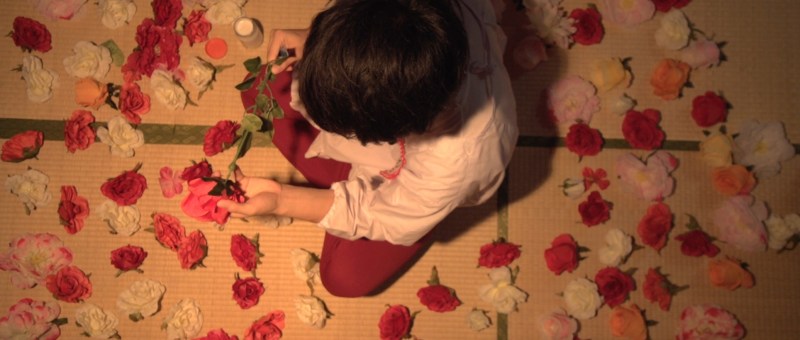
Park Jun-woo (Yoon Kye-Sang) is a lifelong cinephile who dreams of making award winning films he can watch on a Sunday afternoon with his parents, but life has been unkind to him and so he’s been working in the adult video industry for the last ten years. His life changes when he arrives home one day to find a strange young woman waiting there who accuses him of being a prowler and repeatedly hits him over the head with a frying pan. When the police get involved and take Jun-woo’s side seeing as he has the proper documentation it’s revealed that the woman, who has just returned for an extended period living in Spain, has been duped by a housing scam. Jung-woo, being the kindly soul he is, lets the woman, Eun-soo (Koh Joon-hee), live with him until she figures things out. Eun-soo is also a former child actress keen to get back into the profession and takes a keen interest in some of Jung-woo’s scripts never knowing exactly what kind of films it is that he really makes…
Though the setting is the porn industry, director Park makes sure to keep things light and humorous, showing the reality of adult video making but avoiding directly displaying it on the screen. Jung-woo’s work is almost entirely themed around porn parodies of famous movies as in the first shoot we witness where we gradually realise that the whole thing is Oldboy remade as a sex film (apparently including the corridor hammer fight, though no one’s figured out what to do with that yet). More amazing titles follow including the amusing “Inspect Her Gadget”.
Jung-woo may be conflicted about his career as a porn director, longing for the chance to make more “serious” films, but the rest of the crew is fairly happy with their choice of profession. This is, after all, just a job the same as any other. No one here is forced to work in the porn industry. There are no gangsters, no women trapped, abused, or forcibly hooked on drugs to keep them compliant. Everyone here seems to have made a free choice to engage in this type of work and is free to stop anytime they choose.
The problem, in this sense, is ours. Jung-woo and the crew face constant social stigma for what they do. At several points someone (well, always a man) is asked if they watch porn – to which they sheepishly admit, giving the impression that it is something they rarely do and are ashamed of doing. This central fallacy is the entire problem, everyone is watching the films Jung-woo makes – probably thousands more people have watched his adult movies online than have seen the legit movie which was plagiarised from a script that he wrote but was not allowed to direct because he didn’t have the “experience”. Yet everyone disapproves of pornography, tries to deny they watch it, and has the impression that people who make these films are in some way damaged or perverted. Enjoying a meal together in a restaurant, the gang are accosted by a “fan” who asks for a photo with a “famous actress” only to suddenly grab her breast. Just because she’s an actress in adult movies, the man thinks it’s OK to grab her – “she sells her body”, so what’s the problem? The man, who obviously watches porn, does not think of the people who make it as other human beings but as commercial products existing only for his pleasure.
Jung-woo, in a sense, thinks this too but doesn’t quite realise until he’s made to read out a statement at a press conference in which he’s supposed to apologise for his “unethical” behaviour but refuses, avowing that neither himself or his crew has ever felt ashamed of the work they do. Jung-woo’s dreams are directly contrasted with Eun-soo’s as she works hard to become a legitimate actress all the while loosing her individual freedom to the marketing concerns of her agency and facing the prospect of being forced to abandon Jung-woo, whom she has come to care for, in order to keep her new career and avoid the “scandal” of being in any way associated with the porn industry.
Even if it seems like people such as Jung-woo are not allowed their dreams, it can still all work out in the end as long you’re true to yourself and accepting of everything you are and were. Jung-woo’s early career was harmed by an unscrupulous competitor who stole Jung-woo’s shot and took the credit himself but his “success” may only be temporary because he’s living a lie of artistic integrity while Jung-woo and Eun-soo have maintained their authenticity even when it looked like it may cost them everything they wanted. Improbably sweet and charming, Red Carpet is an innocent love story in which dreams come true through hard work, perseverance, and compromise but finally through truthfulness in the refusal to be shamed for simply being what you are.
Original trailer (English subtitles)


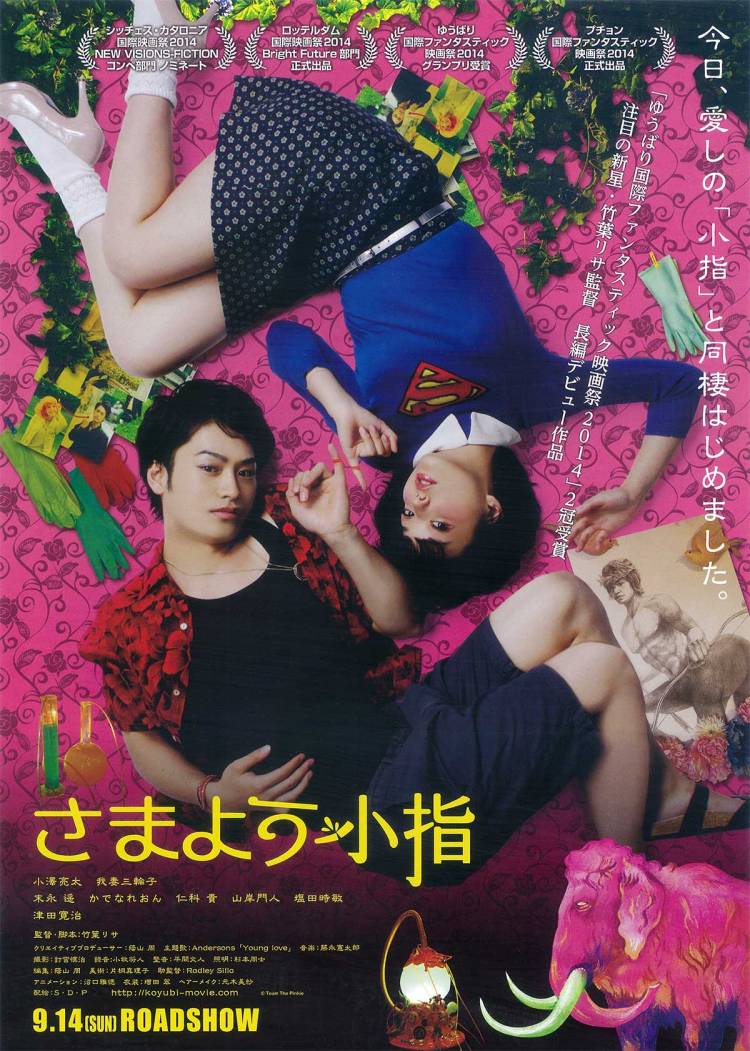
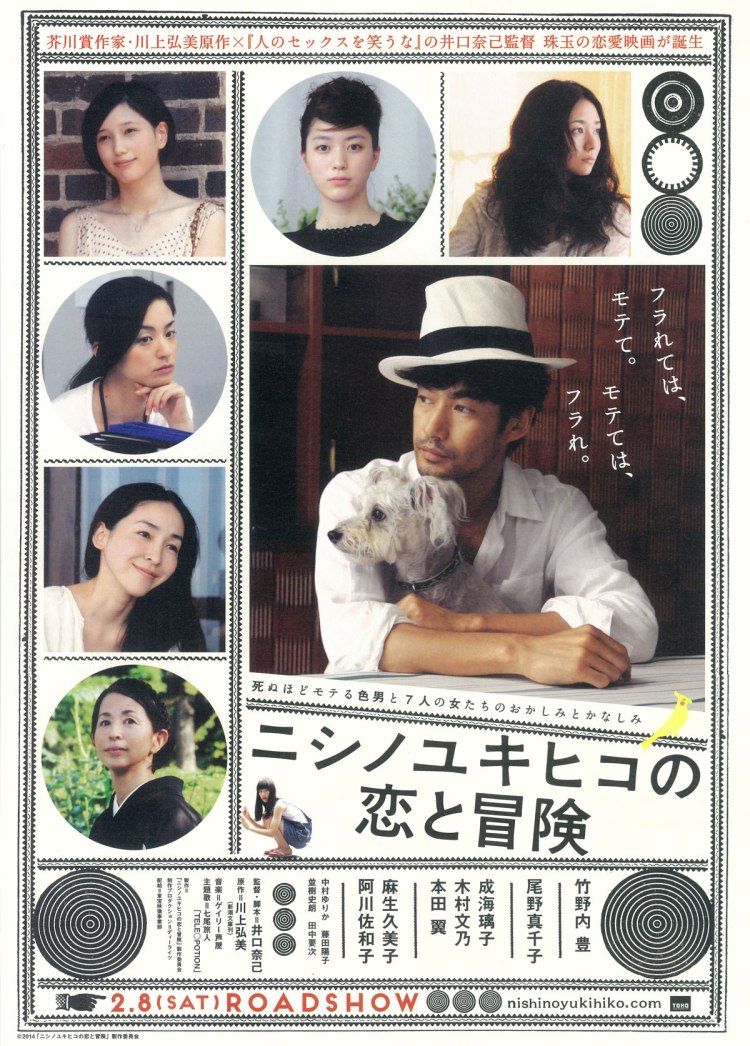 Every love story is a ghost story, as the aphorism made popular (though not perhaps coined) by David Foster Wallace goes. For The Tale of Nishio (ニシノユキヒコの恋と冒険, Nishino Yukihiko no Koi to Boken), adapted from the novel by Hiromi Kawakami, this is a literal truth as the hero dies not long after the film begins and then returns to visit an old lover, only to find her gone, having ghosted her own family including a now teenage daughter. The Japanese title, which is identical to Kawakami’s novel, means something more like Yukihiko Nishino’s Adventures in Love which might give more of an indication into his repeated failures to find the “normal” family life he apparently sought, but then his life is a kind of cautionary tale offered up as a fable. What looks like kindness sometimes isn’t, and things done for others can in fact be for the most selfish of reasons.
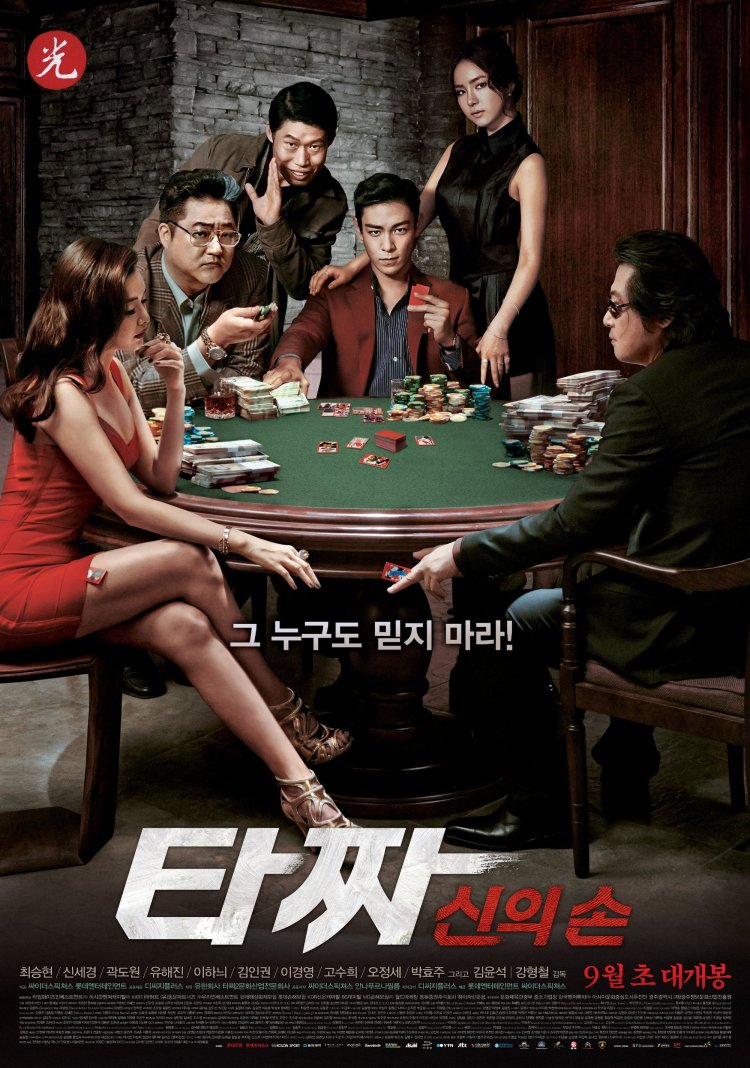 You gotta know how to hold ‘em, know when to fold ‘em, know when to walk away and know when to run. Apparently these rules of the table are just as important in the cutthroat world of the Korean card game Hwatu as they are in the rootinest tootinest saloon bar. Like most card games, having the winning hand is less important than the ability to play your opponent and so it’s more a question of who can cheat the best (without actually breaking the rules, or at least being caught doing so) than it is of skill or luck. A second generation sequel to 2006’s Tazza: The High Rollers, The Hidden Card (타짜-신의 손, Tajja: Shinui Son) is a slick, if overlong, journey into the dark, underground world of gambling addicted card players which turns out to be much more shady than the shiny suits and cheesy grins would suggest.
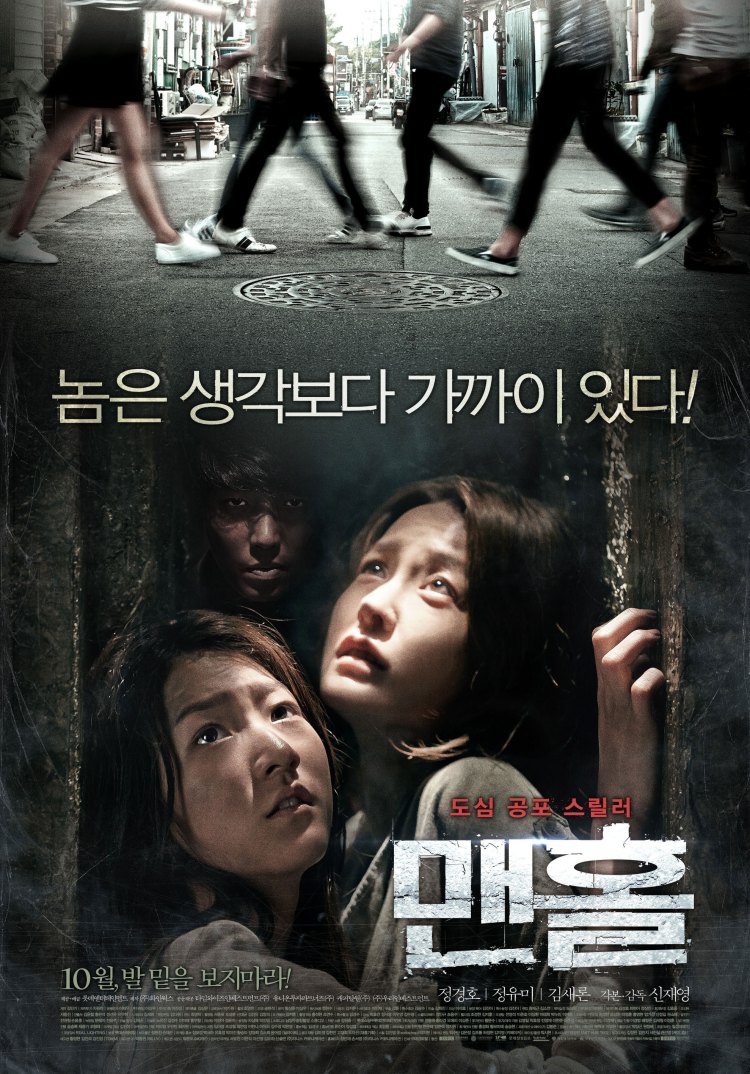 Finding the sinister in the commonplace is the key to creating a chilling horror experience, but “finding” it is the key. Attempting to graft something untoward onto a place it can’t take hold is more likely to raise eyebrows than hair or goosebumps. The creators of Korean horror exercise Manhole (맨홀) have decided to make those ubiquitous round discs the subject of their enquiries. They are kind of worrying really aren’t they? Where do they go, what are they for? Only the municipal authorities really know. In this case they go to the lair of a weird serial killer who lives in the shadows and occasionally pulls in pretty girls from above like one of those itazura bank cats after your loose change.
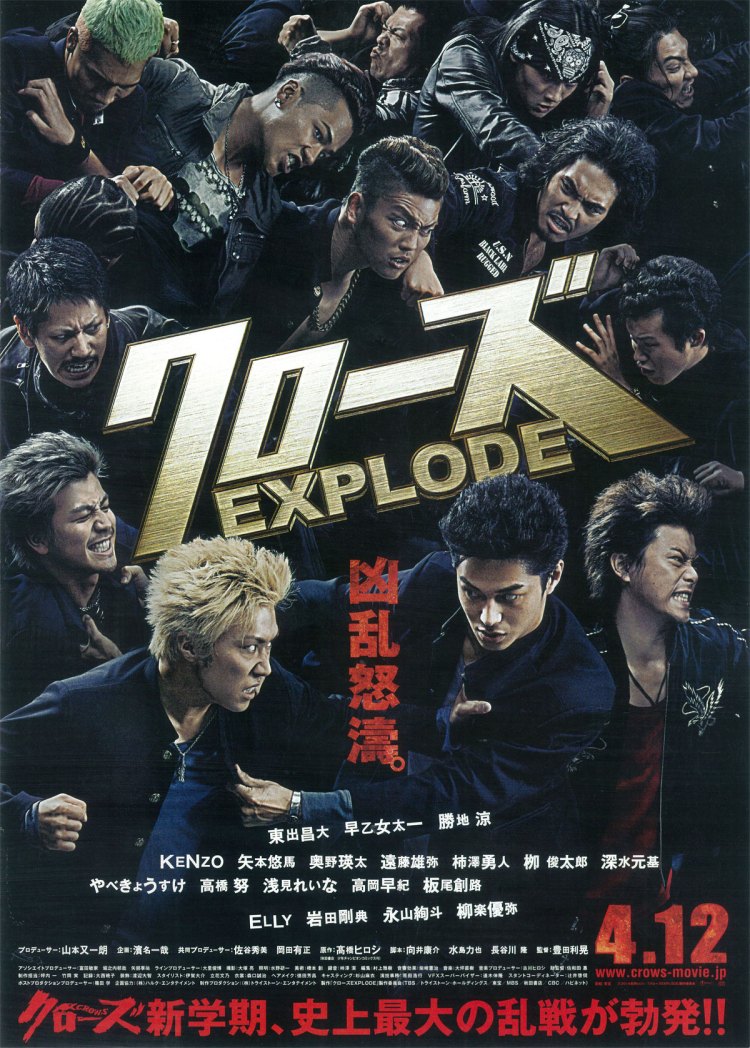 Toshiaki Toyoda made an auteurst name for himself at the tail end of the ‘90s with a series of artfully composed youth dramas centring on male alienation and cultural displacement. Attempting to move beyond the world of adolescent rage by embracing Japan’s most representative genre, the family drama, in the literary adaptation
 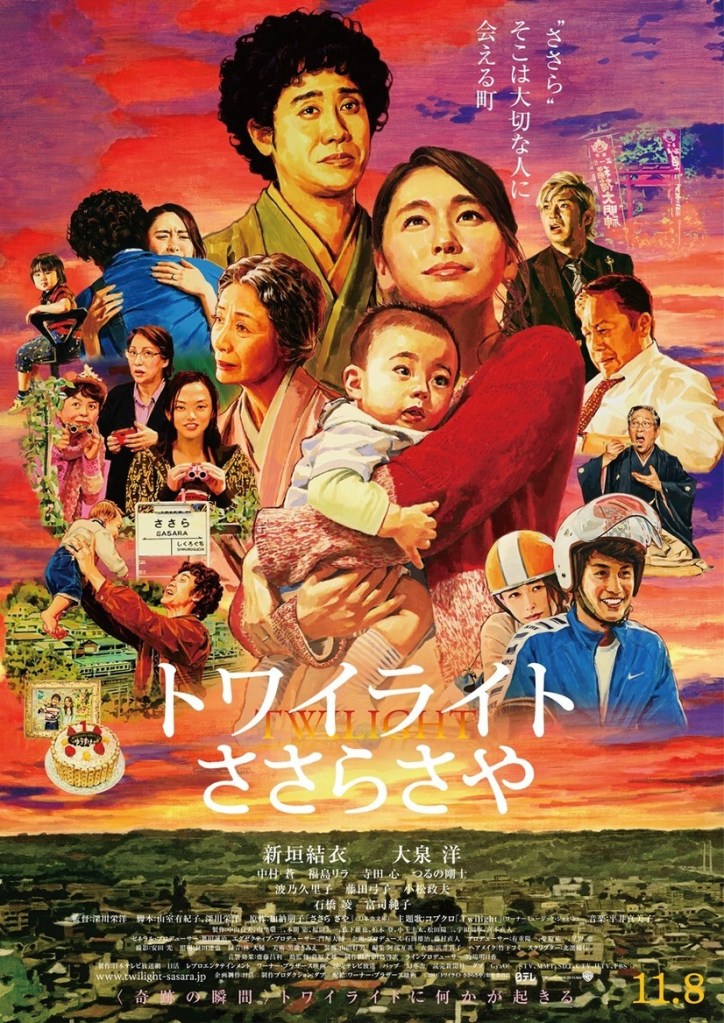 Japanese cinema has its fare share of ghosts. From Ugetsu to Ringu, scorned women have emerged from wells and creepy, fog hidden mansions bearing grudges since time immemorial but departed spirits have generally had very little positive to offer in their post-mortal lives. Twilight: Saga in Sasara (トワイライト ささらさや, Twilight Sasara Saya) is an oddity in more ways than one – firstly in its recently deceased narrator’s comic approach to his sad life story, and secondly in its partial rejection of the tearjerking melodrama usually common to its genre.
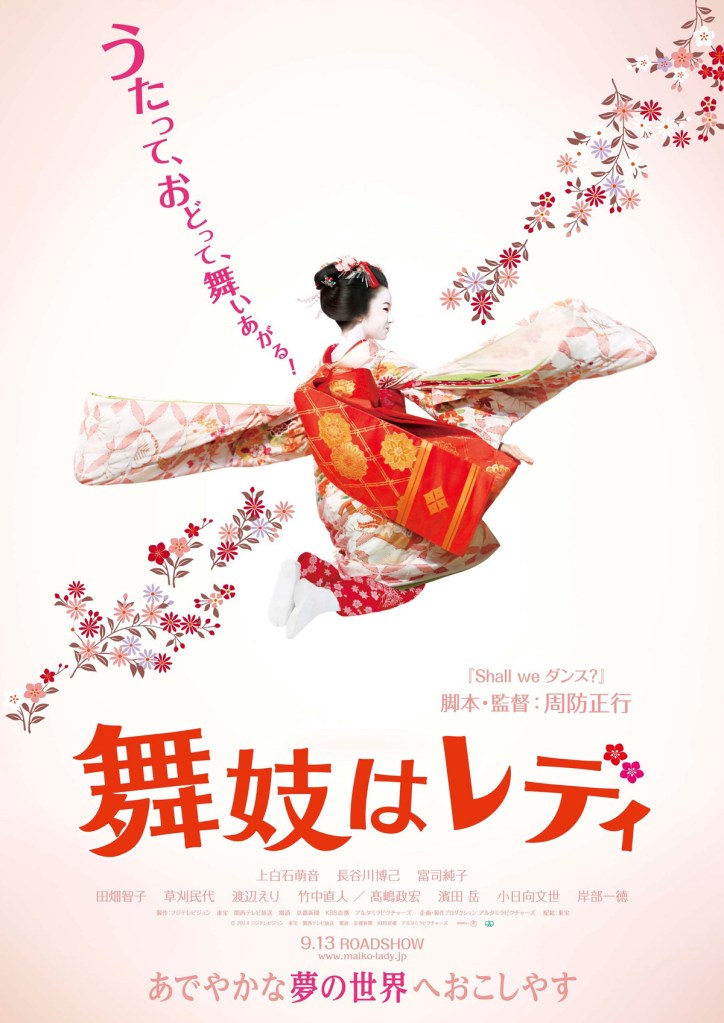 When Japan does musicals, even Hollywood style musicals, it tends to go for the backstage variety or a kind of hybrid form in which the idol/singing star protagonist gets a few snazzy numbers which somehow blur into the real world. Masayuki Suo’s previous big hit, Shall We Dance, took its title from the classic Rodgers and Hammerstein song featured in the King and I but it’s Lerner and Loewe he turns to for an American style song and dance fiesta relocating My Fair Lady to the world of Kyoto geisha, Lady Maiko (舞妓はレディ, Maiko wa Lady) . My Fair Lady was itself inspired by Shaw’s Pygmalion though replaces much of its class conscious, feminist questioning with genial romance. Suo’s take leans the same way but suffers somewhat in the inefficacy of its half hearted love story seeing as its heroine is only 15 years old.
 If there is a frequent criticism directed at the always bankable director Yoji Yamada, it’s that his approach is one which continues to value the past over the future. Recent years have seen him looking back, literally, in terms of both themes and style with remakes of films by two Japanese masters – Ozu in his Tokyo Story homage Tokyo Family, and Kon Ichikawa in Her Brother. While he chose to update both of those pieces for the modern day, 2008’s
  Windows on Worlds