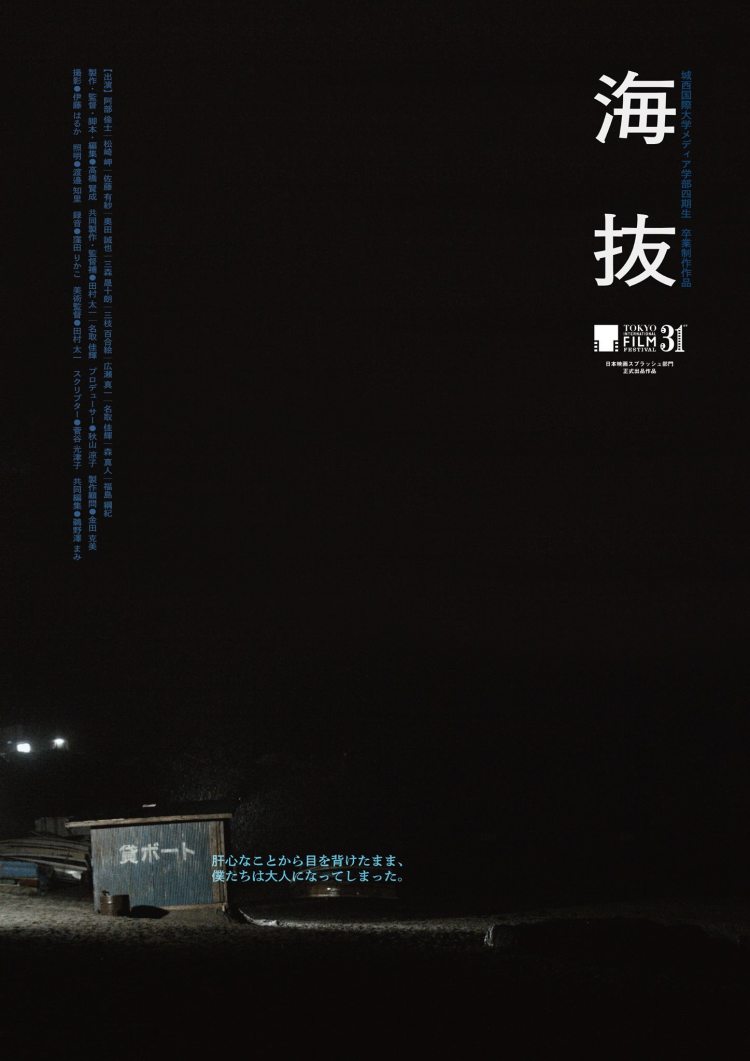
Sea (海抜, Kensei Takahashi, 2018)

Sea posterSome things can’t be forgiven, and there are those for which it becomes impossible to forgive oneself. Inaction is one such crime, as the hero of Kensei Takahashi’s Sea (海抜, Kaibatsu) discovers as he attempts to atone for his failure to oppose wrongdoing followed by a huge overcompensation born of rage towards his own impotence more than a desire to protect. Takahashi’s film is, somewhat problematically, yet another which paints a woman’s rape as something that happened to a man, but does its best to be even handed in assessing damage done to those whose lives were touched by violence of which they were not the direct victim.

Takahashi opens in the present day with the melancholy Hiroshi (Satoshi Abe) going about his mechanical newspaper delivery job. A sad and silent figure, he is not well liked by his colleagues and mostly keeps to himself though his boss appears to be sympathetic towards whatever it is that he’s doing through. Flashing back almost ten years previously, we discover that high school Hiroshi was a nerdy loner and outcast mildly bullied by delinquents Kengo (Seijyuro Mimori) and Tatsuya (Seiya Okada). “Borrowing” his bike, they keep him hanging around on the beach before convincing him to invite a passing young woman they knew in middle school to join them. While Hiroshi is dispatched to fetch some drinks, the boys force Rie (Arisa Sato) into a nearby boat shed and rape her. When Hiroshi returns mid-act, he is too afraid to do anything to stop them and becomes an accidental accomplice to his friend’s degradation.

Some years later, Hiroshi runs in to Tatsuya at a reunion and catches him assaulting another woman at which point his rage boils over. It is not, however, protective instincts which motivate him so much as revenge – he does what he couldn’t do before, which is to say that he avenges the damage done to his own self image rather than acting in deliberate defence of the woman Tatsuya is currently terrorising or an attempt to make him pay for what he did to Rie.

Tatsuya and Kengo are, it has to be said, thoroughly unpleasant people and few will object to seeing them pay for their crimes even if the extent of the violence and its motivation in some sense make Hiroshi no better for being on the side of “right”. Believing the world was about to end (Hiroshi’s high school days took place at the turn of the Millennium), Tatsuya and Kengo thought they could do as they pleased because their actions had no meaning. Hiroshi shows them they were wrong, but damns himself even further as he does so.

Nevertheless, years later Kengo comes calling to plead with Hiroshi not to ruin the “respectable” life he’s built for himself as a conventionally successful husband and father. Admitting his wrongdoing but insisting it’s “all in the past”, he can’t understand why Hiroshi might not be willing to let it slide. Hiroshi, rightly, tells him he’s apologising to the wrong person and should probably attempt to make some sort of atonement towards Rie though she herself might prefer to not to have the past dragged up again. Meeting her again by chance, Hiroshi discovers she too has been able, to an extent at least, to move on and build a happy life for herself while he alone remains locked in a purgatorial cycle of self punishment and isolation, unable to live with his twin crimes, the first of inaction and the second of rage.

Powerlessness continues to dominate his life as natural disasters bring sunken feelings to the surface just as they were about to settle. Supported by a loving girlfriend (Misaki Matsuzaki) who attempts to bring him back to the world, Hiroshi finds himself unable to reconcile the twin sides of his fractured masculinity as man who failed to protect and then received the gratitude freely given to a saviour when he only sought to save himself. An artfully composed character study, Sea is a bleak meditation on the impossibilities of redemption as its hero finds himself unable to escape the past while wallowing in his own sense of wounded male pride in a society which continues to stigmatise victimhood and reward silence rather than attempt to address the destructive effects of entrenched patriarchy.


Sea was screened as part of the 2019 Nippon Connection Film Festival.

Original trailer (English subtitles)
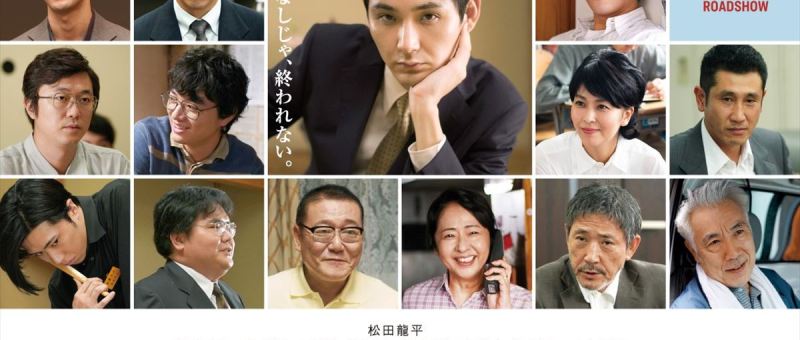
The Miracle of Crybaby Shottan (泣き虫しょったんの奇跡, Toshiaki Toyoda, 2018)

Miracle of Crybaby Shottan poster 1Toshiaki Toyoda burst onto the scene in the late ‘90s with a series of visually stunning expressions of millennial malaise in which the dejected, mostly male, heroes found themselves adrift without hope or purpose in post-bubble Japan. For all their essential nihilism however, Toyoda’s films most often ended with melancholic consolation, or at least a sense of determination in the face of impossibility. Returning after a lengthy hiatus, Toyoda’s adaptation of the autobiography by shogi player Shoji “Shottan” Segawa, The Miracle of Crybaby Shottan (泣き虫しょったんの奇跡, Nakimushi Shottan no Kiseki), finds him in a defiantly hopeful mood as his mild-mannered protagonist discovers that “losing is not the end” and the choice to continue following your dreams even when everything tells you they are no longer achievable is not only legitimate but a moral imperative.

An aspiring Shogi player himself in his youth, Toyoda opens with the young Shoji discovering a love of the game and determining to turn pro. Encouraged by his surprisingly supportive parents who tell him that doing what you love is the most important thing in life, Shoji (Ryuhei Matsuda) devotes himself to mastering his skills forsaking all else. The catch is, that to become a professional shogi player you have to pass through the official association and ascend to the fourth rank before your 26th birthday. Shoji has eight chances to succeed, but in the end he doesn’t make it and is all washed up at 26 with no qualifications or further possibilities seeing as he has essentially “wasted” his adolescence on acquiring skills which are now entirely meaningless.

As his inspirational primary school teacher (Takako Matsu) tells him, however, if you spend time indulging in a passion, no matter what it is, and learn something by it then nothing is ever really wasted. Shoji’s father says the same thing – he wants his son to follow his dreams, though his brother has much more conventional views and often berates him for dedicating himself to shogi when the odds of success are so slim. It may well be “irresponsible”, in one sense at least, to blindly follow a dream to the exclusion of all else, but then again it may also be irresponsible to resentfully throw oneself into the conventionality of salaryman success.

Nevertheless, shogi is a game that drives men mad. Unlike the similarly themed Satoshi: A Move for Tomorrow, also inspired by a real life shogi star, The Miracle of Crybaby Shottan has a classically “happy” ending but is also unafraid to explore the dark sides of the game as young men fail to make the grade, realise they’ve wasted their youths, and retreat into despair and hopelessness. Shoji accepts his fate, internalises his failure, and begins to move on neither hating the game nor loving it, until finally reconnecting with his childhood friend and rediscovering his natural affinity free from ambition or desire.

Another defeated challenger, expressing envy for Shoji’s talent, told him he was quitting because you can’t win if you can’t learn to lose friends and he didn’t want to play that way. Shoji doesn’t really want to play that way either, freely giving up chances to prosper in underhanded ways and genuinely happy for others when they achieve the thing he most wants but cannot get. He does in one sense “give up” in that he accepts he will never play professionally because of the arbitrary rules of the shogi world, but retains his love of the game and eventually achieves “amateur” success at which point he finds himself a figurehead for a campaign targeted squarely at the unfair rigidity of the sport’s governing body.

Shoji’s rebellion finds unexpected support from all quarters as the oppressed masses of Japan rally themselves behind him in protest of the often arcane rules which govern the society. As his teacher told him, just keep doing what you’re doing – it is enough, and it will be OK. Accepting that “losing is not the end” and there are always second chances even after you hit rock bottom and everyone tells you it’s too late, a newly re-energised Shoji is finally able to embrace victory on equal terms carried solely by his pure hearted love of shogi rather than by ambition or resentment. A surprisingly upbeat effort from the usually melancholy director, The Miracle of Crybaby Shottan is a beautifully pitched reminder that it really is never too late, success comes to those who master failure, and being soft hearted is no failing when you’re prepared to devote yourself body and soul to one particular cause.


The Miracle of Crybaby Shottan was screened as part of the 2019 Nippon Connection Film Festival.

International trailer (English subtitles)

Complicity (コンプリシティ, Kei Chikaura, 2018)

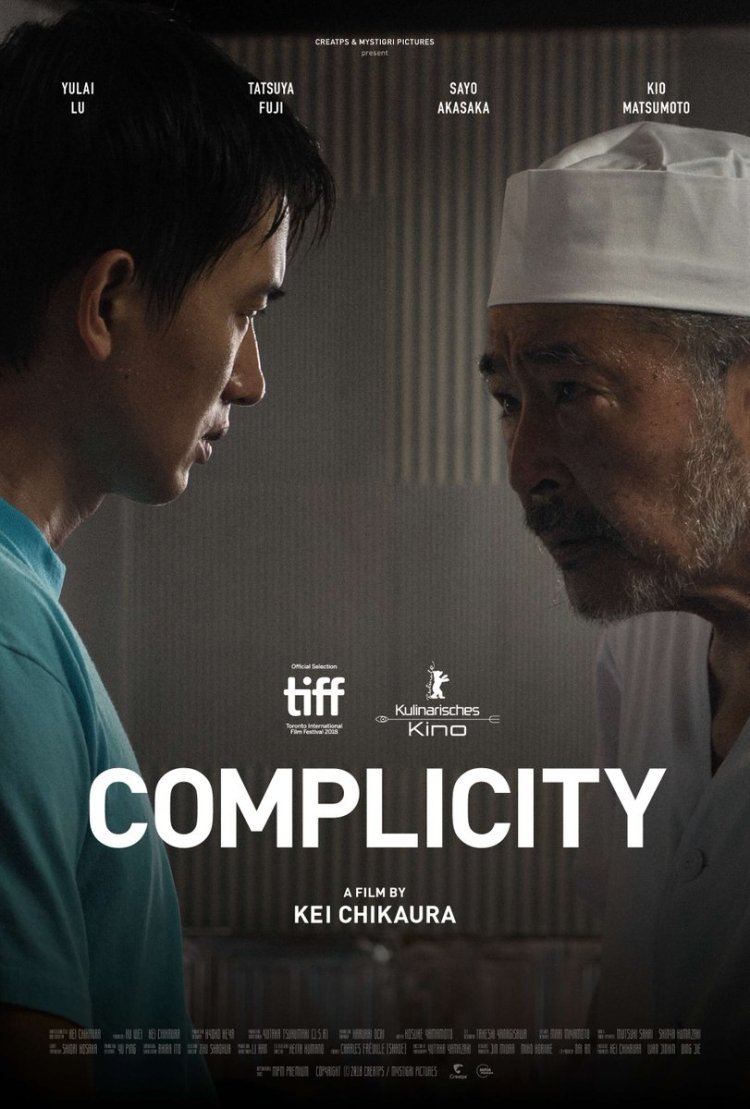
Complicity posterWith an ageing population and an economy trapped in a long period of stagnation, Japan has found itself in an awkward moment of possible crisis as it begins to realise it will need to embrace immigration or face a serious labour shortage. Like many nations, unfortunately, much of Japan remains uncomfortable with the idea of overseas labour especially when it comes to “low skilled” work in construction, manufacturing, and casual jobs such those in restaurants and convenience stores. Given government intransigence and pressing need, workers from other areas of Asia are often employed illegally and subject to exploitation by gangs or unscrupulous employers.

The hero of Kei Chikaura’s Complicty (コンプリシテ), Chen Liang (Lu Yulai), finds himself in just this position as he leaves his sickly mother and feisty grandma alone in rural China in the hope of making enough money in Japan to come home and restart the family business. What he discovers, however, is that he’s essentially been trafficked as cheap labour and is already in hock for an ID card he was conned into paying three times the going rate for on the pretext it was “safer”. Now living under the name Liu Wei, Chen Liang is disturbed to receive calls on his new phone intended for his namesake but is tempted when Liu Wei receives a job offer from an employment agency. Passing himself off as his cover identity, Chen Liang takes the job only latterly realising it’s the rather incongruous position of a trainee chef in a family-owned soba restaurant.

Against expectation, ageing soba chef Hiroshi (Tatsuya Fuji) and his daughter Kaori (Kio Matsumoto) are warm and welcoming people who are actually a little bit excited that someone from China wants to learn about soba. Taken in almost as a member of the family, Chen Liang begins to feel conflicted – he is after all lying to them, at least about his name and circumstances, and his presence in their home might cause them trouble if he is ever found out. Meanwhile, he also strikes up a friendship with an artist who is learning Mandarin but has to lie to her too, pretending they may one day meet up in Beijing when in reality he has never even been there.

His burgeoning romance with Hazuki (Sayo Akasaka) is what precipitates his downfall as she, unaware he is undocumented, reports his stolen wallet to the police. The lies do not stop there – Chen Liang is also lying to his worried mother back at home who thinks he’s working in an office, while she is simultaneously lying to him in pretending everything’s fine in order to facilitate his “happy” life in Japan where he is supposed to make lots of money and come back a wealthy man. In order to make his dream succeed, Chen Liang must become Liu Wei at the exclusion of all else, forsaking his life as Chen Liang and living carefully as if he has nothing to fear.

Chen Liang is onto a good thing and has fared much better than some of his friends who either got themselves picked up by the police for doing the gang’s dirty work or found themselves out in the cold with no feasible way to get back “home”. Hiroshi’s son, with whom he seems to have some kind of bad family history, looks down on Chen Liang unable to understand why his father employed someone from China when the business is on the rocks. His attitude seems to be one shared by many (though not the universally supportive customers in Hiroshi’s soba shop) who see only difference rather than commonality. Despite the language barrier, Hiroshi and Chen Liang are often able to communicate through written characters, while another poignant moment of bonding sees Chen Liang sing the Mandarin lyrics over the top of Hazuki’s cheerful refrain of a popular Japanese song by Teresa Teng beloved all across Asia. Hiroshi himself was born in Beijing at the end of the war – a painful reminder of the complicated history between the two nations, but also one of how much they are interconnected and how little place of birth has to do with cultural identity.

Emphasising how much they have in common rather than the various ways in which Chen Liang differs from the world around him, Chikaura paints a much more sympathetic portrait of a migrant worker than the one usually found in the media. Filling the void left behind by Hiroshi’s own resentful son, Chen Liang becomes a valued and trusted member of the family who are in a sense “harbouring” him but to protect rather than exploit. Pushed to go to Japan despite his misgivings and drifting into the soba shop job through accidental opportunism, Chen Liang had in a sense abandoned his identity in avoiding making concrete decisions. Being Liu Wei was also a way to hide from his insecurities and fears for the future, but only through the unconditional love he received under false pretences is he finally able to reclaim his name, fugitive but free at last. A powerful plea for empathy and cross cultural connection, Complicity is a beautifully drawn character study in which kindness and compassion eventually open new paths for a conflicted young man trying to find his place in an often hostile world.


Complicity was screened as part of the 2019 Nippon Connection Film Festival.

Original trailer (English subtitles)
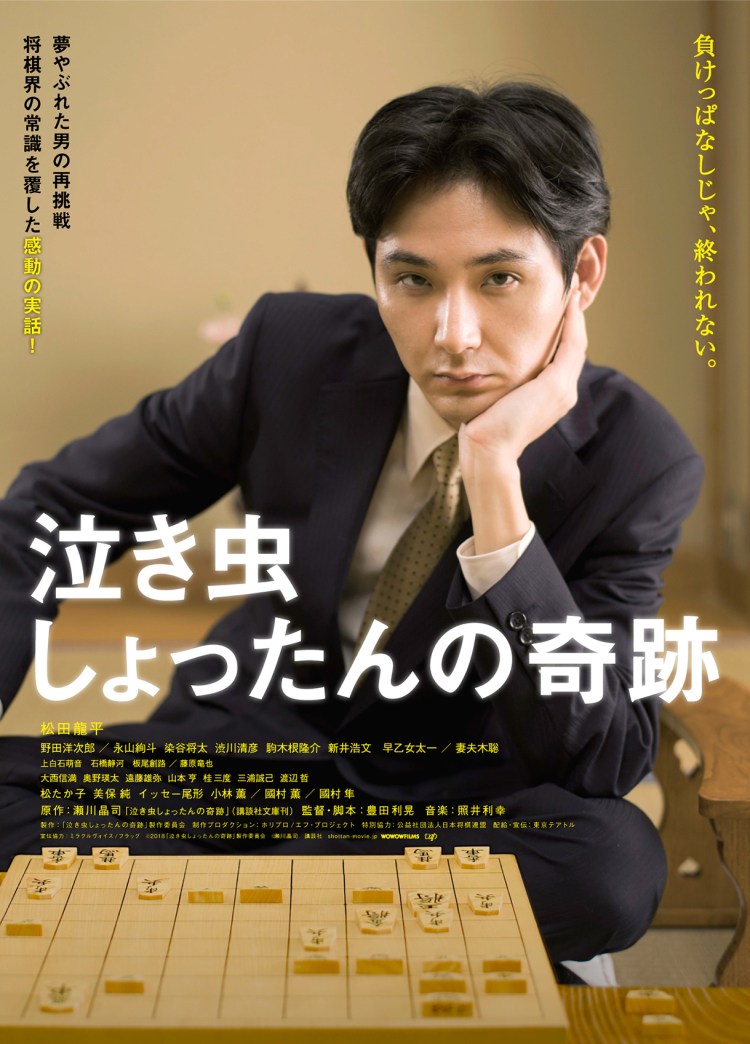
Teresa Teng’s – Toki no Nagare ni Mi wo Makase

Mandarin version – I Only Care About You

Killing (斬、, Shinya Tsukamoto, 2018)

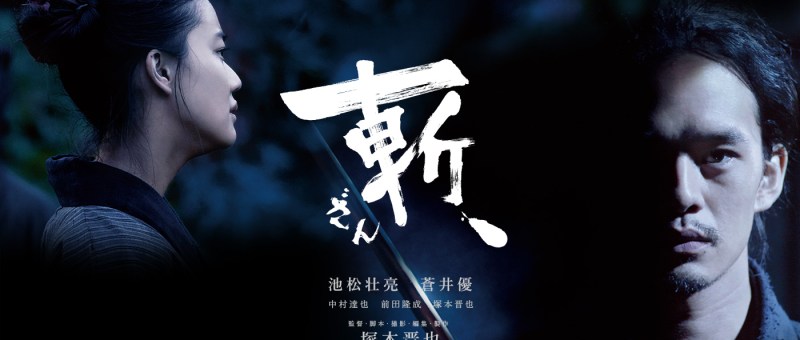
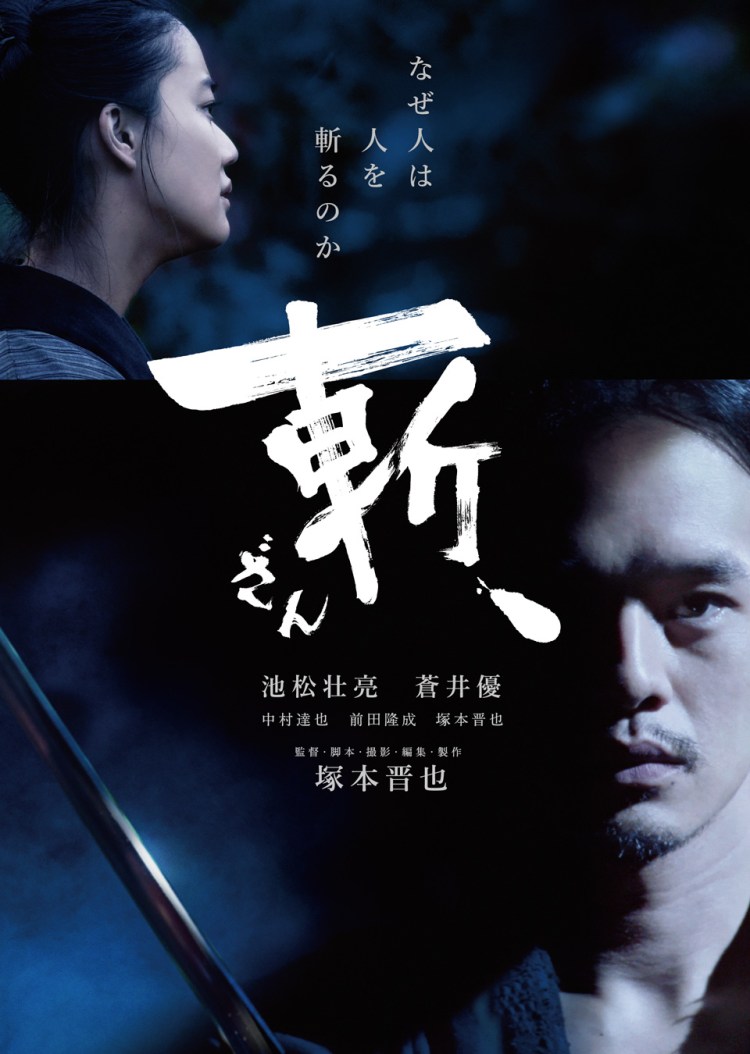
Killing posterOppressed peasantry abandoned by their lords and under threat of violence have only ronin to turn to – it’s a familiar, some might say even the archetypal, jidaigeki story. Forever the iconoclast, Shinya Tsukamoto makes his first foray into the world of the samurai, Killing (斬、, Zan,), in typically contrary fashion, turning the classic formula on its head as samurai “justice” brings only more chaos, blood, and terror to the otherwise peaceful fields of ordinary farmers in Bakumatsu-era Japan.

In return for food and lodging, Mokunoshin (Sosuke Ikematsu), a young masterless samurai, has been living alongside a village of kindly farmers who, while deferent to his status, are grateful to have him around because they are desperately short of hands. In addition to helping out with farm work, he’s also been sharing his sword skills with local boy Ichisuke (Ryusei Maeda) who has developed delusions of grandeur that he might one day be allowed to hold a sword of his own. Ichinosuke’s sister Yu (Yu Aoi), meanwhile, has become fond of the handsome samurai but is conflicted by his corruption of her brother with “samurai” values he can never hope to aspire to while she also must know that whatever she might feel nothing good can come of it because a samurai will not marry a farmer’s daughter.

The problems begin when twin threats descend on the village – first the appearance of cooler than ice ronin Sawamura (Shinya Tsukamoto) who wants to recruit Mokunoshin for his mission to support the rule of the Shogun in Edo and Kyoto, and the second a group of bandits hovering menacingly on the horizon but as yet doing no real harm. A pragmatist at heart, Mokunoshin prefers diplomacy to action and so he talks to the bandits and rates them as minimally dangerous as long as they’re treated fairly. Unfortunately, fairness is not what they get from hotheaded Ichisuke whose small conflict with them soon sparks into a conflagration when Sawamura starts wielding the sword of justice and doing it imperfectly, bringing yet more chaos down on all their heads.

Violence spreads like a virus contracted by the sword. A victim of his ideology, Sawamura sees his blade as his whole being and the embodiment of his right to act with honour and authority. He thinks the answer is to stamp out the bandits, whereas Mokunoshin knows there are always more than it first seems and to strike at them simply means there will never be an end to the petty tit for tat reprisals. His solution is to let it lie, but to Sawamura that simply looks like cowardice and dereliction of duty.

Despite the prevailing ideology of the world in which he lives, Mokunoshin is opposed to the idea of killing yet if pressed his reasoning is less humanistic pacifism than personal discomfort. Mokunoshin may be a samurai and a fine swordsman, but he has never killed and it seems is afraid to do so. He sees those around him whom he has come to love endangered but cannot act, refusing to raise his sword while the bandits do as they please with none of the existential confusion which cripples Mokunoshin’s ability to serve his own ideals. Rather than insist on an end to the rule of the sword, Mokunoshin resents himself for wishing he could kill as easily as Sawamura and be like the other men of his age.

Yu meanwhile looks on from the sidelines as the samurai code of violence tears her world apart and finally infects her too as she finds herself, far from pleading with him not to die as a substitute for asking him not to leave, insisting that Mokunoshin be the one to fix the mess he made by infecting her brother with a samurai’s lust for glory. Sawamura, meanwhile, becomes fixated on the notion of fixing Mokunoshin through a duel to death in which it is kill or be killed. He is prepared to die for his ideal and hopes that Mokunoshin will in the end choose his life over his soul and become the prized warrior for the Shogun that he knows he is destined to be.

Opening in flames as if to imply the sword is a weapon forged in hell, Killing centres itself not so much on the act but on its repercussions. The bandits too are a product of the inequalities of their times, and if they visually resemble the ragged soldiers of Fires on the Plain it is probably no accident. The code of violence spreads from one generation to the next with inexorable inevitability. Ending in a wail of despair, Killing finds little cause for hope in its relentlessly bleak conclusion which sees no release from the meaningless cycle of violence while humanity refuses to reject the cruel and oppressive social codes which fuel its existence.


Killing was screened as part of the 2019 Nippon Connection Film Festival.

Original trailer (no subtitles)

The Call Of Zon (ゾンからのメッセージ, Takuji Suzuki, 2018)

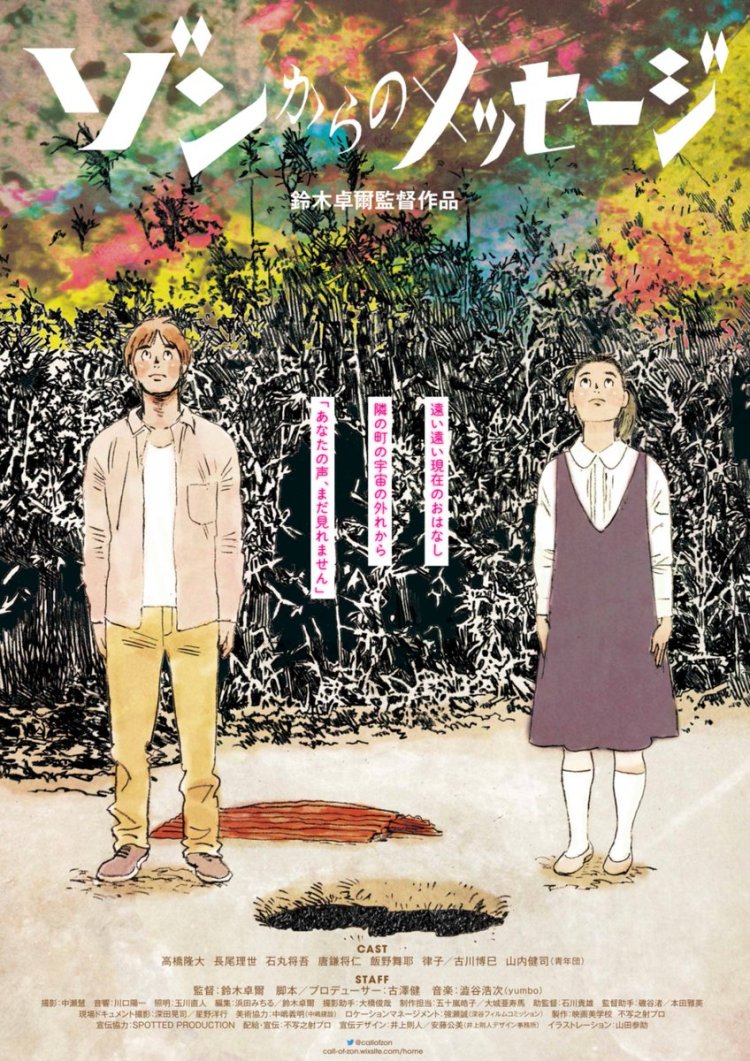
The Call of Zon posterWalls – do they constrain or protect? The residents of Yumetoi which has been sealed off for the last two decades by a mysterious force known as “Zon” cannot help but ask themselves the question. No-one claims to know what Zon is or why it arrived, but everyone has their own opinion on its existence from the youngsters brimming with curiosity about what lies outside to the older residents who think perhaps its best not to question the thing which keeps you safe.

Among the curious, intrepid youngster Ippo (Ryudai Takahashi) has got his hands on a videocamera and begun investigating the local environment, venturing well beyond “safe” limits in his quest for truth which is how he encounters the eccentric figure of Kantaro (Shogo Ishimaru) – a strange middle-aged man living in a disused building right next to the Zon barrier. Thanks to Kantaro, Ippo learns that Zon likes to throw things out into the world and is particularly intrigued by a strange black box (it’s a VHS tape but he’s too young to know what that is) he thinks might be some kind of message.

The small town of Yumetoi is a wholesome, nostalgic place filled with happy, innocent people who ostensibly want for nothing. Most of them have become used to Zon and accepted it as their new reality, neither resenting it nor particularly feeling its presence because they have little desire to leave. Others however, like Ippo, are intensely curious and begin to doubt everything they’ve been taught, wondering if Zon is really “dangerous” at all and if what lies outside of its walls really is nothing more than the land of the dead or if a lie has been spun to keep them from venturing forth.

Conceived in the wake of the 2011 earthquake and tsunami, Zon makes a subtle point about invisible barriers and the business of sealing off “unsafe” territory in wondering which side of the wall one is really on. Many residents of Yumetoi, like Kantaro, think Zon keeps them safe from external “evil” (as evidenced by adult magazines, apparently), while Ippo wonders if it might not be the opposite and it’s Zon keeping them prisoner. In any case, he wants to understand the message even others warn him that it’s best not to poke the beast and he’s better to let things lie. Nevertheless, he begins trying to communicate with the strange manifestation of existential dread through its own medium – by sending it video messages asking for greater clarification.

His quest has a profound impact on the town at large and most particularly Kantaro along with his former friend turned creepy cult minister running “rebirth” workshops, Ninomiya (Masahito Karakama). The pair “lost” a friend to Zon when he decided to cross the barrier in search of his own sound never to return. Though many have ventured outside, none have made it back. Some believe they died, others that they merely could not return, but still there are those who wait for them, like Michiko – the owner of Bar Yu who regards it as her calling to provide a place to which those who are lost can return.

Shooting in a constraining 4:3 and heightened colour palate, veteran director Takuji Suzuki adds an unexpectedly meta dimension to his already surreal exploration of physical and mental imprisonment in allowing the film crew to to appear on screen and including scenes of retake and rehearsal. In a roundabout way, the film crew itself becomes a manifestation of “Zon” as it literally captures the dreamy world of Yumetoi from outside as if trapping it in cinematic amber. Zon in itself may be a state of mind, a manifestation of the complex push and pull between the anxious need for safety and natural longing to understand the nature of the world, but it also serves as a literal barrier to transgressive thought as the more conservative residents resent any attempt to question its true purpose while the curious young insist on change and inquiry. The gift of Zon may be a kind of paradise but it’s one that comes at a price that the young are increasingly unwilling to pay. Zon’s message is its own undoing, urging the curious to free themselves from the accepted order by questioning its authority and finally finding the courage to step outside its bounds.


The Call of Zon was screened as part of the 2019 Nippon Connection Film Festival.

Original trailer (no subtitles)

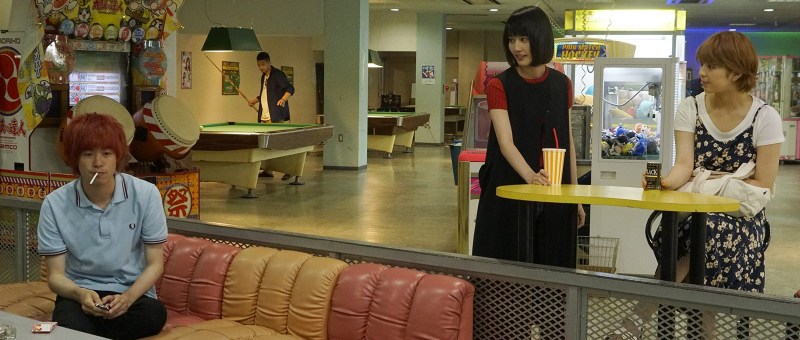
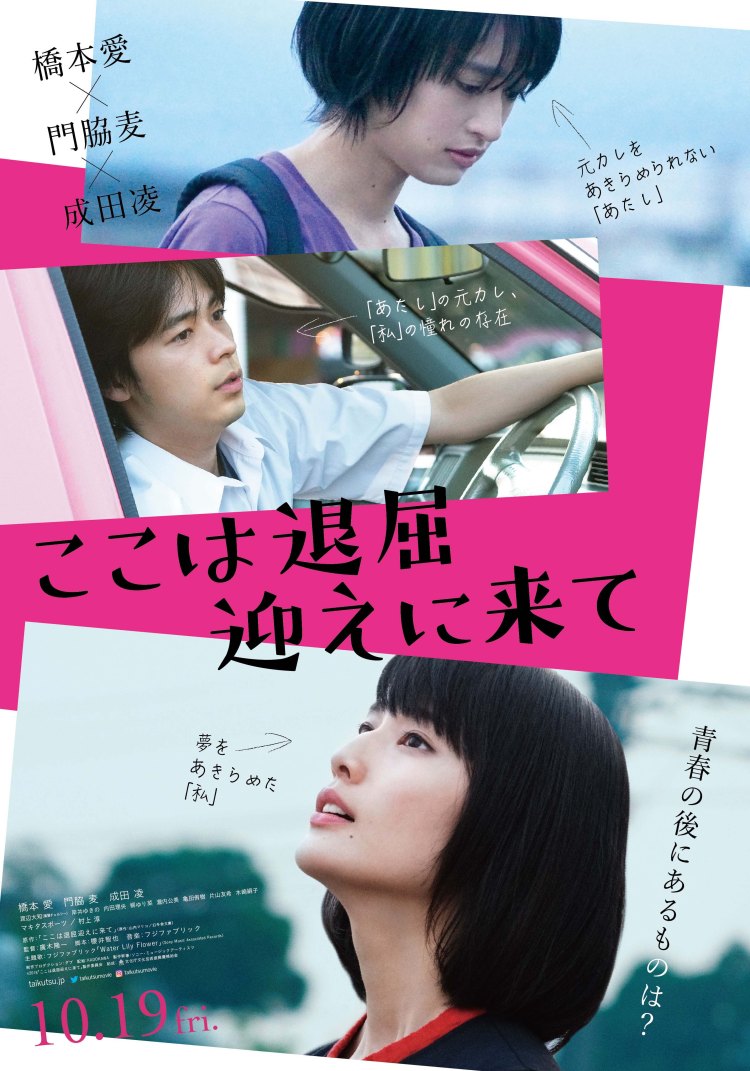
It’s Boring Here, Pick Me Up (ここは退屈迎えに来て, Ryuichi Hiroki, 2018)

SR2_teaserWhere now the dreams of youth? Japanese cinema seems to have been asking that very question since its inception but the answer remains as elusive as ever. The heroine(s) of Ryuichi Hiroki’s adaptation of a series of short stories by Mariko Yamauchi, It’s Boring Here, Pick Me Up (ここは退屈迎えに来て, Koko wa Taikutsu Mukae ni Kite), idolise Audrey Hepburn and long for urban sophistication only to find themselves hung up on unfulfilled high school promise and unable escape the wholesome romanticisation of their small-town youth to embrace the demands and possibilities of adulthood.

Hiroki follows his small-town high schoolers from 2004 to 2013, jumping freely between time periods as memories spark one another in emotional rather than chronological order. We begin with the unnamed protagonist, “I” (Ai Hashimoto), who has returned to her hometown after 10 (seemingly disappointing) years in Tokyo and now works as a freelance journalist for the provincial paper writing local culture articles on ramen shops and patisseries. She has contacted only one friend since her return, Satsuki (Yurina Yanagi), who has suggested, rather tongue in cheek, that they reconnect with former high school crush Shiina (Ryo Narita).

Back in high school, Shiina was like some kind of untouchable god. Everyone just wanted to be around him as if he alone made the sun shine. All the girls were in love with him, and the all boys wanted his approval. Asked about his hopes and dreams, Shiina just wants high school to go on forever, perhaps realising that he’ll never have it so good again. “I” meanwhile, claims that she wants to “become someone”. A small town girl who didn’t fit in, she hoped to find herself amid the hustle and bustle of the big the city but has returned with an even deeper sense of alienation than when she left with only the bright memory of her brief time as a chosen member of Shiina’s after school posse to cling to.

Satsuki, meanwhile, stayed behind but seems equally hung up on unfinished high school business. Having never been to Tokyo she is envious of her friend’s experiences and longs for the anonymity of the city. If you mess up in Tokyo, she claims, people will eventually forget whereas if you make a mistake in the country it’s all anyone will talk about for the rest of your life. That certainly seems to be true for another of the girls’ contemporaries (Rio Uchida) who left to become an idol only for it all to go wrong and come home branded as a loose woman. Cynical and calculating, she decides on an arranged marriage only to find herself shackled to an old man she doesn’t like very much while her shy friend (Yukino Kishii) seems to have found love by stealth and apparently won the jackpot without even knowing it.

Continuously travelling, the now almost-middle-aged high schoolers meander without direction as if circling around the locus of their departing youth and the sense of possibility disappearing with it. Running into another classmate, Shinpo (Daichi Watanabe), also connected with Shiina, I and Satsuki get a few more clues about their high school crush who apparently now lives a fairly ordinary life as a driving instructor thanks to Shinpo’s recommendation without which he was set to hit rock bottom after some kind of breakdown while failing to make it in Osaka. Nicknamed “Chinpo” (which means “willy”) in school, Shinpo’s dream for the future was to exist alongside someone that he loved but he seems to have given up even on this depressingly compromised desire and resigned himself to loneliness and lovelorn misery as someone who will never be able to find his place in a conservative and conformist society.

I meanwhile, like a similarly unnamed counterpart (Mugi Kadowaki) who really did date Shiina until he cruelly cast her aside, is finally able to burst her high school bubble by confronting it directly and seeing the reality rather than her romanticised impression of it. Those shining days of fun and friendship with everything still ahead will never come again, and so the memory of them remains bittersweet at best. Adult life is dull and disappointing, but there is perhaps melancholy happiness to be found in learning to embrace the present moment rather than harping on a largely imagined past or idealised future. 


It’s Boring Here, Pick Me Up was screened as part of the 2019 Nippon Connection Film Festival.

International trailer (English subtitles)

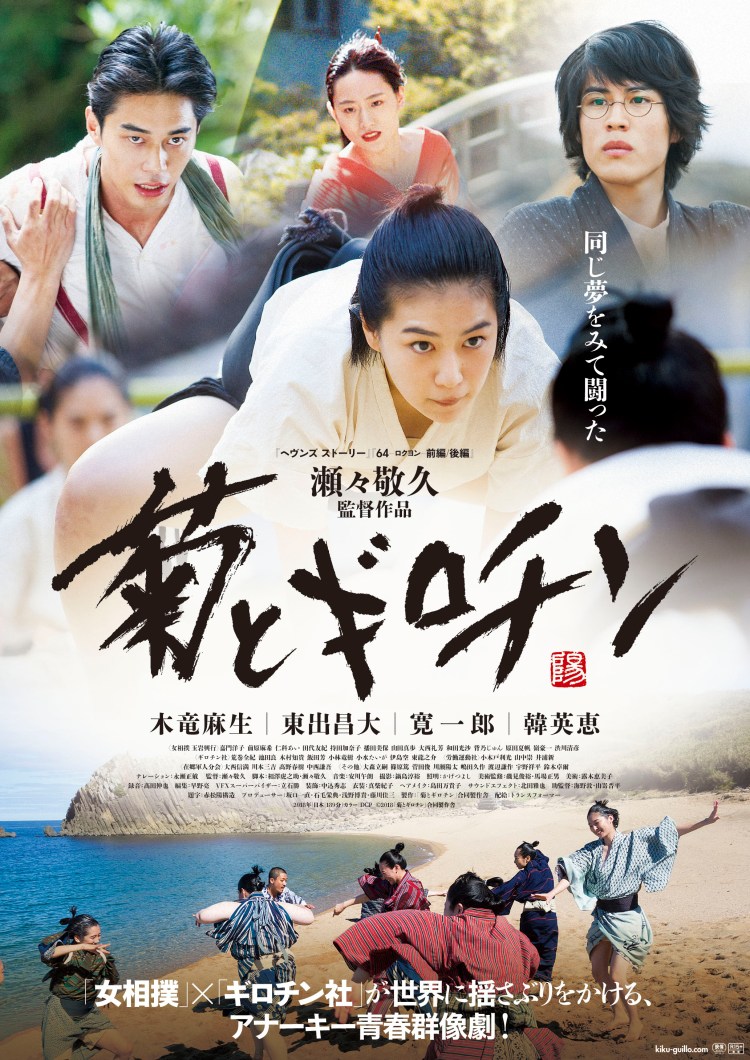
The Chrysanthemum and the Guillotine (菊とギロチン 女相撲とアナキスト, Takahisa Zeze, 2018)

Chrysanthemum and the Guillotine poster 1“I see it now, we can’t change anything” a despondent would-be-revolutionary decries in a moment of despair. Almost 100 years later, you might have to concede they have a point when the world finds itself on a tipping point once again and the same old prejudices refuse to disappear. Takahisa Zeze’s The Chrysanthemum and the Guillotine (菊とギロチン 女相撲とアナキスト, Kiku to Guillotine Onna Zumo to Anarchism) casts an unflinching eye back towards the Japan of 1923 caught in the aftermath of a devastating natural disaster which followed on from a chaotic era of rapid social change and bewildering modernisation during which a series of battles were being fought for the future direction of a nation still trying to define itself in world dominated by empires.

When the Great Kanto Earthquake struck claiming mass loss of life and extreme damage to infrastructure, the ensuing chaos gave rise to a vicious rumour that Koreans were taking advantage of the situation to foment the independence movement by poisoning wells and committing arson leading to a pogrom against anyone who failed to prove themselves Japanese enough to satisfy the mob. Meanwhile, the same forces also turned on political opponents whose influence they perceived as destructive to their own aims culminating in the murder of prominent anarchist Sanae Osugi along with his feminist wife Noe Ito and their six-year-old nephew.

We begin, however, with a different band of outsiders in the Tamaiwa itinerant female sumo wrestler troupe many of whom have taken refuge in an isolated world of female solidarity in order to escape abusive relationships. Kiku (Mai Kiryu) is one such woman who found the courage to run away from a violent husband on catching sight of the powerful female wrestlers who made her realise that she too could become strong like them. Having accepted that “weak people can’t change anything”, Kiku has vowed to become “strong” in order to claim her own agency and ensure that she can’t be pushed around ever again.

Meanwhile, an anarchist sect known as the Guillotines are fomenting a more general kind of revolution but have not been very successful and are now on the run from the authorities which is how they end up running into the female wrestlers and more or less bringing them into the struggle. Led by libertine and (as yet) unpublished poet Tetsu Nakahama (Masahiro Higashide), the Guillotines are more romantic bandits with high ideals than serious revolutionaries. They rob the rich to fund their “activism” but spend most of the money on sex and drink while plotting revenge for the murder of Osugi with various schemes which imply that at heart they aren’t so different from that which they hate.

Nevertheless, the forces of darkness are rising and history tells us that, temporally at least, they will win. The vigilante militias which carried out the massacres were largely made-up of farmer soldiers who’d served in Russia and experienced terrible hardship. Unable to bear the idea that their traumatic wartime experiences had been a senseless waste, they doubled down on militarist ideology and insisted on their nationalistic superiority. This led them to hate, to regard anything that lay outside of their code as inferior and dangerous. Though the massacres were condemned by the government and the perpetrators prosecuted for their crimes, the convictions were largely quashed a short time later which is why we see our major villains rewarded by the state and our revolutionary “heroes” imprisoned for their resistance towards state oppression and desire to create a fairer, more equal society.

Ironically enough, Nakahama’s big utopian idea is an overly idealistic vision for a future Manchuria which in hindsight proves extremely uncomfortable but is perhaps an indication of the naivety of the times. Even so, the Guillotines for all their romanticism are essentially progressive in their thinking and in full support of sexual equality, insisting on the necessity of the wrestlers to embrace their physical capabilities in order to defend themselves against an oppressive and patriarchal society fuelled by male violence. Though this in itself might be mildly problematic in implying that in order to become “equal” women must learn to be more like men, it also plays into the film’s subtle sense of irony in which the tools of militarism are being subverted in order to oppose it. The “intellectual” Guillotines find their revolutions failing, while fighting fire with fire may be the only surefire way to win even if it legitimises the problematic act of violence in the process. Then again, as another of the Guillotines puts it, the truly strong are those who have no need of killing. 

In any case, the Tamaiwa stable becomes a tiny enclave of progressive values built on female solidarity though they ultimately discover that solidarity is not quite enough and they cannot protect each other from the ravages of the times without external assistance. Even so, they attempt to hold the line, literally pushing back against the fascist incursion while insisting on their right to resist as human beings with will and agency. The prognosis seems bleak. 100 years later the same battles are still being fought and the same tensions rising in the wake of new disasters yet there are also those who will continue to resist and like the Tamaiwa wrestlers refuse to give in to those who threaten to restrict their freedom.


The Chrysanthemum and the Guillotine was screened as part of the 2019 Nippon Connection Film Festival.

Original trailer (no subtitles)

Marriage Hunting Beauty (美人が婚活してみたら, Akiko Ohku, 2018)

out_bijyo_poster_B2Is life really easier for “beautiful” people or do they simply experience a different series of problems? Some might say beauty is a nice problem to have, but however much people may scoff there is perhaps a price to be paid for physical attractiveness as the heroine of Akiko Ohku’s Marriage Hunting Beauty (美人が婚活してみたら, Bijin ga Konkatsu Shite Mitara) is at pains to point out though few are willing to sympathise. What she discovers, however, is that her beauty has perhaps been her blindspot in that it has made her self-centred and entitled while preventing her from realising what is it that has really been bothering her.

At 32, Takako (Mei Kurokawa) remains romantically naive and has wound up in a series of dead end relationships with terrible men who happened to be married (though she didn’t find out until it was too late). Her best friend, married housewife Keiko (Asami Usuda), tells her that her problem is that she’s too beautiful – single guys are too intimidated to make the first move while the married ones are emboldened by their desire to play with fire and the knowledge that the relationship is essentially meaningless because they already have “commitment” elsewhere. Hitting rock bottom, Takako suddenly has an epiphany that she wants to get married if only to prove that she is worthy of becoming someone’s wife rather just their mistress.

Takako is, it has to be said, perfectly aware that she is an attractive woman and sees little point in deflecting praise that comes her way because her of appearance – something that begins to grate on Keiko as Takako fails to submit herself to the level of socially accepted modesty which would require her to protest when called “beautiful”. Keiko’s categorising her as a sad princess is perhaps accurate in that she certainly likes to paint herself as hard done by while refusing to engage with the aspects of her life which cause her to feel miserable and empty. Entering the world of “konkatsu” – accelerated dating with a view to marriage, is then a humbling experience in which she must simultaneously raise and lower her expectations in order to work towards an “ordinary”, conventional kind of settled domesticity.

Of course, “beautiful” people aren’t supposed to need such services, and so Takako’s first few matches on a dedicated marriage orientated website are predictably depressing – a parade of strange older gentlemen hoping to bag a beauty and usually selling their social capital (houses, steady jobs etc) to do so. The one guy she does kind of hit it off with, Sonogi (Tomoya Nakamura), is a shy salaryman who seems nice but lacks confidence and remains creepily in awe of her beauty. Meanwhile, a singles mixer at an “elite” bar introduces her to cynical dentist Yatabe (Kei Tanaka) who seems to have confidence in abundance but very little kindness.

Takako is back to the familiar problem of trying to choose between two men, one nice but servile and the other selfish and indifferent but admittedly exciting. Yatabe is a walking collection of red flags, which is to say that he’s just Takako’s type, but fortunately she’s beginning to figure out that what she likes is not always what’s good for her. Then again, she’s also trying to move past her conception of herself as a “beautiful” woman so Sonogi’s constant deference and gratitude for being allowed in the presence of someone so out of his league is exactly the opposite of what she’s looking for even if she’s beginning to warm to his nice guy charms.

Meanwhile, she remains uncomfortable with her own sense of desire and struggles to reconcile it with society’s preconceived notions of what “beautiful people” should be. Despite their otherwise close friendship, Takako is unable to talk honestly even with Keiko and largely fails to take much of an interest in her friend’s life. Keiko, meanwhile, seems to be trapped in an unfulfilling marriage and secretly may not want Takako to change because she is vicariously enjoying her messy bachelorette lifestyle. Nevertheless, it’s friendship which eventually wins out as the two women agree to meet on more equal terms, sharing their essential selves honestly and without fear as they commit to supporting each other with mutual understanding.

“There are no shortcuts to love”, Takako finally acknowledges as she realises what wanted all along wasn’t superficial acceptance but recognition. What looked like haughtiness was really low self esteem. A quirky tale of a middle-aged woman finding the courage to step into herself, Marriage Hunting Beauty might be telling a familiar story but does so with genuine sympathy for its beautiful heroine as she finally finds the strength to reject the social straightjacket and reclaim her sense of self as a person worthy of respect rather than reverence or ridicule.


Marriage Hunting Beauty was screened as the opening night gala of the 2019 Nippon Connection Film Festival.

Original trailer (no subtitles)

Lobster Cop (龙虾刑警, Li Xinyun, 2018)

lobster cop poster 1Sadly, Lobster Cop (龙虾刑警, Lóngxiā Xíngjǐng) is not the story of a team of intrepid crustaceans in a trench coat but an amusing tale of bumbling cops made good as their plan to hole up in a seafood joint pays out in unexpected ways. Actress Li Xinyun’s directorial debut is a surprisingly subversive affair proving once again that light comedy is becoming the satirical battleground of the contemporary Chinese cinema industry and dancing rings around the censors in the process.

Our hero, bumbling policeman Yufei (Wang Qianyuan), has a habit of tracking down the bad guys but letting them get away at the critical moment. When yet another mistake puts him on the chief’s naughty list, he finds himself up against rival Xu Xin (Wang Zheng) and given a month to figure out how drug dealers are getting their merchandise into the country. Taking his best squad with him – grandfatherly Neng (Liu Hua), tomboyish Hua Jie (Yuan Shanshan), and rookie Chen (Zhou You ), Yufei vows to crack the case. Noticing that a rundown crayfish restaurant he often stops in to relieve himself has an excellent view of a “logistics company” they suspect is responsible for importing the drugs, Yufei catches on the idea of turning restauranteur in order to stakeout his quarry.

The unexpected snag is that Neng always fancied himself as a bit of a cook and his crayfish unexpectedly takes off, which is good news in one sense because it means the gang can pay back some of the money Chen had to borrow from his wealthy mother to get the restaurant off the ground, but bad in that it’s very difficult to run a successful eatery and chase drug dealers at the same time – especially when the drug dealers become some of your best customers.

In order to make their cover more credible, the gang end up posing as a family with Neng as the cuddly dad, Yufei and Hua Jie as an improbable couple, and Chen as the adorable little brother. As the restaurant starts to take off the cover identities start to take over with only Yufei digging his heels in as he tries his best to catch the bad guys in order to best his police rival and prove himself to the chief. Nevertheless, like any good police squad the secret ingredient of success is fellow feeling and it’s brotherly love that eventually saves our confuzzled cops as they get themselves into a series of sticky situations with the equally bumbling “logistics” guys while accidentally carving a path towards kingpin The General (Li Jianren).

In a slightly surprising move given the usual censors’ board squeamishness, Li inserts a fair amount of subtle homoerotic content beginning with straight-laced policeman Xu Xin walking into a potential cruising situation with the very flamboyant General hanging around in the Gents for reasons seemingly unrelated to crime (though he does later enjoy a carriage ride with a pretty lady), while a regular visitor to the shop openly flirts with Neng who seems to, on one level at least, be receptive to his advances. While it’s true that both of the presumably gay guys (Neng aside) turn out to be “bad” in one way or another, it is a refreshingly ordinary kind of representation in which homosexuality is not in itself the joke and, in a tacit sense, almost totally normalised.

Then again it is the traditional family, in model terms at least, which eventually wins out as the guys begin to pull together to make their lobster restaurant a success and eventually learn to work as a team while embracing their own strengths so they can take down the bad guys. An entertaining mix of witty banter and slapstick martial arts underpinned by tasty food photography and a cheeky subversive spirit, Lobster Cop is a surprisingly surreal concoction and a promisingly off the wall debut from Li who manages to ground the often strange goings on firmly in the real while ensuring her losers make good story commands genuine warmth.


Original trailer (English subtitles)
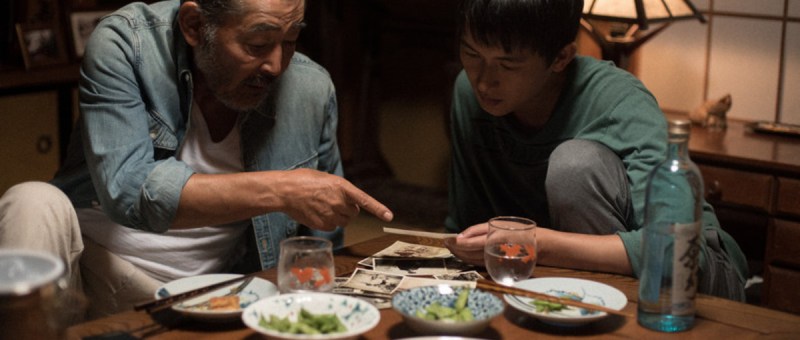
Unstoppable (성난황소, Kim Min-ho, 2018)

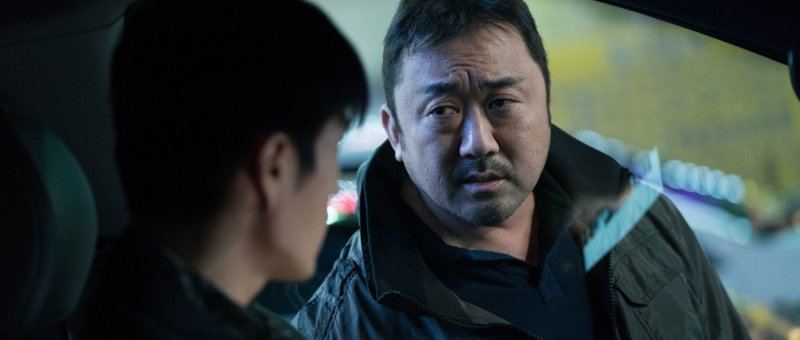
Unstoppable poster 5Can a person ever really change? The answer might be more complex than it seems but then again, you might not quite want them to change as much as you might think you do. Ma Dong-seok is quickly becoming Korean cinema’s MVP, in the genre stakes at least, and has begun to make a career for himself as a big hearted teddy bear of a man with gigantic heavy fists. It’s a legacy he very much embraces in the oddly light hearted Unstoppable (성난황소, Seongnan Hwangso) which sees him play a former gangster gone straight whose latent violent streak is reawakened when he becomes a warrior for love.

Dong-cheol (Ma Dong-seok) was once a notorious tough guy but gave up the streets when he met “an angel”, nurse Ji-soo (Song Ji-hyo), and married her. These days, he works a regular low pay labour job at the fish market but is always dreaming of better things which is why he’s constantly getting scammed by the latest get rich quick scheme proposed by one of his dodgy friends. The trouble starts when Dong-cheol is rear ended by some shady types and gets out of his car to ask for insurance details. Sensing danger but now fully reformed, Dong-cheol remains calm and refuses to engage but Ji-soo isn’t having any of it. She verbally lays into the gangsters and insists on compensation. When Dong-cheol returns home to find his apartment in disarray after arguing with Ji-soo about his unwise financial decisions during a birthday dinner at a fancy restaurant they can’t afford, he has an inkling about what may have occurred but finds the police slow and unsympathetic leaving him to take matters into his own hands.

Unlike many a similarly themed action drama, Unstoppable is keen to emphasise the sweet and innocent love between Dong-cheol and Ji-soo with even the climactic argument between them neutered shortly before Ji-soo is taken. Dong-cheol is not a violent man at heart, but is prepared to meet violence with violence where necessary and he does not like to lose. He takes damage, but never gives up the fight not because he’s angry and hellbent on revenge but because he loves his wife and is desperate to make sure nothing bad happens to her while he is around to prevent it. Meanwhile, Ji-soo is far from a damsel in distress. Refusing to be cowed, she keeps her wits about her and protects the other women kidnapped by the gang while she looks for a way to escape.

The fact is, there seem to have been a lot of unexplained disappearances of young women in this city – something which Dong-cheol becomes aware of while hanging around the police station, yet the authorities have not made much headway on the case. Dong-cheol quickly works out that he’s potentially dealing with an organised crime network which makes its money out of trafficking kidnapped women all over Asia and that, unlike himself, the families of these women largely opted to take the “compensation” money left in their place by the gangsters rather than fight back. This in itself annoys him, though not quite as much as being forced to play the gangsters’ game in order to maximise the chances of getting to Ji-soo before it’s too late.

What quickly becomes apparent to flamboyant gangster Ki-tae (Kim Sung-oh) is that he’s made quite a big mistake, even if that mistake might be more fun than hassle. Ji-soo is not the victim type and her husband will stop at nothing to get her back which means he’s fighting a war on two fronts, both surprised and somewhat amused to be met with such unexpected resistance. Still, Dong-cheol is determined to barrel through fists flying while his bumbling sidekicks – old comrade Choon-sik (Park Ji-hwan) and fast talking fixer Gomsajang (Kim Min-jae), handle the investigation from the sidelines. Undercutting the essential darkness of the “lone vigilante takes on heinous human trafficking ring” narrative with warmhearted humour, Unstoppable proves an ideal vehicle for the increasingly popular Ma Dong-seok which finds unexpected sweetness in the genuine connection between its perfectly matched husband and wife team.


Unstoppable was screened as part of the 2019 Udine Far East Film Festival.

International trailer (English subtitles)