Secrets of 1979 (弓蕉園的秘密, Zero Chou, 2021)

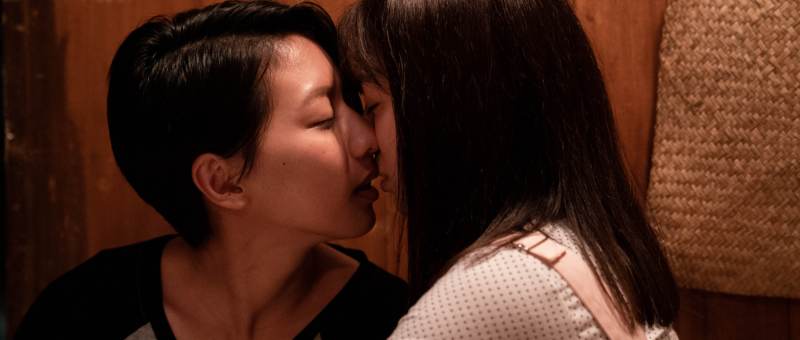
Love is a political act in the latest film from Zero Chou, Secrets of 1979 (弓蕉園的秘密, Gōng Jiāo Yuán de Mìmì). As history repeats itself, a now ageing woman is called back to the past on witnessing the Hong Kong democracy protests triggering memories of the Kaohsiung Incident and her youth fighting for political freedom in martial law Taiwan. Chou’s betrayed heroine dreams of a future in which all voices can be heard and all loves embraced, a future that in some senses may have come to pass, yet tragically too late for some forced to believe that their love must forever remain a secret. 

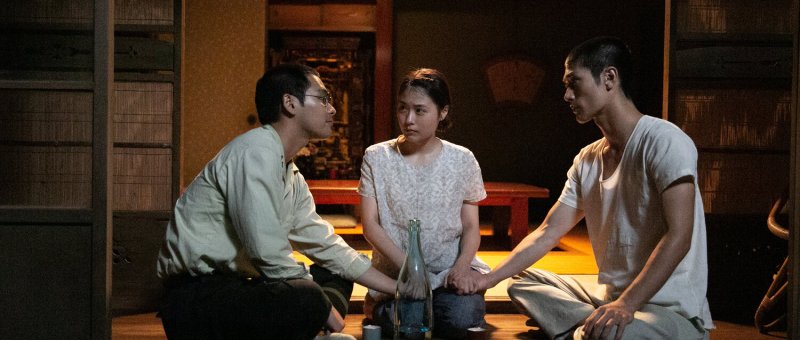
Malaysian student Shu-lan (Daphne Low) falls for Kuan (Chen Yu), the daughter of a banana plantation owner majoring in art as part of a teacher training programme. The pair draw closer while sharing a room, and a bed though partly because those two things are mainly the same, over the summer while Shu-lan takes a job at the farm but their innocent romance is soon overshadowed by the revelation that Kuan’s brother Siu (Hsu Yu-ting) has become involved with the movement against martial law producing a magazine critical of the government. Though they could never know it, their love will lie at the centre of a political divide, cruelly used against them even while they commit themselves to the battle for freedom and human rights. 

Soon after the film opens, a young man walks into Shu-lan’s classroom with application forms to join the nationalist governing party of the martial law one party state, the KMT. The idea does not seem popular among the students, but some are interested if treating it with a degree of irony explaining that they’d only be joining to take advantage of the generous perks which include free travel back to your hometown to vote and access to scholarships, or else because it may be advantageous in their future careers. Shu-lan is fiercely disinterested and attempts to politely decline, but the recruiter, Chih-hsiang (Sean Sun), has an obvious crush on her and won’t take no for an answer thrusting a form into her hand to think about later while lowkey resentful as she distances herself from him to leave with Kuan. 

Kuan, meanwhile, has just been subjected to an unpleasant grilling in her art class when she tried to stand up for a painter rumoured to be gay provoking a homophobic rant from several of her classmates who then openly mock her for being a lesbian. Perhaps surprisingly the rumour of homosexuality does not cause either of the girls particular problems with the authorities or their fellow students save for further irritating the extremely creepy, generally evil, and cruelly manipulative fascist Chih-hsiang who views it as merely another bargaining chip in his pointless quest to convince Shu-lan who has no interest in men (or members of the KMT) to go out with him. The problems that Shu-lan faces which are partly set up by Chih-hsiang so he can save her from them, are largely to do with her status as a foreign national and involvement with politics accused of collaborating with communists for listening to Chinese folk songs sent by her teacher in Malaysia. 

These are all reasons, along with her treatment at the hands of the authorities, that eventually convince her she must renounce her love for Kuan in order to keep her safe in fear that she too will be implicated as a politically suspicious person. Prior to that, she’d been learning Taiwanese and hoped to stay living on the banana farm with Kuan whose family seem relatively relaxed about the relationship, only for their love to be stamped out by oppressive authoritarianism and the machinations of a petty and jealous man. The bookending sequences set in the present day and featuring a Kuan who seems much older than a woman who’d only be in her mid-60s remind us that though Taiwan may have become a relatively progressive place in which same-sex marriage has been legalised, the battle is never really won as the young people of Hong Kong too campaign for freedom and democracy. But Kuan is left only with her secrets and her sadness stuck in the summer of 1979 and a love never to be told. 


Secrets of 1979 screens at Lexi Cinema on 21st September as part of this year’s Queer East. It is also available to stream in many territories via GagaOOLala.

Original trailer (English subtitles)
Kakegurui 2: Ultimate Russian Roulette (映画 賭ケグルイ 絶体絶命ロシアンルーレット, Tsutomu Hanabusa, 2021) [Fantasia 2021]

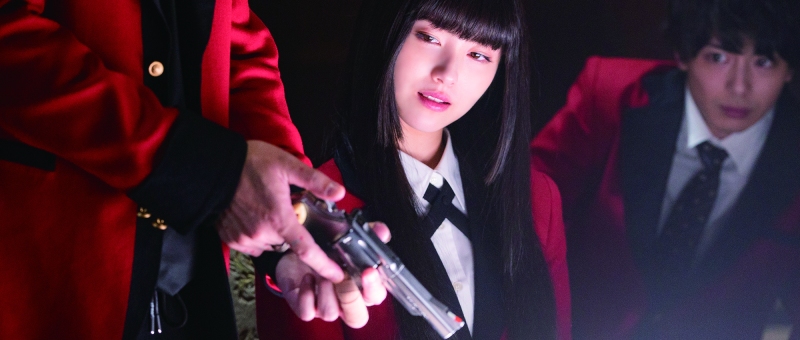
Closet revolutionary or compulsive gambler, Yumeko Jabami (Minami Hamabe) continues to be a thorn in the side of the Student Council in the sequel to hit movie Kakegurui, itself a sequel to a two-series live action drama adapted from the manga by Homura Kawamoto. Set as the opening expositionary narration explains at school for the elite Hyakkaoh Academy where social hierarchy is determined by skill in gambling, Ultimate Russian Roulette (映画 賭ケグルイ 絶体絶命ロシアンルーレット, Eiga Kakegurui: Zettai Zetsumei Russian Roulette) sees the rattled Student Council making a counterproductive and potentially ruinous decision in bringing back a previously exiled player in the hope of permanently neutralising Yumeko. 

Makuro Shikigami (Ryusei Fujii) was suspended some years ago for his part in the “House Pets’ Curse” which led to most of the school being demoted to its lowest, near untouchable ranks. At Hyakkaoh Academy, students are required to pay a tithe to the Council and those who can’t pay end up as “House Pets”, humiliatingly treated as cats and dogs. Yumeko’s friend Meari (Aoi Morikawa) fears she may have fallen foul of the curse herself having hit a lengthy losing streak, but it’s not until Shikigami begins twisting the situation to his advantage that Yumeko is snared by his manipulative trap. 

Yumeko, meanwhile, is in the middle of a depressive episode largely down to her reluctance to take part in the school’s upcoming sports’ day. Just as in the previous film her long game was better cakes in the cafeteria, her end goal here is trying to get the event cancelled by whatever means possible. In any case, we also witness another dark side to the oppressive rule of the Student Council as a demoted Maeri finds herself in a literal chain gang forced into hard labour building the facilities for the sports festival in what seems to be a minor dig at preparations for the Olympics. Yumeko and Meari are, however, responsible gamblers in that they refuse to bet on other people’s safety or at least refuse to be complicit in games which are designed to inflict harm or cruelty on others. 

As Shikigami explains in his opening monologue, the skills needed for gambling are strategy, ability to read your opponents, and a killer instinct. This is something Yumeko knows well, she plays players not games and sees straight through Shikigami realising that his crazed psychopathy is an act to mask the meticulous quality of his external manipulations. Nevertheless she is also caught out by her unwillingness to put her friends in danger, willingly sacrificing herself instead. The Student Council too are seemingly caught off guard little realising that Shikigami presents just as much of a threat to their authority as Yumeko and is equally uncontrollable with far fewer principles. Still as Student Council President Kirari (Elaiza Ikeda) ominously reflects, “there must be chaos before order”. 

In any case, they find themselves awkward allies in facing off against Shikigami in the promised game of Russian roulette mediated through a card game but played for real. The Student Council leaves itself surprisingly vulnerable in a loophole which allows House Pets to challenge them directly overruling all of the other school regulations, while Shikigami too falls victim to his own arrogance never quite expecting to be challenged having achieved his primary goals of seizing control of the school via the Council. The only way to beat him is to play him at his own game, disrupting his self-serving plotting and tendency to cheat in an insult to the art of gambling while undermining his confidence in his own intellectual superiority. “Only a twisted mind could beat you” he says of Yumeko believing himself to be a twisted mind though as it turns out perhaps not quite twisted enough. 

Temporarily siding with authority in order to put a stop to Shikigami’s authoritarian potential, Yumeko does not so much challenge the system as work around it while protecting herself and her friends from Shikigami’s machinations. What she defends is in a sense gambling itself, rejecting Shikigami’s intention to subvert it to his own advantage. Maintaining the same absurdist, manga-esque aesthetic as the first film complete with cartoonish CGI pupil shrinking, slick onscreen graphics, and even this time a random musical number, Hanabusa significantly ups the ante with bomb threats and unexpected Satanism while leaving the door open for the next instalment with Yumeko’s final instruction to “Bring on the Madness”. 


Kakegurui 2: Ultimate Russian Roulette streamed as part of this year’s Fantasia International Film Festival. 

International trailer (English subtitles)

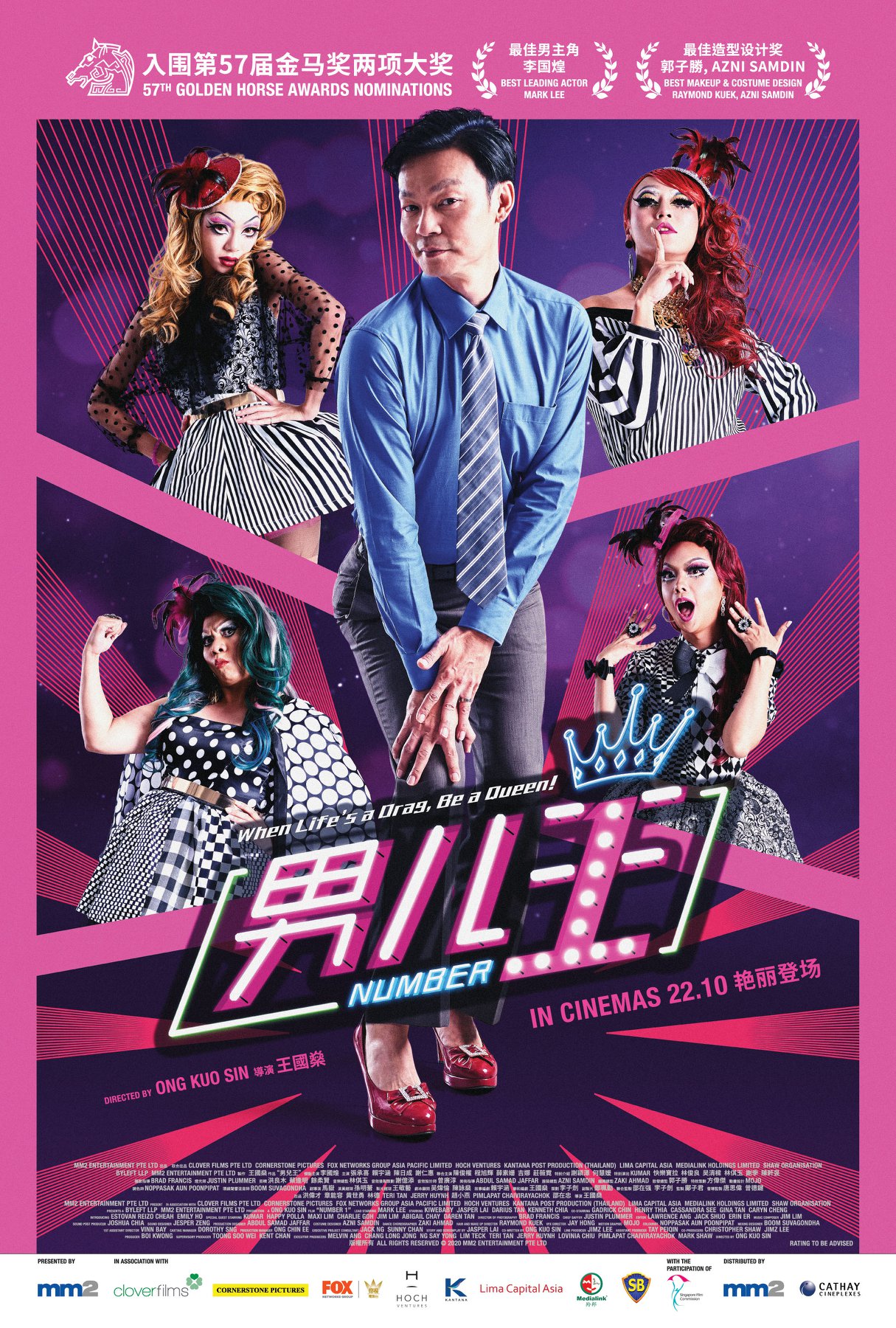
Number 1 (男儿王, Ong Kuo Sin, 2020)

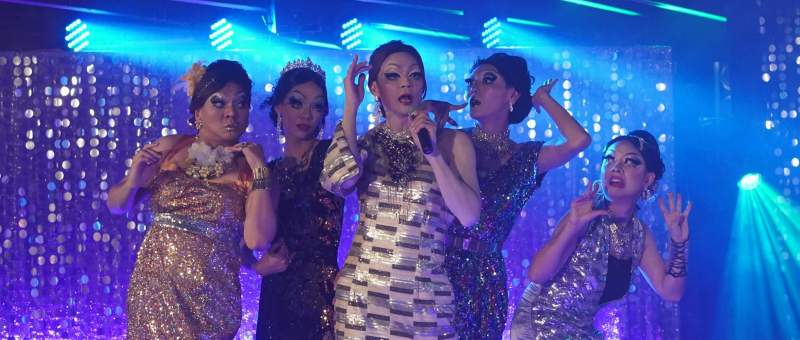
“What I don’t understand is your so-called rules and traditions. Just what good does it do?” a newcomer ironically asks of a veteran drag artist, having perhaps shed but not yet quite acknowledged his original prejudice towards those different from himself. Ong Kuo Sin’s cheerful drag dramedy Number 1 (男儿王, Nán’ér Wàng) examines attitudes to the LGBTQ+ community in the comparatively conservative nation of Singapore where sexual activity between men remains illegal even if the law is not heavily enforced, while subtly undermining oppressive group think as to what constitutes a “successful”, “normal” life. 

44-year-old Chow Chee Beng (Mark Lee Kok Huang) is a successful general manager at a construction firm where he’s worked for the last 17 years which is the entirety of his working life. It comes as quite a shock to him therefore when he’s unceremoniously let go, passed a letter of termination seconds after entertaining everyone with a song at the office New Year party. Given his experience, he perhaps feels that getting another job won’t be too difficult, but as various employers tell him he’s either “too old” or “too expensive” for the competitive Singapore job market. Faced with the prospect of telling his wife they’ll have to sell their luxury detached home because he can’t make the mortgage payments, Chee Beng is forced to accept the last resort offer from his recruitment advisor which happens to be as an AGM at local drag bar Number 1. 

Like many men of his age, Chee Beng has a rather conservative mindset and had been living a very conventional life of suburban, middle-class success. His wife Marie (Gina Tan) even complains to her sister-in-law that their new swimming pool is a little on the small side and she’s thinking of swapping it for a bigger one. Yet as his performance stint at the company party implies, he is perhaps holding a part of himself back thinking that his love of singing is frivolous or even a little taboo given his wife’s mild embarrassment. The drag bar is therefore firmly outside his comfort zone. Not only does he lack experience managing an entertainment venue, but finds it difficult to overcome his sense of discomfort with those living lives so different from his own. When one of the drag artists turns out to be a deserter from the army and is carted off by the military police, Chee Beng finds himself press-ganged into performing and discovers that he is something of a natural though he doesn’t understand why they have to lip-sync to pre-recorded tracks rather than singing live. 

Chee Beng’s point seems to hint at a concern about the ability to completely embody the performance and fully express himself, yet he’s also a straight man wading into a predominantly LGBTQ+ community he knows nothing about and insisting on having his own way. That brings him into an additional conflict with former number one Pearly (Kiwebaby Chang) who dragged him on stage in the first place because with only four performers she wouldn’t be able to stand in the middle. Pearly might feel that lip-syncing completes her performance because she lacks the ability to sing in a feminine register, yet Chee Beng ironically accuses her of mandating a no singing rule in order to mask her own weakness while simultaneously attempting to mandate live singing in order showcase his strength as a performer. 

But even if he’s come to feel at home in the drag community, Chee Beng continues to keep his new life a secret from his socially conservative wife. When a video of him singing at the club goes viral, Chee Beng’s wife and sister-in-law react by taking the children’s phones away as if seeing it is in some way harmful. Later on seeing a poster for the Queens she irritatedly tells Chee Beng they should be banned by the government for giving children “wrong ideas”. Meanwhile their son Mason is conflicted in being a boy asked to play the part of Mulan in the school play, claiming he dislikes the character of Mulan because she “lies” about who she is while his father can only sympathise offering the justification that sometimes people have to lie in order to protect those they love. When Chee Beng’s identity is exposed, little Mason begins receiving vile hate mail online and all his friends stop playing with him. Yet he doesn’t see anything wrong in “wearing a dress” and can’t understand why everyone, including his mother, seems so upset. Marie complains that Chee Beng’s new life is “confusing” for Mason, but he doesn’t seem confused at all because he hasn’t yet had time to absorb the “wrong ideas” from the conservative world around him. 

That conservative world has been a very dark place for some of the Queens, Pearly revealing that she believes her coming out drove her parents in Taiwan into an early grave, while bar owner Fa’s brother took his own life, and the gang experience homophobic harassment from a man who turns out to be the high school bully who made one of their live’s a misery. Nevertheless, the sudden and otherwise unexplained reversal in the attitudes of some seems more than a little contrived for an otherwise uncomplicated happy ending despite Chee Beng’s defiant message that he wants his son to grow up “different” in that he learns early on not to be prejudiced against those different from himself and goes on to be happy with whoever he is rather than blindly following the rules of social conformity. Drag is for everyone, and becoming a member of the supportive drag queen community even helping out fundraising for a local LGBTQ+ friendly nursing home, Chee Beng begins to see a different way life that opens his eyes to the constraints of the way he lived before swapping the trappings of extreme consumerism for personal fulfilment and compassion for others. 


Number 1 screens at London’s Genesis Cinema on 18th September as part of this year’s Queer East.

Original trailer (English subtitles)
Never Stop (超越, Han Bowen, 2021)

“And what comes after the finish line?” an anxious novice asks of his mentor who has little answer for him, his singleminded pelt towards the end of the road later convincing him “running never leads anywhere” even as he continues to run away from his sense of shame and inadequacy. One of a number of sporting dramas emerging in the run up to the Tokyo Olympics, Han Bowen’s Never Stop (超越, Chāoyuè) ultimately suggests that in life there is no finish line while “winning” is perhaps more a state of mind than a medal and a podium. 

This is however a lesson former champion Hao Chaoyue (Zheng Kai) struggles to learn after his sprinting career comes to an abrupt halt. In 2009, he won gold in the Asian Games and publicly proposed to his reporter girlfriend in the middle of a packed stadium. 10 years on, however, he’s a washed up middle-aged man whose business is failing and marriage falling apart. His protege, Tianyi (Li Yunrui), is still flying high but approaching his late ‘20s is now also experiencing similar problems as Chaoyue had previously compounded by the fact he suffers from ADHD and is prevented from taking his medication because of anti-doping regulations which has left him mentally drained through overstimulation. 

Later, Chaoyue describes the athletes’ existence as like that of a lab rat forced to run around for little more reward than food and water. Nevertheless the source of all his problems is in his stubborn male pride, unable to accept the reality which is that he lost to nothing other than time in the perfectly natural decline of his ageing body which coupled with the extent of his injuries left him unable to maintain the peak physical performance of his earlier career. Petulantly quitting his original team, he tries an international super coach who refuses to sugarcoat the reality that Chaoyue has simply aged out of international athletics while throwing in a few racist micro-aggressions for good measure. Unable to move on, he attempts to trade on past glory but ironically continues to run away from his problems in refusing to accept he has no head for business while discouraging his young son from pursuing athletics despite his apparent love and aptitude for sports. 

Tianyi’s plight meanwhile highlights the external pressures placed on sporting idols in the internet age, his career suddenly on the rocks when he’s spotted taking pills and and damages his reputation losing his endorsement deals. Having idolised Chaoyue and essentially followed in his footsteps he now finds himself directionless and wondering what to do with the rest of his life. The appeal in running for him at least may have been in, as Chaoyue had described it, the intense focus and single-mindedness of the short distance sprinter in which everything except the runner and the finish line disappears, but without his medication Tianyi finds it increasingly difficult to concentrate often slow off the blocks in his initial confusion. 

The problem the runners face is ultimately one of self-confidence, motivated to give up on believing that they cannot fulfil the internalised ideal they have of a champion. Chaoyue remains unwilling to “lose”, running his business further into the ground and damaging his relationships with those around him out of stubbornness rather than making a strategic retreat or attempting to reorient himself in accepting he may need help with making his sneaker shop a conventional “success”. Feeling betrayed, he refuses to let his son run because running doesn’t lead anywhere but continues to run away from the humiliating spectre of failure rather than face it head on. Tianyi meanwhile looks for guidance and unable to find it struggles to find independent direction, but in confronting each other the two men begin to regain the confidence to keep going redefining their idea of success as striving for rather than reaching the finish line.

An unconventional sporting drama, Han’s inspirational tale nevertheless promotes perseverance and determination as the former champions overcome their self-doubt to realise that you don’t have to just give up if you feel you’ve lost your way and that there are always other ways of winning. There may be no finish line in life, but there are ways to go on living when your sporting life is over not least in supporting the sporting endeavours of others or as the post-credits coda less comfortably suggests monetising your name brand to build a sportswear empire that enriches both yourself and the nation. A late in the game slide towards a patriotic finale cannot however undo the genuine warmth extended to the struggling athletes as they resolve to keep on running no matter what hurdles lie in their way.


Never Stop streams in the US Sept. 15 to 21 as part of the 13th Season of Asian Pop-Up Cinema.

Original trailer (English subtitles)
Gift of Fire (太陽の子, Hiroshi Kurosaki, 2020)

“What can we do? It’s for the victory of our country” one woman stoically laments as her family home is demolished in an attempt to mitigate the damage from potential aerial bombing in Hiroshi Kurosaki’s wartime drama, Gift of Fire (太陽の子, Taiyo no Ko). A co-production between Japanese broadcaster NHK and American distributor Eleven Arts, Kurosaki’s ambivalent interrogation of the price of progress asks some difficult questions about scientific ethics while simultaneously suggesting we may have been stoking a fire we cannot fully control in a bid for a technological evolution which has become unavoidably politicised. 

The hero, Shu (Yuya Yagira), is an idealistic young man who excels at running experiments. He has been spared the draft because his work has been deemed essential for the war effort as he is part of the research team at Kyoto University working on the development of an atomic bomb. A theoretical thinker, Shu has not fully considered the implications of the project and largely views it as a problem they are trying to solve in the name of science rather than a concerted attempt to create a super weapon with the potential to bring death and destruction to the entire world. 

Others meanwhile are beginning to question the ethical dimensions of their work. The team is equipped with a shortwave radio receiving the American broadcasts and is fully aware that Japan is losing the war. There are frequent power outages which interfere with their research, while food shortages are also becoming a problem. The potter Shu has been visiting in order to acquire Uranium usually used for a yellow glaze tells him that he rarely needs to use colour anymore because the vast majority of his output is plain white funerary urns for boys who come back as bones. Some of the scientists feel guilty that they are living in relative safety while other young men their age are fighting and dying on the front line, while others wonder if working on the bomb, which will almost certainly not be finished in time, is the best way to help them. They also wonder if scientists should be involved in the creation of weapons at all, but their mentor Arakatsu (Jun Kunimura) justifies the project under the rationale that they aren’t just trying to make a bomb but to unlock the power of the atom and harness its intrinsic energy to take humanity into a brave new world. 

As it turns out, Arakatsu may not have expected the project to succeed but was in a sense using it in order to protect his students by ensuring they would be exempt from the draft. Another senior researcher meanwhile points out the Americans are also working on a bomb, and if they don’t finish it first the Russians will. Arakatsu claims this war, like most, is about energy but nuclear energy may be infinite and therefore its discovery has the potential to end human conflict forevermore. Still, it’s difficult for Shu reconcile himself to the reality of what he was working on seeing the devastation inflicted on Hiroshima. The scientists are plunged into a deep sense of guilt and despair that they failed to prevent this tragedy, but also perhaps relief in knowing they were not responsible for inflicting it on the city of San Francisco as had been the plan. 

Arakatsu claims he wants to change the world through science, a sense of purpose that appeals to Shu even while he remains firmly in the present moment. His childhood friend, Setsu (Kasumi Arimura), however is looking far ahead already thinking about what to do when the war is over. Seeing through the wartime propaganda disturbed by the answers the high school girls co-opted to fill-in at her factory give when asked about their dreams that all they want is to marry as soon as possible and raise children to serve the nation, she aims to educate. Shu’s brother Hiroyuki (Haruma Miura), meanwhile, is a conflicted soldier filled with guilt for having survived so long crying out that he can’t be the only one not to die. The theory that nothing is ever created or destroyed becomes an odd kind of justification, yet Shu is also forced to admit that destruction can be “beautiful” while claiming that scientific progress is a body already in motion which cannot be stopped. “The nature of science transcends humanity” Shu is told by an accented voice speaking in English, insisting that the bomb is merely another stop on the inevitable march of progress in the great chain reaction of history. Kurosaki’s melancholy drama preserves both the beauty and wonder of scientific discovery as well as its terrible ferocity but offers few answers as to the extent of its responsibilities. 


Gift of Fire screens in Chicago on Sept. 16 as part of the 13th season of Asian Pop-Up Cinema before opening at cinemas across the US on Nov. 12 courtesy of Eleven Arts.

US trailer (English subtitles)

Ascension (登楼叹, Jessica Kingdon, 2021)

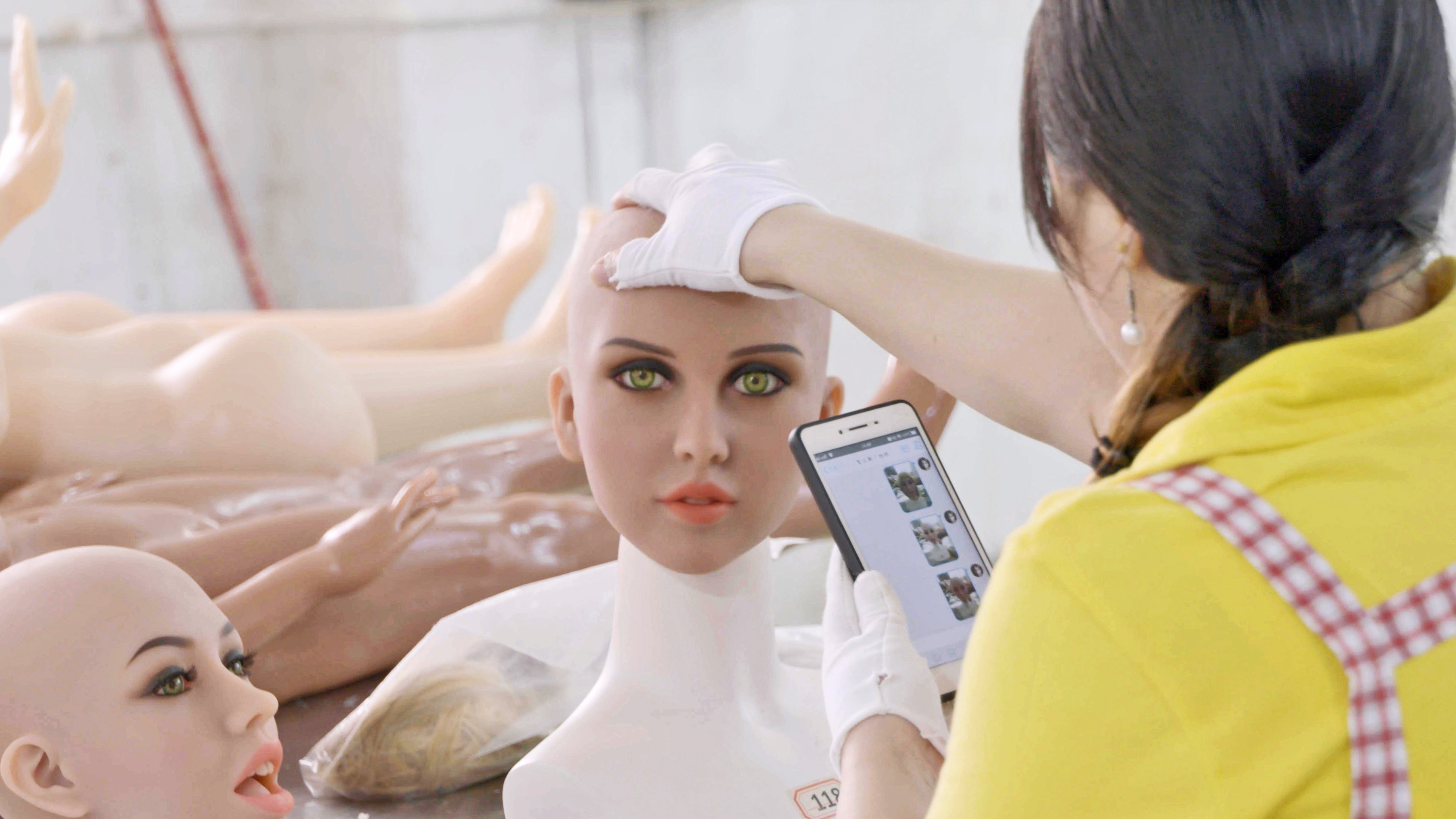
Factory worker inspecting the head of a sex doll during assembly in Zhonghan City, Guangdong Province, China, as seen in Ascension, directed by Jessica Kingdon. Image courtesy of MTV Documentary Films.

“Work hard and all wishes come true” according to a propaganda slogan pasted on a wall in Jessica Kingdon’s interrogation of the Chinese Dream, Ascension (登楼叹, dēng lóu tàn). Working her way through its various layers, Kingdon’s observational doc addresses the ironies of the contemporary society defined by its intense and ever growing wealth inequalities. According to a speech made by a dubious CEO approaching the film’s conclusion, China is a “fair society” his logic being that only the morally responsible are entitled to profit and society will find ways to rob those who’ve acquired their riches though illicit means of their ill-gotten gains while the trickle down economy otherwise ensures “wealth redistribution”. 

His justifications are, it has to be said, hard to accept. Kingdon opens the film with an aerial shot of a rooftop swimming pool in which the trio of women cleaning it appear tiny next to its comparativeness vastness as they care for a facility they may not be entitled to use. Descending to street level, we’re assaulted by PA speakers advertising for labour with promises of comfortable work, some which can be done sitting down, with accommodation in spacious dorms with aircon thrown in. Anyone would think there must be some kind of tremendous labour shortage, but the wages are lower than low, and employers apparently still picky over what kind of people they employ, stating an age cap of only 38 while banning those with criminal records or tattoos along with dyed hair and piercings. The excessively tall are also not welcome hinting at conditions more cramped than the announcements imply. 

Taking her camera inside the factories, Kingdon discovers people reduced to the level of automata, machines among machines mechanically sorting cooked poultry or stamping packaging while watching TV drama on smartphones. Workers complain that their bosses cheat of them of their pay and feel the need to bribe them by buying lunch to curry favour. Yet Kingdon also uncovers the absurdity of the everyday, shifting from a production line producing plastic bottles to an artisan workshop staffed almost entirely by women in cheerful yellow outfits with red gingham aprons crafting uncannily realistic sex dolls presumably for extremely wealthy, sometimes demanding clients. A worker stops to snap a picture of the doll’s nipples with a tape measure next to them to send for approval, while others obsess over the proper colouring for the areola or complain that the chemicals irritate their skin.

Shifting up a gear, she visits a school for bodyguards where the instructor randomly plays with a little goat for some reason hanging around outside and is then stung by a bee. The need for bodyguards is perhaps another symptom of increasing inequality as the super rich discover their “success” has only made them anxious for their safety. On the flip side, another school is busy training butlers for those enamoured of the trappings of feudalism. The instructor explains that one of her clients got a job as a PA right away and his sole responsibility was squeezing his boss’ toothpaste for him, preparing it in a little cup. Meanwhile across town, others teach proper business etiquette most particularly to female employees. A pretty woman is China’s business card, one enthusiastically points out selling the importance of cosmetics, while another even more dubious course in entrepreneurship has its participants “deciding” to earn millions within the year and then triple the amount in the next five. 

While a woman plumps pillows in a fancy hotel suite, painstakingly stripping a rose of its petals to place on a pair of towels folded into the shape of a swan, the wealthy enjoy leisure time at a huge water park which boasts a tunnel ride through the aquarium where “mermaids” swim alongside sharks and stingrays. Others ride a literal “lazy river” sitting in rubber rings styled like frosted donuts. Guests at a fancy French dinner praise American freedom, while others complain that Westerners criticise China’s human rights record but how can you think about human rights when you’re so poor your entire existence is occupied with survival? Billboards at street crossings bear footage of other people crossing, while a picture of Xi Jinping sits in the corner of a garment factory where they sew clothes embroidered with the logo “Keep America Great” and another worker rolls her eyes at claims the place is haunted. China’s greatest export, it seems, is irony. Kingdon’s beautifully composed shots add to the sense of absurdity as does the score veering from eerie synths to jaunty theme park music implying that the entire nation has in a sense become a playground for the rich and powerful built on wilful exploitation and the thoughtless cruelties of intense consumerism. 


Ascension opens the 13th Season of Chicago’s Asian Pop-Up Cinema on Sept. 15 before opening at New York’s IFC Center on Oct. 8 courtesy of MTV Documentary Films.

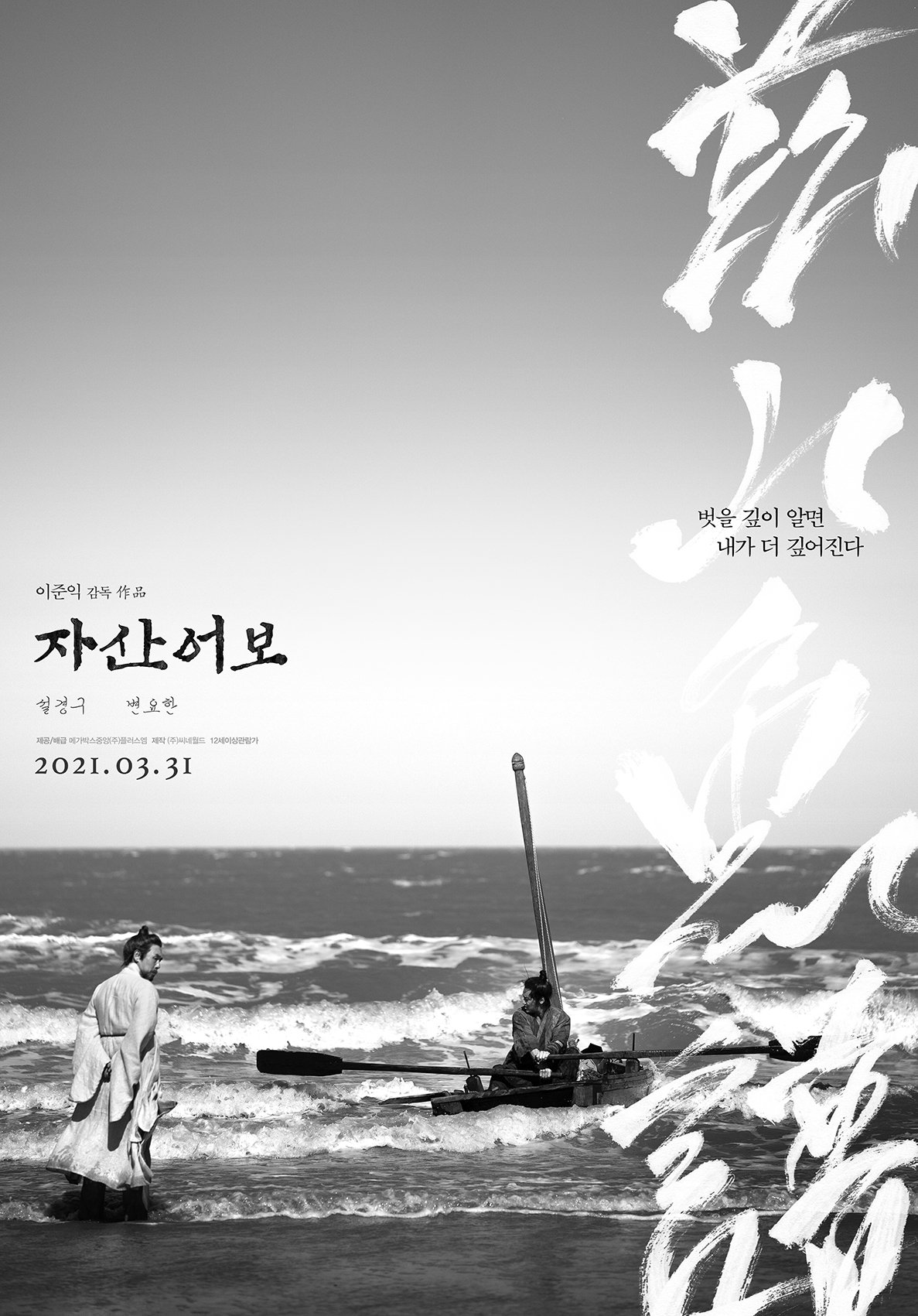
The Book of Fish (자산어보, Lee Joon-ik, 2021)

An “evil learning sinner” and a young man fixated on Neo-Buddhist thought develop an unlikely friendship while compiling an encyclopaedia about sea life in Lee Joon-ik’s contemplative period drama, The Book of Fish (자산어보, Jasaneobo). Like those of Hur Jin-ho’s Forbidden Dream, the hero of Lee’s historical tale of competing ideologies dreams of a classless future but is exiled from mainstream society not for his revolutionary rejection of a Confucianist hierarchal society but for his embrace of Western learning and religion. 

Like his two brothers, Chung Yak-jeon (Sol Kyung-gu) reluctantly joins the imperial court but later falls foul of intrigue when the progressive king falls only to be replaced by his underage son controlled by the more conservative dowager empress. Having converted to Christianity, Yak-jeon and his brothers are faced with execution but unexpectedly reprieved when the oldest agrees to renounce Catholicism and root out other secret Christians. Yak-jeon is then exiled to a remote island while his better known brother, the poet Yak-yong (Ryu Seung-ryong), is sent to the mountains. On his arrival, the local governor introduces Yak-jeon as a “traitor” and instructs the islanders not to be too friendly with him but island people do not have it in them to be unjustly unkind and so Yak-jeon is, if warily, welcomed into their community. “He maybe be a traitor, but he’s still a guest” his new landlady (Lee Jung-eun) explains as she prepares him some of the local seafood. 

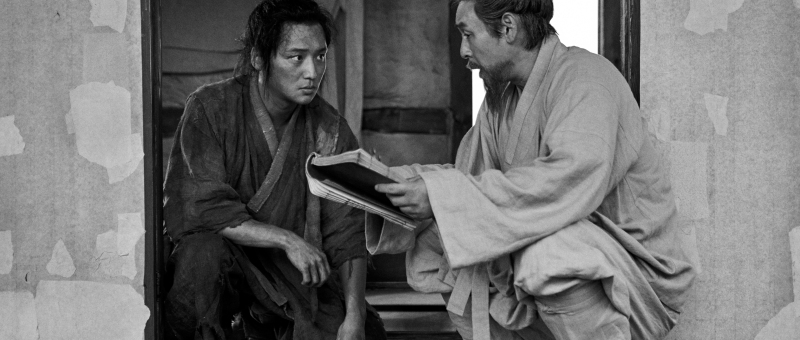
Yet Yak-jeon encounters resistance from an unexpected source, intellectual fisherman Chang-dae (Byun Yo-han) who goes to great lengths to acquire scholarly books despite his otherwise low level of education. Somewhat patronisingly, Yak-jeong offers to tutor him, but Chang-dae is a rigid thinker who believes the world is going to hell because people have forgotten their Confucian ideals so he’s no desire to be taught by a treacherous “evil learner” or be sucked in to his dangerous Catholicism. Surprisingly, however, for a man who risked death rather than renounce his religion, Yak-jeong is no fanatic and in fact does not appear to practice Christianity at any point while living on the island. What he professes is that Eastern and Western thought need not be enemies but can go hand in hand while a rigid adherence to any particular doctrine is what constitutes danger. 

Chang-dae had insisted that he studied “to become a better human” but he also has a large class chip on his shoulder as the illegitimate son of a nobleman who refuses to acknowledge him, fully aware that as a “lowborn” man he is not allowed to take the civil service exam and in any case would not have the money to buy his way in to the court. Despite later professing egalitarianism, Yak-jeong treats the islanders, and particular Chang-dae, with a degree of superiority extremely irritated by Chang-dae’s refusal to become his pupil in the slight of his elite status often making reference to his “low birth”. Confessing his desire for a classless society with no emperor, however, Yak-jeong encounters unexpected resistance as the young man finds it impossible to envisage a world free of social hierarchy based on rights of birth and swings back towards desiring the approval of his elite father in the determination to climb the ladder rather than pull it down. 

Chang-dae finds himself caught between two fathers who embody two differing ways of being, Yak-jeong advising him to think for himself rather than blindly follow Confucianist thought, while his father encourages him to towards the court and the infinite corruptions of the feudal order. Chang-dae does begin to interrogate some of the more persistently problematic elements of Confucian teaching including its views on women and entrenched social hierarchy but also feels insecure and desperately desires conventional success and entrance into a world he thinks unfairly denied to him. Once there, however, he discovers he cannot submit himself to duplicities of feudalism. The islanders are being taxed to into oblivion, not only is there a random counter-intuitive tax on pine trees but the government is also extracting taxes from the family members of the deceased as well as newborn babies while cutting sand into the rice rations it promises in return. His father and superiors laugh at him for his squeamishness, seeing nothing at all wrong in the right of the elite to exploit the poor. Trying to blow a whistle, Chang-dae is reminded that the courtly system is an extension of the monarchy, and so criticising a lord is the same as criticising the king which is to say an act of treason. 

Having been accused of treason himself, Yak-jeong declines to enact his revolutionary ideas penning only a couple of books during his time in exile in contrast to his brother who published many treatises on effective government. Yak-jeong explains he dare not risk writing his real views which is why he’s immersed himself in the beauty of the natural world, exercising his curiosity writing about fish while making use of Chang-dae’s vast knowledge of the sea. The two men develop a loose paternal bond but are later separated by conflicting desires, Chang-dae eventually choosing conventional success over personal integrity only to regret his decision on being confronted with the duplicities of the feudal order. Shot in a crisp black and white save for two brief flashes of colour and inspired by traditional ink painting, Lee’s contemplative drama finds itself at a fracture point of enlightenment as two men debate the relative limits of knowledge along with the most effective way to resist a cruel and oppressive social order but eventually discover only wilful self exile as Chang-dae learns to re-embrace his roots as an islander along with the openminded simplicity of Yak-jeong’s doctrine of catholicity in learning. 


The Book of Fish screened as part of this year’s New York Asian Film Festival.

Original trailer (Korean subtitles only)

Spaghetti Code Love (スパゲティコード・ラブ, Takeshi Maruyama, 2021)

“Tokyo is where everyone comes to make their dreams come true, right?” a naive young woman exclaims having just abandoned her life in the country to chase freedom and independence in the capital. “You’re wrong” her reluctant, infinitely jaded host tries to correct her, “Tokyo is where everyone gets killed by their dreams”.  Tokyo is indeed the place dreams come to die in the debut feature from music video director Takeshi Maruyama, Spaghetti Code Love (スパゲティコード・ラブ). As one dejected Tokyoite puts it in her slightly pretentious opening monologue, what they’re chasing isn’t love, or money, or success but “approval” wanting desperately to find acceptance but more often than not encountering only defeat and despair. 

At least, that’s according to intense artist Kurosu (Rikako Yagi) who has become moderately successful but remains somewhat insecure knowing that her success is partially built on that of her famous parents. She insists that there are two kinds of people in the world, those who meekly put up with a disappointing reality and those who defiantly “create their own world”. She of course claims to be the latter, a highly individualist artist who takes no shit from anyone but that doesn’t excuse her tendency to behave like a total diva in an effort to assert he superiority over others, humiliating aspiring photographer Tsubasa (Nino Furuhata) by likening his set up to an ad placed by a rural supermarket. 

Tsubasa meanwhile is himself conflicted having come to Tokyo to further his career as a photographer but desperate for work and afraid of selling out. He came because he thought it was better to regret the things you’ve done rather than those you haven’t and that he’d always wonder if he stayed at home, but now he’s wondering if it’s better not to try, that the possibility of what might have been is easier to bear than knowing you tried and didn’t work out. Painting a slightly rosier version of his Tokyo life on social media he offers a Twitter friend the opportunity to visit him in the capital out of politeness only for her turn up, insist on staying with him in his tiny apartment, and make him feel even worse with her childish idealism which has a kind of poignancy in its unrealistic hopefulness.  

Like Tsubasa, aspiring singer-songwriter Cocoro (Toko Miura) is beginning to wonder if her dreams are worth pursuing as she meditates on the success of prettier rivals in both her work and romantic lives, spotting ex Shingo (Hiroya Shimizu) with his new squeeze and irritated when he smirks at her from across the courtyard. A cold and aloof young man fond of giving overly scientific explanations for philosophical questions, Shingo has decided that unhappiness is the result of broken attachment and so he’s decided to have no attachments at all even going so far as to have no fixed address living by apartment hopping every 10 days. As he discovers to his cost, living life with no connections may be fine on the day to day but you’ll be in a fix if you wind up in trouble and have no one to ask for help. His new girlfriend Natsu (Saya Kagawa), by contrast, has the opposite problem working as a sex worker in part as a means of protecting herself from romantic heartbreak by avoiding emotional intimacy. While Cocoro wonders what her life would be if she were as pretty as Natsu, Natsu meditates on the pretty girl paradox admitting that some things come easy but others slip through her fingers. She claims to love lonely people because lonely people don’t up and leave without warning. 

But loneliness manifests in many forms such as that exhibited by Shizuku (Kaho Tsuchimura), a part-time waitress with extreme low self-esteem who’s staked her existence being on the perfect partner for her boyfriend while terrified he’ll leave her an anxiety later borne out by the fact he’s married to someone else and apparently only using her as a “fun” break from his presumably less patriarchal domestic life. And then there’s Uber Eats driver Amane (Kura Yuki) and his unwise attachment to a low level idol star who’s since retired. Obsessing over her rather banal favourite aphorism about whether a falling tree in the forest makes a sound if no one’s around to hear it he vows to forget her once he’s made 1000 deliveries but realises that a romantic attachment is hard to break even if it’s entirely one sided. 

On the flip side, broken hearts eventually bring two next-door neighbours together as they mutually abandon their unhealthy coping mechanisms of online psychics and compulsive peanut butter eating while bonding in a shared sense of romantic disappointment realising the terrible men who dumped them aren’t worth all this aggro. A pair of emo high school students suddenly realise growing old isn’t so bad after all, and a kid struggling with his life plan survey suddenly realises that “no plan” is also a plan before careering off on a borrowed skateboard. Tokyo can be cruel and unforgiving, but so can everywhere else. Shot with true visual flair, Maruyama’s ethereal, floating camera follows this interconnected yet isolated band of young people all over the city as they search for love, chase their dreams, and yearn for connection allowing them each at least if not fulfilment then possibility as they learn to accentuate the positive in a sometimes hostile environment.


Spaghetti Code Love streamed as part of this year’s Japan Cuts.

Jigoku-no-Hanazono: Office Royale (地獄の花園, Kazuaki Seki, 2021) [Fantasia 2021]

The OL, or “office lady” occupies a peculiar place in Japanese pop culture if not the society itself. The evolution of the typing pool, the OL exists to one side of office life, treated as domestic staff in the corporate environment and in many ways expected to be invisible. As such, an OL performs stereotypically feminine tasks in the office such as keeping the place clean and their male bosses looked after in addition to handling often dull and pointless admin work. It goes without saying that in general being an OL is a young woman’s job with the expectation that most will either find a way to transition onto a more viable career track or simply leave the world of work behind to marry and become a regular housewife. 

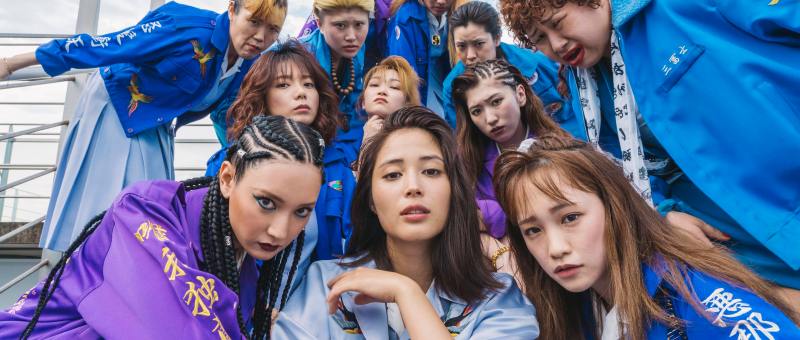
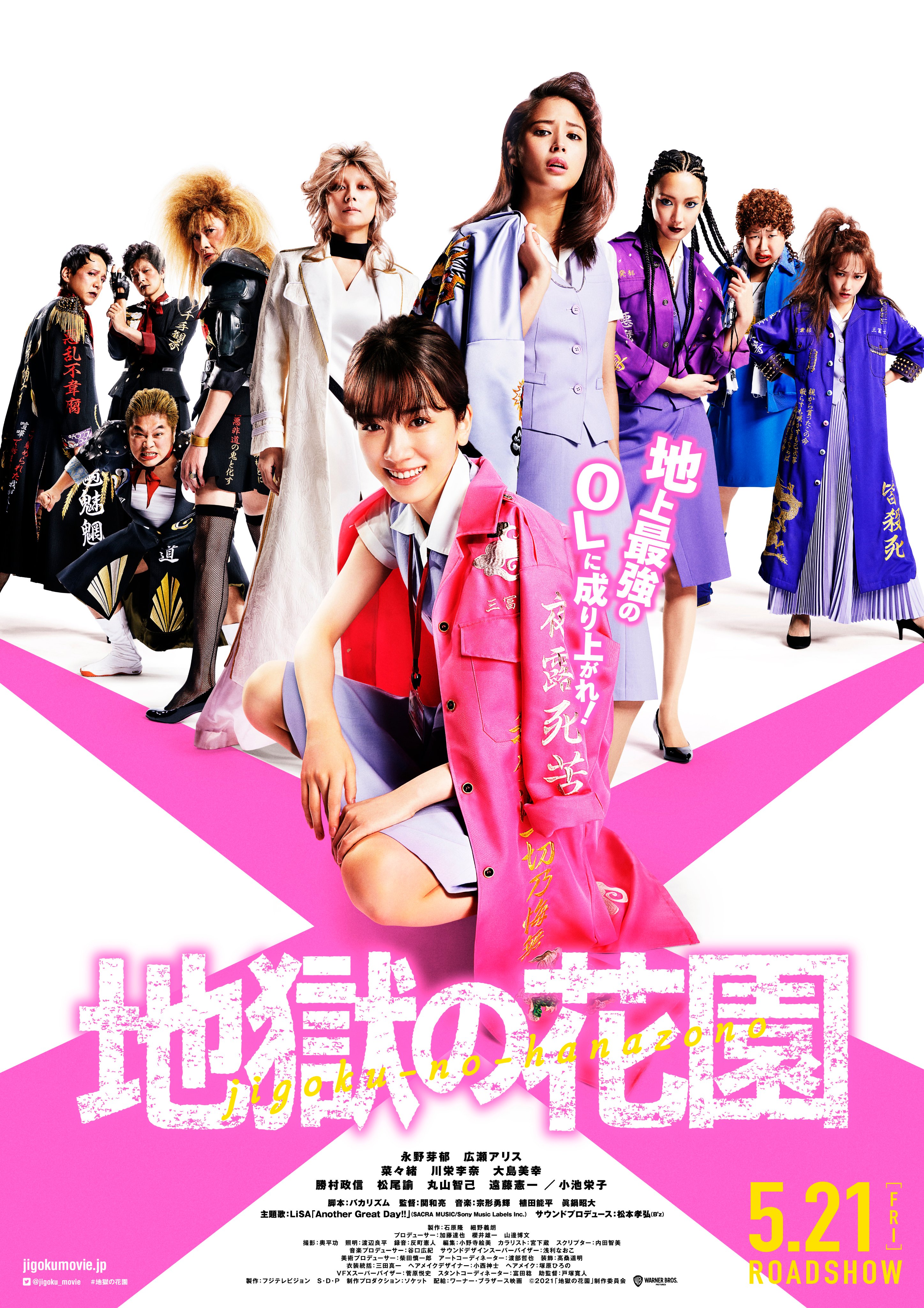
It’s this image of the OL as the embodiment of bland geniality that is at the centre of Kazuaki Seki’s zany comedy Jigoku-no-Hanazono: Office Royale (地獄の花園, Jigoku no Hanazono), a repurposing of “yankee” high school delinquent manga for the world of the office lady scripted by comedian Bakarhythm. A devotee of yankee manga, 26-year-old OL Naoko (Mei Nagano) explains that even office ladies have their warring factions outlining the tripartite fault lines at play in even her small company where the head OLs from Sales, R&D, and Manufacturing constantly vie for hegemony through physical dominance. She however merely observes from the sidelines defiantly living her “ordinary” office lady life. That is until new hire Ran Hojo (Alice Hirose) arrives to upset the precarious workplace power balance. 

Naoko first catches sight of Ran after she challenges some of the OLs from her company as they harass a timid male employee in the street though they don’t become best friends until after Ran spots a salaryman trying to upskirt her at a bus stop and decides to teach him a lesson. Despite being a yankee, it seems that Ran is also trying to live a normal OL life, bonding with Naoko over their shared love of a TV drama, but is not exactly good at the job and regards fighting as her one and only skill. Perhaps speaking to an inner insecurity born of being a woman in a conformist and patriarchal society, each of the women struggle to see themselves as protagonists in their own lives rather than mere supporting players unwittingly both playing the role of the ditzy best friend to the competent hero. 

In one of her many meta quips commenting on the action and how it would play out if she were a character in a yankee manga, Naoko laments her status as the “comic book hero’s boring friend” which is extremely ironic seeing as she is certainly the heroine of this movie given that it’s her voiceover we’re hearing and her POV we generally adopt. Yet Seki sometimes undercuts her by shifting to a rival voiceover offered by Ran herself doubtful of her proper place in the narrative and eventually descending into an existential crisis after an unexpected setback shatters her sense of self. 

Nevertheless, even if as the de facto leader of her company’s OLs Ran advocates for equality insisting there are no bosses and no underlings only women standing together, Office Royale generally embraces rather than attacks societal sexism particularly in its somewhat unexpected conclusion which ends in ironic romance rather than female solidarity. Even so, it’s interesting that the OLs lose interest in delinquency once the hierarchy of fists has been fairly decided, acknowledging the superior skills of a better fighter and thereafter living peacefully rather than continuing the internecine determination to sit at the top of the pyramid which is the hallmark of the high school yankee manga. 

While the final arc strays into some potentially problematic territory with the uncomfortable humour of four male actors playing the top fighters of a rival gang of OLs from another company, Office Royale offers a series of surprisingly well choreographed fight scenes even if eventually descending into manga-esque cartoonish violence while much of the humour stems from Naoko’s adorably nerdy voiceover musing on what would happen next if this were a yankee manga. In the end, however, it’s less a tale of office lady infighting than of a pair of young women coming to a better understanding of themselves even if they do so through the potentially destructive medium of pugilism. 


Jigoku-no-Hanazono: Office Royale streamed as part of this year’s Fantasia International Film Festival. 

Original trailer (English subtitles)
Breakout Brothers (逃獄兄弟, Mak Ho-Pong, 2020)

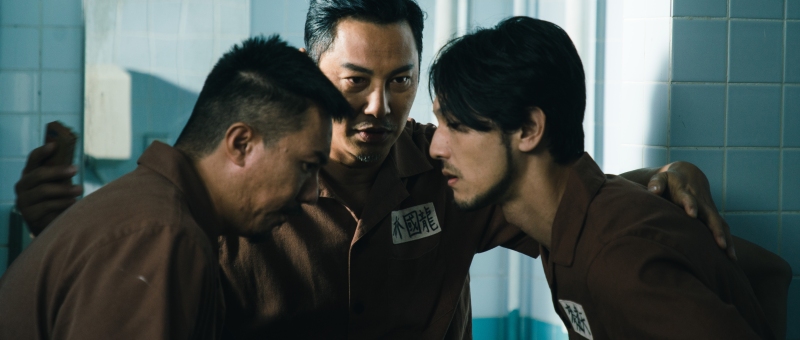
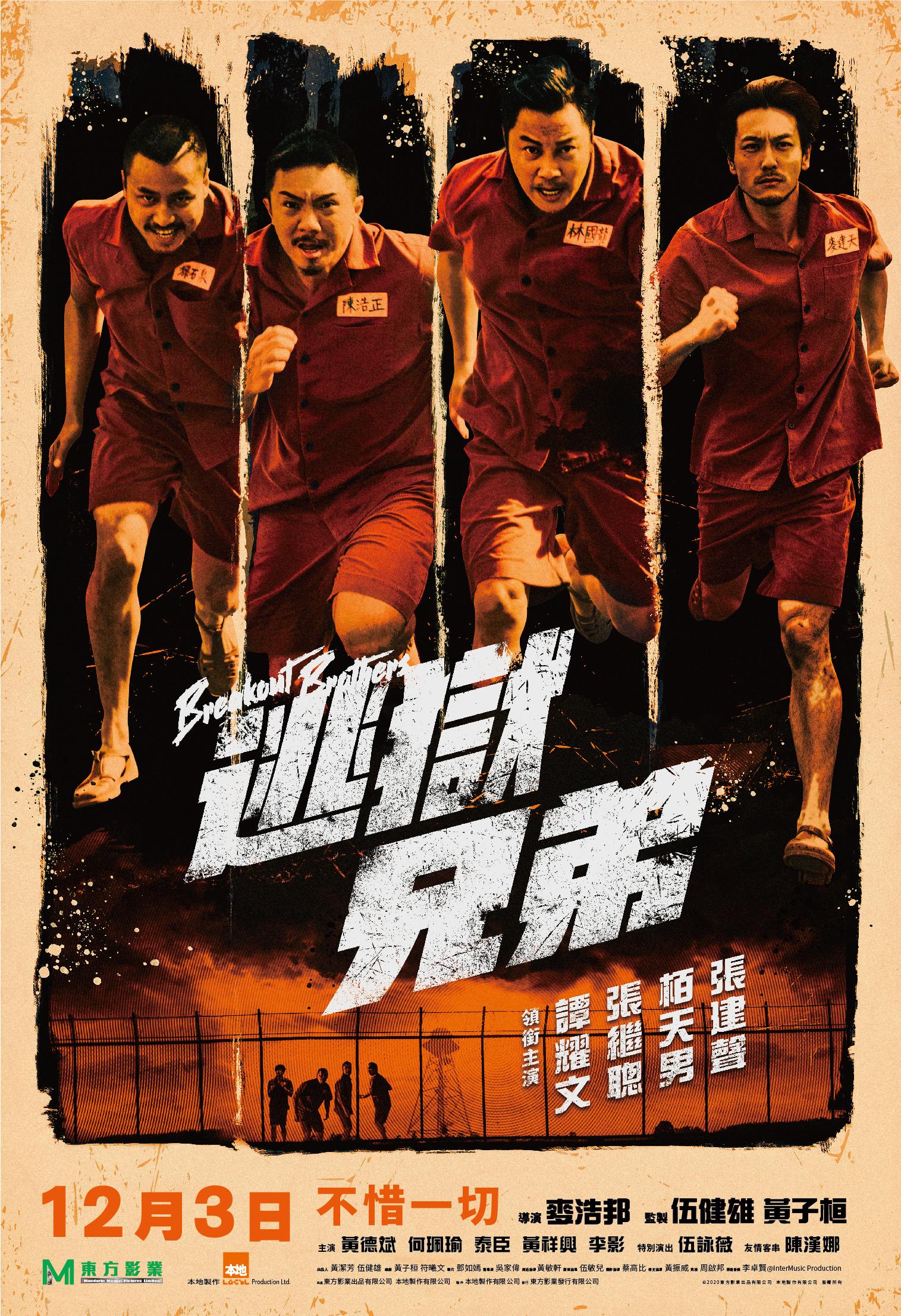
“I’m treating this as a vacation” says affable triad Chan (Louis Cheung Kai-Chung) of his three month prison term, after all it’s rent free and three meals a day who could say no to that in the difficult economic environment of pre-handover Hong Kong? Nevertheless, it’s hardly a vacation if you can’t cut it short and Chan, along with two buddies, will eventually find reasons to want to leave. Mak Ho-pong’s genial prison break comedy Breakout Brothers (逃獄兄弟) takes occasional subversive potshots against an increasingly corrupt social order but eventually discovers that you can’t escape social responsibility while the real reward is indeed the friends you make along the way. 

That is at least the conclusion that newbie prisoner Mak (Adam Pak Tin-Nam) comes to after being pulled into an escape plan formulated by petty gangster Chan who decides to make a break for it after learning that his dear mother has been taken ill and needs a kidney transplant which only he can give her. Thinking of his prison time as a vacation from the pressures of everyday life, Chan has been a low maintenance prisoner and therefore assumed the warden would agree to a temporary release to let him help his mum, but Warden Tang (Kenny Wong Tak-Ban) who has already served a “life sentence” of 30 years in post has recently been promised a promotion and doesn’t want anything to mess it up like a prisoner turning fugitive while on hospital leave. Spotting a workman disappearing from a storeroom and emerging Mario-style from a manhole on the other side of the fence Chan gets an idea and enlists Mak, an architect inside after being framed for taking bribes, to help him figure out the logistics, and Big Roller (Patrick Tam Yiu-Man), leader of the prison’s second biggest gang, for access and protection. 

The guys’ predicaments are perhaps embodiments of the age, Chan wanting out for reasons of filial piety while for Big Roller it’s in a sense the reverse in learning the daughter he was told had died is in fact alive and about to be married. Mak meanwhile wants out because he’s a sitting duck inside, the shady construction CEO who framed him for signing off on lax safety procedures which led to a fire in a prominent building having enlisted the services of rival gangster Scar (Justin Cheung Kin-Seng) to intimidate him into dropping his appeal. Hints of institutional corruption extend to the colonial prison system with guards quite clearly intimidated by prisoners and often turning a blind eye to cellblock violence while it’s also implied that Warden Tang has in a sense facilitated the rise of Scar at the expense of Big Roller as a means of maintaining order. He, like the colonial authorities, will soon be on his way but anticipating his own freedom is keen there be no trouble which is why he refuses Chan’s compassionate leave and extends little sympathy to new boy Mak. 

In any case, the real draw is the bumbling crime caper of the guys planning a heist-style escape which is, in the history of prison escapes, not an especially elaborate one. The prison is not exactly max security, and as they plan to escape during the celebrations for the Mid-August festival none of them are anticipating much difficulty in making it to the outside though as expected not quite everything goes to plan. Mak, meanwhile, eventually takes Big Roller’s advice and decides to stay inside to clear his name properly while the gang ensure his safety rather than try to live as a guilty fugitive and possibly be caught only to end up with more time. The other two have more pressing temporary goals and have not perhaps considered what to do after they’ve completed them, believing only that their lives are untenable if they cannot fulfil their duties as father and son respectively. 

Perhaps for this reason, the Mainland-friendly conclusion has each of the men recommitting themselves to paying their debts to society, Chan even insisting that he’s going to use his time wisely to improve his education in order to be a better husband and son while Big Roller promises to become a carpenter for real. Mak gets a partial vindication in that the shady CEO is finally forced to face justice while also realising that his slightly elitist, individualist stance has been mistaken thanks to the warm and genuine relationships he’s discovered inside. More comedy crime caper than tense prison break thriller, Breakout Brothers remains true to its name in prioritising the unconventional friendship that develops between the trio as they bond in a shared sense of existential rather than literal imprisonment. 


Breakout Brothers screened as part of this year’s New York Asian Film Festival.

Original trailer (English / Traditional Chinese subtitles)