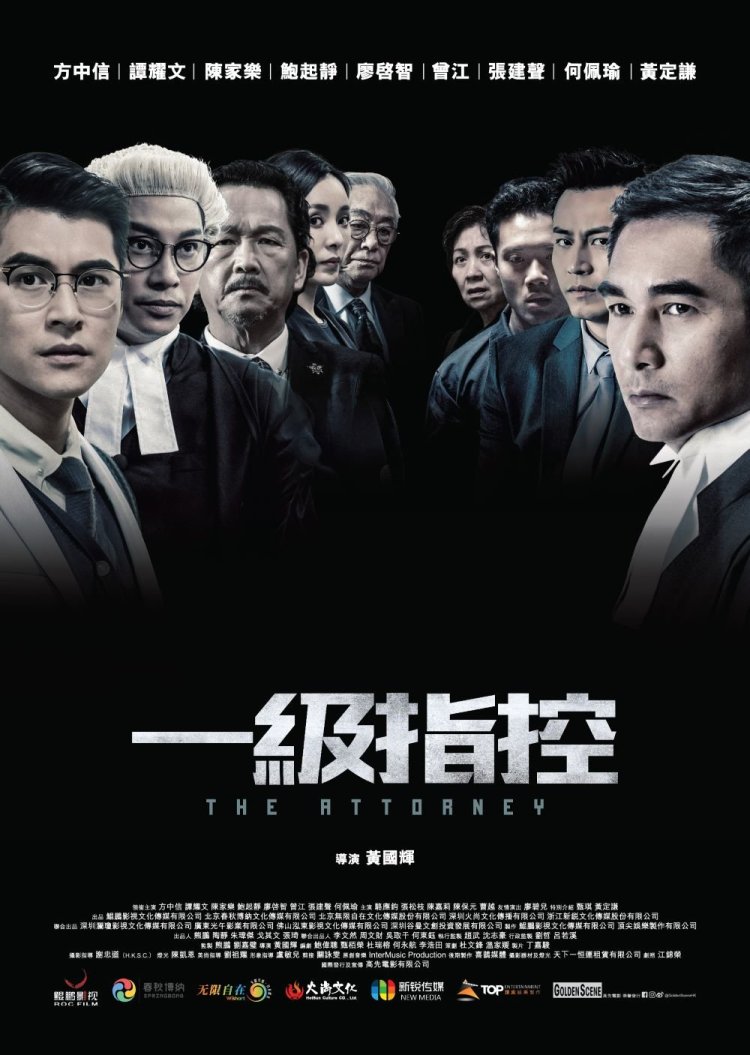
The Attorney (一级指控, Wong Kwok-fai, 2019)

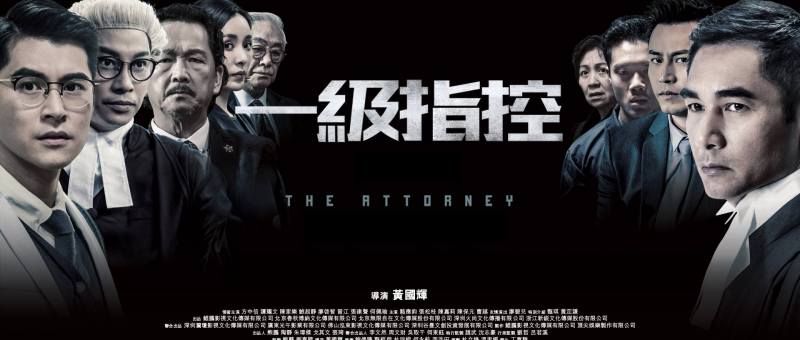
The Attorney poster 1What price justice? Wong Kwok-fai’s legal thriller The Attorney (一级指控) puts an unequal society on trial but discovers that to beat shadiness you might need to get a little shady and a healthy bit of deviousness may serve you well if it’s offered in service of a noble ideal. Then again, it’s a slippery slope towards the abyss if even the proponents of law aren’t above a little judicial finagling to ensure that “justice” gets done in a society which continues to defer to those with the biggest pockets rather than protecting those of meagre means.

We meet our two attorney heroes in the middle of their respective cases. Jaded hot shot Lei You Hui (Alex Fong Chung-sun) is defending a journalist who broke an important story about corruption in the competition for places at prestigious schools from a defamation charge, while the idealist rookie Kelvin (Carlos Chan) is defending a frail old woman held up on a charge of operating without a proper business licence. Lei wins his case, and Kelvin loses. Lei mocks Kelvin’s lack of success, and Kelvin has only contempt for Lei’s cavalier attitude towards the upholding of justice.

The action begins when a 25-year-old man, Lee, is found lying in a pool of blood next to the dead body of a young woman, Ka-yee, who is later discovered to be the daughter of a billionaire businessman, Kwok (Liu Kai-chi). The case seems open and shut. Lee claims he passed out and found the body when he woke up but the circumstantial evidence against him is overwhelming. His grandmother, Chu (Nina Paw Hee-ching), of course believes that he is innocent and enlists the best lawyers she can get access to, leading her to a solicitor who introduces her to Kelvin who is determined to see that the young man gets a fair trial. Lei, meanwhile, has a personal interest in the case in that his late wife was killed in a shopping mall collapse 10 years previously which also took the lives of Lee’s parents. Lei prosecuted a class action law suit, but lost. The shopping mall was constructed by Kwok’s company, which gives him an additional reason to want to help aside from trying to make things up to Lee and Chu whom he feels he failed all those years ago. 

Wong wastes no time in demonstrating that “justice” is a nebulous concept when society is necessarily set up to benefit the rich. Ka-yee’s body was discovered in a building belonging to a property magnate, Tsai Chi-wai (Patrick Tam), who is currently running for political office on a platform of equality for all. Chi-wai is, however, a member of the super rich elite who believes he can do as he pleases because he is protected by his wealth and privilege. Lee, by contrast, is a poor boy delinquent who ordinarily wouldn’t have access to a fancy lawyer to clear his name and most likely would have been torn apart by the elite prosecutor those with vested interests have ensured is attached to the case even though it’s a simple enough affair. 

Yet, as Lei discovers, the roots of corruption lie in the understandable desire to protect one’s children even when they’ve made terrible mistakes. Meeting with Chi-wai’s smarmy father, he discovers a man who talks up his youthful high ideals of union activities and working for the workers but later emphasises his hard won cynicism in insisting that no one with a brain seriously believes in things like truth and justice, only self interest. Tsai wants to protect his son at all costs, if only to protect himself by getting his boy into high office. Meanwhile, Kwok is left with questions about his own responsibility for his daughter’s death. If having literally billions in the bank can’t keep your little girl alive, then what use are they?

Then again, having billions in the bank is pretty useful leverage for getting your own way even if you eventually have a change of heart about enabling societal corruption. Chi-wai snarls that you need to be smart to survive, but according to Kelvin saving lives is more important than winning. Lei, who had given up his lofty ideals after being unable to get “justice” for his wife’s death begins to regain his faith in the law thanks to Kelvin’s influence and the accidental coincidence of getting a kind of revenge on Kwok by showing him the error of his ways in illuminating the truth behind his daughter’s death. To do that, however, he’ll have to bend the law a little which leaves him a compromised figure if for the best of reasons as he wilfully demonstrates the flaws in a legal system which is in itself inherently corrupt in its avowal that everyone is equal before the law while ignoring the fact that not everyone has access to the same level of “justice”. Wong’s conclusion may be a little rosy as even the most jaded of legal minds finds himself minded to rebel against the system, but there’s no denying his purpose as Lei decides to protect his daughter by protecting his society from the forces which threaten to blacken her future.


The Attorney screens in Chicago on Oct. 10 as the closing night gala of the ninth season of Asian Pop-Up Cinema. Actor Kenneth Tsang Kong, scriptwriter Frances To, and xxecutive producer Cherrie Lau will be in attendance for an introduction and Q&A.

Original trailer (English subtitles)
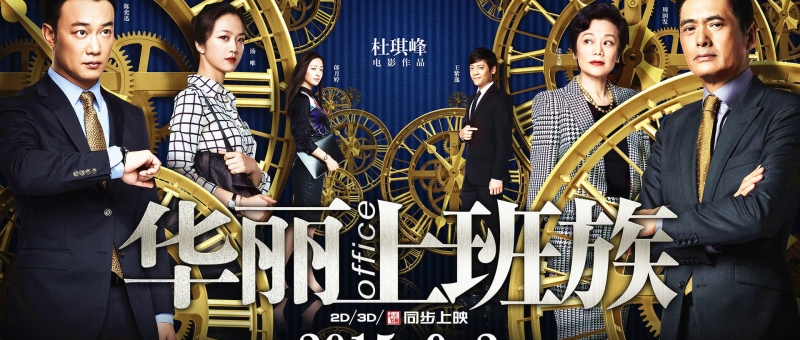
Office (華麗上班族, Johnnie To, 2015)

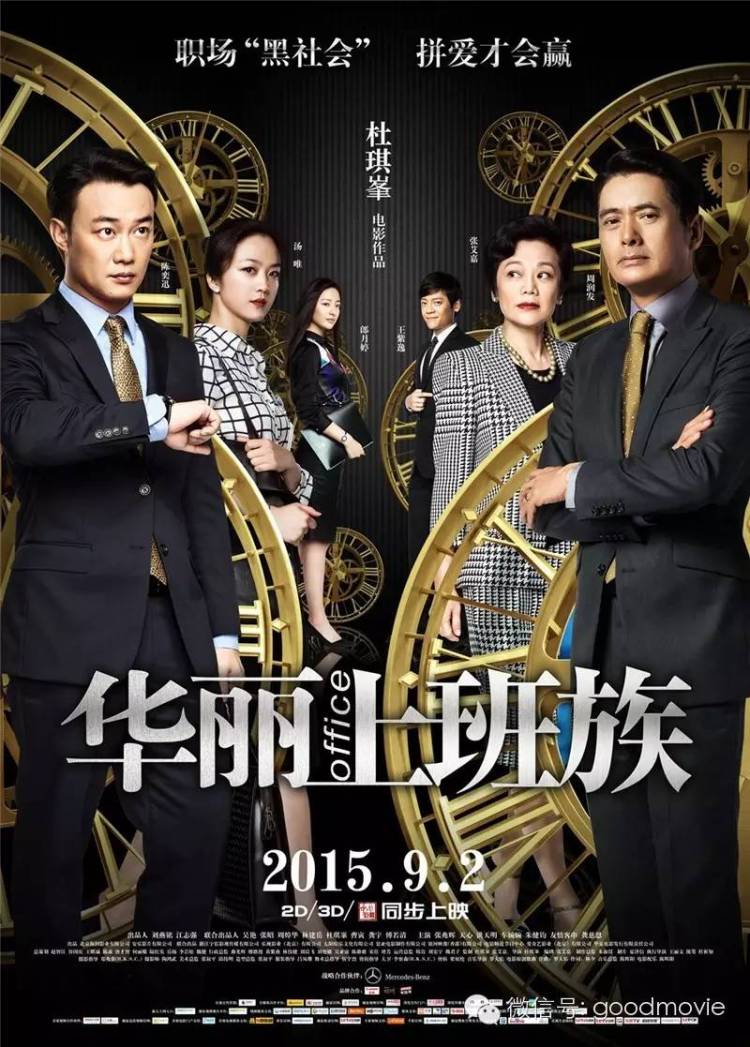
Johnnie To office poster 1Can love and capitalism walk hand in hand? Perhaps not, at least in Johnnie To’s beautifully choreographed musical exploration of high stakes finance and moral bankruptcy, Office (華麗上班族). Adapted from Sylvia Chang’s stage play, Office situates itself on the edge of an abyss as the 2008 financial crisis edges its way towards Hong Kong while enterprising businessmen try to figure out how to ride the waves even if that means standing on someone else’s shoulders as they sink deeper into the moral morass that is the modern economy.

Top Hong Kong trading company Jones & Sunn is about to go public. CEO Winnie Chang (Sylvia Chang) has long been running the show for her boss and lover, Chairman Ho (Chow Yun-fat), who has promised her a sizeable dividend once the floatation is complete. Meanwhile, two new interns have just joined the company, eager to make their marks in the corporate world and ensure they survive their three month probation. Bright-eyed and bushy-tailed Li Xiang (Wang Ziyi), “Lee like Ang Lee, Xiang like dream”, just wants to work hard and get rich so he can live a nice life, while his colleague Kat Ho (Lang Yueting) has just returned from studying economics at Harvard and appears to be slumming it in a lowly internship while (unconvincingly) pretending to be from a humble background. The funny thing is no one seems to pick up on the fact Kat has the same surname as the company’s owner, or they might have figured out she’s the boss’ daughter either forced to learn the trade from the ground up or working as a spy among the regular employees. In any case, Li Xiang is smitten.

Love, it seems, is the destabilising force at the centre of this great machine. CEO Chang, an all powerful woman in a male dominated industry, rules the office with a will of iron but allows herself to be manipulated by Ho with whom she has been having a longstanding affair. Ho has a wife in a coma, but neither of the pair object to the office gossip which brands Chang as “Mrs. Ho”, seeing it only as cutely romantic rather than a slight on Chang’s very real authority. Meanwhile, lonely in Ho’s lack of serious commitment, Chang has also been sleeping with her favourite underling, the feted David (Eason Chan), who in turn is getting fed up with feeling like a spare part who’s hit the peak of his career. Unbeknownst to Chang who may have taken her all-seeing eye off the ball, David has started playing with fire in gambling with company money and losing badly. As a counter measure, he’s begun romancing lovelorn accountant Sophie (Tang Wei), who unlike Chang, is still facing the work/home dilemma in that her fiancé back on the Mainland is pressuring her to give up work and settle down.

Li Xiang is very keen on following his “dreams” which in the beginning are charmingly naive – he wants a nice life for himself and the ability to pay off his friends’ debts (seemingly for entirely altruistic reasons, not as an excuse to show off). Slowly, however, his new world begins to corrupt him. He’s irritated that he’s not allowed to ride the executive elevator and badly wants in, but is still green enough to chivalrously cover up for Kat’s mistakes, while Kat is so clueless that she forgets turning up to work in designer outfits and in a chauffeur driven car is going to blow her cover. Li Xiang sees through her, but only to the nice part – it never really occurs to him she’s a mole or planning to betray Mrs. Chang who is kind of her step-mother. Chang isn’t blind to office politics. She sees Li Xiang take the blame for Kat and even likes him for it. She also likes his “originality” and plans to take him under her wing for her new expansionist plans but finds herself once again blindsided by all the difficult romantic drama bubbling under the surface of coldhearted capitalism.

David and Sophie decide they want to start a “love revolution”, but David has already gone to a dark place and his romantic confession is immediately followed by a manipulative request to get Sophie to help him with his nefarious plans. Meanwhile, Li Xiang’s gradual descent into corporatism begins to sour Kat who’d taken a liking to him because he wasn’t like everyone else. They didn’t mean to do it, but they’ve betrayed themselves and others in their relentless pursuit of conventional success. Drunken salarymen at a local bar ask themselves what all of this is for when their kids don’t recognise them and they barely recognise themselves, yet no one quite has the guts to get off the corporate train and go do something else.

In To’s elaborate set design, no one is ever truly able to leave the office. An elegant construction of neon and steel, the abstract theatricality of To’s artificial universe only underlines its essential meaninglessness – something the Office’s denizens eventually come to understand whether they choose to stay or not. As Chang quips, smart guys control money and stupid ones are controlled by it, but she herself is wise enough to know when the game is up and it’s time to move on. Did love destroy the system or did the system destroy love? Beautiful melodies telling us terrible things, To’s anti-capitalist musical crushes its earnest heroes under the wheel of progress while they dance blithely all the way over the edge.


Office screens in Chicago on Oct. 5 as part of Asian Pop-Up Cinema.

Original trailer (English subtitles)
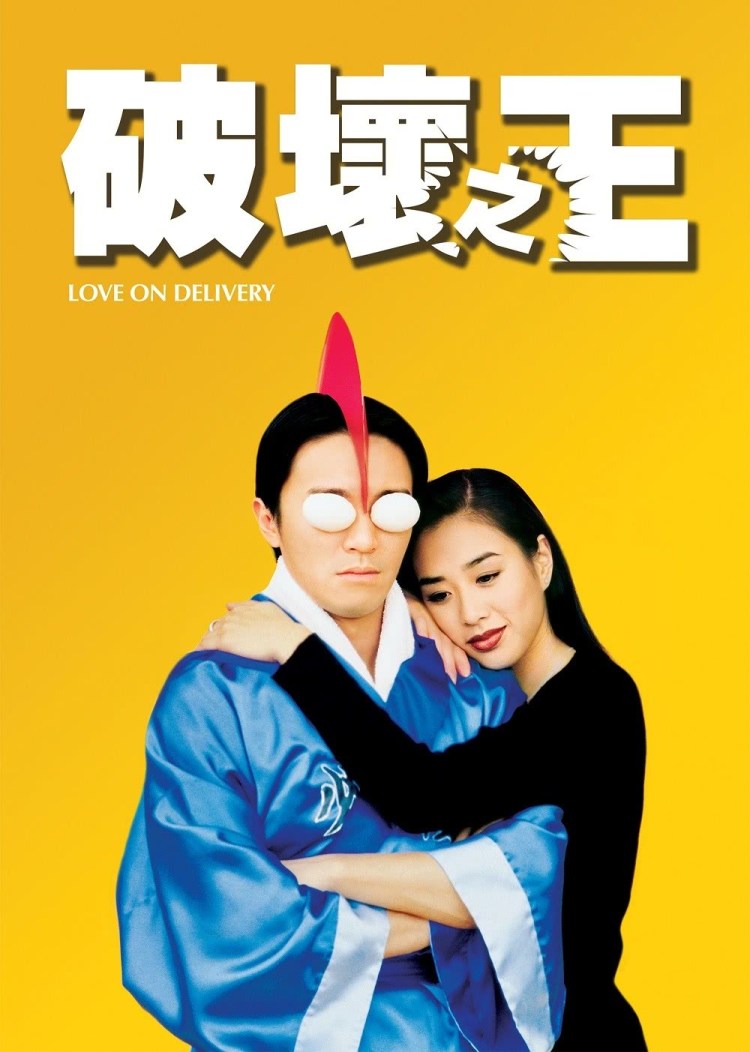
Love on Delivery (破壞之王, Stephen Chow & Lee Lik-Chi, 1994)

Love on Delivery posterBy the standards of ‘90s Hong Kong cinema, early Stephen Chow hit Love on Delivery (破壞之王) might seem refreshingly down to earth but make no mistake this under appreciated romantic comedy gem is as zany as you’d expect from the master of surrealist laugh a minute humour. A curious tale of cultural pollinations, Delivery once again stars Chow as an ineffectual loser trying to impress a girl but this time it’s a battle of wits he ends up winning when he unexpectedly finds himself standing up for “garbage” in the face of arrogant elitism.

The film opens not with its hero, but with judo champion Li (Christy Chung) who finds herself persistently sexually harassed by her slimy dojo leader who is apparently determined to win her because she’s the only woman capable of “throwing him over”. Seeing as his chat up lines are things like “my house is really big and my bed is really comfy come and see”, Li isn’t really interested which is why she ends up kissing in the right place at the right time delivery boy, He (not altogether against his will). He (Stephen Chow) is smitten, but Li has been looking for a “hero”, someone big, strong, and manly who can match her martial arts prowess but also respect her as a human being. Unfortunately, He is a weakling and a coward, as Li discovers when the boss of the dojo interrupts their first “date” and tries to thump He who activates his well honed coward skills and dodges the blow which lands squarely in the middle of Li’s face.

Fearing his romantic dreams have been well and truly shattered, He resolves to become stronger so he can fight back which is how he ends up meeting conman and stall owner “Devilish Muscle Man” (Ng Man Tat) who claims to be the last heir to “Ancient Chinese Boxing” as well as a close friend of Bruce Lee and Jackie Chan (only he doesn’t like to name drop). Devilish Muscle Man offers to “train” He in the ancient martial arts, for a “small” fee. Though all of Devilsh Muscle Man’s “training” is a sham, He starts to get quite good at it and eventually defeats the dojo boss whilst wearing a giant fluffy Garfield head. However, a new challenger soon enters the arena – a childhood friend of Li’s who went to Japan and has become an “elite” karate champion claims to be the mysterious Garfield head, stealing He’s thunder and Li’s heart along with it! 

Chow may be in a relatively restrained mood, but there are pop-culture references and in jokes galore which eventually culminate in a Hong-Kong vs Japan standoff in which Chow ends up inheriting Devilish Muscle Man’s kung fu persona which saw him fighting in a strange costume inspired by Ultraman (or possibly Chinese Ultraman rip off Inframan). Meanwhile, the big bad – Li’s ex Duan Shui Liu (Ben Lam Kwok-Bun), dresses in an old fashioned Japanese students’ uniform and rails about the “garbage” people of Hong Kong with their “garbage” kung fu which he plans to eradicate through affirming the primacy of karate as the best and only real martial art. He’s first problem is that he actually self identifies as “garbage” – he is only a poor delivery boy working for a tiny cafe which stoops to various scams to trick its customers out of their money and/or complaining and has no real prospects of being able to lift himself out of the gutter despite his new found fighting spirit and commitment to martial arts training. Nevertheless, He decides to own his “garbage” status to stand up for all the other “garbage” people resisting “Japanese imperialism” in the only way he knows how – by using his wits to trick Duan into allowing himself to be defeated.

He, a perpetually “nice guy” who gives away not only his entire wallet but all his clothes to a homeless father, eventually defeats the forces of “elitism” through an acknowledgement of his inferior fire power and an efficient use of the skills he does have to create a confusing atmosphere of chaos which ensures his final victory. A mildly subversive tale of fighting back against “the elite”, Love On Delivery is also a hilarious romantic comedy in which the nice guy gets the girl solely by demonstrating himself brave enough to face defeat with, well if not dignity, perhaps resolve.


Currently available to stream on Netflix in the UK (and possibly other territories)

Celestial Pictures trailer (Cantonese with English/Traditional Chinese subtitles)

Aberdeen (香港仔, Pang Ho-cheung, 2014)

Aberdeen posterFamilies, eh? Too much history, not enough past. In Aberdeen (香港仔), Pang Ho-cheung applies his cheeky magic to the family drama, taking a long hard look at an ordinary collection of “close” relatives each with individual secrets, lies, and hidden insecurities which could destroy the whole at any given second. Fishermen driven ashore by the tyranny of “progress”, these troubled souls will need to decide in which direction to swim – “home” towards sometimes uncertain comforts, or away towards who knows what.

Grandpa Dong (Ng Man-tat), a Taoist priest, lost grandma a long time ago and is now in a relationship with Ta (Carrie Ng), a night club hostess. Dong’s son Tao (Louis Koo Tin-lok), a celebrity motivational speaker, does not entirely approve, feeling that the slightly taboo nature of Ta’s profession tarnishes his own veneer of glamour and may eventually cause him a public image crisis. Meanwhile, Tao’s wife Ceci’s (Gigi Leung Wing-kei) showbiz career is floundering now that she’s no longer as young as she was and she finds herself slipping into the seedier aspects of the business as her manager encourages her to “entertain” wealthy men to secure roles while her friend keeps inviting her to paid “parties”. Dong’s daughter, Wai-ching (Miriam Yeung), is married to a doctor, Yau (Eric Tsang Chi-wai), who unbeknownst to her is involved (unlikely as it seems) in a passionate affair with his nurse (Dada Chan) which she seems to think is more serious than it is.

Dong laments that his family can’t seem to stand being in the same room for more than a few seconds before someone ruins the whole thing with a stupid argument which might be a fairly common phenomenon in many families, but he worries that it’s all down to the fact that his ancestors were fishermen and now they’re paying for the bad karma of having killed all those fish. In fact, bad karma was one of the reasons his dad got him apprenticed to a relative who trained him up to be a Taoist priest so he could atone for generations of sin but it seems like the well ran far too deep.

Each of our protagonists is individually insecure, lacking the confidence that their family members truly accept them. Tao, vain and deeply cynical, doubts his daughter Chloe (Lee Man-kwai), whom he insists on calling “Piggy”, is really his because he thinks she isn’t very pretty and doesn’t fit with his slick, celebrity image. Nevertheless, he does love her deeply and worries that she will suffer in the long term through her lack of looks though this too is partly a self-centred projection stemming from long buried guilt over having bullied another “plain” girl while they were at school. He is also blind to the effect his constant references to Chloe’s supposed plainness are having on his wife, Ceci, who is carrying the scars of longterm insecurity regarding her appearance on top of the difficulties she is facing in her career.

Wai-ching’s problems run a little deeper in that she is convinced her mother stopped loving her after a slightly embarrassing childhood incident. The past literally returns to haunt her in the form of some paper offerings she made to her mother’s spirit which have been mysteriously sent back “return to sender” by the Hong Kong Post Office. Wai-ching’s mental instability seems to be a worry to her husband, but not so much so that he can’t just forget about it when his nurse comes calling with one of her cute little notes announcing that she’s in the mood.

Dong and Yau are in similar positions, each identifying with the figure of a beached whale – all washed up with nowhere else to go. As Dong puts it, as soon as you’re beached a part of you at least has died. Each of the older men has to accept that a choice has already been made and the energy needed to change it is no longer available. Pang allows each of the family members to find some kind of individual resolution, the family seemingly repaired as they chow down on generic fast food without making too much of a fuss, but then their solutions to their issues are paper thin and perhaps the family itself is merely the ribbon that flimsily binds an imperfectly wrapped gift that everyone has to pretend to like to avoid creating a scene. Still, sometimes the wrapping is the best part and it doesn’t do to go peeking inside lest you get a disappointing surprise.


Original trailer (English subtitles)

Doubles Cause Troubles (神勇雙妹嘜, Wong Jing, 1989)

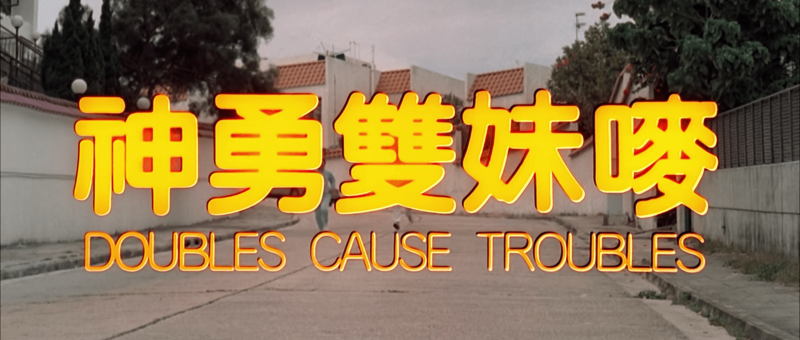
Doubles cause troubleWould you be willing to live with someone you hate for a whole year just to get a share in an apartment? According to the sheer prevalence of this plot device in comedies throughout the ages, the chances are most people would, especially in a city like Hong Kong where competition is fierce. In any case the duelling cousins at the centre of Wong Jing’s disappointingly normal farce Doubles Cause Troubles (神勇雙妹嘜) find themselves doing just that, only the situation turns out to be much more complicated than one might imagine.

When self-centred nurse Liang Shanbo (Carol “Do Do” Cheng Yu-Ling) receives a visit from a lawyer informing her that her grandmother has passed away she’s a little put out because the old lady owed her money. She’s comforted with the news that she’s been left an apartment, but less so when she learns there’s a catch. Shanbo’s grandma really wanted her to patch things up with her cousin, actress Zhu Yingtai (Maggie Cheung Man-Yuk), and has left the apartment to both of them with the caveat that they have to live there together for a period of one year after which they can sell it and inherit 50% of the proceeds each or else it’ll all go to charity. Neither Yingtai or Shanbo is very happy about the idea but it’s too good an opportunity to pass up and after all, it’s only for a year. When they arrive, however, they discover there’s another tenant – Ben (Poon Chun-Wai), a suave businessman who leaves them both smitten. Ben, it turns out, is not quite what he seems and staggers home on the first night to die in Yingtai’s arms after muttering something about a code.

Unlike most Hong Kong comedies of the era, Wong plays things disappointingly straight while remaining as broad as it’s possible to be. Odd couple Shanbo and Yingtai bicker and trade childish insults while throwing themselves first at the handsome Ben and then at his equally good-looking “brother” Sam (Wilson Lam Jun-Yin) without really giving too much thought to anything else that’s going on until they find themselves well and truly embroiled in a conspiracy. It turns out that Ben had been involved in a smuggling operation in which he betrayed his team and made off with a priceless Taiwanese “national treasure” that the rest of the gang would like to recover which is why Shanbo and Yingtai are being followed around by a “flamboyant” rollerskating henchman and a butch female foot-soldier.

The political realities of 1989 were perhaps very different, but there is an unavoidable subtext in the fact that the dodgy gangsters are all from the Mainland and are desperate to get their hands on a precious Taiwanese national treasure (which they intend to sell for a significant amount of money). The girls find themselves with ever shifting loyalties as they reassess Ben, come to doubt Sam, and fall under the influence of mysterious “inspector” Xu (Kwan Ming-Yuk) whose warrant card is “in the wash”. Completely clueless, they are helped/hindered by useless petty gangster Handsome (Nat Chan Pak-Cheung) and his henchman Fly (Charlie Cho Cha-Lee) who’ve been chasing Shanbo all along while Yingtai falls victim to Wong himself in one of his characteristically sleazy cameos as a lecherous businessman who has toilets instead of furniture in his living room and a boxes full of date rape drugs behind the bar (poor taste even for a Wong Jing movie).

Of course the real message is that blood ties and immediate proximity to danger can do wonders for a “difficult” friendship and so granny gets her wish after all even if not quite in the way she might have planned. Then again, why was Ben staying in her luxury apartment in the first place? Who can say. Setting a low bar it may be, but Doubles Cause Troubles is not even among Wong Jing’s funniest comedies though it does have its moments mostly born of sheer absurdity and enlivened by the presence of a young Maggie Cheung alongside a defiantly committed cast desperately trying to make the best of the often “risible” material.


Currently streaming via Netflix in the UK and possibly other territories too.

Celestial pictures trailer (English/traditional Chinese subtitles)

The White Storm 2: Drug Lords (掃毒2天地對決, Herman Yau, 2019)

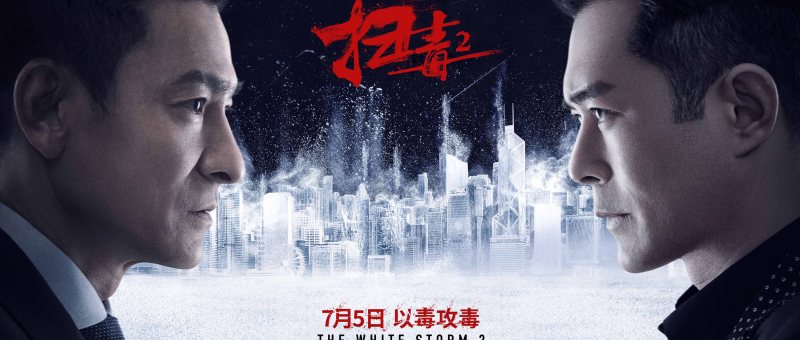
132134ti38vkkj3p299ni8The war on drugs comes to Hong Kong care of Herman Yau’s latest foray into heroic action, White Storm 2: Drug Lords (掃毒2天地對決). In the grand tradition of Hong Kong movies adding a random prefix to the title, Drug Lords is a “thematic” sequel to Benny Chan’s 2013 hit White Storm, which is to say that it shares nothing at all with Chan’s film save the narcotics theme and the participation of Louis Koo who returns in an entirely different role. What Yau adds to the drama is a possibly irresponsible meditation on vigilante justice and extrajudicial killing which, nevertheless, broadly comes down on the side of the law as its dualist heroes eventually destroy each other in a nihilistic quest for meaningless vengeance.

A brief prologue in 2004 sees depressed Triad Yu Shun-tin (Andy Lau) abandoned by his girlfriend who can no longer put up with his gangster lifestyle and inability to break with his domineering mob boss uncle. Meanwhile, across town, flamboyant foot-soldier Dizang (Louis Koo) scolds one of his guys for supposedly selling drugs in the club, only to be picked up by Shun-tin’s uncle Nam (Kent Cheng) and severely punished for getting involved with the trafficking of narcotics. Nam orders Shun-tin to cut off Dizang’s fingers as punishment, which he does despite Dizang’s reminder that they’ve been friends for over 20 years. Conflicted, Shun-tin makes amends by driving Dizang to the hospital with his fingers in a freezer bag, but by this point Dizang has had enough. To teach him a lesson, the Triads also tip the police off to raid the club, during which the wife of squad leader Lam (Michael Miu) is killed by a drug addled patron.

15 years later, Shun-tin has left the Triads and become a successful businessman married to a beautiful lawyer/financial consultant (Karena Lam) with whom he has started an anti-drugs charity, while Dizang has become Hong Kong’s no. 1 drug dealer, operating out of a slaughterhouse as a cover. The trouble occurs when Shun-tin learns that his former girlfriend was pregnant when she left him and that he has a 15-year-old son in the Philippines who has become addicted to drugs. Drugs have indeed ruined Shun-tin’s life, if indirectly. His grandfather was an opium addict, and his father died of a heroine overdose (which is why his Triad gang swore off the drugs trade). All of which means he has good reason for hating drug dealers like Dizang, but his sudden admiration for Duterte’s famously uncompromising stance on drugs is an extraordinarily irresponsible one, especially when it leads to him embarrassing the HK police force by offering a vast bounty to anyone who can kill Hong Kong’s top drug dealer – a deadly competition that, like extrajudicial killings, seems primed to put ordinary people in the firing line.

As Lam tells him, the situation is absurd. Shun-tin’s bounty means Lam will have to spend more time offering protection to suspected drug dealers than actively trying to catch them while it also leaves Shun-tin in an awkward position as a man inciting murder and attempting to bypass the rule of law through leveraging his wealth. Indeed, as a man from the slums who’s been able to escape his humble origins and criminal family to become an international billionaire philanthropist he shows remarkably little consideration for the situation on the ground or the role the kind of ultra-capitalism he now represents has on perpetuating crime and drug use, preferring to think it’s all as simple as murdering drug lords rather than needing to actively invest in a creating a more equal society.

Meanwhile, Dizang continues to lord it about all over town and Lam finds himself an ineffectual third party caught between summary justice meted out by a man who thinks his wealth places him above the law and a gangster on a self-destructive bid for vengeance against the Triads he feels betrayed him, including his old friend Shun-tin. Truth be told, the “friendship” between Dizang and Shun-tin never rings true enough to provoke the kind of pathos the violent payoff seems to be asking for while the film is at times worryingly uncritical of Shun-tin’s vendetta, suggesting that the police are ill-equipped to deal with the destructive effects of the drug trade. Nevertheless, even if it’s to placate the Mainland censors, Yau ends on a more positive message that reinforces the nihilistic, internecine nature of the conflict while hinting, somewhat tritely, at a better solution in the sunny grasslands of the child drug rehabilitation centre Shun-tin has founded in Manila. That aside, Drug Lords is never less than thrilling in its audacious action set pieces culminating in a jaw dropping car chase through a perfect replica of the Central MTR subway station.


The White Storm 2: Drug Lords is currently on limited release in UK cinemas courtesy of Cine Asia. It will also screen as the closing movie of the 2019 New York Asian Film Festival.

Original trailer (English / Traditional Chinese subtitles)

The Fatal Raid (辣警霸王花 2 不義之戰, Jacky Lee, 2019)

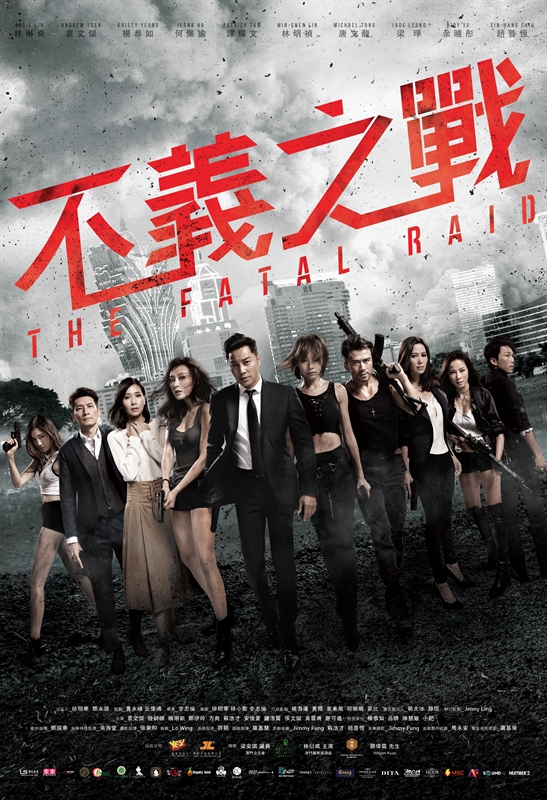
Fatal Raid posterUnrealistically heroic as it might have been, Hong Kong cinema was once unafraid to suggest that sometimes good guys bend the rules, but these days the Mainland market is an important consideration and so the right kind of justice must be served. A salacious B-movie and thematic sequel to Special Female Force (itself a loose remake of 1986’s The Inspector Wears Skirts), Fatal Raid does not have much of a message but does make time to muse on the philosophical nature of “justice” as it corresponds to law enforcement.

20 years previously, Hong Kong cops Madame Fong (Leung Yuk-yin) and Tam (Patrick Tam) were members of an elite squad on a covert mission in Macao which went about as wrong as it’s possible to go, concluding in a mass shoot out in which all of the other squad members died. Because the operation must be kept a secret, the fallen officers have not received their proper due – something which continues to weigh heavily on the resentful Tam, while Madame Fong is still suffering with PTSD related to the incident. A quirk of fate sees the two officers return to Macao as part of a security team escorting the current police chief to a conference, but the past returns to haunt them when their convoy is ambushed by drug addled, youthful anarchists striking back against oppressive authoritarianism.

Meanwhile, there’s inter-squad drama between newish overseas recruit Zi Han (Lin Min-Chen) and veteran Alma (Jeana Ho). A flashback to the original incident reminds us that it was being run along male/female squad lines with the elite team of women the driving force of the operation. However, it continues to be an extraordinarily sexist world that the officers inhabit. The comedic banter between Tam and fellow copper Hei (Michael Tong Man-lung) on the fateful day was mostly Hei boasting about how handsome he thought he was and how pretty some of the female officers were. In the present, the ladies face many of the same problems as undercover officers staking out a nightclub are asked to put some clothes on immediately after the operation because the men can’t concentrate surrounded by barely dressed women, and then in Macao introduced to other female officers as if they constitute some kind of special group.

In any case, the main themes are karma and justice and a possible difference between the two. The last officers standing, Fong and Tam feel guilty about another policeman who died whose body was never recovered, presumed destroyed in the explosion. Tam, who feels “justice” has not been served for his friends who were killed in the line of duty, rocks the boat by dedicating his Macao speech to their memory even if the operation they died in officially does not exist (and cannot exist, because they had no right to open fire in Macao). Fong, meanwhile, is conflicted on learning that a former mentor who helped to teach her about “justice” may have crossed over to the dark side. Tam wonders if they really need to go to such great lengths to “uphold justice” and what it is that really gets them, while Fong remains convinced that “justice should be governed by law”.

The anarchists, however, feel as if there is no justice and that law enforcement of any kind is inherently oppressive. Well, to be fair, they are mostly drugged up teens rather than politically conscious rebels, and have fallen under the spell of an older man peddling personal revenge against a system he feels has betrayed him. In any case, the original squad made mistakes which will come back to bite the remaining members as they take on a new generation of thugs outside of their official jurisdiction. Filled with strangely comic scenes such as the early in-car banter and a running subplot about a lovelorn Macao detective and his crush on Zi Han which hark back to a freer, easier era of Hong Kong cinema, Fatal Raid maybe a little rough around the edges but is not without its old-fashioned charms.


The Fatal Raid screens on 5th July as part of the 2019 New York Asian Film Festival where stars Jade Leung and Michael Tong will be present to present the film.

A Home with a View (家和萬事驚, Herman Yau, 2019)

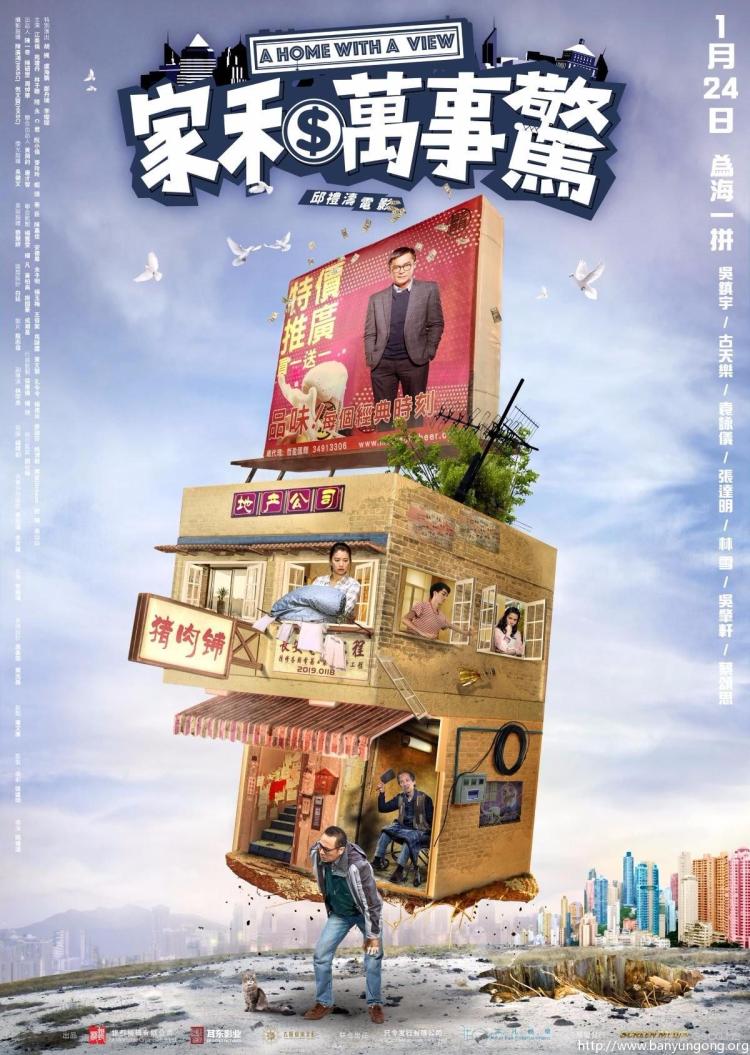
Home with a view poster 2Everyone needs an oasis. It might be a mirage, but still you need to believe in it anyway or with the world the way it is you might just go crazy. For the Lo family, that oasis was their tiny harbour view for which they paid handsomely even though their home could be described as modest at best. Relying on the calming vision of the sea to preserve their peace of mind, the family are constantly preoccupied by the rapid increase in high rise apartment buildings which threaten it, but did not bank on a cynical businessman setting up home on the rooftop opposite and putting up a giant advertising billboard to make a few extra pennies.

Adapting the stage play by Cheung Tat-ming, Herman Yau uses the woes of the Lo family to satirise the effects of Hong Kong’s ongoing housing crisis as they find themselves living in a cramped apartment block where everyone seems to have problems but no inclination to mind their own business. Mrs. Lo, Suk-yin (Anita Yuen Wing-yi), is fed up with the butcher (Lam Suet) who lives directly above them and his habit of loudly mincing pork while she’s trying to eat her dinner in peace, while the kids – son Bun-hong (Ng Siu-hin) and daughter Yu-sze (Jocelyn Choi), resent the intrusion of cigarette smoke wafting up from the flat below belonging to an elderly resident whose oasis is presumably tobacco. Meanwhile, Grandpa (Cheung Tat-ming) is in poor health and in the process of losing his marbles all of which makes for a very exciting home environment where chaos rules and there is always something new to bicker about.

Family patriarch, Wai-man (Francis Ng Chun-yu), sunk considerable expense into buying this apartment because of its sea view. In fact he’s still paying off a hefty mortgage which is why the family is engaged in a money saving competition where they challenge each other to come up with the best schemes and bargains, but he is at heart a kindhearted man which is perhaps why he finds himself handing over a huge wad of cash to pay off the overdue rent of the lady next-door who was threatening to commit suicide rather than risk eviction with her husband seemingly having disappeared off somewhere leaving her alone with her young son. He is not, however, above jamming with the system and is himself an estate agent peddling “low cost” subdivided flats with no widows or kitchens and only access to communal bathrooms in disused but not quite redeveloped former industrial buildings.

Desperate to reclaim their access to serenity, the family set about trying to get the cynical businessman opposite, Wong (Louis Koo Tin-lok), to take the billboard down but he proves smug and indifferent to their plight. In fact, his resentment towards those who can afford swanky sea view apartments is one of the reasons he put the billboard up in the first place so he’s not about to take it down just because he’s realised its presence is inconsiderate. Trying to get the authorities, including an old friend with a longstanding crush on Suk-yin, involved proves largely fruitless with the family locked into a bureaucratic nightmare which saps all their energy and only drives them all crazier even as they begin to unite in pooling their efforts to outsmart Wong who insists the billboard is “art” which he made himself and enriches the city.

The intersection between art and advertising, as well as mild motion towards both things as acts of protest, is only one of the film’s meta touches, but its main theme is indeed family and the various ways the modern society both frustrates and cements it. The Los who were always at each other’s throats, became calm sitting together gazing out at the peaceful harbour but later returned to their individual spheres before reuniting in conflict. Meanwhile, we discover that Wong has a sad story of his own which paints him as a lonely man without a family who likes the attention the billboard has brought him because it’s finally forced people to acknowledge his existence. Rather than managing to make friends with him, the Los descend further into their psychotic fury as they try to defeat Wong, ironically rediscovering their family solidarity in the process. “In this terrible world only family can protect us”, Grandpa says, and in this crazy cutthroat society he may be right. Perhaps the best course of action is to all go mad together rather than try to resist the craziness.


A Home with a View was screened as part of the 2019 Udine Far East Film Festival. It is also currently available to stream via Netflix in the UK (and possibly other territories).

Original trailer (English subtitles)
Missbehavior (恭喜八婆, Pang Ho-cheung, 2019)

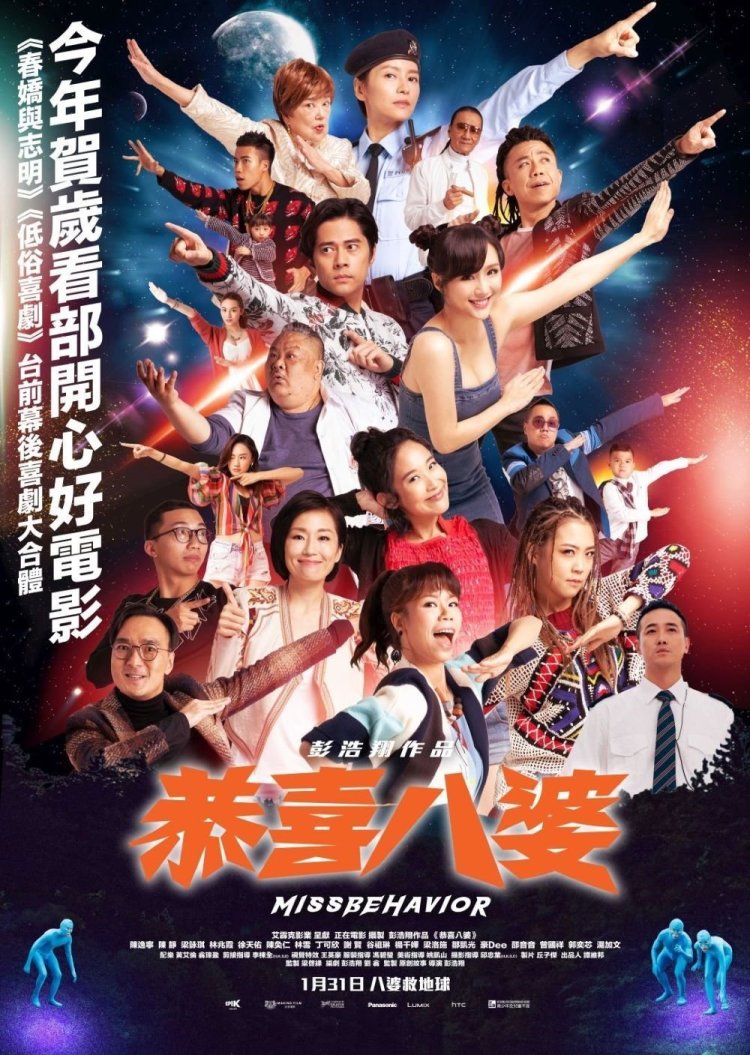
Missbehaviour poster 1Pang Ho-cheung has become the king of salty, vulgar yet somehow sophisticated Cantonese comedy. Strangely, and then again maybe not, he’s never ventured into the realms of the New Year movie, until now. Missbehavior (恭喜八婆) returns the director to the bawdiness of Vulgaria but brings with it the sense of warmth and cheerful irony that marked his genial Love trilogy. A timely reminder that life’s too short for pointless grudges and maybe you should check in on that friend you haven’t seen in a while, Missbehavior is a grown up New Year treat that as silly as it often is has genuine heart and a cheerful, compassionate spirit.

The central crisis revolves around June (June Lam Siu-ha) – a model employee well used to putting up with the ridiculous requests of her boss who now demands to be known as “Luna Fu” (Isabella Leung Lok-Sze) after returning from maternity leave. Worried the new office girl Irene who is none too bright will end up offending an important client, June is charged with making his coffee but mistakes the milk labelled L.F. in the office fridge as “low fat” rather than belonging to her boss. That’s right, June has just poured her boss’ breast milk into her client’s coffee. He loved it, but Luna probably won’t which is why June calls her friend Isabel (Isabel Chan Yat-ning) who vows to mobilise their WhatsApp group to find June a new bottle of breast milk before 5pm so her boss will be none the wiser.

Once a tightly connected circle of friends, the usual middle-aged problems have led the “Bitches” to drift apart. Policewoman May (Gigi Leung Wing-kei) fell out with Isabel because she was convinced that she stole her boyfriend – her evidence being that his phone “inexplicably” connected to her wi-fi automatically despite his claims of never being in her house before. She is however big hearted enough not to let her animosity towards Isabel stop her helping out June whom, it seems, is the gang’s lynchpin and always there for everyone else in a crisis. Busy on the beat, May sends Isabel looking for some of the others all of whom have petty minor disagreements which make them reluctant to work together like rising ukulele star Minibus (Yanki Din) and her former partner Rosalin (Dada Chan Ching) who has fallen out with just about everyone thanks to writing a best selling book revealing her friends’ most embarrassing secrets.

Rosalin’s book became a hit not because of her writing talent (at least according to her friends) but because of the glamour shot she put on the cover which has earned her an army of adoring male fans which can be mobilised to help them get hold of some breast milk (though it’s unlikely any of them have babies of their own). Rosalin and Isabel chase dubious leads, while Minibus and gay couple Boris (Tan Han-jin) and Frank (Chui Tien-You) who seem to be having a few problems of their own try their luck on the black market.

Pang sends the gang all around Hong Kong (quite literally as he superimposes them on various skyscrapers so we can keep track of where they all are) on a wild goose chase trying to track down the elusive substance through various crazy capers while each of the friends gets a chance to readdress old grievances before finally coming back together again. A zany odyssey through the modern city, Missbehavior packs in the meta commentary with five year olds demanding payments to put towards their apartment funds while riffing strongly off local culture with references to aggressively rude waiters (in a scene stealing cameo from Lam Suet) and a bizarre fire fighting mascot which became an ironic internet hit.

Despite working within the relatively family friendly remit of the New Year comedy, Pang’s humour is (almost) as raucous and surreal as it ever was but he also makes time for more serious intent as in his sensitive inclusion of LGBT issues which eventually sees the gang set up a fake charity to collect milk for gay men raising babies and ends in a delightful set piece with everyone trying to evade shopping mall security by running around in rainbow capes like especially progressive superheroes. Packed out with cameos from Pang regulars, Missbehavior is an appropriately light and fluffy entry perfect for New Year that is above all else a tribute to the power of friendship and to the importance of putting aside petty disagreements and minor differences because a friend in need really is a friend indeed.


Missbehavior was screened as part of the 2019 Udine Far East Film Festival.

Original trailer (English subtitles)

Still Human (淪落人, Oliver Chan Siu-kuen, 2018)

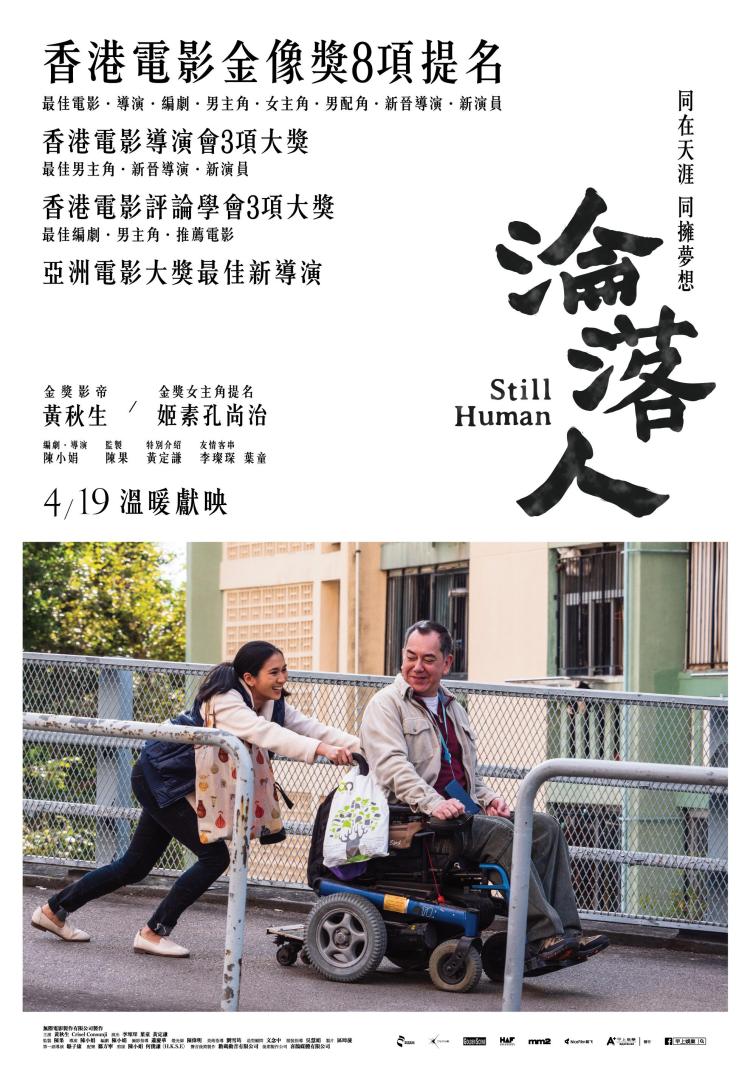
Still human posterA peculiarly Hong Kong phenomenon – crowds of Filipina domestic helpers filling the city streets on a Sunday, for many of them their one and only day off in an often 24/7 job. The presence of the Filipina workers has often been a taboo subject, as has the frequently inhumane treatment they receive from exploitative employers, but Hong Kong cinema has been in a self-reflective mood of late as Oliver Chan’s Still Human (淪落人) proves. A quiet ode to the power of breaking down barriers and embracing difference, Chan’s bold debut centres itself on the unlikely friendship between a disabled man and his Filpina carer.

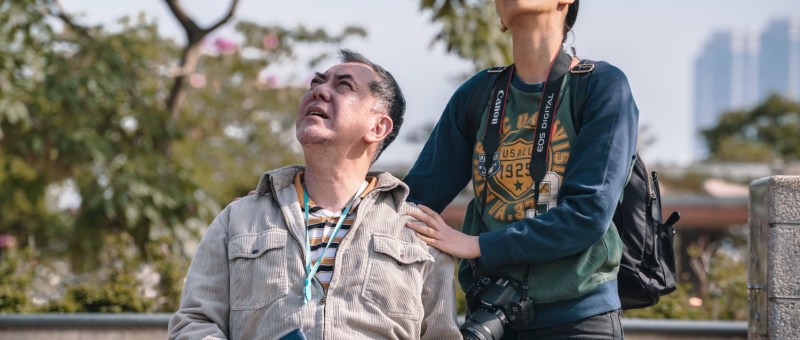
Cheong-wing (Anthony Wong) has been paralysed from the chest down for the past few years following a construction site accident. Though he has enough movement in his hands to be able to get himself about with an electric wheelchair, he needs day to day help with essential tasks such as cleaning and washing not to mention getting himself from the chair to the bed. His last few carers have all abruptly left him in the lurch so he doesn’t have high hopes for the latest – Evelyn (Crisel Consunji), a former nurse from the Philippines recruited by Cheong-wing’s friend Fai (Sam Lee). Cheong-wing is irritated to discover that Evelyn speaks no Cantonese while he has almost no grasp of English but is encouraged to make it work because he needs help and, according to Fai, none of the Cantonese-speaking carers is prepared to help him.

From Cheong-wing’s earliest behaviour, it might seem obvious why he has such a high turn over of helpers and one wouldn’t blame Evelyn for walking out right away but then again, perhaps he is only grumpy because he’s lonely and sick of everyone suddenly abandoning him. A solitary pensioner, Cheong-wing lives alone in a high rise council flat. His wife left him years ago and remarried while his medical student son is away in the US. On the ground he only has Fai – a slightly younger man who acts as a surrogate child in gratitude for the various ways Cheong-wing once looked after him when he arrived as teenager from the Mainland with no Cantonese and no family to help him.

Meanwhile, Evelyn tries to adjust to her new life, having made peace with her decision but making the best of a suboptimal situation. Scrimping and saving, she tries to get the funds together to definitively escape a bad marriage against the wishes of her family who constantly beg her for money and guilt her into doing their bidding. Making friends with some other helpers via a Facebook group, she joins the regular Sunday gatherings but feels herself somewhat out of place even as she begins to bond with the already jaded veteran overseas workers. Play dumb, they tell her. Don’t learn Cantonese, or do but don’t let your employer know. All that matters is not getting fired and sent back to the Philippines so keep your head down and say yes sir while always looking for a better gig or, best of all, a wealthy husband. Evelyn ignores most of their advice. She isn’t interested in another loveless marriage, what she wants is her freedom.

Nevertheless she continues to endure xenophobic micro-aggressions and constant mistrust despite her warm and winning personality. Cheong-wing, teaching her Cantonese, eventually begins to bond with Evelyn, convinced that she is a “good person” though maybe, like him, going through some tough times. Interacting with Evelyn allows his sweet side come through, making plain that he is at heart a kind and sincere man but one who had long since given up on life and kept others at a distance believing himself to be a burden. Where the traditional family has failed, found family plugs the gap as Cheong-wing and Evelyn pick up an easy paternal rapport, supporting each other with genuine warmth and affection as Cheong-wing discovers Evelyn’s long buried dream of becoming a photographer and commits to helping her achieve it all while knowing it will eventually take her away from him.

Realising that where there’s life there’s hope, the pair come to the conclusion that it’s never too late to dream and each find themselves edging towards what it is they really want from life with the confidence of knowing someone has their back and their best interests at heart. A warm and empathetic yet uncompromising look at life on the margins of modern Hong Kong, Still Human is a beautifully humane tribute to the healing power of human connection and the joy of finding kindred spirit in unexpected places.


Still Human was screened as part of the 2019 Udine Far East Film Festival. The film will also receive a special one off screening in Chicago courtesy of Asian Pop-Up Cinema on Monday 13th May at the Gene Siskel Film Center, 8pm where director Oliver Chan and actress Crisel Consunji will be present for a Q&A.

Original trailer (English subtitles)