 Raymond Yip Wai-man’s Cook up a Storm (决战食神, Juézhàn Shíshén) was scheduled to open at Chinese New Year but eventually found itself delayed and awkwardly repositioned as a Valentine’s Day date movie. Something of a rarity, there is no real romance in Cook up a Storm though it may inspire a post-movie visit to the nearest Chinese restaurant with its deeply felt tribute to classic Chinese cuisine and the raucous social gathering that often goes with it. Yip does his best to throw in as many themes as possible from the familiar tradition vs modernity to fathers and sons and the undue influence to China’s new ruling class who possess extreme wealth but (apparently) no taste. Most of these get somewhat lost in the meandering script which eventually falls into a conventional tournament narrative as two very different chefs face off in the kitchen before realising they have more in common than not.
Laidback young man Sky (Nicholas Tse) has inherited the traditional and extremely popular Seven restaurant in a tiny alleyway as yet untouched by the rest of the city’s lurch towards modernisation but all that is set to change when a Michelin starred Korean/Chinese chef, Paul Ahn (Jung Yong-hwa), is given the opportunity to open a high class restaurant right across the street. Sky is not particularly worried as he knows they aren’t chasing the same clientele but Ahn continues to muscle in on his business from outbidding him at the fish market to blocking the entrance to Seven’s restaurant with fancy customer cars.
Seven and Ahn’s restaurant Stella eventually find themselves rivals in a TV cooking competition where Ahn’s modern take prizing innovation and elaborate presentation is directly contrasted with Sky’s traditional skills but there are other conflicts lurking in the background as Ahn’s corporate backers fuss about the marketing and Sky obsesses over proving himself to his estranged father who is currently the “god of cooking” and a world champion celebrity chef.
Half Korean Ahn honed his skills abroad cooking for European royalty and has never quite “got” Chinese cuisine which he finds stagnant, turned off by its fierce traditionalism. Street cook Sky does not care for Ahn’s “tricks” which distract from the simple purity of the food. Yip is pulled between the two extremes, painting the tiny alleyway as unrealistic for trying to stave off the march of time yet seing something to respect in their fierce defence of their community and way of life which is constantly under threat. Ahn, though originally cold and driven, is not quite the villain he seems as he quite clearly recognises a fellow craftsman in Sky and is willing to extend at least a professional courtesy to him even if he doesn’t immediately leap to his defence. After a number of setbacks and reversals, the two men patch up their differences by coming together to fight a common enemy which represents both future and past in the twin pronged assault of the heartless developers and Sky’s soulless father.
Corporate greed is the film’s central villain as these super rich businessmen continue to ride roughshod over the little guy from refusing to queue for a table to threatening to burn the whole place to the ground if they don’t get their way. Ahn, having accepted their offer to run “his own” restaurant quickly discovers that he is just another short order talent fit to be cast aside when another hotshot rears their head. Caring only for money and status, the restaurant owners have no love for food which, in the film’s terms, is the ultimate betrayal.
Betrayed is the way Sky feels towards his long absent father who skipped town after telling him he had no feeling for cookery leaving him with lingering feelings of resentment and inadequacy. Sky is determined to prove his father’s life philosophy wrong by demonstrating that it is possible to be both successful and a good person. Sadly, only one of these is destined to work out for him (Yip’s vision of the new China is not altogether charitable) but then Sky’s idea of “success” is very different to his father’s and to that of the development wave currently washing over his neighbourhood.
In keeping with the New Year theme food is the main focus and Yip does his best to give the simple art of cooking all of the shine it truly deserves piling visual tricks on top of well choreographed action sequences more akin to a martial arts film than your usual food fiesta. The narrative may be a familiar one, two cooks enter everyone leaves full, but then that’s more or less what is expected from a New Year movie. Inconsequential and somewhat throwaway, Cook up a Storm still manages to pack in enough gentle comedy and tributes to the power of community as found family to make up for its otherwise insubstantial nature.
HK trailer (Cantonese with English subtitles)
 Tony Leung Chiu-wai may have just won a best actor prize in Cannes, but that didn’t stop him getting right back on the HK treadmill with the run of the mill rom-com, Fighting for Love (同居蜜友). Reuniting director Jack Ma with Feel 100% star Sammi Cheng, Fighting for Love is the kind of wacky, thrown together romantic comedy that no one really makes any more (not that that’s altogether a bad thing). Still, even if the film is over reliant on its two leads to overcome the overabundance of subplots, it also makes use of their sparky chemistry to keep things moving along.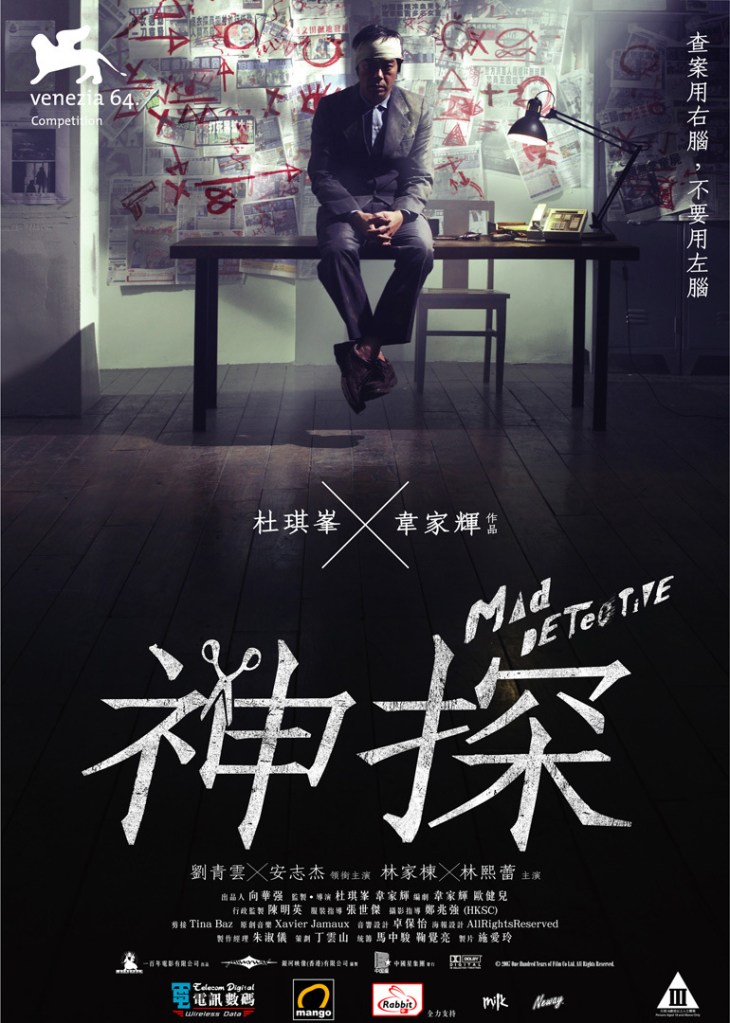
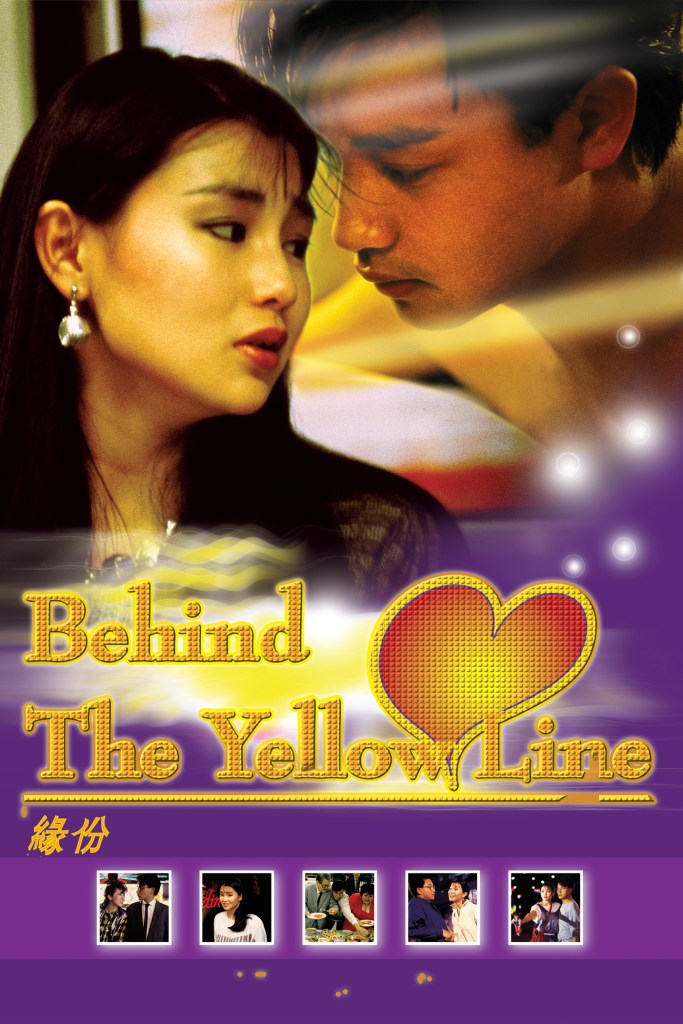 Back in the 1980s, you could make a film that’s actually no good at all but because of its fluffy, non-sensical cheesiness still manages to salvage something and capture the viewer’s good will in the process. In the intervening thirty years, this is a skill that seems to have been lost but at least we have films like Taylor Wong’s Behind the Yellow Line (緣份, Yuan Fen) to remind us this kind of disposable mainstream youth comedy was once possible. Starring three youngsters who would go on to become some of Hong Kong’s biggest stars over the next two decades, Behind the Yellow Line is no lost classic but is an enjoyable time capsule of its mid-80s setting.
 Johnnie To is best known as a purveyor of intricately plotted gangster thrillers in which tough guys outsmart and then later outshoot each other. However, To is a veritable Jack of all trades when it comes to genre and has tackled just about everything from action packed crime stories to frothy romantic comedies and even a musical. This time he’s back in world of the medical drama as an improbable farce develops driven by the three central cogs who precede to drive this particular crazy train all the way to its final destination.
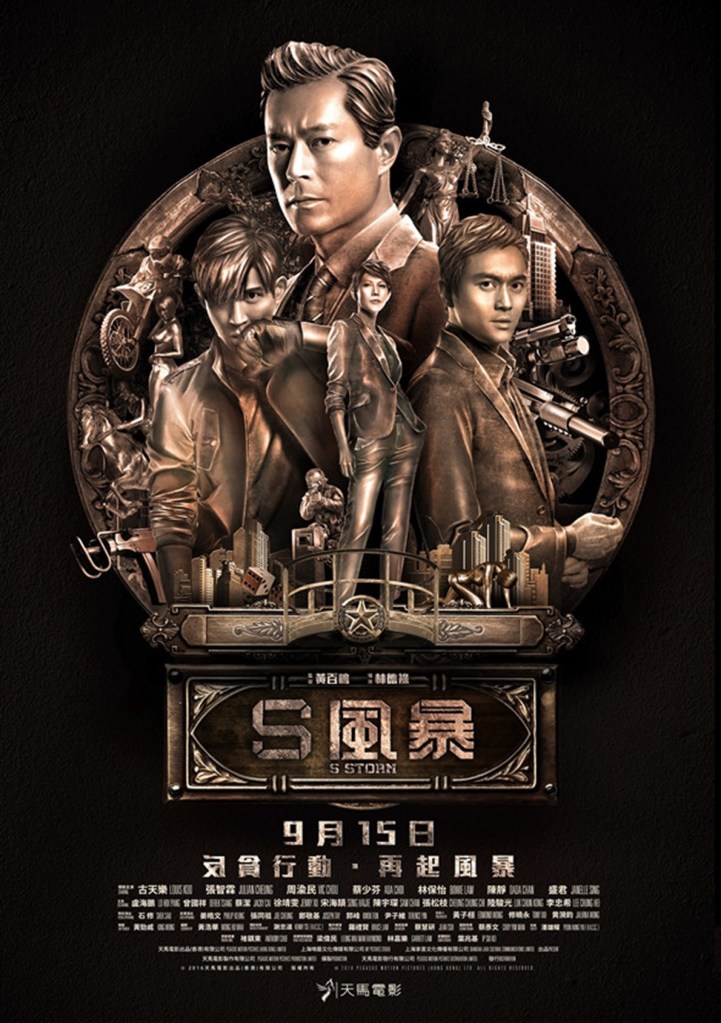 It’s become almost a cliché to describe a sequel as “unnecessary”, but then assessing how any sequel or, indeed, any film might be deemed “necessary” (for what or whom?) proves more fraught than one might originally think. It might, then, be better to think of certain sequels as “unwise” – S Storm (S風暴), a followup to the similarly named Z Storm is just one such film. Z Storm’s critical reception was, shall we say, lukewarm and did not exactly inspire a burning desire to return to its world of corporate corruption vs different kinds of bickering policemen but, nevertheless, here we are.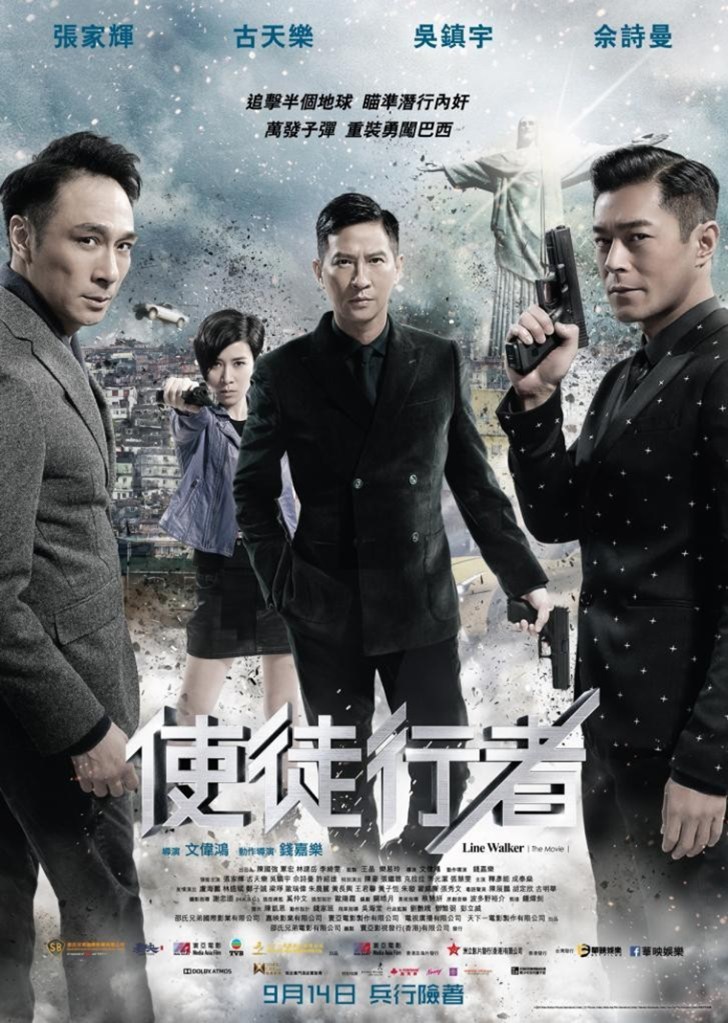
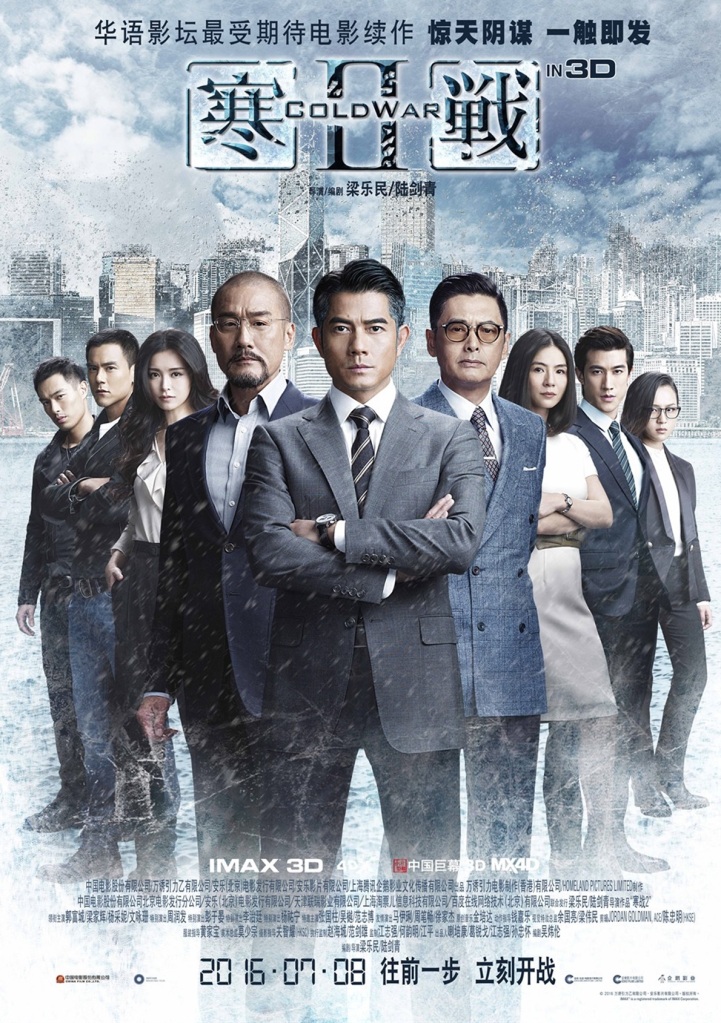 Cold War 2 (寒戰II) arrives a whole four years after the original
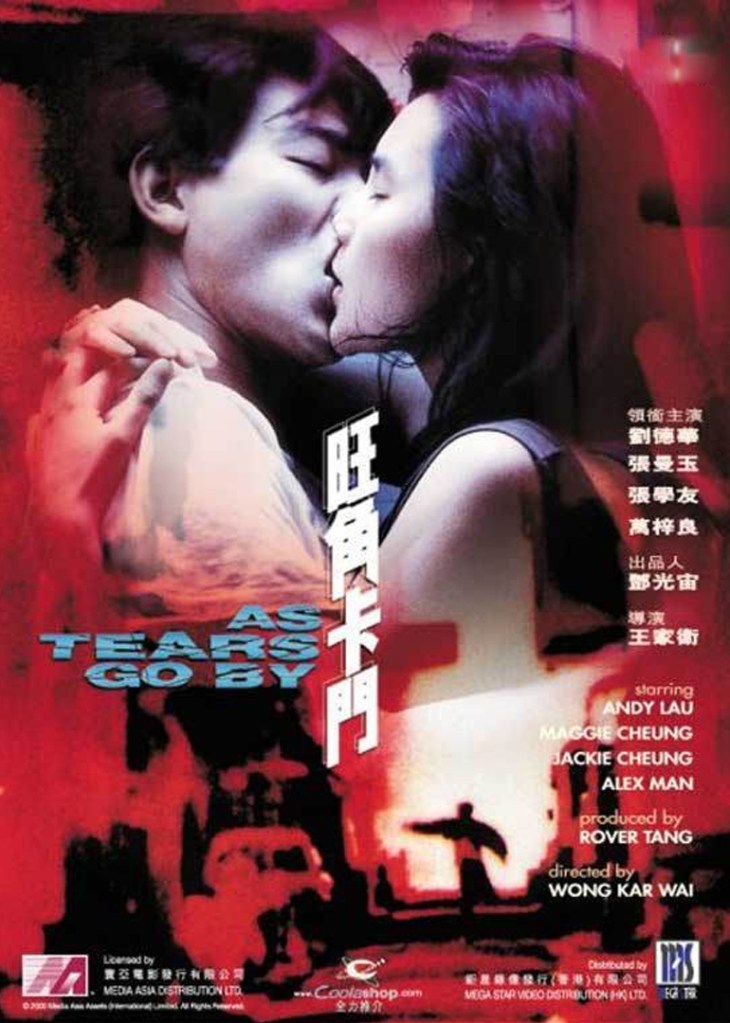 These days, Wong Kar-wai is an international auteur famous for his stories of lovelorn heroes trapped inside their memories, endlessly yearning in vain for the unattainable. In many ways his debut feature, As Tears Go By (旺角卡門, Mongkok Carmen) is little different save that it owes more to its vague heroic bloodshed, gangster inspiration and is less about memory than inevitability and a man abandoning his dreams of a better life with a woman he loves out of mistaken loyalty to his loose cannon friend.
 Windows on Worlds