The Pilferer’s Progress (发钱寒, John Woo, 1977)

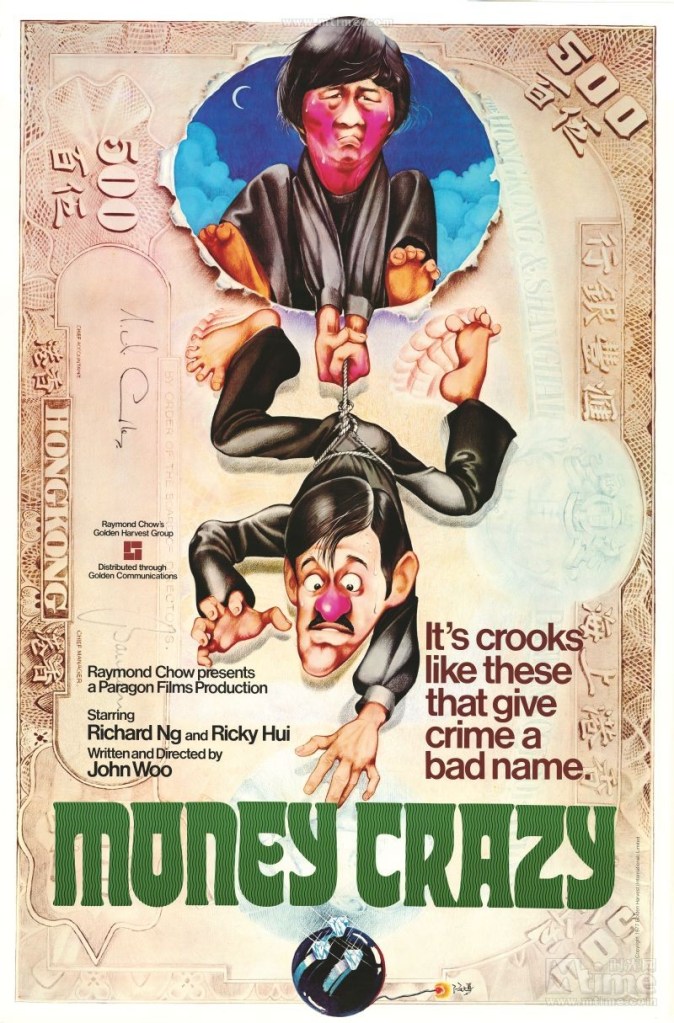
Money CrazyJohn Woo is best known in the West for his “heroic bloodshed” movies from the ‘80s in which melancholy tough guys shoot bullets at each other in beautiful ways. However, he had a long and varied career even before which began with Shaw Brothers and a stint in traditional martial arts movies. What often gets over looked outside of Woo’s native Hong Kong is his many comedies, of which The Pilferer’s Progress (AKA Money Crazy, 发钱寒, Fa Qian Han) is one of his most successful.

The plot follows the comic adventures of two down on their luck hoodlums – would be bodyguard Poison (Ricky Hui) and “private detective” Dragon (Richard Ng Yiu hon), who keep running into each other so many times that they eventually end up having to become a team. After each becoming involved with the greedy business man Rich Chan (Cheung Ying), the two find themselves lusting after a set of three diamonds which he has in his possession. Their desire only grows after meeting Mary (Angie Chiu) and her godfather to whom the diamonds originally belonged before Chan cheated him out of them.

Love trumps money, at least for a while, as Poison and Dragon team up to get revenge on Chan and get the diamonds back for Mary. Of course, more personal concerns end up raising their heads towards the end as the duo realise that if they just give the diamonds back to Mary it might buy them some brownie points but they’ll be quite massively out of pocket. They come up with a suitably anarchic solution that involves dummies holding guns and a motorbike cleverly concealed inside a haystack not to mention a fake broken arm (unsurprisingly it doesn’t go quite as smoothly as they’d hoped).

Much more slapstick buddy comedy than crime thriller, The Pilferer’s Progress is full of innovative sight gags and the fast paced Cantonese wordplay that has become a hallmark of the genre. Neither Poison nor Dragon are born criminal masterminds, they’re both just muddling through with a kind of anarchic insouciance that lends their exploits a gleefully childish quality even when Dragon is doing something as shady as indulging in a bit of analogue photoshop to fabricate a picture of Chan with a mistress so he can blackmail him. Poison’s number one manoeuvre is to get a gang together to pretend to attack his target so he can pretend to fight them all off in the hope that the “victim” will be so grateful and impressed with his martial arts skills that he’ll take him on as a bodyguard.

Dragon seems to be an avid watcher of modern spy movies and has a host of fairly useless gadgets he can use to try and get the drop on Chan such as bugging his car (Poison puts the bug on the exhaust pipe), or drilling a hole from the kitchen below right into Chan’s toilet and sticking a periscope up there to scout out the room. Chan also has a fairly elaborate security system that he mostly uses to annoy his wife but Poison and Dragon get round it by drilling another, bigger hole in the ceiling and pulling a Mission Impossible style rope manoeuvre to try and grab the diamonds from around Chan’s neck while he’s asleep. Because he’s thought of everything, Dragon even pulls out a tiny umbrella and hangs it from his nose to catch the increasing stream of sweat falling from his brow in one of the film’s funniest moments.

Woo also mixes quite a lot of exciting kung-fu action with the pure comedy as Chan’s second bodyguard is a recently graduated shaolin monk who’s pretty much invincible – to normal people, but somehow Dragon and Poison manage to outsmart him every time. There’s also a fair amount of the gunplay that was to become Woo’s signature but there are no balletic sequences here – the guns look ridiculously fake, almost like children’s toys, and are always the “butt” of the joke, literally.

The Pilferer’s Progress may not be a great lost classic but it is heaps of period specific fun with an extremely catchy soundtrack including the title song sung by star Ricky Hui. Extraordinarily successful on its original release, The Pilferer’s Progress is undoubtedly very much of its time, as perhaps it was intended to be, but its fast paced, silly slapstick humour has a universal quality that proves that true comedy has no sell by date.


Seen as part of HOME’s CRIME: Hong Kong Style touring season.
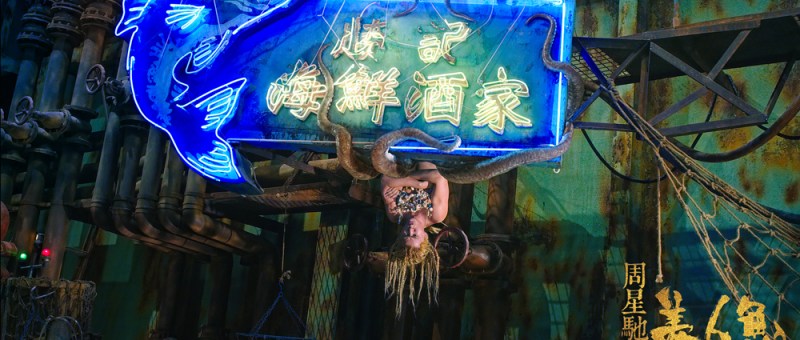
 

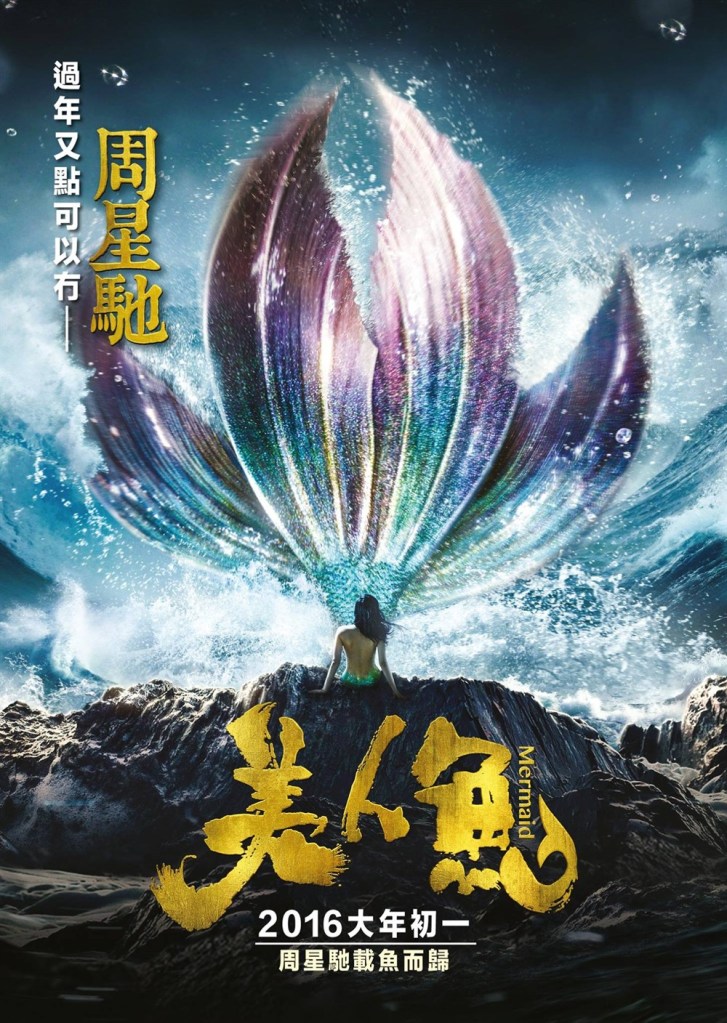
The Mermaid (美人鱼, Stephen Chow, 2016)

Mermaid

Stephen Chow unexpectedly became a mini phenomenon with that rarest of beasts – a foreign language comedy that proved a mainstream crossover hit, in the form of the double punch that was Kung Fu Hustle and Shaolin Soccer. However, his once ascendant star has been in retrograde ever since when it comes to screens outside of Asia. The surprise worldwide theatrical release of this latest film, The Mermaid (美人鱼, Mei Ren Yu), might be about to change all that.

Loosely inspired by The Little Mermaid, Chow paints a world of consumerism in overdrive as heartless capitalists fall over themselves to destroy the beauty of the natural world to buy even more flashy status symbols even though they only make them even more miserable. After opening with some newsreel footage of mass deforestation and a bloody dolphin massacre, Chow shows us the natural world exploited in a different way as a group of visitors visit an “exotic animal show” which includes such wonders as a live tiger (actually a pet dog with stripes painted on its fur), a “Batman” (with fried chicken for ears), and, crucially a “Mermaid” (a fried fish with a doll’s head on the top).

We’re then introduced to rich playboy businessman Liu Xuan (Deng Chao) who lives life large in a giant western style estate surrounded by gold digging dollybirds. He’s bought some “surprisingly well priced land” to use in a reclamation project, only the problem is it’s technically a nature reserve. His underlings have come up with a scheme to frighten away the wildlife with sonar devices so they can destroy the area of outstanding natural beauty in peace. However, they didn’t know about the colony of Merpeople hiding out there who have a serious problem with Liu and have dispatched one of their number, Shan (Jelly Lin), to assassinate him!

Predictably, the assassination plot does not all go to plan with often hilarious results. Like Chow’s other movies, the main spine of the narrative is a romantic comedy in which a foolish and arrogant man is made to realise his own weaknesses through finally noticing a woman he previously had no interest in. This time Shan turns up looking like a crazy lady with her bizarre makeup and fake mermaid outfit which gets her instantly thrown out of Liu’s place though she does succeed in giving him her phone number. Usually, Liu isn’t the type to call back but he gets goaded into it by mistake and then his henchman actually brings Shan to his office where she fails at assassinating him first with poison and then with sea urchins. By this time the course is set as the pair bond during their macabre meet-cute with Liu becoming attracted to Shan’s otherworldliness and she to the goodness that might be buried inside him.

Liu, it seems, experienced extreme poverty in his childhood and so now cares only about making money. Or says he does, his depressing solo karaoke dances to a hit pop song with the chorus “no one understands my loneliness” might tell a different story. Being super rich is actually kind of boring and everyone he meets only cares about his money so meeting Shan (who is predominantly interested in killing him) proves refreshing. Nevertheless, money also becomes an anchor dragging you down, even if Liu starts to come over to the Merpeople’s point of view (particularly after testing out those sonar devices on his own ears) his associates aren’t likely to agree.

It all goes a bit dark towards the end – wildlife massacres and kidnappings for “scientific research” which seems to include things like vivisection and live experimentation not to mention the intentional eradication of the entire living environment of these hitherto hidden creatures all the while preaching about scientific progress and a desire for understanding. Chow is many things but subtle has never been one of them so he lays his environmental message on with a trowel but the rest of the movie is so big anyway that he gets away with it (and in style).

Light and bright and colourful, The Mermaid is another characteristically madcap effort from Chow who packs in all the absurdist humour one could wish for plus a decent dose of sight gags and good old fashioned slapstick. It has to be said that the quality of the CGI (of which there is an awful lot in the film) is, on the whole, woeful, though somehow this just ends up adding to its charms as another facet of its self-effacing wackiness. A hilarious return to form from Chow who has been away for far too long, The Mermaid looks set to continue its enormous box office success by becoming one of the director’s most fondly remembered efforts.


The Mermaid is currently in UK cinemas but the distributors have gone down the Bollywood route of chasing the diaspora audience only (as RogerEbert.com discovered during the US release) and not engaging with the regular film press in any way, shape, or form. Therefore there has been almost no coverage of the cinema screenings in the non-Chinese media. Here’s a list of the surprisingly high number of UK cinemas screening the film courtesy of my friends at Eastern Kicks so check it out because it very likely could be playing at a cinema near you!

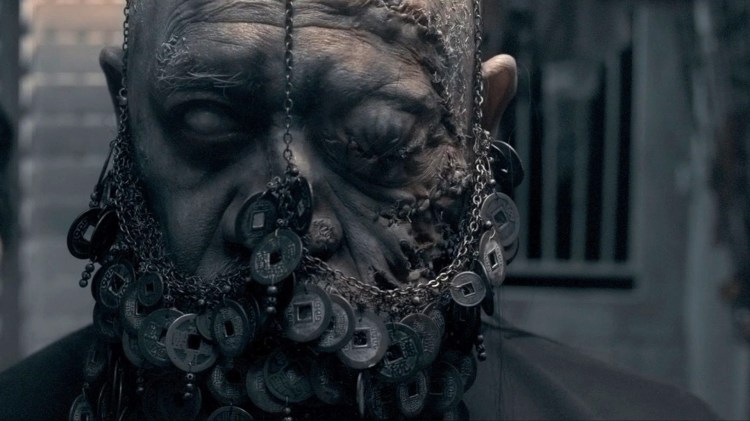
Rigor Mortis (殭屍, Juno Mak, 2013)

rigor mortisReview of this slick but not very scary horror movie up at UK Anime Network.


Juno Mak may be most familiar to UK viewers as the star of the rather macabre thriller Revenge: A Love Story but he began his career as canto pop singer in Hong Kong at just 18. An unlikely superstar in many ways, Mak has gone on to endure scrutiny over his career and family background whilst managing to carve his own path in the perilous Hong Kong entertainment industry. Having made his acting debut with Revenge: A Love Story he now makes another unusual move and steps behind the camera with a slick, modern horror film that seeks to pay homage to the much loved 1980s Mr Vampire movies.

Ditching the series’ trademark humour, Mak’s is a more meta take on its subject matter as it begins with the once famous actor Chin carrying a cardboard box full of his paltry possessions into a rundown apartment complex where he plans to end his own life. His plans are frustrated though as his newly lifeless body is possessed by the building’s resident ghosts. However, luckily or unluckily, the guy who runs the local noodle store doubles as an exorcist and manages to expel the demons from Chin’s body just in time to save his life. His troubles don’t end there though as a nice seeming old lady neighbour hides a terrible secret as does a frightened woman who often roams the corridors with her young albino son. Someone is indulging themselves in a bit of necromancy which threatens to change life on the block for ever more.

It’s certainly a very dour and gloomy affair as the suicidal Chin has flashbacks of his life as an A-list star with a pretty wife and a cute-as-button son whose last voicemail Chin keeps replaying. It’s all gone wrong for him already which is presumably why he’s come to live in such a “modest” place. He comes to build up a tentative relationship with the frightened woman and her son but they have traumas of their own linked to the strange haunting of the building. Mrs Mui who lives upstairs is the archetypal nice old lady who takes in sewing because she’s bored but after her husband dies in a freak accident she’ll stop at nothing to bring him back. It’s her husband that’s the stiff from the movie’s title (well perhaps – perhaps not) and she’s roped in a priest to work some black magic to bring him back but it isn’t really working necessitating her to take ever more drastic measures.

The Mr. Vampire movies are a Hong Kong institution and particularly well loved by the generation who grow up watching them in the ‘80s. However, they are considerably less well known here and viewers expecting a Western style “vampire” story are going to be disappointed. Chinese “hopping” vampires are more like a vampire/zombie hybrid – they feed on qi (life force) but shuffle like zombies and have about the same level of intelligence. There’s only one reanimated corpse here but Mak also throws in a couple of J-horror influenced ghosts with grudges that are also martial arts masters – as are the Taoist priests who are around to keep them in check. Mak has largely ignored the genre’s humorous aspects and gone for a fairly po-faced, supernatural martial arts drama which largely works but may have the less genre savvy viewer feeling a little lost.

Everyone’s just very bored in a very modern way – their ennui is close to religious. The former vampire hunter who runs the noodle stall downstairs and makes sure to produce extra food for the benefit of his customers who’ve already passed over (after all, they still need to eat, right?) spends all day in his boxer shorts and dressing gown and doesn’t even bother to put on any special vampire fighting gear. Chin is, obviously, suicidal and most of the other residents of the block are facing metaphorical demons even if they aren’t actually battling physicals ones (there are a lot of metaphorical layers in the film if you’re the sort that likes to see them). It’s all very cool in a slick and modern way but sometimes feels a little pompous and fails to engage.

Simply put, Rigor Mortis not quite as much fun as one might hope but also lacks the depth that might have made the experience feel more worthwhile. Having said that, it all looks great – aesthetically the film is very interesting and has a lot going for it including some unusually well made and impressively realised special effects. It is all a little style over substance though and the film’s final twist feels like a step too far (as does a strange mid credits shot and odd post credits sequence). There’s something a little cold and unengaging about Rigor Mortis (perhaps appropriately so) but it still has its moments and fans of slick, good looking martial arts movies with a supernatural bent may find a lot to enjoy.


Actually, this trailer is quite creepy though:

Available now in the UK from Metrodome.

Shanghai 13 (上海滩十三太保, Shàng Hǎi Tān Shí Sān Tài Bǎo, 1984)

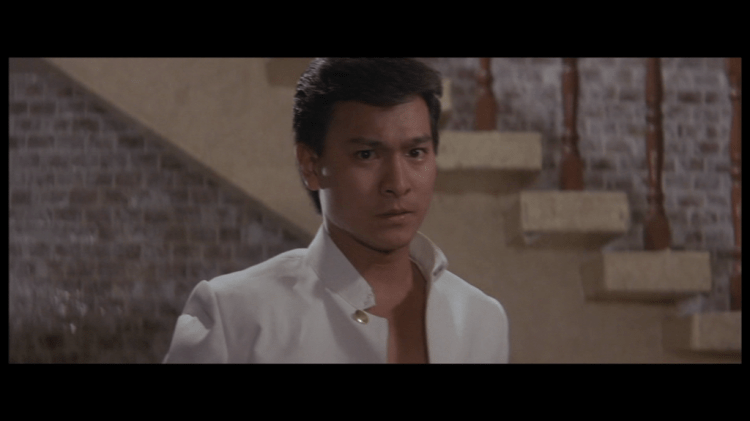
vlcsnap-2015-02-04-17h43m36s189Look at baby Andy Lau!!!

Review of Chang Cheh’s 1984 kung fu extravaganza Shanghai 13 up on UK Anime Network. Out now on UK DVD courtesy of Terracotta Distribution and their new Classic Kung Fu collection!


Shanghai 13 is the second in Terracotta Distribution’s new strand featuring Kung-fu classics. Directed by one of the masters of the genre, Chang Cheh himself who directed such well loved pictures as One Armed Swordsman and The Five Deadly Venoms, Shanghai 13 certainly falls into this category though its charms may be enhanced through the glow of nostalgia. Thin on plot but high on action, Shanghai 13 is not a film to give your brain much of a work out but it will get those fists flying!

Set during the Sino-Japanese war, a government official – mister Ko, has discovered he existence of a secret plot to collaborate with the Japanese. With the help of the famous safecracker Mr Blackhat, Ko obtains the incriminating documents and becomes a prime target for those behind the conspiracy. Mr Ko needs to get to Hong Kong where he can expose the conspiracy to sympathetic forces and enlists the aid of the famous “Shanghai 13” group of outlaws and heroes for protection. However, not all of the 13, it seems, are on his side!

Let’s be honest, not that many people really care about the plot of an action movie which is just as well because the plot of Shanghai 13 is about as thin as they come. Structurally, it’s akin to a video game where Mr Ko and his current protector must face a series of bosses with increasingly impressive fighting prowess in order to “level up” until they finally get Mr Ko to safety. The whistleblowers are the good guys and the people who are trying to stop them are the bad guys. It’s fairly black and white in that everyone on the “right” side is fighting for China and everyone else is either a traitor, Japanese sympathiser or just a soulless mercenary willing to sell out their country for a few coins. If you were looking for the kind of action movie with a nuanced plot, a bit of romance or emotional connection you’d best move along, there’s nothing to see here.

However, if killer action scenes are your bag you’ve come to the right place. Chang Cheh is not a legend for no reason even if Shanghai 13 is not his strongest effort. The film is sort of bookmarked by each of the titular 13 heroes who each have their own outlaw titles and particular fighting style. As usual, Chang has amassed some of his regulars which include some of the most famous names in kung-fu history such as Jimmy Wang Yu, Chiang Sheng and Lu Feng but he’s also made room for a few newcomers like an extremely young Andy Lau! The action scenes maybe fairly episodic but each are well designed and varied thanks to being entered around each of the fighter’s particular skills.  Again, they may not be reinventing anything, but each action sequence is impressively choreographed and exciting in its own right.

Shanghai 13 might not be the best example of its genre but it is certainly a typical one. Very much of its time, its appeal maybe be greater to those who view it through a heavy film of nostalgia but that’s not to say it isn’t often hugely entertaining to first time viewers too. The presentation is fairly pleasing and the disc includes both the original Cantonese language track plus an English dub for those who prefer it. The English subtitles are sometimes a little strange and riddled with obvious grammatical errors but not so much as to make them unintelligible though they may detract from some viewers enjoyment of the film. Shanghai 13 is undoubtedly a lesser offering from the great Chang Cheh, but fans of classic kung-fu are sure to plenty to admire nonetheless.