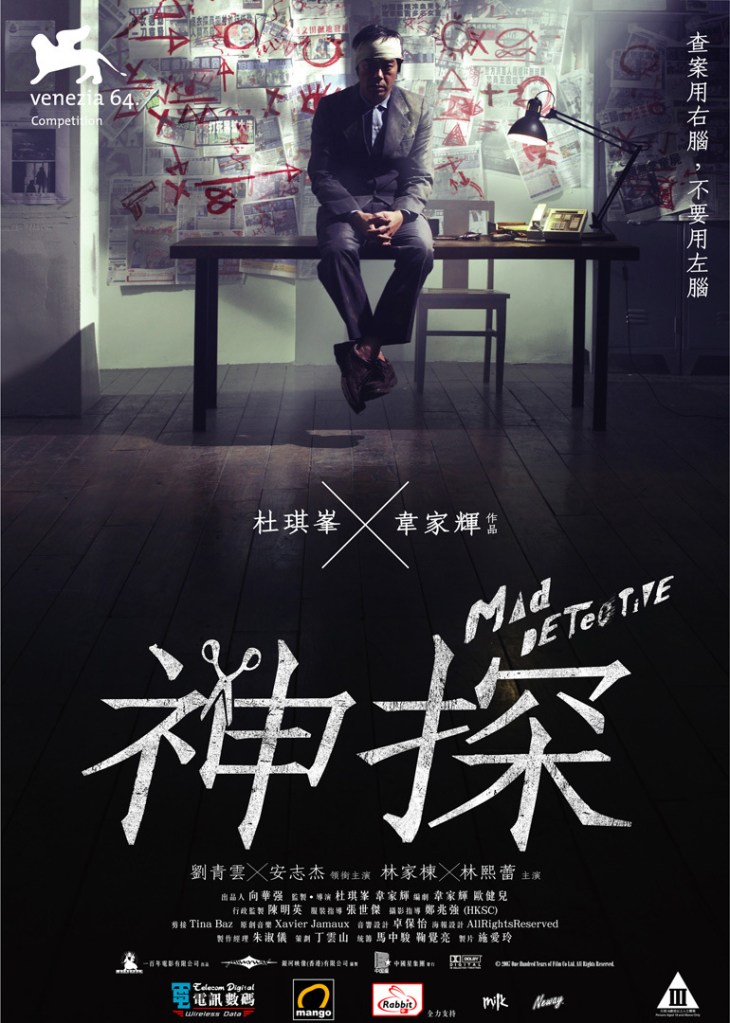
The border between “eccentric” and just “insane” can be quite a thin one but that tiny liminal space of uncertainty is where the hero of Johnnie To and Wai Ka-Fai’s Mad Detective (神探) resides. The titular Mad Detective, Bun (Sean Lau Ching-Wan), is about as unreliable a narrator as they come owing to the fact that he experiences frequent hallucinations and delusions meaning that absolutely nothing of his perception can be taken at face value. Despite his unorthodox approach, Bun is a fine a detective with an almost supernatural crime solving ability but, tragically, sometimes he sees more than he would like of human nature.
The day rookie detective Ho (Andy On) joins the force, he walks in on an unusual scene. Knives and cutting implements are lined up on a table while a pig’s carcass hangs from the ceiling. Veteran cop Bun then enters into the mind of a killer by viciously stabbing the pig carcass (and lovingly caressing it afterwards), before tucking himself inside a suitcase which he asks Ho to throw down the stairs only so he can then leap out and shout “The guy at the ice-cream store did it!”. A montage of newspaper cuttings testifies to Bun’s track record, but his career is over when he suddenly decides to cut off his own ear and present it to his boss at his retirement party.
Not so long after, two cops enter a forrest and only one leaves. That’s one problem, but the missing cop’s gun has been used in a series of robbery/homicides which is another. Exhausting all leads in trying to find out what happened between gun losing Wong (Lee Kwok-Lun) and his shady partner Chi-wai (Gordon Lam Ka-Tung) in a dark forest 18 months previously, Ho turns to Bun despite the misgivings of his colleagues. Bun’s wife begs him not to go back to police work, fearing for both his life and his mental state but Bun would rather live crazy than bored and so it’s back to burying himself alive and chatting with ghosts among other strange pursuits undertaken in the name of law enforcement.
Bun’s major talent is his ability to see people’s “inner personalities” which take the form of personified aspects of their psyches. We see through Bun’s POV as the figures in front of him change without warning – fighting one moment with a lady cop in a men’s bathroom but turning to see an overweight veteran in her place at the next. Bun comes to suspect Chi-wan thanks to his overly complicated personality which has seven different “ghosts” – an amusing sight when they all end up piled into the back of his tiny car. This goes someway to explaining the bemused looks Bun often attracts as he chats with people no one else can see.
Reactions to Bun’s outburst in a convenience store seem like they might just be mild embarrassment at his causing a scene, but could also easily be because he’s shouting at someone who isn’t really there. Whether “real” or not, it’s clear that Bun’s emotional intelligence and ability to read people are key to his crime solving talent. As he later tells Ho, it’s not about logic, it’s about emotion. Through “extreme profiling”, Bun “becomes” the killer, experiencing their emotions to get to the heart of the crime. Bun, like Manhunter’s Will Graham, absorbs too much of the world he sees around him and is unable to reconcile his reality with the commonly accepted one. Quite mad, but also brilliant, Bun’s genius makes him dangerous in a hundred different ways.
To and Wai create doubles and dualities left, right, and centre. Fittingly enough, Mad Detective takes inspiration from The Lady from Shanghai for its shoot out finale which occurs in a house of mirrors. This time it’s not just Bun’s vision which is uncertain even as he can see multiples of ghosting personalities, but ours too as reality fractures into tiny, reflective fragments. Ho, by the film’s conclusion, may have absorbed too much of Bun, but also perhaps of the worst aspects of his profession. Bun’s tragedy is his innocence – he literally sees the bad the in people and tries to exorcise demons through exposing their presence, but Ho’s is cowardice in his refusal to truly look at the people in front of him rather than blindly follow the nearest available leader. A supremely complex and original thriller, To and Wai’s Mad Detective is a fascinating psychological journey constructed with unusual rigour and as oblique and elliptical as it is entertaining.
Original trailer (English subtitles)
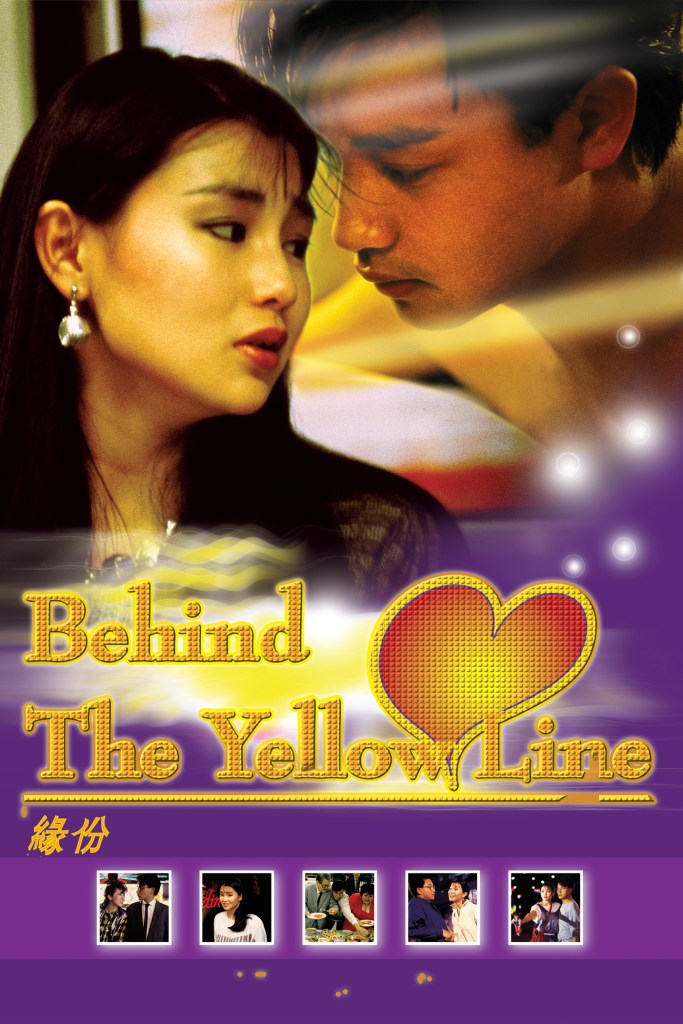 Back in the 1980s, you could make a film that’s actually no good at all but because of its fluffy, non-sensical cheesiness still manages to salvage something and capture the viewer’s good will in the process. In the intervening thirty years, this is a skill that seems to have been lost but at least we have films like Taylor Wong’s Behind the Yellow Line (緣份, Yuan Fen) to remind us this kind of disposable mainstream youth comedy was once possible. Starring three youngsters who would go on to become some of Hong Kong’s biggest stars over the next two decades, Behind the Yellow Line is no lost classic but is an enjoyable time capsule of its mid-80s setting.
 Johnnie To is best known as a purveyor of intricately plotted gangster thrillers in which tough guys outsmart and then later outshoot each other. However, To is a veritable Jack of all trades when it comes to genre and has tackled just about everything from action packed crime stories to frothy romantic comedies and even a musical. This time he’s back in world of the medical drama as an improbable farce develops driven by the three central cogs who precede to drive this particular crazy train all the way to its final destination.
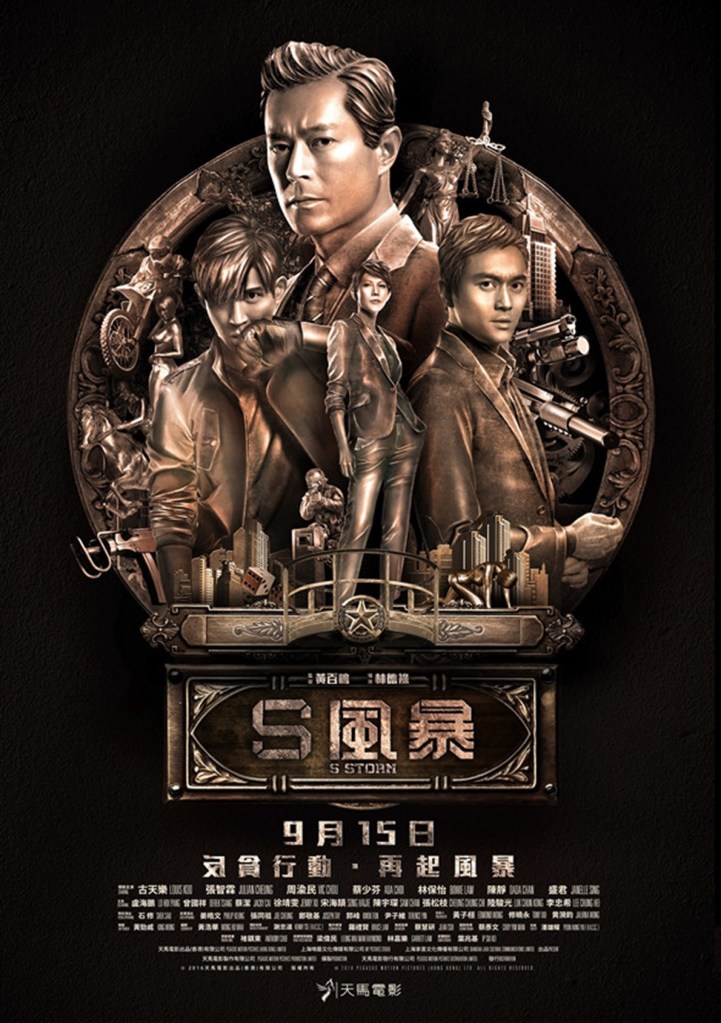 It’s become almost a cliché to describe a sequel as “unnecessary”, but then assessing how any sequel or, indeed, any film might be deemed “necessary” (for what or whom?) proves more fraught than one might originally think. It might, then, be better to think of certain sequels as “unwise” – S Storm (S風暴), a followup to the similarly named Z Storm is just one such film. Z Storm’s critical reception was, shall we say, lukewarm and did not exactly inspire a burning desire to return to its world of corporate corruption vs different kinds of bickering policemen but, nevertheless, here we are.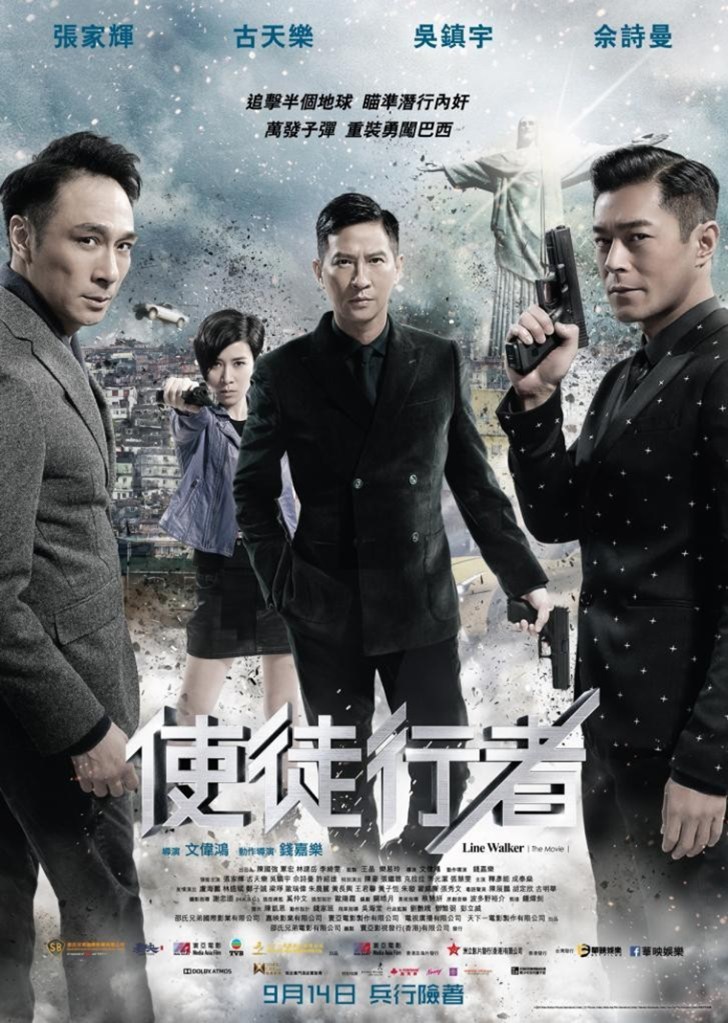
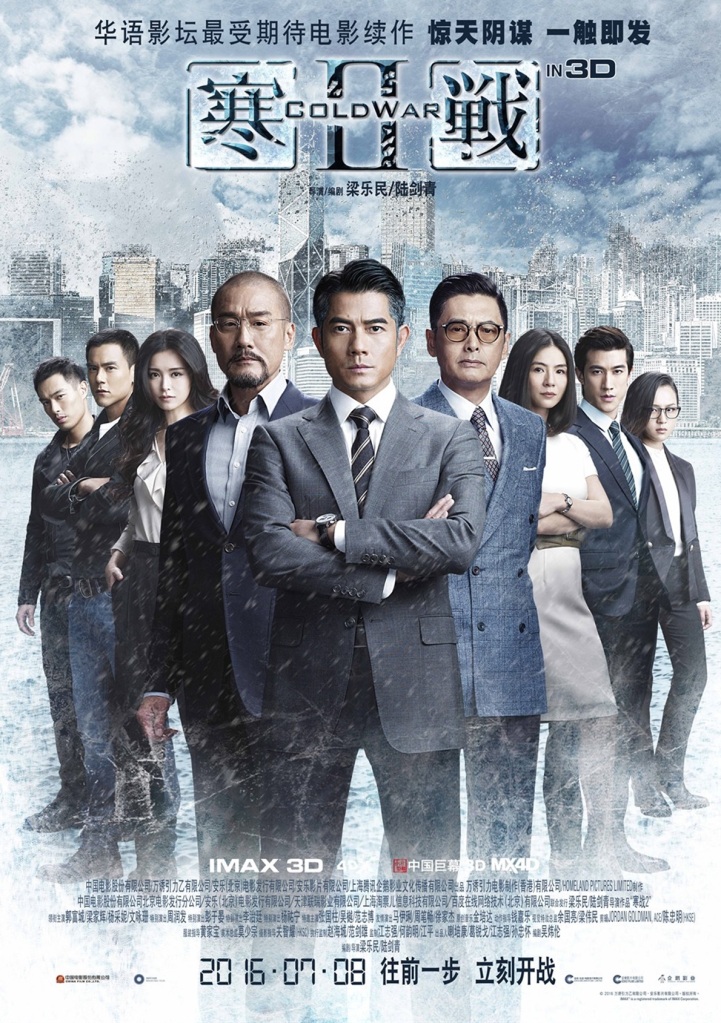 Cold War 2 (寒戰II) arrives a whole four years after the original
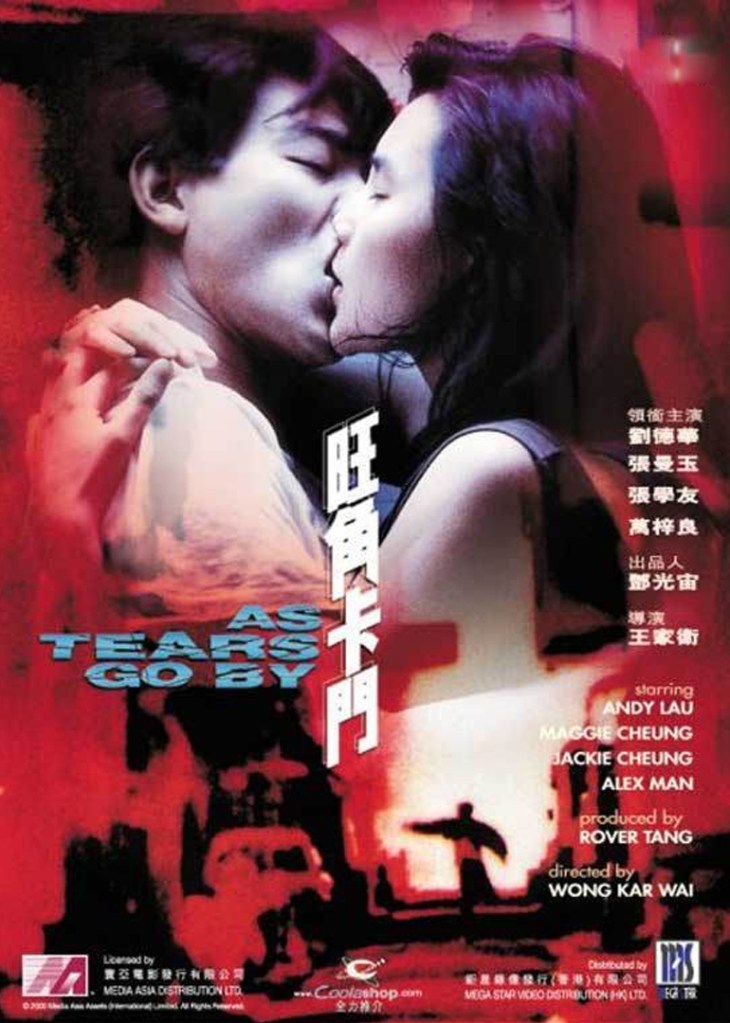 These days, Wong Kar-wai is an international auteur famous for his stories of lovelorn heroes trapped inside their memories, endlessly yearning in vain for the unattainable. In many ways his debut feature, As Tears Go By (旺角卡門, Mongkok Carmen) is little different save that it owes more to its vague heroic bloodshed, gangster inspiration and is less about memory than inevitability and a man abandoning his dreams of a better life with a woman he loves out of mistaken loyalty to his loose cannon friend.
 Where oh where are the put upon citizens of martial arts movies supposed to grab a quiet cup of tea and some dim sum? Definitely not at Boss Cheng’s teahouse as all hell is about to break loose in there when it becomes the centre of a turf war in gloomy director Kuei Chih-Hung’s social minded modern day kung-fu movie The Teahouse (成記茶樓, Cheng Ji Cha Lou).
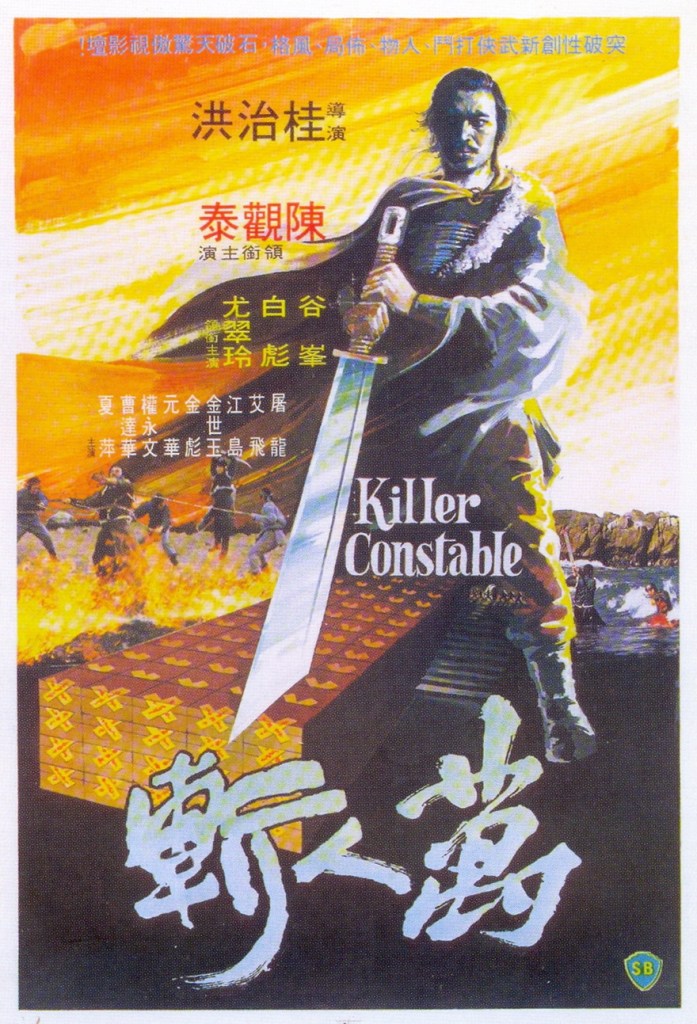 Every sovereign needs that one ultra reliable and supremely talented servant who can be called upon in desperate times. For the Dowager Empress of the Qing Empire, that man is Leng Tien-Ying – otherwise known as the Killer Constable. When a sizeable amount of gold goes missing from the Imperial Vaults, it’s Leng they call to try and get it back. However, what Leng doesn’t know is that there’s far more going on here than he could possibly have imagined and he’s about to wade into a trap so deep that you never even see the bottom.
 Windows on Worlds