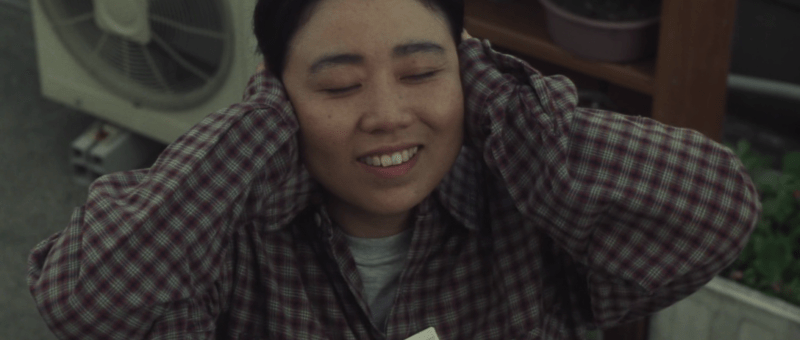
Vital (ヴィタール, Shinya Tsukamoto, 2004)

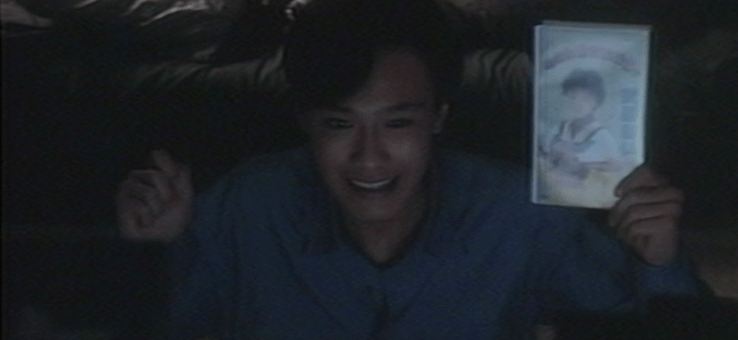
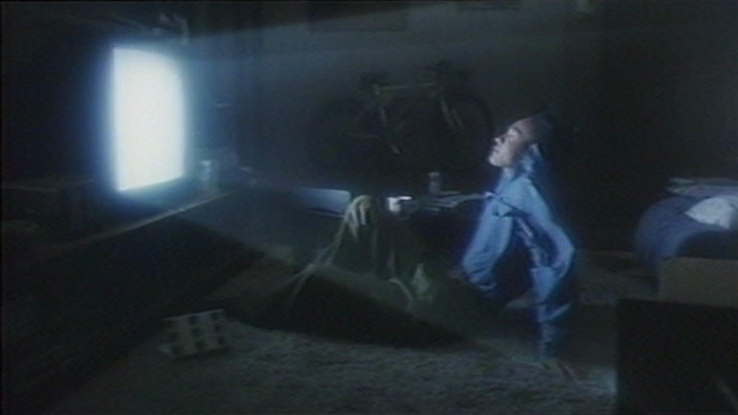
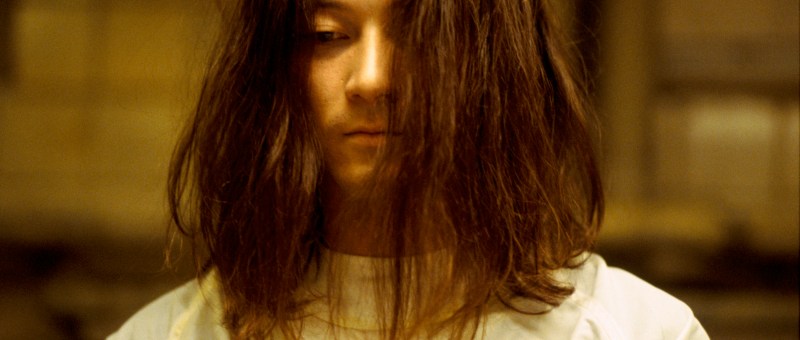
“There is the vast realm of the unconscious,” one of the professors explains to vacant medical student Hiroshi a soon-to-be physician attempting to heal himself from a trauma he doesn’t fully understand. Perhaps as the title implies, Vital (ヴィタール) sees Tsukamoto branch out from his vistas of urban alienation to find a new paradise in nature albeit one that it exists largely in the mind and that the hero can never fully return to because this place of life is also one of death which exists inside a kind of eternity.

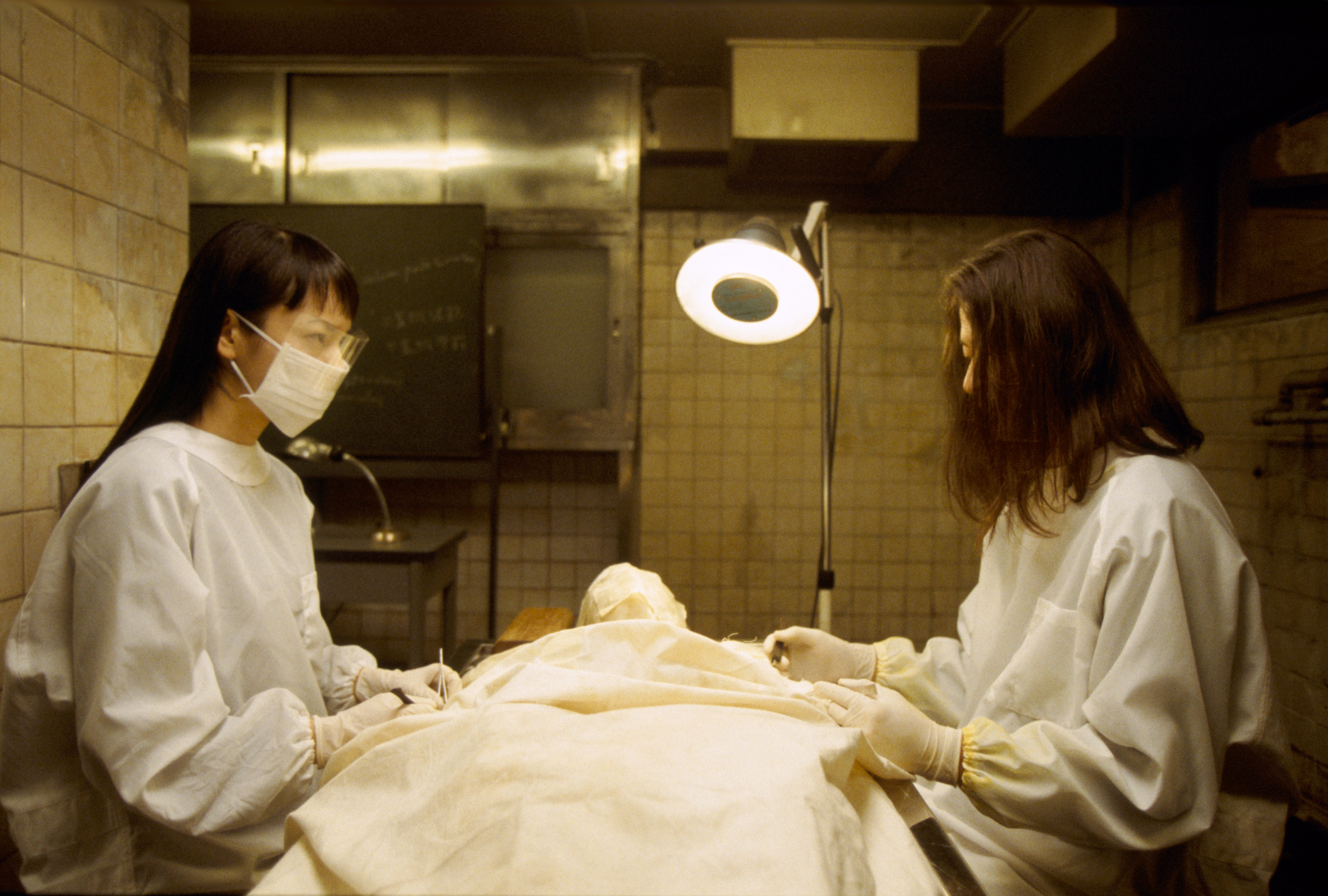
This explains to some extent Hiroshi’s (Tadanobu Asano) temporal confusion. Having lost his memory following a car accident in which he later learns his girlfriend Ryoko (Nami Tsukamoto) was killed, he shifts between “reality” and what first seems to be flashbacks of his unremembered past but are actually taking place in a kind of alternate, perhaps idealised reality in the “vast realm of the unconscious” as Hiroshi attempts to reconstruct his image of Ryoko along with that of himself. Another of his professors more philosophically asks were lies the seat of the soul in the human body and is this something that Hiroshi maybe unconsciously looking for during his anatomy classes in which he is coincidentally assigned Ryoko’s body to work on only realising when he sees her tattoo in one of his visions. 

In some ways this grim task of dissection is a bid for greater intimacy, to take Ryoko apart and then put her back together as the students diligently do at the end their studies reassembling the bodies and placing them in coffins in keeping with culturally specific death rituals. The faces of the cadavers are covered with a bag until the students are instructed to remove them, but they are always reminded to treat the dead with dignity and that their role here is one of understanding as they attempt to work out not only how these people died but also how they may have lived. Hiroshi causes conflict with some of his fellow students on just this point, seeming rather creepy in his vacant intensity over the body while also wanting to take ownership over that of Ryoko rather than work as part of the group complaining that the others are too clumsy and it’s affecting his ability to learn. 

Ryoko’s father comes to say that though he once blamed Hiroshi, his daughter had been in a way dead for a long time before she died, the light apparently going out of her eyes when she was still in high school. Only in Hiroshi’s unconscious does she say that she didn’t want to die despite an apparent obsession with death in Hiroshi’s other resurfacing memories/visions of her as symbolised in her repeated requests for him to strange her during in sex. Another of the professors had said that the suppressed desires of the unconscious could create conflict and this alternate reality is also in some senses Hiroshi’s own latent desire for death, to be with Ryoko in this new paradise that is founded on an idyllic beach rich with nature and sunshine where they are free to be together liberated from the oppressions of civilisation. 

Indeed, it’s been raining all through the film as if in expression of Hiroshi’s gloomy mental state but we later learn that Ryoko’s most treasured memory was simply standing in the rain with him and breathing in its scent. Verdant nature is aligned with the vitality that is often absent from the soulless concrete of a city in which everyone seems to exist in tiny, separate worlds which only border on but never join each other. Ikumi (Kiki), a strange female student who develops a fascination with Hiroshi, has an illicit conversation with a professor she’s apparently been sleeping with each of them speaking into mobile phones while standing steps apart. Tsukamoto often isolates the protagonists, placing them in corners or blurring the periphery as if they alone existed in this moment. In Hiroshi’s idealised alternate reality, these barriers disappear as he and Ryoko share an entire world in love and freedom. 

The irony is that he resurrects himself through the process of dissecting Ryoko’s dead body. His Da Vinci-like sketches begin to shift as do the ink-like shadows on the wall amid the reflection of the rain as Hiroshi stares vacantly trying to reassemble his past. Through accepting Ryoko’s death, he rediscovers life and is in a sense reborn insisting he will continue medicine even though his professor and parents advise him not to given what he’s just been through though his parents had also said that before the accident they didn’t really think he had it in him to become a doctor. Their disapproval may explain some of the pressures he was experiencing as perhaps was Ryoko that may have urged them to long for death. In any case, what the film presents is the archaeology of grief, a prolonged period of introspection and loneliness and a seeking of intimacy no longer really possible but discovered only in the vast realms of the unconscious.


Vital is released on UK blu-ray 30th September courtesy of Third Window Films.

Original trailer (English subtitles)

Kubi (首, Takeshi Kitano, 2023)

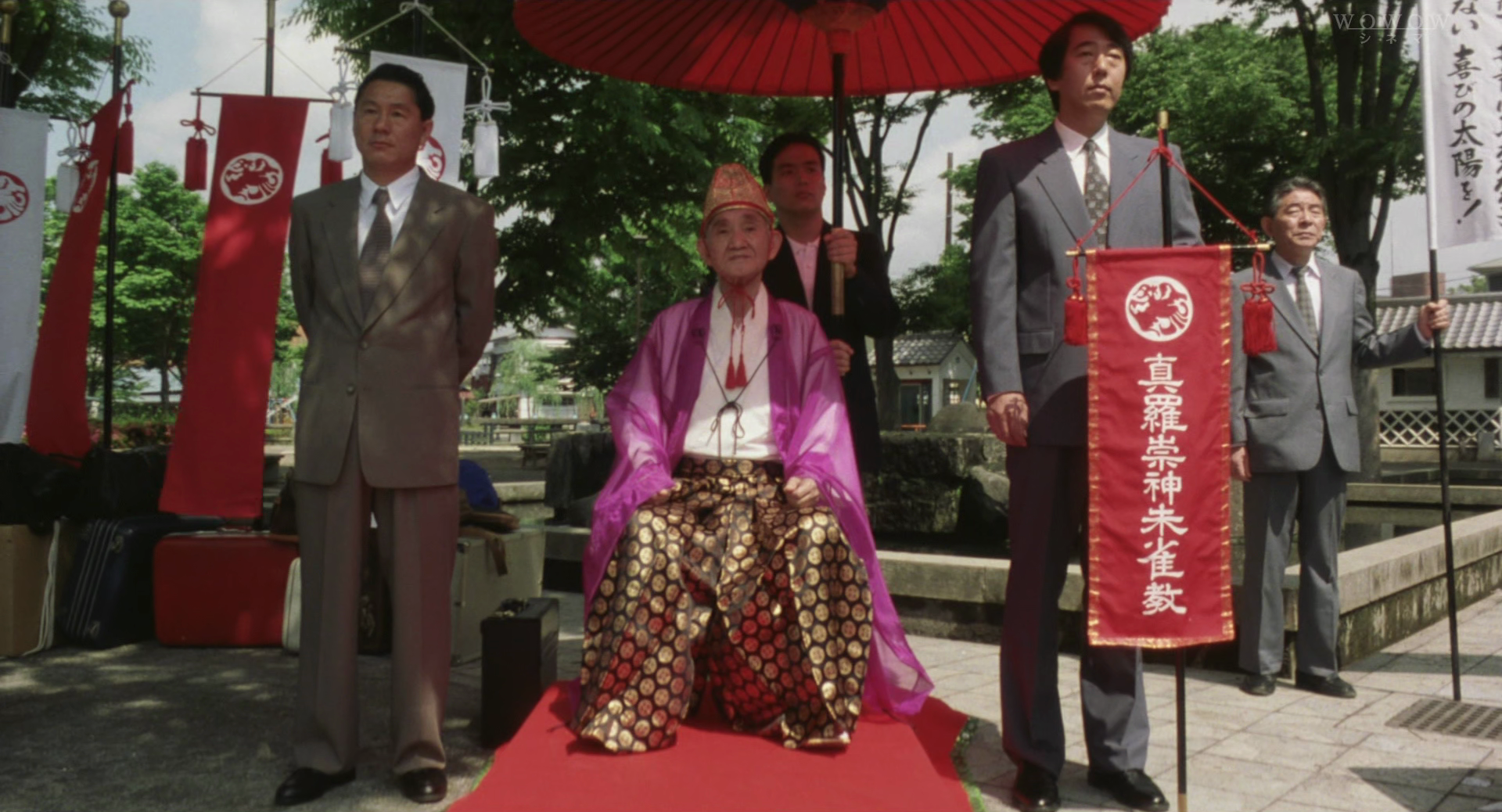
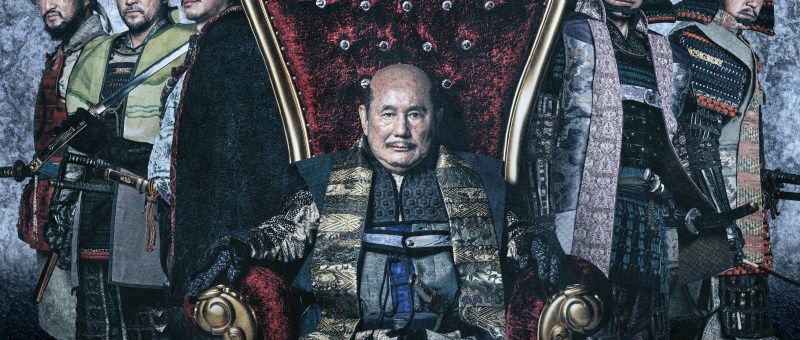
Apparently in gestation for a couple of decades, it’s unsurprising that Takeshi Kitano gave himself the role of Hideyoshi in a long-awaited historical drama adapted from his own novel, Kubi (首). Played as an irascible but wily old man, Hideyoshi is the second of Japan’s great unifiers and, unlike his predecessor, died as a result of an illness rather than intrigue. He was also a peasant who rose through the ranks and is perhaps witness to the tumultuous class conflict and social divisions of a hierarchal society.

Even so, in this version of events, Oda Nobunaga (Ryo Kase) too speaks in a thick rural dialect that sets him apart from his retainers and seems to hint at his uncouthness. This Nobugana is an unhinged despot who threatens and humiliates his subordinates, not to mention sexually assaulting them. In short, there’s no real mystery why his men have begun to turn against him and there is intrigue in the court. The film opens with Murashige’s (Kenichi Endo) quickly quelled rebellion which floundered when his reinforcements failed to arrive. Murashige is on the run and Nobunaga has heavily suggested whoever brings in his head will be first in line for the succession, but Murashige is also in a relationship with Mitsuhide (Hidetoshi Nishijima) another courtier vying for favour in more ways than one from the capricious Nobunaga. 

The striking thing about the staging is how like a yakuza drama this intrigue really is with each of the main factions manoeuvring for control, forming temporary or duplicitous alliances forged in the mutual desire of ousting a ruler whose increasing instability presents only the likelihood of a return to chaos. Nobunaga’s flamboyant speech and threatening manner are reminiscent of a yakuza boss on his way out, as is his obvious tactic of setting his rivals against each other while secretly planning to hand the reins to his son anyway. The film takes place in a largely homosocial world, the only women on screen are sex workers and peasants about to be murdered, only this time defined by romantic intrigue in which the various relationships between the men are inescapably linked with power and duplicity.

Mitsuhide’s relationship with Murashige is originally framed as a giri/ninjo conflict, Mitsuhide torn between the exercise of his duty as a samurai and his love for Murashige, only to later be set wondering if Murashige isn’t also playing him in urging him too towards rebellion, while Murashige accuses him of harbouring desires for Nobunaga which would also necessarily be desire for advancement. Advancement is something sought by all and in particular Mosuke (Shido Nakamura), a peasant who is taken on as a foot soldier after looting a battlefield for amour and killing his friend to get his hands on the prize only to realise just at the critical moment how pointless the constant desire for heads really is. The absurdity is rammed home in the closing scene in which Hideyoshi declares himself uninterested in the severed head he asked for, rendering the quest entirely pointless.

This absurdity extends to introducing the character of a comedian who is later killed for talking too much, while Kitano wise cracks his way along as the affable Hideyoshi. Kitano is in his way in dialogue with other samurai epics, using Akira Kurosawa’s horizontal wipes and introducing a pair of bumbling comic relief peasants only to suddenly kill one of them off because at the end of the day this world isn’t very funny. It’s cruel, and mean, and meaningless, so you might as well laugh like Hideyoshi. Residents of a ninja village conduct a festival in which they pray for death and to be released from this earthly torment as soon as possible, while farmers still dream of becoming samurai little knowing the reality of samurai life.

It’s this cycle of futility that is echoed in the opening image of a severed neck into which crabs in a river are crawling. Kitano stages lavish battle scenes, but ones that are often horrifying and absurd, a visceral struggle in mud and blood fought for no real reason. These samurai live their lives on the point of a sword, but they move and behave like yakuza fighting pointless turf wars and games of petty intrigue until someone finally comes for their heads. In the end, the victor is the one who doesn’t play the game at all, but sits and laughs at the absurd cruelty all around them in which the only stable force is ambition accompanied by a nihilistic lust for blood in an already bloody world.


Kubi  screens in New York July 16 as part of this year’s JAPAN CUTS.

Trailer (English subtitles)

It’s All Right, My Friend (だいじょうぶマイフレンド, Ryu Murakami, 1983)

Ryu Murakami was already a prize-winning author who had successfully adapted his own novel for the screen when he began work on 1983’s It’s All Right, My Friend (だいじょうぶマイフレンド, Daijobu My Friend) yet he was perhaps an odd choice for the material. A big budget blockbuster produced by Toho, the film may have been intended to echo the kind of films Kadokawa was making with its teenage starlets and media mix strategy and like them is largely built around the title song performed by star Leona Hirota. But what might have worked as a countercultural piece of punk cinema if made on a shoestring by starving artists could not help but fail when blessed with the production values of a mainstream picture. 

A case in point, the film stars Hollywood actor Peter Fonda as an alien, Gonzy, who has lost the ability to fly causing him to plummet into an outdoor swimming pool where the three heroes are hanging out. Fonda delivers all his lines in English, while everyone else replies in Japanese. Gonzy explains that he was raised in the US by a kindhearted scientist who taught him to speak (his first words were “Merry Christmas”) but longs to visit his home planet. Meanwhile, he’s being hunted by a mysterious fascistic group of misogynistic eugenicists who want his genes for their cloning programme which hopes to eliminate the need for human women to exist at all. 

Doors have apparently already taken over factories, family restaurants, and psychiatric institutions such as the Tachibana Mental Hospital where they take heroes Monica (Yoshiyuki Noo) and Mimimi (Leona Hirota) and try to brainwash them to recognise a pigeon as an apple and aeroplane as a banana. They also drill into the brain of a young man they describe as a poor delinquent in order to turn him into an obedient drone, the implication being that they wish to turn mankind into a race of automatons and possibly resent women because they pose a threat to their plan. Then again, there is a distantly homoerotic quality to the relationships between the Doors, two of them later dying with clasped hands aside from all their strange musical numbers about how women are inferior and produce only substandard offspring.  

Ryuichi Sakamoto is credited as a composer on the film and the Doors’ henchman appear to be closely styled to resemble Yellow Magic Orchestra, often mimicking their dance moves while otherwise faceless and anonymous behind their identical sunglasses and slicked back hair. Murakami signals his intentions in the opening scene in which Mimimi has a dream sequence in the manner of classic Hollywood musical. She dances with an American sailor against a backdrop that strongly recalls the noir cinema of the late 40s until a car full of gangsters turns up and shoots him with a machine gun leaving her kicking around on her own. Music becomes the device that can break through the Doors’ programming, the drones beginning to twitch to Monica’s Harmonica provoking a vision of dancers in gold lamé that finally ends in a mass disco of liberation from the authoritarian thought police that restores Gonzy’s ability to fly. 

Even so, the reason he couldn’t was apparently his aversion to his personal kryptonite, tomatoes, whose voices he can hear whispering that they hate him and thereby suppressing his powers in reawakening memories of his childhood trauma along with his low self-esteem. To help him fly again, the gang engage in a series of crazy episodes including hang gliding in Saipan while Gonzy continues as an innocent with an incredibly vulgar sensibility eventually turning his “bazooka-like” ejaculate into a key weapon. There might be something in the echoing of an early ’80s anxiety about dangerous technology and weird techno-cults with shady motivations for their scientific endeavours though the irony is often buried under the swanky blockbuster production values and destabilising presence of Fonda who is quite literally in a different film from the rest of the cast by virtue of speaking his own language and being unable to understand what is going on. Even so, the film like the title song is essentially a kind of tribute to intercultural friendship in the bond that arises between the trio of aimless youths and the middle-aged space alien who’s trying to find his way home. Decidedly strange and defiantly surreal, Murakami’s weird countercultural blockbuster is a forgotten piece of 80s pulp but perhaps exposes something of the anxieties of a Japan heading towards the height of its prosperity and developing a fear of flying if not quite of tomatoes.


Adrift in Tokyo (転々, Satoshi Miki, 2007)

An aimless young man finds unexpected direction while walking the streets of the city with an unlikely father figure in Satoshi Miki’s meandering dramedy Adrift in Tokyo (転々, Tenten). These two men are indeed adrift in more ways than the literal, each without connections and seeking a concrete role in life while attempting to make peace with the past. But like any father and son there comes a time when they must part and their journey does indeed have a destination, one which it seems cannot be altered however much they might wish to delay it.

That Fumiya (Joe Odagiri) is aimless might be assumed from his unruly hair and the fact that he thinks tricolour toothpaste might be enough to jolt him out of his sense of despair but is confirmed by his matter of fact statement that he’s in his eighth year of university where nominally at least he’s studying law. His problem is that he’s amassed massive debts to a loanshark, Fukuhara (Tomokazu Miura), who breaks into his apartment and threatens him by shoving a sock in his mouth before leaving with his ID and driving licence. Fukuhara, however, later decides to make him another offer that he will cancel the debt and even give Fumiya even more money if only he will agree to wander around Tokyo with him for an unspecified time until they reach Kasumigaseki where he intends to hand himself in at police headquarters claiming to have recently murdered his wife. 

Like many things that Fukuhara says, it’s not clear whether or not he has indeed killed his wife though Miki frequently switches back to a scene of a woman who seems to have passed away and has been laid out in bed though she shows no signs of having died violently. Her zany co-workers keep thinking they should check on her seeing as she hasn’t shown up in days but something always distracts them and they end up forgetting about her entirely. The body appears to have been treated with love, hinting that if what Fukuhara says is true and this woman was his wife whom he killed in a fit of passion he has quite clearly thought through his plan of action rather than attempting to flee the scene and is perhaps only delaying the inevitable while walking out some other trauma in the company of Fumiya a surrogate son mirroring the description he gives of taking walks in the company first of his father and then of his wife. 

Fumiya deflects every question and agrees that he hates memories having burned his photo albums before leaving for university. He claims that he has no parents, describing the people who raised him as just that, as his mother and father both abandoned him as a child leaving him in a perpetual state of arrest which is one reason he’s still a student four years after most people have graduated. He never went to the zoo or rode a rollercoaster or called a man dad and seems to think of himself as nothing much of anything at all. Yet the fake can sometimes be more real than the real as he eventually discovers becoming part of an awkward family unit with Fukuhara’s “fake” wife (Kyoko Koizumi) he used to accompany to weddings as a paid guest, just beginning to enjoy being someone’s son when Fukuhara decides he’s reached the end of his road. 

There is a sense that everyone is chasing the ghost of someone else or perhaps even themselves, Fumiya finding shades of the father who abandoned him in career criminal Fukuhara who tells someone else that he once had a son who died in infancy, and seeing something of his mother in fake wife Makiko discovering transitory roots in an unlived imaginary childhood. But then there are also occasions of cosmic irony such as a coin locker bag being full not of money but of bright red daruma dolls and tengu noses, or a rebellious street musician meekly bowing to the police. A repeated gag says you’ll have good luck if you spot iconic actor Ittoku Kishibe out and about in the streets, and perhaps in a way Fumiya does in learning to make peace with his childhood self walking with Fukuhara who also comes to accept his failures as a man, a husband, and perhaps a father too. Filled with zany humour and a warmth underlying its melancholy, Adrift in Tokyo is a meandering journey towards a home in the self and a sense of rootedness in the middle of a sprawling metropolis filled with infinite possibility. 


Adrift in Tokyo is released on blu-ray in the UK on 12th December courtesy of Third Window Films.

Original trailer (English subtitles)

Samurai Kids (水の旅人-侍KIDS-, Nobuhiko Obayashi, 1993)

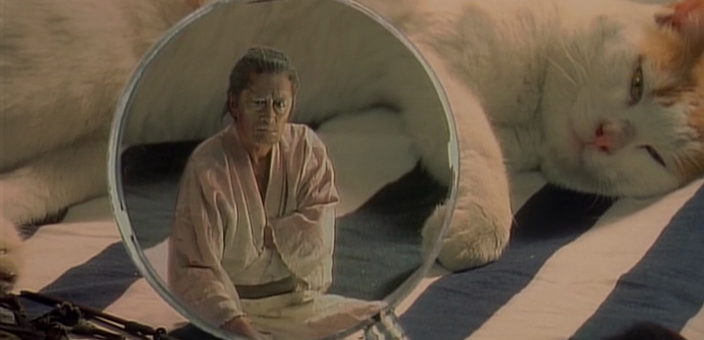
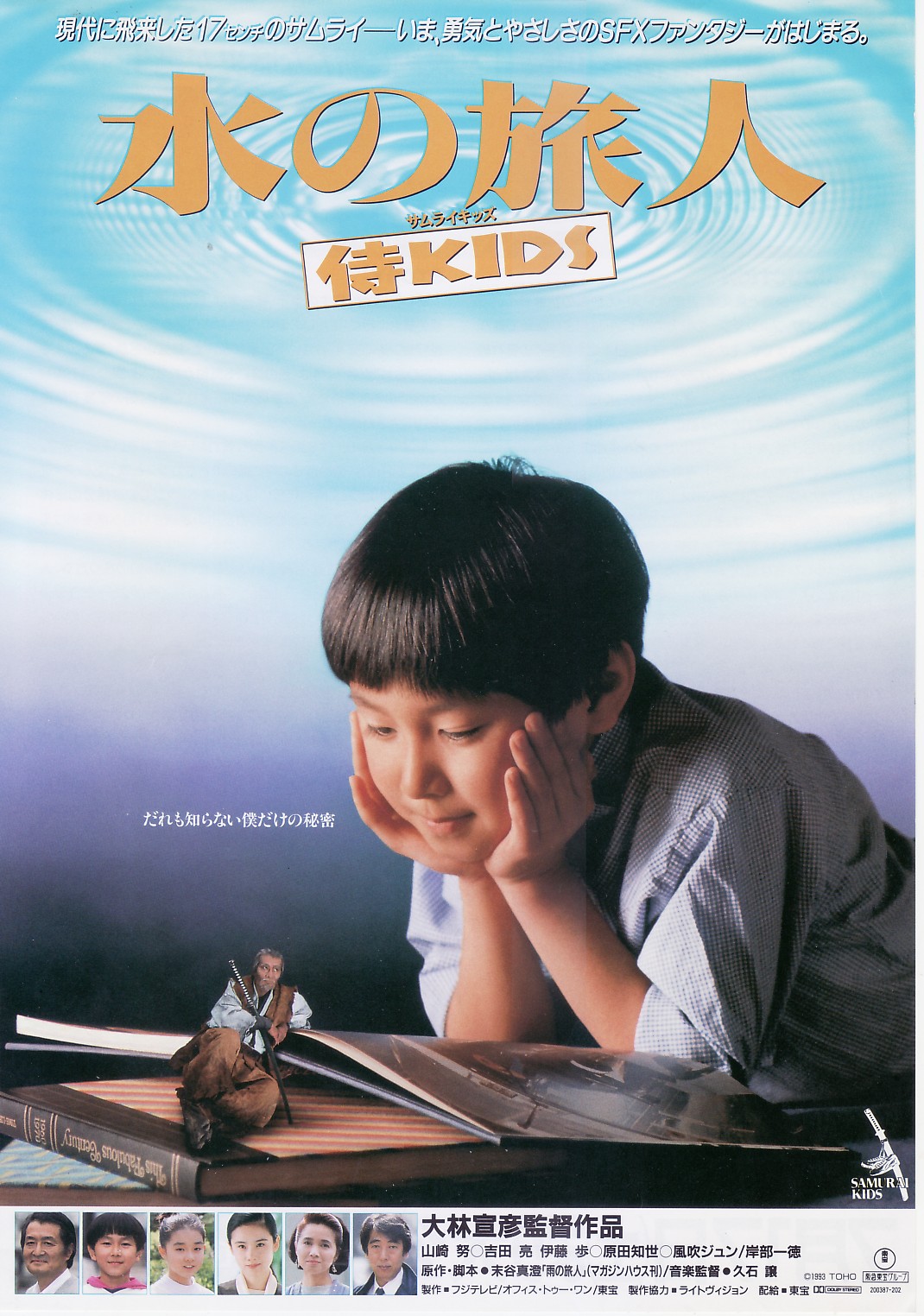
“I’ve always believed that dreams and fantasies have infinite power” an eccentric teacher explains though it might as well be a mission statement for the films of Nobuhiko Obayashi. 1993’s family adventure movie Samurai Kids (水の旅人-侍KIDS-, Mizu no Tabibito: Samurai Kids) draws inspiration from the classic Japanese folktale Issun Boshi about a pint sized warrior who floats off to the city in a bowl, but is at heart a gentle coming-of-age tale as little boy grows in self-confidence and vows to protect Japan’s beautiful natural environment from human mismanagement. 

As his mother (Jun Fubuki) describes him, Satoru (Ryou Yoshida) is a little different and slow to make friends. The confusion he feels is reflected in the persistent fast cutting that adds a note of tension to the otherwise pleasant family home. Like many small boys he is obsessed with collecting mini treasures for his collection along with frogs and insects which is how he comes across a mysterious creature knocked off a log floating in the river by a flying baseball from the game his sister Chizuko (Ayumi Ito) is playing across the way. To his surprise, the bundle of rags Satoru picks up turns out to be a tiny old man in samurai clothes complete with sword who gives his name as Suminoe no Sukunahiko. Sukunahiko (Tsutomu Yamazaki) as he explains had been on his way to the sea where he plans to “evaporate”. The river only flows in one direction after all and you can’t turn back time, everyone dies eventually. 

Having lost his grandfather a couple of years previously (a photo cameo from Ishiro Honda of Godzilla fame), loss is something Satoru hasn’t quite processed though he understands that Sukunahiko has his own path to follow even if he’ll miss him when he’s gone. Nevertheless, he feels a responsibility to look after him so he can recover sufficiently to make his journey to the sea. Through his strange friendship with the tiny old man, Satoru begins to learn more of and draw closer to the natural world. When Sukunahiko’s kimono is pinched by a cheeky crow for some reason continually hanging round Satoru’s home, Sukunahiko is forced to fight him and ends up cutting off his beak but later carves the bird a new prosthetic replacement because no to do so would have been “impolite”. 

Meanwhile a visit to his father’s hometown brings home the realities of contemporary Japan in learning that the area is soon to be sunk as a giant reservoir to prevent the flooding of other nearby villages. On a school trip, Satoru is quick to take issue with some of his classmates who throw their rubbish out of the bus windows as they pass a dam, reminding them they’re being disrespectful to the town that once existed beneath the water. The climax occurs when the children are camping further up the mountain near what Satoru assumes must be Sukunahiko’s “hometown” at the source of the river. It just so happens that the trip coincides with a fading local festival dedicated to the river god which might account for why it’s raining so much. “It’s celebratory rain” an old man explains, “but when people try to control the water it causes problems like this” implying that the water is “rebelling” against humanity’s attempts to channel it. When he and his sister’s frenemy Miyuki are trapped by rockfall, Satoru has to learn to trust the healing properties of water so that he can repay her kindness in protecting him before eventually helping Sukunahiko return to source in the company of his eccentric yokai-obsessed teacher (Tomoyo Harada) and newly sympathetic sister. 

Adapted from a story by Masumi Suetani who also penned the screenplay, Samurai Kids is perfectly suited to Obayashi’s key concerns lamenting that the adults often forget the promises to nature they made while young, Satoru calling out that he’ll protect the rivers and waters of Japan with a warrior spirit like Sukunahiko’s while the Jo Hisaishi score is also reminiscent of the similarly themed movies of Studio Ghibli. Chizuko’s parallel dilemma may be less well explored leaving it unclear whether her tomboyishness is born of discontent over her looks or a part of her essential personality struggling for acceptance in a conformist and heavily gendered society but does at least allow her to find common ground with friend/rival Miyuki who is struggling with something similar stressing the importance of friendship and mutual understanding among the children. It may be the case that the special effects have entered the realms of being classic rather than merely dated but hold up surprisingly well almost 30 years later possessed of their own strange charm yet syncing perfectly with the world around them. A quietly magical tale of loyal yet laidback family cats, parental nostalgia for simpler times, and unexpected friendships between solitary boys and ancient water gods, Samurai Kids is a surprisingly poignant children’s adventure with an important message in its fierce love of a disappearing natural beauty. 


Short clip (no dialogue)

Happy Flight (ハッピーフライト, Shinobu Yaguchi, 2008)

“We’re part of a whole system” the chief mechanic insists with exasperation, irritated with an employee being too thorough, “what if this delays departure?”. Best known for ensemble comedies, of which Happy Flight (ハッピーフライト) is one, Shinobu Yaguchi had originally envisaged a disaster movie only to change tack realising that aircraft accidents really are (thankfully) extremely rare and the backstage workings of an airport might well lead themselves to comedy. Even so, it’s perhaps surprising that sponsor airline ANA who were apparently heavily involved in the project allowed themselves to be seen in a less than perfect light even if their pilots and ground staff do indeed save the day when potential disaster strikes. 

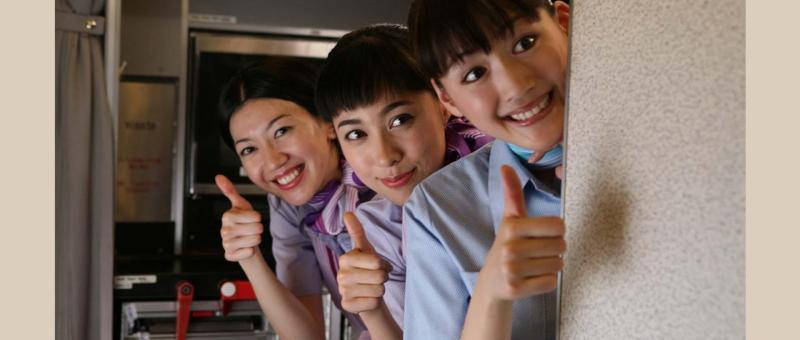
Like any good farce, Yaguchi throws just about every potential problem into one basket beginning with the fact that this flight to Honolulu is the final exam for co-pilot Suzuki (Seiichi Tanabe) who is hoping to earn a promotion to captain though a disastrous performance in the simulator may have dimmed his expectations. It’s also the first flight for chirpy air hostess Etsuko (Haruka Ayase) still harbouring some delusions about the glamour of the flight attendant life while the plane itself is late in and technically speaking needs a couple of repairs though the airline is already a little jumpy about the number of delays impacting their services recently and the chief mechanic thinks some of them can wait. A junior engineer takes it on himself to change a part and incurs the wrath of his boss for taking to long, but is perhaps privately worried he didn’t do it properly and later alarmed when the plane runs into trouble worried that his missing wrench might be the cause. Aside from the pressing typhoon, the other problem is a flock of annoying seagulls normally taken care of by an old man nicknamed “bird guy” who warns them off with a shotgun only today he’s been accosted by the “bird lovers alliance”, while the airport is also surrounded by a bunch of obsessive aviation enthusiasts recording every detail and uploading them online. 

If something can go wrong then it will, as it does when the backup sensors stop working leaving the pilots flying blind, but even before that consumer aviation is first and foremost a customer facing business with the airline concentrating on ensuring that passengers have a good experience so they don’t lose their business to a rival. That’s one reason they’re so paranoid about avoiding delays, but also find themselves dealing with aggressive passengers each intent on receiving individual attention forgetting for a moment that the plane is full of other people who also have needs and demands. Still learning the ropes, Etsuko struggles to understand her place in the machine only to redeem herself later through a little lateral thinking following a culinary disaster while becoming quietly disillusioned with the unexpectedly stressful side of her otherwise glamorous profession. Meanwhile stern purser Reiko (Shinobu Terajima) gives them all a masterclass in deescalating an entitled customer’s rage by stroking his ego with some well-placed psychology. 

This being a comedy it all turns out alright in the end even if Suzuki has undergone something of a baptism of fire and Etsuko has had her eyes opened to the reality of the flight attendant life. Despite everything going wrong at the same time, it goes right when it needs to thanks to the teamwork and dedication of the disparate team from the guys in the air control weather department to the scrambling ground staff arranging meals and accommodation for passengers unable to reach their destination. There’s even the hint of a happy ending for check in supervisor Natsumi (Tomoko Tabata) who was dead set on quitting her job because it doesn’t afford her any opportunities to meet nice guys, while what it does seem to largely contain is fending off the three teenage aeroplane enthusiasts who hang out in arrivals and dealing with various passenger crises. They are indeed all part of whole system, and that’s good and bad in that they all feel under pressure to get planes in the air on time which perhaps encourages them to overvalue efficiency at the cost of safety, but also makes it easier to spring into action in order to fend off a crisis should one occur so that everyone can have a “happy flight” blissfully ignorant of the minor panic under the bonnet of this not so well oiled machine. 


Happy Flight streams until 27th February in several territories as part of Japanese Film Festival Online 2022.

International trailer (English subtitles)

I Never Shot Anyone (一度も撃ってません, Junji Sakamoto, 2020)

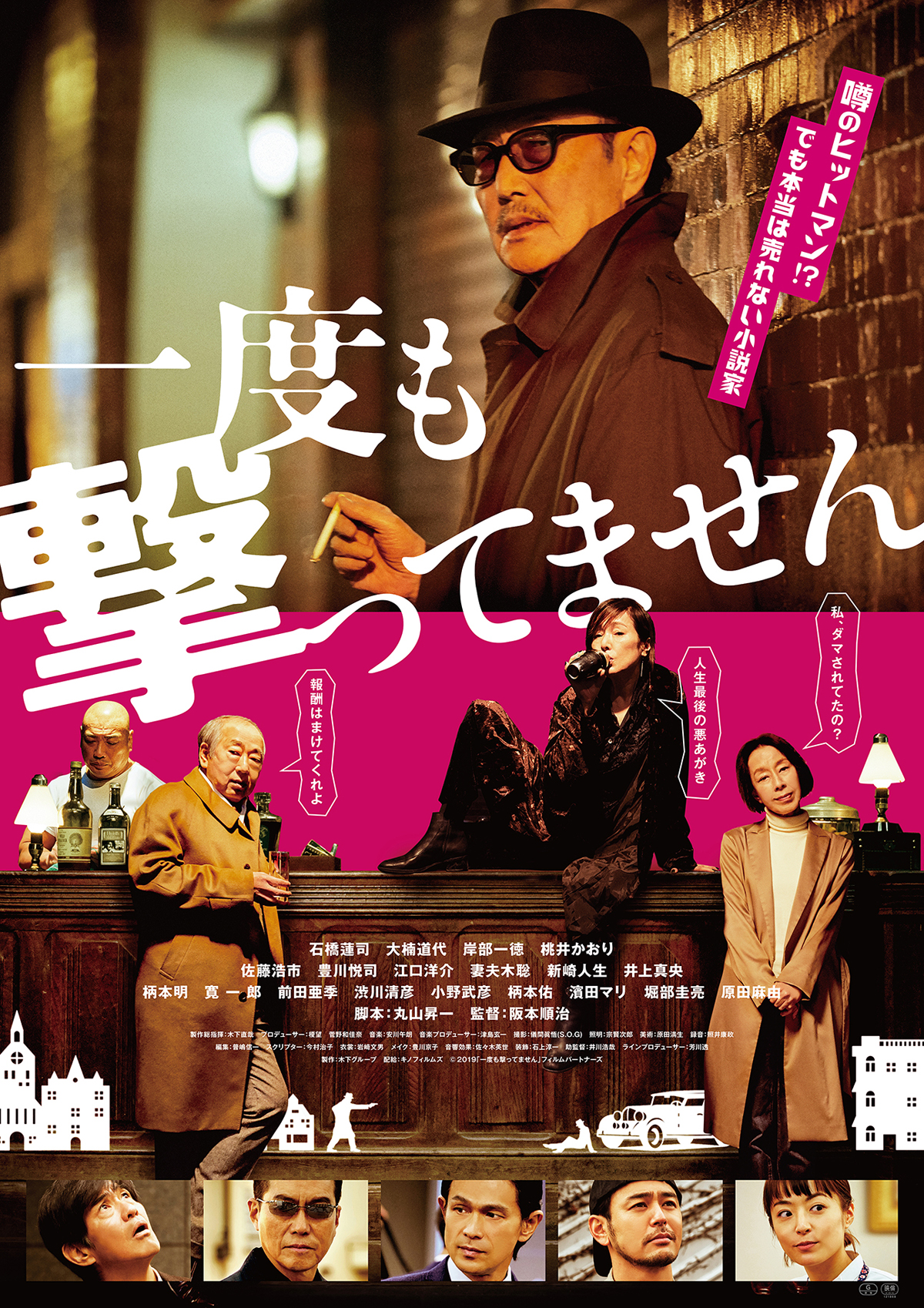
“You don’t know the pain of being forgotten” laments an ageing actress attempting to move the heart of a heartless conman in Junji Sakamoto’s comedy noir I Never Shot Anyone (一度も撃ってません, Ichido mo Uttemasen), more as it turns out a melancholy meditation on age and disappointment than hardboiled farce. Sakamoto’s elderly heroes live in a world of night in which their dreams of youth never died, but are confronted with the realities of their lonely existences when the sun rises and exposes the shallowness of their escapist fantasy.

74-year-old Susumu Ichikawa (Renji Ishibashi) was once a promising novelist but veered away from the realms of literary fiction towards the allure of hardboiled noir, no longer permitting his wife Yayoi (Michiyo Okusu) to read his drafts claiming that she would find them too distressing. His publisher (Koichi Sato) meanwhile is more distressed by the quality of the prose than the content, partly because his novels are simply dull but also because they are far too detailed to be mere imagination and as each one seems to be based on a recent ripped from the headlines case he’s staring to worry that Susumu is the real life legendary hitman said to be responsible for a series of unsolved suspicious deaths. 

On the surface, it might be hard to believe. At home, Susumu is a regular old gent who reads the paper after breakfast and locks himself away in his study to write for the rest of the day but his wife complains that he stays out too late at night little knowing that he leads something like a double life, dressing like a shady character from a post-war noir and even at one point likening himself to Yves Montand in Police Python 357. He speaks with an affected huskiness and is fond of offering pithy epithets such as “women come alive at night” while reuniting with two similarly aged friends in a bar run by a former hitman nicknamed “Popeye” (pro wrestler Jinsei Shinzaki) who seems to have some kind of nerve damage in his hands he’s trying to stave off through obsessive knitting. 

What Susumu seems to be afraid of, however, is the sense of eclipse in his impending obsolescence. The guy who ran the local gun shop whom he’d known for 30 years recently passed away, while the guy from the Chinese herbalist apparently went home to die. His publisher’s retiring, and Popeye’s going to close the bar because his mother’s ill so he’s going back to his hometown. Susumu and his wife didn’t have any children and he perhaps feels a little untethered in his soon-to-be legally “elderly” existence while the now retired Yayoi is also lonely with her husband always off in another world he won’t let her share. His friend Ishida (Ittoku Kishibe) once a prosecutor and now a disgraced former mob lawyer working as a security consultant/fixer is estranged from his only daughter, while former cabaret star Hikaru (Kaori Momoi) never married and spends her days working in a noodle bar. They are all scared of being forgotten and fear their world is shrinking, living by night in order to forget the day. 

Perhaps you can’t get much more noir than that, but there’s a definite hollowness in Susumu’s constructed hardboiled persona that leaves him looking less like Alain Delon than a sad man in an ally with only a cigarette for a friend. Even his new editor is quick to tell him that no reads noir anymore, Susumu is quite literally living in the past battling a “hopeless struggle” as someone puts it against the futility of life by living in a hardboiled fantasy. We see him looking at target profiles for an investigative reporter proving a thorn in the side of yakuza and big business, and threaten a heartless conman (Yosuke Eguchi) whose investment frauds have caused untold misery, yet he’s not really a part of the story and his life is smaller than it seems or than he would like it to be. Perhaps in the end everyone’s is even if Susumu is as his new editor describes him “one step away from being insane”. Never quite igniting, Sakamoto’s lowkey tale of elderly ennui is less rage against the dying of the light than a tiny elegy for lives unlived as its dejected hero steps back into the shadows unwilling to welcome an unforgiving dawn.


I Never Shot Anyone screened as part of this year’s Camera Japan

Original trailer (no subtitles)

Violent Cop (その男、凶暴につき, Takeshi Kitano, 1989)

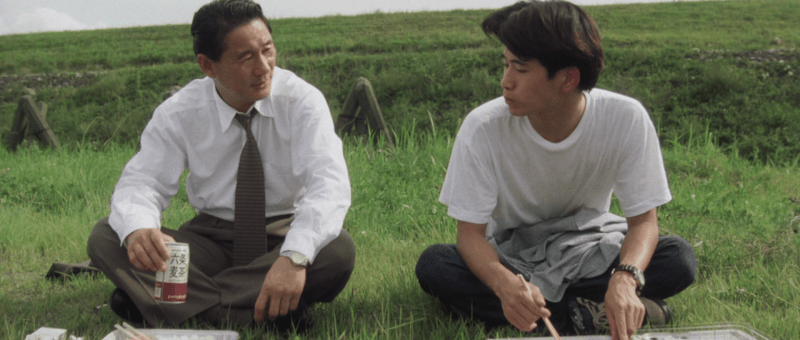
By and large, policemen in Japanese cinema are at least nominally a force for good. They may be bumbling and inefficient, occasionally idiotic and easily outclassed by a master detective, but are not generally depicted as actively corrupt or malicious. A notable exception would be within the films of Kinji Fukasaku whose jitsuroku gangster movies were never afraid to suggest that the line between thug and cop can be surprisingly thin. Fukasaku was originally slated to direct Violent Cop (その男、凶暴につき, Sono Otoko, Kyobo ni tsuki), casting top TV variety star “Beat” Takeshi in the title role in an adaptation of a hardboiled parody by Hisashi Nozawa. The project later fell apart due to Kitano’s heavy work schedule which eventually led to him directing the film himself, heavily rewriting the script in order to boil it down to its nihilistic essence while rejecting the broad comedy his TV fans would doubtless have been expecting. 

Kitano’s trademark deadpan is, however, very much in evidence even in this his debut feature in which he struggled to convince a veteran crew to accept his idiosyncratic directorial vision. He opens not with the “hero”, but with a toothless old man, a hobo beset by petty delinquents so bored by the ease of their comfortable upperclass lives that they terrorise the less fortunate for fun. Azuma (Takeshi Kitano), the violent cop, does not approve but neither does he intervene, later explaining to his boss that it would have been foolish to do so without backup. Having observed from the shadows, he tails one of the boys to his well-appointed home, barges past his mother, and asks to have a word, immediately punching the kid in the face as soon as he opens the door. Rather than simply arrest him, he strongly encourages that he and his friends turn themselves in at the police station the next day or, he implies, expect more of the same. The kid complies. 

Azuma embodies a certain kind of justice acting in direct opposition to the corruptions of the Bubble era which are indirectly responsible for the creation of these infinitely bored teens who live only for sadistic thrills. He arrives too late, however, to have any effect on the next generation, cheerfully smiling at a bunch of primary school children running off to play after throwing cans at an old man on a boat. Children always seem to be standing by, witnessing and absorbing violence from the world around them as when a fellow officer is badly assaulted by a suspect following Azuma’s botched attempt to arrest him in serial rather than parallel with his equally thuggish colleagues. But for all that Azuma’s violence is inappropriate for a man of the law, it is never condemned by his fellow officers who regard him only as slightly eccentric and a potential liability. Even his new boss on hearing of his reputation tells him that he doesn’t necessarily disapprove but would appreciate it if Azuma could avoid making the kind of trouble that would cause him inconvenience. 

That’s obviously not going to happen. What we gradually realise is that Azuma may be in some ways the most sane of men or at least the most in tune with the world in which he lives, only losing his cool when a suspect spits back that he’s just as crazy as his sister who has recently been discharged from a psychiatric institution. Azuma has accepted that his world is defined by violence and no longer expects to be spared a violent end. He smirks ironically as he slaps his suspects, connecting with them on more than one level in indulging in the cosmic joke of existential battery. To Kitano, violence is cartoonish, unreal, and absurd. The only time the violence is shocking and seems as if it actually hurts is when it is visited directly on Azuma, the camera suddenly shifting into a quasi-PV shot as a foot strikes just below the frame. The targets are otherwise misdirected, a young woman caught by a stray bullet while waiting outside a cinema or a cop shot in the tussle over a gun, and again the children who only witness but are raised in the normalisation of violence. 

Meanwhile, organised crime has attempted to subvert its violent image by adopting the trappings of the age, swapping post-war scrappiness for Bubble-era sophistication. Nito (Ittoku Kishibe), the big bad, has an entire floor as an office containing just his oversize desk and that of his secretary. These days, even gangsters have admin staff. Minimalist in the extreme with its plain white walls and spacious sense of emptiness, the office ought to be a peaceful space but the effect of its deliberately unstimulating decor is quite the reverse, intimidating and filled with anxiety. Behind Nito the ordinary office blinds look almost like prison bars. Meanwhile, the police locker room in much the same colours has a similarly claustrophobic quality, almost embodying a sense of violence as if the walls themselves are intensifying the pressure on all within them. 

Azuma is indeed constrained, even while also the most “free” in having decided to live by his own codes in rejection of those offered by his increasingly corrupt society. He walks a dark and nihilistic path fuelled by the futility of violence, ending in a Hamlet-esque tableaux with only a dubious Fortinbras on hand to offer the ironic commentary that “they’re all mad”, before stepping neatly into another vacated space in willing collaboration with the systemic madness of the world in which he lives. With its incongruously whimsical score and deadpan humour Violent Cop never shies away from life’s absurdity, but has only a lyrical sadness for those seeking to numb the pain in a world of constant anxiety. 


Violent Cop is the first of three films included in the BFI’s Takeshi Kitano Collection blu-ray box set and is accompanied by an audio commentary by Chris D recorded in 2008, plus a featurette recorded in 2016. The first pressing includes a 44-page booklet featuring an essay on Violent Cop by Tom Mes, as well as an introduction to Kitano’s career & writing on Sonatine by Jasper Sharp, a piece on Boiling Point from Mark Schilling, an archival review by Geoff Andrew, and an appreciation of Beat Takeshi by James-Masaki Ryan.

The Takeshi Kitano Collection is released 29th June while Violent Cop, Boiling Point, and Sonatine will also be available to stream via BFI Player from 27th July as part of BFI Japan.

Original trailer (English subtitles)

Sakura Guardian in the North (北の桜守, Yojiro Takita, 2018)

Sakura Guardian in the North posterStill a major marquee star and one of the few golden age actresses regularly playing leading roles in box office hits, Sayuri Yoshinaga has for one reason or another become somewhat synonymous with a brand of quietly patriotic tales of wartime endurance and maternal suffering. Sakura Guardian in the North (北の桜守, Kita no Sakuramori), apparently the conclusion of a loose trilogy of “Northern” films which began with Year One in the North in 2005 and led on to Junji Sakamoto’s A Chorus of Angels in 2012, sees her once again engage with post-war trauma as a mother eventually driven out of her mind by the inability to come to terms with the weight of tragedy.

The tale begins on Sakhalin in spring 1945. Despite the intense cold of the frozen North, Tetsu (Sayuri Yoshinaga) – mother to two young sons, Seitaro and Shujiro, has carefully nurtured cherry trees grown from seeds brought from the mainland ensuring that they blossom even here. The family’s happiness will however be short lived. Dad Tokujiro (Hiroshi Abe) is sent off to the war while Tetsu and the children are eventually forced to evacuate to escape the Russian invasion, planning to wait for Tokujiro in Abashiri on the north coast of Hokkaido.

Flashing forward to 1971, we find ourselves in Tokyo with Shujiro (Masato Sakai), now a grown man married to the Japanese-American daughter of an LA hot dog entrepreneur, Mari (Ryoko Shinohara). Having made something of himself in the New World, Shujiro has returned to Japan to open the first branch of his father-in-law’s convenience stores. His plans are disrupted when he gets an unexpected call from Abashiri about his mother, whom he hasn’t seen since she told him to leave her behind and seek his fortune 15 years previously. The public housing shanty town where Tetsu ran her restaurant is being torn down but she’s showing no signs of leaving, and not only that, she’s begun to act strangely.

This Shujiro finds out for himself by visiting her and witnessing Tetsu talk to her own reflection as if it were a long lost friend. His sudden decision to bring his mother back with him to Tokyo without talking to his wife, who has never even met her mother-in-law, places a strain on his marriage on top of the already heavy burden of the store but Shujiro is determined to make it work. Tetsu, however, finds its hard to adjust. Used to living in small country towns where everyone knows everyone, she doesn’t realise you can’t just walk off from stores shouting “put it on my tab”, and annoys the neighbours by starting a smoky fire outside trying to cook rice the old fashioned way. With Shujiro busy with work, the burden falls disproportionately on the patient but exasperated Mari who is forced to apologise when Tetsu walks off in someone else’s shoes after trying on city-style outfits at a department store, and looks on in horror as her new mother-in-law starts an intense conversation with a cherry blossom tree.

Tetsu’s down home charm does, however, begin to give Shujiro some business inspiration as he ponders why his top American hotdogs aren’t selling now the novelty’s worn off. As his staff tell him, maybe they need to think a little more “Japanese” – more fresh veggies and innovative toppings, less ketchup and mustard. Shujiro has another idea – the original Japanese “convenience” food, onigiri, made with rice cooked in a pot and roughly shaped by a loving mother’s hands.

Rice, however, despite its ubiquity in the comparatively comfortable world of 1971 brings with it traumatic memories. Starving after the war, white rice was something Shujiro and Tetsu could only dream of, getting their first taste of it in many moons only when cooked to place on a funeral altar. Meanwhile, rice was also the only reason they survived after running into a slightly dodgy young man who gave them “jobs” helping him to smuggle it for sale on the black market. Shinji (Koichi Sato) helped them in other ways too, eventually putting up the money for Tetsu’s homely eatery, and would have married her if she were not on the one hand loyal to the memory of her absent husband, and so troubled by survivor’s guilt as to believe that she is “a person who does not deserve happiness”.

To punish herself for perceived failures, Tetsu has lived a life of austerity – working hard in the restaurant, dressing in simple ragged clothes, and eating only enough not to starve. She forced Shujiro away to make something of himself, but never spent any of the money he sent home to her nor answered any of his letters. Shujiro, by contrast, has swung the opposite way – determined to live a life of luxury and becoming unforgiving with it. Mari sees an ugly side to him when he’s visited by one of the boys who used to bully him (Ken Yasuda) for being a refugee and a black-marketeer back in Abashiri now fallen on hard times. Superficially polite, Shujiro humiliates him with undignified zeal while wilfully planning to exploit his workforce, quickly silencing an employee who tries to point out violations to the labour code.

Yet like Tetsu, who is somewhat unstuck in time, he begins to find a softer side of himself as the pair of them journey back into the past and revisit the sites of their shared traumas. Yojiro Takita stages Tetsu’s internal confusion somewhat incongruously as an avant-garde stage play offering occasional background info on the exodus from Sakhalin, an experience Shujiro is seemingly shut out from as he tries to reconnect with his mother only to lose her again but rediscovering a better version of himself before he was hardened by the burden of his memories and the hardships of the post-war era. Tetsu keeps the cherry blossoms in bloom in the North, cultivating beauty as a means to connect with her loss, and eventually finding a kind of resolution in the returned ghosts of her past given life once again by the strength of her devotion.


Singapore trailer (English / Simplified Chinese subtitles)

Lying to Mom (鈴木家の嘘, Katsumi Nojiri, 2018)

Lying to Mom posterLearning to live with loss is difficult for any family, but when the loss was caused by suicide the pain is even more acute as those left behind try to understand why it is their loved one had to die and if there was anything else they could have done to prevent it. The family at the centre of Lying to Mom (鈴木家の嘘, Suzukike no Uso) choose, initially at least, to avoid dealing with it at all. Each taking their individual paths through grief, they keep the past painfully alive by pretending that oldest son Koichi (Ryo Kase) is only temporarily absent and will eventually return.

Koichi, who has been a hikikomori for many years, takes one last look at the peaceful suburban scene outside his window and hangs himself from a storage closet in his room. His mother Yuko (Hideko Hara), out at the time, only discovers the body when trying to get him to come down to lunch. Panicked, she injures herself and ends up in a coma in hospital while nothing could be done for Koichi. When she wakes up some time later, she’s lost all her memories of the incident and the family don’t have the heart to tell her that her son is gone so they pretend he went to work for his uncle in Argentina.

This is of course very comforting to Yuko who now believes that as a result of her illness Koichi has finally been able to leave his room for a more productive life, but it places a strain on the other family members – father Yukio (Ittoku Kishibe) and daughter Fumi (Mai Kiryu), who remain conflicted about keeping up the pretence while dealing with their own grief in secret. Fumi, whose idea it was to lie in the first place, types out beautiful letters supposedly from Koichi to be handwritten in his handwriting by an associate in Argentina which detail his new life full of freedom and promise overseas.

Meanwhile, Yukio ponders on his relationship with his son with whom he admits he never quite bonded. He sets about trying to find a mysterious woman named on Koichi’s life insurance policy less for practical reasons than to ascertain some sort of evidence that his son lived, even if he lived the last years of his life alone in a room. The reasons for Koichi’s isolation are never exactly explained with Yuko blaming high school bullying and the stagnant economy, but it is clear that he never managed to find himself in Japan and perhaps if he really had gone to Argentina things might have been different.

Wracked with guilt, Fumi finds herself trying out a support group for relatives of those who died by suicide but struggles to put her own thoughts in order. Though people try their best, insensitivity reigns when they try to offer words of condolence. Only love can save people, Fumi’s colleague smugly tells her with a random story about coaxing a shy high school student out their room, little realising he’s tacitly accusing her of not trying hard enough to save her brother. People can’t be saved, Fumi retorts, and she might well have a point. Even the leader of the support group shows himself up when he considers banning a grief-stricken woman with a loud personality because her problems are “smaller” seeing as she’s wealthy. As another attendee tells him, people grieve in different ways and having money or not is unlikely to affect the degree of your emotional pain even if it might in some sense reduce the burden. Besides, his assumptions about her are mostly wrong because he’s not been paying attention to the things that really matter only to his own surface level prejudices.

Despite the prevalence of suicide, the Suzukis still find themselves embarrassed by Koichi’s passing. They tell people it was an illness or avoid mentioning it all. Meanwhile they keep the secret from Yuko and avoid talking about it amongst themselves until finally forced to deal with all of their anger, guilt, pain and confusion. A comforting lie may serve its purpose, but only an emotional reckoning can clear the air. There may be no real answer to why Koichi did what he did, but the Suzukis will have to make their peace with it, finding fresh hope in the process as they begin to repair their emotional wounds together as a family.


Lying to Mom was screened as part of the 2019 Udine Far East Film Festival. It will also be screened at the 2019 Nippon Connection Film Festival on 30th May at 7.30pm.

International trailer (English subtitles)