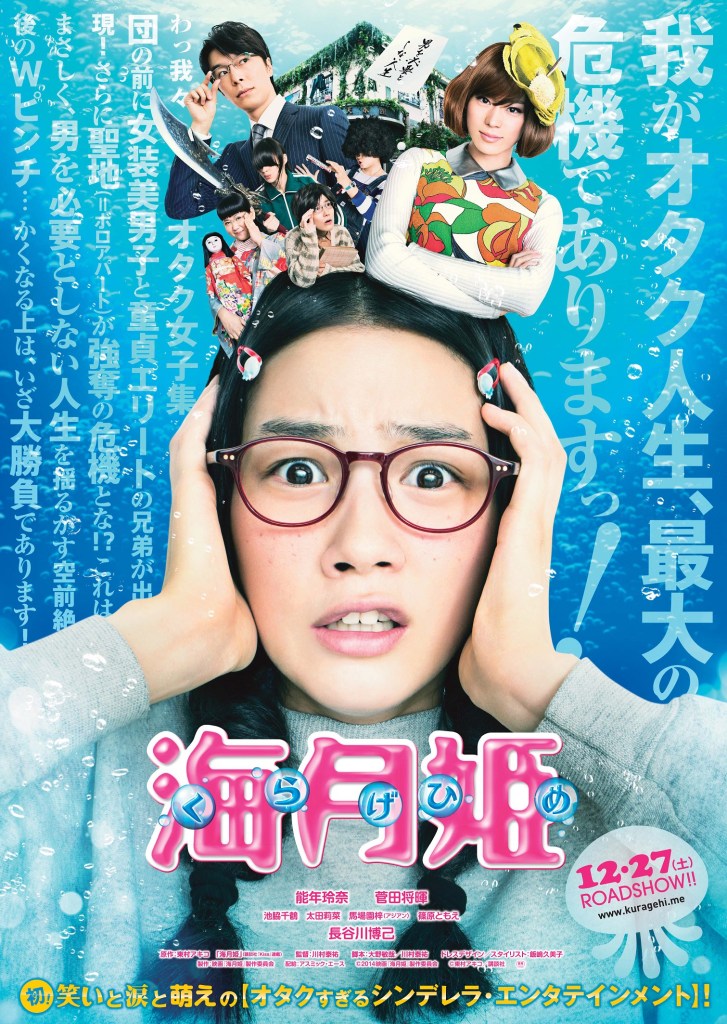
Princess Jellyfish (海月姫, Taisuke Kawamura, 2014)

b7dec6a631e5ad87baf2ff601d6b4872Originating as an ongoing manga series by Akiko Higashimura which was also later adapted into a popular TV anime, Princess Jellyfish adopts a slightly unusual focus as it homes in on the sometimes underrepresented female otaku.

Tsukimi is an extremely awkward young woman who has an all encompassing obsession with jellyfish. Luckily for her, she’s managed to find a group of likeminded women of a similar age to room with. That is, they aren’t all as crazy about jellyfish as she is, but they all have their particular order of special interest, are fairly socially awkward with an extreme fear of “fashionable” women, and no formal form of employment. At the Amamizukan boarding house, the girls can all enjoy their otaku lives together (well, kind of separately) and, crucially there are no boys allowed!

However, one day Tsukimi finds herself at a crisis point when she notices one of the jellyfish she likes to visit at a nearby pet shop is in danger! The idiot shop boy has only gone and put a Moon Jelly in with a Spotted Jelly – does he just not know how dangerous that is?! Tsukimi will need to act fast to save her friend, but the guy behind the counter is a clueless pretty boy – absolutely the worst case scenario for Tsukimi. Despite her extreme anxiety she valiantly marches into the shop yet her confused mini lecture on jellyfish keeping only succeeds in convincing the shop boy that she’s some kind of nutcase. On being expelled from the shop, Tsukimi finds herself at the feet of an extremely glamorous looking woman who comes to her defence. What kind of strange parallel world is this? Tsukimi’s universe is about to undergo a sea change!

Though based on a manga and intended as a comedy, crucially, Princess Jellyfish casts its series of “different” heroines (and hero) in a favourable light – they are never the butt of the joke and sympathy is always placed with those who experience difficulty in their lives because they feel themselves to be different. Each of the girls is so deeply involved in their own particular obsession that they find it difficult to fit into the regular world and particularly to cope with conventional femininity. Tsukimi herself finds it particularly difficult to talk to men and the fact that no men are permitted at Amamizukan makes it clear that she is not alone in her fears.

This brings us to her new friend who is apparently a fashionable young woman – the sort who would never usually be seen dead talking to the likes of Tsukimi. However, this one not only acknowledges Tsukimi’s presence as another human of equal standing, but even lends her confidence and power as an attractive woman to Tsukimi’s predicament. There is, of course, more to this mysterious saviour than there might seem at first sight. In addition to being a fabulously well dressed lady, Kuronosuke is also a boy. This is something of a problem for Tsukimi as she only realises after letting him stay over at the strictly no boys allowed residence. The ruse also has to be maintained a little longer when Kuronosuke decides to stick around, eventually becoming known as “Kuroko”.

The situation intensifies as the girls’ secret haven comes under threat when a gang of ruthless developers want to buy up most of the town and redevelop the area. The group home is owned by one of the girl’s mothers who is also an otaku only her obsession is with top Korean actor Lee Byung-hun and she’s skipped off to Korea to be able to stalk him better. There’s no telling what she might do if it brings her closer to the object of her affections and things are looking a little desperate. Eventually a possible solution is found which plays to everyone’s strengths and offers the faintest glimmers of hope for the girls (and boy!) of Amamizukan.

Princess Jellyfish is the ultimate tale of acceptance, both in personal and societal terms. The residents of Amamizukan may be a little different, but that doesn’t mean they have nothing to offer the world and there’s no need for themselves to maintain a position of self imposed exile if the only reason is a belief in their own inferiority. This is a lesson taught to them by the exuberant rich boy and politician’s son with a traumatic past of his own, Kuronosuke. Truly unafraid to be who he is, Kuronosuke teaches the girl’s that almost any obstacle can be overcome with a combination of forthrightness and sincerity.

Though it runs a little long and gives in to some very over the top performances and melodramatic plotting, Princess Jellyfish is an enjoyably offbeat manga inspired tale. Very much not interested in demonising anyone other than those who seek to suppress individuality, it’s a cheerful celebration of the value to be found in difference offering plenty of laughter and warmth along the way. Perhaps not for those who prefer their cinematic experiences on the subtle side, Princess Jellyfish is nevertheless a fun filled film which carries its message of universal acceptance right into the closing credits.


The anime adaptation of this is actually really fun too.
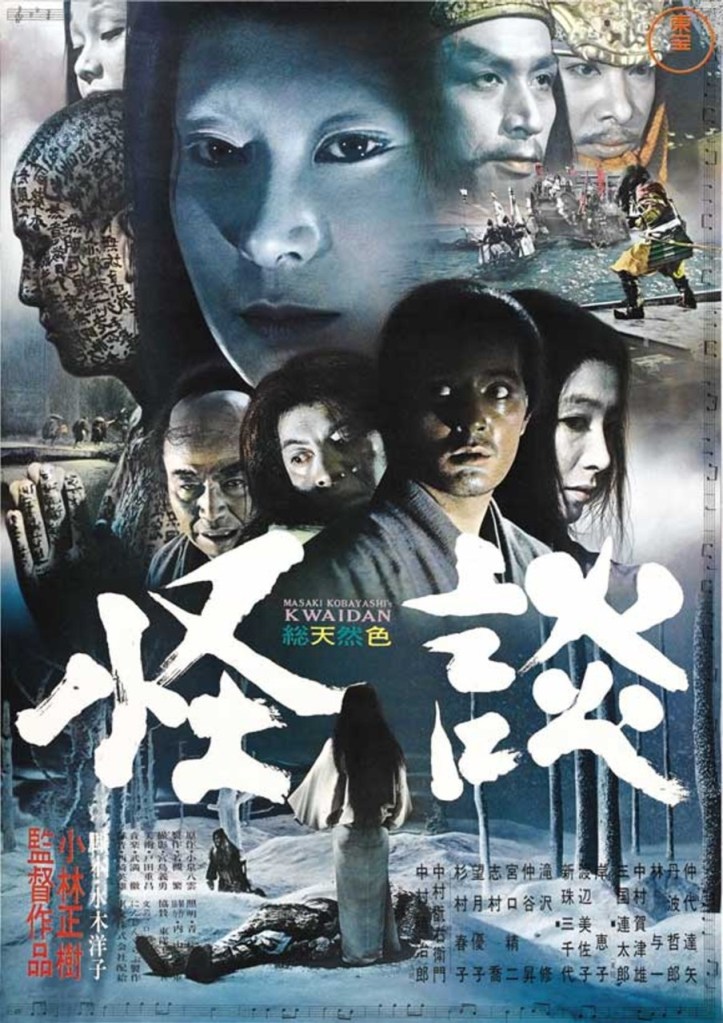
 

Kwaidan (怪談, Masaki Kobayashi, 1964)

tumblr_ly5zbgdNH61rn3yrmo1_1280Kwaidan (怪談) is something of an anomaly in the career of the humanist director Masaki Kobayashi, best known for his wartime trilogy The Human Condition. Moving away from the naturalistic concerns that had formed the basis of his earlier career, Kwaidan takes a series of ghost stories collected by the foreigner Lafcadio Hearn and gives them a surreal, painterly approach that’s somewhere between theatre and folktale.
The first tale, Black Hair, is the story of an ambitious young samurai (Rentaro Mikuni) who abandons his one true love to marry a wealthy woman and advance his career. However, his second marriage is far from happy and he begins to appreciate just what it is he’s cast aside. Eventually returning home he meets his former wife again and harbours the desire to start afresh. However, when the sun comes up all is not as it seems.

Tale two, The Woman of the Snow, begins when two woodsmen are caught in a blizzard and a mysterious woman appears to suck one of them dry of blood. She spares the other, Minokichi (Tatsuya Nakadai), because she’s moved by his youth but she instructs him never to reveal the events of that evening or she will return to finish what she started. Minokichi returns home and meets another mysterious woman who later becomes his wife and bears him three children but will he remember to keep his secret even from the love of his life?

The third tale is perhaps the most famous, Hoichi the Earless, and features the sad tale of a blind biwa player (Katsuo Nakamura) whose storytelling ability is so great that the dead themselves petition him nightly to recount their story. Eventually the head monk finds out and disapproves of Hoichi’s dealings with the supernatural so the monks paint sutras all over his body to protect him from the malevolent spirits. However, like achilles and his vulnerable heel, they forget to paint Hoichi’s ears…

The fourth tale, A Cup of Tea, is a little more whimsical and opens with a framing sequence lamenting the fact that some ancient tales were never finished for one reason or another. The tale within the tale features a samurai who keeps seeing a face appear in his tea. Obviously this is quite disturbing, but eventually he just decides to drink it anyway only for the owner of the face to suddenly appear and complain about soul having been stolen.

Like all good fables the stories each have a moral to offer but also, crucially, paint the protagonists as victims of circumstance more than rash or unwise people. The samurai feared poverty so he abandoned his love in search of riches only to discover he’d been chasing the wrong kind of dreams. Minokichi momentarily forgot himself, perhaps entrapped by the Snow Woman’s final trick, Hoichi just wanted to play his biwa but his desires were frustrated by the powers at be who further mess things up for him by botching the sutra application. The protagonist of A Cup of Tea does choose to drink the tea himself but the resultant madness is not something that could ever have been reasonably expected. These are worlds of spirits where the doorway to the supernatural is always ajar, waiting for some ordinary person to tumble through accidentally.

Though employing slightly different styles for each of the four segments, Kobayashi sets his stage with a deliberately theatrical, almost hyperreal set design. Obviously shot on a soundstage, the tales take on the feeling of stories which have been told and retold, replayed countless times across the great theatre of life. Black Hair steers closest to a traditional kabuki play, an effect aided by Toru Takemitsu’s more traditional score but The Woman of the Snow gives way to intense color play full of cold blue ice vistas mixed with impressionistic, passionate red skies. Hoichi’s tale begins with an overlay of a scroll painting recounting the famous The of the Heike of which Hoichi sings his song. Full of epic battle scenes, ghostly apparitions and a whole load of biwa music, this segment is the lengthiest but also the meatiest when it comes to subtext. The final tale by contrast is much more straightforward and brings a little chanbara exuberance to the otherwise heavy atmosphere though it does leave us with one of the most haunting images in the entire film.

Kwaidan may look like an exercise in style for Kobayashi – it was also his first colour picture and he makes full use of that aspect of the film. However, that isn’t to say he’s abandoned his recurrent concerns. The people in the stories are all ordinary, they’re flawed but they aren’t evil. The samurai comes closest to bringing his fate on himself when he makes the selfish decision to abandon his loving wife for money and status though he pays a heavy price when he finally realises his foolishness. Minokichi’s crime is a loss of faith of perhaps of having doubted the truth of his tale in itself. In the end, he simply forgot his promise rather than making a conscious decision break it like the samurai. Hoichi is something of a passive player here as his blindness renders him unable to understand his plight – he is unable to keep his promise to the fallen samurai firstly because of the physical toll it’s taking on him and secondly as he’s prevented by his superiors. The protagonist of the final tale simply gives in to temptation and then to madness perfectly symbolising human weakness. Kobayashi maybe more artful here than acerbic but his bleak view of human nature still wins out. However, what Kobayashi crafted in Kwaidan is a beautiful, dreamlike canvas of supernatural visions which continue to dazzle in their artistry long after the screen has gone dark.


Kwaidan is available on blu-ray in the US from Citerion and on DVD in the UK from Eureka Masters of Cinema.


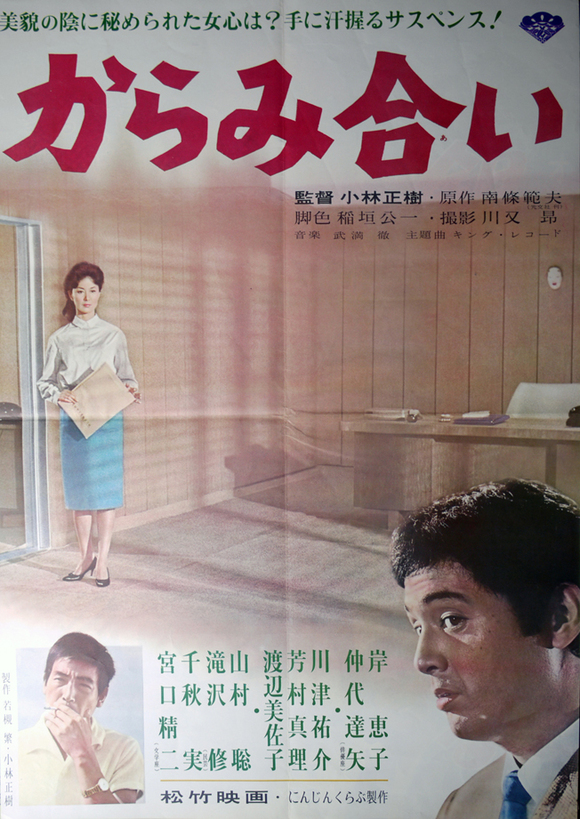
The Inheritance (からみ合い, Masaki Kobayashi, 1962)

the inheritance Japanese posterKobayashi’s first film after completing his magnum opus, The Human Condition trilogy, The Inheritance (からみ合い, Karami-ai) returns him to contemporary Japan where, once again, he finds only greed and betrayal. With all the trappings of a noir thriller mixed with a middle class melodrama of unhappy marriages and wasted lives, The Inheritance is yet another exposé of the futility of lusting after material wealth.
The film begins in a framing sequence in which Yasuko, an elegant woman dressed in a fashionable outfit, sunglasses and large black hat, is aimlessly window shopping when she encounters a familiar face she’d no desire to see ever again. The pair head for coffee with Yasuko lamenting that her pleasant afternoon has been ruined by the necessity of spending time with this “unpleasant” man. We then flashback to some time previously when Yasuko was just a poor secretary working for a top executive and lamenting over her sad life in her “concrete coffin” of a tiny apartment. When her boss discovers he has a terminal illness he makes a surprising declaration – he isn’t going to leave all of his money to his wife. The law says she has to get a third so she will, but the couple had no legitimate children and Kawara wants an heir. Apparently, he has three illegitimate children with whom he did not keep in contact so he intends to find these young people of differing ages and divide the money between them. As you can imagine, this news pleases no one and it’s not long before everyone is scheming how they can manipulate the situation to grab some of the money for themselves.

Shot this time in 2.40:1, The Inheritance has a slightly more whimsical air than some of Kobayashi’s other efforts. Aided by Toru Takemitsu’s jazz infused score, there’s a feeling of a chaotic, black farce lurking below the surface as the complicated schemes and counter schemes play off against each other all while an old man lies dying and largely, it seems, alone. In fact, the dying man himself is relegated to little more than a plot element, a physical countdown to the zero hour of his death and the release of his funds. Though charged with the task of tracking down these, until now forgotten, offspring, Kawara’s underlings immediately start thinking about the best way to spin their assignments. Maybe it’s better if they just can’t find the kids, or maybe if they find them and manipulate them into a more beneficial course of events. The only thing that matters is sticking to the course of action which is most likely to bring them into contact with the money.

The children themselves? Well, they’ve not turned out quite the way Kawara might have hoped. He stated that they’d only get the money if he finds out that they’re honest, decent, right living people. However, the oldest, a son, is a delinquent college student who likely wouldn’t be able to cope with receiving a sudden large lump sum of money so he’s out. The middle daughter is a nude model living a lifestyle Kawara would most likely regard as “immoral” so she will require some “fixing” if her side is to prevail. The youngest child, a seven year old daughter, has sadly passed away after being adopted in another town. However, the enterprising wife and her paramour have an ace up their sleeve in the form of another child they can substitute in her place. This child is quiet, well behaved and in all an ideal candidate for Kawara’s money (if only she actually were his daughter).

Our story is being recounted by Yasuko, so how does she fit into all of this? Commentator, heroine, perpetrator? We can guess a little of what must have happened from her appearance in the later framing sequence with which the film began. Though apparently wealthy, this Yasuko doesn’t seem particularly happy (even bar her unwanted reunion with Kawara’s lawyer). After being entrusted with the task of tracking down the oldest son who then develops a crush on her, Yasuko finds herself ensconced in Kawara’s household and eventually becoming his mistress. The affair begins with a quasi-rape after which Yasuko receives a large amount of money in a white envelope – an offering which repeats itself after each encounter with Kawara. At first she tries to pretend there was something more to it but eventually admits she got used to taking the money. Though she later tries to refuse Kawara’s offering, the corruption has already set in.

Recounted in a world weary tone by Yasuko, The Inheritance is another, though less abrasive, look at greed and lack of moral authority. Kawara is dying and perhaps regrets his devotion to his career rather than something with a greater legacy. However, he evidently showed no interest in his children before and has no real desire to meet and have a relationship with them before it’s too late – he simply wants an heir. His marriage turns out to be mostly physical convenience and even his wife is not so broken up about his illness so much as irritated to have sacrificed the last seven years and only receive a third of what she assumed would all be hers. The underlings scheme amongst themselves and unwittingly open a door for a challenger nobody expected. In some ways, from our point of view, the “right” person won but this was a game that had no right to be played. A sordid farce of squabbling over a dying man’s estate and for what, in the end? A fancy hat? Kobayashi doesn’t push as hard here as he has before, this time he casts veniality as black comedy rather than a social evil but still the lesson is clear, in most cases avarice will get you nowhere and even if you play the slow game and win you may not like where it takes you.


The Inheritance is the fourth and final of the early films from Masaki Kobayashi available in Criterion’s Eclipse Series 38: Masaki Kobayashi Against the System DVD boxset.


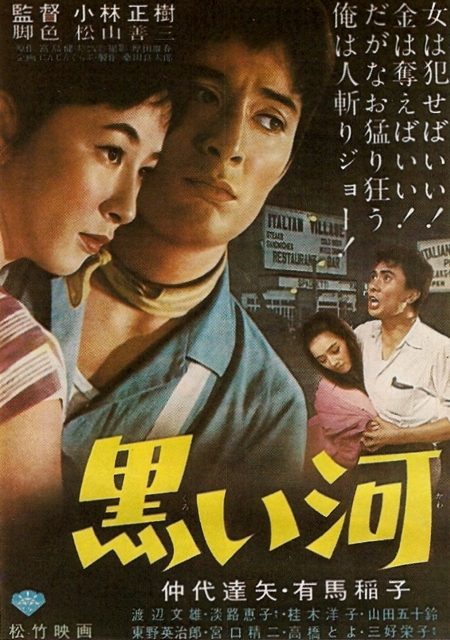
Black River (黒い河, Masaki Kobayashi, 1957)

20140731_762128Masaki Kobayashi is still not enamoured with the new Japan by the time he comes to make Black River (黒い河, Kuroi Kawa) in 1957 which proves his most raw and cynical take on contemporary society to date. Set in a small, rundown backwater filled with the desperate and hopeless, Black River is a tale of ruined innocence, opportunistic fury and a nation losing its way.
The tale begins as a poor student, Nishida, moves into a rundown tenement owned by a tyrannous landlady who collects rent payments as if drinking in souls. Nishida looks around his new abode with a depressed air as the landlady advises him that he can always clean the place up. The vast majority of his possessions are books and the studious Nishida quickly sets himself apart from the ordinary working class denizens of this forsaken place to whom he clearly feels himself superior. However, he does take a liking to a local waitress. This too is destined to go wrong as when Shizuko visits him late after work one night hoping to borrow a book, she is grabbed by a gang of guys who attempt to assault her. Another man turns up and disrupts them but it quickly transpires that the whole thing is a ruse set up by the local gangster, Killer Joe, who then rapes her himself.

The modern, jazz inspired score and classic love triangle plot are almost a seishun eiga cliché but Kobayashi is only partly interested in the central trio with the ruined girl at its core. Casting the net wider, he’s interested in each of the wretched people that live in this place which is on the fringes of an American military base. From the obvious and blatant pan pan girls to the secret prostitutes and black marketeers, the American military has become a disruptive force in the area offering the weak minded easy, if dishonest, ways of living. That is to say, the problem is not “the Americans” or “the occupation” so much as it is the society which is allowing itself to become corrupted by Western values.

In this place, it’s everyman for himself. One of the community is ill, probably with tuberculosis. At one point he’s in desperate need of a blood transfusion so the wife hysterically asks everyone else if they have a matching blood type which they all deny (some of them obviously lying). Nishida admits he has a match, but outright refuses his blood despite the fact that this man will likely die without it. This doesn’t matter however because someone remembers the wife herself is a match but even she did not want to volunteer her own blood to save the life of her husband. Later when he is rushed to hospital she will delay his departure trying to take all their worldly goods with them in case the husband dies and his relatives turn up to claim everything.

The landlady has hatched a plot with Killer Joe (played by a young Tatsuya Nakadai in his first film role) to evict the tenants, knock the place down and build a love hotel catering to the American troops. They have a small problem as a committed communist lives in the building and refuses to move – he also tries to organise some community action where he tries to get them to club together to reduce energy costs as the local American base doesn’t pay their bills and the community has to foot the bill for the entire area. Nobody really cares though and no one wants to pay.

Killer Joe plays the tough guy in swanky clothes and sunglasses but his authority is hollow and really he’s just a scared little boy. He rapes Shizuko because he’s too lazy and frightened to bother about doing things in the more conventional way. She, for herself, is too pure to consider herself anything other than ruined by her traumatic experience and immediately petitions Joe to marry her (he, predictably, laughs and offers to let her move in with him). She’s disgusted with herself but is completely in thrall to Joe, both attracted and repelled by him. Gone are her demure outfits and white parasol, in with the dark, figure hugging dresses with exposed shoulders, loose hair and pretty pearl earrings. Her love for Nishida is the one aspect of her former self that she clings to as a way of keeping her innocence alive. Eventually she decides the only way to reclaim her honour and be free of Joe is to kill him and kill the new self born in her by his violence.

Innocence, once lost, is not something which can ever be truly regained. Nishida makes the typically male decision and is saved from his folly by a typically female one, but the ending here can never be anything other than tragic for all involved. It’s the usual B-movie conclusion, leaving only a lonely white parasol lying abandoned on the road to ruin. The message is clear, the world is cruel because we allow it to be and that is a fact that is unlikely to change.


Black River is the third of four early films from Masaki Kobayashi available in Criterion’s Eclipse Series 38: Masaki Kobayashi Against the System DVD boxset.

Here’s a scene from about half way through the movie:


I Will Buy You (あなた買います, Masaki Kobayashi, 1956)

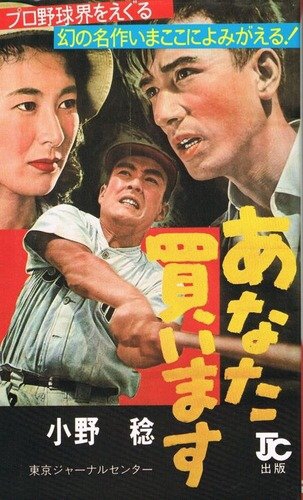
20140731_762129In I will Buy You (あなた買います, Anata Kaimasu, a provocative title if there ever was one), Kobayashi may have moved away from directly referencing the war but he’s still far from happy with the state of his nation. Taking what should be a light hearted topic of a much loved sport which is assumed to bring joy and happiness to a hard working nation, I Will Buy You exposes the veniality not only of the baseball industry but by implication the society as a whole.
Kishimoto works as a scout for a popular Tokyo baseball team. His job is to find the promising young players and charm them into accepting a contract before any of the other teams get to them. His first assignment doesn’t go well when he arrives at an ace pitcher’s home only to be told the subject in question is recovering from having lost a finger in a workplace accident. No major league career for him – Kishimoto heads home without even introducing himself. The next prospect is very exciting – a semi-well known college ball player who might be persuaded to turn pro. However, the student, Kurita, is “managed” by a benefactor, Kyuki (whose name literally means “ball spirit” in Japanese) who seems to be a difficult man to deal with. Nevertheless, Kishimoto is young, ambitious and determined to get Kurita on side by any means possible.

It’s just baseball, one might think but it’s almost as if we’re playing for souls. Everyone is lying, everyone is double crossing everybody else and everyone has their own interests at heart all the while swearing they only want the best for Kurita. Kurita has become a trophy, no one has even thought to ask him if he actually wants to keep playing baseball. He’s no no longer a person for them so much as a flag to be captured. This might actually work out quite well for Kurita himself who, it turns out, is far from the country bumpkin everyone has him pegged as. Though surrounded by carping relatives who are also all intent on exploiting his talent, the possibility of Kurita suddenly discovering the power to make his own decisions is a threat to everyone that they haven’t even considered yet.

Kyuki himself is the bad guy we’ve all been set up to be suspicious of but may actually turn out to be the most decent hustler in the picture. They say he spied for the Chinese during the war but is it a rumour you can really believe or just the jealous slurs of his various rivals? He himself says he taught Chinese girls to use the bayonet and carries an air of aloofness that makes him seem untrustworthy. He’s bankrolled Kurita’s education and taken on the position of a father to him over the last four years but how much of that is genuine feeling and how much financial investment? Kyuki is a married father with a family out of town but is sort of living with the older sister of Kurita’s girlfriend which is an awkward situation in itself. He also claims to have a serious gallstone problem which requires an operation though others claim he’s putting it on. Who is Kyuki, with his suspiciously apt name and hard nosed attitude can we trust him, or not?

I Will Buy You is a characteristically angry and cynical effort from Kobayashi and though it’s still a fairly early work carries some of his later technical prowess. Stripping the mask away from what is assumed to be a gentle pastime, the film lays bare the money hungry desperation of post-war Japan. Money ruins everything, even something as innocent as baseball. The Kurita from the end of the film is not the idealistic young student who came to Tokyo but a canny self-interested individual. Whether or not this transformation, and the accompanying transformation of Kishimoto whose eyes have been well and truly opened, is for the better or not maybe a matter of personal perspective but it’s not hard to guess where Kobayashi stands.


I Will Buy You is the second of four early films from Masaki Kobayashi available in Criterion’s Eclipse Series 38: Masaki Kobayashi Against the System DVD boxset.


The Yakuza Papers Vol. 5: Final Episode ( 仁義なき戦い: 完結篇, Kinji Fukasaku, 1974)

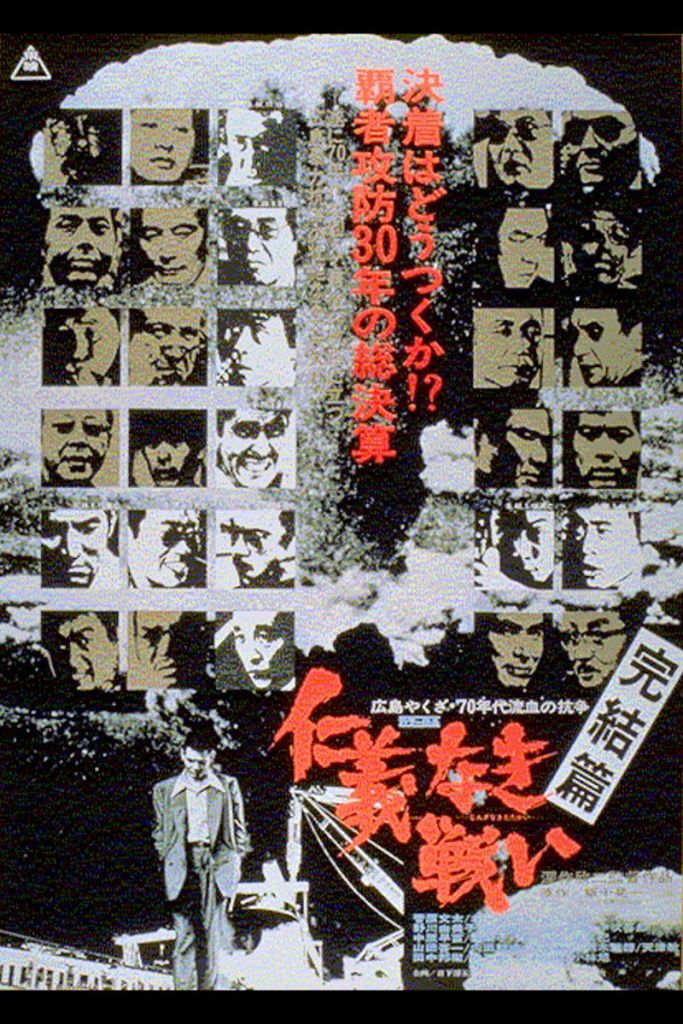
800x1200srAnd so, the saga finally reaches its conclusion. Final Episode (仁義なき戦い: 完結篇, Jingi Naki Tatakai: Kanketsu-hen) brings us ever closer to the contemporary era and picks up in the mid ‘60s where Hirono is still in prison and Takeda, released on a technicality, has decided to move the yakuza into the legit arena. The surviving gangs have united and rebranded themselves as a political group known as the Tensei Coalition. However, not everyone has joined the new gangsters’ union and the enterprise is fragile at best.
Hirono’s sworn brother, Ichioka, is one such antagonist and after the Coalition’s accountant is clumsily gunned down in the street, tempers start to flair. Though the Coalition is nominally headed by Takeda, an up and coming youngster, Matsumura, is winning a lot of respect for his level headed judgement and ability to form long term plans. He wants to move away from the image of the traditional yakuza with their missing fingers and bad attitudes to something a little more media friendly. However, the old guard including the veteran, Otomo (now played by Jo Shishido), aren’t willing to see the bigger picture and continue to behave in the old ways requiring swift and bloody justice for their fallen comrade. The older generation maybe on their way out, but that doesn’t mean they can’t cause a little trouble on their way. Despite the best efforts of the younger guys the cycle of violence seems set to continue, will anything ever change at all?

According to Fukasaku, almost certainly not. Though Matsumura is accounted to be a good guy by both of our “heroes” Hirono and Takeda, his yakuza revolution seems doomed to fail. This kind of coalition is completely pointless if not everybody joins and obviously not everybody is going to. Following the public outcry and subsequent police crackdown in the previous film, the yakuza feel the need to reform their image, keep the violence off the streets and appear generally less scary than the image they’ve hitherto cultivated. Now it suits them to conduct themselves in a more dignified manner, more like regular businessmen than thugs in flashy suits.

Meeting at the prison in the end of Police Tactics, Hirono and Takeda both agree that their era has passed. They still aren’t quite old men, but they aren’t young and this violent world isn’t for them anymore. Their resolutions are both that the general environment has changed making the way they’ve lived so far untenable, but also that if they attempted to live that way again they simply wouldn’t survive any longer (perhaps they are “better off” in jail). Hirono spends most of the movie off screen again, in prison, writing his memoirs. Before coming out he seems set on “retirement” but once released he decides to return to the yakuza world. It’s not until the end of the film when once again confronted by the senseless violence of gang warfare that he finally decides to retire. Matsumura may have been trying to change things, but more young guys are dying so fast there’s barely any point learning their names and what really does it get you in the end? Can you live freely, has the world really changed at all? From Hirono’s late middle age viewpoint, the answer is no.

Final Episode follows the same basic formula as the other films in the series with the narrative voice over, frenetic handheld camera work, captions and freeze frames. The violence may be a little less frequent but appears bolder in its execution. These youngsters are messier than their forebears – the gunning down of the Tensei accountant is a clumsy affair carried out by two amateurs in the middle of a crowded street. Random weapons are constructed with pretty much anything that’s lying around during a street fight. These young guys are a different kind of desperate and have no idea how to conduct themselves in a subdued way.

We’re almost up to the the contemporary era of the film. It’s getting on for 25 years since Hirono came home from the war and joined a different kind of battlefront. Japan’s development has been startlingly rapid – from post-war rubble to hosting the olympic games and a newly burgeoning prosperity. Hirono and those like him have found themselves riding the wrong wave as their fortunes continue to dwindle just as the legitimate world is coming into its own. When Hirono and Takeda were talking at the prison at the end of part four they knew something had come to an end. They had no place in this world anymore – unless you become a ruthless boss like the hated Yamamori (still harbouring dreams of domination well into his dotage), the yakuza life is a young man’s game. Once again we finish on a shot of the ruined dome and a reminder that the strong will always prey on the weak. Fukasaku’s prognosis for the future is grim but, it has to be said, accurate.


Final Episode is available on blu-ray in the UK as part of Arrow Video’s Battles Without Honour and Humanity: The Complete Collection box set.


The Yakuza Papers Vol. 3: Proxy War (仁義なき戦い: 代理戦争, Kinji Fukasaku, 1973)

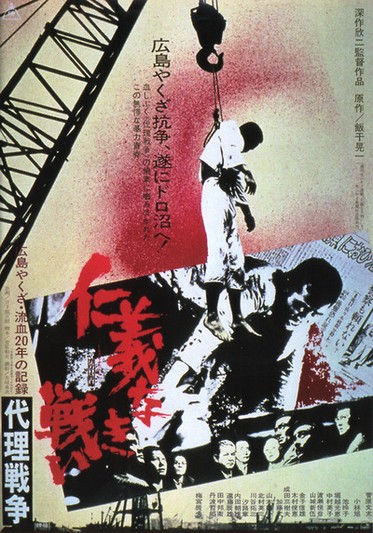
3-Battles-Without-Honor-and-Humanity-3-Proxy-WarThree films into The Yakuza Papers or Battles Without Honour and Humanity series, Fukasaku slackens the place slightly and brings us a little more intrigue and behind the scenes machinations rather than the wholesale carnage of the first two films. In Proxy War we move on in terms of time period and region following Shozo Hirono into the ’60s where he’s still a petty yakuza, but his fortunes have improved slightly.

It’s now 1960 – almost 15 years since Hirono came home from the war. The young people who are just coming of age grew up in the turbulent post-war era but probably don’t remember much of the conflict itself. These days the problem is the ANPO treaty and the wider world’s pre-occupation with communism. Russia and America are engaged in various “proxy wars” across the world in what would come to be known as the cold war. This tactic of indirect warfare has also taken root in the yakuza world as gangs and gang members form covert alliances, hatch secret plots to take out rivals, or otherwise try to manipulate the situation to their advantage. When the head of the Muraoka crime syndicate is assassinated in broad daylight and his underling, Uchimoto, does nothing, it kickstarts a chain of petty vendettas as each of the ambitious crime bosses vie to fill the power vacuum with the snivelling Uchimoto not least among them.

Bunta Sugawara returns to centre stage again with Hirono at the forefront of the action. One of the few yakuza guys who’s pretty happy with his lot and not seeking a higher position he’s in the perfect spot to become a very important player when it comes to supporting other people’s bids for power. Having originally backed Uchimoto he’s at something of a disadvantage following Uchimoto’s cowardly flip-flopping. However, having found himself back under the aegis of former boss Yorimoto, it does afford Hirono the possibility of finally getting revenge against him. Gangs merge several times while fracturing on the inside as the lower bosses try to get their guys in line whlst picking sides as to whom they support in the leadership battles (some with more of an eye on their own futures) but this time the action is a little more cerebral than the audacious violence of the immediate post-war period.

Changing up his style slightly, Fukasaku keeps the overall documentary approach with the news reel voice over relating the salient political and historical details plus the initial captions explaining the names and allegiances of the major players but reduces the freeze frame death announcements. The action is still frenetic with ultra naturalistic handheld camera and occasional strange angles but this time he opts for a muted colour effect in the final shoot out which increases the shocking nature of the scene. Blow for blow there’s less overt violence here though there is a fairly graphic and unpleasant rape scene which feels a little out of place though it does add to Fukasaku’s argument about the nature of aggression.

Once again the ruined the dome looms large over everything, reminding us that this isn’t just a story of gang warfare but a critique of the senselessness of a violent life. As the film says, young men are the first to die when the battles begin but their deaths are never honoured. Like Hiroshima Death Match, Proxy War also leads to the death of a youngster in pointless gang violence – another young man who ended up in the criminal underworld through lack of other options. The futility of the cycle of violence is becoming wearing – as is perhaps the point. One gang boss falls, another rises – only the names have changed. There’s no rest for an honest yakuza like Hirono when the less scrupulous are willing switch allegiance without a second thought. The only victory is staying alive as long as you can.


Proxy War is available on blu-ray in the UK as part of Arrow Video’s Battles Without Honour and Humanity: The Complete Collection box set.

The Yakuza Papers Vol. 2: Hiroshima Death Match (仁義なき戦い: 広島死闘篇, Kinji Fukasaku, 1973)

81ZkRgBFyyL._SL1378_If you thought the story was over when Hirono walked out on the funeral at the end of Battles Without Honour and Humanity think again – we’ve barely scraped the surface of the post-war Hiroshima criminal underworld chaos. The aptly named Hiroshima Death Match runs in parallel with the events of Battles Without Honour taking place in roughly the same time, 1950-1955, but features a new protagonist relegating Bunta Sugawara’s Hirono to the sidelines where he appears as a weary observer of the cruel yakuza world. This time our hero, Yamanaka, is younger – too young to have offered his life as a kamikaze in the war as he apparently wanted to, and is one of the thousands of young men who’ve found themselves alone and without futures thanks to both the after effects of World War II and the ongoing Korean War.

Hiroshima Death Match ties itself into Battles Without Honour and Humanity quite neatly when the protagonist, Shoji Yamanaka (Kinya Kitaoji), is sent to prison after taking a knife to a room full of guys who accused him of cheating in a gambling den. There he comes into contact with the first film’s hero, Hirono (Bunta Sugawara), who offers him some food whilst in solitary but then disappears for the vast bulk of the film. When he gets out, Shoji finds himself in trouble again when he can’t pay for his meal in a restaurant and offers to work off the bill. The waitress, Yasuko (Meiko Kaji), refuses and tells him to just forget about the money and leave when he’s done but Shoji is insulted by her “charity” and things kick off between him and a gang of yakuza also in the restaurant at the time. Yasuko turns out to be the widowed niece of a yakuza boss and after recovering in her care Shoji agrees to join the Muraoka gang to get revenge on the guys who beat him up.

Whereas Battles Without Honour and Humanity took as its protagonists the young men who’d returned from the war to a ruined and defeated country, Hiroshima Death Match focuses on the generation below who were too young to fight themselves but have still been marked by the after effects of the conflict. At the beginning of the film Shoji has nothing, he’s ashamed of cheating and gets upset when caught which only fuels his youthful and violent anger. He doesn’t seem to have any family to help him or honest work to go to and so, of course, he ends up a yakuza. Once again, the yakuza take the place of a traditional family offering both a place to belong and a degree of emotional and financial support – for a price.

When Shoji inevitably falls in love with Muraoka’s widowed niece, he discovers his surrogate father’s love is not quite unconditional. Yasuko has a young daughter and was married to a man who died a kamikaze war hero. Muraoka does not want her to remarry lest she shame her husband’s memory unless he keeps it in the family by marrying her off against her will to her huband’s brother. Shoji’s affair with Yasuko continues to cause a rift with Muraoka and he’s torn between a desire for a peaceful future with the woman he loves and loyalty to his gang boss to whom he owes so much. Muraoka’s own morals are shown to be far from the traditional yakuza ideals and he’s not above using Shoji’s strained loyalties to his own advantage eventually with tragic consequences.

Like Battles Without Honour and Humanity, Hiroshima Death Match is shot in the same quasi-documentary style with a weary sounding narrative voice over and frequent freeze frame captions identifying the characters along with their gangs and positions as well as their dates of demise at the appropriate time. The ruined Atomic Bomb Dome (now the Hiroshima Peace Memorial) continues to loom large over the proceedings as we’re reminded at the end that this isn’t the only blood that’s been shed here. Even more so than with Battles, Fukasaku rams home the senselessness and futility of violence. The film ends with Hirono attending another funeral (though this time in a black suit and melancholic air) where the bosses reap in consolation money and gamble at the wake. He gives his old bosses a sideways look as they laugh and joke while a young man who they all now account as some kind of legendary yakuza hero lies dead for no reason at all. What does this sort of life amount to in the end? The only reward for a life of violence is a lonely grave.


Hiroshima Death Match is available on blu-ray in the UK as part of Arrow Video’s Battles Without Honour and Humanity: The Complete Collection box set.


The Yakuza Papers Vol. 1: Battles Without Honour and Humanity (仁義なき戦い, Kinji Fukasaku, 1973)

Snapshot-2015-12-07 at 11_06_36 PM-930280086When it comes to the history of the yakuza movie, there are few titles as important or as influential both in Japan and the wider world than Kinji Fukasaku’s Battles Without Honour and Humanity (仁義なき戦い, Jingi Naki Tatakai). The first in what would become a series of similarly themed movies later known as The Yakuza Papers, Battles without Honour is a radical rebooting of the Japanese gangster movie. The English title is, infact, a literal translation of the Japanese which accounts for the slightly unnatural “and” rather than “or” where the “honour and humanity” are collected in a single Japanese word, “jingi”. Jingi is the ancient moral code by which old-style yakuza had abided and up to now the big studio gangster pictures had all depicted their yakuza as being honourable criminals. However, in Fukasaku’s reimagining of the gangster world this adherence to any kind of conventional morality was yet another casualty of Japan’s wartime defeat.
The story begins with a black and white image of a mushroom cloud with the film’s bright red title card and now famous theme playing over the top. This is Hiroshima in 1946. Things are pretty desperate, the black market is rife and there are US troops everywhere. Shozo Hirono (Bunta Sugawara) has just returned from the war (in fact he’s still in his uniform). He gets himself into trouble when he intervenes as an American soldier attempts to rape a Japanese woman in broad daylight in the middle of a crowded marketplace. He manages to cause enough of a commotion for the woman to escape but the Japanese cops just tell him not to mess with the GIs. Things don’t get much better as one of Hirono’s friends is assaulted by a yakuza. They get some rival yakuza to help them get revenge and in the commotion Hirono accidentally kills someone and is sent to prison for 12 years. In prison he meets another yakuza who wants to escape by pretending to commit harakiri and promises to get his yakuza buddies to bail Hirono out if he helps. From this point on Hirono has become embroiled in the new and dangerous world of the Hiroshima criminal underground.

Battles Without Honour and Humanity has a famously complicated plot entered around the various power shifts and machinations between different groups of yakuza immediately after the end of World War II. The film begins in 1946 and ends in 1956 though many of its cast of tough guys don’t last anywhere near as long. The picture Fukasaku paints of Japan immediately after the war is a bleak one. Even if some of these guys are happy to have survived and finally reached home, they’ve seen and done terrible things. Not only that, they’ve been defeated and now they’re surrounded by foreign troops everywhere who can pretty much do what they want when they want. They just don’t have a lot of options – if they don’t have connections to help them find work when there’s not enough to go around then it isn’t surprising if they eventually fall into to crime. Also, having spent time in the military, the yakuza brotherhood provides a similar kind of camaraderie and surrogate family that you might also find in an army corps.

It all gets ugly quite fast. Largely the yakuza are making their money profiting from the political instability, resenting the US occupation yet reaching deals with them to support their efforts in the Korean war and then selling new and untested drugs at home (with less than brilliant results). Betrayals, executions, assassinations in previously safe places like a bath house or the barbers – these are a long way from the supposedly honourable gangsters of old. One minute Hirono is offering to cut off his finger as a traditional sign of atonement (though no one knows exactly what you’re supposed to do in this situation and it all ends up seeming a little silly) and taking the rap for everyone else’s mistakes, but his friend faked harakiri to get out of jail and everyone is double crossing everyone else whichever way you look.

The whole thing is filmed in an almost documentary style with captions identifying the various characters and giving the exact time of their demise (if necessary) as well as a voice over giving background information about the historical period. The film is inspired by real life yakuza memoirs and there are parts which feel quite like a bunch of old guys sitting in a drinking establishment and recounting some of their exploits.

This new postwar world of heartless gangsters is a tough one and almost devoid of the old honour-bound nobility, however somehow Fukasaku has managed to make it all look very cool at the same time as being totally unappealing. You wouldn’t want to live this way and you definitely don’t want to get involved with any of these guys but somehow their self determined way of life becomes something to be admired. That said, there’s a sadness too – that even in the criminal underworld there used to be something noble that’s been obliterated by the intense trauma of the war. You can rebuild, you can move on from the destruction left by the war’s wake but there’s no going back to those days of “honour and humanity” – if they ever existed, they’re gone forever now.


Battles without Honour and Humanity is available in blu-ray in the UK as part of Arrow Video’s Battles Without Honour and Humanity: The Complete Collection box set.


Jellyfish Eyes (めめめのくらげ, Takashi Murakami, 2013)

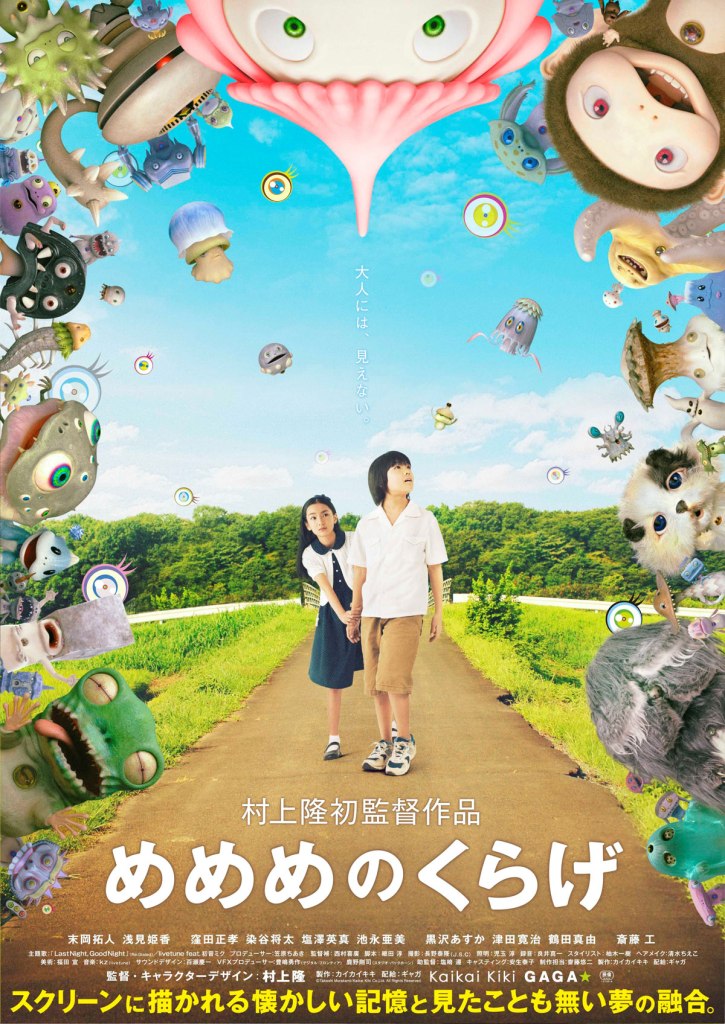
161244_01Jellyfish Eyes (めめめのくらげ, Mememe no Kurage) is the feature film debut of the internationally popular Japanese artist, Takashi Murakami. Well known for his cutesy character designs which are as likely to turn up in the world’s best regarded art galleries as they are on a kid’s backpack, Murakami is one of Japan’s most highly regarded art exports. Having unsuccessfully tried to raise interest in the more obvious totally CG animation, Murakami has enlisted the help of gore master Yoshihiro Nishimura for some director’s chair tips in creating a live action/CGI hybrid. Jellyfish Eyes is very definitely a kids’ movie, calling it a “family film” seems unfair when the age cut off is most likely around seven or eight years old but those who meet the (lack of) height requirement are sure to lap it up.

The story is set in post-tsunami Japan as Masashi (Takuto Sueoka) has finally moved out of the earthquake evacuation centre with his mother (Mayu Tsuruta) to live in a new town. As it will transpire, the two have moved there alone as Masashi’s father (Kanji Tsuda) has been killed in the tsunami and his mother has a brother (Takumi Saito) in the area. Not long after he moves in, the boy makes a new friend in the shape of a Jellyfish-like creature who floats in the air and loves eating the same kind of snacks as Mashashi. The creature, christened Kurage-bo (Jellyfish Boy), becomes a firm fixture in Masashi’s life and when he arrives at school Masashi realises Kurage-bo is not the only one of his kind. In this strange town all the kids have a weird little creature friend they can control by means of a smartphone app. Predictably some of the meaner boys use them to fight, but could there be a more sinister reason for the appearance of these very odd little guys? and what’s up with the bizarre religious cult that’s located right next to the creepy science lab? This is a very strange town indeed.

The film’s Japanese title, Mememe no Kurage, is a little reminiscent of the master work of the late Shigeru Mizuki, Gegege no Kitaro and like that perennially popular franchise the film focuses on the daily lives of children as they have strange adventures with supernatural creatures. The central premise is that a shady group of black clad scientific researchers (played by Masataka Kubota, Shota Sometani, Hidemasa Shiozawa, and Ami Ikenaga) claim to have found the key to surpassing natural disasters like earthquakes and it relies on the particles generated by the negative emotions of human children. Predictably it’s not long before things go from bad to worse and a giant kaiju-like creature descends on the town requiring the kids to work together to combat the marauding monster before it destroys the entire planet.

To be frank the film sounds a lot more entertaining that it turns out to be. Though undoubtedly very cute and not exactly uninteresting, it all ends up feeling, well, “superflat” only in an unintended way. The photography is generally basic though the CGI itself is of an extremely high quality and perfectly toned to match Murakami’s thematic concerns. Structurally it’s all over the place with the central ideas emphasised a little too strongly only to be thrown out of the window for the sugar rush finale of a million adorable monsters all fighting to the death for their cute as a button sad children masters. There’s quite a lot of darkness and melancholy lurking around the edges but the adorable little critters seem tailor-made for keeping the bad stuff in the background.

Like all good children’s movies the messages are the usual ones about the importance of friendship, sharing, teamwork and doing what’s right but it feels like Murakami has quite a lot of other things to say about reliance on forms of technology (and in particular what that can open the door to) and the state of post earthquake Japan that don’t quite come through. Having said that Jellyfish Eyes boasts some amazing visuals in its adorably cute cast of F.R.I.E.N.Ds and though a little messy is perfectly watchable. A festive treat for younger members of the family, Jellyfish Eyes is full of youthful idealism in the power of simple sincerity and genuine human feeling to win through against even the most terrifying of monsters but ultimately fails to offer much beyond its cutesy visuals.


Here’s a trailer – it says the creatures are invisible to adults but they aren’t (but some of them can make themselves transparent, if that makes sense).