Kinuyo Tanaka: A Life in Film


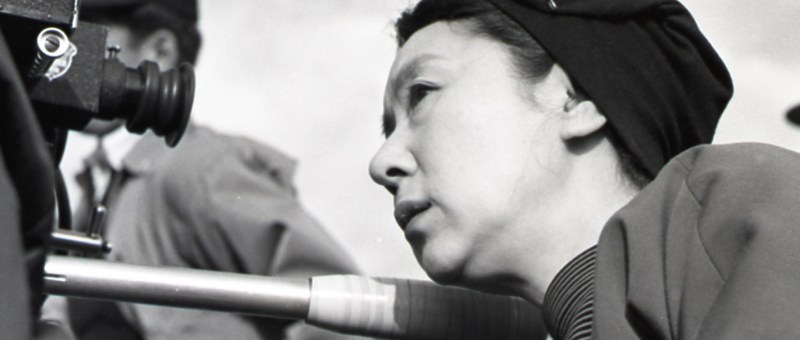
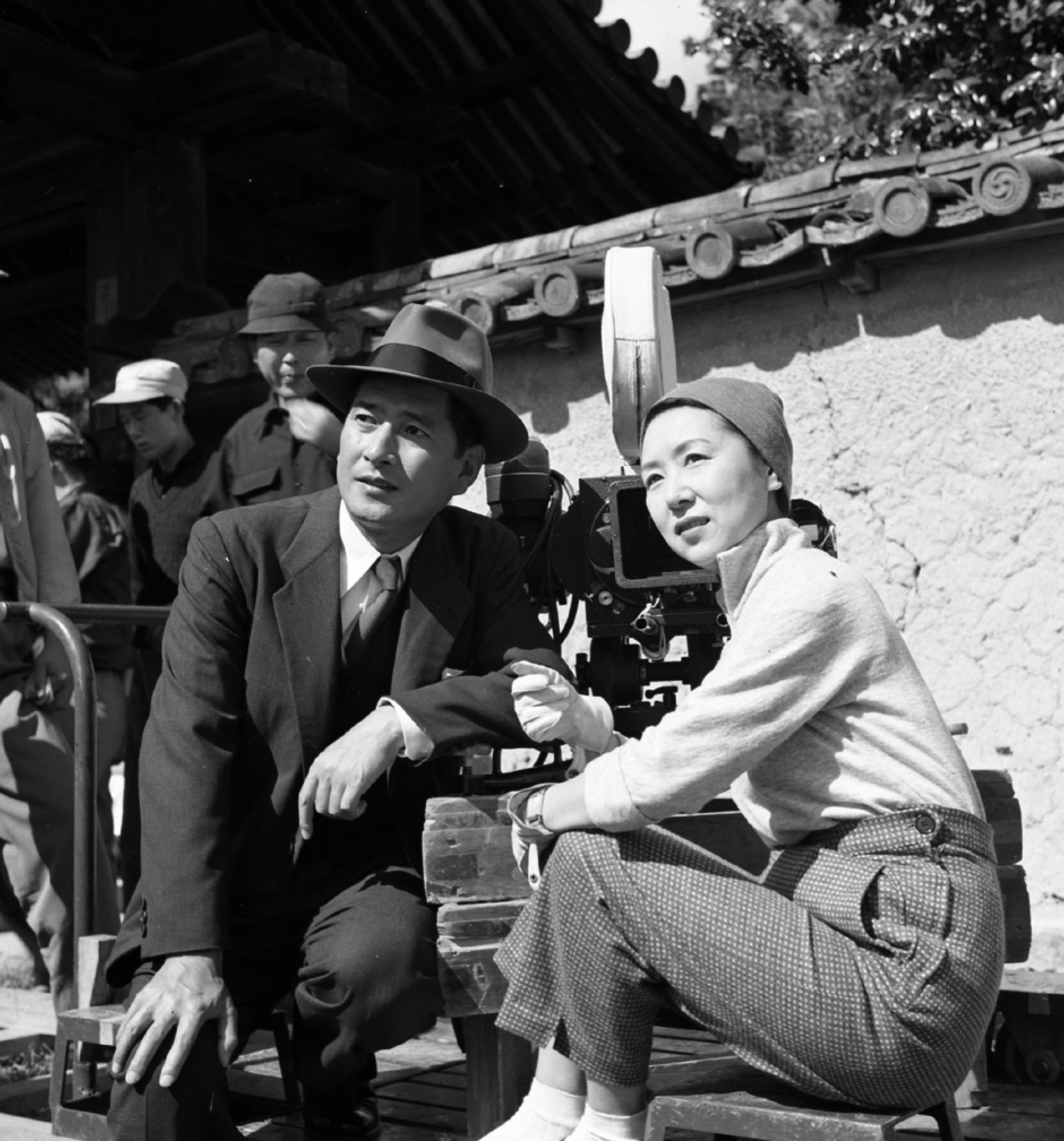
The BFI Southbank, London will celebrate the work of golden age actress and director Kinuyo Tanaka throughout August and September 2022 beginning with a retrospective of her six directorial features before moving on to showcase some of her most iconic roles from the 1930s to her final major screen appearance in Kei Kumai’s Sandakan No. 8.

Love Letter

Scripted by Keisuke Kinoshita, Love Letter is an examination of the changing society of post-war Japan as an embittered veteran (Masayuki Mori) forced into making a living by writing letters for Japanese women left behind by American servicemen re-encounters his first love (Yoshiko Kuga) but firstly rejects her on realising she too had been the mistress of a US soldier. Review.

The Moon Has Risen
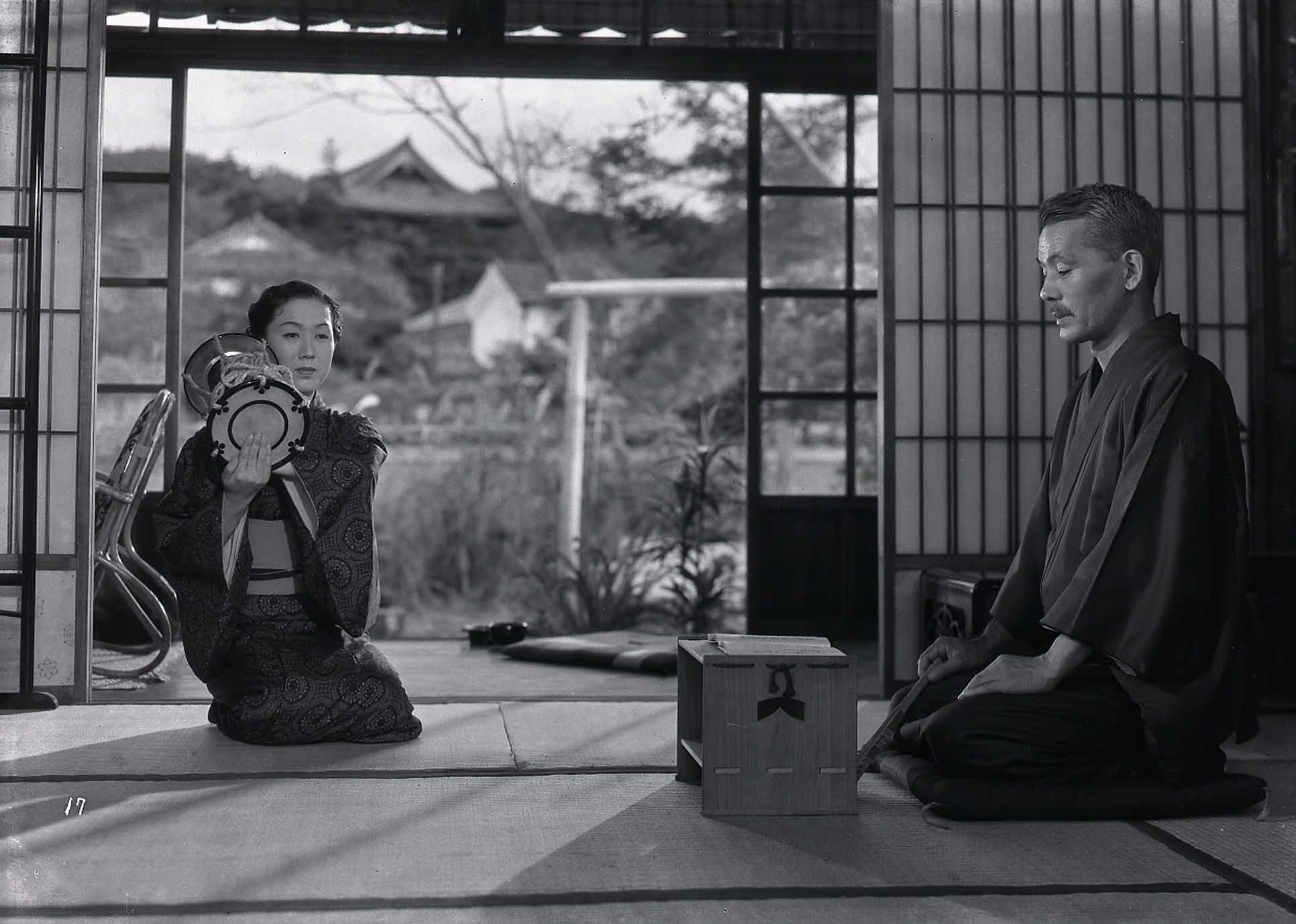
Tanaka’s second film was co-scripted by Yasujiro Ozu and features several homages to his visual style including the use of pillow shots but otherwise has a sensuality and sensitivity not common in his filmmaking. The comic melodrama follows the attempts of a young woman (Mie Kitamura) to set her lovelorn sister up with a sensitive visitor while falling for her childhood friend. Look out for Tanaka’s brief cameo as a ditsy maid. Review.

Forever a Woman
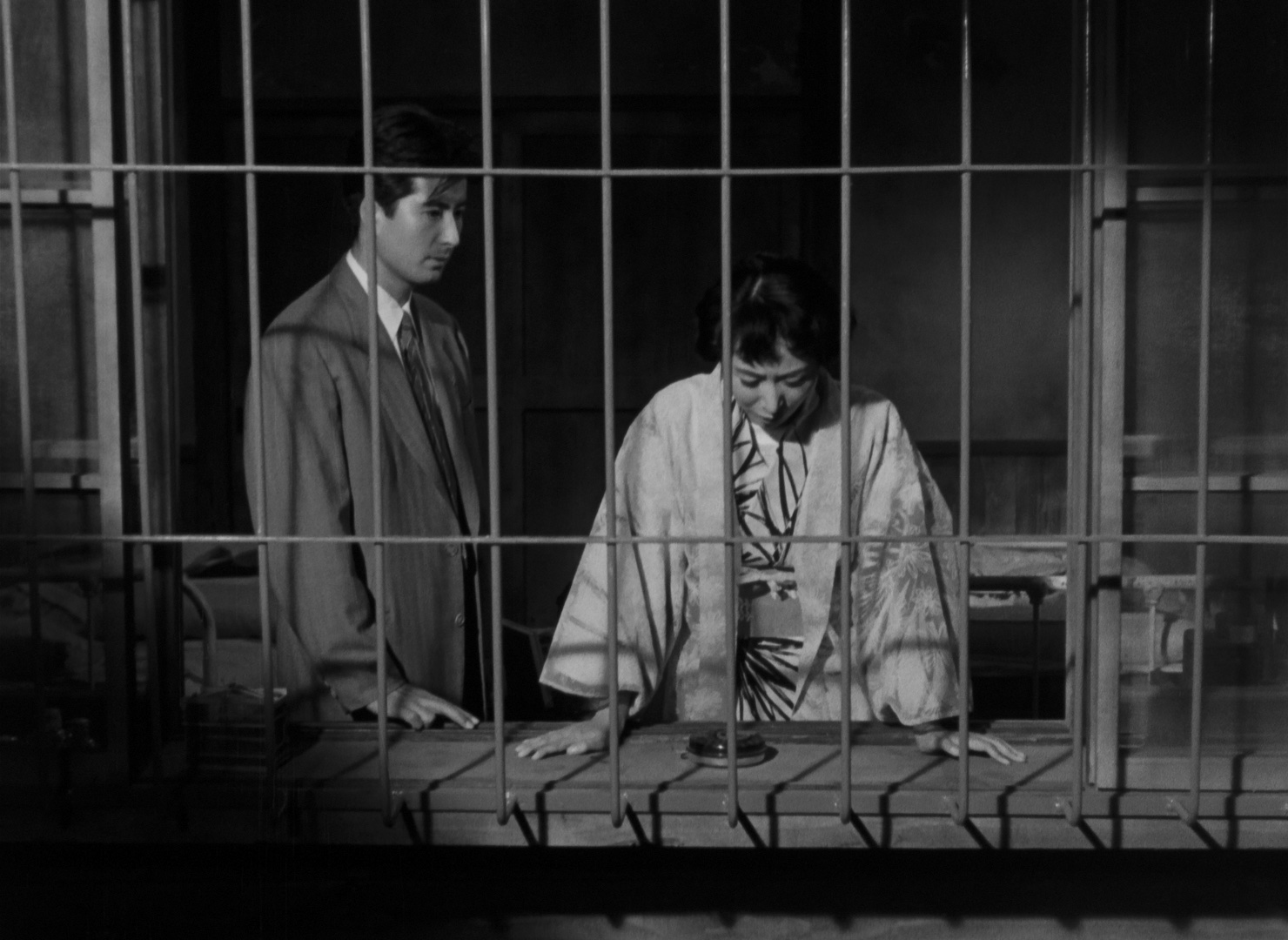
The first film Tanaka began independently, Forever a Woman (previously known as The Eternal Breasts) draws inspiration from current events to interrogate contemporary notions of womanhood through the story of a female poet suffering from terminal breast cancer who eventually rediscovers her femininity through the embrace of her sexual desire. Review.

Wandering Princess
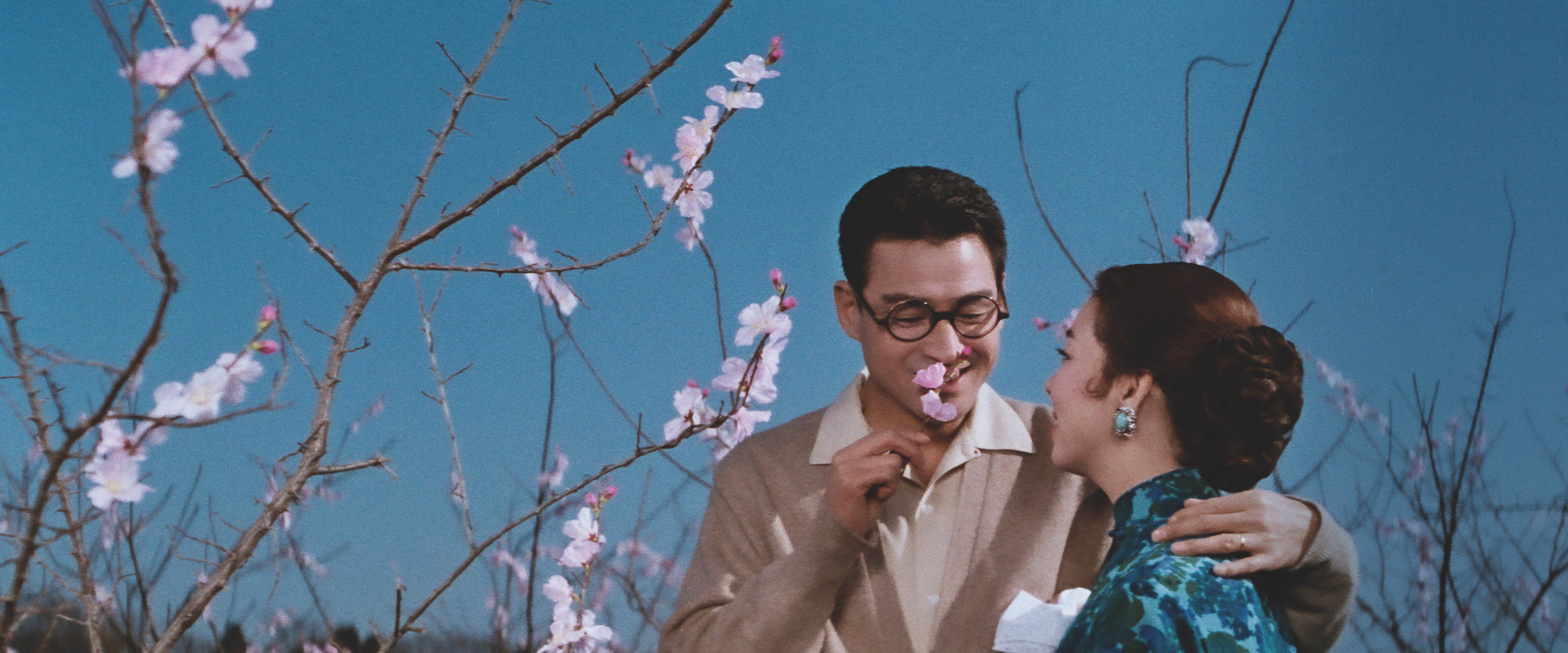
Again based on very recent events, The Wandering Princess is a sumptuous romantic melodrama in which a Japanese noblewoman (Machiko Kyo) agrees to marry the brother of the former emperor of China now a puppet king of the Japanese colony of Manchuria but is eventually separated from him by the fall of the Japanese empire. Review.

Girls of the Night
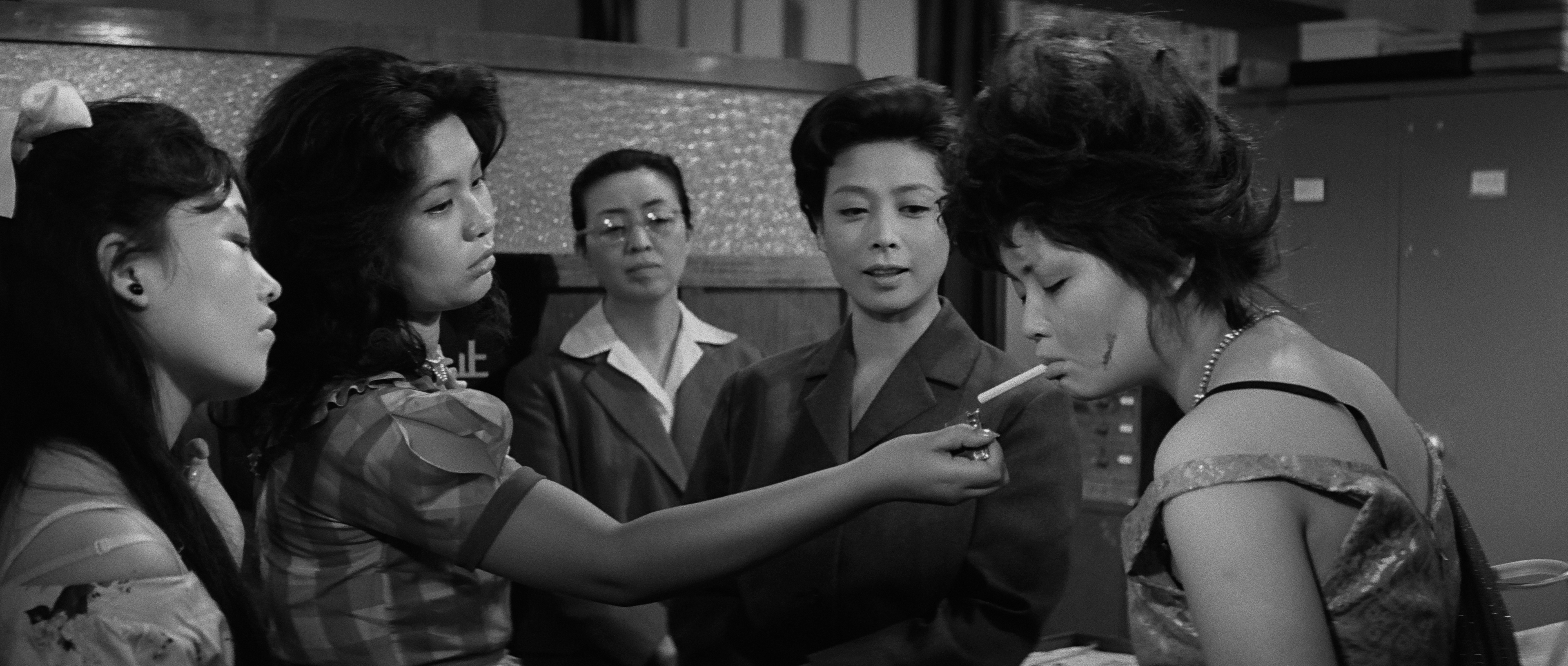
Recalling Tanaka’s role in 1948’s Women of the Night, Girls of the Night follows a young woman who is sent to a reformatory for former sex workers following the anti-prostitution legislation of the mid-1950s but discovers that no matter how well intentioned the program may be it nevertheless fails to account for the socio-economic realities of the contemporary society. Review.

Love Under the Crucifix
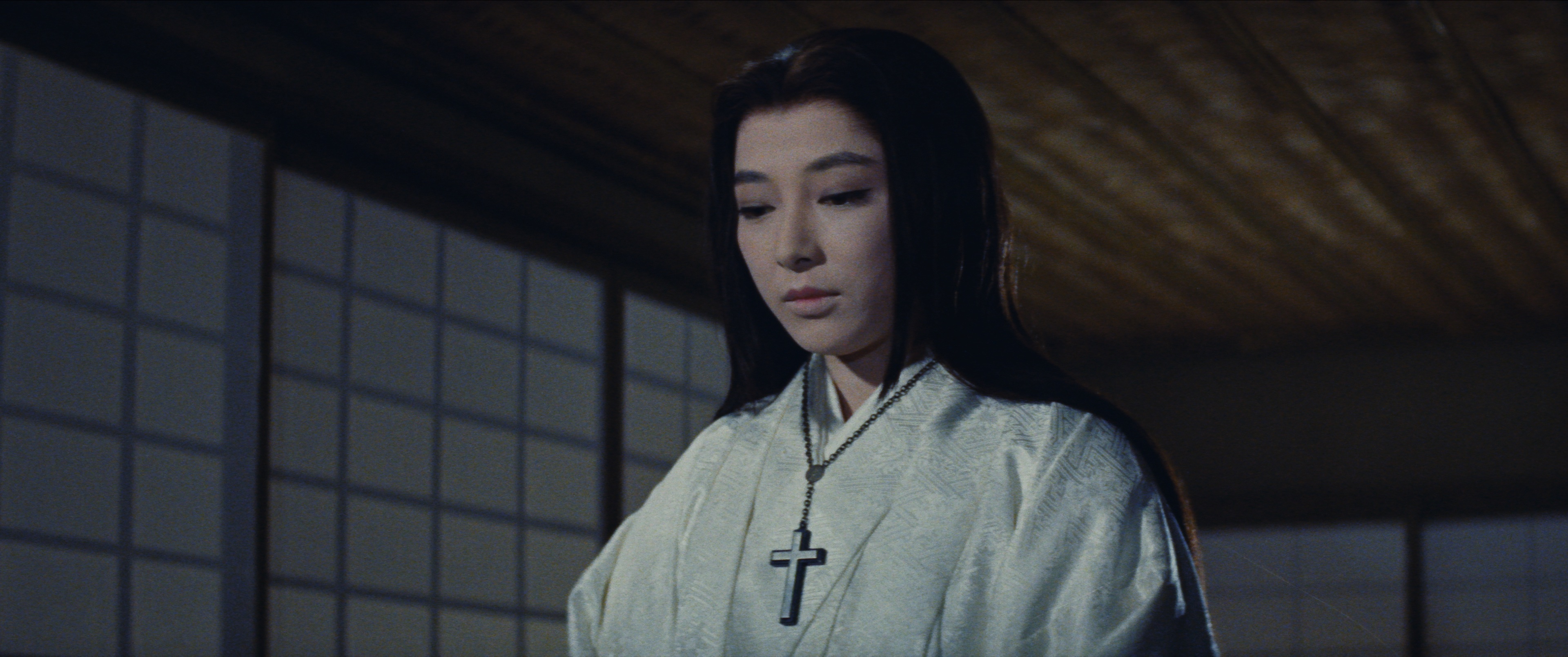
Juxtaposing the use of the crucifix as a method of execution for sexual transgression with the growing influence of Christianity in late 16th century Japan, Takana’s final film as a director stars Ineko Arima as a young woman in love with a reticent lord (Tatsuya Nakadai) who is already married and among the growing class of merchant samurai who have converted to Christianity through trading links with European nations. Review.

Shunkinsho: Okoto to Sasuke

Yasujiro Shimazu’s adaptation of a Junichiro Tanizaki novel in which Tanaka stars as a haughty maid blind since childhood and in an accidentally sadomasochistic relationship with her servant, Sasuke, which only deepens when she suffers a facial disfigurement at the hands of a rejected suitor. Review.

Army
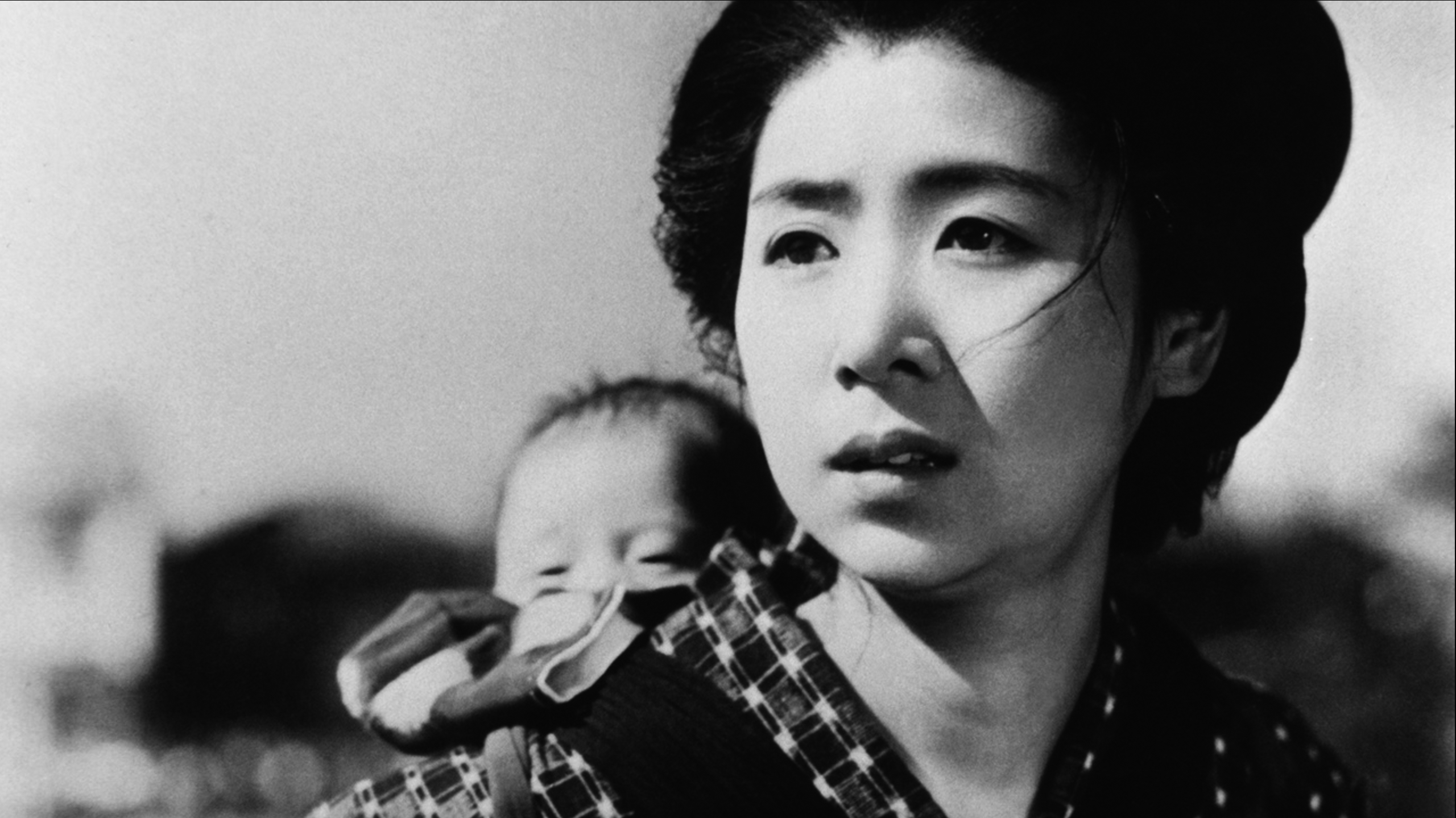
Keisuke Kinoshita’s 1944 melodrama saw him temporarily banned from filmmaking thanks to its subversive conclusion in which Tanaka is cast in the role of a self-sacrificing mother dutifully sending her son off to die for the emperor but desperately searching for him amid the faceless masses of other boys in uniform. Review.

A Hen in the Wind
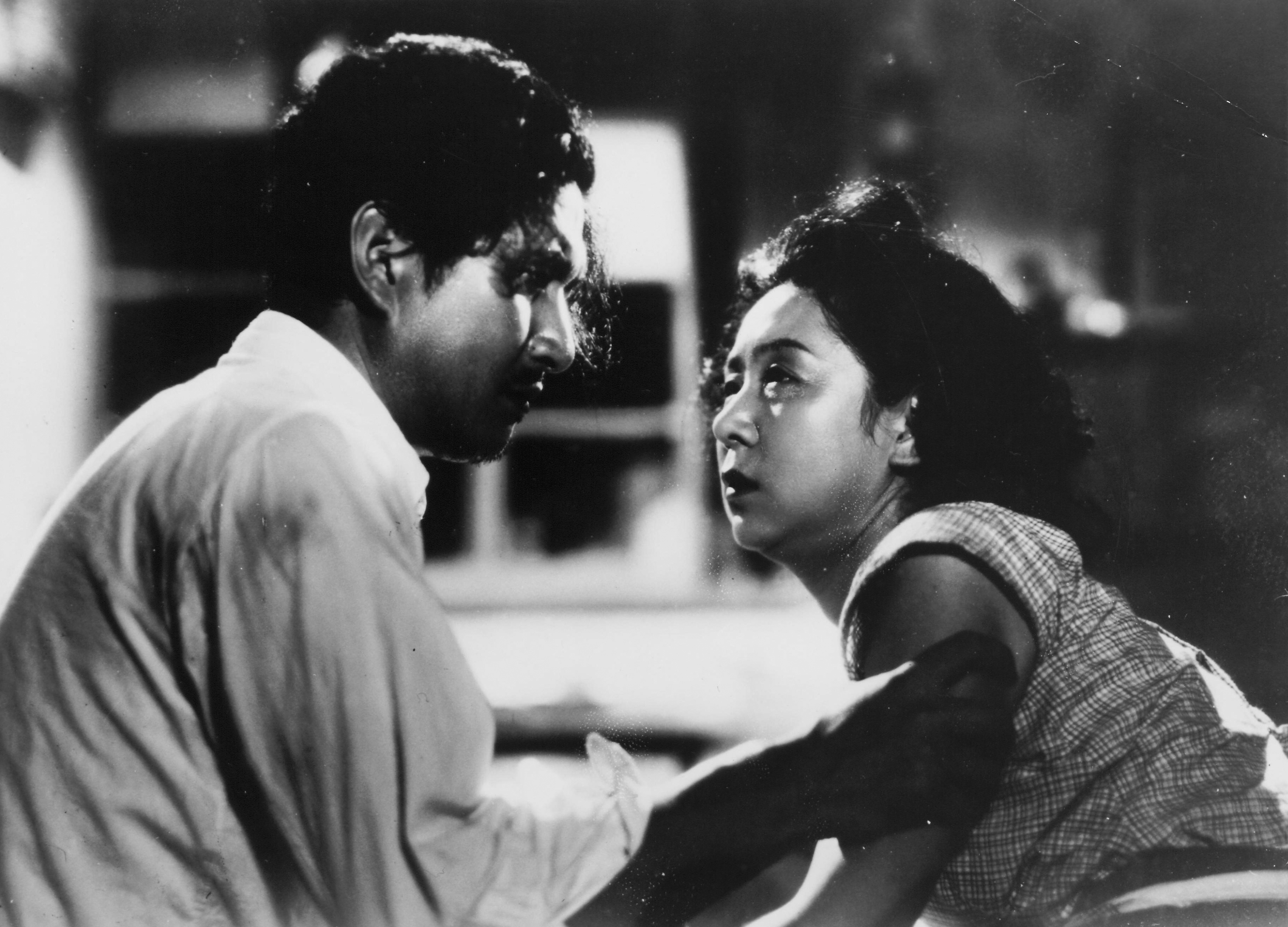
An atypically dark drama from Yasujiro Ozu, A Hen in the Wind stars Tanaka as a young woman who is forced into a single night as a sex worker in order to pay for medical treatment for her sickly baby only to face domestic violence when her embittered husband finally returns from the war.

The Life of Oharu
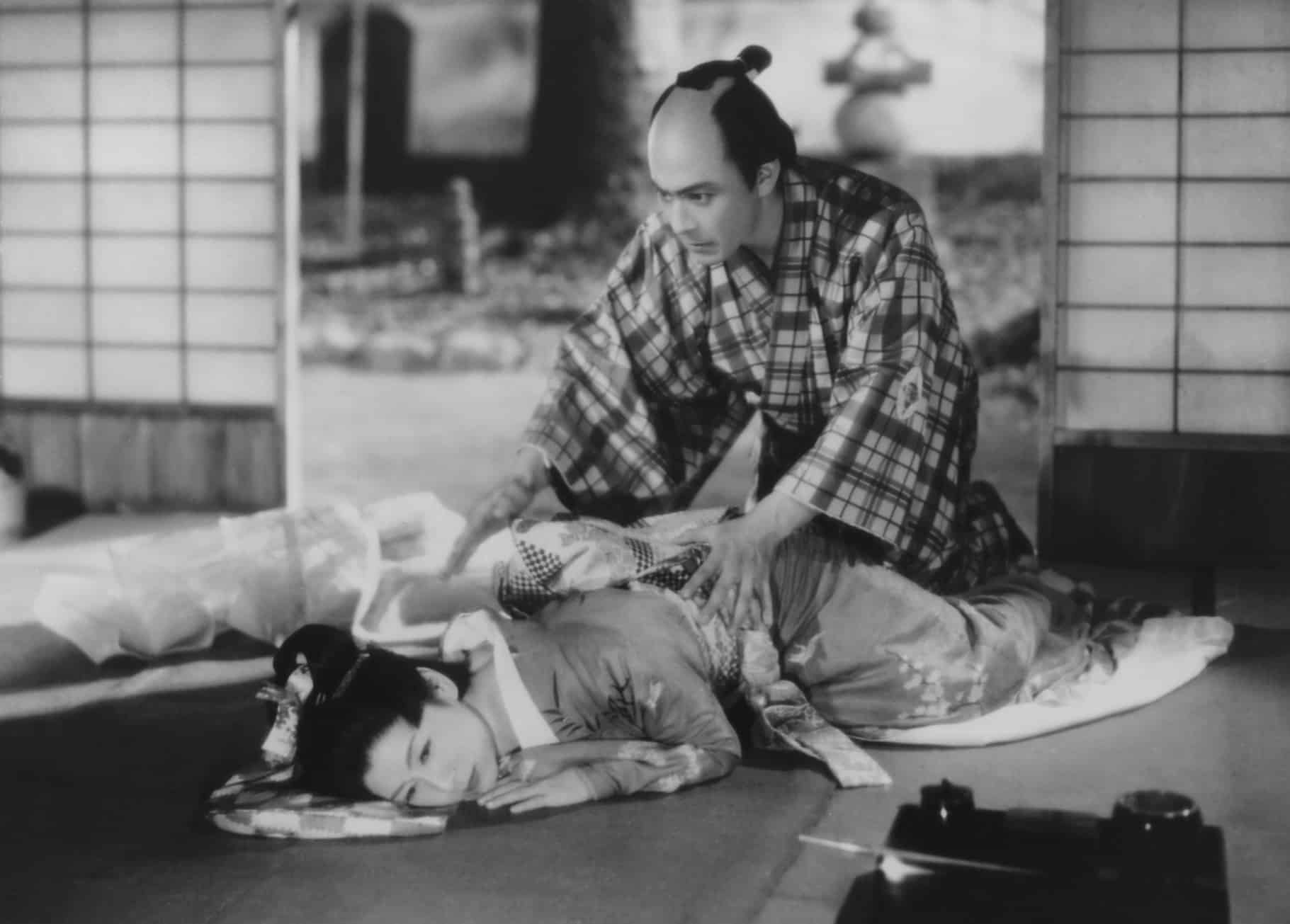
Tanaka stars as a noblewoman who falls to the level of a homeless sex worker after being thrown out of the court for falling in love with a man of lower status (Toshiro Mifune) in Kenji Mizoguchi’s melancholy life study.

Mother
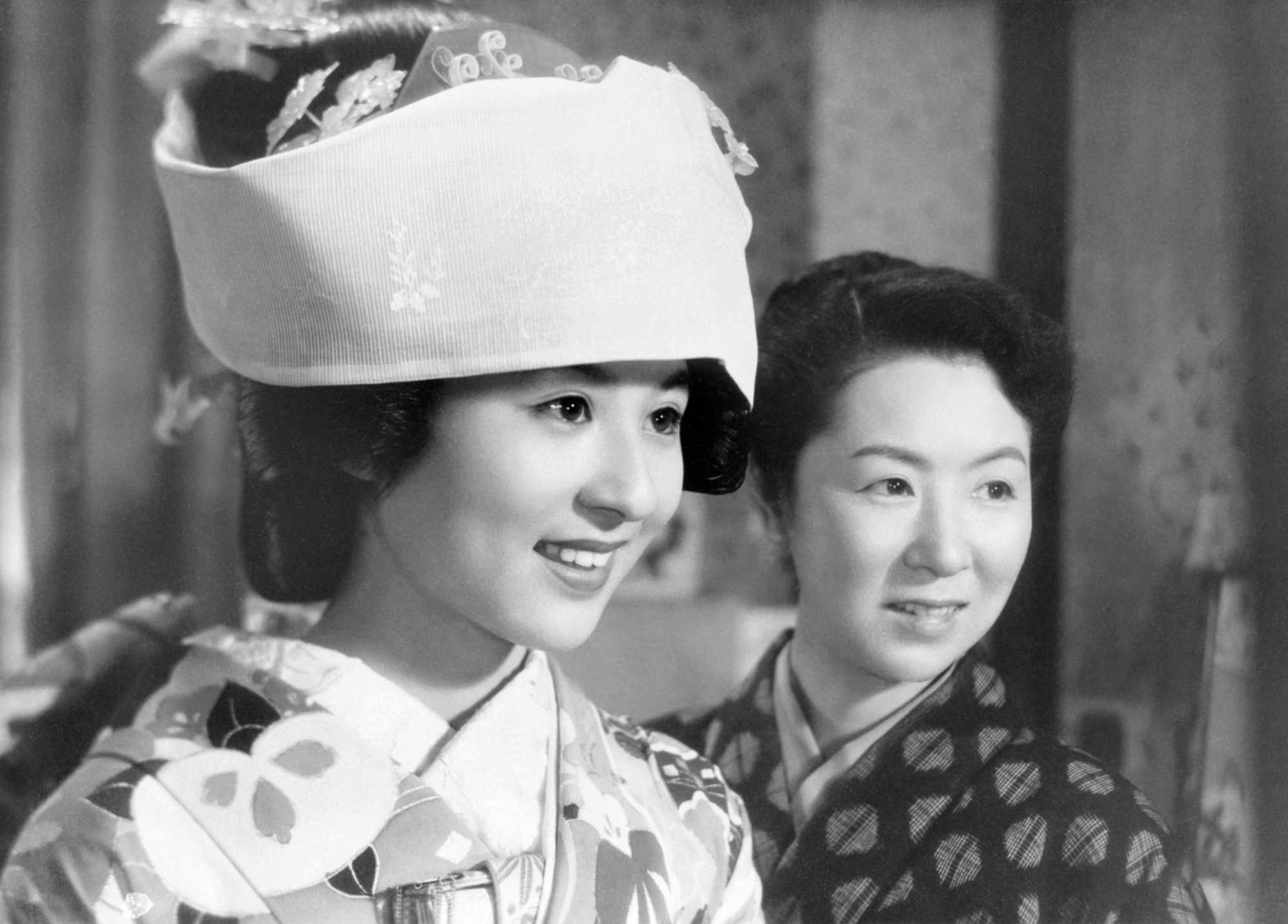
In one of Mikio Naruse’s most cheerful films, Tanaka plays a self-sacrificing mother who stoically faces increasing hardships but tries to keep her family together after her husband dies while her self-centred daughter (Kyoko Kagawa) becomes convinced she is romantically involved with a family friend and does everything she can to put a stop to it. Review.

Sandakan No. 8
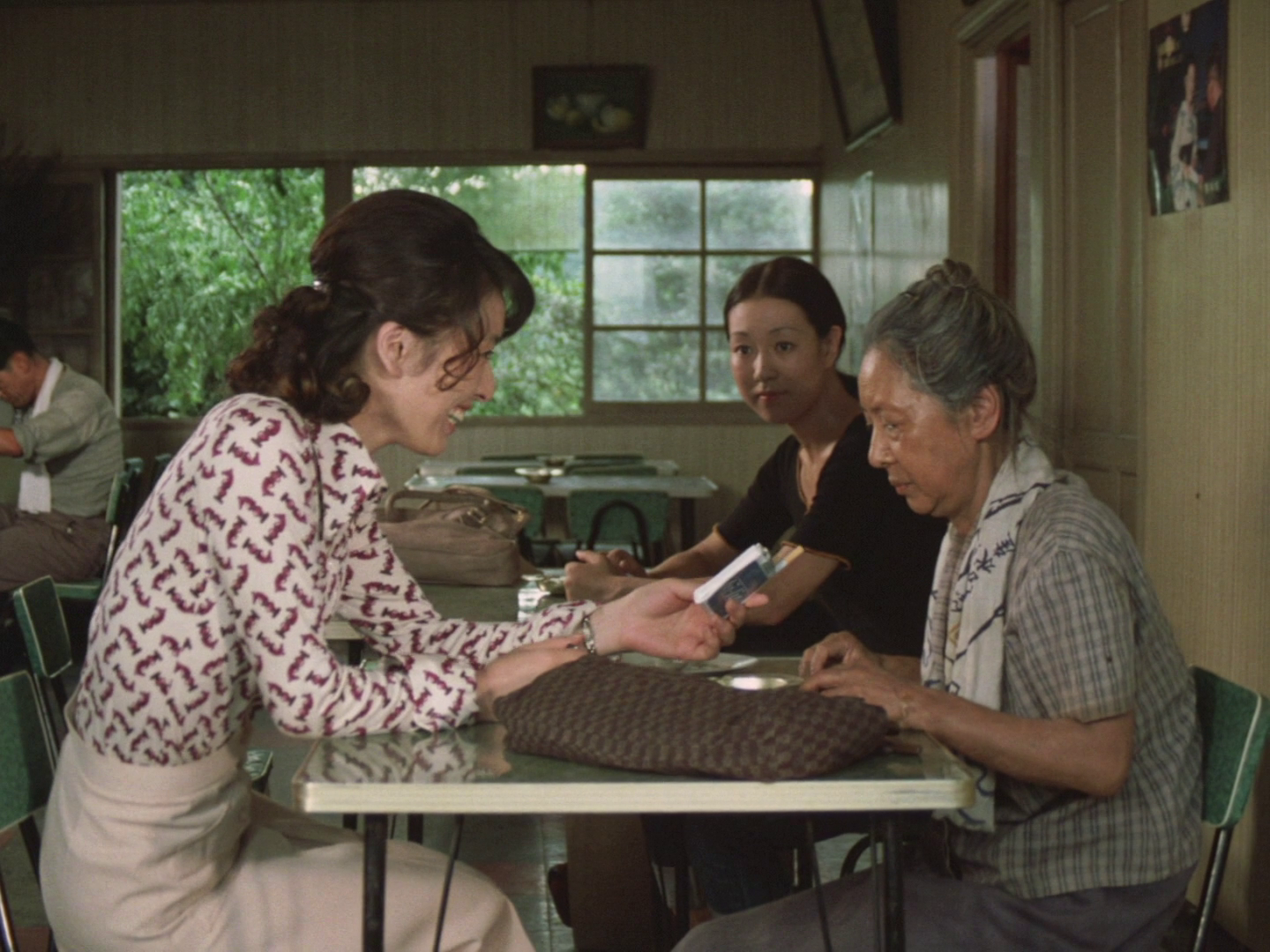
In this characteristically controversial film from Kei Kumai, Tanaka stars as a now elderly woman who was once of the “karayuki” or young girls from poor families who were sold into sex work and trafficked abroad but then often rejected on their return by those their money had helped to support. Review.

Kinuyo Tanaka: A Life in Film runs at BFI Southbank in August and September.
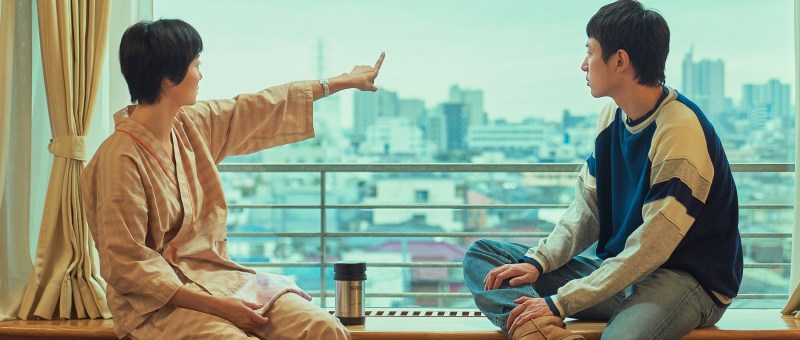
Before Next Spring (如果有一天我将会离开你, Li Gen, 2021)

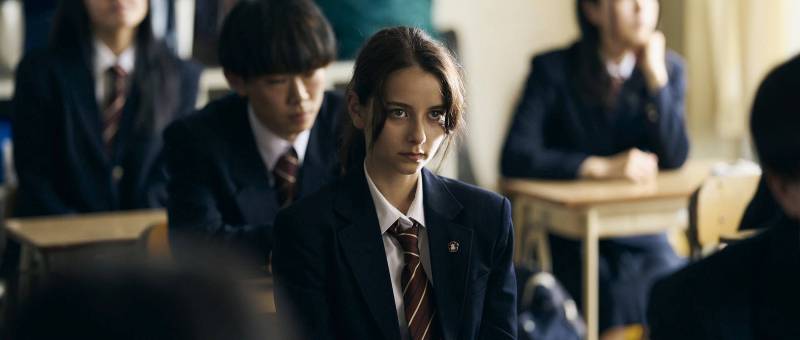
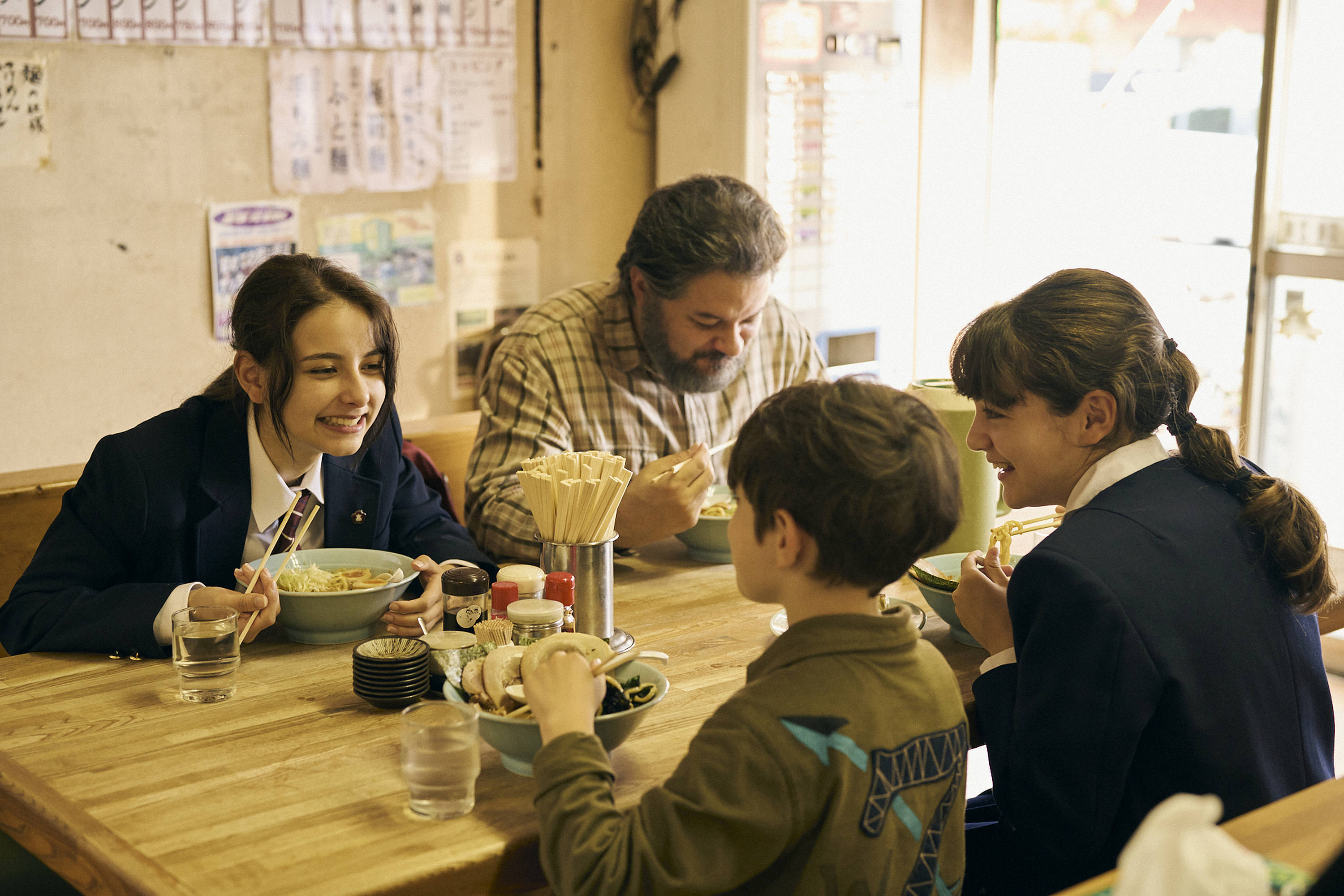
A naive exchange student finds a surrogate family while working at a Tokyo Chinese restaurant in Li Gen’s semi-autobiographical drama, Before Next Spring (如果有一天我将会离开你, rúguǒ yǒu yī tiān wǒ jiānghuì líkāi nǐ). Though it becomes obvious that almost everyone has come to Japan as a means of escape from personal troubles, the disparate collection of migrants eventually find solidarity with each other as they attempt to settle in to life in another culture while bonding with similarly troubled locals themselves excluded from mainstream society. 

Li Xiaoli seems to have chosen to come to Japan to find some release from a difficult family situation caused by his father’s illness. His mother had to give up work to look after him so the family have little money but Xiaoli is determined to make the most of his year abroad. When a stint in a supermarket doesn’t work out, his classmate Chiu (Qiu Tian) gets him a job at a Chinese restaurant where her friend/colleague Zhao (Niu Chao) also works. Though Zhao immediately takes against him perhaps out of jealousy, Xiaoli is taken under the wing of the restaurant’s manager, Wei (Qi Xi), who has been in Tokyo for some time but has recently had her application for permanent residence turned down in part because she is not married and has no children meaning the authorities are not satisfied about her longterm ties to Japan. 

Wei’s situation perhaps bears out the precarity of her life in Tokyo and the inability to fully feel at home experienced by many of the restaurant workers. Later it turns out that she is in need of an operation for uterine fibroids in part hoping to improve her chances of conceiving a child thought it’s unclear if her desire is solely to start a family or to give herself a better footing for getting her permanent resident card. Meanwhile the uncertainly undermines her relationship with chef Song (Song Ningfeng) who is undocumented and apparently in frequent contact with another woman who has her residence card already. The restaurant is frequently raided by police on the look out for anyone who might be working illegally, forcing Song to hide behind a fishtank in the basement like a criminal and giving rise to an atmosphere for persecution and anxiety. While the the pair are walking home one evening, they are hassled by a drunk man in the street who bumps into them and then demands they apologise. Song is visibility irritated by the humiliation of being forced to apologise to belligerent xenophobe and struggles to avoid losing his temper. Something similar occurs when a neighbour complains about the noise and then rings the police after hearing Song and Wei arguing, Xiaoli who was present at the time having to pose as Wei’s boyfriend flashing his legitimate student ID for the detectives. 

Xiaoli also makes a friend of the middle-aged Chinese teacher at their school, played in an extended cameo from Sylvia Chang, who hints that in some ways the experience hasn’t changed since she arrived at the tail end of the Bubble era. She recounts working three jobs but being delighted on buying everything she ever could want during department store sales. Only now she’s as rootless and dejected as Xiaoli. Her husband has returned to China, and now she’s living alone trying to redefine her reasons for coming to and staying in Japan. Middle-aged Chef Wan (Chen Yongzhong), who also experiences a unpleasant incident of being accused of groping a woman on a train because he was holding his aching stomach on the way to a hospital appointment, is feeling something similar having dreamed of bringing his family to join him only to now wonder if there’s really any point after so many years apart. 

The moody Zhao, meanwhile, is half-Japanese but has been all but abandoned by his parents and feels nothing for them other than resentment. Caught between two cultures, he insists on being called by the Japanese reading of his first name, Aoki, rather than the Chinese, Qingmu, and makes a point of talking to Xiaoli in Japanese rather than Mandarin despite being aware that his language skills are still undeveloped. He is in deep love with Xiaoli’s schoolfriend Chiu who works as a hostess in addition to her gig at the supermarket but is too diffident to say anything and though she seems to care for him she makes it clear she does not intend to wait.  

The sense of loneliness each of them feel is echoed in the melancholy tale of an older couple who run a hairdresser’s and had no children of their own, finding themselves unanchored in their old age but discovering a place for themselves at the Chinese restaurant. The only Japanese worker, Watanabe who develops a maternal relationship with Zhao, finds something similar while working a second job at a supermarket raising her children and trying to care for her elderly mother. Told over the course of a year with Xiaoli’s departure date already set, Li Gen’s lowkey drama is content with a lack of resolution that suggests time in motion marked by a series of partings some of which may be more permanent than others but each in their own way meaningful.


Before Next Spring screened as part of this year’s New York Asian Film Festival.

Original trailer (Traditional Chinese / English subtitles)

Images: © Huace Film & TV (Tianjin) Co., Ltd.

Hit and Run (ひき逃げ, Mikio Naruse, 1966)

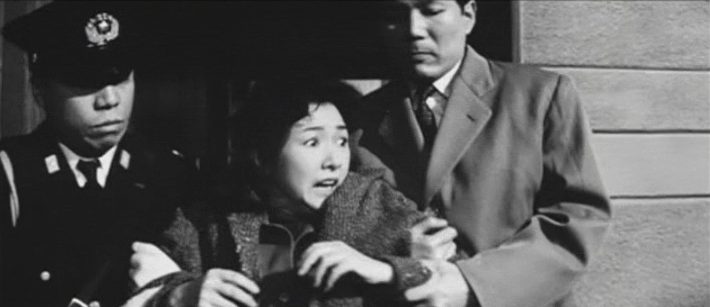
The contradictions of the contemporary society drive two women out of their minds in Mikio Naruse’s dark psychological drama, Hit and Run (ひき逃げ, Hikinige, AKA A Moment of Terror). Scripted by Zenzo Matsuyama and starring his wife Hideko Takamine in her final collaboration with the director, Naruse’s penultimate film takes aim at the persistent unfairness of a post-war society already corrupted by increasing corporatisation while caught at a moment of transition that leaves neither woman free to escape the outdated patriarchal social codes of the feudal era. 

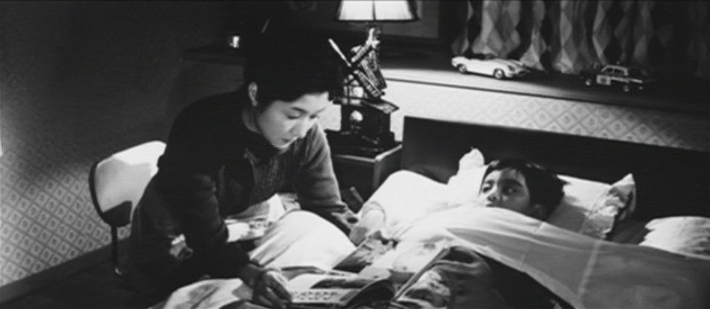
The two women, both mothers to five-year-old boys, are mirror images of each other. Kuniko (Hideko Takamine), the heroine, is a widow working in a noodle bar and continually exasperated by her energetic son Takeshi who keeps escaping kindergarten to play pachinko which is not a suitable environment for a small child. Kinuko (Yoko Tsukasa), meanwhile, is mother to Kenichi and married to a high ranking executive at Yamano Motors, Kakinuma (Eitaro Ozawa). These two worlds quite literally collide when Kinuko, emotionally distressed and driving a little too fast, knocks over little Takeshi while he is out playing with some of the other neighbourhood boys. As she is with her lover, Susumu (Jin Nakayama), she decides to drive on abandoning Takeshi to his fate but discovers blood on the bumper of her shiny white convertible on returning home and thereafter decides to tell her husband everything aside from revealing her affair. Kakinuma covers the whole thing up by forcing their driver to take the rap to protect not his wife but the company along with his own status and success fearing that a scandal concerning his wife driving carelessly may have adverse consequences seeing as Yamano Motors is about to launch a new super fast engine that will make them worldwide industry leaders. 

Perhaps in a way the true villain, Kakinuma cares about nothing other than his corporate success. Kinuko states as much in complaining that he’s never once considered her feelings only his own and that their marriage was a failure from the start, little more than an act of exploitation in which she was traded by her father for money in return for political connections. For these reasons she seeks escape through her extra-marital affair but is unable to leave partly in the psychological conflict of breaking with tradition and partly because she has a son whom she would likely not be permitted to take with her even if it were practical to do so. Another woman says something similar in disparaging Kuniko, implying that her life is in some ways over as few men would be interested in marrying a widow with a child. 

Takeshi’s loss is therefore additionally devastating in severing Kuniko’s only lifeline. A brief flashback reveals that Kuniko was once a post-war sex worker, she and her yakuza brother Koji war orphans who lost their parents in the aerial bombing. When she married and had a child she thought the gods had smiled on her but in true Narusean fashion they gave only to take away leaving her a widow and finally robbing her even of her child. To add insult to injury, they try to put a price on her son’s life, a mere 500,000 yen for a boy of five hit by a car. When the driver stands in the dock, he gets off with only a 30,000 yen fine for the death of a child. Then again on visiting his home, there appears to be a boy of around five there too, perhaps you can’t blame him for taking the money having been robbed of his youth in wartime service. 

Still, on hearing from an eye witness that it was a woman who was driving, Kuniko quickly realises that Kinuko must have been responsible. Quitting her job she joins a maid agency in order to infiltrate the house and gain revenge later settling on the idea of killing little Kenichi, who takes an instant liking to her, to hurt his mother in the way she has been hurt only to be torn by her unexpected maternal connection with the boy. The conflict between the two women is emotional, but also tinged with class resentment that a wealthy woman like Kinuko should be allowed to escape justice with so little thought to those around her while Kuniko is tormented not only by her grief but the persistent injustice of the cover up. 

As in all things, it’s the lie that does the most damage in ironically exposing the truth of all it touches. Kinuko’s escape route is closed when her lover reveals that he’s lost faith in her, unable to trust a woman who’d run away from the scene of a crime and allow someone else to take the blame, while Kakinuma’s emotional abandonment of his social family for the corporate is thrown into stark relief by his immediate decision to further exploit their driver just as he will later their maid. Driven out of her mind, Kuniko has white hot flashes of lustful vengeance as she imagines herself engineering an accident for Kenichi, throwing him off a rollercoaster or coaxing him into traffic, only to regain her senses unable to go through with it so pushed to the brink of madness is she that no other action makes sense. 

Even so the conclusion is brutally ironic, Kuniko accused of a crime she did not commit but half believing that she must have done it because she wanted to so very much. Kakinuma gets a minor comeuppance, encouraged by his servant to make clear what actually happened and exonerate Kuniko thereby walking back his total commitment to the corporate (then again it seems his dream project was itself under threat from a potential plagiarism scandal) though the damage may already have been done. This societal violence of an unequal, increasingly corporatised and unfeeling society, eventually comes full circle bringing with it only death and madness as the two women seek escape from their internal torment. Naruse experiments with handheld camera and canted angles to emphasise the destabilisation of the women’s sense of reality along with blow out and solarisation in the visions that plague them, but curiously ends with a set of motor vehicle accident stats as if this had been a roundabout public information film to encourage careful driving. Then again perhaps in a way it is, a cautionary tale about the dangerous curves of untapped modernity and the cruelties of the nakedly consumerist era.  


What to Do With the Dead Kaiju? (大怪獣のあとしまつ, Satoshi Miki, 2022) [Fantasia 2022]

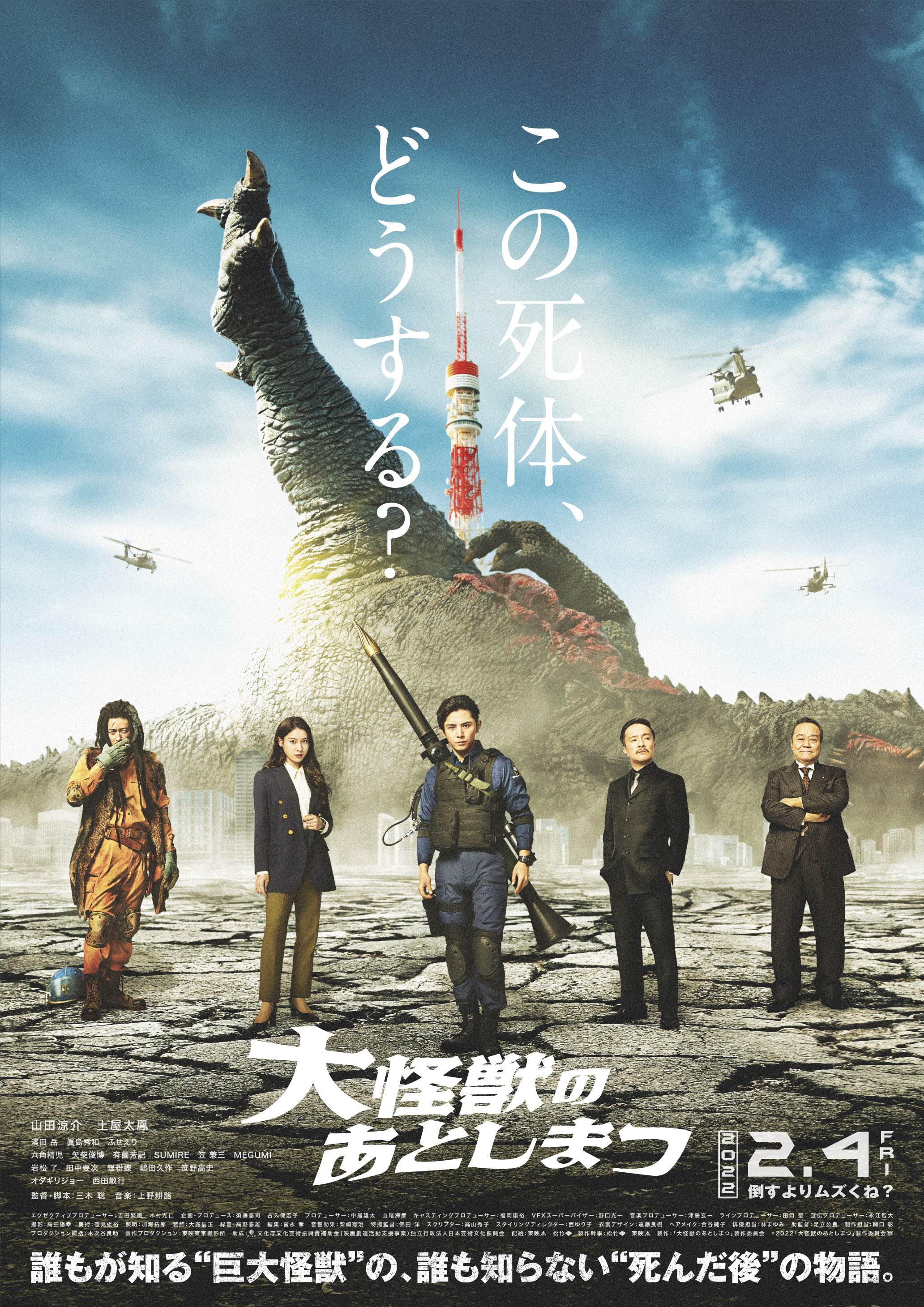
The sudden appearance of a deus ex machina is usually where a story ends. After all, that’s the point. Whatever crisis is in play is suddenly ended without explanation. But what happens then? Satoshi Miki’s What to Do With the Dead Kaiju? (大怪獣のあとしまつ, Daikaiju no Atoshimatsu) steps in to wonder what it is that comes next after a giant monster has been defeated. Someone’s going to have to clean all that up, and in a surprising twist a fair few people are keen to take on the burden. Like Hideaki Anno & Shinji Higuchi’s Shin Godzilla, which the film is on one level at least attempting to parody, Miki’s kaiju comedy is a government satire this time casting shade on the nation’s pandemic response, though with considerably less nuance. 

As the opening onscreen text, a nod to Shin Godzilla, and accompanying voiceover tell us Japan had been plagued by a kaiju but it suddenly died after being engulfed by a mysterious ball of light. While attempting to comedown from the constant state of anxiety under which they’d been living, the prime minister (Toshiyuki Nishida) is at a loss for what to do next especially as no-one really knows if the kaiju corpse is safe. While trying to ascertain whether or not the fallen kaiju might explode, spread dangerous radiation, or present some other kind of threat, government departments start fighting amongst themselves about whose responsibility the clean up effort must be all of them wanting the glory but not the work or expense. 

Some suggest turning the kaiju’s body into a massive tourist attraction and are therefore less keen on anything that involves destroying it while others think it should be preserved and put in a museum. The government has placed the SJF, a militarised science force set up after a terrorist incident, in charge but isn’t listening to much of what they’re saying. Meanwhile, evil moustachioed staffer Amane (Gaku Hamada) is playing his own game behind the scenes which also involves his wife, Yukino (Tao Tsuchiya), who was previously engaged to the leader of the SJF Taskforce, Arata (Ryosuke Yamada), before he abruptly disappeared after being swallowed by a mysterious ball of light three years previously. 

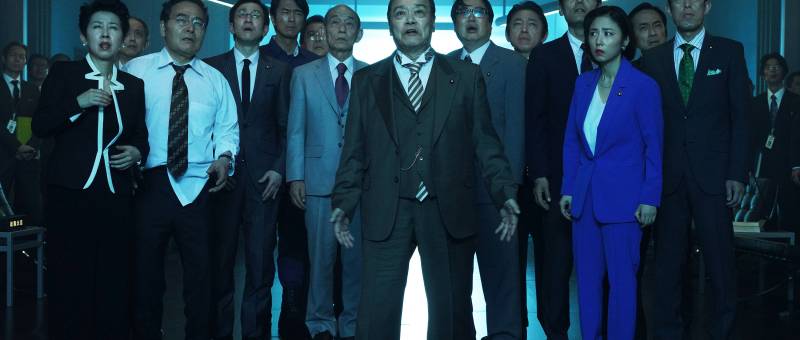
The political satire largely revolves around the indecisive PM, who at one point says he has no control or responsibility for what the other ministers do, and his anarchic cabinet meetings in which politicians run round in circles and insult each other like children. Not exactly subtle, much of the humour is indeed childish and scatological while one minister’s running gag is making sleazy sexist remarks even at one point accidentally playing a saucy video instead of displaying the latest kaiju data on the communal screen. The government experiences a public backlash in deciding to name the kaiju “Hope” which lends an ironic air to its rampage not to mention the necessity of its destruction, while the decision to declare the body safe for political reasons despite knowing it probably isn’t (“protecting the people’s right not to know”) casts shade on the pandemic response among other crises as do the constant refrains about getting back to normal now the crisis is over. 

Then again, there’s something a little uncomfortable going on with the film’s geopolitical perspectives, throwing up an angry politician on the screen with a mangled name who insists that the kaiju originated on their territory and must be returned to them in what seems to be an awkward allusion to Japan’s ongoing territorial disputes with Korea even while it’s suggested that the Americans wouldn’t mind getting their hands on the corpse either for purposes of experimentation and research. On the other hand it also becomes apparent that the Japanese military have deliberately destroyed civilian homes and cost lives in a reckless attempt to stop the kaiju which obviously failed. 

The closing scenes hint we may have been in a slightly different franchise than the one we thought we were dealing with, another deus ex machina suddenly arriving to save the day after the villains almost cause accidental mass destruction. The film’s problem may be that it’s the wrong kind of silly, relying on lowbrow humour while otherwise trying to conform to a blockbuster formula in which the kaiju corpse becomes the new kaiju but the battleground is bureaucracy. Ultimately the film’s prognosis is bleak. Even when the PM has achieved sufficient growth to realise he should make some kind of decision he makes the wrong call leaving everything up to a lone hero while fundamentally failing to come to any conclusion on what to do with a dead kaiju save trying to ensure it does not blow up in his face. 


What to Do With the Dead Kaiju? screened as part of this year’s Fantasia International Film Festival.

Original trailer (English subtitles)

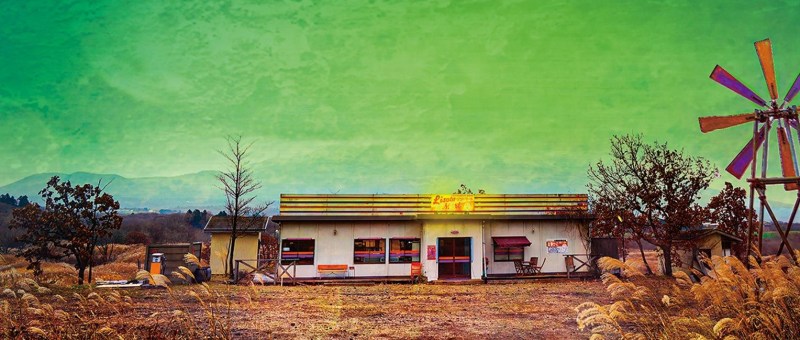
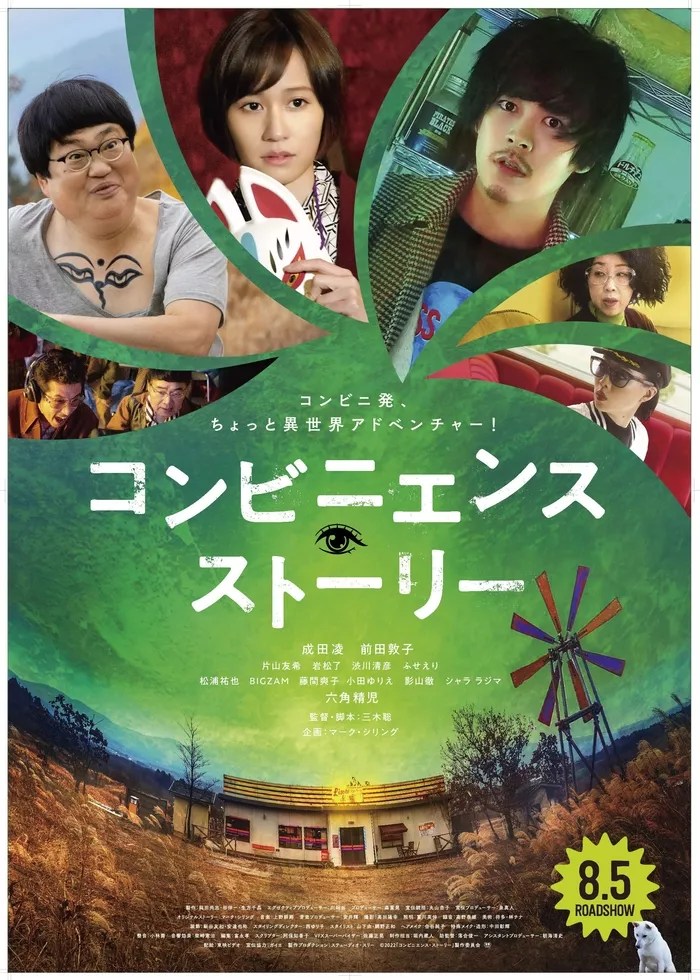
Convenience Story (コンビニエンス・ストーリー, Satoshi Miki, 2022) [Fantasia 2022]

“This is unreal, but it’s real” a blocked screenwriter exclaims in finding himself in an uncanny world only slightly divorced from his previous reality but perhaps excellent fodder for his art. Quite clearly influenced by David Lynch in its Twin Peaks-esque setting, jaunty jazz score, and overt references to Mulholland Drive, Fire Walk with Me, and Blue Velvet, Convenience Story draws inspiration from a short story by veteran Japan Times critic Mark Schilling to spin an elliptical tale of otherworldly adventure and inexorable fate. 

Down on his luck screenwriter Kato (Ryo Narita) can’t seem to get an idea off the ground and is in an increasingly volatile relationship with aspiring actress Zigag (Yuki Katayama) whose dog Cerberus he barely tolerates. When he has to venture out in search of Cerberus’ favourite brand of dog food, Weredog, the adorable pooch accidentally deletes the screenplay Kato has been working on leading him to decide to abandon him in the remote countryside. However, after damaging a Buddhist statue, he stops at a random petrol station convenience store which looks like it hasn’t been touched since the 1980s. Sucked through some kind of portal, he finds himself in an alternate combini reality in the company of pretty damsel in distress Keiko (Atsuko Maeda) and her decidedly weird husband Nagumo (Seiji Rokkaku). 

As the film begins to head into The Postman Always Rings Twice territory, Kato begins to rejuvenate his creative mojo while Zigzag, who is about to get her big break working with an incredibly insecure director (Kiyohiko Shibukawa) and sleazy producer, wonders what’s happened to her dog and takes drastic steps to find out. “Life’s big chances come in an instant” the director insists, though for Kato time seems to have stopped while he contemplates the combini existence. After all, it’s called a convenience store for a reason. They have everything you’ll ever need so there’s no real reason to leave. Smarting from his creative block, Kato asks if convenience stores sell interesting stories and in a way they do, or at least this one and the one in his neighbourhood which may or may not be connected by some kind of cosmic combini network, conspire to feed his imagination so he can deliver a promising script to his eccentric editor (Eri Fuse). 

Then again, Keiko asks him if he writes about an ideal world or his personal reality and it’s a question that he can’t quite answer hinting that this strange alternate universe may be some kind of fever dream conjured up by his latent imagination. “A screenwriter’s job is to fantasise”, Keiko seductively tells him, though his editor and a producer with whom he had also exchanged a flirtatious email had previously giggled over his non-starter of a screenplay which they described as an embarrassingly chauvinistic male fantasy. That’s certainly one way you could describe his otherworldly combini adventure in the foxy damsel in distress characterisation of Keiko who quite obviously just wants him to take her away from all this, sick of the oppressive convenience of the combini life and of her incredibly strange, seemingly controlling husband. 

Then again on their attempt to escape, the couple end up in an endless three-day ceremony of eternity during which the souls of the dead are supposed to journey to the afterlife. Everyone is keen on travelling to another world, except perhaps for Kato who is already in one, yet struggles to escape the uncanny uniformity of the combini society. “Another world exists in here” Kato is creepily told on a visit to his local, much more contemporary though not all that different, convenience store beginning to realise that perhaps there is no real escape from this maddening world of convenience at least not for him. Shades of Orpheus and Eurydice guide him out of his purgatorial existence yet ironically only into more of the same until the inevitable, karmic conclusion. Fantastic production design adds to the sense of retro absurdity strongly recalling Twin Peaks in its use of ‘50s-style diners and the frozen in time petrol station road stop existing for some reason the middle of nowhere with no road in sight, while casting a note of fatalistic dread over the life of a blocked screenwriter who eventually comes to realise that convenience isn’t always quite what it’s cracked up to be.


Convenience Story screened as part of this year’s Fantasia International Film Festival.

Original trailer (English subtitles)

The Girl From the Other Side (とつくにの少女, Yutaro Kubo & Satomi Maiya, 2022) [Fantasia 2022]

A kindly exile and lonely little girl find mutual salvation in Yutaro Kubo & Satomi Maiya’s gorgeously animated fairytale, The Girl from the Other Side (とつくにの少女, Totsukuni no Shojo). A poetic mood piece, the film has a painterly feel reminiscent of classic children’s picture books and essentially tells a very simple story about the redemptive power of kindness and acceptance in which two exiles find the strength to begin again taking care of the other in a world of warmth and safety.

Set in an indistinct time period, the film opens with a cohort of soldiers from the Inside dumping bodies in the forest, apparently victims of some kind of curse. Hearing a noise, one turns round explaining that they have to kill them all or their efforts will be meaningless, while mysterious man with goat horns on his head discovers the angelic figure of a little girl, Shiva (Rie Takahashi), fast asleep. Evading the soldier, who is later himself “cursed”, the man takes her home with him but explains that he cannot ever touch her, not even to treat her wounds, lest he infect her with the “curse” though he is not like the other “Outsiders” who spread it deliberately. 

The curse has robbed the man, whom Shiva calls “Teacher” (Jun Fukuyama), of his humanity. He is certain that he was once human and lived a normal life with a wife and child behind the walls of the Inside, but is now a lonely exile who no longer knows his name. He worries that Shiva will be frightened by his appearance and may choose to leave putting herself in danger in the process but Shiva accepts him instantly and quickly settles in to his cottage-style home while experiencing brief nightmares in which she is eventually rescued from her loneliness by the Teacher. But the closer they get, the more Teacher feels guilty convinced that Shiva would be better off in a community with other humans rather than living with him under the danger of inheriting his curse. 

Shiva and Teacher are each in their ways exiles, though there is also something dark in the constant references to Insiders and Outsiders along with the looming threat of the military and their determination to wipe out anything “suspicious” fearful of any kind of contamoination. The Outsiders are those in some way rejected by the mainstream society, many of whom have become dark and marauding, feeding on the souls of others who live outside the walls. Teacher wants to save Shiva from the unbearable loneliness he feels as a cursed man who no longer knows his past and is forbidden from human touch yet in the need to protect her he also discovers a purpose and begins to recover something of his humanity. “She is my light” he later explains to a supernatural force, himself stunned by the realisation that even he could be a light for someone else and discovering in it a new possibility for life. 

There is of course a sadness for the world that’s been lost and can never be regained, but also warmth and tenderness in the simple life of Teacher and the girl as symbolised by smoke rising from their chimney as if the house itself were breathing. As Teacher had said, all things must end in time, but the time is not necessarily now and there is much to be done before it runs out. In Teacher, Shiva finds a place of safety and protection. In her dreams she is rescued by the hands which on waking cannot touch her, while Teacher finds in her a path towards reclaiming his humanity. They may never find their way back to those they’ve lost, but they can now begin again as a new family overcoming their loneliness and despair through mutual compassion. 

Beautifully illustrated with a retro flickering effect and water colour-esque backgrounds, Girl From the Other Side situates itself in a melancholy world in which some are consumed by the curse of their inner darkness and suddenly sprout into huge burnt trees, yet as Shiva says there’s a poignancy even in their destruction noticing that whole communities sprouted together rather than wandering apart. Moving and tender, it reaches a kind of serenity in its final moments in the simple act of living with warmth and possibility. 


The Girl From the Other Side screened as part of this year’s Fantasia International Film Festival.

Original trailer (no subtitles)

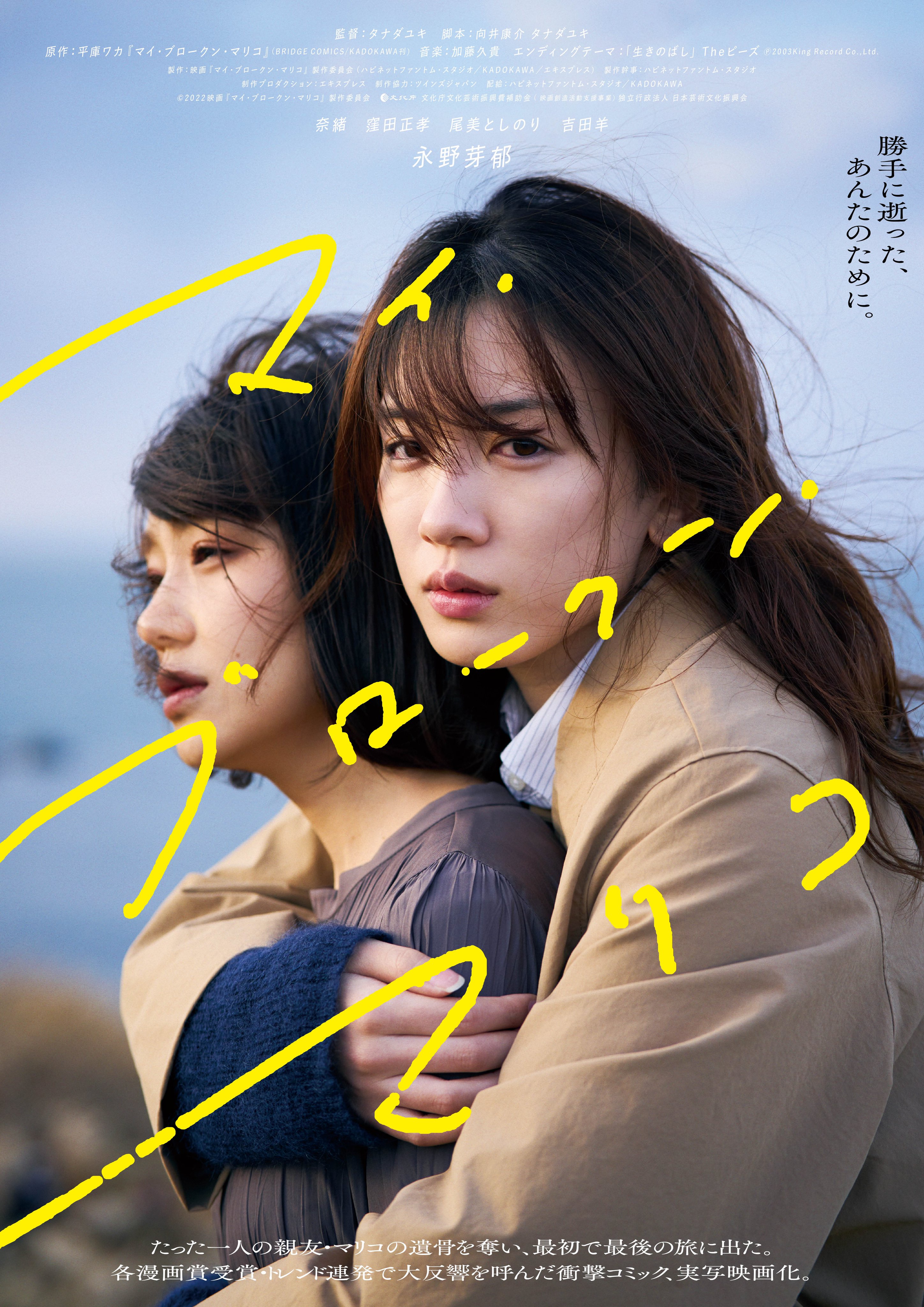
My Broken Mariko (マイ・ブロークン・マリコ, Yuki Tanada, 2022) [Fantasia 2022]

“The only thing you can do for a person who’s gone, is to live” according to a kindly soul at a train station attempting to comfort the heroine of Yuki Tanada’s adaptation of the manga by Hiroko Waka, My Broken Mariko (マイ・ブロークン・マリコ). It is in many ways, however, Shiino (Mei Nagano) who is trying to put herself back together after earth-shattering loss, attempting to reclaim her friend’s memory while struggling to reorient her life in the wake of her absence. Yet what she comes to realise is that all she can do for Mariko (Nao) now is to try to live.

At a cafe one ordinary day, Shiino hears the news announce the death of a woman presumed to have taken her own life who has the same name as her childhood friend. Overcome with anxiety, she tries to call Mariko on the phone but gets no answer nor reply to her messages. Dropping by her apartment, she realises the worst is true. Mariko is gone and she didn’t even say goodbye. Her apartment has already been cleared and her parents apparently opted for a “direct” cremation not even bothering to hold a funeral. It’s almost as if Mariko never existed at all. 

Consumed by grief and guilt that she didn’t see her friend’s death coming or in some way failed to save her, Shiino makes up her mind to rescue her unable to bear it that the father who beat and abused her all her life is allowed to keep her in death. After making a dramatic raid on their apartment, she kidnaps Mariko’s funerary urn and hits the road searching for new directions while on one last road trip looking for a safe place to let her friend rest. 

This was certainly an intense friendship or on Shiino’s side at least something more, she is clearly coded as queer in her masculine speech and attire, yet Mariko seems to have looked to her as a sisterly or maternal figure at one point exclaiming that she would have liked it if Shiino had given birth to her. As high school girls they’d idly looked at flats for rent, vowing to stay together until they were old and most importantly with a pet cat but even though Mariko had threatened suicide if Shiino were to get a boyfriend she eventually drifted away into a series of abusive relationships for which she continued to blame herself. Shiino can’t forgive herself that as much as she tried to show her she cared, she was never able to reach her or to restore Mariko’s sense of self worth. Now that she’s gone she finds herself still searching for her, struggling to remember not only the bad things or the good things but everything she was.

Through her random road trip, Shiino is forced to let Mariko go little by little firstly with the loss of her childhood letters to the unlikely appearance of a bag snatching biker in small-town rural Japan and secondly in ironically using the funerary urn to save another woman from abuse. The ghost of Mariko seems to hover around her, a street lamp flickering in comfort as she breaks down in tears in the street reading a letter in which the young Mariko told her she was no longer afraid to walk in the dark after hearing that Shiino used to go walking at night and she might bump into her at any time, while she is at one point almost possessed by her spirit when reclaiming her memory from the abusive father Shiino blames for causing her death in slow motion. In setting Mariko free she liberates herself not least from her all consuming friendship in which she admits that she had nothing and nobody else. 

“So this is how we get back to our ordinary lives” she reflects, lamenting that to the rest of the world Mariko’s death is an irrelevance and her absence barely felt, a realisation that can’t help but leave her feeling small and insignificant as do the offhand remarks from Mariko’s landlord that it’s a good thing she didn’t die in the apartment and her exploitative boss’ insistence that the death of a close friend isn’t a good enough excuse to take time off work. Replete with a quirky sense of humour despite the deep melancholy of Shiino’s overwhelming grief, Tanada’s empathetic drama finally allows its heroine to put herself back together again living quite literally in memory of her friend. 


My Broken Mariko screened as part of this year’s Fantasia International Film Festival.

Original trailer (English subtitles)

Broken Commandment (破戒, Kazuo Maeda, 2022)

Toson Shimazaki’s 1906 novel The Broken Commandment (破戒, Hakai) has been adapted for the screen several times, each version taking a slightly different approach to the source material. A new constitution film, Keisuke Kinoshita’s Apostasy (1948) focuses more keenly in the necessity of abandoning latent feudalism to create a truly free society of social equality, while Kon Ichikawa’s The Outcast (1962) essentially tells a coming out story in which the hero finds a kind of liberation in the embrace of his identity and resolves to fight for the rights of others forced to live in shame by an oppressive social order. 

One could say that each adaptation in its way reflects the time in which it was made. Kazuo Maeda’s The Broken Commandment focuses more on the threat of rising militarism and an increasingly authoritarian social order than the hero’s internalised conflict between the necessity of keeping the promise he made to his father never to reveal his roots as a member of the burakumin class and the knowledge that not to do so is to remain complicit in the oppression of others like him. 

Set during the Russo-Japanese War of the early 1900s, the film opens with a scene in which the hero, Ushimatsu (Shotaro Mamiya), is woken by a commotion in the inn at which he is staying. Another of the guests in town to receive medical treatment has been outed as a burakumin, a member of a near untouchable class. The woman running the inn apologises profusely and explains that all the tatami mats throughout the building now need to be replaced while following the elderly gentleman ejected from the building out onto the street throwing salt on the ground to purify it from his presence. Ushimatsu’s problem is that he is himself a burakumin who has kept his heritage secret and is living an ordinary life as a teacher in a small rural town. The school which he works for is extremely conservative and aligned with the proto-militarist conservative right which is currently in ascendency with the war in full swing. Ushimatsu is already treated with a degree of suspicion not of his class background but his socialist views which advocate for peace, freedom, and equality. 

Yet it’s clear that not even he has been fully able to relinquish feudalistic thinking. Though he urges some of his pupils that it is alright to play together despite the class difference which exists between them explaining that the class system ended with the Meiji Restoration, he feels beginning a relationship with the adopted daughter of a temple where he is currently living, Shiho (Anna Ishii), would be inappropriate not just because he is a burakumin and it would be unfair to marry without telling her which he cannot do because of the commandment from his father, but because she is descended from a former samurai family. As we can see social class is largely distinct from wealth, a corrupt local politician marrying the daughter of a burakumin who has become wealthy but keeping her origins secret while the old man ejected from the inn was also someone of means dressing in elegant Western suits in contrast to most in the impoverished village who still wear kimono. Wealth did not free the burakumin from prejudice, while even in poverty Shiho and her father Kazama (Kazuya Takahashi), who is about to fired by the school so they won’t have to pay his pension, are still thought of as members of the nobility. The old ideas don’t disappear so easily even among those who know them to be mistaken. 

Yet as Ushimatsu’s mentor Inoko (Hidekazu Mashima) says, even if the burakumin were to be accepted by society prejudice itself would not die merely migrate to another minority. In Inoko, a socialist writer who proudly comes out and says he is a burakumin, or “eta” meaning pariah in the language of the time, Ushimatsu discovers a second father who grants him the courage to free himself from his feudal vision of filiality and break his father’s commandment to better help those like him and resist the mounting authoritarianism of the education system in which boys in particular are being brainwashed that they are little more than tools for imperialist expansion. In his impassioned speech to the students, Ushimatsu tells them that he wants them to grow up to be people who can think for themselves rather than blindly accept their programming, the kids seemingly getting the message in defying slimy militarist plant Katsuno to see Ushimatsu on his way when he decides he must leave the village to foster freedom elsewhere. 

Unlike previous adaptations, the film does not much go into how he plans to do that save his intention to find a position as a school teacher in the city and educate the young away from prejudice. Breaking his father’s commandment is in its own way a way of breaking with the past, refusing to be complicit with an oppressive social order still bound up with feudalistic notions of class hierarchy which all point towards the emperor and reinforce the increasing authoritarianism of the militarists. Speaking to the rising nationalism of the contemporary society, Maeda’s adaptation positions education as the best weapon against an oppressive social order but also insists that its hero must first free himself from his own internalised shame and outdated ways of thinking. 


Broken Commandment screens at Asia Society 28th July as part of this year’s New York Asian Film Festival.

Original trailer (no subtitles)

© 2022 BROKEN COMMANDMENT Film Partners

My Small Land (マイスモールランド, Emma Kawawada, 2022) [Fantasia 2022]

Despite the nation’s relative wealth, Japan’s refugee policy is incredibly strict. In 2021, it approved the claims of just 74 asylum seekers which may seem like a small amount but is actually the highest number of people granted asylum since Japan first began recognising refugees in 1982. In fact, only 915 people (as of May 2022) have been granted refugee status in the 40 years since the policy was put in place. For a nation that prides itself on omotenashi, it’s a curiously hostile stance and one which has increasingly come under the spotlight in contemporary cinema with films such as Thomas Ash’s hard-hitting documentary Ushiku exploring the lives of asylum seekers trapped in indefinite detention, Akio Fujimoto’s Passage of Life, and briefly in Nobuhiro Suwa’s Voices in the Wind in which the heroine encounters a welcoming community of Kurdish refugees. 

Director Emma Kawawada is not from a refugee background herself but the daughter of a British father and Japanese mother and in her first feature My Small Land (マイスモールランド) explores the themes of cultural dislocation through the eyes of a young Kurdish woman who came to Japan at five years old after her father was persecuted and tortured for his political beliefs in Turkey. In the film’s opening sequence, Sarya (Lina Arashi) is visibility distressed at a community wedding when a well-meaning older woman tells her it’ll be her turn next, her father (played by Arashi’s real father) chipping in that they still have her late mother’s dress for her to wear. She looks down at the red paint on her hand which, as she later explains to convenience store workmate Sota (Daiken Okudaira), is worn by relatives at a wedding but also closely resembles the red sun of the Japanese flag. She tries to scrub to it off, but it won’t come clean and she’s eventually warned about it at work making an excuse rather than attempting to explain. 

In fact, Sarya has most been telling people that she’s German following an incident in primary school in which she wanted to say she was supporting Japan in the World Cup like everyone else but felt awkward about it and said Germany instead leading her classmates to assume that’s where she was from. When she tries to explain to Sota that she’s actually Kurdish, he hasn’t even heard of Kurds before and is confused later given a small lecture by Sarya’s father Mazlum explaining that the Kurds are an ethnic group divided by irrational borders and have no country of their own. His explanation echoes Sarya’s sense of rootlessness as a young woman with no clear homeland torn between two competing cultures. Though she has become an unofficial translator for the Kurdish community and her father keeps them immersed in Kurdish traditions she does not feel completely comfortable stating that she is a Kurd while on another level bothered by the community’s constant joking that she will one day wed construction worker Welat.

Sarya is bright and on track for a scholarship to university in Tokyo hoping to become a primary school teacher in tribute to the teacher who helped her when she first arrived in Japan with no language skills, but all that goes out of the window when Mazlum’s asylum claim is refused and the family lose their visas. Given a provisional release, they are not permitted to work and cannot leave Saitama, the prefecture where they are registered, without permission from the authorities. Saitama is directly adjacent to Tokyo, its borders as arbitrary as any other as demonstrated by the sign halfway along a bridge demarcating its boundaries. This is quite inconvenient for Sarya as her secret part-time job is technically in Tokyo, while it also means she has to explain to Sota why she can’t accompany him to Osaka where he hopes to look at art schools and is now technically working illegally. When Mazlum is caught working his construction job, he is put into indefinite detention and advised by the family’s sympathetic lawyer to reapply for asylum. If he is sent back to Turkey, he will be immediately arrested and his life will be in danger. 

The family’s situation lays bare how vulnerable asylum seekers are in the contemporary society. They are told they can’t work and can’t leave yet are provided no financial support leaving them with little option other than to break the rules or appeal to friends and family, if they have them, for immediate help. Left in charge of her two younger siblings who barely remember any Kurdish and know only Japan, Sarya finds herself resorting to compensated dating, pushed into potentially dangerous ways to earn money now that her route to legal employment has been taken away. Meanwhile, as her father is detained in a kind of “prison” and she has lost her visa, she is viewed as an “illegal” immigrant leading even those who had otherwise been sympathetic towards her such as Sota’s warmhearted mother (Chizuru Ikewaki) distancing themselves from the stigma of illegality. Sota wants to help, but he’s just a teenage boy and is unable to offer much beyond his savings which Sarya is understandably reluctant to accept. Even so, despite the bureaucratic cruelty at its centre, My Small Land has an otherwise hopeful outlook as Sarya begins to find the strength to define her own borders and boundaries while taking care of her family in a sometimes hostile society. 


My Small Land screened as part of this year’s Fantasia International Film Festival.

Original trailer (English subtitles)

Shin Ultraman (シン・ウルトラマン, Shinji Higuchi, 2022)

The classic tokusatsu hero rises again to rescue kaiju-plagued Japan from geopolitical tensions and internal bureaucracy in Shinji Higuchi’s Shin Ultraman (シン・ウルトラマン). Scripted by Hideaki Anno, Shin Ultraman shares much in common with Shin Godzilla which the pair co-directed but is also a much more obvious homage to the world of classic tokusatsu or “special effects” franchises which became cult TV hits from the 1960s onwards and have remained popular with children and adults alike throughout Asia. 

This new iteration takes place in a world in which kaiju attacks have become commonplace, so much so that there is a specialised government department, the SSSP, dedicated to dealing with them. Led by determined veteran Tamura (Hidetoshi Nishijima), the team do not engage with the giant monsters directly but are responsible for research and strategy quickly trying to work out what kind of kaiju they’re dealing with, what the dangers associated with it may be, and where it’s weaknesses lie so they can figure out a way to stop it. Just when it looks like an electricity-guzzling lizard monster is about to do some serious damage, a robot-like giant humanoid arrives and saves the day. The team are very grateful to the heroic defender they name Ultraman, but are puzzled that he seems to be aware of all their research while otherwise missing the connection that their near silent colleague Kaminaga (Takumi Saitoh) always seems to be mysteriously absent every time Ultraman arrives.  

At heart, Shin Godzilla had been a satire on government bureaucracy and a mediation on the response to the 2011 earthquake and tsunami. Shin Ultraman might not be so pointed but still has a few bones to pick with the political machine as the team’s boss at HQ moans about the need to keep buying fancy weapons from the Americans (and making sure it’s the Defence Ministry that foots the bill) while cynically suggesting that the government is keen to use the kaiju crisis as leverage to further its policy goal of nuclear re-armament. Meanwhile, it’s also clear that for some reason kaiju attacks only happen in Japan and the International community largely sees them as a Japanese issue which they have to deal with alone, but as soon as Ultraman turns up and is thought to be extraterrestrial everyone is suddenly interested. 

As it transpires these geopolitical divisions are incredibly useful to another extraterrestrial visitor, Zarab (Kenjiro Tsuda), who plans to sow discord among nations so that humanity will destroy itself thereby, ironically, preventing an intergalactic war between planets who may be tempted to fight amongst themselves over the potential enslavement of humanity as valuable bioweapons. Aware of Zarab’s power, the government is manipulated into signing an uneven treaty with him in order to be first out of the gate and gain an advantage over other nations who, for reasons of self preservation, are also keen to ensure no one has sole access to new alien technologies and emissaries. Asked why he picked Japan, all Zarab can come up with it that he happened to land there which is quite a coincidence though he also has a vested interest in taking out Ultraman, the only force capable of resisting him. 

Even so, according to Zarab, the kaiju plague is humanity’s doing in having awakened sleeping monsters through environmental destruction. Hailing from the Planet of Light which has strict rules about what he’s supposed to be doing, Ultraman longs to understand humanity having merged with a human he accidentally killed who had dedicated his life to saving others. What he gains is a sense of communal responsibility along with a desire to care for what he sees as, essentially, babies someway behind his own planet in terms of evolution and in need of guidance. What he doesn’t want to do is endanger their “autonomous progression” by solving all their problems for them, so in grand tokusatsu fashion its up to the team to engineer their own solution in addition to deciding what they will do with this new technology using it for good or ill. Being buddies is all about trust, after all. Higuchi’s composition borders on the avant-garde recalling both that of the legendary Akio Jissoji and those more often associated with anime and manga rather than live action while the effects, even those utilising CGI, are pleasantly nostalgic with retro mono explosions and the iconic ringing of laser beams. Heading in a melancholy philosophical direction in its final moments, Shin Ultraman does at least suggest that the best weapons against a kaiju attack are teamwork and mutual trust especially if one of your friends is an all powerful being from another galaxy. 


Shin Ultraman screened as part of this year’s New York Asian Film Festival.

Original trailer (English subtitles)

Images: © 2022 TSUBURAYA PRODUCTIONS CO., LTD. / TOHO CO., LTD. / khara, Inc. © TSUBURAYA PRODUCTIONS