Vixen (女体, Yasuzo Masumura, 1969)

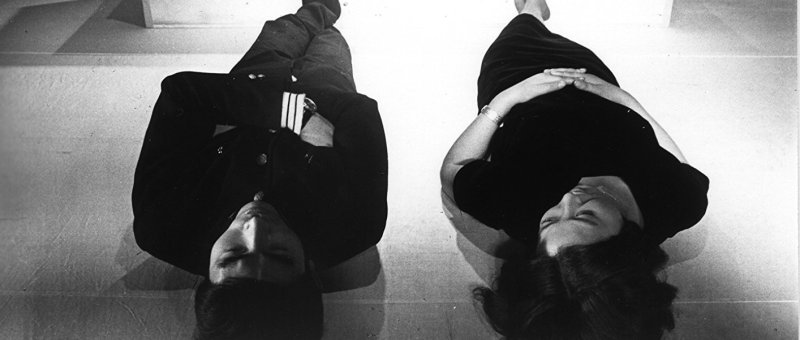
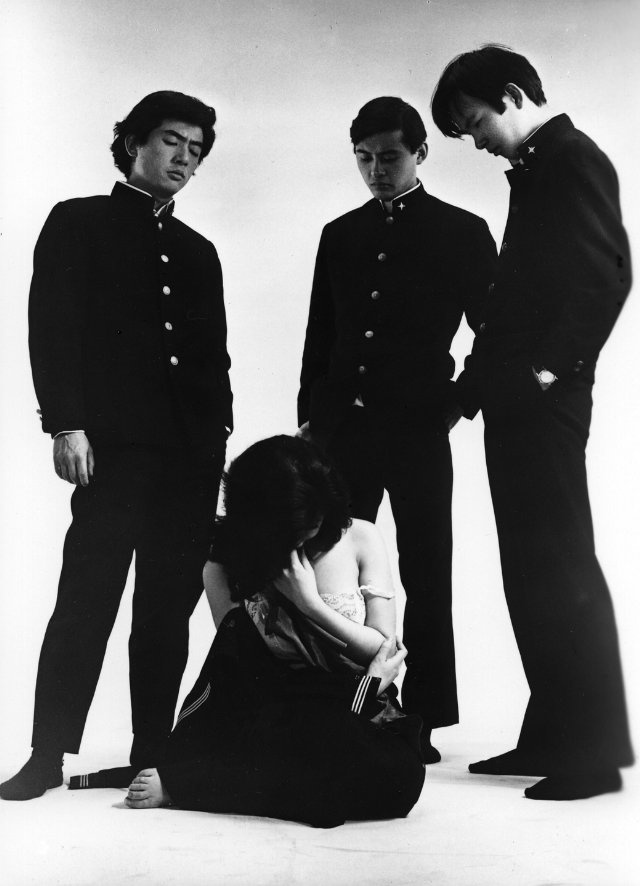
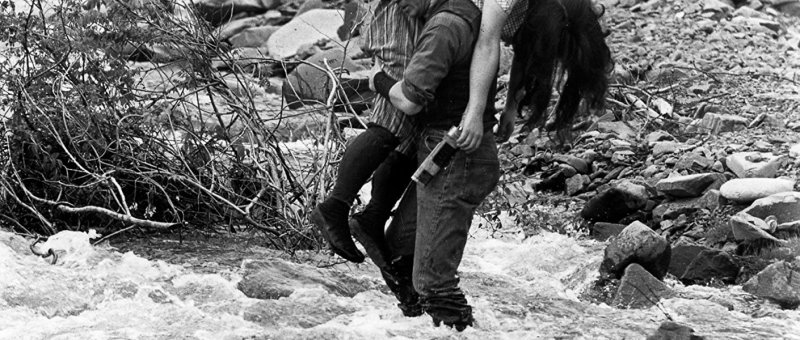
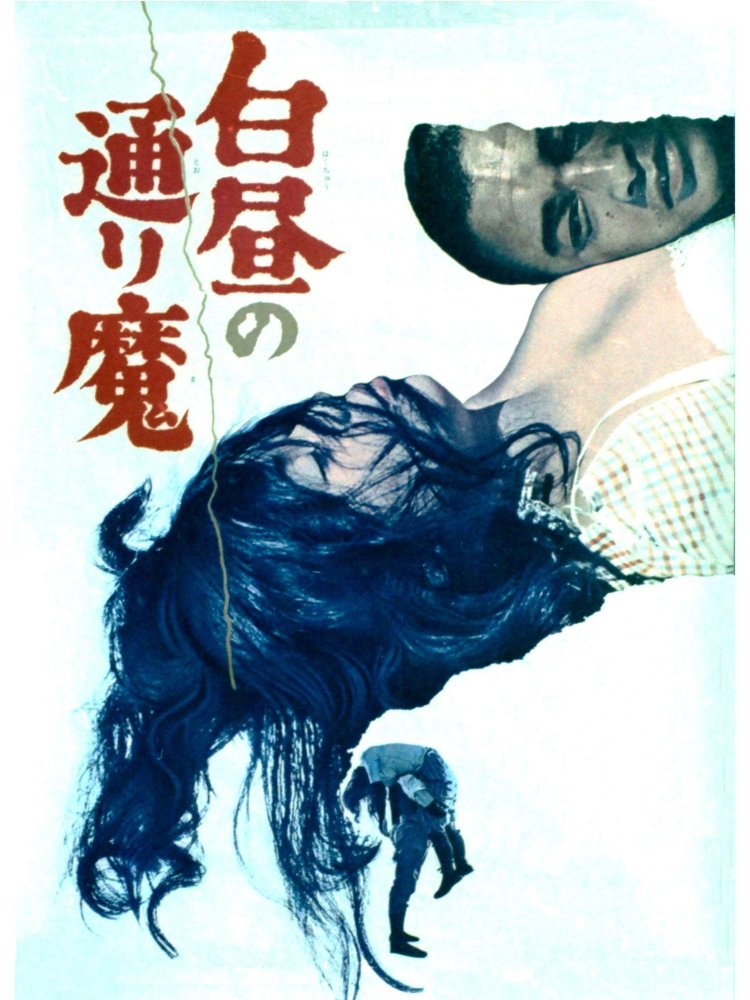
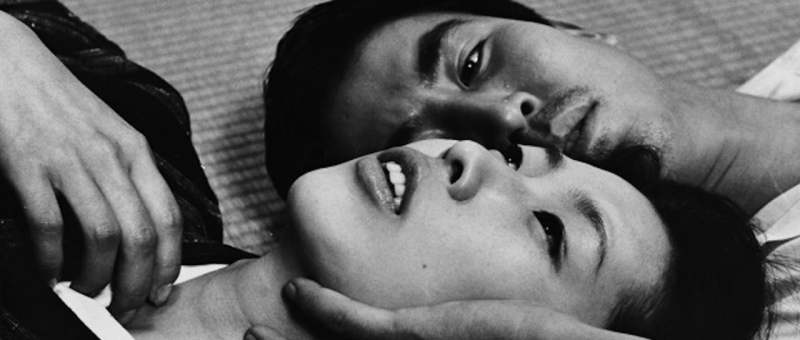
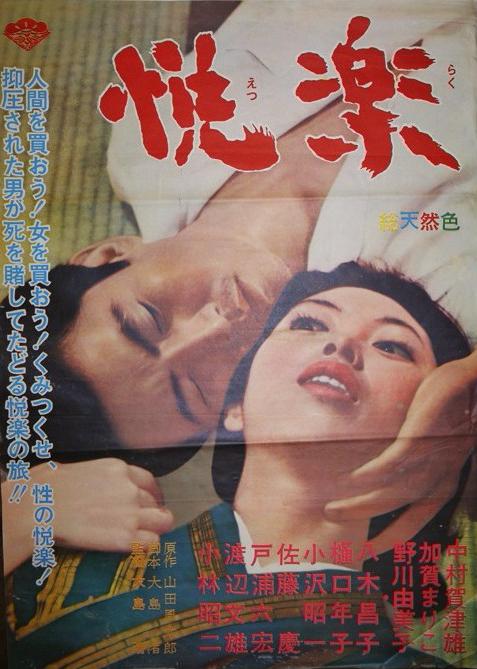
Vixen poster“Freedom for the masses!” cry the student protestors outside the claustrophobic environment of a corrupt educational institution at the heart of Yasuzo Masumura’s Vixen (女体, Jotai – lit. “a woman’s body”). While they cry for freedom, one young “liberated” woman finds she’s anything but free even in the throws of her liberation. Possessed of little power, she has a need to find herself a white knight but no sooner has she got him than she begins to long for new conquests, trapped in a destructive cycle of sex and violence. Subverting his own ideas of sex as liberation, Masumura reconfigures lust as a trap in the form of a siren song sung by a lonely young woman unable to find her place in the complicated post-war landscape.

Michi (Ruriko Asaoka), a modern young woman, has a brief episode of fondling an office chair while waiting to see the chairman of a university. Proudly showing off the bruises on her thighs, she accuses the chairman’s son of rape. Despite the evidence, Michi’s accusation is undermined by her mercenary behaviour which does not tally with that expected in such difficult situations. She’s come alone, flirts with the chairman’s secretary Nobuyuki (Eiji Okada), and is quick to talk money. Questioned at home the chairman’s son admits everything but thinks it’s no big deal because that’s just “how it’s done these days”. The chairman, worried more for his reputation which is already under strain given the widespread student protest movement, thinks paying Michi off is the best thing to do but there’s a disagreement over the amount. Nobuyuki’s wife Akie (Kyoko Kishida), sister of the accused and daughter of the chairman, only wants to give Michi half of the two million she’s asked for. Nobuyuki gives her the full amount anyway behind his wife’s back, winning Michi’s eternal admiration for his considerate treatment. Unwisely visiting her hotel room, Nobuyuki develops a dangerous fascination with the alluring young woman and embarks on a passionate, ill-advised affair.

Michi is, in many ways, the archetypal post-war woman. Orphaned at a young age she was raised by a grandmother in a small fishing village and has been living with another relative whilst working as a waitress in his ramen restaurant after coming to the city. She’s grown up in a more liberal era, has a “positive” attitude to sex, and lives outside of the “traditional” path for “respectable” young women of early marriage and continued monogamy. As someone later puts it, women like Michi are two a penny now that the economy is getting back on its feet – they live alone in the city, aren’t interested in marriage and value their independence. Michi, however, is more or less the opposite of this “new” kind of woman. Independence is something that frightens her beyond all else. She cannot survive without a man, does not want or know how to live alone as a “single” woman and uses her sex appeal in order to manipulate men into staying by her side to look after her. Sex is not what she craves so much as security, but security also frightens her and so each time she’s made one conquest she latches on to the next gallant young man who shows her any sign of kindness or courtesy.

Indeed, all Michi thinks she has to offer is her body – the “Jotai” of the title. Perhaps hinting at some past trauma in speaking of the roughneck fishermen that frequented her grandmother’s ramen shop, fatherless Michi says she’s chased men in her dreams since childhood, seeking new tastes and new sensations. She wishes she could find one man and stick with him because the chase and the longing cause her nothing but pain, but her need will not let her be. Asked what she will do when her appeal fades (as it inevitably will), Michi has no other plan than drinking herself into oblivion. “I’m a woman,” she says, “what is there for me to do but love?”. Quite far from the idea of the “liberated”, independent woman spoken of before who has learned to make her own way in the new “freedoms” promised by increased economic prosperity.

This false idea of liberality is one which originally attracts Nobuyuki. A straight laced salaryman working for his corrupt father-in-law and often doing his dirty work for him against his batter judgement, Nobuyuki has sacrificed his individual freedom for the rewards his society offers those who play by the rules. Also a war orphan, Nobuyuki sacrificed his youth to raise his younger sister (now preparing to marry herself), and has a comfortable, middle-class life with an austere if loving wife. Having worked his way into their upperclass world, Nobuyuki feels he doesn’t quite belong, something always nagging at him prevents Nobuyuki from fully committing to his drone-like life of pleasant conformity. A mad infatuation with Michi, an irritating child woman at the best of times, is an excuse to go all out in escaping the oppression of his conventional life but it’s not one with long term stability and his life with Michi is unlikely to offer him the freedom he had originally envisaged.

Later, Michi makes a play for the man Nobuyuki’s sister is set to marry. Akizuki (Takao Ito) is not like Nobuyuki – he’s a post-war man but one with definite ambitions and goals, each element of his life is a product of considered choices. As anyone would who took the time to really think about it, he’s turning Michi down, but for some reason he continues to help her placing a wedge between himself and his fiancée. This way of living – the considered, ordered, boring but pleasant life is directly contrasted with the chaotic, destructive, and perhaps exciting one that is offered by Michi, and the dull life is winning. Michi is miserable, and her self destruction is primed to drag any “nice” young man into her wake along with any other woman associated with him. Nobuyuki is left with a choice but it turns out not to be so binary as might be assumed. Personal freedom, if it is to be found, is not found in abandonment either to another person or to a job or way of life, but in the realisation that choice exists and can be exercised, freely, by all.


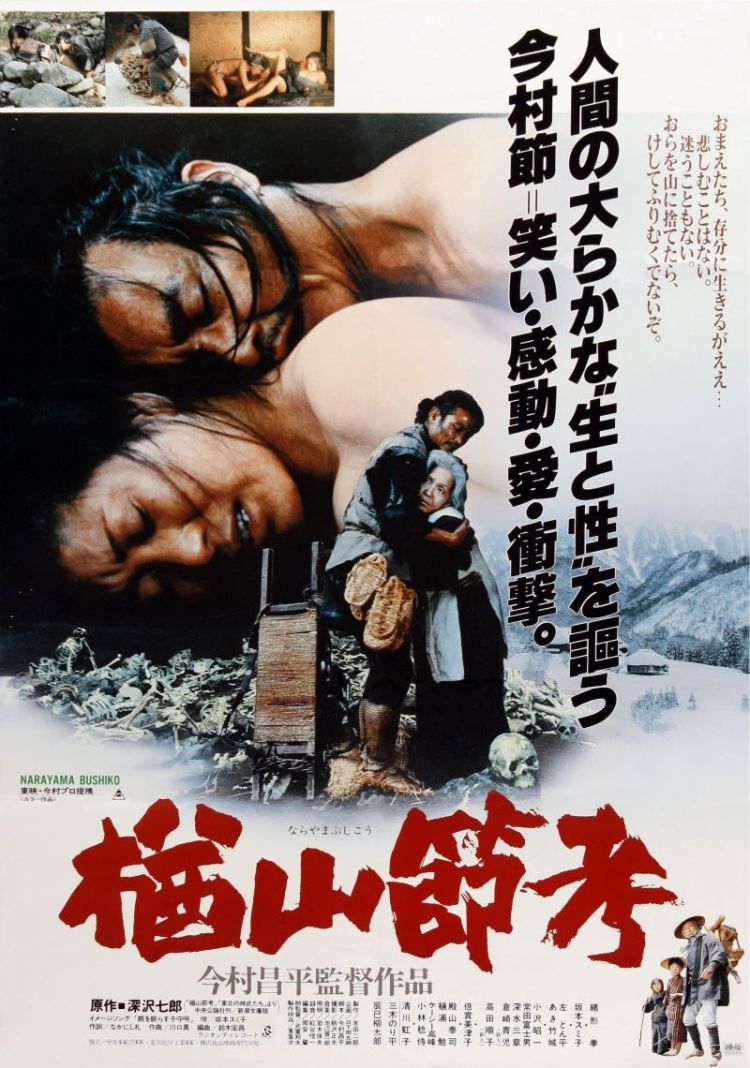
Children of the Dark (闇の子供たち, Junji Sakamoto, 2008)

Children of the Dark posterJunji Sakamoto’s career has been marked by a noticeable split between commercial projects and artier genre pieces but even considering his tendency towards socially conscious filmmaking, Children of the Dark (闇の子供たち, Yami no Kodomotachi) is a surprising entry into his filmography. Starring heartthrob Yosuke Eguchi as an earnest reporter determined to expose the extent of Japanese complicity in the exploitation of Thai children, Sakamoto’s film is hard hitting in the extreme, refusing to back away from the horrors that these children are forced to experience but perhaps taking things too far in putting his young actors through a series of emotionally difficult scenes. Children of the Dark was pulled from its slot in the Bangkok Film Festival for painting a less than idealised picture of the grim underbelly of Thai society but Sakamoto is also keen to point out that the problem is a global one which merely finds an unhappy home in a country many regard as a “paradise”.

Nanbu (Yosuke Eguchi), a Japanese ex-pat reporter living in Thailand, has been handed a hot tip on a difficult piece of investigate reporting relating to the illegal trafficking of human organs. His investigation brings him back into contact with a local NGO who operate a centre promoting educational and human rights whilst helping the impoverished children of the area. The NGO is currently investigating the disappearance of child they’d been trying to save, but the two investigations eventually overlap as it becomes clear that the organ trafficking and sexual exploitation of abandoned children are part of the same deeply entrenched cycle of human cruelty.

Nanbu’s key interest is in the Japanese connection to organ transplant case. A wealthy Japanese couple will apparently be bringing their son to Thailand for an illegal transplant to get around Japan’s strict medical ethics laws which prevent children becoming organ donors. Though it might be thought that the boy’s parents simply believe they will be undergoing a legitimate medical procedure only abroad, they are perfectly aware that the organ they will be receiving will have been acquired specifically for the purpose and will have been ripped from a healthy child rather than transplanted from an unfortunate accident victim.

Using the NGO’s contacts, Nanbu begins to realise how deeply the conspiracy runs. The NGO’s investigations lead them to a brothel in which extremely young boys and girls are kept in cages to be picked out like lobsters in a restaurant by the international clientele each after a different kind of sexual experience. The children are beaten if they refuse and literally “thrown out” in black bin bags should they contract illnesses such as AIDS. When one of the children is killed by a client who overdoses him on hormones, the matter is settled with financial compensation and the body disposed of. Many of these children are orphans from backgrounds of extreme poverty, neglected or abandoned by their parents into a life of sexual servitude in part caused by ongoing economic inequality which is only exacerbated by the thriving underworld enterprises of people and drug trafficking.

Nanbu is, however, only a reporter. Keiko (Aoi Miyazaki), a young and idealistic Japanese woman recently arrived in Thailand to work with the NGO, is committed to saving individual lives whereas Nanbu and the paper are committed to being passive observers exposing the truth in the hope that the whole sordid system will one day collapse. Keiko’s sometimes dangerous naivety is contrasted with Nanbu’s jaded complicity in essentially allowing a young child’s life to be sacrificed to get his story with only the justification that something might be done if the truth were known.

A final revelation, however, proves a step too far even if it encourages all to point the finger back on themselves and accept that personal complicity may run far deeper than most suspect. The tragedy is further undercut by the strange decision to end on an idyllic scene of paradise with a karaoke track playing over the top complete with lyrics pasted on the side – a tonal variation too far given the necessarily somber atmosphere of the the film as a whole. Despite the strangeness of the ending with its unexpected reversals and clumsy attempt at reflexivity, Children of the Dark is an urgent, difficult piece exposing the unspeakable cruelties hidden away in the underbelly of a foreign “paradise”.


Original trailer (no subtitles)
Eternal Cause (海軍特別年少兵, Tadashi Imai, 1972)

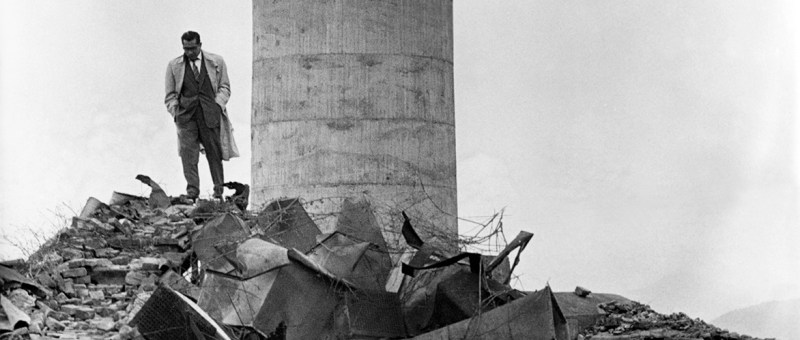
Marines cadets posterOften regarded as a “left-wing” filmmaker, even later pledging allegiance to the Communist Party of Japan, Tadashi Imai began his career making propaganda films under the militarist regime. Describing this unfortunate period as the biggest mistake of his life, Imai’s later career was dedicated to socially conscious filmmaking often focusing on those oppressed by Japan’s conservative social structure including the disenfranchised poor and the continued unfairness that often marks the life of women. 1972’s Eternal Cause (海軍特別年少兵, Kaigun Tokubetsu Nensho-hei, AKA Marines Cadets/ Special Boy Soldiers of the Navy) sends him back to those early propaganda days but with the opposite spin. Painting Japan’s tendency towards authoritarianism and its headlong descent into the folly of warfare as a direct result of social inequalities and the hierarchical society, Imai tells the dark story of the “special cadets”, children from military academies who eventually found themselves on the battlefield as members of the last, desperate defence of an already lost empire.

Imai opens at the grim conclusion – February 1945, Iwo Jima. A squad of young men catch sight of their “Instructor” just as he falls and are shortly all killed themselves by approaching American forces. The Americans, sympathetically portrayed, wander the corpse laden battlefield and lift the arm of one particular body lamenting that the fallen soldier is “just a boy”, and that Japan must be in a very bad state indeed if it has come to this. One of the soldiers, not quite dead as it turns out, manages to get to his feet. The Americans are wary but give him time in case he wants to surrender but the boy tries to charge them, crying out that he is a “Marine Cadet”. They have no choice but to shoot him dead.

Moving back around 18 months to June 1943, the “Marine Cadets” are new students at a military academy. On arrival they are instructed that everything they brought with them, including the clothes they are wearing, must be sent home. They are now at war and must forget civilian life. This dividing line neatly marks out the central contradiction in the Marine Cadets’ existence – they are children, but also marines.

Enrolment in the school is voluntary rather than conscription based and the young men have many reasons for having decided to enter the military, most of them having little to do with dying bravely for the Emperor. There is, however, a persistent strain of patriotism which brought them to this point as they find the sacrifice they offer to make all too readily accepted by their nation. The education on offer is wide-ranging and of high quality – the boys will learn English as well as geography, history, science and maths, all of which will hopefully turn them into well educated, efficient military officers, but there is profound disagreement between the teaching staff and “instructors” as to how that education should be delivered.

Sympathethetic teacher Yoshinaga (Katsuhiko Sasaki) believes in education and wants to contribute to raising these children in love seeing as he is in loco parentis. Kudo (Takeo Chii) the military instructor, however, disagrees. He believes in harsh discipline in which progress is encouraged through physical punishment and a strong shame culture. Yoshinaga reminds Kudo that the boys are just children and that such punishment based motivational techniques place the boys at each other’s throats and will undermine the spirit of comradeship and togetherness which is essential for the well functioning of any military unit. Kudo counters that the boys became men when they enlisted, that he was raised this way himself, and that a culture of violence binds the men together into a kind of hive mind which moves and thinks as one. Kudo does not waver in this belief even after his tactics have tragic consequences, but does come to love the children in his care, entrusting them to Yoshinaga as he prepares to face the battlefield himself.

As Kudo leaves, he stops to admit that the boys are children but also wants Yoshinaga to understand something he thinks may not have occurred to him. The boys are mostly poor children, who, he says, have only themselves to rely on unlike the officers who are by and large from middle-class families with extended safety nets of privilege. Kudo’s doctrine of progress through strength is born of being born at the bottom of the heap and needing to struggle to survive. They have made themselves strong in order to resist the consistent oppression of their economic circumstances which often prize nothing other than their physical capabilities.

Poverty is indeed a major motivator. The most sympathetic of the boys, Hayashi (Michiko Araki), has enlisted alongside another boy from his village, Enami (Taketoshi Naito), whose teacher father has fallen headlong for the militarist folly and is even allowing military representatives into his classroom to offer recruitment talks to the boys. He recommends Hayashi join the Marine Cadets as a matter of practically – Hayashi’s family is dirt poor and his father is a drunkard. Joining the academy means reducing the burden on the family who have many other children and also that he will eventually be able to send money home as well as being well provided for himself. Despite a lack of aptitude for soldiering, Hayashi is eventually grateful – in the academy he gets a taste of comfort he never knew at home as well as a sense of comradeship and brotherhood away from the hostile home environment dominated by the violence of a drunken father. Another boy makes a similar decision to escape his indifferent foster family after being orphaned. Despite the fact that his sister has embarked on a life of prostitution to support him, his relatives offer him only scant comfort and keep most of her money for themselves.

Yoshinaga’s complaints about the nature of the education the boys receive is quite naturally countered with a question as to why he is at the school at all given that these boys are destined only to become cannon fodder in a war which clearly all but over. His pleas for kindness and compassion largely fall on deaf ears. The boys are still children – our narrator is 14 when he enlists at the academy, but they have been encouraged to think of themselves as men. Their halfling status embarrasses them and they’re keen to prove themselves as brave soldiers of Japan. Yoshinaga, true to his word, tries to save the boys – ordering them to hide during final attack sure that the Americans will take pity on these child soldiers and prevent their lives from becoming meaningless sacrifices laid on the altar of an uncaring nation. He is unsuccessful because the boys’ heads are already filled with the idea of glorious sacrifice. Ashamed to be thought of anything other than Marine Cadets, they launch their own attack and sacrifice their lives willingly.

Imai is at great pains to remind us that this society cares nothing for the boys, 5,020 of whom fall on the battlefield, or for the poor in general who bear the brunt of a war that is waged against their interests. The approach is distinctly old fashioned for 1972 and the message at times unsubtle, but given that the film appears less than thirty years later than the events it depicts when those who survived would themselves still be young, perhaps fathers of teenage sons themselves, it serves as a timely reminder of past madness and a pointed warning for the consumerist future.


Youth of the Beast (野獣の青春, Seijun Suzuki, 1963)

youth of the beast posterSeijun Suzuki had been directing for seven years and had made almost 20 films by the time he got to 1963’s Youth of the Beast (野獣の青春, Yaju no Seishun). Despite his fairly well established career as a director, Youth of the Beast is often though to be Suzuki’s breakthrough – the first of many films displaying a recognisable style that would continue at least until the end of his days at Nikkatsu when that same style got him fired. Building on the frenetic, cartoonish noir of Detective Bureau 2-3: Go to Hell Bastards!, Suzuki once again casts Jo Shishido in the the lead only this time as an even more ambiguous figure playing double agent to engineer a gang war between two rival hoodlums.

Suzuki opens in black and white as the bodies of a man and a woman are discovered by a small team of policemen. Finding a note from the deceased female which states that she settled on taking her own life because she loved her man and thought death was the only way to keep him, the police assume it’s an ordinary double suicide or perhaps murder/suicide but either way not worthy of much more attention, though discovering a policeman’s warrant card on the nightstand does give them pause for thought.

Meanwhile, across town, cool as ice petty thug Jo Mizuno (Jo Shishido) is making trouble at a hostess bar but when he’s taken to see the boss, it transpires he was really just making an audition. The Nomoto gang take him in, but Mizuno uses his new found gang member status to make another deal with a rival organisation, the Sanko gang, to inform on all the goings on at Nomoto. So, what is Mizuno really up to?

As might be expected, that all goes back to the first scene of crime and some suicides that weren’t really suicides. Mizuno had a connection with the deceased cop, Takeshita (Ichiro Kijima), and feels he owes him something. For that reason he’s poking around in the local gang scene which is, ordinarily, not the sort of world straight laced policeman Takeshita operated in which makes his death next to a supposed office worker also thought to be a high class call girl all the stranger.

Like Detective Bureau 2-3: Go to Hell Bastards!, Youth of the Beast takes place in a thoroughly noirish world as Mizuno sinks ever deeper into the underbelly trying to find out what exactly happened to Takeshita. Also like Detective Bureau 2-3: Go to Hell Bastards!, Youth of the Beast is based on a novel by Haruhiko Oyabu – a pioneer of Japanese hardboiled whose work provided fertile ground for many ‘70s action classics such as The Beast Must Die and Resurrection of the Golden Wolf, but Suzuki’s ideas of noir owe a considerable debt to the gangster movies of the ‘30s rather than the moody crime dramas of twenty years later.

Jo Shishido’s Mizuno is a fairly typical ‘40s conflicted investigator, well aware of his own flaws and those of the world he lives in but determined to find the truth and set things right. The bad guys are a collection of eccentrics who have more in common with tommy gun toting prohibition defiers than real life yakuza and behave like cartoon villains, throwing sticks of dynamite into moving cars and driving off in hilarious laughter. Top guy Nomoto (Akiji Kobayashi) wears nerdy horn-rimmed glasses that make him look like an irritated accountant and carries round a fluffy cat he likes to wipe his knives on while his brother Hideo (Tamio Kawaji), the fixer, is a gay guy with a razor fetish who likes to carve up anyone who says mean stuff about his mum. The Sanko gang, by contrast, operate out of a Nikkatsu cinema with a series of Japanese and American films playing on the large screen behind their office.

The narrative in play may be generic (at least in retrospect) but Suzuki does his best to disrupt it as Mizuno plays the two sides against each other and is often left hiding in corners to see which side he’s going to have to pretend to be on get out of this one alive. Experimenting with colour as well as with form, Suzuki progresses from the madcap world of Detective Bureau 2-3: Go to Hell Bastards! to something weightier but maintains his essentially ironic world view for an absurd journey into the mild gloom of the nicer end of the Tokyo gangland scene.


Original trailer (no subtitles)
Lost Paradise in Tokyo (ロストパラダイス・イン・トーキョー, Kazuya Shiraishi, 2010)

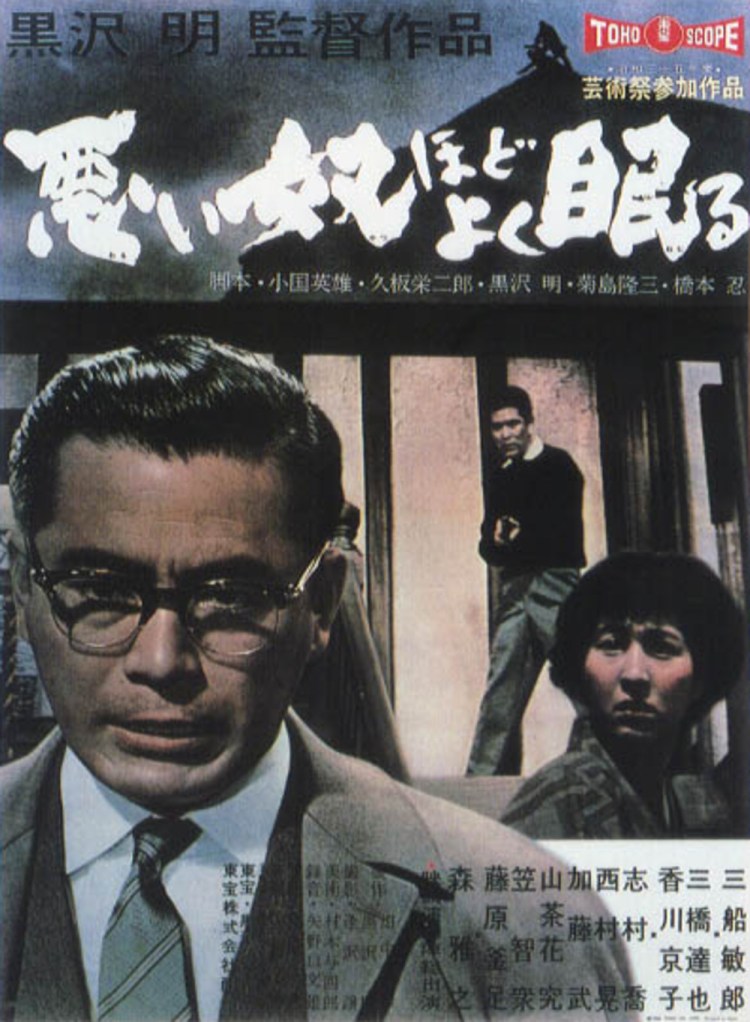
lost paradise in Tokyo posterHappiness seems an elusive concept for a group of three Tokyoites each chasing unattainable dreams of freedom in a constraining society. The debut feature from Kazuya Shiraishi, Lost Paradise in Tokyo (ロストパラダイス・イン・トーキョー) is much more forgiving of its central trio than many an indie foray into the forlorn hopes of modern youth but neither does it deny the difficulty of living in such frustrating circumstances.

Mikio (Katsuya Kobayashi) has a soul crushing job as a telephone real estate salesman at which he’s not particularly good and is often subject to trite rebukes from a patronising boss who breaks off from the morning mantra to enquire how the funeral went for Mikio’s recently deceased father only to then remark that Mikio’s dad won’t be able to rest in peace unless Mikio bucks up at work. At home, Mikio has just become the sole carer for his older brother, Saneo (Takaki Uda), who has severe learning difficulties and has been kept a virtual prisoner at home for the last few years. Saneo, however, is still a middle-aged man with a middle-aged man’s desires and so Mikio decides to hire a prostitute to help meet his sexual needs.

“Morin-chan” (Chika Uchida) as she lists herself, is also an aspiring “underground idol” known as Fala who makes ends meet through sex work. Depite Mikio’s distaste for the arrangement, Morin is a good companion to Saneo, calming him down and helping to look after him while Mikio is at work. In her life as Fala, Morin is also the subject of a documentary about underground idols and when the documentarians stumble over her double life they make her a surprising offer – allow herself to be filmed and they will give her a vast amount of money which might enable her to achieve her dream of buying a paradise island.

Mikio is doing the best he can but is as guilty of societal stigma relating to the disabled as anyone else and his guilt in feeling this way about his own brother coupled with the resentment of being obliged to care for him has left him an angry, frustrated man. Asked at work if he has any siblings Mikio lies and says he’s an only child, denying his brother’s existence rather than risk being associated with disability. At home he can’t deny him but neither can he be around to keep an eye on him all day and so there have been times when he’s had to literally (rather than metaphorically) lock his brother away.

Longing for freedom, Mikio wants out of his stressful, soul destroying job and the responsibility of caring for his brother while Morin is trapped in the world of “underground idols” who are still subject to the same constraints as the big studio stars only without the fame, money, or opportunities. As one of the documentarians points out, Morin (or Fala) is really a little old for the underground idol scene, her days limited and dreams of mainstream success probably unattainable. For as long as she can remember she’s dreamed of a paradise “island” where she can she live freely away from social constraints and other people’s disapproval.

Mikio had got used to thinking of his brother as a simple creature whose life consisted of needs and satisfactions but the entry of Morin into their lives forces him to consider what it is that his brother might regard as “happiness” and if such a thing can ever exist for him. Morin wants the three of them to go her paradise island where Saneo can live his life freely away from the unforgiving eyes of society but unbeknownst to any of them they may have already found a kind of paradise without realising.

Later Mikio admits that he and his father were content to lock Saneo away because they feared they wouldn’t understand him. Once Saneo hurt someone, not deliberately, but through being unable to express himself in the normal way and not fully understanding that his actions would cause someone else pain. Rather than deal with the problem, Mikio’s father decided to hide his son away – less to protect Saneo from himself, than in wanting to avoid the stigma resulting from his existence. Saneo, however, may not be able to express himself in ways that others will understand but is still his own person with his own hopes and ideas as his final actions demonstrate. Only once each has come to a true understanding of themselves and an abandonment of fantasy can there be a hope of forward motion, finally rediscovering the “lost paradise” that the city afforded them but they were too blind to see.


Available to stream in most territories via FilmDoo.

Original trailer (English subtitles)

A Chain of Islands (日本列島, Kei Kumai, 1965)

nihon retto posterKei Kumai made just 19 films films in his 40 year career, but even since his earliest days he ranked among the most fearless of directors, ready to confront the most unpleasant or taboo aspects of contemporary Japan. His first film, The Long Death, interrogated wartime guilt through drawing inspiration from a real life 1948 mass poisoning case in which materials manufactured in a Manchurian lab may have led to the deaths of post-war civilians. Having begun in this possibly controversial vein, Kumai pressed on with 1965’s A Chain of Islands (日本列島, Nihon Retto, AKA The Japanese Archipelago) which he set in 1959 as Japanese youth protested the renewal of the ANPO treaty which placed Japan under the military protection of the American Armed forces in return for allowing the presence of those forces on Japanese soil.

Despite the contemporary setting Kumai opens with a explanatory voice over detailing the depth of the American military presence and the function of the CID which exists solely to investigate crimes committed by American servicemen. The CID is staffed by both Americans and Japanese nationals who, the voiceover explains, often feel conflicted in stepping onto American soil each morning as prolonged exposure gradually erodes their sense of difference and finally of “Japaneseness”. Akiyama (Jukichi Uno) is a translator/investigator at CID and he’s about to be handed an unusual request from his boss – reopen a cold case from the previous summer in which an American Sergeant was found floating in Tokyo bay. Akiyama’s new boss was a friend of the late soldier and would like to know what happened.

Akiyama’s investigations lead him down a dark path of corruption, murder, conspiracy, and governmental complicity. Beginning to investigate the case, Akiyama discovers that nothing is quite as it seems. A couple of policeman from the original investigation arrive to help him and echo their frustrations with the way the case was handled. Despite the police investigation, the American authorities did their best to interfere – commandeering the body and claiming jurisdiction in contravention of Japan’s standing as a sovereign nation. The Americans are no longer occupying forces but honoured guests who should obey international protocol in cases like these, but they rarely do. Despite the existence of the CID, crimes by American servicemen are generally covered up as the military insists the matter will be dealt with internally only for suspects to be suddenly “transferred” overseas.

Sgt. Limit was, however, one of the good ones and Akiyama’s investigation seems to point towards a murder and cover up instigated because Limit had got too close to the truth in investigating a sudden flood of counterfeit cash. The Americans, to the surprise of all, are only the middle man in the grand conspiracy which leads right back to the dark heart of Japan and the vast spy networks operated during the militarist era. As might be expected, these valuable networks are left wide open with the collapse of Japanese fascism but are perfectly primed to facilitate widespread crime spanning the Asian world and all with the tacit approval of the American and Japanese states.

Kumai also implicates the spy ring in a series of “mysterious” rail incidents, but makes sure to reserve some of his ire more the more usual injustices. Akiyama is caring for his young nephew whose father was killed in mining explosion which has claimed the lives of nearly every young man in the village leaving his sister unable to cope with her children alone. He is also battling a personal tragedy which is intensely connected to his decision to join CID which is currently inundated with cases of rape and murder in which American servicemen are implicated. The “foreign” becomes suspect but mostly for its hypocrisy as in the Catholic priest who becomes a major suspect in subverting the legitimate devotion of a Godly woman who only sought to live under the Christian teachings of love and kindness, while the American forces claim to stand for honour and justice but actively facilitate organised crime at an interstate level to further the progress of Capitalism whilst also facilitating civil unrest in volatile nations for financial and political gains.

That all of this happens immediately before the renewal of the ANPO treaty is no coincidence and Kumai even includes aerial footage of the mass protests filling the streets around the Diet building as the youth of Japan question why their nation has seen fit to make itself so complicit in the questionable foreign policy of another country. The outcome looks bleak for our protagonists who discover themselves to be mere pawns at the mercy of greater forces which cannot be circumvented or denied, but just as it all looks hopeless a new hope arises. Pledging to fight harder and continue the work which has been started, those left behind dedicate themselves to equipping the young with the tools to build a happier, fairer world in contrast to the one they seem primed to inherit from those who should know better. The final sequence shows us a young woman walking gloomily past the Diet building which seems to be looming over her as a veritable symbol of oppression but then her face brightens, her step quickens and she leaves the Diet far behind to walk forward towards the work which awaits her. 


A comprehensive overview of the 1960 ANPO protests.

The Sea and Poison (海と毒薬, Kei Kumai, 1986)

the sea and poison posterWhen thinking of wartime atrocity, it’s easy enough to ascribe the actions of the perpetrators to a kind of madness, to think that they have in some way moved away from us to become some kind of “other”. In thinking of those who transgress our notions of humanity as inhuman or “evil” we can absolve ourselves of their crimes, believing that they are not like us and we are not like them. The truth is never so simple and as long as we continue to other these dark parts of ourselves, we will not be able to overcome them. The Sea and Poison (海と毒薬, Umi to Dokuyaku), adapted from the novel by Shusaku Endo, shows this delusion of inhumanity for what it is in taking as its central concern the real life case of the doctors at a Kyushu university who committed heinous acts of experimentation on eight American prisoners of war in late 1945. Rather than focus of on those who took the decision that the experiments should take place, Endo and Kumai examine the motives of those on the fringes who merely went along with them finding that they did so for petty, essentially human motives.

Shot in a crisp black and white, the film opens in a caged cell where an American officer is interrogating a young man still in a student’s uniform. Suguro (Eiji Okuda) is the first of several witnesses to the deaths of eight American servicemen during alleged vivisection at the hospital at which Suguro had worked. Young and naive, Suguro is the most sympathetic of three witnesses we will encounter but his essentially compassionate nature puts him at odds with his colleagues who abhor “sentimentality” and regard his emotionality as a childish weakness. It is through Suguro that we discover that the hardness that has apparently led to these horrific betrayals of the physicians’ code are not born of the war, or of militarism, or of adherence to some ideal like god or country but are a natural extension of the hyper-rational attitude of the medical profession.

Suguro’s colleague, Toda (Ken Watanabe), is his polar opposite, viewing Suguro’s sense of compassion as a ridiculous but somewhat endearing character trait. A textbook nihilist, Toda takes the view that as death comes to us all, the when and why are essentially unimportant. When so many are dying in air raids or on the battlefields, what does it matter that some also die in hospitals. Yet Toda is, in someways, the most ruminative among the hospital staff. In the diary he keeps, Toda attempts to dissect himself and his ongoing lack of feeling. Telling the interrogators that he began the diary because he had begun to find himself “creepy”, Toda asks why it is he feels nothing in relation to his fellow men. Surely it must be right that one should feel some degree of empathy? Toda volunteers for the experiments in part to test his own hypothesis but discovering that he still feels no pity for these men, he wonders if these ideas of morality are a kind of affectation seeing as others too can commit such acts of extreme cruelty and think nothing of it.

In this, Toda earns our sympathy, seeming at least to want to feel something even if he does not. Nurse Ueda (Toshie Negishi), by contrast, is the most human and also the most repugnant of our three witnesses. Her concerns are petty and ordinary, born of jealousy and resentment. Returning again to the scene of a botched surgery, Kumai shows us Ueda calling the operating theatre and being told to give a patient a dose of morphine by a harried doctor still panicked by the ongoing OR drama. Following her instructions, Ueda fills a syringe but the vial is knocked out of her hand by the German wife of the head doctor, Hilda, who was once a nurse herself and likes to help out on the wards. Hilda is a severe woman but not a cold one, she cares for the patients but perhaps with a more rigorous adherence to the nurses’ code than the less experienced team at the hospital. Hilda tries to get Ueda fired for her “mistake”, scolding her by asking (in German) if she is not afraid of God, and expressing concern that she thought so little of giving a fatal dose of morphine to a suffering patient.

Ueda’s decision to attend the experiments is a form of backhanded revenge – Hilda, whom everyone regards as some kind of annoyingly saintly figure, has no idea her husband would be involved in something so against her deeply held ideals, but Ueda also offers another reason when she says that the doctors exist in another, more rarefied world to the rank and file ward staff. This idea is echoed again by the head nurse, Ohba (Kyoko Kishida), who states that nurses must do as the doctors tell them without asking questions. Ohba rounds out the just following orders contingent but the first half of the film has already shown us that the medical profession is corrupt and cannot be trusted.

The old Dean has had a stroke and there is a mini war of succession in play between the heads of surgery divisions one and two. Dr. Hashimoto (Takahiro Tamura) had been the favourite but his star is fading. In an effort to improve his chances, he decides to move up an operation on a friend of the Dean – a young woman with advanced TB. Meanwhile, Suguro’s patient, an old woman who also has TB has been earmarked for “experimental surgery”. The old woman has not been properly briefed on the risks of the operation in which she has only a five percent chance of survival and has only agreed to it because the doctor, whom she trusts implicitly, has told her it’s her only chance. The Dean’s friend is “Mrs. Tabe”, and she is “important”. The old woman is only “the welfare patient” and therefore not important at all.

Suguro, anxious to save the old woman to whom he has developed an attachment, wants the operation to be postponed, at least until she’s potentially strong enough to survive but Dr. Shibata (Mikio Narita) is only interested in using her as a potential candidate for experimentation which he claims will help future treatment of TB but also, of course, improve his career prospects. Mrs. Tabe’s mother asks the doctor if her operation carries any risk but the assistant laughs in her face, claiming the operation is so simple even a monkey could do it and pretending to be insulted that she has so little faith in her physicians. The operation goes wrong and Mrs. Tabe dies which is bad news for Dr. Hashimoto but rather than offer his apologies to the relatives, he tries to cover it up. So that it won’t look like she died on the table, they take the body back to her room and hook it up to a drip, insisting to Mrs. Tabe’s mother and sister that all is well while planning to announce that Mrs. Tabe died of complications from the operation early the following morning.

This level of callousness and self interest is echoed in Dr. Shibata’s justification that the old woman is going to die anyway and therefore the operation is worth a shot even though he believes it will kill her and is not in any way attempting to save her life (though it would be a nice bonus). Unlike Toda’s nihilism, Shibata’s practicality has no human dimension, he thinks in numbers and statistics, deciding who is a “real patient” and who is not. This same justification is used when recruiting doctors for the experiments. The US servicemen are downed aircrew from the bombers which have been making raids overhead for months. A court in Tokyo has ruled the random bombing contravenes international law and has sentenced the airmen to death. Seeing as the airmen will die anyway, might it not be “better” for their deaths to “benefit” medical science? The operations will be conducted under anaesthetic and so the men will not be in pain or know their fates which might, perhaps, be better than a firing squad.

The reality is not so convenient. Asked if his agreement was partly revenge, Suguro replies that, no, he felt no hate, he was just too mentally and physically exhausted to resist. Threatened by soldiers with guns he capitulates but refuses to assist in the room on the day, remaining a passive witness cowering at the edges. Before the operation, Dr. Gondo (Shigeru Koyama) makes small talk with the subject in English, asking about his hometown to which the airman, poignantly, says he’d like to return. The surgery is not like that conducted on Mrs. Tabe. The airman gets only ether and he struggles as the cloth is placed over his mouth, requiring four people – two doctors and two nurses, to hold him down until he stops kicking. This is no gentle death, this is murder.

A possible “justification” lies in the fact that the operating room is also filled with soldiers who laugh and jeer, snapping away on their brand new German-made camera. Tanaka, the officer in charge, asks for the airman’s liver after the operation, joking that he’d like to feed it to his men. The liver is indeed delivered to the horrified faces of the soldiers waiting for the party they’ve organised to begin, though it is not clear whether Tanaka really intends to feast on it or keep it as some sort of grim souvenir. Gondo, looking at the liver, remarks that they’ve all grown used to corpses but that “sentimentality” is never far away. Nevertheless, he appears to feel no real remorse for the heinous act of killing in which he has just been involved.

Adopting Endo’s Christianising viewpoint, the interrogations take place in a ruined church, a statue of the Virgin Mary directly above Ueda as she gives vent to her impure thoughts. The trio are being judged, not only by God but by us – or “society” as Suguro later puts it. The central proposition is that prolonged exposure to death on a mass scale – firstly as members of the medical profession, and later as victims of war, has led to an inhuman, nihilistic viewpoint in which we are all already dead and that, therefore, nothing really matters anymore. It isn’t clear who suggested this be done or why, but it is clear that Hashimoto collaborated in an effort to save his career by allying himself with the military – something he misses out on anyway when Shibata steals his thunder. Suguro is powerless to resist, Toda a melancholy sociopath, Ueda a vengeful woman, and Ohba a willing disciple of a beloved doctor, but none is a zealot to a regime or true believer in militarism. This is the dark heart of humanity – selfishness and cowardice, petty jealousies and ambitions. Kumai paints this scene of desolation with intense beauty, which only makes it all the more painful.


Original trailer (no subtitles)
Death at an Old Mansion (本陣殺人事件, Yoichi Takabayashi, 1975)

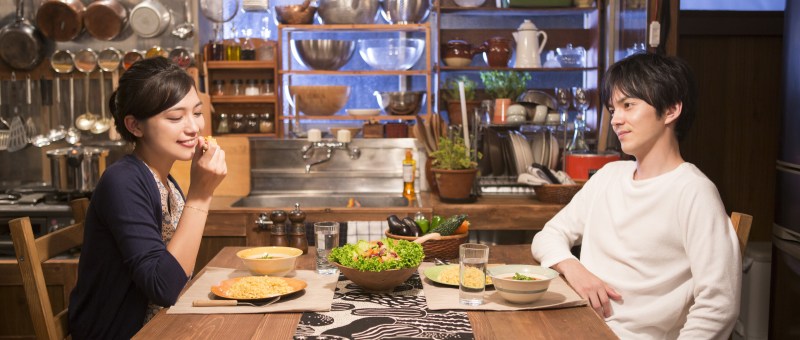
death at an old mansion posterKousuke Kindaichi is one of the best known detectives of Japanese literature. There are 77 books in the Kindaichi series which has spawned numerous cinematic adaptations as well as a popular manga and anime spin-off starring the grandson of the original sleuth. Sadly only one of Seishi Yokomizo’s novels has been translated into English (The Inugami Clan which has the distinction of having been filmed not once but twice by Kon Ichikawa), but many Japanese mystery lovers have ranked his debut, The Murder in the Honjin, as one of the best locked room mysteries ever written. Starring Akira Nakao as the eccentric detective, Yoichi Takabayashi’s Death at an Old Mansion (本陣殺人事件, Honjin Satsujin Jiken) was the first of three films he’d make for The Art Theatre Guild of Japan and updates the 1937 setting of Yokomizu’s novel to the contemporary 1970s.

Beginning at the end, Kindaichi (Akira Nakao) arrives at a country mansion with a sense of foreboding which borne out when he realises that the young lady he’s come to see, Suzu (Junko Takazawa), has died and he’s arrived just in time to witness her funeral. It’s been a year since he first met her, though he did so under less than ideal circumstances. As it happened, Suzu’s older brother, Kenzo (Takahiro Tamura), was married to a young woman of his own choosing, Katsuko (Yuki Mizuhara), despite strong familial opposition. On the night of their wedding, the couple were brutally murdered inside a private annex to the main building. The doors were firmly locked from the inside and there was no murder weapon on site. The only clue was bloody three fingered handprint made by someone wearing the “tsume” or picks used for playing the koto. Kindaichi, already a well known private detective, was summoned to investigate because of a personal connection to Katsuko’s uncle, Ginzo (Kunio Kaga).

The original novel was published in 1946 and it has to be said, some of its themes make more sense in the pre-war 1937 setting than they do for the comparatively more liberal one of 1975 though such small minded attitudes are hardly uncommon even in the world today. The Ichiyanagi family live on a large family estate (apparently not the “Honjin” – a resting place for imperial retinues in the Edo era, of the title but the ancestral association remains) and enjoy a degree of social standing as well as the privilege of wealth in the small rural town. Katsuko, by contrast, is from a “lowly” family of well-to-do farmers – mere peasantry to the Ichiyanagis, many of whom believe Kenzo is making a huge and embarrassing mistake in his choice of wife. Kenzo, a middle-aged scholar, has shocked them all with his sudden determination to marry, not to mention his determination to break with family protocol and marry beneath him.

Japanese mysteries are much less concerned with motive than their Western counterparts, but class conflict is definitely offered as a possible reason for murder. Other clues have more menacing dimensions such as the repeated mentions of a scary looking three fingered man who apparently delivered a threatening letter to the mansion on the night of the murder, and Suzu’s constant questions about her recently deceased cat who liked to listen to her play the koto. Suzu is 17 but has some kind of learning difficulties and is arrested in a childlike state of innocence which leads her to utter simple yet profound words of wisdom whilst also believing that her recently deceased cat, Tama, is some kind of god. Suzu’s “innocence” is contrasted with her brother’s coldhearted rigidity in which he’s described as a sanctimonious snob who believes himself above regular folk and treats his servants with contempt. This same rigidity in fact aligns him with his sister as both share an “atypical” way of thought and behaviour. Kenzo’s unexpected romance turns out not to be middle-aged lust for domination but an innocent first love arriving at 40 with all the pain and complication of adolescence.

Kindaichi arrives to solve the crime and makes an instant partner of the police inspector in charge who’s glad to have such esteemed help on such a difficult case. Putting two and two together, Kindaichi soon comes up with a few ideas after rubbing up against a mystery novel obsessed suspect and numerous red herrings. Once again coincidence plays a huge role, but the business of the murder is certainly elaborate given the pettiness of the reasoning behind it. Takabayashi never plays down the typically generic elements of this classic mystery, but adds to them with eerie, occasionally psychedelic camera work, shifting to sepia for imagined reconstructions and making use of repeated motifs from the fire-like imagery of the water wheel to a shattered photo of Kenzo shot through the eye. Strangely framed in red and gold the murder takes on a theatrical association that’s perfectly in keeping with its well choreographed genesis, and all the more chilling because of it. A satisfying locked room mystery,  Death at an Old Mansion is also a tragedy of out dated ideals equated with a kind of innocence and purity, of those who couldn’t allow their dreams to be sullied or their name besmirched. Perhaps not so different from the world of 1937 after all.


Original trailer (no subtitles)

The Laughing Frog (笑う蛙, Hideyuki Hirayama, 2002)

laughing frog posterEver have a day (or perhaps a lifetime) where you feel so stupid that even the frogs are laughing at you? That’s pretty much how it is for disgraced former bank manager Ippei when he turns up one day at a family holiday home he assumed would be empty but turns out not to be. In Laughing Frog (笑う蛙, Warau Kaeru) director Hideyuki Hirayama deftly dissects the modern family, the gradual redundancy of the middle-aged man, and the way society seems to have of anointing the lucky and the unlucky, in a darkly humorous satire in which even mother nature seems to be mocking our petty human concerns.

33 year old Ryoko (Nene Otsuka) is attending the third memorial service for her late father at which her greedy sister-in-law (Kumija Kim) asks for various things in an attempt to get some of the inheritance in advance while Ryoko’s brother (Shuzo Mitamura) wanders off to chat about silkworms in Chinese on his mobile phone. The event ends with Ryoko’s sprightly mother (Izumi Yukimura) and the sister-in-law urging her to sort out some kind of marital difficulties in order to ease the awkwardness surrounding her lack of external connections.

Meanwhile, Ryoko’s missing husband, Ippei (Kyozo Nagatsuka), rocks up at a rural station and climbs into a familiar house through an open window. Wandering around in his pants, he hears a noise and realises someone lives there after all. Ryoko has moved into her father’s old house in the country and started a whole new life for herself. After a brief discussion, Ryoko agrees to let him stay for a while on the condition that he finally sign the divorce papers but Ippei soon finds himself confined to an especial kind of irrelevance as he starts his new life in the hall cupboard observing his wife’s new freedoms by means of a tiny hole in the wall.

No one seems to have much of a good word to say about Ippei, which is fair enough seeing as he apparently became obsessed with a bar hostess and embezzled money from his bank to pay for a lavish affair before running away and leaving his wife to deal with the fallout. He is, however, paying for it now as his own irrelevance is once and truly brought home to him as he lives out his days like an impotent ghost trapped in a storage cupboard undergoing his wife’s strange mix of kindness and revenge.

Ryoko, the goodly wife, is not quite all she seems. Ippei’s mistress makes a surprise appearance to try a spot of extortion on the wealthy wife but she’s no match for Ryoko’s perfectly practiced poise. One of the oddly cruel accusations the mistress has to offer is that Ippei once referred to a kind of boredom with his wife’s properness, branding her a “fancy pet cat” whilst apparently avowing the mistress’ bedroom superiority. If Ippei’s sheepish behind the wall expression is anything to go by he is guilty as charged but then perhaps the uncomfortable statement leads right back to his uncomfortable place within Ryoko’s upperclass family who seem to look down on a mere bank manager, affecting politeness while secretly bemoaning the fact that their daughter has married beneath herself.

The model upperclass family is a simulacrum. Feigning politeness, elegance and dignity they attempt to disguise their otherwise distasteful affectations. Ryoko’s sister-in-law is at least honest in her constant harping on about the inheritance, plan to steal grandma’s house out from under her to knock it down and build a new one, and constant asides to her apparently hopeless (and unseen) son away at a (not great) university. Meanwhile her husband, Ryoko’s brother, pretends to chat silkworms in Chinese on his phone but is really talking to a Chinese mistress and Ryoko’s mum is planning to get married again to a (possibly dodgy) antiques dealer (Mickey Curtis) who is so deeply in debt there won’t even be any inheritance anyway.

Ryoko too has moved on. Ippei is forced to watch as she entertains her new boyfriend (Jun Kunimura), a stonemason whose main line is headstones, while the frogs outside work themselves into some kind of frenzy. Little by little all his manly affectations are worn away – he’s forced to realise how foolish he’s been, how irrelevant he is in Ryoko’s life, and how perfectly pointless his fugitive existence really is. Ryoko meanwhile remains calm and calculating. She “lies” and she wins in a bloodless victory, allowing her opponents to sentence themselves to the punishments they feel themselves to deserve. Ippei, it seems, is just a weak, unlucky man doomed to ruin himself through a series of poetic failures and petty self involved mistakes. Meanwhile the frogs look on and laugh at our human follies. Makes you feel small doesn’t it….


Third Base (サード, Yoichi Higashi, 1978)

third posterJapanese cinema of the 1970s is a highly charged affair. Stories of alienated youth and nihilistic denials of future possibility predominate as the (usually) male protagonist assesses his place within a rigid and conformist society and often comes to the conclusion that there is none for him. While political turmoil continues to undermine these deeply held values of social conformity and passive acceptance, young men suffer individually and in private until, that is, they find themselves punished by society for the transgressions it causes them to commit. Scripted by Shuji Terayama and adapted from a novel by Haku Kenjo, Yoichi Higashi’s Third Base (サード, Third) is the story of one such young man who has found himself confined to a reformatory with no hope for the future and no direction in which to run.

Seno (Toshiyuki Nagashima), known as “Third”, is an inmate at Kanto – Asahi Reform School. Like most of the other boys, Third is in for violent crime – in his case, murder, and is not exactly a model pupil. In fact, he’s currently in solitary after fighting with another boy who spat in his soup. Though the atmosphere of the school is severe with an emphasis on slightly militarised discipline, it is also progressive and geared towards finding out why these young men came to exhibit such unwelcome behaviours and how they might be able to overcome them. Hence, the fight is not only punished with solitary confinement but a group discussion among all present during which both Seno and the other boy are encouraged to recognise the various ways in which they are both at fault.

A strange thought experiment in Seno’s diary causes mild alarm to one of the staff at the school. “The connection between a car and a spring – which goes around more?” – the doctor is confused by this unusual sentence but on being asked to elaborate Seno makes clear he’s talking about a wind up car. When you wind it up the wheels go round but if you hold the spring the car will turn, and if you hold the car the spring will turn. This is the relationship Seno was puzzled by – which one is turning the other. The doctor draws the conclusion that the “spring” is juvenile delinquency and the car is society, but Seno insists he’s just talking about a toy car.

Yet there is something in it. Some of the boys are inside because of economic oppression, entering lives of crime through lack of other options but there are also upperclass boys in here too who have never been hungry and have no reason to steal. Another of the staff tells a disinterested Third about a relative of his who ended up in a reform school despite coming from an “elite” home. The boy claims he rebelled because “there is no such thing as equality – it is simply a word to make people feel better”. His crimes were intended to expose a societal lie. Likewise, the boy turned the same logic on murder claiming that wars and genocide were abhorrent, but individualist murders were “beautiful”. A short while later the young man took his own life – presumably something the reform school staff are eager Third does not do.

Suicide is a choice which is presented to Third – when one of the other boys runs off during outdoor labour, he hangs himself in the woods rather than try to escape. Third’s nickname is inspired by his position on the baseball field – third base, which he says he played neither well or badly. It is also an ironic comment on his existence in which he is neither one thing nor another, at odds in the free world and among those other outsiders imprisoned in the reformatory. Yet suicide is an idea Third rejects. Considering the other boy’s fate, Third feels himself to be running in “another direction”, wanting to live but not knowing how. A recurrent dream finds him on the baseball field, running the bases only to find there is no home plate. What Third wants is to locate his home base, to finally find his place in the world where he can belong and be accepted, but until he knows where it is he’ll just be running without aim or purpose.

Running in his mind, Third is imprisoned but only through his confinement does he learn to find the world “beautiful”. His cellmate has a similar thought but confesses he’s begun to find his hope “boring”, that freedom only inspires hopelessness. It’s this sense of ennui and apathy which pushes these young men towards violence and frustration, unable to find a more productive way to propel themselves forward and getting stuck at the bottom of the pile in a society which tries to straightjacket them into lives which are both undesirable and unattainable. Running still, Third does seem to have found a potential solution in instructing his breathless running mate to move at his own pace – embracing individualism over social conformity. Nevertheless, home base seems an elusive destination and Third will be a longtime running if ever he really does find his place in an essentially uncaring society.


Original trailer (no subtitles)