
Review of Takeshi Kitano’s Hana-bi (はなび) first published by UK Anime Network.
Takeshi Kitano might still be best known for his ultra violent gangster pics, but after making it into the international arthouse repertoire with Sonatine back in the early ‘90s it was Hana-bi which put him on the map as one of Japan’s most prominent exports. Kitano plays the lead in the film once more adopting his cooler than cool persona with occasional flashes of violence only this time on the side of the law (to begin with, anyway).
Told in an initially confusing, flashback structure, Hana-bi follows middle aged policeman Nishi who experiences several life changing events in a short space of time. At the beginning of the film he’s let off a stakeout and told to go visit his wife who’s ill in hospital. Unfortunately, as we later find out, this will prove to be a poor decision as pretty much everything goes wrong – Nishi’s partner, Horibe, is shot and ends up paralysed, one of his other men is wounded and tragically another killed right in front of Nishi’s eyes. After being told that nothing more can be done for his wife and it’s better that she just come home from the hospital, Nishi quits the police force, gets involved with the yakuza and robs a bank before taking off with his wife for one last holiday.
Actually, the film skips over its climactic event until quite a way into its running time. Kitano unsettles us right away by giving us very little explanation for what we’re seeing. He shows us Nishi meeting with the widow of a man we didn’t even know was dead yet (not that he really told us who she was anyway). We’re left to piece events together like a detective listening to a confused witness testimony only our information is primarily visual – there isn’t even a lot of dialogue to guide us on our way. This refreshing technique is one the generally laconic Kitano seems to favour and greatly adds to Hana-bi’s low-key style.
Kitano never says too much in his movies anyway, but this time his is wife also near silent uttering the grand total of two words in the entire film and both of those come in the final scene. We know that she has a terminal illness (though it isn’t clear that she knows this, or how much she understands). Nishi and his wife also apparently lost their young daughter not long ago and it’s implied that perhaps she just hasn’t been fully present ever since. Her lack of speech, shyness and constant game playing coupled with her outwardly cheerful (if sometimes vacant) demeanour give her a childlike quality but the two words she does offer at the film’s conclusion imply (at least in that moment) that she knows what’s going on and understands what is about to happen.
Nishi and his wife have an extremely close relationship, they rarely need to speak to each other. However, Nishi’s partner, Horibe, discovers that his marriage was not as secure as he assumed as his wife and daughter walk out on him after his accident. In an effort to give him something to strive for, Nishi sends him some painting supplies and henceforth Horibe’s artwork (actually designed by Kitano himself) becomes a prominent motif in the film. The first series takes animals and then people and paints them with the heads of flowers but this then gives way to more complicated pointillist scenes. Many of Horibe’s works feature a repeated motif of a man, woman and child (neatly echoed in the films closing scenes) seemingly enjoying a happy family occasion. Perhaps this is an odd sort of masochism on Horibe’s part, lamenting everything he’s lost since his accident but the two figures could also represent the Nishis reunited with their lost daughter.
Shot in Kitano’s trademark blues, Hana-bi is a melancholy tale. Flowers and fire, Kitano shows us both extreme tenderness and fits of violence as he’s both the loving husband, grieving father, nurturing best friend and hardline cop who bears personal responsibility for the loss of his own. This path only leads in one direction and we’ve figured out where we’re headed long before nearing the end of our journey. Nevertheless, Hana-bi is a rich, poetic experience which continues to prove deeply moving and endlessly fascinating.
Hana-bi is re-released in the UK today on blu-ray courtesy of Third Window Films who will also be releasing Dolls and Kikujiro in the near future.
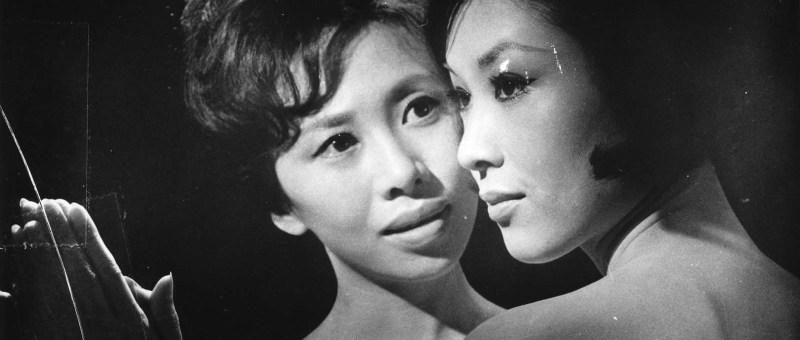
 For arguably his most famous film, 1964’s Manji (卍), Masumura returns to the themes of destructive sexual obsession which recur throughout his career but this time from the slightly more unusual angle of a same sex “romance”. However, this is less a tale of lesbian true love frustrated by social mores than it is a critique of all romantic entanglements which are shown to be intensely selfish and easily manipulated. Based on Tanizaki’s 1930s novel Quicksand, Manji is the tale of four would be lovers who each vie to be sun in this complicated, desire filled galaxy.
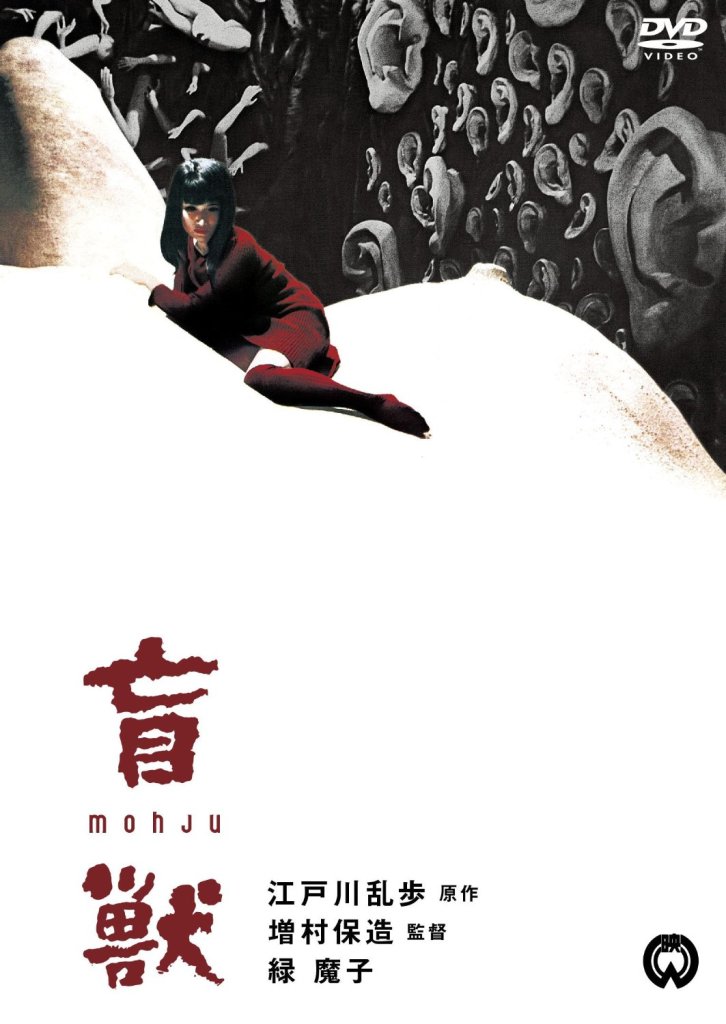 Never one to take his foot off the accelerator, Yazuso Masumura hurtles headlong into the realms of surreal horror with 1969’s Blind Beast (盲獣, Moju). Based on a 1930s serialised novel by Japan’s master of eerie horror, Edogawa Rampo, the film has much more in common with the wilfully overwrought, post gothic European arthouse “horror” movies of period than with the Japanese. Dark, surreal and disturbing, Blind Beast is ultimately much more than the sum of its parts.
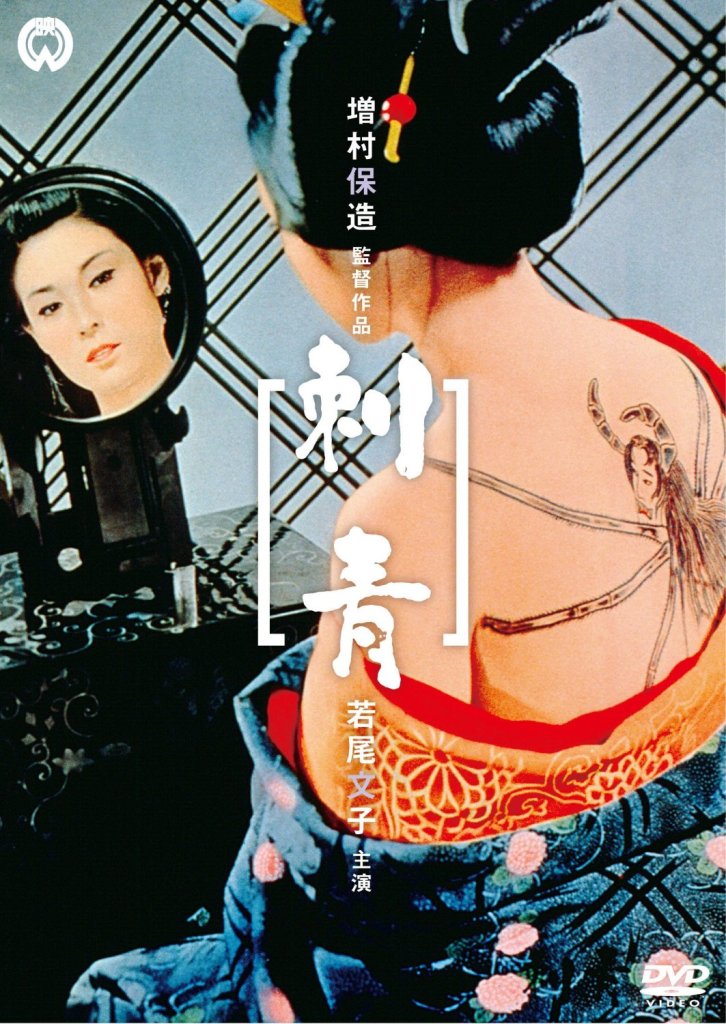 Irezumi (刺青) is one of three films completed by the always prolific Yasuzo Masumura in 1966 alone and, though it stars frequent collaborator Ayako Wakao, couldn’t be more different than the actresses’ other performance for the director that year, the wartime drama
  The debut film from Yasuzo Masumura, Kisses (くちづけ, Kuchizuke) takes your typical teen love story but strips it of the nihilism and desperation typical of its era. Much more hopeful in terms of tone than its precursor and genre setter Crazed Fruit, or the even grimmer The Warped Ones, Kisses harks back to the more to wistful French New Wave romance (though predating it ever so slightly) as the two youngsters bond through their mutual misfortunes.
 Belated review from the 2015 London Film Festival – Yakuza Apocalypse is released in UK cinemas for one day only on 6th January 2016 courtesy of Manga who will also be releasing on home video at a later date.
 Never one to be accused of clarity, Seijun Suzuki’s Capone Cries a Lot (カポネおおいになく, Capone Ooni Naku) is one of his most cheerfully bizarre movies coming fairly late in his career yet and neatly slotting itself in right after Suzuki’s first two Taisho era movies,
 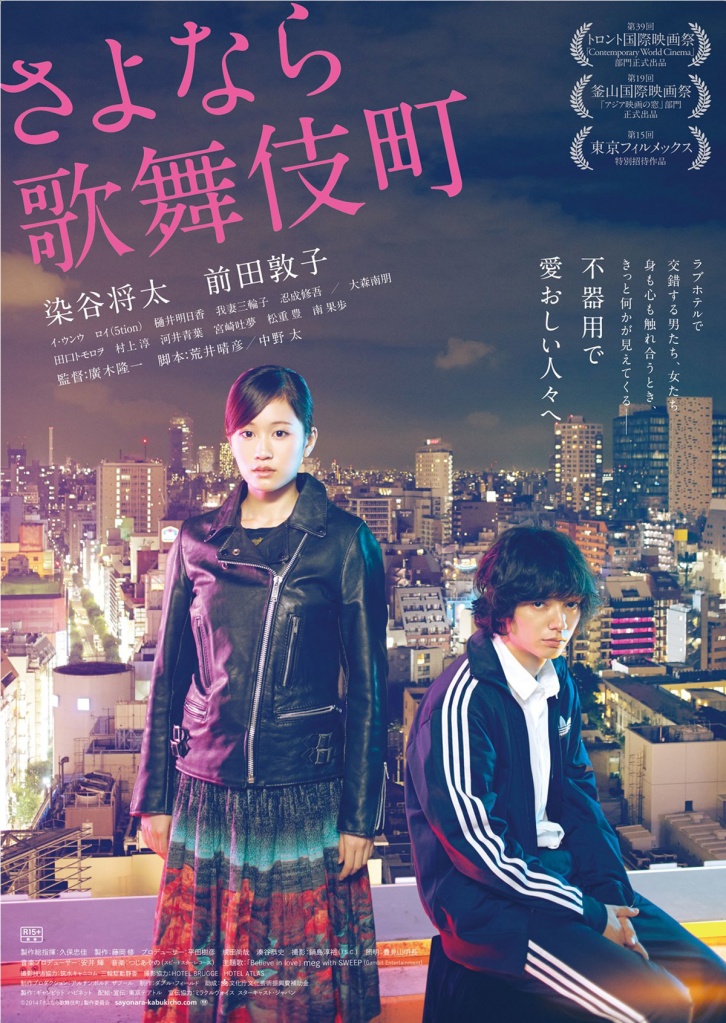 Kabukicho Love Hotel (さよなら歌舞伎町, Sayonara Kabukicho), to go by its more prosaic English title, is a Runyonesque portrait of Tokyo’s red light district centered around the comings and goings of the Hotel Atlas – an establishment which rents by the hour and takes care not to ask too many questions of its clientele. The real aim of the collection of intersecting stories is more easily seen in the original Japanese title, Sayonara Kabukicho, as the vast majority of our protagonists decide to use today’s chaotic events to finally get out of this dead end town once and for all.
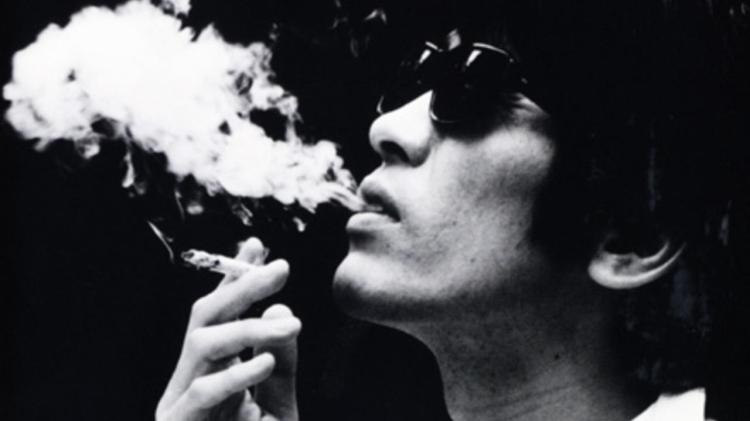 When you learn someone has died, suddenly everything they have ever done becomes tragic. No matter how old they were, this fact remains. Ryuji is a film which is always going to be overshadowed by the fact that its leading actor and screenwriter sadly passed away at the extremely young age of 33 from a terminal illness only days after the film’s release. Well, in actuality, the film was only “released” in a very limited sense, perhaps no one really had the heart to go on with it. However, it left its mark on all who saw it and eventually became a cult hit and influential classic on VHS. On paper, its tale is conventional – an existential yakuza drama about a man torn between conflicting desires and his own nature but on film, it’s something else.
 Windows on Worlds