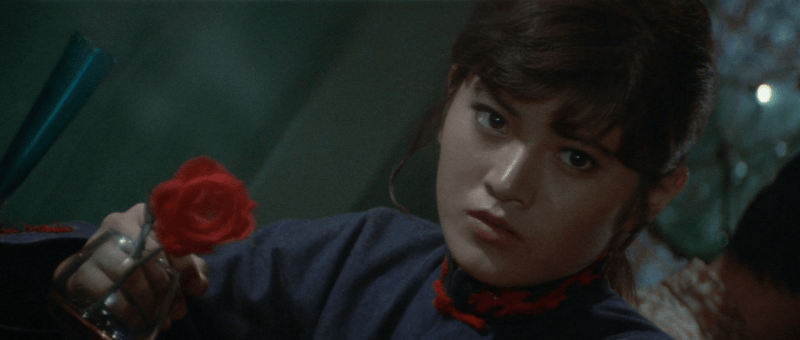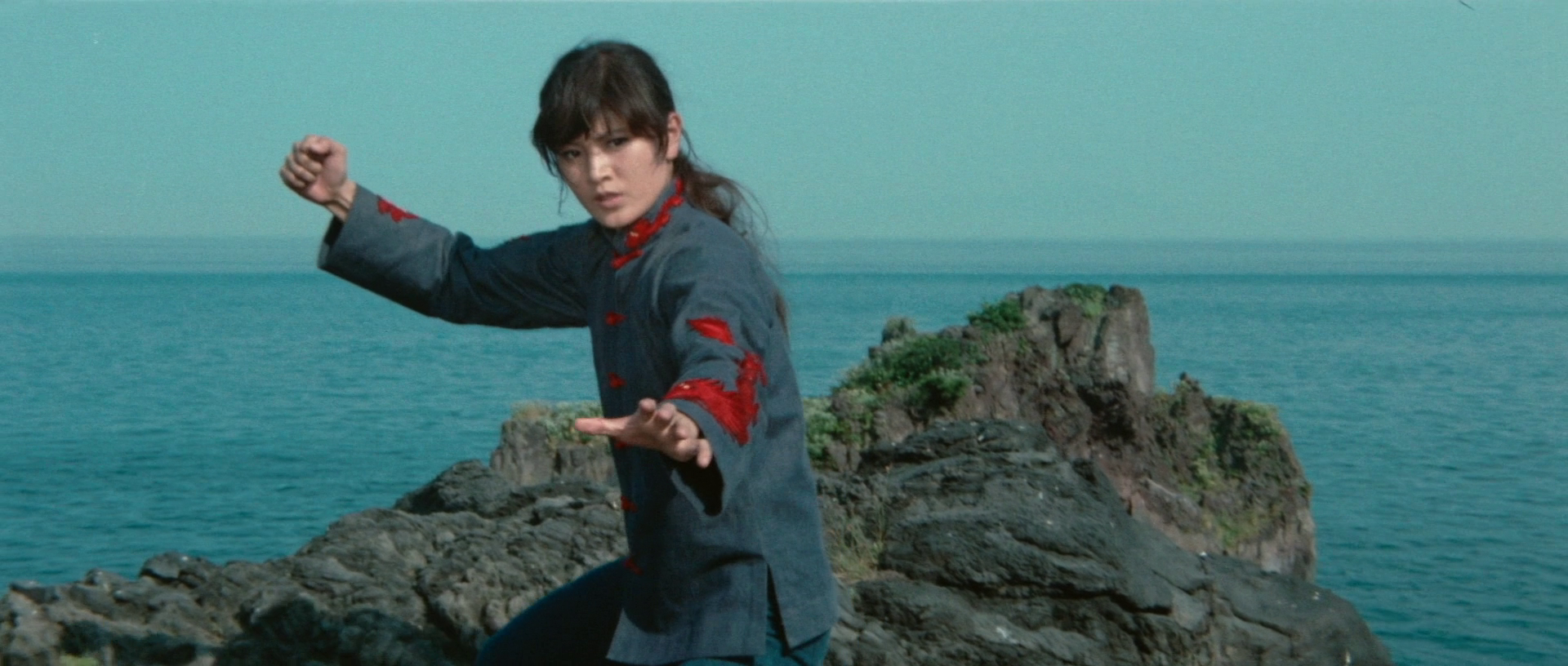
Jinsei (無名の人生, Ryuya Suzuki, 2025)

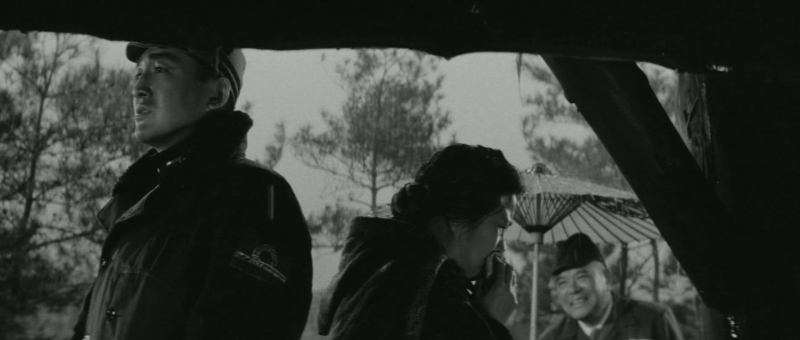
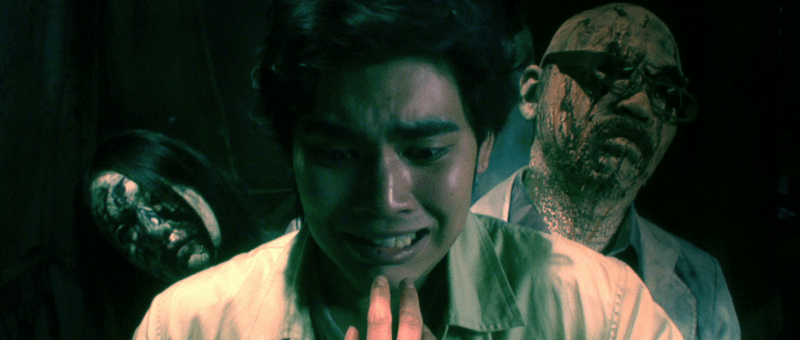
A man goes by many names before he dies. The hero of Ryuya Suzuki’s almost entirely self-produced anime Jinsei (無名の人生, Mumei no Jinsei) never tells us his name. He doesn’t say anything much at all, but passively allows himself to be called whatever others call him while struggling to come to terms with the death of his mother and continually looking for new forms of family along with a place he can really call their own.

Indeed, in the wordless opening sequence, Se-chan’s father and mother meet, get married, have a child, and split up, but are killed together in a freak accident in which the young Se-chan watches helplessly as a pickup truck being driven by an elderly man mows them down. After that, he ceases to speak and looks on at the world vacantly. He becomes a kind of mirror for the world around him, an empty vessel onto which others may project their own fears and anxieties. Thus at school they call him “grim reaper” because he doesn’t speak or move. When another boy in the neighbourhood tries to reach out to him, he punches him in the face. Nevertheless the two eventually become friends, bonding in their shared status as bullied outsiders rejected by mainstream society. 

Kin, who in some kind of nominative determinism has dyed blond hair, is marginalised because of his interest in male pop idols and dreams of becoming one. A man named Shiratori comes from the city with a prophecy for Se-chan in the form of a VHS tape featuring his father dancing as part of a chart-topping boy band. Se-chan too has the desire to sing and dance, but the entertainment industry feeds on broken dreams. His father, Eito, had been the son of an aristocratic family who rejected him for following his dreams of becoming a singer. His father pulls a gun on him when he returns in disgrace having been caught using drugs and getting cancelled by the world at large. Eito too apparently could not cope with the pressures of showbiz and tired of the cage of stardom. Shiratori is clearly modelled on Johnny Kitagawa whose decades of sexual abuse were an open secret acknowledged only after his eventual death. He tells the boys that they’re in a cage to which he holds the key, but that it’s protection not imprisonment even as they become tools exploited by moneymaking execs intent on selling them body and soul.

Se-chan’s stepfather had told him that life was a swan and he should spread his wings, but cages are hard to avoid as he discovers on working as a Kabukicho club host once again exploited as a hook dangled to get money from women only to fall victim to another heartless man and the woman who couldn’t tame him. Se-chan found a kind of family in the boy band that he doesn’t really find anywhere else, certainly not in Kabukicho, until he decides to renounce the world entirely as a caveman recluse living in a disused building which is to say in a kind of past. Suzuki’s increasingly bleak descent into the near future echoes this desire for more genuine connections and familial warmth uncorrupted by the darkness of contemporary capitalism and the young Se-chan’s unresolved trauma. War and apocalypse give rise to shady cults, which are also like families, but exclusionary in calming themselves to be some kind of elite as a dangerous feudalism resurrects itself.

Travelling 100 years from 1995, the film moves from the biting cold of winter in Yamagata to the blazing heat of a post-apocalyptic society but seems to imply that in the end we find ourselves again and make the world anew as a great family of humanity. Suzuki apparently made the film up as he went  along, working without a script and stitching one scene on to the next, but his images move with a quiet power and purpose even they move towards an inevitable ending and the final goodbye. The man who was the lonely boy Se-chan, grim reaper, God, a pop star named “Zen”, someone’s Love, comes to embody the concept of life itself in being all things to all men while life in effect lived him in the depths of all his longing and loneliness only to find a sense of hope in confronting the eternal void.


Jinsei screened as part of this year’s New York Asian Film Festival.

Trailer (English subtitles)

Seppuku: The Sun Goes Down (陽が落ちる, Yuji Kakizaki, 2024)

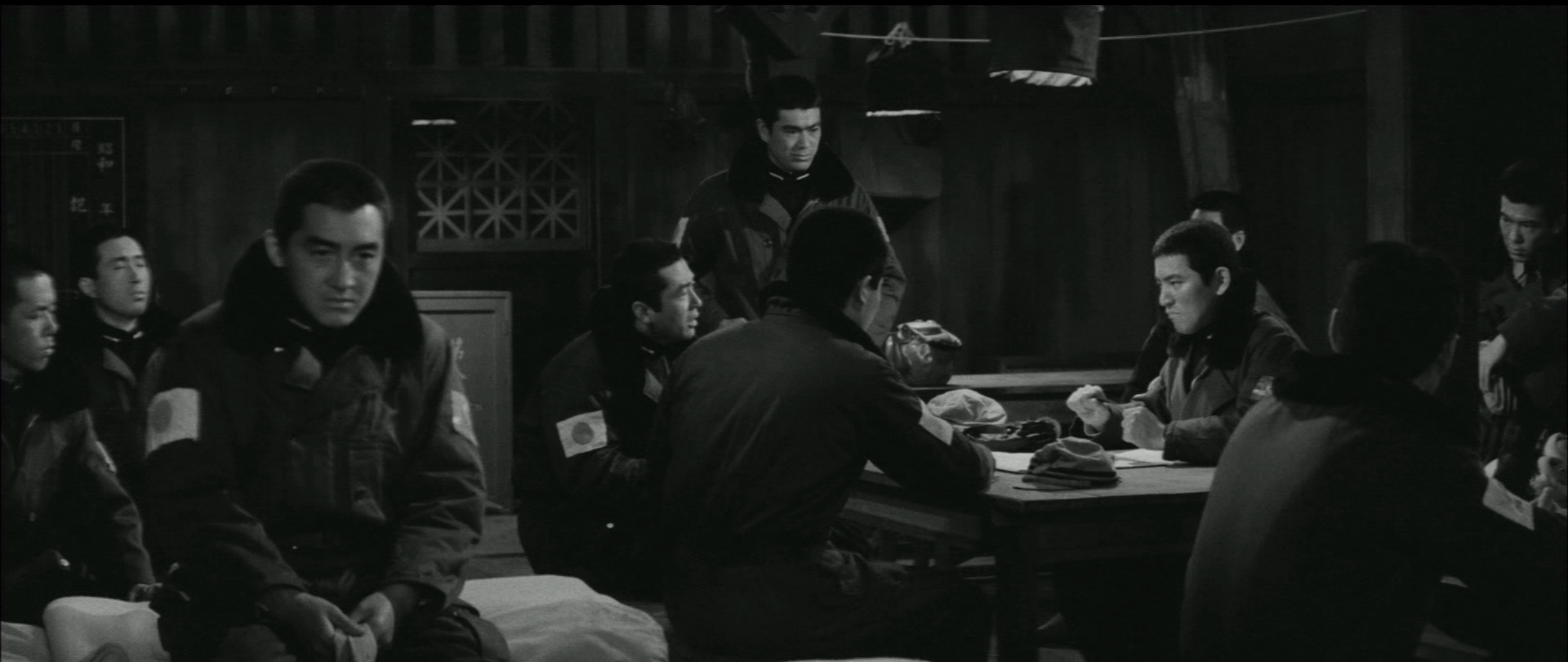
What’s more absurd, that the shogun orders a man to take his own life in atonement for accidentally damaging his favourite bow or that the samurai actually does it without protest? There is something a little uncomfortable about Yuji Kakizaki’s Seppuku: The Sun Goes Down (陽が落ちる, Yo ga Ochiru) as it, unlike many similarly themed samurai dramas, seems to find only nobility in such a senseless death rather than outrage against a word in which a man must die for a careless and inconsequential mistake.

Indeed, the worst outcome Kyuzo envisages is that he’s going to get the sack from his job as a castle guard and his family will suffer both a reputational loss and financial hardship because of it. His wife, Yoshino, is quite prepared for the latter, stating only that they will soon adjust to living more simply. No one seems to be thinking that this is anything other than a minor incident that will soon blow over, which is why it comes as such a shock to Kyuzo’s best friend Denbei that his friend has been ordered to commit seppuku and that he must be the man to deliver the message the next morning. Kyuzo is currently under house arrest, which means that were Denbei to visit him before that, he too would be committing an offence and could end up suffering the same fate. The best thing he can do, as his wife advises, is to go there and sing a song outside conveying the difficult news through poetry while maintaining plausible deniability. 

Alternate forms of communication become a kind of theme with Yoshino deciding to fulfil the dreams of her loyal maid, Shige, by teaching her to read and write explaining that one may say in a letter that which they otherwise could not. Shige is from a peasant farming family and on her return to them after Yoshino decides to dismiss her so that she won’t be caught up in it when they deliver her husband’s death warrant which could, in fact, order everyone in the house to die, Shige’s family remark that they can’t understand these “cruel” samurai who are expected to surrender their lives over something so trivial. Yet Shige’s father who is currently bedridden with illness instructs her to go back knowing that it may mean her death because her duty is serve the family she was indebted to right until the very end. Shige even gives her father the comb and money Yoshino had given her to open a restaurant to pay for medical treatment but he won’t take it until she’s fulfilled her duty which rather undercuts any criticism of the samurai code.

Similarly, Yoshino struggles with the decision of whether to live on or take her own life alongside her husband. Her options are now few. She must either return to her birth family, if they agree to take her, or become a Buddhist nun, while their 10-year-old son Komanosuke would ordinarily be sent to his father’s relatives or placed into a temple as a monk. Denbei and his wife’s offer to adopt Komanosuke in the absence of an heir to their clan provides a neat solution, but leaves Yoshino’s fate in the balance now separated from both her son and husband. Only at the very end in her empty house does her resolve break as she cries out against the injustice and absurdity of it all.

Kyuzo, meanwhile, is expected to make his peace with his death having been given prior warning by Denbei and allowed to enjoy one last night with his family. He says that what he fears is “nothingness”, but as Yoshino tells him even if he were to reject his fate by running away he would endure a life of fear and misery on the run before he was caught and executed as a coward and a traitor. Yet what the film finds in his stoicism that takes on an uncomfortably elegiac quality that he is basically doing the right thing by submitting himself to the samurai code as cruel and arbitrary as it might seem to be with its overly enthusiastic magistrate who seems to relish the prospect of seeing Kyzuo’s head on a tray. He first gives Denbei the opportunity to leave out of consideration of their friendship knowing that he cannot accept the offer without incriminating himself, and then insists he be Kyuzo’s second as if to double down on the sadistic cruelty of ending a man’s life to demonstrate a capricious shogun’s power. Dramatising the submission of these people who seem to be good and kind yet caught in this absurd web of honour and power with sadness rather than anger leaves a slightly sour taste in the mouth in its implication that obedience to such an absurd social code constitutes nobility rather than foolishness and that the situation is merely a misfortune that must be quietly endured rather than an outrageous injustice that no one should defend.


Seppuku: The Sun Goes Down screened as part of this year’s Toronto Japanese Film Festival.

Sweet Rain: Accuracy of Death (Sweet Rain: 死神の精度, Masaya Kakehi, 2008)

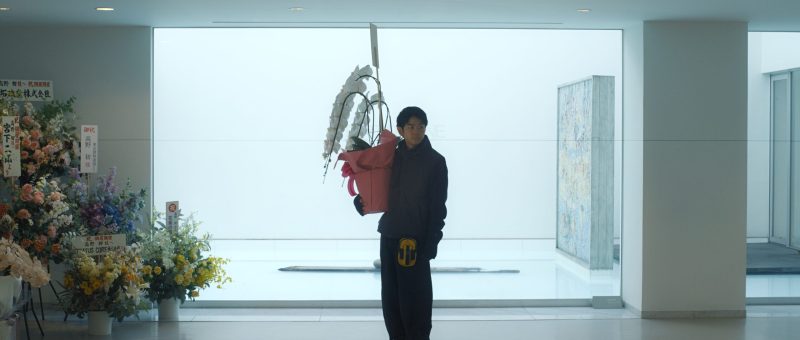
“What do you think about death?” a charming grim reaper awkwardly asks, seemingly taking into account the answers given when deciding whether his “subject” should survive or if the untimely death they’re about to meet should be final. Adapted from the novel by Kotaro Isaka, Masaya Kakehi’s Sweet Rain: Accuracy of Death (Sweet Rain: 死神の精度, Sweet Rain: Shinigami no Seido) contemplates what it means to live well, how to go on living in the midst of pain and suffering, and finally how to know when it’s time to accept the finality of death. 

Chiba (Takeshi Kaneshiro) is a grim reaper and it’s his job to decide whether those involved in unexpected deaths, those not due to old age, illness, or suicide, should be allowed to live. According to his partner, who appears alternately as a black dog or raven, Chiba always chooses to “proceed” but something is obviously a little different with his latest job monitoring customer services representative Kazue (Manami Konishi) in the seven days leading up to her demise. Kazue is currently being harassed by a repeat caller who keeps calling the helpline asking for her personally and has recently graduated to pestering her about meeting up in person. It’s easy to see which way this could go, though luckily for her she ends up meeting Chiba who acts as a kind of protector when she’s hassled yet again by a different set of creeps in a park. As he gets to know her, Chiba learns of Kazue’s loneliness and sense of despair having endured more than her fair share of loss which has convinced her that everyone around her dies and she’s destined to be alone. But whether down to Chiba’s interference or otherwise, a surprising twist sees her offered a gig as a top idol star, leading Chiba to conclude that she has not yet fulfilled her purpose and should be granted more time. 

The expected romance does not quite take place, though Chiba is indeed becoming more interested in human life along with death while fascinated by music which he describes as humanity’s greatest invention. As we gradually gather, Chiba’s three jobs occur at lengthy temporal intervals, though the music store he frequents appears to be a constant and almost unchanged. Bar a hyper-realistic humanoid robot appearing in the final section in which Chiba is sent to assess an elderly hairdresser (Sumiko Fuji), these different temporal spaces are in another sense an extension of the present in which technology does not otherwise change substantially. Chiba picks up an iPod belonging to a petty yakuza on job two but continues to listen to CDs while the hairdresser seems to be doing her job the old-fashioned way and the kids that come to her store all collect Pokémon/Top Trumps-style paper cards. 

Yet Chiba is also a fish out of water, constantly confused by contemporary slang and with a strong tendency towards taking things literally. His discombobulation with language and custom is perhaps enhanced by the casting of Takeshi Kaneshiro who is half-Taiwanese and grew up in Taiwan speaking Mandarin as his first language, later working predominantly in Chinese-language cinema. In the audience perception he carries with him a quality of otherness that adds to the ethereality of his existence as a grim reaper. His appearance changes with each of his subjects, firstly appearing as a handsome young man, then as a grizzled yakuza complete with sunshades, and finally as a slacker student with each of his portals mirroring his destination from telephone booths to emergency exits and shopfront doors. As a grim reaper he has long unruly hair and wears a suit a loosened tie, but perhaps has little identity of his own and laments that he has never seen a blue sky because it is always raining whenever he is in the mortal world.  

The rain might well symbolise the pain and suffering around him as he lives among those who are about to die, but he himself feels that death is nothing special. As the old lady points out, that might be because it’s all he sees, he never visits people while they’re alive and knows nothing of life nor what it is to leave it. The old lady too experienced a lot of loss in her life and came to the conclusion that she was in some way cursed, severing her connection with those she truly loved believing she could only bring them harm and choosing to live all alone. “The sun in the sky’s nothing unusual but it’s important that it be there,” she adds, “death’s like that, maybe”. In any case she seems to have lived a long life that was happy enough even if it was “nothing special” and she can die with no regrets while Chiba too begins to learn something of the world’s ordinary beauty in his first glimpse of a sunny sky even if one overshadowed by the spectre of death. 


Trailer (no subtitles)

Sham (でっちあげ ~殺人教師と呼ばれた男, Takashi Miike, 2025) [Fantasia 2025]

After a couple of hundred years of corporatising culture, sham apologies have become an unfortunate phenomenon all over the world. Corporations in particular will often offer a fairly meaningless apology that acknowledges a minimal level of responsibility but does not bind them to recompense those they’ve wronged nor put right anything that their conduct has made wrong. The problem is that an apology has become a kind of sticking plaster that allows us all to move on but doesn’t really solve anything and may even prevent us from doing so because it turns us all into accidental liars who are primed to say “sorry” to make the situation go away even it wasn’t actually our fault.

That’s essentially what happens to Seiichi (Go Ayano), previously an unremarkable primary school teacher with a teenage son of his own and an apparently happy home. Inspired by a real life case, Takashi Miike’s courtroom drama Sham (でっちあげ ~殺人教師と呼ばれた男, Detchiage: Satsujin Kyoshi to Yobareta Otoko) flirts with ambiguities but in keeping with its themes eventually descends into a defence of the well-meaning man as its hero becomes so embroiled in the injustice being done to him that he doesn’t see that he is not entirely blameless. Though we’re first introduced to him as the “homicidal teacher” the papers describe him as, the film’s title leaves us in no doubt that his account is the truer. But it remains a fact that during his conversation with Ritsuko (Ko Shibasaki), the mother of the boy Seiichi is accused of racially bullying, he did remark that Takuto’s American grandfather may explain his unique characteristics which is perhaps within the realms of thoughtless things well-meaning people say in awkward conversations but hints at a level of latent societal prejudice. In any case, that the fact his conversation with Ritsuko ended up drifting towards subjects like bloodlines and the Pacific War is not ideal, while Seiichi should probably have been more mindful of his politically neutral position as an educator. 

Likewise, he doesn’t dispute that he tapped Takuto lightly on the cheek to “educate” him that it hurt when he slapped another boy, Junya, who, according to Seiichi, he was bullying. He probably shouldn’t have done this either, even if some may see it merely as common sense in teaching the children that violence is wrong, as ironic as that may be. In any case, the film is on Seiichi’s side and insistent that he did not treat Takuto any differently on account of his non-Japanese ancestor nor spout off any of the racist nonsense that Ritsuko attributes to him. But the major problem is that Seiichi is mild-mannered and also a product of this society. He tries to protest his innocence, but is pressured by his headmaster to apologise anyway which is, of course, a form of lying, something they discourage the children from doing. In the end he goes along with it, because it’s easier to just say “sorry” and hope it goes away rather than address the real issues. 

It’s this sham society that the film seems to be critiquing, even if its message gets lost among its intertwining plot threads as Seiichi effectively finds himself bullied by an empowered tabloid media formenting mob justice against what it brands a far-right fascist teacher as a means of selling papers through generating outrage. While he is scrutinised and scorned, no one bothers to look into Ritsuko’s story which is already full of holes such as why, if she’s so protective as a mother, she waited for her son to be a victim of “corporal punishment” 18 times before complaining to the school. Little motivation is given for Ritusko’s actions, though Miike films her and her husband with an an almost vampiric sense of unease as they appear eerily in black on their way to the school. Unhinged herself, the answers may lie in Ritsuko’s own childhood and her yearning for a protective mother figure, not to mention the sophistication of being a child returning from abroad with good education and prospects for the future.

Seiichi refocuses his closing statement on Takuto, insisting that he doesn’t blame him for “lying”, but it’s perhaps also try that he is a kind of victim too whose own actions can only be explained by a closer look at his relationship with his mother and familial environment. But it turns out that it really is easier to just say “sorry” and move on. Even the psychiatrists seem more interested in treating Ritsuko like a customer whose wishes must be obeyed than earnestly trying to help Takuto even if his issues don’t seem to be as serious as his mother might have it. But according to Seiichi, telling a child off is the purest expression of love. If everyone carries on with sham apologies, nothing really changes and kids like Takuto get forgotten about as everyone falls over themselves to make the situation go away. No one really cares about the truth, and so it becomes an inconvenience to social cohesion in which those who insist on speaking it are hounded down until they agree with the majority and meekly say “sorry” while those in the wrong nod their heads and continue with their lives free of blame or consequence.


 Sham screened as part of this year’s Fantasia International Film Festival.

Trailer (English subtitles)

Trespassers (侵入者たちの晩餐, Itaru Mizuno, 2024)

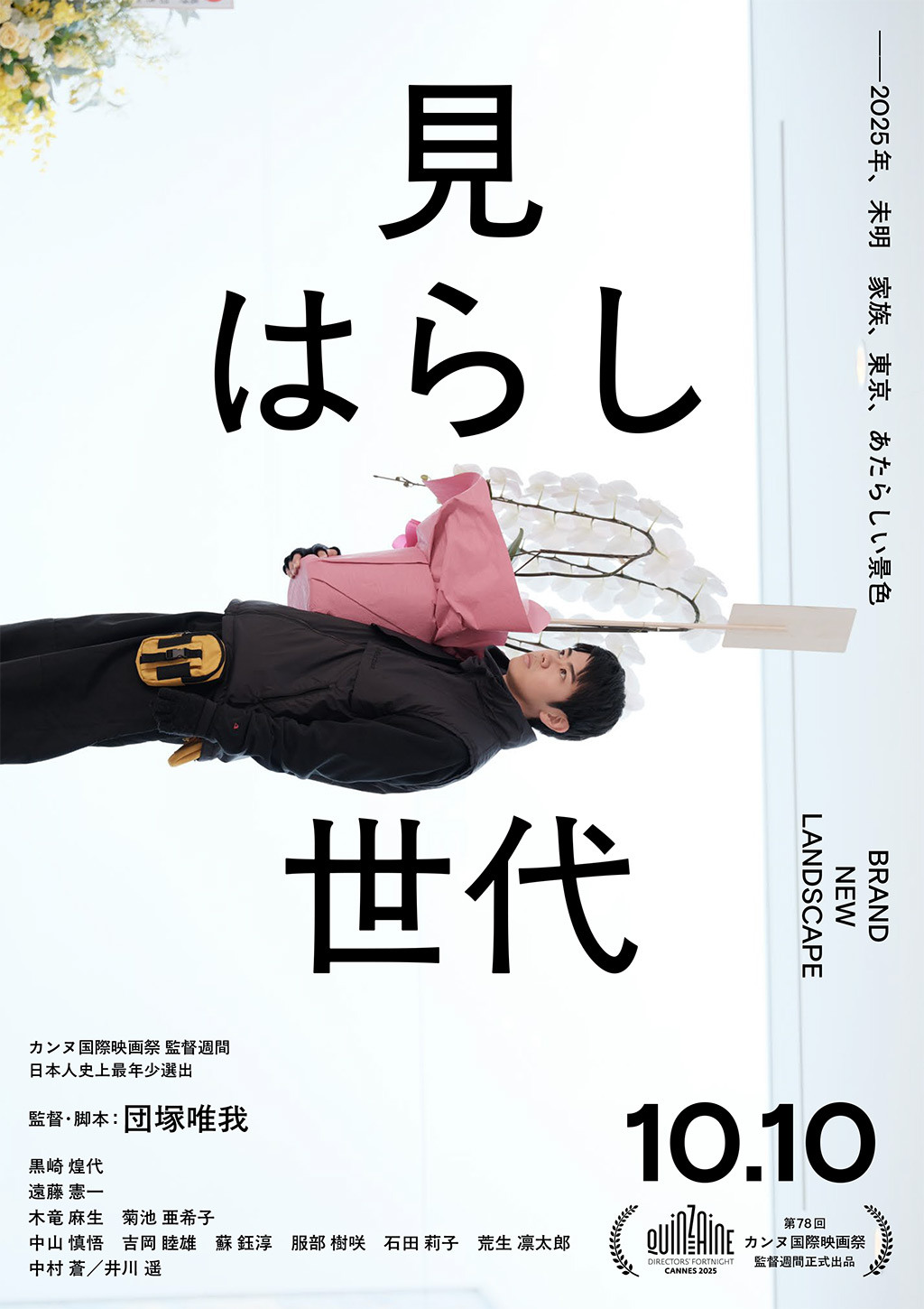
Trespassing. Somehow, it doesn’t sound that serious, does it? You’re always hearing about people being accused of trespassing simply for walking along a footway that someone believes to be on their land. It just means you were somewhere you had no right to be. Not doing anything, just being there. That’s exactly how it is for the heroines of Trespassers (侵入者たちの晩餐, Shinnyuushatachi no Bansan) who basically enter a home without permission, nosy around, then feel guilty and decide to clean the place to make up for it but accidentally find a burglar hiding in a corner! Could happen to anyone, really. 

Of course, there’s a little bit more to it than that. Middle-aged divorcees Akiko (Rinko Kikuchi) and Megumi (Kami Hiraiwa) work for the same exploitative housekeeping company which pays them a pittance while the boss, Natsumi (Mai Shiraishi), a former pin-up model turned influencer and entrepreneur, lives the high life. Though she claims to be an ally to working mothers, she also refuses to hire them because they have additional responsibilities that make it difficult for them to stick to her schedule, apparently. Megumi has heard a rumour that Natsumi is really into tax evasion and is hiding a large amount of undeclared money in her luxury flat, which is a rental in the company’s name that she also writes off. Of course, if someone were to steal that money, Natsumi could hardly go to the cops because then she’d have to admit she’d been cheating on her taxes. Why she wouldn’t just put it in a secret offshore account like everyone else is anyone’s guess, but everyone has their peculiarities and perhaps she just likes to have it handy. 

On entering with a cloned key and joined by Megumi’s yoga friend Kanae (Yo Yoshida) who “knows a lot about criminality”, the trio fail to discover the money or any evidence of tax evasion. Rather, Natsumi seems to have several certificates thanking her for donating large amounts of money to various charities which leaves the ladies feeling guilty for doubting her. Akiko had been the most morally conflicted about taking the money and was only persuaded on the condition that they would be giving the majority of it to worthy causes, so they were “helping people” like Robin Hoods rather than just helping themselves like greedy thieves. Megumi meanwhile had been less so and swayed by the rationale that Natsumi was exploiting them twice over by paying them such low wages and then depleting the public purse by thieving the money that should have been paid in taxes. Kanae, just seems to be along for the ride while hoping to open a yoga school with the money, but in a giant and unfortunate coincidence discovers another reason that Natsumi must pay.

Even the burglar, Shigematsu (Sosuke Ikematsu), a failed businessman with massive debts working as a food delivery guy to pay them off, has a sob story, but as the ladies point out it doesn’t really match the righteousness of their tax evasion whistleblowing mission. There is something quite wholesome about how bad they all are at “crime”, and how good Natsumi secretly is at it. It doesn’t even occur to the ladies that Natsumi’s willingness to forgive them is possibly because they’re right and she doesn’t want the police poking round because they might find something she doesn’t want them to. Meanwhile, it’s a little sad that each of them lament it’s been a while since they ate at home with other people rather than at restaurants and there’s something quite nice about their collective decision to make it a tradition though at one of their own homes rather than that of a suspected tax evader.

Indeed, as Akiko says, the real prize was the friends they made along the way. In many ways, they made everything better. Natsumi gets her comeuppance, they get improved working conditions, revenge, friendship and female solidarity too. What they found in Natsumi’s apartment was a family, though sadly they did not discover her hidden stash of hoarded gold. Bakarhythm’s typically witty script addresses a series of societal problems in a lighthearted way from the difficulties faced by middle-aged women and divorcees trapped in low-paying jobs, to hypocritical and exploitative CEOs peddling positive messages of success and empowerment but actually ripping off an entire society while laughing all the way to the bank. Maybe the ladies weren’t the ones trespassing after all when Natsumi too was where somewhere she had no right be.


Blank Canvas: My So-Called Artist’s Journey (かくかくしかじか, Kazuaki Seki, 2025) [Fantasia 2025]

“Just draw,” Akiko’s (Mei Nagano) eccentric, hardline yet tenderhearted mentor Hidaka (Yo Oizumi) is fond of yelling at her as if telling Akiko to get over herself and stop both over and under thinking her approach to art. Though he may lament that his teaching methods don’t have much of an effect on his pupils because they need “more encouragement,” the older Akiko can see how well he taught her and also that she may have failed him, if understandably, in her single-minded pursuit of her dream of becoming a mangaka.

Of course, we know that she eventually achieved it and has become a prize-winning manga artist, though she describes herself as being far from the upstanding and talented figure others may assume her to be. Nevertheless, it’s one of Hidaka’s principles that becomes her guiding light as he constantly reminds her to “just draw” and that her skills rust while she slacks off. Slacking off maybe something the teenage Akiko was used was to doing. Committed to her dream, Akiko sees no need to study and is always reading manga even in class. She’s been led to believe that she’s talented, so sees no need to work at anything and has an inflated sense of her own importance. While her overly supportive parents and school art teacher tell her she’s a genius, only Hidaka is willing to pull her up and yell at her to do better. Though his manner may be harsh, what Akiko comes to understand is that he genuinely cares about his pupils and is only trying to help them fulfil their potential. 

To that extent, it’s really Akiko who a “blank canvas”. Though she thought she had a goal she was moving towards, the truth was that she wasn’t moving at all, while an overconfidence in her abilities has caused them to become stagnant. Hidaka goes on the attack, waving around a bamboo sword and roundly telling her that her work isn’t good enough. But he does so because he knows she has real potentional that she isn’t tapping. Despite her seeming smugness, she lacks the clarity and conviction to push herself and is contented with being “good enough” without really thinking things through like the fact she’ll also need good academic grades to go to art school no matter how good an artist she may be. 

But on the other hand, Hidaka is also a little old-fashioned and is convinced that Akiko’s dream is to become a classical painter like him. He keeps pushing her paint every day, while she feels afraid to tell him that her dream is really manga in case he runs it down as a vulgar art. He does indeed do something similar by approving of her career as a sideline that will pay the bills so she has more time to paint in the assumption that’s her ultimate goal. She may have a point when she accuses him of pushing his own dream on his pupils, but it’s really more like he is so devoted to painting that he can’t imagine why someone with Akiko’s talent wouldn’t want to be painting every second of every day. 

As he said, there are things that last through time. He’s learned to see the beauty in everything, while Akiko is still bound up with the superficial. She finds herself torn by the practical. Her well-meaning parents force her to get a regular job in a call centre which she hates though it spurs her on to kick start her manga career so he’ll have a justification for quitting it. Her school friend points out to her that she’s spreading herself too thin. She can’t carry on with her office job and the school and still have time for manga, so perhaps it’s time she made a choice and finally concentrate on what it is she really wants to do. But that also means betraying Hidaka and to an extent abandoning him even if it’s in the interests of her own personal and professional growth. Meanwhile, she meets another similar mentor figure in her manga editor who, ironically, gives her much the same advice to keep on drawing because, at the end of the day, it’s basic technique that sets a true artist apart from a talented amateur. You have to know the rules before you can break them, but at the same time if you don’t paint, the canvas will remain forever blank. This is really Hidaka’s final lesson. Just draw. The rest will take care of itself.


Blank Canvas: My So-Called Artist’s Journey screened as part of this year’s Fantasia International Film Festival.

Trailer (no subtitles)

Ya Boy Kongming! The Movie (パリピ孔明 THE MOVIE, Shuhei Shibue, 2025) [Fantasia 2025]

Why in this world does war never cease? Reincarnated in modern-day Shibuya, third-century military strategist Zhuge Liang, known by his courtesy name Kongming, finds himself fighting a different battle in becoming the manager of an aspiring singer whose music he feels could unite the world in peace. Adapted from the manga by Yuto Yotsuba and illustrated by Ryo Ogawa, Ya Boy Kongming! (パリピ孔明 THE MOVIE, Paripi Koumei the Movie) is both a surreal advocation for the power of music and satirical take on the cutthroat entertainment industry.

Having decided to become Eiko’s (Moka Kamishiraishi) strategist, Kongming (Osamu Mukai) has already advanced her career with an appearance at a major festival. He’s also turned himself into a mini celebrity appearing on TV to offer his strategic opinions and starring in a number of adverts. Now he wants Eiko to enter a joint competition between the three leading music labels which ironically echoes his own Three Kingdoms era and requires him to make use of his classic strategies. But he’s also facing his greatest challenge yet in the form of Shin, a street singer whose music calls out to him in a similar way to Eiko’s yet not, he fears, in a good way. He’s plagued by strange visions of his past life and his old lord Liu Bei before being told that his dreams are of something called the “Yumi door” that leads to the afterlife and that he will want to step through it the next time he hears Eiko’s music. 

As some point out to him, perhaps he just shouldn’t listen, then, but to Kongming that would be the same as death and if it helps realise his dream of bringing about universal peace through Eiko’s music then he’ll gladly give up this strange second life he’s been given. Of course, this produces a conflict in Eiko who, on realising that Kongming is actually serious, isn’t sure if she should just not sing ever again to avoid accidentally killing him even though he tells her that her music has the power to save people. Meanwhile, she loses confidence in herself, thinking that he’s gone off her and is about to jump ship to Shin who is currently being managed by a descendent of Kongming’s old enemy Sima Yi, Sima Jun. 

Jun’s mission is then one both of familial revenge and a quest to make his sister a star. But whereas Kongming’s strategies are clever, Jun’s are underhanded and it’s clear he’s gone to the dark side in trying to advance Shin’s career. At the end of the day, Shin might not want to “cheat” either, but even so the teased battle of wits comes to pass as the two men attempt to outflank each other and win the coveted championship which is Kongming’s way of ensuring Eiko will be able to continue after he’s gone. Though her songs are all becoming independent and able to go on alone after someone important is no longer around, Eiko still values Kongming’s support and friendship and obviously doesn’t want him to go anywhere.

Yet what Jun ends up rediscovering is the joy of music and that it really can change people’s lives, a realisation that all the label bosses came to some time ago. Despite the cutthroat nature of their business, they do it because they believe in music too, whether it’s a girl with a guitar in the street or a Chinese boy band making a surprise appearance during their world tour. Jun and Kongming want the same thing, and Shin and Eiko aren’t really rivals but allies fighting for universal peace through music. Boasting excellent production values, the film lends a sense of melancholy nostalgia to the Three Kingdoms era and Kongming’s vaguely homoerotic relationship with the famed Liu Bei whose voice he once thought could unite the world in peace before he lost his life on the Wuzhang Plains and woke up in Shibuya clubland on Halloween thousands of years later. Endlessly surreal, there’s a childlike quality to the warring strategies of Kongming and Jun as they attempt to outflank each other with elaborate schemes, but also a genuine sense of warmth and joy in the love of music, which just might, after all, bring peace throughout the land.


Ya Boy Kongming! The Movie screened as part of this year’s Fantasia International Film Festival.

Original trailer (no subtitles)

Honeko Akabane’s Bodyguards (赤羽骨子のボディガード, Junichi Ishikawa, 2024) [Fantasia 2025]

Unbeknownst to her, a high school girl’s entire class is actually made up of bodyguards hired by her distant father, whom she doesn’t know either, to keep her safe because his work makes her an easy target for international criminals. Adapted from the manga by Masamitsu Nigatsu, Junichi Ishikawa’s Honeko Akabane’s Bodyguards (赤羽骨子のボディガード, Akabane Honeko no Bodyguard) is in some ways fairly typical of the genre in its parade of unrealistic hairstyles and over-the-top humour, but also anchors itself in a genuine sense of friendship and youth solidarity as the class come together under a charismatic leader not only to protect Akabane but each other too.

That charismatic leader would be Ibuki, a cocksure delinquent and childhood friend of Akabane’s who’s also been carrying a torch for her all these years. Nevertheless, it comes as quite a surprise when he’s officially hired by Jingu (Kenichi Endo), a man who claims to be the head of Japan’s Security Services. After his wife died, he decided to place Akabane for adoption to keep her safe from the duplicitous world in which he lived. But now there’s a 10 million yen bounty on her head and every criminal enterprise he’s ever been after is desperate to get their hands on her. What Ibuki doesn’t know is that he’s hired the rest of the class too who all have various skills from rhythmic gymnastics to torture. It’s imperative that Akabane never find out that she’s a target, nor that Jingu is her biological father, and continues to live a “normal” carefree life.

She certainly appears to have no skills of her own other than her ability to quote legal infractions in her desire to become a lawyer like her adopted parents. While this may on some level remove her agency in making her dependent on her classmates for protection, it’s also Akabane that takes the initiative in romance by making overtures to the otherwise diffident Ibuki. Other the other hand, she’s painted as the mirror image of her sister, Masachika (Tao Tsuchiya), who has been raised as a boy and taught to be an assassin but craves the kind of love and affection Jingu pours on Akabane. 

This is one reason that she is eventually able to find unexpected common ground as she and Akabane are obviously both firmly on team Ibuki with Akabane thankful that someone else can see Ibuki’s good side even if most people mistake him for being a scary and dangerous person. Like his father, the late policeman, he believes that to protect someone you must protect everything they love which is why he’s desperate to protect the whole of the class too so that Akabane’s world remains consistent. Most of the other students aren’t too invested in their jobs and are only doing this for the paycheque, but eventually end up coming together thanks to Ibuki’s insistence that he won’t leave them behind. Not only does he need their help to protect Akabane, but genuinely respects their friendship and wants to save them too.

Then again, we’re presented with a series of images of paternal and hierarchal failure. Ibuki’s own father was killed in the line of duty and while alive had little time for his son, if like Jingu trying to keep his child out of the dangerous world in which he lives. Jingu gave up one daughter to keep her safe, but has a strained relationship with the second who feels like a failure and is desperate for a chance. Even the head of the class is compromised as he first proves himself willing to sacrifice the lives of his men in achieving their goal of protecting Akabane and then seems to commit several blunders including being unable to unmask a mole. Ibuki becomes a de facto leader, but at the same time what emerges under him is a relationship of equals and solidarity between those in a similar situation. They are no longer working for Jingu or following their leader’s orders but thinking for themselves and actively protecting each other. 

Ishikawa puts together some excellent action sequences that demonstrate what a well-oiled machine the students can be in standing up against criminality while maintaining the zany humour and making Ibuki an oddly pure figure of warmth and integrity as he resolves to protect all of those around him if most especially Akabane to whom he is unable to voice his real feelings. She meanwhile, admittedly a damsel in distress, is at least taking the lead when it comes to their romance even if she continues to needle him about his rough and uncouth behaviour. Honeko Akabane is it seems very well protected from any threats that come her way save perhaps that of her hidden past.                                                                                                                                    


Honeko Akabane’s Bodyguards screened as part of this year’s Fantasia International Film Festival.

Original trailer (no subtitles)

Babanbabanban Vampire (ババンババンバンバンパイア, Shinji Hamasaki, 2025)

It turns out immortality’s not all it’s cracked up to be in Shinji Hamasaki’s adaptation of the manga by Hiromasa Okujima, Baban Baban Ban Vampire (ババンババンバンバンパイア). At 450 years old, Mori Ranmaru (Ryo Yoshizawa), one-time lover of Oda Nobunaga (Shinichi Tsutsumi), is working as an attendant in a bathhouse in an attempt to, as he says, “live an ordinary life earnestly,” while staving off the darkness of an existence free of the spectre of death. 

Yet, there is an uncomfortable darkness at the centre of this otherwise humorous and ironic tale in that what Mori Ran is actually doing is grooming a child so that he can enjoy him when he judges that he is “ready.” There’s an obviously unpalatable reading of the film that renders it as an allegory for paedophilia, while there’s also an undeniable poignancy in likening the figure of the vampire of that of a gay man in an oppressive society. Mori Ran accosts his victims in dark alleyways and his assignations with other men are necessarily short and secretive. They also result in death, while Mori Ran describes most of his victims as tainted and disgusting as if echoing an internalised sense of self-loathing. He continues to hold up Rihito (Rihito Itagaki) as a figure of innocence and purity because he once saved his life when he was baking in the heat of an usually hot spring when the boy was only five years old. 

Mori Ran’s internalised homophobia is somewhat mirrored in that of the teacher Sakamoto (Shinnosuke Mitsushima) who is also a vampire hunter but bewitched by Mori Ran and longing to be initiated by him, though Mori Ran declines to give him what he sees as a curse. Imbued with a gothic sensibility, Mori Ran believes that humans are beautiful because they die, while vampirism is debased and ugly. He refuses to condemn someone he admires to his own fate which he describes as a kind of inescapable hell in which he is unable to die. He no longer believes in love, though is haunted by his loss of Nobunaga, and sees humans merely as food. 

Nevertheless, it seems he has found purpose in his present life of living with Rihito’s family and working in their bathhouse despite convincing himself that he’s only biding his time until Rihito is ripe for the picking. According to Mori Ran, the sweetest blood belongs to that of 18-year-old male virgins which is why his goal of ensuring that Rihito remains virginal and pure is becoming more difficult now that he has entered adolescence. Much of the comedy derives from Mori Ran’s emotional cluelessness and paranoia on discovering that Rihito has fallen for a girl, Aoi (Nanoka Hara), with whom he had a stereotypical meet cute on his way to his high school entrance ceremony. Knowing that he has to nip this in the bud as soon as possible, he pays a visit to Aoi to warn her off but fails to realise that not only did she barely notice Rihito let alone fall in love with him, but that she is actually obsessed with vampires and is keener on him. 

But then again, there’s something additionally troubling about Rihito’s immediate classification of Mori Ran as a “love rival” in the mistaken belief he’s after Aoi too rather than as someone who should probably be reported to some kind of authority. After all, even if he were not 450 years old but the 25 he claims to be, hanging around exclusively with high schoolers is odd and bordering on inappropriate in itself. Having misunderstood his intentions, Aoi also believes that Mori Ran is waiting for her to be “ready,” in a partial recognition that this is wrong because she’s a child but also prepared to wait for the mysterious vampire without considering the implications of his being interested in a 15-year-old girl if that actually were the case. 

Nevertheless, what Mori Ran discovers is really a different kind of love in his gradual integration into the human world and the the friendships he forms not only with Rihito, but Aoi, her muscular brother Franken (Mandy Sekiguchi) who also has a crush on Mori Ran, and the lovelorn teacher Sakamoto, even if he’s still focused on his mission of keeping Rihito pure so he can drink his blood on his 18th birthday. His attempts to prevent a relationship forming between Rihito and Aoi are all countrerprodcuteive and would like end up bringing them together if it were not for the fact of Aoi’s crush on him of which he remains oblivious. The inherently zany humour of the situation with its series of concentric love triangles along with the warmheartedness of Rihito’s homelife when contrasted with the “mysterious” serial killings on the news cannot completely overcome the unpalatable undercurrent of Mori Ran’s pederastic quest, if glossing over it with admittedly delicious irony and absurdism.


Babanbabanban Vampire screens 27th July as part of this year’s New York Asian Film Festival.

Rewrite (リライト, Daigo Matsui, 2025) [Fantasia 2025]

A mysterious transfer student arrives from the future. You have 20 wonderful days with him, but then he must return to his own time. He tells you that he came back to meet you and experience your time because of a book you will write, and your future self also shows you the book, tells you you did indeed write it, and that everything’s going to be okay. But in 10 years’ time, when you’re your “future self”, you from the past does not show up to get any of this information. Did something go wrong? Is the timeline crumbling? Or did you just imagine all this as a manifestation of “youth”?

When this happened to her, Miyuki (Elaiza Ikeda) believed that she was “the heroine of that summer,” but the truth is of course that she was always the heroine of her own life and had the right and power to make her own choices. Adapted from the novel by Haruka Honjo, Daigo Matsui’s Rewrite (リライト) is, like Obayashi’s The Little Girl Who Conquered Time, about the dangers of nostalgia and the over romanticisation of youth. What Miyuki gradually comes to realise is that one of the formative experiences of her teenage years may not have been unique or special but happened to literally everyone and changed them too in ways that were not always good. Because she met Yasuhiko (Kei Adachi) from 300 years in the future, she became a writer. But it remains true that her first few books weren’t about him at all. She always had the talent and the inclination. The impetus of destiny was only what gave her the confidence to pursue it. She knew she could, because she already had.

Yet, she’s in her hometown to close a loop on this unresolved romance of her youth despite having built a good life for herself as a successful author with a nice husband she met during the course of her work who is caring and supportive of her career. At the high school reunion she’s cajoled into going to, her former classmates sing the song they were practising for choir, “Cherry” by Spitz, which is also about “rediscovering each other, some day, same place,” echoing Yasuhiko’s cryptic claim that they’d meet again “in the future” (whose he doesn’t say) hinting at the way these feelings have been left hanging with only a yearning for the past and a painful nostalgia in their place. What Miyuki really has to ask herself is if she’s the person she wants to be in the present and is who she is because of the choices she made independently rather than solely because she was trying to fulfil the destiny given to her Yasuhiko.

To do so, she must face the fallacy of the “chosen one” mentality. The film rams this home in the parallel story of one of Miyuki’s classmates who tells her that she wasn’t chosen but actively chose to accept a kind of destiny rather than simply going along with it and that Miyuki too could “rewrite” the past if she wanted. In effect, this is what she’s already done as her husband implies when he repeatedly asks her if the book is “fiction”. Of course, it is, though she believed it not to be because it’s rooted in nostalgia and the personal myth making of the idealised romance of her youth. Matsui too plays with this sense of nostalgia in moving the setting of the story to Onomichi to mimic that of Obayashi’s The Little Girl Who Conquered Time and making frequent visual references to the 1983 film along with casting Toshinori Omi, the original boy who leapt through time, as the class teacher at the 10 years later reunion.

But the truth remains that Miyuki must learn to let go of the past, or else take mastery over it by rewriting her own story to accept that, as her husband says, the past and present are all hers. She can write anything and can finally leave her own time loop by writing her way out of youthful nostalgia and accepting something more like an objective reality along with the life she has now which appears to be happy and successful. Scripted by Makoto Ueda who has a long history of time-travel themed movies from Summer Time Machine Blues to River, Matsui’s poignant drama is shot through with irony and in constant dialogue with pop culture touchstones from the Obayashi film to Shunji Iwai’s Love Letter, while at the same time insisting that while you are the main character in your own life, you’re not the only one and a hundred stories are going on at the same time as yours. What really matters is not hanging on to the memories of an idealised past, but to live the life you want in the present for as long as this particular loop lasts.


Rewrite screened as part of this year’s Fantasia International Film Festival.

Original trailer (English subtitles)