Colony (군체, Yeon Sang-ho, 2026)

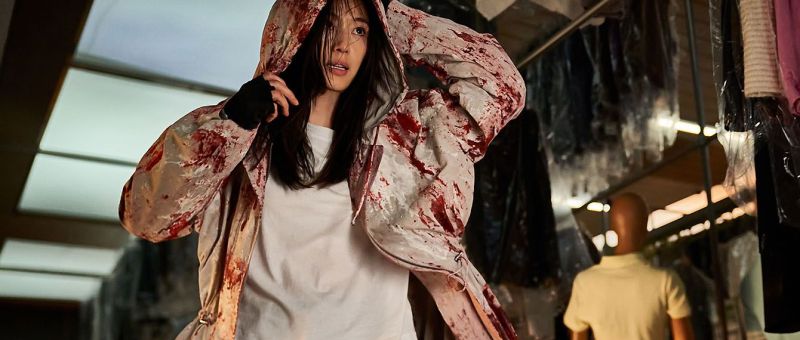
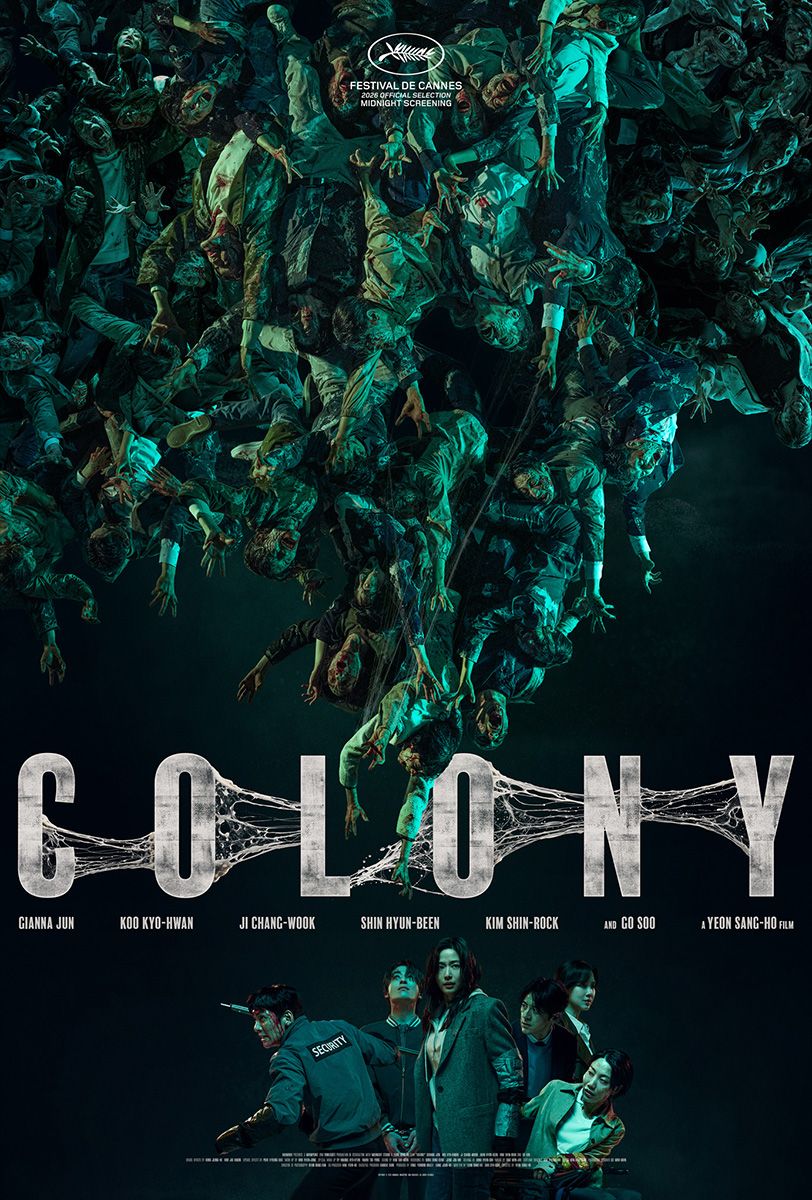
“Can you handle the freedom to be an outcast?” asks the villain of Yeon Sang-ho’s zombie-esque drama Colony (군체, Gunche) who believes that tragedies are caused by “imperfect communication.” He may not be entirely wrong, but his instinct to destroy all traces of individuality and replace them with a hive mind might not necessarily solve the problem in the way he implies it will, especially as it transpires that everyone will effectively be pulled into his own consciousness.

To that extent, the “zombies” in this film are representatives of social conformity, but perhaps they could also be read as an AI army with “psycho” scientist Suh (Koo Kyo-hwan) as the prompter. His big idea is bringing about a second cognitive revolution that emerges from a desire to repair the body so that those who have developed a disability would be healed. This is also, it turns out, a byproduct of being inducted into Suh’s hive where humanity must start from scratch evolving all over again. But at the same time, it seems like members of the hive still need to actively share information rather than simply having access to it. Suh gives them commands by shaking his head, while the zombies often stop dead and stare at the ceiling with their mouths open as if they were uploading something to the cloud. At one point, they’re seen accessing a computer to get the location of a room where one of their targets is hiding which demonstrates how far they’ve evolved in their ability to use tools, but at the same time they already have members of the security team in their hive. One would assume that they would already be familiar with the building’s layout and so the closest zombies could just start making their way there. This communication is still “imperfect” and Suh may choose not to share what he knows with the others anyway.

Professor Se-Jeong (Jun Ji-hyun), however, has never been one to go along with the group. Her exasperated ex-husband (Go Soo) complains that she’s always doing things that make people hate her, but still cared enough for Se-jeong to try to set her up with another steady job before he moves to America with his current wife and child. Which is all to say, she is very much prepared to be an outcast in a society in which challenging the system or disrupting group harmony are often taboos. She’s disadvantaged in her career because she turned another professor in for exploiting his research staff and misappropriating funds, meaning that others don’t necessarily want to work with her. She will, however, stand up for what’s right even when others won’t.

The government, meanwhile, is portrayed as another kind of group think if one paralysed by indecision because, unlike Se-jeong, they aren’t prepared to be hated by the public for making a call they disagree with even if it’s the right thing to do. With the building sealed off, orders have been given not to harm any of the infected in case they can be saved when they retrieve the vaccine from Suh, but it quickly becomes clear that the victims are most likely braindead and cannot be healed. Nevertheless, the policeman who takes Suh into custody eventually begins shooting his own team members, sacrificing them to protect Suh, while rescue teams deliberately leave other survivors behind. “It’s a shame,” one of the officers in control laments after seeing Se-jeong dart into a storage cupboard when the rescuers retreat with Suh, making it clear they have no intention of going back for her even though she’s been helping them retrieve the vaccine.

Her best ally turns out to be another female scientist, her ex’s wife Gong (Shin Hyun-been). Though you might expect the two women to loathe each other, they in fact get along quite well and have some affection for each other that makes Gong increasingly unwilling to toe the government line and leave Se-jeong to be devoured by the zombies. They are at least willing to stand up for the scientific argument and do what’s right, even if it’s not going to be popular and will make them outcasts for the rest of their lives. Someone has to be willing to make these difficult decisions from a position of rationality, the film seems to say. Nevertheless, it also argues for a slightly less prejudicial, more equal world in championing other kinds of outsiders such as a woman who uses a wheelchair and finds an ideal fit for her skillset in the zombie apocalypse and an old man who proves to be far more physically adept than an ageist society gave him credit for.  “I guess we have a lot of work ahead of us,” Se-jeong admits acknowledging that it will not end just with the quelling of this particular zombie horde.


Trailer (English subtitles)
My Sassy Girl (엽기적인 그녀, Kwak Jae-yong, 2001)

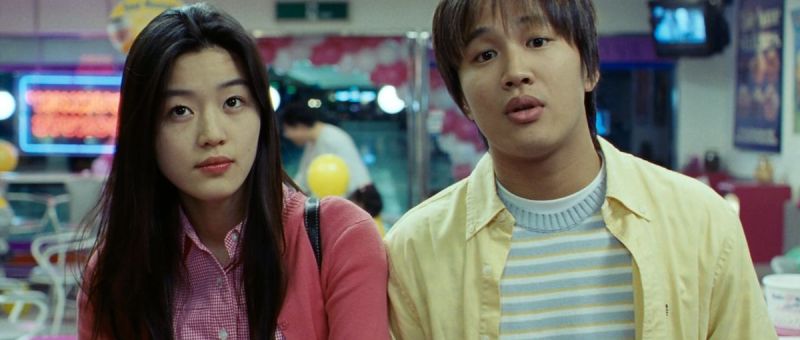
A smash hit and social phenomenon on its original release, My Sassy Girl (엽기적인 그녀, Yeopgijeogin geunyeo) is one of a small number of films from the early 2000s that like Japan’s Densha Otoko drew inspiration from the new media of online blogging and message boards. In a meta touch, the film includes these origins within the action as the hero, Gyeon-woo (Cha Tae-hyun), begins writing about his relationship with a strange and intimidating young woman (Jun Ji-hyun) on the internet only to see his work optioned for major feature film.

In some ways, these meta themes play into the central ideas of fate and time travel while giving the love story a sense of epic, romantic heft. It could be said that in the character of the unnamed woman, the film undercuts contemporary notions of gender roles and traditional femininity, but at the same time even in subverting them perhaps leans into a societal sense of misogyny. Gyeon-woo paints himself as a feminised man, raised for a time as a girl which is why he is mild-mannered, submissive, and lacks ambition in life. All qualities he associates with traditional femininity. He is attracted to the girl, but also disgusted by her unfeminine behaviour and most particularly by her public drunkenness. Her chewing of her own vomit on the train is apparently inspired by a real-life event and the reason for designating her the “bizarre and freakish” woman of the title. 

Gyeon-woo also suffers physical violence at the hands of most of the women in film including his mother, further marking him out as weak and hard done by in comparison to these strong women while most of the men, such as his own father and that of the girl who is a habitual drinker, are ineffectual and go along with their wives for a quiet life. The girl continues to boss him around, ordering for him in cafes, making him wear her high heels while she takes his trainers when her feet hurt, and generally telling him what to do in the relationship. Gyeon-woo appears to have a slightly masochistic streak and despite describing his discomfort this rejection of traditional femininity, actually seems to like being bossed around and physically abused by the girl, even later seeking out similar women, though the film does also include a transphobic joke that is very of its time. 

Eventually, he begins to realise that the girl’s violence and demanding nature are awkward ways of expressing love while she works through issues of her own that exist to one side of him. There are reasons that all her screenplays are about a heroic woman travelling in time to save someone she loves while simultaneously convinced she is destined to meet someone from the future. Gyeon-woo, meanwhile, an engineering student, is more grounded and down to earth. He nurtures their love in another way, replanting a damaged tree solely so the girl won’t be sad if she returns to find that it has died. Fate deliberately keeps them apart as their paths repeatedly fail to cross with a series of near misses before a fateful encounter, implying that romantic timing is much about the readiness for love as anything else, or as someone puts it, building a bridge of chance. Only once the girl has begun to work through her feelings, and Gyeon-woo has accepted his filial responsibilities, can their love be fulfilled. 

This is perhaps most obvious in the episode in which they become involved in a military siege when a soldier takes them hostage in an amusement park after deserting because his girlfriend has left him for another man. While the soldier’s obsessive love turns dangerously destructive, the girl is able to talk him down by reminding him that if he really loved his former girlfriend he’d set her free and rejoice in her happiness. The film’s quirky atmosphere with its series of weird events in a strange way recall the world of Tomihiko Morimi with its cosmic coincidences and tiny ironies that are nevertheless underpinned by a genuine sense of poignancy and warmth, willing these two star-crossed lovers to finally find each other at the right time as past and future finally coalesce into a more perfect present. 


My Sassy Girl screened as part of this year’s New York Asian Film Festival.

Trailer (English subtitles)

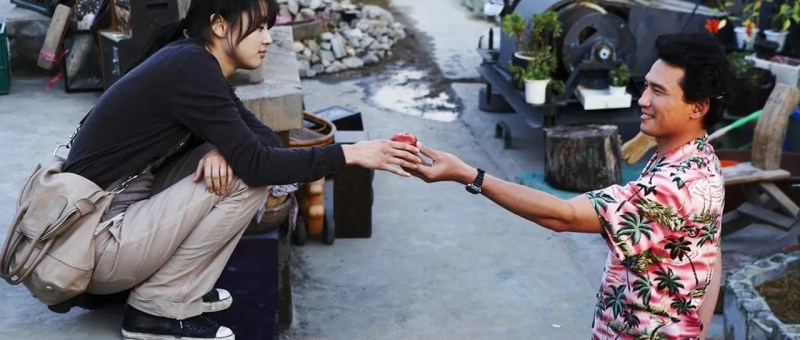
A Man Who Was Superman (슈퍼맨이었던 사나이, Chung Yoon-chul, 2008)

Maybe it’s impossible to go on living in this world without some sort of delusion. The jaded reporter at the centre of A Man Who Was Superman (A Man Who Was Superman (슈퍼맨이었던 사나이, Chung Yoon-chul, Syupeomaenieotdeon sanai) has built a career out of following eccentric people, but in a slightly uncomfortable way akin to a nature documentary as if she were making a spectacle of them. There is, however, something that prevents her treating “Superman” in the same way in that his desire to help people seems to be genuine and is in the end what gives his life meaning. Though she comes to the conclusion that his life is in danger without medical treatment, a doctor seems to suggest that that may not actually be the best thing for him. He’s happy living in his dream world and being dragged back to this one with all of its trauma, greed, and selfishness might not do him any good.

There are constant references on the radio to yellow dust blowing in from Mongolia as a kind of metaphor for a more spiritual kind of corruption that’s sweeping across the country. What seems to have bothered Superman is that in his past he asked for help and no one came. People just stood by and watched until it was too late while he could do nothing on his own. He says that he has a piece of Kryptonite stuck in his head that prevents him from using superpowers, but we gradually come to learn that the foreign object in his head is a symbol for the trauma stemming from the Gwangju massacre in 1980 in which troops opened fire on democracy protestors as part of an authoritarian crackdown. In his current persona, Superman fears men in white, seeing them as villains who want to erase all his memories echoing the ways in which news of Gwangju was initially suppressed, though also perhaps his own fear of remembering why he was placed in a psychiatric institution to begin with.

Despite herself, Soo-jung is drawn to Superman’s story and begins to sympathise with him along with his messages about helping others and protecting the planet. For him, protecting the planet takes on an environmental belt in which he battles the yellow dust and protests about climate change, complaining that he once lived in the North Pole but had to move because of the ice caps melting. He likens himself to a whale who was caught after the glaciers melted and hit in the head with a spear but went on living until he was 130. This superwhale will apparently come to the rescue if Jaws comes calling.

Superman does however envisage being able to cure himself through kindness. According him, the more endorphins he produces through feeling good after helping people, the faster the kyponite in his brain will be pushed out. Just like Superman in the movies, he hears his father’s voice telling him that him everyone has the ability to help others and that he has to go on helping them until they remember that. That was perhaps what his father was trying to do when he went out protest in Gwangju and never came back, telling his son he’d return if he made sure to be good like Superman. 

Perhaps it seems naive to suggest that kindness can save a society, but there is indeed something that’s been forgotten in an increasingly capitalistic society where everyone’s busy working all the time. Superman’s small acts of kindness such as helping an old woman with her bags did improve the general quality of the world around him. When he encounters another potential tragedy, he is at first unable to help having received psychiatric treatment that turned him into a kind of zombie suppressing his compassion, but once he decides to so, others start to help too. He couldn’t lift a car on his own, but five or six together could lift it enough to make a difference. In essence, he couldn’t survive in this indifferent world in which it’s normal to ignore people in trouble. Ji-soo remembers watching a nature documentary and being angry with the filmmaker for just filming rather than trying to help a rabbit that got eaten by a lion. She does try to help Superman in some ways, but also perhaps comes to the conclusion that there’s not much else she can do for him than bear witness, taking his lessons to heart and trying to heal the earth with small acts of human kindness to beat back the encroaching yellow dust of human indifference.


International trailer (English subtitles)