New Female Prisoner Scorpion: Special Cellblock X (新・女囚さそり 特殊房X, Yutaka Kohira, 1977)

After Meiko Kaji declined to appear in further Female Prisoner Scorpion movies, Toei attempted to reboot the franchise under the “New Female Prisoner Scorpion” banner much as they did with some of their other franchises such as New Battles without Honour and Humanity. This second, and in fact final, instalment Special Cellblock X (新・女囚さそり 特殊房X, Shin Joshu Sasori: Tokushu-bo X) is not a sequel to New Female Prisoner Scorpion but itself another reboot that like its predecessor takes place amid a backdrop of paranoia and political corruption. 

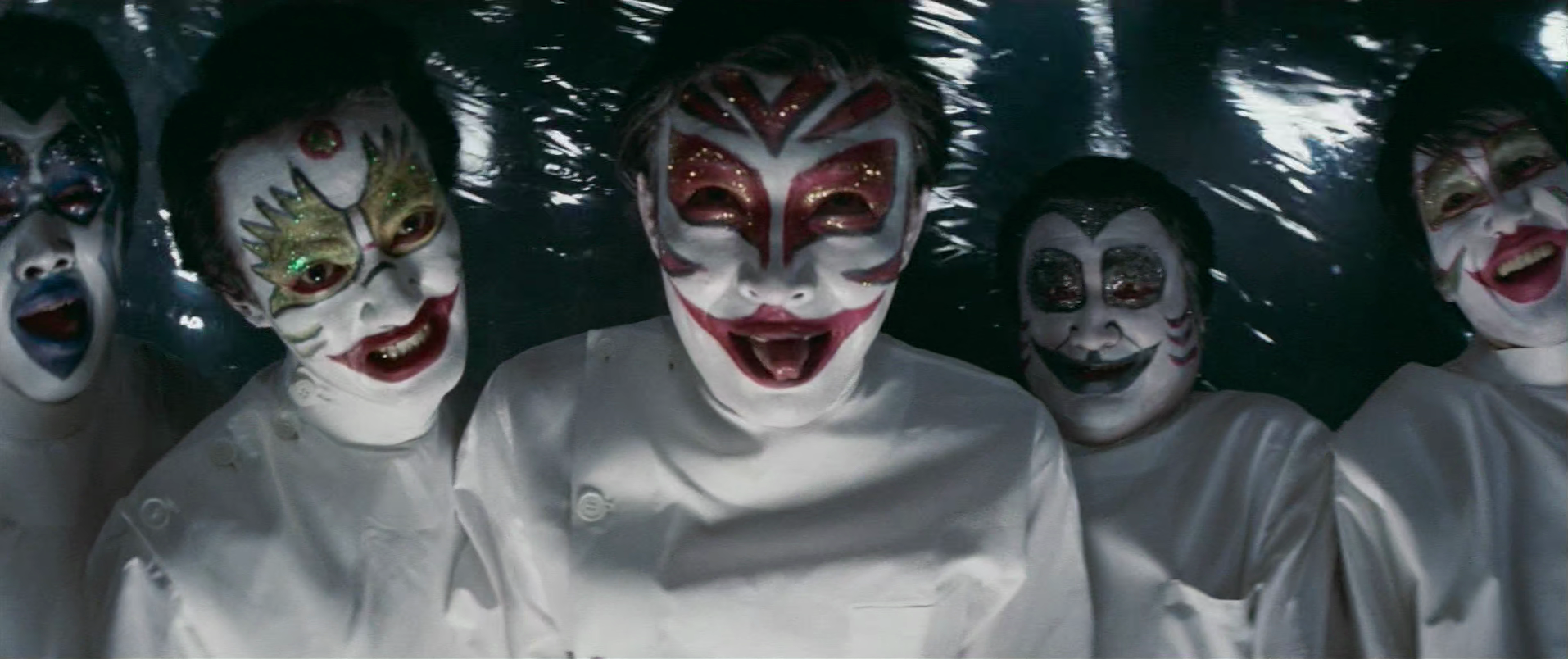
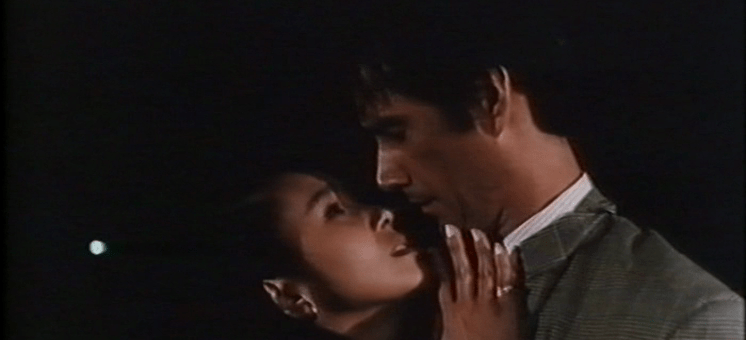
Arriving back at the prison after a failed escape attempt, this Nami (Yoko Natsuki) has an all new backstory as an idealistic nurse whose doctor boyfriend was given shock therapy that destroyed his mind and left him in a vegetative state after threatening to blow the whistle on his hospital’s decision to let the man at the centre of a growing political scandal quietly pass away. These facts are first communicated to us through a surreal fever dream Nami has presumably caused by an infected wound on her leg. She first dreams herself frolicking cheerfully with the doctor before frightening figures of darkness pull him back into an abyss while terrifying clowns leer over and then rape her. She’s only saved from her life-threatening medical condition by the intervention of Kiyomi (Kaori Ono), a fellow prisoner who feels indebted to her because of a blood transfusion she received three years earlier before everything in Nami’s life went wrong. 

But otherwise Nami enjoys little respite in the prison as the other inmates take out their frustrations on her in regards to the reprisals enacted on them following her escape attempt. Like most other prisons in the franchise, this one employs a tactic of divide and rule encouraging the prisons to turn on Nami rather than the guards for their treatment of them. But things are changing in the prison. Chief guard Kajiki (Takeo Chii) had ruled supreme, but the warden has different ideas and objects to Kajiki’s tactic of appeasement by allowing things like cigarettes and chocolate to circulate in the prison to keep the inmates happy. He brings in a super tough security enforcer from the face male Abashiri prison which means Kajiki’s career is definitely on the decline and leaving him increasingly siding with the prisoners over the cruel treatment they’re exposed to by the warden who is too busy courting the justice minister in the hope of a government position to consider things like prison regulations or the welfare of the prisoners. 

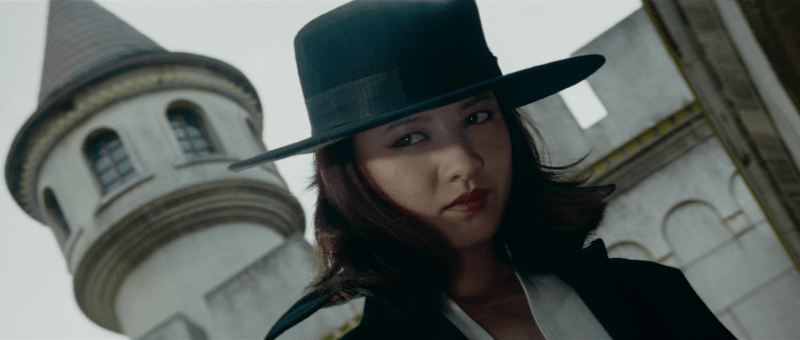
Of course, it’s also the justice minister against whom Nami wants revenge. This Sasori is even more silent than most, glaring angrily at those around her but saying little other than stopping to advise Kiyomi not to get involved with her because it won’t end well in a prediction that turns to be accurate. When she eventually assumes her Sasori persona, it’s a little different from that of her predecessors as she dresses all in white (perhaps apt for a former nurse) with a long black over coat. Her black hat has a wide, stiff brim and a feather tucked in the side. She kills with a scalpel, as if she were literally excising the corruption in society and is prepared to play a little bit dirty. The justice minister had asked the warden to kill her and pass it off as an illness. She threatens to blackmail him though it’s obvious she’s not after money and executes the warden when he delivers the pay off on a cheerful fairground ride. 

Though it may lack the striking cinematography found in Ito’s trilogy, the film nevertheless skews surreal with its strange fever dream that turns out not to be so far from the reality as you’d assume along with weird gags like Nami and Kojiki stealing the clothes of a young couple after escaping together who happened to be dressed in identical outfits. Nami teaming up with a former guard is also something of a surprise and though she fights with him and rejects his romantic advances, she seems to have genuine pity when he gives up his life to save her. In any case, they each have something in common as those who now resist the system as Kajiki became a victim of a more authoritarian regime that doesn’t like his lax approach to rule keeping and Nami pursues her desire for justice in an unjust society at all costs. Dropping a bloody scalpel behind her, she disappears into the night, justice done, but presumably onto some other kind of vengeance against a corrupt authority that equally will stop at nothing to hang on to its power.


Willful Murder (日本の熱い日々 謀殺・下山事件, Kei Kumai, 1981)

Beginning to piece something together, the dogged reporter at the centre of Kei Kumai’s Willful Murder (日本の熱い日々 謀殺・下山事件, Nihon no Atsui Hibi Bosatsu: Shimoyama Jiken) looks out at an industrial complex and reflects that when he visited it eight years previously it was a “piddling little factory” and has since become a “major company”. His comments might equally stand for Japan itself as Kumai charts the course of the nation’s post-war economic miracle viewing it as a kind of Faustian bargain with the Americans largely conducted by former militarists driven by personal gain and ideological fury. 

Based on the book by Kimio Yada, The Killing: The Shimoyama Incident, the film turns on the mystery surrounding the still unexplained death of Japan National Railways CEO Sadanori Shimoyama whose dismembered body was discovered by the railway tracks in July 1949 suggesting he had been hit by a train. Given the investigative techniques available at the time, Shimoyama’s demise has never been conclusively ruled either a murder or a suicide with experts from rival universities coming to opposing opinions and the police later closing the case in somewhat suspicious circumstances. 

Kumai’s film leans towards the murder angle though like the real life investigators cannot definitively rule out that Shimoyama may have taken his own life presumably due to the pressure he felt himself under after being ordered by the occupation authorities to dismiss 30,000 railway workers from their jobs as part of the so called “Dodge Line” economic plan intended to halt runaway inflation. As the film’s opening voice over also reveals, the Japan Railways Union was at the centre of the labour movement at the moment in which occupational approach was shifting from its original purpose of demilitarisation and democratisation, towards remilitarisation and capitalisation as the Americans sought to make Japan a foreign policy ally in their opposition towards communism in Asia. 

The film’s thesis is that US forces were already planning for the Korean War and urgently needed to crush the labour movement. Shortly after Shimoyama’s death, two other railway incidents occurred firstly with the runaway train in Mitaka which crashed into the station killing six and injuring 20, and then the Matsukawa derailment for which 17 men were falsely convicted (four sentenced to death) all of whom were members of the railway workers’ union. The conclusion that dogged reporter Yashiro (Tatsuya Nakadai) slowly comes to, is that Shimoyama was murdered and the train incidents staged to discredit the labour movement on the orders of the occupation forces while former militarist collaborators continued on the same path in a newly “democratic” Japan.

Japan certainly did very well out of the Korean War the economic stimulus of which allowed that “piddling little factory” to become a “major company” in under a decade much as the nation rocketed towards the economic prosperity which culminated in the 1964 Olympics against which the film’s finale is played. The portrait the Kumai paints is of a nation which has lost its soul, mired in hypocrisy which makes a mockery of “pacifism” and “democracy”. There are in fact at least three unexplained deaths presented in the film, the second of the being that of Michiko Kanba who was killed during the protests against the Anpo security treaty which was later forced through parliament despite clear public opposition. The same possibly corrupt pathologist is assigned to the autopsy and argues that the young woman died as the result of a crowd crush despite the attending physician’s report that the cause of death was strangulation. 

The true villain is however the American occupation and Japan’s continuing complicity even after it ended. Kumai includes several scenes of mass protest against the presence of the American military in Japan, and often places American soldiers ominously hovering in the corners of the frame such as those standing directly outside the police station. Yashiro attempts to interview a Korean man who tried to blow a whistle on the Shimoyama murder only to be arrested by US Counter Intelligence and later physically dragged out of the visiting room by a lurking MP. It all sounds like a conspiracy theory and one Yashiro doesn’t know if he should believe but then has to ask himself why all these people are seemingly being silenced if there is nothing to hide. He maintains his conviction that Shimoyama was murdered, but cannot necessarily say whether it was by a communist foreign nation as the Korean whistleblower had suggested or by the Americans trying to frustrate the “democracy” they’d previously been so keen on lest it disrupt their capitalist agenda. 

In the closing scenes, Yashiro is confronted by yet another death which cannot be ruled suicide or murder along with the realisation that he will never learn the truth. The grills from a grate on the platform of a train station above cast shadowy bars that imprison him in the shady cynicism of the Cold War society. Kumai films in boxy 4:3 academy ratio and in the black and white of golden age cinema, lending a degree of cinematic realism to his devastating tale of post-war moral decline which contains a note of inescapable dread in the faces of two men caught in the intermittent flashes of a train going by obscuring a truth that can never be revealed.


Yakuza Graveyard (やくざの墓場 くちなしの花, Kinji Fukasaku, 1976)

“We don’t resort to violence. We observe the law.’ The hero of Kinji Fukasaku’s Yakuza Graveyard (やくざの墓場 くちなしの花, Yakuza no Hakaba: Kuchinashi no Hana) is berated by a superior officer for excessive use of force, but his criticism is in some senses ironic because it is the police force itself which becomes a symbol of the societal violence visited on those who can find no place to belong in the contemporary society. By this time the yakuza was already in decline and in the process of transforming itself into a corporatised entity while as a police chief explains increasing desperation has led to escalating gang tensions. 

Recently transferred maverick cop Kuroiwa (Tetsuya Watari) finds himself caught between two worlds in attempting to enforce the law through methods more familiar to yakuza. Soon after he’s had his gun taken away for exercising excessive force on a suspect he’d been independently tailing in the street on whom he’d found bullets designed to be used with a remodelled toy gun, Kuroiwa is pulled aside by another senior officer, Akama (Nobuo Kaneko) who takes him to a meeting with local yakuza boss Sugi (Takuya Fujioka). It seems obvious that Akama has cultivated a relationship with the Nishida gang which may not be strictly ethical for a law enforcement officer and hopes to bring Kuroiwa on board as a potential asset. They attempt to bribe him in return for information on the Yamashiro clan, the dominant organised crime association in the area, which has been hassling Nishida in an attempt to take over their territory. But Kuroiwa ironically tells them that they should “act like yakuza” and sort out their own problems rather than relying on the police before dramatically walking out much to to the consternation of everyone else present. 

Nevertheless, he eventually comes to sympathise with them as a symbol of the little guy increasingly crushed by corporate and authoritarian forces outside of their control. He finds out from a briefing that the police’s goal is the disbandment of the Nishida gang but when he asks why they aren’t going after the Yamashiro too he’s told to mind his own business and begins to realise that the police are in cahoots with organised crime. Whether they justify themselves that managing the Yamashiro to prevent a turf war is the best way to protect the public or are simply corrupt and in the pocket of big business, Kuroiwa can’t help but balk at the blatant hypocrisy of the law enforcement authorities. 

Later Kuroiwa reveals that he became a police officer after being bullied as a child in order to exert power over his life, or perhaps becoming an oppressor in order to avoid being oppressed. He was bullied because he had been born in Manchuria and even years later remains a displaced person at least on a psychological level. It’s this sense of displacement which allows him to bond with the Nishida gang’s accountant, Keiko (Meiko Kaji), whose father was Korean. Kuroiwa agrees to accompany Keiko to visit her husband (Kenji Imai) who is serving a lengthy prison term in order to tell him that the gang want to promote someone else to a position he viewed as his by right. The husband explodes in rage and uses a word some would regard as a slur to reference Keiko’s Korean heritage while she later attempts to walk into the sea feeling that there really is no place for her in the contemporary society. 

Just as she claims that she is neither Korean nor Japanese or much of anything at all, Kuroiwa is neither cop nor thug and similarly excluded from society at large. He ends up bonding with old school Nishida footsoldier Iwata (Tatsuo Umemiya), who is also ethnically Korean, for many of the same reasons and attempts to mount a doomed rebellion against their mutual oppression, but is hamstrung by his otherness which is only deepened when he’s taken prisoner by loan shark Teramitsu (Kei Sato) and given a mysterious truth drug developed by the nazis later becoming a user of heroin. Already marginalised, forced into crime by economic necessity and social prejudice, Iwata and Keiko like Kuroiwa himself struggle to escape their displacement while pushed still further out by systemic corruption and the amoral capitalism of an era of high prosperity. Shot with jitsuroku-esque realism and characteristically canted angles, Fukasaku injects a note of futility even within the hero’s tragic victory as he quite literally sticks two fingers up to the corrupted “brotherhood” that has already betrayed him.


Yakuza Graveyard is released on blu-ray on 16th May courtesy of Radiance Films. On disc extras include an in-depth appreciation of the film and the work of screenwriter Kazuo Kasahara from Blood of Wolves director Kazuya Shiraishi, and an informative video essay from Tom Mes on the collaborations of Meiko Kaji and Kinji Fukasaku. The limited edition also comes with a 32-page booklet featuring new writing by Miko Ko plus translations of a contemporary review and writing by Kasahara.

Original trailer (no subtitles)

Samurai Wolf 2: Hell Cut (牙狼之介 地獄斬り, Hideo Gosha, 1967)

“We ronin must live without mercy” insists a fugitive on a quest for vengeance and riches only to meet his match in the justice-loving wanderer Kiba (Isao Natsuyagi) making his return for Samurai Wolf II: Hell Cut (牙狼之介 地獄斬り, Kiba Okaminosuke: Jigoku Giri). Like the second instalment in many series, Gosha’s avant-garde chambara largely follows the same formula picking up several familiar elements from the first film if giving them a new spin as Kiba once again finds himself caught up in intrigue provoked by the amoral venality of late Meiji society. 

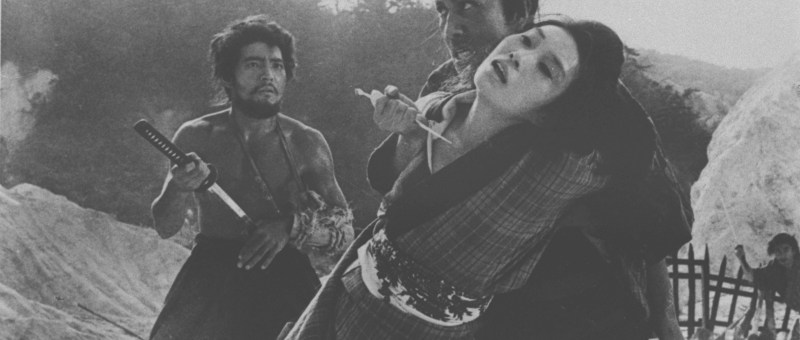
In this case, he makes a rod for his own back by humiliating some swordsmen after catching them harassing a young woman, mocking them when they try to claim that their treatment of her is part of their “training”. Kiba saves the girl, Oteru (Rumiko Fuji), who has some kind of etherial quality and doesn’t quite seem to know what’s going on immediately throwing herself at Kiba who turns her down in gentlemanly fashion. Sometime later, he runs into a convoy of officials transporting criminals to the nearest judicial centre and stops to give the prisoners some of his own water explaining that that from the stream is polluted thanks to leaks from a nearby goldmine. In any case, Kiba is struck by the appearance of one of the men, Magobei (Ko Nishimura), who reminds him of the father who was killed by swordsmen he’d humiliated with his skill. 

Magobei is in chains for murdering the manager of the mine which previously belonged to the shogun but has now been shut down, its seam apparently exhausted. But like the toxins that poured into the river, the mine is a poison to society and in more ways than one. Magobei tells Kiba that he’s been set up. He was hired to kill the manager by a duplicitous gang leader named Jinroku (Bin Amatsu) who has found a new seam and has been operating the mine illegally taking all the gold for himself so obviously Magobei wants revenge. After seeing off an ambush, Kiba agrees to act as a bodyguard delivering both Magobei and the other prisoner, Kihachi (Out Yokoyama) who claims to be a big time bandit in trouble for robbing a samurai family, to the nearest city but secretly seems to sympathise with the injustice dealt to Magobei and the female prisoner who later joins them, Oren the Thistle (Yuko Kusunoki), who murdered a judge who killed her lover. 

Yet Kiba’s memories of his father cloud his judgment about Magobei who is definitely not a man worthy of his faith in him. “What good would pity do?’ Magobei asks, certain that compassion is a weakness and that if he were to give in to human feeling he would immediately be betrayed. The men misunderstand each other, assuming they are alike when in reality they are opposites. Kiba bets on Magobei’s humanity and loses, while Magobei assumes that Kiba will easily be won over by the riches to be found in the goldmine and help to wipe out Jinroku’s gang which is also a family of which Oteru is a member. “Life’s tough that’s how it is” he justifies, but Kiba cannot forgive him not least for his callous murder of a man who was only a frightened braggart and could not have harmed him and a woman who was otherwise blameless. Just as Sanai had in the first film, Magobei tells him that “one day you will be like me” a future that Kiba once again violently rejects. 

But then again he can never escape the world where goldmines pollute the rivers and money can buy anything, even the hearts of men. Just like his father, he’s pursued by the swordsmen he’s unwittingly insulted while discovering his desire to serve justice backfiring, eventually robbing him of the only thing he actually wanted just as it had at the end of the previous film. Even so, Kiba retains his sense of humanity and unlike so many jidaigeki (anti-)heroes refuses to give in to nihilism or despair. A little less avantgarde than the previous instalment, Gosha nevertheless conjures a world of dazzling violence in freeze-frame and silence while once again leaving Kiba the furious wolf to wander, a lonely figure in an unforgiving landscape.


Samurai Wolf 2: Hell Cut opens at New York’s Metrograph on Dec. 26 as part of Hideo Gosha x 3

Original trailer (English subtitles)

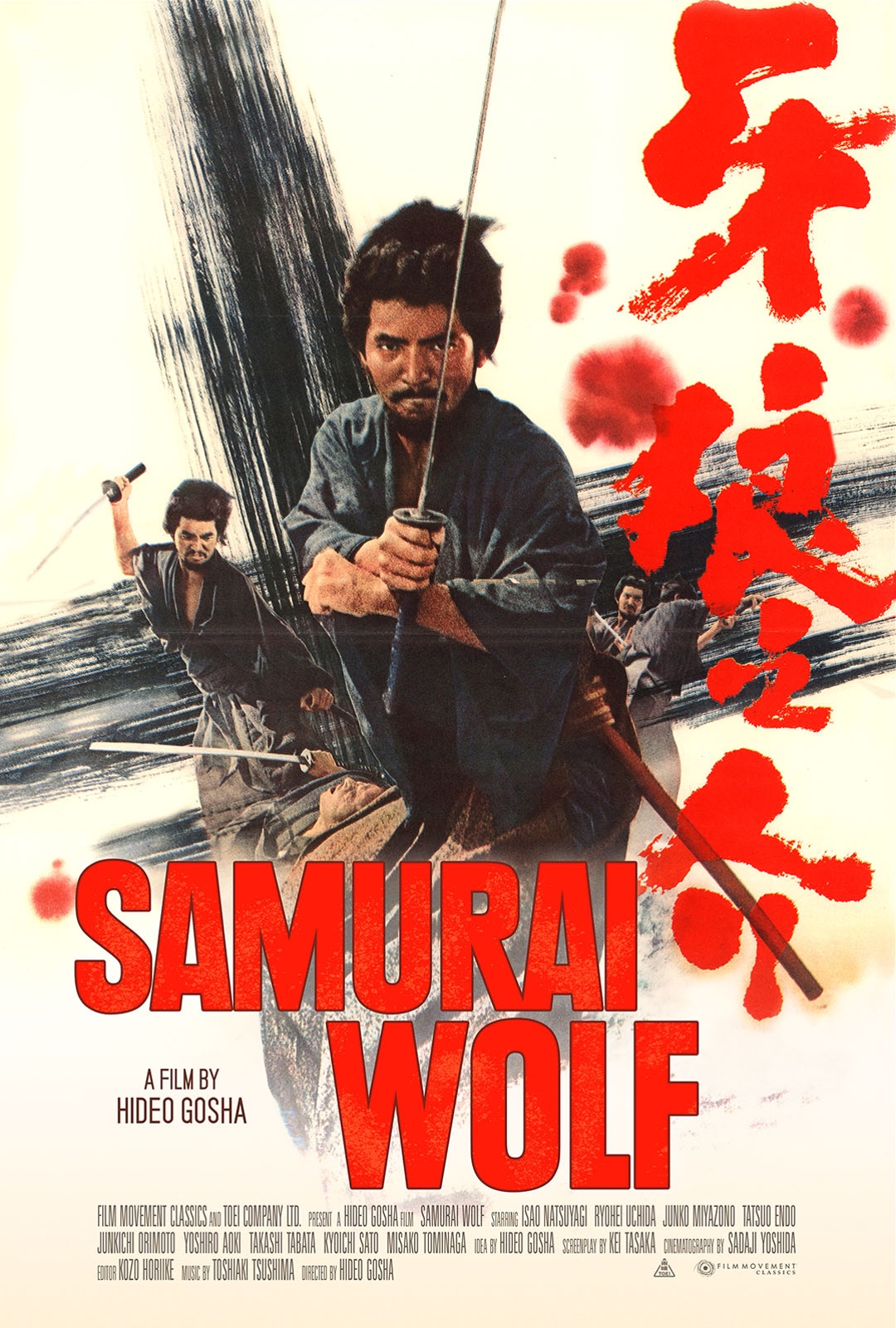
Samurai Wolf (牙狼之介, Hideo Gosha, 1966)

A cheerful ronin with strong moral fibre finds himself squaring off against a nihilistic assassin and a corrupt retainer/postmaster in Hideo Gosha’s new wave chambara Samurai Wolf (牙狼之介, Kiba Okaminosuke). Where many jidaigeki of the age would follow the antagonist Sanai (Ryohei Uchida), Gosha’s focusses on the figure of a man with wolfish appetites who is otherwise unaffected by the infinite corruption of the world around him and in that at least unwilling to submit himself to the dog-eat-dog mentality of late Edo-era society. 

Wandering samurai Kiba Okaminosuke (Isao Natsuyagi) explains that he got his name because often he bares his fangs and is known as the Furious Wolf, yet as much as the ferocity of the opening titles might bear that image out he is not cruel or avaricious but measured and honest. After wolfing down an exorbitant amount of food prepared by an old woman at a way station, he announces that he can’t pay. The old woman panics and we wonder if he might become violent or even kill her, but Kiba simply offers to pay in kind fixing the old lady’s leaky roof and chopping a supply of wood much to her surprise and gratitude. It seems, the wolf always pays his way. While there, he witnesses a trio of bandits attack a postal cart and kill the men who were pulling it. He retrieves the bodies along with a runaway horse and takes them back to the outpost they came from but the guard there is disinterested claiming that, as they died on the road and not in the town, it’s not his business. As Kiba soon discovers, the guard is in league with a corrupt lord, Nizaemon (Tatsuo Endo), who is an official messenger for the shogun but wants to take over the public postal service which is why he’s terrorising the postmistress, Chise (Hiroko Sakuramachi), with the intention of getting his hands on the relay outpost. 

There is something a little ironic in the fact that Ochise is blind while Nizaemon’s chief assassin is deaf and mute, both of them excluded from mainstream society and looking for support but finding it in opposing directions. Formerly a samurai woman, Ochise wants to hang on to the outpost because it has become her place to belong while resenting the incursion by corrupt lord Nizaemon who only wants it for the potential to control the cargo route along with raising the rates to use it to exorbitant heights. Shortly after Kiba tries to take out the assassins, a bunch of government inspectors turn up to complain about the missing merchandise while backing Chise into a corner by forcing her to accept the liability for transporting a large sum of gold coins. Kiba originally says he won’t help because he doesn’t want to risk his life for people he doesn’t even know, but of course later agrees in part on the promise of a significant return but also because he likes Chise and resents the kind of corruption men like Nizaemon represent.

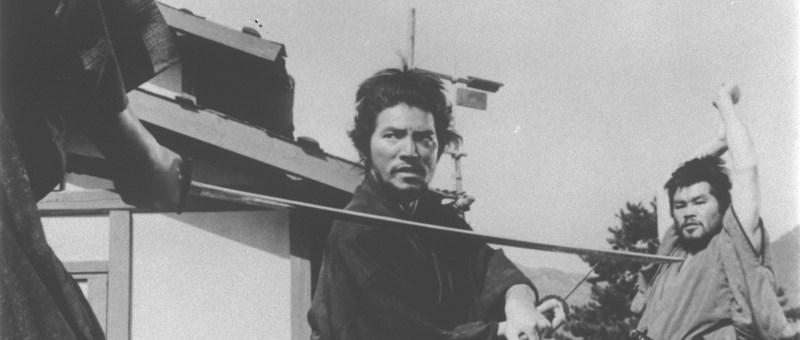
On the other hand, his humanity is mirrored in his antagonist, hired gun Sanai who fetches up to help Nizaemon stop Kiba and take over the outpost. Sanai cynically tells him, that in five years’ time Kiba will be no better than he is, if he doesn’t kill him first. Kiba rejects the claim but it’s easy enough to see how someone could be corrupted by the realities of Edo-era society. Sanai later reveals that he fell in love with a samurai woman and eloped with her, a fierce taboo given the class difference between them, and later fell into his present state of nihilistic despair when she was taken from him quite literally betrayed by the social order. But Kiba seems different. He is not naive and has no expectations of human goodness yet remains cheerful and in his own way honest. When a young woman comes to him with her life savings and tells him that Sanai is the man whom she’s been waiting for to gain her revenge, he tells her to keep her money because he’s going to end up fighting him anyway. Likewise, when he realises someone he trusted has betrayed him, he tells them that he understands why they did it and bears them no ill will it’s simply the way things are only he suspects they will regret that others have died because of it. Even in his final confrontation with Sanai, he notices that his opponent is injured and ties one of his own hands to his belt to ensure it will be a fair fight. 

In any case, it seems that Sanai’s morally compromised existence is about to catch up to him with several other players intent on taking his life aside from the sex worker who longed to avenge the deaths of her family murdered during a massacre of peasants killed for standing up to a cruel landowner. A female gang leader also wants revenge for the death for her boss, while the cynical madam at the local brothel offers to team up with him to steal the gold from under Nizaemon’s nose. It seems that Sanai is a man already dead, having long abandoned the lovelorn boy he was for the nihilistic existence of a wandering assassin only to be confronted with the ghosts of the unattainable past. This world is indeed rotten, but Kiba has somehow managed to rise above it embracing his wolfish appetites in more positive ways while opposing injustice wherever he finds it. Much more avant-garde than much of his later work would be, Gosha makes great use of slow motion and silence broken only by the reverberating sound of clashing swords and hints at the meaninglessness of a life of violence in an agonisingly haunting death scene in which a bloodstained man turns and falls as if the air were suddenly leaving his body. In the end all Kiba can do is turn and walk away, on to the next crisis on the highways of a lawless society.


Samurai Wolf opens at New York’s Metrograph on Dec. 26 as part of Hideo Gosha x 3

Original trailer (English subtitles)

Terror of Yakuza (沖縄やくざ戦争, AKA Okinawa Yakuza War, Sadao Nakajima, 1976)

An old-school yakuza finds himself cornered on every side while caught in the confusion of Okinawa’s reversion to Japan in Sadao Nakajima’s jitsuroku gangster movie Terror of the Yakuza (沖縄やくざ戦争, Okinawa Yakuza Senso, AKA Okinawa Yakuza War). Where similarly themed Okinawa-set gangster pictures such as Sympathy for the Underdog had largely presented the islands as an appealing place for mainland gangsters because the conditions of the occupation which had allowed them to prosper were still in place, Sadao reframes the debate in terms colonisation and conquest as the hero finds himself increasingly marginalised as an island boy contending with amoral city elitists. 

Nakazato (Hiroki Matsukata) has just been released from prison after serving seven years for the murders of two rival gang bosses that allowed his boss, Kunigami (Shinichi Chiba), to rule the roost in Koza. But now that Okinawa has reverted to Japan, everything has changed. Kunigami has formed a loose alliance with another regional gang to oppose the incursion of mainland yakuza but behind the scenes the higher-ups are intent on a mutually beneficial alliance with the Japanese perhaps seeing the writing on the wall and assuming that it’s better to work with the new regime that against it. For his part, Nakazato is more loyal to the clan than he is opposed to Japan but he’s also resentful towards to Kunigami for failing to live up to his side of the bargain now that he’s been released while fearing the influence of his new sidekick Ishikawa (Takeo Chii) whom he suspects of murdering one of his former associates while he was inside. 

As such, much of the drama unfolds as in any other yakuza picture with Nakazato, regarded by some of the other bosses as a loose cannon and potential liability, reluctant to move against Kunigami for reasons of loyalty even while Kunigami becomes increasing unhinged and dangerous, deliberately running over an Osakan foot soldier who was apparently just on holiday with no particular business in town. Kunigami’s recklessness in his hatred of the Japanese threatens to start a turf war the Okinawan gangs fear they couldn’t win, sending snivelling yakuza middleman Onaga (Mikio Narita) along with Nakazato to negotiate in Osaka only to be told the price of peace is Kunigami’s head. Inspired by the Fourth Okinawa War which was still going on at the time of the film’s completion (in fact, the release was blocked in Okinawa in fear that it would prove simply too incendiary), the conflict takes on political overtones as the mainland gangsters assume their conquest of Okinawa is a fait accompli while those like Onaga are only too quick to capitulate leaving Kunigami and Nakazato as two very different examples of resistance. 

Yet Nakazato finds himself doubly marginalised because he is from one of the smaller islands with most of his men also hailing from smaller rural communities (one uncomfortably wearing extensive makeup to ram the point home that he is from the southern reaches) with the result that they are often pushed around by the city gangsters who view them as idiot country bumpkins. On his trip to Osaka, Nakazato even describes himself as such in an attempt to curry favour apologising in advance should he make a mistake with proper gangster etiquette. Like a good platoon leader, Nakazato’s primary responsibilities are to his men which is one reason why he takes so strongly against Ishikawa, one of the new breed of entirely amoral yakuza who care nothing at all for the code and think nothing of knocking off his guys for no reason. Consequently he finds himself caught between the invading mainlanders, the unhinged chaos of Kunigami, the coldhearted greed of Ishikawa, and the spineless venality of turncoats like Onaga. 

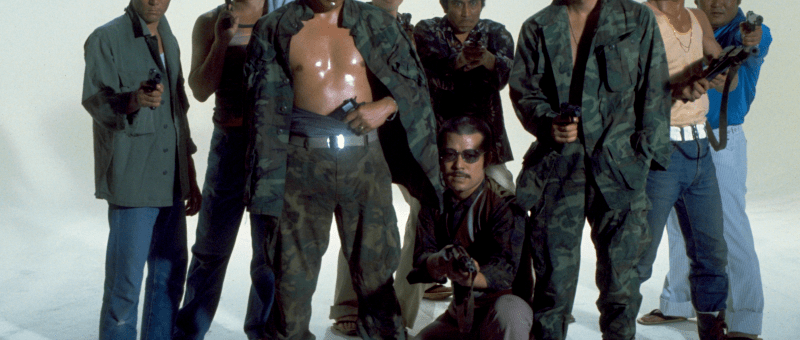
It’s no wonder that he eventually loses his cool, going all out war and like Kunigami dressing in vests and combats in an internecine quest for vengeance precipitated in part by Kunigami’s attempt to discipline one of his men for encroaching on his territory by removing his manhood with a pair of pliers. “Someone will get to you someday too” Nakazato is reminded though having lost everything including his loyal wife who insisted on selling herself to a brothel to get the money to fund his war of revenge he may no longer care so long as he cleans house in Okinawa to the extent that he is really able to do so. “Okinawa is such a scary place” one of the Japanese guys admits, though showing no signs of backing off in this maddeningly chaotic world which turns stoic veterans and hotheaded farm boys alike into enraged killers fighting on a point of principle in a world which no longer has any. 


Terror of Yakuza screens at Japan Society New York May 20 at 7pm as part of Visions of Okinawa: Cinematic Reflections

Original trailer (no subtitles)

Images: Terror of Yakuza © 1976 Toei

Beautiful Days (美わしき歳月, Masaki Kobayashi, 1955)

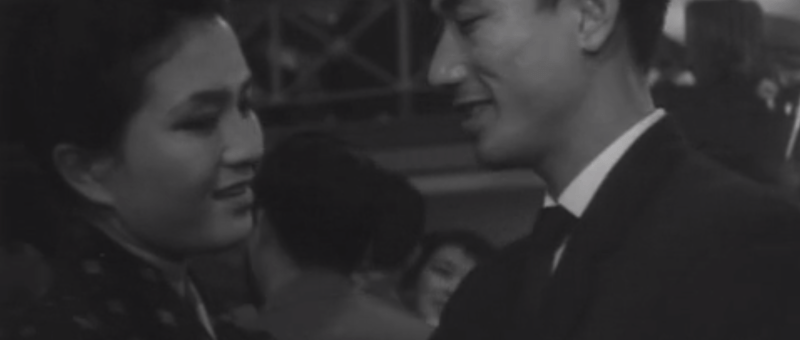
“Life is unpredictable” according to the protagonists of Masaki Kobayashi’s Beautiful Days (美わしき歳月, Uruwashiki Saigetsu, AKA The Beautiful Years), becoming something of refrain in the face of constant change. Among the most quietly angry of post-war humanists, Masaki Kobayashi’s later work is defined by a central question of how the conscientious individual can survive in an oppressive society. Like many directors, however, he had to do his time making regular studio programmers, in his case at Shochiku which was then, and to some extent still is, the home of polite melodrama. Like Kobayashi’s other films from this period, Beautiful Days conforms to the studio’s classic shomin-geki formula, but does perhaps display something of his resistance to the system in its tale of three former school friends scattered by the complicated post-war society but each in his own way attempting to make a break with the past in order to move into a more positive future. 

The action opens, however, with the old. Grandma Mrs. Tokioka (Akiko Tamura) is hit by a fancy car while out shopping, but the owner, retired CEO Shigaki (Eitaro Ozawa), turns out to be a kind and considerate man who insists on taking her to a hospital despite her protestations that she’s absolutely fine. Finally she gives in and asks Shigaki to take her to her regular doctor, Imanishi (Isao Kimura), only when she gets to the clinic Imanishi is getting a dressing down from his boss who accuses him of vanity in insisting on treating an emergency patient without checking his finances first. Imanishi storms out, recklessly quitting yet another job on a matter of principle. 

Mrs. Tokioka wanted to see Imanishi because he was a close friend of her grandson who was killed in the war, along with her son and his wife who were explosives experts, leaving her to care for her only remaining relative, 22-year-old Sakurako (Yoshiko Kuga) who works alongside her at their florist’s shop. Imanishi is from a relatively wealthy family of doctors which is perhaps why he feels so free to prioritise his integrity because the economic consequences are relatively marginal. For his friends, Hakamada (Junkichi Orimoto) and Nakao (Keiji Sada) the situation is different. Hakamada’s family are poor, living in a makeshift shack in the slums while he supports them all with a job in a factory run by an unscrupulous and exploitive boss standing in for heartless post-war capitalism. Nakao, meanwhile, graduated with a law degree but hasn’t been able to find any steady work since coming home from the war and is earning a living playing drums in a cabaret bar for 600 yen a night. 

Formerly close friends since their middle school days, the men maintain a deep yet increasingly distant connection not least because Tokioka’s death has left them with a sense of sad incompleteness. As the others say, Nakao has indeed changed. His experiences in the war along with the death of a close friend who was killed while trying to seek a better life in Brazil, have made him embittered and cynical. He buries himself in the inconsequential pleasures of pool halls and nightclubs to avoid having to think about a future he feels he doesn’t deserve. As Imanishi puts it, he struggles with his kindness towards others, pushing people away, overly cautious in choosing a policy of self-isolation rather than risk potential hurt. It seems he was in love before the war, but she (Toshiko Kobayashi) married someone else and is now a widowed single-mother. He wants to help her, getting Imanishi to visit her mother who was diagnosed with asthma that is most likely TB, and helping her with a job as a tea dancer at the club but feeling conflicted in inviting her into such a low environment while also resisting his continuing love for her, partly in resentment over her past, and partly in a lingering sense of hopelessness about the future. 

Imanishi’s problems meanwhile are mostly born of stubborn male pride. He refuses to work for the increasingly capitalist hospitals of the contemporary era and wants to be a socially responsible doctor but realises that he can’t go on quitting one job after another. He and Sakurako, Mrs. Tokioka’s granddaughter and the sister of his late friend, are in love and want to marry, but he’s too shy to ask for her hand as a man without a steady salary or future prospects. “Men always like to think things over on their own” Sakurako complains, immediately before Imanishi announces he’s about to do just that and wants to take a “break” in their relationship to sort himself out. He’s been offered a place in a research facility in Akita far in the North, but isn’t sure if he should ask Sakurako to go with him because Mrs. Tokioka won’t leave Tokyo, possibly won’t approve of their marriage, and will be disappointed if Sakurako chooses a life of hardship in the remoteness of snow country when all she’s ever wanted is for her to live happily. 

Mrs. Tokioka is in fact entirely ignorant of their relationship, which is why she’s receptive when Shigaki proposes a potential marriage between Sakurako and his younger son Yuji (Akio Satake). She thinks that’s a nice idea, but also acknowledges that times have changed and Sakurako’s marriage isn’t something she should have much say over. Shigaki agrees, and so they decide to introduce the young people casually and see if they hit it off, which they do but Sakurako remains conflicted in her relationship with the distant, to his mind noble, Imanishi who leaves her to think he’s got someone else rather than clear up a simple misunderstanding. 

In a strange way, it’s Mrs. Tokioka and Mr. Shigaki who are perhaps slipping into a romance, Sakurako even jokingly refers to him as her grandmother’s “boyfriend” using the trendy English word which adds an additional layer of incongruity. They each profess a deep confusion with the way the youngsters think, Mr. Shigaki disappointed with his older son who prioritises the bottom line and is cutting corners buying cheaper materials and reducing the quality of the product he worked so hard to perfect. Rampant and irresponsible capitalism is also the force which is currently destabilising Hakamada’s life as he finds himself exploited by his heartless boss but unable to simply quit as Imanishi has repeatedly done because jobs are hard to come by and he’s also supporting his parents. His boss even tries to frame him for stealing materials from the factory, later berating him for “talking like a freeloader” when he tries to bring up workplace conditions, and calling the police to have him charged with assault when he fights back after he hits him. 

Inverting the melancholy flower metaphor, Imanishi describes himself and his friends as horsetail in a field crushed when a dog comes by and defecates on it, but later remembers that horsetail eventually springs back up, while Mrs. Tokioka had wanted to see if her damaged bulbs would grow when planted in the right soil. The three friends are forced into a realisation that they’re heading out on different paths and will inevitably be scattered but they are at least finding their way, learning to come to an acceptance of the traumatic past to move into a happier future. “Life is unpredictable” but sometimes people surprise you and it’s best to give them the opportunity or risk losing your chance to seize happiness wherever you find it. 


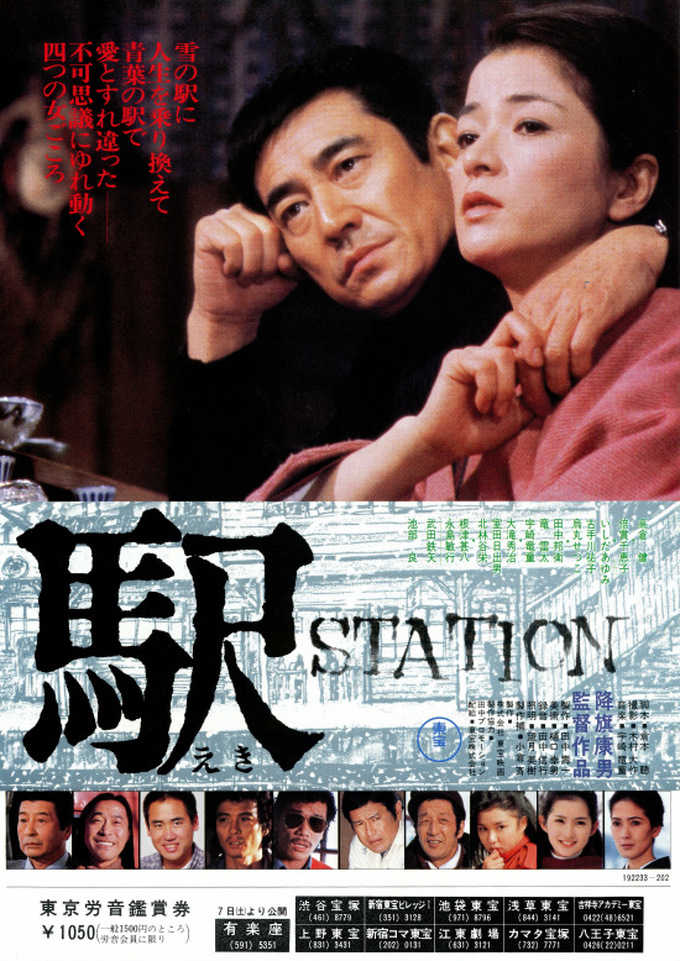
Station (駅, Yasuo Furuhata, 1981)

The thing about trains is, you can get off and wander round for a bit, but sooner or later you’ll have to go where the rails take you. You never have as much control as you think you have. The hero of Yasuo Furuhata’s Station (駅, Eki) is beginning to come to that conclusion himself, addressing the various stations of his life, the choices he made and didn’t make that have led him into a dejected middle-age, defeated, and finding finally that any illusion he may have entertained of living differently will not come to pass. 

In 1968, police detective Eiji Mikami (Ken Takakura) sends his wife (Ayumi Ishida) and son away for reasons which aren’t entirely clear. At this point in his life, he’s an aspiring marksman on Japan’s shooting team intensively training for the Mexico Olympics, which is perhaps why he felt he could no longer be a husband and a father, or at least not while also being a policeman. All that changes, however, when his friend and mentor is gunned down during a routine job, shot in the chest at point blank range by a man in a white Corolla while operating a check point to catch a killer on the run. In 1976, he goes to see his sister (Yuko Kotegawa) marry a man she might not love to escape a violent boyfriend and investigates a serial killer of women who rapes and murders girls in red skirts. In 1979, he’s haunted by the serial killing case coupled with his cool execution of hostage takers during a siege. Holing up in a small fishing village waiting for a boat home for New Year, he strikes up a relationship with a barmaid who is just as sad, lonely, and defeated as he is. 

When Mikami’s friend is shot, his wife tells the reporters that she thinks shooting at targets, which her husband had been training others to do, is a different thing than shooting at living beings. “One shouldn’t shoot at people” she tearfully insists, accidentally forcing Mikami into a double dilemma, knowing that his marksmanship skills were on one level useless in that they couldn’t save his friend while paradoxically told that they shouldn’t be used for that purpose anyway. But what really is the point in shooting holes in paper targets just to test your skill? Wandering into the hostage situation while posing as a ramen deliveryman, he cooly shoots the two bad guys without even really thinking about it, as if they were nothing more than paper. 

The Olympics overshadow his life. He gave up his wife and son for them, but no matter how hard you train, the Olympics eventually pass. Mikami is told he’s supposed to bring honour to Japan, representing not only the nation but the police force. He’s not allowed to investigate his friend’s death because they want him to concentrate on his shooting, but he is and was a policeman who wants to serve justice. While he’s waiting for the funeral, he sees a report on the news about a former Olympic marathon runner who’s taken his own life because he got injured and fell into a depression feeling as if he’d let down an entire nation. Mikami perhaps feels something the same, drained by responsibility, by the feeling of inadequacy, and by the potential for disappointment. After the Olympics he feels deflated and useless, wondering what the point of police work is while quietly rueful in suspecting the committee is about to replace him on the team after all. 

When he wanders into the only bar open on a snowy December evening, that is perhaps why he bonds so immediately with its melancholy proprietress, Kiriko (Chieko Baisho). The conversation turns dark. Kiriko tells him that a friend of hers who worked in a bar in the red light district killed herself last New Year, that it’s the most dangerous time for those who do this sort of work, not for any poetical reason but simply because it’s when their men come home. She tells him that she’s a lone woman, no virginal spinster but weighed down by the failure of old love. Swept up in the New Year spirit, Mikami starts to fall for her, but is also called back to the past by an old colleague who passes him his wife’s phone number and tells him she’s now a bar hostess in Ikebukuro. He starts to think about leaving the police and getting a local job, but fate will not allow it. Kiriko too sees her dream of love destroyed precisely by her desire to escape the pull of toxic romance. Back in 1976, Mikami had been party to a similar dilemma as the sister of his suspect kept her brother’s secret but secretly longed to escape its burden. Suzuko (Setsuko Karasuma) too lost love in trying to claim it and now works as a waitress in a small cafe in this tiny town, only latterly making an impulsive decision to try to leave and make a new future somewhere else. 

Mikami tears up the letter of resignation that declared him too tired of life to be a good policeman, once again boarding a train back to his rightful destination, knowing that a policeman’s what he is and will always be. He watched his wife wave goodbye from a station platform, saw a man betrayed on the tracks, and finally boarded the train himself, letting go of any idea he might have had about going somewhere else. Stations are after all transitory places, you can’t stay there forever. 


Original trailers (no subtitles)

Aki Yashiro’s Funauta which plays frequently throughout the film

The Enchantment (誘惑者, Shunichi Nagasaki, 1989)

“A broken romance affects everybody” a sympathetic psychiatrist tries to reassure a patient suffering a dangerous romantic obsession with a possibly imaginary woman. Like so much of his work, they’re soft words offered casually as a path towards something deeper but in this case it’s not the patient we need to worry about but the doctor. The aptly named The Enchantment (誘惑者, Yuwakusha), somewhat less subtly titled “Temptress” in Japanese, takes its “hero” on a dark journey into fascination, the male need for domination, and the self delusions of irresolvable disappointment.   

The film opens with genial psychiatrist talking to a patient, Hirayama (Tsutomu Isobe), who proclaims himself more or less cured from a nervous breakdown born of a broken heart. Hirayama’s love affair may be largely imaginary, and he seems far from “cured”, but Doctor Sotomura’s (Masao Kusakari) failure to challenge him on his new affirmation that he’s over her because he’s realised she was “just a bitch” who treated him “like trash” might be a worrying oversight. Hirayama was supposed to be his last patient of the day, but a last minute walk-in, Miyako (Kumiko Akiyoshi), piques his interest enough to keep him in the office rather than on a planned date with his receptionist fiancée and surgeon best friend.

Miyako, nervous and reticent, tells him the appointment is “about a friend” and takes some coaxing before beginning to explain that she has been physically assaulted by her female roommate apparently jealous over the unwanted attentions of a man who developed an attraction for her at her job as a tour guide. Miyako does not spell it out, but somewhat implies that her relationship with her roommate Kimie is romantic while Sotomura has the good sense not to push the issue, only to urge her that perhaps she should think about staying with a friend a while if she doesn’t feel safe at home. Miyako, however, doesn’t want to do that and is only worried about what might have provoked this sudden and unexpected change, fearing most of all that she herself will fall out of love with Kimie if her moodiness continues to intensify.

Overstepping the mark, Sotomura is fascinated with his mysterious new patient, particularly after he becomes a kind of white night rescuing Miyako from a dangerous encounter with Hirayama who is under the delusion that she is the embodiment of his romantic obsession “Junko”. The fascination only intensifies after he makes a surprising discovery – Kimie is not “real” but a secondary personality inside Miyako. Infuriated by Sotomura’s romantic overtures, Kimie takes control and stabs him in the leg while Miyako continues to visit him in the hospital, unable to remember what exactly happened between them.

Sotomura’s obsession is both sexual and professional, after all how many sufferers of MPD is he going to meet in the course of his career? He is indeed ambitious, casually dating his receptionist Harumi (Kiwako Harada) mostly because she’s the daughter of his former professor. Though the couple live together, Harumi is constantly frustrated by his indifference to their relationship and foot dragging over making it official. Sotomura’s best friend, Shinbori (Takashi Naito), is facing much the same dilemma but has resigned himself to an arranged marriage to further his career and keep his family happy. Sotomura instinctively thinks he ought to do the same and tells Harumi that he’ll sort things out with her father, but remains fixated on the mysterious Miyako and her unconventional love life. 

A more cynical friend warns him that sex is the only thing that matters and it’s essential to avoid emotional entanglements. Nevertheless, Sotomura finds himself desperate to unlock the mystery of Miyako, but it remains open to debate which part of her he wants to “fix” – her MPD, or her sexual orientation. As we find out, Sotomura might assume that Miyako’s love for another woman has driven her “mad”, but in reality it’s more that a sense of impossibility led her to believe that there was no solution to her suffering other than death. Faced with unreconcilable loss, she internalised the figure of her fixation, literally becoming one with her lost lover in order to avoid facing that she was alone once again. Uninterested in Sotomura, Miyako/Kimie becomes fascinated with Harumi who eventually becomes so intensely obsessed with Miyako that she is willing to erase her own identity and become “Kimie” for her in order to support her sense of reality and protect the integrity of the Miyako personality.

Again, Sotomura has a few issues. The first is multi-layered sexual jealousy. Now that Harumi has moved on, found someone who “needs” her, and seems to be happier he is instantly irritated that she left him (for a woman) and desperate to win her back (along with the career boost he romanced her for in the first place). He resents Harumi’s differing vision of medical care, that she is willing to embrace Miyako’s delusion in order to keep her stable while wilfully abnegating her sense of self in a profound act of love. Sotomura the clinician wants to “cure” Miyako of her delusion, but his intervention is brutal, intruding on the mental space of her traumatic memory with physical violence designed to rip her from her safety of her artificial reality. He tries to insert himself between the two women, asserting his masculine “right” to dominate, but is eventually ejected by another knife blow to the thigh as the women assert their right to their own reality in the absence of men.

A strange psychosexual odyssey, The Enchantment spins a dark tale of obsession, delusion, and jealousy but ends on a broadly positive, if perhaps uncomfortable, note, in which the dominant psychiatrist is forced to recognise his irrelevance and the legitimacy of realities outside of his own. Broken romance affects everyone, as Sotomura said, but perhaps he doesn’t have the right to intrude on the broken hearts of others or judge the various ways in which they attempt to patch them back together again. A chronicle of bubble era Tokyo bathed in garish neon and a sense of infinite possibility, Shunichi Nagasaki’s heady feature is a surprisingly subversive affair in which trauma cannot be overcome but can perhaps become integrated in a mutually beneficial whole.


The Mole Song: Undercover Agent Reiji (土竜の唄 潜入捜査官 REIJI, Takashi Miike, 2013)

mole song under cover agent reiji poserYakuza aren’t supposed to be funny, are they? According to one particular lover of Lepidoptera, that’s all they ever need to be. Scripted by Kankuro Kudo and adapted from the manga by Noboru Takahashi, Takashi Miike’s The Mole Song: Undercover Agent Reiji (土竜の唄 潜入捜査官 REIJI, Mogura no Uta: Sennyu Sosakan Reiji) is the classic bad spy comedy in which a hapless beat cop is dragged out of his police box and into the field as a yakuza mole in the (rather ambitious) hope of ridding Japan of drugs. As might be assumed, Reiji’s quest does not quite go to plan but then in another sense it goes better than anyone might have hoped.

Reiji Kikukawa (Toma Ikuta) is, to put it bluntly, not the finest recruit the Japanese police force has ever received. He does, however, have a strong sense of justice even if it doesn’t quite tally with that laid down in law though his methods of application are sometimes questionable. A self-confessed “pervert” (but not a “twisted” one) Reiji is currently in trouble for pulling his gun on a store owner who was extracting sexual favours from high school girls he caught shop lifting (the accused is a city counsellor who has pulled a few strings to ask for Reiji’s badge). Seizing this opportunity, Reiji’s boss (Mitsuru Fukikoshi) has decided that he’s a perfect fit for a spell undercover in a local gang they suspect of colluding with Russian mafia to smuggle large amounts of MDMA into Japan.

Reiji hates drugs, but not as much as his new best buddy “Crazy Papillon” (Shinichi Tsutsumi) who is obsessed with butterflies and insists everything that happens around him be “funny”. Reiji, an idiot, is very funny indeed and so he instantly gets himself a leg up in the yakuza world whilst forming an unexpectedly genuine bond with his new buddy who also really hates drugs and only agreed to join this gang because they promised him they didn’t have anything to with them.

Sliding into his regular manga mode, Miike adopts his Crows Zero aesthetic but re-ups the camp as Reiji gets fired up on justice and takes down rooms full of punks powered only by righteousness and his giant yakuza hairdo. Like most yakuza movies, the emphasis is on the bonds between men and it is indeed the strange connection between Reiji and Papillon which takes centerstage as Miike milks the melodrama for all it’s worth.

Scripted by Kankuro Kudo (who previously worked with the director on the Zebra Man series), Reiji skews towards a slightly different breed of absurdity from Miike’s patented brand but retains the outrageous production design including the big hair, garish outfits, and carefully considered colour scheme. Mixing amusing semi-animated sequences with over the top action and the frequent reoccurrence of the “Mole Song”, Miike is in full-on sugar rush mode, barely pausing before moving on from one ridiculous set piece to the next.

Ridiculous set pieces are however the highlight of the film from Reiji’s early series of initiation tests to his attempts to win the affections of his lady love, Junna (Riisa Naka), and a lengthy sojourn at a mysterious yakuza ceremony which Reiji manages to completely derail through a series of misunderstandings. At 130 minutes however, it’s all wearing a bit thin even with the plot machinations suddenly kicking into gear two thirds of the way through. Nevertheless, there’s enough silly slapstick comedy and impressive design work at play to keep things interesting even if Reiji’s eventual triumph is all but guaranteed.


Screened as part of the Japan Foundation Touring Film Programme 2018.

Screening again:

  • Queen’s Film Theatre – 21 February 2018
  • Phoenix Leicester – 24 February 2018
  • Brewery Arts Centre – 16 March 2018
  • Broadway – 20 March 2018
  • Midlands Arts Centre – 27 March 2018
  • Showroom Cinema – 28 March 2018

Original trailer (English subtitles)