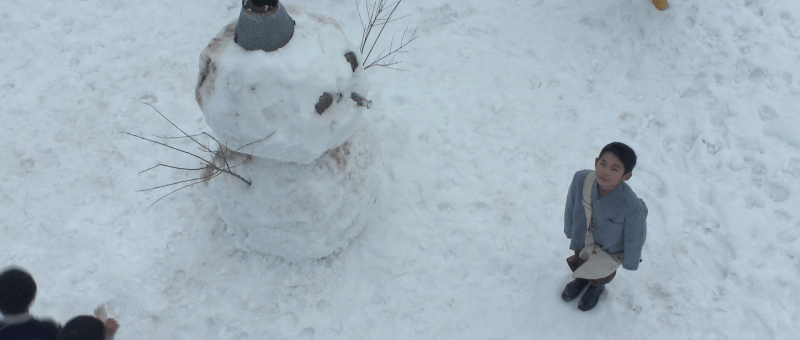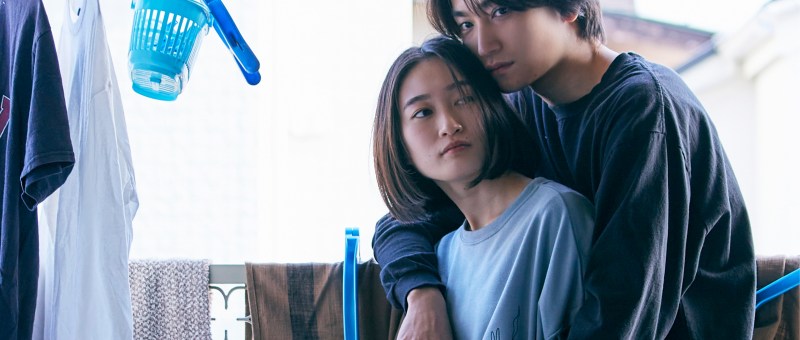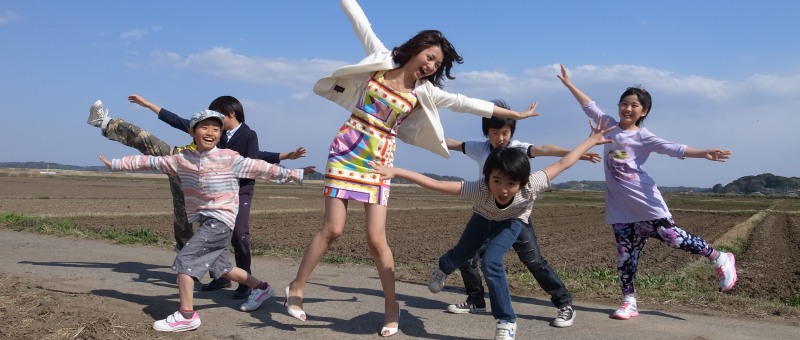
Bayside Shakedown (踊る大捜査線 THE MOVIE, Katsuyuki Motohiro, 1998)

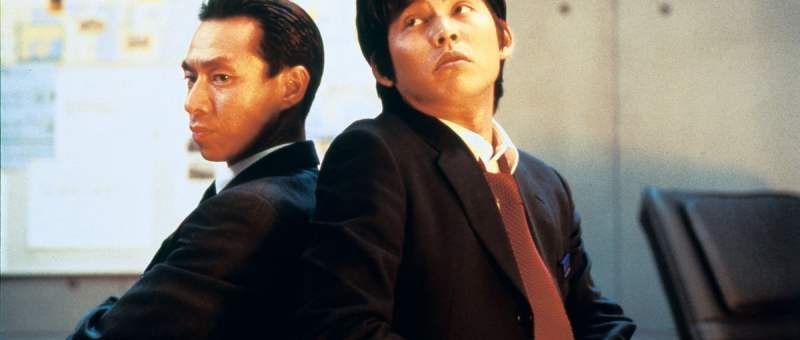
Those who believe that Japanese cinema has continued to decline throughout the 21st century often cite the release of Bayside Shakedown (踊る大捜査線, Odoru Daisosasen) as a turning point arguing that its vast and unexpected success ushered in an era of populist filmmaking dominated by existing franchises such as television drama, manga, and light novels. Leaving aside the question of whether the industry can really be said to be in a creative decline, the criticism is in itself a little unfair in that the film is exactly what it’s intended to be, perfectly enjoyable mainstream entertainment, while like the television series quietly subversive in its criticisms of police bureaucracy using humour to make subtle digs at the service in a way more “serious” films may not be able to. 

Director Katsuyuki Motohiro signals his intentions in the opening scene in which grizzled, trenchcoat-wearing detective Aoshima (Yuji Oda) stakes out a pleasant suburban house later joined by two colleagues who appear equally serious, yet as it turns out they aren’t on the look out for criminals but simply waiting for their boss, Police Commissioner Yoshida (Shigeru Koyama), to emerge so they can drive him to a police golfing tournament. Ironically enough, the scene is soon repeated, only for Yoshida to be tasered and kidnapped for ransom. Meanwhile, another difficult case arises when a body is found floating in a local river and is discovered to have been murdered, a soft toy found sewn into his stomach. 

The bizarre murder is a problem for the detectives at Wangan Police Station because whenever there’s a difficult case they have to call in the guys from HQ and are then financially responsible for them which is why the guys in accounts would really rather they write down suicide and leave it at that. Budgetary constraints are a persistent theme, the other random case hovering in the background being a phantom thief who keeps stealing the detectives’ receipts so they can’t claim their expenses. In any case, the kidnapping means HQ are involved anyway, quickly taking over an upper floor of the station and locking the local cops out of their investigation or else relegating them to demeaning leg work such as traffic stops and info gathering. 

The conflict between HQ and the local branch is further brought out by the awkward friendship between careerist policeman Muroi (Toshiro Yanagiba) and the earnest Aoshima who have each made a promise to each other that Muroi will climb the ladder while Aoshima takes care of business in the streets to ensure the police force continues to function correctly. Muroi is however in a difficult position, another officer informing him that he’s being put in charge because he’d be an easy fall guy as he went to a regional college while the others are all Todai alumni and minded to look out for each other. He finds himself compromised, unable to keep his promise to Aoshima because of the pressure from above while feeling guilty about the way the local cops are being treated by the bigwigs from the city. Meanwhile the police chiefs sit around a large circular table not unlike the war room in Stanley Kubrick’s Dr Strangelove issuing orders via video link while spending most of their time trying to make sure the local force is sidelined and squabbling over who actually gets to make an arrest. 

Pressured over their expenses, expected to work long hours, and generally made to feel unappreciated the detectives start to wonder what it’s all for, energetic female detective Sumire (Eri Fukatsu) in particular keeping a resignation letter in her desk uncertain whether or not to hand it in. Nevertheless through their quest to save the commissioner along with all the other cases including a potential serial killer operating through a murder fantasy website and a thief who seems to enjoy sneaking into people’s workplaces and stealing small personal items including those of the police officers, they each come to re-appreciate the importance of compassionate local policing along with their responsibility to each other as friends and colleagues even making sure they hold their fellow officers to account especially those involved with the budget. Lighthearted in tone yet boasting a fair few impressive action sequences Bayside Shakedown has in the past been unfairly maligned but is undeniably entertaining with a series of solid mysteries at its centre along with a few jibes at the overly bureaucratised nature of modern policing. 


Trailer (no subtitles)

Jinsei (無名の人生, Ryuya Suzuki, 2025)

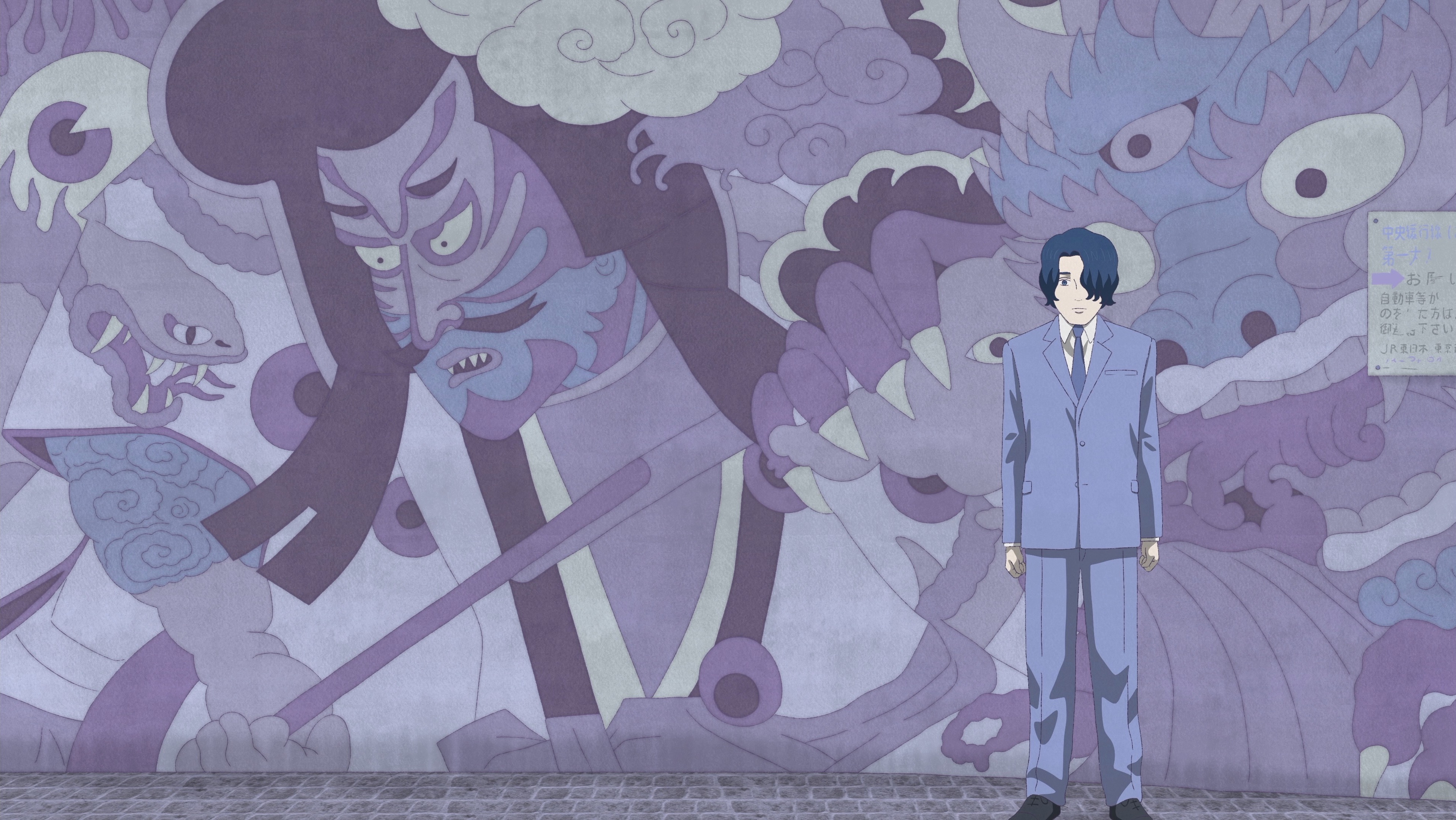
A man goes by many names before he dies. The hero of Ryuya Suzuki’s almost entirely self-produced anime Jinsei (無名の人生, Mumei no Jinsei) never tells us his name. He doesn’t say anything much at all, but passively allows himself to be called whatever others call him while struggling to come to terms with the death of his mother and continually looking for new forms of family along with a place he can really call their own.

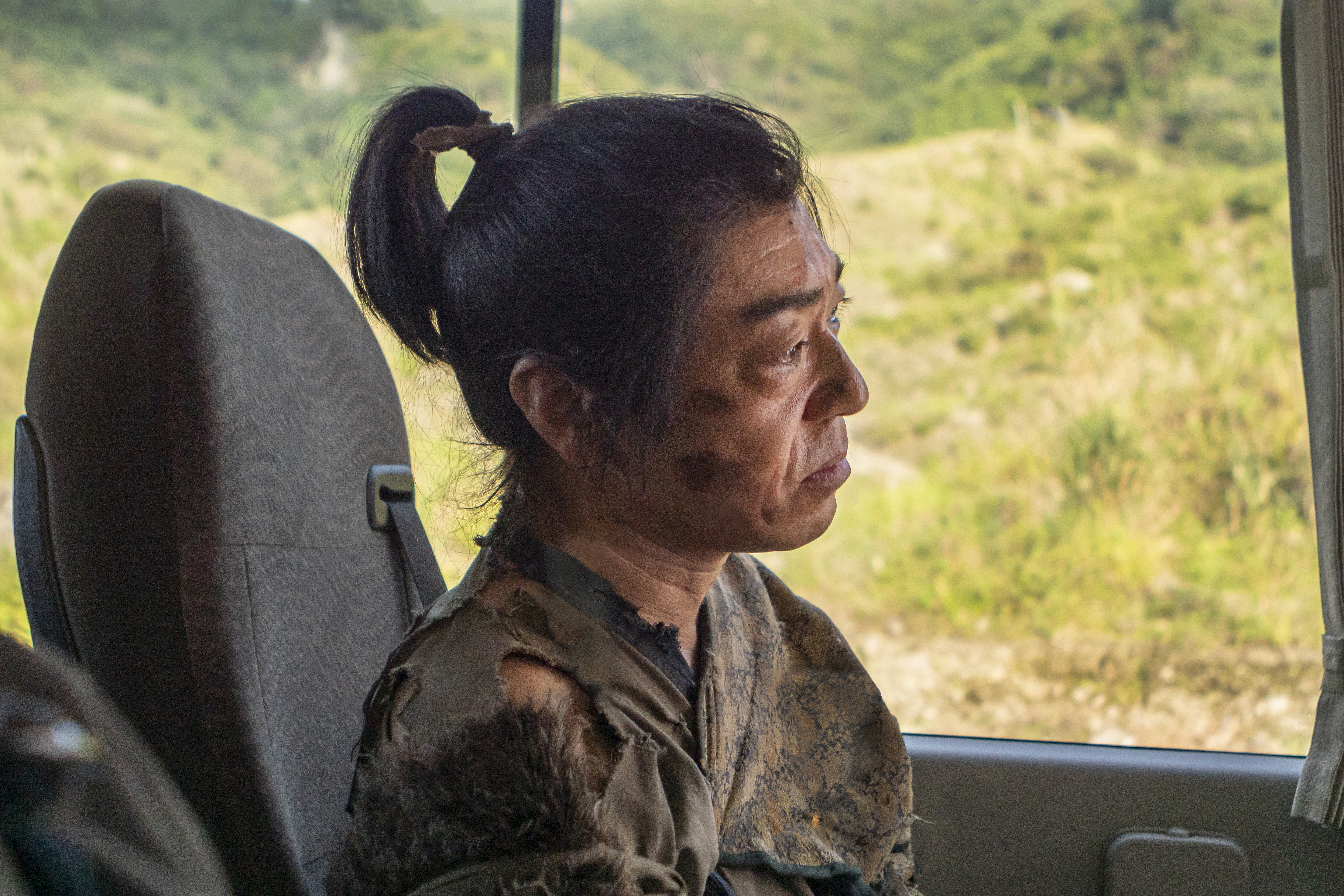
Indeed, in the wordless opening sequence, Se-chan’s father and mother meet, get married, have a child, and split up, but are killed together in a freak accident in which the young Se-chan watches helplessly as a pickup truck being driven by an elderly man mows them down. After that, he ceases to speak and looks on at the world vacantly. He becomes a kind of mirror for the world around him, an empty vessel onto which others may project their own fears and anxieties. Thus at school they call him “grim reaper” because he doesn’t speak or move. When another boy in the neighbourhood tries to reach out to him, he punches him in the face. Nevertheless the two eventually become friends, bonding in their shared status as bullied outsiders rejected by mainstream society. 

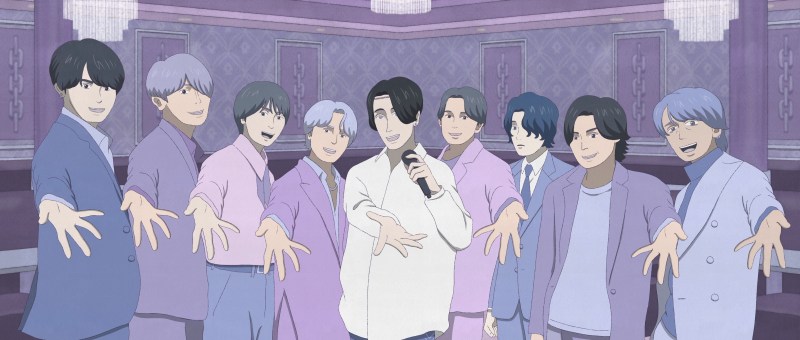
Kin, who in some kind of nominative determinism has dyed blond hair, is marginalised because of his interest in male pop idols and dreams of becoming one. A man named Shiratori comes from the city with a prophecy for Se-chan in the form of a VHS tape featuring his father dancing as part of a chart-topping boy band. Se-chan too has the desire to sing and dance, but the entertainment industry feeds on broken dreams. His father, Eito, had been the son of an aristocratic family who rejected him for following his dreams of becoming a singer. His father pulls a gun on him when he returns in disgrace having been caught using drugs and getting cancelled by the world at large. Eito too apparently could not cope with the pressures of showbiz and tired of the cage of stardom. Shiratori is clearly modelled on Johnny Kitagawa whose decades of sexual abuse were an open secret acknowledged only after his eventual death. He tells the boys that they’re in a cage to which he holds the key, but that it’s protection not imprisonment even as they become tools exploited by moneymaking execs intent on selling them body and soul.

Se-chan’s stepfather had told him that life was a swan and he should spread his wings, but cages are hard to avoid as he discovers on working as a Kabukicho club host once again exploited as a hook dangled to get money from women only to fall victim to another heartless man and the woman who couldn’t tame him. Se-chan found a kind of family in the boy band that he doesn’t really find anywhere else, certainly not in Kabukicho, until he decides to renounce the world entirely as a caveman recluse living in a disused building which is to say in a kind of past. Suzuki’s increasingly bleak descent into the near future echoes this desire for more genuine connections and familial warmth uncorrupted by the darkness of contemporary capitalism and the young Se-chan’s unresolved trauma. War and apocalypse give rise to shady cults, which are also like families, but exclusionary in calming themselves to be some kind of elite as a dangerous feudalism resurrects itself.

Travelling 100 years from 1995, the film moves from the biting cold of winter in Yamagata to the blazing heat of a post-apocalyptic society but seems to imply that in the end we find ourselves again and make the world anew as a great family of humanity. Suzuki apparently made the film up as he went  along, working without a script and stitching one scene on to the next, but his images move with a quiet power and purpose even they move towards an inevitable ending and the final goodbye. The man who was the lonely boy Se-chan, grim reaper, God, a pop star named “Zen”, someone’s Love, comes to embody the concept of life itself in being all things to all men while life in effect lived him in the depths of all his longing and loneliness only to find a sense of hope in confronting the eternal void.


Jinsei screened as part of this year’s New York Asian Film Festival.

Trailer (English subtitles)

Kubi (首, Takeshi Kitano, 2023)

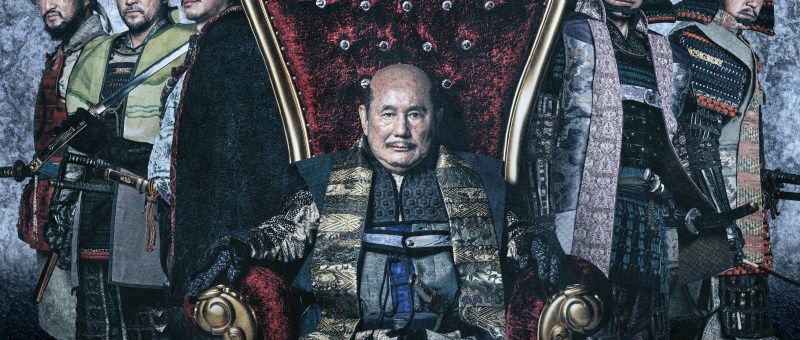
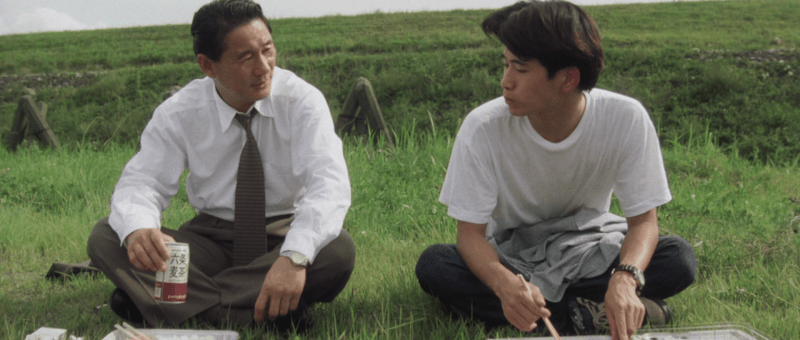
Apparently in gestation for a couple of decades, it’s unsurprising that Takeshi Kitano gave himself the role of Hideyoshi in a long-awaited historical drama adapted from his own novel, Kubi (首). Played as an irascible but wily old man, Hideyoshi is the second of Japan’s great unifiers and, unlike his predecessor, died as a result of an illness rather than intrigue. He was also a peasant who rose through the ranks and is perhaps witness to the tumultuous class conflict and social divisions of a hierarchal society.

Even so, in this version of events, Oda Nobunaga (Ryo Kase) too speaks in a thick rural dialect that sets him apart from his retainers and seems to hint at his uncouthness. This Nobugana is an unhinged despot who threatens and humiliates his subordinates, not to mention sexually assaulting them. In short, there’s no real mystery why his men have begun to turn against him and there is intrigue in the court. The film opens with Murashige’s (Kenichi Endo) quickly quelled rebellion which floundered when his reinforcements failed to arrive. Murashige is on the run and Nobunaga has heavily suggested whoever brings in his head will be first in line for the succession, but Murashige is also in a relationship with Mitsuhide (Hidetoshi Nishijima) another courtier vying for favour in more ways than one from the capricious Nobunaga. 

The striking thing about the staging is how like a yakuza drama this intrigue really is with each of the main factions manoeuvring for control, forming temporary or duplicitous alliances forged in the mutual desire of ousting a ruler whose increasing instability presents only the likelihood of a return to chaos. Nobunaga’s flamboyant speech and threatening manner are reminiscent of a yakuza boss on his way out, as is his obvious tactic of setting his rivals against each other while secretly planning to hand the reins to his son anyway. The film takes place in a largely homosocial world, the only women on screen are sex workers and peasants about to be murdered, only this time defined by romantic intrigue in which the various relationships between the men are inescapably linked with power and duplicity.

Mitsuhide’s relationship with Murashige is originally framed as a giri/ninjo conflict, Mitsuhide torn between the exercise of his duty as a samurai and his love for Murashige, only to later be set wondering if Murashige isn’t also playing him in urging him too towards rebellion, while Murashige accuses him of harbouring desires for Nobunaga which would also necessarily be desire for advancement. Advancement is something sought by all and in particular Mosuke (Shido Nakamura), a peasant who is taken on as a foot soldier after looting a battlefield for amour and killing his friend to get his hands on the prize only to realise just at the critical moment how pointless the constant desire for heads really is. The absurdity is rammed home in the closing scene in which Hideyoshi declares himself uninterested in the severed head he asked for, rendering the quest entirely pointless.

This absurdity extends to introducing the character of a comedian who is later killed for talking too much, while Kitano wise cracks his way along as the affable Hideyoshi. Kitano is in his way in dialogue with other samurai epics, using Akira Kurosawa’s horizontal wipes and introducing a pair of bumbling comic relief peasants only to suddenly kill one of them off because at the end of the day this world isn’t very funny. It’s cruel, and mean, and meaningless, so you might as well laugh like Hideyoshi. Residents of a ninja village conduct a festival in which they pray for death and to be released from this earthly torment as soon as possible, while farmers still dream of becoming samurai little knowing the reality of samurai life.

It’s this cycle of futility that is echoed in the opening image of a severed neck into which crabs in a river are crawling. Kitano stages lavish battle scenes, but ones that are often horrifying and absurd, a visceral struggle in mud and blood fought for no real reason. These samurai live their lives on the point of a sword, but they move and behave like yakuza fighting pointless turf wars and games of petty intrigue until someone finally comes for their heads. In the end, the victor is the one who doesn’t play the game at all, but sits and laughs at the absurd cruelty all around them in which the only stable force is ambition accompanied by a nihilistic lust for blood in an already bloody world.


Kubi  screens in New York July 16 as part of this year’s JAPAN CUTS.

Trailer (English subtitles)

Six Singing Women (唄う六人の女, Yoshimasa Ishibashi, 2023)

“Don’t take any detours,” the hero of Yoshimasa Ishibashi’s Six Singing Women (唄う六人の女, Utau Rokunin no Onna) is warned by his partner though it’s advice he’ll end up not taking if not entirely of his own volition. Even so, it may be that it’s the society that has gone off track, poisoning the environment and losing respect for the land that has always nurtured and protected us. Part eco-drama, Ishibashi’s surreal odyssey into an etherial realm of nature and spirits has its share of eeriness but also a kind of comfort in the embrace of the natural world.

Only that’s not how it first seems to Shin (Yutaka Takenouchi). After receiving a phone call to inform him his estranged father has passed away, he leaves his partner Kasumi (Rena Takeda) at home in Tokyo and travels into the mountains with the intention of selling his father’s house. But when he arrives, he finds himself in a place stranger than your average remote country hamlet and after signing a contract with the slimy Uwajima (Takayuki Yamada) is kidnapped by a band of mysterious, apparently mute women. While he is looked after in the house. Uwajima is tied up in the shed and tortured.

As we later discover Shin and Uwajima are embodiments of light and dark, a protector of nature and its destroyer. When Shin had asked him what Uwajima’s company, which has also bought up all the neighbours’ land, plans to do with his father’s house he tells him they just want to protect nature but his answer is of course ironic. He represents a corporate entity that cares nothing at all for the mountain but is simply looking to make some money by dumping potentially harmful stuff where no one will find it. Realising that his father had been on some kind of quest to stop the corporate take over, Shin begins to investigate his death and the wider fate of the mountain taking him ever deeper into the woods. 

What he finds there is a another realm, a place of spirits that seems somehow sacred if dangerous. Unable to speak, the women appear to have a message a for him but it’s only after reconnecting with his father and accepting his legacy that Shin finally begins to understand. His mother had told him that his father had been “possessed by the mountains,” and there may be something in Shin’s mania as if the spirits had indeed taken him over aside from merely captivating him. Yet despite his newfound desire to protect these women as embodiments of a natural order, he is powerless to do so alone and especially against the destructive corporatism of Uwajima.

Ishibashi strays into folk horror territory in that the strange place Shin finds himself in has the trappings of a cult. He witnesses strange rituals and is prevented from leaving a place he cannot understand by the women who cannot speak to him nor explain themselves. Bees, spiders, frogs and snakes surround him with an air of malice but are perhaps trying to protect, both him and themselves or else realising Shin is no threat to them but a prodigal son returning to accept and claim the legacy he sought to reject from a misunderstood father like him possessed by the mountains. Finally he finds the answer to the question his father asked him, in the woods exactly where he said it would be. 

His solution runs contrary to that of the estate agent who encouraged him to sell his father’s home, that the world is what it is as if it could not be changed and resisting destructive capitalism is merely foolish when it would be better to take the money and run. Ishibashi rams him message home with his haunting capture of the woods as a dreamlike idyll though not without its sense of darkness while lending an air of surreality to Shin’s ethereal quest with all its owl women and inscrutable ritual that somehow hint at a natural order of things that is deeper and older than our society and with which we tussle at our peril for nature is never quite as passive as we thought for all the compassion it may otherwise hold for its prodigal sons and daughters yet to return to the fold.


Six Singing Women screens in New York July 12 as part of of this year’s JAPAN CUTS.

Trailer (English subtitles)


Heaven’s Story (ヘヴンズ ストーリー, Takahisa Zeze, 2010)

“When your family’s murdered, aren’t you entitled to happiness?” remarks a bereaved husband trying to move on from tragedy to a similarly bereaved little girl who is determined not to. “I don’t think so”, she coldly replies, dragging him back into a dark world of hate and vengeance. At that time perhaps best known for his career in pink film, Takahisa Zeze’s 4.5-hour epic Heaven’s Story (ヘヴンズ ストーリー) weaves a tale of interconnected hurts born of violence and its legacy, parental betrayals, and irreconcilable loss. The only victory is survival, but it’s a prize none of us will win. The best we can hope for is continuity, and perhaps leaving something more behind us than fear or rage. 

Our heroine, Sato (Moeki Tsuruoka), is orphaned when her parents and older sister are brutally murdered by a disgruntled employee exacting some kind of petty revenge on her father. The killer is later found dead in a hotel room, presumed to have taken his own life. The tragedy is however just one of many. Passing by a TV screen, Sato catches a report detailing the death of her family members and their murderer which is immediately followed by a press conference with a very angry young man whose wife and infant daughter were killed in random attack by a passing drifter who has been given an indeterminate sentence on account of the fact that he was underage and suffered greatly during his childhood. Tomoki (Tomoharu Hasegawa), the bereaved husband and father, vows revenge angrily insisting he won’t ask for the death penalty because he wants the killer, Mitsuo Aikawa (Shugo Oshinari), released as soon as possible so he can kill him with his own hands. Only eight years old, Sato identifies with his rage. The man she wants to kill is already dead and she’s been robbed of the chance of closure through vengeance so vicariously latches on to Tomoki’s quest for retribution, making him something of a personal hero. 

Tomoki’s words were offered in the raw pain of his loss. His reaction is understandable, but as he later says, people started to lose sympathy for him once he called for the killer’s death. As time moves on, he perhaps starts heal, marrying again and having another little girl, starting a new life in a new place which of course does not overwrite his past loss but is a new start. That’s something Sato can’t allow or understand. She feels irrationally betrayed by Tomoki’s decision to leave his loss in the past and move on to a new life. Rocking up at his tranquil island home, she accuses him of forgetting the dead, guilting him into thinking he’s betrayed the memories of his wife and child by not knowing that Mitsuo has been released from prison let alone not having taken his revenge. 

Mitsuo, however, has also attempted to move on. It can’t be denied that he committed a heinous, unforgivable crime, but he is also, in a sense, a victim himself. His mother took her own life when he was 13 because his father was abusive and he carries that abuse with him, which of course does not excuse his crime but might help to explain it. Kyoko (’70s folk singer Hako Yamasaki), a lonely doll maker, is taken by his enigmatic statement that he wants to be remembered by the unborn and begins writing to him in prison, eventually agreeing to adopt him as her son though she is already suffering with the early stages Alzheimer’s. Later in a tense conversation with Tomoki, Mitsuo describes Kyoko as a woman of great warmth and if it were not for her he might perhaps have killed again. Her positive maternal presence gives Mitsuo the sense of anchoring through parental love that he had never had, restoring him towards a more normal kind of existence as he diligently cares for her while her condition continues to deteriorate. 

Time swindles them all. Kyoko desperately tries to remember something she’s forgotten, while Sato is locked into a pleasant childhood memory of walking with her parents to see a newly completed housing estate which seems to be the very embodiment of a post-war utopia, a large green space surrounded by neatly arranged, identical blocks with well appointed family homes piled one on top of the other. The conclusion takes us somewhere similar, only inverted, in the empty shell of a disused danchi, once a home to a bustling mining community now abandoned by the modern era. In the monologue which opens the film, Sato recounts a folktale about a monster who lived in the hills and attacked people, but did so only accidentally in his loneliness and longing to be a part of the world around him, but the people were afraid and so they rejected him and his monstrousness intensified. Tomoki destroys his second family in an internecine need to avenge the first driven by Sato’s demonic need for vicarious retribution, while Mitsuo’s attempt to move into the light is frustrated by an inability to escape his past. All the fear, and hate, and suffering, breeds only more of the same. “Heaven’s Story” may be in many ways the story of violence, but violence is not its resolution. Sato makes a kind of peace with the past, but will also carry that legacy of pain back into the complicated urban world as far from the heavenly vistas of tranquility which exist now only in her memory as it’s possible to be. 


Original trailer (no subtitles)

Hand (手, Daigo Matsui, 2022)

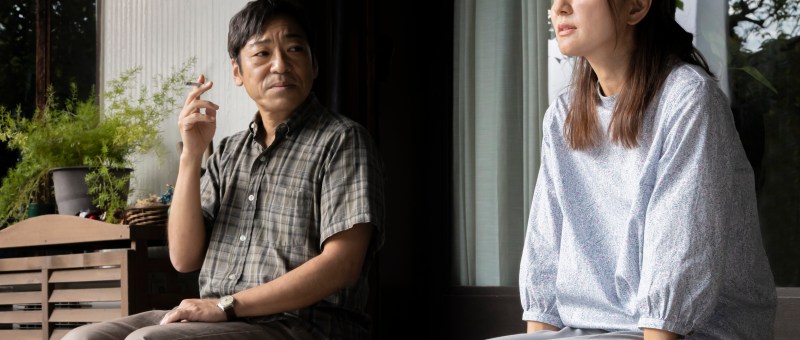
A young woman unwittingly meditates on emotional distance and the impossibility of intimacy while fixating on older men in an attempt to overcome her loneliness in feeling rejected by her father in Daigo Matsui’s contemporary Roman Porno, Hand (手, Te). Partly a critique of a misogynistic society, the film is as much interested in why old men like young girls as it is why Sawako (Akari Fukunaga) likes old men along with her general disdain for the various roles she’s expected to play. 

Sawako largely describes these as “life skills”, a brief flashback to the 20-year-old her wondering why weird old men suddenly took an interest in her when she left high school. The old guys make inappropriate banter with the woman behind bar that shocks Sawako in its crassness and leaves her wondering if she’ll be expected to “eco-exist” with men like these for the rest of her life. She decides if that’s the way it is she’ll need to equip herself which at 25 mainly involves adopting an ultra feminine persona, pretending to be stupid laughing at men’s rubbish jokes and giggling sweetly at every opportunity. Co-worker Mori (Daichi Kaneko) has, however, seen through her act especially as she doesn’t bother to put it on for him and is rather frank in her cynicism which gives her an air of authenticity that might in other ways be misleading. 

Meanwhile, she spends her time taking photos of middle-aged men and putting them in her scrapbook while sometimes going on “dates” with older guys. What soon becomes apparent is that she resents her family, with whom she still lives, and feels a little pushed out as if no one really cared about her only her younger sister Rika who in stark contrast to her is cheerful and outgoing. When she offers to make her father dinner, he doesn’t respond but apparently does when her sister asks. Sawako feels like her father thinks of her as “dark and boring” and assumes that he ignores her deliberately because he has no interest in her yet she ironically also ignores him, refusing her mother’s request that she accompany him to a hospital appointment petulantly suggesting he’d probably prefer it if Rika went. The truth is that they simply don’t know how to talk to each other, sitting far apart at the back of a bus like a couple that’s had an argument. 

A more age appropriate relationship with co-worker Mori seems as if it’s breaking down some barriers towards intimacy but finally leaves her additionally vulnerable as he too turns out to be a fairly weak, emotionally dishonest man despite his outward consideration for her. In contrast with the older men, his courtship had been coy, shyly asking to hold her hand and for permission before he kissed her while otherwise leaving her to take the lead though in the end he may not have been much different. One of the older gentlemen ironically describes her as “insecure” yet misreads her insecurity as sexual rather than emotional only for her to let the mask slip and bite back, frankly telling him that it can be “rude” to treat a woman like a girl and that his dismissiveness is offensive. If all he sees in her is “youth” then he should just date a naive teenager instead.

“Youth” may be the answer to her question about why old men like young women, something confirmed by her date’s sighing that he finds dating her “nostalgic” as if he were young again too. But what she was looking for was warmth, the closing of an emotional gap of the kind that Mori proposed when he asked to hold her hand but never really followed through on. Then again, as another said she does indeed have a habit of running away, rolling her eyes at the idea of seriousness in an attempt to mask her fear of intimacy and treating everything as a cynical joke to avoid facing reality. “Whatever you do you have to engage with people” her similarly reticent father tells while beginning to break the ice, slowly closing the gap in extending a hand across it that provokes an emotional breakthrough. Quietly poignant in the slow motion of its heroine’s gradual liberation, Matsui’s otherwise biting take on contemporary patriarchy and follies of old men nevertheless allows her to reclaim herself in opening up to others.


Hand screened as part of this year’s JAPAN CUTS.

International trailer (English subtitles)

Hello! Junichi (ハロー!純一,  Katsuhito Ishii, Kanoko Kawaguchi, Atsushi Yoshioka, 2014)

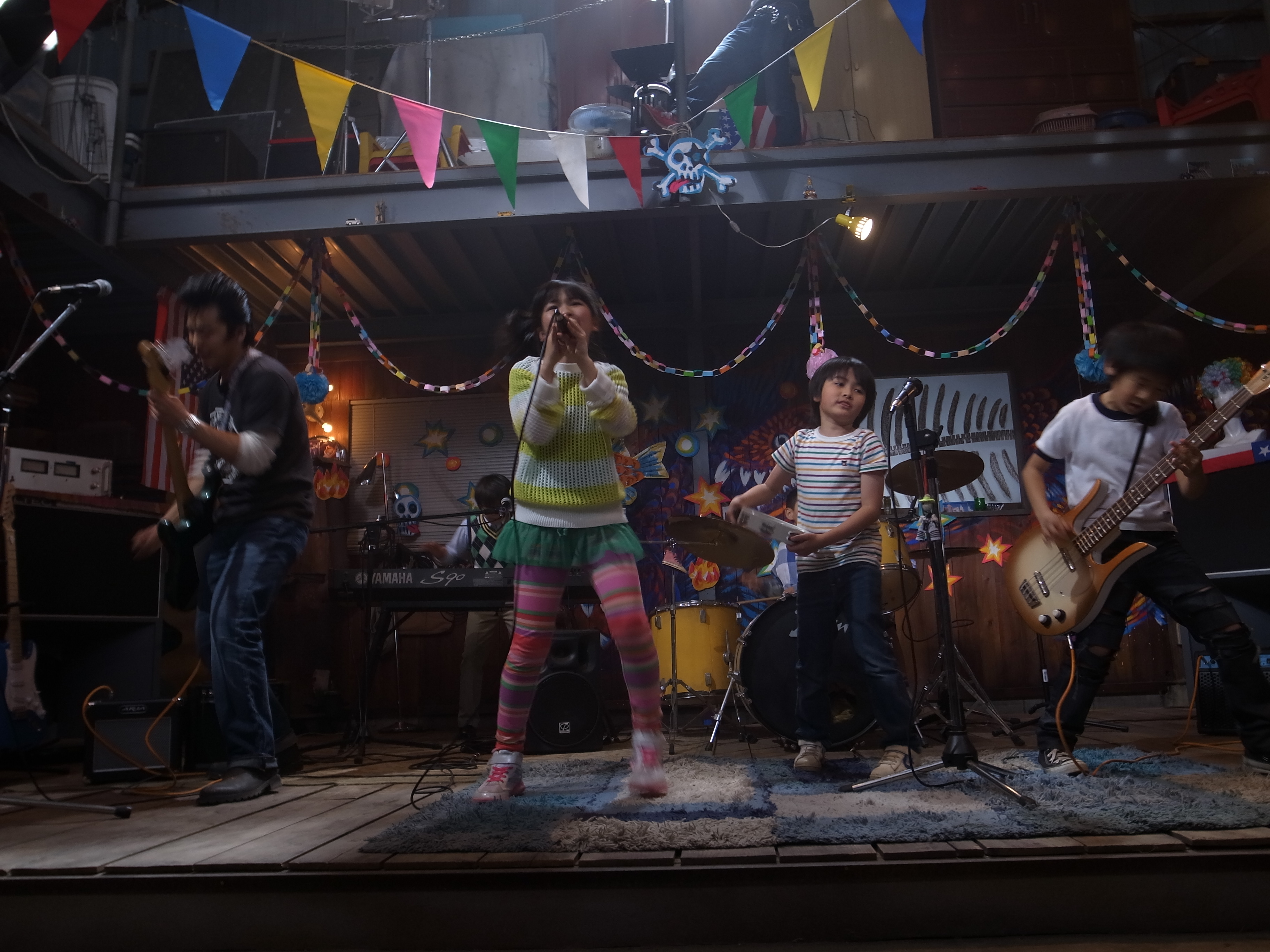
A collection of confused nine-year-olds decides the best way to solve all their problems is to start a band in charming kids ensemble movie, Hello! Junichi (ハロー!純一). Co-directed by Katsuhito Ishii, Kanoko Kawaguchi, and Atsushi Yoshioka, the film is more linear and less surreal than most of Ishii’s other work but has a refreshing take on the childhood adventure movie as the kids each deal with their various problems many of which still plague the adults around them. 

After all as kindhearted rocker Takao (Ryu Morioka) admits, the children aren’t really all that different from us. Shy and a little on the timid side, Junichi (Amon Kabe) is a peripheral member of his friendship group and perpetual fall guy who lists his only talent as the ability to carry everybody’s bags. His main problem is that he borrowed a rabbit-shaped eraser from his crush, Maeda, about a month ago and is too shy to return it. Now all he can think about is whether he should pluck up the courage or pretend to have forgotten. Things get more complicated when a new student teacher, the beautiful Miss Anna (Hikari Mitsushima), joins his school and confiscates the eraser as part of a cruel power game before agreeing to give it back if he helps her find out who scratched an offensive word into the side of her flashy car. 

Miss Anna is either the best teacher in the world or the absolute worst. She arrives dressed for a night out and puts on a cutie pie act for her dejected middle-aged boss Achikita (Yoshiyuki Morishita) which she immediately drops as soon as he leaves the room inappropriately giving the children far too much information about her personal life but they do at least get some maths out of it. She also smokes by an oil can round the back of the building and talks like an aggressive high school girl when her boss’ back is turned, but eventually comes round to her responsibility as a teacher after bonding with the kids. 

In comparison to some, Junichi’s problems aren’t really all that big except that his parents have to work late so he often has to prepare dinner for himself and his philosophising grandpa (Tatsuya Gashuin). Kuramoto (Yohei Hotta) meanwhile is beginning to act out at school because he’s got problems at home caused by his father’s gambling addiction which forces his mother (Chizuru Ikewaki) to run herself ragged just to stay afloat. With Miss Anna’s help, the kids decide to put on a concert for Mrs Kuramoto’s birthday which might on one level be charmingly naive but does in the end seem to cheer her up while allowing them to bond over their shared issues many of which are romantic in nature. 

During the opening sequence in the park, child actor Machida (Shoma Suginomori) had given the other boys some grown up love advice he picked up on set which amounted to getting girls to like you by giving them cliched compliments such as remarking on the beauty of their smile. It’s not terribly good advice and a little a bit patronising not mention insincere, but amusingly enough is the same approach eventually taken by Takao when he and Miss Anna awkwardly try to address their mutual attraction. In the end, she has to concede that she doesn’t know what to say either and they end up having a rather childish conversation about favourite foods which is all to say it doesn’t get any easier and the adults don’t necessarily know much more than the kids. 

Then again, there are some distinctly bad examples in Achikita’s thankfully ineffective attempt at workplace harassment and stalking of Miss Anna even if he eventually gives the most important life lesson in dressing down a trio of teenage bullies by telling them they have to learn love and appreciation or they’ll be weak men incapable of protecting anyone. Protecting people is something Junichi’s been worried about too, especially after failing to act when he spotted female classmate Tanaka (Rio Sasaki) duct taped to a pole by the bullies though she thankfully managed to save herself while uttering some particularly choice language for a nine-year-old. Still as his grandfather tells him he’s an unpolished stone. He has a weak side and a strong side and is still in the process of settling though the real business of growing up may be knowing which to be when. Charmingly quirky and infinitely warmhearted, Ishii, Kawaguchi, and Yoshioka masterfully capture an authentic sense of childhood anxiety while suggesting that none us is really so different after all. 


Hello! Junichi is out now the UK on blu-ray as part of Third Window Films’ Katsuhito Ishii Collection.

Original trailer (English subtitles)

Party 7 (Katsuhito Ishii, 2000)

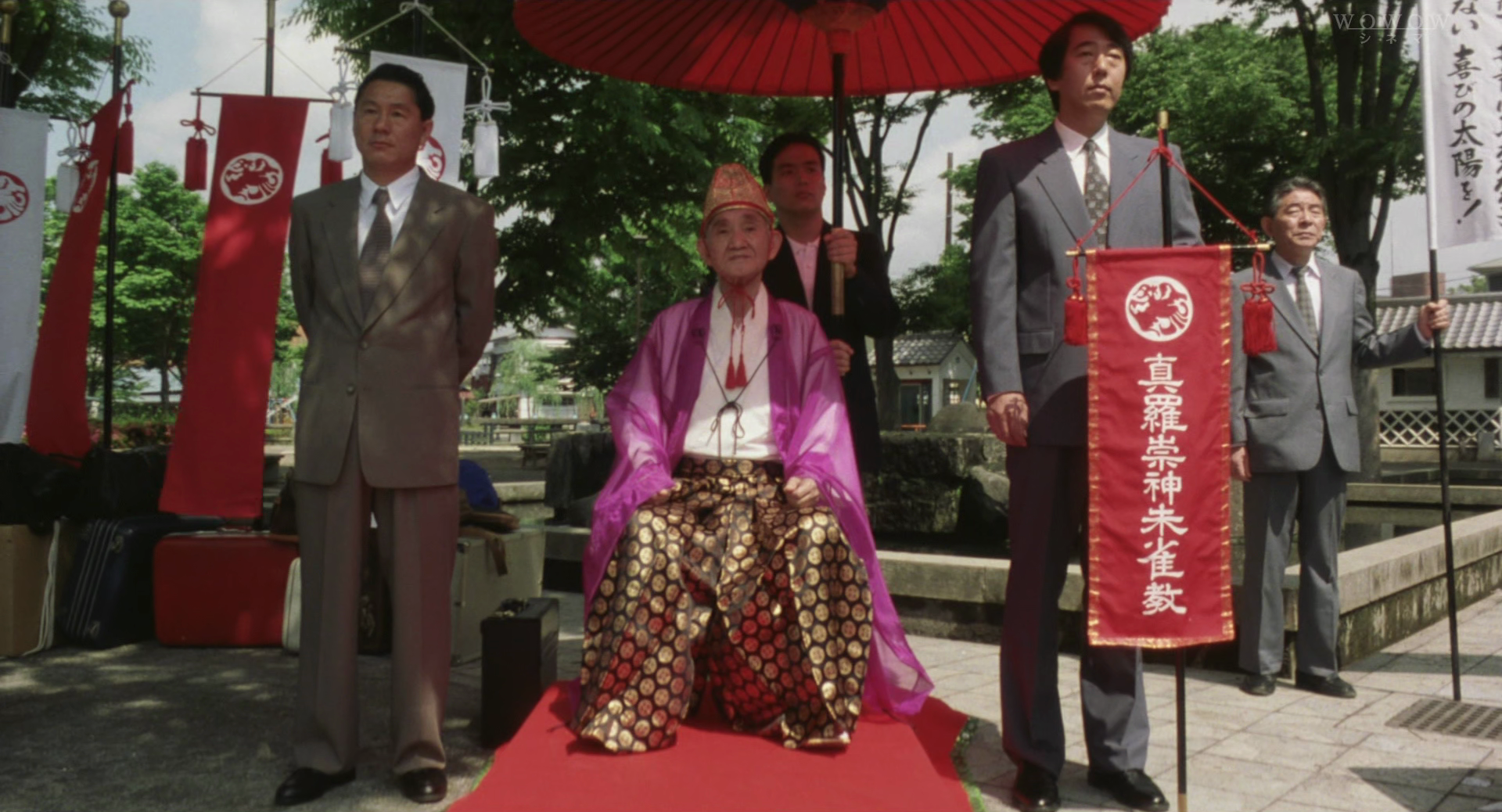
“This shit’s for real.” according to the front desk guy at Hotel New Mexico, an out of the way spot just perfect for those looking to lay low for a little while. Like a lot of Katsuhito Ishii’s work, Party 7 is essentially a series of self-contained vignettes which eventually collide following a series of bizarre coincidences revolving around some money stolen from the mob, a two-way mirror in a regular hotel room, and the receptionist’s tendency to almost literally shoot the shit. 

Following a brief prologue, Ishii opens with striking animated sequence which introduces each of the main players with an arcade game aesthetic and explains that Miki (Masatoshi Nagase) has stolen money from the mob and is currently on the run which is why he’s turned up at the infinitely weird Hotel New Mexico. The running gag is that Miki thinks he’s holed up somewhere no one will find him, but sure enough a series of “friends” soon turn up in part thanks to a loose-lipped travel agent. The fact that people can find it so easily dampens the impression of the Hotel New Mexico as some kind of interstitial space. It’s not so much existing in a weird parallel world as a bit run down and staffed by a series of eccentrics. It does however have a “peep room” hidden behind a two-way mirror where “Captain Banana” (Yoshio Harada) is attempting to pass his knowledge on to the young Okita (Tadanobu Asano), the son of a recently deceased friend who has been repeatedly arrested for voyeurism. 

Captain Banana’s insistence on his surreal superhero suit is in a way ironic, if perhaps hinting at the super empowerment of accepting one’s authentic self. “It’s your soul,” he tells Okita, “it’s screaming ‘I want to peep’.’” Meanwhile, Miki gets into an argument with his ex-girlfriend Kana (Akemi Kobayashi) who has turned up in the hope of reclaiming money that he owes her. Kana too seems to be less than rigorous with the truth if perhaps emotionally authentic. She’s now now engaged to a nerdy guy having somewhat misrepresented herself as the innocent girl next-door type. Her refusal to let her fiancé into her apartment perhaps hints at a more literal barrier to intimacy or at least that she is intent on preventing him from seeing her true self. What she doesn’t know is that her fiancé hasn’t been completely honest either, in part because he thinks she’s out of his league and is insecure in their romance. 

Miki too maybe somewhat insecure, having run off with the gang’s money after hearing them bad mouth his associate Sonoda (Keisuke Horibe) who has now been charged with killing him and getting the money back. But Sonoda too has reasons to doubt the boss’ affection for him after Miki and the others point out that gifts he thought were so valuable are really just cheap knock offs that suggest the boss thinks very little of him at all. Okita’s psychiatrist tells him that there are “no rules in making friends”, and maybe in a strange way that’s what everyone is trying to do. Kana wanted the money to overcome her anxiety about having no friends or family to invite to the wedding, while all Sonoda wanted was the boss’ approval and though Miki had deliberately gone somewhere he thought no one would find him nevertheless attracts a series of followers. 

Even the receptionists seem to be desperate for human contact with their strange stories of poo falling from the sky and bizarre approach to hospitality. “The point is whether you believe it or not,” one tells the other after spinning what sounds like a yarn but then again might not be. Ishii’s zany world has its own surreal logic culminating in a piece of cosmic irony and defined by coincidence as the otherwise unrelated stories begin to come together and slowly find their way to Hotel New Mexico but seems to suggest the point is in the serendipity of the meeting and its concurrent authenticity even if a literal shot in the arm is a less than ideal way of brokering a friendship.


Party 7 is released in the UK on blu-ray on 17th July as part of Third Window Films’ Katsuhito Ishii Collection.

Original trailer (English subtitles)

Roleless (宮松と山下, Masahiko Sato, Yutaro Seki, Kentaro Hirase, 2022)

Ever felt like a bit player in your own life? For the hero of Masahiko Sato, Yutaro Seki and Kentaro Hirose’s Roleless (宮松と山下, Miyamatsu to Yamashita), it’s more like he lives ten thousand lives if only for an instant in his life as an extra and may have, in a way, cultivated an image of himself as a blank canvas who no longer exists in an absolute form. In a way you could call it multiverse living, but when confronted with a possible point of origin, a lost selfhood he may have forgotten or wilfully rejected, it presents him with an existential question not so much of who he wants to be but if he wants to be at all. 

We first encounter him as an unlucky retainer in a jidaigeki who is quickly cut down only to rise again and run around the back to give his name as “Miyamatsu, a samurai” to the prop girl who gives him a different hat so can he go back out there and die a second time. Miyamatsu has an air of perpetual blankness in his often vacant expression as if he were both there and not. The film often wrong foots us and we can never be sure what is “real” and what part of a movie, except that it all obviously part of the movie we ourselves are watching. We see what we think are moments from Miyamatsu’s private life only to realise that the camera was rolling all along when someone shouts “Cut!” and it becomes apparent that Miyamatsu was not its main focus. 

Along the way he gives hints of his loss of selfhood, earnestly replying that he doesn’t know when a fellow extra quizzes him on the watch he’s wearing and how he got it but his discomfort could stem from several places and it’s never quite clear how much of an interior life Miyamatsu creates for his various roles, whether he really does just see them as performers of an action, is playing “himself” as he peers over a police cordon at a crime scene, or is a fully fledged person with an individual history. Later he tells a colleague who admires the way he fills in forms at his part time job working at a cable car that he’s always enjoyed the process of filling in a predetermined frame but also that he likes the floating sensation the cable cars give him. 

All of which might explain why he’s so destabilised when a man (Toshinori Omi) approaches him claiming that they worked together as taxi drivers more than a decade earlier and that his name is Yamashita. He apparently “disappeared” after sustaining a head injury and has been “missing” ever since. The man takes him back to the home of his much younger sister, Ai (Noriko Nakagoshi), who has since married and appears to be incredibly relived to see him even if it seems she might also be hiding something. He wonders if it’s suspicious that there are no photos of him in their family home, but is reminded that with the age difference he hadn’t lived there while she was a child and only came back after their parents died to take care of her because she was still in high school. Her husband, Kenichiro (Kanji Tsuda), seems to be constantly needling him though again, it isn’t always clear whether he actually wants him to remember or suspects that he already does and is choosing to pretend not to. 

Even so, Miyamatsu slides into the life of Yoji Yamashita as easily as any other role finding his way back into the character with unexpected moments of connection such as the muscle memory that grants him a perfect baseball swing, or the strangely familiar taste of cigarettes to a non-smoker. Then again, there’s obviously something sinister going on, a darkness underlying his “personal” history that might have made him want to absent himself from himself or else an oppressive sense of bullying that is reflected in Ai’s hesitant answer when Yamashita remarks on what a good husband Kenichiro seems to be. Miyamatsu claims that he’s ever only played one “real” role, and in a way this is it as he begins to claim something like a backstory even if it’s one he may not ultimately want that nevertheless renders him a little less vacant. Mysterious and unsettling, the film asks some probing questions about the nature of identity, whether it is self-defined or gifted, but also discovers a kind of serenity in Miyamatsu’s free floating life of transient realities.


Roleless screened as part of this year’s Nippon Connection

Clip (no subtitles)

GO (Isao Yukisada, 2001)

“We never had a country” a student at a North Korean school in Japan fires back, hinting at his feelings of displacement in being asked to remain loyal to a place he never knew while the culture in which he was born and raised often refuses to accept him. The hero of Isao Yukisada’s Go is not so much searching for an identity as a right to be himself regardless of the labels that are placed on him but is forced to contend with various layers of prejudice and discrimination in a rigidly conformist society.

As he points out, when they call him “Zainichi” it makes it sound as if he is only a “temporary resident” who does not really belong in Japan and will eventually “return” to his “home culture”. In essence, “Zainichi” refers to people of Korean ethnicity who came to Japan during the colonial era and their descendants who are subject to a special immigration status which grants them rights of residency but not citizenship. Sugihara’s (Yosuke Kubozuka) situation is complicated by the fact that his father (Tsutomu Yamazaki) has a North Korean passport, making him a minority even with the Korean-Japanese community. He attends a North Korean school where speaking Japanese is forbidden and is educated in the tenets of revolutionary thought which are of course entirely contrary to the consumerist capitalism of contemporary Japan. 

His father eventually consents to swap his North Korean passport for a South Korean one mostly it seems so he can take a trip to Hawaii with his wife (Shinobu Otake) which seems to Sugihara a trivial reason for making such a big decision especially as it caused the lines of communication to break down with his bother who returned to North. Yet it seems like what each of them is seeking is an expansion of internal borders, the right not to feel bound by questions of national identity in order to live in a place of their own choosing. “I felt like a person for the first time,” Sugihara explains on being given the opportunity to choose his nationality even if it is only the “narrow” choice between North and South Korea. 

But on the other hand he wonders if it would make his life easier if he had green skin so that his “non-Japaneseness” would be obvious. Sugihara reminds us several times that this is a love story, but he delays revealing that he is a Zainichi Korean to his girlfriend because he fears she will reject him once she knows. On visiting Sakurai’s (Ko Shibasaki) home, it becomes obvious that she comes from a relatively wealthy, somewhat conservative family. Her father, who is unaware Sugihara is Korean-Japanese, immediately asks him if he likes “this country” but is irritated when Sugihara asks him if he really knows the meaning behind the various words for “Japan” again hinting at the meaninglessness of such distinctions. When he eventually does tell Sakurai that he is ethnically Korean, her reaction surprises both of them as she recalls her father telling her not to date Korean or Chinese men on account of their “dirty” blood. 

Such outdated views are unfortunately all too common even at the dawn of the new millennium. Even so, Sakurai had not wanted to reveal her full name because she was embarrassed that it is so “very Japanese” while conversely Sugihara takes ownership of the name “Lee Jong-ho”. He embraces the “very Japanese” tradition of rakugo, and hangs out in the Korean restaurant where his mother works dressed in vibrant hanbok. Given a book of Shakespeare by his studious friend, he is struck by the quote which opens the film which states that a rose by any other name would smell as sweet and wonders what difference a name makes when its the same person underneath it. 

Perhaps his father’s admission that he always found a way to win wasn’t so off base after all, nor his eventual concession that Sugihara may have it right when he rejects all this talk of “Zainichi” and “Japanese” as “bullshit” and resolves to “wipe out borders”. He insists on being “himself” or perhaps a giant question mark, and discovers that Sakurai may have come to the same conclusion in realising that all that really mattered was what she saw and felt. Yukisada captures the anxieties of the age in the pulsing rhythms of his youthful tale which keeps its heroes always on the run, but is in the end a love story after all and filled with an equally charming romanticism. 


GO is released on blu-ray in the UK on 22nd May courtesy of Third Window Films.

Original trailer (English subtitles)