The Hitman: Blood Smells Like Roses (ザ・ヒットマン 血はバラの匂い, Teruo Ishii, 1991)

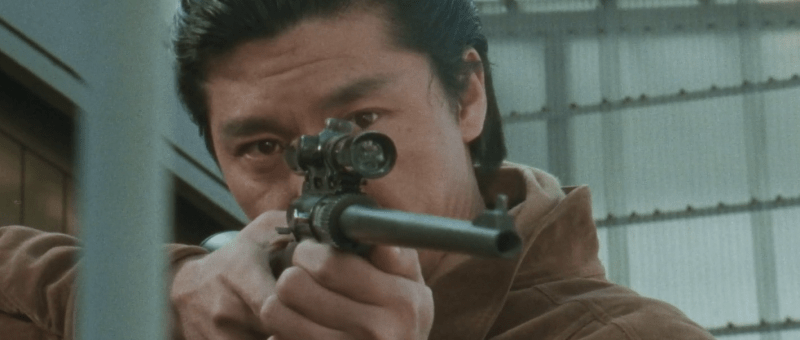
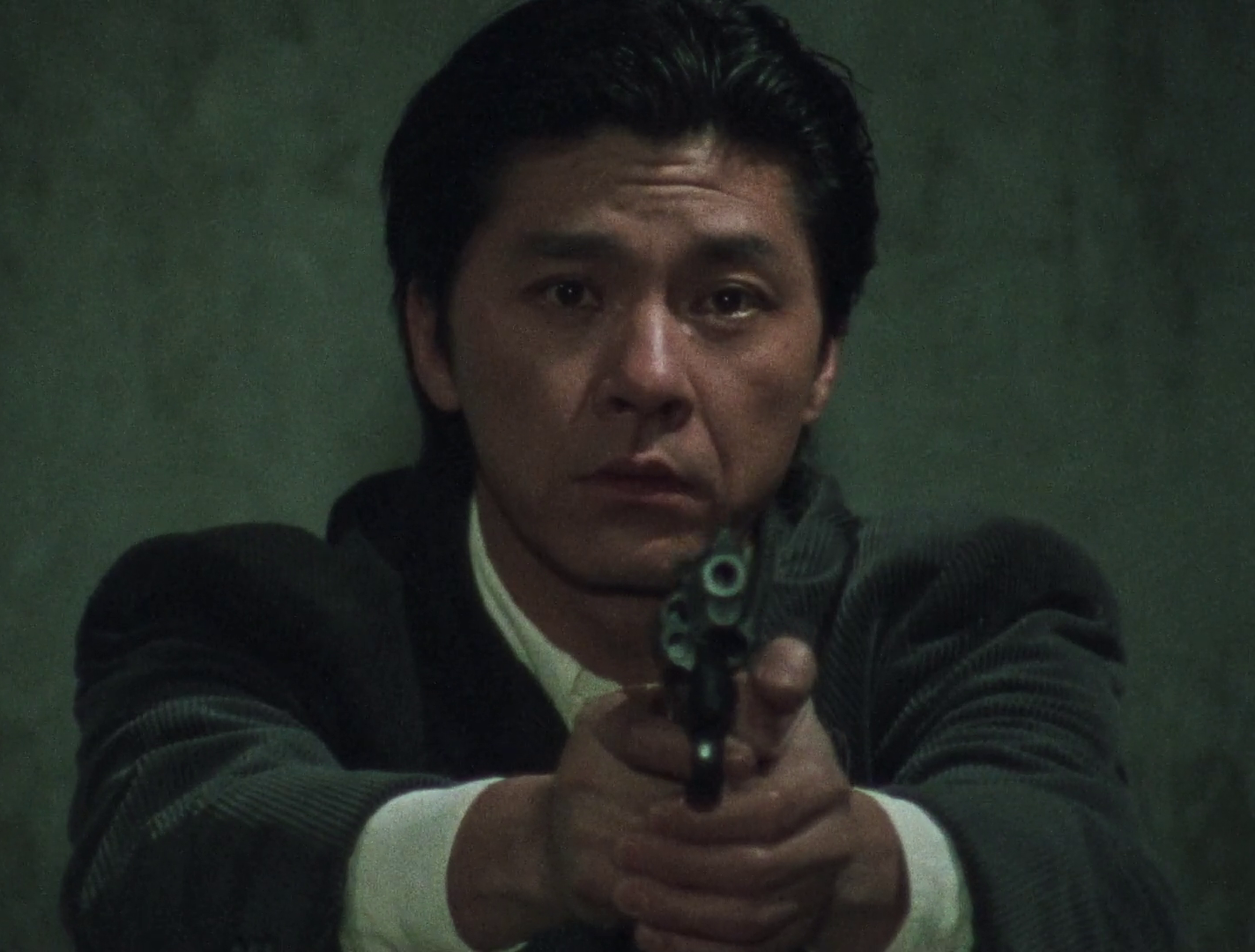
After his fiancée is killed during a yakuza shootout in a restaurant, a former spy in training plots revenge in Teruo Ishii’s Hitman: Blood Smells Like Roses (ザ・ヒットマン 血はバラの匂い, The Hitman: Chi wa Bara no Nioi). Ishii has been in retirement for 12 years before making the film but steps right into the zeitgeist with his bubble-era nightclub opening in which a yakuza goon pretends to be the son of a stockbroker to seduce a young woman he intends to press into prostitution, while looking back to classic noir and the borderless action past.

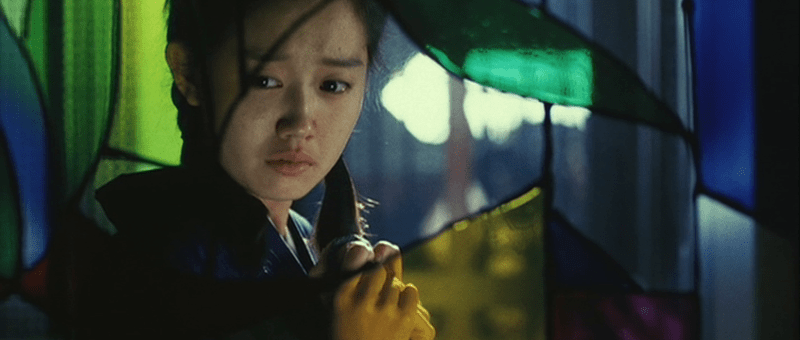
The young woman is rescued, though not soon enough to escape harm, by the titular hitman, Takanashi (Hideki Saijo), though he does not intervene to save her, only to take out the trio of yakuza who were one side of the gun battle in which his fiancée Reiko (Mikiko Ozawa) was killed. Reiko’s innocence is emphasised by her position as a teacher at a Christian school which is directly contrasted with the sleazy world of contemporary Shinjuku in which Takanashi becomes involved with a series of women. The Asia Town that he strays into is another international space with its samba bars and Filipina hostesses, while Takanashi is later sent to track a boat coming in from the Philippines which is thought to be smuggling guns. 

That’s a tip off he receives from Nakatsuka (Kiyoshi Nakajo), an old mentor from the defence academy who now works for the Cabinet Intelligence and Research Office, the nation’s primary intelligence authority. Nakatsuka is also seen meeting with the police chief who tells him that the yakuza have been complaining that police are encouraging the gang war rather than trying to stop it. So much the better, Nakatsuka says, let them massacre each other then take them all out right before the election to manipulate public opinion. If the election goes their way, the police chief will have additional budget to hire more policemen. Thus Takanashi also becomes a kind of pawn in cynical political machinations conducted by Nakatsuka and CIRO who are helping him both out of friendship and sympathy and because it is useful for him to make use of Takanashi and his desire for revenge. Only veteran policeman Uchino (Tetsuro Tanba) smells a rat, but even he later lets Takanashi go after making a moral judgement that justice has been served and Takanashi hasn’t really done anything wrong.

And so Takanashi tries to avenge Reiko by setting the gangs against each other in a recreation of the original gang war. He’s first frustrated and then aided by Shinjuku party girl Rumi (Natsumi Nanase) who steals his briefcase and gives it to the yakuza, and also be her friend Hisako (Yuki Semba) whom he meets after ducking into a soapland to escape the police. Hisako’s apartment is well furnished with even the modern convenience of an exercise bike, while Rumi’s feels empty, like a hideout with its bare floors and sparse decor. The walls are decorated with posters for Casablanca and Bonnie and Clyde that bring home and older noir past that Takanashi is echoing in his quest to avenge Reiko’s death at the hands of a crime-ridden society. We’re told that he gave up his place at the defence academy and became a truck driver when his parents objected to their marriage, but now fulfils his destiny in tackling the yakuza threat head on.

Meanwhile, as a kind of counter to Rumi, Hisako, and Yasuda’s girlfriend, Kumasa’s woman Beniko (Kimiko Yo) who is very much involved in policy decisions and actively fights back in defence of Kumasa who is otherwise a bit useless. The film is sleazy from its opening rape sequence to the soapland escapade and inexplicable closing credits which consist of a number of raunchy gravure shots backed by a power ballad that otherwise have little to do with the rest of the film, but is perhaps less cynical that it appears or at least seems to edge away from nihilism towards something that appreciates that a more emotional, poetic kind of justice is possible and valid. Takanashi is allowed to complete his quest, though it incurs additional casualties, and then leave the scene having achieved a kind of closure and brought the cycle to an end leaving the rest to Nakatsuka and Uchino who now seems to have crossed over to Nakatsuka’s side if perhaps lamenting that he may be working far too hard to a achieve a justice that now seems surprisingly easy to enact.

Eleven Samurai (十一人の侍, Eiichi Kudo, 1967)

“If no one denounces the absurdity of this world, then our descendants will keep suffering,” a soon-to-be ronin insists in Eiichi Kudo’s revengers tragedy, Eleven Samurai (十一人の侍, Juichinin no Samurai). It seems clear from the outset that their actions will have little effect no matter whether they succeed or fail because the enemy is feudalism which may be approaching the end of its life but is definitely not dead yet. They can at least attempt to avenge their clan even if they can’t save it while refusing to let an entitled, selfish lord get away doing whatever he likes just because he happens to be the son of the former shogun and brother of the current one.

The opening scenes see Nariatsu (Kantaro Suga) chasing a deer having declared himself a “real hunter”. He ignores the cries of his men to watch where he’s going and sails over the border into the territory of Oshi which amounts to an invasion seeing as he is armed and has no permission to be there. The deer gets away, but Nariatsu shoots an old woodcutter whom he felt to be in his way with his bow and arrow. The Lord of the Abe clan that rules Oshi immediately takes him to task and tells Noriatsu that his behaviour is unbecoming for the son of the former shogun. He’s committed a murder in their territory, but they’re prepared to let it go as long as he leaves as soon as possible. But Nariatsu doesn’t like being told what to do and simply shoots the lord in the eye, potentially sparking a diplomatic incident. 

The Abe clan try to lodge a complaint in Edo, but are shut down by courtier Mizuno (Kei Sato) who fears that to acknowledge an event such as this would damage the moral authority of the Tokugawa regime. He decides to cover the whole thing up by claiming it was the Abe clan who insulted Noriatsu. The Abe clan will then be dissolved, and Oshi essentially gets nationalised. All of which suits Nariatsu just fine because he wants to take control of Oshi and expand his territory anyway. Part of his petulance seems to stem from the fact that he feels hard done by with such a small inheritance when his brother became the Shogun and received multiple fiefdoms. The previous Shogun, Tokugawa Ieyoshi, had produced an unusual number of children which became quite a problem in that he had to find lands for them all and eventually hastened the demise of the shogunate because of the additional strain. 

But Nariatsu is also an overgrown child who has no idea how to do anything for himself and no concern for the feelings or fortunes of others. When instructed to do something he doesn’t want to, Nariatsu petulantly stamps his feet and complains, and when his actions are challenged he simply replies that he’ll be telling his father. In fact, he is so infuriating that it’s likely most of his men secretly want him dead too, including his chief adviser Gyobu (Ryutaro Otomo) who was once the General Inspector but is now expected to babysit this absolute buffoon. Even though Nariatsu knows the Abe clan will be trying to kill him, he still sneaks out to the red light district and gets blind drunk with geisha which in itself is conduct unbecoming for a high ranking samurai such as himself. 

As such, he represents almost everything that’s wrong with the feudal order while Mizuno represents the rest. It’s Mizuno that secretly plots against the plotters, manipulating them into giving up their assassination mission by claiming to have switched sides only to backtrack and reveal he’s actually still working for Nariatsu fearing a reputational loss for the Tokugawa. Chief revenger Hayato (Isao Natsuyagi) is also banking on this fear of reputational damage, certain that the Shogunate won’t be able to bear the humiliation of Nariastsu being killed by a ronin so will instead claim that he died from an illness. Vowing to avenge the clan, Hayato righteously gives up his position to become one so that the Abes won’t be linked to the crime and is joined by 10 more similarly annoyed samurai. Six of them are already “dead” having been asked to commit seppuku for recklessly attacking Nariatsu on their own and blowing the whole operation. 

Hayato at least believes this to be a suicide mission. He leaves his loving wife and home and allows people to think he’s run off with Nui (Eiko Okawa), the younger sister of one of their number who died before he could join them. They do this because they think it must be done, and also because if no one stands up to samurai oppression it will never end. Wandering peasant Daijuro (Ko Nishimura) agrees with them. He wants revenge on the samurai for raping his sister after which his father and brother took their own lives. Nariatsu is as good as anyone else and he does very much need to die. 

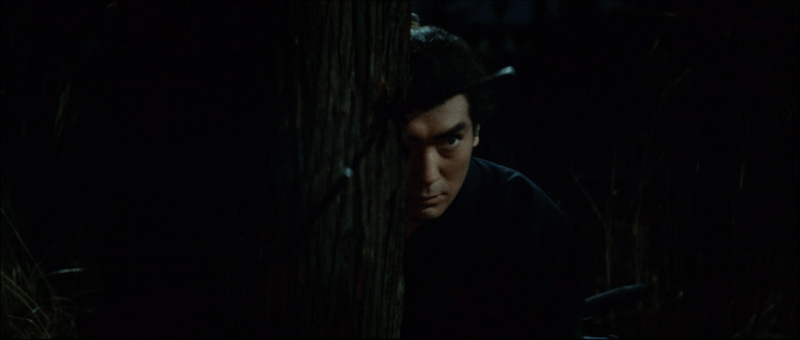
But despite Daijuro’s homemade cannons, nothing quite goes to plan. Kudo sets his final battle in an atmospheric, misty valley that is an obvious stand in for the underworld. Hayato may succeed in killing Nariatsu but it’s a pyrrhic victory. Though he vowed “to put an end to this ridiculous world,” a samurai cannot really win this battle. It’s Daijuro who eventually walks off with Nariatsu’s head, symbolically decapitating the shogunate which the closing titles confirm was mortally wounded by this incident. With his striking black and white cinematography, Kudo does indeed paint this samurai world as a hellish place ruled over by an infinitely corrupt and self-interested authority. The nihilistic futility of it all is emphasised by the figure of a grown man sitting like a small child and splashing his sword in a puddle while surrounded by dead bodies. There might be a way out of this, but not for the samurai, only for those who will come after and perhaps finally be free of this world’s absurdity.


Labyrinth Romanesque (花園の迷宮, Shunya Ito, 1988)

“Poor things, born in the wrong time,” a woman laments of two girls perhaps not that much younger than herself yet as trapped by the age of militarism as anyone else. Adapted from a short story by Edogawa Rampo, Shunya Ito’s gothic mystery Labyrinth Romanesque (花園の迷宮, Hanazono no Meikyu) effectively skewers militarism’s hypocrisies and lays bare the dehumanising effects its nihilistic philosophy has wrought on the nation as a whole. When killing is almost an imperative, life has little value and brutality seemingly the only acceptable response to mass violence.

Ito conjures a sense of haunting by adding a modern day framing sequence in which the abandoned hotel is an eerie space of cobweb-ridden collapse. A wrecking ball arcs back and fore, threatening to unearth a truth long buried and this is after all a mystery, at least in part. With extraordinary finesse, the camera travels from the ruins into the hotel of old as a woman enters the frame. We are now in 1942. This is Yokohama, a harbour town, and so the “hotel” is filled with military personnel though transgressively it also seems trapped in a kind of before time. The sailors dance to American standards such as Georgia on my Mind and Goodnight Sweetheart though otherwise at war with America. All eyes are on sex worker Yuri (Hitomi Kuroki) and her dashing Zero Fighter pilot boyfriend, Takemiya (Tatsuo Nadaka).

But later we learn that Takemiya hated planes and was scared of heights to the point that it kept him up at night. Apparently from a military family, he felt unable to avoid going on with this militaristic charade and saw no future for himself other than glorious death. Everyone at the Fukuju Hotel is in their way already dead and chief among them the madam, Tae (Yoko Shimada), who becomes the prime suspect when her unpleasant husband Ichitaro (Akira Nakao) is murdered during the night. Her nemesis is however. Ichitaro’s sister, Kiku (Kyoko Enami), who has just been deported from the US where she had been living after selling herself into sexual slavery in order to financially support Ichitaro after their parents died. 

Kiku had been Tae’s madam, bringing her over from Japan at 17 and as she will do again, actively sitting on her face when she screamed and fought after being assigned her first customer. This brutalisation seems have driven Tae towards a desire for escape, but that was only available to her by marrying Ichiro who then betrayed his own sister to open another brothel that he ran with Tae before leaving the US and setting up in Yokohama in light of the declining relationship between America and Japan. Though she herself was brutalised, Tae can only earn her freedom by exploiting other women. At the beginning of the film two young girls, Mitsu (Mami Nomura), 18, and Fumi (Yuki Kudo), 17, arrive from the country excited for their new lives but without fully understanding what they’ve signed up to. Like Tae, Omitsu fights back when chosen by a sleazy, nouveau riche factory owner who made his money making planes for the navy, and while Tae tries to talk her down Kiku simply sits on her face and tells the man to do his business. Afterwards, Mitsu tries to kill herself and her friendship with Fumi is strained by her internalised sense of shame. Determined to save enough money to redeem Fumi’s contract before the same thing happens to her, she throws herself into sex work and begins to lose Fumi’s respect. 

It’s the two girls who see this place as haunted most clearly, firstly in catching sight of Tae wandering the corridors in her nighty on the night of her husband’s murder, and then by Fumi’s belief she has seen the pale ghost of a geisha only to realise it was just a wig on a shelf. Mitsu says it belonged to a woman who contracted syphilis, went mad, and then died, a fate she now fears may also befall her. Like many of the other women, the girls have been sold into sexual slavery by their parents most likely because their families are poor and they can’t feed their other children. This kind of rural poverty is of course exacerbated by the financial demands of imperial expansion while the dehumanising elements of militarism, the belief that everything must be devoted to the war effort, allow this heinous relic of the feudal past to continue. Sons after all belong to the emperor and will become brave soldiers fighting for their nation, while daughters have no intrinsic value other than as wives or sex workers to be advantageously traded or sold on.

It’s this that Fumi comes to realise and resent. She insists that she will never return to her home or parents because at the end of the day, they sold her. Yet she feels little sympathy on learning that one of the other women is a notorious criminal who murdered her foster parents because they too took girls in to sell them on. The hotel somehow becomes the nexus of all this pain and violence, a place the women can never escape. Ito does his best to make clear that this is hell by travelling through the air ducts, on towards the eerie glow of the furnace and the dank passages running under the hotel and out into the sea. The boiler room connects all other areas of the hotel and exposes all their secrets in the sound that travels through the ducts. But some secrets are designed to remain forever hidden until the wrecking balls of the contemporary era force them into the light and confront us with this buried history. Until then, the hotel exists in a ghostly state, Ito flooding it with hazy images and visitations that read as eternal apparitions of this place’s inescapable despair trapping all within its labyrinth of unresolved longing.


Trailer (no subtitles)

Castle of Owls (忍者秘帖 梟の城, Eiichi Kudo, 1963)

A surviving member of the Iga clan swears vengeance on Toyotomi Hideyoshi only to slowly come to the realisation that the best revenge is living well in Eiichi Kudo’s ninja drama, Castle of Owls (忍者秘帖 梟の城, Ninja Hicho: Fukuro no Shiro). Adapted from the novel by Ryotaro Shiba, the film is somewhat unusual in its positivity in allowing its hero to first reject the codes by which he was raised and then those of the prevailing times in eventually choosing love and happiness over the internecine obligation to gain vengeance against a corrupt social order.

Hoping to solidify his grip on power, Oda Nobunaga has his right-hand man Toyotomi Hideyoshi massacre the Iga clan of ninjas who are then almost entirely wiped out. Juzo (Ryutaro Otomo) and his friend Gohei (Minoru Oki) both survive, but Juzo’s entire family is brutally murdered while his sister takes her own life after being gang raped by Hideyoshi’s soldiers, using her final breath to tell her brother to avenge her. Overwhelmed by grief, Juzo is chastised by veteran ninja Jiroza (Kensaku Hara) for his show of emotion. He reminds him that a ninja should be as unbreakable as stone and that he should abandon all human sentiment. Juzo, however, insists that he may be a ninja but is also human and refuses to apologise for his feelings. 

This is it seems the major conflict. Jiroza has already signalled his own heartlessness and practicality when he advised the surviving ninja to flee, for escape is less dishonourable than death. Those who refuse are welcome to surrender, and those who cannot run must be left behind to their fate. For Jiroza, all that matters is survival for both himself and his small daughter Kizaru (Chiyoko Honma) who is currently tied to his back (no mention is made of her mother, perhaps she had already passed away). Now that his family are dead, Juzo has a new mission and reason for survival insisting that what the living can do for the dead is vengeance, though in his case it is personal rather than principled for he mostly wanted revenge for his sister rather than the Iga clan as a whole or anything it represents which he otherwise seems to be at odds with. 

10 years later, Oda Nobunaga has already been bumped off in an act of betrayal by one of his own men leaving Toyotomi Hideyoshi in charge and now the target for Juzo’s revenge. Around this time, Hideyoshi is planning an invasion of Korea against the advice of most of his courtiers in order to legitimise his rule through imperial ambition and military dominance. Juzo has been trying to assassinate him, and has apparently failed five times already. A surprise visit from Jiroza and his now teenage daughter involves a job opportunity promising a monetary reward should he succeed, but Juzo is wary. The merchant who hires him says he wants Hideyoshi out of the way because a war in Korea will damage his business prospects, but as Juzo points out Hideyoshi’s death will leave a power vacuum resulting in another civil war. The merchant, however, giggles childishly and remarks that domestic wars are good for business, leading Juzo to suspect he’s here on behalf of Tokugawa Ieyasu, the most likely to assume power in the event of Hideyoshi’s death.

The irony is though Juzo very definitely wants Hideyoshi dead, when someone else suggests it he becomes conflicted because he knows it will lead to another period of chaos in which even more people will die. Meanwhile, a ninja’s allegiance should belong to his client, who is always the highest bidder, so this is both a win-win situation and a mild conflict of interest. Conversely, Gohei (Minoru Oki), who was betrothed to Kizaru, has apparently betrayed the clan and taken a position as a retainer for one of Hideyoshi’s lords. He agrees to betray the Iga, inform on the plan to assassinate Hideyoshi, and even bring in Juzo in return for a 300-koku stipend and a shot of advancement under the new regime.

Now, on one level this might be understandable. Japan has emerged from a couple of hundred years of constant warfare, there’s no place for ninja in a world of peace as former Iga man Mimi (Tokue Hanasawa) remarks revealing that he’s survived the last 10 years through begging. It’s also understandable given that a ninja is expected to be duplicitous and act in self-interest. Even Juzo applaud’s Jiroza’s ninjutsu on realising that he’s teamed up with Gohei to betray him in order to take out the leader of the Koga ninjas. In essence, he’s only really done what Juzo later does but also the opposite in choosing his individual happiness through betraying those around him to throw his lot in with the person who murdered his entire clan. 

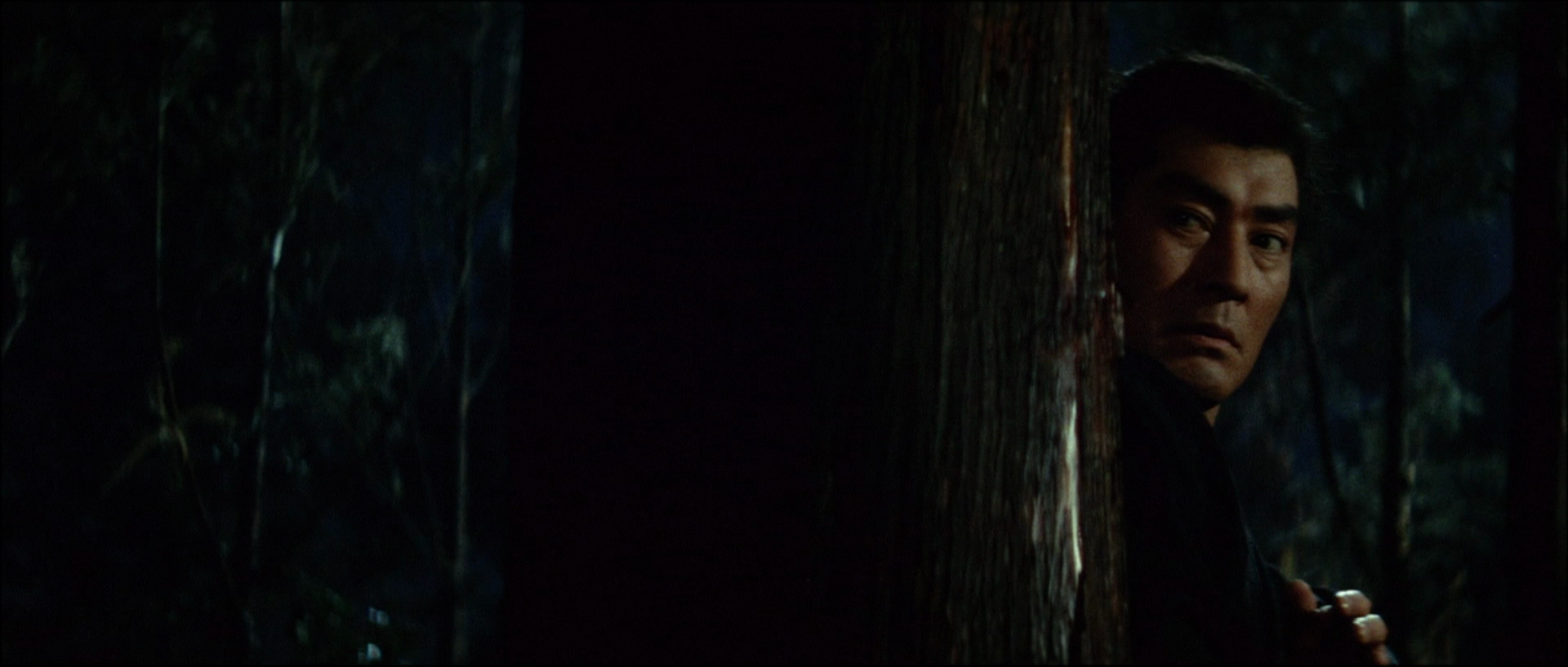
Juzo meanwhile is shaken by his unexpected attraction to female ninja Kohagi (Hizuru Takachiho), a daughter of the Koga,  who like him finds herself conflicted in her mission because of her growing affection for Juzo. Kohagi asks him if they really have to live on hate when they could live happily together instead, but even while conflicted Juzo can’t bring himself to let go of the idea of vengeance and is haunted by images of his friends and family dying. Even so, having decided to give up on a happy future and risk his life to kill Hideyoshi he finds that it ceases to matter. Confronting him, his hatred melts away. He begins to recognise the futility of revenge and that it would be silly to cause a war and make a merchant rich to prove a point. Gohei, meanwhile, pays a heavy price for his choices when his lord disowns him. Even when Juzo comes to rescue him from jail, he laughs that he’s caught him at last. Having escaped from the Iga life to live in the sun, he finds himself in darkness once again. Juzo, however, rides off into the sunshine with Kohagi to live in peace that’s divorced from the wider world. They choose to exile themselves from this world of darkness and duplicity, to live freely in the sunlight rather than be consumed by the internecine codes by which they were raised. Kudo films his ninja battles in near total silence with an almost balletic intensity and paints this world as one of infinite mistrust and uncertainty but equally affirms that it is possible to simply walk away and choose happiness over duty or hate.


The Phantom Goblin (まぼろし天狗, Nobuo Nakagawa, 1962)

“Everything is money these days” as a pirate king cheerfully proclaims in Nobuo Nakagawa’s tale of Edo-era corruption, Phantom Goblin (まぼろし天狗, Maboroshi Tengu). Perhaps named to capitalise on Nakagawa’s reputation for spookiness, Phantom Goblin features no real ghosts and only metaphorical goblins in the bright red tengu masks sported by the hero’s mysterious clan while otherwise conforming to the Toei programmer house style and starring jidaigeki superstar Hashizo Okawa in a double role as brothers separated at birth and reunited by their resistance towards the inherently corrupt authority of Edo society. 

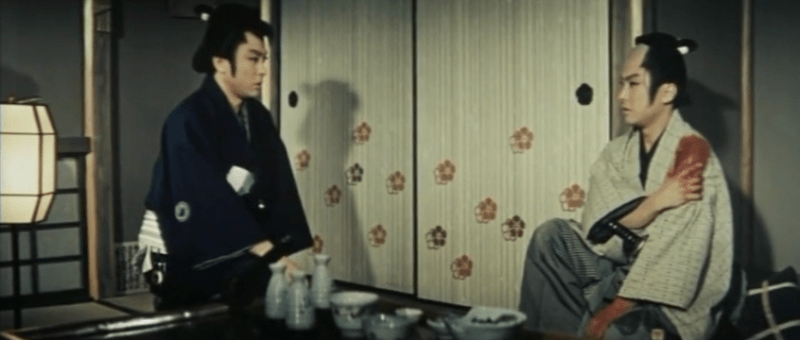
Drawing parallels with the present day, the film opens at a bawdy banquet at which corrupt councillor Tanuma (Isao Yamagata) is being entertained by a pair of local social climbers with a floor show of dancing girls. Shortly after the performance begins, however, one of the women collapses writhing in agony and loudly crying out for drugs. Embarrassed, the lords would rather this not get out deciding to finish the woman off and dump her body in a nearby well. Unfortunately for them, the plan is interrupted by local policeman Shuma Moriya (Hashizo Okawa) who arrives in time to hear the woman exclaim the words “drugs” and “mastermind” before she passes away. Determined to figure out the truth, Moriya heads to the not so secret hideout of a local gang but is shot in the arm and has to take refuge in an inn where he encounters a man who looks just like himself, Kyonosuke Asakawa (also Hashizo Okawa) of the Goblin clan, who eventually sends him to his estate to recover and assumes his position as policeman in order to root out the truth. 

A former hatamoto who apparently resigned his position after finding himself unable to support corrupt lords, Kyonosuke declares himself “frustrated with how things are run”, realising that the system is rotten beyond repair on hearing that Moriya has been fired by a corrupt magistrate apparently in league with the conspirators. While comparatively rare in Edo-era dramas, drugs are a controversial subject in any age but in keeping with the sensibilities of the early ‘60s Phantom Goblin eventually slips into the Sinophobia then rampant in contemporary crime dramas as it becomes clear the drugs trade in the feudal economy is being driven by Chinese pirates trafficking it in from overseas while weak willed lords enable their rise to power. 

There is however a touch of conservatism in Kyonosuke’s desire to see justice served in that he fears a world in which “if you can buy power and position with money, then one day we will have a chief counsellor who is a pirate”. While he’s undoubtedly got a point, it’s also true that he is in a sense protecting his own privilege conveyed by birth rather than worth in addition to rejecting the influence of the “foreign” as he raises his sword against a Chinese pirate in order to target the corrupt lords who’ve been collaborating with him in order to bolster their own power and position. Kyonosuke wanted to “clean out evil in Edo”, but eventually succeeds rather ironically in simply becoming a part of the system himself after having supposedly cleaned it out by getting rid of the “obviously” corrupt elites. 

Recovering from his shoulder injury and flirting with the adopted sister of Kyonosuke, Moriya is largely relegated to a secondary role though the secret brotherhood of the two never develops into much of a plot point even as they bond as men too honest for the world in which they live. Nor do the respective romantic dilemmas ever materialise even as the conflicted figure of a female bandit in love with the noble policeman is forced to pay for her crimes with her life, unable to progress into the purified world the brothers are about to create. Working in the Toei house style, Nakagawa abandons his taste for the strange or otherworldly contenting himself only with a few ironic tengu masks and the literal shadows surrounding the shady mastermind while indulging in genre staples such as the comic relief provided by Kyonosuke’s bumbling retainers and the double casting of Hashizo Okawa as two brothers alike in both appearance and sensibility who find themselves unable to accept the increasing corruption of their society and determine to oppose it. 


Lady Sen and Hideyori (千姫と秀頼, Masahiro Makino, 1962)

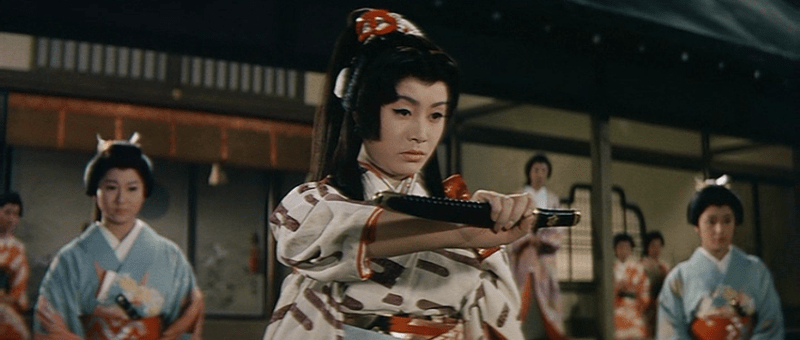
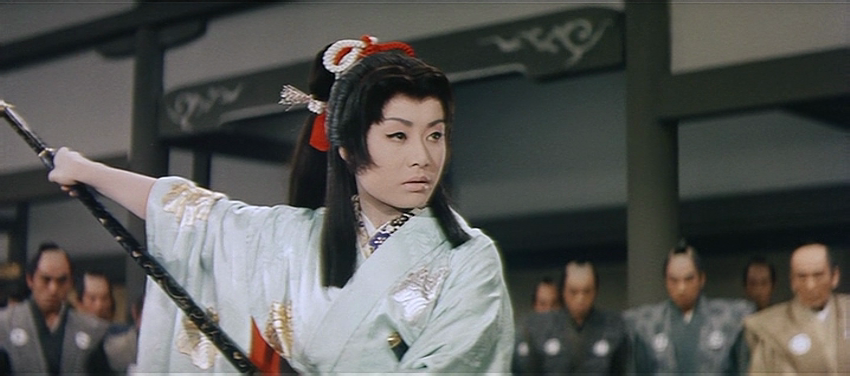
Son of cinema pioneer Shozo Makino, Masahiro Makino is most closely associated with the jidaigeki though he also had a reputation for highly entertaining, innovatively choreographed musicals some of which starred post-war marquee singing star Hibari Misora. The somewhat misleadingly titled Lady Sen and Hideyori (千姫と秀頼, Sen-hime to Hideyori), however, is pure historical melodrama playing fast and loose with the accepted narrative and acting as a star vehicle for Misora to showcase her acting talent in a rare dramatic role in which she neither sings nor engages in the feisty swordplay for which her otherwise generally lighthearted work at Toei was usually known. 

Lady Sen (Hibari Misora) is herself a well-known historical figure though Hideyori (Kinnosuke Nakamura) will not feature in the film beyond his presumed demise (his body was never found leading to various rumours that he had actually survived and gone into hiding) during the siege of Osaka in 1615. Born the granddaughter of Tokugawa Ieyasu (Eijiro Tono) who would later defeat the Toyotomi to bring Japan’s Warring States era to an end, Sen was sent to the Toyotomi as Hideyori’s future wife at seven years old (he was only four years older than she was and 21 at the presumed date of his death) and therefore perhaps far more Toyotomi that Tokugawa. In contrast to other portrayals of Sen’s life which centre on her understandable identity conflict and lack of agency in the fiercely patriarchal feudal society, Misora’s Lady Sen is clear in her loyalty to her husband whom she dearly loved and feels her father and grandfather who were directly responsible for his death are her natural enemies.  

Old Ieyasu and his son meanwhile do at least appear to care about Sen’s welfare, loudly crying out for a retainer to save her during their assault on the castle offering unrealistic rewards to any who manage a rescue. Unfortunately, however, having retrieved his granddaughter Ieyasu immediately marries her off to someone else demonstrating just how little control Sen has over her own destiny and how ridiculous it might be that she should have any loyalty to the family of her birth. His decision backfires on two levels, the first being that Dewa (Tetsunosuke Tsukigata), a lowly retainer responsible for Sen’s rescue from the falling castle, has taken a liking to her himself and fully expected to become her husband as a reward. While originally annoyed and hurt to think that perhaps she has rejected him because of the prominent facial scarring sustained while he was rescuing her, Dewa finally realises he just wants her to be happy only to be offended on realising that they’ve rerouted her bridal procession past his home which he takes as a personal slight. Nevertheless, in contrast with real life (Sen’s marriage to Honda Tadatoki was apparently amicable and produced two children though only one survived to adulthood) Sen’s relationship with her new husband is not a success, in part because she resents being used as a dynastic tool and in part because she remains loyal to Hideyori. In consequence, she makes full use of her only tool of resistance in refusing to consummate the marriage with the result that her new husband, Heihachi (Kantaro Suga), slowly drinks himself to death. 

Her other act of rebellion is however darker, striking down an old man who made the mistake of telling her with pride how he informed on retreating Toyotomi soldiers after the siege. Determining to become an “evil woman” she deliberately blackens the Tokugawa name by killing random commoners, chastened when confronted by a grieving widow but banking on the fact her relatives will not move against her and will therefore gradually lose public sympathy for failing to enforce the law against one of their own. The spell is only broken by the arrival of a former Toyotomi retainer (played by Misora’s frequent co-star in her contemporary films Ken Takakura) who reminds her of her loyalty to her husband’s legacy and prompts her retreat into religious life as a Buddhist nun mirroring the real Lady Sen who entered a convent after her second husband died of tuberculosis. Like most of Misora’s film’s Lady Sen ends with a softening, a rebuke to her transgressive femininity which in this case has admittedly turned worryingly dark her murder spree apparently a form of resistance to the entrenched patriarchy of the world around her and most particularly to her continued misuse at the hands of her father and grandfather. Despite the absence of large-scale musical numbers, Makino makes space for a fair few dance sequences along with festival parades and well-populated battle scenes but makes sure to place Misora centre stage as if countering the continual marginalisation of Lady Sen and all the women of feudal Japan. 


Clip (English subtitles)

Cash Calls Hell (五匹の紳士, Hideo Gosha, 1966)

“Life is made of gambles” according to the villain of Hideo Gosha’s 1966 Shochiku Noir Cash Calls Hell (五匹の紳士, Gohiki no Shinshi). Sometimes dismissed by contemporary critics for the wilful vulgarity of his late career yakuza films, Gosha was most closely associated with jidaigeki but here makes a rare foray into B-movie crime, a genre which perhaps aligned with the so-called “manly way” philosophy which imbued much of his work. Led by frequent star Tatsuya Nakadai the men of Cash Calls Hell are indeed all suffering manfully, each desperately floundering in the post-war society while quietly resentful in being locked out of its growing prosperity. 

The hero, Oida (Tatsuya Nakadai), is the son of a meek civil servant whom he resented for his passivity. Oida was determined to make something of himself, and so he invested his efforts not in hard work and dedication but in personal relationships, seducing the boss’ daughter in order to win her hand and thereby advancement and security. Meanwhile, he was preparing to unceremoniously ditch the bar hostess who’d been supporting him while he made his way to the top, only after arguing with her on a car drive home he gets into an accident in which a father and his little girl are killed. Oida’s bright future is ruined in an instant. He’s asked to backdate a resignation letter, his engagement is cancelled, and he also owes compensation to the widowed mother Natsuko (Miyuki Kuwano) whose face, filled with rage and resentment, he is unable to forget. With no money to pay her, he winds up in prison which is where he meets soon-to-be released Sengoku (Mikijiro Hira) who has a proposition for him but refuses to give any further details, instructing him to find a woman named Utako (Atsuko Kawaguchi) as soon as he’s released. 

As Utako relates, the job involves knocking off the three men on her hit list for which he will be paid a cool 15 million yen (5 million each). Advised to not to ask any further questions, Oida decides to go along with it after all he has nothing left to lose, but as he begins his investigations he becomes increasingly confused and conflicted. As we discover, the men were all part of a gang that robbed a syndicate of Hong Kong drug dealers, and it doesn’t take a genius to figure out that Sengoku wants them out of the way so he won’t have to divide the loot when he gets out. The money is many ways beside the point, what the men wanted was a way to kick back against the various forces which oppressed them and took their revenge on society through crime. The first, Motoki (Hisashi Igawa), is a former policeman who ran off with a gangster’s wife and subsequently went all the way to the dark side. Umegaya (Kunie Tanaka) is the son of a career criminal who wanted some control over his life and to care for the woman he loved. Embittered former boxer Fuyujima (Ichiro Nakatani) had his dreams shattered when gangsters crushed his hand because he refused to throw a fight. 

Sengoku, who was left lame after being injured in the aerial bombing during the war, recruited them all by exploiting their resentment. Fuyujima describes the men as wandering like ravenous dogs. They are already imprisoned, framed by the chainlink fence which divides them from the well-to-do salarymen killing time at the driving range. “Life is half made of luck and circumstances” Sengoku tells them, echoing his words to Oida, handing them agency in crime in asking them to “bet” on him. “We can’t sink any lower” he rationalises, “now we must get back on our feet”. Oida is much the same. He’d sunk as far as he could and thought nothing of taking these men’s lives to save his own, but resents being used by Sengoku and is probably figuring out that a man who doesn’t want to split his loot in four won’t be keen to split it in half either. He is also burdened by a sense of guilt and responsibility, both to the widow of the man he killed in the accident and to Motoki’s small daughter Tomoe (Yukari Uehara), about the same age as the little girl who died with him. 

Natsuko, it turns out, has since become a bar hostess, herself sinking in the cruelty of the post-war landscape, now wearing a sparkly cheongsam in echo of the “Golden Dragon” syndicate running the club where Umegawa works and the Hong Kong gangsters hot on Oida’s trail. Indulging in a stereotypical B-movie Sinophobia, the implication is that crime is a foreign phenomenon, the threat lurking in the shadows dressed oddly more like a 30s bootlegger from a Hollywood gangster flick than a triad drug trafficker and killing with the point of his umbrella. Oida’s redemption is sparked by his sense of responsibility towards the orphaned little girl who continues to follow him around, latching on to him as a sympathetic figure entirely unaware of his relationship to her father. In the end he declares that he wants the money in order to buy back his soul having sold it to Sengoku in agreeing to take on the job without knowing what it was, but also wants to make restitution to Natsuko which he later does in a poetic if perhaps insensitive fashion that implies he can in a sense restore the child he killed by substituting it with another. 

Oida is one of Gosha’s “manly” heroes, surviving at all costs but finally defending his sense of honour in regaining his humanity. Nevertheless, Gosha is also keen to demonstrate the various ways the women suffer at the hands of irresponsible men, each of the wives endangered by their husbands’ transgressions and Natsuko forced onto the fringes of the sex trade by Oida’s thoughtless crime. Opening in a bold negative with the heist that started it all, Gosha shoots in true noir style all shadows and canted angles through a series of episodic set pieces including a chase pregnant with symbolism through a “purification station” scored by moody jazz before ending on a fatalistic POV shot. Life is a gamble after all, but is this a loss or a victory? With the world the way it is, who could really say.


Sword of the Beast (獣の剣, Hideo Gosha, 1965)

sword of the beast posterHideo Gosha’s later career increasingly focussed on men at odds with their times – ageing gangsters who couldn’t see their eras were ending. His second feature, Sword of the Beast (獣の剣 Kedamono no Ken), is much the same in this regard but its youthful hero knows perfectly that change is on the horizon. Gennosuke (Mikijiro Hira) tries to ride that change into a better, more equal future but the forces of order will not allow him. The cinematic samurai world of the post-war era is no longer that of honourable men, manfully living out the samurai code even when it pains them to do so. It is one of men broken by oppressive feudal rule, denied their futures, and forced to betray themselves in service to systemic hypocrisy. Yet even if men think of reforming the system, they rarely think to escape it unless it actively spits them out.

When we first meet Gennosuke, he’s crawling around in a muddy grass field, dishevelled and hungry. A lone woman spots him and plies her trade leading Gennosuke to embrace his baser instincts and give vent to his lust, but the pair are interrupted by the sound of approaching horses. Gennosuke is on the run from his clan for his part in the murder of a lord. His pursuers scream at him, “have you no pride?”, lamenting his lack of stoical resignation to one’s fate so central to the samurai ideal. “To hell with name and pride” Gensosuke throws back, “I’ll run and never stop.”

Gennosuke’s odyssey leads him into the path of petty bandits who’ve been swiping gold out of the local river. Unbeknownst to them, a couple from another clan have been living an isolated life in a small cottage where they too have been skimming the Emperor’s gold, only they’ve been doing it for their lord. The man, Jurota (Go Kato), is excited about this work because he thinks when it is completed he’ll finally be accepted as a true samurai and the future for himself and his wife, Taka (Shima Iwashita), will be much brighter. He is quite wrong in this assumption.

Gennosuke, it is later revealed, committed his fateful act of murder upon the assumption that he was part of a revolutionary vanguard, removing cruel and corrupt lords from their positions so fairer minded, decent men could rule in their stead. Instead he realises he’s been rendered a disposable pawn in a political game and that the new master he believed would usher in a brighter future only envisaged one for himself. Jurota has been duped in much the same way, asked to do something illicit, immoral, and against the samurai code under the assumption that he will finally be accepted as “one of us”. He has not considered the corruption of those he wants to join, and does not see that his crime likely means he cannot be allowed to live.

Gennosuke and Jurota are cynical men who nevertheless possess true faith in the way of the samurai. Exiled from his clan, Gennosuke is a wandering beast who pretends not to care about the people he meets, but ends up saving them anyway. Yet if Gennosuke has been “freed” from his illusions, Jurota’s devotion to them makes him a less heroic figure. When Taka is captured by bandits who threaten her life, Jurota has a difficult decision to make – surrender the gold or his wife. Jurota chooses poorly and abandons his wife to a fate worse than death at the hands of uncivilised ruffians. Taka finds this hard to forgive. No longer wishing to stay with a man who values her so lightly she turns to Gennosuke – her accidental saviour, and reveals to him that she longs to become “a beast” like him. Now “freed” of her own illusions as regards her husband’s love, their shared mission, and the fallacy of their future together as noble samurai, Taka is prepared to exile herself from the samurai world as Gennosuke has, but, as he tells her, the wife of a retainer cannot choose the life of a beast.

This world of samurai is facing its own eclipse. The Black Ships have arrived, the spell has been broken, and the modern world awaits. Gennosuke can see this future, he tried to grasp it in the murder of his lord, but it is not here yet. Gennosuke’s friend, Daizaburo (Kantaro Suga), is duty bound to take his revenge as the fiancé of the murdered lord’s daughter though he’d rather not do it, and does so only to give Gennosuke an “honourable” death. The daughter, Misa (Toshie Kimura), is understandably angry and filled with hate but she pays dearly for her vengeance. Following their ordeal, neither Daizaburo or Misa can return to their clan. They are also “freed”, their illusions broken, their debts forgiven. Breaking with the burden of their past, they would now follow Gennosuke into his new world, even if none of them know exactly where they’re going.

These private revolutions amount to a kind of deprogramming, reawakening a sense of individual agency but one which is unselfish and carries with it the best of samurai honour. Gennosuke may be a “beast” on the run, reduced to a creature of needs rather than thoughts, but there’s honesty in this uncivilised quest for satisfaction which leaves no room for artifice or hypocrisy. It may be a rough world and lonely with it, but it is not unkind. To hell with name and pride, Gennosuke will have his honour, even as a nameless beast, a self-exile from a world of cruelty, greed, and inhumanity.


Original trailer (no subtitles)

https://www.youtube.com/watch?v=R_eddPRh5eY