I Did It My Way (潛行, Jason Kwan, 2023)

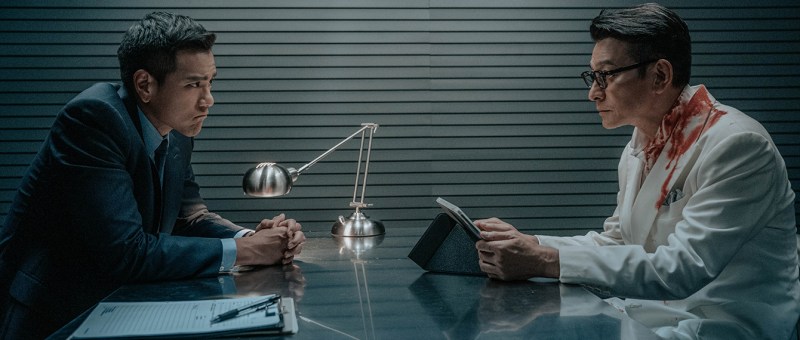
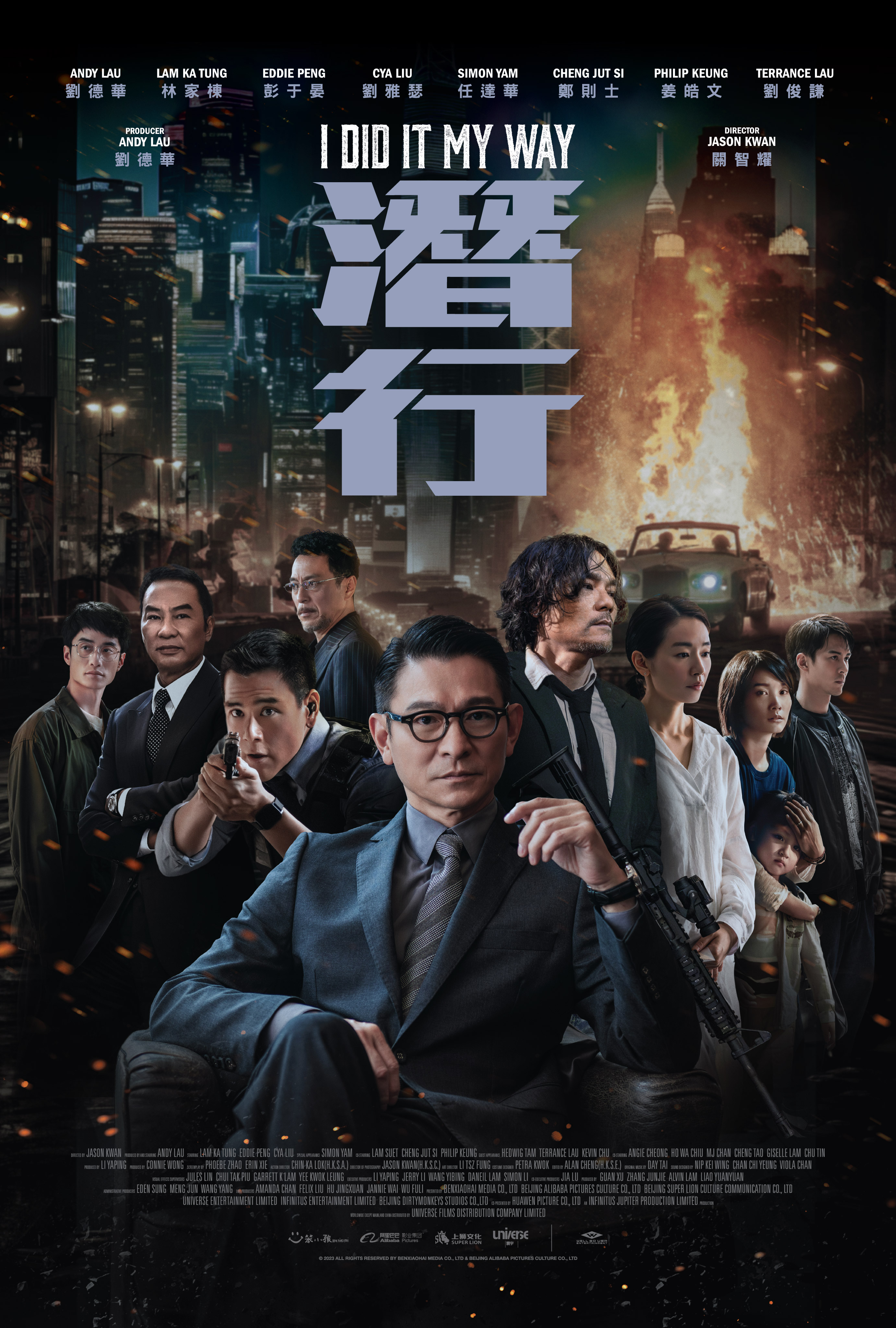
“Oldies are still the best,” one bad guy tells another while listening to a retro pop song about the inability to distinguish good from evil, “life was simpler back then.” Jason Kwon’s I Did it My Way (潛行) is in many ways an attempt to recapture the action classics of the 90s starring many of the same A-listers though they are all 30 years older and in some cases really ageing out of the kinds of roles they’re accustomed to playing in these kinds of films. Nevertheless, the action is updated for the contemporary era in its unsubtle messaging that drugs and cyber crime are bad, while the police are definitely good and will always win.

Indeed, barrister George Lam (Andy Lau Tak-wah) is not a particularly sympathetic villain and is given little justification for his crimes save doing things his way. Cybercrime specialist Eddie Fong (Edward Peng Yu-Yan) isn’t terribly sympathetic either, but mostly because of his bullheaded earnestness. Chung Kam-ming (Simon Yam Tat-wah) asks him to work with regular narcotics cop Yuen (Lam Suet), but Eddie originally refuses, insisting that they formed their new cybercrimes squad because the “old ways” weren’t working, so it’s better that they keep their investigations separate, which is of course quite rude to Yuen especially as he goes on to add that Chung’s only asked him out of politeness and professional deference. Chung, however, reminds them that they’re all part of one big family and should learn to work together. 

One might think that a criminal enterprise is also a kind of family, but it’s shown to be illegitimate in comparison to that of the police. Yuen’s undercover agent, Sau Ho (Gordon Lam Ka-tung), has a family he’s trying to protect, as does Lam who is about to marry his much younger pregnant girlfriend. For them, family is also a weakness because it gives them a reason to be afraid not to mention something to lose. Beginning to suspect him, Lam uses Sau Ho’s wife and son as leverage, symbolically taking them hostage along with Sau Ho’s promised future that would allow him to emigrate for a life of freedom under a new identity. 

Like the song says, Sau Ho is also struggling to define his identity as an undercover cop caught between his original desire to fight crime and the criminal lifestyle he’s been forced to live which leaves him never quite sure what side he’s actually on. Lam claims he only started dealing drugs after his girlfriend was raped and subsequently developed depression but that’s too late for him to turn back and so he’s gone all in. There is a kind of brotherhood that arises between them that’s permanently strained by their positioning on either side of this line and the inevitability of confrontation. Fong promises to save Sau Ho, but he failed to save most of their other undercover officers, while Sau Ho and Lam pledge to save each other, though the act of salvation could mean different things to each of them while both torn between their respective codes and the natural connection that’s been fostered by their long years working together as part of the gang. 

The severing of this connection is again part of the price for their involvement with crime, with Lam led to believe that his choices have ironically robbed him of the pleasant familial future he dreamed of, while Sau Ho is returned to the familial embrace of the police force. Chung is repositioned as a benevolent father who can save his men, while Eddie too is forced to reintegrate by working with the other officers to fight cybercrimes which often intersect with those of other divisions. While the film includes several action sequences, it also insists that the major battle takes place online between hackers and police computer specialists, dramatising these online fights with CGI to slightly better effect than 2023’s Cyber Heist but still struggling to move on from an outdated iconography of the web. Even so, it’s clear that crime never pays even if a policewoman asks herself if it’s really worth it on a trip to the police cemetery. The sun has come out once again, making the dividing line between good and evil clear if also reinforcing the paternalistic authority of law enforcement under which living life “my way” will never be tolerated.


I Did It My Way is available digitally in the US courtesy of Well Go USA.

Trailer (English subtitles)

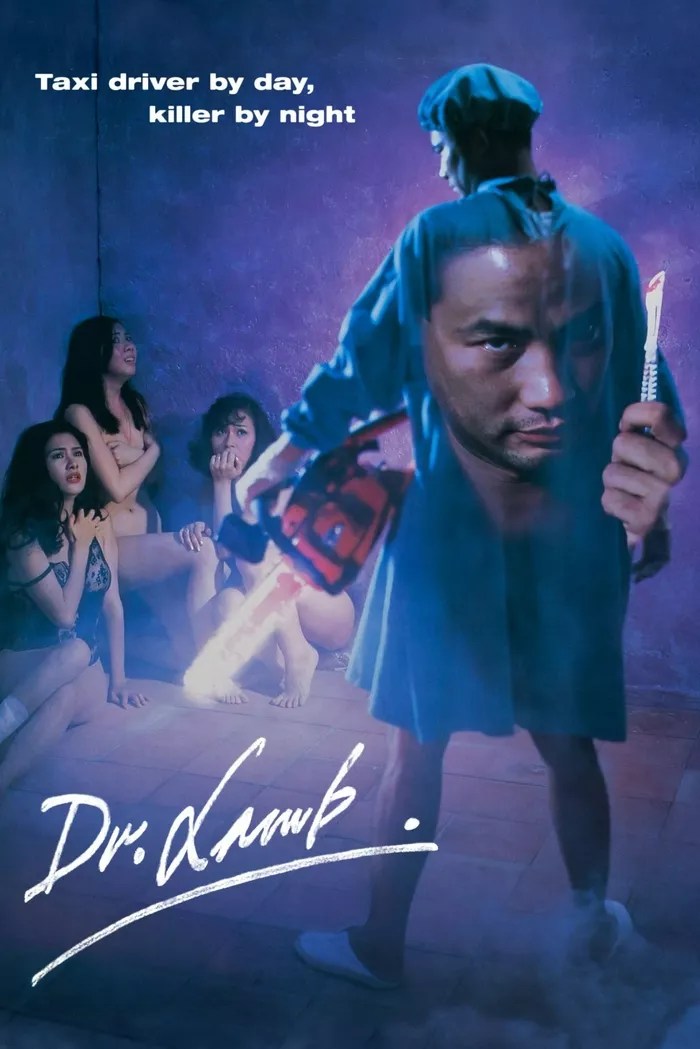
Dr. Lamb (羔羊醫生, Danny Lee Sau-Yin & Billy Tang Hin-Shing, 1992) [Fantasia 2022]

“Every good man should get revenge” the young protagonist of Danny Lee Sau-Yin and Billy Tang Hin-Shing’s depraved Cat III shocker Dr. Lamb (羔羊醫生) is told though as will become apparent, he is not a good man and if his heinous crimes are born of vengeance the target may remain indistinct. Long available only in a censored version which perhaps helped to create its gruesome reputation, the film like others in the early ‘90s Cat III boom is based on a real life case, that of taxi driver Lam Kor-wan who murdered four female passengers before being caught by police when an assistant at a photo shop alerted them to the disturbing quality of the negatives he had brought in to be developed. 

As such, the film is not a procedural. It begins with the arrest of a man here called Lin Gwao-yu (Simon Yam Tat-Wah) who claims the negatives are not his and that he brought them in on behalf of a friend named Chang (which is also coincidentally the name of the half-brother he continues to resent). On investigating the flat where he lives with his father, half-siblings, and niece, the police realise that Gwao-yu is in indeed a serial killer and the rest of the film is divided into a series of flashbacks as they try to convince him to confess and reveal how and why he committed these crimes the last of which he actually videoed himself doing. 

Nevertheless, the police themselves are depicted not quite as bumbling but certainly not much better than the criminals they prosecute in their own lust for violence, savagely beating Gwao-yu who refuses to speak in order to force him to confess. Fat Bing (Kent Cheng Jak-Si) is portrayed as a particularly bad example, encouraging the other cops to play cards rather than focus on their stakeout of the photo shop almost allowing Gwao-yu to escape and then titillated by the more normal pinups and glamour shots pinned to Gwao-yu’s wardrobe as well as some of the less normal ones before realising that the women in them are dead. There is some original controversy over whether they should be investigating at all given that taking weird pictures of nude women is not in itself illegal while the misogynistic attitudes of the police are carried over onto one of their own officers who is forced to play the part of the victim during a re-enactment and is later struck by a stray body part as a result of Fat Bing’s crime scene incompetence. One of the murders even takes place directly outside a police box where the victim had tried to ask for help but got no reply.

Pressed for a reason for his crimes Gwao-yu offers only that all but the last of his victims were bad women who deserved die, each in a repeated motif fatalistically colliding with his cab and crawling inside having had too much to drink. Flashbacks to his childhood place the blame on his wicked step-mother’s rejection along with that of his siblings while his father alone defends him if somewhat indifferently, describing him as merely “curious” on catching Gwao-yu voyeuristically spying on he and his wife having sex and disowning him only on discovering that he has also been abusing his niece who is strangely the only member of the family who seems to be fond of him. Yet it’s also this problematically incestuous living environment that has facilitated his crimes. Gwao-yu takes the bodies home to play with and dismember having the house to himself during the day because he works nights while continuing to share a pair of bunk beds with the brother he hates at the age of 28 either unwilling or unable to get a place of his own on a taxi driver’s earnings. Aside from his brother noticing a strange smell, the family who all think him weird anyway apparently remain oblivious to Gwao-yu’s crimes despite the jars containing body parts he keeps in a locked cupboard along with disturbing photographs of his dark deeds. Nevertheless it’s their police-sanctioned beating of him which eventually provokes his confessions. 

Set off by rainy nights, Gwao-yu twitches, gurns, and howls like a dog leering at his victims like a predatory wolf. In the police interrogation scenes he continues with his strange, dancelike movements as if in a trance reliving his crimes. The truth is that the police had not really investigated the disappearances of the women he killed, had no clue a serial killer was operating, and would not have caught Gwao-yu if it were not for his own lack of interest in not being caught in taking the photos to be developed publicly despite claiming to have the ability to have simply developed them himself while videoing his brutal treatment of one victim’s body and his disturbing “wedding night” with another. A final scene of Inspector Lee visiting Gwao-yu in prison visually references Clarice’s first visit to Dr. Lecter in Silence of the Lambs which might go someway to explaining the title which is otherwise perhaps ironic in Gwao-yu’s ritualistic use of a scalpel and specimen jars. In any case for all its lurid, disturbing content the film has a strange beauty in its atmospheric capture of a neon-lit Hong Kong stalked as it is by an almost palpable evil. 


Dr. Lamb screened as part of this year’s Fantasia International Film Festival and is available on blu-ray in the US courtesy of Unearthed Films.

Original trailer (no subtitles)

All U Need Is Love (總是有愛在隔離, Vincent Kok Tak-chiu, 2021)

All things considered, there are worse places to quarantine than a five star hotel especially if it’s free but then again forced proximity with those you love, or those you don’t, can prove emotionally difficult. An old school ensemble comedy, Vincent Kok’s All U Need Is Love (總是有愛在隔離) features a host of A-list stars each providing their talent for free in order to support the struggling Hong Kong film industry in the wake of the COVID-19 pandemic but as its name suggests eventually offers a small ray of hope that the enforced period of reflection may have fostered a spirit of mutual solidarity and personal growth. 

Kok opens, however, with a tense chase sequence as a shifty looking man runs from the authorities at the airport only to be picked up by the PPE-clad Epidemic Task Force who whisk him away to a secret location where he’s placed inside a weird bubble and interrogated by Louis Koo. Several more top HK stars including Gordon Lam fetch up in the bubble each implicating the Grande Hotel as the centre of of a coronavirus cluster at which point an order is given to place it under total lockdown requiring everyone inside to remain for a 14-day quarantine. 

Essentially a series of intersecting skits, Kok’s ramshackle drama nevertheless has its moments of satire as the hotel chief takes to the stairs for an inspirational speech in which he frequently slips into English and bizarrely likens himself to the captain of the Titanic because we all know how well that went. He spends the rest of the picture trying to escape without anyone noticing while his dejected security guard/brother tries to bump him off. Meanwhile, two gangsters develop a homoerotic bromance while plotting how best to profiteer off the pandemic through smuggling anti-COVID paraphernalia just as panic buying takes hold on the outside. 

Nevertheless, it can’t be denied that All U Need Is Love is also guilty of some rather old fashioned, sexist humour particularly in the antics of a pair of old men (Tony Leung Ka-Fai and Eric Tsang reprising their roles from Men Suddenly in Black) and their minions who misled their wives in order to embark on a sexual odyssey only to have their plans both improved and then ruined by the quarantine order. Meanwhile, a young couple who were in the hotel preparing for their wedding banquet ironically scheduled for the last day of the quarantine find themselves at loggerheads as the man gets cold feet over his fiancée’s bridezilla micromanaging, and her father undergoes a total makeover while continuously watching Japanese pornography in his room. 

Watching it all, a little girl, Cici, becomes the moral voice of the pandemic innocently hoping that nature will continue to heal itself even after the sickness ends. It’s she who shows the gangsters the error of their ways in pointing out that if they steal all the anti-COVID equipment then they will end up being more at risk because no one else is protected, while she also softens the heart of the hotel’s cynical manager to the point that he too makes a lengthy speech about becoming a better person thanks to his experiences during in the pandemic. 

During their enforced proximity friends and strangers have indeed needed to rediscover their love for their fellow man as they band together in mutual solidarity waiting for their freedom. Culminating in an oddly uplifting wedding decked out with balloons and messages from friends and family played via iPad, Kok’s anarchic ensemble farce does its best to discover a silver lining among the fear and anxiety of the pandemic as it ironically brings people together through driving them apart. Along with his A-list cast, Kok throws in a series of movie parodies and pop culture references from an impromptu rendition of Baby Shark to a surprise appearance from the Landlady from Kung Fu Hustle as well as a suitably random cameo from Jackie Chan. Repurposing the traditional Lunar New Year movie, All U Need is Love is a classic nonsense comedy designed to lighten the mood in these trying times while celebrating the essence of Hong Kong cinema through, arguably, its most idiosyncratic of genres. 


All U Need Is Love streamed as part of this year’s New York Asian Film Festival.

Original trailer (Traditional Chinese/English subtitles)

Dragon in Jail (獄中龍, Kent Cheng Jak-Si, 1990)

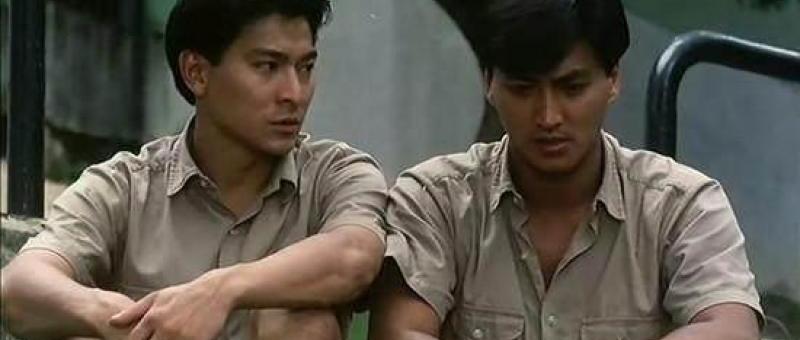
“For the poor life is a punishment” according to Henry (Andy Lau Tak-Wah), the embattled hero of Kent Cheng Jak-si’s Dragon in Jail (獄中龍), a subdued heroic bloodshed offshoot in which a poor boy and rich kid meet in juvie and become best friends for life even though fate seems to have very different paths in store for them. Less a critical expose of the cruelties of an increasingly stratified society than an ode to intense male friendship, Dragon in Jail puts its hero in a different kind of cell as he tries to escape the triad net but finds himself ensnared by past crime and present rage. 

Rich kid Wayne (Kenny Ho Ka-King) ends up in a reformatory for pulling petty stunts supposedly because he doesn’t like it that his widowed mother has remarried. Different from the other boys, he’s immediately hazed and asked for his gang affiliation, only he doesn’t have one. Tough boy Henry stands up for him, roping in his other friend Skinny (John Ching Tung) to take on the cell’s Mr. Big after which the boys become firm friends as they study together to sit their A Levels while inside. Wayne wasn’t planning to take his exams as a way of getting back to his mother, but Henry convinces him that education is the one way to show the world who’s boss. The boys come top in their class, Wayne gets out and decides to go the UK to study law, while Henry serves out the remainder of his sentence in an adult prison, sentenced to four years for manslaughter after accidentally killing a triad member during a fight over protection money at his family’s kiosk. 

Despite the differences in the scope of their possibilities, Henry and Wayne remain good friends, but once Henry gets out of prison he’s nothing much to look forward to. His hopes of attending a university are dashed by his defeatist father who thinks education is pointless and blames him for the failure of their business, while he struggles to find steady employment as a man with a criminal record. Eventually he decides to work as a mechanic by day and a cram school teacher by night with the aim of saving enough to apply for uni at later date so he can marry his longstanding girlfriend, Winnie (Gigi Lai Chi). Skinny, meanwhile, gets out of jail and heads straight back to the triads, trying to convince Henry he should join too. Henry doesn’t want to, but faces constant harassment from Brother Charlie (William Ho Ka-Kui), the boss of the man he killed in the fight. When his little brother is badly burned in a triad attack, he decides his only option is to become one himself to earn the protection of Boss Sean (Leung Gam-San) who mediates an uneasy truce with the psychopathic Charlie. 

When Wayne returns from the UK after graduating law school, Henry is married and a father-to-be living in a swanky apartment having risen in the triad ranks, but he’s also a hotheaded opium addict still sparring with the very present Charlie. “I’m a bad egg! I deserve it!” Henry wails on being confronted by Wayne who points out that it was he who was always encouraging him to study so that no one would ever look down on him. Henry thinks he’s not good enough to be Wayne’s friend and fully expects to be abandoned, but after some strong words of defence from Winnie, Wayne comes around, resolving to help get his friend off the stuff. The problem is the sense of futility which has already set in. Henry has become what everyone expected him to be, a thuggish triad, because they convinced him he could become nothing else.

Winnie berates Henry for keeping his sorrows to himself, remaining sullen and resentful at his inability to escape the triad world for an honest life of safety with his new family, though he once told Wayne that he should “speak up if you feel unhappy”. Despite everything the intense friendship between the two men endures. Cheng adds to the faintly homoerotic tone by shooting his early prison scenes with a lingering romantic gaze, while Wayne seems to pine for his broody friend, affirming that “no matter what you are, you are my buddy”. A caged dragon, Henry’s vengeance is swift and brutal but he retains his nobility even in the depths of his despair, eventually taking refuge in an unconditional friendship which transcends the forces which imprison him.


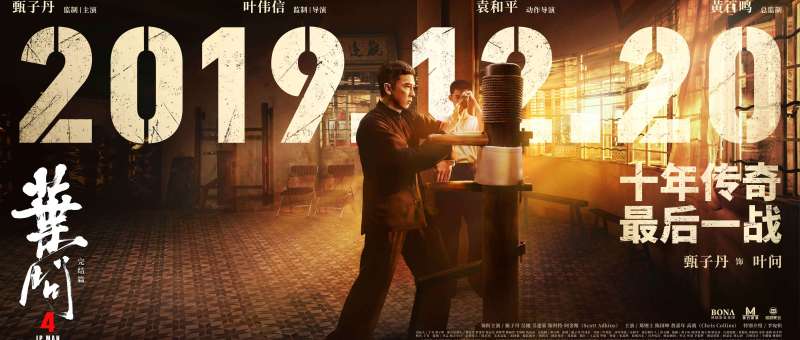
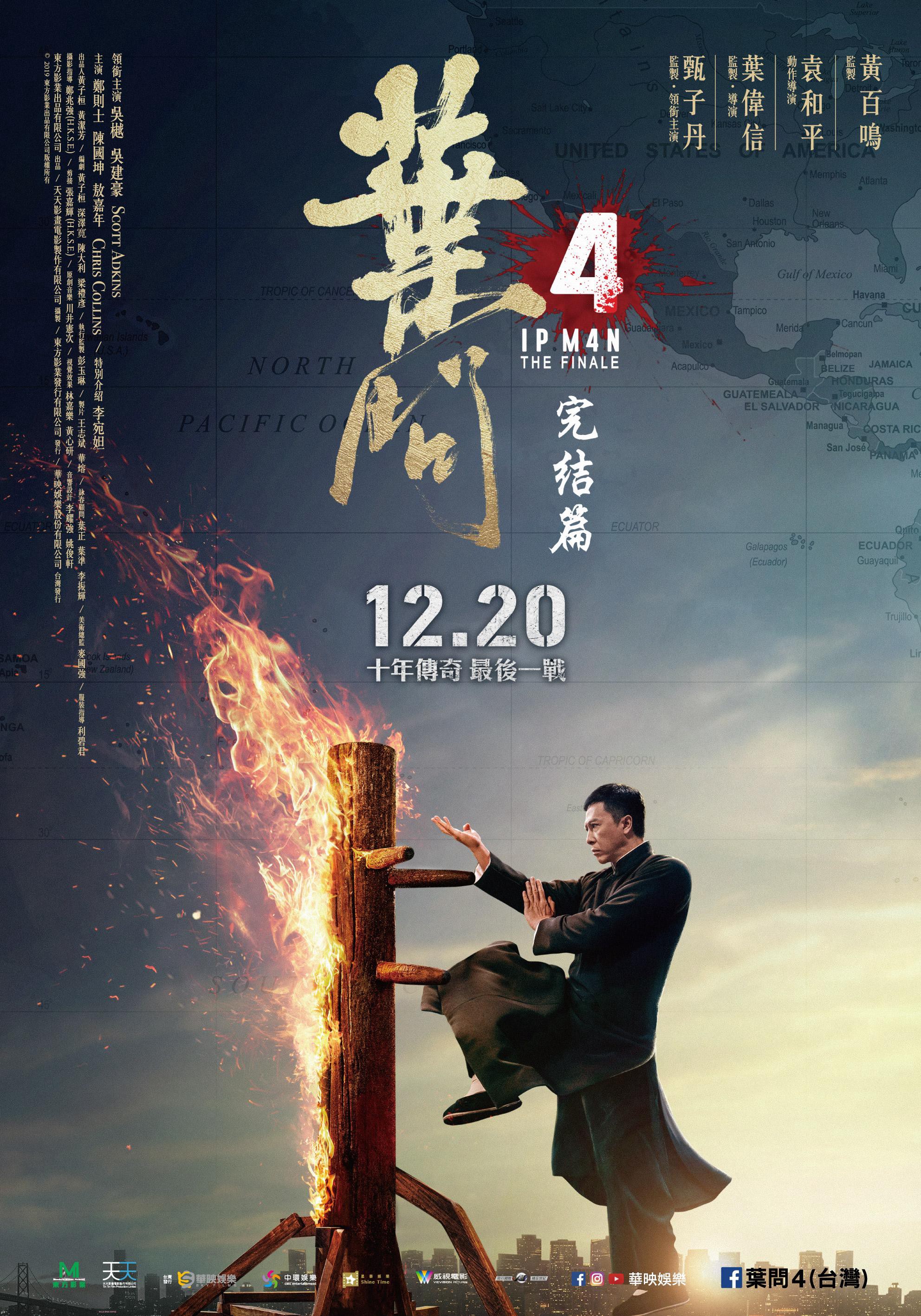
Ip Man 4: The Finale (葉問4:完結篇, Wilson Yip, 2019)

Ip Man 4 poster 1Superhero movies may be undergoing something of a complex reevaluation of late, but you can’t deny that they often come in unexpected forms. Ip Man, the man who made Bruce Lee, has himself become a mythical figure, a kind of kung fu saint defending ordinary Chinese people from oppressors and bullies. All heroes, however, must eventually meet their end. Ip Man 4: The Finale (葉問4:完結篇) brings the Donnie Yen starring series to a bombastic close with Ip seemingly facing off against the rising populism of the present day by kicking back against racist aggression in the San Francisco of 1964.

Why would Ip be in San Francisco, you ask? Because Bruce Lee (Danny Chan Kwok-kwan) invited him. Rewinding a few minutes, we discover that Ip has recently been diagnosed with throat cancer which is why he politely declines Bruce’s offer to pay for him to fly to the US to see him in a karate tournament. Personal matters, however, change his mind. His wife now passed away, Ip is struggling to connect with his increasingly rebellious son Jin (Jim Liu) who has been expelled from school for fighting. All Jin wants is to study kung fu like his dad, but Ip doesn’t approve. The headmaster advises him that unruly kids might do better abroad and so Ip decides to visit Bruce and check out schools in the US in the process, but he quickly runs into trouble on learning that the elite private institutions of the area require a recommendation from the Chinese Benevolent Association. The CBA are of the opinion that Chinese martial arts are for the Chinese people and are very angry about Bruce Lee’s determination to teach them far and wide. They were hoping Ip could talk some sense into his former pupil, but Ip is firmly on Bruce’s side. He too believes that martial arts should be a bridge between peoples, not a secret weapon preserving its mystique to intimidate.

This central divide becomes the film’s axis with head of the CBA Wan (Wu Yue) gently reminding Ip that he does not live in the city and is ill qualified to comment on local politics while advocating a gentle path of quiet appeasement. Wan clashes with his feisty daughter, Yonah (Vanda Margraf), who wants to be a cheerleader but faces constant micro aggressions from the openly racist rich kids at the same elite high school Ip wants to send Jin to. Yonah disagrees with her father’s turn the other cheek philosophy and longs to use the martial arts she didn’t particularly enjoy learning for their real purpose, later bonding with Ip after he steps in to frighten a group of posh thugs who attacked her on instruction from her rival on the cheerleading team.

The anti-racism theme slowly dovetails with the mirrored threads of failing fatherhood as Ip realises that he has made all the same mistakes as Wan. Yonah is impressed by Ip’s aura of quiet authority and spiritual power, instantly striking up a kind of paternal relationship with him, but offers cutting critique in casually echoing Jin’s words in complaining that her father has never supported her. Facing his mortality, Ip wanted to ensure his son’s independence as quickly as possible, but refused him the independence of deciding his own future. Eventually he realises that the only way to atone for his failure as a father is to pass his knowledge on while he still can, but a key part of that is that a martial artist must stand up to injustice wherever they see it, which is pretty much everywhere in San Fransisco in 1964.

Somewhat incomprehensibly, the great evil this time around is a group of massively racist karate enthusiasts who like to shout racial slurs at the practitioners of Chinese kung fu. Granted massive racists are not known for their critical thinking abilities, but no one seems to have told them that karate was not born in America which makes their animosity towards kung fu all the stranger. Yet, just as Ip and Bruce had suggested, martial arts can indeed be a bridge as Bruce discovers in besting a promising challenger in an alleyway and getting a big thumbs up in return.

Not everyone is as easily won over, however. Ip’s final battle against a crazed marine instructor (Scott Adkins) plays out as if he really has defeated racism in America by punching out a meat headed bigot with fatherly righteousness which is, however you look at it, a little on the flippant side. It also, of course, plays into the persistent “just stay in China” message of contemporary Chinese cinema, but nevertheless presents a slightly subversive front in clumsily uniting the oppressed population of the city under Ip’s revolutionary banner in opposition to entrenched racism, classism, corruption, and nepotism. Awkwardly delivered perhaps, but you can’t argue with the broadly positive plea for cultural exchange and international co-operation as the best weapons against injustice.


Currently on limited release in UK/US cinemas courtesy of Well Go USA.

International trailer (English subtitles)

The White Storm 2: Drug Lords (掃毒2天地對決, Herman Yau, 2019)

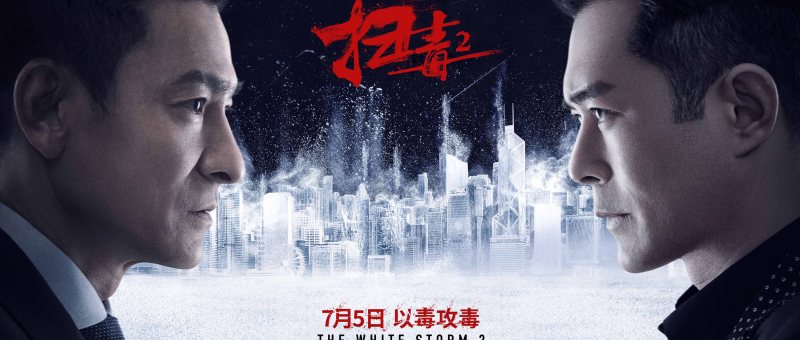
132134ti38vkkj3p299ni8The war on drugs comes to Hong Kong care of Herman Yau’s latest foray into heroic action, White Storm 2: Drug Lords (掃毒2天地對決). In the grand tradition of Hong Kong movies adding a random prefix to the title, Drug Lords is a “thematic” sequel to Benny Chan’s 2013 hit White Storm, which is to say that it shares nothing at all with Chan’s film save the narcotics theme and the participation of Louis Koo who returns in an entirely different role. What Yau adds to the drama is a possibly irresponsible meditation on vigilante justice and extrajudicial killing which, nevertheless, broadly comes down on the side of the law as its dualist heroes eventually destroy each other in a nihilistic quest for meaningless vengeance.

A brief prologue in 2004 sees depressed Triad Yu Shun-tin (Andy Lau) abandoned by his girlfriend who can no longer put up with his gangster lifestyle and inability to break with his domineering mob boss uncle. Meanwhile, across town, flamboyant foot-soldier Dizang (Louis Koo) scolds one of his guys for supposedly selling drugs in the club, only to be picked up by Shun-tin’s uncle Nam (Kent Cheng) and severely punished for getting involved with the trafficking of narcotics. Nam orders Shun-tin to cut off Dizang’s fingers as punishment, which he does despite Dizang’s reminder that they’ve been friends for over 20 years. Conflicted, Shun-tin makes amends by driving Dizang to the hospital with his fingers in a freezer bag, but by this point Dizang has had enough. To teach him a lesson, the Triads also tip the police off to raid the club, during which the wife of squad leader Lam (Michael Miu) is killed by a drug addled patron.

15 years later, Shun-tin has left the Triads and become a successful businessman married to a beautiful lawyer/financial consultant (Karena Lam) with whom he has started an anti-drugs charity, while Dizang has become Hong Kong’s no. 1 drug dealer, operating out of a slaughterhouse as a cover. The trouble occurs when Shun-tin learns that his former girlfriend was pregnant when she left him and that he has a 15-year-old son in the Philippines who has become addicted to drugs. Drugs have indeed ruined Shun-tin’s life, if indirectly. His grandfather was an opium addict, and his father died of a heroine overdose (which is why his Triad gang swore off the drugs trade). All of which means he has good reason for hating drug dealers like Dizang, but his sudden admiration for Duterte’s famously uncompromising stance on drugs is an extraordinarily irresponsible one, especially when it leads to him embarrassing the HK police force by offering a vast bounty to anyone who can kill Hong Kong’s top drug dealer – a deadly competition that, like extrajudicial killings, seems primed to put ordinary people in the firing line.

As Lam tells him, the situation is absurd. Shun-tin’s bounty means Lam will have to spend more time offering protection to suspected drug dealers than actively trying to catch them while it also leaves Shun-tin in an awkward position as a man inciting murder and attempting to bypass the rule of law through leveraging his wealth. Indeed, as a man from the slums who’s been able to escape his humble origins and criminal family to become an international billionaire philanthropist he shows remarkably little consideration for the situation on the ground or the role the kind of ultra-capitalism he now represents has on perpetuating crime and drug use, preferring to think it’s all as simple as murdering drug lords rather than needing to actively invest in a creating a more equal society.

Meanwhile, Dizang continues to lord it about all over town and Lam finds himself an ineffectual third party caught between summary justice meted out by a man who thinks his wealth places him above the law and a gangster on a self-destructive bid for vengeance against the Triads he feels betrayed him, including his old friend Shun-tin. Truth be told, the “friendship” between Dizang and Shun-tin never rings true enough to provoke the kind of pathos the violent payoff seems to be asking for while the film is at times worryingly uncritical of Shun-tin’s vendetta, suggesting that the police are ill-equipped to deal with the destructive effects of the drug trade. Nevertheless, even if it’s to placate the Mainland censors, Yau ends on a more positive message that reinforces the nihilistic, internecine nature of the conflict while hinting, somewhat tritely, at a better solution in the sunny grasslands of the child drug rehabilitation centre Shun-tin has founded in Manila. That aside, Drug Lords is never less than thrilling in its audacious action set pieces culminating in a jaw dropping car chase through a perfect replica of the Central MTR subway station.


The White Storm 2: Drug Lords is currently on limited release in UK cinemas courtesy of Cine Asia. It will also screen as the closing movie of the 2019 New York Asian Film Festival.

Original trailer (English / Traditional Chinese subtitles)

Chasing the Dragon (追龍, Jason Kwan & Wong Jing, 2017)

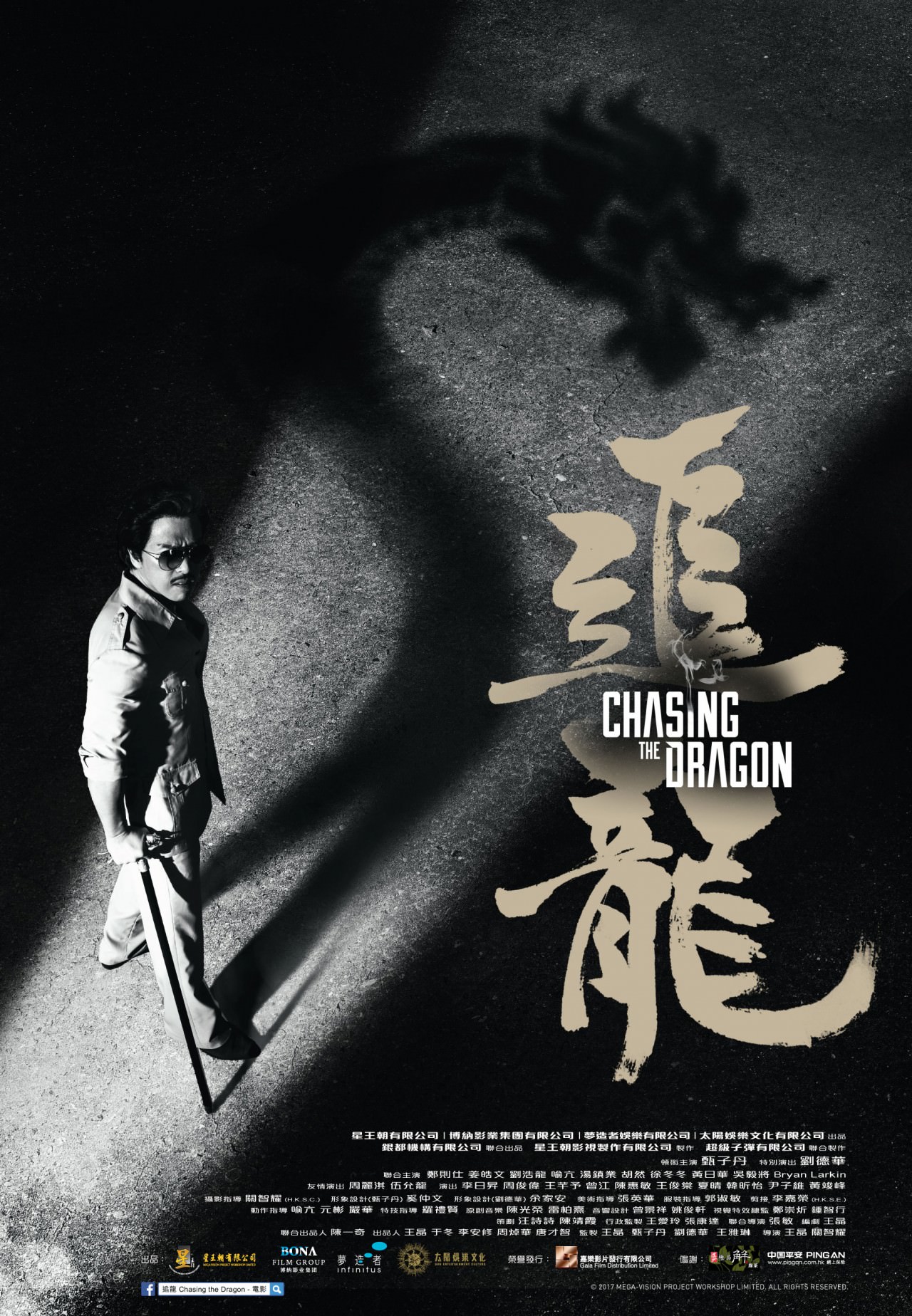
chasing the dragon posterWhen it comes to Mainland China anything goes so long as you set your movie before 1949. In Hong Kong it seems the same thing is true only the cut off date is 1997. Wong Jing and Jason Kwan’s surprisingly glossy Chasing the Dragon (追龍) follows two giants of 1960s Hong Kong in Crippled Ho whose life was previously brought the screen in 1991’s To Be Number One, and crooked (but only in a nice way) policeman Lee Rock who is played by Andy Lau – the very same part he inhabited in a series of films over 25 years ago. Marking a first time collaboration between martial arts superstar Donnie Yen and veteran leading man Lau, Chasing the Dragon firmly points its finger at the rotten roots of colonial corruption which, apparently, allowed such lawless times to endure in order to reap their copious rewards.

In 1963, Crippled Ho (Donnie Yen) smuggles himself into Hong Kong from the Mainland along with three of his friends and his little brother Peter. The boys find it hard to get honest work and are largely existing as hired muscle – or rather they’re supposed to get paid $30 to stand at the back make the local gangster’s gang look more impressive than it really is. One fateful day they get hired by Will, Grizzly Bear’s fixer, to hang around at a supposed confrontation with rival gangster Comic only this time the fight, which has been organised to put a damper on the birthday celebrations of crooked police chief Ngan, breaks out for real. Crippled Ho and the guys are skilled fighters who’d really rather avoid getting involved so they steal some police uniforms and try to escape by blending in but they’re caught by vicious British cop Hunter (Bryan Larkin) and nearly beaten to death before being rescued by the less corrupt Lee Rock (Andy Lau).

This first confrontation sets the tone for the remainder of the film as Crippled Ho, a vicious, ruthless, and ambitious gangster is repeatedly plagued by Hunter – the typically racist, corrupt, incompetent, greedy, and amoral sort which seems to define British officialdom across the Empire. Empire is the big enemy here (though it’s easy enough for one Empire to stand in for another) as pictures of the Queen reign supreme and men like Hunter think they can do whatever they like because colonial life is cheap. Lee Rock knows his place with the system and is content to play it. He warns Ho that pretty much anything goes, but the Brits are off limits because it’s the authorities that are bankrolling this illicit economy and any attempt to bite the hand that feeds threatens to bring the entire system crashing down.

As revealed in Ho’s opening voice over, ’70s Hong Kong was a haven of corruption in which the authorities collaborated with the Triads partly as a way of appeasing them but also as a way to make money. Unlike his incorruptible buddy, Lee Rock is as corrupt as they come – setting himself a target of $500 million and becoming actively involved in the drugs trade. He does, however, have his limits and makes sure to always play within the “rules”. The rules go awry when Rock decides to try deposing an unpredictable gang leader in favour of a more stable one and gets trapped inside Kowloon Walled City only for Ho to come to his rescue in answer of their debt of loyalty.

Despite their positions at opposite ends of the spectrum, Lee Rock and Crippled Ho generate a genuine brotherhood during the ten years which see their ascent to the top of the Hong Kong criminal tree. The launch of ICAC in 1974 which aims to eradicate corruption across the board threatens to bring the party to an end with its obvious desire for efficacy in refusing to hire the same old stooges who will do nothing, and actually arresting some of the most notorious abusers of power. Wong and Kwan end the film with a frankly ridiculous statement that thanks to ICAC and the retreat of the British, corruption has now been completely eradicated from Hong Kong along with colonial rule. Yet, in keeping with censorship guidelines, both Rock and Ho are allowed to appear in an epilogue sequence in which they have an emotional conversation revealing the ways crime has not paid for them in the way they hoped it might.

Dripping with period detail and thankfully reining in some of the more outlandish elements and unwise comedy Wong is often known for Chasing the Dragon is also a surprisingly bloody affair as ears are sliced off, severed heads appear in boxes, and the gang engage in a series of action packed set pieces many of them set in the famed Walled City. Yen and Lau play two sides of the same game while their intense bond is shaken by the need for revenge and a suspicion of betrayal. Wong Jing redeems himself with the assistance of the ever reliable Kwan in a star studded tale of corrupt yet noble criminals daring to rebel against oppression by embracing its amoral rules.


Currently on limited release in UK cinemas.

International trailer (dialogue free)