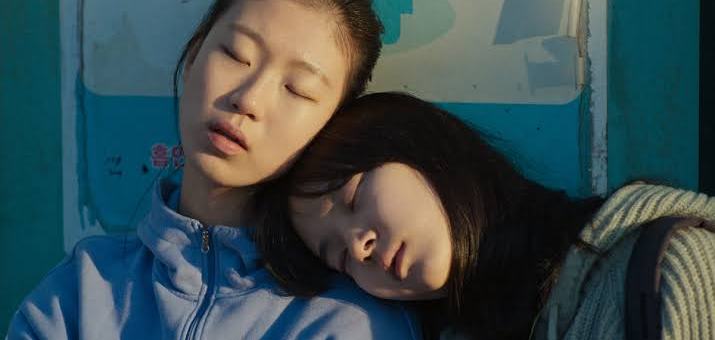
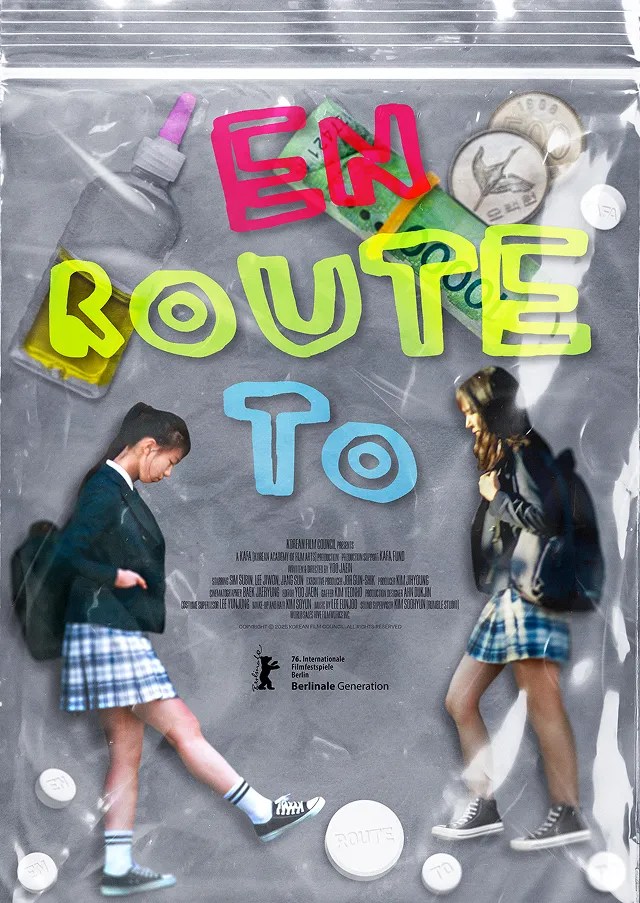
En Route To (지우러 가는 길, Yoo Jae-in, 2025)

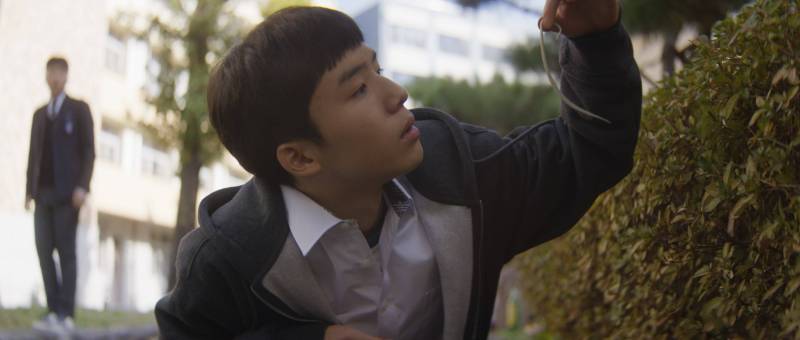
“Give only what you can take responsibility for,” Yoon-ji (Sim Su-bin) is advised by an apparently compassionate older man trying to explain to her that sometimes you end up causing further pain while trying to be kind. Yoon-ji’s problem might be that no one seems to want to take responsibility when it comes to her and she herself is struggling to do so while faced with an unexpected pregnancy. Not only has the father disappeared off the face of the earth, but he was also her 36-year-old high teacher and is obviously not going to take any sort of responsibility for his conduct, certainly not for the baby, but not for the false expectations and unresolved emotions with which he’s left Yoon-ji, either.

Much of Yoo Jae-in’s graduation film En Route to (지우러 가는 길, Jiureo ganeun gil) takes place against the backdrop of the only recent decriminalisation of abortion in Korea, but explores the ways in which young women like Yoon-ji are still left with few options when deciding what to do about an unexpected pregnancy. Though she wanted to keep the baby, she is pressured into an abortion assuming that Mr Han has disappeared because she refused to get one and will return once she has. This rather childish thinking demonstrations both her naivety and her desperation, little understanding the situation she is in. It doesn’t seem to occur to her that Mr Han may have done this before and probably doesn’t see her as a long-term romantic prospect. After all, he has a wife already, even if they’ve been living separately with the implication that he’s ended up being transferred to this school in flight from allegations at his previous place of work.

To try to keep it secret, Yoon-ji orders abortion pills off the internet without any sort of guarantee of what she’s actually taking which could be actively harmful to her health in other ways or perhaps just be chalk that won’t help her to end the pregnancy. After finding out what Yoon-ji has done because she borrowed her savings to pay for the pills, Yoon-ji’s roommate Gyung-sun (Lee Jiwon) asks her why didn’t go to a hospital, but as they find out, Yoon-ji would need parental approval in addition to the money to pay for the procedure and as she was abandoned by her father, there is no one she can ask to sign even assuming that the situation allowed her to involve her guardians and she felt comfortable doing so. A friend knows of a vet who is willing to provide backstreet abortions as a hangover from the era in which it was a criminal offence to end a pregnancy, leaving Yoon-ji at the mercy of potentially dangerous medical interventions.

Meanwhile, she can’t really tell anyone about what’s happened to her as Mrs Han has begun to figure out that her husband may have been a serial offender but is intent on saving his reputation, perhaps as a means of saving her own so that she would not have to accept the fact not only that her husband had sexual relations outside of the marriage, but that he did so with underage girls whose trust in him he willingly betrayed while abusing his position as a teacher. She uses her relative wealth to cow Yoon-ji and Gyung-sun into silence by dangling the prospect of a scholarship, ironically in Mr Han’s name as a means of whitewashing his reputation.

Gyung-sun is particularly upset about this, partly because her own mother gave birth to her very young and Gyung-sun has always felt a little guilty about all her mother missed out on to raise her like going to university and getting a better job, or getting married and starting a bigger family. Without explaining why, she pushes Yoon-ji towards ending the pregnancy in part because she experienced bullying and exclusion simply for being the child of a young single mother and does not think it’s fair for Yoon-ji to have a child when she has not really thought about the realities of raising it by herself or what she will tell them about their father when they’re old enough to ask. Both Yoon-ji and Gyung-sun are somewhat outsiders, though Yoon-ji continues to yearn for a family of her own, while Gyung-sun has been selling under the table vape cartridges at school to fund a working holiday visa in Australia specifically to set out for her own independence.

Nevertheless, it’s really in each other that they begin to find a new sense of ”family” as they bond over the question of what to do for the best when it comes to Yoon-ji’s future and the baby’s. They  do indeed take responsibility for what they give to each other, and though left to handle all of this largely on their own, offer mutual support through this difficult time before allowing a conclusion to be reached that will enable them to move on. Warm and empathetic while refusing to moralise, Yoo’s humorous drama is a testament to the power of female friendship which can in some ways at least overcome the constraints of the world around it.


En Route To screened as part of this year’s London Korean Film Festival.

Trailer (English subtitles)
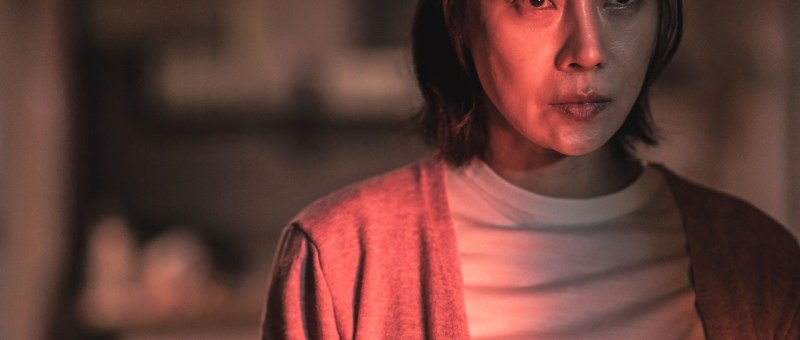
Home A Loan (고인아파트, Kim Tae-kyung, 2026)

Is it the “black mould” that’s driving new homeowner Eun-jin (Yoo Seon) out of her mind, or the combination of unresolved trauma and the financial pressures of trying to secure a safe and comfortable living environment for your family in contemporary Seoul where out of control property prices have made ownership an unattainable dream for many? Echoing a motif that’s become increasingly familiar in recent Korean films, Eun-jin buys an apartment which looks out onto a complex of other, much nicer, luxury apartment blocks that are well out of her reach. Yet she’s convinced herself that the building she’s moved in to will soon be redeveloped and she could make a life-changing amount of money by flipping it once the renovations are completed.

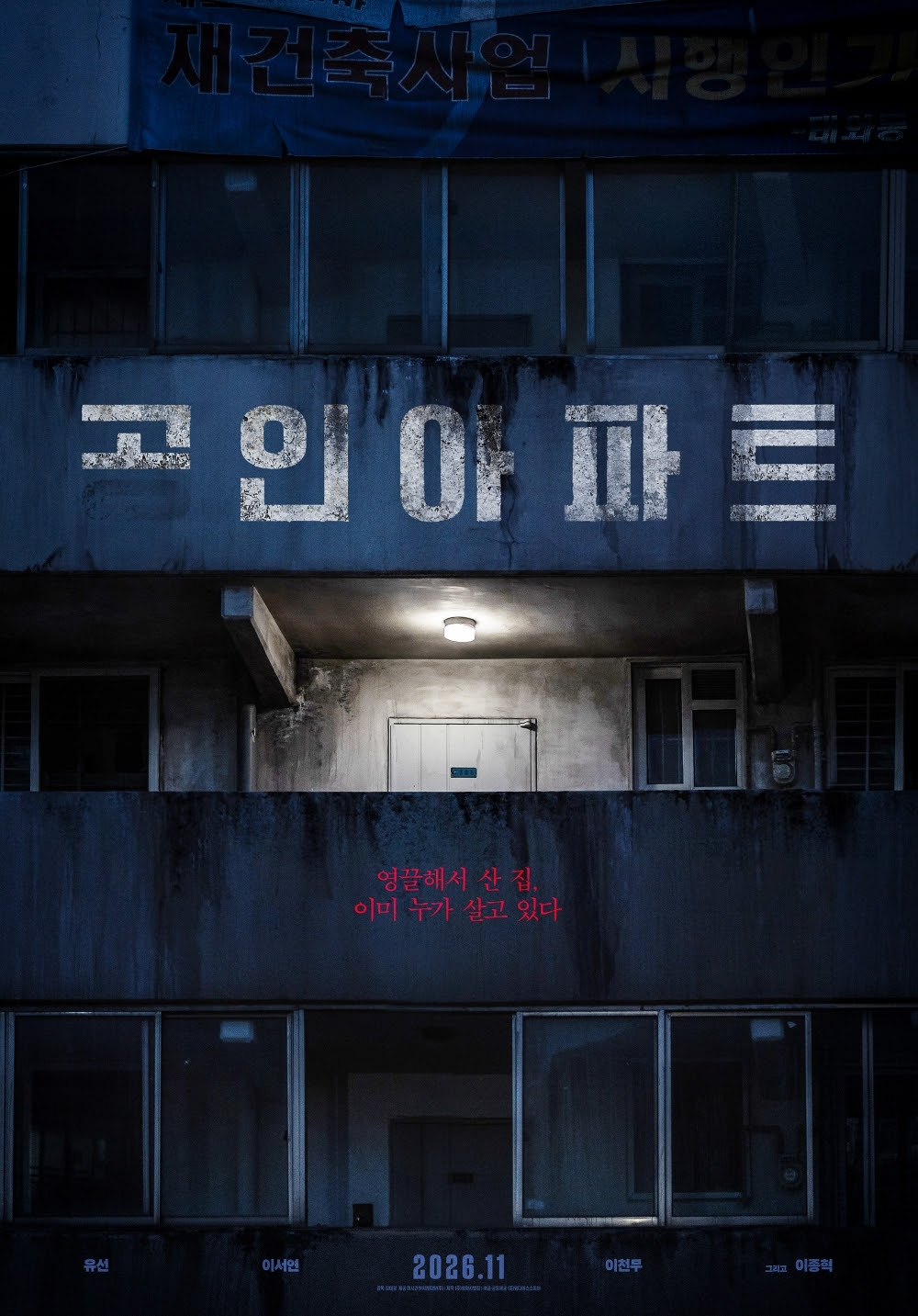
The only snag would seem to be that the block is plastered in signs that say things like “redevelopment equals death”. In fact, Gong-in Apartments is well known locally as “Go-in Apartments” which sounds like “apartments of the departed”, making this place seem “haunted” in a less literal sense as something that exists out of time with the world around it. The local residents seem to regard the blocks as old-fashioned and an eyesore. They are slightly embarrassed by them, and prefer to avoid the people that live there. The block is then “haunted” in another sense in that most of the “inhabitants” are “ghost owners” who bought the apartments as an investment but do not live there, nor do they rent the apartments out due to the rundown nature of the building. Despite having pushed her to invest by implying that the city had virtually already agreed to go ahead with the redevelopment, Eun-jin’s estate agent is surprised that she actually intends to live there given the building’s reputation, yet later revelations suggest she may have sold this unit before. She has definitely sold others in the building to people who were financially ruined by their decision to buy and in some cases took their own lives.

Yet Eun-jin is proud of her new status as a homeowner, as if reaching a new level as a fully-fledged member of society. She cleans and redecorates it herself, peeling off the layers of lining on the ceiling and clearing away the mould assuming it’s only caused by the fact the apartment had been empty. Yet as a doctor later explains, you can’t get rid of that kind of mould by papering over it, just as Eun-jin cannot get over the familial trauma from her childhood by creating a superficially happy home of her own. In some ways, the film ultimately takes a turn for the conservative in its messaging as most of the problems are attributed to paternal absence, even if that absence was also caused by the economic conditions of the society which forced Ji-chul (Lee Jong-hyu) to live separately from his family in order to provide for them while Eun-jin works in a local factory to make ends meet.

In the opening stretches of the film, one almost wonders if Ji-chul is a ghost himself as Eun-jin only talks to him on the phone through which he offers words of kind support that might as well be Eun-jin talking to herself, while he is able to offer little in the way of practical help. Though his absence obviously increases the strain on Eun-jin as she has to care for the family alone while also working, the doctor frames it in more patriarchal tones as if things like this happen when women live without men. On one level he is blaming Ji-chul for failing as a man by leaving his family undefended, but also suggesting that women are incapable of protecting themselves. Eun-jin repeatedly states that she will “protect” her family, but ends up endangering them as her reality becomes ever more fragmented and confused. In the end only Ji-chul’s return can save the children from her mania, though he cannot cure her of her delusions alone.

It soon becomes apparent that Eun-jin has been experiencing reality differently to those around her, frequently seeing centipedes in the house while others seemingly don’t react to potentially life-threatening situations. At one point, she arrives at work wearing a very old-fashioned, purple wraparound dress and with a makeup and hair style that seems reminiscent of an earlier era, suggesting that she may have been possessed by something more than just fear and fury that her investment is not actually going to pay off and she won’t even be able to afford to continue living in this moribund building where the lifts don’t work and no one has noticed the little boy from upstairs has been living alone so long he’s turned feral. Homeownership seems to have turned Eun-jin into a selfish and suspicious person, instinctively fearing the homeless as if now afraid either to become one or that they will somehow steal her space. She stops her son playing with the other boy, complaining that people like that will become stuck to you if you let them get too close while making no attempt to help him. Perhaps this is also a reflection of her own childhood trauma as are the visions she begins to see of a malevolent presence out to destroy her family. “I just wanted to do better,” she says, but it seems this society doesn’t really want to let her even as it dangles a vision of future happiness that is destined to remain far out of reach.


Home A Loan screened as part of this year’s London Korean Film Festival.

Trailer (English subtitles)
The Accordion Door (아코디언 도어, Son Kyeong-su, 2025)

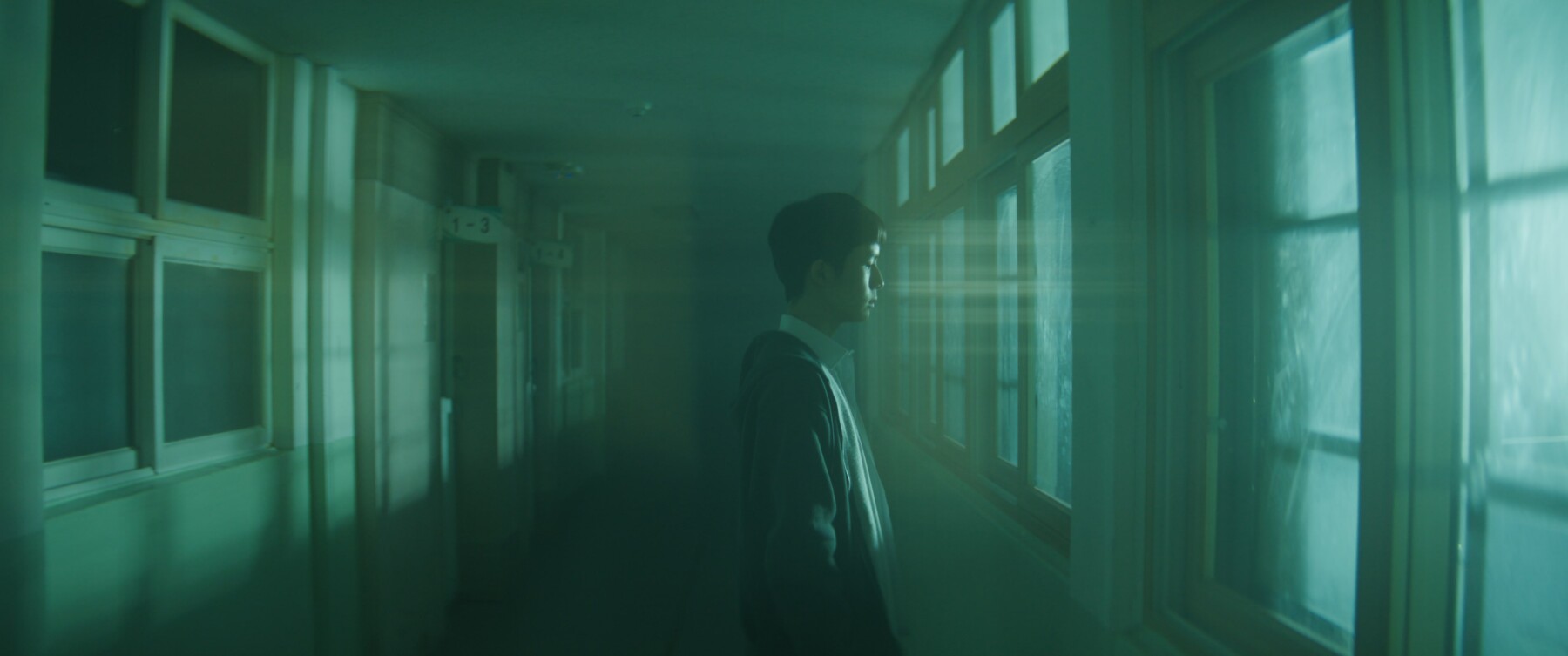
A young man with an apparently prodigious talent for writing comes to doubt himself when past trauma provokes what may either be a strange delusion or a very real exit of the muse in Son Kyeong-su’s supernaturally tinged exploration of the pressures of the contemporary Korean society, The Accordion Door (아코디언 도어). Constantly berated by his overly demanding mother as a small child for not being good at anything, Ji-soo (Moon Woo-jin) lives in fear of being labeled “a dummy” but has simultaneously become almost entirely detached from the world around him.

This is partly because he has no memories of himself before the age of nine when he went temporarily missing. In the opening sequences, the young Ji-soo is taken around an exhibition explaining the precipitation cycle by his parents who are each too busy sniping at each other to pay much attention to him. His mother blames his father’s lack of effort for Ji-soo’s apparent inability to fill in a worksheet demonstrating that he’s understood that water from the river becomes clouds and that clouds become rain. Crying on his own in the toilet, he poetically wonders if he too has become a cloud only for a cloud-like, or perhaps wormlike, being to enter his brain through his ears, turning him into an apparently different person who is addicted to chocolate and can perfectly articulate his thoughts in writing.

But as good a writer as Ji-soo might currently be, having recently won a national competition, he carries a strong sense of inferiority and worthlessness that’s largely caused by the seemingly conditional nature of his mother’s love which may be withdrawn if he were to become “a dummy”. His mother has separated from his father under the rationale that this will help make Ji-soo a better writer and is constantly pressuring him about winning more competitions. In a way, her determination is self-reflective in that she does not want her son’s mediocrity to make her look like a mediocre mother. When Ji-soo asks what he was like as a child, she tells him that he was “ordinary” and now he’s “brilliant”. When she replaces the expensive phone he had that got broken after he finally agreed to have one, she remarks that it’s just the kind that “ordinary” boys have, in case it gets broken again thereby presaging the fall from grace he undergoes believing that his talent has left him and migrated into Hyeon-joo (Lee Jae-in), the football-playing transfer student that Ji-soo has developed a crush on.

Hyeon-joo was the reason Ji-soo agreed to get a phone, but he’s equal parts attracted and threatened by her. He doesn’t know much about football, but it seems like she might not be all that good. When she starts to get better all of a sudden, his jealousy manifests in the paranoia that his talent left him for her, and he desperately wants it back so that he won’t be a “dummy” even if it ends up ruining his relationship with Hyeon-joo. Hyeon-joo, meanwhile, is much more laidback if just as alienated as he is. For her, it doesn’t matter if she’s any good at football as long as she enjoys it. She tries to encourage him that it’s the same with his writing. It shouldn’t really matter whether or not he wins any prizes, it only matters if he felt good while he was doing it. Her poet mother is the polar opposite of his own, encouraging Hyeon-joo to do what she likes doing and be happy even if there is nothing more to be gained of it than that. Becoming ever more insecure, Ji-soo tries to ask her for writing lessons, but all she tells him is that writing is an art that can’t really taught by one person to another. He must simply learn to teach himself. After all, he didn’t follow any rules when was writing something he was later proud of.

His science-obsessed friend Jong-yoon is similarly cheerful, rejoicing in his curiosity rather than thinking about what it might lead to or be worth to him in the future. Ji-soo’s mother had also been preoccupied with height, taking him to a doctor who seemed to be giving growth hormones, only for his growth spirt to begin as soon as he thinks his talent has left and bits of the past, or his imagination of it, start coming back to him. In a way this literal growth maybe a sign that he has begun to unpack some of his trauma and is experiencing a breakthrough that is destructive in the moment but also allows him to move forward. His mother lets up and finally divorces his father formally, while he no longer needs to be constrained by the idea that whatever talent he had was given by some mysterious parasite that took root inside him, but perhaps came from himself if only he could learn to embrace his love for it rather than be scared into silence by his fear of not being good enough. The implications of Ji-soo’s dreams maybe rather melancholy if lending an elliptical quality to his existence, but Son’s quietly empathetic, abstract film, does for a time at least allow him to find solace in his art in a sometimes unkind and judgemental society.


The Accordion Door screens as part of this year’s London Korean Film Festival.

Trailer (no subtitles)

The Journey to Gyeong-ju (경주기행, Kim Mi-jo, 2025)

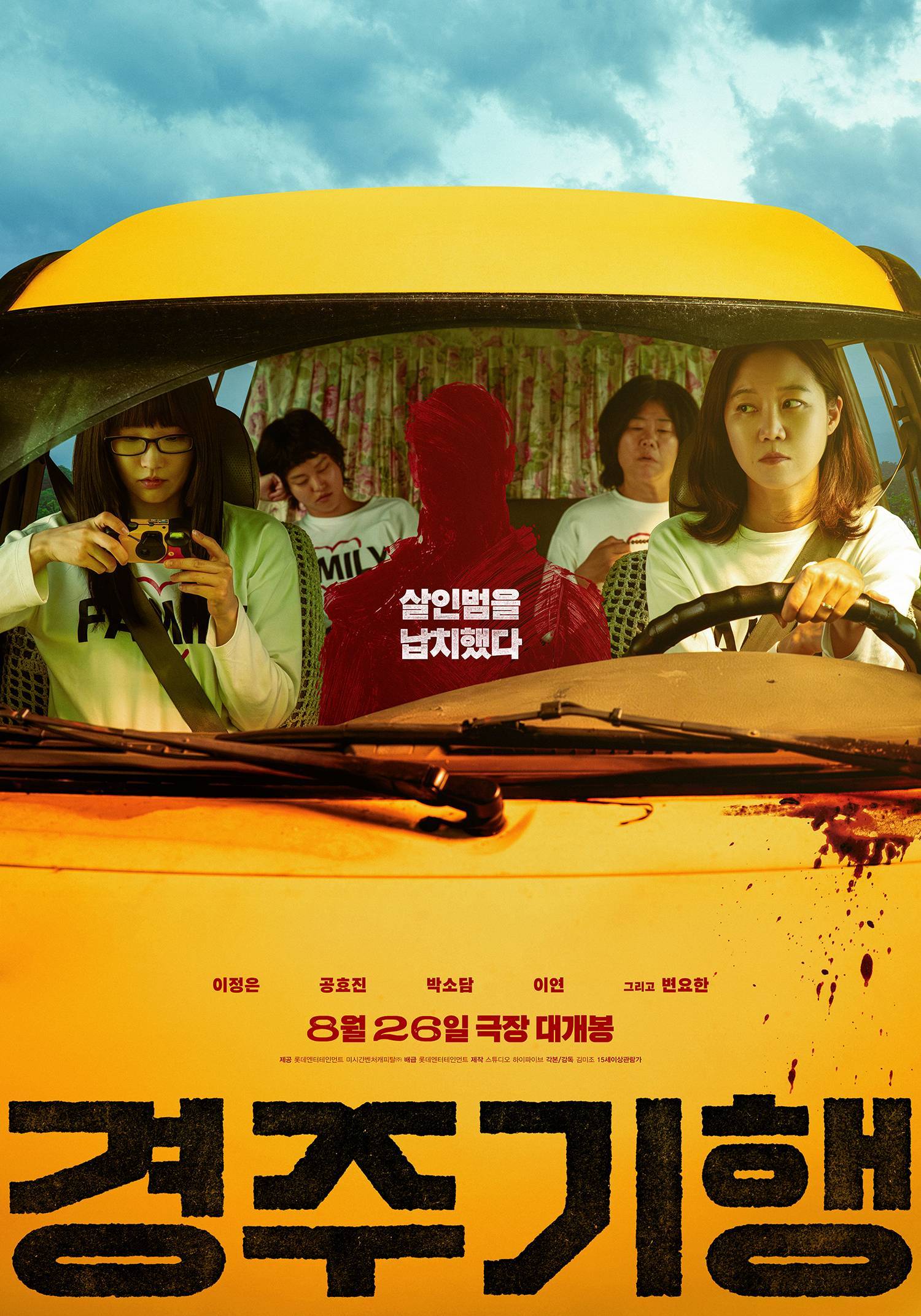
You know what they say, if you’re going to seek revenge, you’d best dig two graves. In a way, that’s what the bereaved mother at the centre of Kim Mi-jo’s familial vengeance comedy The Journey to Gyeong-ju (경주기행, Gyeongju gihaeng) ends up doing, but really what she wants is to repair her fracturing family which has been torn apart in the wake of her youngest daughter’s brutal abduction and murder. The killer was caught, but as the judge saw something in him that suggested he might be a candidate for rehabilitation, he handed him a comparatively light sentence that Ok-sil (Lee Jung-eun) in particular feels provides no sense of justice for her daughter.

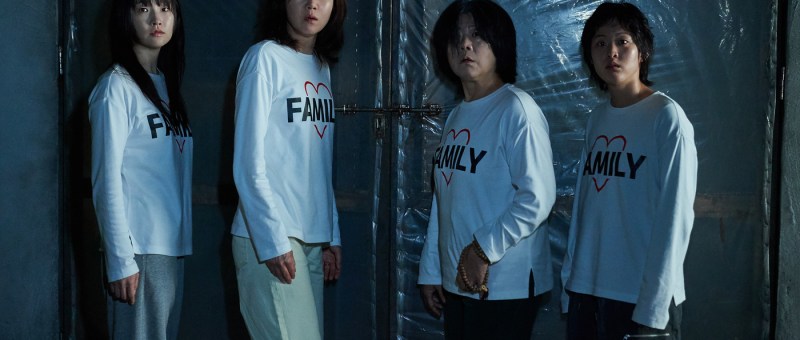
For that reason alone, she decided to accept a cash settlement rather than press charges knowing that the killer, Sang-hyun (Byun Yo-han), would be released relatively quickly so she could kill him herself with the help of a shady underground fixer she met at a support group. To pull this off, she enlists her three surviving daughters, most of whom have their doubts about this plan, not only the morality of it but whether a group of four ordinary women who’ve never done anything like this before can really hold a brutal killer captive and torture him to death. They are, though, largely unable to directly defy their mother and are therefore looking for other ways to stop her from going through with this by pretending to play along. Ok-sil, however, feels like this is the only way that she will be able to move forward with her life.

The irony is that they frame this as a family trip to honour Gyeong-ju’s birthday, all of them piling into the now beaten up camper van father Mu-il (Kim Hak-sun) bought when Gyeong-ju was born hoping they’d take a lot more family holidays. The age gap between the sisters, however, meant that they only took one all together and that was, like this trip, impromptu and rolled in with a business obligation, or maybe the other way around. When oldest daughter Jang-ju’s (Gong Hyo-jin) husband and young daughter turn up announced, in a way, it’s like the family is restored with Seok-man (Kim Young-sung) taking Mu-il’s place while Yun-ji takes that of the absent Gyeong-ju. Waking up in the middle of the night at the remote villa they’ve rented, Ok-sil does a quick head count, realises someone’s missing, then looks over at Yun-ji and acknowledges there are the right number of people after all. They took this trip for the purposes of murder, but also ended up having a nice family holiday while creating “alibis” at various local tourist spots and posting pictures on social media.

What did they didn’t really know was that Sang-hyun had figured out they probably took the settlement money with the intention of killing him, and so is actually intent on killing them first. There is something bestial about him in the way that he can’t be subdued and immediately begins a crime spree after managing to escape. It’s difficult to see why the judge felt he might have a chance at reform given the nature of his crime and the probability that Gyeong-ju was not his first victim. The fact that Sang-hyun is actively trying to kill her lends a kind of moral justification to Ok-sil’s plan that might not otherwise be there, even as he pleads and wheedles, suddenly playing the mild-mannered fool who made a mistake, is very sorry, and is not going to do anything like this ever again.

Still, Ok-sil’s determination is born from a desire for vengeance rather than by the fact that Sang-hyun will go on creating more victims as long as he walks the earth. Confronted by her daughters, she has to face the ways in which her grief has caused her to shut out those who are still living while meditating on the dead. Killing Sang-hyuk won’t help her put her family back together in the way she thought it would, while strangely going on holiday together seems to have done the trick. Despite the absurd humour of the film’s early stretches as these very ordinary people try to get their heads around the practicalities of killing while largely trying to ignore the psychological pressure and affects of taking another person’s life, there is a genuine poignancy to its scenes final scenes in which Ok-sil realises she will finally have to let her daughter go.


The Journey to Gyeong-ju screened as part of this year’s London Korean Film Festival.

Trailer (English subtitles)