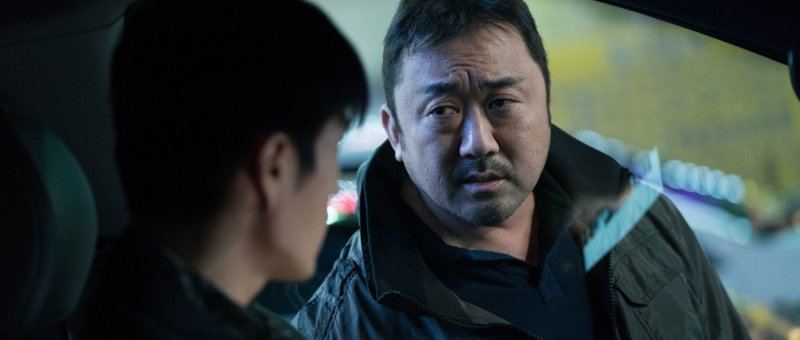
 Can a person ever really change? The answer might be more complex than it seems but then again, you might not quite want them to change as much as you might think you do. Ma Dong-seok is quickly becoming Korean cinema’s MVP, in the genre stakes at least, and has begun to make a career for himself as a big hearted teddy bear of a man with gigantic heavy fists. It’s a legacy he very much embraces in the oddly light hearted Unstoppable (성난황소, Seongnan Hwangso) which sees him play a former gangster gone straight whose latent violent streak is reawakened when he becomes a warrior for love.
Dong-cheol (Ma Dong-seok) was once a notorious tough guy but gave up the streets when he met “an angel”, nurse Ji-soo (Song Ji-hyo), and married her. These days, he works a regular low pay labour job at the fish market but is always dreaming of better things which is why he’s constantly getting scammed by the latest get rich quick scheme proposed by one of his dodgy friends. The trouble starts when Dong-cheol is rear ended by some shady types and gets out of his car to ask for insurance details. Sensing danger but now fully reformed, Dong-cheol remains calm and refuses to engage but Ji-soo isn’t having any of it. She verbally lays into the gangsters and insists on compensation. When Dong-cheol returns home to find his apartment in disarray after arguing with Ji-soo about his unwise financial decisions during a birthday dinner at a fancy restaurant they can’t afford, he has an inkling about what may have occurred but finds the police slow and unsympathetic leaving him to take matters into his own hands.
Unlike many a similarly themed action drama, Unstoppable is keen to emphasise the sweet and innocent love between Dong-cheol and Ji-soo with even the climactic argument between them neutered shortly before Ji-soo is taken. Dong-cheol is not a violent man at heart, but is prepared to meet violence with violence where necessary and he does not like to lose. He takes damage, but never gives up the fight not because he’s angry and hellbent on revenge but because he loves his wife and is desperate to make sure nothing bad happens to her while he is around to prevent it. Meanwhile, Ji-soo is far from a damsel in distress. Refusing to be cowed, she keeps her wits about her and protects the other women kidnapped by the gang while she looks for a way to escape.
The fact is, there seem to have been a lot of unexplained disappearances of young women in this city – something which Dong-cheol becomes aware of while hanging around the police station, yet the authorities have not made much headway on the case. Dong-cheol quickly works out that he’s potentially dealing with an organised crime network which makes its money out of trafficking kidnapped women all over Asia and that, unlike himself, the families of these women largely opted to take the “compensation” money left in their place by the gangsters rather than fight back. This in itself annoys him, though not quite as much as being forced to play the gangsters’ game in order to maximise the chances of getting to Ji-soo before it’s too late.
What quickly becomes apparent to flamboyant gangster Ki-tae (Kim Sung-oh) is that he’s made quite a big mistake, even if that mistake might be more fun than hassle. Ji-soo is not the victim type and her husband will stop at nothing to get her back which means he’s fighting a war on two fronts, both surprised and somewhat amused to be met with such unexpected resistance. Still, Dong-cheol is determined to barrel through fists flying while his bumbling sidekicks – old comrade Choon-sik (Park Ji-hwan) and fast talking fixer Gomsajang (Kim Min-jae), handle the investigation from the sidelines. Undercutting the essential darkness of the “lone vigilante takes on heinous human trafficking ring” narrative with warmhearted humour, Unstoppable proves an ideal vehicle for the increasingly popular Ma Dong-seok which finds unexpected sweetness in the genuine connection between its perfectly matched husband and wife team.
Unstoppable was screened as part of the 2019 Udine Far East Film Festival.
International trailer (English subtitles)


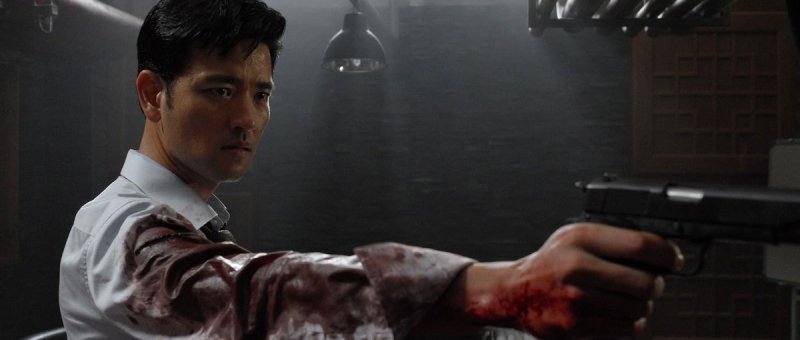


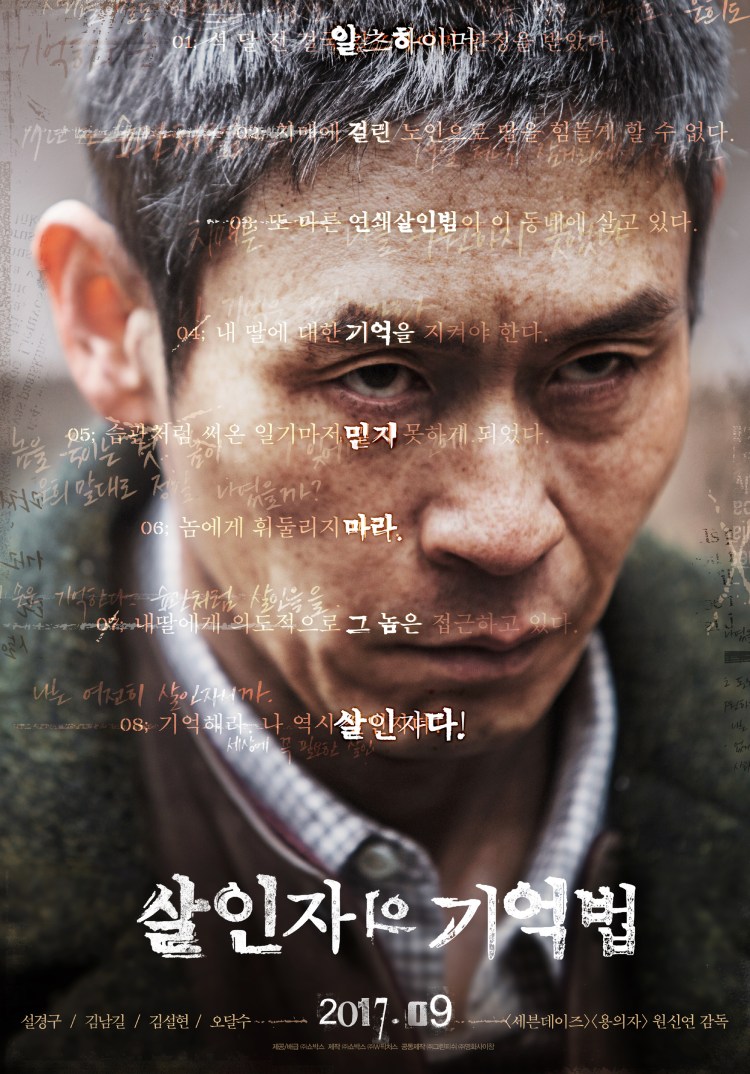
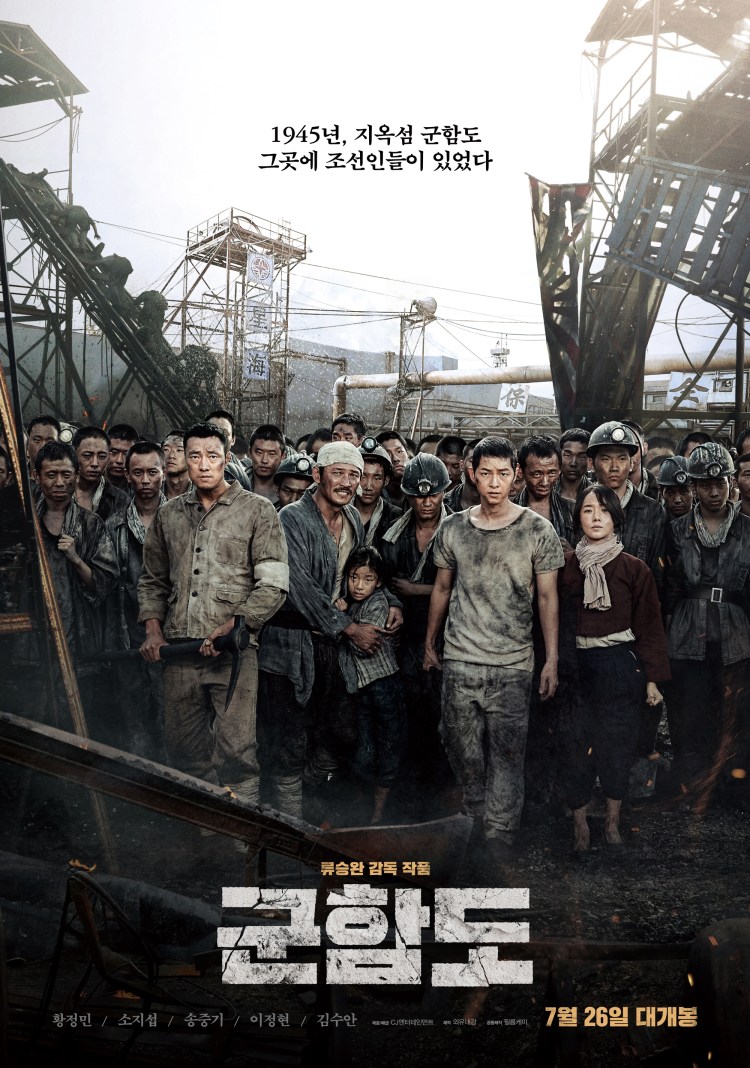
 North Koreans have become the go to bad guys recently, and so North Korean spies have become the instigators of fear and paranoia in many a contemporary political thriller. The Suspect (용의자, Yonguija), however, is quick to point the finger at a larger evil – personal greed, dodgy morals, and the all powerful reach of global corporations. Opting for a high octane action fest rather than a convoluted plot structure, Won’s approach is (mostly) an uncomplicated one as a wronged man pursues his revenge or redemption with no thought for his own future, only to be presented with the unexpected offering of one anyway alongside the equally unexpected bonus of exposing an international conspiracy.
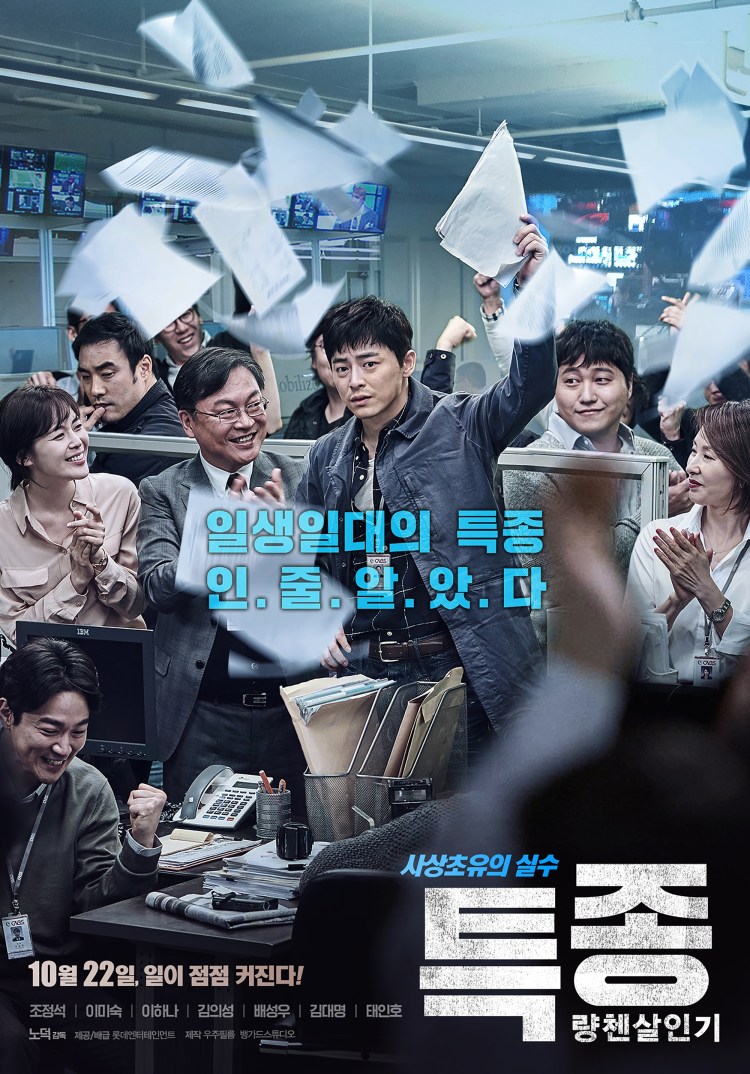 Some people just can’t keep themselves out of trouble. The down on his luck reporter at the centre of Roh Deok’s The Exclusive: Beat the Devil’s Tattoo (특종: 량첸살인기, Teukjong: Ryangchensalingi) is something of a trouble magnet as he makes mistake after mistake, requiring lie after lie to try and put him back on the straight and narrow. Unfortunately for him the deeper he gets the closer he turns out to be to the “real” truth. Only by that stage everyone has lost interest in “the truth” anyway – who cares about little things like facts against the overwhelming power of a constructed narrative.
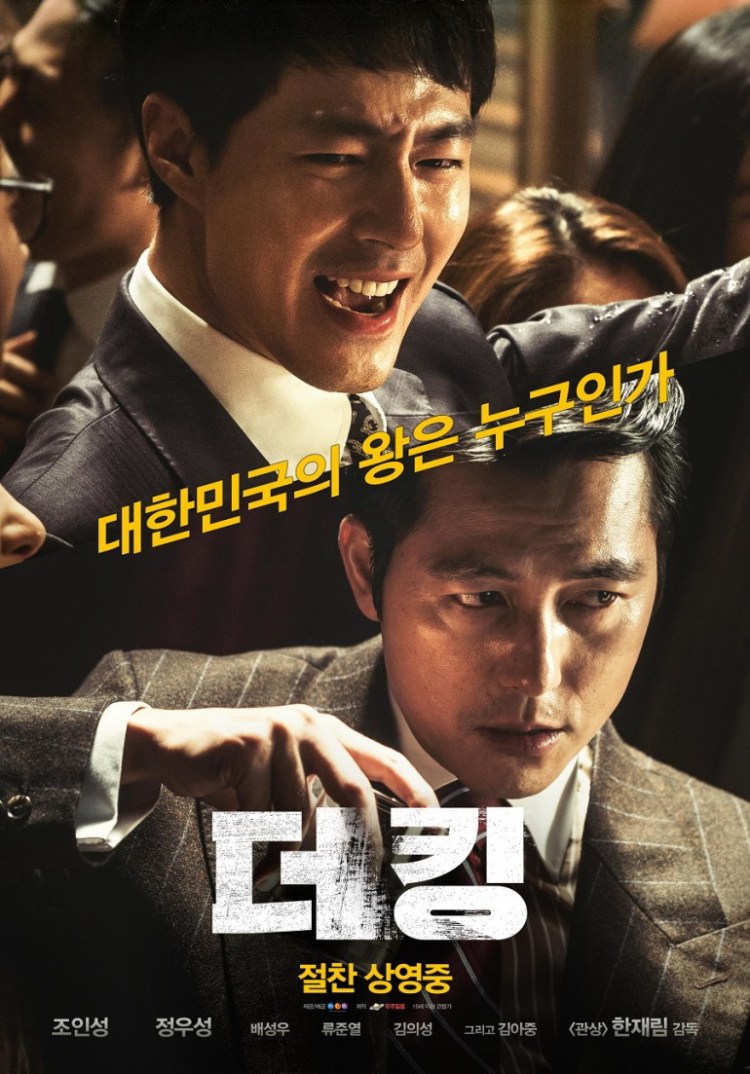 Absolute power corrupts absolutely, but such power is often a matter more of faith than actuality. Coming at an interesting point in time, Han Jae-rim’s The King (더 킹) charts twenty years of Korean history, stopping just short of its present in which a president was deposed by peaceful, democratic means following accusations of corruption. The legal system, as depicted in Korean cinema, is rarely fair or just but The King seems to hint at a broader root cause which transcends personal greed or ambition in an essential brotherhood of dishonour between men, bound by shared treacheries but forever divided by looming betrayal.
 Windows on Worlds