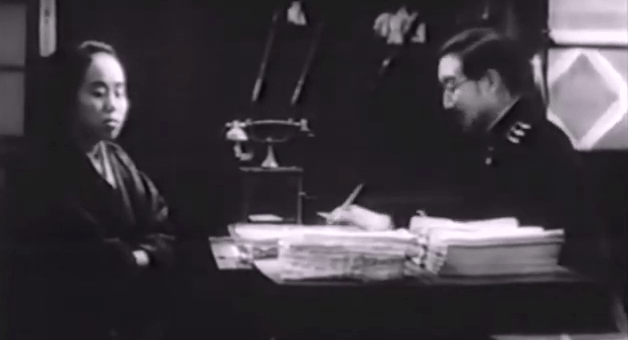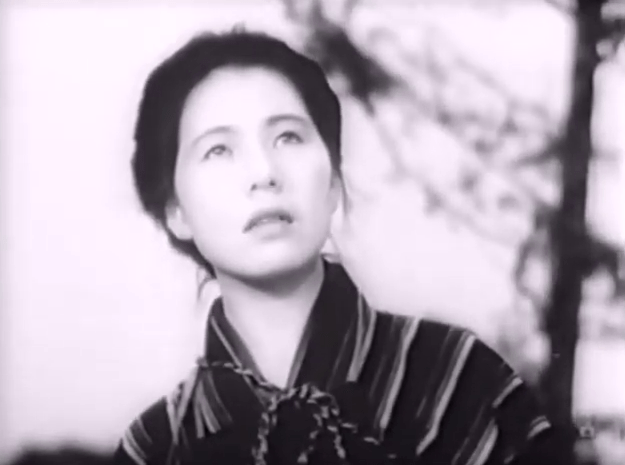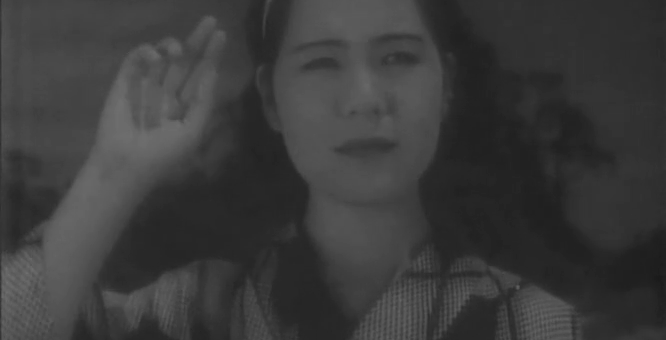
Morning’s Tree-Lined Street (朝の並木路, Mikio Naruse, 1936)

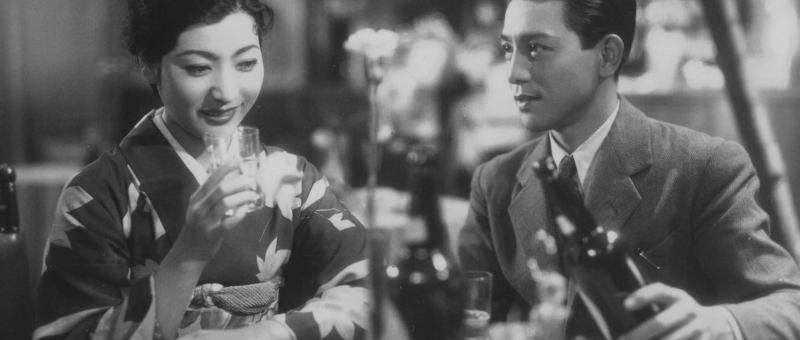
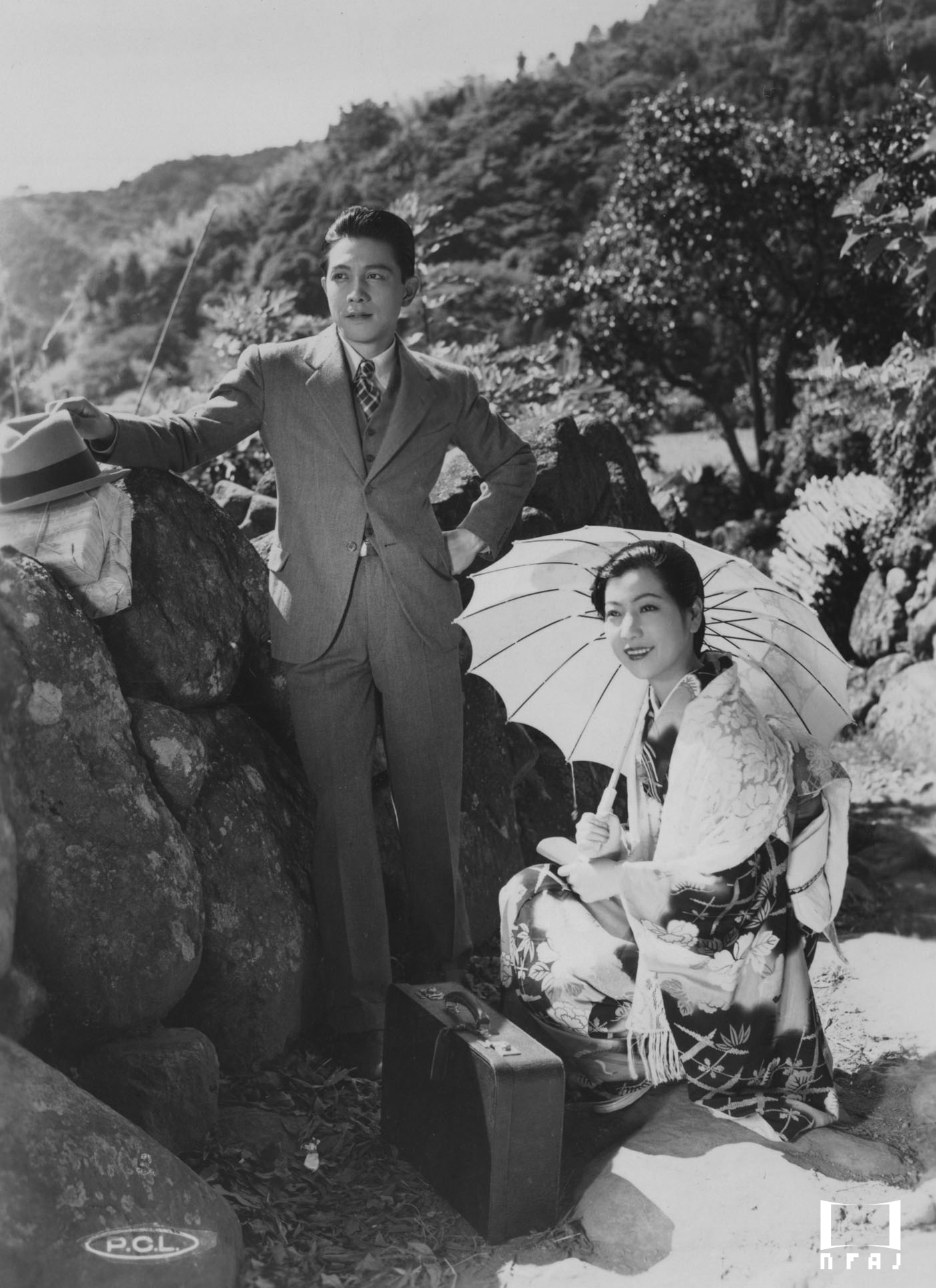
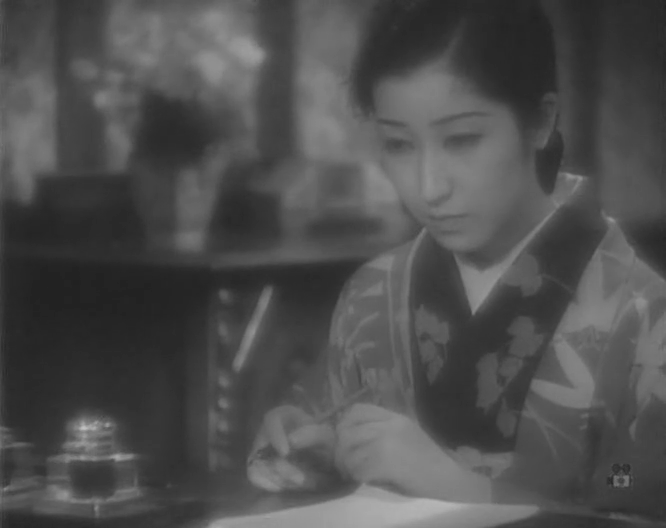
A country girl comes to the city in search of a more glamorous life but largely finds only disillusionment and disappointment in Naruse’s 1936 drama Morning’s Tree-lined Street (朝の並木路, Ashita no Namikimichi). Naruse depicts Chiyo’s (Sachiko Chiba) spiritual journey literally as she takes the bus from her rural hometown all wide-eyed wonder and then arrives in the city to be bothered by a homeless man and then walk into a less salubrious area of the city with only her friend’s address to go on. 

In her hometown, everyone thinks Hisako (Ranko Akagi) works in a big office in Marunouchi, but in reality she’s now working in a hostess bar under the name “Shigeko.” Nevertheless, despite a degree of shame in her circumstances, Hisako doesn’t reject Chiyo and isn’t angry that she’s come and found out her secret. She talks her landlady, Okada, into letting her stay but discourages her from working in the bar. The current economic depression is evident in the fact that the bar isn’t doing so well and never has many customers, yet the “help wanted’ sign keeps going up and down outside. There’s even a running gag that the cook makes a permanent version so they won’t waste so much paper, only he spells “hostess” wrong, so they have to take it down anyway. 

The help wanted sign is a harbinger of doom for Chiyo who, it seems, is being drawn towards this kind of life. As Hisako had told her, it’s impossible for a country girl to find a job when there are already so many “desperate” people in Tokyo, and at the grand old age of 22 Chiyo is worried that she’s simply too old to find employment. By the standards of the time, she may be considered on the older side not to be married, and indeed Hisako tells her she’d be better off to go home and find a husband, but Chiyo wants both more and to find a grand romance. She romanticises an idea of poverty believing that she could be happy with a man she truly loved even if they had no money. Hisako doesn’t disillusion her, but may be inwardly rolling her eyes at her naivety. She has a boyfriend already, but he’s no good. He keeps turning up and pestering her for money which might be one reason Hisako can’t escape the life of a bar girl.

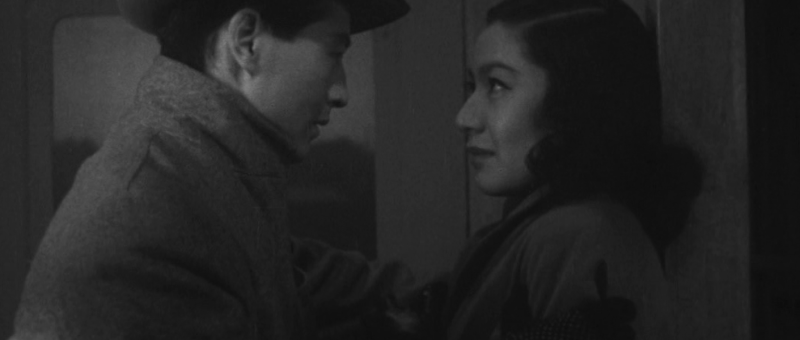
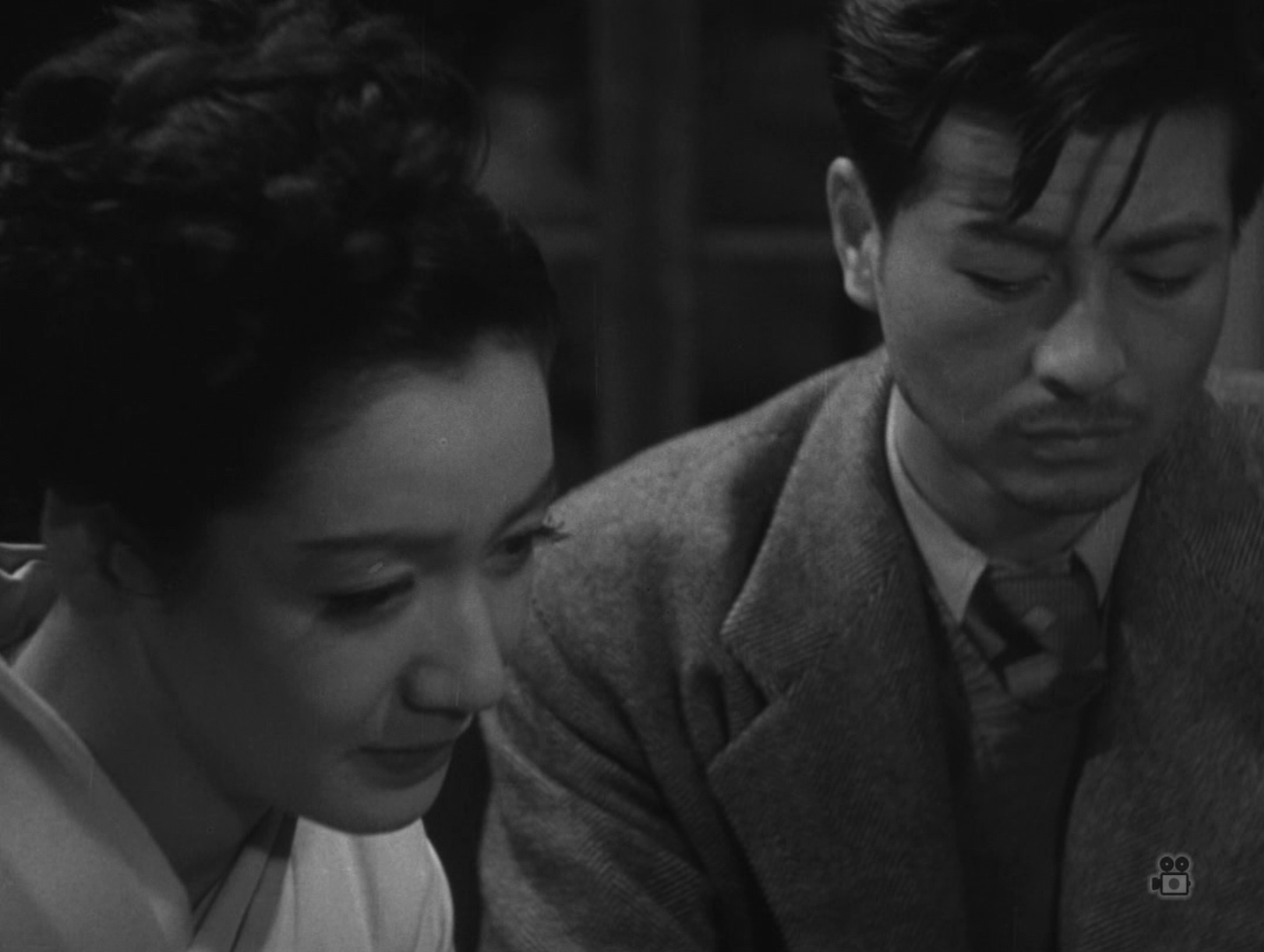
It is indeed money that gets in the way everyone’s relationships. Hisako reads in the paper about a salaryman who embezzled money to spend at a hostess bar and then died in a double suicide with one of the women who worked there. The dark fantasy the bar represents echoes the wider despair in the society coloured by economic depression and broken dreams in which the fantasy version of Ogawa admits that his life was without hope or joy. Chiyo gets close to a nice young man who comes into the bar who tries but fails to find her a legit job in an office in attempt to save her from becoming a bar girl. In the end, she gives in and becomes one. Ogawa says he thinks no less of her, but begins coming to the bar more often and appears to be spending beyond his means even while Chiyo warns him not to waste his money. 

What happens next turns out to be a cinematic fantasy informed by Chiyo’s naive desires in which Ogawa agrees to marry her but has already ruined himself by embezzling public funds and later asks her to die with him while she pleads that as long as they have love poverty is nothing to fear. In many ways, the dream shatters her illusions and confronts her with the stark reality of her life in playing out a best/worst scenario in which Ogawa is so deeply in love with her that willingly walks to his destruction, which is at least preferable to the truth, which is as Hisako says that a man may seem honest and sincere but will turn out to be a coward or else he’ll cheat on you.

Unable to find employment nor rely on men, the women have only each other and the solidarity of those like Mrs Okada her running a small bar in this rundown corner of the city where dreams go to die. Chiyo takes to her new life a little more than to her liking. She turns to Hisako and asks if she looks like a bad girl, fearful that it’s already changed her and it’s no longer possible to go back to being the innocent country girl who wanted a bigger life in the city. Her conviction might be brought home to her by the fact that Ogawa is promoted and sent out of Tokyo but doesn’t ask her to come with him, only leave his address in case she ever feels like writing. But at the same time it spurs her into a flurry of false positivity, committing herself to the job search despite knowing that it’s almost certainly futile. Throwing his note into the river and letting it flow away, she both sees through the naivety of her dream of escape through romance and also resigns herself to the life of a bar girl, like Hisako with nowhere else to go and no possibility of return only the vague and far off hope of salvation through employment.


Morning’s Tree-Lined Street screens 21st June at New York’s Metrograph as part of Mikio Naruse: The World Betrays Us – Part II.

Images: Collection of National Film Archive of Japan.

The Wind Blows Twice (風ふたゝび, Shiro Toyoda, 1952)

Struggling with the end of her marriage, a young woman finds herself listless yet considering new possibilities in Shiro Toyoda’s The Wind Blows Twice (風ふたゝび, Kaze Futatabi). Adapted from a serialised novel by Tatsuo Nagai, the title is echoed in a remark from one of two potential suitors that youth is something that can come two or even three times so as long as you remain young at heart. They are each, however, each currently frozen and unable to move forward in the wake of their personal traumas. 

Kanae (Setsuko Hara), it seems, married for love but her husband has apparently been arrested for some kind of corruption. She has severed all ties with him and returned to the house of the uncle and aunt who raised her after her mother’s death where she helps out in their shop. Meanwhile, she learns that her semi-estranged father Seijiro (Ken Mitsuda), a university professor who lives in Sendai and hasn’t been in contact despite his daughter’s difficult circumstances, collapsed on the steps of the local station and is being cared for by a former student, Miyashita (Ryo Ikebe). She travels to look after him and becomes closer to Miyashita, who currently works as an auctioneer and has dreams of becoming a greengrocer, but is perturbed to learn that her father is a suspect in the theft of 10,000 yen from the wallet of a wealthy man, Michihara (So Yamamura), who carelessly left in the toilet and discovered the money missing when he went back to pick it up. Worried that the rumour may damage her father’s career, Kanae goes to apologise and find out what’s going on but Michihara tells her not to worry and it was his own fault anyway but his sudden magnanimity seems suspicious. In any case, Kanae later tells her friend Yoko that Michihara frightened her, also remarking to Miyashita that she felt as if she managed to slip away from him as she made her escape.

Though he later turns out to be sympathetic, Michihara appears as the villain of the piece. He thinks Kanae reminds him of his late wife and intends to ask her to marry him one the seventh anniversary memorial service is concluded. He starts using his wealth and power to gently interfere in her life, setting up a job for her on hearing that she’d been looking for employment and later approaching her father with the idea of investing in his research into the use of fluorides in the production of resin. Despite her initial dislike of him, Kanae goes along with everything and is soon sucked into Michihara’s world while otherwise wilfully oblivious of his feelings for her (which she does not share) and hoping he’ll help her convince Miyashita that he ought to return to science and help her father with his research which would obviously pave the way for them be together romantically.

The problem is that like Kanae Miyashita has become frozen inside, scarred by his wartime experiences and soured on science. Yet just as staying with him restores Kanae’s spirit and encourages her to want to look for work and find purpose in her life, her influence on him reawakens his passion for scientific research only he is less happy about it than she was. The interest that’s sparked in him ironically lies in the frozen north, travelling to Hokkaido to see an old friend and researching how to prevent potatoes from freezing in order to improve people’s quality of life. In essence it seems as if the futures they may want are too different. Now much more cheerful and energetic, Kanae genuinely enjoys her work in broadcasting and is less than keen to give it up and move to rural Hokkaido to help Miyashita study potatoes while secretly hoping she can convince him, with Michihara’s help, to become a respectable academic like her father and live a nice middle class life researching things that are more useful to industry and big business than to regular people.

Miyashita is disinclined to do so. He bounds straight off a train to see her with three day stubble from the journey, only to be disappointed witnessing in her in an elaborate kimono with her hair constrained in traditional style while Michihara is there waiting to see him to discuss a job offer from Seijiro. It’s at this point that he seems to decide his romantic desire for Kanae is most likely futile and she has chosen the rarified world of Michihara rather a rustic and homely life with a man like himself. Of course, this makes it sound as if Kanae doesn’t have much choice at all herself and to an extent she doesn’t or at least she feels backed into a corner while her aunt pressures her to remarry, unbothered to which man but excited about the proposal from Michihara because it means she will enjoy a life of uninterrupted financial comfort.

Having chosen her own suitor and seen things go drastically wrong also increases her aunt’s conviction that she shouldn’t make the same mistake again while she too is perhaps wary of remarrying. In any case. Kanae seems to want work and enjoys her job in broadcasting as much as she’s naturally drawn to Miyashita who brings out in her a greater desire to live while Michihara only seems to want her to be a shadow of his late wife suggesting that to marry a man like that may itself be a kind of death sentence. To that extent, the choice Kanae makes involves a predicable sacrifice, but still in any case it is a choice that she makes for herself to strike out for happiness and fulfilment of her own choosing rather than allow herself to be railroaded by conventionality unable to express her own desires.


Nightingale (鶯, Shiro Toyoda, 1938)

Set in a quiet northern town, Shiro Toyoda’s Nightingale (鶯, Uguisu) finds the nation still struggling to emerge from the feudal past into the modern era. The film opens with a scene in the local train station, yet we’re also told that it is literally cut off from prosperity because the express train does not stop there and so it is relegated to the status of provincial backwater. Physically trying to flag the train down, the Mayor has been trying to get the town placed on the fast track but has had no luck so far.

The ticket man, who’d been more or less ignoring him, suggests they can’t put the station on the express line because the population of the town is decreasing presumably as young people migrate to the cities in search of work. One of the people waiting there is a man with two sons who tries to get the younger to pretend he’s younger than he is so he won’t have to pay for his ticket, though the ticket man refuses to give him a discount leaving the man with only the option to leave one of the boys behind while the family can no longer survive in the town. He explains that he’s been financially crippled by the medical fees to care for his now late wife and is clearly at his wits end trying to find a way to support his children.

The costs of medical treatment seem to be a direct driver of poverty and crime. Shifting to the local police station, we’re introduced to a man who’s become a serial chicken thief having begun stealing neighbour’s birds to pay for doctors to treat his sickly wife only she eventually left him for another man because he was always away conducting poultry heists so she thought he’d abandoned her due to her illness. His problem is compounded by the fact he had not formally registered their marriage intending to wait until the first child was born leaving him without a leg to stand on.

An official doctor later jokingly complains that he’s losing custom because no one in the area can afford modern medical care so they’re turning to dubious snake oil-style miracle cures proffered by a “fake priest” the police are about to arrest for fraud. Meanwhile, they’ve also arrested a middle-aged woman (Haruko Sugimura) who assists with births for violating the medical practice law. Branded a midwife she is really more of a wise woman who is well respected in the local community as someone who had had many children herself and also offers advice about folk remedies for various illnesses. She never claims to be a doctor and does not regard it as a job, merely as helping people even if she perhaps also enjoys the sense of being needed and important, and is unable to understand how that could ever be a crime. Unlike the priest, she takes no payment and uses her own resources though people sometimes give her small compensatory gifts such as parcels of rice as a thank you. When a woman goes into labour and the “official” midwife is not available, the policeman is unwilling to let her in but hearing the woman’s distress she runs to help her kicking all the policemen out of this very personal female space.

Her confusion bears out that within the general society as people struggle to adjust to a more ordered modernity and the encroachment of urbanity which is what the police themselves represent. Then again, they are presented as being more compassionate certainly than the staff of the railway and seemingly have a duty of pastoral care for the local area which is separate from their role in enforcing the law. A secondary drama that began at the train station involves a young woman who is being sold into sexual slavery by her father against her will. She is eventually rescued by an earnest school teacher who says the sale isn’t valid because she also signed a contract to become a teacher, convincing her father to change his mind with the help of the police who remonstrate with him that it’s wrong to sell your child even if the practice had been somewhat normalised which plays into a propagandistic element about the importance of moving on from “backward” rural practices still mired in the feudal era. The police also have access to a fund which can be used to get the broker out of the way in an effort to stamp out this morally indefensible situation in which parents sell their children into indentured servitude for reasons of poverty. 

They also agree to help an old lady who’s arrived in search of a child she fostered a decade previously who was taken back by her birth mother and sold to a circus. Like the chicken thief, the old woman was caught out by the modern convention of paperwork. She had been led to believe the adoption had been processed and the child placed on her own family register, but was illiterate and therefore easily deceived. The old woman also becomes a victim of the dodgy priest and the disease currently spreading because of his problematic cure-alls which people have turned to out of desperation in their poverty.

But despite the police’s apparent altruism, the arrival of a young woman selling a captive nightingale reveals the irony that she’s come there because it’s the only place anyone has any money. Unfortunately it turns out that capturing a nightingale has also been ruled illegal, even if one of the policeman was interested in buying it if only it could sing, so she’s come to the wrong place and if she doesn’t release it she’ll end up with a fine. The nightingale’s song is later replaced by that of a flute player who had been arrested for being drunk and disorderly having spent some money he was given towards the funeral of his baby on drink. 

The police are in some ways a disruptive influence, trying to bring a new urban order to this rural place which has its own laws and customs often at odds with those of the city. Their efforts tie in to a persistent message of modernising for the good of the nation which was particularly current in the late 1930s though the film is equally sympathetic towards the plight of the rural poor who are not after all being given very much support as the youngsters move to the city leaving the old behind, trapped on the slow line cut off from the benefits of modernity while otherwise expected to simply adapt to new visions of civility in a society still trying to emerge from the feudal past. 


The Wolves (狼, Kaneto Shindo, 1955)

Post-war desperation drives a collection of otherwise honest men and women towards a criminal act that for all its politeness they are ill-equipped to live with in Kaneto Shindo’s biting social drama The Wolves (狼, Okami). “Wolves” is what the criminals are branded, but the title hints more at the wolfish society which threatens to swallow them whole. After all, it’s eat or be eaten in this dog eat dog world, at least according to a cynical insurance salesman hellbent on exploiting those without means. 

Each of the five “criminals” is an employee at Toyo Insurance where they’re immediately pitted against each other, reminded that in order to qualify for a full-time position they need to meet their quotas for six months. The orientation meeting is cultilke in its intensity, the boss insisting that only in insurance can you become a self-made man while recounting his own epiphany as to the worthiness of his profession. They are told that the only two things they need are “faith and honesty”, and then “faith and pursuasion”, while encouraged to think of their work as an act of “worship”, “for the salvation of everyone”. 

Yet they’re also told to exploit their friends and family by pressuring them into taking out life insurance policies in order to help them meet their quotas. As one man points out, friends and relatives of the poor are likely to be poor themselves, but these are exactly the kind of people they’re expected to target. They’re told there’s no point going after the weathly because they’re already insured, but there’s something doubly insidious in trying to coax desperate people who can’t quite afford to feed themselves into paying out money they don’t have on the promise of protecting their families from ruin. One man even asks if the policy covers suicide and is told it does if you pay in for a year, sighing that he doesn’t want to wait that long.

“Suicide or robbery, choose one,” one of the salespeople reflects after failing to make their quota once again. They each have reasons to be desperate, all of them already excluded from the mainstream society and uncertain how they will find work if the job falls through. Akiko (Nobuko Otowa) is a war widow with a young son who is being bullied at school because of his cleft palate for which he needs an expensive operation. She’s already tried working as a bar hostess but is quiet by nature and found little success with it. Fujibayashi (Sanae Takasugi) is widowed too with two children and five months behind rent for a dingy flat in a bomb damaged slum where the landlord is about to turn off her electric. Harajima (Jun Hamamura) used to work in a bank but was fired for joining a union and is trapped in a toxic marriage to woman looking for material comfort he can’t offer. Mikawa (Taiji Tonoyama) too is resented by his wife, a former dancer, having lost his factory job to a workplace injury while the ageing Yoshikawa (Ichiro Sugai) was once a famous screenwriter but as he explains people in the film industry turn cold when you’re not hot stuff any more. 

Their unlikely descent into crime has its own kind of inevitability in the crushing impossibility of their lives. They may rationalise that what they’re doing is no different from the insurance company that exploits the vulnerable for its own gain, thinking that if they can just get a little ahead they’d be alright while feeling as if robbery and suicide are the only choices left to them and at the end of the day they want to survive. Perhaps you could call them “wolves” for that, but they’re the kind of wolves that give the guards from the cash van they robbed their train fare home after bowing profusely in apology. The real wolves are those like Toyo who think nothing of devouring the weakness of others, promising the poor the future they can’t afford while draining what little they have left out of them. As the film opens, Akiko looks down at a bug writhing in the dirt attacked by ants from all sides and perhaps recognises herself in that image as the sun beats down oppressively on both of them. Breaking into expressionistic storms and unsubtly driving past a US airbase to make clear the source of the decline, Shindo paints a bleak picture of the post-war world as a land of venal wolves which makes criminals of us all. 


Five Men in a Circus (サーカス五人組, Mikio Naruse, 1935)

“Life is a journey” according to the melancholy heroine of Mikio Naruse’s Five Men in a Circus (サーカス五人組, Circus Goningumi), one of the director’s early anti-comedies in which a collection of itinerant performers find not so much hope for the future as accommodation with despair. Though the Japan of 1935 was not perhaps as straitened as the nation was to become, an all pervasive sense of hopelessness traps these travelling players in perpetual motion, burdened by the unattainability of their dreams as they find themselves continually moving forward while standing still. 

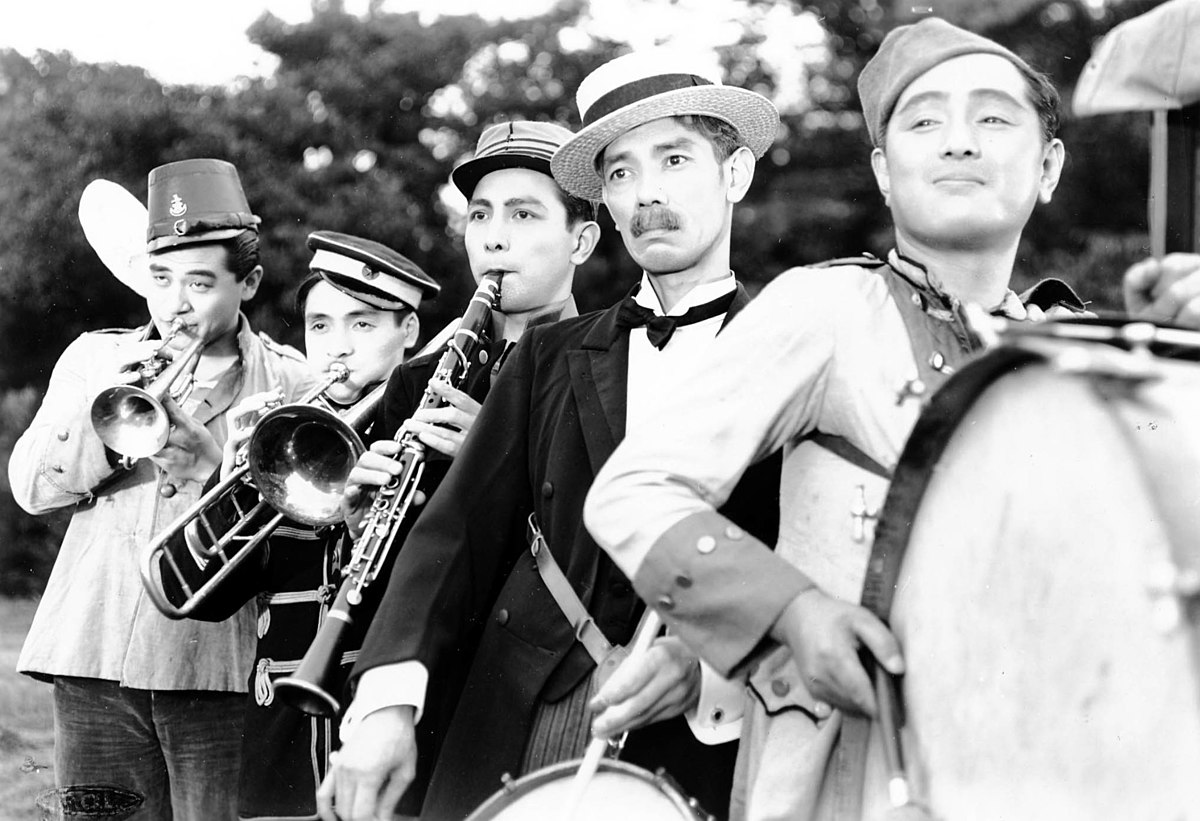
The five men of the title are an itinerant jinta brass band, though to tell the truth not a very good one. They were supposed to be on their way to play at a primary school sports day, only when they get there they’re told the event has been postponed to the following spring. After having wasted the afternoon killing time playing on the monkey bars and children’s slide, they decide to give a little concert anyway, not that anyone’s listening and there’s no real chance of getting paid. It’s in the next town, however, that they make a series of serendipitous meetings connected with a travelling circus which is currently undergoing a crisis as the entire male company has gone on strike against the boss’ tyrannical management style in a subversive dig at rising authoritarianism. 

All things considered, the circus seems to be doing pretty well for itself. It has a sizeable company with several accomplished performers and appears to be drawing good audiences. The boss (Sadao Maruyama) dresses in fancy outfits and there doesn’t seem to be much anxiety over hunger or any sign of the usual worries with which films about itinerant performers are usually concerned, all of which is in direct contrast to the jinta guys whose ragged appearance and habit of pinching yukata from the various inns on their route make plain their relative poverty. “None of us do jinta because we like it” the oldest of the players Seiroku (Ko Mihashi) points out, a woman behind in the bar him echoing that no one becomes a hostess because they like it either. None of these men had a burning desire to be in a band, they simply ended up there and now they can’t get out. Young orphan Kokichi (Heihachiro Okawa), however, dreams of going to Tokyo to study the violin carrying around a record of Western classical music to refresh his soul while worrying that his jinta life is corrupting him.  

Kokichi’s earnestness finds a fan and a mirror in Chiyoko (Masako Tsutsumi), the older daughter of the circus master who claims that she has long since given up hope of a better life even as she continues to dream her small dream of living in an ordinary house with a man she loves. Trapped by filial duty to her cruel father, Chiyoko actively encourages the escape of her younger sister Sumiko (Ryuko Umezono) who is in love with the ringmaster Kunio (Koji Kaga) though their father won’t let them marry. Kunio is also the instigator of the strike which is currently engulfing the circus, placing a strain on Sumiko’s conflicted loyalties as she struggles with her desire to leave the intinerant life behind. 

After the band is taken on as ringers to replace the striking musicians they also find themselves required to perform on stage, with varying degrees of success. Kokichi pleads to be given a chance to perform with a violin, even foregoing his pay as he’s warned the target audience is unlikely to find much to entertain them in a violin recital. His inexpert playing is roundly rejected by the baying mob who quickly begin throwing their rubbish at him until he’s forced to leave the stage in a moment of pure and crushing tragedy. Chiyoko tries to comfort him that she at least enjoyed the performance, but her words fail to cheer him more than superficially. He knows he’ll never go to Tokyo, or be anything more than a jinta player with only false hope to sustain him in the same way that Seiroku realises he’ll never never make peace with his past when he’s slyly conned by a 10-year-old girl he half suspected was the baby he abandoned out of economic desperation following the death of his wife. 

Yet it is in a sense romance that eventually eventually brokers resolution in the eventual implosion of Sumiko’s conflicted desires which cause her to “fall” from the trapeze, a moment of crisis daringly filmed through the use of double exposure superimposing Sumiko’s face over her POV of the men fighting in the ring. This narrowly averted tragedy apparently awakens something in her father who, she tells Kunio, only became cruel when their mother left, forcing him to relent and agree to be nicer to his employees while approving his daughter’s marriage. Yet romance cannot solve everything, and the only other romantic resolution we discover is in the roguish Torakichi (Hiroshi Uruki) who relents and accepts a woman he callously seduced and abandoned but who followed him because of the strength of a woman’s “passion”. Though we can see a connection has arisen between Chiyoko and Kokichi, it is not one which can be fulfilled, fate is pulling them in different directions. Forever a jinta player, he is pulled on to the next gig, the camera pulling back tragically from the bereaved Chiyoko, rooted to the spot as she watches her last hope walk away from her. “Life is a journey” she offers as a note of grim resignation, while knowing she’s going nowhere at all.


A Woman’s Sorrows (女人哀愁, Mikio Naruse, 1937)

Arriving perhaps in a moment preceding a major change, Mikio Naruse’s A Woman’s Sorrows (女人哀愁, Nyonin Aishu) finds itself on one side of a divide in which it is, paradoxically, a woman’s conservatism that is thought a barrier to her marriage. As usual slightly ahead of his times, Naruse doesn’t so much attack the idea of marriage either arranged or love, but subtly arcs out the patriarchal cage the bars of which only become visible to his conflicted heroine after she has wilfully allowed herself to be locked inside. 

Opening on location, a thriving Tokyo street scene, Naruse introduces us to the “conservative and indecisive” heroine Hiroko (Takako Irie) at her part-time job at a record store. We learn that Hiroko has recently been to an omiai marriage meeting, and that at least according to her friend she has been harbouring a longterm crush on her sensitive, progressive cousin Ryosuke. Hiroko denies having feelings for her cousin claiming that she thinks of him as a brother and that he dislikes her for being too “conservative”. One might think that a truly conservative woman wouldn’t be working in something as modern as selling records, but Hiroko is indeed a kimono-wearing holdout who has almost fully internalised the properness of the patriarchal order. Her indecisiveness, however, perhaps tells us that she isn’t quite as comfortable with it as she seems and is in a sense forcing herself to accept something she thinks she has no power to resist. 

It is also true that Hiroko’s family is poor. Despite confiding to Ryosuke that her husband gave her trouble, failing in one sense at least by dying and leaving his family with debts, Hiroko’s mother is keen that she marry and marry well. Her prospective match Shinichi is from a well to do family and has also offered to pay for the education of Hiroko’s younger brother Masao, so the marriage is undoubtedly financially advantageous if not immediately essential. “Since I cannot marry someone I love, anyone will do” Hiroko silently sighs, resigning herself to a conservative vision of a woman’s life. For his part, Ryosuke rejects Hiroko because he believes her conservatism runs so deep as to lead her to reject love as improper, that love would in fact be a barrier to her marriage which she would feel duty-bound to refuse. 

Hiroko feels that the match is in a sense too good for her, much better than she had a right to expect. Nevertheless, it’s her seeming conservatism that presents a potential problem in that it is assumed that despite working in a record shop she wouldn’t know how to dance in the modern fashion. Far from censorious, Hiroko’s mother is worried that the young girls these days all go to “dance halls” while Hiroko is quiet and demure. As it happens, Hiroko knows how to dance, though perhaps they should have been thinking about the problem from the other side in that men who like going to dance halls don’t necessarily like to go with their wives, and those looking for “conservative” women often do so because they want to lead “modern” lives outside the home. Having agreed to the marriage, Hiroko finds herself an outsider, treated as unwaged maid by her new in-laws who all exclaim how glad they are to have someone so reliable as their new daughter-in-law especially as they’ve recently disowned oldest daughter Yoko (Ranko Sawa) for running off with her lower class fiancé. 

As so often in Naruse’s cinema, modern girl Yoko acts as a mirror for the outwardly conservative Hiroko. Yoko determines to marry for love, but is actually far more conservative than she seems in that she is entirely unwilling to surrender her comfortable middle class life and continues to resent the man she married, Masuda, because he cannot keep her in the manner to which she had become accustomed. Shinichi had warned Yoko about “frivolous” men, an ironic comment seeing as we’d just heard him dismiss a woman he’d been seeing as “just a girlfriend” laying bare his rather misogynistic view of women as a means of passing time, but Masuda is the very opposite of frivolous, serious in his intentions even while Yoko rejects him solely because of his lack of socioeconomic status. Yet like Hiroko Yoko is perhaps herself also conflicted, forcing herself to reject Masuda whom she loves out of a mistaken pride that tells her it would be wrong to suffer for love when she could have done as Hiroko did and married well for a comfortable but emotionally unfulfilling life. 

Unhappy in her marriage, Hiroko claims that she could have put up with being treated as a maid but can’t stand being treated as a doll, believing herself mere decoration in Shinichi’s life. Nevertheless she continues to believe it’s her duty to “manage” as good wife, bearing her sorrow and loneliness gracefully until pushed into a moment of crisis by Yoko’s rather melodramatic love life. Overhearing the family declining to invite her to join their game of mahjong on the grounds she’s too conservative and is perfectly happy with her life of drudgery, Hiroko is stirred by Yoko’s assertion that she’d never be so “submissive” despite the fact that’s exactly what she’s been in leaving Masuda to return to her upper middle class life with the Hories who are not perhaps as grand as they seem with only the one maid and Mrs. Horie’s constant penny pinching. 

Yet the subversive conclusion isn’t so much that Hiroko begins to realise she has choices and agency after all along with the right to leave a marriage that isn’t working, but that she, temporarily at least, rejects marriage itself in favour of independence while Yoko chooses love in defying her family to return to Masuda who, by then, has done something quite foolish in a mistaken attempt to prove himself worthy of her. Rather than leaving Shinichi for Ryosuke, she tells him that she needs time to figure herself out, to “reconstruct my life by myself”, vowing to find out what is the most beautiful thing in the world so that she can see something more important in herself. It’s a startlingly progressive statement for the Japan of 1937 which is edging closer towards a kind of darkness despite the otherwise cheerfully internationalist atmosphere with its Western jazz music and record shops, dance halls, department stores, trains, and telephones, the contradictions of the age symbolised in the Horie’s awkward home with its mix of Western and Japanese furnishings. It turns out, Hiroko is the most “modern” woman of all, who ever would have thought?  


Travelling Actors (旅役者, Mikio Naruse, 1940)

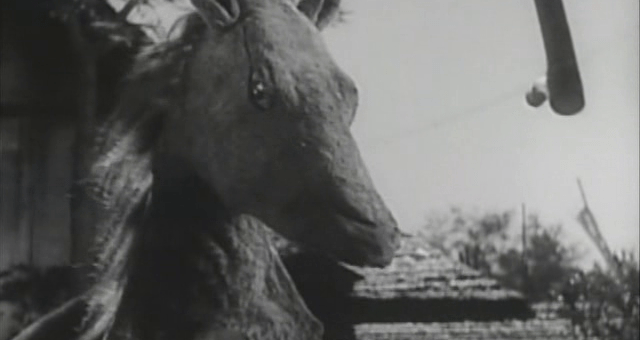
“You can’t have a horse without the ass” admits a travelling actor, inwardly preparing to meet his obsolescence. Anything’s an art if you care to practice it, but there is such a thing as taking yourself too seriously. A masterclass in tragicomedy, Naruse’s 1940 character study Travelling Actors (旅役者, Tabi Yakusha) finds two ends of a pantomime horse about to be torn apart when their act is unwittingly destroyed by a resentful punter whose drunken attempt to escape his sense of humiliation in being tricked by unscrupulous promoters leaves their horse without a head. 

Hyoroku (Kamatari Fujiwara) prides himself on being the “Danjuro of pantomime horses”, performing with the younger Senpei (Kan Yanagiya) who looks up to him as if he really were a great master of the arts. The guys are part of a group of travelling players touring rural Japan performing traditional skits for an audience starved of entertainment. The troupe is not, however, above exploitative business practices, proudly advertising the appearance of “Kikugoro” but neglecting to mention that it’s not the famous one, just another guy with the same name. Meanwhile, someone has to foot the bill for “producing” the show wherever the actors land, leading the exploitative producers to convince a local barber (Ko Mihashi) to invest, hoping to get a little free publicity because he’s known to be the town gossip and can spread the word through his shop. The plan backfires, however, when he travels to the station to see them arrive and immediately realises they are not a fancy acting company from Tokyo but a bunch of ragged bumpkins. Feeling thoroughly fed up, he demands to be allowed to perform in the show as the price of his silence before getting black out drunk and passing out backstage, crushing the papier-mâché horse’s head in his desperation to find somewhere soft to land. 

As “Kikugoro” points out, the “guy who plays the pantomime horse is really picky” so they know they’re in for some trouble as soon as he finds out what’s happened to his head. In fact, Hyoroku was just in the middle of some remodelling, trying to make the head look even more realistic to improve his art. While the barber is destroying his life’s work, Hyoroku and Senpei are drinking with a pair of geishas who are pretending to be interested in Hyoroku’s mini lecture about his process in which he tells them all about how he’s really captured the true essence of the horse through patiently honing his craft all these long years. 

There might be something in that, that Hyoroku is a workhorse of the theatre now more beast than man. Just occasionally, his horsey mannerisms come out in his offstage life, scratching the floor with his feet or pacing the room like a penned in pony. Though there are other sides of him which are painfully human. He makes a point of belittling Senpei in front of the geishas, insulting his art to assert his place as the teacher, always keen to keep his pupil in his place. But as Senpei points out, you can’t have a horse without the ass, and his “art” is no less important than Hyoroku’s. Continuing to take himself way too seriously, Hyoroku refuses to perform with the broken head, flatly objecting to the suggestion of substituting one from the fox costumes because he can’t get into character when his head’s in the wrong place. 

Faced with the prospect of cancelling the show, the producers come up with a radical idea – hiring a real horse. In a still more ironic touch, they even sell this horse who is making his stage debut as a star in his own right, only realising the dangers of their situation when it urinates right in the middle of the act. Weirdly, that only makes the horse a hit and convinces the troupe they’re on to a winner, which is bad news for the boys because who wants to see two guys in an ugly costume when they could be gazing at the real thing. The days of the pantomime horse are ending, but where does that leave a “great master” like Hyoroku who has spent his life becoming more horsey than a horse? Kicked out of the inn and forced to sleep backstage as non-performers, the guys eventually suffer the indignity of being offered jobs as stable boys, mere servants to the star who has replaced them. 

In an unguarded moment, Hyoroku and Senpei reflect on where they are as a young man in a soldier’s uniform leads a patient horse off to war. “That could be us” they sigh, though it’s not clear if they mean the man or the horse, before going back to horsing around eating shaved ice and flirting with the store owner. “I’m just the horse’s ass”, Senpei laments, secretly hoping to become a “real” actor at last, only for Hyoroku to uncharacteristically start encouraging him before dragging him off on another crazy adventure. Putting the fox’s head on to make a point, Hyoroku disappears into the role, chasing his rival right out of town, dragging his back legs behind him as he goes. 


The Girl in the Rumor (噂の娘, Mikio Naruse, 1935)

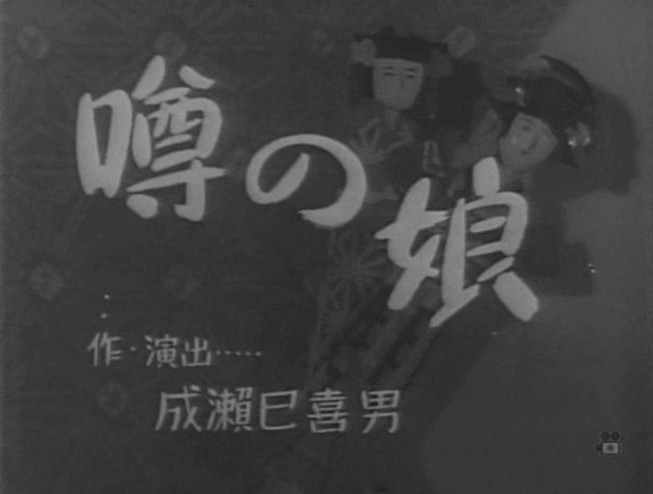
vlcsnap-2019-12-21-23h50m32s752The world was changing in 1935, but not everyone was swept away by the fickle tides of modernity. The heroine of Naruse’s 1935 drama The Girl in the Rumor (噂の娘, Uwasa no Musume) is like many of his leading ladies betrayed by the world in which she lives, yet she’s also an encapsulation of the conflicts of the age, at once fiercely traditional and personally progressive while her “modern girl” sister is as selfish and judgemental as any of the bright young things who serve as extreme examples of the risks of Western individualism.

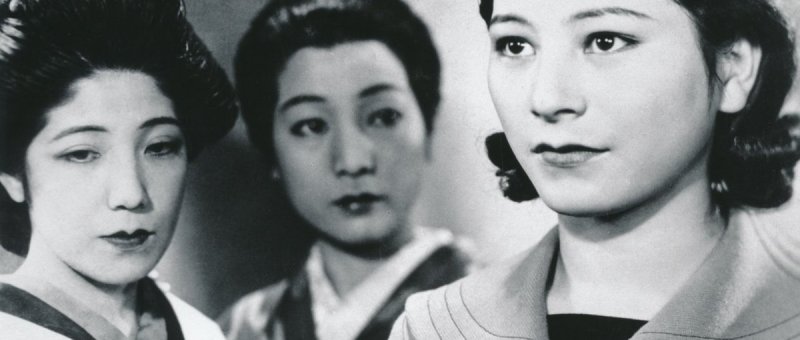
Kunie (Sachiko Chiba), an unmarried young woman, works in her family’s sake shop which is currently struggling to make ends meet. While the guys in the barbers opposite complain that the place has gone downhill since grandpa’s days, the old man himself has begun to worry that there’s something not quite right about their produce. In order to keep the shop going, there’s some talk that Kunie may marry the son of a wealthy family, but her father Kenkichi (Ko Mihashi) is against the idea. He married into his wife’s family and the marriage was intensely unhappy so he is mindful that the same fate doesn’t befall his daughter. His wife now long dead, Kenkichi is free to be more open about his longstanding affair with a bar owner, Oyo (Toshiko Ito), which produced a daughter, Kimiko (Ryuko Umezono), who was raised by Kenkichi and his legal wife and has no idea her birth was illegitimate. Kimiko, unlike her sister, has become a “modern girl”, dressing in Western fashions, listening to jazz, and staying out late going to parties. The trouble starts when Kunie decides to take her sister with her to the omiai for moral support and it becomes obvious that Sato (Heihachiro Okawa) is a bit of a “modern boy” who has lots more in common with the vivacious Kimiko and decides to break protocol by telling the go-between that he’d rather have her instead.

This move comes as a total blindside to the girls’ uncle who arranged the meeting. “The marriage proposal’s turned into something really weird” he tells Kenkichi over the phone while the two men try to work out what the best course of action is. The uncle seems to think it might be a good move to carry on the negotiations with Kimiko instead, after all Kunie is basically running the store so it would be more convenient to keep her around. Kenkichi is unconvinced. He knows Kimiko doesn’t really approve of all this old fashioned arranged marriage business, and to be honest he doesn’t seem to like her much so isn’t keen on talking to her about it but can’t rely on his usual trick of getting Kunie to do it because he doesn’t want to hurt her feelings by letting her know that Sato doesn’t fancy her and has asked her sister out instead.

Kimiko certainly is a “modern girl” and superficially proto-feminist. She mocks her sister’s traditionalism and criticises her for blaming “their” mother for the failure of their parents’ marriage, thinking that she is simply unable to move past the patriarchal mindset and used to blaming everything on the woman. Little knowing that Oyu is her mother, she rejects Kunie’s plan to have her come and live with them as new maternal presence, claiming that she has only contempt for mistresses and thereby exposing herself as being, ironically enough, more judgemental than her superficially conventional sister. Kunie may be “traditional” in her outlook, but she is also empathetic and understanding. It seems her mother may not have been an easy woman, and what she most wants is to repair her family by bringing Oyo into the fold in her “rightful” place at her father’s side. Despite her insistence on her own freedom, however, Kimiko is childishly moralistic, directing her anger with an oppressive system back on the people constrained by it. Yes Kenichi’s life is one of socially condoned hypocrisy, but there’s no point in blaming him or Oyo for trying to find happiness where they can.

Blame them she does, however, and her sister with them. Kimiko meets Sato by chance and starts dating him in the non-serious manner of young people of the time only for the Satos to become worried and again push the idea of a marriage. Having been spotted with Sato in the street by Kunie, Kimiko’s confession is cruel and cutting, delivered almost with glee as she reveals that her uncle and father have been avoiding telling her that Sato turned her down because he liked her sister more. Kunie had professed that she wasn’t all that bothered about the marriage because she had become convinced that she “couldn’t have a happy marriage anyway”, but her tears suggest a deeper hurt than having her hopes for the business dashed and being wounded by her sister’s callousness. Nevertheless, she wants nothing but her sister’s happiness and so if she seriously wanted to marry Sato for the “right” reasons, she would of course support her.

Kimiko however remains selfish and implacable. Kenkichi, hoping to teach her a lesson, brings Oyo into the home and reveals to Kimiko that she is a mistress’ daughter. It does not go well. Kimiko refuses to engage with Oyo, while Kenkichi also asks for an apology on behalf of Kunie who has only ever tried to protect both Kimiko and Oyo by trying to reunite their family, but Kimiko leaves in a huff shouting that she has no need of mothers or fathers or families or anything else. A rapprochement is brokered between the women only when Kenikichi is made to pay for his failure as a patriarch. It turns out grandpa was right after all, he’d been tampering with the sake and now the police want a word with him. With the arrival of Oyo, tacitly accepted by Kimiko’s final return to the home, the family is in some senses restored but also broken. The gossips in the barbers across the way lament the end of the Nadaya Sake store, callously speculating on what will replace it, while all Kunie can do is look on in consternation and disappointment.


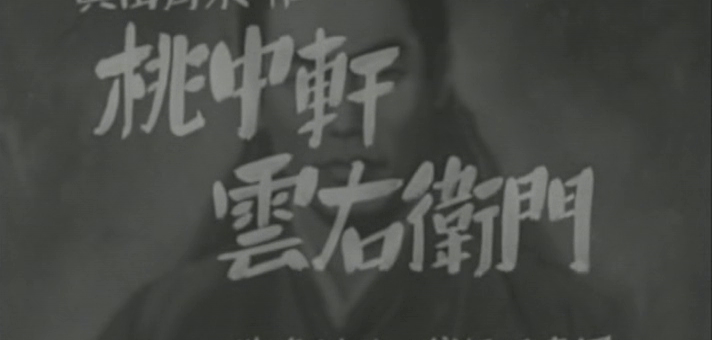
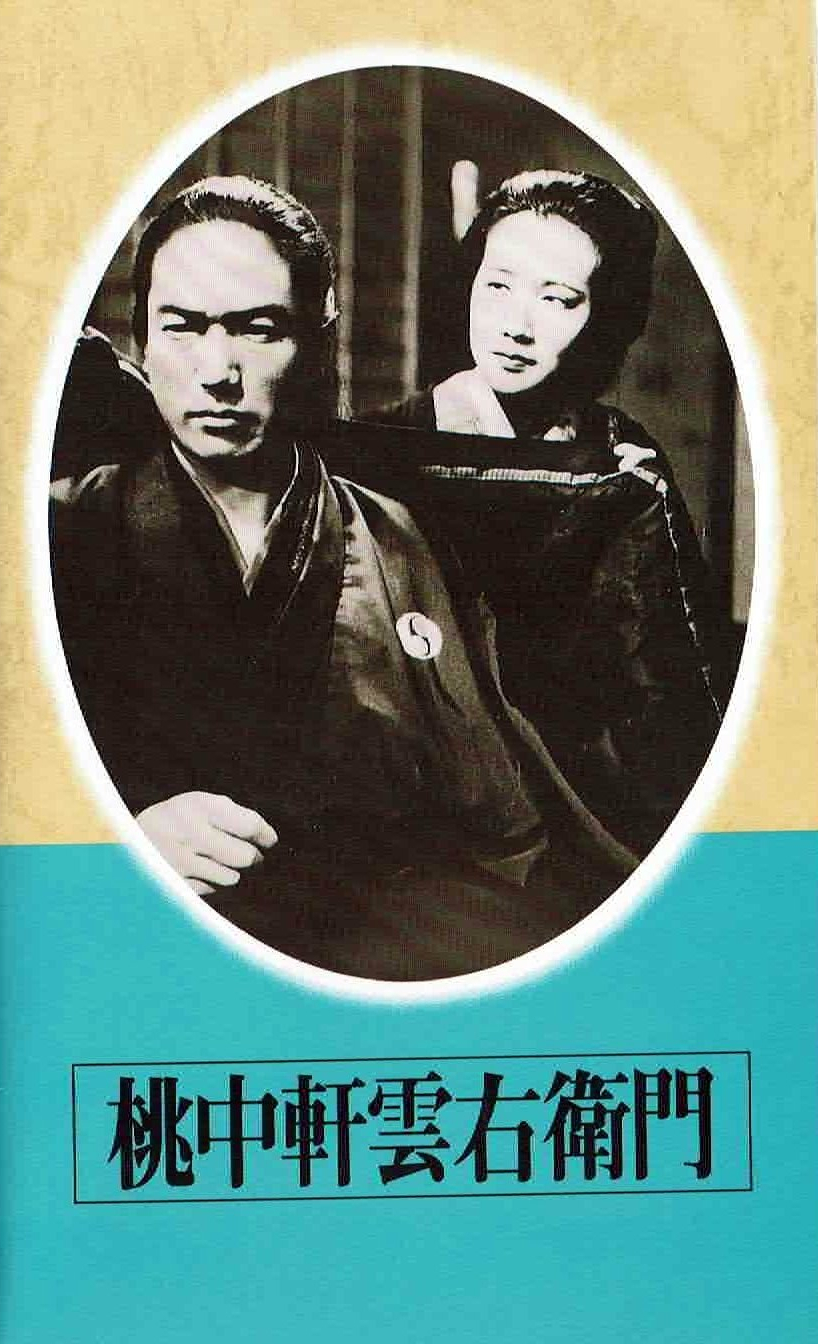
Tochuken Kumoemon (桃中軒雲右衛門, Mikio Naruse, 1936)

Tochuzen KazoemonIt’s an age old question, but does being a great artist give you the right to treat other people terribly? Hopefully, most people would say no, it does not. Most “great artists”, however, may have a different opinion. The hero of Mikio Naruse’s 1936 biopic Tochuken Kumoemon (桃中軒雲右衛門, AKA Man of the House) is very much of the opinion that inflicting suffering on others, and thereby vicariously suffering himself (but not really because who cares about them), is the source of all his supposedly “great art”.

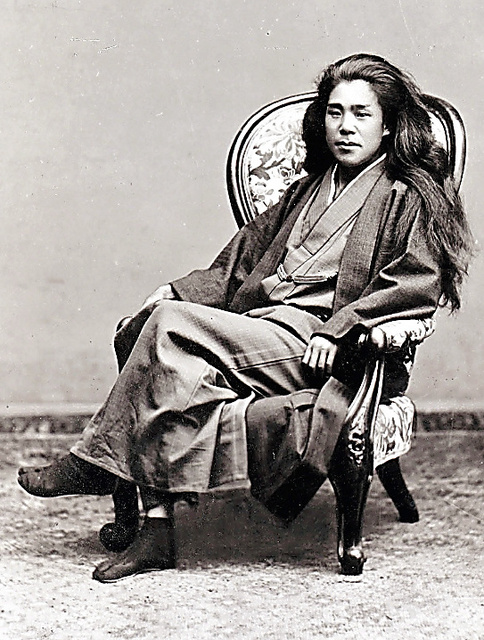
Tochuken Kumoemon was in fact a real person who died twenty years before the film’s release and had his heyday as a renowned yet scandal ridden performer of “rokyoku” in late Meiji. To brings things full circle and explain why perhaps his life was fit for cinematic exploration in the politically fraught atmosphere of 1936, it’s helpful to remember that Tochuken Kumoemon’s performances of such patriotic fare as the 47 Ronin helped to rouse nationalist sentiment during the Russo-Japanese conflict. “Rokyoku”, also known as “naniwabushi”, is a traditional art of narrative singing accompanied by shamisen which found favour with the militarists for its essential Japaneseness and hearty rustic vulgarity.

In any case, we meet Tochuken Kumoemon (Ryunosuke Tsukigata) on a train drawing closer to his planned return to Tokyo after having been forced to flee it eight years previously because of a sex scandal which led him to separate from his first wife, leaving a son, Sentaro (Kaoru Ito), behind, and marry Otsuma (Chikako Hosokawa) – his shamisen player with whom he is currently travelling. The troupe are supposed to be breaking their journey at Kozu, but for reasons unexplained, Tochuken Kumoemon decides to get off the train at Shizuoka and promptly disappears without a word to anyone. 

The disappearance is problematic on several levels, the first being that the stop was only engineered to allow Tochuken Kumoemon to visit his estranged son Sentaro. Some in the group posit that Tochuken Kumoemon has come down with a rare case of stage fright seeing as this Tokyo show will be his biggest to date, while others assume he is embarrassed to go back to the city because of the scandals which previously engulfed him there, and some believe he is simply conflicted about visiting the son he abandoned to run off with another woman.

Anyone who knows him, however, might be better placed to realise that the great Tochuken Kumoemon rarely has a reason for doing anything save that it pleased him to do so at the time. Nevertheless, what we discover about him as he tours the inns of Kozu throwing his money about like some crazed libertine, is that he apparently liked his life better when he was poor but is bravely suffering under the burdens of wealth “for his art”. In fact everything in Tochuken Kumoemon’s life is “for his art”, including the thoughts and feelings of those closest to him.

Tochuken Kumoemon’s story may be intended as a kind of militarist parable about a man who devoted everything of himself to a particular ideal, in his case art but for the militarists perhaps country. The major problem here is that Tochuken Kumoemon never particularly suffers himself, grinning broadly throughout, but forces others to suffer on his behalf while he extracts from them qualities he can use to enhance his performance. Pain may be good for art, but it’s rarely good for life, and most would find themselves questioning why it is those around him remain contented to suffer solely to facilitate Tochuken Kumoemon’s artistic fulfilment.

Loyal wife Otsuma begins to reconsider, bravely challenging Tochuken Kumoemon on the inauthenticity of his performances which, though growing in popularity, she feels to be increasingly hollow. She remembers the early days of their courtship which were apparently marked by a fierce competitive rivalry which proved artistically beneficial to them both before spilling over into other kinds of offstage passion which now appears to have cooled. Otsuma, now weakened as she finds herself succumbing to the later stages of consumption, something Tochuken Kumoemon refuses to acknowledge, fears that she is now unable to inspire him with her playing which is why he’s been up to his old tricks consorting with geishas. Claiming that Otsuma wouldn’t care about his affairs because she’s an artist too and will therefore “understand”, Tochuken Kumoemon has taken up with a pretty little thing, Chidori (Sachiko Chiba), from whom he intends to steal “youth and innocence” for his performances, little caring what he might leave behind.

For Tochuken Kumoemon everything is simply fuel for art and so he’s excused himself from the need to treat others with respect or kindness. Sentaro, his rejected son, rejects this aspect of his father’s philosophy, immediately bonding with his kindly step-mother and resenting his absent father’s treatment of her. In “raising” his son, Tochuken Kumoemon bangs on about traditionally “militarist” values of manliness, explaining that he is imperfect because he is a “great artist” and that his life has been full of problems but that he has overcome them with strength and perseverance. He tells his son that “weakness is the worst thing in a man”, but appears primed to hit the roof on learning that Sentaro may be expelled from school for fighting with his schoolmates because they mocked his unconventional family setup. Worst of all he casts his son away as one of the many who unfairly demand “perfection” from him even though he is an artist and cannot be expected to abide by the rules of “normal people”.

Meanwhile, Otsuma lies dying in a hospital. Tochuken Kumoemon won’t see her because he refuses to view her as “just a woman”, preferring to remember her as “a woman who lived only for art”. The subtext being for “his” art, rather than her own. He betrays himself when he admits that he “doesn’t want to be any more sad” than he is now, simply refusing to deal with the unpleasantness and personal suffering of facing the fact that someone important to you is in pain and will soon be gone. Yet despite a brief rebellion after an ill-advised gift from Chidori, Otsuma eventually agrees to sacrifice herself for Tochuken Kumoemon’s art, to die “quietly” as an artist and not as a woman. 

It’s only at this point that Tochuken Kumoemon decides to embrace the romance of the moment, finally travelling to her deathbed in order to sing a song. If Tochuken Kumoemon is a militarist hero, he’s not a particularly sympathetic one. He remains monstrously self-involved, hypocritical, an emotional coward who uses the suffering of others for his own ends with only the justification of the primacy of his art. Naruse undercuts the propaganda potential of the piece by painting his patriotic singer as a ridiculous prig who embodies the militarists’ coldness towards the thoughts and feelings of their fellow humans but displays none of their supposedly romantic heroism in his empty swagger and well worn platitudes. Is naniwabushi really worth all this pain? No. Someone needs to tell Tochuken Kumoemon he’s not as important as he thinks he is. And while they’re at it, they could have a word with the militarists, too.


The real Tochuken Kumoemon

Real TOCHUKEN KUMOEMON