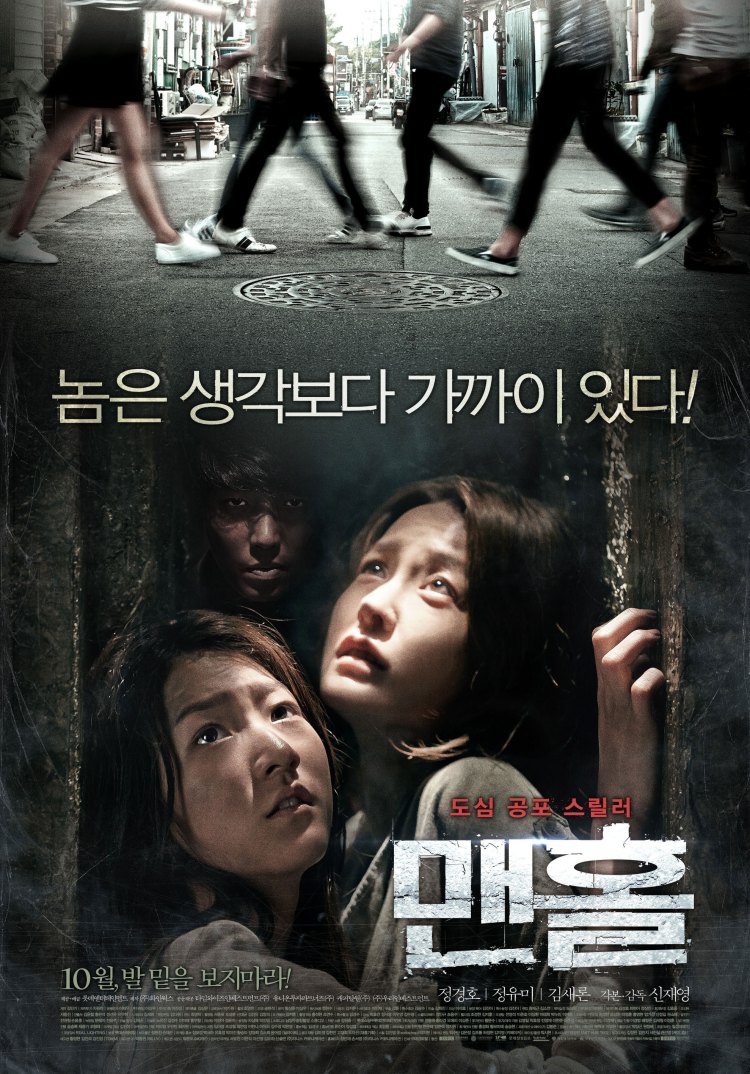
 Finding the sinister in the commonplace is the key to creating a chilling horror experience, but “finding” it is the key. Attempting to graft something untoward onto a place it can’t take hold is more likely to raise eyebrows than hair or goosebumps. The creators of Korean horror exercise Manhole (맨홀) have decided to make those ubiquitous round discs the subject of their enquiries. They are kind of worrying really aren’t they? Where do they go, what are they for? Only the municipal authorities really know. In this case they go to the lair of a weird serial killer who lives in the shadows and occasionally pulls in pretty girls from above like one of those itazura bank cats after your loose change.
Of course, it’s sort of our first victim’s fault because she’s dared to go out late at night on her own and committed the cardinal sin of shouting at her over protective father on the phone shortly before realising she’s wandered into a horror movie by mistake. The lights start flickering, everything goes wavy and then you’re being pulled down a manhole. Not cool.
Anyway, the real story is about two sisters. Yeon-seo (Jung Yu-Mi) is now the sole guardian of Soo-jeong (Kim Sae-Ron) following the death of their parents and also seems to be harbouring some kind of guilt over an accident that left Soo-jeong permanently deaf. Perhaps a little over protective as a consequence, Yeon-seo instructs Soo-jeong to stay in their apartment and wait for her to get back. Soo-jeong, however, is old enough to push the boundaries and ventures out alone to meet her sister on her way home with an umbrella. Unfortunately, she catches sight of the killer along the way and is soon trapped in the sewer like everyone else, apparently. Yeon-soo tries to call the police but they aren’t interested so she has little choice but to track her sister’s phone and journey underground herself. She’s joined (well, they’re there at the same time) by the father of the first victim (Choi Duk-Moon) who happens to be a former policeman, now in possession of a gun stolen from a friend also set to make a fateful descent at a later point.
Manhole is a very confused film. Unable to decide who its protagonist(s) is (are), it meanders freely between its disparate plot strands without ever managing to build coherent connections between them. Though the sisters are posited as the main element of the story, they take quite a long time to arrive and are then frequently sidelined in favour of other ongoing developments. Their story is undoubtedly the most interesting as it presents an unusual plot device in which they remain unable to communicate verbally during their attempts to escape from the sewers and it’s nice to see sign language used so ordinarily in a genre film, yet even their meagre backstory is painted in broad strokes and through flashbacks once again making it difficult to fully connect with them as they battle the threat in the shadows.
The role of the killer, Soo-chul (Jung Kyoung-Ho), is also a difficult one as he is neither protagonist nor generic threat but given a small amount of flashback backstory delivered in monologue to his victims which only serves to make him a frustrating presence. Manhole seems as if it has a point to make about families in that Soo-chul is a damaged child of a broken home, both trying to avenge himself and regain what he’s lost by, in a sense, “recreating” a family through his kidnappings. Frequent glances towards the prominently displayed portrait of the ideal family contrast with the other relationships in the film – Jong-ho and his hunt for his missing daughter, and the bond between the two sisters. Both of these family units are also missing elements – the sisters who’ve lost their parents and Jong-ho as a lone father. Neither of the parental figures in the film is fully able to protect their charges despite appearing controlling and over protective prior to the incident though no particular reason seems to be offered for this other than praising parental sacrifice in allowing both to fight all out to protect those closest to them.
What Manhole tries to be is a chase film, confining itself to the sewer environment as its crazed killer crawls around it like the literal beast in the shadows, cocooning victims in clingfilm and wearing bug-like bright red night vision goggles. Though exciting enough the frequent cutaways and over reliance on shaky cam disrupt the claustrophobic atmosphere as do the stereotypical jump scares and framing which feel as predictable as the final sequence of a video game in which the idea is to dodge the falling axes. Muddled and inexpertly photographed, Manhole is a disappointing genre exercise which even the generally strong performances of its cast can’t mask. Still, hardcore genre fans may find more to admire in the gore stained darkness of the oddly accessible sewer network and its lizard-like psycho killer.
International trailer (English subtitles)
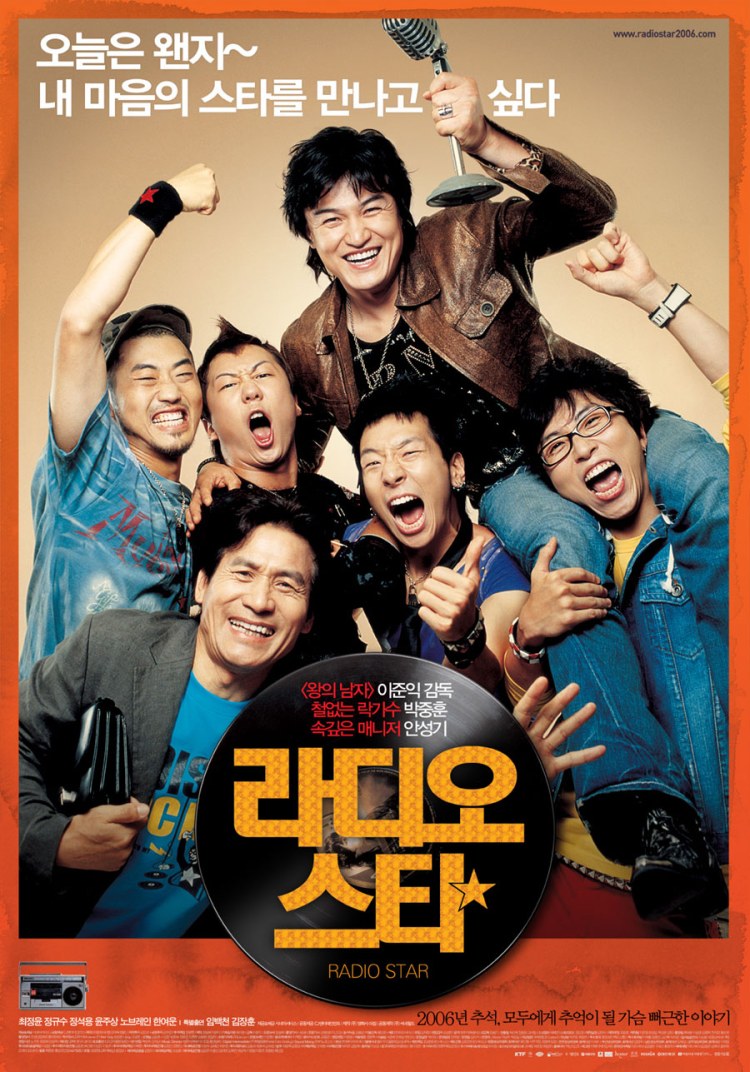 What do you do if you’ve just directed a box office smashing, taboo busting, giant mega hit? Well, you could direct Star Wars, but if you’re Lee Joon-ik you go back to basics with a low budget, heartwarming tale of friendship and failure. Radio Star (라디오 스타) reunites frequent costars Ahn Sung-ki and Park Joong-hoon whose shared history runs all the way back to ‘80s movies
 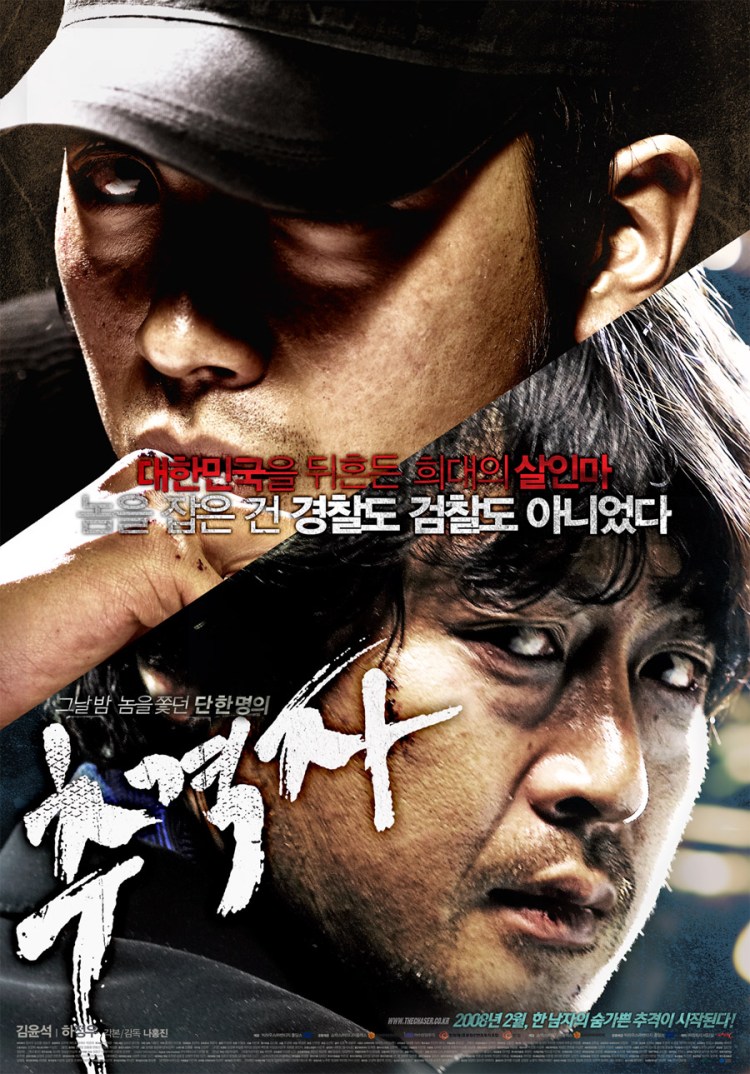 When it comes to law enforcement in Korea (at least in the movies), your best bet may actually be other criminals or “concerned citizens” as the police are mostly to be found napping or busy trying to cover up for a previous mistake. The Chaser (추격자, Chugyeogja) continues this grand tradition in taking inspiration from the real life serial murder crime spree of Yoo Young-chul , eventually brought to justice in 2005 after pimps came together and got suspicious enough to make contact with a friendly police officer.
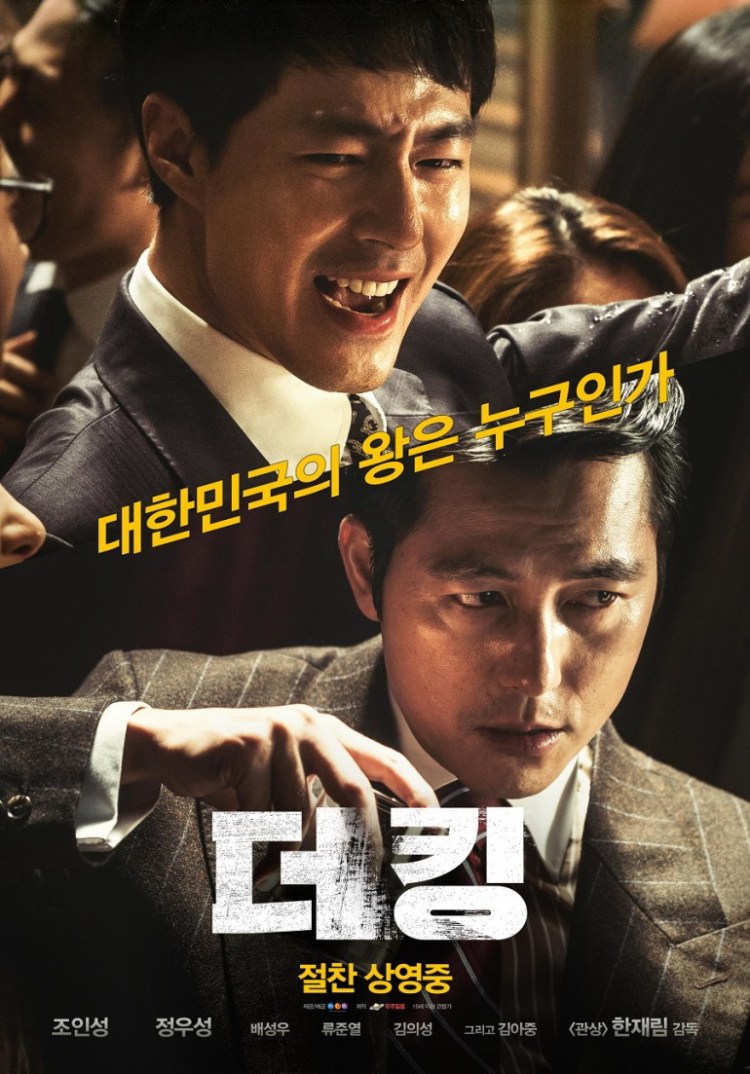 Absolute power corrupts absolutely, but such power is often a matter more of faith than actuality. Coming at an interesting point in time, Han Jae-rim’s The King (더 킹) charts twenty years of Korean history, stopping just short of its present in which a president was deposed by peaceful, democratic means following accusations of corruption. The legal system, as depicted in Korean cinema, is rarely fair or just but The King seems to hint at a broader root cause which transcends personal greed or ambition in an essential brotherhood of dishonour between men, bound by shared treacheries but forever divided by looming betrayal.
 It’s tough when parents don’t approve of their children’s romantic partners, but fortunately most realise there’s nothing they can do about it so the best thing is to feign civility (and avoid saying I told you so when it all goes wrong). Unfortunately the older generation of Kim Jin-young’s Enemies In-Law (위험한 상견례 2,
  It’s a strange paradox that in a land defined by corruption of the legal system, your only hope my lie in a new trial. So it is for the hero of Kim Tae-yun’s latest film. Inspired by a real life miscarriage of justice (a case which was in fact still continuing at the time of filming), New Trial (재심, Jaesim) takes aim at everything from social inequality to unscrupulous lawyers and abuse of police power. A teenager pays dearly for being in the wrong place at the wrong time, not only losing 10 years of his life but the entire possibility of his future now that he’s forever branded a criminal. That’s aside from leaving his ageing (now blind mother) alone with no means of support and the additional burden of trying to clear her son’s name.
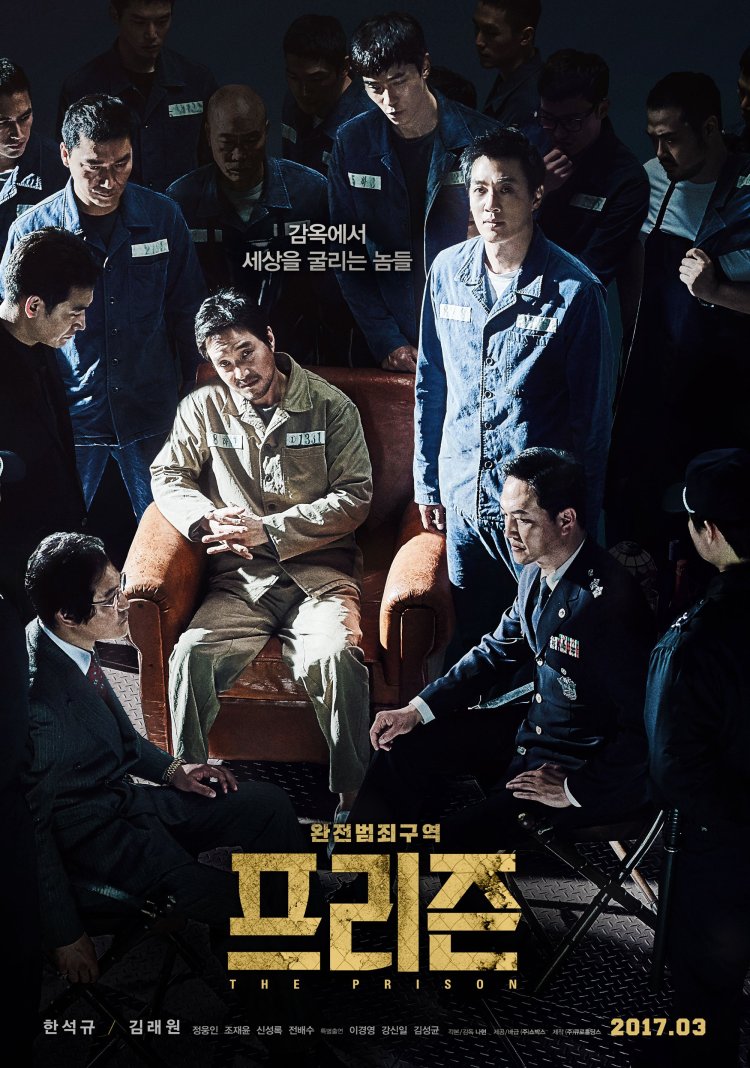 Prison can be a paradise if you’re doing it right, at least if you’re a top gangster in the movies. Na Hyun’s The Prison (프리즌) paints an interesting picture of incarceration and the way it links into his nation’s infinitely corrupt power structures. When investigators wonder why a crime spree suddenly came to an end, one of the frequently offered explanations is that the perpetrator was most likely arrested for another crime but what if you could turn this obviously solid alibi to your advantage and get those already behind bars to do your dirty work for you?
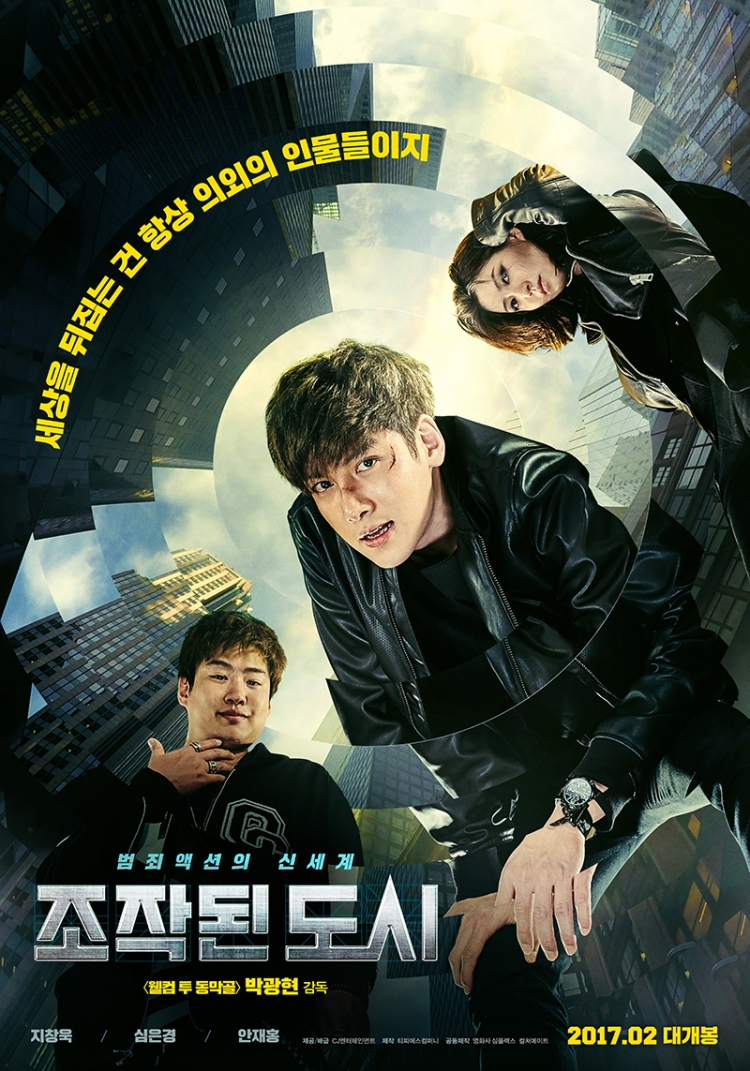 The real and the unreal. In the era of fake news, it’s become ever harder to draw a clear line between the two but when you live online, the borders are even more permeable. Twelve years after the wartime comedy Welcome to Dongmakgol, director Park Kwang-hyun finally makes a return to the director’s chair with an action packed cyberpunk thriller which joins the ranks of recent Korean films bemoaning the country’s hardwired tendency to social inequality where the rich and powerful are free to run roughshod over the merely ordinary. Fabricated City (조작된 도시, Jojakdwen Doshi) refers to more than just the literally manufactured online world, but to the social reality in which unseen forces govern and define the lives of others, operating in secret behind a government backed curtain.
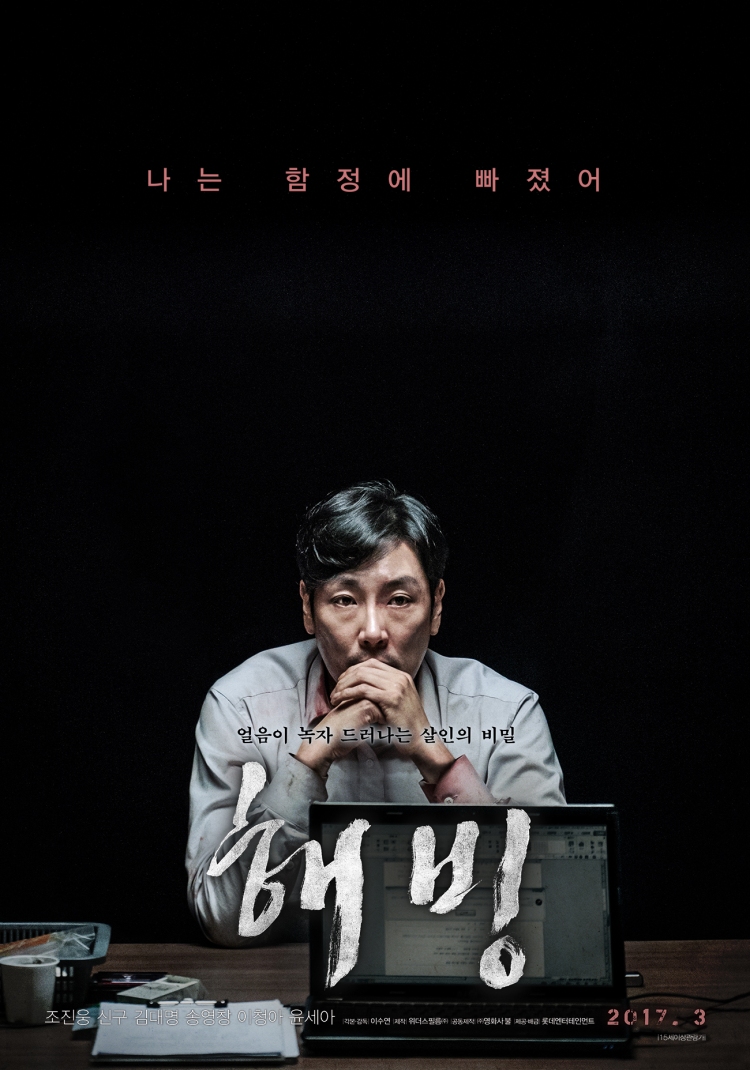 If you think you might have moved in above a modern-day Sweeney Todd, what should you do? Lee Soo-youn’s follow-up to 2003’s The Uninvited, Bluebeard (해빙, Haebing), provides a few easy lessons in the wrong way to cope with such an extreme situation as its increasingly confused and incriminated hero becomes convinced that his butcher landlord’s senile father is responsible for a still unsolved spate of serial killings. Rather than move, go to the police, or pretend not to have noticed, self-absorbed doctor Seung-hoon (Cho Jin-woong) drives himself half mad with fear and worry, certain that the strange father and son duo from downstairs have begun to suspect that he suspects.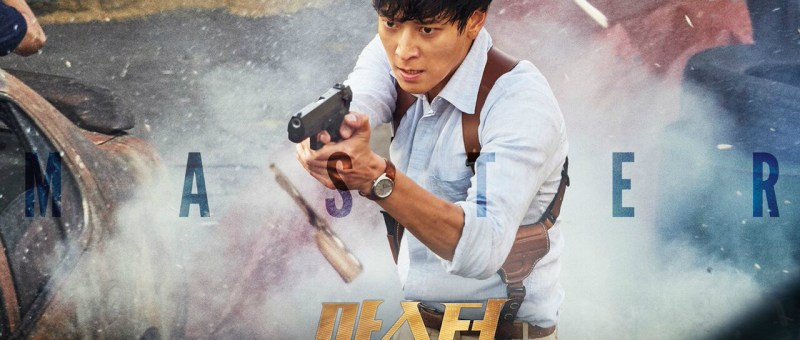
 Corruption has become a major theme in Korean cinema. Perhaps understandably given current events, but you’ll have to look hard to find anyone occupying a high level corporate, political, or judicial position who can be counted worthy of public trust in any Korean film from the democratic era. Cho Ui-seok’s Master (마스터) goes further than most in building its case higher and harder as its sleazy, heartless, conman of an antagonist casts himself onto the world stage as some kind of international megastar promising riches to the poor all the while planning to deprive them of what little they have. The forces which oppose him, cerebral cops from the financial fraud devision, may be committed to exposing his criminality but they aren’t above playing his game to do it.
 Windows on Worlds