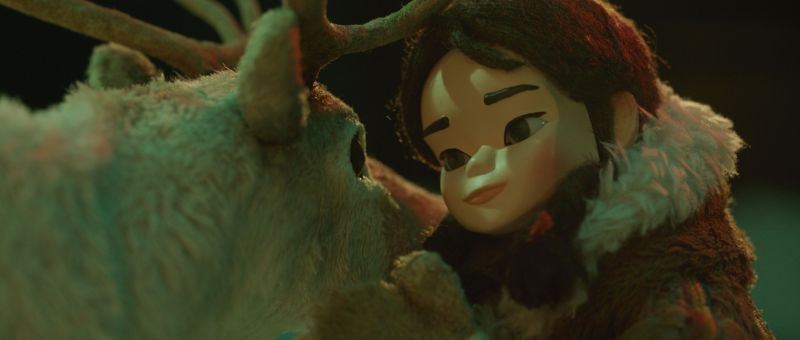

A little girl becomes the spiritual defender of her traditional culture in her quest to cure her mother’s mysterious illness in Park Jae-beom’s stop motion fairytale, Mother Land (엄마의 땅: 그리샤와 숲의 주인, Eommaui Ttang: Geulisyawa Sup-ui Ju-in). Taking place seemingly in mid-20th century Siberia, the film focusses on the Yates people, nomads who live on the tundra raising reindeer in much the say way they have for centuries even as their existence is threatened by the militant modernity of Soviet Russia.
Krisha is a young woman who has begun having strange dreams believing she can see a huge red bear with shining eyes. Distracted, she is almost hurt when wind threatens to blow their half-built yurt down during a move but is saved by her mother, Shura. Shortly after they are visited by Captain Vladimir and Bazak, a member of the Yates who has betrayed his people to team up with the government in an effort to kill the “Master of the Forest” in order to claim the tundra and bring it into a fully modern society. When Krisha’s father Tokcha tells him it’s not a good idea and he’ll be punished for desecrating their sacred land, Vladimir counters that they too should join the collective farm threatening the very survival of their traditional culture. After insisting that the tundra is their home and they won’t leave it, Shura is taken ill with a mystery condition a shamaness says she has only seen in a Western village which no longer exists.
It could be said that Shura’s sickness is born of the threat that modernity poses though her family is faced with a choice over what to do about it. The shamaness says she knows no cure and their only hope lies in visiting The Master of Forest to ask for his help but Tokcha balks that no one’s ever seen him and he’s not convinced that he exists let alone that he could help. While Krisha wants to follows the Shamaness’ advice, her father instead decides to ride into the city in search of modern Western medicine. Once he’s gone she secretly steals away with her little brother Kolya and their trusty reindeer steed Serodeto to look for the Master of the Forest whom she thinks may be the big red bear that’s been haunting her dreams.
When she eventually finds him, the bear tells her that it is not his place to save her mother though he has been waiting for her for he believes she has come to save him. Bazak, who is in search of vengeance for his wife and daughter, asks what the point is of a god who only watches while others suffer but Krisha comes to see him as a manifestation of the healing power of the land he tells her is being lost because of its mistreatment by those like Captain Vladimir who describes Tokcha as an “arrogant barbarian” and has no respect for his culture or even for nature itself.
Vladimir isn’t wrong when he calls the tundra the hope of the country though obviously not in the way that he means it. Krisha’s quest to save her mother is also a quest to save her land, the bear and her mother becoming symbolically linked while Krisha develops a maternal sense of herself as a guardian of her culture insisting that she will remain on the tundra practicing what she’s learnt as a link between heaven and earth.
Even so, Park captures a sense of nature red in tooth and claw in the opening scenes in which a deer is butchered and some of its blood returned to the land in a ritual of gratitude to mark its sacrifice. The icy emptiness of the tundra is broken only by the appearance of Vladimir’s military van spewing black smoke into the otherwise pure landscape, while Park’s designs have a kind of warmth in their tactile quality from the powdery snow to the fabric covering the yurt and the tunic made for Krisha by her mother out of deer pelt and fur. Impressive scenes of wolves running are tempered by quiet moments of self-reflection as Krisha goes about her quest and begins to accept her destiny as a guardian of her culture. A quietly powerful fable, the film mediates on gods and nature along with the costs of modernity but ends on a note of comfort and relief in a longed for reunion and a restoration of normality.
Mother Land screened as part of this year’s Fantasia International Film Festival.
International trailer (English subtitles)
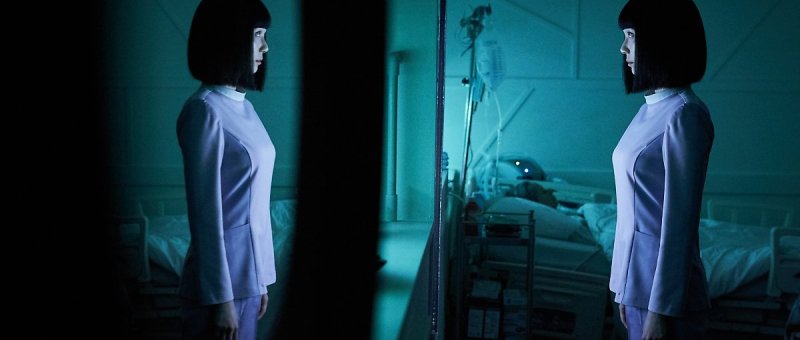
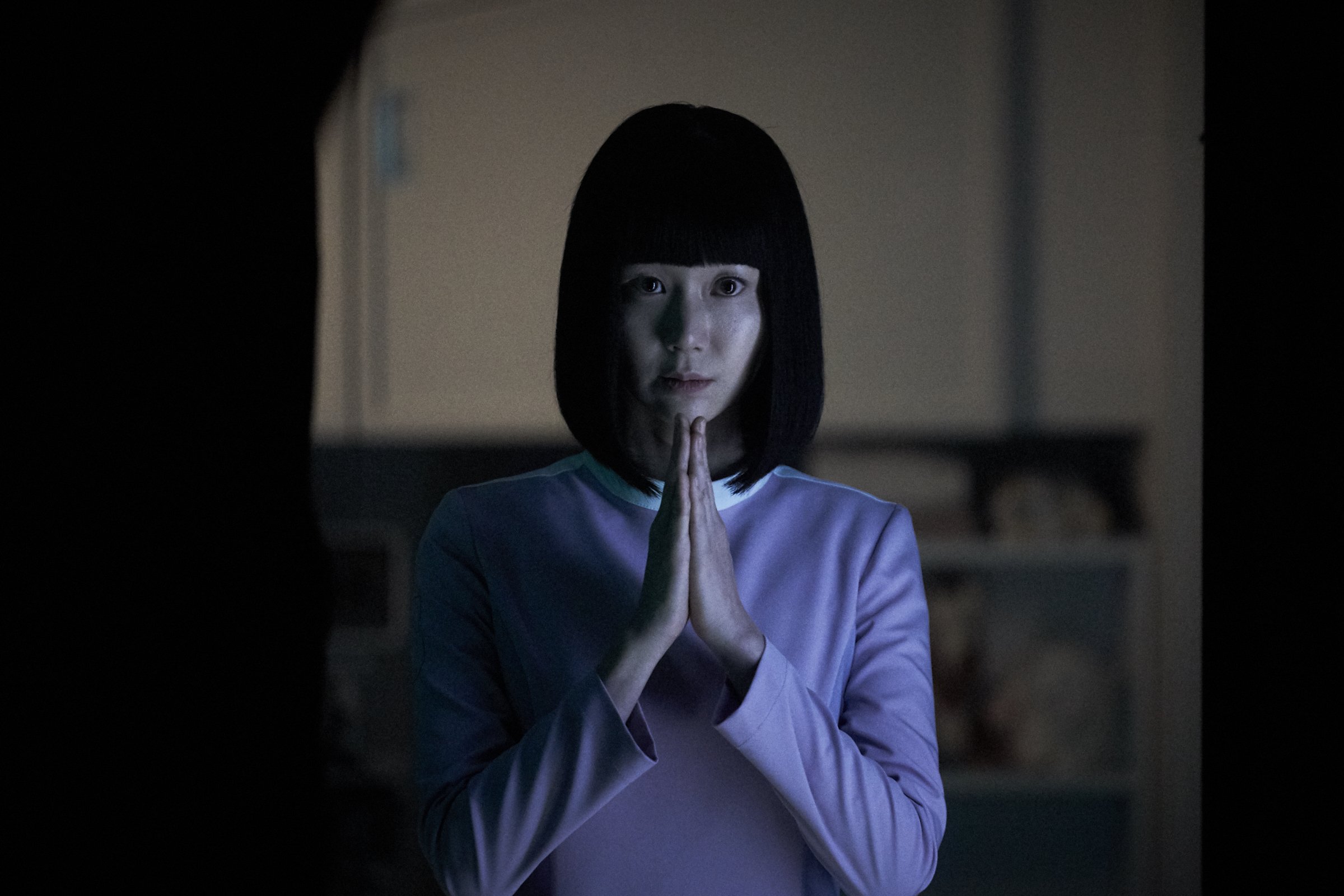
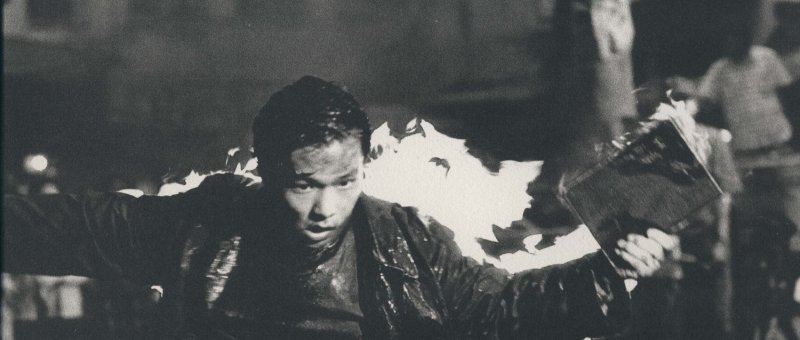


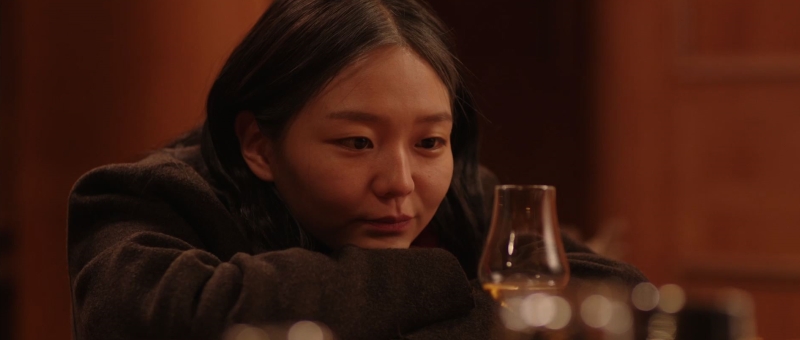
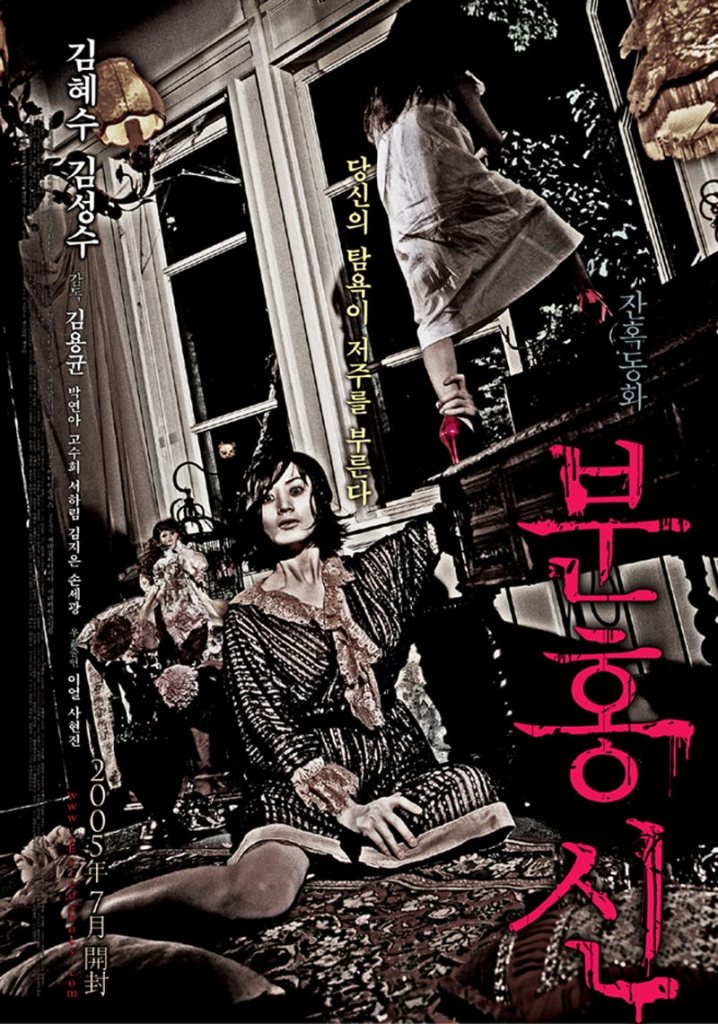 Walk a mile in a man’s shoes, they say, if you really want to understand him. If Kim Yong-gyun’s The Red Shoes (분홍신, Bunhongsin, 2005) is anything to go by, you’d better make sure you ask first and return them to their rightful owner afterwards without fear or covetousness. Loosely based on the classic Hans Christian Andersen tale this Korean take replaces dancing with murder and also mixes in elements from other popular Asian horror movies of the day, most notably
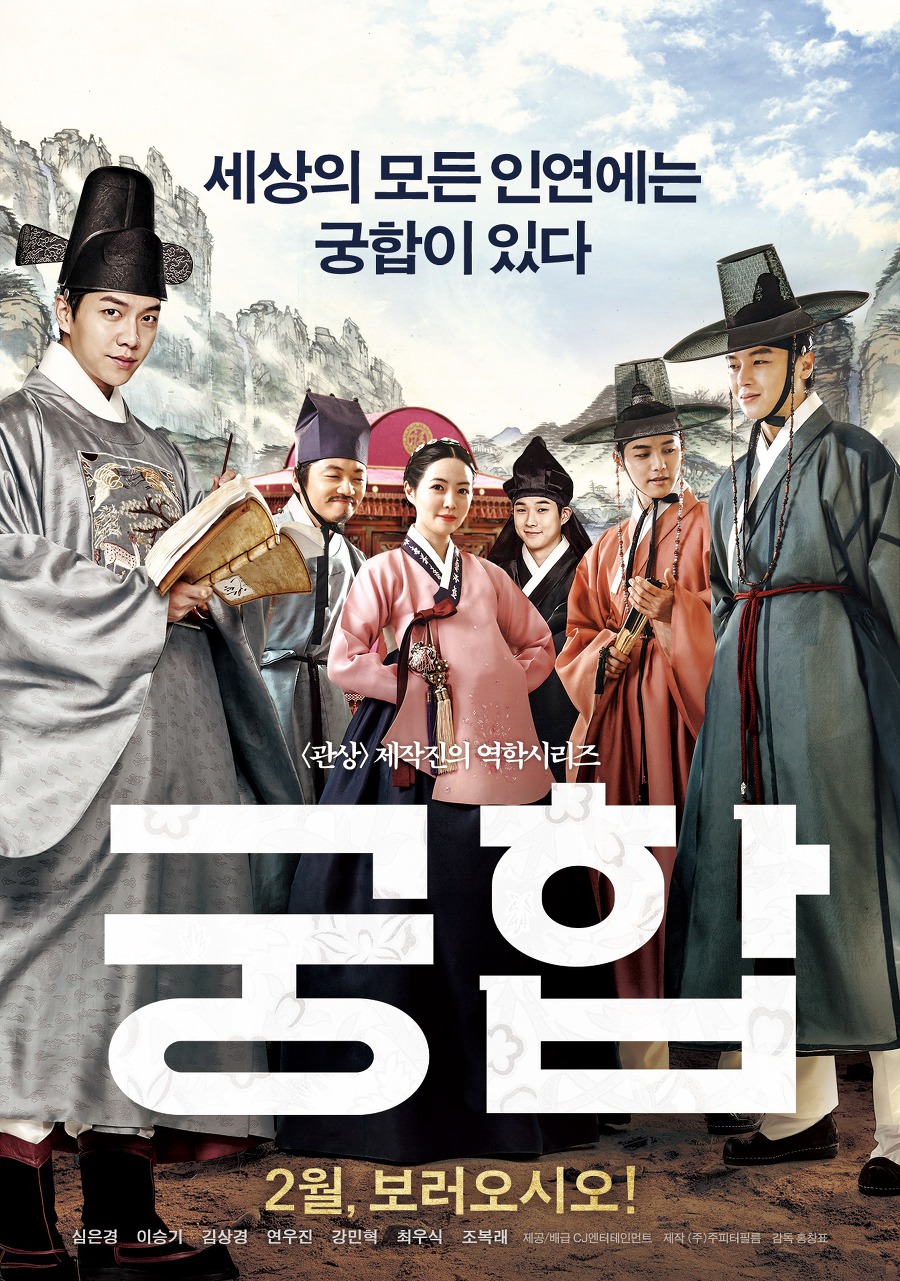
  You can become the King of all Korea and your mum still won’t be happy. So it is for poor Prince Sungwon (Kim Dong-wook) who becomes accidental Iago in this Joseon tale of betrayal, cruelty, and love turning to hate in the toxic environment of the imperial court – Kim Dae-seung’s The Concubine (후궁: 제왕의 첩, Hugoong: Jewangui Chub). Power and impotence corrupt equally as the battlefield shifts to the bedroom and sex becomes weapon and currency in a complex political struggle.
 For the world’s more full of weeping than you can understand – the residents of Goksung, the setting for Na Hong-jin’s nihilistic horror movie The Wailing (곡성, Goksung), might be inclined to agree with Yeats if only because the name of their town is also a homonym for the “sound of weeping”. There is plenty to weep over, and in places Na’s film begins to feel like one long plaintive cry reaching far back to the dawn of time but the main wounds are comparatively more recent – colonisation, not only of a landscape but of a soul. When it comes to gods, should you trust one over another simply because of its country of origin or is your faith to be bestowed in something with more universal application?
 Windows on Worlds