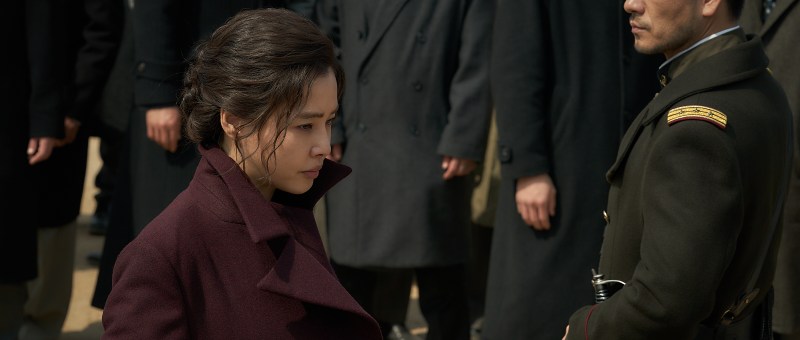
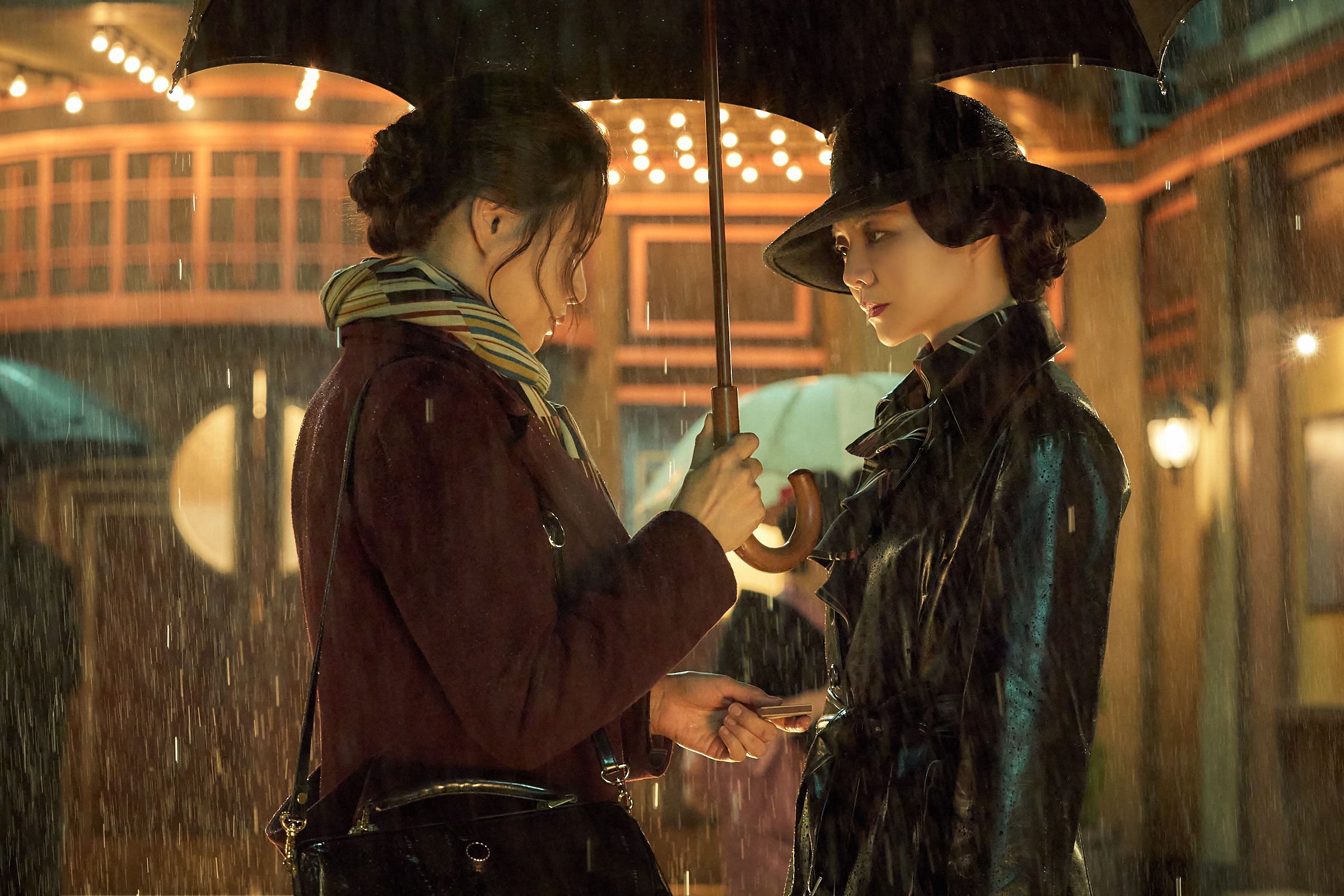
To The Supreme! (もっと超越した所へ。, Santa Yamagishi, 2022)

Is it worth staying in a dissatisfying relationship just so that you’ll have someone to carry your rice? The idealist in all of us might want to say no, but it’s undeniably a strong argument. The four heroines of Santa Yamagishi’s To the Supreme! (もっと超越した所へ。, Motto Chouetsushita Tokoro e), adapted from the stage play by Shuko Nemoto, find themselves asking just this question as their relationships with a series of narcissistic, selfish men reach a crisis point on the eve of the coronavirus pandemic. 

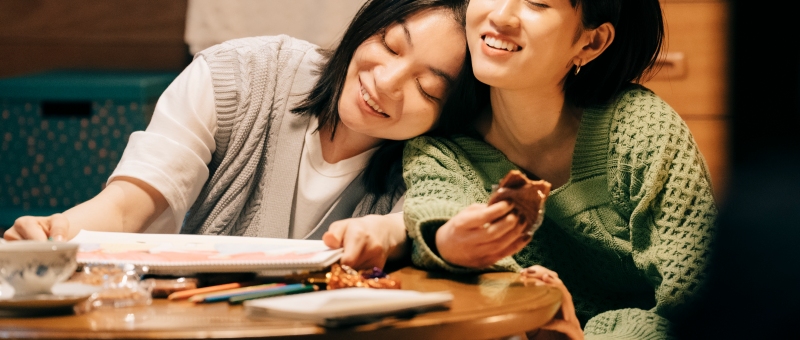
Opening in early 2020, the film finds costume designer Machiko (Atsuko Maeda) reconnecting with middle school friend Reito (Fuma Kikuchi) who abruptly announces he’s moving in because he’s worried about her given the tone of her late night tweets. Former actress turned variety star Suzu (Shuri) lives with her gay best friend, Tommy (Yudai Chiba), after ending a 10-year relationship with petulant former child star Shintaro (Takahiro Miura) who is now seeing sex worker Nanase (Mei Kurokawa). Miwa (Marika Ito), meanwhile, is in a relationship with vacuous hipster Taizo (Reiji Okamoto) who spent an exorbitant amount of money on gold grills as a present and seems to be very concerned about this new virus going around. 

None of these men have a full-time job and all are (or were at one time or another) supported by their partner who is shouldering the responsibility for rent and domestic bills singlehandedly, not that there’s anything wrong with that in itself if were not such a blatant attempt to take advantage of the women they claim to love. In a flashback to 2018, we discover that Miwa was previously in a relationship with Reito and she’s carried on giving him pocket money every month for the last two years despite having moved on romantically. In his sudden announcement to Machiko that he’ll be stying by her side for the foreseeable future, it’s difficult not to wonder if he’s simply looking for a free place to stay especially as he largely continues to mooch off her while doing so claiming his live streaming channel is sure to take off soon. 

Shintaro had similarly been supported by Suzu during the time they lived together and put on a big show of letting her kept the apartment when he left even though the apartment was hers anyway because it was her name on the lease and she paid the rent while he wasn’t working. More practically minded, Suzu had been taking jobs that paid in light entertainment and variety only to be branded a sellout by Shintaro who was nevertheless jealous of her success. A former child star, he feels humiliated taking bit parts and even working as an extra but talks a big game to Nanase whom he often brands “stupid” and looks down on for being a sex worker. He makes her shout out that he’s the best actor as she climaxes and quizzes her about foreign directors when she says she struggles to watch the films of Shunji Iwai because they make her wonder if there’s something wrong with her eyesight. When she genuinely tells him that she enjoyed his “performance” after spotting him as an extra in a movie, he tells her that a sex worker’s opinion doesn’t count despite having been paying for just that kind of validation the entire time. 

Suzu runs into a similar problem in developing feelings for Tommy who rejects her in an incredibly insensitive way when she tries to make a move on him. During a heated argument, Tommy yells at Suzu for ruining all his plans because he wants to start a family and was intending to marry a woman Suzu being a prime candidate. The film flirts with but does not really get into Tommy’s internalised homophobia in which he seems to regard his sexuality as a barrier to achieving the life he wants given the still conservative culture has not yet legalised same sex marriage and makes life difficult for same sex partners who want to raise children together. He lets himself off the hook suggesting that his sexuality permits him to be “selfish” while admitting that he too has taken advantage of women’s feelings for him without really giving much thought to their own. 

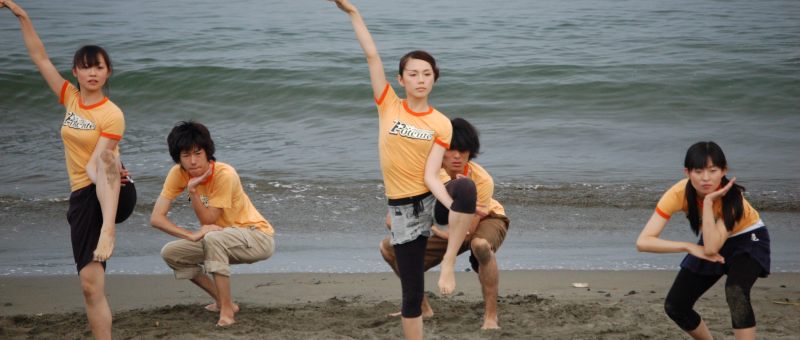
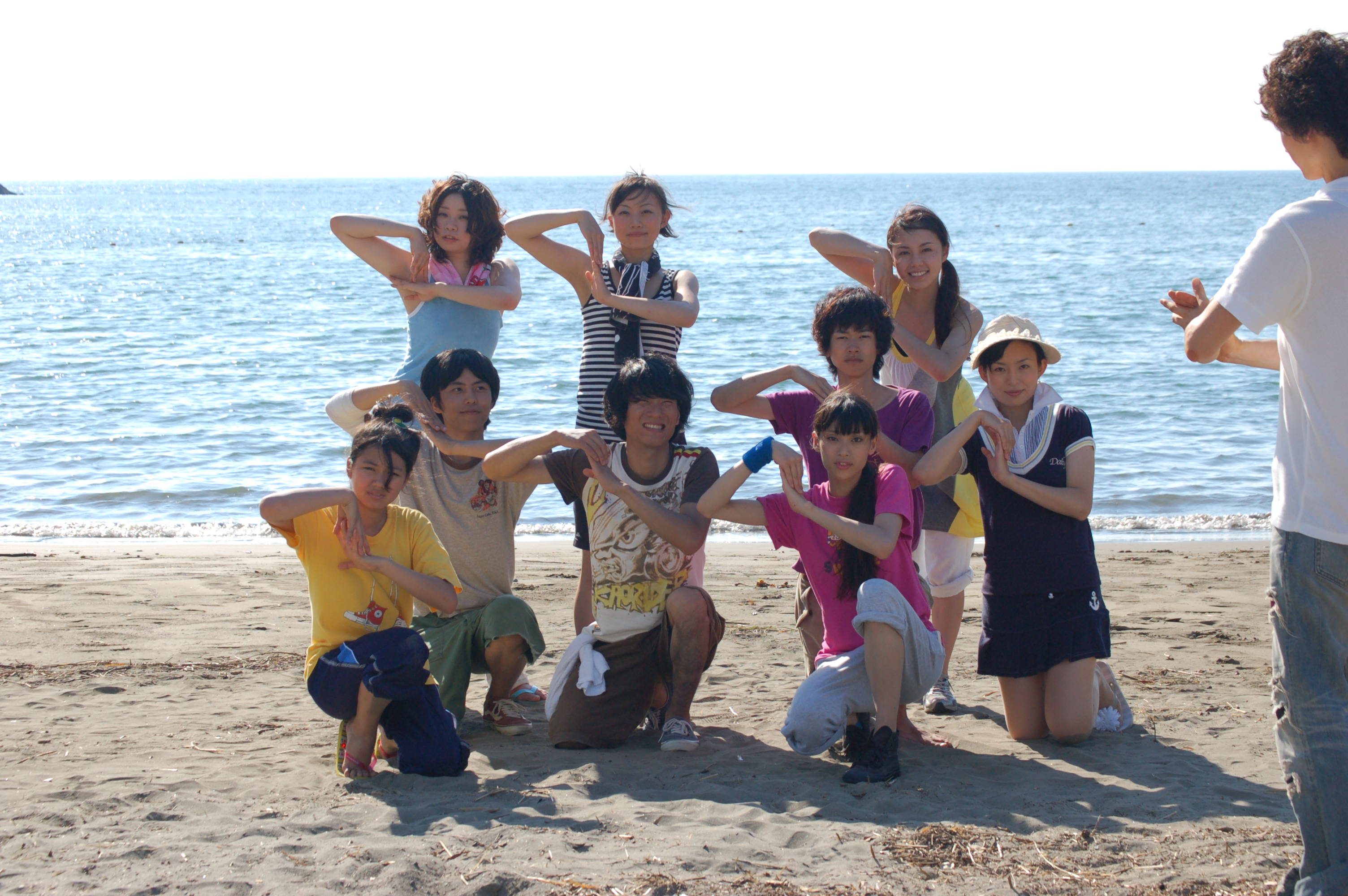
Taizo is much the same. On the surface, it looks like he is genuinely solicitous of Miwa though it’s really more that he doesn’t want to get sick himself or be responsible for looking after someone who is ill. When Miwa goes to the hospital thinking she may be pregnant, she gets some other distressing news but all Taizo can do is focus on himself not wanting to accept the responsibility of becoming a father. When she looks to him for comfort, he fixates on his own relief. These men are selfish, self-involved, proud and fragile in their masculinity requiring the women in their lives to take care of all their basic needs without lifting a finger to help. But the film doesn’t quite let the women off the hook either, a sudden coup de théâtre bringing them together to reconsider making clear that they themselves enable the men’s behaviour by forgiving them if in part because they expect little better and having someone around who could theoretically help out, for example by carrying heavy bags of rice home from the store, might make life easier even if they never actually do it. Witty and slickly edited, Yamagishi ends with a sudden intrusion of eijanaika dancers as if literally to say “what’s wrong with that?”, which might present a rather cynical view of contemporary romantic relationships but one that is also admittedly difficult to argue with. 


To The Supreme! screened as part of this year’s Nippon Connection.

Original trailer (English subtitles)

Egoist (エゴイスト, Daishi Matsunaga, 2022)

If love is unselfish, is it really love at all? Based on a semi-autobiographical novel by Makoto Takayama, Daishi Matsunaga’s deeply moving romantic drama Egoist (エゴイスト) asks if all love is in the end transactional and if to deny its “selfishness” is akin to denying love itself because it would mean denying a basic human need for connection and reciprocity. In the end, perhaps selfish is what we should be with love because we are always running out of time and if we aren’t careful it will slip away from us unnoticed.

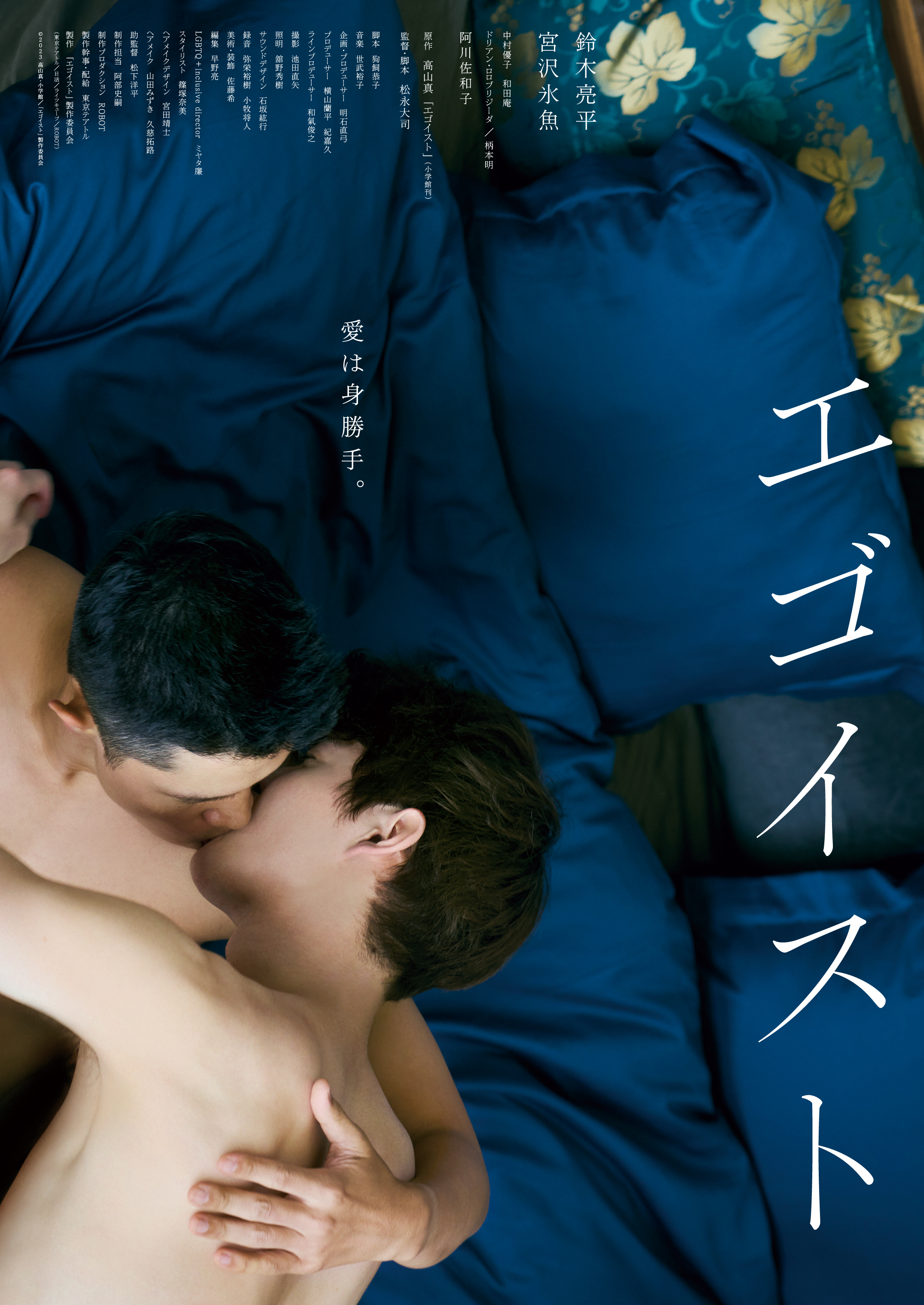
An “extreme realist”, fashion editor Kosuke (Ryohei Suzuki) is already full of regrets and many of them linking back to the early death of his mother from illness when he was only 14. It’s clear that his financial wealth helps to fill an emotional void but also that he’s lonely and longs for a sense of family that’s long been absent from his life. He rarely visits the conservative hometown where he was bullied for being different, and seems to have a strained relationship with his widowed father (Akira Emoto) who doesn’t know that Kosuke is gay and continues to ask him about getting married and settling down. Early on in his courtship with Ryuta (Hio Miyazawa), a personal trainer he met through a friend, Kosuke remarks that he’s never met a lover’s mother before hinting at the landmarks of a relationship such as marriage that LGBTQ+ people often miss out on in a conservative culture in which such things cannot always be discussed openly.

Later, Ryuta’s mother Taeko (Sawako Agawa) tells Kosuke that knew from that first meeting that they were more than just friends and was happy that her son had someone he loved who loved him regardless if they were a man or a woman. But just when the relationship had seemed to be blossoming, Ryuta had abruptly tried to break up with Kosuke explaining that he had been involved in sex work since his early teens in order to support his mother who was unable to work due to illness. Now that he’s experienced real romantic love he finds sex work “painful” but has no other means of supporting himself and so gives up love for economic necessity. “I’ll buy you,” Kosuke unironically counters adding a note of literal transactionality to their relationship which is already fraught with disparity in the respective differences in their ages along with Kosuke’s wealth and Ryuta’s poverty. 

Kosuke later describes his gesture as “pure”, something he’d previously called Ryuta while also remarking that he found him too “polite” in bed and would rather he be a little more “selfish”. In a way it’s altruistic, he isn’t really trying to trap Ryuta into a compensated relationship only to help him while simultaneously ensuring that he stays in his life. His wealth fills a void, but it’s by giving pieces of it away that he feels that void decreasing. Kosuke first gives Ryuta gifts for his mother, knowing that it’s easier for him to accept them because doing so is unselfish when the gift is for someone else. Even so as he later acknowledges sometimes the gift is more for himself than the recipient, a means not of manipulation but of healing. Kosuke claims not to know what love is and largely mediates it through money along with additional acts of care, but as Taeko later tells him it doesn’t really matter if he doesn’t know because they felt his love anyway. 

Matsunaga frequently cuts backs to visual motifs such as door numbers, envelopes, and dropped coins to hint at the transactionality of love but eventually reflects that love is an act of exchange in which the desire to be loved is an essential component. Kosuke eventually asks his father how it was for him when his mother was dying and he recalls a conversation in which she said she wanted to leave him because she couldn’t bear to see him suffering for her, a request which could in itself be read as “selfish” even in its “selflessness” with his reply implying that it’s alright to be selfish in love because in way it might be its ultimate expression. Filming with handheld realism, Matsunaga captures the rhythms of contemporary gay life along with the easy giddiness of burgeoning romance and the poignancy of profound loss tempered only by a fleeting feeling of warmth and the jealous memory of a “selfish” love. 


Egoist screens in Frankfurt 9th June as part of this year’s Nippon Connection.

International trailer (English subtitles)

The Cornered Mouse Dreams of Cheese (窮鼠はチーズの夢を見る, Isao Yukisada, 2020)

It’s quite a potent image somehow, a mouse caught in a trap unable to reach out and touch the cheese they’ve risked their life for yet continuing to dream of it as if nothing else really existed. Perhaps love is much the same, at least according to a young woman who warns against falling in love too deeply worrying that in the end you won’t be able to keep it together and so will fall apart. Adapted from a popular Boys Love manga by Setona Mizushiro, Isao Yukisada’s The Cornered Mouse Dreams of Cheese (窮鼠はチーズの夢を見る, Kyuso Wa Chizu No Yume Wo Miru) is in someways in dialogue with his earlier tale of triangulated love between two women Luxurious Bone, if sharing some of that film’s perhaps outdated attitudes towards sexuality. 

The titular mouse is office worker Kyoichi (Tadayoshi Ohkura) who is halfheartedly having an affair with a colleague seemingly just because he can. Unbeknownst to him, his wife has hired a private detective who just happens to be an old friend from university, Wataru (Ryo Narita). Wataru warns him that he’s got pictures of him and his mistress but agrees not to tell his wife, if Kyoichi agrees to accompany him to a hotel for some low level intimacy. The abruptness of the overture seems to hint that the two men had some kind of history in university but this appears not to be the case and Kyoichi continues to struggle with his sexuality partly it seems out of a degree of self-loathing that convinces him he’s not the sort of person anyone should love.

In Luxurious Bone, the problem had been that the two women could not quite accept the validity of their desire for each other and instead ended up having vicarious sex with the same guy. Something similar occurs between Kyoichi and Wataru each in their own way unable to accept the way they feel. Kyoichi repeatedly states that he doesn’t want to cause someone else pain but in fact hurts everyone around him because of his own inability to reckon with his feelings. He continues to womanise, but eventually asks Wataru to move into the grey industrial bachelor pad he gets when his marriage breaks down while keeping him at arm’s length. Wataru is jealous in a direct sense, resenting Kyoichi’s various girlfriends, but also on deeper level lacking faith in his homosexuality or at least ability to accept it fearing he will always in the end choose to be with a woman. 

Both men are imprisoned by an internalised homophobia, Kyoichi most obviously in rejecting his desire for Wataru. “A straight guy can’t handle it” he tells him in an ironic choice of words, earlier having told him that guys like him belonged “in another world”. The film seems to present Kyoichi’s sexuality as a binary choice, men or women, precluding the idea that he might simply be bisexual while inviting the inference that his womanising is an attempt to mask his latent homosexuality and that he is in fact living a lie in betrayal of himself in denying his desire for Wataru. But then Wataru is consumed by insecurity, as if on some level believing he is inherently inferior to a woman and that Kyoichi will always “choose” to be straight while simultaneously certain that he does in fact return his feelings. He tells him that his problem is that he passively accepts love from others but in the end doesn’t trust it and continues to look for it in the next person who shows any interest in him, but it seems Wataru doesn’t have much faith in love either pulling away just as Kyoichi draws closer and unable to accept the validity of his love for him. 

The film maintains some of the more frustrating aspects of BL literature in that it never really considers why Kyoichi rejects his same sex desire nor does it address what the potential complications of his life maybe if he were fully to accept his sexuality and attempt to live openly with Wataru. On the other hand, it perhaps lessons the impact of the darker elements of the interplay between the two men in which Wataru effectively stalks Kyoichi and then blackmails and bullies him into sex which the film justifies on the basis that Kyoichi must on some level want to be liberated from his repressed desire while Kyoichi in turn manipulates and tortures Wataru through his womanising and reluctance to enter a full sexual relationship even while living together. The film’s ambiguous closing scene in which Kyoichi sits on Wataru’s stool and places his yellow ashtray, looking oddly like a wedge of cheese, on his grey coffee table the only splash of colour in his exquisitely decorated yet desolate grey room may also uncomfortably hint that their love is always impossible because it is a love between two men rather than accepting that the only barriers to it lie in internalised homophobia and emotional vulnerability. Even so it is a fairly touching love story of a man learning to accept his sexuality even if in the end it leads to a re-imprisonment rather than a liberation. 


Original trailer (English subtitles)

Memento Mori (여고괴담 두번째 이야기, Kim Tae-yong & Min Kyu-dong, 1999)

Internalised shame leads to tragic, unforeseen consequences in landmark South Korean horror Memento Mori (여고괴담 두번째 이야기, Yeogogoedam Dubeonchae Iyagi). The second in a thematic series of high school ghost stories, the film was radical for its time in its presentation of same sex romance in demonising not the love but the world that would not accept it while otherwise painting a fairly bleak picture of the educational landscape in which teachers are only ever symbols of a corrupt authority intent on enforcing oppressive patriarchal social codes.

The film’s heroine is in many ways an audience member, or at least a fairly passive observer of the ongoing drama who only later inserts herself into the narrative. Min-ah (Kim Min-sun) discovers a mysterious “diary” near the sports ground and is quickly hooked on its cryptic contents even before realising that it details a lesbian relationship between two of her classmates who were at one point “close” but have since “drifted apart”. The author, Hyo-shin (Park Ye-jin), is already considered “weird” by her classmates and does seem to have an otherworldly quality, most particularly in her tendency to speak in an uncanny manner. She is also accused of being a “lesbian” by an obnoxious fellow student laying bare the way these teens already enforce a social prejudice which oppresses them all. 

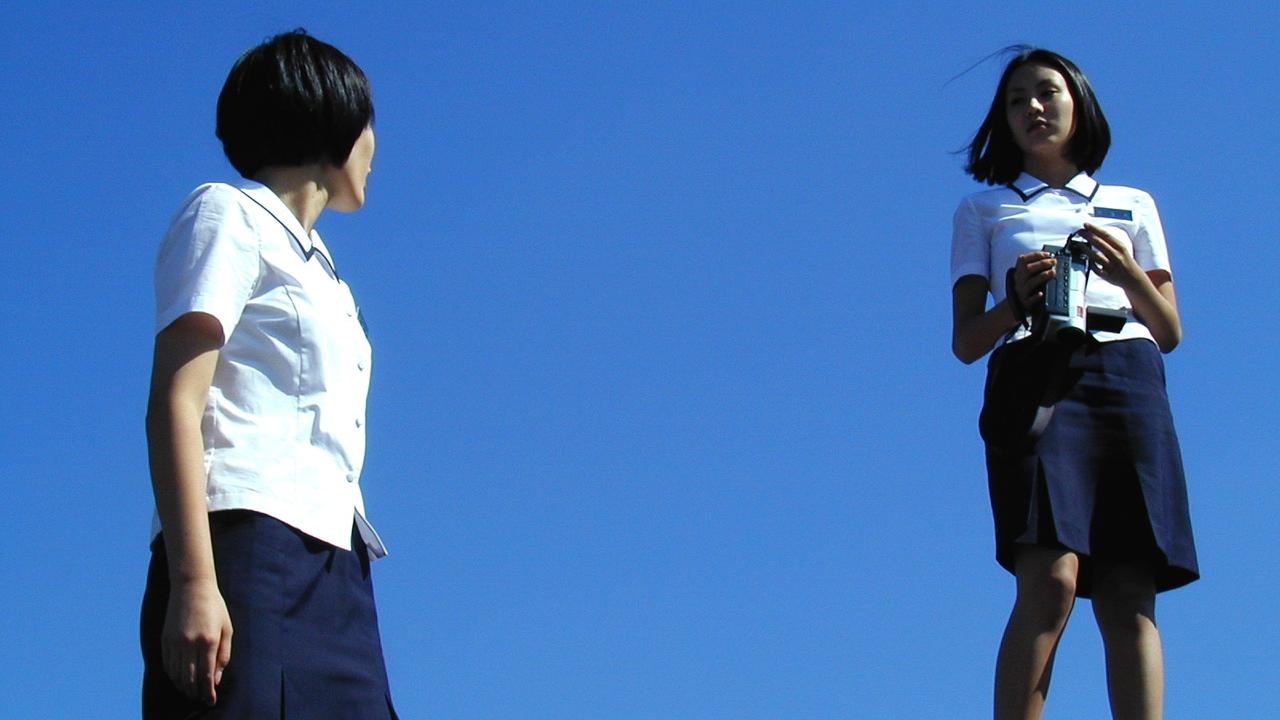
Min-ah’s friend Yeon-an (Kim Jae-in) has been fasting for the last few weeks to try and get her weight down before the school’s physical health check up, while Ji-won (Gong Hyo-jin) is similarly concerned with her chest measurement. This is an all girls school, and there is a clear preoccupation with the ability to conform to notions of conventional femininity while all of the teachers that we see aside from the school nurse are male and enforce discipline with quite shocking levels of violence. Yeon-an and Ji-won land up in trouble for playing around with a video camera they’d brought in to record choir practice when it’s discovered by a teacher who reacts as if he thinks the girls are on some kind of whistleblowing mission. He clearly feels that his authority has been questioned, which also implies that he knows his behaviour is “wrong”, and punishes the girls for their “rebellion” against him. 

After Hyo-shin dies in an apparent suicide, it is rumoured that she may have been pregnant which would certainly explain her desire to get out of the health check. In a flashback, she suggests that she may have drifted into an inappropriate sexual relationship with a dejected teacher, Mr. Goh (Baek Jong-hak), who claims that he doesn’t get on with his “materialistic” colleagues while fed up with the vacuous teenage girls he’s supposed to be teaching. Yet Mr. Goh appears to have suffered little after Hyo-shin’s death despite being the apparent father of her unborn child, leaving only Hyo-shin’s vengeful spirit to enact some kind of justice. 

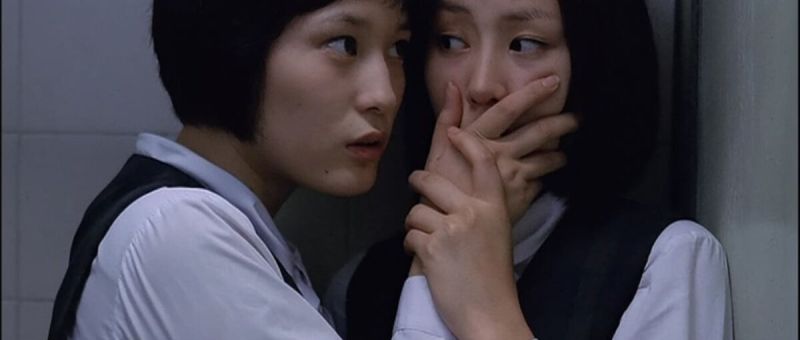
It’s Mr. Goh who did in some way disrupt the relationship between Hyo-shin and Shi-eun (Lee Young-jin) who seems to feel on some level betrayed while deepening her inner conflict as regards her sexuality. Unlike the other girls, Shi-eun presents in a slightly more masculine fashion, not least because of her athleticism, and is filled with an internalised shame about her relationship with Hyo-shin which she otherwise does not share. In the dreamlike scene which opens the film, Hyo-shin and Shi-eun are plunged into water tied at the ankle by the red string of fate which in popular mythology signifies a true romantic connection. But as they fall together, Shi-eun begins to panic and unties herself. She violently pushes Hyo-shin away who then continues to sink into the murky depths below. This act of physical rejection is repeated several times, most notably when Hyo-shin kisses Shi-eun in front of their classmates shortly after she has been struck in the face by their teacher. Shi-eun pushes her away, and thereafter ignores her before directly stating that she is “ashamed” and does not care what Hyo-shin decides to do with her life. 

It’s this rejection that the film posits as the cause of Hyo-shin’s suicide, though the romance itself is constantly overshadowed by death. Obsessed with the diary, Min-ah eats a “magic” sweet stuck inside which is described as some kind of love poison for which Hyo-shin has an antidote, only in the climax of the film it seems to be the reverse and a kind of prelude to a double suicide. In the dreamworld created by Hyo-shin’s spirit, the schoolgirls assemble for something that looks a lot like a wedding though ostensibly a birthday party in which the couple is accepted by the world around them only in reality it can never happen in part because Shi-eun herself does not permit it to. 

Directors Kim and Min hint at the feverish atmosphere with blown out whites and strange angles even before entering the menacing dreamscape of Hyo-shin’s revenge, lending a note of unsteadiness to Min-ah’s obsessive investigation of the diary that perhaps reveals something of herself even as it draws her towards a dark spiritual destiny. In any case, what it leaves behind is a deep sense of melancholy for the tragedy of the teenage lovers who in the end maybe the ones haunted by the world around them.


Memento Mori screened as part of this year’s Queer East .

Trailer (English subtitles)

Stateless Things (줄탁동시, Kim Kyung-Mook, 2011)

“We looked everywhere for a place for us to stay, but we could not find it anywhere” one of the twin heroes of Kim Kyung-mook’s indie drama Stateless Things (줄탁동시, Jooltak Dongshi) confesses. As the title suggests, Kim’s eventually surrealist drama follows those who no longer have a home and are instead condemned to wander the margins of an unforgiving city. Finding only loneliness and exploitation they long for an escape and perhaps find one if only in a moment of eclipse. 

Shooting in a more naturalistic, documentary style, Kim first focusses on the figure of Jun (Paul Lee), a young North Korean refugee who lost his mother in the crossing and his father to another woman in Busan. He works in a petrol station but is treated with disdain by his boss who has his eye on his female colleague, Soon-hee (Kim Sae-Byuk), who is a member of the Korean minority in China where most of her family reside. Though originally hostile towards each other, each wary of their mutual isolation and concurrent vulnerability, the pair later bond in a shared resentment of their boss who exploits Jun physically for his labour and seeks to exploit Soon-hee sexually. After each saving the other from the nefarious boss, the pair have no choice but to go on the run taking in a series of tourist spots while looking for another place to settle. 

Meanwhile, across town, a young gay man, Hyun (Yeom Hyun-Joon), is a virtual prisoner in the home of his wealthy, married and closeted lover. He looks out across the midnight city and dances sadly alone in a luxury apartment in the sky while occasionally venturing out to meet other men, mostly older, who similarly only intend to exploit his body. “You have nowhere to go.” the exasperated Sung-woo/Sung-hoon (Lim Hyung-Guk) insists, thrown into jealous anxiety on visiting the flat and finding Hyun absent, yet he cannot really offer him a “home” and is all too aware of the transactional nature of their relationship. Though Hyun is also in a sense “stateless”, he has a power over Sung-woo and is able to wield his youth and beauty like a weapon if one he may not fully be able to control. In any case, he too is excluded from the mainstream society by virtue of his sexuality and socio-economic background. 

When Soon-hee and Jun visit a temple, he remarks on the incongruity of seeing a painting that features both a sun and a moon. She explains a folktale to him in which sun and moon are embodiments of siblings who climbed a rope into the sky to escape a hungry tiger. In his diary, Hyun also envisages a pair of twins one opening a door with his right hand as the other closes it with his left. In the surrealist sequence which closes the film, after a title card that appears 90 minutes in, the two men blur into one another as if they shared the same soul in an almost literal eclipse of the self. Kim nevertheless characterises them as sun and moon who cannot ordinarily share the same space. Jun occupies a world of street level sunniness until the light finally begins to dim leaving him alone in a dusky, rain-soaked city. Hyun meanwhile lives by night in his high rise apartment, a prisoner of luxury who flirts with danger for a sense of escape. 

Then again we might ask if Jun and Hyun are two sides of one whole, a sun and moon protecting the king who finds himself an exile. Kim shifts to scenes of emptiness, rooms without presence and streets without life as if the two men were ghosts of themselves hovering above a rootless Seoul, the sense of eeriness only deepened by Kim’s lengthy takes as he follows Jun walking a lonely path towards nowhere in particular because in the end he too has nowhere to go. Departing from the realism with which the film opened, the final sequence gives way to a kind of rebirth if only one of wandering that leaves its heroes at the mercy of a society continually unwilling to recognise their personhood. 


Stateless Things screened as part of this year’s Queer East .

Trailer (English subtitles)

King and the Clown (왕의 남자, Lee Joon-ik, 2005)

The feudal order conspires against everyone from minstrel to king in Lee Joon-ik’s Shakespearean historical epic, King and the Clown (왕의 남자, Wang-ui Namja). The Korean title might translate to the equally ambiguous “The King’s Man”, but in any case invites the question of who it is that is the “king” and who the “clown” though in practice it might not matter because their roles are to a degree interchangeable. Nevertheless, a minstrel’s attempt to transgress class boundaries eventually leads to tragedy but also perhaps defiance in his seizing of the little freedom that is given to him. 

The oppressiveness of the system is emphasised in the opening text which explains the historical background and reveals that the king of this story was considered a tyrant, though also thought to be sensitive and intelligent, while permanently damaged by the early death of his mother who was forced to take her own life because of machinations in the court. The King (Jung Jin-young) himself rails at the system complaining that he has no real power and is largely unable to overrule the advice of his courtiers who remain loyal to his late father and simultaneously force him to obey the rule of a man who is already dead. In this internecine feudal society, not even the king is free. 

This might in a sense explain his tyranny, borne both of an anxiety over the precarity of his rule (the text also reveals that he was deposed by his courtiers shortly after the film concludes) and is otherwise engaged in a kind of frustrated boundary pushing. At heart, he is a wounded and petulant child. His eventual decision to participate in the clown show put on by Jang-saeng (Kam Woo-sung) and his troupe of jesters hints at his mental instability and growing inability to discern reality from fantasy, or to a point perhaps there is no true “reality” for a king and so the distinction no longer matters as there is no real difference for him between a man “dying” in a play and dying for real. 

For Jang-saeng, however, there is a difference. He and his brother-in-arms Gong-gil (Lee Joon-gi) are technically on the run after Gong-gil ended up killing their manager to defend Jang-saeng who had tried to protect him from exploitation in being pimped out as a male sex worker to earn extra money for the company. It’s Jang-saeng who hits on the lucrative opportunities of satire after teaming up with three other minstrels in the capital and hearing tales of the King’s scandalous sex life. This obviously gets him into hot water with the authorities, though Jang-saeng talks himself out of trouble by convincing conflicted courtier Cheo-seon (Jang Hang-seon) to allow them to perform before the King who actively enjoys being mocked and brings the clowns into the palace to entertain him at his pleasure causing a further rift with his conservative courtiers who do not enjoy having their dirty dealings exposed through bawdy street theatre. 

The repeated visual motif of the tightrope emphasises the fine line Jang-saeng is walking as a commoner in the court. Cheo-seon had hoped their performance would show the King the extent of the corruption among his courtiers, but the results leave Jang-seong conflicted as he sees men die as a result of his comedy while failing in his primary goal of protecting Gong-gil from exploitation as he quickly becomes a favourite of the King again endangering their position as they become a target for the King’s mistress (Kang Sung-yeon), a former sex worker who had like them used her natural gifts to transgress the boundaries of class. Cheo-seon complains that it’s the King’s “lust for a boy” which has corrupted the court, while Jang-seong’s resentment may otherwise be unwarranted as Gong-gil appears to like and pity the King and may have come to his own decision about advancing his fortunes despite Jang-seong’s assertion that there are some things that should not be sold.  

But as Jang-seong comes to realise, all around the tightrope is an abyss. “Never knew a fool who knew his place” Jang-seong wrote in one of his plays and that is in someways his tragedy, that he dared to challenge the social order but in the end could not overcome it and neither could the King. Even so he may find a kind of freedom in seeking escape from a cruel and oppressive society in the only way that is available to him. “The world’s but a stage. Kingly is he who struts for a while, then exits in style” Jang-seong exclaims, a “sightless fool” who finally knows where he stands.


King and the Clown screened as part of this year’s Queer East .

Trailer (English subtitles)

About Us But Not About Us (Jun Robles Lana, 2022)

A lunchtime conversation between two men provokes a series of confrontations in Jun Robles Lana’s pressing psychological drama About Us But Not About Us. There is indeed more going on than it seems, prompting a number of questions about who it is that’s really in control along with the subjective quality of memory and personal myth making. After all as the younger of the men later says, nothing compares to our fictional counterparts both those we create for ourselves and those born of the projections of of others. 

40-year-old professor Eric (Romnick Sarmenta) takes a look at the bags under his eyes in the mirror of his classic Beetle as he arrives at a restaurant for a lunch meeting with a student and gently applies moisturiser to his eyes before heading inside. It’s a small moment that hints at his insecurity about his age and also that he may have more interest in the student, Lance (Elijah Canlas), than he later claims. Lance is already waiting, perky and preppy in his neutral beige outfit and non-threatening haircut. The purpose of the meeting seems to be so that Lance can return the keys to Eric’s spare flat where he had being staying to escape an abusive stepfather. Lance no longer feels comfortable being there, in part because he’s afraid false rumours that there may be something inappropriate going on between them could cause problems for them both at the university, but also because he worries that his presence may have contributed to the suicide of Eric’s late partner Marcus, a leading light of English-language literature in the Philippines. 

Marcus had known about Eric’s interest in Lance but warned him about becoming too involved seeing as he is a teacher and Lance his student not to mention that he is also 20 years older and even if he’s done nothing wrong others may read his well-meaning attempts to help as “inappropriate”. But then we start to wonder, is Lance really as helpless as he claims to be? It seems strange that a 22-year-old man would need this kind of rescuing, perhaps as some have suggested he’s constructed an image of himself as vulnerable so that Eric will feel compelled to help him. Despite his seeming meekness, Lance does appear to be ambitious yet insecure smarting from an offhand comment of Marcus’ that he may in the end lack the necessary talent to be accounted a writer. 

In a theatrical conceit, Lana realises the projected images each has of the other to segue into recreations of previous meetings in which either Eric or Lance plays the role of the absent Marcus whose views are recounted only in the book he had written shortly before he died, his first in Filipino, or filtered through the memories and intentions of the other two men who of course may not be entirely honest in their recollections. Eric insists the problems that may or may not have existed between himself and Marcus were not not really “about” Lance. He claims to have been unhappy and emotionally neglected for years if also still in love, while later conceding that the book is both about and not about them in its retelling of a “trashy” love triangle as an intensely literary potboiler. 

That the book is in Filipino rather than English may hint at a further desire for “authenticity”, as may Lance’s desire to transfer from the English department to that in his native language. Yet neither man is really being “authentic”, not entirely able to reclaim themselves from the image projected onto them by others. The battle for control shifts uneasily between them, Eric assuming he has the upper hand by virtue of his age and position all while Lance may be cynically manipulating him, playing on his latent desire while fluffing his ego in appearing as a lost young man in need of help and guidance. Even so, a possibly imagined conversation with Marcus later suggests that Eric enjoys the subversion and is at heart a masochist who actively seeks to be controlled, perhaps he knows what the game is after all. Lana ends on a note of ambiguity in which it seems there is a choice to be made between sustaining a fiction and rejecting it but then again “sometimes feelings are more important than the truth.”


About Us But Not About Us screened as part of this year’s Queer East .

Original trailer (English subtitles)

Home Ground (홈그라운드, Kwon Aram, 2022)

The ageing proprietor of an endangered lesbian bar reflects on the changing nature of queer culture in Korea over the last five decades in Kwon Aram’s contemplative documentary Home Ground (홈그라운드). “Home ground” is what many have come to regard spaces such as LesVos, but with changing times and the effects of the coronavirus pandemic maintaining them is becoming ever harder leaving the community with the few places to gather where they can come together in safety and solidarity. 

Though it has moved location, the documentary’s primary subject, Myong-woo, has run bar LesVos since in the late ‘90s. The first openly lesbian bar in Korea, it has provided a friendly and welcoming space for the LGBTQ+ community for almost 30 years though as Myong-woo relates times have certainly changed as they look back to the queer bars of Myeong-dong in 1970s including the legendary Chanel Tearoom which was raided by police in 1974 on the grounds of its scandalous “Decadence”. Kwon uses a mixture of stock footage and re-enactments to recreate the atmosphere of bygone eras as Myong-woo’s oldest friend Kkokji recalls the atmosphere at Chanel which had a strict no long hair rule and expected its patrons to dress smartly in suits. 

Like Myong-woo, Kkokji identifies himself as a transman and prefers to be address as “hyung” (older brother) though the pair are often mistakenly addressed as “auntie”. Myong-woo recalls breaking the heart of a boy in middle school whom he “dated” to fit in, knowing that he had to hide his sexuality though he seems to have been well accepted now in reuniting with a collection of school friends at LesVos. Kkokji meanwhile laments his difficulties finding employment because of his appearance and gender presentation while recalling a violent past as a street brawler and recruiter of women for bars in the ’70s and ’80s. 

LesVos by comparison seems to have been a more wholesome place, Myong-woo recalling that in the old days cherry coke and ice cream sundaes were firm favourites of the clientele. Before the bar existed, queer teens used to hang out in Shinchon Park where they found a sense of community along with an opportunity to meet new people in a comparatively safe place where they could be themselves. After checking with the licensing authorities who told him it was fine as long as he didn’t sell cigarettes or alcohol, Myong-Woo opened the bar to teens so they’d have a place to go that was safer than hanging out in the streets. 

Another former patron has created a safe space of her own in a queer-friendly dance studio where as she puts it they make life more fun and less lonely. Yet in the face of the pandemic, the community lost the ability to come together while faced with additional prejudice after the coronavirus cluster in an Itaewon club. As one interviewee relates, people began to blame LGBTQ+ people as if they were uniquely irresponsible without thinking about the reasons why the community feels the need to come together. Another adds that queer people were already “social distancing” before the pandemic, and that without queer spaces are often forced to hide who they are in a society which can often be hostile. 

Faced with the economic realities of the pandemic, Myong-woo worries he will have to close the bar while countless similar spaces have pasted closing notices on their doors. Myong-Woo himself is also ageing, a trip to the doctors revealing the toll standing for hours every day has taken on his feet while he’s also taken on another part-time job working in a kimbap shop with no money coming in through the bar. Even so he reveals how much he’s learning from his younger customers about how the community has changed while society largely refuses to. He reflects that he thought the young people of today had it better, but realises he is mistaken on attending a rally protesting the death of a transgender soldier who took their own life after being discharged from the army because of their transition. Myong-woo keeps the bar open to provide a place of refuge for those who may not have anywhere else to go, opening their doors on holidays for those who have only their queer family to rely on. “You can’t do it alone,” he reflects doing his best to preserve a small space of safety and solidarity amid a sometimes hostile atmosphere.


Home Ground screens at The Barbican 30th April as part of this year’s Queer East .

Bad Women of China (中华坏女人, He Xiaopei, 2021)

“Mum gave all her love to the Party and saved her grudges for family.” As she explains, documentarian He Xiaopei began her documentary Bad Women of China (中华坏女人, Zhōnghuá Huài Nǚrén) as a means of communicating with the mother who remained silent and distant towards her, yet nevertheless contemplates three generations of Chinese women through the prism of her own life as a lesbian who lived much of her life abroad. 

After many years living in the UK, Xiaopei returned to China with her grown-up daughter Qiao whom she ended up asking to interview her mother Yun Li in an attempt to improve her relationship with her. In a sense it works, Yun Li begins to talk about her life and history which as it turns out is very much intertwined with that of the Communist Party. The disconnection between them stems from Xiaopei’s sense of abandonment, unable to understand as a child why her mother decided to live separately from the family in a dorm at the Foreign Languages Institute where she studied and trained diplomats. In the prelude to the Cultural Revolution, Yun Li was branded a “rightist”. Sent to the country for re-education she seems to have overcorrected, leaving her family to prove her devotion to the Party. 

Then again, despite her hurt and longing Xiaopei is later forced to realise that she became a mother much like her own. Though she identified herself as a lesbian at a young age, Xiaopei married at random to have an attachment that was to life more than anything else and then had her daughter but became estranged from the husband with whom she had little in common. She too left Qiao behind for long periods of time while she went to study abroad, first as an economist and then intending to study feminism before eventually moving to the UK with longtime partner Susie and bringing her daughter with her. In the closing scenes of the film which are shot with sound only against a black screen, Qiao confronts her mother in the way Xiaopei was unable to do directly telling her that she felt neglected, that she wanted more love and a sense of reassurance Xiaopei was unable to give her. 

Qiao too is in many ways much like her mother and grandmother, a fiercely independent woman with complicated and fast moving love life. Yun Li had been something of a trailblazer, choosing a husband for herself and getting married on her own only informing her family afterwards in an age which still favoured arranged marriage. She was once struck dumb in childhood when an uncle who was taking care of her refused to let her attend school, and is insistent that a woman should be financially independent rather than rely on a man. Xiaopei broke with convention in divorcing her husband to embrace her authentic self by living openly as a lesbian albeit in the comparatively less conservative UK where she eventually married in 2005 if only to divorce some years later. 

This rebellious sense of autonomy is perhaps why Xiaopei titles the film “bad women” as each of them in some way reject social convention, though there is also the implication that Yun Li’s life was disrupted by her involvement with the Communist Party to which she remains devoted despite the way it treated her and the way she knows it to have treated others. Xiaopei reflects that Yun Li was never interested in fulfilling the stereotypical role of the good wife and mother, and realises that in the end neither was she though she tried to do her best and is in a sense received that Qiao wants her to be a partner and a friend in her life even if she could never fully reconcile with Yun Li who remained frustratingly distant from her. In a certain way, their reconciliation hints at a new sense of liberation in the modern society that allows the women to shake off the roles of mother and daughter and rebuild their relationship on a more equal footing even while the family scatters itself around the world increasing the physical distance between them but shrinking the emotional. 


Bad Women of China screens at Bertha DocHouse 27th April as part of this year’s Queer East 

Trailer (English subtitles)

Typhoon Club (台風クラブ, Shinji Somai, 1985)

A collection of frustrated teens find themselves trapped within a literal storm of adolescence in Shinji Somai’s seminal youth drama Typhoon Club (台風クラブ, Taifu Club). “You’ve been acting weird lately” one character says to another, but he’s been “acting weird” too and so has everyone else as they attempt to reconcile themselves with an oncoming world of phoney adulthood, impending mortality, and the advent of desires they either are unable or afraid to understand, or perhaps understand all too well but worry they will not be understood. 

Most of the teens seem to look to the pensive Mikami (Yuichi Mikami) as a mentor figure. It’s Mikami they call when some of the girls end up half drowning male classmate Akira (Toshiyuki Matsunaga) after some “fun” in the pool gets out of hand. Luckily, Akira is not too badly affected either physically or emotionally, but presents something of a mirror to Mikami’s introspection. Slightly dim and etherial, he entertains his friends by seeing how many pencils he can stick up his nose at the same time, but he’s also as he later says the first to see the rain once it eventually arrives. Notably he leaves before it traps several of the others inside the school without adult supervision and otherwise misses out on the climactic events inside. Even so, Rie (Yuki Kudo), who also misses out by virtue of randomly stealing off to Tokyo for the day, later remarks that he too seems like he’s grown though her words may also be a kind of self projection. 

Mikami’s kind of girlfriend, perpetual spoon-bender Rie, finds herself at a literal crossroads after waking up late because her mother evidently did not return home the night before. Eventually she sets off for class running all the way, but then reaches a fork in the road and changes her mind heading to Tokyo instead. Mikami has been accepted into a prestigious high school there, and perhaps a part of her wanted to go too or at least to get closer to him through familiarity with an unfamiliar environment. Unfortunately she soon encounters a firearms enthusiast (Toshinori Omi) who buys her new clothes and takes her back to his flat which she thankfully manages to escape even if she’s stuck in the city because of a landslide caused by the typhoon.  

Mikami, however, continues to worry about her unable to understand why he’s the only one seemingly bothered about her whereabouts believing she’s “gone crazy”. Trapped in the school, the kids try to ring their teacher Umemiya (Tomokazu Miura) for help but he’s already drunk and can’t really be bothered. In any case he has problems of his own in that his girlfriend’s mother suddenly turned up during class to berate him for stringing her daughter along and also having borrowed a large amount of money which obviously ought to have some strings attached, only as it turns out Junko leant the money to another guy she was seeing though it’s not exactly clear whether she and Umemiya actually broke up or not. “In 15 years you’ll be exactly like me” Umemiya bitterly intones into the phone when Mikami directly states that he no longer respects him deepening Mikami’s adolescent sense of nihilistic despair. 

Of all the teens, he does seem to be the most preoccupied with death. “As long as she’s an egg, the hen can’t fly” he and his brother reflect on discussing if it’s possible for an individual to transcend its species and if it’s possible to transcend it though death all of which lends his eventual decision a note of poignant irony even if its absurd grimness seems to be a strange homage to The Inugami Family. As he points out to his somewhat disturbed friend Ken (Shigeru Benibayashi), “I am not like you” and indeed Ken isn’t quite like the other teens. Obsessed with fellow student Michiko (Yuka Ohnishi) but unable to articulate his feelings, Ken pours acid down her back and watches her squirm as it eats into her flesh. Repeating pleasantries to himself as a mantra, he later attempts to rape her after violently kicking in the dividing walls of the school only to be stopped in his tracks on noticing the scar again and being reminded that he is hurting her. 

The storm seems to provoke a kind of madness, the teens embracing an elusive freedom entirely at odds with the rigid educational environment. The other three girls trapped in the school are a lesbian couple who’d been hiding out in the drama department and their third wheel friend who might otherwise have been keen to hide their relationship from prying eyes having previously been caught out by a bemused and seemingly all seeing Akira. But in this temporary space of constraint and liberation, the teens are each free for a moment at least to be who they are with even Ken and Michiko seemingly setting aside what had just happened between them. They co-opt the stage for a dance party and then take it outside, throwing off their clothes to dance (almost) naked in the rain while a fully clothed Rie does something similar on the streets of the capital. In some ways, in that moment at least they begin to transcend themselves crossing a line into adulthood in a symbolic rebirth. In any case, Somai’s characteristically long takes add to the etherial atmosphere as do his occasional forays into the strange such as Rie’s encounter with a pair of ocarina-playing performance artists in an empty arcade. “We want to go home, but we can’t move” Mikami says looking for guidance his teacher is unwilling to give him neatly underlining the adolescent condition as the teens begin realise they’ll have to find their own way out of this particular storm. 


Typhoon Club screens at Japan Society New York on April 28 as part of Rites of Passage: The Films of Shinji Somai