
Coming to You (너에게 가는 길, Byun Gyu-ri, 2021)

South Korea is one of the least progressive Asian nations when it comes to the rights of the LGBTQ+ community who often face social prejudice and outright hostility from the religious right. A counter protestor at a Pride rally in Byun Gyu-ri’s documentary Coming to You (너에게 가는 길, Neoege Ganeun Gil) loudly screams in the face of allies, claiming to love his nation which is why he’s bringing his kids up to be model Korean citizens while insisting, incorrectly, that homosexuality is “illegal” and the Pride goers all need to leave the country as soon as possible. 

The man is perhaps an extreme case, but it’s just this kind of aggressive hostility that led two mothers to fear for their children even as they struggled internally to accept their their coming out. Firefighter Nabi had no idea what to think when her only child Hangyeol told her that they hated their body so much it had led to them experiencing suicidal thoughts. Nabi simply thought it was a phase or else that it was born of the discrimination women face in society and told Hangyeol so directly which only added to their mounting depression and sense of impossibility. Air hostess Vivian meanwhile was stunned when her son Yejoon handed her a letter that began “I am a homosexual”. Though she was accustomed to meeting all kinds of people in her work, she couldn’t quite take in what her son had told her and was then fearful that his life would be difficult or lonely going so far as to apologise for having given birth to him. 

Both women have since become staunch defenders of their children’s right to happiness through their involvement with PFLAG, an organisation for parents of LGBTQ+ children yet they are still frustrated by their conservative nation and its slow progress towards equality. Hangyeol’s chief problem is that they are unable to find steady employment because of the mismatch between their identity documents and gender presentation. On trying to get their gender changed from female, which they were assigned at birth, to male, they face several hurdles including an arcane regulation that insists that even as adults those wishing to legally change their gender must have the permission of both parents (the law was abandoned only in 2019). This is obviously difficult for many transgender people who may have become estranged from their families or otherwise not wish to contact them, leaving aside the absurdity of needing to ask for permission for anything at all when over the age of majority. Meanwhile, Hangyeol also struggles because of the narrow criteria which insist that an applicant should have the matching genitalia for the gender they have requested be recognised on the form which is something they are not currently interested in pursuing. Another judge at the district level is however much more sympathetic and does not make the same demand, simply telling Hangyeol that along with their mother’s testimony all the evidence submitted makes it “obvious” that they are male, telling them to go out and live with pride while apologising for their “intolerant” nation.

Vivian’s son Yejoon meanwhile decided to escape the hostile environment in Korea to study abroad in Canada where he hoped he could live openly as a gay man but has discovered that though this is largely true he still feels somewhat out of place as a Korean living in a foreign culture. Vivian admits that she hoped he would stay in Canada though it meant him being apart from her because his life would be much easier there, though Yejoon eventually makes the decision to move home after falling in love with the friend of a friend he met on his last trip back. One of Vivian’s chief worries had been that Yejoon would be lonely. While thankful that he has found someone with whom he can share his life, she realises that being married isn’t the be all and end all yet continues to campaign for the legalisation of same sex marriage so her son can have the same legal rights as anyone else. Yejoon’s boyfriend Seongjun only recently came out to his mother who is obviously on a bit of a learning curve but quickly comes to accept the boys’ relationship and even attends a PFLAG meeting that gives her even more confidence in her decision. 

Still, it’s clear that there is still a lot of prejudice to be overcome. Nabi is at one point hit in the face by an angry protestor at Pride while the police do nothing, and is intensely worried about her child’s wellbeing especially after seeing a report on the news about radical feminists hounding a transgender student out of an all female university. Yejoon and Seongjung have decided that they don’t necessarily want to be flag wavers but are determined to live happily with the support of both their families in spite of whatever social prejudice they may face. As for Vivian and Nabi, they are committed to fighting for their children’s rights, but also breaking with tradition in abandoning the hierarchal nature of the traditional family to stand shoulder to shoulder with them as they do their best to push for social change in an all too conservative nation. 


Coming to You screened as part of this year’s London Korean Film Festival.

Original trailer (no subtitles)
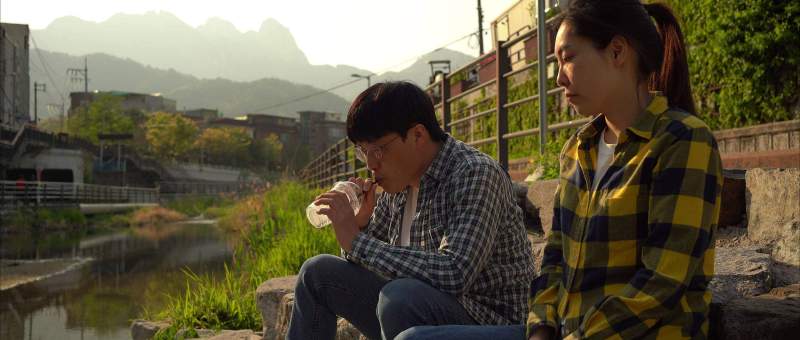
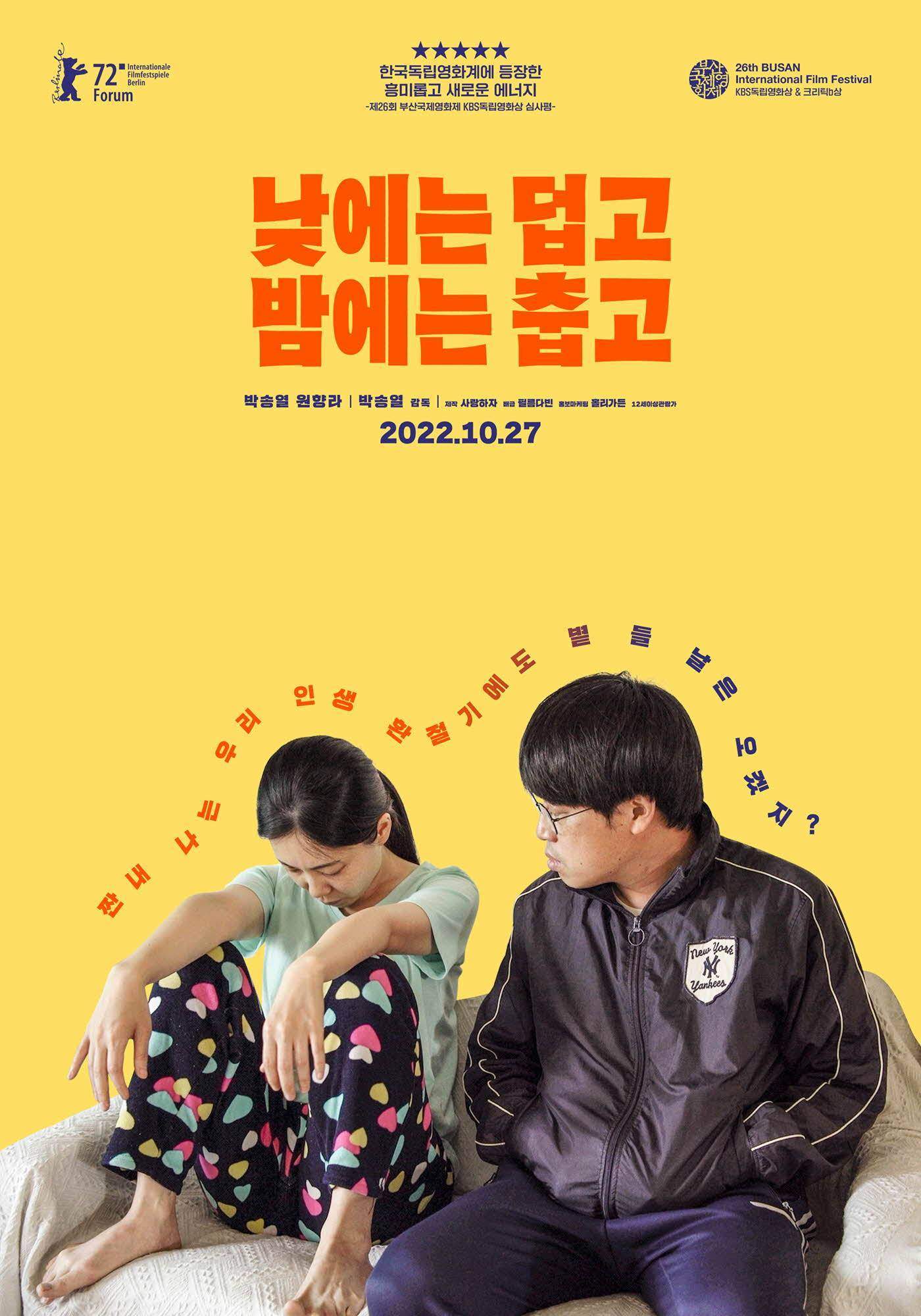
Hot in Day, Cold at Night (낮에는 덥고 밤에는 춥고, Park Song-yeol, 2021)

Anyone can have a run of bad luck, but when it’s happening to everyone at the same time perhaps it’s time to admit that something isn’t working. The latest film to tackle life on the margins of an increasingly unequal society, Park Song-yeol’s scrappy indie drama Hot in Day, Cold at Night (낮에는 덥고 밤에는 춥고, Naj-eneun deobgo bam-eneun chubgo) follows one ordinary couple who’ve found themselves jobless and are just trying to keep their heads above the water without losing either their dignity or humanity. 

Young-tae (Park Song-yeol) was working as a delivery driver until an accident with his bike left out him out of work and now he can’t seem to find anything else. His wife Jeong-hee (Won Hyangra), formerly a teacher, is also unemployed and in the process of applying for new positions which seem to be thin on the ground. They aren’t proud and are willing to do whatever is available, each of them reeling off a list of all the casual jobs they’ve done including those that are dangerous or exploitative, but they just can’t seem to catch a break. Mainly, they’re on the same page though differ slightly in their approaches to life, Jeong-hee feeling that her softhearted husband is too much of a pushover and shouldn’t always be so understanding when comes to getting what’s he’s owed. 

A case in point being his decision to lend their professional camera to a friend, Myung-su, who pays them a token rental fee and swears to return it in two weeks when he’s made enough money to buy his own but soon stops returning Young-tae’s calls. Unreturned calls become a repeated motif emphasising how money and the shame associated with not having it can disrupt even close and longstanding relationships. Jeong-hee experiences something similar with school friend Mi-sun who calls in a loan but abruptly stops talking to her after what appears to be a slightly dodgy arrangement getting Jeong-hee to sub for her at a school which goes south over a misunderstanding with the address causing Jeong-hee to ruin a good opportunity (and possibly Mi-sun’s reputation) by arriving late. 

Young-tae has his own series of interview disappointments, Myung-su getting him an opportunity through the “relative of an acquaintance’s friend” which takes a turn for the strange when the interviewer starts asking awkward questions such as whether Young-tae has any sick relatives at home because people apparently take too much time off claiming they have to take care of someone who’s ill. Another possibility sees a friend call out of the blue after 20 years which predictably turns out to be linked to a pyramid scheme.  “My identity just vanishes” Young-tae exclaims of all his soulless causal jobs, “your self-esteem just gets destroyed”. He takes a job as a proxy driver but is faced either with the tedious talk of much wealthier customers throwing their money around in the back or else harangued by drunken fares who don’t agree with this driving practice or the route he’s chosen. 

There is only so much anyone can take though Young-tae’s threshold is higher than most, keeping his cool and trying to get on with his work in the hope that happier days are coming. “There’s no such thing as easy money” he concedes, even as Jeong-hee goes behind his back to take out an ill-advised loan from loansharks who send passive aggressive messages wishing her “peace and wellbeing” while breathing down her neck for the repayments before going so far as to turn up at her mother’s door looking for money. The fact that Jeong-hee didn’t just ask her mother for help in the first place hints the secondary effects of their poverty in their intense embarrassment which further isolates them from wider society even if they hadn’t fallen out with most of their friends over money. A primary motivator for Jeong-hee getting the loan is seeing all her siblings, who each have several children, preparing gifts and money for her mother’s birthday which is something they as a couple were unable to do though it’s Young-tae who appears to feel the most awkward, guilty to be eating food at the party while bringing no gift even if that shouldn’t really be the way it works. 

Young-tae is the sort of person who likes to do things properly and sees the best in people but even he starts to feel like a mug on realising that Myung-su sold his camera ages ago, insisting he pay him back fairly and a little more for the betrayal only to feel guilty and give him back some of the money. Myung-su just accepts it without even offering an apology for acting in such a reprehensible manner but is later seen to have bought a new car which doesn’t tally with his claims of absolute desperation. It’s enough to drive anybody crazy, but really what can you do? Young-tae meditates on petty revenge, but eventually thinks better of it. It wouldn’t make any difference anyway. Quite obviously made for a shoestring and imperfect in execution, the film’s scrappiness perfectly matches that of its heroes who find themselves just muddling along trying live comfortable lives in one the world’s richest cities but discovering little more than loneliness and disappointment. 


Hot in Day, Cold at Night screened as part of this year’s London Korean Film Festival.

Original trailer (English subtitles)

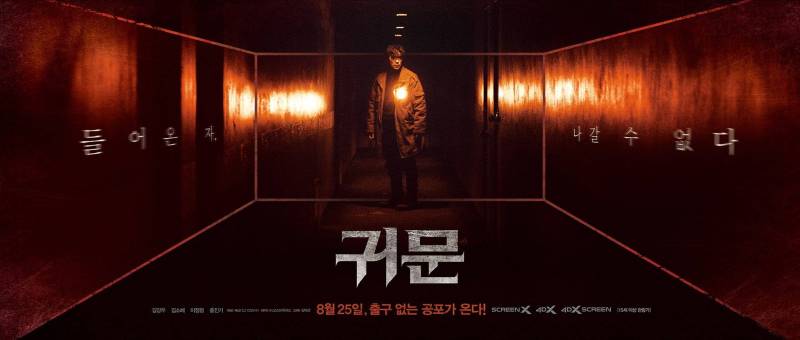
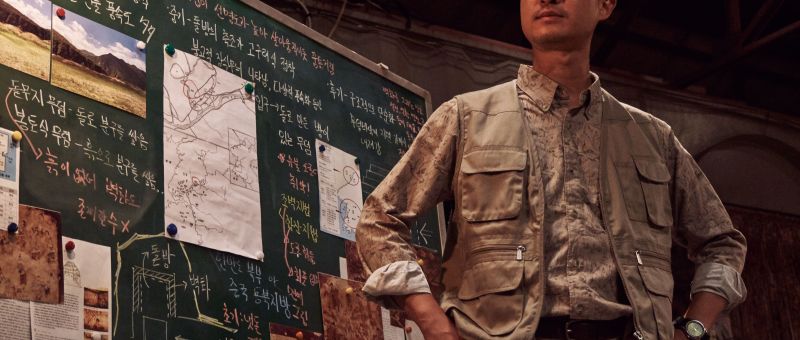
Guimoon: The Lightless Door (귀문, Sim Deok-geun, 2021)

A collection of lost souls find themselves trapped between this world and the next in Sim Deok-geun’s eerie haunted house horror, Guimoon: The Lightless Door (귀문, Guimoon). On a literal quest to exorcise his demons, the hero traverses an impossible and elliptical passage attempting to atone for his sins while freeing others from a similar burden yet finally finds himself becoming his quarry as kind of jailor or perhaps guardian spirit making sure that doors which should never be opened remain forever closed not least to the morbidly curious. 

Do-jin’s (Kim Kang-woo) troubles begin when he casts off his destiny as a shaman leaving his ageing mother to battle a powerful spirit said to belong to a mass killer who suddenly snapped one day and murdered all the guests at small community centre. When the building is torn down, workers discover a body bricked up in the walls which seems almost untouched. Do-jin’s mother is brought in to exorcise the evil spirits but is finally overpowered, a dark presence causing her to stab herself in the neck. Overcome with guilt and apparently “harassed” by his mother’s ghost, Do-jin resolves to atone by releasing each of the spirits killed by the murderous custodian and solving the mystery of the body in the walls in the hope of releasing his mother’s soul so that she can move on to the afterlife and stop nagging him from beyond the grave. 

The “Guimoon” is a kind of portal open on the turn of the year by the lunar calendar. Dojin intends to venture through it assuming it will be easy enough to nix a few ghosts and then come home but soon finds himself lost in a world of uncertain time and forever looping corridors. He meant to travel to the afterlife of 1990, but his world is soon disrupted by the arrival of three university students from 1996 who really shouldn’t be here. Armed with a video camera, they are dead set on crafting their own found footage horror in the hope of winning a competition so one of them won’t have to drop out of school. For the students, this world is “real”. They entered it voluntarily and as far as they are concerned are wandering round a derelict building, not really believing it to be “cursed” or haunted in any way. But for Do-jin it’s a liminal and unreal space he has entered for a specific purpose and from which he hopes to expel those who should have left long before. 

Yet even in trying to solve the mystery, Do-jin concentrates his efforts on Seok-ho (Jang Jae-ho), the shovel-wielding custodian, taking a kind of register of the other guests while knowing little about them. He soon discovers that Seok-ho may not quite be the boogeyman he first thought him to be, realising that his sudden descent into homicidal mania may not have been of his own volition. The solution he edges towards hints at the ironically named community centre as a nexus of trauma, a nightmare world created by an entity trying to escape its suffering and finding empowerment in taking control of its oppressors. 

“I was always here” one of the lonely souls proclaims, while Do-jin and the students find themselves locked in, prevented from leaving by a literal absence of exits. While the students eventually turn against each other, seeking escape by submitting themselves the malicious evil of the entity haunting the centre, Do-jin does his best to complete his quest of vanquishing the ghosts with his shaman’s dagger but is eventually brought to a cruel realisation in a maddening series of loops and repetitions which only lead towards a door which should never be opened. In some ways frustratingly oblique, Sim Deok-geun’s eerie meta horror is an exercise in found footage psychology in which the lost wander lonely corridors while searching for an elusive truth they may already know but have perhaps forgotten. On a night between two worlds lit by a blood red moon, Do-jin ventures into a labyrinth to save his mother’s soul but comes to realise that if you walk through the door between life and death you may discover that there is no exit from existential torment.


Guimoon: The Lightless Door screened as part of this year’s London Korean Film Festival.

International trailer (English subtitles)

A Lonely Island in the Distant Sea (절해고도, Kim Mi-young, 2021)

A dejected artist finds himself reconsidering his life’s choices when his teenage daughter drops out of education to become a Buddhist nun and he falls in love with a forthright professor in Kim Mi-young’s contemplative drama, A Lonely Island in the Distant Sea (절해고도, Jeolhaegodo). Though the title could easily enough refer to the hero himself, it echoes the sense of impossible longing symbolised by an island he could see but did not travel to though there was no real reason preventing him save his own feelings. In any case, the island and the day on which he saw it have become lodged in his memory as a nostalgic image of irresolvable desire. 

Now in early middle-age, Yun-cheol (Park Jong-hwan) is an unsuccessful sculptor who feels he has failed to live up to the promise of his youth and mainly earns his keep through commercial work such as crafting replicas of the solar system for a local museum. Divorced from his workaholic wife, he’s called in by his daughter Gina’s (Lee Yeon) school when they object to some admittedly disturbing artwork she had drawn on a series of roller blinds without permission. Yun-cheol is less concerned with the fact the paintings suggest that Gina is experiencing some kind of mental anguish than the school’s reaction to them, her teacher admitting that they took the blinds out and burned them. His anger is directed towards their wilful destruction of a work of art because it seemed to them more akin to vandalism or destruction of their property. Describing Gina as “mean”, they imply that they will ask her to leave suggesting that she would benefit from a different environment. In many ways that’s how Gina feels too, eventually revealing that she has decided to leave education altogether and later giving up her art to practice Buddhism. 

It’s the idea of abandoning her obvious talent that Yun-cheol struggles to understand. As a young man, he’d also considered becoming a monk or even a Catholic priest as, as he describes it, “safe paths for lost souls” if he failed to realise his ambitions of becoming an artist. Discovering that his daughter had had the same dilemma, even if she took a different path, shakes his sense of self in realising that his internal conflict was not unique. While trying to understand Gina’s desire to renounce the world, he begins to fall in love with a free spirited professor and cancer survivor but Ji-young (Kang Kyung-heon) is not prepared to wait around for him to sort himself out on his own and is quickly tired of his tendency to retreat into isolation rather than face his problems. Having learned only half a lesson, he later moves into Gina’s retreat where he is eventually asked to leave by the head nun bluntly who tells him that he is not suited for the monastic life. 

It may be that Yun-cheol exists outside of regular society because of his unusual upbringing in a mountain shack with his similarly isolated father, yet he struggles with himself and his relationship to art while seemingly unable to build lasting relationships with people as if they too were islands in a distant sea he could only gaze at from afar. He tells his daughter he would never abandon her in the way his mother had him but in a sense he might have done so in having lost the will to live amid his intense loneliness and lack of artistic fulfilment. Nevertheless, his growth comes in a kind of acceptance in acknowledging Gina’s choice to become a nun along with Ji-young’s declining heath and desire for isolation. 

When he had first met her, Yun-cheol had responded to Ji-young’s lecture about a would-be-revolutionary who did not go through with his cause by asking her why he would seek to implode the world in which he lived though this is the same thing Yun-cheol eventually does in his own mini-revolution choosing new paths in middle age whether in fear and regret or in search of possibility. A mystical meeting with a maternal wild boar helps to give him clarity though it seems he is forever destined to be a lonely island looking out at a distant sea filled with an unanswerable longing.


A Lonely Island in the Distant Sea screened as part of this year’s London Korean Film Festival.

Original trailer (no subtitles)
Hot Blooded (뜨거운 피, Cheon Myeong-kwan, 2022)

A dejected gangster decides to take the chance on a different kind of life but is soon pulled back into internecine underworld conflict where humanity is weakness and the only prize is a lonely hegemony in Cheon Myeong-kwan’s ‘90s-set thriller, Hot Blooded (뜨거운 피, Ddeugeoun Pi). As much about fathers and sons as it is about uneasy brotherhood, Choi’s adaptation of the novel by Kim Un-su harks back to the classic gangster picture in which the hero proves too noble for his surroundings and finds a single act of compassion provoking nothing more than chaos and misery. 

In the small enclave of Kuam, Busan, Hee-su (Jung Woo) is a petty foot soldier on the cusp of turning 40 who is becoming tired of this way of life. Loyal to his boss, Son (Kim Kap-soo), Hee-su is also aware that times are changing and the boss’ tried and tested approach may no longer meet them. When a vicious gangster, Yong-kang (Choi Moo-sung), returns from exile abroad after fleeing to escape a murder charge, gangland equilibrium is suddenly unbalanced not least by his shift into drug dealing that eventually places him at odds with Hee-su’s gang. After defusing a potential turf war, Hee-su decides he wants out and takes up with booze smuggler Yang-dong in the electric slot machine trade hoping to make enough money to open a small hotel on a nearby island with his longterm girlfriend and her adult son Ami (Lee Hong-nae) who has just been released from prison after falling in with a thuggish gang. 

As he eventually realises, Hee-su has merely ended up as a pawn stuck between Son and Nam, the head of a rival outfit trying to muscle in on their territory. His first problem is that his childhood friend, Chul-jin (Ji Seung-hyun), is a liaison for Nam’s gang. Son explains that only by taking out someone like Chul-jin can they start a negotiation with Nam to nix a gang war before it escalates, but Hee-su cannot bring himself to kill his friend while sufficiently unbalanced by his suggestion that he’s being played by Son as to doubt the old man’s advice. We’re given constant reminders that Chul-jin is a father of young children, while Hee-su has no children of his own but is a surrogate father figure to Ami. Effectively brothers, the two men met as orphans at a government facility and it’s clear that Hee-su sees Son as a man to whom he owes a fatherly debt while Chul-jin may not have any loyalty to anyone besides himself even as he claims that all he wants is to live peacefully with his children just as all Hee-su wants is to open his hotel and live with In-sook (Yoon Ji-hye) and Ami in a less violent environment. 

Hee-su’s decision to leave is a kind a of betrayal in itself, born of a desire to break free of the restrictive codes of gangsterdom and be his own man charting his own future but little realising that his life is still ruled by the laws of the underworld. Later someone asks him what it is he wanted to protect. All he can say is that there was something once, but he’s forgotten what it was. In leaving his gangster family he unwittingly destroys his dreams of forging his own, robbed of the more peaceful life he dreamed of by the chaos and violence of the underworld. The irony is that everyone describes Kuam as a “shithole”, a moribund small-town where even the casino hotel craze which is the centre of the gangster economy may be on its way out. Hee-su can’t really understand why they’re having a turf war over a place no one wants, only to realise it’s just a smokescreen to disguise what it is that’s really worth having and why. 

A late existential speech makes plain Hee-su’s predicament in Yang-kang’s logic that men like him fall to the depths of hell or become kings of all they survey. Yet for Hee-su it’s all much the same, rendered lonely by everything he’s lost while achieving the success craved by so many that is the opposite of what he wanted. It turns out Son may have had a point, the reason he survived so long was his ability to keep calm and play the long game. Hot-headed revenge is a luxury a gangster can’t afford as Hee-su finds out to his cost. “Fathers are all powerless” Chul-jin tries to tell him, though there’s something left of the old Hee-su in his final act of letting a man who betrayed him go because he’s the last in the boss’ bloodline potentially sealing his own fate in some far off act of vengeance. Very much a classic gangster drama in which a noble foot soldier finds himself torn by conflicting loyalties, Hot Blooded proceeds with a weary fatalism leaving its hero a coldblooded ghost which might be a fitting end for a man who once tried to make his fortune selling fake hot peppers.


Hot Blooded screened as part of this year’s London Korean Film Festival.

Original trailer (English subtitles)

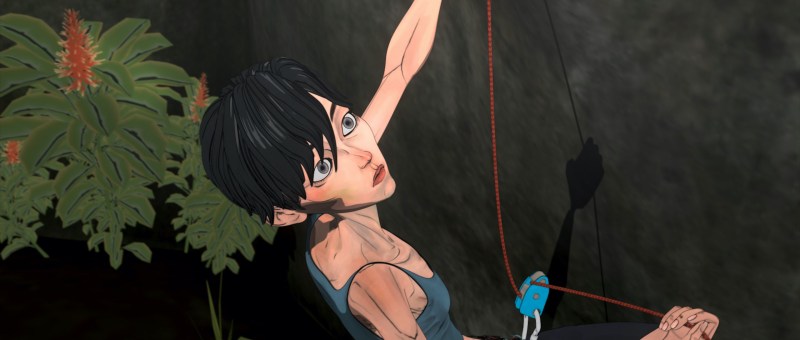
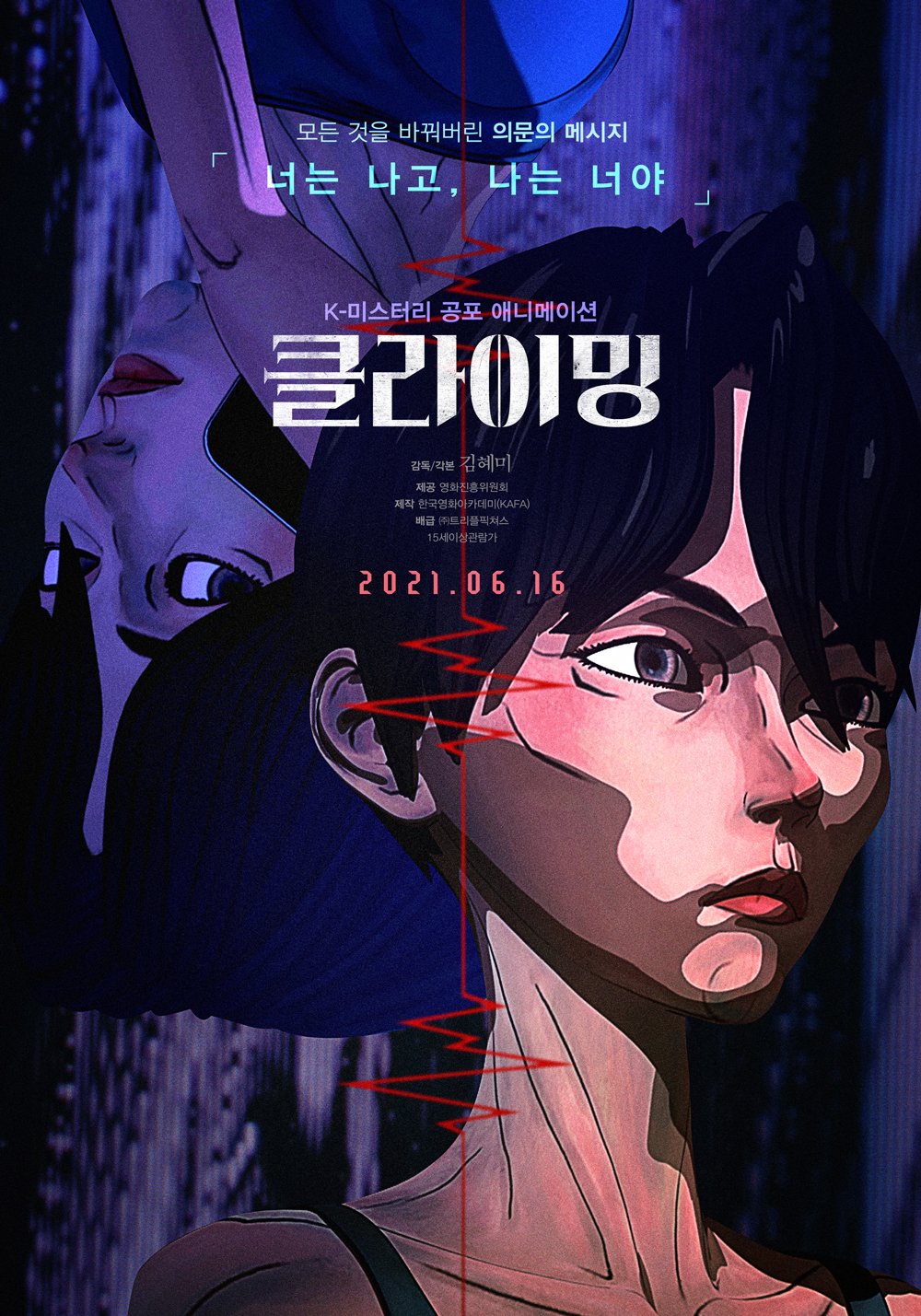
Climbing (클라이밍, Kim Hye-mi, 2020)

Maternal anxiety destabilises a young woman’s sense of reality in Kim Hye-mi’s animated psychological horror, Climbing (클라이밍). Impending motherhood has it seems forced Kim’s heroine to confront a series of uncomfortable questions about the direction of her life, the ways in which it must inevitably change over time, and what it is she really wants all the while contending with a loss of control over her physical body mastery over which has in a sense been her life’s work. 

Professional indoor climber Se-hyeon (Kim Min-ji) has begun having strange dreams that her sympathetic boyfriend Woo-in (Goo Ji-won) attributes to possible PTSD following a nasty car accident some months previously which left her in a lengthy coma and led to a miscarriage after which Se-hyeon was cared for by Woo-in’s mother (Park Song-yi). Hearing of the dreams Woo-in is excited to think they may have another child on the way, only for Se-hyeon to coldly snap at him that the only “accident” was getting pregnant in the first place because she never wanted the baby. 

This is partly as we discover because of her determination to succeed as a professional climber which of course requires intense mastery over her physicality. The one reality she cannot dispute, however, is that she is ageing and that her body will necessarily change in ways over which she does not exercise full control. This is brought home to her by the perky presence of a slightly younger rival, Ah-in (also Park Song-yi), who pips her to the top spot in a minor competition. Greeted by Woo-in, it’s clear they’ve both known the young woman for some years, Woo-in’s talk of taking her out for pizza or hamburgers suggesting he still thinks of her as a child, implying that Se-hyeon has become acutely aware of the age difference between them while also jealous sensing danger in their accidentally flirtatious banter. Woo-in may be supportive of her career, but he too is perhaps feeling that it’s time to move on from competitive sports, presenting a ring over dinner and suggesting they finally get married while Se-hyeon could take up a steady job as a coach. Again she finds it hard to discern if this is genuine solicitous care or potentially abusive controlling behaviour, he petulantly suggesting they go home after she expresses reluctance to drink the expensive wine he’s ordered with their celebratory meal.

Meanwhile, she’s begun receiving mysterious text messages apparently from “herself” via a phone broken during in the accident. Her alter ego is still under the care of Woo-in’s mother, but unlike herself is a much more conventional figure of traditional femininity continually pining for Woo-in and apparently still carrying their child. As implied by the rather gothic family photo in Se-hyeon’s flat, just as she has begun to resent Woo-in, her other self suspects his mother, convinced that Woo-in is dead and that she is keeping it from her because she wants to take the baby as her own. Her two selves reflect her sense of ambivalence in response to motherhood, the other Se-hyeon literally forced into a frumpy maternity dress by her mother-in-law but determined to keep her baby, while Se-hyeon is intensely uncomfortable about the idea of a “foreign body” inside her own. Suspecting that the other Se-hyeon’s desires are beginning to bleed into her reality she takes drastic action in order to regain bodily control, but also finds herself fighting an uphill battle just to be allowed to continue competing on an international level while fearing literal and symbolic displacement by the next generation. 

There is perhaps a slight discomfort in the insistence that Se-hyeon is wrong to reject motherhood or that she has lost the right to an active choice over whether or not to bear a child even as she appears to tear herself apart internally attempting to accept not only the idea of maternity and the weight of the new responsibilities it brings, but also that of transition, that she must necessarily become something new through this process of bodily transformation. Kim’s body horror psychodrama plays out entirely within the confines of Se-hyeon’s mind, the heavily stylised quality of the animation perhaps reflecting the inner alienation and intense anxiety which undermine her sense of reality while she struggles to reorient herself in a world changing all around her.


Climbing screens 18th November as part of this year’s London Korean Film Festival.

Trailer (English subtitles)

Rolling (말아, Kwak Min-seung, 2021)

A young woman begins to find new purpose in the wake of global pandemic and unrelated familial loss in Kwak Min-seung’s charming indie debut, Rolling (말아, Mala). Trapped in an arrested adolescence of snack food and video games, Kwak’s heroine drifts along without direction still dependent on her ageing mother while reluctant to move forward or accept responsibility, yet after some gentle prodding perhaps begins to realise that different doesn’t necessarily mean wrong and that there are things she she may be good at if only she gave herself the chance. 

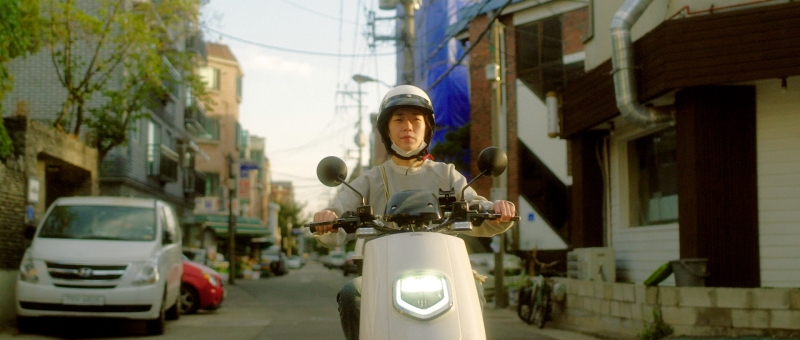
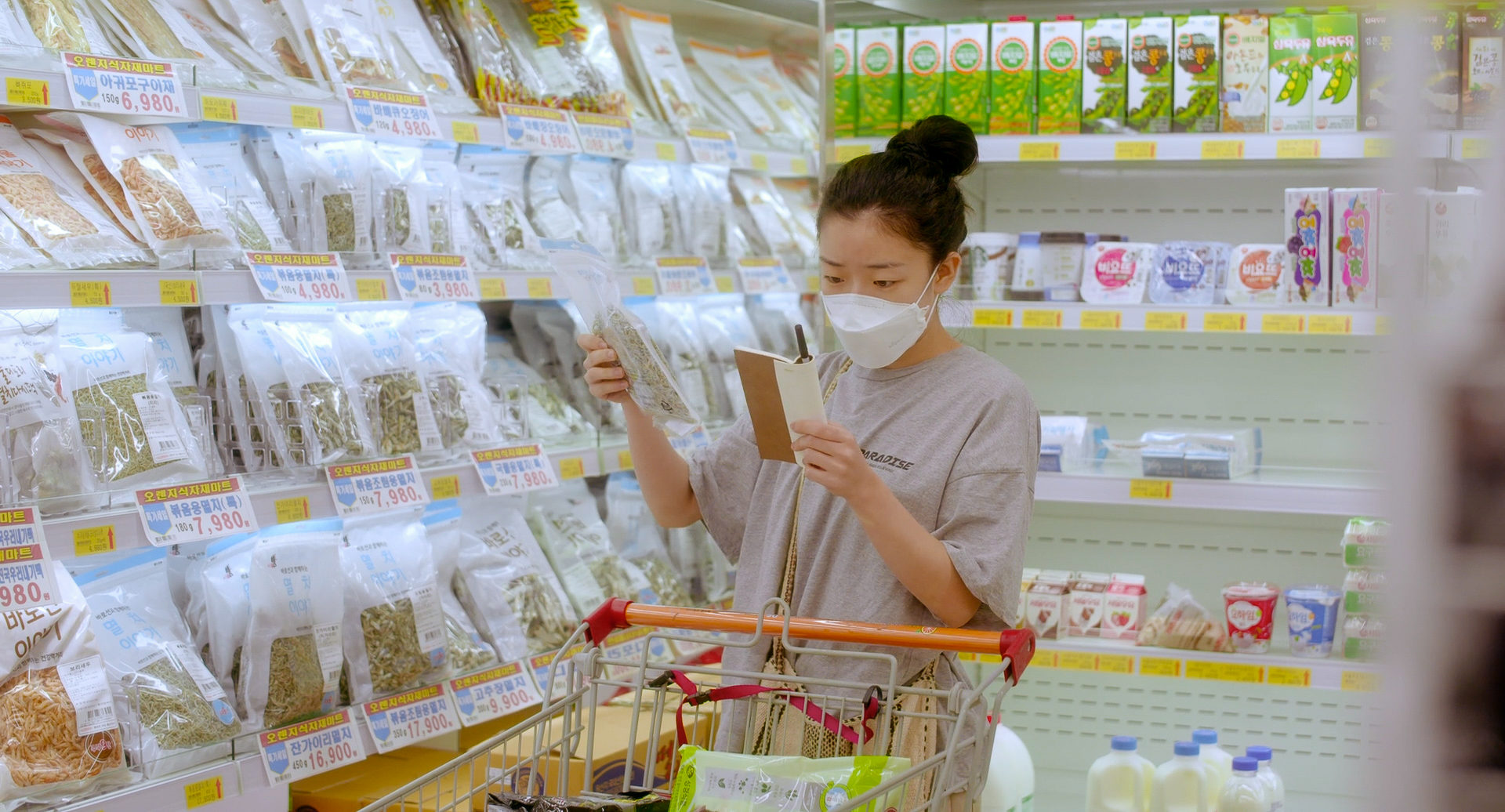
25-year-old Juri (Shim Dal-gi) dropped out of college and doesn’t seem to be doing much of anything at all which is perhaps understandable given it’s the middle of a global pandemic. Her mother Young-shim (Jung Eun-kyung), meanwhile is in something of a fix seeing as her kimbap cafe is already struggling with customers preferring to stay at home while the bills continue to climb just as she needs to take some time off to look after her own mother who has recently been taken ill. Seeing as Juri never answers her text messages, Young-shim takes the drastic step of putting Juri’s flat, on which she co-signed, on the market in order to get her attention, presenting her with the ultimatum that she either watch the store while she’s away or prepare to move out. Though reluctant, Juri agrees going through something of a baptism of fire not only learning how to make kimbap from scratch, but trying to mimic her mother’s cooking to cause as little disruption as possible to their regular customers. 

The kimbap conundrum exposes some of Juri’s insecurity as she worries she can’t measure up to her mum and the customers will be angry or disappointed that their favourite dishes aren’t quite the same. Nevertheless, she takes pride in her work and buckles down to run the cafe as best she can albeit with a slightly reduced menu even if slightly disappointed not to be making as much as her mother usually would. As the friendly auntie from the bakery, Chun-ja (Jung Eui-Soon), points out, however, times are hard for everyone and no one’s really doing the kind of business they’d been doing the year before. Many businesses have already closed while others wonder if it’s really worth trying to carry on when no one knows when or if the situation will improve. 

The weighty responsibility of saving her mother’s store begins to give Juri a new sense of confidence as do her interactions with her customers including a good looking if nervous young man, Won (Park Hyo-won), for whom she makes a note to remove the yellow radish noticing that he always picks them out, and with whom she later ends up on an accidental date delivering a bulk order for a hiking club. A bored little boy meanwhile sick of being cooped up inside asks her some very direct questions but later concedes her kimbap are “OK” which is all things considered high praise. The experience gives her the motivation to start looking for a regular job, but the world of employment is not always kind to those who take a little time to find their way, a rather rude interviewer pointing out that if she quit college she could quit the company while condescendingly asking if there’s anything she’s good at aside from word processing and driving only for her to suddenly realise there actually might be (though it won’t be very helpful in terms of this particular opportunity). 

Her isolated, studenty lifestyle and recent business experience provide Juri with the means to turn the situation to her advantage, thinking outside of the box to expand her mother’s business while making use of all of her skills old and new to take control over her life no longer “dependent” on her mother but working alongside her. Originating from a web drama, Kwak’s gently humorous drama makes the most of the uncanniness of everyday life during the pandemic as Juri’s world ironically expands through working in the cafe dealing with quirky customers and even potential romance while also contending with anxiety over her grandmother’s health and her mother’s business but finally stepping into herself with a new sense of confidence and possibility for the future.


Rolling screens 16th November as part of this year’s London Korean Film Festival.

International trailer (English subtitles)

Limecrime (라임크라임, Lee Seung-hwan & Yoo Jae-wook, 2020)

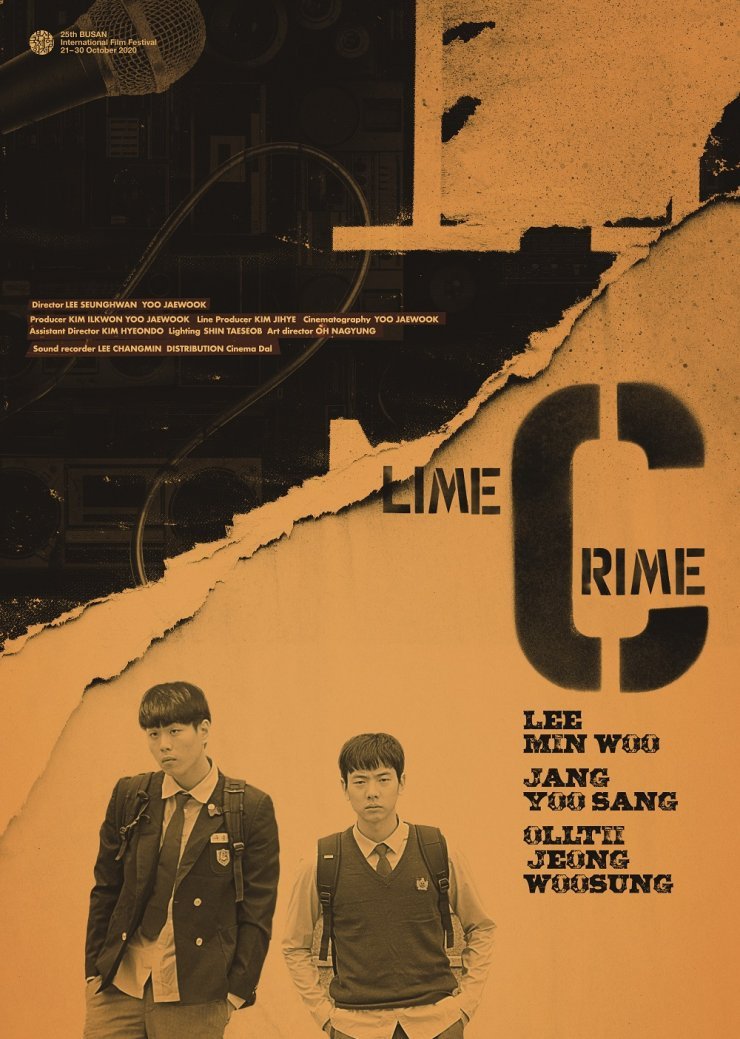
Two teens from across the class divide form an awkward friendship through a shared love of hip hop but find their connection undermined by their differing circumstances and opportunities in Lee Seung-hwan and Yoo Jae-wook’s indie coming-of-age drama Limecrime (라임크라임). Loosely inspired by their own life experiences, Lee and Yoo once performed as a rap duo under the name Limecrime, the directors eventually find unexpected positivity in the boys’ life trajectory as they each reach a point of understanding and thereafter overcome their differences while pursuing their musical aspirations. 

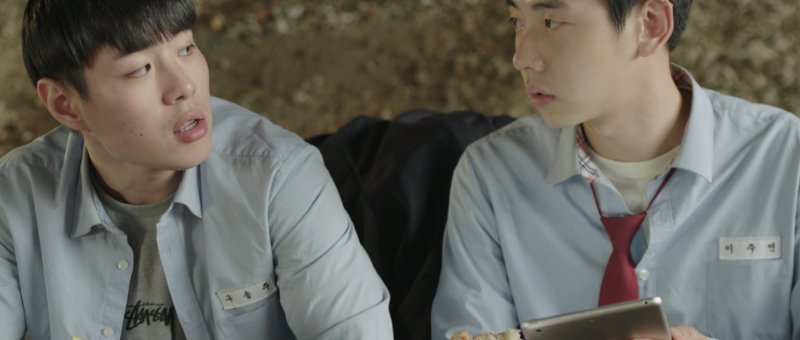
16-year-old Songju (Lee Min-woo) is a struggling middle school student with hip hop dreams currently working part-time in his father’s auto repair shop. He attracts the attention of the well-off, academically successful Jooyeon (Jang Yoo-sang) when performing a classic rap during a vocal evaluation underneath a sign stating that hip hop is forbidden. Being something of a hip hop geek, Jooyeon immediately makes contact lending a mystified Songju a retro discman and some of his favourite tracks before suggesting they team up as a hip hop duo and enter an online competition. 

The duo’s name, Limecrime, is taken from an accidental misreading of “rhyme crime” which eventually sticks and becomes in a way ironic. Nevertheless, it demonstrates an early divide between the boys, Jooyeon mocking Songju for his rookie mistake while insisting that the art of rhyme is central to rap, demanding precision while Songju prefers the anarchy of freeform improvisation. To begin with they bond over their shared love of music, but over time the differences between them become increasingly obvious with Songju often uncomfortable among Jooyeon’s wealthier friends. Though they are mocked by some of their classmates at an early performance, a graduating hip hop club from a local high school offers to befriend them, but their rappers are much more intellectual than either of the boys sitting down to discuss philosophy while Songju feels left behind having no real idea what’s going on. He gets up to fix a broken mic stand, only for Jooyeon to tell him off insisting the repairman will take care of it while rolling his eyes as if implying he thinks Songju has shown himself up in front of their new friends. 

Jooyeon is indeed the sort used to having everything done for him, regarding it as somehow inappropriate to fix something yourself. His parents do not appear to be physically present in his life, heard only via infrequent telephone calls, while leaving the housekeeper to watch over him though she later quits abruptly having reached her limit when Jooyeon and Songju thoughtlessly trash the kitchen and leave the mess for her to clean up. Cleaning up after himself is not something Jooyeon has ever been taught to do and given his family’s wealth he’s also got the idea that all problems can be solved with money. Wanting Songju to attend the high school with the best hip hop club he crassly offers to pay for cram school classes, little realising how his suggestion makes Songju feel or how he’s effectively using and manipulating him to achieve his own aims. Irritated by his practicality, he finally relegates Songju to the space recently vacated by the housekeeper after he kindly fixes up his bike for him. 

Songju meanwhile is both attracted and repelled by Jooyeon’s upperclass world while finding his existing friendships strained when his buddies fall in with a local petty gangster and are pulled towards small scale street crime ironically selling counterfeit fashion from hip hop brands. Given Songju’s example some of the other boys dare to dream of different futures, even the most delinquent revealing he’d like to become an actor, but each is later forced to face the crushing reality that no matter their ambition they do not have the same opportunities as boys like Jooyeon whose family can afford to pay for fancy schools and private tuition. 

Matters finally come to a head when Songju ends up in trouble with the law and Jooyeon gets his father to pull strings on his behalf only to abruptly abandon him when he expresses anxiety over his less well-connected friends. There is something quite ironic in Jooyeon’s love of hip hop, declaring that he wants to “change what’s absurd in this world” through the power of music but later having no answer when asked if he wouldn’t be better to become a politician or activist than an indie musician reliant on being able to generate a platform. After deciding to give up, Songju nevertheless comes into his own and finds his voice but at the same time refuses to leave Jooyeon behind even when discovering solo success. Though the leads may be a little past convincingly passing for 16 (Jang Yoo-sang is 30, Lee Min-woo is 28), Lee and Yoo nevertheless craft a refreshingly positive coming-of-age tale which allows the boys to salvage their friendship and their musical dreams even if perhaps only by sidestepping the issues which initially divided them. 


Limecrime screens 15th November as part of this year’s London Korean Film Festival.

Trailer (no subtitles)

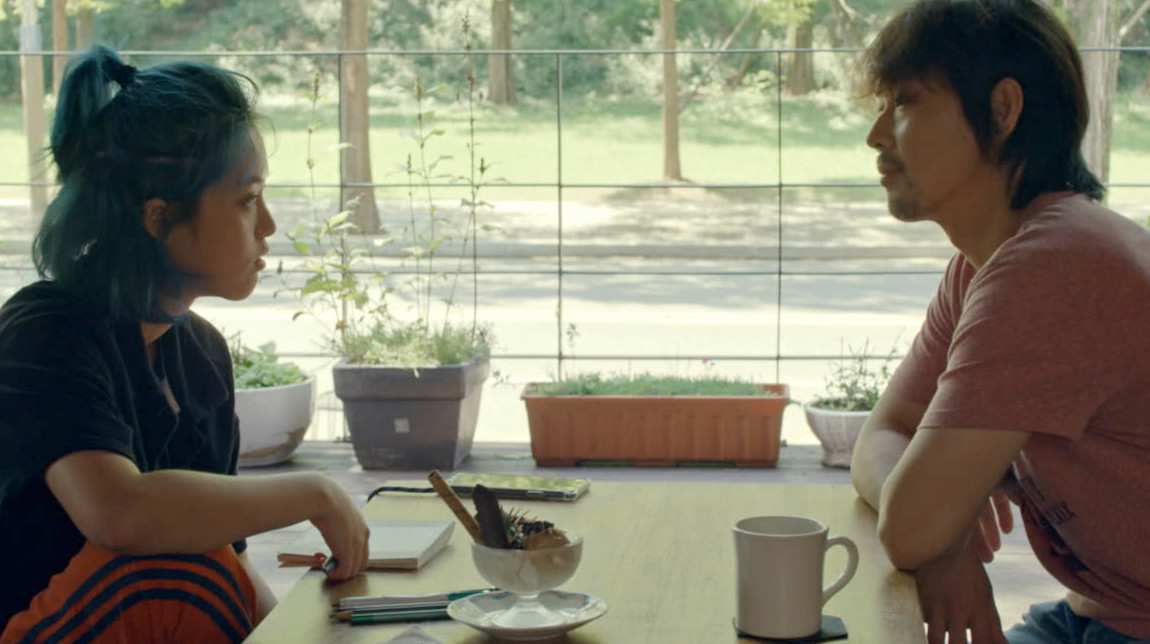
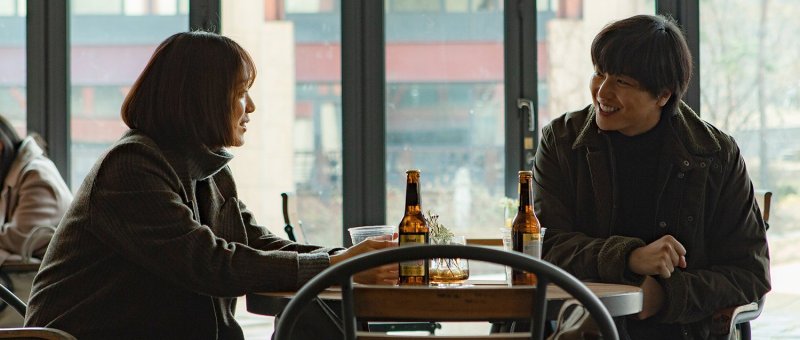
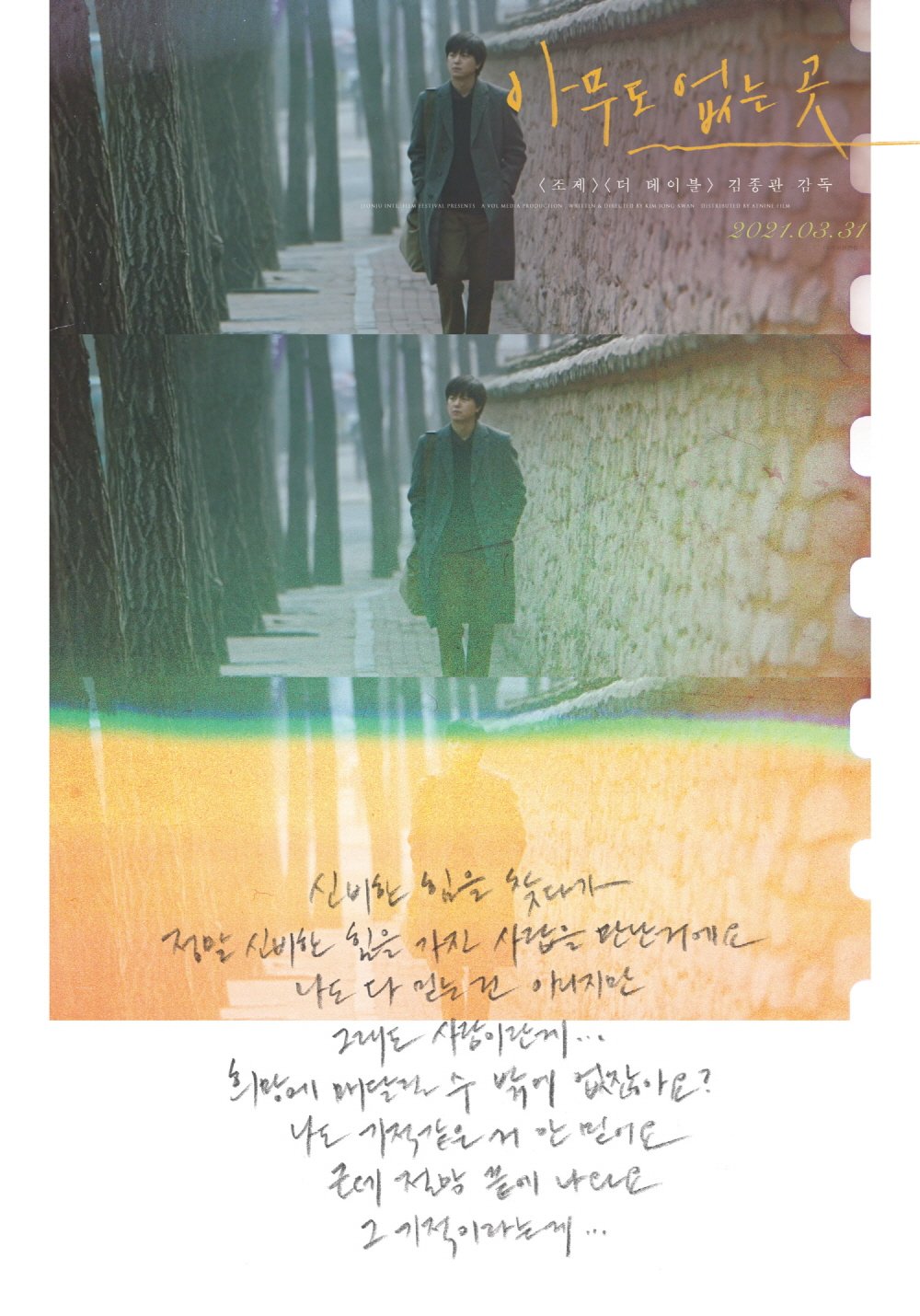
Shades of the Heart (아무도 없는 곳, Kim Jong-kwan, 2021)

“I see hope! Let’s change direction” a distressed woman shouts in a park, “We should follow the wind, let’s hold hands that way you won’t get lost.” Her interjection is perhaps unexpected, in its own way sad, but also a sign offered to the melancholy protagonist of Kim Jong-kwan’s Shades of the Heart (아무도 없는 곳, Amoodo Eobneun Got), a man who has become without quite realising it “someone who waits” yet through encounters serendipitous and otherwise begins to see new paths in front of him, turning a corner into another story.

Novelist Chang-seok (Yeon Woo-Jin) has just returned to Seoul after seven years abroad following the breakdown of his marriage in the UK. He has begun to have strange dreams, seeing an older version of himself and presumably his wife walk away from him and eventually disappear. Yet each of the people he meets is also in someway burdened by a sense of loss or despair, his first meeting with his mother who appears to have some kind of dementia and does not initially recognise him thinking once again she’s on her first date with his father. Her sadness is the loss of past and present but also of future, telling her son on finally recognising him not to smoke so much so he won’t die young like his dad. 

Chang-seok had apparently given up smoking, but is motivated to start again perhaps seeing little point in extending his life, accepting some unusual Indonesian cigarettes from a former colleague now his editor who eventually tells him of her failed love affair with a young exchange student which apparently ended partly because he could not acclimatise himself to the harsh winters of Seoul. The other reason perhaps echoes something in Chang-seok’s own life though also tinged with a different sense of sadness. A serendipitous meeting with a former acquaintance meanwhile takes a turn for the strange, photographer Sung-ha (Kim Sang-Ho) somewhat manic in his ecstasy in having run into Chang-seok explaining that his wife is terminally ill yet a Buddhist monk had told him he’d run into someone he knew who would bring him luck. On the other hand, Sung-ha also shows him a vial of cyanide he’s managed to procure apparently planning to use it to take his own life after his wife dies but now filled with an almost certainly false hope in the strange power of religious mysticism. “I don’t believe in all that, but people.. they need to hang their hope on something” he explains.

Chang-seok may not have much of a sense of hope, but what little he has he’s hung on people or on art. He is forever “waiting” for someone who may or may not arrive or even exist, making notes in his notebook or wandering around the surprisingly lonely streets of Seoul after dark pausing by the now obsolete phone booths filled with the detritus of city life unsure whether or not to make a call. His final conversation is with a woman who tells him that she has no memories of her own, having been robbed of her past, and more, in an accident and now “buys” them off her customers swapping free drinks for personal stories while writing poems about their lives. “No one is coming, but he became someone who waits” she writes of Chang-seok, their meeting oddly mirroring his first in its mixture of fiction and reality along with relationships forged through the exchange of stories true or otherwise. As he’d said, sometimes a made up story can be the more truthful. 

“But they come in the depth of despair, miracles” Sung-ha had added hopefully seconds after saying he didn’t believe in them, each of Chang-seok’s encounters a tiny miracle in itself. Imbued with a deep sense of melancholy and loneliness, Kim’s delicately scripted ethereal drama is an exercise in grief and despair Chang-seok’s sense of fiction and reality beginning to blur even as he begins to find the urge to write again and with it perhaps to live again too. “I see hope!” the woman shouts once more, restored something as she takes her place in a new story, Chang-seok turning the corner and beginning once again to dream. 


Shades of the Heart screens 14th November as part of this year’s London Korean Film Festival.

Original trailer (English subtitles)

Collectors (도굴, Park Jung-bae, 2020)

“Grave Robber” is ordinarily not a nice thing to call someone, let alone to be, yet the heroes of Park Jung-bae’s Collectors (도굴, Do-gul) are just that if in effect more like cultural Robin Hoods robbing the dead to reclaim the past than heartless thieves interested only in profit. Operating with a “this should be in a museum!” mentality, these grave robbers have a variety of motives, among them revenge both personal and national, as they take aim at lingering historical betrayals stemming back to the days of Japanese colonialism. 

As the film opens, intrepid thief Dong-gu (Lee Je-hoon) manages to trick a pair of Buddhist monks suspicious on the grounds that he’s a bit handsome for the religious life into letting him “guard” a pagoda that’s set for imminent dismantling in order to nab a precious miniature Buddha located inside. What puzzles the authorities is that Dong-gu leaves obvious evidence of the theft along with a trademark chocopie wrapper which suggests he wants everyone to know how clever he is. This may be true, Dong-gu is quite smug about his obvious abilities as a tomb raider, but he may also have ulterior motives in play. As a duplicitous broker points, out, however, it’s surprisingly difficult to make money trafficking artefacts because they are simply to famous to be sold openly meaning thieves and fences are all dependent on a small pool of super rich “collectors” with whom they have personal relationships or else are stealing to order. 

Stepping back a little, what this means is that not only are those like Dong-gu robbing the dead and selling their affects on the black market, but that they are in a sense traitors to their nation often selling these precious historical artefacts to foreigners and most problematically to the Japanese, ironically enough grave robbers themselves in having looted half the country during the colonial era. It will come as little surprise that the main villain Jin Sang-gil (Song Young-chang), a hotel entrepreneur and head of the Korea Cultural Asset Foundation, in fact owes his inherited wealth to his family having sold artefacts to the Japanese from 1910 onwards, and himself is keeping a large selection of plundered treasures in an ultra secure vault underneath his offices. 

The Buddha brings Dong-gu into Jin’s orbit, first made an offer by his gangster underling Gwang-chul (Lee Sung-wook) who is, perhaps conveniently, Chinese-Korean hailing from Yanbian, and then by his smart assistant Sae-hee (Shin Hye-sun) who is fluent in English, Chinese, and Japanese acting as a broker for wealthy Japanese clients which is how she finances Dong-gu’s upcoming operation to steal an ancient frieze from a grave located in what is now technically China but was then Korean. Dong-gu, meanwhile, despite claiming he got into grave robbing because he realised he’d never be able to buy a house working “like regular people do”, is remarkably uninterested in the money refusing Sae-hee’s “gift” of a fancy car, and instantly losing his fee in the hotel casino. As we later realise, what he seems to want is for the artefacts to be returned to their rightful owners, the Korean people. 

To complete his heist he recruits a series of “experts” including the slightly nerdy souvenir peddler nicknamed “Dr. Jones” (Jo Woo-jin) who even dresses like Indy himself, as well as a former miner recently released from prison renowned for his tunnelling abilities. Dong-gu’s methods are traditional in the extreme, locating the entrance to a burial mound by tasting the soil looking for traces of decomposing flesh, while his sister Hye-ri (Park Se-wan) is much more technologically advanced making frequent use of drones and angering her father and brother by drilling a tiny hole in the Buddha to insert a GPS tracker hoping to figure out what Jin is doing with the artefacts. In a touch of irony, the vault has itself been designed to mimic the security features of an ancient tomb if updated with biometric eye scanning and fingerprint technology topped off with a good old-fashioned key, but as it turns out there’s no security system that can protect you from betrayal especially if you’re generally unpleasant and no one trusts you anyway. 

Dong-gu’s target, however, is a royal tomb located in the centre of Gangnam from which he intends to steal the “Excalibur of Joseon” appealing to Jin’s sense of hubris, leaning into a kind of mythical prophecy in which he’d become a contemporary hero ruling over all Korea as the wielder of the sword. Taking in some additional social commentary in which the government has chosen to improve their approval ratings through spending money buffing up a tomb while when the guys try to rent a subbasement the flirtatious realtor admits the rents are low in this area because it often floods only to shake off some of her disapproval when they tell her they’re part of the restoration team, the central message is that the historical relics of Korea’s past belong to the Korean people, not to the shady businessmen further corrupting an already compromised economy, nor to former colonial powers. Sometimes, it seems to say, digging up the past is a necessary act of national reclamation. 


Collectors screens 13th November as part of this year’s London Korean Film Festival.

International trailer (English subtitles)