
Every Trick In The Book (鳩の撃退法, Hideta Takahata, 2021)

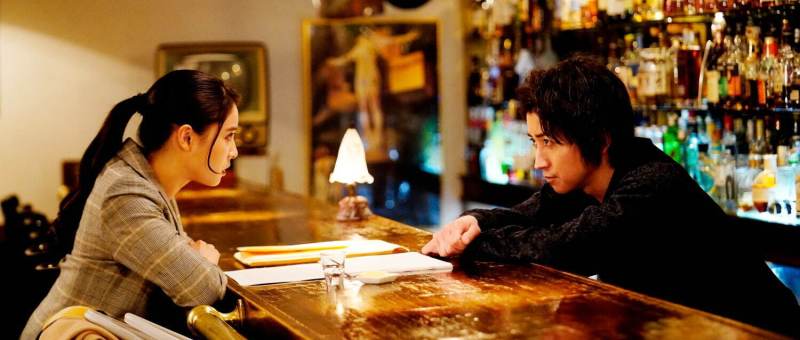
A down on his luck writer finds himself at the centre of a mystery only how much is truth and how much “fiction”? Based on the novel by Shogo Sato, Hideta Takahata’s Every Trick in the Book (鳩の撃退法, Hato no gekitai-ho) ponders the possibilities of literature as the hero seems to create a fictional world around him in which it is largely unclear whether he is solving a real world mystery or simply imagining one based on his impressions of the strange characters he encounters through the course of his everyday life.

That everyday life is however eventful just in itself. Tsuda (Tatsuya Fujiwara) once won a prestigious literary prize and was destined to become a popular author but hasn’t written anything of note for some time and in fact now largely works as a driver ferrying sex workers around on behalf of his shady boss. The mystery begins when he approaches a man, a rare solo reader in an overnight cafe, and promises to lend him a copy of Peter and Wendy by JM Barrie only to later discover that the man went missing along with his wife and the daughter he had explained was fathered by another man. 

Like many of his subsequent encounters it isn’t entirely clear if this meeting really took place or at least as Tsuda said it did or is only part of the novel he is beginning to write. The man, Hideyoshi (Shunsuke Kazama), asks him if it’s a novelist’s habit to begin imagining backstories for everyone he sets eyes on and there may well be some of that even as Tsuda is fond of claiming that amazing things happen around us every day to which we are mostly oblivious. Still, Tsuda probably didn’t expect to be pulled into the orbit of local gangster Kurata (Etsushi Toyokawa) after accidentally passing on counterfeit currency he found by chance. It’s true that most of what’s happening to him is the result of a series of bizarre coincidences or cosmic confluence which has accidentally united this collection of people in an unintended mystery which Tsuda intends to solve in either literal or literary terms. 

“It’s all a novelist can do” he later claims in trying to write a better ending for “characters” he has come to like than the one he assumes they “actually” met. But then his editor Nahomi (Tao Tsuchiya) chief worry is that, like his previous novel, Tsuda’s story will contain too much of the “literal” truth which could cause his publishers some legal problems. Part of the reason Tsuda left the industry is apparently because his last book was inspired by a real life affair which was then considered somewhat hurtful and defamatory. For that reason it comes as quite a blow to Nahomi as she begins to investigate and discovers that much of Tsuda’s story lines up with “real” places and events, but then again as he says if you can draw connections between known facts then you begin to see a “hidden” truth which may in its own way be merely his invention. 

The film’s Japanese title translates more literally as something like “how to fend off a dove” which does indeed have its share of irony especially considering the meaning the dove symbolism turns out to have in the film but perhaps also hints at the essential absurdity of trying to fight back against something that is otherwise harmless and in fact represents peace. Tsuda may be onto something and nothing, embracing the bizarre serendipity of a writer’s life while trying to recover his creative mojo but embellishing it with more danger and strangeness than it actually has to offer. Then again as his editor discovers, there really is an incinerator it seems anyone can just walk up and use to burn whatever they want including dead bodies, while people in general are full of duplicities all of which keeps the “fake” money circulating as people use it to try to buy things that can’t really be bought. Hideyoshi calls them “miracles”, embracing the strange serendipity of his life as an orphan longing for a family to call his own and unexpectedly finding one which is “real” in someways and “fiction” and in others. Then again, if you believe in something does it really matter if it’s “real” or not? Hideyoshi and Tsuda might say it doesn’t, the publishing company’s lawyers might feel differently, but it seems there really are amazing things going on around us every day if only you stop to look. 


Original trailer (English subtitles)

Let’s Go Karaoke! (カラオケ行こ!, Nobuhiro Yamashita, 2023)

Singing is serious business. In Nobuhiro Yamashita’s adaptation of the manga by Yama Wayama Let’s Go Karaoke! (カラオケ行こ!Karaoke Ikou!), it’s matter of life and death, metaphorically at least, for a young man confronting adolescence and a zany gangster who seems kind of lonely but is desperate to learn how not to embarrass himself at the boss’ big sing off so he won’t be subjected to a homemade tattoo of his most hated motif.

The irony is perhaps that this kind of yakuza at least doesn’t really exist anymore and “Crazy Kid” Kyoji (Go Ayano) is in many ways a ghost of bygone days inhabiting a Showa-era shopping arcade soon to be torn down and replaced by a luxury hotel. Meanwhile, high schooler Satomi (Jun Saito) is also facing a kind of apocalypse in that he’s a boy a soprano whose voice has begun to change. His encroaching puberty leads him to blame himself when the school choir only places third during the nationals not making it to finals. But it’s at this concert that Kyoji first hears his “angelic” voice and decides he’s the perfect person to teach him how sing, intimidating him into an impromptu karaoke session.

As Satomi later points out, adults don’t invite kids to karaoke and this arrangement would be odd even if Kyoji were not an old school yakuza with a severed finger in his glove compartment. Of course, Satomi’s frightened but cannot really say no offering a few words of advice by daring to tell Kyoji that his falsetto is  “sickening” and he should stop waving his hands around if he wants to master the art of singing. It is also doesn’t help that his choice of song, Kurenai by X Japan, a hair rock epic mostly written in broken English, is a song of manly melodrama which requires a good deal of screaming. Despite having enlisted Satomi, Kyoji talks about one of his fellow footsoldiers as if he’s died when he’s only decided to get some professional singing lessons in an effort not to come last and end up with a lame tattoo.

Yamashita frames both their challenges as the same, Satomi fearing a social death and the death of his youth if he takes to the stage at what he’s sure would be his final concert and his voice cracks while Kyoji, ironically enough, does not really fear a literal death but the pain and humiliation of being branded by the boss for being bad at karaoke. Despite their differences a genuine a sense of friendship does arise between them, if also a possibly inappropriate homoerotic tension, as they support each other towards their shared goals and learn to sing from the heart which was apparently the real problem with Satomi’s school choir seemingly more obsessed with technique and correctness than the simple joy of singing. 

Hovering on a precipice, Satomi exists in a liminal space in his own way as ghostly as Kyoji surrounded by the obsolete. In his school film club, of which he is an honorary member, they watch VHS tapes of classics such as White Heat, Casablanca, and Bicycle Thieves which can only be watched once because the player’s broken and you can’t rewind anymore. His world’s on the brink of eclipse, and his friendship with Kyoji is a harbinger of a darker, more adult world but also one that’s less frightening than it ought to be with its admittedly scary gangsters obsessed with karaoke and bad tattoos. He starts to wonder if Kyoji was even real or some kind of imaginary friend appearing to help him deal with his impending adolescence and what it means for his singing career, but is finally reassured by a piece of concrete evidence confirming at least that it did really happen if leaving him with a sense of loneliness once their quests have come to an end. Surreal in its cheerful darkness, Yamashita’s heartfelt drama is an advocation for the for the healing powers of karaoke and the importance of singing from from the heart no matter how it might sound to those you who may themselves shed a few manly tears over a song about lost love and absent friends.


Let’s Go Karaoke! screened as part of this year’s Nippon Connection

Original trailer (English subtitles)
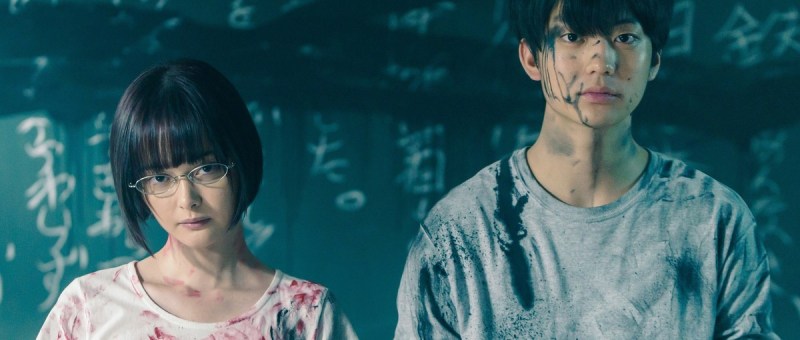
Dreaming in Between (逃げきれた夢, Ryutaro Ninomiya, 2023)

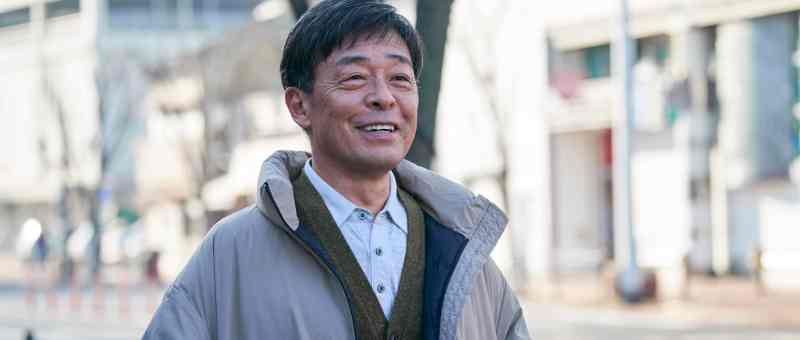
Everyone keeps asking Suenaga (Ken Mitsuishi) is if he’s okay. He has these tiny moments in which it looks like he’s on pause, sudden instances of stillness in which he stares vacantly into space. We start to wonder if he’s experiencing some kind of mental distress, having a stroke or developing dementia as those around him seem perplexed about his his behaviour which to us seems cheerful and pleasant. In fact, it seems confusing and unfair that he’s held in such contempt by his wife and daughter not to mention the pupils at his school and sullen young woman at the cafe he often frequents. 

A man of a certain age with a once overbearing father now mute and living with dementia in a retirement home, Suenaga is indeed undergoing a crisis of life. A year away from retirement, he begins to wonder what it was all for and how his relationship with his family became what it is today. He asks his wife Akiko (Maki Sakai) if they somehow gradually became estranged from each other in an impassioned speech in which he begs for love that neither she or his daughter are very minded to give him. Perhaps we can infer from the surprised reactions to his cheerfulness and attempt to take an interest in his daughter’s life that he hasn’t always been this way, though he too seems confused and perhaps not so much trying to make a mends but only to be his real self at what he fears may be the close of his life. 

When he surprises the waitress at a local cafe he goes to frequently by sitting in a different seat and then neglecting to pay the bill, it’s not really clear whether he actually forgot or did so deliberately as an attempt to assert himself. Likewise when he makes a clumsy attempt to embrace his now emotionally estranged wife or calls in sick to work it seems like more examples of his strange behaviour, yet Suenaga claims he’s becoming more of himself and on looking back over his life so far feels dejected and unfilled.

This  sense of mid life crisis is exposed in his conversation with Minami (Miyu Yoshimoto), the waitress at the cafe and an former pupil. He reveals that he wanted to become a head master but didn’t make it, and thinks he was only appointed deputy head because of picking up so many cigarette butts dropped by his rebellious charges, Minami is in many ways his opposite number, young and grumpy yet also grateful to him in another way restoring meaning to his life when she tells him that his words once saved her when he told her that she was fine the way she was. Even so she goads him a little, joking and maybe not really that he should give her his retirement money so she can have a better life. Echoing the opening conversation with his father, Minami hints she may soon quit the cafe to become a bar hostess or sex worker to save up before eventually emigrating Greece.

For all his teacherlyness, Suenaga seems to be a man who wants to be more understanding. He takes an interest in his pupils though they assume he doesn’t and again tells Minami that people should live the way they choose. In the rawness of their final parting, he tells her not to do anything she’ll regret but then adds that maybe she should, as if a life with no regrets is not really lived or perhaps reflecting that despite his own unhappy circumstances he does not really regret the life he’s lived. 

Filming in 4:3, Ninomiya makes great use of closeups, not least of Mitsuishl’s cheerful expression which somehow carries with it a great sorrow amid his own disappointments and yearnings. False or otherwise, there is something touching the connection of these dejected souls, the ageing teacher and the former pupil looking for permission to move on with her life but also teaching something to Suenaga in her sullen defiance and the eventual drive to keep going. Quiet and gentle if suffused with melancholy, Ninomiya’s poignant drama does indeed seem to argue that people in general are alright as they are but false acts jollity are as likely to confuse as console.


Dreaming in Between screens 1st June as part of this year’s Nippon Connection

Original trailer (English subtitles)

Father of the Milky Way Railroad (銀河鉄道の父, Izuru Narushima, 2023)

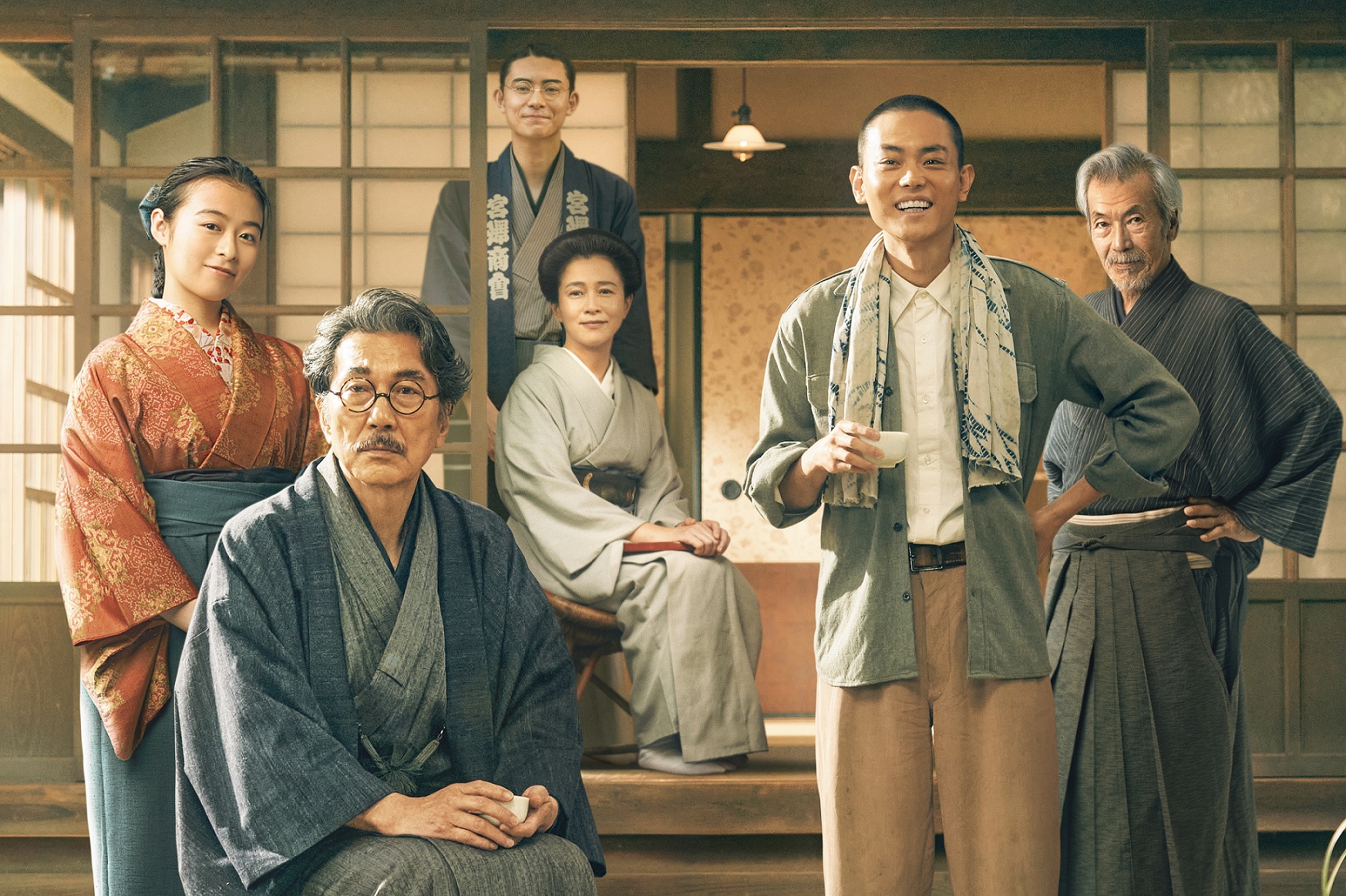
Generations of Japanese children have grown up with Kenji Miyazawa’s much loved classic Night on the Galactic Railroad but Miyazawa remained largely unknown in his lifetime and passed away from pneumonia at the young age of 37 in 1933 with the book that would make his name still unpublished. His story has been told before, most notably by Kazuki Omori in 1996’s Night Train to the Stars, but Izuru Narushima’s Father of the Milky Way Railroad (銀河鉄道の父, Ginga Tetsudo no Chichi), adapted from the Naoki Prize-winning novel by Yoshinobu Kadoi, takes a slightly different angle in exploring the life of his generally supportive father, Masajiro (Koji Yakusho).

As he’s fond of saying, Masajiro is a product of the modern era and a very modern father even in some ways by the standards of today. The film opens (and closes) with him on a train, this time hurrying home having received a telegram informing him that his first child has been born. So excited is he that he offends his own father by running past him on the way to see the baby without offering the proper greeting. Kisuke (Min Tanaka) is indeed more of a traditionalist raised with feudal values that are fast becoming out of date in the new society. As the head of the household, it’s he who gives the baby his name, Kenji, written with the characters for intelligence and healing which will indeed define his character if leaving him somewhat at odds with his society. 

Such a devoted father, Masajiro breaks with tradition and accepted gender roles in insisting on accompanying Kenji to hospital when he is taken ill despite his father’s admonition that caring for the sick is a role reserved for women. Kisuke also tells him his decision to have Kenji educated is wrongheaded, that literature and the arts only confuse a man and may prove more ruinous to him than drink or women. Annoyingly, Kisuke may have a point in that on his return from middle school Kenji (Masaki Suda) immediately rejects the family’s business as pawnbrokers having read too many Russian novels in which they are depicted as exploiters of the poor. He decries Masajiro’s justification that they support farmers who would otherwise be unable to access other forms of financial help such as bank loans and be forced to sell their daughters into sex work as mere sophistry. Masajiro may share some of his concerns, but remains in part wedded to some aspects of feudalism in insisting that as the oldest son Kenji has no choice other than to take over the family pawn shop.

Nevertheless, he also educates his daughter, Toshi (Nana Mori), who later begins working as a school teacher and is able to convince him to allow Kenji to further his studies only for Kenji to suddenly announce he wants to go to agricultural college to better understand their customers who are after all predominantly farmers. Having sent him away to be educated, Masajiro laments that Kenji knows “nothing of the world” after seeing him taken in by an obvious sob story from a duplicitous customer reflecting that his liberal education may have given him ideas that prevent him from living successfully in the society in which he lives. Kenji continues to resist the idea of taking over the pawnbroker’s while evidently unsuited to it before worrying his family further by becoming dangerously obsessed with radical new Buddhist sect Nichiren. 

It’s with this that Masajiro cannot really help him and begins to lose his patience as Kenji gives in nihilistic despair believing that nothing he does has any real meaning. His literary gifts are appreciated only in the wake of a tragedy that reconnects him with his childhood self while finally freeing Masajiro to embrace his son’s natural gifts as a writer rather than trying to force him to take over the family business. In truth, the film barely touches on the novel from which it takes its title if subtly hinting at it and bookending itself with the celestial train motif, but rather takes its lead from one of Miyazawa’s best known poems about his desire to become a better, more selfless, less self-defeating person that is perhaps inspired by his “modern” father’s “new” ideas of a society founded above all else on love. Perhaps it’s not so bad to know nothing of the world after all.  


Father of the Milky Way Railroad screens in New York July 29 as part of this year’s JAPAN CUTS.

Original trailer (no subtitles)

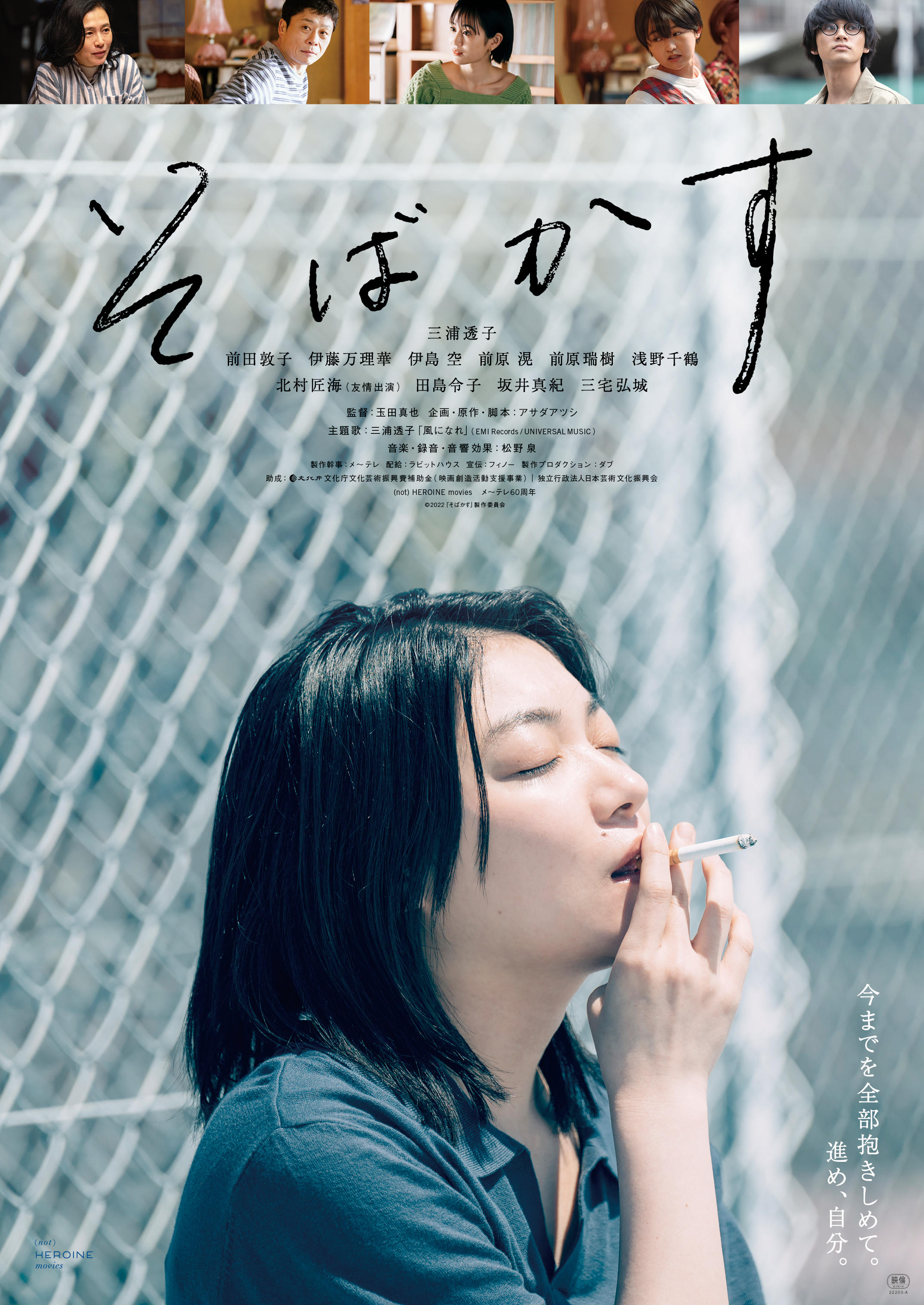
I Am What I Am (そばかす, Shinya Tamada, 2022)

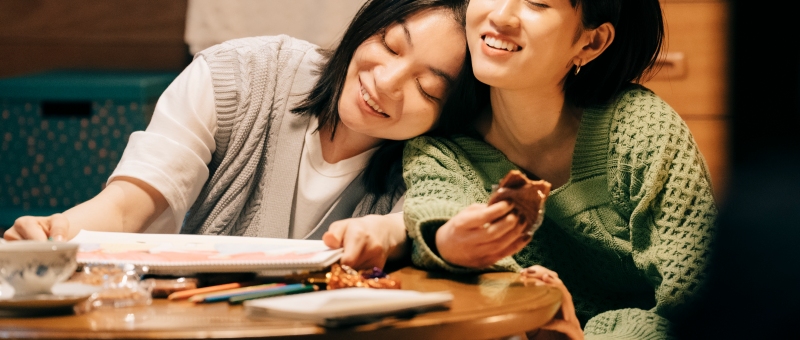
Part way through Shinya Tamada’s empathetic social drama I Am What I Am (そばかす, Sobakasu), the heroine’s sister remarks that she wishes she could live as if the world did not concern her as she assumes her sister does. In many ways, it’s an incredibly ironic statement because Kasumi (Toko Miura) finds herself constantly at the mercy of a world which refuses to acknowledge her, certain that the truth she offers freely of herself must be a lie or at least a cover for some other kind of shame. 

The fact is that Kasumi is asexual and has no interest in love or dating. As the film opens, she appears to be on some kind of awkward double date but seems isolated and aloof, as if deliberately left out of a conversation as she will be several times throughout the course of the film because of the centrality of “romance” in most people’s lives. She’s constantly asked about her “type”, or what she finds attractive in a man with a clear presumption of heteronormativity in also in play. Not wanting to get into it, Kasumi finds herself just nodding along offering some vague, stereotypical comment to smooth things over. When one of the men does strike up a more interesting conversation to which Kasumi can enthusiastically contribute, he doesn’t even listen to her but abruptly gets up to chase her friend. She ends up going to ramen bar on her own to decompress before running the gauntlet at home between mum, sister, and grandma who are all very confused by her lack of interest in marriage. 

Kasumi’s mother tells her that she has to get married someday, unable to accept that not to do so is also valid choice. Whether she does this because she feels embarrassed to have a 30-year-old unmarried daughter fearing that it reflects negatively on her parenting, is genuinely worried that Kasumi is lonely and unable to progress romantically because of shyness, or has a practical concern that she’ll be alone when she’s old, remains unclear though it does seem that her quest to marry Kasumi off is more to do with herself than her daughter. But with grandma apparently having had three divorces of her own, Kasumi’s sister Natsumi (Marika Ito) paranoid her husband’s cheating on her while she’s pregnant, and the parents’ marriage strained by her father’s depression it’s only natural she may wonder what’s so great about marriage anyway. 

In any case, though Kasumi constantly tells people quite directly that the issue is she has never experienced romantic desire and is fine the way she is they refuse to believe her assuming either that she is shy, stubbornly rebellious, or as her sister later suggests, gay. “No one would judge you for that,” she spits out less than sympathetically even while quite clearly judging her for this, as if it denies a basic fact of biology as unthinkable as someone claiming not to breathe the air. Her friend, Yashiro, who introduces her to a new job at a kindergarten, reveals that people did indeed judge him for being gay which is why he’s returned to his hometown. Not even he really believes Kasumi though eventually develops a sense of solidarity with her when her attempt to update Cinderella for a new, more inclusive generation leaves her both exposed and humiliated with a conservative politician visiting the school remarking that he thinks “diversity” is all very well but it only confuses the children and perhaps they should learn about it after developing “solid values”. 

The irony is that Kasumi is remarkably unjudgemental and accepting of all those around her, Yashiro remarking that he just knew she would be a safe person to disclose his sexuality to while she also bats nary an eyelid on reconnecting with a middle school friend (Atsuko Maeda) who turns out to have become a famous porn star in Tokyo only keen to protect her from the unwanted attention of star struck teenage boys and the accusatory eyes of those around them. Each of her attempts to find platonic friendship also fails because sooner or later romance gets in the way. She hits it off with the guy at the omiai marriage meeting her mother tricked her into attending because he also reveals that he has no desire to date or get married, but as much as she thinks she’s found a kindred spirit it turns out that his issue was a more conventional reluctance to enter a serious relationship. When he develops feelings and she has explain again that she meant it when she said she had no interest in romance he takes it personally, insisting that she’s lying and resentful that she doesn’t find him attractive. An attempt to get flat with a female friend also hits the rocks when she decides to get back together with an ex instead. 

When questioned about dating activities and giving the unoriginal answer of the cinema, Kasumi had mentioned a fondness for Hollywood remake of the War of the Worlds starring Tom Cruise. She later elaborates on her statement that she likes the way he runs to explain that in most of his other films, Tom Cruise is usually running towards something but in this one he’s just a regular guy running from trouble which something she can relate to because she’s been running away all of her life too. Yet the unexpected discovery that her mini stand over Cinderella might have done some good after all along with encountering someone who might indeed be a kindred spirit gives her the courage to start moving forward, less concerned by the world and more confident in herself. An empathetic tale of one woman’s attempt to live her life the way she wants frustrated by a conformist society, Tamada’s gentle slice of life drama is a refreshingly empathetic in its fierce defence of its heroine’s right to chase happiness in the way that best suits her.


I Am What I Am screened as part of this year’s Nippon Connection.

Original trailer (English subtitles)

Images: ©2022 “I am what I am” film partners

461 Days of Bento: A Promise Between Father and Son (461個のおべんとう, Atsushi Kaneshige, 2020)

“This is a story about my lunch every day. Nothing more, nothing less” the hero of Atsushi Kaneshige’s slice of comfort cinema, 461 Days of Bento: A Promise Between Father and Son (461個のおべんとう, 461ko no Obento), claims though it is of course something more than that. Based on an essay by musician Toshimi Watanabe who himself starred in Dad’s Lunch Box, Kaneshige’s gentle drama is another in the recent series inspired by the “papaben” phenomenon of fathers suddenly taking an interest in domestic matters by preparing tasty, nutritious and elegantly prepared packed lunches for their school-aged children. 

Obviously inspired by Watanabe’s real life, 461 Bento opens with cheerful home video footage of the early years of hero Kouki (Shunsuke Michieda) before shifting darker as the relationship between his parents begins to sour eventually ending in divorce. Kouki is given a choice whether to live with mum or dad, remaining behind in the family home with musician Kazuki (Yoshihiko Inohara) while his mum Shuko (Emi Kurara) moves out taking the tree they planted together with her. With the stress of the divorce, young Kouki ends up failing his high school entrance exams and is set back a year, eventually getting in the following spring. Hoping to encourage him, Kazuki offers to make a bento lunch every day for the next three years on the condition that Kouki pledges to not to skip school. 

In true papaben tradition, Kazuki ends up getting far too into the art of bento filling the kitchen with new gadgets while sometimes coming into conflict with his bandmates through investing all of his creative energies in innovative lunch recipes. Yet Kouki isn’t quite convinced by his father’s newfound passion, assuming it’s merely a new hobby he’ll soon get tired of rather than something he’s actively doing out of love for his son. Consequently, he’s originally a little embarrassed when his classmates appear unduly impressed by the quality of his dad’s work though it later helps him make a few friends which had otherwise been a little difficult seeing as he is a year older than everyone else. 

Being a year older continually weighs on Kouki’s mind, adding to the already onerous pressures of high school life his sense of anxiety intensifying as graduation nears. He complains he feels creepy hanging out with younger kids, and insists he can’t afford to fail and risk being held back again even older than everyone else at the beginning of college. Meanwhile he’s lowkey resentful towards his father blaming him for the end of his parents’ marriage while also seemingly ambivalent towards his mother for giving him the choice of where to live unfairly blaming her for leaving him even though it was his own choice to stay with his father. He rebels passive aggressively against his parents’ gentle support as they refuse to pressure him insisting he be free to do and be what he wants, while floundering in confusion over the next steps in his life. 

Kazuki is fond of telling him that everything will work out in the end, life’s not a race after all, only for Kouki to fire back that everything always works out for him because he just does whatever he wants and forces everyone else to go along with it which is why his mum left. Harsh words, but not without truth as new girlfriend Maka (Junko Abe) expresses something similar confessing that being with Kazuki makes her feel lonely and as he lives so defiantly in the moment it’s difficult to believe in the future of their relationship. Kouki cruelly tells Shuko he can choose a father for himself suggesting he might move in with his mother and her new boyfriend, but contrary to expectation Kazuki is serious about fatherhood giving his son the space for his adolescent angst while trying to be quietly supportive through his bento endeavours. 

The papaben phenomenon may be in itself a little sexist in exoticising a perfectly ordinary task just because it’s being done by a man thereby ironically reinforcing the idea that children’s lunches are a woman’s responsibility, but it does undoubtedly broker a reconciliation between father and son as the young Kouki begins to come to an understanding of his father’s love for him, overcoming the trauma of his parents’ divorce and gaining the courage to step forward into an independent future. A heartwarming coming-of-age tale, 461 Bento is about more than a boy’s lunch but also of the quiet power of unconditional love as mediated through the most ordinary act of care.


461 Days of Bento: A Promise Between Father and Son screened as part of this year’s Camera Japan

Original trailer (no subtitles)

108: Revenge and Adventure of Goro Kaiba (108 海馬五郎の復讐と冒険, Suzuki Matsuo, 2019)

In Buddhism, there are said to be 108 earthly desires, 108 lies, and 108 human delusions. As he points out however, all that is merely coincidence to Goro Kaiba, his petty revenge is founded entirely on the fact that a Facebook status in which his wife, using a pseudonym, detailed an affair with a lithe young contemporary dancer, garnered 108 Likes. Waxing self-referential, Suzuki Matsuo’s surreal sex comedy 108: Revenge and Adventure of Goro Kaiba (108 海馬五郎の復讐と冒険, 108: Kaiba Goro no Fukushu to Boken) in which he also stars, finds a middle-aged screenwriter somehow still trapped in adolescent insecurity, intensely self-involved as he pursues a “revenge” which is also a strange kind of ironic self harm intended to prove his manhood but accidentally exposing the love’s sordid underbelly in the vacuousness of its inversion. 

As the film opens, successful screenwriter Goro Kaiba (Suzuki Matsuo) is overseeing auditions for the musical adaptation of his greatest hit, Dancing in the Mental Ward. He tells us that he’s bored with his work and somewhat disrespectfully is actually writing a column due in a couple of hours’ time, barely paying attention to the actress as she valiantly perseveres with the less than stellar material before rudely dismissing her performance and suggesting she dump the boyfriend who helped her come up with it. Goro claims that he carries on in a job he hates for three reasons: he loves money, his wife’s a spendthrift, and he loves her. It’s something of a shock therefore when a young actress comes up to him after the auditions to ask for a private chat which turns out to be about something slightly different than he’d assumed. She shows him a Facebook profile she believes belongs to his wife, Ayako (Miho Nakayama), in which she claims to have fallen in love with a “contemporary dancer” named “Dr. Snake”. 

Confronted, Ayako admits “everything”, but explains that the Facebook profile is nothing more than wish fulfilment, a romantic fantasy to distract from the emptiness of her married life. Predictably, Goro fails to pick up on the fact there are obviously problems in their marriage, fixating on the extent of Ayako’s relations with Dr. Snake of whom she now has a large tattoo on her shoulder, something which he hasn’t noticed because they have not been intimate in some time. Ayako assures Goro that she means to stay with him forever, but will be fantasising about Dr. Snake when they make love, further hinting at another problem undermining their relationship. Goro, however, is not convinced and starts talking to his friends about divorce only to be reminded Ayako will be entitled to half his savings if he splits up with her. Consumed by pettiness, he decides to spend all the money so she’ll be left with nothing by sleeping with 108 women as “revenge” for her infidelity. 

Of course, the problem is less Ayako than his wounded male pride and emotional immaturity. Perhaps he’s doing this because he can’t admit to himself how much he really does love his wife and how hurt he is by her “betrayal”, but in any case he makes it all about him, refusing to engage with the problems in his marriage or reflect on the fact Ayako is obviously unhappy and unfulfilled. He tries giving some of the money away to his ex-wife and 20-year-old son Michio (Louis Kurihara) from whom he has apparently been withholding alimony and child support, put out that his ex won’t take it because she has no need of him, a man who abandoned her. Not abandoned, he points out to his son, simply “ran away”. In an awkward conversation, he goes so far as to blame Michio for his family’s collapse, claiming that he left essentially because Michio didn’t love him enough while complaining that no one seems to appreciate him. 

Meanwhile, we also realise Goro has been hypocritically carrying on a casual affair with an old friend, Mitsuko (Natsuko Akiyama), perennially unlucky in love but planning to put an end to their “arrangement” to marry a much younger man she is fully aware is only after her money. As part of his sexploits, Goro hires a high class call girl, Azusa (Shiori Doi), but she is also romantically challenged in that despite being the number one herself, she’s only really doing this to make her host club boyfriend top dog at his establishment. In love, it seems there is always some kind of transaction, a misplaced desire. Edging deeper into his pointless and petty quest to bed 108 women, it’s not until late in the game as he’s overseeing a pool full of glistening, gyrating bodies that he perhaps begins to realise how vacuous and meaningless it all really is, sordid in its emptiness. By then, however, he’s gone too far to turn back. 

Better to him than he deserves, Ayako eventually confesses that she was “fighting the inevitability of ageing”, both facing and refusing to face the fears which informed the choice she made to retire from acting and become his wife, but Goro remains petulant and immature, indulging in a romanticisation of their early romance but unwilling to confront himself, his fears, and the real reason he’s embarked on this pointless and silly quest to vindicate himself through aggressive masculinity. Worryingly indulging in fantasies of sexualised violence against his wife which admittedly have an unexpected pay off, Goro struggles to identify what it is he’s really reeling from while pursuing not so much pleasure but misdirected pain in flight from adult vulnerability. In his usual style, Matsuo has ironic fun with Goro’s flights of fancy, suddenly breaking into song like one of his shows while simultaneously mocking them and undercutting Goro’s thinly veiled misogyny by having the leading actress abruptly walk out in protest against his childishly smutty song about the joys of sex. Nevertheless, we leave Goro exactly where we found him, all at sea torn between the risky rewards of honest romantic connection and the dubious pleasures of hedonistic conquest. 


108: Revenge and Adventure of Goro Kaiba screened as part of Camera Japan 2020.

Original trailer (no subtitles)

Flowers of Evil (惡の華, Noboru Iguchi, 2019)

Small-town ennui is something familiar to many who’ve found themselves feeling somewhat out of place in the place they’ve always been, but rebellions usually take less obvious forms than the nihilistic rejection of bourgeois respectability enacted by the conflicted hero at the centre of Noboru Iguchi’s Flowers of Evil (惡の華, Aku no Hana). Iguchi is best known as a director of made for export splatter exploitation, so it might come as a surprise to his fans to see him take on the admittedly dark but largely gore-fee adaptation of Shuzo Oshimi’s coming-of-age manga.

Takao (Kentaro Ito), a “regular” high school boy, likes to read “difficult” books such as the poetry collection by Charles Baudelaire from which the film takes its title. He feels himself somewhat above his surroundings, but superficially conforms to the ordinary world around him. Like many of his classmates, he’s developed an adolescent crush on the school’s prettiest girl, Nanako (Shiori Akita), but unlike his friends views her as his “muse”, a pure and untouchable figure of unspeakable desire. Nipping back to the classroom alone to retrieve a forgotten book, he spots Nanako’s gym bag lying on the floor and cannot resist opening it, burying his face in her clothes. Panicked after hearing someone nearby, he takes the bag home with him.

Everyone immediately knows that a “pervert” is responsible for the theft, they just don’t know who it is. Except for the class’ resident strange girl, Sawa (Tina Tamashiro), who apparently witnessed Takao’s descent into perversion in real time. She makes him a deal – write an essay all about what a big pervert he is and she’ll kept his secret in friendly complicity seeing as she is a kind of “pervert” too. Sawa, who is much more obviously “different” than Takao and completely unafraid of embracing it, is convinced that their town is entirely inhabited by “Shit Bugs”, and they are the only elevated beings. Uncomfortable with her own desire, Sawa’s behaviour becomes increasingly intense when Nanako unexpectedly expresses an interest in Takao, apparently impressed that he was so “upfront with his feelings” and willing to stand up for Sawa when she was accused of being a (but not the) thief.

Takao tells Sawa that he just wants to be “normal”, to be the kind of man Nanako could desire. Just another confused teenage boy, he doesn’t yet know who he is or what he feels and is, in a sense, consumed by the sense of emptiness that comes of lacking self-knowledge. He masks his sense of intellectual inferiority by feigning sophistication, spending his free time in second hand bookshops reading the accepted canon with a typically teenage obsession with death and despair. But as he is later forced to admit, he did so largely in order to feel superior. He doesn’t truly understand much of what he read and lacks the maturity to accept his confusion. Nanako challenges him in more ways than one – by calling him on his wilful repression of his desires, and by confronting him about his obsession with Flowers of Evil, a “difficult” book which try as she might she can’t understand. She doesn’t “get” Baudelaire, and she doesn’t “get” Takao because of it, but Takao doesn’t “get” Takao either because he thinks he’s a book filled with blank pages, that if you open the cover there’s really nothing interesting there, just a giant void of emptiness.

Three years after stealing the gym bag, Takao describes his new environment as infinitely grey as if devoid of any sense of life, whereas the climactic summer is coloured by a vibrant greenery he claims to be equally oppressive. Fed up with small-town life, both Takao and Sawa long for a mythical “beyond” on the other side of the mountains which trap them within the claustrophobic environment of their provincial existence. They kick back against small-town conservatism with childish shows of resistance which culminate in a very public act of self-harm dressed as societal attack, but remain unable and unwilling to address the real cause of their frustration in their adolescent inability to accept that desire itself is not “perverse” or somehow sullying some grand romantic notion of pure and innocent love.

Unable to process his desires, Takao remains unable to progress into adulthood and become, as Sawa later chides him, a “regular human”. Normality is, however, what he eventually chooses, reverting to the anxious bookworm he always was only having moved forward in learning to let something go, whereas Sawa perhaps feels that she has no other option that to accept her own “perversion” and be exiled by it. Takao discovers an internal “beyond” and tries to share it with Sawa, but she is looking for something else and cannot join him in the “regular” world to which he is always going to return. Iguchi dedicates the film to all those who are or were tormented by youth, allowing his tortured hero to find his path towards an integrated selfhood, but resists the temptation to belittle his suffering as he strips himself bare to exorcise the emptiness inside.


Flowers of Evil was screened as part of the 2019 Five Flavours Film Festival.

Original trailer (no subtitles)

https://youtu.be/2sXTkrHo2Ls

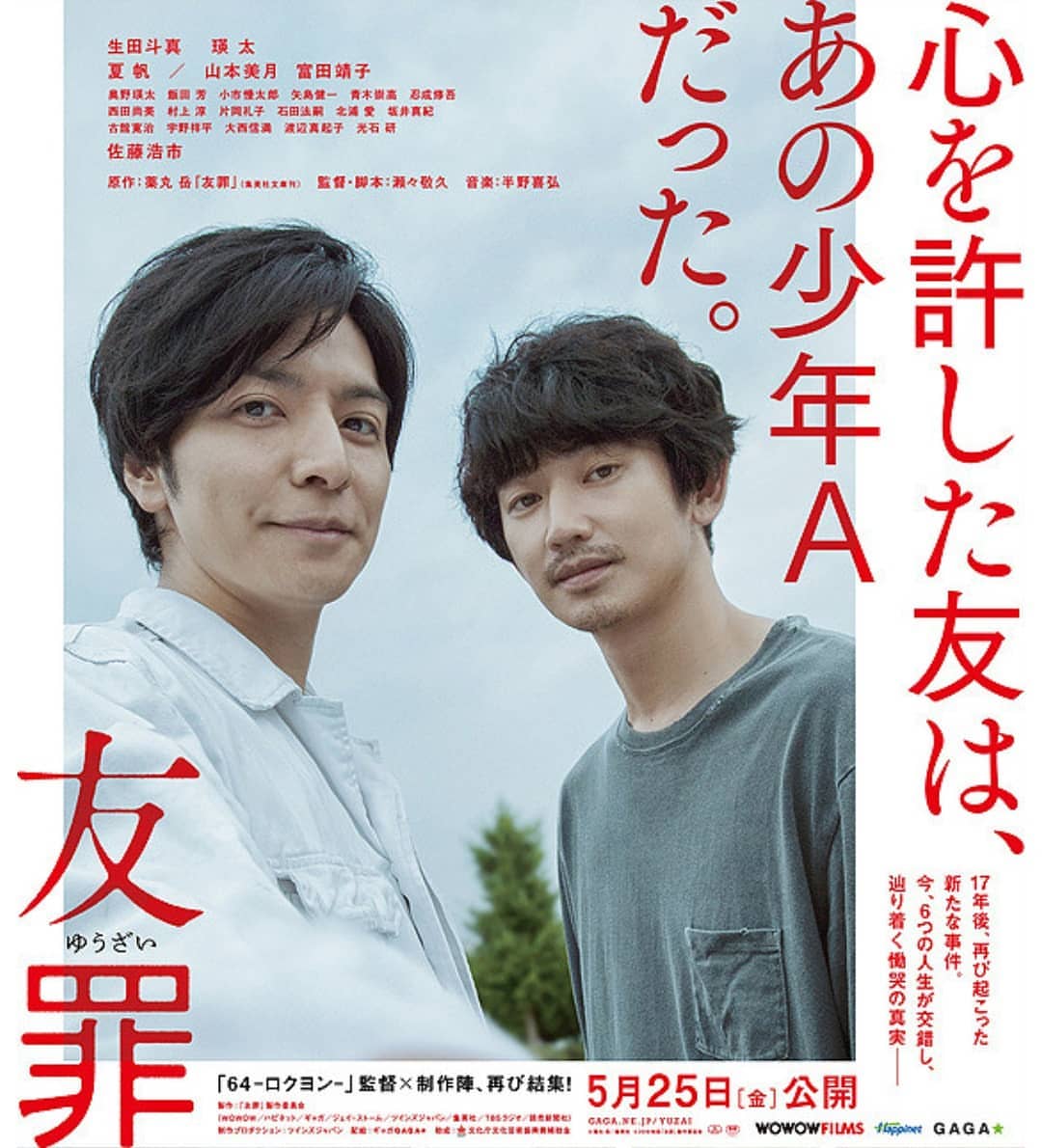
My Friend “A” (友罪, Takahisa Zeze, 2018)

My Friend A posterThe Japanese justice system is founded on the idea of confession and atonement, that if you admit your crime and show remorse you will be forgiven. The truth, however, is much more complex and those whose lives have been tainted by transgression are often rejected by a still unforgiving society. Director Takahisa Zeze describes his adaptation of Gaku Yakumaru’s novel My Friend “A” (友罪, Yuzai) as a picture of the world he longs to see at the end of the Heisei era, one which is less judgemental and more compassionate where the bonds between people can perhaps overcome the traumatic past.

In the present day, two very different men – failed journalist Masuda (Toma Ikuta) and the sullen and mysterious Suzuki (Eita), are inducted as probationary workers at a small factory. Suzuki’s determination to keep himself to himself does not endear him to the other workers who become convinced that he is hiding something from them. Suzuki is indeed hiding something, though his reasons for avoiding human contact are various and complex. When a young child is found murdered nearby in a method which echoes a notorious killing from 17 years previously, Masuda is contacted by an old colleague (Mizuki Yamamoto) investigating the case and begins to wonder if the secret Suzuki seems to be burdened by might have something to do with one crime or both.

In actuality, Masuda does not seem to believe that Suzuki is involved with the recent killing even if he comes to the conclusion that he is almost certainly the teenager convicted of the earlier crime. Nevertheless, he develops an awkward “friendship” with him which is partly exploitative as he ponders writing an exposé on the injustice that allows someone who committed such heinous acts, even in childhood, to start again with a new identity. “Injustice” becomes a persistent theme as seen in the melancholy tale of taxi driver Yamauchi (Koichi Sato) who is carrying the heavy burden of being the father of a son (Hoshi Ishida) who killed three children as a joy riding delinquent. Hounded by one parent, and accidentally harassing the others through his relentless attempts to apologise for his son’s transgression, Yamauchi has ruined his family through his own need for personal atonement. Having divorced his wife and lost touch with his son, he is enraged to learn that he plans to marry and will soon be a father. Even if his wife-to-be knows of his past and accepts it, Yamauchi believes his son has lost the right to live as other people live and finds it extraordinarily offensive that a man who took the lives of children would have a child of his own.

Yamauchi seems to want to put his family back together but only succeeds in tearing it apart. Corrupted families loom large from the mysterious photograph of the smiling boy surrounded by the scratched out faces of his parents and sibling found among Suzuki’s belongings, to the reform school boy taunted with the accusation that he might not have turned to drugs if only his parents had loved him more. Suzuki fixates on his reform school teacher Shiraishi (Yasuko Tomita), but she in turn has neglected her own daughter in her fierce desire to save the souls of these violent young men many of whom have become the way they are because they believe that they are worthless and no one cares about them. Meanwhile, Miyoko (Kaho) – a young woman drawn to Suzuki’s silent solidarity, struggles to escape her own traumatic past partly because she was shamed in front of her family who then were also shamed by her inescapable transgression.

Unlike Suzuki, Miyoko has committed no crime but is haunted just the same. As is Masuda though his guilt is real enough if of a more spiritual kind as he struggles to accept his role in the death of a friend who committed suicide when they were just children. Then again, Masuda’s struggle, like Yamauchi’s, is perhaps a solipsistic one in which what he is really mourning is not his friend but the vision of his idealised self. On visiting his late friend’s mother, Masuda bristles when she talks about his journalistic career and her hope that he is still “strong and just” like the teenage boy she believes stood alongside her lonely son when the truth is that he abandoned his friend when he needed him most because he was too cowardly to risk becoming a target himself. Despite his high ideals, Masuda had been working at a scandal rag and his only real piece of ethical journalism was a confessional about the destructive effects of high school bullying. He remains conflicted in his friendship with Suzuki not quite because he fears his dark past but because he fears his own moral cowardice – something he is reminded of when a housemate points out that no-one likes Suzuki and that if Masuda sides with him, no one will like him either. 

The question that is asked is whether discovering someone’s dark secret necessarily changes who they are now and if it is ever really possible for those who have in some way transgressed to return to society. As Suzuki puts it to Masuda in reflecting on their unavoidable commonality, they’re each men who rarely unpack their suitcases, always on the run from an unforgiving present. Yet there is perhaps hope despite Masuda’s ongoing diffidence in his eventual (self) confession and belated solidarity with a man he later recognises as a “friend” in acknowledgement of the unconditional bonds of genuine friendship.


My Friend “A” was screened as part of the 2019 Japan Foundation Touring Film Programme.

International trailer (English subtitles)
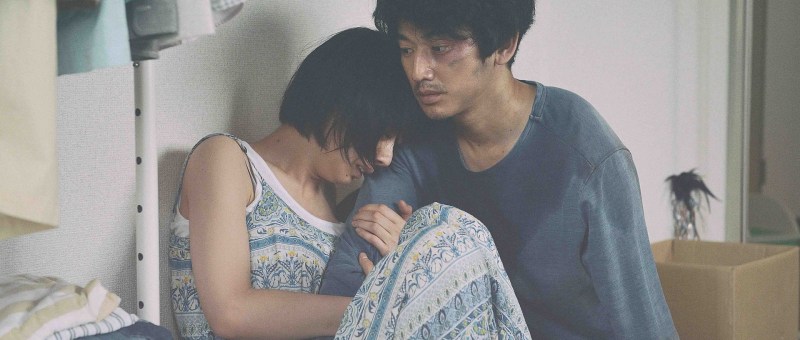
United Red Army (実録・連合赤軍 あさま山荘への道程, Koji Wakamatsu, 2007)

Koji Wakamtasu had a long and somewhat strange career, untimely ended by his death in a road traffic accident at the age of 76 with projects still in the pipeline destined never to be finished. 2008’s United Red Army (実録・連合赤軍 あさま山荘への道程, Jitsuroku Rengosekigun Asama-Sanso e no Michi) was far from his final film either in conception or actuality, but it does serve as a fitting epitaph for his oeuvre in its unflinching determination to tell the sad story of Japan’s leftist protest movement. Having been a member of the movement himself (though the extent to which he participated directly is unclear), Wakamatsu was perfectly placed to offer a subjective view of the scene, why and how it developed as it did and took the route it went on to take. This is not a story of revolution frustrated by the inevitability of defeat, there is no romance here – only the tragedy of young lives cut short by a war every bit as pointless as the one which they claimed to be in protest of. Young men and women who only wanted to create a better, fairer world found themselves indoctrinated into a fundamentalist political cult, misused by power hungry ideologues whose sole aims amounted to a war on their own souls, and finally martyred in an ongoing campaign of senseless death and violence.

Dividing the narrative into three distinct acts, Wakamatsu begins with a lengthy history lesson starting right back in 1960 with the birth of the student movement and the first casualty of the unborn revolution as a young woman loses her life protesting the rise of tuition fees. Despite the lack of success, the student movement intensifies during the turbulent 1960s with the renewal of the ANPO treaties and the perceived complicity of the Japanese government with America’s anti-communist warfare in Asia. Mixing archive footage with reconstructions and on screen text detailing timelines, names and affiliations these early segments are hard to follow but bear out the complexity and chaos which contributed to the inefficacy of the student movement. Soon, each of the leaders we have been introduced to has been removed from the scene leaving the older but inexperienced Tsuneo Mori (Go Jibiki) in charge of what was then the Red Army Faction.

Mori had only recently rejoined the movement after leaving in disgrace at fleeing a protest and thereby evading arrest. The Red Army Faction then merges with another sect, the Revolutionary Left Wing (RLF), to form the United Red Army. Led by Mori and a female commander, Nagata (Akie Namiki), the United Red Army holes up in a cabin in the woods in order to undergo military training for the upcoming armed insurrection. Prior to this, there had been a series of purges and executions in the city producing an atmosphere of terror and paranoia which only intensifies in the incestuous and claustrophobic environment of the ascetic mountain retreat.

Out of his depth and eager to prove himself, Mori’s revolutionary consciousness developes into a dangerous cult of personality in which his iron rule is more akin to fundamentalist religion than a serious political movement intended to change the world for the better. Wakamatsu’s depiction of these events is as terrifying as it is absurd. Maoist doctrine becomes a holy scripture as each of these would be revolutionaries is forced to undergo self criticism in order to devote themselves fully to the revolution and become a “true communist”. Brainwashed and naive, the cadre comply seeming not to realise that no self criticism they can offer will ever be good enough for Mori’s constant need for identity erasure and that each fault they offer will only be used to form the basis of the next charge levelled against them. What begins as questioning develops into screaming before descending into bloody violence and eventually murder.

If Mori’s fault is a kind of madness born of fear and insecurity, it is Nagata whose mania takes on an almost gleeful quality. A plain woman with unremarkable features and a sharp personality, Nagata, as she’s portrayed in the film, displays extreme issues relating to femininity. When an idealistic young woman arrives dressed in typical city fashions necessary to blend in with the capitalist bourgeoisie, Nagata wastes no time in berating her for her stylish clothes and makeup. Threatened both by the woman’s conventional beauty and high ranking position in another faction, Nagata takes especial care to make sure she herself remains on top. Despite being in a relationship with one cadre member and later leaving him for Mori (because it’s “right from the communist perspective”), Nagata cannot bear any hint of sexual activity and it is an ill judged kiss which ends up leading to the first set of mercilessly violent self criticism sessions eventually resulting in death as both parties are beaten and then tied up in the freezing mountain air where death by exposure is all but inevitable.

Mori declares that “leadership means beating” but when this is no longer enough the death sentences come thick and fast. Eventually, some members manage to escape and the mountain hideout is discovered. Splitting up and heading on the run, Mori and Nagata are captured while a group of five break into a mountain lodge where they take the caretaker’s wife hostage and remain under siege for nine days until the police eventually break in, arrest the terrorists and rescue the woman all of which became the first such event to be live broadcast on Japanese TV. The Asama-Sanso incident, as it came to be known, sealed the fate of the left wing protest movement in Japan as the terrorist violence of the renegade protestors forever coloured public perception.

Wakamatsu does not end his story here – returning to the captions which opened the film, he reveals to us the legacy of the failed student protest movement in the overseas activities of the Japanese Red Army, most notably in North Korea and the Middle East. The protest movement in Japan resulted in abject failure – the ANPO treaty survives, the Sanrizuka villages were destroyed and an airport built, the capitalist future arrived at speed heading into the bubble economy where the only revolution was consumerism. The glorious future of which these young people dreamed, free of class, gender, and social inequality, would not materialise as their idealism devolved into introspective dogmatic rhetoric, violence and murder. Trapped inside a fundamentalist cult, the true tragedy is that this was a children’s revolution – the vast majority of its victims under 25 years old, one just 16 and forced to participate in the death of his own brother. How much good could each of these socially conscious young people have gone on to do if only they’d found a less destructive cause? Would anyone want to live in the world born of this revolution? Contrasting the joyous camaraderie of the peaceful protests with the escalating, internecine violence of the URA, Wakamatsu’s vision of the movement he was once a part of is a necessarily bleak one but resolute in its gaze. Ugly, cold and unforgiving United Red Army is a warning from history which has only sympathy for those caught up in its terrible machinations.


Original trailer (English subtitles)