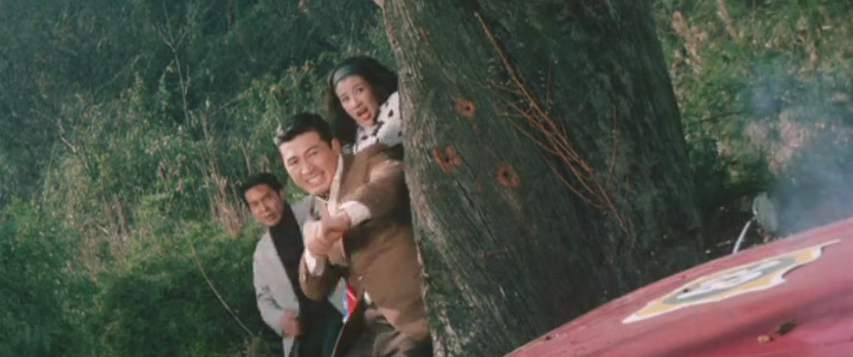
The Killing Machine (少林寺拳法, Norifumi Suzuki, 1975)

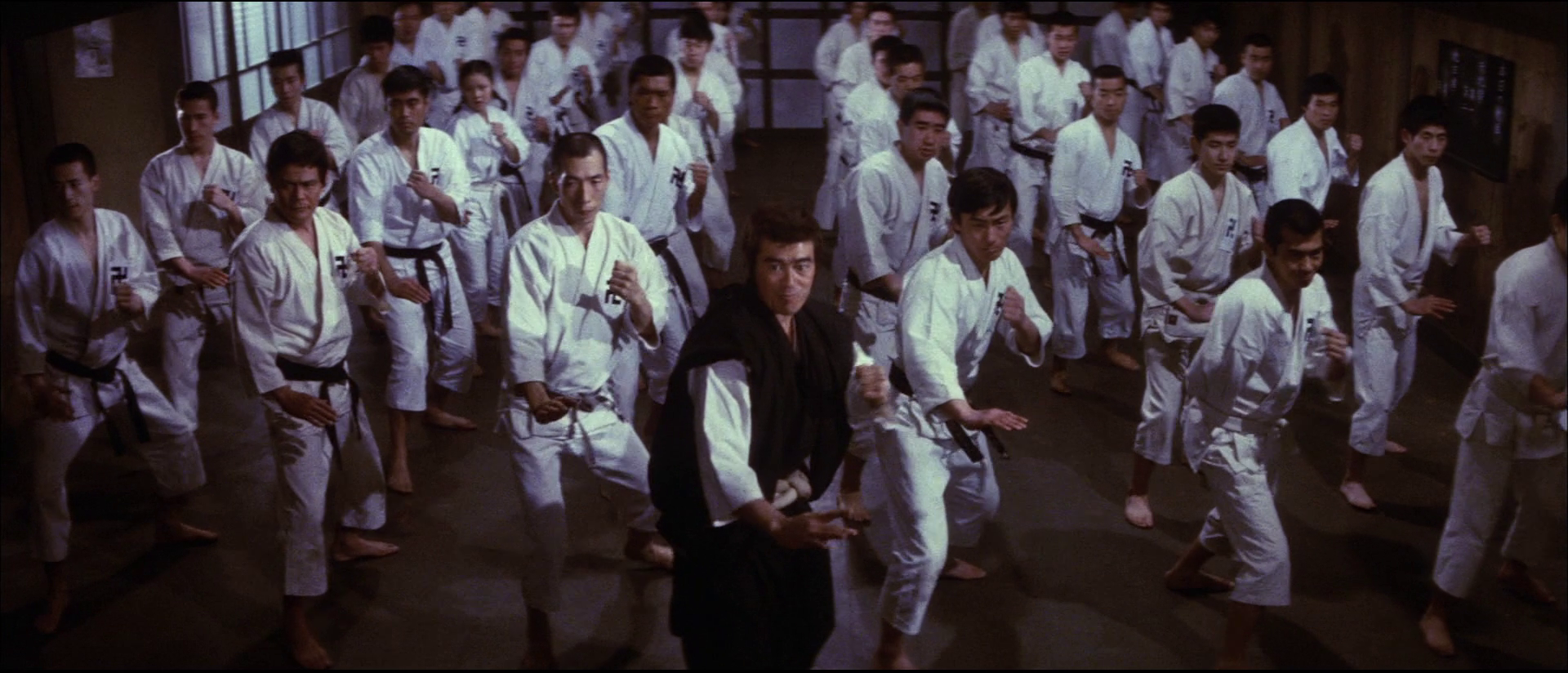
“As long as somebody like you is around, there’s hope for Japan,” an oddly sympathetic prison warden says to the last patriot standing in post-war Osaka. The title of Norifumi Suzuki’s Sonny Chiba vehicle The Killing Machine (少林寺拳法, Shorinji Kempo) maybe somewhat inappropriate or at least potentially misleading as the film is deliberately constructed as a martial arts parable emphasising the spiritual philosophy of self-improvement and compassion that is inextricable from its practice.

To that extent, the hero, Soh Doushin (Shinichi Chiba), is trying to fight his way out of the miasmas of the immediate post-war era. As may be apparent, Soh has taken a Chinese name, though Soh was apparently his along and belonged to a former samurai family whose nobility has been crushed by militarism. As the film opens, however, he’s a Japanese secret service operative in Manchuria blindsided by the news of Japan’s surrender. Soh is it seems a nationalist and a patriot, but a fairly revisionist one who stands up to the abuses of the Japanese army. He later says that he protested the way that the local Chinese population were often treated and he does indeed raise a fist toward an officer who wants to sell a young Japanese woman to a Chinese soldier in return for a guarantee of their safe passage to a boat heading out of the country. The young woman’s mother protests that she is an innocent virgin, a fact that has some later relevance. Soh refuses to let the officers take her, though evidently separated from her later.

When he meets the young woman again in the bomb-damaged backstreets of Occupation Osaka, she is dressed in Western clothing as opposed to the smart kimono she wore in Manchuria and is about to become a “pan pan” or streetwalking sex worker catering to American servicemen. Of course, Soh can’t let this happen either, but as she later tells him, she was raped by Russian soldiers during the retreat and now feels herself to be despoiled. She never wears kimono again and becomes a kind of symbol for a despoiled nation that Soh is reluctantly forced to accept he cannot save in part because his philosophy, which is still uncomfortably rooted in the philosophy of militarism, only valued strength when it should have valued love. The kind of love that Kiku (Yutaka Nakajima) had for her brother that made her willing to sacrifice herself for his wellbeing. 

Even so, Soh is doing his best to issue a course correction by caring for a small group of war orphans and helping them support themselves by running a rice soup stall so they won’t end up becoming dependent on the yakuza or the black market. It’s the yakuza and their increasingly corporatising nature that become Soh’s chief enemies, though standing right behind them are the Occupation Forces. They are, of course, just the biggest gang, as we can see when one of the kids steals a few tins from the gangster’s crate which is marked with text making it clear it came from the mess hall at the American base. The backstreets are full of sleazy soldiers and pan pans or otherwise the starving and dejected, sometimes violent demobbed soldiers filled with despair. It’s these men that Soh wants to buck up, telling them to rediscover their fighting spirit and giving them the opportunity to do so through learning Shaolin martial arts.

Of course there are those who don’t want to learn Chinese kung fu in the midst of their defeat, but what Soh is advocating is something that has a greater spiritual application even than karate can also have. It’s a kind of humanitarian riposte to the futility of the post-war society that might sometimes fail to recognise the depths of the impossibility faced by many in insisting they can be faced by discipline and moral fortitude but at the same time is not really judgemental except toward those who have deliberately abandoned their humanity, such as the trio of goons who rape a school for amusement (the girl is later seen among the students at Soh’s school along with the children from Osaka). The girl’s father reports it to the police, but the police and the gangsters are in cahoots, so nothing gets done. Soh cuts the guy’s bits off so he won’t be doing that again. Strength without justice is violence, he realises. But justice without strength is inability. Strength and love like body and mind should never be separated. The closing shots show an entire mountain covered in white-clad figures practising Shaolin kung fu and joining the humanitarian revolution rather than the cruel and selfish one represented by the gangsters with their red-light districts and black markets. It may be a simplistic solution, but it is in its way satisfying and at least a rejection both of the militarist past and the capitalistic future.


*Norifumi Suzuki’s name is actually “Noribumi” but he has become known as “Norifumi” to English-speaking audiences.

Bonds of Love (愛のきずな, Takashi Tsuboshima, 1969)

On a rainy night, a salaryman trapped in a loveless marriage and unsatisfying career chances on a beautiful woman dressed in kimono waiting by the side of the road. He decides to double back and offer her a lift, which she ill-advisedly accepts, but as it turns out he is actually the one in danger. Adapted from the Seicho Matsumoto short story Tazutazushi, The Bonds of Love (愛のきずな, Ai no Kizuna) has underlying misogyny that paints the woman at its centre as a sort of elemental spirit who bewitches men and leads them to their doom even while the hero himself is selfish and insecure, mired in an inferiority complex and incapacitated by wounded male pride.

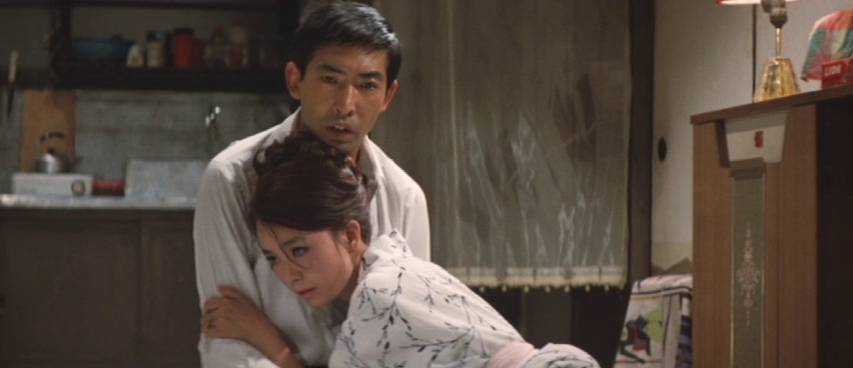
The fact that Ryohei (Makoto Fujita) is already married comes as a bit of a shock, abruptly revealed as it is by the nameplate on the suburban home he returns to after a date with Yukiko (singer Mari Sono) having told her that he lives alone at the company dorm. It seems obvious that he’s dissatisfied with his domestic life and fed up with his overly materialist wife Sanae (Chisako Hara) whose constant gripes only seem to needle at his sense of inadequacy. Today, she’s misplaced an expensive ring he’d used his annual bonus to buy her and when he notices it simply sitting next to the sink, she remarks that it’s not all that nice anyway. Ryohei at least feels that she resents him for not being more successful and having the financial power to buy her the frivolous gifts and status symbols she clearly desires. The power dynamic is in any case unbalanced because Sanae is the daughter of his boss which means she in effect has total control over his career. One word to her father, and he’s toast, but at the same time she can only help him so far with his advancement despite nagging him constantly about his future prospects. Meanwhile, the other men at the office make fun of him. They describe Ryohei as an idiot who’s only in his position by virtue of being the boss’ son-in-law. 

This of course further needles at his wounded male pride, but dating Yukiko, who adores him completely, on the side restores his sense of masculinity. After he claims to have been staying out late playing mahjong, Sanae cautions him that one of his colleagues is being transferred because of his gambling and womanising habits. At his leaving do, Miyata (Sachio Sakai) lays into Ryohei and says he’s the one who taught him how to pick up women and pretend to be single as if this is the way they overcome their sense of impotence while under the company’s thumb. Ryohei appears not to like him, perhaps because he reflects the qualities in himself he is least proud of. The news of his transfer therefore spooks Ryohei knowing that the same fate may befall him if his affair with Yukiko is exposed. 

But when Sanae does eventually suspect he’s cheating on her and complains to her mother, the boss rings Ryohei and basically tells him not to worry about it because a man’s not a man if he doesn’t play around. The conflict that Ryohei has is essentially one of conflicting masculinities, the one in which he is effectively emasculated but defines his status through a hierarchical relationship with other men within the corporate structure, and the other in which he defines it through romantic conquest which also represents a kind of freedom. But being a fairly conventional man, in the end Ryohei cannot bear to have his salaryman persona ripped away from him and will do whatever it takes to maintain his relationship with his wife and by proxy his boss to preserve his career.

Realising Yukiko poses a threat to that, he decides the only solution is to kill her but it’s also true that he’s confronted by a much more robust vision of masculinity in the form of her estranged husband Kenji (Makoto Sato) who went to prison after stabbing another man in a jealous rage. It’s clear that Ryohei is afraid of Kenji and definitely doesn’t want to end up getting stabbed. His “love” for Yukiko does not stand up to that kind of scrutiny and it’s her assertion that she’s going to tell Kenji all about their affair and ask for a divorce that shifts him into crisis mode. After all, he’s in flight from domesticity. Leaving Sanae, and with it destroying his career might not solve his problems even if what he eventually chooses is just that, to be free of the burden of the salaryman dream and move to a small town to open a shop with a woman who is in thrall to him and therefore continually submissive and loving in contrast to Sanae who only ever makes him feel small.

Yet, we can’t actually be sure how much of what happens later is actually real or just Ryohei imagining things because of his guilty conscience and continuing sense of inadequacy. Essentially, he gets a second chance to make better choices and finally gains the courage to abandon his salaryman persona only to be immediately confronted by both his transgressions and violent masculinity. Tsuboshima crafts an atmosphere of malevolence and noirish dread coupled with a spiritual sense of retribution born of the constant rains and gothic thunderstorm that heralds the final confrontation in which Yukiko is herself a harbinger of death leading weak willed men towards their doom to which they go all too willingly. 


Zero (零戦燃ゆ, Toshio Masuda, 1984)

The Zero Fighter has taken on a kind of mythic existence in a romanticised vision of warfare, yet as Toshio Masuda’s Zero (零戦燃ゆ零戦燃ゆ, Zerosen moyu) implies its time in the spotlight was in fact comparatively short. Soon eclipsed by sleeker planes flown by foreign pilots, the Zero’s glory faded until these once unbeatable fighters were relegated to suicide missions. On one level, the film uses the Zero as a metaphor for national hubris, a plane that ironically flew too close to the sun, but on another can never overcome the simple fact that this marvel of engineering was also a tool of war and destruction. 

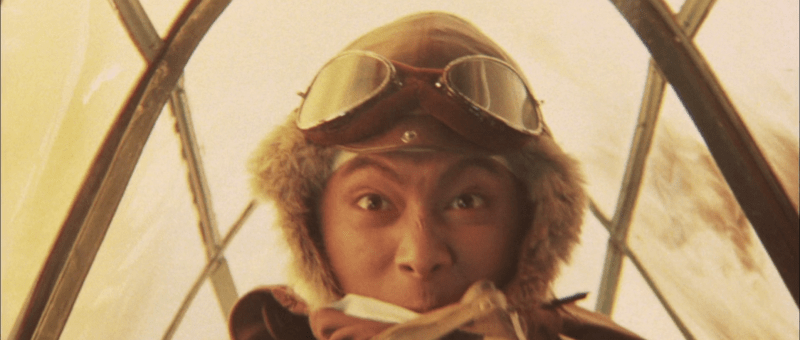
The film is loosely framed around two members of Japan’s Imperial Navy, Hamada (Daijiro Tsutsumi) and Mizushima (Kunio Mizushima), who as cadets consider deserting to escape the brutality of Navy discipline. Having left the base they’re accosted by an inspirational captain who talks them out of leaving by showing them a prototype model of the Zero and convincing them they only need to stick it out for a few more years in order to get the opportunity to fly one. Mizushima, the film’s narrator, doesn’t qualify as a pilot and is related to the ground crew while Hamada does indeed get to pilot a Zero fighter and becomes one of the top pilots in the service. 

The viewpoint is is then split between the view from the ground and that from the clouds. Mizushima makes occasionally surprising statements such as candidly telling love interest Shizuko (Yû Hayami) that they are unlikely to win the war, while becoming ever more concerned for Hamada at one point telling him there’s a problem with his plane in the hope that he won’t take off that day. Hamada meanwhile is completely taken over by the spirit of the Zero and even when given a chance to escape the war after being badly injured, chooses to return because he does not know what else to do. When he visits home after leaving hospital, no one is there. His mother eventually arrives and explains that the family has become scattered with his siblings seconded to the war effort in various places throughout the country. 

Hamada’s dedication and personal sacrifice are in some senses held up as the embodiment of the Zero. The reason for its success is revealed to lie in the decision to remove the armouring for the cockpit leaving the pilot’s life unprotected, something which the American engineers describe as unthinkable. In an early meeting, a superior officer complains that they’re losing too many pilots and need to reinstall some of the armouring, but finds little support. Not only this is a cold and inhuman decision, but it’s poor economic sense given that skilled pilots are incredibly valuable and in short supply. After all, you can’t just make more. If you start from scratch you’ll need to wait 20 years and then teach them fly, but it’s a lesson the Navy never learns that is only exacerbated with the expansion of the kamikaze squads which squander both men and pilots for comparatively little gain. 

These “philosophical differences” are embodied in the nature of the Zero which is configured to be nimble and outmanoeuvre the enemy but is quickly eclipsed not least when foreign powers figure out the way to beat it lies in numbers in which they have the advantage. There is something of a post-Meiji spirit in the feeling that Japan is lagging behind Western powers and desperately needs to develop its own military tech in order to defend itself. On hearing rumours of the Zero fighter, MacArthur scoffs and says that Japan can’t even build cars so he doesn’t believe they could design a plane that could fly such large distances while others suggest that they will still need the element of surprise if they ever go to war with America because its technology is still superior. 

Walking a fine line, the film tries to avoid glorifying “war”, but it cannot always help indulging in nationalist fantasy such as in its statement that thanks to the Zero “the Japanese flag covered a vast area of the Pacific” in the wake of Pearl Harbour. These may be fantastically well designed machines that were incredibly good at what they were created to do, only what they were created to do was kill and destroy. The plane’s fortunes and Japan’s are intrinsically linked, the sense of superiority in the air lasts only a short time before Western technological advances over take it and the war continues to go badly. The film dramatises the tragedy of war through the friendship between the two men which eventually causes Mizushima to sacrifice his love for Shizuko by convincing her marry Hamada hoping that his priorities would change and he’d decide to take a position as an instructor rather than heading back to the front. 

For her part, it seems that Shizuko was also in love with Mizushima, but also caught in a moment of confusion between love and patriotism that encourages her to think she should do as Mizushima says and embrace this man who has dedicated his life to his country. In the end, it buys them each loss and misery, but also a moment of transcendent hope even if it was based on a falsehood in the pleasant memory that Mizushima gives Hamada of the life he is giving up by rejecting it to return to the front. For Mizushima, Hamada and the Zero may become one and the same. At the end of the war he can’t bear to see the remaining Zero’s sold for scrap and asked to be “gifted” one as the Captain who’d first shown one to him said he would be, so that he can give it a proper a “funeral”, or perhaps send it to Hamada in the afterlife after he is killed mere days before the surrender. Masuda cannot help romanticising the wartime conflict with his dashing pilots and their thrilling dogfights, often depicting it more as a kind of game than an ugly struggle of death and destruction, but does lend a note of poignancy to his tale of lives thwarted by the folly of war.


Trailer (no subtitles)

The Lost World of Sinbad: Samurai Pirate (大盗賊, Senkichi Taniguchi, 1963)

Seemingly drawing influence from the series of Arabian fantasy films from Hollywood, Senkichi Taniguchi’s Lost World of Sinbad: Samurai Pirate (大盗賊, Dai Tozoku), sees the director reunite with Toshiro Mifune who had made his debut in the director’s Snow Trail which could not be more different from this crowd-pleasing adventure movie. The film is loosely based on the life of 16th century merchant Luzon Sukezaemon who eventually fled to Cambodia after all his possessions were seized by Hideyoshi Toyotomi and he was condemned on some trumped up charges.

The film’s opening scenes perhaps reflect this incident as Luzon (Toshiro Mifune) is branded a pirate and set to be burned at the stake, narrowly escaping after bribing an official with drugs. Resentful, Luzon decides he might as well become a pirate after all as he’s pretty sick of Japan and fancies seeking his fortune on the open seas only his ship is quickly destroyed in a storm and all his crew killed while the treasure he was carrying is seized by the fearsome Black Pirate (Makoto Sato). Washing up in a mysterious place aesthetically a mashup between South East Asia and the Middle East, Luzon is cared for by a hermit and then becomes embroiled in intrigue on finding out that the tyrannical king has been seizing local women in exchange for unpaid taxes and imprisoning them within his harem.

Luzon’s dreams are for riches and status so his sudden discovery of a love of justice is a bit of a surprise, but then he’s also most interested in the princess Yaya (Mie Hama) because he spotted one the necklaces from his treasure chest around her neck which suggests she might have a lead on the Black Pirate. Princess Yaya is engaged to a prince from the Ming kingdom which threatens a wider kind of geopolitical destabilisation should anything go wrong with this marriage which is a distinct possibility seeing as the corrupt Chancellor (Tadao Nakamaru) has been colluding with an evil witch to kill the king and seize the kingdom.

Rather than a pure pirate movie the film contains fantasy elements such as the presence of a Western-style castle which is clearly modelled on the one from Disney’s Snow White along with a weird hermit whose powers are weakened every time he sees an attractive woman. It is not, however, the kind of tokusatsu the English title bestowed by the US release implies as it contains no real monsters instead focussing its special effects on the magic used by the witch, who can turn people to stone with her eyes, and the hermit who can turn himself into a fly or disappear in a puff of blue smoke. Despite the prominent inclusion of SFX master Eiji Tsuburaya these effects are repeated several times are really the only ones featured in the film. 

In any case, what’s in play is famous merchant Luzon’s redemption arc in which he recovers the treasure but gives it back to the people, symbolically abandoning his dreams of wealth and status for something a little more community minded in vowing to sail the seven seas pursuing justice throughout the world. Having been a victim of authoritarianism in Japan, he rises up against tyranny abroad while teaming up with a group of local bandits and several times proudly proclaiming himself as Japanese though in a movie conceit everyone speaks his language including the Black Pirate who is later exposed as a snivelling fool tricked by the Chancellor on the promise of a chance to marry the Princess Yaya. Most of the derring do is reserved for the final sequence in which Luzon and the bandits storm the castle to defeat the evil chancellor but the screenplay also packs in genre elements such as trap doors and secret dungeons which keep Luzon busy as he does his best to overthrow an oppressive regime if only to put the rightful king back on the throne in the hope that might be better. Taniguchi certainly makes the most of his elaborate sets and costumes, creating a sense of tempered opulence along Middle-Eastern themes while adding a touch of the mythic in the attempt to weave a legend around the real life figure of Luzon Sukezaemon as a bandit revolutionary selling dreams of freedom on the sea as a pirate more interested in justice than money in otherwise corrupt society.


Legend of the Cat Monster (麗猫伝説, Nobuhiko Obayashi, 1983)

Produced as a special marking the 100th episode of the Tuesday Night Suspense Theatre TV drama series, Nobuhiko Obayashi’s Legend of the Cat Monster (麗猫伝説, Reibyo densetsu) is preceded by a title card reading “Elegy for a Faraway Film”. Scripted by Chiho Katsura, the film is indeed in its way a lament for dying world albeit one which owes a heavy debt to Billy Wilder’s Sunset Boulevard with a little Fedora thrown in. Repurposing the classic ghost cat film it casts cinema itself as dangerous illusion, a vampiric compulsion that drowns all who encounter it in irresolvable longing. 

This sense of irrecoverable nostalgia is palpable from the opening sequence which, aside from the melancholy voiceover, introduces us to the world of Setouchi Cinema apparently a moribund studio complex once dubbed the Hollywood of Japan. The new arrival, Ryohei (Akira Emoto), is dressed in noticeably anachronistic fashion as if he were a 1930s newsboy rather than a young man living in the Japan of the early 1980s. His girlfriend, Ryoko (Jun Fubuki), who works as a stage hand dresses in a similarly old-fashioned style and in fact carries an oversize watch that was a heirloom from her late father, an unsuccessful film director. Ryoko remarks that she’s been hoping someone would come and rescue her from this half-dead island but she doubts Ryohei will be the one to do it because he has also come here in search of a dream. 

That dream is, however, already dead at least according to some. The film director working at the studio is berated by a woman of around the same age working as a manager for an idol star for still getting an allowance from his mother at 60 because he has failed to make it as a film director at least in financial terms. There is a poignant, largely unexplored subplot between that suggests the inability to reconcile the dream of cinema with the economic “reality” has kept them apart all these years and that their dream of love may now be over too. 

It seems that the reclusive actress at the film’s centre, Akiko (Wakaba Irie), is also living on a frustrated dream of love withdrawing from the world around her believing that her lover will someday return from “Hollywood” which seems to be another word for paradise or perhaps the world beyond on the other side of the silver screen. To her, film is but a dream with in a dream. A window or screen is a portal to the burdens of the heart, memories of days gone by, and the illusions we once saw that cannot be seen again.  She herself is trapped within her own dream of love, but it is not so much a dream of her that bewitches Ryohei but the impossibility of cinema.

When passing photographer, Tachihara (Toru Minegishi), who lost his own wife to the unobtainable magic of the movies, snaps a picture of Akiko at her window holding a cat and looking exactly as she did the day she abruptly walked out on an incomplete film, it spurs a cynical producer to get the idea of convincing her to make a comeback and in a ghost cat movie, no less. Obayashi’s casting coup is getting mother and daughter Takako and Wakaba Irie to play aged and youthful versions of the famous actress, Takako herself having been a huge star of the 1930s performing most notably for Kenji Mizoguchi in the The Water Magician. There is an undeniable poignancy in her reflection that is only her aging body which is dying, as if she were merely becoming an embodiment of her image migrating to silver screen which exists between this world and next. It’s this screen that is later ruptured by Ryoko as she makes her escape after failing to save Ryohei from the curse of cinema. 

As Akiko laments, he’s writing his script more for himself than for her and it’s the quest for art which has begun to drain and make him mad. When he, pale and zombie-like, attempts to proffer his scripts it appears to be nothing more than his own name written over and over again. Like the Max-esque butler Mizumori (Akira Oizumi) says, film is an eternal dream which by its definition can never realised and exists only a state of longing somewhere beyond the veil. Drawing inspiration from Nobuo Nakagawa in particular and harnessing the sense of gothic dread found in Sunset Boulevard, Obayashi captures the eternal nightmares of artistic creation with the maddening obsessions of unrequited love and the image of the ideal which exists eternally out of reach somewhere on the other side of the screen.


Typhoon Club (台風クラブ, Shinji Somai, 1985)

A collection of frustrated teens find themselves trapped within a literal storm of adolescence in Shinji Somai’s seminal youth drama Typhoon Club (台風クラブ, Taifu Club). “You’ve been acting weird lately” one character says to another, but he’s been “acting weird” too and so has everyone else as they attempt to reconcile themselves with an oncoming world of phoney adulthood, impending mortality, and the advent of desires they either are unable or afraid to understand, or perhaps understand all too well but worry they will not be understood. 

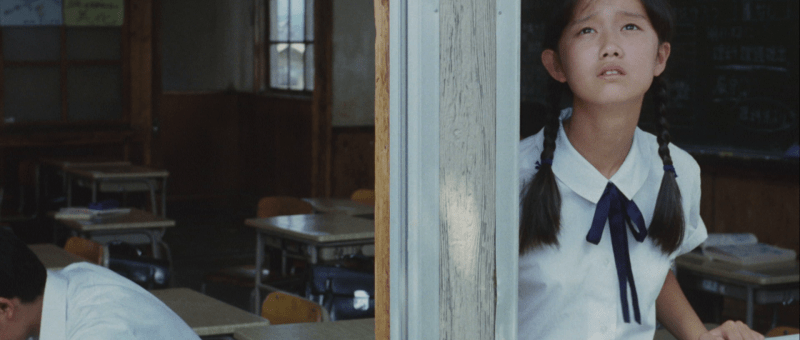
Most of the teens seem to look to the pensive Mikami (Yuichi Mikami) as a mentor figure. It’s Mikami they call when some of the girls end up half drowning male classmate Akira (Toshiyuki Matsunaga) after some “fun” in the pool gets out of hand. Luckily, Akira is not too badly affected either physically or emotionally, but presents something of a mirror to Mikami’s introspection. Slightly dim and etherial, he entertains his friends by seeing how many pencils he can stick up his nose at the same time, but he’s also as he later says the first to see the rain once it eventually arrives. Notably he leaves before it traps several of the others inside the school without adult supervision and otherwise misses out on the climactic events inside. Even so, Rie (Yuki Kudo), who also misses out by virtue of randomly stealing off to Tokyo for the day, later remarks that he too seems like he’s grown though her words may also be a kind of self projection. 

Mikami’s kind of girlfriend, perpetual spoon-bender Rie, finds herself at a literal crossroads after waking up late because her mother evidently did not return home the night before. Eventually she sets off for class running all the way, but then reaches a fork in the road and changes her mind heading to Tokyo instead. Mikami has been accepted into a prestigious high school there, and perhaps a part of her wanted to go too or at least to get closer to him through familiarity with an unfamiliar environment. Unfortunately she soon encounters a firearms enthusiast (Toshinori Omi) who buys her new clothes and takes her back to his flat which she thankfully manages to escape even if she’s stuck in the city because of a landslide caused by the typhoon.  

Mikami, however, continues to worry about her unable to understand why he’s the only one seemingly bothered about her whereabouts believing she’s “gone crazy”. Trapped in the school, the kids try to ring their teacher Umemiya (Tomokazu Miura) for help but he’s already drunk and can’t really be bothered. In any case he has problems of his own in that his girlfriend’s mother suddenly turned up during class to berate him for stringing her daughter along and also having borrowed a large amount of money which obviously ought to have some strings attached, only as it turns out Junko leant the money to another guy she was seeing though it’s not exactly clear whether she and Umemiya actually broke up or not. “In 15 years you’ll be exactly like me” Umemiya bitterly intones into the phone when Mikami directly states that he no longer respects him deepening Mikami’s adolescent sense of nihilistic despair. 

Of all the teens, he does seem to be the most preoccupied with death. “As long as she’s an egg, the hen can’t fly” he and his brother reflect on discussing if it’s possible for an individual to transcend its species and if it’s possible to transcend it though death all of which lends his eventual decision a note of poignant irony even if its absurd grimness seems to be a strange homage to The Inugami Family. As he points out to his somewhat disturbed friend Ken (Shigeru Benibayashi), “I am not like you” and indeed Ken isn’t quite like the other teens. Obsessed with fellow student Michiko (Yuka Ohnishi) but unable to articulate his feelings, Ken pours acid down her back and watches her squirm as it eats into her flesh. Repeating pleasantries to himself as a mantra, he later attempts to rape her after violently kicking in the dividing walls of the school only to be stopped in his tracks on noticing the scar again and being reminded that he is hurting her. 

The storm seems to provoke a kind of madness, the teens embracing an elusive freedom entirely at odds with the rigid educational environment. The other three girls trapped in the school are a lesbian couple who’d been hiding out in the drama department and their third wheel friend who might otherwise have been keen to hide their relationship from prying eyes having previously been caught out by a bemused and seemingly all seeing Akira. But in this temporary space of constraint and liberation, the teens are each free for a moment at least to be who they are with even Ken and Michiko seemingly setting aside what had just happened between them. They co-opt the stage for a dance party and then take it outside, throwing off their clothes to dance (almost) naked in the rain while a fully clothed Rie does something similar on the streets of the capital. In some ways, in that moment at least they begin to transcend themselves crossing a line into adulthood in a symbolic rebirth. In any case, Somai’s characteristically long takes add to the etherial atmosphere as do his occasional forays into the strange such as Rie’s encounter with a pair of ocarina-playing performance artists in an empty arcade. “We want to go home, but we can’t move” Mikami says looking for guidance his teacher is unwilling to give him neatly underlining the adolescent condition as the teens begin realise they’ll have to find their own way out of this particular storm. 


Typhoon Club screens at Japan Society New York on April 28 as part of Rites of Passage: The Films of Shinji Somai

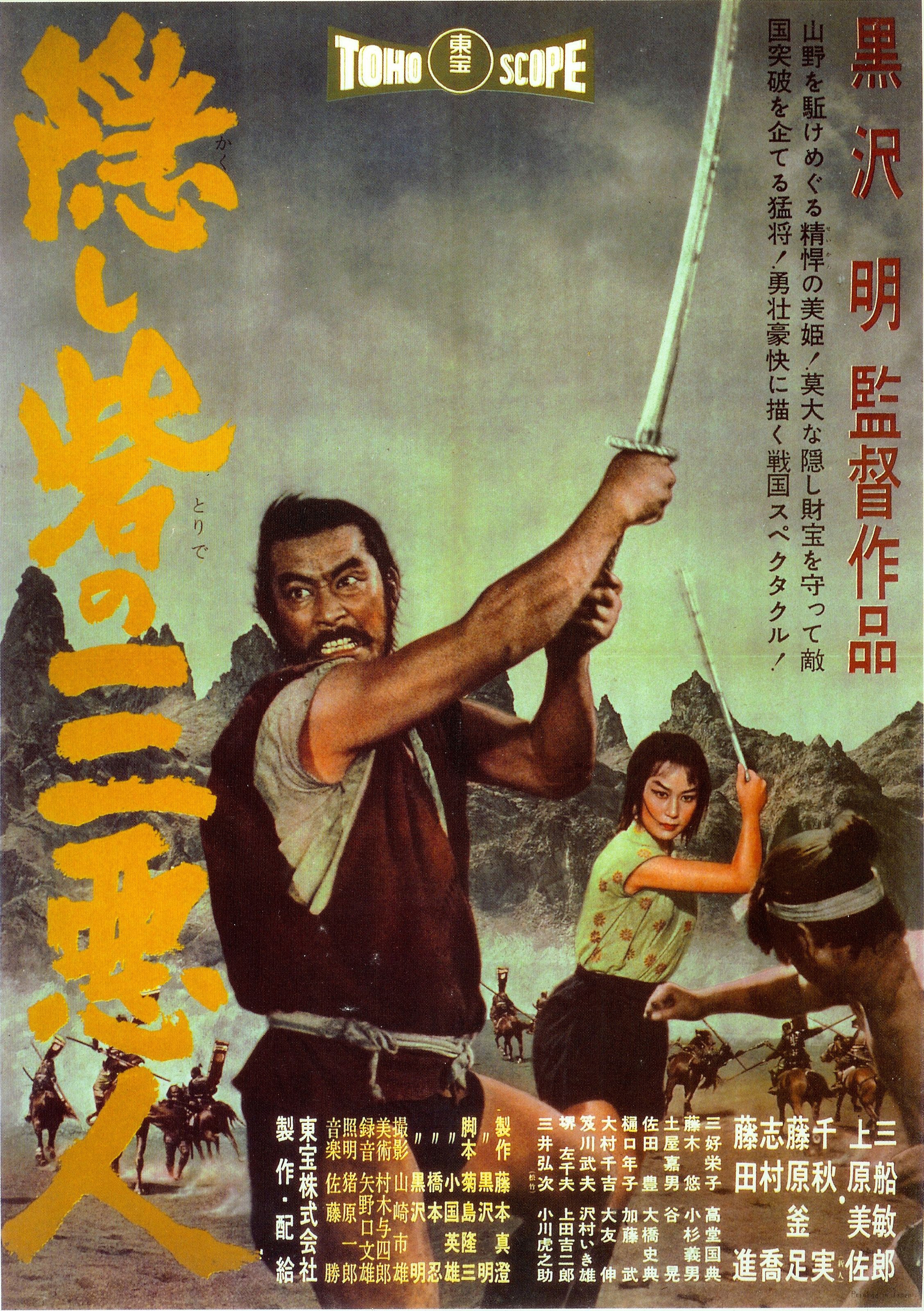
The Hidden Fortress (隠し砦の三悪人, Akira Kurosawa, 1958)

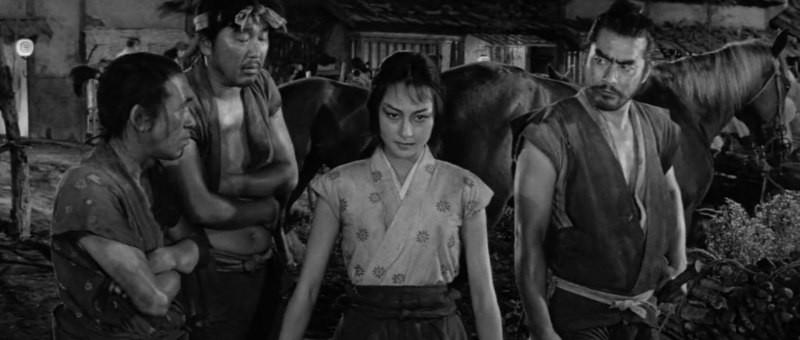
“Your kindness will harm you” a well-meaning retainer advises his charge, but in the end it is her kindness which saves her along with numerous others in Akira Kurosawa’s Sengoku-era epic, The Hidden Fortress (隠し砦の三悪人, Kakushi Toride no San Akunin). Largely told from the point of view of two bumbling peasants trying to get rich quick by exploiting the hierarchal fluidity of a time of war, the film nevertheless cuts against the grain of the democratic era in advocating not so much the destruction of the class-bound feudal order as benevolent authority. 

This can quite clearly be seen in the dynamic figure of displaced princess Yuki (Misa Uehara), the successor of her routed clan protected by a hidden fortress in the mountains which she must eventually leave. Her female servant laments that her father raised her as a boy which has given her a haughty and dominant manner at odds with the polite submissiveness usually expected of upperclass women. While often exerting her authority, she is otherwise uncomfortable with the uncritical servitude of her retainers, chief among them the talented general Makabe (Toshiro Mifune) who sacrificed the life of his own sister, allowing her to be executed in Yuki’s place buying them some time. “Kofuyu was 16. I am 16. What difference is there in our souls?” she asks, yet even if she believes their souls are equal she is not quite so egalitarian as to forget her position or the power and privilege that comes with it. 

Nevertheless, hers is an authority that is tempered by compassion and in the end chosen. Her salvation comes in speaking her mind to an enemy retainer, Tadokoro (Susumu Fujita), who has been savagely beaten by his own lord for losing a duel with Makabe who, to the mind of some, humiliated him with kindness in refusing to take his life leaving him to live in defeat. Yuki says she doesn’t know who is stupider, Tadokoro or his lord, for never would she punish a man in such a way simply for losing to an enemy. She tells him that there is another way, and that he need not serve a lord who does not serve him leading Tadokoro to defect and choose to follow her instead. 

She also inspires confidence in a young woman she insists on redeeming after discovering that she is a former member of the Akizuka clan sold into sexual slavery after being taken prisoner by the Yamane. Kurosawa presents the girl with a dilemma on realising that the mysterious woman who saved her is the fugitive princess, knowing that she could betray her and pocket the gold, but finds her resolving to serve Yuki all the more. In a moment of irony, we learn that the girl was bought for five silver coins, the same amount of money a wealthy traveller offers for Makabe’s horse, but displeases her master in refusing to speak or serve customers. For Yuki he offers gold, though withdraws on being told that she is mute. Knowing that she would be unable to disguise her speech or accent which would instantly give her away as a haughty princess, Makabe convinces her to stay silent though as she tells him he cannot make her heart mute too. 

Even the peasants, oblivious to her true identity, view Yuki as part of the spoils insisting that they should be entitled to a third of her too and at one point preparing to rape her only to be fought off by the rescued girl. “We can rely on their greed” Makabe had said, knowing that their material desires make them easy to manipulate and that their loyalties are otherwise fickle. Matashichi (Kamatari Fujiwara) and his friend Tahei (Minoru Chiaki) sold their houses in their village to buy armour in the hope of achieving social mobility through distinguishing themselves in war, but have largely been humiliated, robbed of their armour, mistaken for captured members of the enemy, and forced to dig the graves of others. They pledge eternal friendship but their bond is continually disrupted by the promise of monetary gain. They fall out over a moral quandary, one willing to plunder the body of a fallen soldier and the other not, while even on reuniting squabbling about how to divide the money first deciding it should be equal and immediately disagreeing as soon as they get their hands on it. At the film’s conclusion it rests on Yuki to play mother, telling them that they must be good and share the boon she’s given them equally without complaint each then too only quick to be generous insisting that the other can keep it. 

The implication is still, however, that Matashichi and Tahei should return to their village to live as peasants while Yuki assumes her place in a castle no longer hidden as its ruler. Order has returned and the old system remains in place, all that changes is that this is now a compassionate autocracy ruled by a benevolent lord who views her subjects lives as equal to her own yet not perhaps their status. Where it might prompt Tadokoro to conclude that he need serve no lord at all for there should be no leaders only equals, the film concludes that a leader should be just and if they are not they should not be followed. Then again, the disagreement between firm friends Matashichi and Tahei is ended when they each have enough and no longer find themselves fighting for a bigger slice of the pie content in the validation of their equality. As Makabe puts it, heavy is the head that wears the crown. Yuki’s suffering is in the responsibility of rebuilding her clan though she does so with compassion and empathy ruling with respect rather than fear or austerity. Kurosawa utilises the novel scope format to hint at the wide open vistas that extend ahead of the peasants as they make their way towards the castle in search of gold only to leave with something that while more valuable may also shine so brightly as to blind them to the inherent inequalities of the feudal order. 


The Hidden Fortress screens at the BFI Southbank, London on 20th & 27th January 2023 as part of the Kurosawa season.

Living on the River Agano (阿賀に生きる, Makoto Sato, 1992)

Image ©️ Murai Osamu

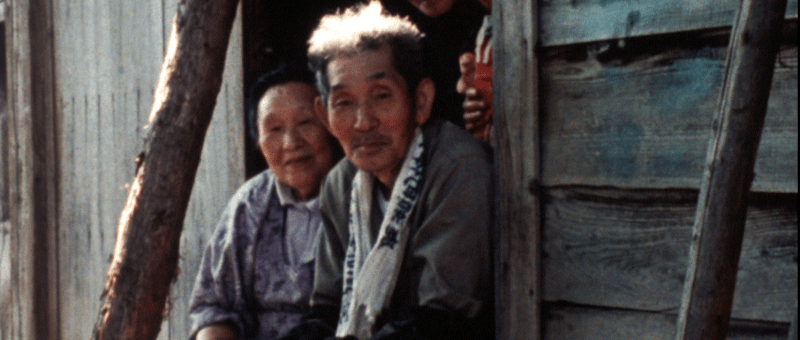
With a crew of seven including himself, director Makoto Sato spent three years embedded within the small communities along the Agano River capturing a disappearing way of life but also the resilience of the elderly residents many of whom are unrecognised victims of Minamata disease caused by the chemical discharge from the Showa Denko chemical plant. 

“Kids don’t care about our rivers and our mountains” 80-year-old Miyae Hasegawa reminds her husband on the phone to their oldest daughter as she once again tries to convince him that he’s too old for the intensive labour of farming their rice paddies. Like many, the Hasegawas’ children have fled the rural village for more comfortable lives in the cities while their parents attempt to preserve their traditional way of life. “Gradually we realised that these rice paddies were their entire existence” the film crew later reflect, almost pitying them as they witness these quite elderly people bent over still harvesting the rice in their 80s while discovering on trying to help them that the work is far more difficult than they could have imagined not, presumably at least, very used to physical labour at least of this kind. 

Even so, “humans are cruel” Yoshio Hasegawa laments to his son having had too much to drink, somewhat ambivalent in having become proficient at catching salmon by hook. After all, the fish are only trying to live but humans keep pulling them out of the water. Later we watch him hook fishing at the river, the camera cutting to black as another man takes a fish he’s caught on a hook and bashes its brains in. Ironically, as the voiceover explains, Miyae had worked on the construction of the Kanose hydraulic dam in the 1920s which later powered the fertiliser plant which then became Showa Denko. After completion of the Yogawa dam in 1963, the fish ominously disappeared from the river and with them the traditional practice of fishing by hook.  

Many in the small communities along the water had welcomed the arrival of modernity that the Showa Denko plant had represented, some still remaining loyal to the company despite knowing what they know unable forget that they had benefitted economically from the factory’s existence. Ebana, meanwhile, who had worked for Showa Denko for 34 years now runs regular patrols of his local area monitoring for the possibility of landslides behind the plant. He was the only employee to sue Showa Denko as a victim of Minamata disease though the company’s attempt to transfer him out of the area when he did so put others off following his example, as did the degree of animosity towards him as others feared for their own economic stability or resented him for betraying his employers. Though the chemical emissions from the plant which flowed into the Agano have been acknowledged as the cause of the disease, the government introduced increasingly strict criteria for official recognition as a Minamata victim leaving many along the Agano unrecognised and therefore ineligible for support or compensation. Those involved in the ongoing legal case were required to make an arduous journey to Niigata once a month by bus or car, a heavy imposition on a community which is often elderly and suffering physical disabilities caused by the illness. As one elderly woman talks of her arched hand which she cannot straighten, a man shows her his burned foot after treading on the heated rail for his bath and being unable to feel it because of the loss of sensation caused by the Minamata disease. 

The fact that the river by which so many lived became actively harmful contributed to the rural exodus and decline of traditional ways of life along with skills which may then die out with no one to pass them on to. Boatmaker Endo had long since retired from making boats and had never taken on any apprentices but at an advanced age finally consented to teach a local carpenter how to make boats the traditional way, a special Shinto ceremony conducted as the next generation boat is completed. Meanwhile we also see a Shinto ceremony performed for the Mushi Jizo which protects people from disease born by insects such as the tsu-tsu living in the river which both gives and takes. Gently observational, Sato captures these disappearing ways of life with a poignant lyricality while equally addressing the politicisation of life along the river in a sense poisoned by modernity as the villagers must come together to fight for justice in a society which seems to have all but forgotten them. 


Living on the River Agano (阿賀に生きる, Aga ni Ikiru) streams worldwide (excl. Japan) via DAFilms Jan. 17 to Feb. 6 as part of Made in Japan, Yamagata 1989 – 2021 (films stream free Jan. 17 – 24)

Original trailer (Japanese subtitles only)

The Big Boss (暗黒街の顔役, Kihachi Okamoto, 1959)

By 1959, Japan was well on the way towards economic recovery but this transitionary period brought with it its own dilemmas and particularly for those whose main line of business had in a sense depended on instability and desperation. The first of Kihachi Okamoto’s early crime capers, The Big Boss (暗黒街の顔役, Ankokugai no kaoyaku) finds the yakuza at just this moment of crisis, prescient in a sense in perhaps prematurely implying that post-war gangsterdom was already on its way out. 

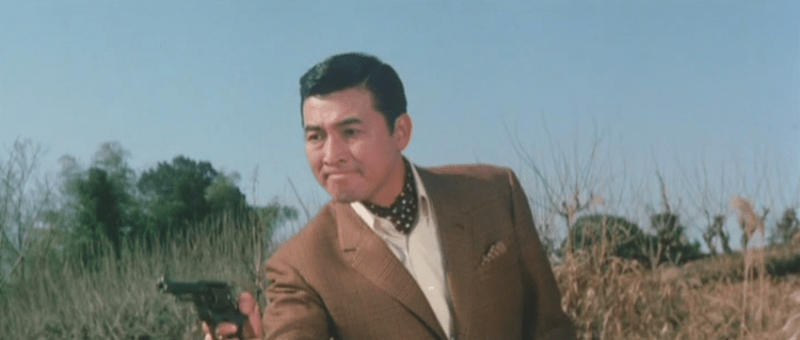
The film opens, however, with a piece of yakuza thuggery as a mysterious man guns down an industrialist before barreling down the stairs and into a waiting car occupied by getaway driver Mineo (Akira Takarada) who is inconveniently spotted by a passerby, 16-year-old ramen restaurant waitress Kana (Rumiko Sasa). As we discover, Mineo is the younger brother of veteran gangster Ryuta (Koji Tsuruta), a middle-ranking member of the newly rebranded, rapidly corporatising yakuza outfit Yokomitsu Trading who seem to specialise in legal debt collection and running the entertainment district. Torn between their desire for a degree of legitimacy and their thuggish instincts, Yokomitsu have evidently knocked off a rival using an external hitman but now have a problem on their hands especially as Mineo has apparently embarked on a career as a singer in a teen jazz bar located in the same area as Kana’s restaurant which is at the very least unwise. 

Mineo is in many ways the “innocent” seen in many other similarly themed yakuza dramas, still too young to have been corrupted by the underworld and only an accomplice in the crime for which he is being asked to pay. He wants to get out of the yakuza life and sees singing as his escape route, adopting the persona of “Eddie Mineo” and styling himself as a teen idol in the vein of the rock ’n roll American pop culture which seems to be dominiating the late ‘50s youth scene. Yet Okamoto is also clearly evoking the world of Hollywood crime cinema, the environment open and dusty while everyone seems to drive massive Cadillacs and his gangsters behave much more like those in American movies than traditional yakuza even as the traditional yakuza is also changing. 

“I can’t stand it anymore” Ryuta finally exclaims, “There’s neither righteousness nor rules among mobsters”, tipped over the edge by the gang’s plan to kill the teenage witness. He wants out too, but considers himself already too far gone while pulled in two directions in his desire to save both his brother and his young son who has a lame leg and is being cared for in a hospital. Ryuta wears his wedding ring throughout though there’s no mention of what happened to his wife, while he’s also pulled between two potential love interests in the sympathetic doctor who cares for his son, Sumiko (Yumi Shirakawa), and the brassy cabaret girl, Rie (Mitsuko Kusabue), who does her best to save him, but in the end is never very much interested in either of them. He’s constantly haunted by his crimes, knowing what happens to yakuza who fall from grace in his murder of a man who limped and walked with a crutch just like his son. 

The clan are also planning to off a former foot soldier, Ishiyama, who in fact commits suicide immediately after his release from prison realising the futility of his position. Ishiyama’s suicide note directly references that of notorious post-war gangster Rikio Ishikawa whose life inspired Kinji Fukasaku’s Graveyard of Honor 15 years later “I took too big a gamble. lt’s a big laugh. It’s been a thirty year long spree.“ Ryuta realises there’s no way out of his life of crime, but finds himself conflicted even in his desire to ensure his brother and son remain free of it. His sense of futility is however wider, witnessing the death and decline of the traditional yakuza in itself the film climaxing in a moment of yakuza apocalypse as those apparently sick and tired of violence and intimidation finally fight back making it clear that organised crime is no longer welcome in the increasingly prosperous society. 

Skewing darker in tone than Okamoto’s subsequent entries into the “ankokugai” or “underworld” series, The Big Boss is lighter on his characteristically absurdist sense of humour but does feature a little of the exaggerated, cartoonish violence otherwise his hallmark while adding a note of irony as in his use of a sign outlining the numbers for police and ambulance or the sight of a bunch of children playing with guns while a hitman has a go on the swings. There is perhaps a sense of resistance to the conventionality of the material or that his relative inexperience, this being only his third film (the first two both romantic comedy vehicles for Izumi Yukimura) prevented him from fully embracing his anarchic spirit but The Big Boss nevertheless sows the seeds of his later career in its insistence on the absurdity of violence. 


Original trailer (English subtitles)

The Beast Shall Die (野獣死すべし, Eizo Sugawa, 1959)

“He’s not a beast. No, he’s a robot. A machine created by a modern, twisted society” according to a frustrated policeman acknowledging that a sociopathic killer is going to get away with his crimes because when it comes right down to it he’s just that good. Eizo Sugawa’s The Beast Shall Die (野獣死すべし, Yaju Shisubeshi) is the first of several adaptations of the hardboiled novel by Haruhiko Oyabu, Sugawa would himself direct a “sequel” 15 years later while a better-known version would prove a hit for Toru Murakawa in 1980 with action star Yusaku Matsuda in the leading role, and a two-part V-cinema adaptation would follow in 1997. The 1959 edition however is very much an expression of the anxiety of its times, a slightly reactionary take on the post-Sun Tribe phenomenon hinting at a generational divide between the nihilistic, hyper individualist post-war generation and their confused though morally compromised forbears. 

As the film opens, three policemen meet in a pub one of whom proudly shows off a Robby the Robot toy he’s picked up for his young son and is intending to give him on returning home from work. Sadly, however, Okada (Akira Sera) will never make it home because, for largely unexplained reasons, he is shot dead by nihilistic American literature student Date (Tatsuya Nakadai) who bundles the body into the boot of a car which he then simply abandons. Date never reveals much of a motive for this first murder, but he does later use Okada’s warrant card and service weapon to facilitate later crimes. 

The problem, at least for earnest policemen Kawashima (Eijiro Tono), a veteran cop and father of seven, and idealistic rookie Masugi (Hiroshi Koizumi) who is engaged to barmaid Yoko (Yumi Shirakawa) but drags his feet over the marriage because of his precarious life as a law enforcement officer, is an ideological divide within the contemporary police force. “Investigations are about science. And science is the best” according to their boss, reflecting a new faith in forensics prioritising physical evidence from the crime scene over a policeman’s intuition. From a modern perspective, this seems to be the right call though Kawashima and Masugi appear to find it both restrictive and mildly insulting as if their experience on the job now counts for nothing. They also worry that such rigid thinking prevents thorough investigation, and they might have a point in the boss’ continued insistence that the crimes must be down to “gang activity” even though the evidence clearly points at someone connected to the university or perhaps a disgruntled salaryman with access to the uni gun club. 

Kawashima and Masugi lament that they feel powerless to act because they don’t have the right to arrest someone on the basis of a “hunch”, and the film seems to agree with them as Date continues to commit his crimes unbothered by law enforcement though really who wants to live in such an authoritarian society that the police can haul you in solely because they think there’s something odd about you and “feel” you must be guilty of a crime even in the absence of conclusive evidence? Nevertheless it’s precisely these ideological divides that Date wilfully exploits while planning his hits, his second targets also reflecting the continuing Sinophobia of post-war cinema in impersonating a police officer to rob, but interestingly not kill, a pair of Chinese gangsters running an illegal gambling racket. 

Hearing Date’s back story, we realise that society has in a sense warped him in witnessing an injustice done to his father which later led to his suicide while his mother was apparently engaging in an affair with the man who framed him. He strongly argues that the only response to the “chaos, madness, and contradictions” of the modern society is to “show our beastly nature”, wilfully abandon humanistic morality and conventional civility in favour of an individualistic satisfaction of one’s personal desires above all other concerns. Date is certainly an amoral man who has no problem with sacrificing those he determines to be lesser beings for his own gain, but as even Masugi reveals his thinking may not be out of line with that of his generation. Many people are driven to murderous rage, he argues, but do not act on it because of a social taboo. 

As the film opens, a group of left-wing students is holding a rally in support of the anti-ANPO protests ahead of the treaty’s imminent renewal, though the professors mock them from inside insisting that their politics is not genuine only a reflection of the despair they feel in their society knowing that even if they graduate all that awaits them are low-level salaryman jobs with little promise of advancement. Those who can’t even manage that, they joke, turn to academia. Date’s professor (Nobuo Nakamura) affects sympathy with his poverty but also wilfully exploits him, getting him to do translations of novels which will later be published under his own name while it seems to be an open secret that he owes much of his success to the fact that he married into a prominent family which allowed him to spend five years studying abroad in America. 

Meanwhile, his students philosophise on the psychology of crime insisting that a “robotic, truly ruthless personality” can only come from a “mechanistic society like the US” while Japanese criminals are generally “emotional” in that crimes are committed because of “love affairs, resentment, finances”, “petty humanistic motives” which society can easily understand if not exactly condone. Date, admittedly a student of American literature with his eyes firmly set on going abroad, entirely disproves this theory. His crimes appear to be dispassionate and committed largely for practical reasons, the later ones at least with money as the motive even if he also derives a thrill from his amoral rebellion against the system. His poverty is offered as a justification yet we also see him abuse and manipulate those weaker than himself, humiliating an old lady trying to sell flowers in the bar where Yoko works while later talking a fellow student suffering with TB and unable to pay his tuition into helping him commit a robbery. 

Perhaps in someways uncomfortably in continuing a motif associating homosexuality with sadistic criminality, it’s also heavily implied that Date is bisexual, encountering an effeminate young man on the street with whom it is clear from their conversation he has previously been intimate to later use him as cannon fodder when engaging in a firefight with Chinese gangsters, while there is also an obvious homoerotic charge to his relationship to the student who later becomes a temporary accomplice. His relations with women are somewhat caddish and perfunctory, his sometime girlfriend Tae (Reiko Dan) telling the police that Date is a player who only sleeps with the same woman three times before becoming bored with her. Date’s attitude, though interestingly enough not his crimes, may reflect a societal misogyny, impoverished medical student Tae later refused access to the morgue because it’s not something a woman should see, though Tae herself later claims that it’s Date’s coldness and cruelty that draw her to him. Seemingly unable to feel genuine emotion for others, it nevertheless appears that Date is in a sense moved enough by Tae’s ability to embrace his inner darkness to eventually decide to alleviate her poverty on realising he no longer needs his ill-gotten gains because he’s secured his passage to America through more legitimate means. 

A reaction to the post-Sun Tribe sense of moral panic about disillusioned post-war youth, The Beast Shall Die suggests that for the moment at least those like Date are in an unassailable position thanks to an overly liberal justice system as the two policemen lament their inability to prevent his escape through judicial means while turning their attention to Tae though there’s no real way they can know that Date gave the stolen money to her rather than taking it with him or depositing it in some other location even if she’s walking around with an ugly handbag that might be full of cash. Alternating between an acceptance of Date’s nihilistic, crypto-fascist philosophy in implying that those who obey the rules of civility are doing so solely because they are too weak to break them, and advocating for a more authoritarian society in which policemen are free to act on their “hunches”, Sugawa’s take on Oyabu’s hard boiled tale of societal corruption and warped post-war morality has its reactionary qualities even as it ends on a note of ambiguity that implies order will eventually triumph though not, it seems, today. 


Original trailer (no subtitles)