

Just because we are far apart, it doesn’t mean we aren’t important to each other, according to an interplanetary messenger hoping to avoid the Earth’s apparently imminent destruction in Hideyuki Tokigawa’s gentle ode for world peace, Love Song From Hiroshima (惑星ラブソング, Wakusei Love Song). Twenty-something Mocchi (Ryosuke Sota) says he’s sick of hearing about the legacy of the atomic bomb, but is himself stuck in the past just as the city is frozen in time.
According to his friend Ayaka (Shiori Akita) who is thinking about studying abroad in the US, Mocchi gives up on things too easily and can’t decide on his path in life. Of course, he doesn’t really want her to go to America because he’s in love with her and too shy to say, but agrees to help her with a social media campaign to get over 100,000 likes and impress her boss so he’ll fund her travel. That’s how they end up meeting “John” (Chase Ziegler), a very weird “American” tourist whom they decide to escort around Hiroshima showing him typically touristic things like getting okonomiyaki which they then post on her social media channels.
Meanwhile, a shady American agency is on a UFO alert in Japan which links back to a little boy’s fascination with aliens even though his friends keep making fun of him because of it despite spreading their own kinds of urban legends. Yuya is obsessed with the idea of extraterrestrial life while also uncomfortable with the scarred city around him. At his school there are a pair of burnt but surviving trees that have become symbols of resilience and survival, though Yuya hates going to the Peace Park and talking about the bomb because it’s scary. According to his mother, his great-grandmother never liked to talk about the war, though it seems she has told the man looking after her at the care home about her carefree childhood of roller skating in the car-free streets. In a brief moment of lucidity, she turns to Yuya and asks him if his aliens can travel in time, why can’t they go back and stop the bomb from falling.
The irony is that Mocchi’s sick of everyone talking about the bomb all the time, but it’s still a painful subject for many including the taxi driver who drives Yuya and his mother home. As soon as she starts talking about what she does know about her grandmother in the war, she can feel him looking back at her in the rearview mirror and changes the subject, promising to tell Yuya the rest later when they’re on their own. In his dreams, Yuya ends up chasing after his great-grandmother as a school girl as she tells him that there used to be sweet shops, a barber’s, and a cinema where the Peace Park is now.
The aliens say that the bomb twisted the fabric of time and space, creating a barrier which they cannot move beyond, while there is another fixed point in the future with seemingly nothing beyond it. We cannot change the past, the aliens admit, but we can change the future. The film’s Japanese title is more like “interplanetary love song”, and it turns out that a universe without the Earth in it is like the world without George Bailey. All the planets that the Earth would have helped will also be lost along with countless other possibilities throughout the universe.
Mocchi still thinks it’s pointless to “pray” for peace, and that as all anyone in Hiroshima ever seems to talk about is the bomb, he doesn’t see how raising awareness could make much difference. Nevertheless, even he can’t help being moved by the aliens’ opening manoeuvre which cures his cynicism by fulfilling the childhood dream he’d more or less forgotten. Mocchi and Ayaka argue about the realities of nuclear deterrents and geopolitical manoeuvring even if they each agree on the horror of war. Ayaka says she loves her city because it represents peace, and it is indeed a kind of love song from Hiroshima that they send around the world as a plea for a world without war. Telling Mochi to come up with ways to enact world peace on his own might seem a little unfair, but then it’s true enough it’s something we all have to think about to save the future from the mistakes of the past.
Love Song from Hiroshima screens 24th June as part of this year’s Raindance Film Festival.
Original trailer (English subtitles)
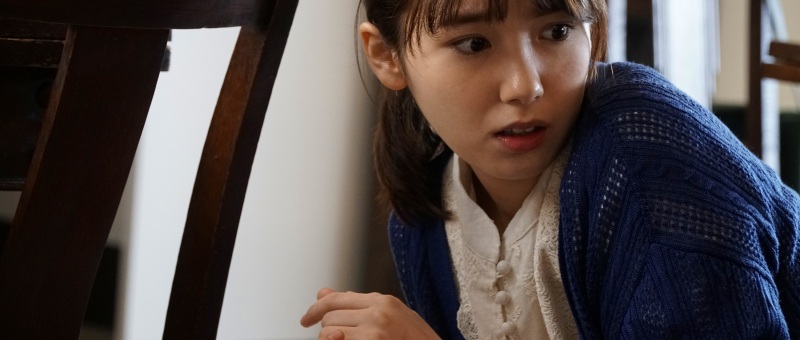
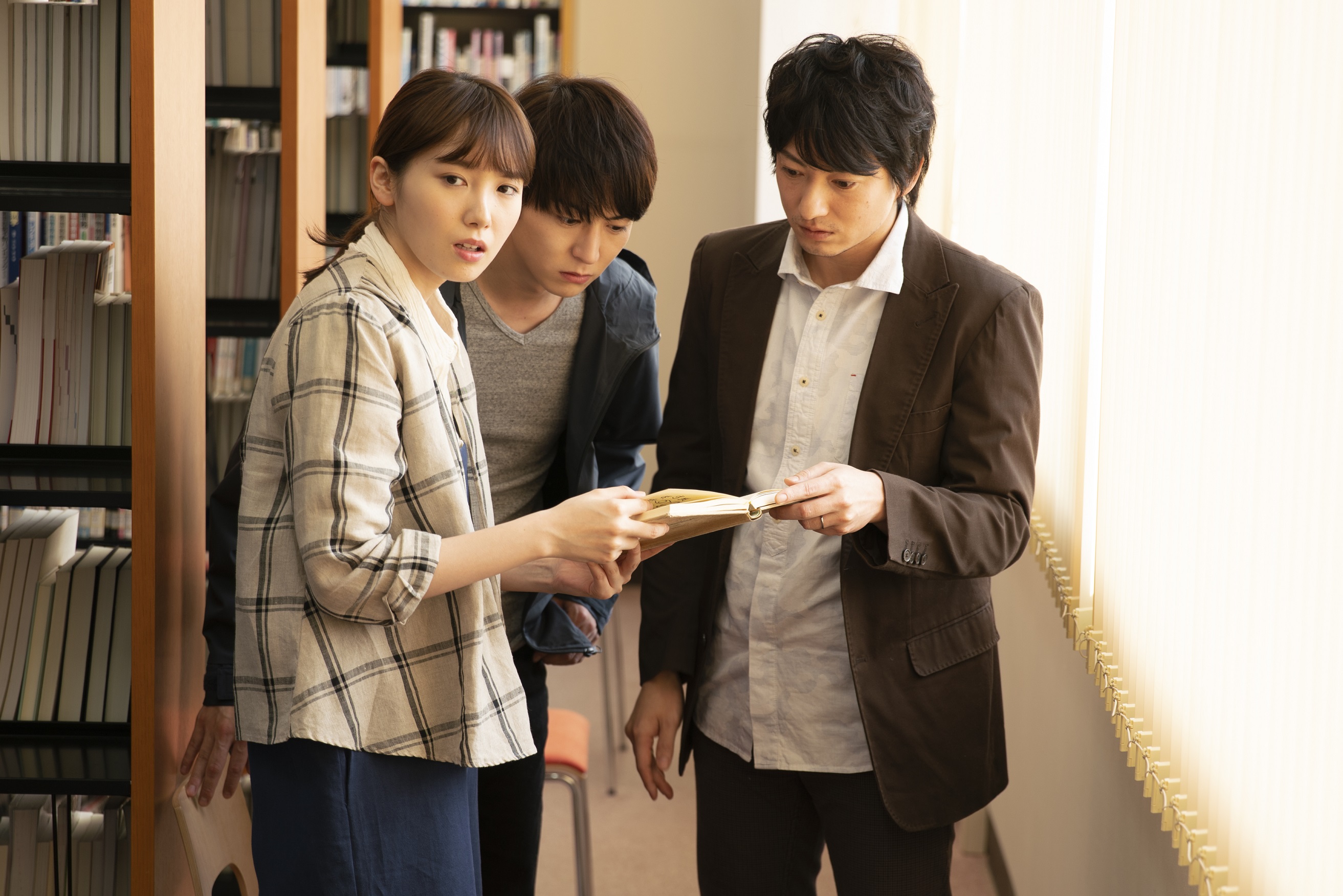
 The “jun-ai” boom might have been well and truly over by the time Takahiro Miki’s Girl in the Sunny Place (陽だまりの彼女, Hidamari no Kanojo) hit the screen, but tales of true love doomed are unlikely to go out of fashion any time soon. Based on a novel by Osamu Koshigaya, Girl in the Sunny Place is another genial romance in which teenage friends are separated, find each other again, become happy and then have that happiness threatened, but it’s also one that hinges on a strange magical realism born of the affinity between humans and cats.
 Yasushi Sato, a Hakodate native, has provided the source material for some of the best films of recent times including Mipo O’s The Light Shines Only There and Nobuhiro Yamashita’s
  The Midnight Diner is open for business once again. Yaro Abe’s eponymous manga was first adapted as a TV drama in 2009 which then ran for three seasons before heading to the
 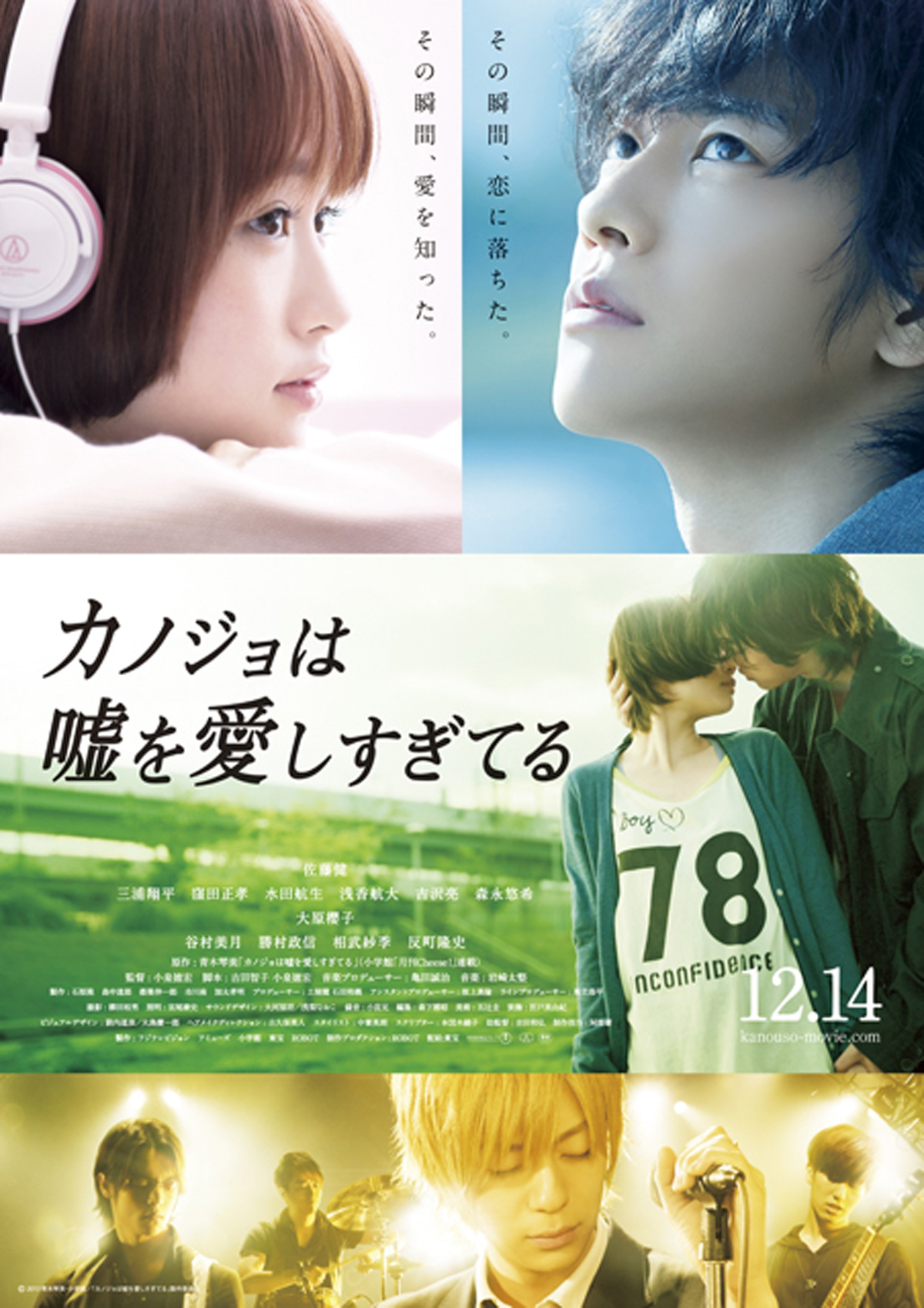 Despite the potential raciness of the title, The Liar and his Lover (カノジョは嘘を愛しすぎてる, Kanojo wa Uso wo Aishisugiteru) is another innocent tale of youthful romance adapted from a shojo manga by Kotomi Aoki. As is customary in the genre, the heroine is cute yet earnest, emotionally honest and fiercely clear cut whereas the hero is a broken hearted artist much in the need of the love of a good woman. Innocent and chaste as it all is, Liar also imports the worst aspects of shojo in its unseemly age gap romance between a 25 year old musician and the 16 year old high school girl he picks up on a whim and then apparently falls for precisely because of her uncomplicated goodness.
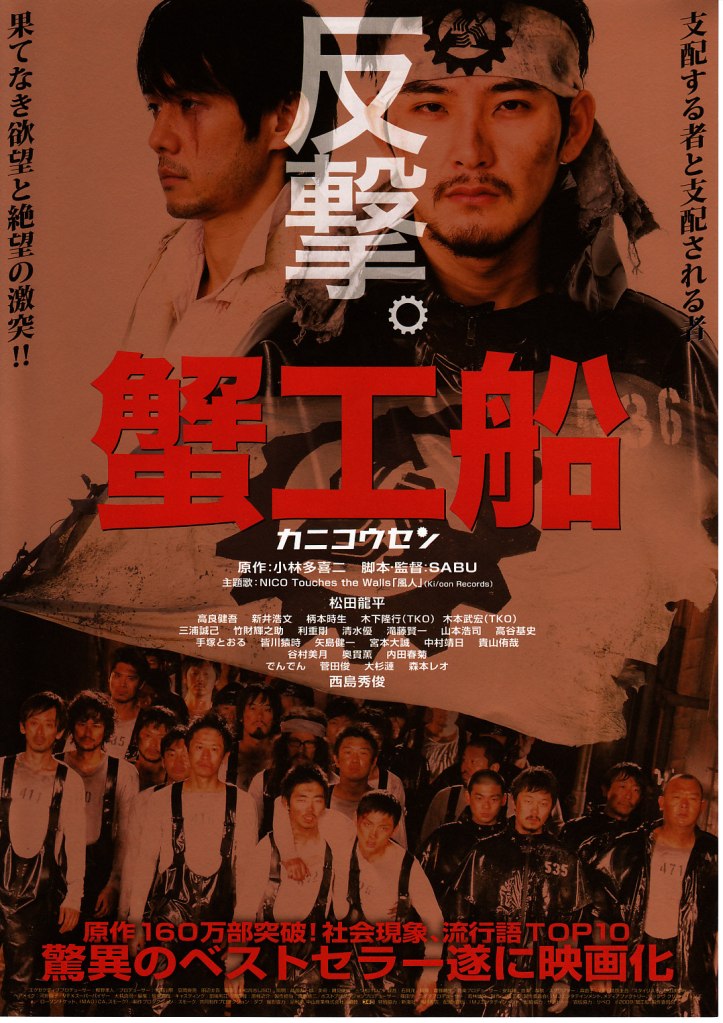 Back in 2008 as the financial crisis took hold, a left leaning early Showa novel from Takiji Kobayashi, Kanikosen (蟹工船), became a surprise best seller following an advertising campaign which linked the struggles of its historical proletarian workers with the put upon working classes of the day. The book had previously been adapted for the screen in 1953 in a version directed by So Yamamura but bolstered by its unexpected resurgence, another adaptation directed by SABU arrived in 2009.
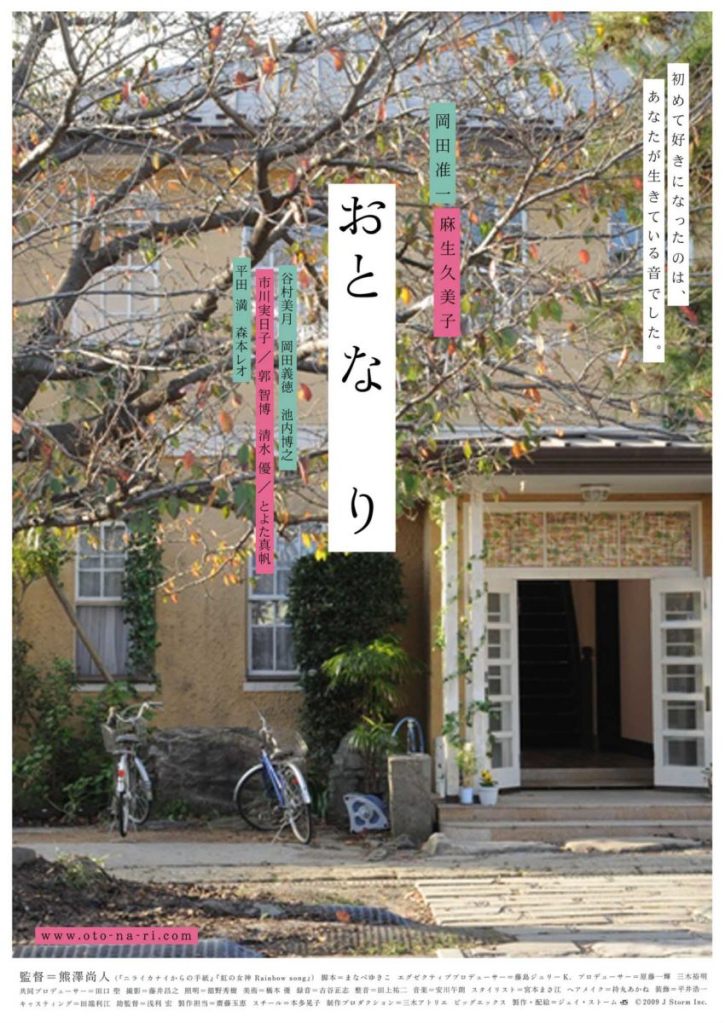 Sometimes when you live in the city it’s difficult to build meaningful connections with other people. You might find yourself a little lost, caught between the rat race and what it was that brought you to the city in the first place, but if you just close your eyes and listen, you can hear that you’re not alone. Romantic Prelude (おと・な・り, Oto-na-ri) is the story of two such people who build up a strange connection even though they’ve never really met.
 Yaro Abe’s manga Midnight Diner (深夜食堂, Shinya Shokudo) was first adapted as 10 episode TV drama back in 2009 with a second series in 2011 and a third in 2014. With a Korean adaptation in between, the series now finds itself back for second helpings in the form of a big screen adaptation.
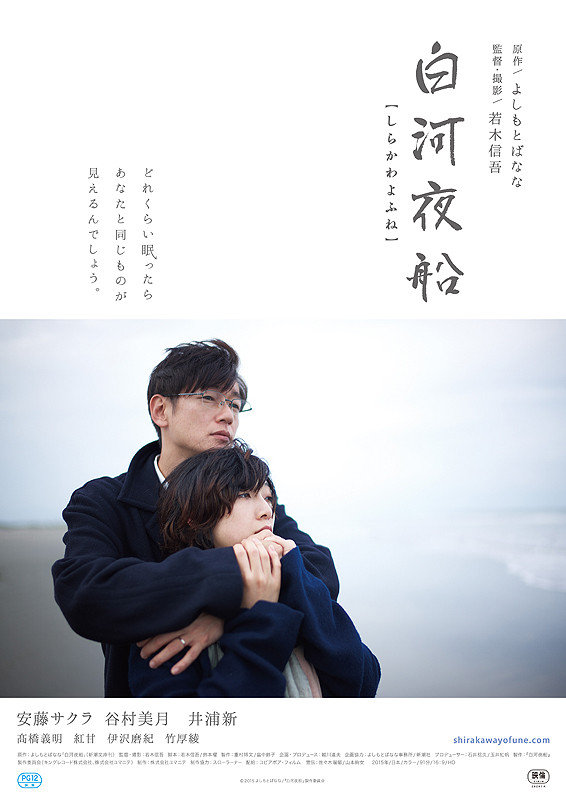 Based on the third of three short stories in Banana Yoshimoto’s novel of the same name, Asleep (白河夜船, Shirakawayofune) is an apt name for this tale of grief and listlessness. Starring actress of the moment Sakura Ando, the film proves that little has changed since the release of the book in 1989 when it comes to young lives disrupted by a traumatic event. Slow and meandering, Asleep’s gentle pace may frustrate some but its melancholic poetry is sure to leave its mark.
 Windows on Worlds