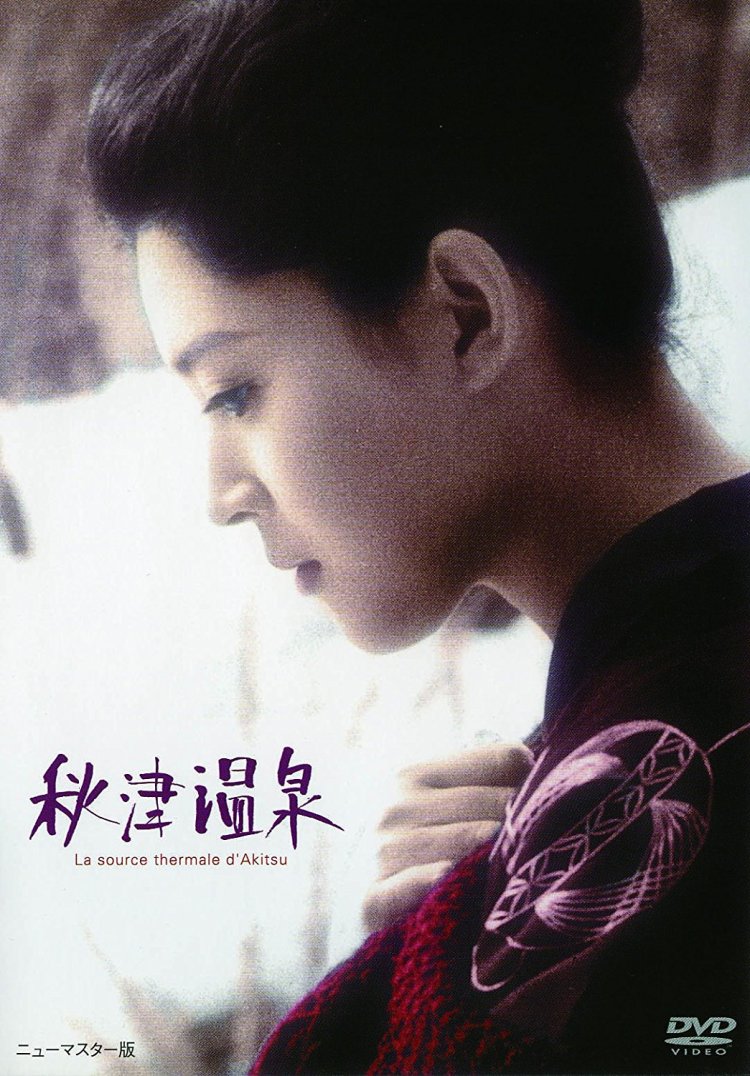
Akitsu Springs (秋津温泉, Kiju Yoshida, 1962)

akitsu springsKiju (Yoshishige) Yoshida is best remembered for his extraordinary run of avant-garde masterpieces in the late 1960s and early 1970s, but even he had to cut his teeth on Shochiku’s speciality genre – the romantic melodrama. Adapted from a best selling novel, Akitsu Springs (秋津温泉, Akitsu Onsen) is hardly an original tale in its doom laden reflection of the hopelessness and inertia of the post-war world as depicted in the frustrated love story of a self sacrificing woman and self destructive man, but Yoshida elevates the material through his characteristically beautiful compositions and full use of the particularly lush colour palate.

At the very end of the war, consumptive student Shusaku (Hiroyuki Nagato) finds his aunt’s house destroyed by aerial bombing. Attempting to find her but proving too ill to go on, Shusaku is taken to a nearby inn by a good samaritan where he first encounters the innkeeper’s daughter, Shinko (Mariko Okada). Despite her mother’s protestations, Shinko takes a shine to Shusaku and is determined to nurse him back to health. Shusaku, however, is a gloomy sort of boy and, ironically, longs only for death. Though the pair fall in love their youthful romance is forever tinged with darkness as Shusaku declares his love not with a ring but with a rope – he asks Shinko for that most classically theatrical of unions in proposing a double suicide.

Shinko agrees, but is not quite ready to die. In another dose of irony, Shinko’s tears of fear and despair on hearing the Emperor’s final wartime broadcast confirming his surrender inspire Shusaku to want to live but the pair are eventually separated. Reuniting and parting over and over again, their complicated love story repeats itself over a period of seventeen years but the painful spectre of the past refuses to allow either of them the freedom to move beyond Akitsu Springs.

Mariko Okada was only 29 in 1962, but she’d already worked with some of the best directors of the age including Ozu whose An Autumn Afternoon was released the same year, and Naruse in Floating Clouds which has something of a narrative similarity to Akitsu Springs. This prestige picture was her 100th screen appearance for which she also took a producer credit. Despite the obvious importance attached to both of these elements, the studio took a chance on a rookie director with only three films under his belt. Two years later Okada would become Yoshida’s wife and go on to star in some of his most important pictures including Eros + Massacre and Heroic Purgatory. At first glance her role here is a conventional one – a love lorn, melancholy woman unable to let the ghost of a failed romance die, but Okada’s work is extraordinary as Shinko travels from flighty teen to rueful middle aged woman, hollowed out and robbed of any sense of hope.

At Akitsu Springs time passes and it doesn’t all at once. Yoshida refuses to give us concrete demarcations, preferring to simply show a child being born and growing older or someone remarking on having been away. The inn becomes a kind of bubble with Shinko trapped inside, but Shusaku comes to regard the place as a temporary haven rather than a permanent home or place to make a life. For her everything real is at the spring, but for him everything at the spring is unreal – an unattainable paradise. She cannot leave, he cannot stay. Only for short periods are they able to indulge their romance, but the time always comes at which they must part again often swearing it will be for the last time, never knowing if it will.

Yoshida neatly bookends the relationship with announcements over loudspeakers as Shinko originally fails to understand the Emperor’s speech in which he remarks on enduring the unendurable, only to be prompted into later action by the banal drone of a train station tannoy. It’s almost as if their lives are being entirely dictated by outside forces, powerless drifters in the post-war world, condemned to a perpetual waiting sustained only by hopelessness.

Shinko may have convinced Shusaku to live but his growing successes only seem to deplete her. Wasting away at an inn she always claimed to hate, Shinko grows old while Shusaku grows bitter yet successful in the city. They move past and through each other, unable to connect or disconnect, yearning for the completion of something which consistently eludes them. Yoshida films the standard melodrama with appropriate theatricality but also with his beautifully composed framing as the lovers are divided by screen doors or captured in mirrors. Okada glows in the light of falling cherry blossoms, acknowledging the tragic and transitory character of love, but her final action is one which echoes the beginning of her suffering and finally declares an ending to an unendurable romance.


Original trailer (no subtitles)

Burden of Life (人生のお荷物, Heinosuke Gosho, 1935)

Despite being at the forefront of early Japanese cinema, directing Japan’s very first talkie, Heinosuke Gosho remains largely unknown overseas. Like many films of the era, much of Gosho’s silent work is lost but the director was among the pioneers of the “shomin-geki” genre which dealt with ordinary, lower middle class society in contemporary Japan. Burden of Life (人生のお荷物, Jinsei no Onimotsu) is another in the long line of girls getting married movies, but Gosho allows his particular brand of irrevent, ironic humour to colour the scene as an ageing patriarch muses on retiring from the fathering business before resentfully remembering his only son, born to him when he was already 50 years old.

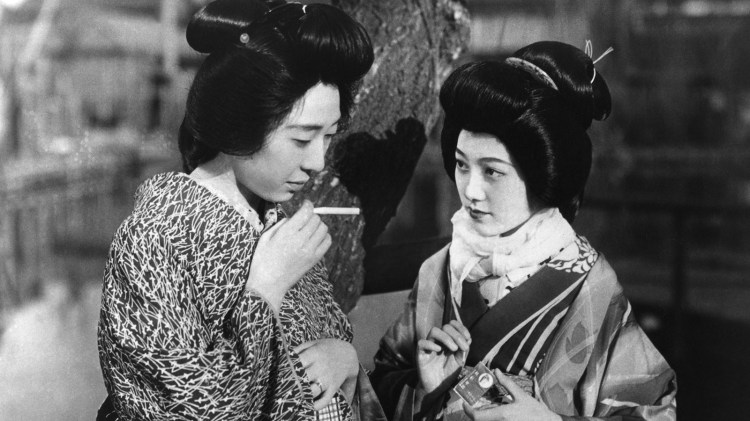
Rather than focussing on the main narrative right away, Gosho gives us a crash course in marital relations as we meet middle sister, Itsuko (Kinuyo Tanaka), who is currently posing for a raunchy portrait her starving artist husband is painting. Itsuko dresses in Western style, smokes openly and often, and her home is a bohemian one of the kind you’d imagine a (well to do) artist from the ‘30s would live in. The couple are interrupted by their brother-in-law who has come in search of his wife, Takako (Yoshiko Tsubouchi), with whom he’s had yet another argument causing her to storm off somewhere or other in a huff.

Takako has indeed stormed off, but has gone to her mother’s where her younger sister, Machiko (Mitsuyo Mizushima) is preparing for her own wedding and now feeling quite nervous hoping that it won’t be as tempestuous as Takako’s. The three sisters also have a little brother, Kanichi, who is doted on by the women of the family but has a strained relationship with his father, Shozo (Tatsuo Saito). The main conflict occurs once Shozo has successfully married off Machiko and begins happily contemplating a burden free life only to remember that little Kanichi is only eight and so there are twelve more years of fatherhood ahead of him and he’ll be 70 before he gets any peace. In order to speed up the process, he tells his wife Tamako (Mitsuko Yoshikawa) that maybe Kanichi doesn’t need to go school and should go out and get a job instead. Tamako, rightly outraged at her husband’s persistent coldness towards their son brings things to a head by leaving the family home.

The themes are common ones as a family faces the successful marriage of its youngest daughter but the pattern is complicated by the loose end that is Kanichi. Much younger than his sisters, it’s easy to believe Shozo’s assertions that his arrival was somewhat unexpected but far from a joyous surprise Shozo still seems to regard him with a degree of mild horror. Fearing becoming an elderly father Shozo’s concerns are fair given the additional burdens placed on him in having to find good husbands for three women and then pay for their weddings and dowries never mind a college education for a son he never wanted. Kanichi seems to be aware on some level of the way his father feels about him as a poignant scene implies when he begs some of the other neighbourhood children to keep playing with him even though it’s past tea time because he doesn’t want to go home if his dad is there.

Shozo fails to reform his opinion even after his wife leaves him. Almost delighting in a late life slice of batchelorhood, Shozo heads into the bar district for a night out where he ends up drinking with some younger guys, surrounded by students singing the Keio University song. His attention is momentarily taken by a small boy of around Kanichi’s age who is selling flowers to amorous patrons but it’s only once a hostess calls him “papa” that he seems to feel aged fatherhood reassert itself. Enquiring about her age he discovers she is only 19 – much younger than any of his daughters, and consequently Shozo begins to feel more like a ridiculous old man than a young buck on the prowl.

Gosho draws a number of contrasts within his “ordinary” family from the three sisters who seem to represent the changing times in their differing attitudes to the husband and wife and the division of their home. Itsuko, Westernised and brassy, is living well beyond her means and touching her parents for money in order to do it. Talking things over with the kimono’d Takako who offers to recommend a traditional hairstylist for Machiko’s wedding, Itsuko has some advice for dealing with men which she calls “reverse psychology”. Takako and her husband may not have children and fight all the time, but she is in other ways a model wife even if she thinks married life ought to be simpler than it is. Machiko is caught on the brink, though we never see her husband, wondering what her own married life will entail. Her father, Shozo, lamenting on his responsibilities remarks that women are like products for sale, requiring investments which will eventually pay off in terms of successful marriages but any investment in a son is, in a sense, a waste. Family, for him, is less a social unit and more a mini business enterprise from which he was looking forward to retiring.

In the end of course he changes his mind though more out of loneliness or a sense of mortality than any less selfish emotion. Slight at 66 minutes, Gosho packs in as much detail as possible whilst maintaining a broadly comic, almost screwball tone filled with selfish husbands and calculating wives all making the most of the relatively stable times. Life has many burdens but sometimes it’s better to rebrand those burdens joys and make the most of them before someone else decides to carry them for you and all you’re left with is an empty sort of lightness. You’re only old once, after all.


Nobuko (信子, Hiroshi Shimizu, 1940)

vlcsnap-2016-12-09-01h11m57s027The well known Natsume Soseki novel, Botchan, tells the story of an arrogant, middle class Tokyoite who reluctantly accepts a teaching job at a rural school where he relentlessly mocks the locals’ funny accent and looks down on his oikish pupils all the while dreaming of his loyal family nanny. Hiroshi Shimizu’s Nobuko (信子) is almost an inverted picture of Soseki’s work as its titular heroine travels from the country to a posh girls’ boarding school bringing her country bumpkin accent and no nonsense attitude with her. Like Botchan, though for very different reasons, Nobuko also finds herself at odds with the school system but remains idealistic enough to recommend a positive change in the educational environment.

Travelling from the country to take up her teaching job, Nobuko (Mieko Takamine) moves in with her geisha aunt to save money. When she gets to the school she finds out that she’s been shifted from Japanese to P.E. (not ideal, but OK) and there are also a few deductions from her pay which no one had mentioned. The stern but kindly headmistress is quick to point out Nobuko’s strong country accent which is not compatible with the elegant schooling on offer. The most important thing she says is integrity. Women have to be womanly, poised and “proper”. Nobuko, apparently, has a lot to learn.

As many teachers will attest, the early days are hard and Nobuko finds it difficult to cope with her rowdy pupils who deliberately mock her accent and are intent on winding up their new instructor. One girl in particular, Eiko (Mitsuko Miura), has it in for Nobuko and constantly trolls her with pranks and tricks as well as inciting the other girls to join in with her. As it turns out, Eiko is something of a local trouble maker but no one does anything because her father is a wealthy man who has donated a large amount of money to the school and they don’t want to upset him. This attitude lights a fire in Nobuko, to her the pupils are all the same and should be treated equally no matter who their parents are. As Nobuko’s anger and confidence in her position grow, so does Eiko’s wilfull behaviour, but perhaps there’s more to it than a simple desire to misbehave.

Released in 1940, Nobuko avoids political comment other than perhaps advocating for the importance of discipline and education. It does however subtly echo Shimizu’s constant class concerns as “country bumpkin” Nobuko has to fight for her place in the “elegant” city by dropping her distinctive accent for the standard Tokyo dialect whilst making sure she behaves in an “appropriate” fashion for the teacher of upper class girls.

This mirrors her experience at her aunt’s geisha house which she is eventually forced to move out of when the headmistress finds out what sort of place she’s been living in and insists that she find somewhere more suitable for her position. The geisha world is also particular and regimented, but the paths the two sets of female pupils have open to them are very different. Nobuko quickly makes friends with a clever apprentice geisha, Chako (Sachiko Mitani), who would have liked to carry on at school but was sold owing to her family’s poverty. Though she never wanted to be a geisha, Chako exclaims that if she’s going to have to be one then she’s going to be the world’s best, all the while knowing that her path has been chosen for her and has a very definite end point as exemplified by Nobuko’s aunt – an ageing manageress who’s getting too old to be running the house for herself.

Eiko’s problems are fairly easy to work out, it’s just a shame that no one at the school has stopped to think about her as a person rather than as the daughter of a wealthy man. Treated as a “special case” by the teachers and placed at a distance with her peers, Eiko’s constant acting up is a thinly veiled plea for attention but one which is rarely answered. Only made lonely by a place she hoped would offer her a home, Eiko begins to build a bond with Nobuko even while she’s pushing her simply because she’s the only one to push back. After Nobuko goes too far and Eiko takes a drastic decision, the truth finally comes out, leading to regrets and recriminations all round. Despite agreeing with the headmistress that perhaps she should have turned a blind eye like the other teachers, Nobuko reinforces her philosophy that the girls are all the same and deserve to be treated as such, but also adds that they are each in need of affection and the teachers need to be aware of this often neglected part of their work.

Lessons have been learned and understandings reached, the school environment seems to function more fully with a renewed commitment to caring for each of the pupils as individuals with distinct needs and personalities. Even Chako seems as if she may get a much happier ending thanks to Nobuko’s intervention. An unusual effort for the time in that only two male characters appear (one a burglar Nobuko heroically ejects assuming him to be Eiko playing a prank, and the other Eiko’s father) this entirely female led drama neatly highlights the various problems faced by women of all social classes whilst also emphasising Shimizu’s core humanist philosophies where compassion and understanding are found to be essential components of a fully functioning society.


Four Seasons of Children (子どもの四季, Hiroshi Shimizu, 1939)

vlcsnap-2016-12-08-00h10m14s613Isn’t it sad that it’s always the kids that end up hurt when parents fight? Throughout Shimizu’s long career of child centric cinema, the one recurring motif is in the sheer pain of a child who suddenly finds the other kids won’t play with him anymore even though he doesn’t think he’s done anything wrong. Four Seasons of Children (子どもの四季, Kodomo no Shiki) is actually a kind of companion piece to Children in the Wind which also makes use of this motif, as they’re both based on works by the same author, Joji Tsubota, and feature the same cast playing characters with the same names. Four Seasons differs slightly in its form as it originally played as two films released at the same time with the piece split into four sections following the two central brothers across the course of a particularly traumatic year.
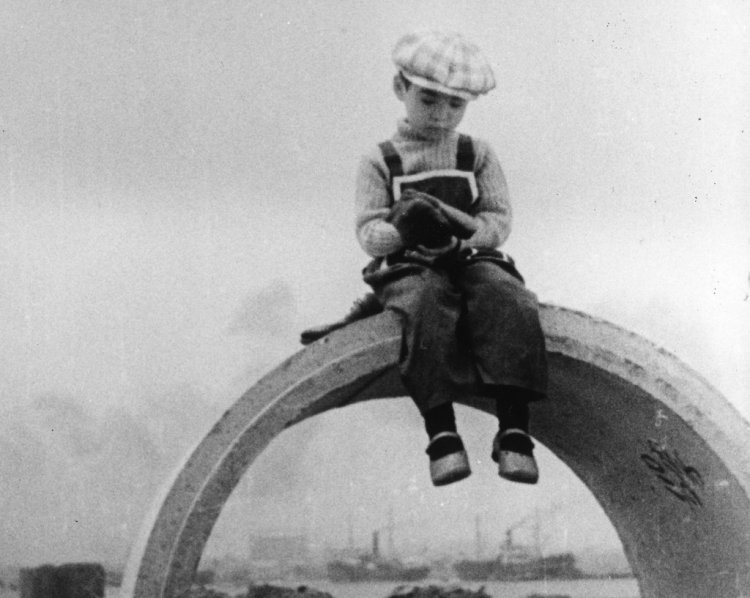
Beginning in spring, younger brother Sampei (Bakudan Kozo now known as Jun Yokoyama) is excitedly waiting for the arrival of an old man (Takeshi Sakamoto) who brings masks for the children and rides a fine horse. Unfortunately, Sampei takes a tumble and arrives last when only a noh style mask of a lady’s face remains which really doesn’t appeal to him (later he asks his older brother Zenta (Masao Hayama) to draw a moustache on it to make it look ”stronger”), so the old man offers to give him a ride on his horse to make up for it. Sampei and Zenta don’t think they have any grandparents, but Sampei thinks it would be nice if the old man were his grandpa for real.

After he does a typical Sampei thing and falls off a cow, Sampei’s mother (Mitsuko Yoshikawa) arrives and realises that, yes, mask man really is her estranged father who disowned her after she got married without his consent. Happy that perhaps her parents have finally forgiven her, Sampei’s mother is also a little bit worried as they’ve never explained to the children why they weren’t in contact with her parents and she’s afraid it might upset them. There’s also another problem. The boys’ father (Reikichi Kawamura) is currently very ill, and their dairy farm isn’t doing well either. The family have large debts secretly taken out with the father-in-law’s company behind his back, so all of this could quite easily backfire. More drama erupts when an ambitious underling, Rokai (Seiji Nishimura), realises there’s a possibility the old man will take his daughter’s family as his direct heirs rather than promote from within the company and starts on a series of fiendishly machiavellian plans to oust his rival.

The boys, however, know very little of this. They love their cows and life on the ranch, and the thing they’re most sad about is when they end up having to move in with grandpa for a while to avoid some of Rokai’s scheming. Having been very popular in their old town, the boys are slower to make friends and quickly run into a problem with the son of the man who’s causing their family so much bother. A typically melancholy episode sees little Sampei wandering off on his own to make friends with the carp in the local lake because there’s no one else for him to talk to. However, the boys later bond with their would be arch nemesis, Kintaro (Teruo Furuya), in defiance of the ongoing feud between their families, even going so far as to carry him on their back all the way home after he breaks his leg falling out of a tree when his father stupidly “repossesses” the backyard where the kids have been playing together safely.

Gradually, as time wears on, the allegiance of Kintaro and his mother starts shift away from Rokai and towards the boys and their family who have never been anything other than kind to them. In a nice piece of symmetry, it seems the two women were also close childhood friends who have been kept apart thanks to the ongoing pettiness instigated by the menfolk. The grandfather, having fully patched things up with his daughter, is doing his best to remain on the side of decency despite Rokai’s underhanded tactics but finds himself increasingly cornered by his finagling. The boys’ commitment to their friend and refusal to give in to Rokai’s attempts to use the children to perpetuate his feuding only serve to remind everyone how petty and self serving Rokai’s actions really are.

Rokai is several times described as “a real villain” by the disbelieving grandpa, constantly exasperated by the dishonourable conduct of someone he’d employed on his staff for several years. Yet aside from Rokai himself, it’s greed and pettiness that are the true villains of of the piece. The boys’ father gives them some very important advice for their future lives when he tells them not to strive to have more things than other people but to be generous in its place. Rokai, afraid and resentful, eventually gets his comeuppance, ending a long year of torment for the Ono family and restoring justice to an unjust world.

The boys themselves know little of the details of the feuds between their families, worrying about normal things like whether they’ll be able to go on to middle school and wondering how the cows are doing back at their old ranch. It’s these details at which Shimizu excels as usual, perfectly capturing the reality of childhood even whilst giving more space to adult concerns than he often did in many of his other, more purely child centred films. Once again making great use of location shooting, Shimizu captures the fast disappearing rural paradise the boys inhabit which is entirely divorced from the political tension of the day. Another warm and humorous tale of kids and the way they often become the accidental victims of a grown up dispute, Four Seasons of Children perfectly unifies all of Shimizu’s ongoing themes right up to its necessarily just, compassionate, ending.


Children in the Wind (風の中の子供, Hiroshi Shimizu, 1937)

vlcsnap-2016-12-06-23h27m52s218It would be a mistake to say that Hiroshi Shimizu made “children’s films” in that his work is not particularly intended for younger audiences though it often takes their point of view. This is certainly true of one of his most well known pieces, Children in the Wind (風の中の子供, Kaze no Naka no Kodomo), which is told entirely from the perspective of the two young boys who suddenly find themselves thrown into an entirely different world when their father is framed for embezzlement and arrested.  Encompassing Shimizu’s constant themes of injustice, compassion and resilience, Children in the Wind is one of his kindest films, if perhaps one of his lightest.

Brothers Zenta (Masao Hayama) and Sampei (Bakudan Kozo) live a fairly comfortable life in a small town with their accountancy clerk father (Reikichi Kawamura) and doting mother (Mitsuko Yoshikawa). Older brother Zenta is the stereotypically good boy who studies hard, gets good grades, and causes no trouble. Sampei, by contrast, is a handful. Running out of the house to play Tarzan with the other neighbourhood kids even though he’d promised his mother he’d stay home to study to improve his awful performance at school, Sampei is the loveable rascal that no one quite knows what to do with. Despite their mother’s protestations, the boys’ father is content to let Sampei run riot for now, he’s only young after all.

When their father is accused of embezzling company funds, sacked, and later arrested, the boys’ world begins to crumble. The other kids won’t play with them anymore, their dad isn’t home, and their mother is worrying about money now that her husband has lost his job. Sampei is packed off to an uncle’s while Zenta stays behind to try and get a job to help out. Unfortunately, Sampei does not take well to his new environment and starts misbehaving even more than usual by disappearing up trees, riding a bucket down a river, running off to meet kappa, and even trying to run away with the circus!

All of this is told more or less from Sampei’s point view meaning that the facts of his father’s case recede into the background while Sampei’s worry and confusion comes to the fore. Having been in the office to deliver his father’s lunch when the coup occurred, Sampei can tell something awful has happened and tries to comfort his dad by closing all the blinds to block out the nosy kids’ faces peeking in from outside, and grabbing his father’s hat to get him to come home. Reassuring his dad that it’s all fine because he can just start a better company of his own, Sampei puts a childishly brave face on things while his ashen faced father walks home in silence. Of course, because Sampei is a child, no one explains to him exactly what’s happened, so no one explains it to us either, but we can perhaps infer a little more from the adults’ passing conversation than the still innocent Sampei.

The boys’ relationship with their father is one of the film’s warmest elements as, in contrast to the stereotypically austere salaryman dad, he delights in playing with his children, even breaking off from worrying about his impending doom by launching into a game of sumo. Sampei and Zenta know their father couldn’t have really done anything bad, so they aren’t really worried and though they miss him, they are sure he’ll be home soon. It’s not until fairly late on that they start to realise the gravity of the situation and how difficult things are for their mother, but once they do they become determined to support her too.

This being a (happy) Shimizu film, the injustice is finally undone and everything goes back to normal which what all children always want. Children, more than adults, are apt to forget quickly and so it’s not long before the other neighbourhood kids start responding to Sampei’s Tarzan call once again. In a typically nice touch, Sampei even invites his arch rival, Kinta – the son of the man who framed his dad for embezzlement in the first place, to come and see the approaching circus with him. A final gesture of reconciliation signals the end to hostilities as a possibly life changing event becomes a humorous summer interlude in the boys’ early lives. Warm and lighthearted, Children in the Wind is perhaps not as cutting or incisive as some of Shimizu’s more socially conscious efforts, but is filled with his characteristic compassionate humanism in its childlike certainty in justice and the willingness to forgive and forget.


The Boss’ Son at College (大学の若旦那, Hiroshi Shimizu, 1933)

vlcsnap-2016-09-25-01h32m39s471It’s tough being young. The Boss’ Son At College (大学の若旦那, Daigaku no Wakadanna) is the first, and only surviving, film in a series which followed the adventures of the well to do son of a soy sauce manufacturer set in the contemporary era. Somewhat autobiographical, Shimizu’s film centres around the titular boss’ son as he struggles with conflicting influences – those of his father and the traditional past and those of his forward looking, hedonistic youth.

Fuji (Mitsugu Fujii) is the star of the university rugby team. In fact his prowess on the rugby field has made him something of a mini celebrity and a big man on campus which Fuji seems to enjoy very much. At home, he’s the son of a successful soy sauce brewer with distinctly conservative attitudes. Fuji’s father has just married off one of his daughters to an employee and is setting about sorting out the second one despite the reluctance of all parties involved. Everyone seems very intent on Fuji also hurrying up with finishing his studies so he can conform to the normal social rules by working hard and getting married.

Fuji, however, spends most of his off the pitch time drinking with geisha, one of whom has unwisely fallen in love with him. Like many teams, Fuji’s rugby buddies have a strict “orderly conduct” rule which Fuji has been breaking thanks to his loose ways. His top player status has kept him safe but also made him enemies and when an embarrassing incident proves too much to overlook he’s finally kicked off the team.

The times may have been changing, but Fuji’s soy sauce shop remains untouched. Gohei (Haruro Takeda), the patriarch, grumpily rules over all with a “father knows best” attitude, refusing to listen to his son’s complaints. In fact, he tries to bypass his son altogether by marrying off another employee to his younger daughter, Miyako. Though Miyako tries to come to the employee’s defence (as well as her own) by informing her father that “this way of treating employees is obsolete”, she is shrugged off by Gohei’s authoritarian attitude. He’s already tried this once by arranging a marriage for his older daughter but his son-in-law spends all his time in geisha houses, often accompanied by Fuji, and the match has produced neither a happy family nor a successful business arrangement.

Fuji is a young man and he wants to enjoy his youth, in part because he knows it will be short and that conformity is all that awaits him. His dalliance with a geisha which contributes to him being kicked off the rugby team is in no way serious on his part (caddish, if not usually so). However, when he befriends an injured teammate and meets his showgirl sister, Fuji falls in love for real. This presents a problem for the friend whose main commitment is to the rugby team who were thinking of reinstating Fuji because they have a big match coming up and need him to have any chance of not disgracing themselves. This poor woman who has apparently been forced onto the stage to pay her brother’s school fees is then physically beaten by him (if in a childishly brotherly way) until she agrees to break things off with Fuji for the good of the rugby team.

Fuji is finally allowed onto the pitch again, in part at the behest of his previously hostile father who thinks rugby training is probably better than spending all night drinking (and keeping his brother-in-law out all night with him). The loss of status Fuji experienced after leaving the team rocked him to the core though his central conflict goes back to his place as his father’s son. At one point, Fuji argues with a friend only for a woman to emerge and inform him that his friend had things he longed to tell him, but he could never say them to “the young master”. Fuji may have embraced his star label, but he doesn’t want this one of inherited burdens and artificial walls. Hard as he tries, he can never be anything other than “the boss’ son”, with all of the pressures and responsibilities that entails but with few of the benefits. Getting back on the team is, ironically, like getting his individual personality back but also requires sacrificing it for the common good.

In contrast with some of Shimizu’s post-war films which praise the importance of working together for a common good but imply that the duty of the individual is oppose the majority if it thinks it’s wrong, here Fuji is made to sacrifice everything in service of the team. At the end of his final match, Fuji remarks to his teammate that this is “the end of their beautiful youth”. After graduation, they’ll find jobs, get married, have children and lose all rights to any kind of individual expression. Fuji is still torn between his “selfish” hedonistic desires and the growing responsibilities of adulthood, but even such vacillation will soon be unavailable to him. Ending on a far less hopeful note than many a Shimizu film with Fuji silently crying whilst his teammates celebrate victory, The Boss’ Son Goes to College is a lament for the necessary death of the self as a young man contemplates his impending graduation into the adult world, but it’s one filled with a rosy kind of humour and an unwilling resignation to the natural order of things.


The Golden Demon (金色夜叉, Hiroshi Shimizu, 1937)

vlcsnap-2016-09-22-02h33m21s455Perhaps best known for his work with children, Hiroshi Shimizu changes tack for his 1937 adaptation of the oft filmed Ozaki Koyo short story The Golden Demon (金色夜叉, Konjiki Yasha) which is notable for featuring none at all – of the literal kind at least. A story of love and money, The Golden Demon has many questions to ask not least among them who is the most selfish when it comes to a frustrated romance.
Poor relation Kanichi (Daijiro Natsukawa) is a university student living with friends of his deceased father. He and the daughter of the family which took him in, Miya (Hiroko Kawasaki), have grown up together and formed an emotional attachment they each believed would naturally lead to marriage. However, Miya has received a proposal from a wealthy gentlemen which her cash strapped father is strongly advising her to accept. Though she loves Kanichi deeply, Miya is torn – both by a feeling of duty to marry well and keep her parents in comfort, and by a fear of leaving her middle-class lifestyle for a life of uncertain poverty with the still studying Kanichi.

When she ultimately agrees to the arranged marriage, Kanichi becomes angry and accuses Miya of placing monetary concerns over true feeling. Disappearing from Miya’s life entirely, Kanichi determines to destroy himself in a vicious quest for revenge. Abandoning his idealistic, progressive concerns, Kanichi becomes a heartless money lender with a plan to one day amass a great fortune only to throw it in the face of his former love. When Miya’s husband, Tomiyama (Toshiaki Konoe), appears at his door apparently fallen on hard times, Kanichi’s plan looks set for success.

In true Shimizu fashion, he remains non-judgemental of his characters save for that of the elderly money lender who, when questioned by his son, offers a series of flimsy justifications for his line of work which his son brands dirty and disgraceful. The money lender points out that he’s only operating a business – he never attempts to hide his terms so customers know they will pay a heavy price for the loans, and thereafter the decision is their own. When his son points out how selfish a point of view that is and that all he’s doing is exploiting the desperation of vulnerable people, he’s told that he reads to many books and should learn to live in the “real world”. If Shimizu wants to criticise anything at all (even obliquely, this is 1937), it’s this “real world” thinking which legitimises the selfishness of those who seek to profit from the misfortune of others.

The same money lender has a somewhat strained relationship with his equally cynical wife. After she complains about his complaint about how much makeup she’s putting on “to go to a temple”, he tells her that his jealously proves he loves her. She’s a precious object that he’s afraid of losing to another man. To him all is about possession. Kanichi, who once thought himself so different is more or less the same as he refuses to think about why exactly Miya has made the decision she has, or even allow her the right to make that decision. Obviously broken hearted, he decides to abandon emotion all together as “you can’t trust the human heart.” He even attempts to enact the final terms of the usurious loans on the contracts of some of his university friends who, just as he was with Miya, are unable to understand how he could be so cruel to those he was once so close to. Even Tomiyama, who had hitherto looked after Miya as a husband should finally exclaims “I can’t love you without money” as if in a tacit acceptance of the fact that he essentially bought her, obtaining her duty and service but not, perhaps, her heart.

In contrast some of Shimizu’s other work he focusses much more on Kanichi’s moral meandering than on Miya’s suffering but she herself pays a heavy price throughout. In sacrificing her love for Kanichi and a chance at a self directed future in agreeing to the arranged marriage, Miya ultimately chose to familial duty over romantic feeling. Having grown up in comfort, a degree of fear may have also influenced her decision but the choice has broken her own heart just as much as Kanichi’s. Guilt and a regret threaten to frustrate her new married life even though she does her best to become the ideal wife. Miya searches for Kanichi to obtain his forgiveness but Kanichi is nowhere to be found.

The eventual reunion is one of chilling coldness and repressed emotions which causes only more pain for everyone involved. Neatly avoiding melodrama, Shimizu opts for a more realistic solution in which everyone realises the error of their ways. Kanichi perseveres in his desire for vengeance yet leaves feeling like “the stupidest man in the world”, pausing only to offer a few words of parting encouragement to Miya if stopping short of forgiveness (or an apology which she is most likely owed if only for the previous ten minutes of cruelty). The past remains the past and must be accepted as such, yet there is at least a glimmer of hope for Kanichi whose abortive plan of revenge may have reawakened within him the very thing he’d been trying to bury even if the future for Miya seems nowhere near as certain.


Every-Night Dreams (夜ごとの夢, Mikio Naruse, 1933)

Every Night DreamsFollowing on from Apart From You, Naruse returns to his exploration of working class women struggling to get by in a male dominated world in Every-Night Dreams (夜ごとの夢, Yogoto no Yume) also released in 1933. This time we meet weary bar hostess Omitsu who has a young son she’s raising alone after her deadbeat husband ran out on them a few years previously.

Omitsu doesn’t particularly like working in the bar, but as her mama-san grudgingly admits, she is quite good at it. She’s a modern woman who can drink and smoke and flirt to keep the guys buying drinks and wanting more though she’s finding it increasingly difficult to deflect some of the more intense interest such as that from a sleazy boat captain that her boss is eager to keep happy. Whilst at work, her son is looked after by a kindly older couple in her building who urge her to find a nicer line of business or get married again to a more reliable man.

The gentle rhythms of her life are disrupted when her long absent husband finally reappears. After first rejecting him outright, Omitsu eventually relents and lets him back into her life. However, despite his seemingly sincere pledges to change, get a proper job, start being a proper husband and father, Mizuhara fails to achieve any of his aims and also becomes increasingly jealous about Omitsu’s job at the bar. When their son, Fumio, is injured in an accident and requires expensive medical treatment, events reach a tragic climax.

Naruse would return to women alone facing a difficult economic future in many of his films but Omitsu’s situation is only made worse by the ongoing depression. Realistically speaking, there are few lines of work available to a woman in Omitu’s position and the more well regarded of them probably wouldn’t pay enough to allow her to keep both herself and her son, even as it stands she tries to borrow money from the bar to “reward” the older couple who watch Fumio while she’s working (though of course they wouldn’t take it). Omitsu herself feels there’s something degrading about her work and when her friend advises her to remarry, she exclaims any man worth a damn would run from a woman like her. Unfortunately, she may, in some senses, be right.

The man she ended up with, Mizuhara, is most definitely not worth a damn. It’s not entirely his fault he can’t find work – he does look for it and appears to want to find a job but in this difficult economic environment there’s not much going. Applying at factory, he’s turned down almost on sight because he’s a weedy sort of guy and doesn’t look like he’s cut out for physical labour. His inability to get ahead and provide for his wife and child sends him into a kind of depression and self esteem crisis which has him thinking about leaving again, especially as his increasing jealousy threatens his wife’s bar job which is their only form of income (whether he likes it or not). Fumio’s accident forces his hand into a series of bad decisions taken for a good reason but which again only cause more trouble for his family.

Naruse is a little flashier here than in Apart From You using canted angles, faster editing and even more zooms to hint at the panic felt by Omitsu in the increasingly distressing situations she finds herself in. Like the train accident in Flunky, Work Hard, the news that Fumio has been hit by a car is delivered in an expressionistic style beginning with his father putting down the boy’s toy car as a troupe of kids arrive and the screen is stabbed with a series of rapidly edited, alternating angle shots of intertitles mingled with the shocked reaction of the parents and the other children. If Naruse felt compelled to provide an ending with some sort of hint of far off promise in previous films, here he abandons that altogether as Omitsu laments her sad fate and instructs her son to grow up strong, not like his father, but like the mother who is doing everything she can to ensure his life won’t always be like this.


Every-Night Dreams is the fourth of five films included in Criterion’s Eclipse Series 26: Silent Naruse box set.

Apart From You (君と別れて, Mikio Naruse, 1933)

Apart From YouNaruse’s critical breakthrough came in 1933 with the intriguingly titled Apart From You (君と別れて, Kimi to Wakarete) which made it into the top ten list of the prestigious film magazine Kinema Junpo at the end of the year. The themes are undoubtedly familiar and would come dominate much of Naruse’s later output as he sets out to detail the lives of two ordinary geisha and their struggles with their often unpleasant line of work, society at large, and with their own families.
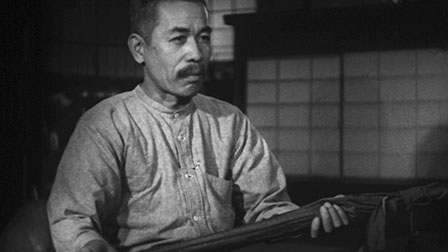
The older woman, Kikue, begins the film by asking her much younger friend and almost daughter figure, Terugiku, to pluck a grey hair from her head. Kikue also has a teenage son, Yoshio, who is becoming progressively rebellious, filled with anger and resentment over his mother’s line of work. Ignoring Kikue’s many sacrifices for him, Yoshio drinks, skips school and messes around with a gang of delinquents.

Feeling sorry for her mentor, Terugiku makes use of her good relationship with Yoshio to convince him that he should be more grateful for the kindness his mother shows him. Taking him on a trip to visit her impoverished family, Terugiku shows him the oppressive environment in which she grew up. Resenting having been sold to a geisha house to finance her drunken father’s violent outbursts, she is even more outraged that they now want to force her sister to undergo the same treatment. Terugiku is not prepared to allow this to happen and has decided to do whatever it takes to save her sister from suffering in the same way as she has had to.

Naruse highlights both the problems of the ageing geisha who sees her ability to support herself declining in conjunction with her looks, and the young one who only looks ahead to the same fate she knows will come to be her own. Both women are subjected to the humiliating treatment of their drunken clients who horse around and occasionally pull violent stunts with little to no regard for those who may even have been their wives, sisters, or daughters with a different twist of fate.

Kikue does at least have Yoshio, though their relationship is currently strained, but Terugiku has no one else to rely on. Her greatest fear is that her sister will also be sold off and have to endure the same kind of suffering as she has. In order to avoid this turn of events she agrees to undergo something far worse than even the unpleasantness of the geisha house to earn double the money in her sister’s place. She faces a future even bleaker than Kikue’s, yet in some sense it is a choice that she herself has made, actively, in sacrificing herself to save her sister.

Apart from You is much less formally experimental than either Flunky, Work Hard or No Blood Relation with its elegant, beautifully composed mise en scène. That said Naruse frames with a symbolist’s eye such as in a late scene where he shoots through the cast iron footboard of a sick bed to show the two women divided yet each imprisoned. This is a world filled with subtle violence, flashes of knives from clients and delinquents alike, raining blows from drunken fathers, and innocents wounded by misdirected arrows. Maternal love is both a force for salvation and of endless suffering but romantic love is always frustrated, ruined by practical concerns. Naruse rejects the kind of fairytale ending he succumbed to in No Blood Relation for something altogether more complex and ambiguous where there is both hope and no hope at the same time as a train departs in an atmosphere of permanent anxiety.


Apart From You is the third of five films included in Criterion’s Eclipse Series 26: Silent Naruse box set.

Clip featuring Terugiku’s visit to her family (with English subtitles)

The Living Magoroku 生きてゐる孫六 (Keisuke Kinoshita, 1943)

Film_Eclipse_LivingMagoroku_original

The Living Magoroku, the second film in Criterion’s Kinoshita and World War II box set, is the director’s second feature also made 1943 shortly after Port of Flowers. Like his previous film, it was also made under the severe censorship requirements in place during the war but this time around the propaganda is far more pronounced though still fairly mild given the time period. That said, The Living Magoroku is still full of the wit and warmth characteristic of Kinoshita’s filmmaking even if it is forced to up its jingoistic content.

Incongruously beginning with a samurai battle taking place in 1573, the action quickly shifts to the same battleground where a group of raw recruits are being put through their paces before being sent off to die nobly for the Emperor in distant lands. Berating them for their lack of respect, the instructor reminds them that each recruit is descended from the very men who died on fields like these whose graves they should still be tending. This small rural town still goes by the old ways. There may be no real samurais anymore but each and every decision has to go through the local matriarch, Mrs Onagi. Actually, Mrs Onagi has a son who should rightfully be in charge but he’s such a neurotic drip who thinks he’s dying of lung disease that no one pays much attention to him. The Onagis own the entire battlefield area, some 75 acres, given to their ancestor after the battle and legend has it there’s a curse that should anyone try to cultivate it all the men of the Onagi line will die young. The field has remained untouched for 300 years, but with a war on shouldn’t the Onagis rethink their reluctance to turn this wasteland into a productive agricultural area, even if the ridiculous idea of an ancient curse was somehow real?

Like Port of Flowers, The Living Magoroku is actually fairly light on militarism despite featuring a group of soldiers and prefers to focus on the slightly backward looking nature of this small village. Even under the conservative nature of wartime Japan, it’s odd that a couple of young people would feel the need to ask the old lady at the manor for permission to marry given that she really has very little to do with them – and even odder that she would refuse to give it and that her refusal would actually bother them. The cause of the problem being that the girl’s brother is the chief instigator of the motion to get the field back in use, and that he went directly to the young master rather than the mother who’s been de facto in charge of these things. Local politics – some things never change! The young people want to use the land, curse-shmursh, but the old people would rather not. Just suppose the curse is real – poor Yoshihiro, technically head of the Onagi family, is so worried about his prospective fate (and the way his mother, grandmother and sister seem to worry about it for him) that he’s almost paralysed with fear and resentment!

Thrown into the mix is another problem concerning the sword referenced in the title – a sword of unparalleled fineness forged by Maguroku the First of which very few survive. The instructor at the army base claims to have one which infuriates the local blacksmith and sword expert as he simply refuses to believe it. By coincidence, the Onagis also have one of these swords and are paid a visit by an army doctor seeking to buy it as, it turns out, his family once owned one but he sold it unknowing its rarity to pay for his medical tuition. Of course, the Onagis don’t want to sell a precious family heirloom, though they admire the doctor’s zeal to repay his debt to his late father by acquiring another one. The instructor’s sword turns out to be a fake anyway prompting the blacksmith to make him a new one – after all, needs must and a sword is just a sword, the name on it won’t matter much on battlefield. Similarly a field is just a field, isn’t it selfish not to use it when the country needs grain even if it might cost your life seeing as every other young man is looking down the barrel of a gun at the present time? The message is clear, traditions should be honoured, yes, but when it comes down to it, the present is more important than the past and superstition gives way to clearheaded pragmatism. Every resource must be pooled for the common good and personal sacrifices must be made to ensure a better future for everyone.

The Living Magoroku feels a little more uneven than Port of Flowers, and actually ends quite abruptly with a strange newsreel style wrap-up of events. Luckily, it’s still broadly a comedy in strictest sense (it ends in a series of marriages, everyone not already married ends up wed), poor old Yoshihiro gets a new lease on life and becomes a productive member of society, the village gets a bumper harvest and all is right in the world save the strange final message about the instructor who is apparently carrying his new sword bravely in the heat of battle. Like Port of Flowers, it wants to reinforce the traditional values of community spirit and giving up your own individual pleasures and freedoms for everybody’s good. The past informs the future, how could it not, but when push comes to shove you have to let it go. Like everything in life there has to be a balance, respect your history – yes, but not so much that it costs you your future.