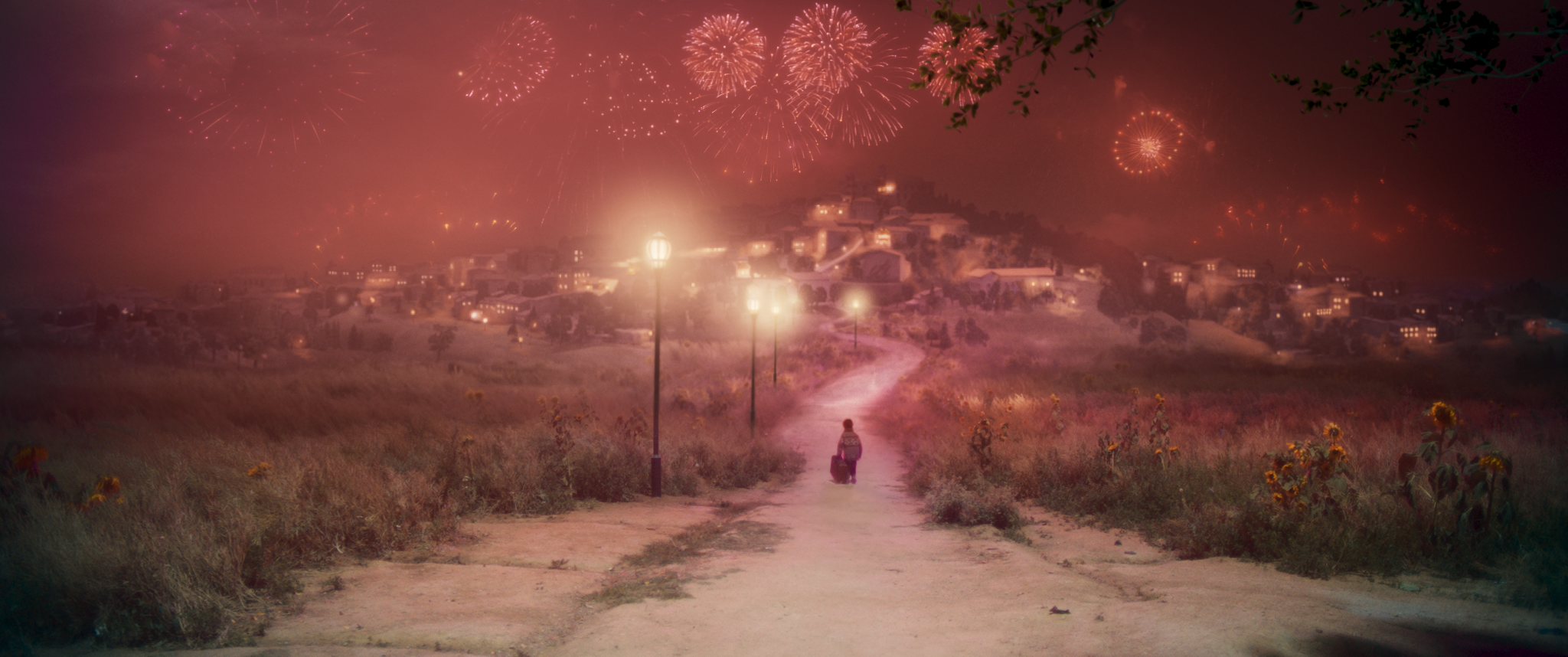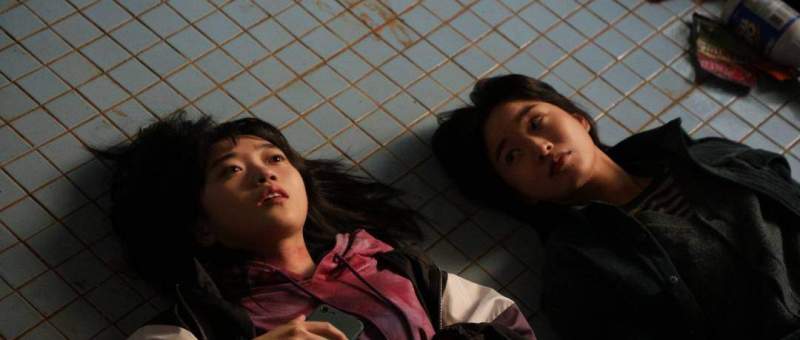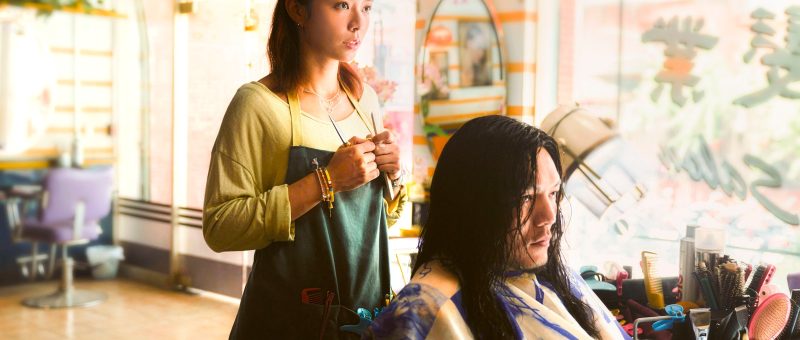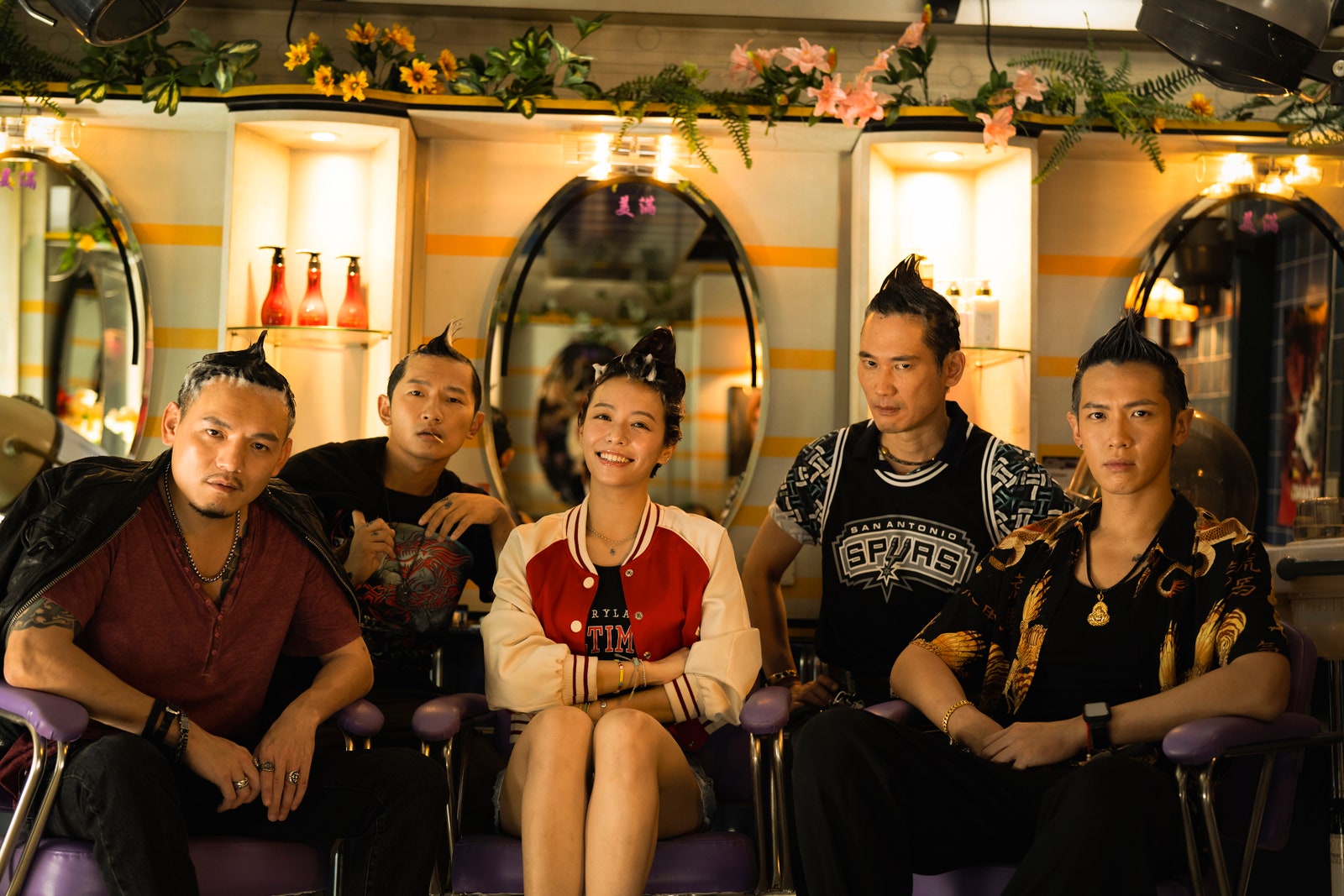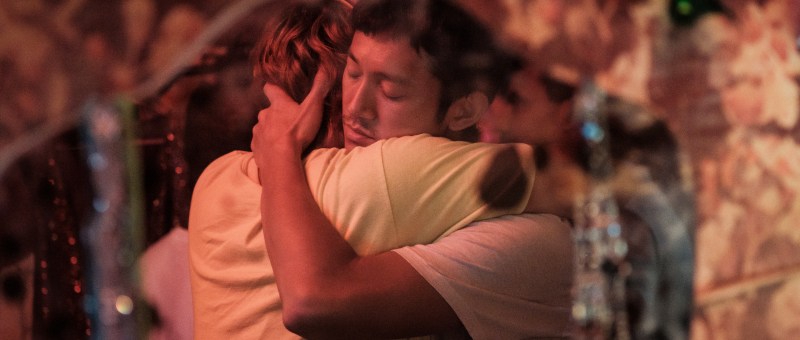
Abang Adik (富都青年, Jin Ong, 2023)

Displaced brothers find themselves trapped on the margins of a prosperous city in Jin Ong’s gritty drama, Abang Adik (富都青年). Essentially a story of brotherhood, Ong explores the fates of those largely cast out from mainstream society who must as one character later says be forever watchful, keeping a place to hide and to which escape while denied the most ordinary of things such as home and family for no reasons other than bureaucracy and prejudice. 

Both Abang (Chris Wu Kang-ren) and Adi (Jack Tan) were born in Malaysia but are technically undocumented and finding it difficult to replace their identification without things like birth certificates or access to other family members to help replace them. While Abang, who is deaf, is earnest and determined to do everything properly, Adi is sick of waiting for things to work out in his favour and has begun working as a middleman for traffickers to earn enough money to pay for a fake ID while supplementing his income with sex work. The pair are aided by social worker who tries to do her best to help get their documentation in order but finds herself with an uphill battle against implacable bureaucracy and governmental indifference. 

Ong spends most time with the brothers but makes clear the oppressive quality of the world inhabited by those trapped on the margins such as the undocumented migrants who become victims of a police raid following a tip from a broker taking kickbacks. As Adi later remarks they ask for workers to come and then they want them to go, irritated to see a policeman carrying a watch he appears to have just accepted as a bribe. With no other family members around them, the brothers have been cared for by a neighbour, transgender sex worker Money, who is like them locked out of mainstream society just for being who she is while Abang finds himself further disadvantaged by his disability and the difficulties involved in finding employment. 

Abang falls in love with a refugee from Myanmar but her family will soon be moved on to another country, while Ali develops feelings for one of his clients though she soon tells him she’s planning to move to another area to get married and enjoy a more stable if perhaps less financially comfortable life outside of the city. He offers to marry her instead, but really has nothing to give her other than his body. When a tragic accident sends the brothers on the run, they realise they have no one to rely on but each other and no real place to go. In a poignant monologue in the film’s closing scenes, Abang complains to a well-meaning monk that he is incapable of understanding his life or how difficult it has been for him to simply go on existing. He wishes that he could speak, that he had a family, that he had a safe space to call home and was not forever looking over his shoulder in case he had to leave in a hurry but instead all he gets is cosmic irony sacrificing himself to save Adi in the belief that he still has a chance at a better life if only he can swallow his pride, meet his father, and get an ID card. 

In the end they are both displaced, forcibly separated and pushed in opposing directions. Abang revisits their childhood, making paper aeroplanes as he once had with Adi and saying a final farewell with their ritualistic practice of cracking hardboiled heads on each other’s heads finding for a moment an identity as brothers reflected in each other. Ong shoots their marginalised existence in vibrant colour but also captures a sense of the city as oppressive and unwelcoming, as if it were actively ejecting them with its ubiquitous police patrols and constant danger while authority figures are largely corrupt and uncaring save the earnest social worker who ironically pays a heavy price just for wanting to help those who need it most. Melancholy if not exactly bleak, the film positions the brotherhood between the two men as a course of salvation allowing them to overcome a sense of despair in a society that seems all but closed to them.


Abang Adik screened as part of this year’s New York Asian Film Festival. 

Original trailer (Traditional Chinese / English subtitles)
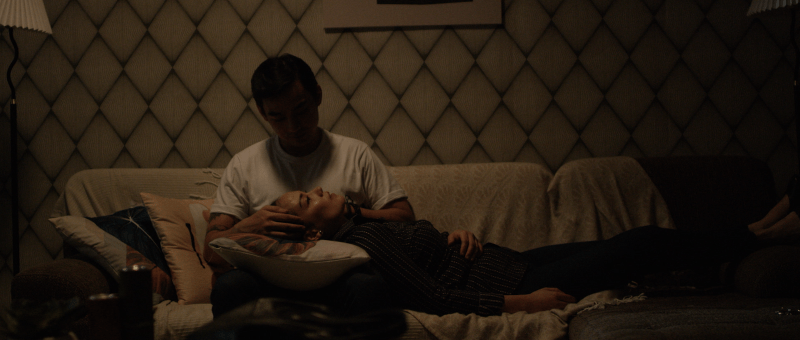
12 Weeks (Anna Isabelle Matutina, 2022)

“Not all women want to be mothers” according to the heroine of Anna Isabelle Matutina’s 12 Weeks, yet this is apparently largely what society expects of them. Faced with an unexpected pregnancy at 40, Alice decides on abortion though it is technically illegal in the fiercely Catholic Philippines and she finds herself having to offer justification for her choices while trying to process her complicated relationship with her own mother who often tells her that she too wanted an abortion but obviously did not go through with it and left shortly after Alice was born to become a domestic worker in Hong Kong. 

The irony is that Alice (Max Eigenmann) works for an NGO supporting people displaced by natural disaster or civil unrest but is to an extent displaced herself in her estrangement from her mother, Grace (Bing Pimentel). In a poignant moment after having been made aware of the pregnancy by Alice’s violet ex Ben (Vance Larena), Grace brings out a box of baby clothes that once belonged to Alice only she never got to wear them because her grandmother who was raising her told Grace not to send anything but money because she had no way of knowing what size her daughter was. Grace is excited about the prospect of becoming a grandmother because it gives her a second chance at the motherhood she was denied by economic circumstance especially as the implication is she could play a larger role in their upbringing while Alice continues with her career. 

But even considering the strained relationship between them, Grace is far from supportive more or less taking over booking doctor’s appointments on her daughter’s behalf without really consulting her. Aside from the awkwardness and upset of the situation, Alice cannot discuss the abortion with her mother because of its illegality and the risks it might cause to herself and those otherwise involved in it. To be able to access an abortion safely, she has to undergo a counselling session and is then told that her operation will take place at 11pm hinting at its illicitness that it must take place under cover of darkness. The counsellor is sympathetic and clear that she isn’t trying to change her mind even if some of the questions seem invasive or patriarchal. Asking if Alice has been subject to domestic violence she offers help making sure that she’s not being pressured into an abortion she might not want by violent partner or the necessity of escaping them. 

Ben is indeed violent and it’s a fact that if she changes her mind and keeps the baby it will become much more difficult to keep him out of her life. Slightly younger than she is, he is moody and insecure while financially supported by Alice and living in a home she owns. He is not a responsible person with whom to raise a child though places extreme pressure on her to have the baby and manipulatively leaks the pregnancy news to Grace knowing she’ll do the same. Alice discovers that in reality everyone else is making her decisions for her, including a colleague who suddenly cancels a trip she was supposed to make to a disaster area on the grounds that his own wife has recently had a miscarriage and in his opinion it’s not safe for her to go. 

Set during the imposition of martial law on Mindanao in 2017, the film implies that a kind of martial law already exists for women who are unable to make their own decisions about their reproductive health or exercise their own autonomy. Alice is repeatedly told that she should have the baby because she is already 40 and the chance won’t come again though little thought is given to whether she wanted the chance or not while her own thoughts surrounding motherhood are clouded by the relationship she has with Grace which was largely affected by the economic realities that forced her to become a migrant worker. In part she rejects becoming a mother out of anxiety worrying that she is not suited to it, but is also conflicted in its inextricable ties to Ben and with wider patriarchal violence in general depriving her of the ability to choose from all angles. In the end a choice is made for her in the cruellest of ways leaving her more or less powerless with only the small comfort of female solidarity. 


12 Weeks screened as part of this year’s New York Asian Film Festival. 

Flaming Cloud (三贵情史, Liu Siyi, 2023)

Regrets can turn into curses too, according to a melancholy middle-aged woman in Lin Siyi’s beautifully designed romantic fable, Flaming Cloud (三贵情史, Sānguì qíng shǐ) The English title refers to the deaths of gods and goddesses and a physical harbinger either of the joy of reunion or the sorrow of parting. Of course, in one way it’s all the same, every hello is also a goodbye and a curse can also be a blessing depending on how you look at it. 

As the narratorial voiceover explains, the heavens is where all of this starts as bored gods in a casino on a cloud place bets on the lives of mortals. A young woman approaches and places a wager on the existence of true love which is immediately countered by the bar’s musician. To carry out the wager, the gods decide to curse the then baby Sangui that anything he kisses will fall into a deep sleep until he kisses his one true love. 

A kind of reverse sleeping beauty, the film follows Sangui’s path through a fairytale world where he meets various others suffering in similar ways to himself but is otherwise regarded as an outcast because of unusual ability to put people to sleep. A young woman, Yuyu (Zhou Ye), who thinks he might be her prince, introduces him to a “witch” who promises to cure his curse if only he’ll treat her chronic insomnia in which he’s had not a drop of sleep in the last 12 years. What he discovers is that she is not a witch at all but the faded star, Yuexin (Yao Chen), who tells him that she cannot cure his curse for there is nothing really wrong with him and some might even see his ability as a gift, especially those like her who have trouble sleeping. 

Yuexin’s insomnia is born of past regret and the pain of lost love. She can’t sleep because she lacks the courage to face her past, while Sangui too is afraid unable to search for the girl he believes to be his one true love whom he met in childhood in case she has forgotten him or like everyone else regards him as a “freak”. Yuexin warns him that if he never gains the courage to look for Tingting (Zhou Yiran) he may regret it in time and that regret could become its own kind of curse. But in the fairytale society of White Stone he discovers only more prejudice and cruelty, stumbling on a hidden factory staffed by enslaved workers who describe themselves as being, like him, “freaks” unlikely to be missed by the world above. The villain is an exploitative factory owner whose business model is dependent on their forced labour though a mysterious ally has been helping them by smuggling medicine through the steampunk pipes that puncture their environment. They alone stand up to the factory owner, insisting that the workers are “no different” from themselves and defiantly resisting the authoritarian austerity of a wicked stepmother turned capitalist fat cat. 

But the film’s Chinese title reminds that this is a story of Sangui’s love and whether his curse can be lifted or not. Yuexin realises that the choice she made may have been mistaken, while the musician who bet against the existence of true love later admits he did so because he knows it’s real but the reality is painful for him or else he just wanted to see it proved and send a message to his own lost love that they would one day meet again. Even so, that doesn’t necessarily mean there will be a happy ending. The course of true love is always bittersweet and whichever way you look at it destined to end in a farewell though that doesn’t mean it isn’t worth following and not doing so out of fear is as Yuexin discovered only to suffer from the curse of regret. Featuring exquisite production design from the opening animation to the whimsical fairytale town gleefully melding eras from Yuexin’s flapper-esque costuming to the 1950s aesthetic of the factory owner’s wife and the steampunk quality of factory itself, Lin Siyi’s charming romantic fable is as much about middle-aged regret for the forgotten dream of love as it is about finding the courage to seek it out no matter the risk. 


Flaming Cloud screened as part of this year’s New York Asian Film Festival. 

Original trailer (English subtitles)

Kitty the Killer (อีหนูอันตราย, Lee Thongkham, 2023)

“You might be the stupidest killer I ever met” an ice cool assassin says of the bumbling hero at the centre of Lee Thongkham’s comic book action comedy Kitty the Killer (อีหนูอันตราย). She might indeed have a point, though as Charlie (Denkhun Ngamnet) points out killing is not strictly part of his job description which is more akin to a baby sitter for the “high school girl from hell” under his care, Dina (Ploypailin Thangprapaporn). In part a story of self-transformation, the film ironically plays with a series of genre tropes while providing a point of origin for an ongoing universe. 

As the film opens, Charlie is a feckless young man who can’t seem to get it together and is struggling to make a mark in his job as an “accounts manager” where he is semi-aware that everyone thinks of him as a bit useless. He muses on the difficulties of changing the way that others see him, but never quite takes the first step towards realising that what he needs to change is himself. Nevertheless, his life is changed for him when he runs into top assassin Grey Wolf shortly after The Agency tried to off him when he told them he wanted out of the game. Fearing he’s not long to live, Grey Wolf hands Charlie his trademark ring and tells him that he’s taken out a contract on his mum so if he doesn’t manage to rescue his associate Dina his whole family will be killed. 

Dragged into a world of assassins and conspiracy, Charlie has little option than to rise to the occasion shaking off his boring office boy persona to become a stylish handler perfectly equipped to face off against vicious killers as the gang chase vengeance for Grey Wolf and battle another faction of their own organisation which has apparently cut a deal with the Japanese which is why they all wear masks and carry katana. Lee Thongkham plays with a kind of re-imported orientalism in clear references to Kill Bill, even echoing a famous line in the film when assassin Nina the Faceless says to Charlie, “silly boy like you likes to play with swords.”

The line also hints at the subversion of traditional roles in play as Charlie becomes a male intruder in what in an otherwise a female space. Known as “Kitties” all the assassins are female though aside from villainess Violent all the handlers are men who are otherwise placed in a paternal role yet sidelined as nannies to the super-powered killers over whom they have almost total control. As Violet says, The Agency also has its rules and they are nothing if they do not obey. Charlie is to a degree raised by the four assassins under boss Makin (Vithaya Pansringarm) who train him to become to a capable handler allowing him to transform himself as he said he wanted to do in his opening voiceover while his mother otherwise pampers him at home. 

Nevertheless, the film also sympathises with the constrained lives of the Kitties who are told to have no emotions and that they must eliminate anyone who gets too close to them or witnesses them going about their business. As one of Dina’s “sisters” Tina remarks, she’s “just tired” of her emotionless life and lack of freedom, while Nina who already turned to the dark side tries to seduce them with false promises of greater autonomy under female boss Violet if simultaneously telling them they’d have to kill their friends and “family” in order to win it. In any case, it’s the sense of solidarity between the Kitties and the deeper than expected bond with their handlers that becomes the best weapon against Violet’s hostile take over of The Agency. Well, that and a magic stone that has the power to grant immortality, anyway. Filled with a good deal of deliberately silly dialogue and zany humour, the film also features a number of innovatively choreographed action sequences along with elaborate production design and the occasional use of onscreen graphics and animation. The depth of the world building hints at the potential for an ongoing series with a post-credits epilogue teasing a sequel offering further intrigue for the Kitties and their distinctly goofy handler in an expanding comic universe of retro charm. 


Kitty the Killer screened as part of this year’s New York Asian Film Festival. 

Original trailer (English subtitles)

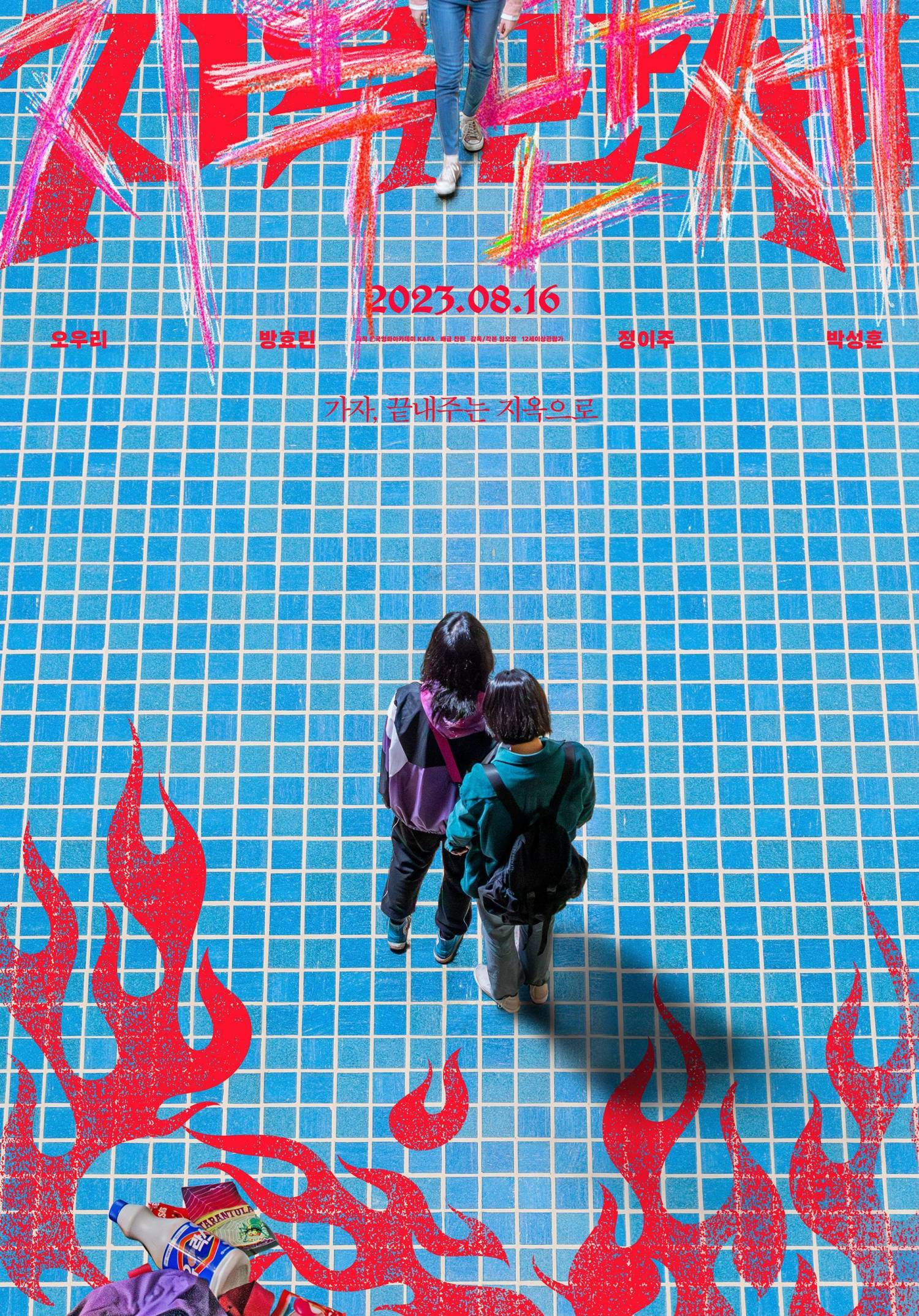
Hail to Hell (지옥만세, Lim Oh-jeong, 2022)

Two teenage girls swap thoughts of suicide for revenge on learning that their former tormentor is living well in Seoul but find their plans frustrated on discovering she has joined a religious organisation and apparently reformed in Lim Oh-jeong’s bullying drama, Hail to Hell (지옥만세, Jiogmanse). “Hell” is what the two girls, and a fair few others, believe their lives to be while seeing little way out other than taking their own lives but are confronted with questions of redemption and forgiveness not to mention death and paradise while plotting vengeance in the capital. 

The surprising thing about high school girls Na-mi (Oh Woo-ri) and Sun-woo (Bang Hyo-rin) is that Na-mi was once part of popular girl Chae-lin’s (Jung Yi-Ju) gang and only left it when they turned on her. Nevertheless, the two young women have bonded in their shared victimisation and desire for an end to their suffering. After several failed attempts at taking their own lives, they change tack on coming across Chae-lin’s Instagram posts which imply that she is living the high life in Seoul and even planning to study abroad which the girls regard as a cruel irony given the extent to which the bullying orchestrated by Chae-lin has disrupted their lives. Unsure exactly what they plan to do, they board a bus to the capital and make their way towards Chae-lin only to discover she’s joined a weird cult in which the members are expected to earn points through doing service in order to qualify for a ticket to “paradise”.

The language itself is quite sinister even if the “paradise” that’s on offer otherwise sounds fairly conventional. Then again, there is no real evidence that “paradise” actually exists while Chae-lin claims that her mother is already there which is why she’s so desperate to go. When the girls first arrive, her expression is strange to the extent that it’s impossible to tell if she’s “happy” to see them or merely excited by the prospect of tormenting them all over again. She says that she’s already confessed all her sins and views the girls’ appearance as a miracle sent by god so that she could atone and earn their forgiveness. Then again, being forgiven for one of your sins is worth the most amount of points and Chae-lin would definitely win if Na-mi and Sun-woo could be talked in to publicly forgiving her. 

Whether Chae-lin has changed or not the girls are divided on the prospect of forgiveness and whether the way they’ve been treated is something that even should be forgiven. Na-mi begins to concede that Chae-lin may have changed “a bit”, but is later forced to reflect on the ways she herself hasn’t changed or faced her complicity with Chae-lin’s bullying when she was a member of the gang while still apparently susceptible to her manipulation. Then again, it’s impossible to tell if Chae-lin is only in the religion for cynical reasons or genuinely believes in its teachings. The church itself has a distinctly eerie quality only deepened by talk of a possibly problematic article, onerous demands on members to buy “offerings”, and a points-based system of spiritual redemption. 

Meanwhile, it seems there is bullying even here with a young woman abruptly silenced, threatened with both a loss of points and “punishment”, for even making the suggestion that someone may be bullying her. Though Sun-woo sympathises with her plight, she does not know how to help her or to change the culture within the church. “No matter how long you wait, no one will help you,” Sun-woo advises another trapped young woman as she in turn attempts to shake off the feeling of powerlessness she had experienced as a victim of bullying and harassment. Neither girl had found any help from those around them, Sun-woo’s family apparently preoccupied with her disabled sister and Na-mi’s mother blaming her for being bullied insisting it was her own fault for being “weak” rather than fighting back but if their experiences have taught them anything, it’s that they can rely on each other and that they don’t really want to die so much as live without fear which might be more possible than they’d previously assumed it to be. “Welcome back to hell” Na-mi somewhat cheerfully calls out, countering a sign on the bus which had ironically claimed that wherever we are is “paradise” but perhaps finding something in it as she and Sun-woo prepare to move forward together having exorcised a few demons and reclaimed a sense of their own agency. 


Hail to Hell screened as part of this year’s New York Asian Film Festival. 

Trailer (English subtitles)

In Her Room (ひとりぼっちじゃない, Chihiro Ito, 2022)

The hero of Chihiro Ito’s debut feature In Her Room ( ひとりぼっちじゃない, Hitori Bocchi ja nai) is so pathologically shy that he has become almost invisible, a ghost-like presence not fully of this world. Colleagues ignore him, taxis never stop, and restaurant staff continue their conversations as if he wasn’t even there. At one point he’s run over by a car and tells the police that the person probably didn’t see him or realise they’d hit someone. Only a mysterious woman he later describes as showing him a side of himself that even to him was unfamiliar pays him any attention but then there’s something a little bit sinister in her otherworldliness that causes us to wonder what it is she wants from him. 

Dr. Susume (Satoru Iguchi) is so awkward that he’s taken to practicing small talk with the skull he uses as a training tool at the dentist surgery where he works. He seems almost abstracted from himself, unable to relate to others because his emotions are distant from him. His mother keeps calling and asking him to come visit her because there’s something she wants to talk to him about but he brushes her off, telling her she should do whatever she likes as if disinterested in whatever it might be that she wants to say. In fact, she is the only person who seems to be able to see him, calling out to him from a car to offer him some homemade bread, but he still doesn’t really engage with her. We start to wonder if he has a problem with the other person in the car, Tomoko, a middle-aged woman who may be his mother’s partner though she too greets him warmly and is understanding of his reluctance to spend time with them.

Miyako (Fumika Baba), the mysterious woman who lives in a fantastic flat entirely covered in indoor greenery, asks Susume if he loves his mother but he deflects her question and simply says that he wants her to be happy for the rest of her life. For a time, we can’t be sure if Miyako and her wonderful apartment actually exist or are simply the manifestation of Susume’s headspace as he tries to talk through his loneliness and lack of self, only it later seems that other people see her too and in fact frequent her home much in the same way Susume does which causes him a degree of obsessive jealousy. He is particularly bothered by the presence of Yuko (Yuumi Kawai), a woman who works in a nearby grocery store and is also friendly with Miyako and similarly possessive. He later tells her that Miyako is guiding him towards the person he’s supposed to be, though Yuko isn’t so sure and suggests her existence is a little more sinister. Apparently she keeps a giant ball of hair taken from everyone she’s ever known in a hidden drawer, and then a man apparently took his own life in her apartment though Yuko refuses to share the contents of his note with him. 

Yuko’s words contribute to a growing sense of unease exacerbated by a video Susume watches from a man who sounds like a cult leader who suggests that misfortune may be caused by magic or sorcery, leading credence to the idea that Miyako is some kind of forest-dwelling witch gently luring Susume into her trap. Soon after their relationship becomes physical, a praying mantis is seen climbing on her plants. Susume’s uncertainty is reflected in the carving he is making of Miyako’s face which gradually starts to take shape though is also in its way a self-reflection in much the same way he said that Miyako was showing him a side of himself that only she could see. When he finally delivers it to her, it’s just as blank as her expression, a smooth sphere with a vague outline of personality. She places it quietly in a shed where her various friends sometimes hide to spy on each other. 

The trio attend a weird play together in which a giraffe-man allows his community to eat him because he is a terminal people pleaser of the kind we might assume Susume to be only the play seems to arouse a flash of resentment. He tells Miyako that he thought the giraffe-man’s actions were duplicitous, that he must have been secretly confident that he would taste good and was in a sense showing off. He isn’t sure who he’s most angry with, the people that decided to satiate not their hunger but their curiosity by eating him or the giraffe-man himself for letting them do it. But Miyako replies that to her it’s quite the opposite. The giraffe-man simply wanted to be of use to those around him. A grim image of the dismembered giraffe is later echoed in that of a squashed bug, suggesting that this is what Miyako is doing to her various callers, feeding on their insecurities and leaving nothing more than a bloody carcass behind. 

Even so, Susume begins to realise that he’s being presented with a choice and decides on change, finally facing his mother and embracing her happiness along with Tomoko while expressing a desire to uproot himself to see if he’s capable of change in a different place. Adapting her own novel, Ito allows an eerie sense of mystery to remain never quite explaining the true nature of Miyako or the surreal nightmare sequence in which Susume is chased by a glowing orange entity, but instead ends on an ambivalent note at once hopeful and maybe not as Miyako carefully stores her effigy perhaps just one more trophy in a treasure trove of lost souls. 


In Her Room screened as part of this year’s New York Asian Film Festival.

Original trailer (no subtitles)

You & Me & Me (เธอกับฉันกับฉัน, Weawwan Hongvivatana & Wanweaw Hongvivatana, 2023)

A pair of identical twins come to consider an inevitable separation on the eve of the Millennium in twin directors Wanweaw Hongvivatana and Weawwan Hongvivatana’s quirky Thai comedy You & Me & Me (เธอกับฉันกับฉัน). Set in 1999 and apparently autobiographically inspired, the film follows the two young women as they face the coming end of the world in Y2K anxiety, but for all that their world really is ending as they find themselves shipped off to the country with their mother as their parents embark on a trial separation with the looming threat of divorce. 

Amusingly named “You” and “Me”, the girls (both played by Thitiya Jirapornsilp) are all but inseparable and reflect that they are glad never to feel lonely and always to have someone to share things with. They rejoice in their sameness rather than resenting it and often use it to trick the world around them so they can get two dinners for the price of one or sneak each other into cinemas on a single ticket. They swap places all the time and occasionally sit exams for each other to maximise their individual strengths. But then, when Me sits a maths exam for You she ends up meeting fellow student Mark (Anthony Buisseret) who “shares” his pencil with her by breaking it in two. Mark then abruptly disappears, but the girls reencounter him once they go to stay with their grandmother in the country (Karuna Looktumthong) where he has also relocated following his parents’ divorce only he thinks the girl he gave his pencil to was You, not Me. 

Mark may be the first thing they can’t really “share” though in a way that’s what they end up doing. Me never tells her sister she likes Mark, and You doesn’t realise it was Me he liked at the maths exam, but gradually he starts to come between them if only in disrupting their dynamic as You starts to want more time away from her sister and Me feels as if she’s being abandoned. Half a melting ice lolly lying untouched in a glass seems to neatly sum up her views about the changing nature of their relationship as sisters. But then they’re also at the age in which their sameness might start to bother them. Me abruptly goes out and gets a different haircut, as if she wanted to play her sister at her own game and assert her individuality even if it ends their childish games of place swapping and trickery. 

The millennial apocalypse is also a symptom of their adolescent anxiety as they try to come to terms with impending adulthood and the changes that will inevitably take place in their lives meaning they too will need to split and necessarily head in different directions though it doesn’t mean they’ll be less close or connected, especially with the “Y2K safe” mobile phones their dad tragically thinks are his next big business opportunity. The film takes them from Bangkok to the country where their grandmother still speaks in dialect and in all honesty Y2K might not matter all that much even if the girls run up grandma’s tab in the local shop trying to prepare for the end of the world. The television news is full of tales of mass suicides and Nostradamus, but their problems are both bigger and smaller as they ponder fresh starts in a new century which is only really the entrance to the next stage of their lives. 

Millennial nostalgia and the laidback atmosphere of the Thai countryside lend the film a peaceful air of serenity as the girls begin shift towards acknowledging their individual identities over their bond as sisters, not exactly rejecting their sameness but adjusting it in considering the future paths of their lives. Playing both sisters, Thitiya Jirapornsilp captures a sense of what make Me Me and You You but also what they are together and the anxieties they each face as twins, something of which the directors have first hand knowledge in repeatedly insisting that in the end twins are just the same as everyone else even if the girls sometimes have trouble separating themselves from each other. Strangely poignant in its Millennial conclusion, the film nevertheless ends on a note of warmth and solidarity in which the two sisters prepare to step into the new century independently and together no longer so afraid of whatever it might bring. 


You & Me & Me screened as part of this year’s New York Asian Film Festival.

International trailer (English subtitles)

Images: ©2023 GDH 559 Co., Ltd.

Rebound (리바운드, Jang Hang-jun, 2023)

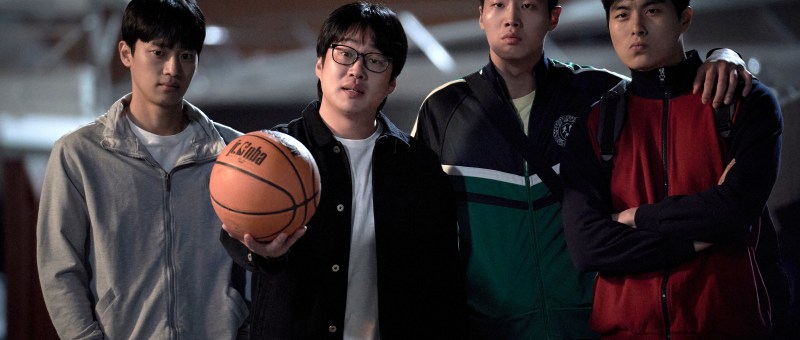
A collection of underdog teens learn a few valuable lessons in perseverance and determination while taking their moribund high school basketball team all the way to the national championships in Jang Hang-jun’s sporting drama, Rebound (리바운드). Inspired by the real life tale of Busan Jungang High School’s meteoric rise from obscurity to top rated team, the film quietly touches on inter-city rivalry and social inequality while otherwise spinning an inspirational tale of the power of solidarity and a never say die spirit. 

They are all in their way rebounding from something, and not least the team itself which is threatened with closure after being judged a bad investment by the penny pinching headmaster given its “embarrassing” series of total losses across a series of years. The team is given a brief reprieve but only as a token of its former reputation, the plan being to have one just for show but not actually enter any competitions while the school let it gradually fall into obscurity. Accordingly, they begins looking for “cheap” coaches who might be prepared to manage a phantom team and eventually land on 25-year-old social worker Kang Yang-hyun (Ahn Jae-hong) who is a former minor leaguer and alumnus of the school looking to reclaim his own failed hoop dreams vicariously through a new generation of new players. 

There are however only four left on the team, two of whom immediately quit leaving Kang scrambling around the city looking for tall boys who might be good with a ball and can be convinced to switch schools. The problem they have is that talented players are quickly snapped up by more prestigious institutions in Seoul which can after all offer more opportunities to ambitious youngsters aware that they probably won’t be playing basketball for the rest of their lives. No one really envisages a future for themselves in Busan which remains a kind of underdog in itself as it struggles against the the allure of Seoul as place of greater sophistication and possibility. Keen basketballer Ki-bum (Ahn Jae-hong) turns down Kang’s offer for just this reason insisting that his career is dead if he stays in Busban even while his parents seems to be turning down good offers on his behalf. He only agrees to join the team on learning that ace player Jun-yung (Lee Dae-hee) will be playing for them. 

Jun-yung is valued mainly for his height which sort of runs against the messages of the game in that it’s not something the players can control and no matter how hard they train they will always be at a disadvantage to those who are simply bigger. Kang’s first mistake is that he builds everything around the pillar of Jun-yung, barely letting the other players play while instructing them to pass every ball to him so he can shoot. In any case, Jun-yung too is eventually poached by a better team apparently forced to betray his teammates by his ambitious parents who are after all merely making what they see as a smart decision on his behalf. A disastrous fight between two players with unfinished business from middle school also results in a lengthy suspension ending the team’s hopes of competition success for the current season. 

But as Kang later says, it’s only really a “fake failure” in that it gave him a rebound he could use to realise his mistakes and start over prioritising their shared love of the game over his own insecurity now more willing to take a risk while concentrating on making the team as good as it can be rather than the external validation of championship wins. As he later tells them in an inspirational locker room speech, not all of your shots go in but that’s OK because they come back to you on the rebound and what matters is what you do with them then. Whatever happens, life goes on and fear of failure is not a reason to give up on something you love.

Jang does his best to avoid underdog sports movie cliches while subtly hinting at the pressures of social inequality as moody player Gang-ho (Jung Gun-joo) struggles with an old injury he couldn’t afford to have treated properly while trying to make extra cash betting on basketball games with other wayward neighbourhood kids. Capturing a real sense of energy in the various basketball games along with a wholesome sense of possibility as the team begin to bond and “improve” each other, Jang is careful not to be blinded by a false narrative of inspirational success but rather doubles down on the rebound mentality of seizing opportunities as they come and continuing to chase your dreams in your own way no matter how hopeless they may seem. 


Rebound screened as part of this year’s New York Asian Film Festival.

International trailer (English subtitles)

Images: ⓒ 2023 NEXON Korea Corporation, B.A. ENTERTAINMENT, WALKHOUSECOMPANY ALL RIGHTS RESERVED

Back Home (七月返歸, Nate Tse Ka-ki, 2023)

“This place is cursed” according to an exasperated policeman dealing with yet another suicide at a rundown public housing estate in Hong Kong in Nate Tse Ka-Ki’s gripping supernatural thriller, Back Home (七月返歸). It’s true enough that this seems to be a fairly haunted land in which it has become quite difficult to tell the living from the dead, “they seem so real, I can’t tell the difference” a little boy admits while unfairly burdened by the ability to see things that others don’t or at least have become adept in not seeing. 

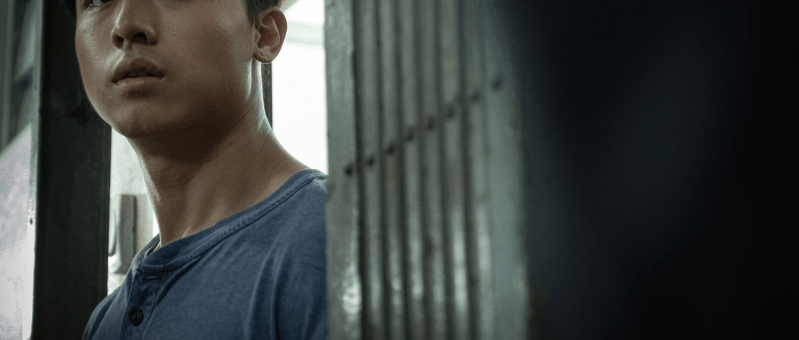
Wing (Anson Kong Ip-sang) too once had the ability to see ghosts, but apparently grew out of it after moving to Canada to live with his uncle a decade previously. All this place holds for him now is horror, he admits on being called home following his estranged mother’s attempt to take her own life. Now stable but in a coma, a doctor suggests it’s like her soul has gone wandering and they’ll have to wait to see if it ever comes back. Staying in his childhood home, Wing finds himself assaulted by painful memories of the past along with more literal ghosts he can’t really be sure aren’t manifestations of his trauma or symptoms of a fracturing mind. 

Then again, there is something very weird about this particular block. The people who remember Wing remember him as “spooky”, a boy who was rejected by the community around him after claiming to see ghosts. His embarrassed mother regularly railed at him, accusing him of lying and blaming him for his father leaving the family while seemingly suffering from mental health issues that have also seen her reduced to a figure of fun by the local kids. She tries all sorts of Taoist rituals including having him beaten with a burning stick to close his third eye all which understandably results in Wing deciding to remain silent and speak no more of ghosts while otherwise unseeing them in effort that must place extreme strain his own mental health. His plight is essentially one of repression in which he is haunted in more ways than one while forced to deny his authentic self because of a social taboo.

Even so, it’s a taboo others would quite like to break. In some ways we can’t quite tell if it isn’t Wing who’s dead and haunting his childhood home or if everyone else is actually a ghost. The ominous Uncle Chung who sells paper sacrifices hints as much when he unironically offers to make some for Wing while his overly cheerful wife’s constant offers of her special soup seem as if they may have some kind of ulterior motive. Complaining that there’s definitely something rotten in this apartment block, Wing discovers that there have been other victims besides his mother and hears from a little boy, Yu, that anyone who visits the forbidden seventh floor meets a sticky end. What’s waiting for Wing up there is a Lynchian world of repressed memory eager to confront him with his traumatic past and either set him free or trap him there forever. 

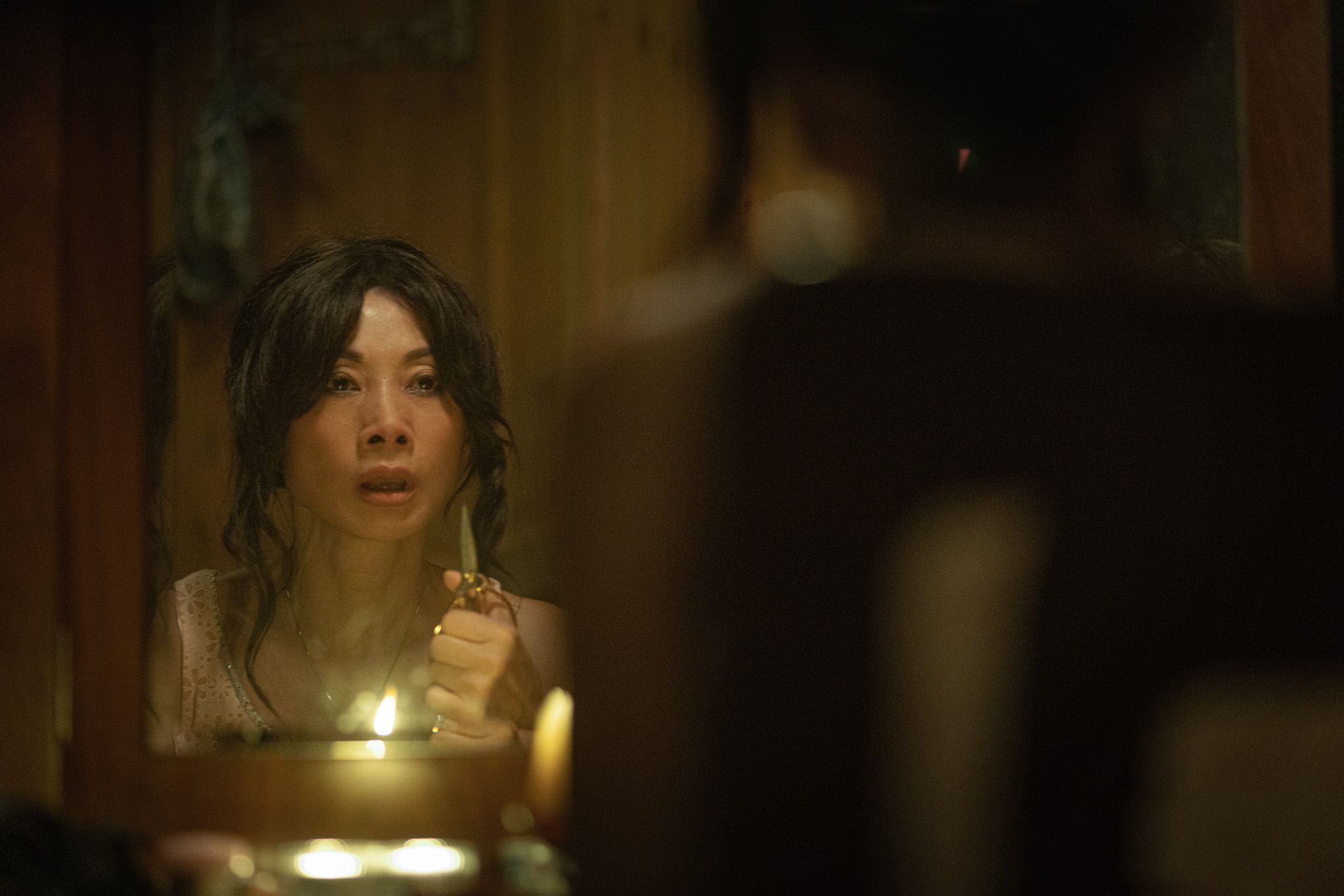
Bonding with Yu who is after all much like himself, a lonely little boy rejected by his peers while constantly “bothered” by wandering spirits, Wing starts to suspect there’s something more sinister going on. Director Nate Tse Ka-ki drops in repeated visual clues such as the distinctive pairs of scissors that seem to turn up in odd places while otherwise blurring the lines between the world of the living and the dead and alluding to other kinds of exile such as Wing’s life in Canada and estrangement from his family. On his return “back home”, he feels conflicted and resentful almost as if his mother had called him back and was refusing to let him go while grandma Chung ominously offers to look after Wing’s offspring when he eventually has one now that he’s where he’s supposed to be she assumes for good. It’s difficult not to read something sinister in her speeches about engineering a better future to “bring peace to this place” even before it becomes clear that it isn’t so much the lifting of a curse she’s interested in as its fulfilment. Some viewers may also detect something familiar in her delivery. In any case, in embracing a younger version of himself Wing may finally be able to escape his haunting even if it leaves him with a difficult choice between comforting fantasy and an objectively horrific “reality”.


Back Home screened as part of this year’s New York Asian Film Festival.

Original trailer (Traditional Chinese / English subtitles)

Images: ©️mm2 Studios Hong Kong

Miss Shampoo (請問,還有哪裡需要加強, Giddens Ko, 2023)

A ruthless gangster’s quest for vengeance is put on hold when he falls for a cutesy hairdresser who hides him from the bad guys who knifed his treacherous boss in Giddens Ko’s adaptation of his own short story Miss Shampoo (請問,還有哪裡需要加強, qǐngwèn, háiyǒu nǎlǐ xūyào jiāqiáng). Part gangland drama part zany Taiwanese rom-com, the film nevertheless hints at institutionalised corruption in local politics while simultaneously mocking the awkward positioning of the “gangster” in the contemporary imagination as both a romanticised outlaw and despised member of society. 

Bruiser Tai becomes the head of his gang when his boss, Hsing, is murdered by Thai assassins presumably hired by one of the other local bosses in a dispute over urban development contracts that may also threaten an upcoming election. Tai doesn’t seem to know a lot about that or how seriously he should take advice from one of the other bosses that he should look inside his own organisation when considering who might have wanted Hsing dead. In any case, at the present time all he can think about is innocent hairdresser, Fen (Vivian Sung), who hid him in the back of the salon when he was trying to escape the assassins. It’s not long before he’s deciding that he needs a haircut, as do several of his men who more or less take the salon over as the gangsters’ coiffeur of choice. 

Fen is not actually a fully trained hairdresser and had been mainly handling the shampoo which might explain some of her more avantgarde efforts even if she later seems to find a groove in giving the gangsters the kind of hairstyles they wanted but didn’t know how to ask for. The effect may be short lived leaving Tai with ridiculous blond dreadlocks for the rest of the film but perhaps nothing says love more than being willing to look like a complete idiot to avoid hurting your crush’s feelings. A baseball obsessive, Fen is herself somewhat on the margins and currently dating a graduate student who looks down on her and doesn’t take the relationship seriously. Even her mother tells her he’s too good for her, suggesting they should continue placating him because he’s “better” than they are while she remains unable to stand up for herself. 

Perhaps surprisingly, the family are later family acceptive of Tai’s attempts at courtship despite knowing that he’s a “gangster” with only the worry that he may turn into a “scary ex” if Fen eventually decides to break up with him. But the relationship does however place a strain on the gang with some members frustrated by Tai’s lovelorn indifference to the gangster code as he continues to neglect avenging the boss’ death in favour of pursuing a romance with Fen. While his friend flirts (almost literally) with betrayal in chasing a new cryptocurrency future with a similarly fed up underling from a rival gang, Tai starts to wonder if he’ll have to make a choice between his life an underworld high roller and his love for the civilian Fen while slowly coming to the conclusion that being the boss might not be all it’s cracked up to be. 

A recurrent baseball subplot hints at another kind of justice built on teamwork and mutual feeling that eventually comes to the rescue both romantically and physically as Tai deals with his gangster drama and Fen with her romantic doubt after realising that Tai is a gangster after all and underworld betting is destroying the game she loves so much, while otherwise playing into the message of new beginnings as Fen continues to support her longtime baseball idol as he prepares to transfer to a Japanese team at the comparatively late age of 30. Ko plays with meta humour in the final assurances that this is a New Year Movie (though it wasn’t) so must have a happy ending while otherwise indulging in zany gags like invisible guns as a repeated gimmick to get names out of people who didn’t want to give them, aside from all the ridiculous hairstyles Fen accidentally gives her customers while trying to capture their true essence. Nevertheless, the sleazy atmosphere and vulgarity often sit uncomfortably with the sweetness of the central love story in what is otherwise an ironic take on the quirky rom-com.


Miss Shampoo screened as part of this year’s New York Asian Film Festival.

Original trailer (Traditional Chinese / English subtitles)