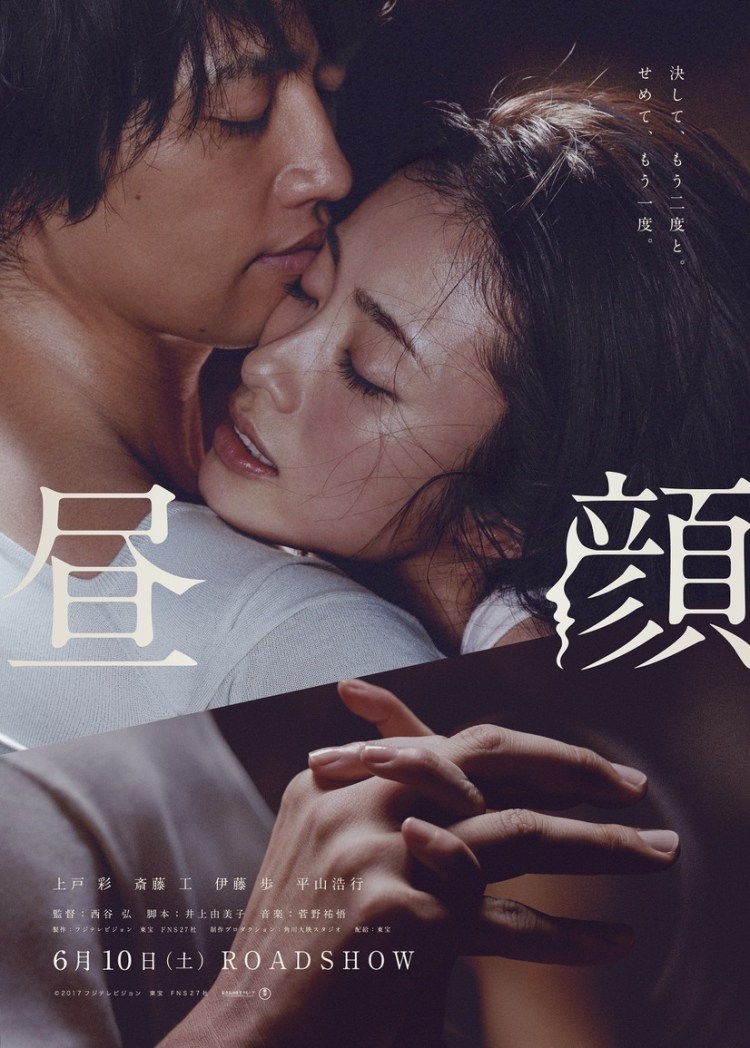
 Hiroshi Nishitani has spent the bulk of his career working in television. Best known for the phenomenally popular Galileo starring Masaharu Fukuyama which spawned a number of big screen spin-offs including an adaptation of the series’ inspiration The Devotion of Suspect X and Midsummer’s Equation, Nishitani has also brought his admittedly cinematic eye to other big screen transfers of small screen hits from Beautiful World to the European set Amalfi: Rewards of the Goddess and Andalucia: Revenge of the Goddess. Hirugao – Love Affairs in the Afternoon – (昼顔, Hirugao), is no exception to this trend and acts as a kind of sequel to a TV drama in which an unhappy housewife indulged in an intense yet doomed affair with a married schoolteacher. An old-fashioned romantic melodrama, Hirugao knows where it stands when it comes to conventional morality but is content to put its unhappy lovers through the ringer before meting out its judgement.
Three years after a passionate affair with her beloved professor Kitano (Takumi Saito), Sawa (Aya Ueto) has lost everything. She got a divorce, but Kitano went back to his wife and the terms of the settlement state that she is never to see, talk to, or in any way communicate with him ever again. Hoping to move on with her life, Sawa has done what many in her situation do and moved to a remote seaside town where no one knows her name, her history, or just why it is she looks so sad.
Eventually getting a job in a small cafe despite the obvious hostility of the long-standing staff, Sawa is making a go of things but no matter how hard she tries, she can’t get Kitano out of her mind. Only half alive Sawa lives out her days until one fateful afternoon she spots an advert for a lecture on fireflies – Kitano is coming to town. Sitting in the back, hunched down trying not to be seen Sawa listens to her lost love speak but accidentally catches his eye, once again sparking their long paused romance. Chasing, missing each other, retreating and advancing the pair eventually meet and go about the business of observing the local fireflies independently yet in the same space – obeying the terms of the settlement, at least in spirit. Gradually their old feelings resurface but Kitano stills goes home to his wife every day and a second chance for love after such a final judgement may require more than a simple act of faith.
Told more or less from the point of view of the unhappy Sawa, Hirugao’s main purpose is an exploration of her ongoing pain and inability to put the past behind her despite having moved to an unfamiliar place filled with unfamiliar faces. Not universally well liked by all on arrival, the cafe staff including a grumpy older woman and a cheerful if gossipy younger one eventually get used to Sawa though they both seem to resent the cafe owner’s affection for her. Later on, Sawa makes a critical mistake. She tells someone she thinks she can trust about her past – the affair, the divorce, her broken heart, and the frustrating possibility of starting a new life with a man who only ever half leaves his wife. Soon, the rumour gets out and Sawa might as well have painted a large red A on her forehead. Now she’s a hussy and a home wrecker, the women in the cafe want her out, the people in the market won’t serve her, and the cafe owner who was chasing her before suddenly turns cold.
This may not be the era of crucified lovers in which adultery is punishable by death, but it might as well be for all the unpleasantness Sawa must endure after being unmasked as someone who’s broken all the rules of social convention. Against the odds, the fuss dies down, her friends start to get over it and perhaps even like her a bit more now they know what it was that made her so closed off and mysterious – one even admits her anger was largely driven by personal regret over not pursuing the man she loved in her youth because he was already married and so she resented Sawa for having the courage to do what she never could. Sawa only wants one thing – to be with Kitano, and she’s willing to endure anything to stay by his side.
Kitano, however, is the nice kind of coward. Not wanting to hurt anyone he hurts everyone by keeping one foot with his wife and the other with Sawa. Though Sawa’s husband is well out of the picture, Kitano’s wife Noriko (Ayumi Ito) is descending into madness through jealousy and paranoia, unwilling to let her husband go. Having been one half of an adulterous couple, Sawa knows she can’t trust Kitano even if she loves him and soon enough jealousy, fear, and doubt begin to pollute their otherwise happy romance.
Illicit love cannot be allowed to succeed, there is always a price. Like the cruel flip side of jun-ai where fate cuts true love short before it’s allowed to turn sour, the furies are en route to deliver retribution to those who try to steal happiness by pursuing personal desires rather than adhering to social convention. Nishitani films with picturesque grandeur, capturing the sun-baked seaside town of Mihama in all its summery warmth and frosty hostility. An old-fashioned melodrama filled with grand emotions and overwrought symbolism, Hirugao is guilty of nothing so much as taking itself too seriously but nevertheless there is poetry in its pain even if the bitterly ironic closing coda seems to imply that love is a never-ending cycle of inescapable suffering.
Hirugao – Love Affairs in the Afternoon – was screened at the 19th Udine Far East Film Festival.
Original trailer (no subtitles)
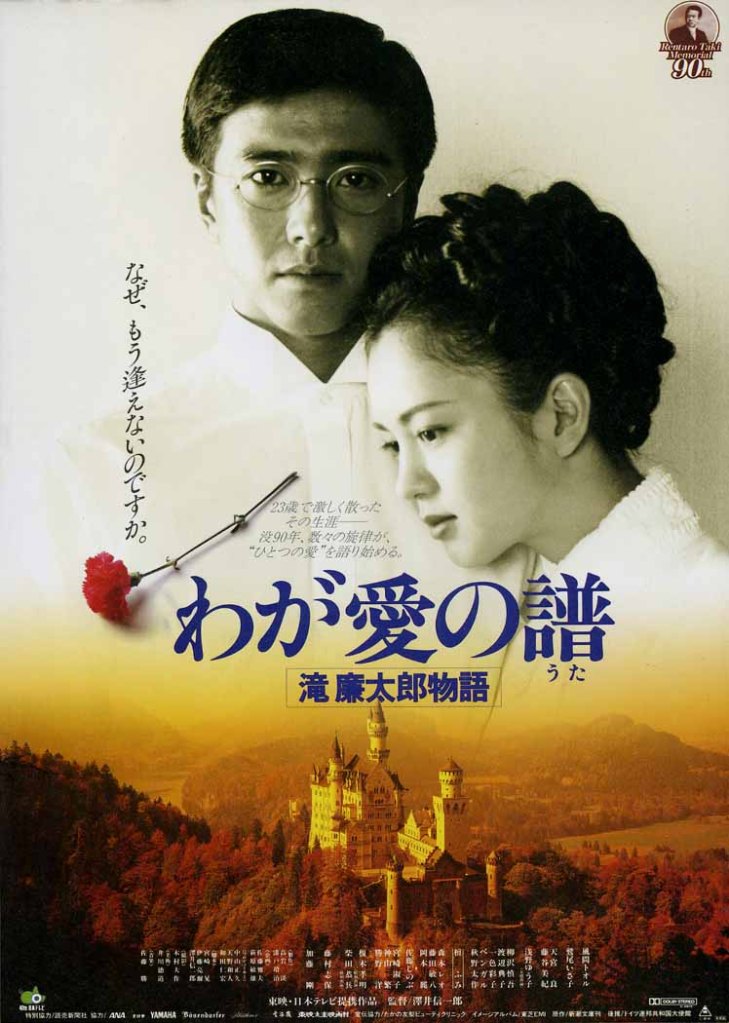 All those songs and rhymes you learnt as a child, somehow it’s strange to think that someone must have written them once, they seem to just exist independently. In Japan, the name behind many of these familiar tunes is Rentaro Taki – the first composer to set Japanese lyrics to European style “classical” music. It’s important to remember that even classical music was once contemporary, and along with the opening up of the nation during the Meiji era came a desire to engage with the “high culture” of other developed nations. The Tokyo Music School was founded in 1887 and Taki graduated from it just four years later in 1901. However, his career was to be a short one as his health gradually declined until he passed away of tuberculosis at just 23 years old. Bloom in the Moonlight (わが愛の譜 滝廉太郎物語, Waga Ai no Uta: Taki Rentaro Monogatari), also the title of one of his most well known and poignant songs, is the story of his musical career but also of the history of early classic music in Japan as the country found itself in a moment of extreme cultural shift.
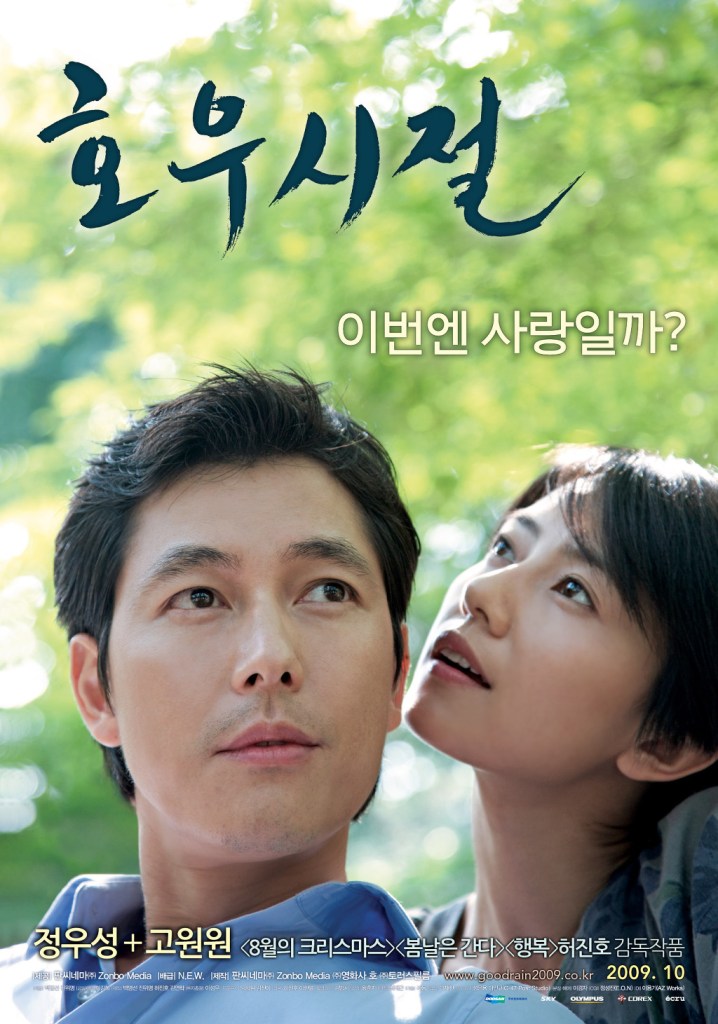 Hur Jin-ho’s A Good Rain Knows (호우시절, Howoosijeol) was originally developed as a short intended to form part of the China/Korea collaborative omnibus film Chengdu, I Love You which was created as a tribute to the area following the devastating 2008 earthquake. However, Hur came to the conclusion that his tale of modern day cross cultural romance required more scope than the tripartite omnibus structure would allow and decided to go solo (Chengdu, I Love You was later released with just Fruit Chan and Cui Jian’s efforts alone). Very much Korean in terms of tone and structure, Hur uses his central love story to explore the effects time, memory, culture, and personal trauma on the lives of everyday people.
 Sometimes love makes you do crazy things. Some people find themselves accomplishing previously unattainable feats powered only by the sheer force of romance. Unfortunately for the hero of Swimming Upstream (バタアシ金魚, Bataashi Kingyo), Joji’s Matsuoka’s adaptation of Minetaro Mochizuki’s manga, the task he sets for himself is a very lofty one indeed and may actually require him to abandon his love to complete it. Then again, the object of his affections shows little signs of reciprocation in any case.
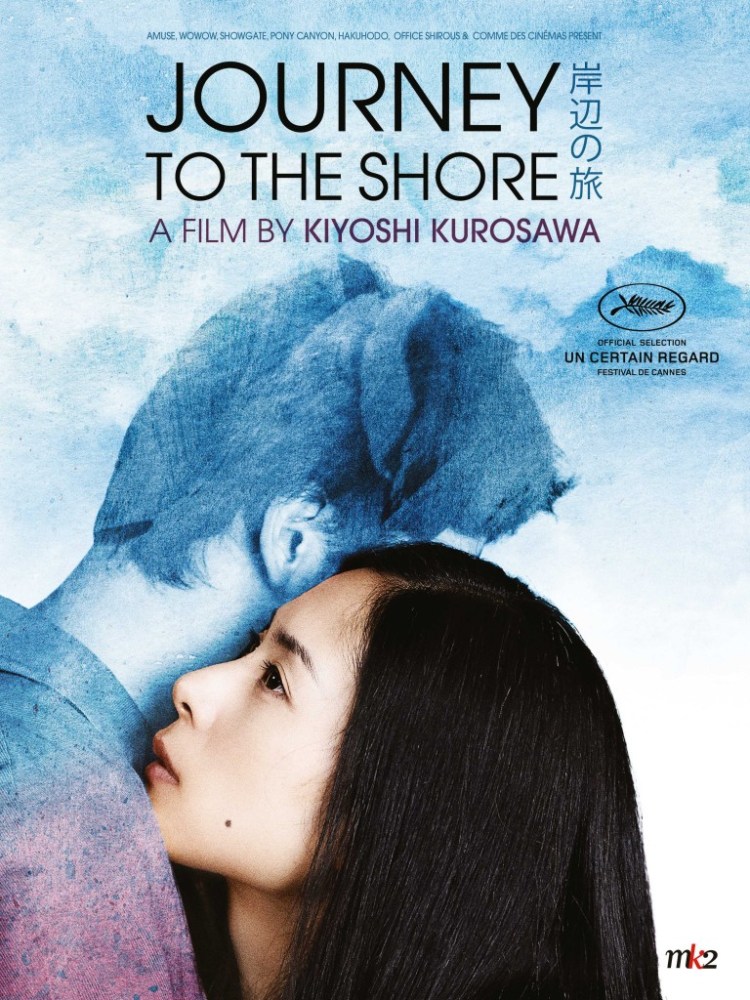 Time is an ocean, but it ends at the shore. Kiyoshi Kurosawa neatly reverses Dylan’s poetic phrasing as his shoreline is less a place of endings but of beginnings or at least a representation of the idea that every beginning is born from the death of that which preceded it. Adapted from a novel by Kazumi Yumoto, Journey to the Shore (岸辺の旅, Kishibe no Tabi) takes its grief stricken, walking dead heroine on a long journey of the soul until she can finally put to rest a series of wandering ghosts and begin to live once again, albeit at her own tempo.
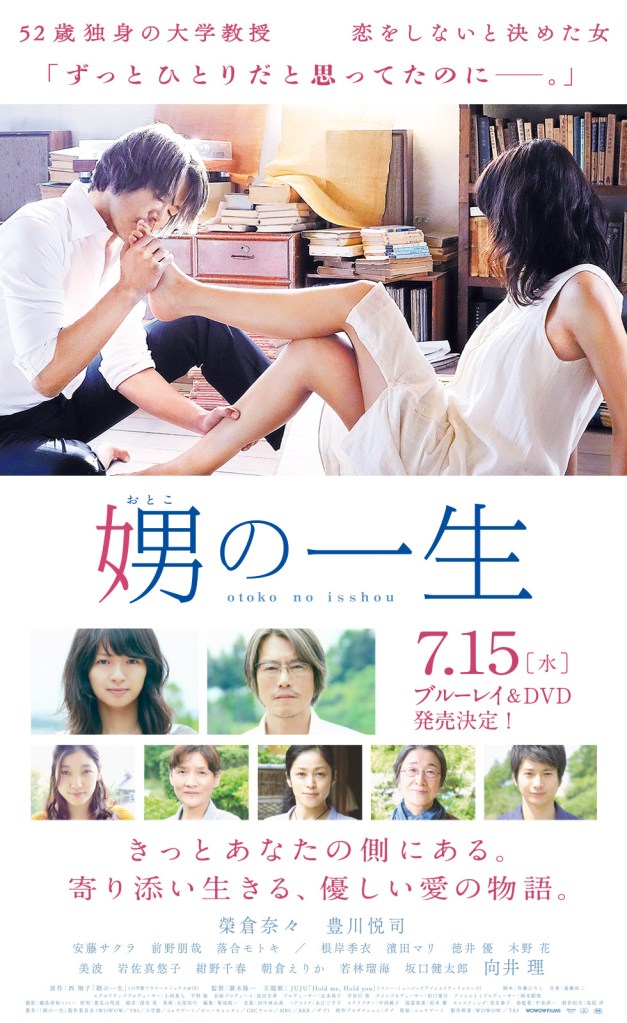 Ryuichi Hiroki has one of the most varied back catalogues of any Japanese director currently working. After getting his start in pink films and then moving into V-Cinema, Hiroki came to prominence with 2003’s Vibrator – an erotically charged exploration of modern alienation, but recent years have also proved him adept at gentle character drama. Her Granddaughter (娚の一生, Otoko no Isshou), though coming with its own degree of strangeness, is another venture into the world of peaceful, if complicated, adult romance.
 Sometimes God’s comic timing is impeccable. You might hear it said that love transcends death, becomes an eternal force all of its own, but the “love story”, if you can call it that, of the two characters at the centre of Song Hae-sung’s Failan (파이란, Pairan), who, by the way, never actually meet, occurs entirely in the wrong order. It’s one thing to fall in love in a whirlwind only to have that love cruelly snatched away by death what feels like only moments later, but to fall in love with a woman already dead? Fate can be a cruel master.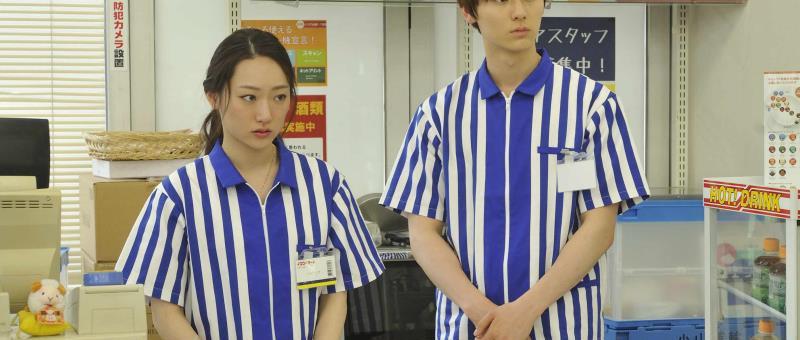
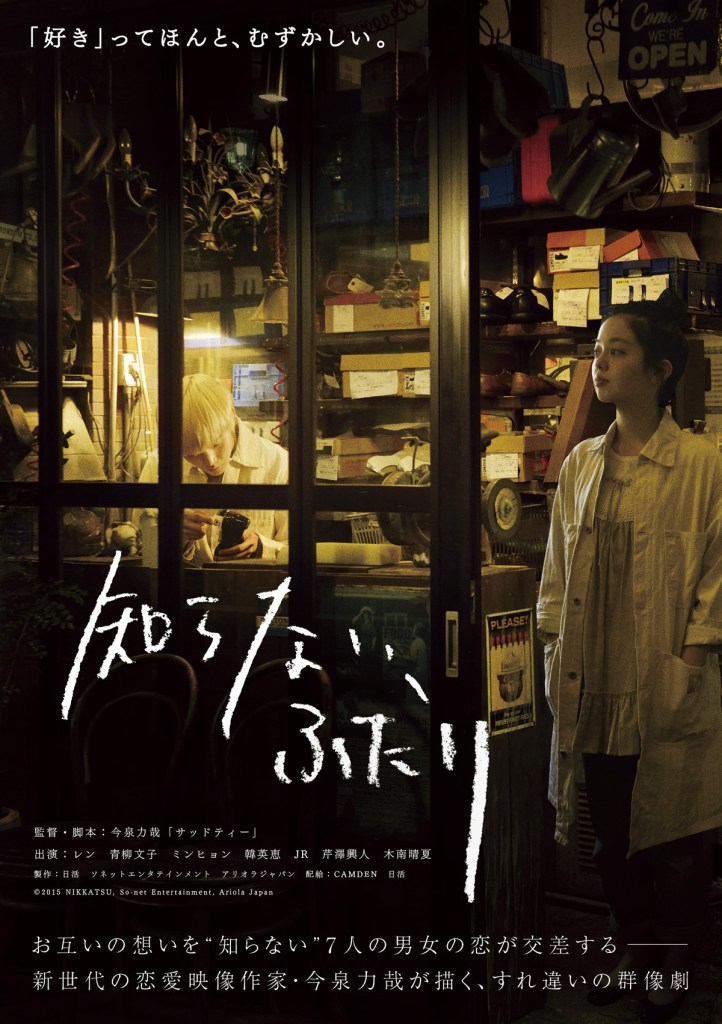 Ah young love! So beautiful, so complicated, so retrospectively trivial. Intrigue engulfs a group of young Koreans living in Japan, their co-workers, and even their English teacher and her fiancee in Rikiya Imaizumi’s indie youth meets boyband quirky romance movie, Their Distance (知らない、ふたり, Shiranai Futari). The aptly named picture paints a vista of misdirected love, miscommunication and misjudged honesty to show how messy romance can be even when it’s intent on being cute.
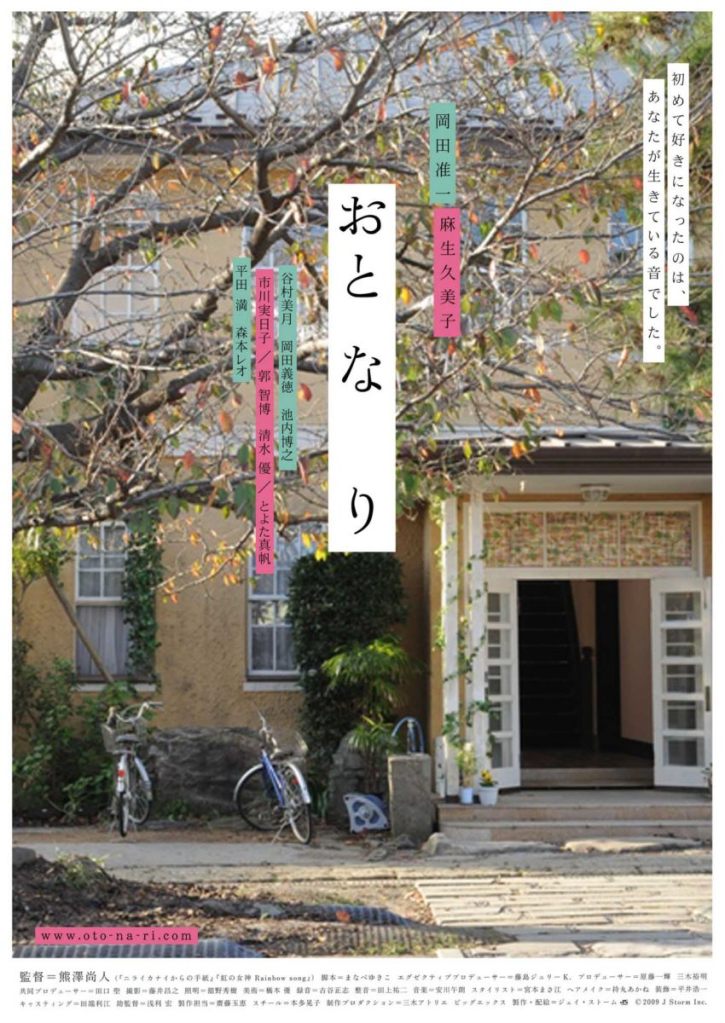 Sometimes when you live in the city it’s difficult to build meaningful connections with other people. You might find yourself a little lost, caught between the rat race and what it was that brought you to the city in the first place, but if you just close your eyes and listen, you can hear that you’re not alone. Romantic Prelude (おと・な・り, Oto-na-ri) is the story of two such people who build up a strange connection even though they’ve never really met.
 Just look at at that title for a second, would you? Crying Out Love, in the Center of the World, you’d be hard pressed to find a more poetically titled film even given Japan’s fairly abstract titling system. All the pain and rage and sorrow of youth seem to be penned up inside it waiting to burst forth. As you might expect, the film is part of the “Jun ai” or pure love genre and focusses on the doomed love story between an ordinary teenage boy and a dying girl. Their tragic romance may actually only occupy a few weeks, from early summer to late autumn, but its intensity casts a shadow across the rest of the boy’s life.
 Windows on Worlds