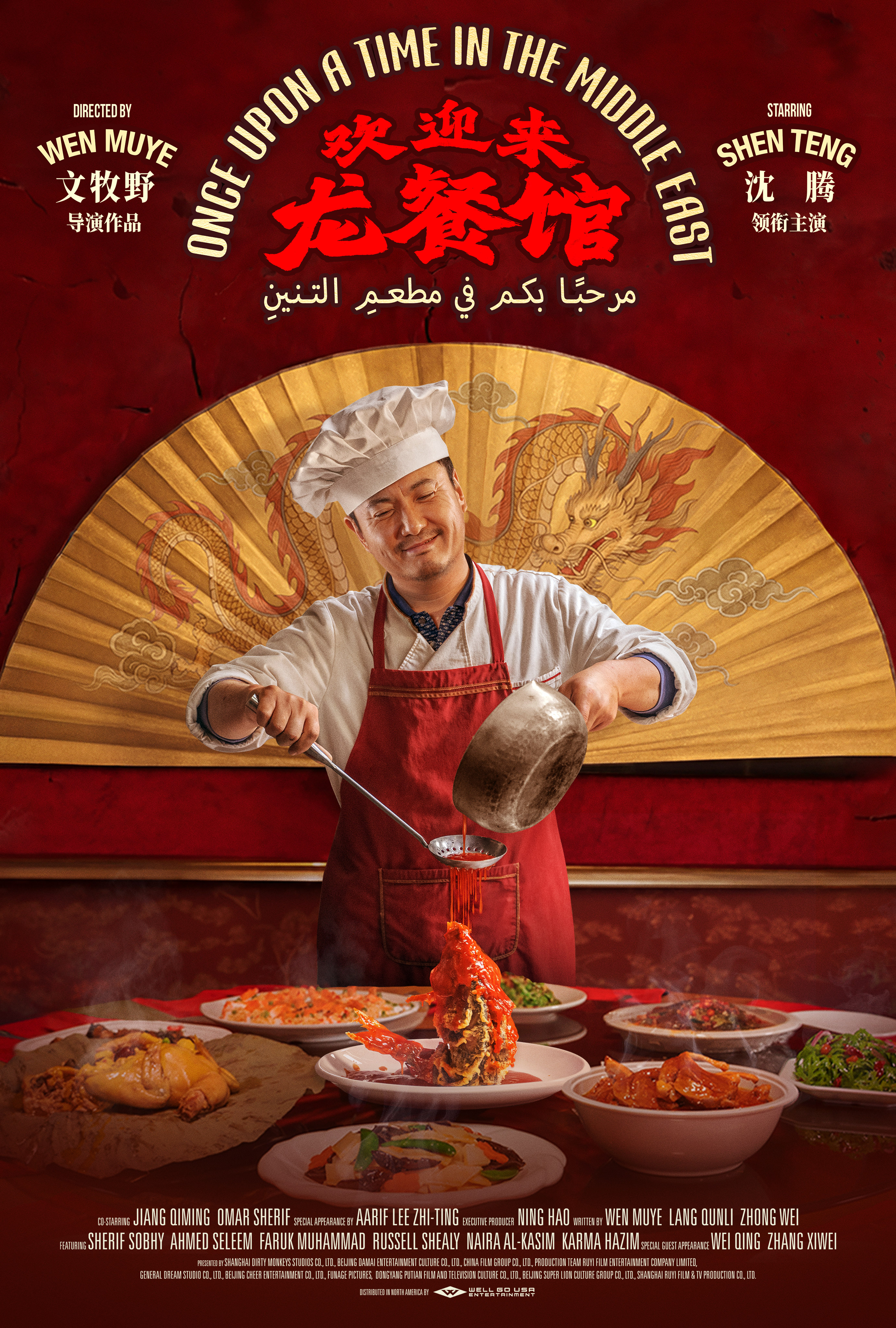
Culinary comedies are a staple of the Chinese holiday movie which often revolve around the importance of family and the bonds that can be generated through the sharing of a meal. FunAge is similarly known for zany comedies, though their output has become a little more serious of late. In Once Upon a Time in the Middle East (欢迎来龙餐馆, Huānyíng lái Lóng Cānguǎn), Wen Muye subverts many of these conventions in marketing the movie as a fish-out-of-water comedy starring comic actor Shen Teng as a debt-ridden chef who takes a job in the Middle East in the early 2000s for the high pay, only to suddenly plunge him into a war zone.
One can open a mouth with a spoon as well a gun, Xu Fu (Shen Teng) later reflects having reaffirmed for himself that the most important things in life are good food and raising children well. The irony is that on being introduced to Zaid (Sherif Sobhy), a civil servant and owner of Loong Restaurant where Xu is to be employed, Xu is told that his food does suit the local tastes, but he insists on cooking authentic Chinese cuisine rather Chinese-American fusion food. He says he’ll walk if he’s asked to cook bowdlerised dishes like General Tso’s Chicken, but is later forced to do so to curry favour with an American officer, having been incarcerated in a military prison after being accused of being party to an act of terrorism.
The early part of the film is indeed fiercely critical of the Americans whose involvement in the Middle East is depicted as a thinly veiled war of aggression for imperial conquest mitigated as an act of revenge. Political figures are seen on television making ultimatums about regime change before the tanks start rolling in, while the American soldiers act with undue brutality and entitlement. They insist that the children Xu takes in after their orphanage is bombed are all terrorists or soon will be, and therefore fair game targets that should be neutralised to stop the spread of violence. But it’s clear that the War on Terror is simply breeding more “terrorists” as orphaned children are radicalised and exploited by extremists who recruit them as child soldiers and later force them to become suicide bombers without their knowledge or consent.
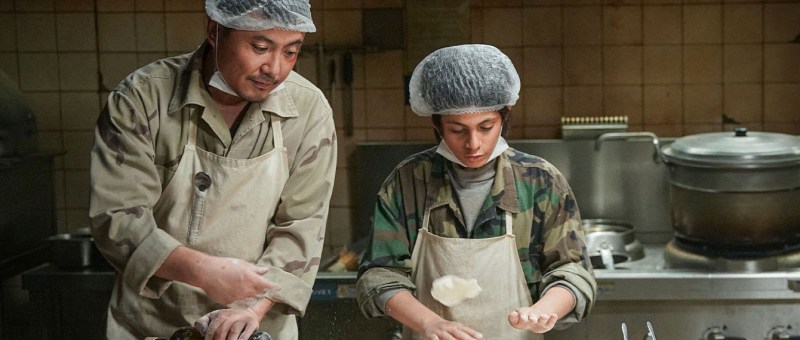
Xu, by contrast, takes a local boy under his wing and attempts to train him as a chef as a means of pulling him away from the destructive desire for vengeance. The ideological conflict plays out in the heart of Saif (Omar Sherif) as he’s pulled between the fatherly influence of Xu and that of the extremists who sell stories of glorious battles, but in reality send children out to die. Xu hopes that by training Saif as a chef, he can prevent him from becoming radicalised and prepare him for the world to come after the war, but finds himself frustrated by the circumstances that surround him. Meanwhile, he too is corrupted by the promise of wealth that can come with war by setting up a side business smuggling alcohol into this country where drinking is forbidden in order to sell to American servicemen and later turning the restaurant into a kind of speak easy for foreigners remaining in the war-torn city.
After challenging an American soldier who complained about his circumstances that it is largely their own fault for waging this war, Xu has to admit that he has profited from it and is only able to make this kind of money because of the conflict. As an older man, he admits he stayed too long because he got greedy, preferring to stay and make more money long after paying off his debts. He often says that this war is nothing to do with him, though as he’s later questioned, if his partner was involved in terrorism and his friend was the victim, he can’t really claim not to be involved which seems like a fairly subversive comment on China’s business and foreign policy. Nevertheless, the film ends with a reminder that China is working with other nations to enact the UN Convention on the Human Rights of the Child, while it is children who are the primary victims of war.
Xu becomes friends with a Chinese-American soldier of Malaysian-Chinese heritage (Aarif Rahman) who is conflicted about the war which is not really anything to do with him personally, just as it’s nothing to with Xu, the children, or even really Zaid who is forced to buy cancer drugs from an American serviceman who is exploiting him financially while claiming that he just wants to help him save his little girl. They’re all at the mercy of wider geopolitical machinations that set people who once got along peacefully against each other. Though the film may in some senses have a strong “we were never friends” mentality echoing that of Dead to Rights and suggesting once again that Chinese citizens are only safe in China, it does also make the case for a more positive path to better global relations through friendly cultural exchange as evidenced by the fusion food that Xu creates in the most difficult of circumstances which seems to have sustained those he left behind to make better futures for themselves away from hate and violence.
Once Upon a Time in the Middle East is in US and Canadian cinemas now courtesy of Well Go USA.
Trailer (English subtitles)

