Memoir of Japanese Assassinations (日本暗殺秘録, Sadao Nakajima, 1969)

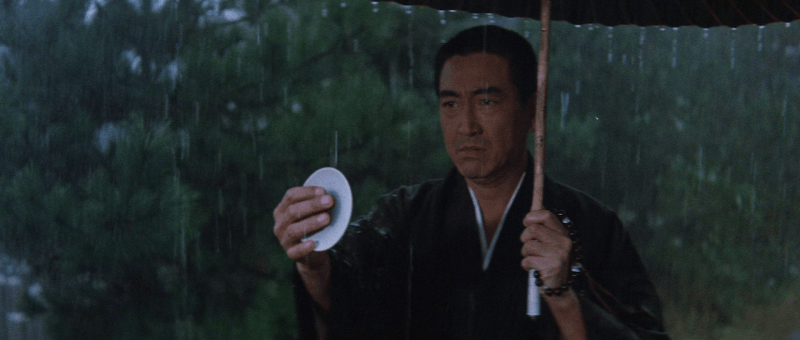
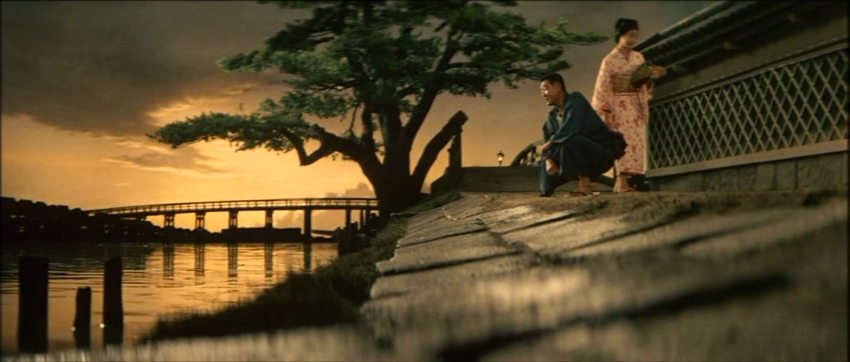
According to the narrator of Sadao Nakajima’s artistically daring Memoir of Japanese Assassins (日本暗殺秘録, Nihon ansatsu hiroku) the practice of assassination had got so out of hand in the early years of Meiji that the emperor was forced to institute a law banning it while accepting responsibility for the lawlessness his imperfect governance had produced. But by opening with the Sakurada Gate Indecent from 1860, the film seems to be asking what went wrong in Meiji and why the assassinations have still not stopped with the implication that more may be on their way in rather febrile political atmosphere of the late 1960s in the run up to the renewal of the Anpo security treaty with Asama Sanso still a few years away.

The answer to the question that it presents, is that oppression has still not ended in Japan and that most of these assassinations took place because people had enough of difficult social conditions those in power little did to address. However, the first few pre-20th century  assassinations which are presented in the form of short vignettes, are largely a product of the confusion of the bakumatsu era as reactionaries attempt to halt Japan’s increasing openness to the wider world and what they see as a loss of national identity and sovereignty. The implication is that this sense of ideological conflict is a direct cause of the nationalism that defined the first half of the 20th century. 

It’s not until we reach the early 1920s that the secondary cause of Japan’s dire economic situation rears its head as the right-wing nationalist leader of Righteousness Corps of the Divine Land (Bunta Sugawara), a society dedicated to workers’ rights, assassinates the head of a family-run conglomerate he accuses of feeding on the blood on the common man. From this incident we can see that it is not as easy to draw a line between left and right in terms of political ideology as it might be at other times or in other nations as otherwise nationalist forces share ideas that might lean more towards socialist ideals. Ikki Kita whose philosophy informed the February 26th Incident that ends the film described himself as socialist, but is also regarded by some as the architect of Japanese fascism. With the so-called “Showa Restoration”, he advocated for the elimination of private property and a doctrine of socialism from above in which the emperor would assist in the reorganisation of society. Which is to say, the clarification of the Meiji Restoration actually meant.

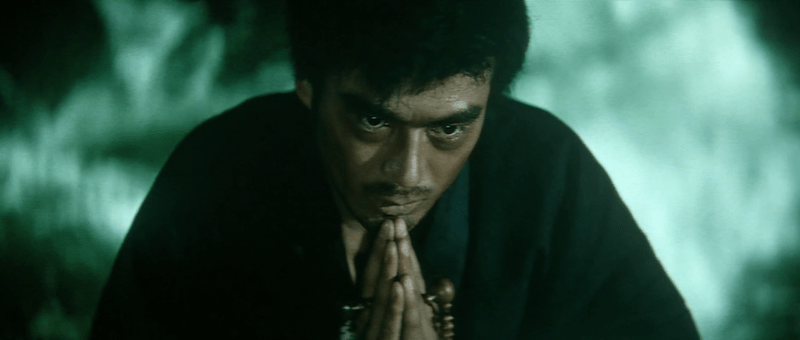
In any case, it’s easy to see the reasons that these ideas caught hold and that concepts such as “revolution” were a counter to the persistent hopelessness of the depression and the extreme poverty of Japanese society while the large conglomerates prospered through trading with the United States. The bulk of the film focuses on Onuma who assassinated Junnosuke Inoue in 1932 as part of an intended reign of terror known as the League of Blood instituted by the far right Nichizen Buddhism cult led by Nissho Inoue (Chiezo Kataoka),. Onuma was still alive at the time the film was made and apparently acted as a consultant. Played by a fresh-faced Shinichi Chiba, he’s depicted as an earnest young man who is driven into the ground by the increasingly capitalist mentality of the 1920s, a time of high unemployment and frequent labour disputes only exacerbated by the Great Depression. 

Though he had been a bright and attentive student, Onuma was forced to leave education because of his father’s early death and thereafter worked a series of causal jobs before leaving a position at a kimono dyers because of their callous treatment of another employee who was forced to embezzle money because his mother was ill and he was denied a loan by the boss who justifies his position by stating that he’s already given the man several advances on his salary. Onuma’s brother also resigned from his job to take responsibility for failing to spot someone else’s embezzlement, leading Onuma to conclude that being honest gets you nowhere in this morally corrupt society. This is rammed home for him at his next job at a cake baker’s where he becomes almost part of the family and draws closer to the maid, Takako (Junko Fuji). The boss intends to rapidly expand the business by building a bigger factory hoping to capitalise on the coronation of the new emperor. Staking everything on the factory, he takes out loans from loan sharks but fails to get a business permit from the police later remarking that he was naive thinking he could do business honestly not realising that the police expected a bribe.

Tuberculosis and the death of a girl who like him could not afford medical treatment further leave Onuma feeling resentful and hopeless leading to a suicide attempt after which he is born again in Nichiren Buddhism and becomes a servant to Nissho. It’s easy to see how Nichiren could offer an escape to young men like him who burn with rage and a desire to change society, though in essence it’s no different from the militarism that was growing in parallel being rooted in nationalist ideology and for the early part at least centred in the military. The May 15 Incident saw the military and members of the League of Blood assassinate the prime minister to enact the Showa Restoration and reorganise society. The revolution failed, but the 11 young officers who took part in received little punishment, furthering cause of the militarism, while directly contributing to the February 26th Incident which though it also achieved little further cemented the power of the military over the government. 

Though imperialism is subtly presented as another form of injustice as the nation spends money on warmongering while the people starve, the film straddles an awkward line in struggling to avoid glorifying the actions of the far right in painting Onuma and leader of the February 26th Incident Isobe (Koji Tsuruta) as dashing, idealistic heroes whose only wish was to save Japan and remake it in a way they believed to be better. This was pretty much the antithesis of what Nakajima intended, though it was picked up by some as a piece of right-wing propaganda. The film courted controversy both with Toei studio bosses and the government who ordered Nakajima to soften the excerpts from Isobe’s diary fearing they were too incendiary, though Nakajima had already shot the footage and was forced to find a compromise. Toei as a studio did rather lean towards the conservative and especially in its yakuza films which is perhaps unavoidable given that yakuza organisation did often have strongly nationalistic sensibilities. Accordingly, the film stars almost their entire roster of Toei’s yakuza and ninkyo eiga stars from Tomisaburo Wakayama to Ken Takakura and Koji Tsuruta along with Junko Fuji as as Onuma’s love interest who is eventually forced into sex work because of the economic conditions of the 1920s, and perhaps comes with some of that baggage. Its closing question, however, given the fact that all these assignations achieved almost nothing of what they were intended to, seems to be posited at the current society mired in the Anpo protests and the declining student movement to ask how else society might be changed and revolution enacted to create a fairer society for all through an ideology that could end this cycle of political violence.


Classmates (あゝ同期の桜, Sadao Nakajima, 1967)

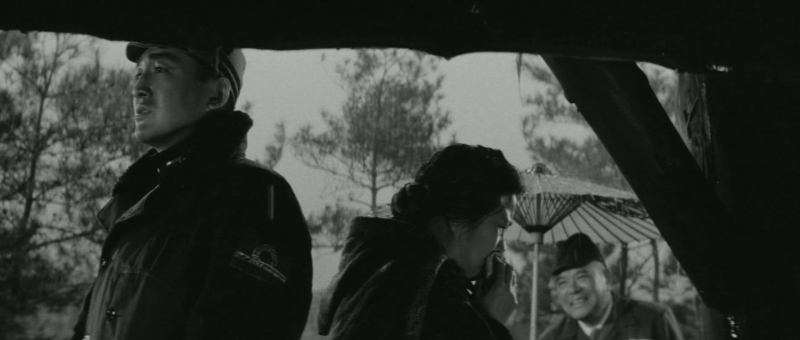
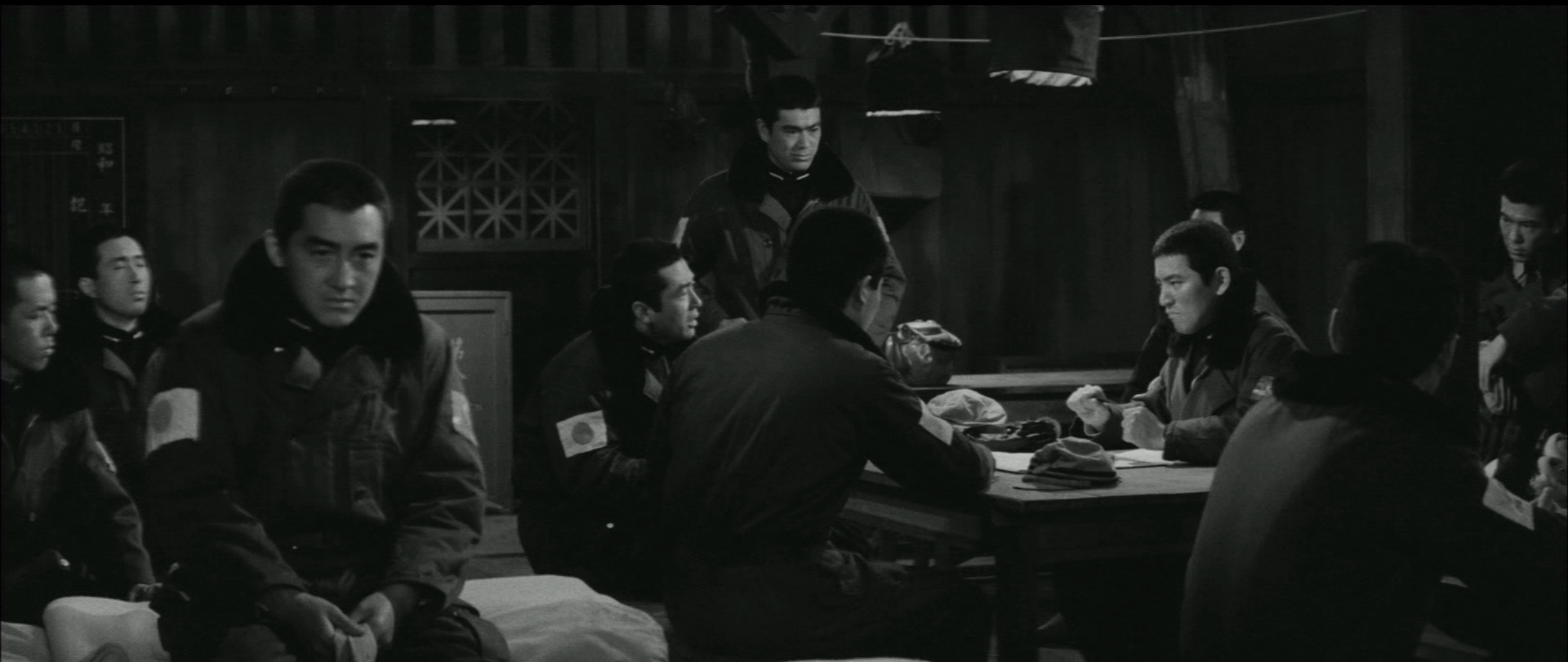
There had been films that dealt with the war before, but it was really with the generational shift that occurred among filmmakers in the mid-1960s that there was a greater willingness to reckon with the wartime past. Sadao Nakajima’s Classmates (あゝ同期の桜, Aa Doki no Sakura) was the first in a planned trilogy of war films at Toei, which was in other ways a studio that often leaned towards the right with its steady output of yakuza films, and most likely for that reason struggled to gain approval from studio heads. Taking its name from the military academy song, the film was inspired by a collection of essays put together from the letters and diaries kamikaze pilots had left behind. Nakajima had seen some of the letters sent back by the brother of a school friend, and reading them again on publication was determined to turn them into the film.

Nevertheless, only 25 years on from the end of the war it remained a sensitive topic. The film follows the men of the 14th class of reserve students who had previously had their draft notices deferred until they finished university but were now called up early because the war was going so badly. The majority of these men were allocated to kamikaze units and subsequently died in suicide attacks on US warships, though they received little in the way of training and mostly failed to hit their targets due to having limited fight experience. 

What might seem most surprising is that several of the men voice their opposition to the war along with the realisation that Japan is going to lose. Early on in training, one man deserts but the others are reminded that to do so amounts to treason and once caught, deserters will be executed by firing squad. This turns out not quite to be the case. Shiratori (Hiroki Matsukata), the resigned hero, encounters Taki (Mitsuki Kanemitsu) in Okinawa. where he’s working as ground staff. He’s insensible and appears to have lost his mind. The man working with him suggests that he was tortured so badly that it’s left him in a vacant state, though he’s still deployed for mindless tasks because they just don’t have the manpower.

Part of the reason for that is that they keep ordering people to die in a validation of the death cult that is militarism. On their arrival, the instructor tells the men he will have them all die, because dying for the emperor is their duty and destiny. The top brass insist this is the only way to win the war even though it’s counterproductive in that they’re running out of aircraft and skilled pilots even if one officer callously remarks that they have an endless supply of bodies. There’s also no real reason to send the planes up with two pilots as opposed to one, but they leave fully manned. The suicide missions are supposedly “voluntary”, but the men can’t really refuse due to a combination of peer pressure and military order.

When one pilot, Nanjo (Isao Natsuyagi), returns to base having been unable to reach his target, he’s immediately set upon by the others as a coward and a traitor. They accuse him of being afraid to die, leaving him feeling ashamed and frustrated by a sense of injustice while admitting that he didn’t want to die like a dog. He knows that he would not be able to go on living afterwards if he simply didn’t go through with it because the stigma of being a coward who let other men die so he could live would always be upon him. Eventually, he becomes so determined to prove himself that he insists on getting right back in his plane once it’s repaired and then blows himself up on the runway to prove a point.

Nanjo’s case is all the more poignant because he was a new father whose son was born after he was called up. He appears to have married quickly against his parents’ wishes and is now anxious that his family won’t accept his wife and child who will be left alone when he dies. His wife (Yoshiko Sakuma) desperately tries to see him to show him the baby, but manages only a few seconds before he’s forced to return to the barracks. Given a little more time, she brings a wedding dress for the impromptu ceremony they presumably skipped before, but ends up tearing it and giving Nanjo a strip as a kind of good-luck charm though like everything else it’s a gesture filled with futility.

It’s this sense of futility and resignation that seems to overtake Shiratori who knows he cannot escape his fate. To desert to is be killed anyway or to experience a spiritual death like Taki. He had introduced a friend, Hanzawa (Shinichi Chiba), to his sister and the two had become close, but he is forced to abruptly break up with her because he knows it’s unfair to string her along when he’s been sentenced to death. Reiko (Sumiko Fuji) will lose her brother and her boyfriend on the same day. Hanzawa and the other men visit a brothel on the night before their mission where they are treated as “gods”, though he sees only irony in the situation in which they are more like human sacrifices offered in prayer for an impossible victory. Their deaths will have no real meaning and are really only intended to instil fear in the enemy and weaken their morale rather than cause actual material damage to their fighting capability. Making use of stock footage, Nakajima freeze frames a plane in flight and points out at that point the men inside were still alive before cutting to a title card confirming the war ended just four months later. The title card at the beginning dedicated the film to the souls of those who died in the Pacific War, though it’s perhaps as quietly angry as it was permitted to be in 1967 in the senseless sacrifice of these men’s lives who were shamed, tricked, or forced at gunpoint into their cockpits and told they were disposable while those who stayed on the ground cheered and whooped at the grim spectacle of death.


Sweet Rain: Accuracy of Death (Sweet Rain: 死神の精度, Masaya Kakehi, 2008)

“What do you think about death?” a charming grim reaper awkwardly asks, seemingly taking into account the answers given when deciding whether his “subject” should survive or if the untimely death they’re about to meet should be final. Adapted from the novel by Kotaro Isaka, Masaya Kakehi’s Sweet Rain: Accuracy of Death (Sweet Rain: 死神の精度, Sweet Rain: Shinigami no Seido) contemplates what it means to live well, how to go on living in the midst of pain and suffering, and finally how to know when it’s time to accept the finality of death. 

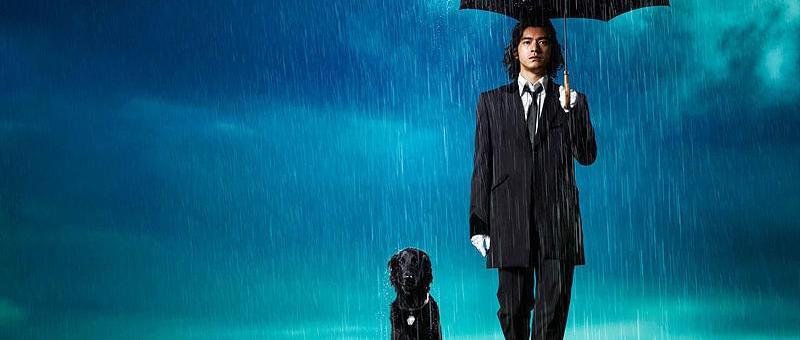
Chiba (Takeshi Kaneshiro) is a grim reaper and it’s his job to decide whether those involved in unexpected deaths, those not due to old age, illness, or suicide, should be allowed to live. According to his partner, who appears alternately as a black dog or raven, Chiba always chooses to “proceed” but something is obviously a little different with his latest job monitoring customer services representative Kazue (Manami Konishi) in the seven days leading up to her demise. Kazue is currently being harassed by a repeat caller who keeps calling the helpline asking for her personally and has recently graduated to pestering her about meeting up in person. It’s easy to see which way this could go, though luckily for her she ends up meeting Chiba who acts as a kind of protector when she’s hassled yet again by a different set of creeps in a park. As he gets to know her, Chiba learns of Kazue’s loneliness and sense of despair having endured more than her fair share of loss which has convinced her that everyone around her dies and she’s destined to be alone. But whether down to Chiba’s interference or otherwise, a surprising twist sees her offered a gig as a top idol star, leading Chiba to conclude that she has not yet fulfilled her purpose and should be granted more time. 

The expected romance does not quite take place, though Chiba is indeed becoming more interested in human life along with death while fascinated by music which he describes as humanity’s greatest invention. As we gradually gather, Chiba’s three jobs occur at lengthy temporal intervals, though the music store he frequents appears to be a constant and almost unchanged. Bar a hyper-realistic humanoid robot appearing in the final section in which Chiba is sent to assess an elderly hairdresser (Sumiko Fuji), these different temporal spaces are in another sense an extension of the present in which technology does not otherwise change substantially. Chiba picks up an iPod belonging to a petty yakuza on job two but continues to listen to CDs while the hairdresser seems to be doing her job the old-fashioned way and the kids that come to her store all collect Pokémon/Top Trumps-style paper cards. 

Yet Chiba is also a fish out of water, constantly confused by contemporary slang and with a strong tendency towards taking things literally. His discombobulation with language and custom is perhaps enhanced by the casting of Takeshi Kaneshiro who is half-Taiwanese and grew up in Taiwan speaking Mandarin as his first language, later working predominantly in Chinese-language cinema. In the audience perception he carries with him a quality of otherness that adds to the ethereality of his existence as a grim reaper. His appearance changes with each of his subjects, firstly appearing as a handsome young man, then as a grizzled yakuza complete with sunshades, and finally as a slacker student with each of his portals mirroring his destination from telephone booths to emergency exits and shopfront doors. As a grim reaper he has long unruly hair and wears a suit a loosened tie, but perhaps has little identity of his own and laments that he has never seen a blue sky because it is always raining whenever he is in the mortal world.  

The rain might well symbolise the pain and suffering around him as he lives among those who are about to die, but he himself feels that death is nothing special. As the old lady points out, that might be because it’s all he sees, he never visits people while they’re alive and knows nothing of life nor what it is to leave it. The old lady too experienced a lot of loss in her life and came to the conclusion that she was in some way cursed, severing her connection with those she truly loved believing she could only bring them harm and choosing to live all alone. “The sun in the sky’s nothing unusual but it’s important that it be there,” she adds, “death’s like that, maybe”. In any case she seems to have lived a long life that was happy enough even if it was “nothing special” and she can die with no regrets while Chiba too begins to learn something of the world’s ordinary beauty in his first glimpse of a sunny sky even if one overshadowed by the spectre of death. 


Trailer (no subtitles)

Big Time Gambling Boss (博奕打ち 総長賭博, Kosaku Yamashita, 1968)

A Shakespearean tragedy of blood and honour, Kosaku Yamashita’s Big Time Gambling Boss (博奕打ち 総長賭博, Bakuchiuci: Socho Tobaku) discovers only fatalism and futility in the nobility of the yakuza code. The tragedy is that at any moment anyone could make a free choice to walk away, to abandon these arbitrary notions that convince them they must kill their friends and let their enemies go free, but they don’t because spiritually they cannot. Abandoning the yakuza code would in its own way a kind of death and mentally unsurvivable. 

There is however a greater tragedy in play. The film opens in the spring of 1934 with a villain remarking that it’s absurd to restrict oneself to one’s home terrified while a sword and the Japanese flag appear behind him. The catalyst for all this drama is Japan’s imperialist expansion. Yakuza fixer Senba (Nobuo Kaneko) and the shady Kawashima have hatched a plan to get all the yakuza clans to unite in a “patriotic” mission to traffic drugs to the frontlines looting as they go. Noble boss of the Tenryu Awakawa refuses, reminding them he’s just a simple gambling man and has no desire to get involved with politics before collapsing with a stroke. With Awakara alive but bedridden and no longer able to communicate effectively, the Tenryu decide to nominate a successor. The ideal candidate, Nakai (Koji Tsuruta), declines the offer on the grounds that he is a transplant from another gang in Osaka and thinks it would be inappropriate for an outsider to lead the clan. He proposes that his sworn brother, Matsuda (Tomisaburo Wakayama), should be appointed, though he is currently surviving a prison sentence so a caretaker should serve in his stead until his release. Most think this sensible though the proposed caretaker, Ishido (Hiroshi Nawa), also declines given the rules of seniority despite the fact that he is Awakawa’s son-in-law and so dynastic succession would also seem permissible. 

It’s during all of this finagling that Senba begins manipulating events to his advantage, gently manoeuvring the other lieutenants towards accepting Ishido as the new boss while he has no idea he’s being used as a pawn in Senba’s nefarious nationalist plotting. When Matsuda is released early, the entire situation kicks into overdrive in his outrage that the codes of rank have not been respected and that a man who is his inferior now sits at the head of the clan in a place he think’s rightfully Nakai’s but in light of his honourable refusal no one’s but his own. Even Matsuda later recognises his hot-headed recklessness in directly challenging Ishido over his decision to accept, insisting that the proper thing to do in his position would have been to persuade Nakai to take the job. Meanwhile, his own righthand man who’d been slumming it as a mere labourer in his absence, is dragged into intrigue in foolishly defending his honour by recklessly attacking Ishido’s men incorrectly believing they had provoked another gang’s attack on Matsuda little knowing it was all part of Senba’s plot. 

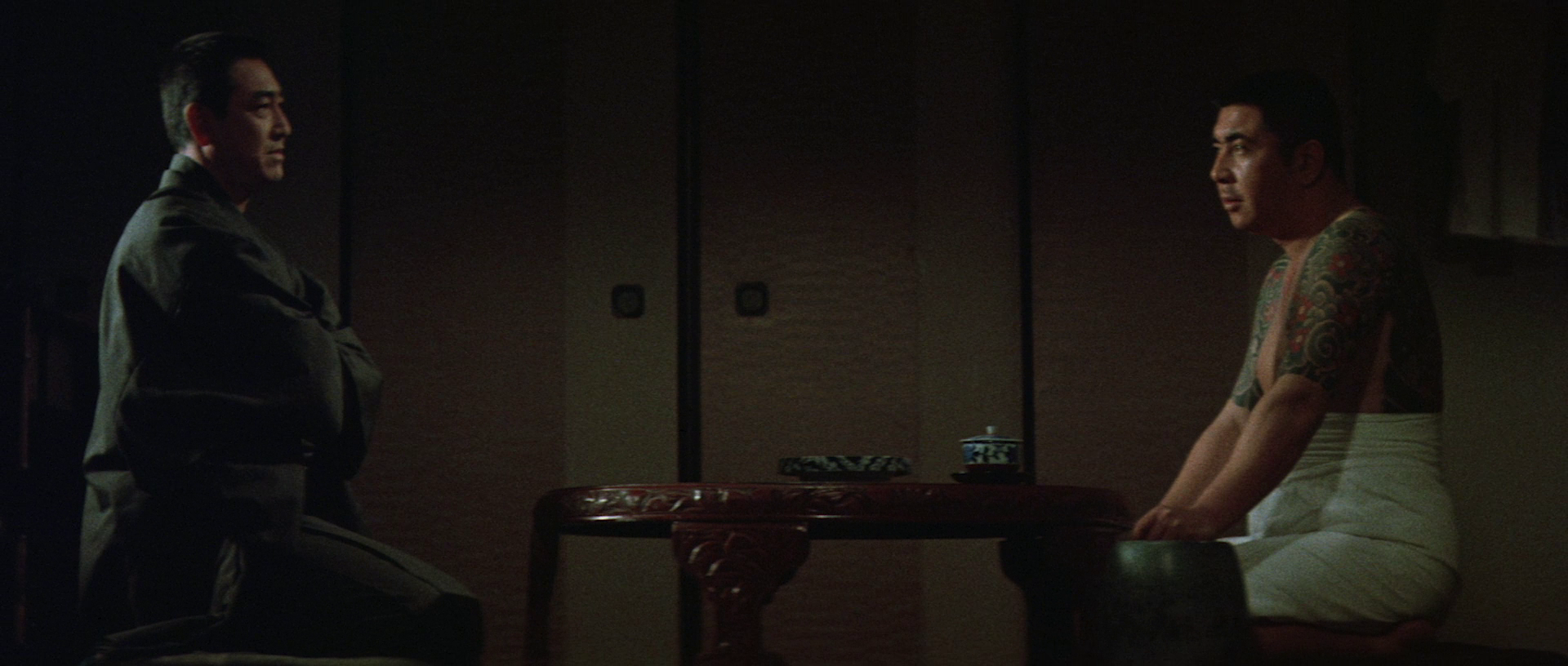
Nationalist trappings aside, Senba’s villainy is obvious from the moment he tells Nakai he thinks Matsuda was foolish for going to prison on the clan’s behalf and that he should have just found a scapegoat and put the blame on them, signalling himself a member of the new amoral yakuza who does not believe in giri and has no ninjo. Nakai rather is the opposite, as his old boss confirms in praising him for his correct decision to turn down the succession as it would not be right for him to accept as one who did not originate in their gang. Matsuda meanwhile pays too much attention to the letter of the code and not its spirit, obsessed with Ishido’s transgression and unable to let the matter drop to live a quiet life even as Nakai tries to convince him that the decision has been ratified by the lieutenants and the boss and so he must obey it. In a poignant moment, Nakai brings out the cup they used to seal their friendship and tells him that he will choose the clan, breaking the cup if Matsuda does not agree to accept a minimal degree of humiliation in returning with the intention of lying low and subtly reminding him that if he does not Matsuda will be placing a heavy burden on him that he may be forced to inflict lethal violence on his best friend and in fact brother-in-law. Realising the gravity of the situation, Matsuda immediately backs down, but events are now in motion that neither of them are capable of stopping. 

Of course, they could walk away but they don’t. Nakai offers the opportunity to Matsuda’s remorseful foot soldier Oto, telling him to leave the clan and take the woman he loves far away to live a peaceful life but of course he can’t because of his debt of loyalty to Matsuda. They are all trapped by the code which they follow and the villains ignore, laughing at them all the way. Then again, that’s what men like Nakai are for, born to set things right even if it comes at great personal cost. Even he finally snarls that he’s merely a murderer, rejecting any sense of honour in his actions while throwing a sword at the symbol of the system which has defined his life and submitting himself to the automatic operation of law of the state as a kind of martyr for system in which he may no longer believe. 


Trailer (English subtitles)

Wait and See (あ、春, Shinji Somai, 1998)

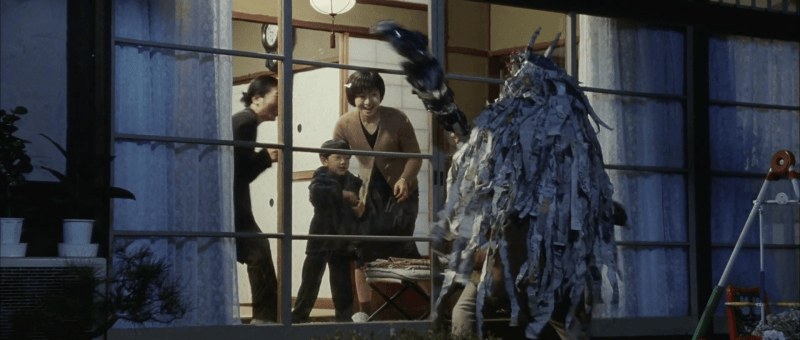
In the opening sequence of Shinji Somai’s Wait and See (あ、春,  Ah haru), a large grey cat growls as it creeps through a suburban home and out into the garden where it sits outside a henhouse and loudly miaows at the birds trapped inside. In many ways, this is exactly what’s about to happen to the Nirasakis when a prodigal father suddenly returns to disrupt the life of his incredibly dull and emotionally distant son. 

Hiroshi (Koichi Sato) is the epitome of the ideal salaryman and seems to be living a charmed life having married into his wife’s wealthy family but under the surface nothing is quite as it seems to be. His wife Mizuho (Yuki Saito) seems to be suffering with some kind of mental distress and Hiroshi often appears indifferent or even cold towards to her. At the memorial service for his late father-in-law, Mizuho’s mother (Shiho Fujimura) and aunt (Chisako Hara) reflect on the late patriarch in less than favourable terms remarking that “everything was half measures” with him. He didn’t commit himself fully to either his family or his career and consequently achieved success with neither. 

The implication is that Hiroshi is much the same, simply going through the motions whether at work or at home and largely closed off to his wife at one point even drawing a curtain and leaving her in the dark to escape a conversation. “He never tells you anything” Mizuho’s mother points out after reading in the paper that the company where Hiroshi works may be in financial trouble, while Mizuho too complains that he never discusses anything with her only announcing the results when it’s already finished. 

Hiroshi had always believed his own father to have died when he was five years old, so it’s quite a surprise when the gnomish Sasaichi (Tsutomu Yamazaki) accosts him in the street and claims to be his long lost dad. Like the cat outside the henhouse, he’s set to create a disturbance but not quite the one everyone assumes it will be. Hiroshi’s mother Kimiyo (Sumiko Fuji) warns him that his crass working class dad will only cause embarrassment in the refined elegance of the upper-middle-class family he has married into. Yet Mizuho and her mother actually find Sasaichi quite amusing for the first couple of days, the mother very impressed by Sasaichi’s unreconstructed manliness which she finds so in contrast to the comparatively meek Hiroshi. Sasaichi fixes the leaky bath and sticking door that Hiroshi never got round to symbolising his lack of regard and inability to care for his home, which is in a sense ironic because Sasaichi was never really able to take care of anything. 

Sasaichi later explains that he left because his business failed and he ended up with debts to loansharks so he divorced Kimiyo and moved away to prevent them coming after her money. A fatherless son, Hiroshi struggles to construct the image of himself as a father and cannot create intimate relationships with people, but has settled for fulfilling the role of a successful member of society who can support a family financially even though the sense of himself as a provider is an illusion as his wife’s generational wealth already guarantees them a comfortable existence. Even so, this being the difficult post-bubble economy Hiroshi lives with a sense of economic anxiety but buries his head in the sand refusing to listen to a more savvy friend who can see the writing on the wall and tries to convince him to take a job at another company where he’s just secured a position for himself. But Hiroshi is afraid of change and ironically clings fast to his corporate family even while fearing it will leave him. 

He desperately doesn’t want to think that he is like Sasaichi, that he may fail his family by failing in his career or that he too is an uncouth, unrefined country bumpkin incapable of taking care of himself let alone anyone else. The again perhaps they’re more alike that he’d like to think. Hiroshi and Mizuho object when they realise Sasaichi’s been teaching their son Mitsuru (Keita Okada) how to play craps, but as his friend points out stockbroking is also really just legitimised high stakes gambling. He too wanders around until late at night because he doesn’t want to go home and makes his wife worry so she has to take sleeping pills .

Yet there’s also a side of him that is still the gentle boy from the country as he painstakingly raises chicks in the back garden. In the end, it’s Sasaichi who shows them the maternal warmth they need to grow, gestating the eggs in a pouch inside his haramaki only for them to hatch at the most ironic moment. Hiroshi gives his son a brief life lesson in explaining that the chicks that hatch from these eggs will go on to lay their own in a circular process of renewal just as he is passing on knowledge from his childhood to the next generation. The film begins and ends with a ritual of mourning, though Somai takes us through the passing season moving from Setsubun to Hinamatsuri as Sasaichi continues to outstay his welcome while attempting to repair his corrupted paternity. “Don’t worry, life will go on,” Mizuho reassures a more open Hiroshi finally coming to terms with his anxieties and willing to share them with his family in full knowledge of who he is as a man and a father in a world that’s anything but certain.


Original trailer (no subtitles)

Blood of Revenge (明治侠客伝 三代目襲名, Tai Kato, 1965)

An earnest yakuza trying to walk a more legitimate path faces off against a thuggish businessman in Tai Kato’s late-Meiji ninkyo eiga, Blood of Revenge (明治侠客伝 三代目襲名, Meiji kyokyakuden – Sandaime Shumei). Though set in the confusing world of 1907, Kato’s tale is in some ways not so different from contemporary gangster dramas in its suggestion that even in the early days of the 20th century the yakuza were already somewhat out of date while the fancy capitalist who calls them so is not so far off from the corporatised gangsters of the high prosperity era. 

Kato opens with a tense scene at a festival in which local boss Kiyatatsu is knifed by an impassive assailant who later claims to have been acting alone and that he did it to make a name for himself by stabbing a big time yakuza boss. Kiyatasu’s hot-headed son Haruo (Masahiko Tsugawa) suspects that rival businessman Hoshino (Minoru Oki) is somehow behind the attack but is talked out of a self-destructive bid for revenge as his father reminds him that they are “not a mob” but “honest businessmen” and acts of violence would impact their business negatively. 

Kiyatatsu may once have been a big time yakuza boss but it’s clear he’s made an attempt to go straight by founding a legitimate business that began trading lumber and now sells construction supplies that are helping to expand the rapidly modernising late-Meiji economy. He is closely involved with a construction project to introduce a modern water distribution system for the good of the people of Osaka organised by another former yakuza, Nomura (Tetsuro Tamba). Hoshino, who was indeed behind the attack and is secretly backed by his own band of mercenary yakuza, had Kiyatatsu knifed in the hope of getting his hands on the contract, later stooping to other dirty tricks such as ruining their cement supply so that he can swoop in with a special deal on his own.  

Just like yakuza, businessmen appear to have a code and letting personal feelings interfere with business is just as bad as letting ninjo get in the way of your giri. Hoshino is a bad yakuza in a business suit, his Western clothing just another symbol of his villainy. Kiyotatsu’s guys including noble retainer Asajiro (Koji Tsuruta) all wear kimono with the young son Haruo later shifting to a suit after taking over the business in a bid to appear less like a yakuza and more like a serious young professional. Though Hoshino sneers at Asajiro that yakuza are already out of date and that he hates their tendency to solve every problem through violence he is little more than a thug himself keeping a small band of yakuza onside to do his dirty work.

Yet there is something in what he says that the yakuza belong to an earlier age and are unable to travel into the new post-Meiji society men like Normura are building. Insiting that Japan must embrace international trade, Nomura builds piers as a kind of outreach to a new world and does so for the good of the people rather than himself, living up to an old yazkua ideal in trying to ensure prosperity for all. Kiyotatsu is already distancing himself from the gangster way of life, explaining to a travelling gambler to whom he grants hospitality that he does not allow gambling in his home and believes that modern gangsters should find new ways to live, but is constantly tarred by the yakuza brush unable to fully escape the legacy of his tattoos. When Asajiro is appointed the new head of the clan it comes as quite a shock to the young Haruo who is outraged having believed it was his birthright to succeed his father. Ever noble, Asajiro suggests that he succeed as the head of the clan and Haruo as the heir to the legitimate business saving him from a sordid yakuza existence. 

Even this cannot save the clan from destruction in the light of Hoshino’s avaricious greed forcing Asajiro on a bloody path of revenge while forced to give up the woman he loves because of his code of duty. Asajiro’s kindness is signalled by his decision to buy a geisha for three days so she can visit her dying father in the countryside but Hatsue (Junko Fuji) remains otherwise entirely trapped. Her contract is bought out by boorish assassin Karasawa (Toru Abe) who treats her cruelty and buys her complicity in insisting that should she disobey he will turn on Asajiro. Asajiro’s eventual arrest makes it clear that he is not a man who can survive in the new times because his brand of nobility is clearly out of fashion even as he takes revenge on an increasingly corrupt society by standing up against the duplicitous Hoshino ironically taking a leaf out of Haruo’s book that by appeasing men like Hoshino they only enable their own oppression. Kato’s characteristic low level photography reflects the anxiety of the times dwarfing these old-fashioned men with an awkward modernity they are ill-equipped to survive.


Air Doll (空気人形, Hirokazu Koreeda, 2009)

“Was everything you saw in this world sad? Was there something, anything, what was beautiful?” the heroine of Hirokazu Koreeda’s exploration of urban loneliness Air Doll (空気人形, Kuki Ningyo) is asked by her creator though he can offer her few answers for the strange mystery of her life. Like a child, she takes beauty where she finds it yet much of what she sees is indeed sad as she reflects on the disconnected lives around her, the emptiness and futility of life in the contemporary society where everything is just a substitute for something else which cannot be obtained. 

As for herself, she is quite literally empty inside, an inflatable sex doll owned by middle-aged family restaurant waiter Hideo (Itsuji Itao) who has given her the name of his ex, Nozomi (Bae Doona), which ironically means hope, wish, or desire though not generally of the sexual kind. Yet one day she suddenly wakes up and begins to explore the world rejoicing in its new sensations feeling the rain on her hands and the wind that sounds the chimes as she watches her neighbours go about their daily routine. Dressed in the French maid’s outfit picked out for her by Hideo she gets a job at a local video store and begins living a more independent life while learning how to operate in human society. She feels herself out of place but is repeatedly told that there are others like her, mistaking her literal emptiness for their spiritual despair. 

Yet that sense of emptiness and futility is evident from Nozomi’s first forays into the human world in that the first act of mundanity she witnesses is the bin men sorting rubbish for disposal. “Unfortunately they’re non-burnable” Nozomi’s creator explains when she visits him in search of answers revealing he throws out the broken dolls that are returned to him once a year, “after all, once we die we’re burnable garbage. It’s not such a big difference” he adds, though as it turns out it is quite a big difference to Nozomi in ramming home to her that she can never become human and will always be something else, an inorganic “substitute” for something perceived as the “real”. 

“Your only flaw is that your body’s so cold” Hideo ironically laments as he warms her up in the bath, something she is told repeatedly to remind her that though she has discovered a heart it does not beat and she is not “alive”. Yet an old man (Masaya Takahashi) seeking a different kind of comfort later remarks that those with cold hands often have warm hearts as he reflects on his own life as a “substitute” teacher while she looks over the pictures of the many dogs he’s had through the course of his life as substitutes for the traditional family that have only left him feeling lonelier through their inevitable absences. There is perhaps in this a slightly conservative and uncomfortable implication that the loneliness we see in everybody that we meet is partly caused by the decline of the traditional family itself partly a consequence of the shifting gender roles of the later 20th century society. When they first meet, Nozomi has been rejected by a group of local mothers for inappropriately cooing over a baby in a pushchair the old man comforting her with a tale of the mayfly which is itself empty inside existing only to give birth and then die its own life defined by futility. Nozomi can never truly be human, but more than that she can never truly be a woman because she cannot reproduce as signalled in her final exchange with a little girl in her neighbourhood who swaps her beaten up and broken doll, a substitute for her absent mother now symbolic daughter to Nozomi, in exchange for her ring, a symbol of adulthood. 

In this way Nozomi becomes herself a symbol of something that is broken, an active barrier to societal happiness in providing a way for men like Hideo to escape the responsibility of the traditional family by satisfying his sexual desire through a fantasy of intimacy with an inanimate substitute. When Nozomi throws her pump away, Hideo buys a new model and when she confronts him he asks her to go back to being a passive doll because he finds all the human stuff “annoying” and only wants a woman who can be a selfless embodiment of his desires, will never talk back, challenge him, or hurt his feelings. Meanwhile, when her boss at the store (Ryo Iwamatsu) who seems have experienced a recent familial breakdown of his own blackmails her into having sex with him in the bathroom he is conversely annoyed by her passivity while tearfully calling out his wife’s name. Even her innocent love for coworker Junichi (Arata Iura) has its darkness, not only does she suspect she’s merely a substitute for his ex, his fetishisation of her revolves around his ability to take control over life by letting out her air and then permitting her to live by blowing his own back into her. 

“I am an air doll. A substitute for sexual desire” is how she introduces herself, preoccupied with her literal emptiness yet along with a heart discovering a sense of self as she interacts with others, beginning to wear her own clothes rather than those purchased for her by Hideo. At a moment of crisis she is surrounded by all the treasures she’s collected which ironically include a number of ornaments intended for a doll’s house including a tiny simulacrum of a cake which reappears in her imaginary birthday party suggesting that the only true happiness is to be found in wishful fantasy while the “real” will only ever disappoint. Nevertheless, she uses her last breath to bring happiness to all she can, uniting the old man with a lonely old woman (Sumiko Fuji) who confesses to random crimes just to have someone to talk to. Shot with unusual fluidity by Mark Lee Ping-Bing, Koreeda captures a society in flux in which the easy convenience of disposable consumerism has begun to replace human relationships and left us all empty inside. 


Air Doll in in US cinemas and on VOD Feb. 4 courtesy of Dekanalog

Trailer (English subtitles)

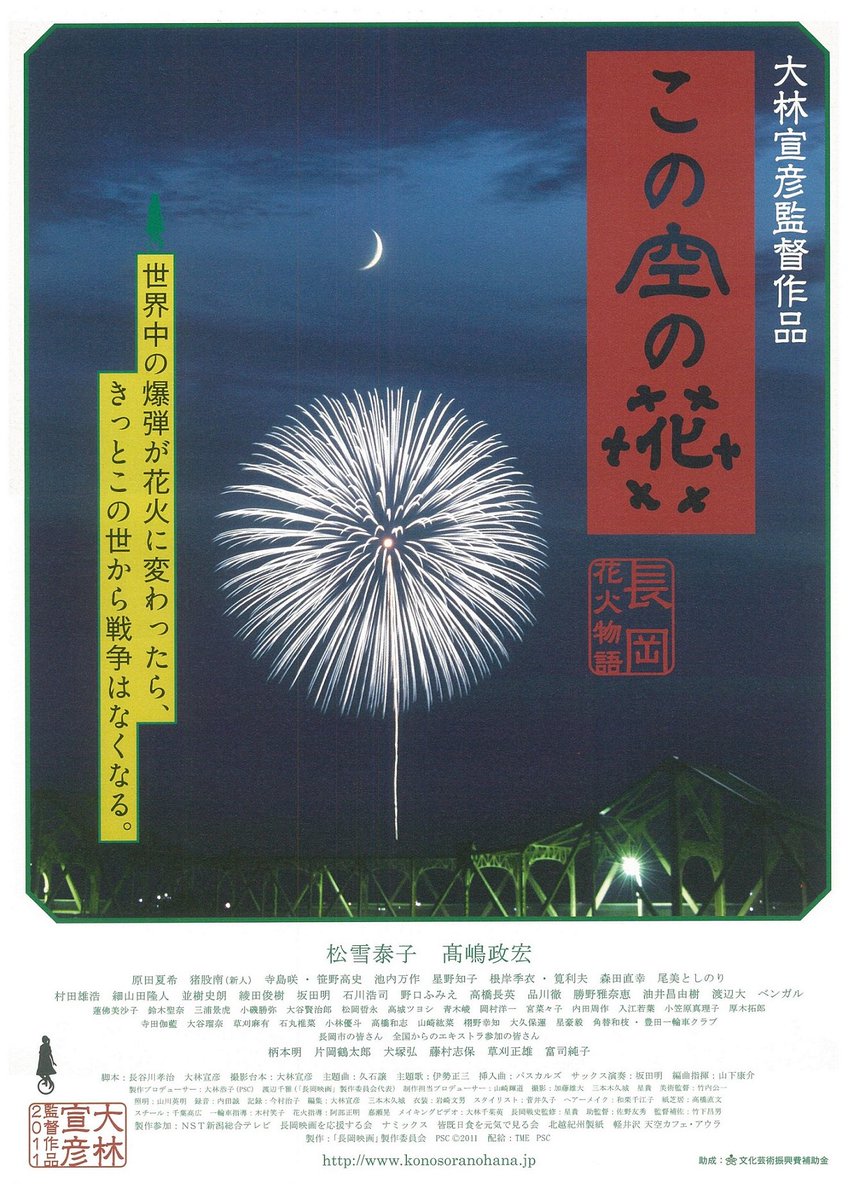
Casting Blossoms to the Sky (この空の花 長岡花火物語, Nobuhiko Obayashi, 2012)

“There’s still time until a war” runs the title of a play for voices at the centre of Nobuhiko Obayashi’s oscillating docudrama, Casting Blossoms to the Sky (この空の花 長岡花火物語, Kono Sora no Hana: Nagaoka Hanabi Monogatari). Asking why when presented with the opportunity to create something beautiful that gives joy and hope to all who witness it mankind chooses death and destruction, Obayashi considers responses to disasters manmade and natural and finds largely kindness and resilience among those determined to avoid the mistakes of the past while building a better tomorrow. 

Set in the immediate wake of the 2011 earthquake and tsunami and inspired by verbatim interviews with local people, Obayashi’s elliptical drama sends an emotionally arrested newspaper reporter to Nagoka having received a letter from an old lover that calls her back into the past. Reiko (Yasuko Matsuyuki) broke up with Katayama (Masahiro Takashima) 18 years previously uttering only the cryptic phrase “we have nothing to do with war”, but travelling through her “wonderland” begins to realise that she and everyone else is in that sense wrong. No one is really entirely unconnected or untouched by the destructive effects of conflict and pretending that it’s nothing to do with you will not in the end protect against it. 

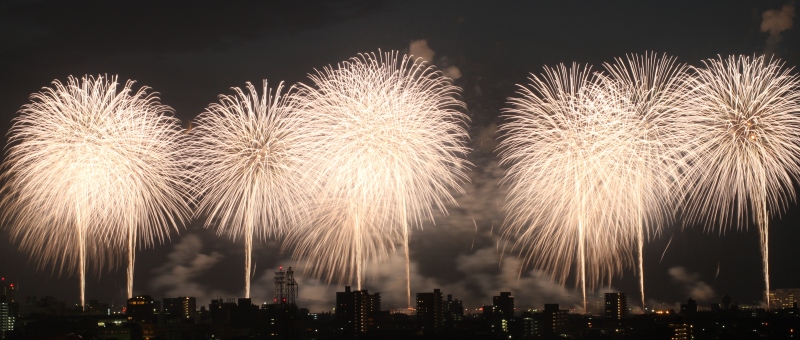
“To the children of the future, from the adults who lived the past” runs the opening title card, making plain a fervent hope to connect the often unknowing younger generations who assume war is nothing to do with them with the traumatic past through the voices of those who directly experienced it. The play to which Reiko is invited is in itself a play for voices, an avant-garde theatre piece inspired by the verbatim speeches of residents of Nagaoka recounting their often harrowing experiences of the war apparently penned by a strange high school girl (Minami Inomata) who rides everywhere on a unicycle. The performance is set to take place in conjunction with the local summer festivals which include a series of fireworks displays commemorating lives lost in the bombing raids and symbolising a spirit of recovery following a destructive local earthquake some years earlier. 

Obayashi draws direct comparison between the natural disasters of earthquake and tsunami, and the manmade disaster of war but discovers that ordinary people often react to them in the same way with a furusato spirit of mutual solidarity and kindness. One of Katayama’s students is a displaced young man from Fukushima who remarks on the kindness he experienced having been taken in by the town of Nagaoka, a kindness he hopes to repay someday when he is finally allowed to return to his own hometown just as the people of Nagaoka have done following kindness shown to them after the earthquake. The discrimination he faces as someone from a town affected by radiation calls back to that experienced by Reiko’s parents who were survivors of the atomic bomb that fell on Nagasaki, a location chosen by pure chance on a whim when poor weather made the primary target unavailable. Among all the horror of the wartime stories Reiko uncovers, there is also selfless heroism such as that of the young man bravely throwing water over those trapped in a burning air raid shelter. 

“If only people made pretty fireworks instead of bombs, there wouldn’t have been any wars” a poet laments drawing a direct line between these two very different uses of the same material, a connection further rammed home by twin visits to a fireworks factory and atomic bomb museum. The “phoenix fireworks” become a fervent prayer, blossoms cast to the sky, in hope of a better, kinder future without the folly of war. “There are adults who think war is necessary” Katayama explains, “but not the children, of course. That’s why it’s up to the children to make peace”. Some may complain that in the rapid economic development of the post-war society something has been lost, but in times of need people are still there for each other forging the furusato spirit in contemporary Japan. Opening with a series of silent-style title cards, Obayashi’s overtly theatrical aesthetics may be comparatively retrained even while incorporating frequent use of animation and surrealist backdrops, but lend an ever poignant quality to this humanist plea for a more compassionate world in which the only explosions in the sky are made of flowers and hope not hate or destruction. 


Casting Blossoms to the Sky streams in the US July 9 – Aug. 6 as part of Japan Society New York’s Tragedies of Youth: Nobuhiko Obayashi’s War Trilogy season in collaboration with KimStim.

Original trailer (English subtitles)

The Cherry Orchard: Blossoming (櫻の園 -さくらのその-, Shun Nakahara, 2008)

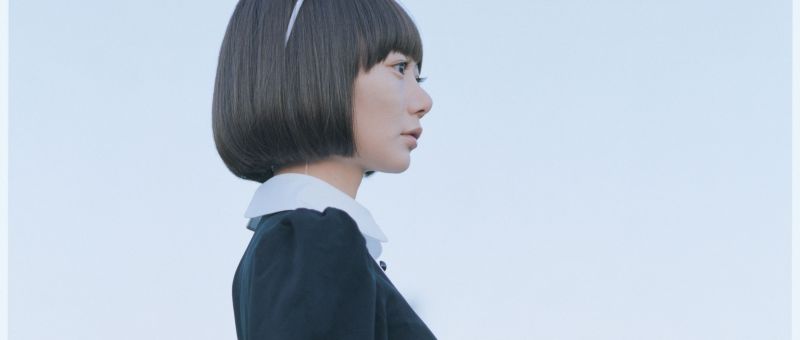
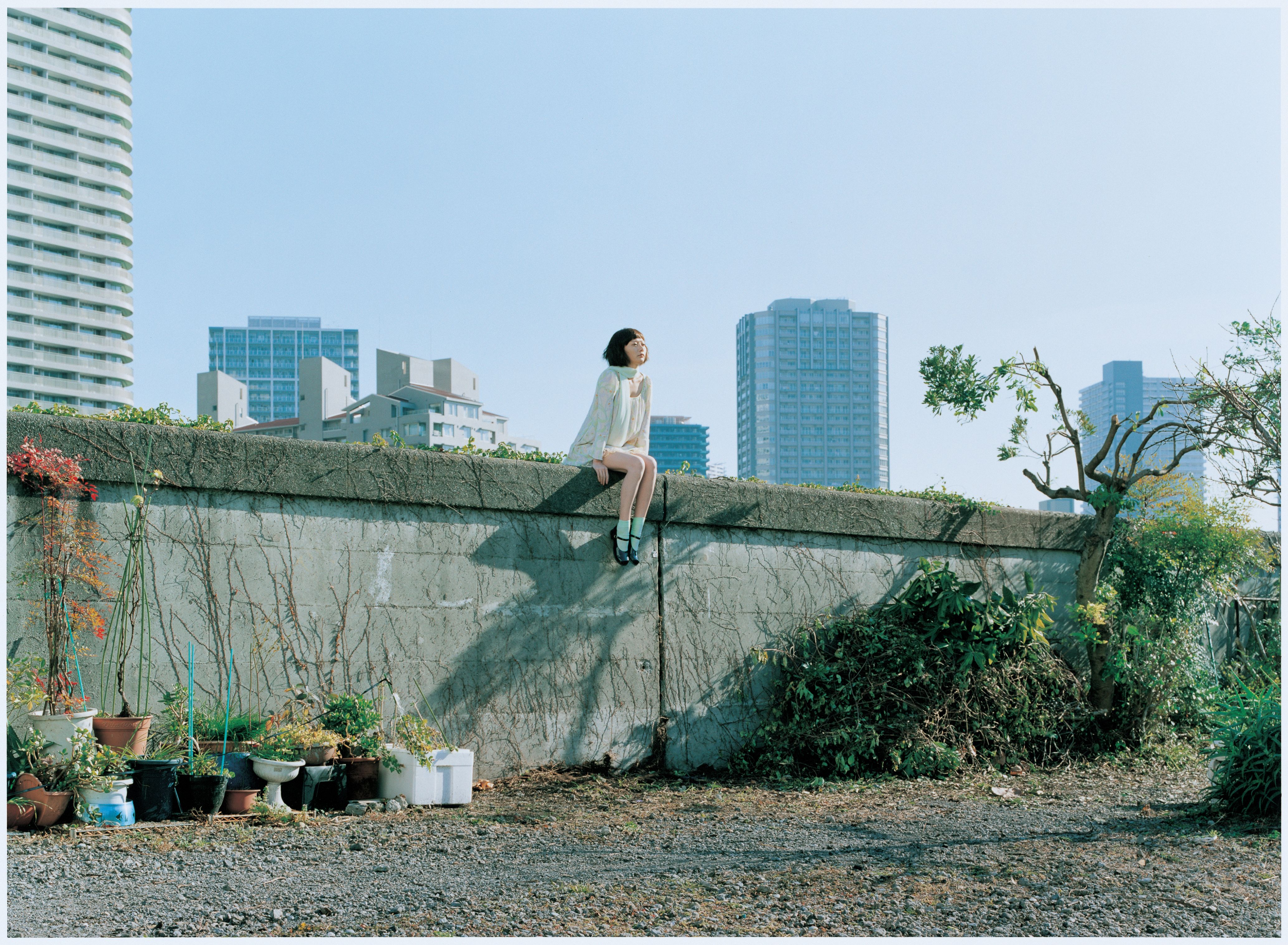
The Cherry Orchard- Blossoming poster In 1990, Shun Nakahara adapted Akimi Yoshida’s manga Sakura no Sono and created a perfectly observed capsule of late ‘80s teenage life at an elite girls school where the encroaching future is both terrifying and oddly exciting. Revisiting the same material 28 years later, one can’t help feeling that the times have rolled back rather than forwards. Starring a collection of appropriately aged teenage starlets The Cherry Orchard: Blossoming (櫻の園 -さくらのその- Sakura no Sono), dispenses with the arty overtones for a far more straightforward tale of melancholy schoolgirls finding release in art but, crucially, only to a point.

Less an attempt to remake the original, Blossoming acts as an odd kind of sequel in which the leading lady, Momo (Saki Fukuda), becomes fed up with her rigid life at a music conservatoire and rebelliously storms out. Already in her last year of high school, Momo is lucky enough to get a transfer to Oka Academy solely because her mother and (much) older sister are old girls. However, transfer students are rare at Oka and the other girls aren’t exactly happy to see her – they worked hard to get here but she’s just waltzed straight in without any kind of effort at all.

Gradually the situation improves. Wandering around the old school building (a European style country house) which was the setting for the first film and has now been replaced with a modern, purpose built high school complex, Momo finds the script for The Cherry Orchard and becomes fixated on the idea of putting the play on with some of the other students. However, though The Cherry Orchard used to be an annual fixture it hasn’t been performed in 11 years after being abruptly cancelled when one of the stars disgraced the school by falling pregnant.

Whereas Nakahara’s 1990 Cherry Orchard was a tightly controlled affair, penning the girls inside the school and staying with them through several crises across the two hours before their big performance, Blossoming has no such conceits and adopts a formula much more like the classic sports movie as the underdog girls fight to put the play on and then undergo physical training (complete with montages) rather than rehearsals.

Momo’s rebellion is (in a sense) a positive one as she abandons something she was beginning to find no longer worked for her to look for something else and also gains a need to see things through rather than give up when times get hard. The drama of the 1990 version is kickstarted when a student is caught smoking in a cafe with delinquents from another school, aside from being told that students are expected to go straight home, Momo feels little danger in hanging out in an underground bar where her music school friend plays in a avant-garde pop band.

Though this reflects a change in eras it also points to a slight sanitisation of the source material. Gone are the illicit boyfriends (though there is one we don’t see) and barely repressed crushes, these teens are still in the land of shojo – dreaming of romance but innocently. Teenage pregnancy becomes a recurrent theme but lost opportunities hover in the background as the girls are seen from their own perspective rather than the wistful melancholy of those looking back on their youth.

Such commentary is left to the “old girls” represented by Momo’s soon to be married sister and the girls’ teacher, each of whom is still left hanging thanks to the cancellation of the play during their high school years. Despite her impending marriage, Momo’s sister does not seem to be able to put the past behind her and may be nursing a long term unrequited crush on a high school classmate. Blossoming echoes some of the concerns of Cherry Orchard, notably in its central pairing as lanky high jumper Aoi (Anne Watanabe) worries over a perceived lack of femininity while the more refined Mayuko (Saki Terashima) silently pines for her, unable to make her feelings plain. The 1990 version presented a painful triangle of possibly unrequited loves and general romantic confusion but it did at least allow a space for overt discussion rather than the half hearted subtly of a mainstream idol film in a supposedly more progressive era.

Nevertheless, Nakahara’s second pass at teenage drama does fulfil on the plucky high school girls promise as the gang get together to put the show on right here. Much less nuanced than the earlier version, Blossoming’s teens are just as real even if somehow more naive than their ‘80s counterparts. Team building, friendship, and perseverance are the name of the day as the passing of time takes a back seat, relegated to Momo’s sad smile as she alone witnesses the painful love drama of her melancholy friend.


Original trailer (no subtitles)

Twilight: Saya in Sasara (トワイライト ささらさや, Yoshihiro Fukagawa, 2014)

Japanese cinema has its fare share of ghosts. From Ugetsu to Ringu, scorned women have emerged from wells and creepy, fog hidden mansions bearing grudges since time immemorial but departed spirits have generally had very little positive to offer in their post-mortal lives. Twilight: Saga in Sasara (トワイライト ささらさや,  Twilight Sasara Saya) is an oddity in more ways than one – firstly in its recently deceased narrator’s comic approach to his sad life story, and secondly in its partial rejection of the tearjerking melodrama usually common to its genre.

Unsuccessful Rakugo performer Yutaro (Yo Oizumi) met the love of his life during one of his sparsely attended recitations. Saya (Yui Aragaki) was the only one laughing but even she didn’t think he was very funny, she just liked him because he was trying so hard. Eventually, he married her and they had a lovely baby boy but before little Yusuke was even a year old, Yutaro got himself killed in a random traffic accident. Such is life. Still, knowing that Saya had no family of her own and having grown up without a father himself Yutaro feels even worse about leaving his wife and son all alone in such a stupid way. Therefore he decides to delay going to heaven so that he can stick around to help Saya in whatever way he can.

A crisis occurs when Yutaro’s estranged father (Ryo Ishibashi) suddenly turns up at the funeral laying claim to little Yusuke with no thought to the additional emotional ramifications of trying to snatch a baby from a grieving mother right over the coffin of her husband. Possessing the body of another guest, Yutaro manages to convince Saya to run leading her to retreat to her late aunt’s house in the peaceful rural village of Sasara.

Though the premise is a familiar one, Fukagawa neatly sidesteps the more maudlin aspects for a broadly comic approach in which Yutaro recounts the story of his death as if it were a rakugo tale. Possessing various people along the way, Yutaro does indeed help Saya adjust to her new life but eventually discovers that perhaps the reason he hasn’t passed over was one of the past rather than one of the future.

Saya’s arrival in Sasara gets off to a bad start – essentially forced out of the city to escape Yutaro’s father Saya causes unexpected trouble when it emerges that the corrupt local estate agent has been letting out her aunt’s house without telling her. If that weren’t enough, some of her valuables are almost stolen by a local delivery boy but, this being an ageing village, children are a rarity and so little Yusuke quickly captures the hearts of the neighbourhood grannies who eventually become Saya’s friends and staunch supporters. Familial problems are the name of the day from childlessness to children (hopefully) writing down possible signs of dementia or just leaving town and not coming back. Yutaro also helps Saya improve the life of another young woman with a son who doesn’t speak by allowing him to finally voice what he really feels, adding to the circle of female help and support which becomes the family Saya had always longed for.

Orphaned at a young age, raised by her grandmother until she died and having lost her only living relative in her aunt a few years previously, Saya had always wondered what it felt like to have a real family of her own. Yutaro had also lost his mother at a young age through illness and was estranged from his father who refused to visit her even on her deathbed. Yutaro’s untimely death adds to Saya’s ongoing sorrows but also ends the beginnings of the happy family they’d begun to build with each other. As it turns out, Yotaro’s limbo is less about his son and more about his father as he gets a last opportunity to bond with his outwardly harsh and cruel dad and come to a kind of understanding about fatherhood in hearing his side of the story. Life is too short for grudges, and even spirits sometimes need to give up the ghost so that the air can rest a little lighter.

Though there are the expected moments of sadness as Yotaro realises the number of people he can possess is dwindling and his time with Saya will be limited, Fukagawa keeps things light and whimsical with a kind of small town quirkiness aided by Oizumi’s spirited delivery. Adding in frequent rakugo references complete with painted backdrops and sound effects as well as a repeated motif which sees the little town remade as a diorama model, Twilight: Saya in Sarasa has a pleasantly old fashioned feeling which only adds to its wholesome emphasis on an extended family of community coupled with the continuing presence of Yutaro watching from somewhere on high. Warm and funny if a little lacking in impact, Twilight: Saya in Sasara is a rare instance of a ghost bringing people together in love and harmony through helping them get closer to their true emotions but one that is also keen to emphasise that we’re all only here for an unspecified time – better not to waste it with silly things like grudges.


Original trailer (no subtitles)