Golden Slumber (ゴールデンスランバー, Yoshihiro Nakamura, 2010)

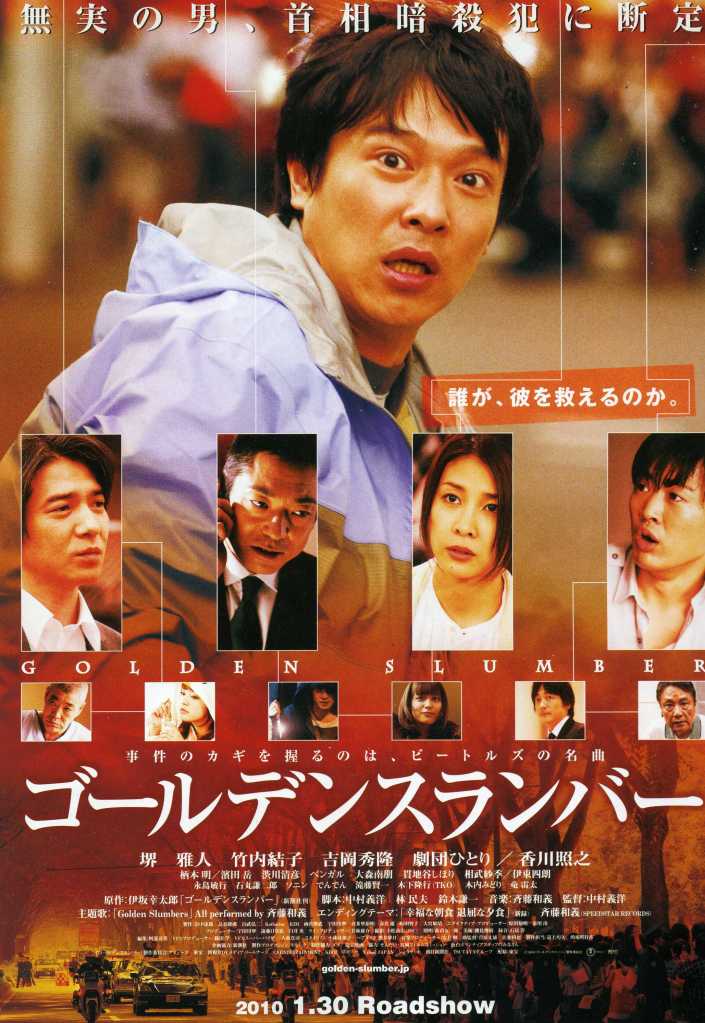
golden-slumberYoshihiro Nakamura has made a name for himself as a master of fiendishly intricate, warm and quirky mysteries in which seemingly random events each radiate out from a single interconnected focus point. Golden Slumber (ゴールデンスランバー), like The Foreign Duck, the Native Duck and God in a Coin Locker, and Fish Story, is based on a novel by Kotaro Isaka and shares something of the same structure but is far less interested in the mystery itself rather than the man who finds himself caught up in it.

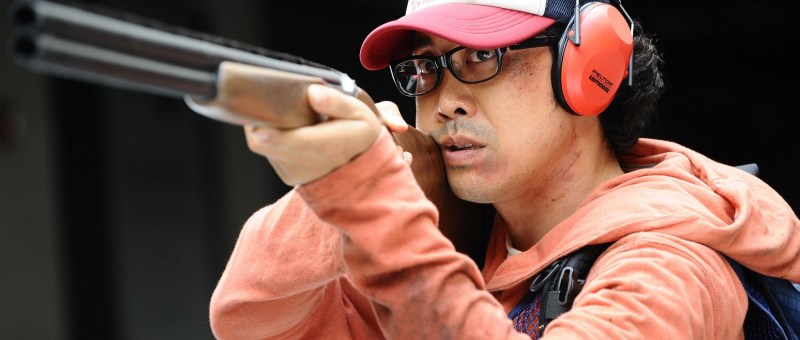
30 year old delivery driver Aoyagi (Masato Sakai) is all set for a nice day out fishing with an old college buddy, Morita (Hidetaka Yoshioka), but he’s about to discover that it’s he’s been hooked and reeled in as the patsy in someone else’s elaborate assassination plot. After grabbing some fast food, Morita takes Aoyagi to a parked car near the closed off area through which the Prime Minster is due to be paraded in an open topped car. Waking up after a brief period of drug induced sedation, Aoyagi is made aware that this has all been a trick – badly in debt thanks to his wife’s pachinko addiction, Morita has betrayed him to a set of undisclosed bad guys with unclear motives and is taking this brief opportunity to give him as much warning as he can. Sure enough, a bomb goes off at the parade and Aoyagi just manages to escape before Morita too is the victim of an explosion.

Aoyagi is now very confused and on the run. Inexplicably, the police seem to have CCTV footage of him in places he’s never been and doing things he’s never done. If he’s going to survive any of this, he’s going to need some help but caught between old friends and new, trust has just become his most valuable commodity.

At heart, Golden Slumber is a classic Wrong Man narrative yet it refuses to follow the well trodden formula in that it isn’t so much interested in restoring the protagonist to his former life unblemished as it is in giving him a new one. The well known Beatles song Golden Slumber which runs throughout the film plays into its neatly nostalgic atmosphere as each of the now 30 year old college friends find themselves looking back into those care free, joyous days before of the enormity of their adult responsibilities took hold. That is to say, aside from Aoyagi himself who seems to have been muddling along amiably before all of this happened to him, unmarried and working a dead end delivery job.

As Morita tells him in the car, it’s all about image. The nature of the conspiracy and the identity of the perpetrators is not the main the main thrust of the film, but the only possible motive suggested for why Aoyagi has been chosen stems back to his unexpected fifteen minutes of fame two years previously when he saved a pop idol from an intruder with a nifty judo move (taught to him by Morita in uni) after fortuitously arriving with a delivery. Those behind the conspiracy intend to harness his still vaguely current profile to grab even more media attention with a local hero turned national villain spin. The Prime Minister, it seems, was a constantly controversial, extreme right wing demagogue with a tendency for making off the cuff offensive statements so there are those who’d rather congratulate Aoyagi than bring him to justice, but anyone who’s ever met him knows none of this can really be true despite the overwhelming video evidence.

Throughout his long odyssey looking for “the way back home” as the song puts it, Aoyagi begins to remember relevant episodes from his life which may feed back into his current circumstances. Although it seems as if Aoyagi had not seen Morita in some time (he knew nothing of his family circumstances, for example) his college friends with whom he wasted time “reviewing” junk food restaurants and chatting about conspiracy theories are still the most important people in his life. Not least among them is former girlfriend Haruko (Yuko Takeuchi), now married and the mother of a little daughter, who seems to still be carrying a torch for her old flame and is willing to go to great lengths to help him in his current predicament.

The film seems mixed on whether these hazy college days are the “golden slumber”, a beautiful dream time enhanced by memory to which it is not possible to return, or whether it refers to Aoyagi’s post college life which impinges on the narrative only slightly when he asks an unreliable colleague for help, aside from an accidental moment of heroic celebrity. It could even refer to the film’s conclusion which, departing from the genre norms, resolves almost nothing save for the hero’s neat evasion of the trap (aided by the vexed conspirators who eventually opt for a plan B). Once there might have been a road home – a way back to the past and the renewing of old friendships, but this road seems closed now, severed by the new beginning promised to Aoyagi who has been robbed of his entire identity and all but the memory of his past. Whether this means that the golden slumber has ended and Aoyagi, along with each of the other nostalgia bound protagonists, must now wake up and start living the life he’s been given, or that the old Aoyagi has been consigned to the realm of golden slumbers, may be a matter for debate.

Though the resolution may appear ultimately unsatisfying, the preceding events provide just enough interconnected absurdity to guide it through. During his long journey, Aoyagi is aided not just by his old friends but new ones too including a very strange young serial killer (Gaku Hamada) and a hospital malingerer with one foot in the “underworld” (Akira Emoto). It speaks to Aoyagi’s character that all of those who know him trust him implicitly and are ready to help without even being asked (even if they occasionally waver under pressure), and even those who are meeting him for the first time are compelled to come to his defence.  An elliptical, roundabout tale of the weight of nostalgia and inescapability of regret, Golden Slumber is the story of a man on the run from his future which eventually becomes a net he cannot escape.


Original trailer (English subtitles – select via menu)

Future Memories: Last Christmas (未来の想い出 Last Christmas, Yoshimitsu Morita, 1992)

b27a8478bde0a2deBased on the contemporary manga by the legendary Fujiko F. Fujio (Doraemon), Future Memories: Last Christmas (未来の想い出 Last Christmas, Mirai no Omoide: Last Christmas) is neither quiet as science fiction or romantically focussed as the title suggests yet perhaps reflects the mood of its 1992 release in which a generation of young people most probably would also have liked to travel back in time ten years just like the film’s heroines. Another up to the minute effort from the prolific Yoshimitsu Morita, Future Memories: Last Christmas is among his most inconsequential works, displaying much less of his experimental tinkering or stylistic variations, but is, perhaps a guide its traumatic, post-bubble era.
After a short segment set in 1971 in which one of our two heroines, Yuko Nando (Misa Shimizu), tells her classmates of her dream to become a best selling children’s author, we flash forward to 1981 where Yuko is a struggling artist unable to find success with her publishing company. A decade later, Christmas 1991, Yuko seems to have made little progress and despondently finds herself bonding with a mysterious woman offering a fortune telling service at the side of the road.

Ginko Kanae’s (Shizuka Kudo) life also seems to have spiralled downwards since 1981. A career as an office lady led to a fateful party after which another girl ended up going home with the guy she liked, and then she ended up being rebound married to the second choice salaryman she wound up with. Hence she’s reading fortunes on a less than busy side street at Christmas. The two women bond and swap phone numbers, but tragedy is about to befall them both as Yuko has a heart attack and dies at an office golf outing and Ginko has an accident on the way back from attending Yuko’s funeral. Never fear, the two women are soon cast back to 1981 with the next ten years of memories intact to help them make “better” choices and hopefully save their futures from ruin.

1992 was the start of a difficult era for Japan, the collapse of the bubble economy left behind it not just financial instability and social uncertainty, but a lingering feeling of foolishness and betrayal among those who’d been promised so much during the bubble years only to have the rug cruelly pulled from under them. It’s not surprising that many people of around Yuko and Ginko’s ages may have liked to travel back to 1981 and either relive the boom years or try and prevent the resultant tragedies from occurring. Unsurprisingly, the pair’s first pass at a do over sees them striving for conventional success, using their future knowledge to their advantage – Yuko by appropriating the idea of a popular 1991 manga to become an award winning artist, and Ginko becoming a financial guru. Both women come to feel conflicted about their “dishonest” choices which see them prosper unfairly, ironically robbing them of the chance to succeed as individuals in their own right and fulfil their own potential in the way they had always wanted to.

After each die at the same point and in the same way once again despite their financial successes, they get a second go, now with twenty years of hindsight to help them work out what’s really important. This time each chooses a path filled with more individual expression and the expectation of happiness. Romance is the name of the game as both women vow to spend more time with the men they love. However, having been through this once before Yuko and Ginko also have an expectation that their time will end once again in December 1991, meaning they feel conflicted about making a life with lovers they’ll be leaving behind. Gradually each starts to wonder if their fates are really as sealed as they fear them to be, or if they’ve been given this chance to start again precisely so that they can change their futures for the better.

In 1992, the idea that everything doesn’t have to be as gloomy as it seems might have been an important one, even more so than it is now. In the original timeline, Yuko and Ginko were, like many in the post-bubble world, victims of circumstance rather than people who’d actively made poor choices and the lessons which they learn are also those of their generation. Financial success is not everything, particularly if it’s gained in a “dishonest” way. More than changing their fates, Yuko and Ginko must first learn how to be happy which lies in self realisation, fulfilled potential, and, ironically, that their fate doesn’t matter so long as they live happily in the now.

Morita’s approach is again a timely one, filled with the music of the era (including a cover version of the title song from previous Morita hit, Main Theme), stock footage, and a curiously retro, nostalgia filled approach for a period that was only a decade earlier. Dissolves, slow motion and double exposures are his concessions to the sci-fi themes, but what he’s really interested in is capturing the essence of the era more so than crafting an emotionally affecting piece. Necessarily of its time, Future Memories: Last Christmas is among Morita’s weaker efforts but does serve to shine a light on early ‘90s pop culture as it found itself in a moment of profound self reflection.


Original trailer (no subtitles but lots of Christmas Cheer…and…Wham)

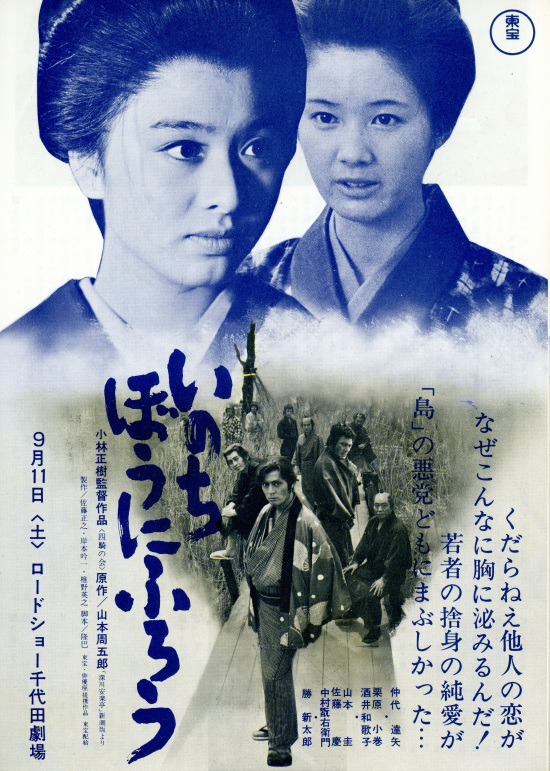
Inn of Evil (いのちぼうにふろう, Masaki Kobayashi, 1971)

inn-of-evil“Sometimes it feels good to risk your life for something other people think is stupid”, says one of the leading players of Masaki Kobayashi’s strangely retitled Inn of Evil (いのちぼうにふろう, Inochi Bonifuro), neatly summing up the director’s key philosophy in a few simple words. The original Japanese title “Inochi Bonifuro” means something more like “To Throw One’s Life Away”, which more directly signals the tragic character drama that’s about to unfold. Though it most obviously relates to the decision that this gang of hardened criminals is about to make, the criticism is a wider one as the film stops to ask why it is this group of unusual characters have found themselves living under the roof of the Easy Tavern engaged in benign acts of smuggling during Japan’s isolationist period.
Led by the innkeeper Ikuzo (Kan’emon Nakamura), the Easy Tavern is, effectively, the hideout of a smuggling gang conveniently located on a small island in the middle of a river where they can unload goods from the Dutch boats before shipping them on to Edo. Everything had been running smoothly, but the friendly policeman has been moved on and the new guy seems very straight laced. The gang’s routine existence changes one night when they receive two unexpected visitors – a young man they save from a beating in the street, and a drunk who wanders in looking for sake. The younger man, Tomijiro (Kei Yamamoto), brings a sad story with him in that all of his troubles have been caused by trying to save the woman he loves from being sold to a brothel. Moved by Tomijiro’s innocent ardour, even the most hardhearted residents of the Easy Tavern become determined to help him. Accepting a job everyone had a bad feeling about in order to get the money for Tomijiro to buy back his lady love before it’s too late, the gang’s unusual decision to risk their lives for someone else’s happiness may be the first and last time they ever do so.

The residents of the Easy Tavern have various different backstories, but the thing they all have in common is having been rejected by mainstream society at some point in their lives. The most high profile, Sadashichi (Tatsuya Nakadai), is known as “The Indifferent” which is both apt and slightly ironic. Sullen and cynical, he puts on a show about caring for nothing and no one but, as inn keeper’s daughter Omitsu (Komaki Kurihara) has figured out, it’s more that the opposite it true – he cares too much about everything. Abandoned as a child, Sadashichi’s sad story is that he once thought his saw his mother long after they were separated but killed her because she’d fallen into prostitution. Then again, perhaps it was just a woman who looked like her, or perhaps he made he whole thing up. Coming across a lost baby bird shortly after killing a man, Sadashichi is determined to look after it but is later distressed by the words of the drunk who reminds him that the bird’s mother is probably going crazy with worry. Sadashichi may identify with this lost little bird, but his empathy also extends to Tomijiro’s plight as his plaintive looks and gloomy face prompt him into action, if only to make them go away.

Similarly, the other members including “The Living Buddha” – a rabidly bisexual former monk thrown out of his temple for his lascivious ways, an effeminate homeless man, a stutterer, and an invalid all have reasons for living outside the law. As the sympathetic inn keeper later tries to explain to a policeman, most of these men are people who’ve faced rejection in one way or another. Craving sympathy, they’ve turned violent and suspicious, pushed away from the very things they wanted most. Far from an Inn of Evil, the Easy Tavern is the only place where these people have been able to find acceptance, building a community of lost souls from those cast out from society at large.

The decision to try and help Tomijiro to rescue his childhood sweetheart, cruelly sold by her selfish and uncaring father, is, in once sense, a selfless one but perhaps also reminds them of all the times they were also betrayed or abandoned and no one came to help. Even knowing the plan is unlikely to end well, the inn keeper is proud of his men’s decision, if they didn’t try to help the girl no one else would. They may be throwing their lives away in a pointless endeavour, but if they don’t at least try then what’s the point in living at all. This more than anything expresses Kobayashi’s constant preoccupation throughout his career in pointing to the essential goodness of those who refuse to simply accept acts of injustice as normal and stand up to oppose them, even if their resistance will produce little or no actual change.

Filming in a crisp black and white, Kobayashi creates an eerie atmosphere aided by Toru Takemitsu’s strangely ethereal score. The world of the The Easy Tavern is a dark one in which cruelty and betrayal lie at every turn and men ruin themselves through thoughtless and reckless decisions, but the best of humanity is to be found among this gang of outlaws who collectively decide it’s world risking their lives for someone else’s love story. Filled with impressive visual imagery including the strange sight of the looming bright white police lanterns and the impressively staged last stand as Sadashichi holds off the troops for Tomijiro to escape, Inn of Evil is a tightly controlled, minutely detailed character drama in which men who’d throw their lives away for nothing find that their sacrifice has not been in vain.


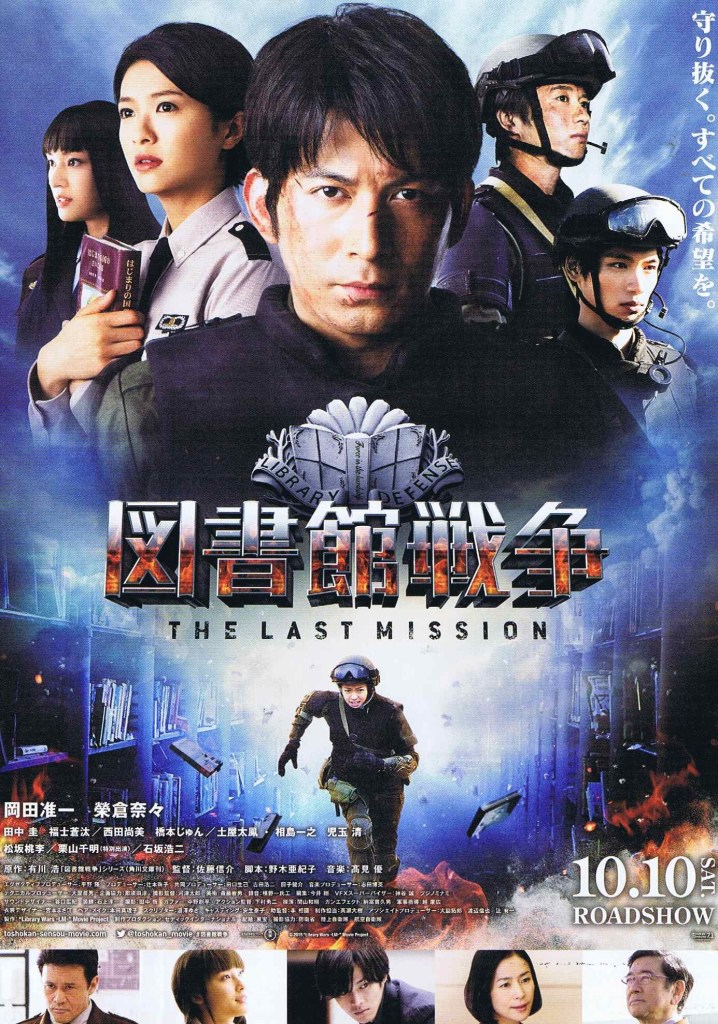
Library Wars: The Last Mission (図書館戦争-THE LAST MISSION-, Shinsuke Sato, 2015)

library-wars-last-missionWhen Library Wars, the original live action adaptation of Hiro Arikawa’s light novel series, hit cinema screens back in 2013 it did so with a degree of commercial, rather than critical, success. Though critics were quick to point out the great gaping plot holes in the franchise’s world building and a slight imbalance in its split romantic comedy/sci-fi political thriller genre mix, the film was in many ways a finely crafted mainstream blockbuster supported by committed performances from its cast and impressive cinematography from its creative team. Library Wars: The Last Mission (図書館戦争-THE LAST MISSION-, Toshokan Senso -The Last Mission-) is the sequel that those who enjoyed the first film have been waiting for given the very obvious plot developments left unresolved at the previous instalment’s conclusion.

18 months later, Kasahara (Nana Eikura) is a fully fledged member of the Library Defence Force, but still hasn’t found the courage to confess her love to her long term crush and embittered commanding officer, Dojo (Junichi Okada). As in the first film, The Media Betterment Force maintains a strict censorship system intended to prevent “harmful” literature reaching “vulnerable” people through burning all suspect books before they can cause any damage. Luckily, the libraries system is there to rescue books before they meet such an unfortunate fate and operates the LDF to defend the right to read, by force if necessary.

Kasahara is an idealist, fully committed to the defence of literature. It is, therefore, a surprise when she is accused of being an accomplice to a spate of book burning within the library in which books criticising the libraries system are destroyed. Needless to say, Kasahara has been framed as part of a villainous plan orchestrated by fellow LDF officer Tezuka’s (Sota Fukushi) rogue older brother, Satoshi (Tori Matsuzaka). There is a conspiracy at foot, but it’s not quite the one everyone had assumed it to be.

In comparison with the first film, The Last Mission is much more action orientated with military matters taking up the vast majority of the run time. A large scale battle in which the LDF is tasked with guarding an extremely important book containing their own charter (i.e. a symbol of everything they stand for) but quickly discovers the Media Betterment Force is not going to pass up this opportunity to humiliate their rival, forms the action packed centrepiece of the film.

The theme this time round leans less towards combating censorship in itself, but stops to ask whether it’s worth continuing to fight even if you feel little progress is being made. The traitorous officer who helps to frame Kasahara does so because he’s disillusioned with the LDF and its constant water treading. The LDF is doing what it can, but it’s fighting to protect books – not change the system. This is a weakness Satoshi Tezuka is often able to exploit as the constant warfare and tit for tat exchanges have begun to wear heavy on many LDF officers who are half way to giving up and switching sides. Even a zealot like Kasahara is thrown into a moment of existential despair when prodded by Satoshi’s convincing arguments about her own obsolescence.

Satoshi rails against a world filled with evil words, but as the head of the LDF points out in quoting Heinrich Heine, the society that burns books will one day burn men. The LDF may not be able to break the system, but in providing access to information it can spread enlightenment and create a thirst for knowledge among the young which will one day produce the kind of social change that will lead to a better, fairer world.

As in Library Wars all of these ideas are background rather than the focus of the film which is, in essence, the ongoing non-romance between Kasahara and Dojo. Remaining firmly within the innocent shojo realm, the romantic resolution may seem overly subtle to some given the extended build up over both films but is ultimately satisfying in its cuteness. Library Wars: The Last Mission masks its absurd premise with a degree of silliness, always entirely self aware, but gets away with it through sincerity and good humour. Shinsuke Sato once again proves himself among the best directors of mainstream blockbusters in Japan improving on some of the faults of the first film whilst bringing the franchise to a suitably just conclusion.


Original trailer (No subtitles)

Be With You (いま、会いにゆきます, Nobuhiro Doi, 2004)

be-with-youWhen it comes to tragic romances, no one does them better than Japan. Adapted from a best selling novel by Takuji Ichikawa, Be With You (いま、会いにゆきます, Ima, ai ni Yukimasu) is very much part of the “Jun-ai” or “pure love” boom kickstarted by Crying Out Love In the Center of the World released the same year but taps into Japan’s long history of supernaturally tinged love stories, filled with the weight of impending tragedy and the essential transience of the human experience.
Like many such tales, Be With You begins with a framing sequence set 12 years after the main events, but unusually it’s directed from the point of view of the soon-to-be 18 year old, Yuji (Yuta Hiraoka). Receiving a birthday cake from a bakery which has apparently only stayed open because of its promise to deliver birthday cakes to him every year until he turns 18, Yuji begins to reflect on the “miracle” which he and his father experienced all those years ago.

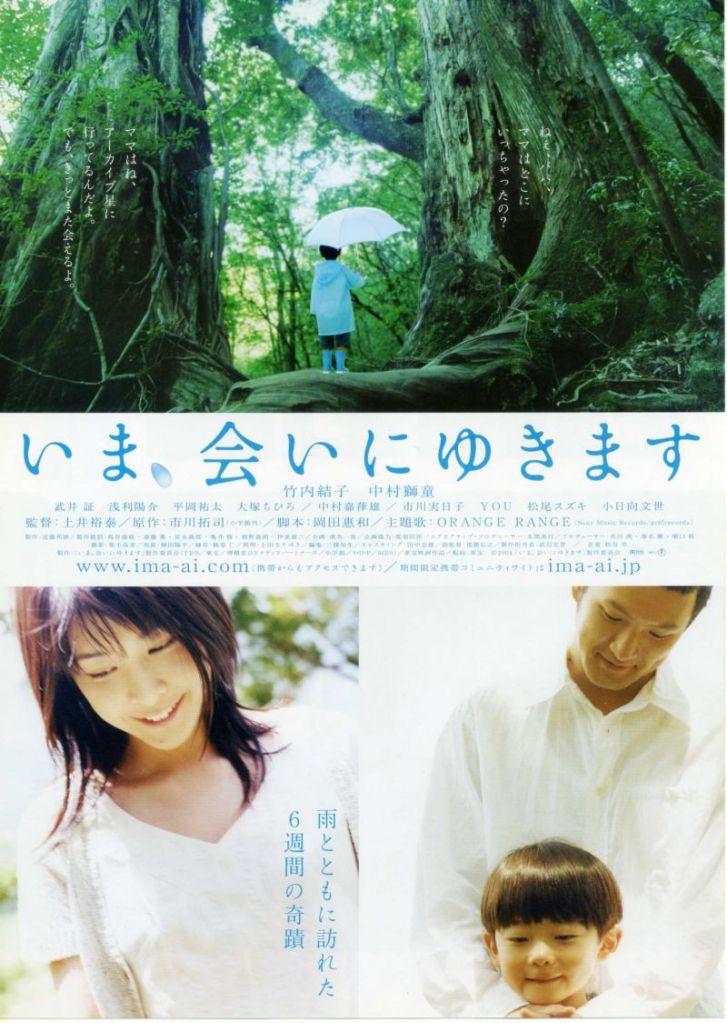
Yuji’s mother passed away at the age of 28 when he was only 5 years old. However, before she died, Mio (Yuko Takeuchi) had prepared a special picture book for Yuji to try and help him process what was happening. In the book, Mio has gone to a place called “Archive Star” and will return for the first rainy season a year after her death. Improbable as it is, Yuji and his father Takumi (Shido Nakamura) discover a woman who looks exactly like Mio lost in the forest during the first rains. Stunned the pair take her home but Mio has no knowledge of her former life as a wife and mother. Gradually, Mio begins to fall in love with her husband all over again whilst bonding with her young son, but their happiness is short lived as Mio realises her time with them is limited.

Because Mio can’t remember, we experience the love story between the teenage Takumi and Mio firstly through his eyes as he tells her of his unrequited high school crush when she sat at the desk across from him for two years during in which he was too shy to say anything. Later we hear the same story again from Mio’s perspective through her diary where we learn, not altogether surprisingly, that she felt the same way. The pair mirror each other throughout their courtship, wanting to say something but lacking the courage and looking for excuses to try and push the situation in a better direction. Other than the mutually unresolved attempts at phone calls and an unreturned pen, Mio and Takumi essentially relive their original romance in the brief time they are able to share together from repeated motifs of untied shoelaces and clumsiness with a bicycle, to innocent in pocket hand holding.

Takumi has an ongoing medical condition which interferes with his motor functions, slowing him down and giving him an air of soulful melancholy later compounded by his romantic tragedy. Having been a champion runner on a sports scholarship to college, the diagnosis causes extreme disruption to his life and leads him to the typically jun-ai decision to break up with Mio because he feels as if he’d be a burden to her. A year after Mio passed away, Takumi is doing his best to bring up his son but is a little distant and struggling to take care of the domestic environment. When Mio realises that she can’t take care of them forever, she switches her focus to trying to prepare her husband and son for life alone – teaching Yuji how to fry eggs and do the laundry, whilst renewing her emotional bond with Takumi. There’s no happy ending in store for Mio, the loss cannot be avoided and perhaps it might even be worse to have had this brief respite from the ongoing pain, but the six week rainy season does, at least, provide an opportunity to say those things that might have otherwise gone unsaid.

Nobuhiro Doi films in a typically elegant fashion making great use of the area’s natural beauty to create a fairy tale atmosphere from the mysterious, life giving forest. The poignancy of the tale is all the deeper knowing that Mio eventually understood what would happen to her, but chose a brief life with Takumi and her son over the possibility of a longer one without them. Heartbreakingly sad, yet a testament to the importance of appreciating the present which all too soon becomes the past, Be With You is a genuinely romantic love story, not only between a husband and a wife but an entire family carrying the weight of a tragic loss but easing the burden by treasuring the memory of the intense love shared between them.


Original trailer (no subtitles)

Your Name (君の名は, Makoto Shinkai, 2016)

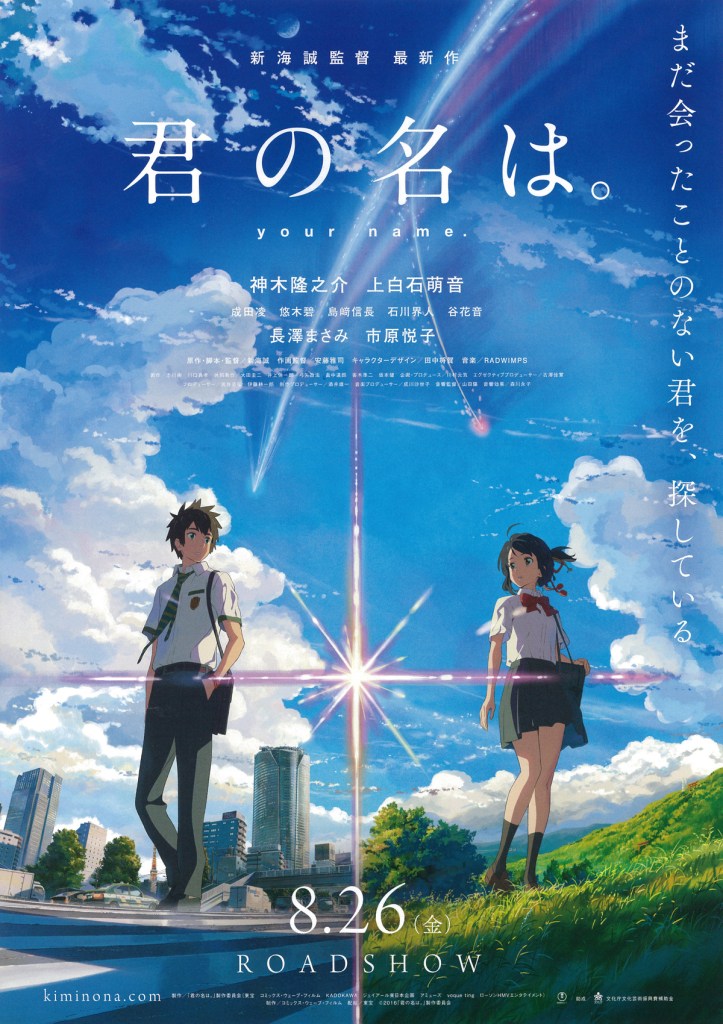
your-nameIndie animation talent Makoto Shinkai has been making an impact with his beautifully drawn tales of heartbreaking, unresolvable romance for well over a decade and now with Your Name (君の名は, Kimi no Na wa) he’s finally hit the mainstream with an increased budget and distribution from major Japanese studio Toho. Noticeably more upbeat than his previous work, Your Name takes on the star-crossed lovers motif as two teenagers from different worlds come to know each other intimately without ever meeting only to find their youthful romance frustrated by the vagaries of time and fate.
Mitsuha (Mone Kamishiraishi) is a typical country girl and daughter of a Shinto temple family who dreams of the urban sophistication of the big city. Taki (Ryunosuke Kamiki), by contrast, is a typical city boy living in Tokyo and taking full advantage of its cafes and mass transportation systems. One fateful day, each wakes up in the body of the other and must quickly adjust to living in someone else’s skin. Though each originally believes the events to have been merely a dream, friends and family members are quick to point out the strange behaviour of the two teenagers. Neither Mitsuha nor Taki maintains a clear memory of their time in the other’s world though they are able to keep in a kind of contact through their respective diaries (his on a smartphone, hers in a more traditional notebook). Beginning to develop a degree of mutual affection through their strangely acquired intimacy, Mitsuha and Taki each have a profound effect on the other’s life but fate seems content to keep them apart.

Body swap comedy is not an unusual genre in Japan (Obayashi’s similarly themed I Are You, You Am Me being a notable example which was even remade by the director himself thirty years later as Switching, Goodbye Me), nevertheless Shinkai mines the situation for all of its awkward comedy as Mitsuha and Taki get used to living as the opposite gender. Beginning with the obvious repeated joke of Taki waking up and squeezing “his” breasts, there are other issues to contend with from which pronoun to use to remembering to avoid slipping into a rural dialect. Taki, obviously at sea with how to get on as a girl, causes consternation by turning up late for school with messy hair and subsequently behaving in an unacceptably masculine way. Conversely when Mitsuha is playing Taki, she helps him sort out various things in his life through her feminine influence including getting him a date with his workplace crush.

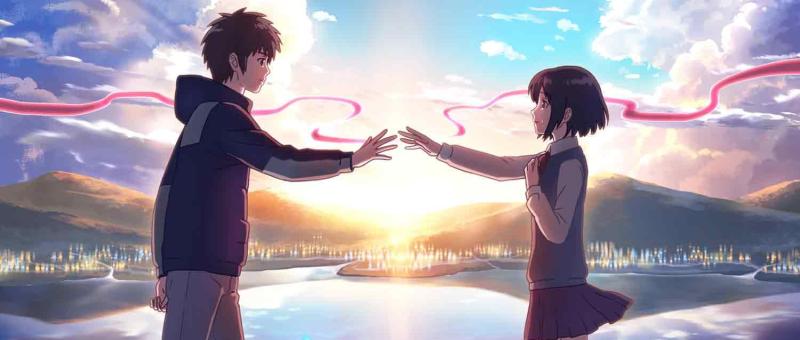
The pair are indeed “star-crossed” as their romance is heralded by the arrival of a rare comet, watched by both at the same time, as it splits in two. The comet strike turns out to have a much more pressing importance than simply as a symbol of romantic destiny but neatly represents the central dynamic of Mitsuha and Taki as two halves of the same soul. The two are connected by the “red string of fate” visualised through Mitsuha’s long red hair ribbon which later makes a reappearance in Taki’s sake based dream sequence and serves to bind the two together. Mitsuha’s family also make traditional braided bracelets which, as her grandmother tells us, represent the flow of time itself, weaving narrative into dramatic knots.

The knot, in this case, is the comet strike which later threatens to keep the tragic lovers apart rather than bring them together. Recalling the devastating earthquake of 2011, the destruction wrought by such a catastrophic event does not stop at loss of life but becomes a great ongoing loss – things left unsaid, opportunities missed, lives unlived. If it were only possible to turn back time and somehow save all those people from harm. Mitsuha and Taki have been given just such an opportunity thanks to their usual connection.

Like many Shinkai heroes, Taki and Mitsuha later find themselves burdened with a sense of incompleteness, as if they’re continually searching, trying to regain something they’ve lost but are unable to put a name to. The memories of their shared past fade, dissipating like a dream upon waking leaving a only faint trace behind them, just enough to know that something is missing. Yet, journeys end in lovers meeting, and even in a metropolis as vast as Tokyo recognition is powerful force.

Shinkai takes his trademark aesthetic beauty to all new heights with his idyllic country landscapes, realistic cities, and the visually striking (if potentially deadly) fracturing of a comet. Much less deliberately downbeat than Shinkai’s previous work which often emphasised the impossibility of true love satisfied, Your Name is no less emotionally affecting even if its melancholy sense of longing persists until the very last frame.


Reveiwed at the BFI London Film Festival 2016

Original trailer (English subtitles)

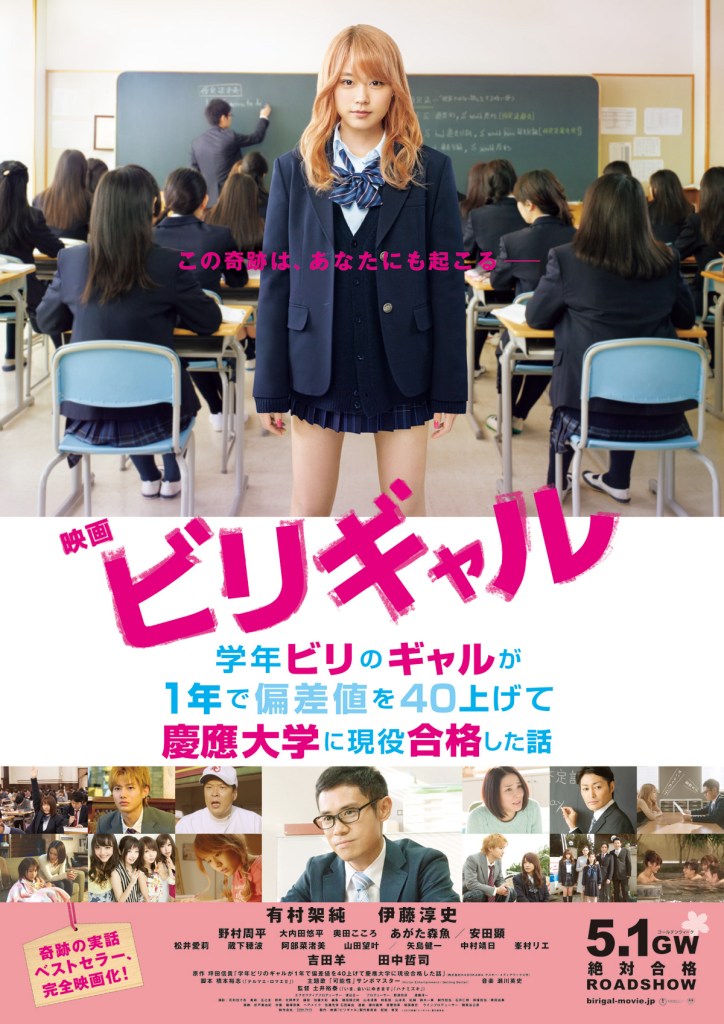
Flying Colors (ビリギャル, Nobuhiro Doi, 2015)

flying-colorsBelow average student buckles down and makes it into a top university? You’ve heard this story before and Nobuhiro Doi’s Flying Colors (ビリギャル, Biri Gyaru) doesn’t offer a new spin on the idea or additional angles on educational policy but it does have heart. Heart, it argues is what you need to get ahead (if you’ll forgive the multilevel punning) as the highest barriers to academic success are the ones which are self imposed. Arguing for a more inclusive, tailor made approach to education which doesn’t instil false hope but does help young people develop self confidence alongside standardised skills, Flying Colors is the story of one popular girl’s journey from anti-intellectual teenage snobbery to the very top of the academic tree whilst healing her divided family in the process.
Little Sayaka Kudo (Kasumi Arimura) got off to a bad start in her academic life, bullied and friendless at primary school. After the teachers refuse to help, Sayaka’s doting mother, Akari (Yo Yoshida), manages to get her into a more exclusive middle school which is affiliated with both a high school and a university which means that Sayaka’s academic destiny is fairly secure. However, though she does manage to make friends at her new school, she falls in with the “popular” crowd and begins dying her hair, rolling her skirt up, and wearing an inadvisable amount of makeup. Knowing that their entrance to high school and university is assured, the girls slack off completely and are at the very bottom of the class.

However, it all comes crashing down when Sayaka is caught smoking and threatened with expulsion. Bravely refusing to give up her friends and have them suffer the same fate, Sayaka is the only one who gets suspended but still risks missing graduation and losing her secured place at university. One of the few people to really believe in her, her mother Akari, arranges for Sayaka to attend an unconventional cram school where the well meaning teacher, Tsubota (Atsushi Ito), encourages her to have a goal, and it’s a lofty one – Keio University, one of the most prestigious institutions of higher education in Japan.

Despite her dismal academic prognosis, Sayaka is not lacking in ability, just the will and belief to see it through. After being so unhappy in primary school, Sayaka values her friendships and status as one of the popular girls and maintaining that side of her life is much more important than getting good grades. Written off by her teachers, no one is prepared to give her the permission to succeed and so she assumes she’s as dim as everyone says she is.

The situation isn’t helped by her home life in which her embittered father (Tetsushi Tanaka) ignores his two daughters in favour of devoting all his attention to his son, Ryuta (Yuhei Ouchida), whom he wants to become a professional baseball player. Vicariously thrusting his own dream on his unsuspecting son, Sayaka’s father is unprepared for the moment Ryuta realises he’s been denied the right to choose for himself and rebels against him as all young men are apt to do. In fact, many of the cram school students are there because of a grudge against an unfeeling father who has had quite an adverse affect on his child’s sense of self worth.

Tsubota is the first person other than her mother to show faith in Sayaka’s abilities and is able to convince her that she might be able to achieve something if she started to apply herself. Speaking to her in terms she can understand, Tsubota hunts down different kinds of study materials to help her along the way gradually raising her scores as she builds belief in her ability to reach her goal. Tsubota is the only teacher at the school and is able to take the time to get to know each of his pupils individually so he can tailor the course to bring out the potential in each of his charges. While the kids are studying to pass exams, Tsubota is studying pop culture so that he can talk to them on their own level and find out the best ways to keep them motivated.

As much as it’s the story of a persistent underdog finally discovering a well of self belief that will sustain them on a difficult path, Flying Colors is also an indictment on the modern educational system which only caters for the group rather than the individual and is so concentrated around rote learning and standardised tests that it fails to teach young people the critical thinking skills they need to succeed in life. Flying Colors probably is not going to influence public educational policy but it does offer an amiable and inspirational story that might give hope to those struggling under its often unreasonable demands.


Original trailer (English subtitles)

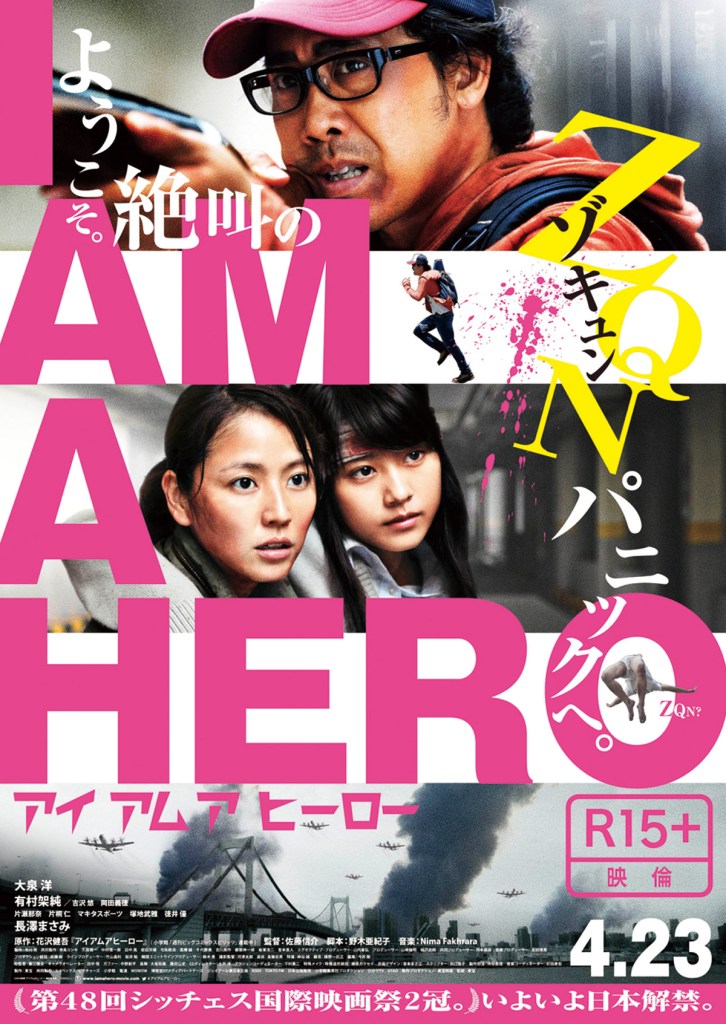
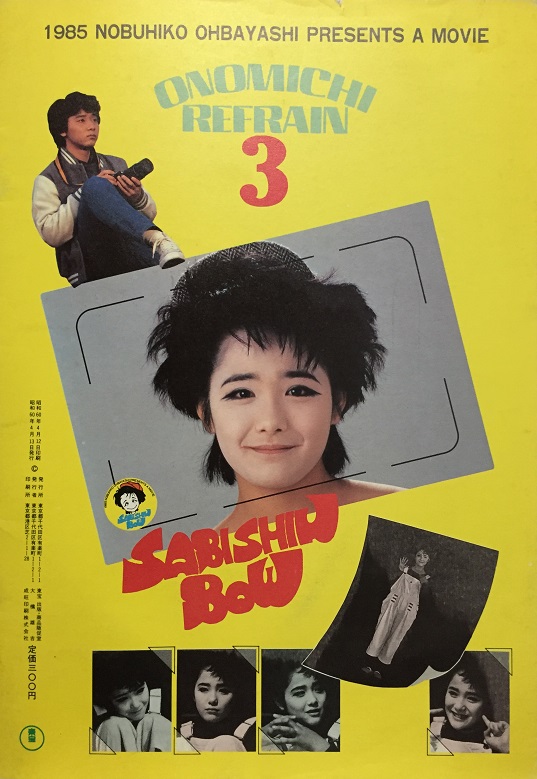
Miss Lonely (さびしんぼう, Nobuhiko Obayashi, 1985)

Miss LonelyMiss Lonely (さびしんぼう, Sabishinbou, AKA Lonelyheart) is the final film in Obayashi’s Onomichi Trilogy all of which are set in his own hometown of Onomichi. This time Obayashi casts up and coming idol of the time, Yasuko Tomita, in a dual role of a reserved high school student and a mysterious spirit known as Miss Lonely. In typical idol film fashion, Tomita also sings the theme tune though this is a much more male lead effort than many an idol themed teen movie.
Obayashi begins with an intertitle-like tribute to a “brusied, brilliant boyhood” before giving way to a wistful voiceover from the film’s protagonist Hiroki Inoue (played by frequent Obayashi collaborator, Toshinori Omi). His life is a fairly ordinary one of high school days spent with his two good friends, getting up to energetic mischief as teenage boys are want to do. The only thing that’s a little different about Hiroki is that his father is a Buddhist priest so he lives in the temple with his feisty mother who is always urging him to study more, and he’ll one day be expected to start training to take over the temple from his father (he has no particular aversion to this idea).

Hiroki’s big hobby is photography and he’s recently splashed out on a zoom lens but rarely has money for film to put in the camera so he’s mostly just playing around, accidentally spying on people. The main object of his interest is a sad looking high school girl who spends her days playing the piano. Hiroki, as an observer of human nature, has decided that she must be just as lonely as he is and has given her the name of “Miss Lonely”. It comes as a shock to him then that a very similar looking sprite appears, also called “Miss Lonely” and proceeds to cause havoc in his very ordinary life.

Although the film is filled with Obayashi’s trademark melancholy nostalgia, there is also ample room for quirky teen comedy as the central trio of boys amuse them selves with practical jokes. The best of these involves a lengthly sequence with the headmaster’s prized parrot which he has painstakingly taught to recite poetry. On being sent to clean up the headmaster’s office after misbehaving in class, the boys quickly set about teaching it a bawdy song instead causing the poor bird to hopelessly mangle both speeches into one very strange recitation. This comes to light when the headmaster attempts to show off his prowess with the parrot to an important visitor but when the mothers of the three boys are called in to account for their sons’ behaviour, they cannot control their laughter. That’s in addition to a repeated motif of the boys’ teacher’s loose skirt always falling off at impromptu moments, and a tendency to head off into surreal set pieces such as the anarchic musical number which erupts at the stall where one of the boys works part time.

Miss Lonely herself appears in a classic mime inspired clown outfit, dressed as if she’d just walked out of an audition for a Fellini film. To begin with, Hiroki can only see Miss Lonely through his camera lens, but she quickly incarnates and eventually even becomes visible to others as well as Hiroki himself. Past and present overlap as Miss Lonely takes on a ghostly quality, perhaps reliving a former romance of memory which may be easily destroyed by water and is sure to be short lived. Love makes you lonely, Hiroki tells us, revelling in the failure to launch of his first love story. Though, if the epilogue he offers us is to be believed, perhaps he is over romanticising his teenage heartbreak and is heading for a happy ending after all.

Chopin also becomes a repeated motif in the film, bringing our trio of lovesick teens together with his music and adding to their romantic malaise with his own history of a difficult yet intense relationship with French novelist George Sand. There’s a necessarily sad quality to Hiroki’s tale, an acceptance of lost love and lost opportunities leaving their scars across otherwise not unhappy lifetimes. Set in Obayashi’s own hometown Miss Lonely takes on a very heartfelt quality, marking a final farewell to youth whilst also acknowledging the traces of sadness left behind when it’s time to say goodbye.


Original trailer (no subtitles)

And here’s idol star Yasuko Tomita singing the title song on a variety show from way back in 1985

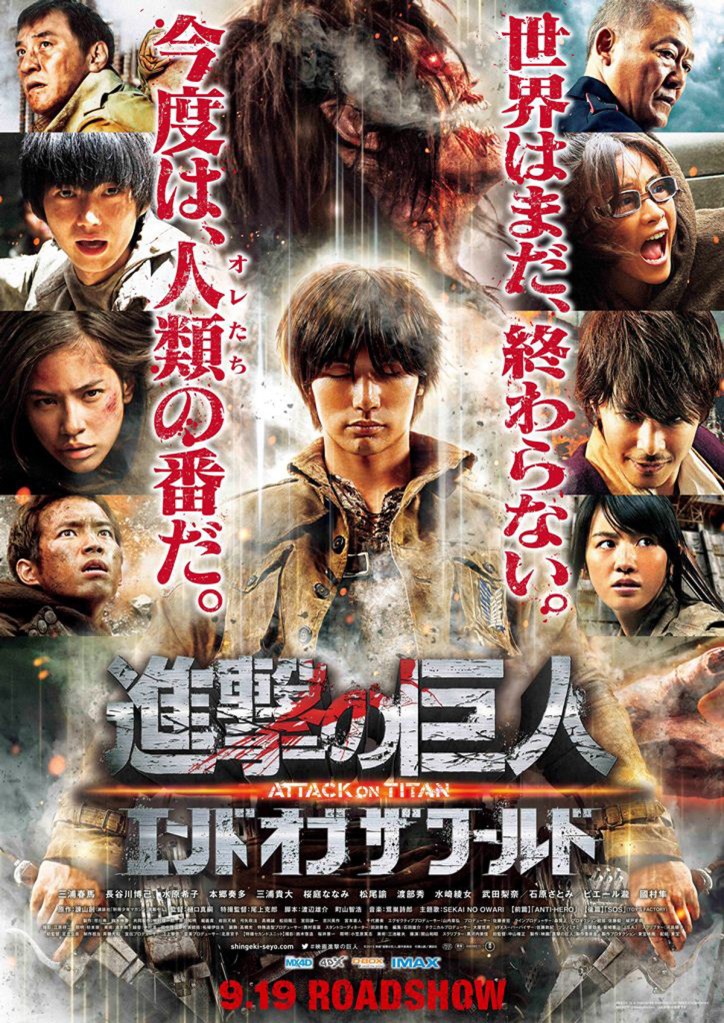
Attack on Titan: The Movie – Part 2: End of the World (進撃の巨人 ATTACK ON TITAN エンド オブ ザ ワールド, Shinji Higuchi, 2015)

166831_02Review of the second Attack on Titan live action movie first published by UK Anime Network.


Attack on Titan: The Movie – Part 1 ended on a humdinger of a cliff hanger, so this concluding half of the two part movie is one  which carries a fair amount of expectation regardless of reactions to the first instalment. Picking up more or less straight after the end of Part 1, the situation continues to be desperate as the mission to acquire explosives to blow the wall closed is an abject failure. Thanks to Eren’s (Haruma Miura) efforts, the Titan onslaught has eased off but he now finds himself in the direct firing line of sinister dictator Kubal (Jun Kunimura). Coming up with an alternative plan to recover the dud bomb we saw in the beginning of the first film, our intrepid band of comrades decide to return to their former home paving the way for the massive Titan on Titan frenzy finale.

Whereas Attack on Titan: The Movie – Part 1 attempted to reframe itself as a monster movie, The End of the World places itself firmly within the comic book genre. Rather than a frightened populace desperately trying to protect itself from the sudden arrival of man eating giants, The End of the World introduces a series of human lead super Titans who will eventually be duking it out during the film’s finale.

Largely, The End of the World eschews the thematic concerns of the first film in favour of large scale action scenes but it does come up with a few new ideas of its own. Towards the beginning, it seems as if The End of the World is about to undercut all the unpleasant fascistic connotations of the previous film by bringing Eren into contact with the Survey Corps who are now the rebel resistance but this turns out to be a hollow offering as the squad is then painted as a renegade militia commanded by a madman.

After his original imprisonment, Eren wakes up in a minimalist, low ceilinged white room which contains a ‘50s style jukebox with a cover version of the old time hit The End of the World already playing. Despite the ban on machines “the government” has apparently stockpiled some of these “artifacts” for their own use which also includes a rather prominent remote control for an Apple TV. At this point we’re shown some archive footage which explains the birth of the Titans and the creation of the “modern” society, the implication being that the Titans are part of an elaborate governmental propaganda scheme designed to keep the unruly populace firmly in line. The Titans reappeared at a political crisis point as the government felt the loyalty of its people waning and also feared that the plan to explore outside of the walls would weaken their authority. Having already instituted authoritarian policies such as limiting access to childbirth, the government used the Titan threat to galvanise support through fear.

This sequence begins to offer an entirely different reading of the film – one which is more fully hinted at in the final post-credit sequence, but is then largely forgotten. Aside from a nasty slice of possible domestic violence and some PTSD End of the World stays away from further character driven drama, leaving Shikishima to ham things up with an increasingly camp performance whilst behaving in a very ambiguous way towards Eren which proves awkward when considering further information provided regarding Eren’s childhood. As a whole, the Attack on Titan movies have a major problem with internal consistency, piling plot holes upon plot holes yet still failing to make any of its central conceits remotely compelling.

However, The End of the World does improve on some aspects of the previous film – notably in its tighter running time and action set piece finale (lengthy exposition sequence and extremely long recap aside). Production values appear a little better, there is far less of the bad CGI which marred the first film, and there’s even some more interesting production design to be found too. The Hollywood style heroic ending with the sun shining and the score soaring might appear less clichéd when considered alongside the alternate reading offered by the post-credits sequence, but then again this may be another red herring just like the resistance group which originally appeared to offer hope but was then summarily discredited.

The two live action Attack on Titan movies come at the original franchise from vastly different angles and are often at odds with each other. Some of these inconsistencies may be explained by the post-credits sequence which is, perhaps, a hook for a putative third film but only adds an additional layer of confusion to what is already an overloaded premise. All of that aside, The End of the World does offer slightly more straightforward, comic book style trial by combat action heading into its finale even if it does lay on the exposition a little thickly. Whilst offering some mild improvements over the first film, End of the World fails to rescue the project as a whole but is likely to provide satisfaction to those left hanging after the curtain fell on part one.


English subtitled trailer:

Copycat Killer (模倣犯, Yoshimitsu Morita, 2002)

copycatYoshimitsu Morita had a long standing commitment to creating “populist” mainstream cinema but, perversely, he liked to spice it with a layer of arthouse inspired style. 2002’s Copycat Killer(模倣犯, Mohouhan) finds him back in the realm of literary adaptations with a crime thriller inspired by Miyuki Miyabe’s book in which the media becomes an accessory in the crazed culprit’s elaborate bid for eternal fame through fear driven notoriety.

Following a non-linear structure, the film first introduces us to an old man who runs a tofu shop where he lives with his middle aged daughter who is in the middle of a breakdown following the end of her marriage, and his grown up granddaughter who has become the woman of the house during her mother’s illness. Though not without its difficulties his life was happy enough but after granddaughter Mariko goes out one evening and never comes home, nothing will ever be the same again.

A severed arm and a handbag are discovered in a flower bed by a teenage boy whilst walking a dog, though a mysterious distorted voice later contacts the media to inform them that the arm and the handbag do not belong to the same woman. The boy, oddly enough, is the sole survivor of his family who were all murdered some years previously. He was interviewed at the time by press reporter Yumiko whose soba shop owning brother may have a connection to the crimes. The cold blooded killer knows all of this and is engineering coincidences into a grand plan in which he will harness the power of mass media to earn himself a kind of national respect as an “expert” on the crimes which he has himself been committing.

Hitting a style somewhere between The Black House and Keiho, Morita opts for a dreamlike atmosphere filled with dissolves, soft split screens and hacker inspired graphical touches. Not only is the killer interested in appearing on TV either in voice or in person but can also manipulate mass media by hacking commercials and billboards to proclaim his own messages. As well as the early computer inspired effects, photo zooms, and contemporary methods of evidence presentation, Morita wrong foots the audience by zigzagging through the chronology of crime beginning with the central murder then switching back to the killers as they are now, then their childhoods, and cutting back to each of the other protagonists – the grandfather, teenage boy, and reporter.

Possibly inspired by the Leopold and Loeb case, the killers are a duo of psychotic young men who think they can achieve everlasting fame and personal satisfaction by committing the kind of murders which have never been committed before. The true motivator of the crimes even tells one of his victims that she ought to be grateful. That she was leading a “pointless” life and now she’s being given the opportunity to “serve” in something greater as a component in his master plan. Before, he explains, she’d just have gone on living until she died and been forgotten but now she’ll be a star – everyone will remember her name as a victim in the crime of the century and the world will mourn her death.

At another juncture, the killer also remarks that absolute faith in the family unit is the reason a relative of a suspect or victim of crime is routinely targeted by the press and a source of recrimination even though they themselves had nothing to do with it. Family issues are also a factor as rejection and abandonment by parental figures is offered as a reason for why a person may eventually become deranged. Thus, the killer’s intention to harness mass media for worldwide fame through committing heinous, terrible crimes is painted as a quest for the attention and recognition he never received from his parents. The family is both nothing and everything, but as we reach the conclusion it’s family that engenders hope as we’re presented with a potential new family committing to proving that nurture can trump nature with happy childhoods building mentally balanced adults.

The grief stricken grandfather tells the killer that his selfish actions are cowardly and pointless. That if he really wanted to cause a sensation in this cruel world, he should have become a hero and taught people how to love instead of hate – that would be the true radical action. Morita’s essential world view is once again resolutely bleak but offered with a wry and cynical sense of humour. The final messages are of acceptance and moving on no matter how hard it may be, and of trying to create something good out of even the very worst occurrences. The film’s extremely strange, oddly explosive expressionist finale takes things a step too far and the youthful, contemporary electronic score with its link to the stereotypical hacking iconography occasionally calls attention to itself but Copycat Killer still proves an entertaining, multilayered crime thriller filmed with Morita’s characteristically experimental approach and necessary dose of oddness.


Unsubtitled trailer: