
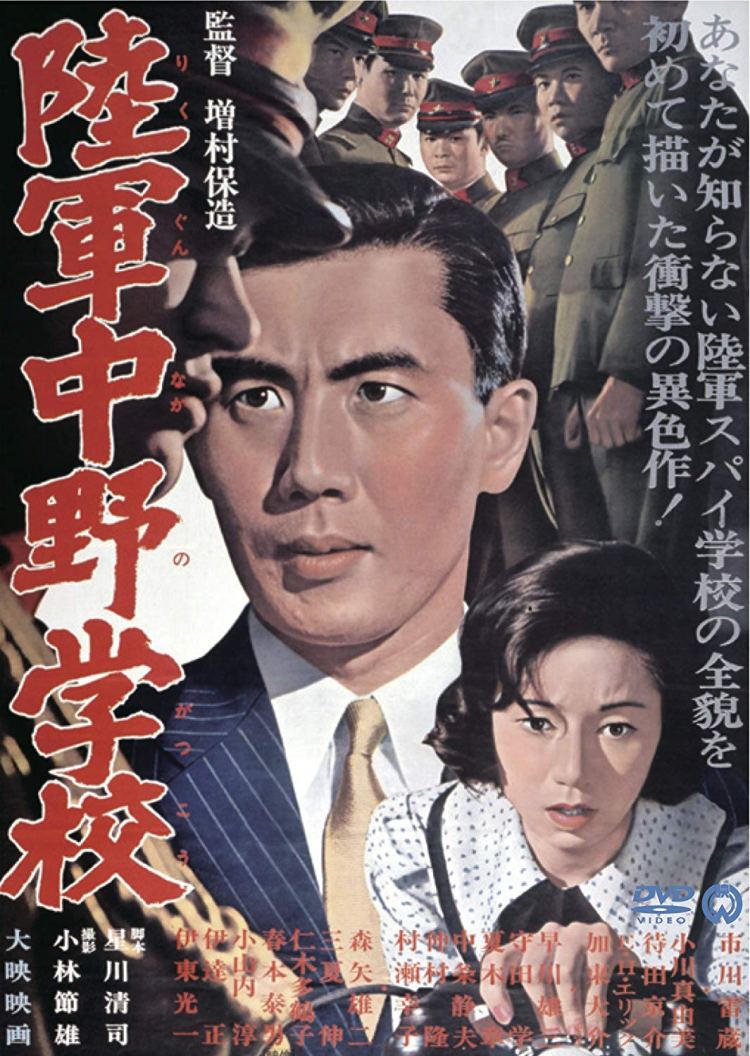
 For Yasuzo Masumura, freedom and individuality were often elusive concepts in a society as rigidly conformist as Japan’s even in the increasingly liberal post-war era. Casting an eye back almost 30 years, 1966’s Nakano Spy School (陸軍中野学校, Rikugun Nakano Gakko) stopped to ask what it took to make young men and women abandon their sense of self in order to become faceless warriors for cause in which it was extremely difficult to believe. Masumura described his spy story not as a critique of militarism but of the naivety of youth, carried away by misguided passions and essentially seduced by a corrupted sense of romantic heroism.
In October 1938, reservist Jiro Miyoshi (Raizo Ichikawa) has been putting off marriage to his fiancée Yukiko (Mayumi Ogawa) until he’s completed his obligatory two years of military service overseas. At the mercy of his times, he’s suddenly given a new and mysterious assignment as one of the first recruits to the Nakano Spy School – the first military intelligence training school in Japan. He tells his family that he’ll be away for an unspecified period of time but unbeknownst to him, entering the spy school will require a complete erasure of his original identity. Miyoshi will cease to exist, and Shiina will take his place.
Masumura paints the spy school with a hint of absurdist camp clearly inspired by James Bond as the recruits take lessons in ridiculous gadgetry, safecracking, and the erotic arts while learning to act like gentlemen even if not exactly born to the manor. What he’s most interested in, however, is how these fiercely intelligent and brave young men were convinced to abandon their identities in order to serve an abstract cause like country. The answer he finds, surprisingly, is “passion”. Jiro is among the first to question the rationale of their would-be-spymaster who tells them that their role will be indispensable in Japan’s ongoing activities in Asia in order to “liberate” to continent from European imperialists. An exasperated recruit points out that Japan’s main aim is colonisation which doesn’t quite square with Lieutenant Kusanagi’s (Daisuke Kato) depiction of them as revolutionary insurrectionists. Kusanagi agrees but offers only the justification that he set the school up against the army’s wishes because he knew things had to change. He doesn’t quite claim to be anti-militarist despite his insistence that a spy’s greatest weapon is empathy, but appeals to a sense of righteousness rather than loyalty in winning hearts and minds.
A strange, avuncular man, Lieutenant Kusanagi is an odd fit for the militarist crowd. A former spy himself, his entire conception of spyhood seems to be informed by European romance which is why he trains his guys to become suave gentlemen who know how to be charming at dances and manipulate feminine affection in order to facilitate their missions. Nevertheless, despite his affiliation he appears to be a basically good, noble hearted man who cares deeply for the men under his command even in the knowledge that he is training them for a precarious existence in which many of them will die young. He asks them to abandon not only their presents but their futures and they do it, not for Japan but for this very good, very earnest man who has earned their respect and whose dream they wish to realise even at the costs of their lives.
Jiro is only too quick to forget about Yukiko after throwing his lot in with Kusanagi. Yukiko, however, is frantic and leaves her job working for a British trading company to become a typist with the army in the hope of hearing news of him. Her position in the office obviously makes her a top asset for British intelligence by whom she eventually recruited. Her former boss, who turns out to be a high ranking spy, tells her that Jiro is dead – executed for speaking out against the war, and that her real enemy is none other than the Japanese army whose iron militarist grip is slowly destroying her nation.
Like Jiro, Yukiko is recruited through “passion” only this time out of anger and revenge, hastening the fall of those she believes responsible for the death of the man she loves. The irony is cruel. Jiro is presented with a choice – on discovering that Yukiko is a mole, he could choose to save the woman he loves but risk losing the chance to take down the operative that is running her. His original choice is to do nothing, allow events to take their course and absolve himself of responsibility even in the knowledge that if caught Yukiko will face extreme cruelty at the hands of the military police. He never considers rescue. Only a conversation with the kindly, remorseful Kusanagi leads him towards a “kinder” solution which is in itself a kind of spiritual suicide.
It is this question that Masumura wants to ask, what force is so strong that it could make a young man wilfully destroy his humanity in its service? The answer isn’t patriotism, it’s a kind of misplaced love and the passionate earnestness of a good man who himself is working for a misguided cause in which he believes totally. Jiro does not sacrifice himself for Japan, he sacrifices himself for Kusanagi because Kusanagi is good and he is young and naive enough to be swayed by goodness and passion alone. It is not militarism which seduces Jiro, but the misuse of his youthful idealism and absolute faith in the righteousness of one man who convinced him that he too was good and could act only in goodness.
Original trailer (no subtitles)
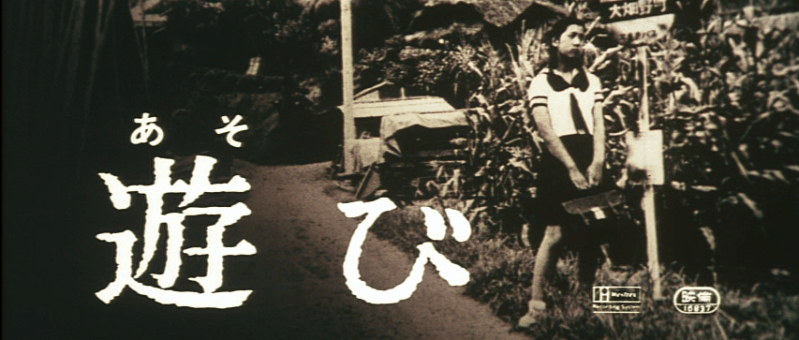


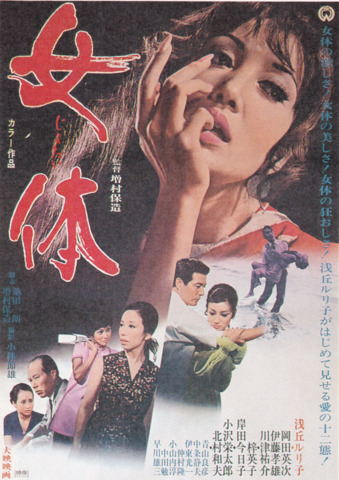
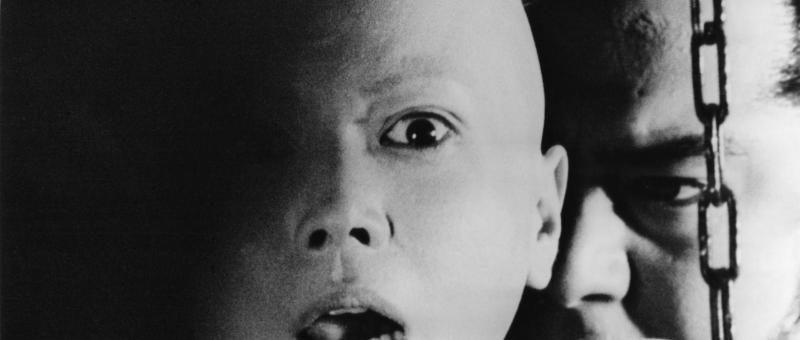
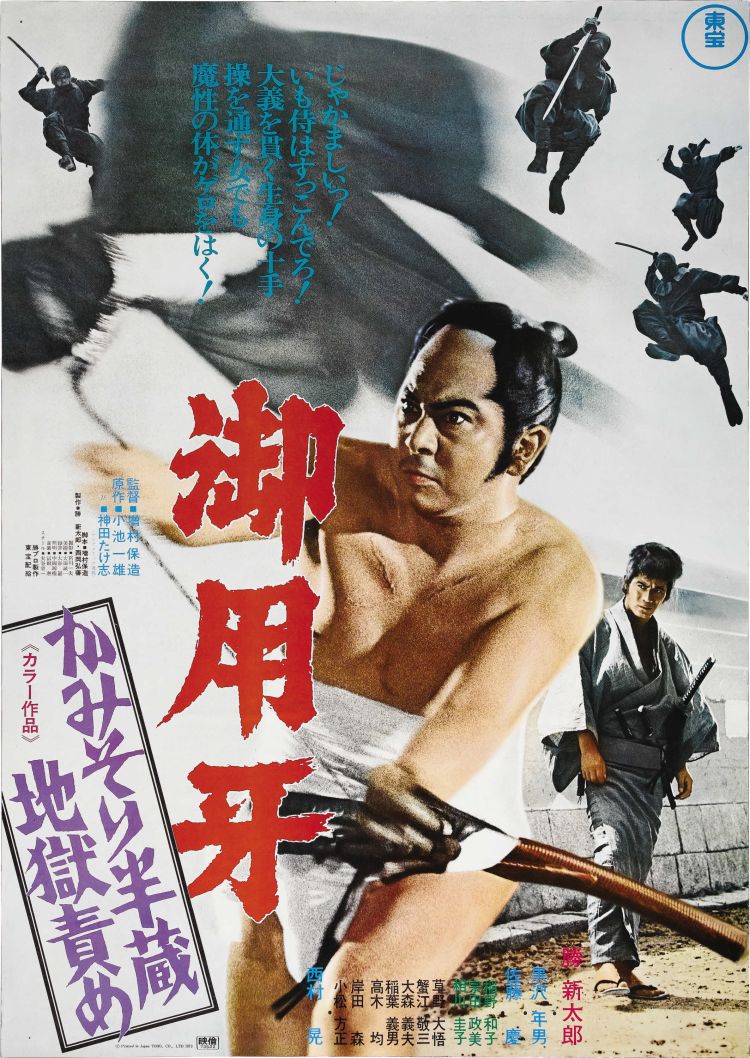

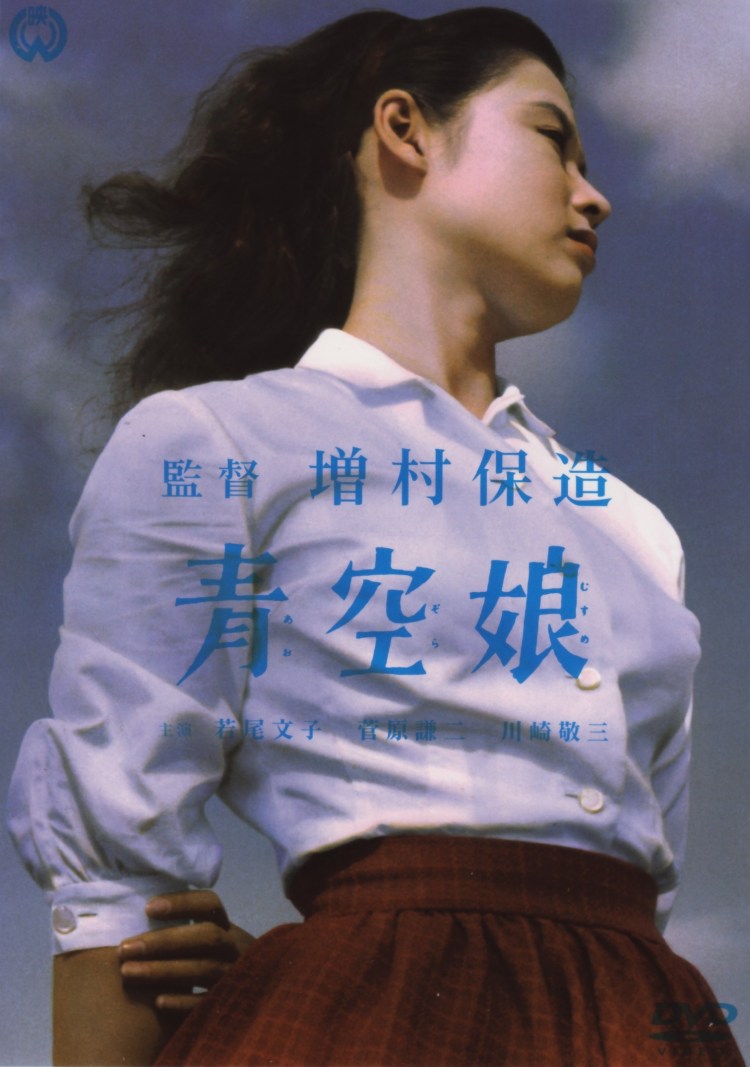
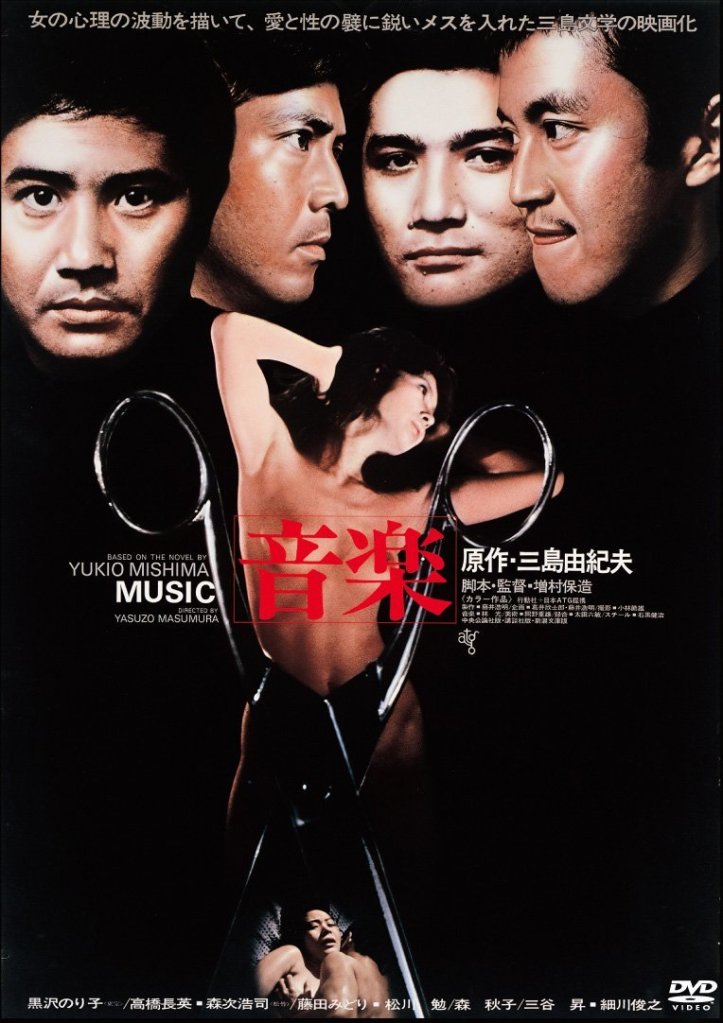 If the under seen yet massively influential director Yasuzo Masumura had one recurrent concern throughout his career, passion, and particularly female passion, is the axis around which much of his later work turns. Masumura might have begun with the refreshingly innocent love story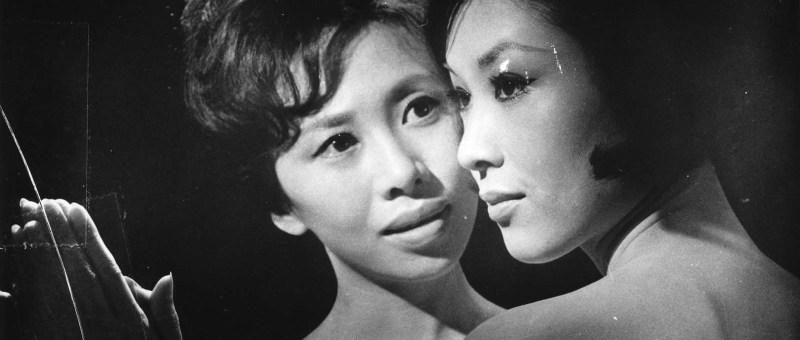
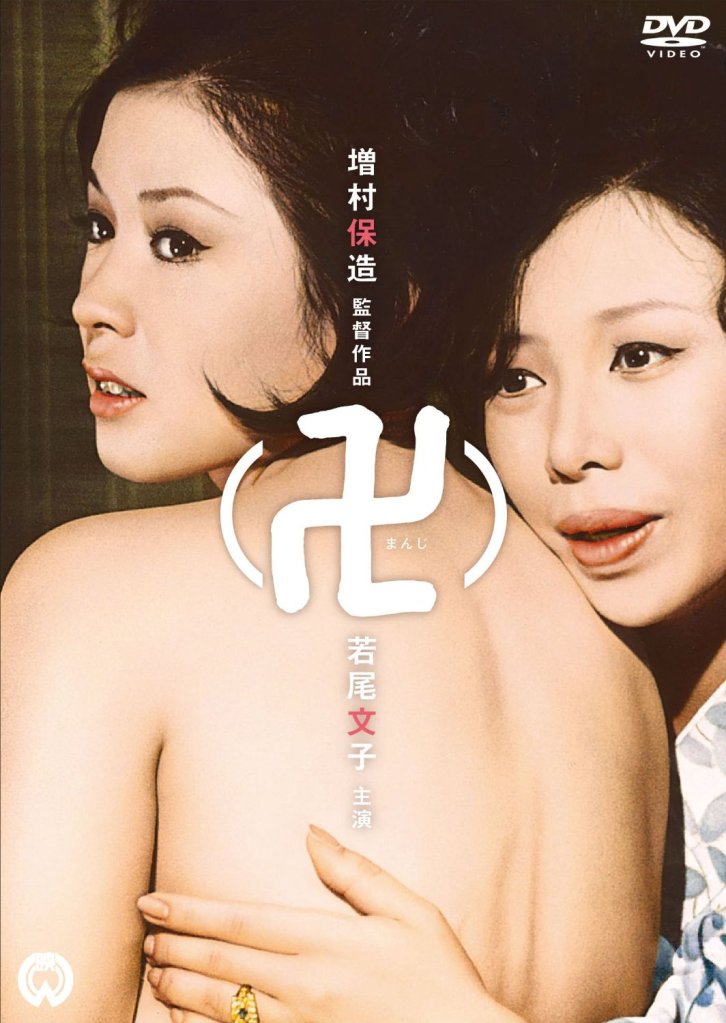 For arguably his most famous film, 1964’s Manji (卍), Masumura returns to the themes of destructive sexual obsession which recur throughout his career but this time from the slightly more unusual angle of a same sex “romance”. However, this is less a tale of lesbian true love frustrated by social mores than it is a critique of all romantic entanglements which are shown to be intensely selfish and easily manipulated. Based on Tanizaki’s 1930s novel Quicksand, Manji is the tale of four would be lovers who each vie to be sun in this complicated, desire filled galaxy.
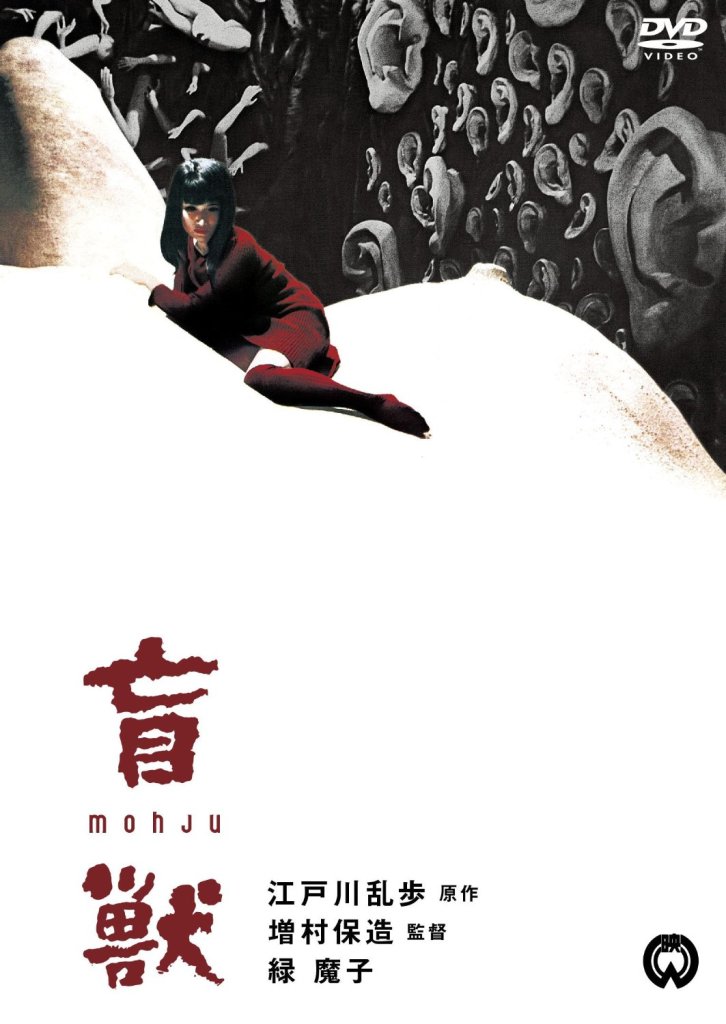 Never one to take his foot off the accelerator, Yazuso Masumura hurtles headlong into the realms of surreal horror with 1969’s Blind Beast (盲獣, Moju). Based on a 1930s serialised novel by Japan’s master of eerie horror, Edogawa Rampo, the film has much more in common with the wilfully overwrought, post gothic European arthouse “horror” movies of period than with the Japanese. Dark, surreal and disturbing, Blind Beast is ultimately much more than the sum of its parts.
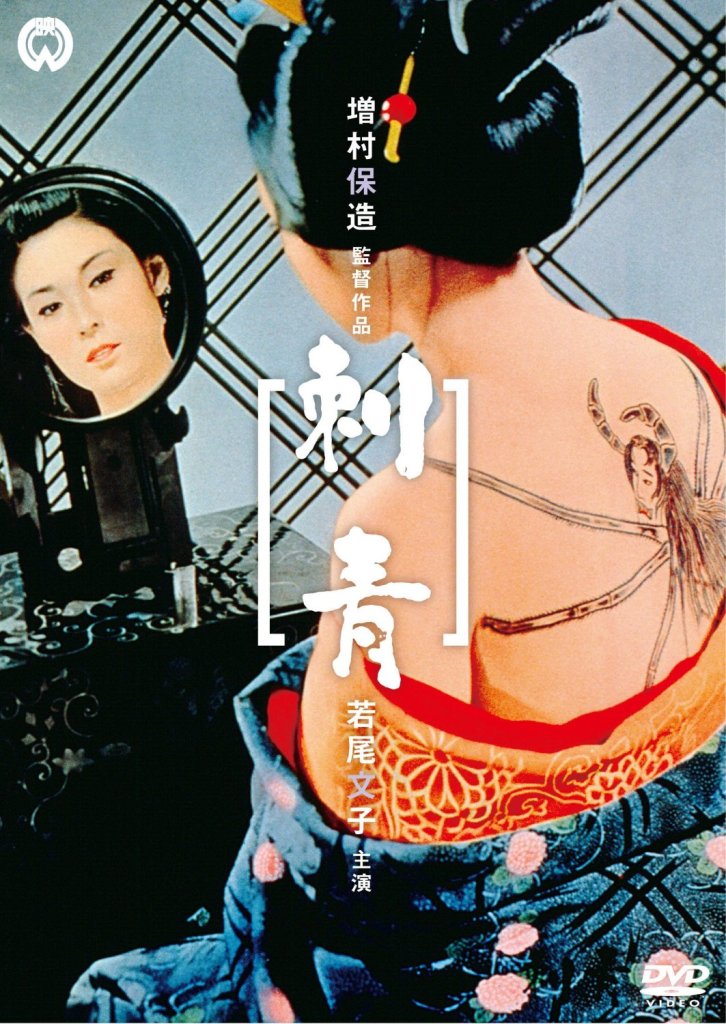 Irezumi (刺青) is one of three films completed by the always prolific Yasuzo Masumura in 1966 alone and, though it stars frequent collaborator Ayako Wakao, couldn’t be more different than the actresses’ other performance for the director that year, the wartime drama
  Windows on Worlds