Camera Japan Announces Complete Programme for 2017

At the terrace テラスにてCamera Japan, the premier Dutch showcase for Japanese film, returns for 2017 with more than 40 films screening in two cites over two weekends – Rotterdam 21st – 24th September, and Amsterdam from 29th September to 1st October. With so many films on offer it get can a bit overwhelming, so here’s a handy list broken down by genre and/or medium.

Current Cinema – Indie / Arthouse

bangkok-nitesAs usual Camera Japan has brought together some of the most eagerly anticipated recent independent and arthouse features including the latest from festival darlings Kiyoshi Kurosawa and Miwa Nishikawa, to Naoko Ogigami’s family comedy/drama Close-Knit, sleeper Cannes hit Oh Lucy! and a host of soon to be classics from up and coming directors.

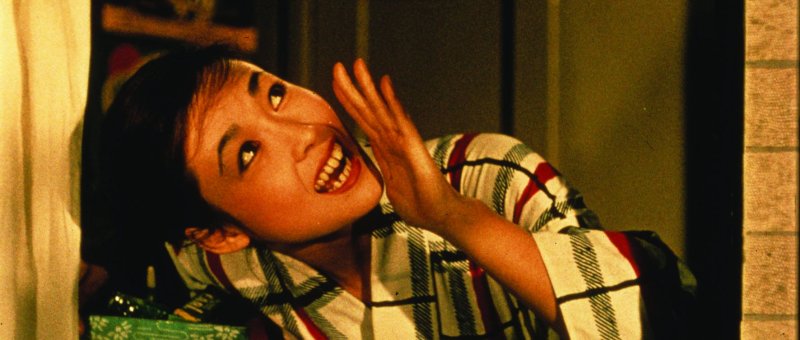
  • At the Terrace – Adapting his own stage play, Kenji Yamauchi’s At the Terrace is a scathing satirical comedy charting the gradual disintegration of the bourgeoisie over the course of one very awkward post dinner party drinking session. Review. Screening at Rotterdam only – 21st Sept. 2.30pm, 23rd Sept. 5pm
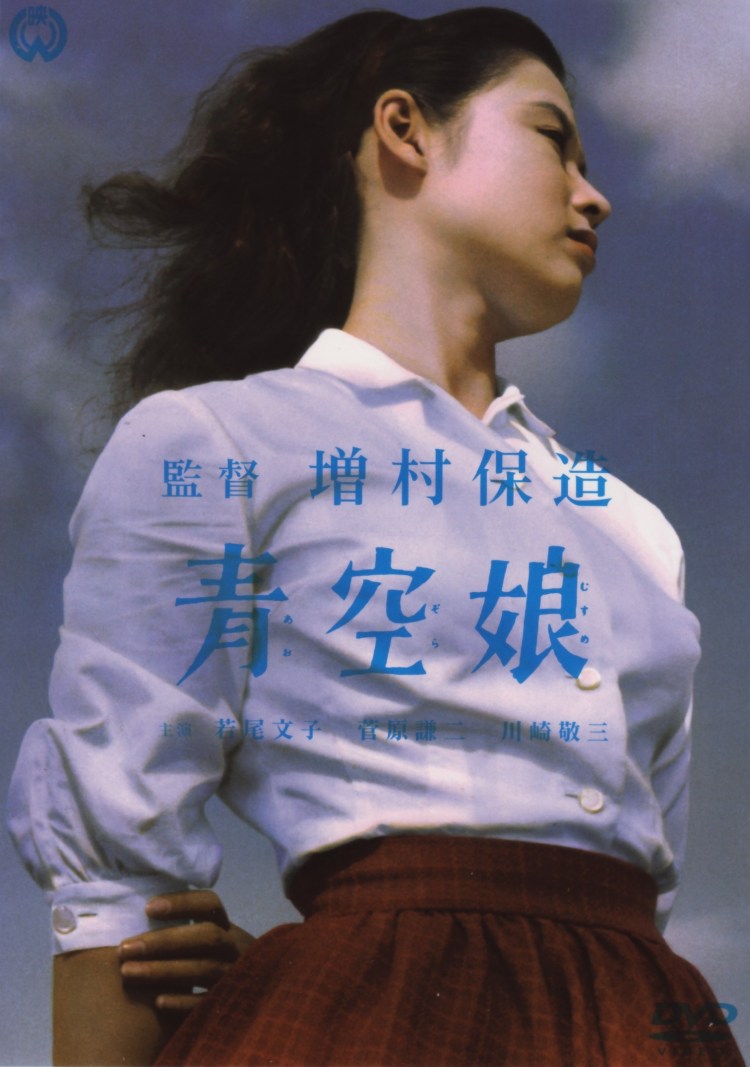
  • Bangkok Nites – The latest from Saudade director Katsuya Tomita who also stars in the film, Bangkok Nites is a sideways look at the continuing effects of colonialism. ReviewRotterdam only, Sept. 24, 1pm. Producers will be present for a Q&A.
  • Before We Vanish – Kiyoshi Kurosawa returns to the sci-fi genre for the first time since 2013’s Real with an idiosyncratic take on the alien invasion movie. Screening with Dutch subtitles only at Rotterdam 21st Sept, 9.30pm / 23rd Sept. 7pm , and at Amsterdam 30th Sept., 7pm. 
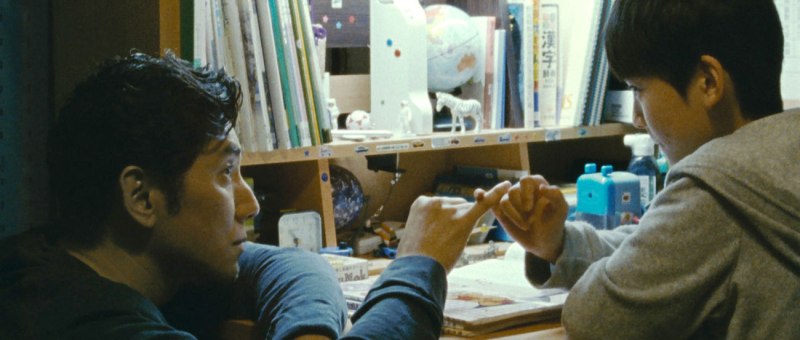
  • Close-Knit – Less surreal than her previous films, Ogigami’s heartwarming family drama follows a neglected 11 year old girl who is taken in by her uncle and his transgender girlfriend, Rinko (played by Toma Ikuta). ReviewScreening at Rotterdam 21st Sept. 7.30pm, 22nd Sept. 4.30pm, and Amsterdam 29th Sept. 7pm.
  • Eriko Pretended – Eriko can’t bring herself to admit to her family that her career as an actress has stalled but discovers a new talent after a trip home for a funeral introduces her to the world of professional mourning in the debut feature from Akiyo Fujimura. Screening at Rotterdam only – Sept. 22, 2.30pm, and Sept. 24, 7.15pm.
  • Going the Distance – Asahi is about to marry the love of his life when a face from the past reappears and threatens to come between them. Forced to choose between his wife-to-be, and a “brother” who grew up with him in the same orphanage, Asahi’s life reaches a crisis point in this comedy/drama debut from Yujiro Hamamoto. Screening at Rotterdam only – 21st Sept. 4.30pm, 22nd Sept. 4.45pm
  • Hello/Goodbye – A young girl accidentally discovers her classmate is pregnant whilst trying to steal something from her bag leading the pair to encounter an old woman with alzheimer’s and a mystery she needs solving in this indie feature from Takeo Kikuchi. Screening at Rotterdam only – 21st Sept. 3pm, 24th Sept. 3pm
  • Her Love Boils Bathwater – Capturing Dad’s Ryota Nakano takes a good look at mum in this heartbreaking comedy/drama which stars Rie Miyazawa as a long suffering wife and mother who learns she has a terminal illness and decides to mend her fractured family while she still can. ReviewScreening at Rotterdam 24th Sept., 12.30pm, and Amsterdam 1st Oct. 12.30pm.
  • Journey of the Tortoise – First time feature director Tadashi Nagama draws inspiration from his own relationship with his father as a boy, his dad, and the pet turtle, join an uncle and his fiancée for an anarchic cross country road trip. Screening at Rotterdam only – 21st Sept. 10.15, 24th Sept. 5pm.
  • Kuro – Directed by Joji Koyama and Noriko Tujiko, Kuro is the story of a Japanese woman living in Paris who works in a karaoke bar and cares for her paraplegic lover at home. When a mysterious Mr. Ono arrives, he threatens to destabilise their previously settled lives. Screening at Rotterdam only 23rd Sept., 8.30pm & 10.30pm. The directors will be present for a Q&A.
  • Life and Death on the Shore – Hikari Mitsushima stars in a tale of wartime romance. Part of the festival’s Kyushu focus. Screening once only at Rotterdam, 22nd Sept. 7pm.
  • The Long Excuse – Miwa Nishikawa’s adaptation of her own novel examines the destructive effects of chronic insecurity as a self centred writer loses his wife in an accident but feels nothing only to have his emotional walls knocked down by the grieving family of her best friend. Review. Screening at Rotterdam 21st Sept. 4.45, 23rd Sept. 7.15, and at Amsterdam on 30th Sept., 12.30.
  • Love and Other Cults – Eiji Uchida returns with another tale of wandering youth as a young girl raised in a cult craves real love but struggles to find it in an increasingly strange world. Review. Screening at Rotterdam 21st Sept., 5pm, 22nd Sept. at midnight, and Amsterdam 29th Sept. at midnight. Director Eiji Uchida will be attending the Amsterdam screening for a Q&A.
  • Noise – 12 years after a spate of random stabbings in Akihabara three ordinary people attempt to deal with the longterm effects in Yusaku Matsumoto’s debut feature. Screening once only at Rotterdam, 24th Sept., 7pm. Director and members of the crew will be present for a Q&A.
  • Oh Lucy! – A sleeper hit in Cannes, Atsuko Hirayanagi’s debut is the story of a lonely middle-aged office lady who decides to spice up her life with English lessons but discovers a whole new side of herself when the charismatic teacher (played by Josh Hartnett) gives her a blonde wig and the alter-ego Lucy. Screening once only at Rotterdam, Sept. 24, 12.30pm. 
  • Over the Fence – The last of three films inspired by novels of Yasushi Sato, Nobuhiro Yamashita’s Over the Fence is a tale of new beginnings and the courage it takes to find them. Review. Screening at Rotterdam, 24th Sept. 4.35pm, and Amsterdam 9.30pm.
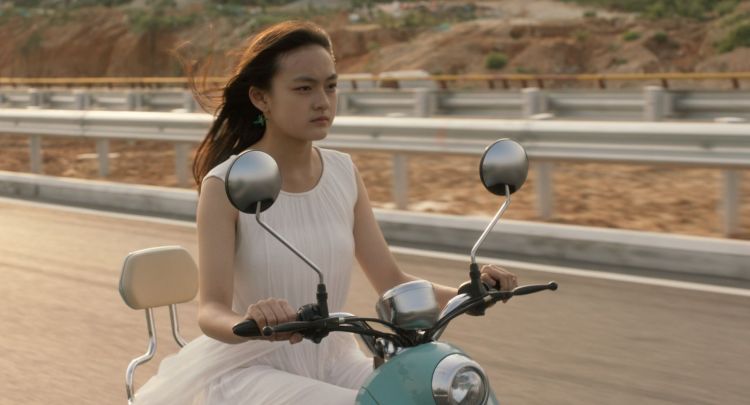
  • Parks – Set in Inokashira park, Natsuki Seta’s charming drama centres on three youngsters who bond through the discovery of a tape featuring an unfinished lovesong.  Review. Screening at Rotterdam only, Sept. 23, 14.30.
  • Poolsideman – A timely look at a life of quiet desperation from Hirobumi Watanabe. Review. Screening once only at Rotterdam, Sept. 23, 9.45pm.
  • Rage – The latest from Lee Sang-il, Rage is a tale of three possible murderers, doubt, suspicion and violence. ReviewScreening at Rotterdam 22nd September, 9.30pm, 23rd Sept. 9.30pm, and Amsterdam 30th Sept. 9.30pm.
  • Same Old Same Old – Rikiya Imaizumi’s reflexive drama is the story of a director in over his head, a grieving son, and an actress trying to cover up the suicide of her boyfriend. Screening once only at Rotterdam, 23rd Sept. 4.30pm.
  • The Sower – A powerful film about guilt, responsibility, and redemption, The Sower is a painful tale of a family’s disintegration when a long lost brother returns home from a mental hospital only to encounter a family tragedy. Review. Screening once only at Rotterdam, 22nd Sept., 9.45pm.
  • Seto & Utsumi – Tatsushi Omori’s adaptation of the popular manga is a predictably charming affair comprised of brief vignettes as the two high school boys of the title chat their days away hanging out on the way home from school. Review. Screening at Rotterdam only, 21st Sept., 5pm, 22nd Sept. 5pm.

Current Cinema – Mainstream / Genre

death note light up the new world stillOf course there’s plenty of blockbuster fare on offer too from the latest in the Death Note franchise to cat-centric dramas, tales of Shogi playing geniuses, splatter horror, and one family’s strange journey to familial harmony when all the lights go off.

  • Death Note – Premier blockbuster director Shinsuke Sato brings his typically polished visuals to this spin-off of the main series following officers from the Death Note Taskforce as they face the increasingly global Death Note threat. Review. Screening at Rotterdam, 23rd Sept. 9.30pm and Amsterdam, 1st October 2.45pm.
  • Meatball Machine Kodoku – Yoshihiro Nishimura returns with another splatter fuelled assault on the senses. Screening at Rotterdam, 23rd Sept. at midnight, and Amsterdam, 30th Sept. at midnight.
  • Neko Atsume House – Adaptation of the popular smartphone game in which a blocked writer moves to the country for inspiration but finds his life overtaken by cats! Screening at Rotterdam only, 21st Sept., 7.30pm, and 23rd Sept. 2.30pm. 
  • Neko Ninja – A young ninja completes his first mission but gains an unexpected follower in the form of a pudgy cat he thinks might be the reincarnation of his long lost father. Screening at Rotterdam on 23rd Sept. 5pm, 24th Sept. 10pm, and Amsterdam on 30th Sept. 3pm.
  • Satoshi: A Move for Tomorrow – A biopic of the real life shogi player who battled serious and life long illness to reach the top of the shogi tree. Review. Screening at Rotterdam on 22nd Sept., 7pm, and Amsterdam on 1st Oct. 7.30pm.
  • The Sun – Yu Irie’s sci-fi/horror takes place in a world in which vampirism rules the Earth and the only path to survival is to become a vampire. Screening at Rotterdam, 24th Sept. 9.30pm, and Amsterdam 1st Oct., 9.45pm.
  • Survival Family – Shinobu Yaguchi returns with another ensemble comedy following one Tokyo family’s attempts to survive in a post-electric world. Review. Screening at Rotterdam on 24th Sept. 7.30pm and 30th Sept, 4.45pm.

Classic Cinema
blind woman's curse stillAlongside latest releases, Camera Japan has also brought together some classic movies from the recent and not so recent past.

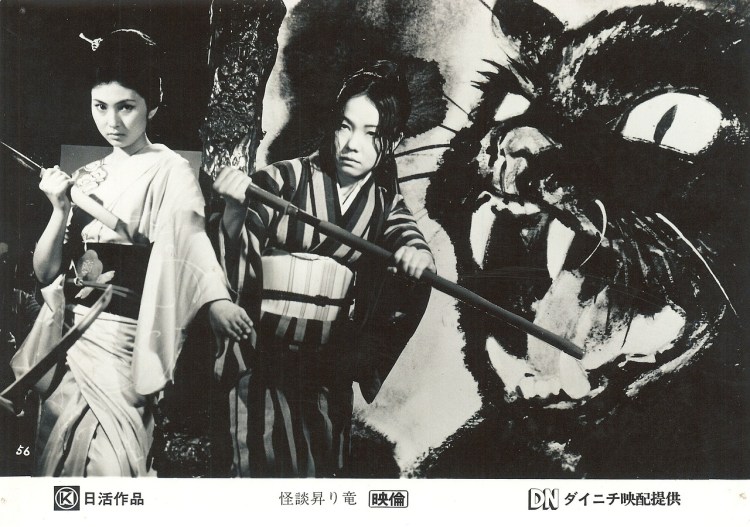
  • Blind Woman’s Curse – Starring Meiko Kaji this ero-guro tale of female revenge features some very strange black cat/tattoo action. Screening at Rotterdam only, 22nd Sept., 10pm. Introduced by Midnight Eye’s Tom Mes whose Meiko Kaji book, Unchained Melody, is released on 11th Sept.
  • Eureka – Screening as part of the Kyushu focus, Shinji Aoyama’s 3.5hr masterpiece from 2000 stars Koji Yakusho as a bus driver attempting to live with the effects of a hijacking. Screening once only at Rotterdam only, 21st Sept. 7pm. 
  • Naoko: Winning Runners – Also part of the Kyushu focus, this 2008 sports movie follows a young man hoping to fulfil his father’s legacy by competing in the marathon relay race with his high school team. Screening once only at Rotterdam, 22nd Sept. 4.30pm
  • A Page of Madness – Teinosuke Kinugasa’s landmark silent screens with live score from Bruno Ferro Xavier da Silva. Screening at Rotterdam 24th Sept. 7.30pm.

Documentary

boys for saleDocumentary fans also have a lot to look forward to with three very different explorations of modern Japanese life.

  • Boys for Sale – Produced by Ian Thomas Ash (A2-B-C, -1287), Boys for Sale mixes animation and talking heads interviews to explore the lives of the (mostly straight) young men working in the sex industry in Tokyo’s Shinjuku 2-chome. Screening at Rotterdam only, Sept. 22, 7.30pmProducer Ian Thomas Ash will present for a Q&A. 
  • Mother I’ve Pretty Much Forgotten Your Face – fascinating documentary following Michiru Endo, the lead singer of one of Japan’s most high profile ’80s punk bands, The Stalin, still on tour at 60 when the Great East Japan Earthquake strikes. Screening at Rotterdam only , Sept. 24, 9.30pm.
  • Start Line – Ayako Imamura, who was born deaf, charts her long distance bike ride. Screens at Rotterdam only, 21st Sept. 9.30pm.  

Anime

napping princess stillThere’s no shortage of animation either with four new releases including the award winning In this Corner of the World, and Studio Ghibli classic Princess Mononoke.

  • Ancien and the Magic Tablet (AKA Napping Princess) – The latest from Ghost in the Shell’s Kenji Kamiyama, this family friendly, sci-fi infused tale follows a young girl’s attempt to stop an international conspiracy from within her dreamworld. Review. Screening at Rotterdam only, 21st Sept. 7.15, 22nd 7.15pm.  
  • In This Corner of the World – Award winning animation from the director of Mai Mai Miracle following the early life of a young woman of Hiroshima during the war. Review. Screening at Rotterdam 22nd Sept., 2pm, 23rd Sept. 4pm, and at Amsterdam on 1st Oct. 5.15pm.
  • Princess Mononoke – Classic Studio Ghibli animation features in the festival’s Kyushu focus. Screening once only at Rotterdam, 24th Sept. 5pm.
  • A Silent Voice – Heartrending tale of a girl with hearing difficulties and the boy who bullied her. Review. Screening once only at Rotterdam, 23rd Sept. at 7pm.
  • Your Voice – High school girl Natsuki is unsure what to do with the rest of her life until she wanders into a radio station and enjoys a stint as a DJ leading her to wonder if her grandmother’s stories of spirits from other worlds could really be true. Screening at Rotterdam only, 23rd September, 2pm, and 24th Sept, 3pm.

WARM-UP @ WORM: concert + movie

GUI AIUEO-S A STONE FROM ANOTHER MOUNTAIN TO POLISH YOUR OWN STONE stillTrippy psychedelic road movie, Gui aiueo:S A Stone from Another Mountain to Polish Your Own Stone, produced by and starring Gui aiueo:S, will screen at WORM Rotterdam alongside a live performance from Krautrock band Minami Deutsch on 15th Sept. as a special warm-up event.

The festival will see two more live concerts by Yasuhito Arai and Noriko Tujiko whose film Kuro is also playing in the festival, as part of a series of special events including beer tasting, sencha and miso workshops, and the film brunch.

Full information on all the films as well as ticketing links can be found on the official website. You can also keep up to date with all the latest news via Camera Japan’s official Facebook page, Twitter account, and Instagram channel.

Follow our ongoing coverage and find reviews for all the films covered so far in our Camera Japan 2017 category.
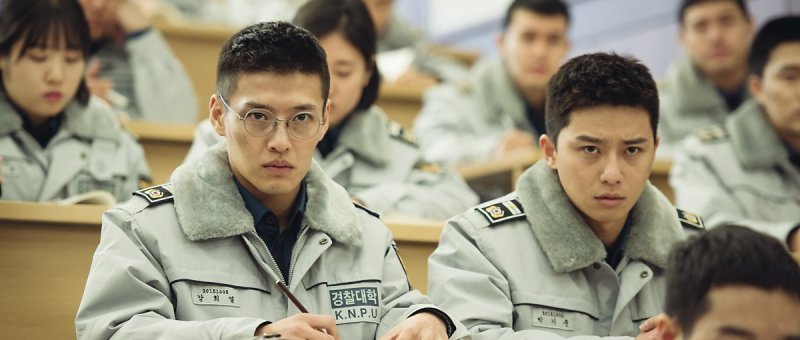
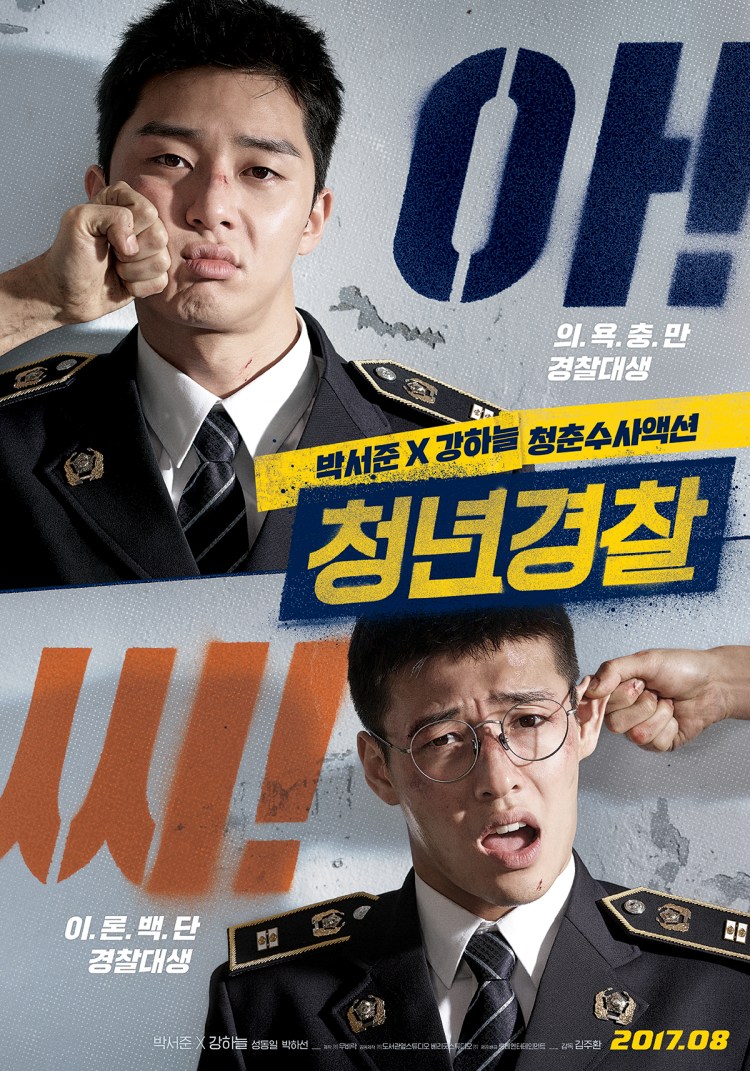
Midnight Runners (청년경찰, Kim Joo-hwan, 2017)

b861faaff73e4760fa673b9ca1b1468dffb7a334b9e43caee1065e675364da586d07306fe12f0a8d2f3556ef798dde699b6f2adc283c1ae8d9b53a8d85745de393ee015725bff3c47298edfb94e7f49fThere are many good reasons for applying to Police University, even if many people can’t see them. That aside, the heroes of Kim Joo-hwan’s Midnight Runners (청년경찰, Chungnyeongyungchal) have ended up there not through any particular love of honour and justice, but simply because it was cheap, on the one hand, and because it was different, on the other. An ‘80s-style buddy (not quite) cop comedy, Kim’s followup to the indie leaning Koala is the story of two young men finding their calling once their latent heroism is sparked by witnessing injustice first hand, but it’s also careful to temper its otherwise crowd pleasing narrative of two rookies taking on evil human trafficking gangsters with a dose of background realism.

Rookie recruits to Seoul’s Police University, Gi-jun (Park Seo-joon) and Hee-yeol (Kang Ha-neul) could not be more different. Gi-jun is exasperated by his worried mother’s words of parting, but hugs her goodbye anyway. Hee-yeol’s dad looks on in envy at this touching scene, but asking if he should hug his son too gets a resounding “no” before Hee-yeol begins to walk away, turning back to remind his father to button his coat because it’s cold outside. Gi-jun doesn’t want to get his hair cut because he’s fashion conscious, whereas Hee-yeol doesn’t want his cut because they don’t sterilise the clippers and he doesn’t want to catch a bacterial skin infection. Nevertheless, the pair eventually bond first during lunch as Hee-yeol surrenders his “carcinogenic” sausages to the always hungry Gi-jun, and then when Hee-yeol sprains his ankle during the final endurance test and Gi-jun (eventually) agrees to carry him to the finish line. Not for the first time, Gi-jun’s “selfless” actions to help a person in need earn the pair a few words of praise from their commander who berates the others for running past an injured comrade and thinking only of themselves when the very point of a police officer is to help those in need.

A year a later the pair are firm friends and decide to take a night on the town to find themselves some girlfriends to spend Christmas with. Sadly, they do not find any but they do find crime when they spot a pretty girl in the street and then spend ages arguing about asking for her number only to see her being clubbed over the head and bundled into a black van. Slightly drunk, the boys panic, chase the van, and ring the police but are told to stay put and wait for a patrol car. They figure they can get to the police station faster than a car can get to them but once they do they realise the entire station is being pulled away on another high profile case and no one’s coming. They do what it is they’ve been trained to do, investigate – but what they discover is much darker than anything they’d imagined.

Police in Korean cinema often have a bad rap. It’s nigh on impossible to think of any examples of heroic police officers who both start and finish as unblemished upholders of justice. Midnight Runners, however, attempts to paint a rosier picture of the police force, prompting some to describe it almost as a propagandistic recruiting tool. It helps that Gi-jun and Hee-yeol are still students which means that the idealistic line they’re being fed goes mostly unchallenged (at least until the climactic events prompt them to think again), but there are certainly no beatings, no shady dealings with the underworld, or compromised loyalties in the boys’ innocent quest to rescue a damsel in distress.

The spectre of corruption hovers in the background but on a national, rather than personal, level as the news constantly reports on the kidnapping of a wealthy CEO’s child while a young woman from a troubled background has also gone missing but no one, not even the police who have devoted all their resources to the CEO’s case, is interested. Meanwhile, Gi-jun and Hee-yeol, having just escaped from certain death, attempt to get help from a nearby police box but the shocked jobsworth of a duty officer won’t help them because they don’t have their IDs. The boys’ outrage on being informed that despite all their efforts, the specialist team who handle cases like these won’t even be able to look at it for weeks is instantly understandable, but so is their professor’s kindly rationale that all lives are equal and the squad can’t be expected to dump their current caseload and swap one set of victims for another. The police, so it goes, are heroes caged by increasing bureaucracy which has made them forget the reasons they became policemen in the first place. 

Despite the grim turn the film takes after Gi-jun and Hee-yeol make a shocking discovery as a result of their investigation, Kim keeps things light thanks the boys’ easy, symbiotic relationship filled with private jokes and even a cute secret handshake. Jokey slapstick eventually gives way to hard-hitting action as the rookie officers finally get to try out some of their training and find it effective on entry level street punks, but less so on seasoned brawlers with mean looks in their eyes. Told to “leave things to the grown ups”, Gi-jun and Hee-yeol decide there are things which must be done even it is dangerous and irresponsible because no one else is going to do them (whether that be eating sausages or rescuing young women no one else seems to care about). A strange yet fitting place to make the case for a better, less selfish world, Midnight Runners is a buddy cop throwback which brings the best of the genre’s capacity for humour and action right back with it.


Currently on limited release in UK cinemas.

Original trailer (English subtitles – select from menu)

Alone Across the Pacific (太平洋ひとりぼっち, Kon Ichikawa, 1963)

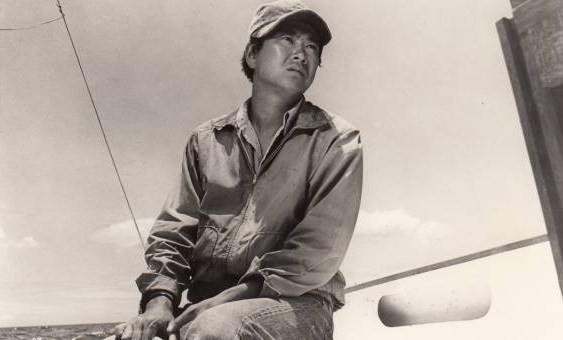
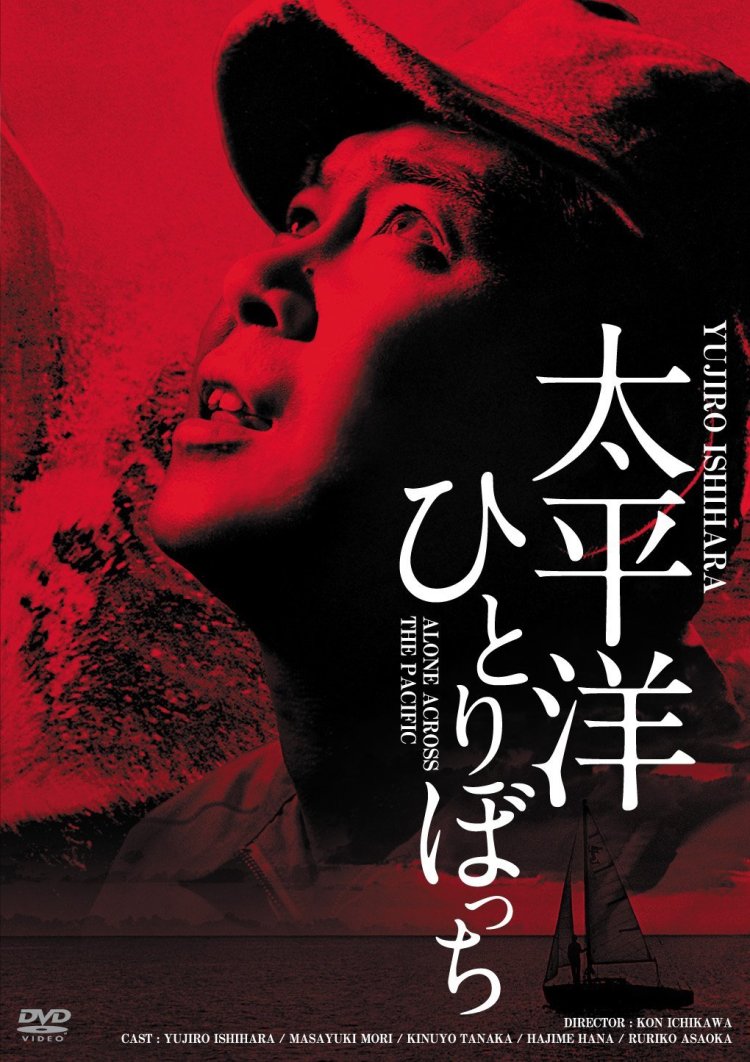
Alone Across the PacficKon Ichikawa made two sorts of movies – the funny ones and the not so funny ones. Despite the seriousness of the title, Alone Across the Pacific (太平洋ひとりぼっち, Taiheiyo hitori-botchi) is one of the funny ones. Like many of Ichikawa’s heroes, Horie is a man who defies convention and longs for escape from the constraining forces of his society yet is unable to fully detach himself from its cultural norms. Based on the real life travelogue of solo sailor Kenichi Horie, Alone Across the Pacific is less the story of a man battling the elements, than a cheerful tale of a man battling himself in a floating isolation tank bound for the “land of the free”.

Kenichi (Yujiro Ishihara) is a strange man. He has few friends (aside from the family dog, Pearl) and is obsessed with the idea of running away to sea. Inspired by the tales of other intrepid sailors, his dream is to sail all alone across the Pacific Ocean from Osaka to San Fransisco. Despite the fact that it is illegal for small boats to leave Japanese waters (and that he is too impatient to wait for his passport to come through), Kenichi has custom made his own yacht, one without an engine, and has set off on his longed for voyage under the cover of darkness.

Rather than filming Kenichi’s journey naturalistically, Ichikawa opts for an adventurer’s tale as Kenichi provides an ironic voice over detailing some of his naive failings as a rookie sailor undertaking such a daunting mission. Each of Kenichi’s crises links back to a memory from his shore life, reminding us why he’s on this journey in the first place. Kenichi’s struggles are the same as many a young man in post-war Japan and, in fact, many of those previously played by the poster boy for youthful rebellion, Yujiro Ishihara.  Unwilling to live a life hemmed in by the predetermined path of a job for life, wife, children and total social conformity, Kenichi longs to be free of his cultural baggage by abandoning his civility during a long process of isolation therapy free of overbearing fathers, fretting mothers, indifferent sisters and a generally noisy world.

Kenichi’s father (Masayuki Mori) is the very personification of authority, berating his son for his fecklessness and pointless obsession with sailing – a sport a working class boy like Kenichi can barely afford. Kenichi’s determination to achieve his goal sees him leave school early, take a job in his father’s workshop only to quit suddenly for a more lucrative one delivering luggage for a travel agents, and quitting that too to work full time on his boat. While his father huffs and puffs his mother (Kinuyo Tanaka) worries, hoping her mad son won’t really go through with it but knowing that he will.

When Kenichi finally reaches San Fransisco, he’s assaulted by congratulatory voices from all directions. Towed into harbour by a motor boat, Kenichi first has to deal with mundane problems like the customs patrol wanting to know if he’s got any fruit left on the boat before a crowd gathers to shake his hand asking where he’s come from and why, what he wants to do now, and praising him for his daring feat of solo sailing glory. In Japan however, things are different. Dragged out for an interview by the press, Kenichi’s worried mother avows that she’s just happy to know her son is safe while his father bows deeply and reassures everyone that he will absolutely put a stop to any such random acts of individualism his wayward son may attempt in the future. 

Kenichi evades the twin pulls of his mother’s apron strings and his father’s handcuffs by taking off alone but even at sea he’s never free of his cultural programming, checking the wide empty ocean before removing his clothes and then stepping back down into the cabin to finish the job. Kenichi’s failure to acquire a passport is an ironic one seeing as part of what he’s running from is being Japanese but even as his quest is one for self determination it is also intensely selfish and self involved. In this Kenichi commits the ultimate act of individualism, caring nothing for the thoughts and feelings of others in the all encompassing need to achieve his goal. Kenichi may have found a home at sea, but on land he’s caged once again, a prisoner both of social conformity and his own need to defy it.


Available on R2 DVD from Eureka Masters of Cinema.

Original trailer (no subtitles)

Kokoro (こころ, Kon Ichikawa, 1955)

kokoro coverAmong the most well-regarded of his works, Natsume Soseki’s Kokoro (こころ) is a deeply felt mediation on guilt, repression, atonement, and despair as well as an examination of life on a temporal threshold. Kon Ichikawa’s long career would be marked by literary adaptations both of classics and genre fiction but even among these Kokoro is something of an exception, marshalling all of his skills bar his trademark irony in a melancholy tale of loneliness, self loathing, and the destructive effects self-destruction on those caught in the cross fire.

Ichikawa opens in media res as Nobuchi (Masayuki Mori) and his wife, Shizu (Michiyo Aratama), appear to have had an argument. She darns angrily while he paces and eventually seems to relent on his decision not to let her accompany him to the grave of a mutual friend, Kaji (Tatsuya Mihashi), who died when Nobuchi was still a student. Eventually Nobuchi goes alone but is disturbed in the graveyard by the approach of an enthusiastic young university student, Hioki (Shoji Yasui), who has been redirected by Shizu after turning up to ask to borrow some books. Nobuchi is not really in the mood to talk but the two men chat, eventually sharing a drink together in the local bar before Nobuchi abruptly returns home, pausing only to invite Hioki to visit another time for the books he wanted to borrow.

Though the marriage of Nobuchi and Shizu may seem to be a model one, their lives together are mostly performance. Nobuchi is a melancholy, gloomy man who does not work and lives the life of a scholar, living off family money. The household is not wealthy but they are able to afford one maid and live in reasonable comfort. They have no children and, it seems, the marriage may be one of companionship rather than passion.

On their first meeting Nobuchi refuses to tell Hioki the reason why he is the way he is, but decides he must explain and that Hioki is the only person he can unburden himself to. Badly let down by those who should have had his best interests at heart at a young age, Nobuchi has learned not to trust, believes that love is a “sin”, and that he is unworthy of any kind of personal happiness or fulfilment. As a young man, Nobuchi did something completely unforgivable for the most selfish (and fiendishly complicated) of reasons and his best friend, Kaji, later died as a direct result.

Where Nobuchi is cynical, Kaji is ascetic and closed off but sincere in his Buddhist practice. Nobuchi’s actions are not only hurtful in their deliberate betrayal, but amount to a slow implosion of Kaji’s entire spiritual universe. Having been tempted away from his religious beliefs by irrepressible desire, Kaji’s path to spiritual fulfilment has been severed and his path to other kinds of happiness blocked by Nobuchi’s own panicked act of personal betrayal. Unable to reconcile his cowardly, cruel actions which have, in a sense, broken Kaji’s “heart”, Nobuchi resolves to deny himself the life he stole from his friend, committing himself to a living death defined by the absence of physical love, desire, or success.

Hioki first meets Nobuchi when he sees him attempt to walk into the sea and saves him from drowning. Immediately drawn to him, Hioki believes he and the man he calls “sensei” share the same kind of existential loneliness. His eagerness to forge a friendship with the older, aloof scholar may seem strange but Ichikawa is keen to build on a much disputed subtext of the original novel in Nobuchi’s possible repressed homosexuality. Hioki steps into the space vacated by Kaji which has been empty the last 15 years as the sort of man who might understand Nobuchi’s “heart”.

Shizu attempts to ask the question directly, both about Nobuchi’s relationship with Kaji whose name she is forbidden to mention and to new friend Hioki whom she fears maybe taking Kaji’s place in her husband’s affections. Pleading that she just wants to understand his “heart”, Shizu tries to get some clarification on the empty hell that is her married life, but Nobuchi’s heart is firmly closed to her and she’s shut out once again.

On hearing of the death of the Emperor Meiji, Nobuchi’s gloom descends still further as he feels himself to be a man who’s outlived his age. At one point, long before, he pushes Kaji on his spiritual weaknesses prompting him to admit he doesn’t know whether to go forward or back. Nobuchi, cynical and perceptive, points out that there likely is no back even if you wanted to go there. Taking the teacher/student relationship to its natural conclusion, Nobuchi’s final testament in which he confesses the circumstances which have led to his spiritual death is intended only for Hioki in the hope that the younger man can learn from his mistakes and prepare himself to step forward into the bright new age where Nobuchi fears to tread. Once again his actions are selfish in the extreme, but there is something universally understood in Nobuchi’s particular pain and the steps he takes to ease it.


Previously available on DVD from Eureka, now sadly OOP.

Scene from midway through the film

The Night is Short, Walk On Girl Opens Kotatsu 2017

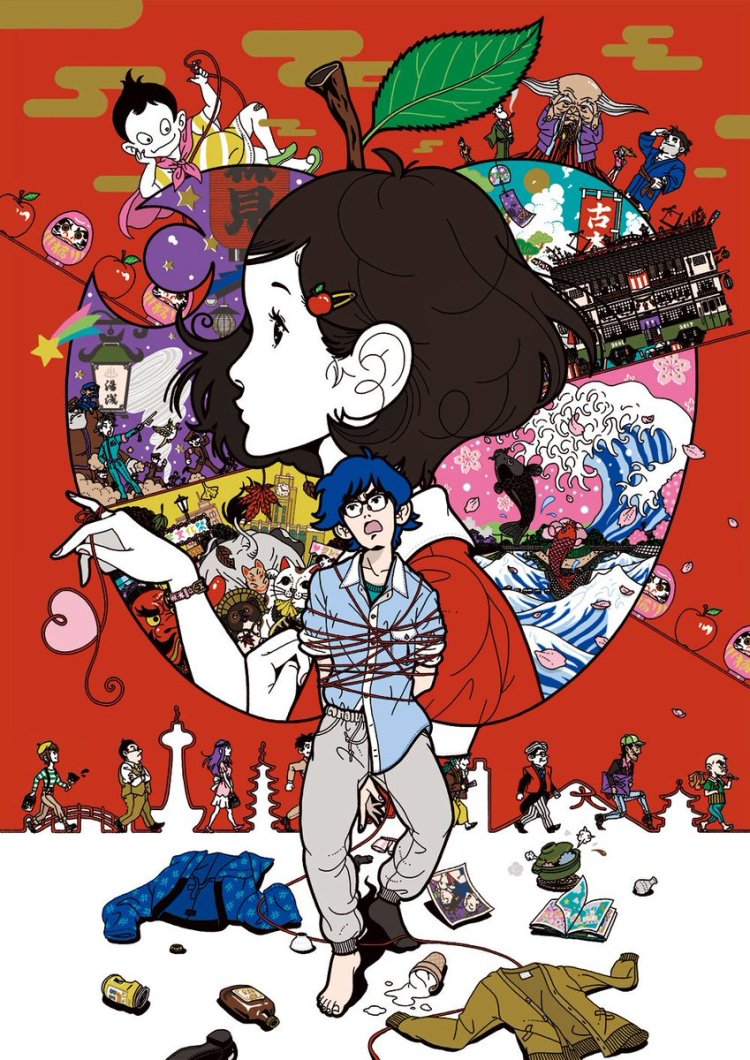
The Night is Short posterWales’ premier showcase for Japanese animation returns this September with some of the best in recent anime plus events and special guests. This year the festival runs for three bumper days at Chapter Arts Centre Cardiff (29th September – 1st October) before moving on to Aberystwyth Arts Centre for one day only, October 28th 2017.
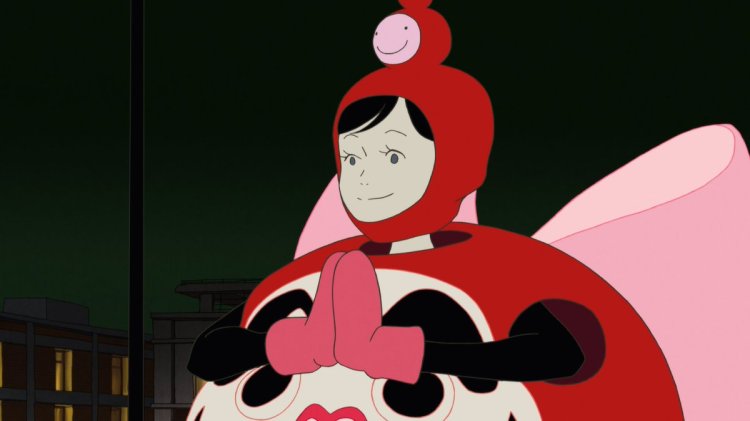
Cardiff

night is short still 2Opening the festival will be the latest from Tatami Galaxy’s Masaaki Yuasa – The Night is Short, Walk on Girl in which a dark haired girl roams the dark city streets while her secret admirer waits patiently for an opportunity to reveal himself, little knowing that the dark haired girl feels exactly the same way…
Chapter Arts Centre Cardiff, 29th September 6pm.


Hirune still 1Next up on Saturday 30th, Napping Princess sees the return of Ghost in the Shell SAC’s Kenji Kamiyama with a much more family friendly effort than might be expected. Regular teenage girl Kotone is sleeping her life away but her final summer vacation will provide unexpected adventures as she sets out to save the Tokyo Olympics from becoming an international disaster whilst solving the long buried mystery of her family origins. Review.

Chapter Arts Centre Cardiff, 30th September, 11am

Aberystwyth Arts Centre, 28th October, 11am


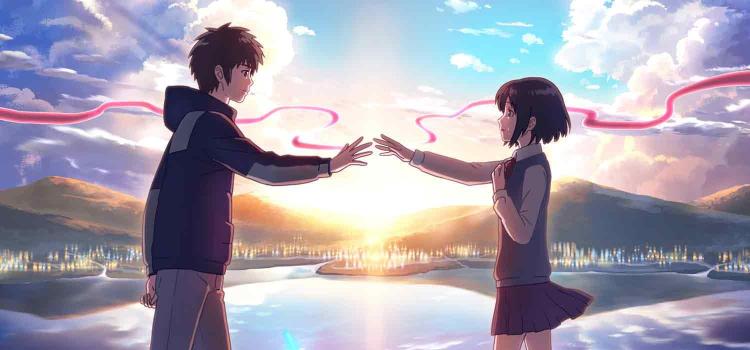
your name stillThis one likely needs no introduction, but for the uninitiated Makoto Shinkai’s latest effort, Your Name, is a body swapping tale of star crossed lovers which has a much happier conclusion than Shinkai’s generally melancholy fare. Review.
Chapter Arts Centre Cardiff, 30th September, 4.15pm


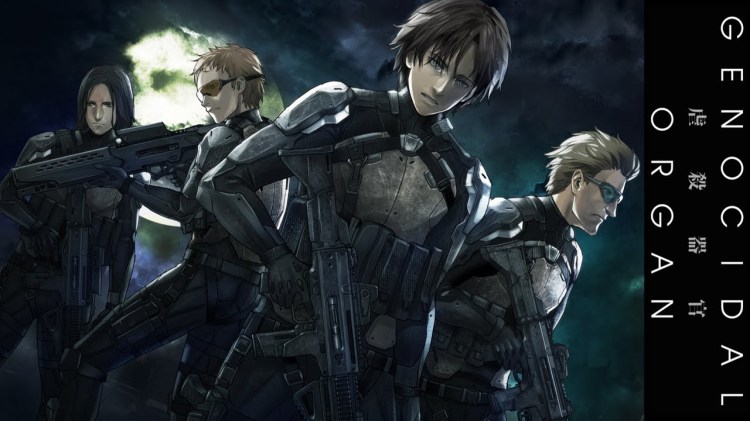
genocidal organ stillThe third in a series of three feature animations inspired by the works of late science fiction author Project Itoh (the other two being Harmony and Empire of Corpses), Genocidal Organ is a cyberpunk infused tale of global conspiracies in which nefarious forces have decided genocide is an unavoidable human evil that they need to ensure is remains in the category of “terrible things happening far away”. Review.
Chapter Arts Centre Cardiff, 30th September, 6.30pm

Aberystwyth Arts Centre, 28th October, 3.35pm


Belladonna of Sadness 
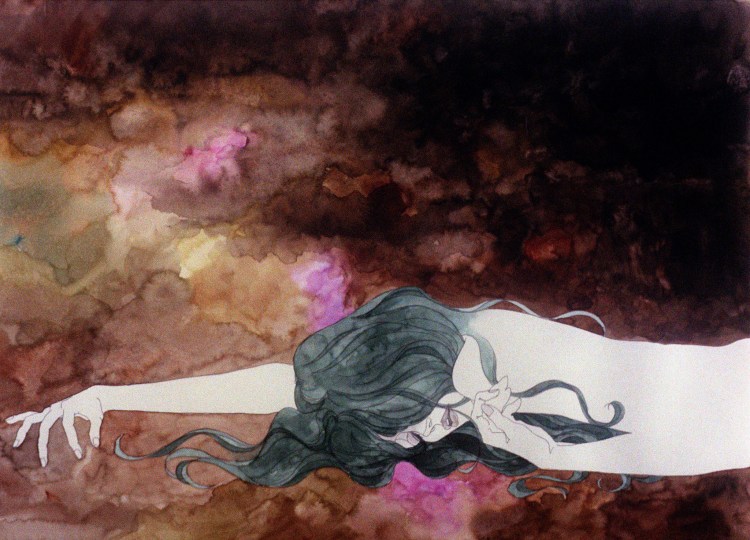
© Cinelicious PicsProduced by Osamu Tezuka, Eiichi Yamamoto’s Belladonna of Sadness has been little seen since its 1973 release but a recent 4K restoration is helping to change that for the better so this psychedelic exploration of sex, witchcraft, and folklore can finally be properly appreciated. Review.

Chapter Arts Centre Cardiff, 30th September, 9pm


silent voice still 1Sunday’s first offering is a heartrending story of friendship and redemption between a girl with hearing problems and the boy who mercilessly bullied her in childhood only to get a taste of his own medicine and intensely regret it. Read our review of A Silent Voice here.
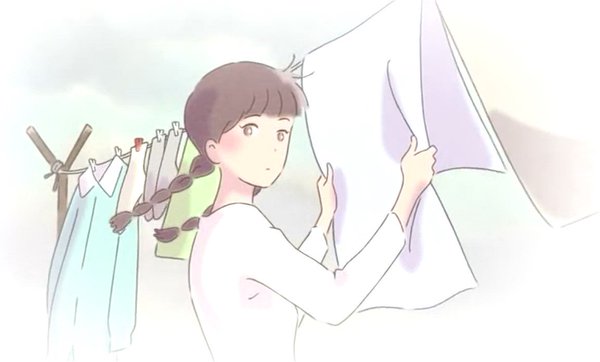
Chapter Arts Centre Cardiff, 1st October, 11am


pigtails stillProduction I.G. is one of the most well regarded animation studios currently in operation this and series of four shorts by different directors demonstrates its strengths and versatility.
  • Pigtails – directed by Yoshimi Itazu and adapted from the manga by Machiko Kyo.
  • Drawer Hobs – directed by Kazuchika Kise
  • Lil’ Spider Girl – directed by Toshihisa Kaiya
  • Kickheart – directed by Masaaki Yuasa

Chapter Arts Centre Cardiff, 1st October, 2pm


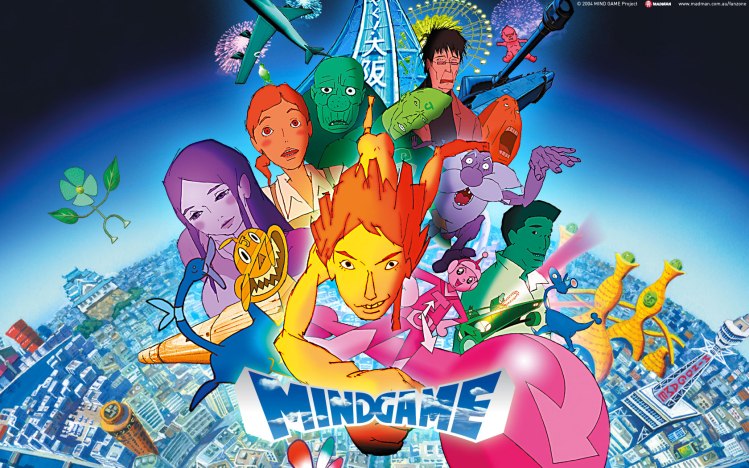
mind game horizontalMasaaki Yuasa’s 2004 debut, Mind Game, will also be screened as the closing movie in Cardiff on 1st October. Adapted from a manga by Robin Nishi, the anime follows an aspiring mangaka, also named Nishi, who runs into his teenage crush only to find out she is about to marry someone else, gets mixed up with yakuza, goes all the way to heaven and back, and then gets trapped inside a whale where he meets God…

Chapter Arts Centre Cardiff, 1st October, 5pm

Aberystwyth Arts Centre, 28th October, 6.15pm


In addition to the films on offer, there will also be a selection of special events taking place across the weekend including:

  • Japanese Marketplace
  • Kotatsu Festival Stand
  • Kotatsu display where you can try out a kotatsu for real! (Saturday night only)
  • Super Tomato – Cardiff based retailer of retro games and otaku goods
  • Keep It Secret – Bristol based store specialising in all things cute. (Saturday only)
  • Cherry Slug – handmade artwork inspired by manga and anime
  • Iconic Toos – tatooist specialising in otaku designs

That’s in addition to a Manga Drawing Workshop at 1.30pm on Saturday with manga artist Asuka Bochanska Tanaka, the Neo Craft Animation – A Certain Japanese Stop-motion Animation masterclass with Professor Yuichi Ito of Tokyo National University of Arts Graduate School, and a Japanese calligraphy workshop at 3pm on Sunday 1st October.


Aberystwyth

sword art online ordinal scale stillFollowing a second screening of Napping Princess at 11am, the festival continues at Aberystwyth Arts Centre with a screening of the Sword Art Online movie, Ordinal Scale, which follows Kirito and co. into the latest game using the brand new Augma system.

Aberystwyth Arts Centre, 28th October, 1.15pm


Sword Art Online will be followed by repeat screenings of Genocidal Organ (3.35pm) and Mind Game (6.15pm), and there will also be a raffle at 6pm!

Kotatsu 2017 runs at Chapter Arts Centre Cardiff from 29th September to 1st October and Aberystwyth Arts Centre on 28th October. Tickets are available from the respective box offices. You can find more information on all the films and the festival itself on the official website and you can keep up with all the latest news via the official Facebook Page and Twitter account.


Queen of the Night (밤의 여왕, Kim Je-young, 2013)

Queen of the NightThere are only two things which spring to mind on hearing the words “Queen of the Night” – Mozart and…something else. Anyway, Kim Je-yeong’s Queen of the Night (밤의 여왕, Bamui Yeowang) is about neither of these. It’s about a dreadfully self-centred IT guy who finds out something he didn’t previously know about his wife and then decides to go all CIA about it. It’s also about her boss who turns out to have a connection to her hidden past and a taste for date rape. Queen of the Night is a comedy in which in which nothing seems very funny, at least if you don’t happen to be a nerdy IT guy whose dream it is to marry a kind and “frugal” woman who will have just emerged from a nunnery or spent her formative years at a conservatoire where all male contact was expressly prohibited.

Young-soo (Chun Jung-myung) is a lonely, middle-aged computer guy whose continual search for love is often undermined by his money-saving mania which extends to leaving his lunchtime blind date waiting while he runs back to the office to retrieve the discount coupon he’d intend to use to buy her a cheap meal. All he wants is a wife who is “frugal” and kind. One day he ventures into a Subway and lays eyes on the girl of his dreams, Hee-joo (Kim Min-jung), who doesn’t seem to notice him and also seems to be the reason this is store completely packed out with middle-aged salarymen. Finally she sees him, the pair start dating, and eventually get married.

Everything is amazing, Young-soo has never been happier. The pair have bought their own apartment in Seoul and are even about to get rid of Young-soo’s horrible old fridge. Young-soo’s life begins to derail when his good-looking but sleazy boss, Park Chang-joo (Kang Sung-ho), asks him to install a dodgy surveillance app across the office network but it’s a trip to a uni reunion which plants doubts in Young-soo’s mind as to how well he really knows his wife.

Without giving too much away, Queen of the Night’s big secret is not what you think it is. In fact it’s nothing at all. All it amounts to is that Hee-joo was once young and a bit mixed up. She spent some time abroad, didn’t feel like she fit in, came back to Korea and felt even more out-of-place. So she started going to clubs and hanging out with delinquents – how scandalous! Of course, Young-soo wanted a nice, level-headed girl who was careful with money so this information disturbs him. Hee-joo has definitely outgrown her wild years and is exactly the woman he wants her to be, but Young-soo just can’t let it go.

The ironic thing is, spineless Young-soo is conflicted about employing the spy program but does it anyway while planning to write a blocking program to stop it working. Meanwhile he’s basically stalking his wife, googling her on the internet and trying to track down her old friends to find out who she really was before he met her. Simply asking Hee-joo does not occur to him.

The world Hee-joo is forced to live in is extremely misogynistic. Young-soo’s suspicions are first aroused when he is talked into making a rare appearance at a uni reunion after being assured he can take his new wife with him. Young-soo only wants to do this to show off that’s netted himself such a lovely, pretty girl but the reunion itself takes a turn for the strange when the wives (there is only one female computer engineer in the group and she apparently owes her graduation to Young-soo who supposedly ghostwrote her thesis for her, because you know women and computers, right?) are expected to participate in a bizarre talent contest to win white goods by showing off their special skill. Hee-joo ends up winning a kimchi fridge her mother-in-law had been desperate for by showing off her smooth moves on the dance floor, much to Young-soo’s surprise and mild displeasure.

Aside from being thrust into combat with the other wives of engineers, Hee-joo is also forced to contend with the unwanted attentions of Young-soo’s boss, Park. As part of his attempts to defeat the spying app, Young-soo discovers surveillance footage of Park taking women back to his office and spiking their drinks after which he assaults them. Despite seeming outraged, Young-soo does nothing at all about this. When Hee-joo looks set to become his latest victim, Young-soo busts a gut to save her but later descends into a bout of victim blaming, preferring to bring up the small amount of info he’s discovered about Hee-joo’s past to imply this was all her fault. Matters are made worse by Young-soo’s geeky friend (Kim Ki-bang) who spends too much time on the internet and assures him that the reason he and Hee-joo haven’t conceived is because of the anti-sperm antibodies in her system generated by promiscuity. Absolute and total rubbish, but Young-soo falls for it without reservation, largely because he has such low self-worth that he assumes any woman who falls for him must in some way be damaged.

Hee-joo is allowed to get her own back, to a point, by reuniting with some of her delinquent friends to scare the living daylights out of Park before telling Young-soo to get lost. He, of course, tries to win her back but he’ll have to learn to love her past too if he’s to have any chance of regaining his bright and happy future. This is a positive step, in a sense, as Young-soo seems to have acknowledged Hee-joo is a person and not just a personification of his hopes and dreams, but it’s also painted as a kind of forgiveness rather an acknowledgement of his totally inappropriate behaviour. Nothing about this is funny to anyone born after 1780, it is rather profoundly depressing. Queen of the Night may shine a little light on male/female relations in modern-day Korea but the picture it paints is far from inspiring.


Original trailer (English subtitles)

Blade of the Immortal, Close-Knit Headline BFI London Film Festival 2017

blade of the immortal posterThe BFI London Film Festival returns this October for another twelve day celebration of the best in recent international cinema. Though East Asian offerings are not as plentiful as in previous years, there are a number of highly anticipated films from China, Hong Kong, Japan, Korea, Thailand and Cambodia making their UK premieres across the various strands of the impressive 2017 programme.

China 

©22 HOURS FILMSChinese independent cinema has been in the ascendent recently, becoming a regular presence at high profile festivals. This year’s selection of films from the mainland includes two very different animated features alongside comedy, action and arthouse.

  • Angels Wear White –  Featured in competition at Vencie, Vivian Qu’s Trap Street followup follows two girls who are assaulted by a middle-aged man in a motel room, and the receptionist who says nothing for fear of losing her job.
  • Big Fish and Begonia – Animated family fantasy in which mystical beings observe the human world for one week only but are forbidden from contact. Picked up for UK distribution by Manga Entertainment.
  • Have a Nice Day – Grown up animated feature in which a delivery driver steals a bag of cash so his girlfriend can get plastic surgery. Picked up for UK distribution by Mubi.
  • King of Peking – A father and son resort to DVD piracy after a fire destroys their business in this charming Beijing-set comedy.
  • Life Imitation – An experimental look at youth in modern China mediated through the digital realm.
  • Wrath of Silence – Western infused martial arts drama starring Jiang Wu.

Hong Kong

our time will comeTwo giants of Hong Kong cinema return – celebrated filmmaker Ann Hui with a tale of love and resistance, and legendary cinematographer Christopher Doyle shooting a noir fairytale for Jenny Suen.
  • Our Time Will Come – Zhao Xun’s schoolteacher takes up arms in the resistance movement against the Japanese occupation in Ann Hui’s tense spy thriller.
  • The White Girl – shot by Christopher Doyle, Jenny Suen’s quirky noir fairytale stars Joe Odagiri as a reclusive Japanese artist hiding out in Hong Kong.

Japan

blade of the immortal still 2Japanese entries are dominated by animation but there’s also space for Takashi Miike’s manga adaptation Blade of the Immortal which headlines the Thrill section, as well as Naoko Ogigami’s latest Close-Knit, and the recent 4K restoration of 60s avant-garde masterpiece Funeral Parade of Roses.

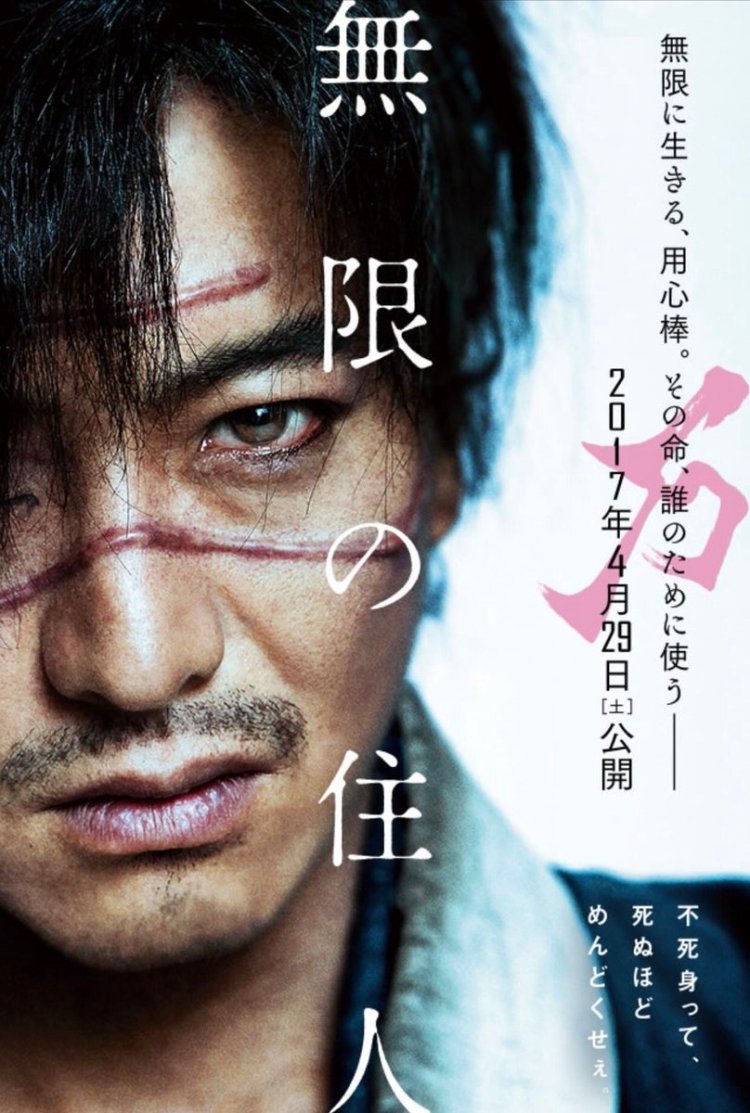
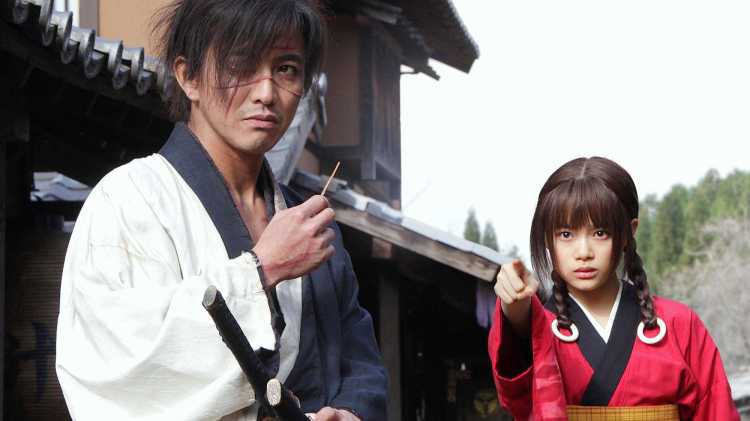
  • Blade of the Immortal – A return to the world of jidaigeki for the prolific director, Blade of the Immortal stars Takuya Kimura as a legendary swordsman who cannot die. Takashi Miike will also be present at the festival for a Screen Talk event. Picked up for UK distribution by Arrow Films.
  • Close-Knit – Less quirky than her previous work, Naoko Ogigami’s latest is a heartwarming family drama in which a neglected 11 year old is taken in by her uncle and his transgender girlfriend, Rinko (Toma Ikuta). Review.
  • Funeral Parade of Roses – Toshio Matsumoto’s avant-garde classic in its recent 4K restoration.
  • Lu Over the Wall – One of two films this year released by anime genius Masaaki Yuasa, Lu Over the Wall is a story of borderless love as a land boy and mermaid girl come together to ensure the survival of their respective communities. Picked up for UK distribution by Manga Entertainment.
  • Mutafukaz – crazy French/Japanese animated co-production.

Korea 

Bamseom Pirates Seoul InfernoEverything you’d expect from Korea from anarchic documentary to violent procedural and the annual return of Hong Sang-soo.
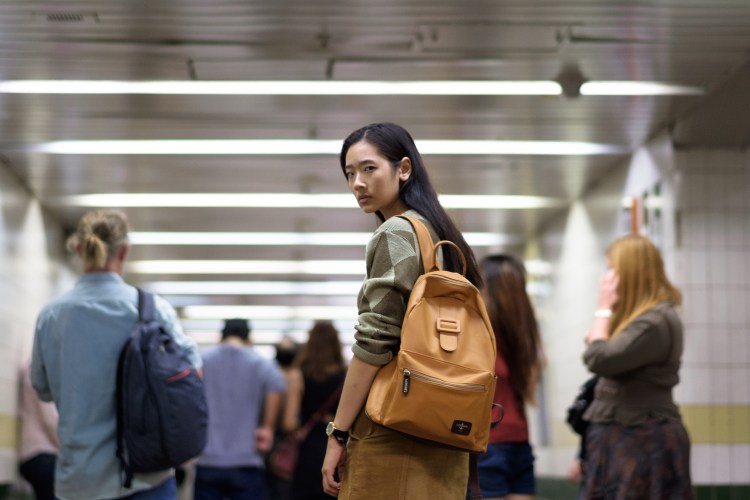
  • Bamseom Pirates Seoul Inferno – Jung Yoon-suk’s documentary following the Korean punk band
  • Becoming Who I Was – Chang-yong Moon & Jin Jeon’s reincarnation documentary.
  • Memoir of a Murderer – Byung-su, a retired serial killer recently diagnosed with dementia, attempts to catch his successor in this very Korean black comedy thriller. Picked up for UK distribution by JBG Pictures.
  • On the Beach at Night Alone – Hong Sang-soo returns with a close to home story of an actress (played by Kim Min-hee), taking refuge from the negative fallout from her high profile affair with a married film director…

Thailand

bad genius stillThailand’s two entries feature youth looking forward and age looking back.
  • Bad Genius – Playing just about every festival this season, Bad Genius is the story of brainy Thai teens and their elaborate scam to game the exams system.
  • Pop Aye – a middle-aged man tries to rescue an elephant who was his childhood friend and save them both from the ravages of “progress”.

Cambodia 

jailbbreak horizonta

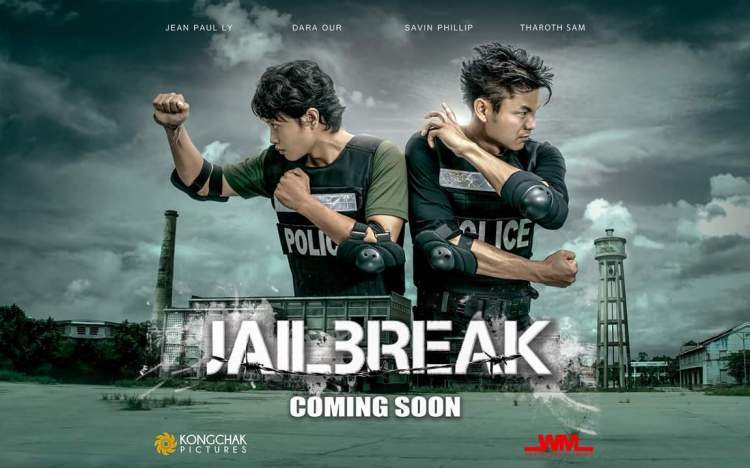
  • Jailbreak – martial arts drama from Jimmy Henderson.

The BFI London Film Festival runs at various venues in Central London from 4th to 15th October 2017. Full details and screening times/dates are available from the official website. Champion members’ booking begins 10am 6th September with Members’ booking opening 7th September ahead of regular ticket sales beginning 14th September.

You can also keep up to date with all the latest festival news via the BFI’s Facebook Page, Twitter account, and YouTube channel.

A Slope in the Sun (陽のあたる坂道, Tomotaka Tasaka, 1958)

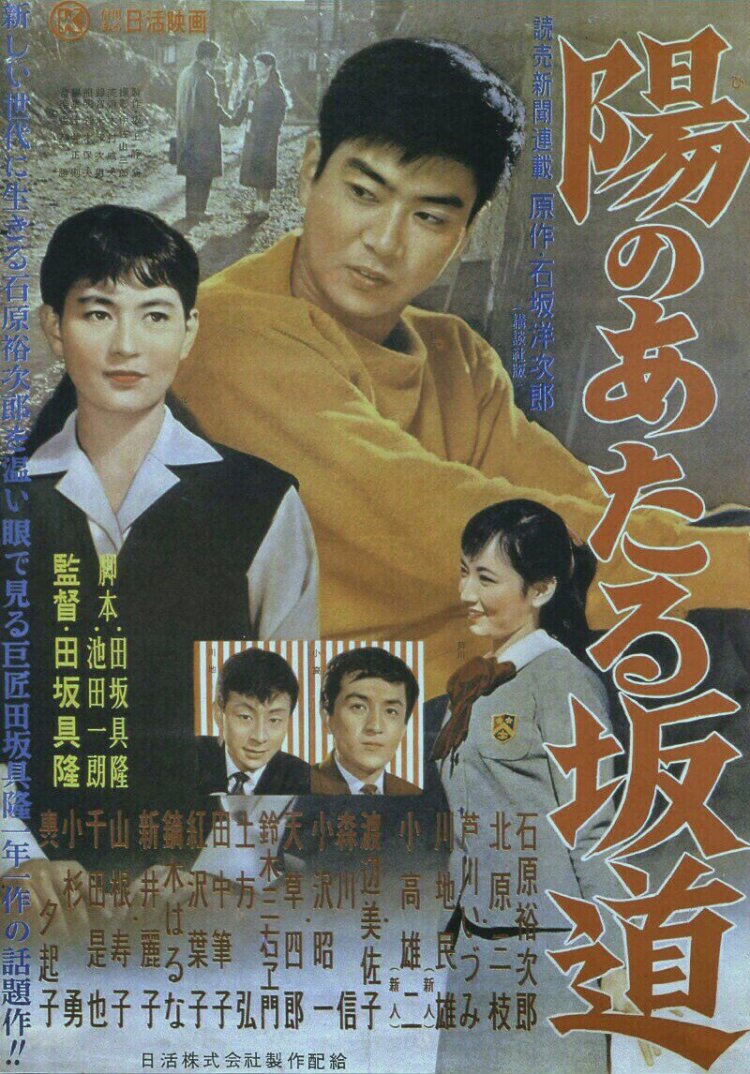
Slope in the sun posterYujiro Ishihara had become the face of the “Sun Tribe” movement thanks to roles inspired by his brother Shintaro’s novels including the seminal Crazed Fruit in which he starred opposite his later wife, Mie Kitahara. Tomotaka Tasaka’s A Slope in the Sun (陽のあたる坂道, Hi no Ataru Sakamichi), adapted from the novel by Yojiro Ishizaka, is a much less frenetic affair than Nakahira’s famously intense youth drama, but retains the Sun Tribe’s world of purposeless youth whose inherited wealth has driven them to a life of listless ennui. Like Crazed Fruit, Slope in the Sun is the story of two brothers chasing the same girl, only this time one looks bad and is really good, while the other looks good but is really no good at all.

Beginning on the titular sun beaten slope, the film opens with a young woman, Takako (Mie Kitahara), entering the frame as she searches for an address on a piece of paper she is carrying. She finds the house – a large Western-style mansion, but is prevented from entering by a young man who mistakes her for a saleswoman and instructs her to use the tradesman’s entrance. The young man, Shinji (Yujiro Ishihara), continues to taunt her with lewd language before poking at her breast. Takako tries to leave but is persuaded to come inside to meet the lady of the house and the young woman, Kumiko (Izumi Ashikawa), whom she has come to tutor.

The Tashiro household is a strange one. There are three almost grown up children – oldest brother Yukichi (Yuji Odaka) who is a medical student, middle brother Shinji who is a painter, and the youngest daughter Kumiko who is approaching the end of high school and is a little over sensitive about a mild limp which is the consequence of a childhood accident. Takako nearly turns the job down when she realises that the family want less a teacher to help with Kumiko’s studies, than a kind of big sister to help her navigate her way into the adult world, but eventually warms to the Tashiros and decides to give it a go. A college student in need of money, Takako is currently living in a boarding house where she is friends with the older lady next door, Tomiko Takagi (Hisako Yamane), and her 18 year old musician son Tamio (Tamio Kawachi).

In contrast to the earlier Sun Tribe films, A Slope in the Sun is much more subdued though it does maintain an upperclass atmosphere filled with bored young people who struggle to find purpose in their lives through having no particular economic or social worries thanks to the protective cushioning of their wealth. The central issue is a common one to the familial melodrama – middle child Shinji has always felt disconnected from his family and has discovered that the woman who raised him is not his birth mother. He wants to know the truth of his family history but is also a kinder soul than his outward behaviour may suggest and does not want to hurt anyone or risk destroying the otherwise pleasant enough family life he enjoys as a Tashiro.

As expected coincidences abound though the truth is obvious seconds after Takako tells someone the name of her new employer causing them to gasp and draw pale with shock. It seems that everyone in the family already knew that Shinji is only a half brother except Shinji himself – their overcompensation in treating him kindly was the initial tipoff for his suspicions, but this question of blood relation turns out to have a surprising dimension. Oldest brother Yukichi is, outwardly, the model son – handsome, clever, gentlemanly, but on closer inspection his veneer of respectability turns out to be just that. The boys’ mother, Midori (Yukiko Todoroki), knows this well and partly blames herself for allowing Shinji to take the blame for a childhood accident rather than forcing her own son to confess. For all his seeming goodness, Yukichi is an amoral coward, womaniser, and habitual liar whereas there’s a kind of honesty in Shinji’s lewd speech and even in his own lies which he indulges partly out of a sense of smug superiority, as Midori puts it, but also because of the inferiority complex which has marred his life as he feels himself somehow lesser than either of his siblings.

Takako vacillates between the two brothers, taken in by the manipulative Yukichi but strangely drawn to the provocative Shinji. Unlike Nikkatsu’s other youth films, Slope in the Sun ends on a note of happy resolution rather than nihilistic suffering as each member of the family is encouraged to embrace their true natures, putting secrets to one side, and becoming closer in the process. Tanaka’s approach is a more classical one than Nikkatu’s usual fare, making use of silent cinema-style closeups and dissolves but veers towards the avant-garde in a brief flashback sequence offered in dreamlike widescreen. Despite the jazz clubs and subplots about misused geishas, this is a more innocent world than the post-war melodrama would usually allow, finding space for happiness and forgiveness in each of the conflicted protagonists once they each agree to submit themselves to the truth and meet the world with openness and positivity.


Farewell Rabaul (さらばラバウル, Ishiro Honda, 1954)

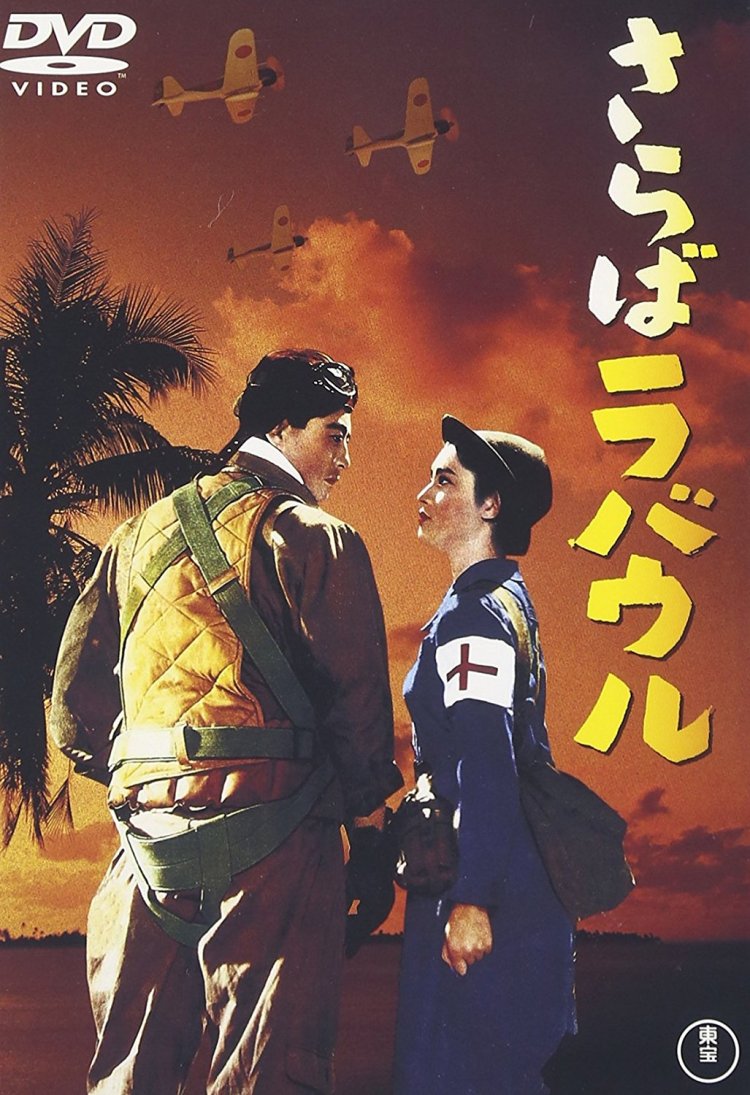
Farewell Rabaul dvd coverReleased in 1954, Farewell Rabaul (さらばラバウル, Saraba Rabaul) was the last in a string of war films directed by Ishiro Honda for Toho immediately before the mega hit Godzilla redefined his career and turned him into a director of science fiction and special effects movies. Like the later tokusatsu classics, Honda worked alongside Eiji Tsuburaya to craft the film’s effects which are largely used to recreate the epic dogfights taking place over the island as the airmen and ground crew come to terms with the imminent arrival of American forces. Though he takes care to show the bravery and determination of the Japanese pilots, Honda’s attitudes to the war and the government who waged it are not so kind.

Late into the conflict, at an outpost in the Papa New Guinean city of Rabaul, ace pilot Captain Wakabayashi (Ryo Ikebe) leads a rapidly depleting squad of airmen trying to defend Japanese forces from American air attacks. Known as “Devil” Wakabayashi, he rules with an iron fist – taking issue with men who spend their time in local bars and pointedly refusing to send rescue craft for crashed pilots. Ruthless and cold as he seems, the war is starting to get to Wakabayashi and his resolve crumbles when faced with a gracious American POW and the attentions of a kindly nurse, Komatsu (Mariko Okada).

Honda keeps the action to a minimum, preferring to focus on the life within the military base. Though the effects on the local population are not much addressed, the opening scenes take place in a bar in which Papa New Guinean women dance to tribal drums while Japanese military personnel drink and watch. The waitresses are largely Japanese women dressed in kimono, though it seems the exoticism of local girl Kim (Akemi Negishi), dancing barefoot with flowers in her hair, is the main draw. Eventually Kim falls in love with a Japanese soldier and the two plan to flee but fate always gets in the way.

Wakabayashi, rechristened the “Devil” by Kim – a nickname which seems to stick, objects to his men blowing off steam in the bar for purely practical reasons – he needs them at top form for an upcoming mission and a hungover pilot could be a risk to the entire squad. Walking around looking sullen and refusing to explain himself, it’s no wonder Wakabayashi is unpopular with some of the men even if his skills are widely recognised. Asked to send a rescue squad for a lost pilot, Wakabayashi’s reply is a flat no with no further details offered. Only when a junior officer interjects during a briefing does he offer his reasoning – the crash site is in enemy territory and it’s too risky to send more men in to fetch one pilot who is probably already dead. His reasoning is sound and probably the correct command decision but the cutting coldness with which he delivers his judgement does little to assuage his reputation as a heartless misanthrope.

This is, however, not quite the case. When an extremely young member of his squad is shot down Wakabayashi shouts out to him, trying to advise the rookie on ways to control the aircraft but all to no avail. The pilot cannot bail out as Japanese pilots, particularly those flying the featherweight 0 fighters, are not equipped with parachutes. This is brought up again when a downed American pilot is brought in as a POW. The journalist attached to the unit is able to speak fluent English and interprets for Wakabayashi and the others as the American gives them an improbably frank analysis of Japanese airborne warfare. He tells them that the Americans were once afraid of the 0s and their high speed manoeuvring but have figured out their weaknesses. In the hands of a skilled pilot, the 0 is a powerful weapon but in unskilled hands it’s a liability – its lightweight form makes it easy pickings when the pilot does not know how to fly defensively. If it weren’t for this fighter they call “Devil” they’d be picking them off with ease. The lack of parachutes came as a surprise to the Americans. The 0s need to be as light as possible, but no one could believe that the Japanese government valued life so cheaply that they’d send a man up there with no way down. That’s why, the American says, they will win – no government so unwilling to look after its own could ever expect to.

The senselessness of it all eventually gets to Wakabayshi, even leading him to reverse his original stance and proceed into enemy territory to rescue a fallen comrade himself. He is, however, wounded, his plane damaged, and his friend doesn’t make it. Rabaul falls, and its hero falls with it in a turn which is both melancholy and defiant. Honda refuses to glorify the destruction but ends on a note of sadness, reprising the titular song sung by the women aboard a boat they hope will take them home but that, like everything else, remains so hopelessly uncertain.


The Blue Sky Maiden (青空娘, Yasuzo Masumura, 1957)

blue sky maiden dvd coverYasuzo Masumura is generally remembered for dark, erotic and disturbing explorations of human behaviour but the early part of his career was marked by a more hopeful innocence and a less cynical yet still cutting humour. His debut, Kisses, was very much in the mould of the youth movie of the day but its themes were both more innocent and more controversial as a boy and girl bond after running into each other at the prison where both of their parents are serving time. Marked by darkness as it is, the worldview of Kisses is much kinder than Masumura would later allow as the pair of lovers seem to shake off their respective concerns to embrace the youthful joy and boundless freedom young love can offer.

The Blue Sky Maiden (青空娘, Aozora Musume), Masumura’s second film, does something similar but with added bite. Working for the first time with actress Ayako Wakao who would later become something of a muse, Masumura takes a typical melodrama storyline – the returned illegitimate child treated as a poor relation by her own “family”, and turns it into a genial comedy in which Wakao’s charming heroine shines brightly despite the often cruel and heartless treatment she receives. As far as the family drama goes, the genre was still in its heyday and the family unit itself fairly unquestioned yet as Masumura shows times were changing and perhaps the family is not the bedrock it initially seems to be.

18 year old Yuko (Ayako Wakao) stands at the gates of adulthood. Taking a last photo in school uniform with her high school friends as they prepare for graduation, Yuko expresses her nervousness about being sent to Tokyo to live with the family of a father she barely knows while her friends worry about getting married or getting stuck in their tiny village all alone respectively. Tragedy strikes when the girls’ teacher arrives on a bicycle and informs them that Yuko’s grandmother has been taken ill. On her death bed, the grandmother reveals the reason Yuko is the only one of her father’s four children to be raised in the country is not a concern for her health, but that she is illegitimate. Yuko’s father, unhappy in his marriage, fell in love with his secretary (Kuniko Miyake) who later gave birth to Yuko, but he was already married with two children and so Yuko’s mother went to Manchuria leaving her to be raised in secret in the country.

Having nowhere else to go, Yuko arrives at her father’s large Western style house to be greeted coldly by her half-siblings, and treated as a maid by her still angry step-mother while her father (Kinzo Shin) is away on business. It has to be said that this model middle class family are an extremely unpleasant bunch. Step-mother Tatsuko (Sadako Sawamura) is shrewish and embittered while oldest daughter Teruko (Noriko Hodaka) spends all her time chasing wealthy boyfriends (but failing to win them because she’s just as mean as her mother). The oldest brother (Yuji Shinagawa) idles away in a hipster jazz band while the youngest boy, Hiroshi (Yukihiko Iwatare), is rude and boisterous but later bonds with his new big sister when she is the only one to really bother interacting with him.

The Ono household has always been an unhappy one. Yuko’s father married his wife after being bamboozled into it by an overbearing boss trying to offload his difficult daughter. Feeling trapped and avoiding going home he fell in love with a kind woman at work, had an affair, and wanted to marry her but wasn’t strong enough to break off not only from his unwanted family but also from his career in pursuing personal happiness. By Masumura’s logic, it’s this failure to follow one’s heart which has poisoned the Ono family ruining not only the lives of Tatsuko and the children who have no respect for their father or capacity for real human feeling (as Yuko later tells them), but also that of Yuko’s poor mother  whose life has been one of constant suffering after being unfairly jettisoned by a man who was bold enough to have an affair, but not to defy social conventions and leave an unhappy home.

Yuko herself, however, refuses to allow her life to be ruined by the failings of others. Looking up at the bright blue sky with her teacher (Kenji Sugawara), she learns to create her own stretch of heaven if only in her own mind. Though others might have fought and complained at being forced into the role of maid in what is her own family home, Yuko bears her new circumstances with stoicism and good humour. Thanks to her kindness and enthusiasm, the family maid, Yae (Chocho Miyako), is quickly on her side and if Teruko’s latest target, Hirooka (Keizo Kawasaki) starts to prefer the “new servant girl” his defection is completely understandable. Unlike later Masumura heroines, Yuko’s “revenge” is total yet constructive. She refuses to be cowed by unkindness, remains pure hearted in the face of cruelty, and resolves to find her own happiness and encourage others to do the same. With a few cutting words offered kindly, Yuko gets to the heart of the Onos, essentially reminding her father that all of this unhappiness is his own fault – he made his bed 20 years ago, now he needs to lie it and be a full-time husband and father to the family of lonely misfits he created in the absence of love.

Light and bright and colourful, The Blue Sky Maiden is among Masumura’s more cheerful films, not least because it does seem to believe that true happiness is possible. Yuko does not so much defy social convention as ignore it. She lives openly and without rancour or regret. She takes things as she finds them and people (aside from the Onos) are good to her because she is good to them. Though Masumura’s later work would become increasingly dark and melancholy, Yuko bears out many of his most central themes in her steadfast claim to her own individuality and equally steadfast commitment to enabling the happiness of others in defiance of prevailing social codes.