Dissolution Rites (解散式, Kinji Fukasaku, 1967)

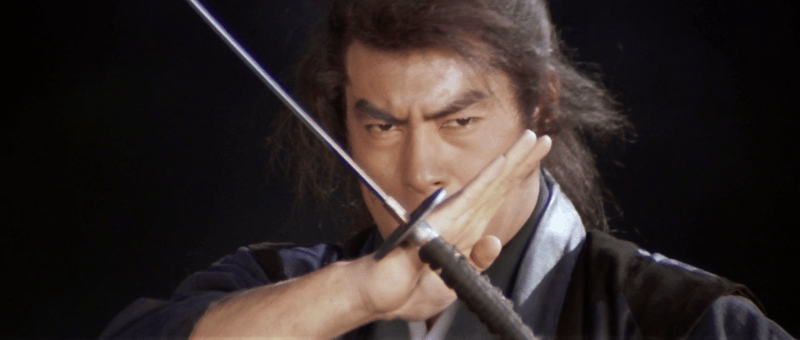
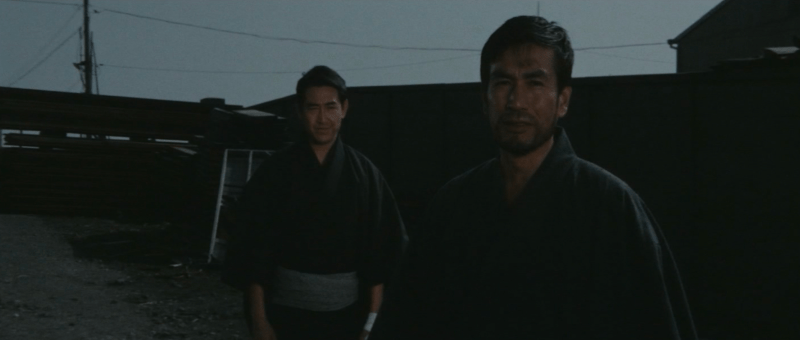
“We’re all legitimate businessmen now” as a former yakuza explains to a recently released foot soldier stepping out into a very different Japan in Kinji Fukasaku’s Dissolution Rites (解散式, Kaisan Shiki, AKA Ceremony of Disbanding). The funereal opening scenes feature the first in a series of dissolution rites as a man dressed in black reads from a scroll and explains that all the local yakuza clans will be disbanding because despite “working day and night for the benefit of the world and humanity in the spirit of democracy” times have changed and they find themselves unnecessary.

There at the beginning of that change, Sawaki (Koji Tsuruta) served eight years in prison for the murder of a rival gang boss to ensure his gang got hold of a local landfill site where they later built an oil complex. While he was inside, his boss died and his clan disbanded leaving him with nowhere to go but thankfully looked out for by an old friend, Shimamura, who has since become a construction magnate. On his arrival at Shimamura’s office, however, he’s ambushed in a suspected case of mistaken identity while the man driving him is killed. 

Shimamura (Fumio Watanabe) tells him he’s gone straight, but it soon becomes clear that even as yakuza forsake the streets for more organised crime they still behave like thugs using the same old tactics to get what they want. Shimamura is in cahoots with a corrupt local politician, Kawashima (Asao Uchida), and is determined to get access to another stretch of bombed out wasteland owned by an egalitarian doctor, Omachi, who refuses to sell because he’s set up a community there of marginalised people, including Sawaki’s former girlfriend Mie (Misako Watanabe), who work on his chicken farm. Meanwhile, Shimamura is targeted by rival “legitimate businessman”, Sakurada (Hosei Komatsu), who pulls a few dirty tricks of his own in an effort to cut Shimamura out of the picture.

Once again Tsuruta plays a man who is out of step with his times, partly because he’s been in prison but also in his fierce commitment to a now outdated code of gangsterdom. “The chivalry that we were taught was just a way for bosses to use their soldiers” Shimumura insists, “you’ll look foolish if you don’t get rid of it”, disingenuously casting his transformation into a legitimate businessman as a way of freeing himself from yakuza oppression. Sawaki turns down his offer to join the business because it seems a bit dodgy while intensely disappointed to discover another former colleague, Kubo (Kyosuke Machida), running a trafficking ring masquerading as a management studio for cabaret singers and strippers by tricking women with the offer of good jobs then getting the hooked on drugs and shipping to them to Okinawa to do sex work near the US bases.  

On his return, Sawaki is also stalked by the man whose arm he severed in killing the rival boss who turn out to be, like him, an old school gangster which is why he insists on his revenge only to find an unexpected kindred spirit as the two men find themselves each adrift in a world in which no one really cares about humanity and honour. Sakai (Tetsuro Tanba) chooses to walk a different path, conducting his disbandment ceremony in protest of yakuza corruption. Like many Tsuruta heroes, Sawaki also has the possibility of walking away and living a conventional family life as a husband and father having been forgiven by Mei but inevitably is pulled in a darker direction by the necessities of his code. The oil complex he helped to create is only a symbol of the duplicities of the post-war society allowing men like Shimamura to get rich while literally choking the life out of those like Mei whom they now want to kick out of her home to add insult to injury. 

There’s no one more tragic than a yakuza Sawaki admits, knowing there is no longer any place for him in an amoral gangster society while unable to simply leave it and enjoy a quiet life with the woman he loves. An indictment both of corporatised yakuza and the equally duplicitous practices of “legitimate” businesses and corrupt authorities, the film ends in another righteous assault filmed handheld with Fukasaku’s characteristically canted angles amid the chaos and confusion of a rapidly changing society. 
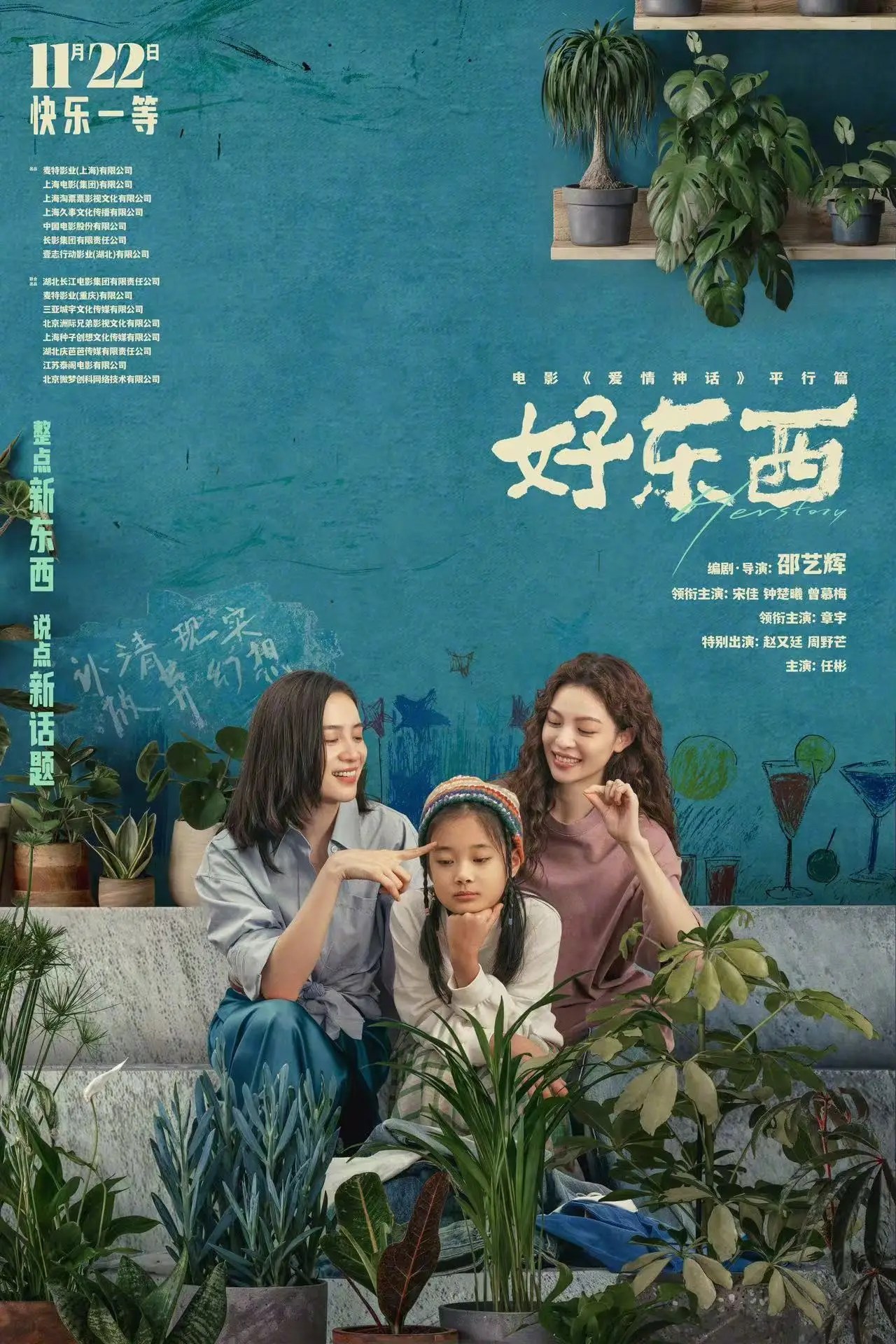
Her Story (好东西, Shao Yihui, 2024)

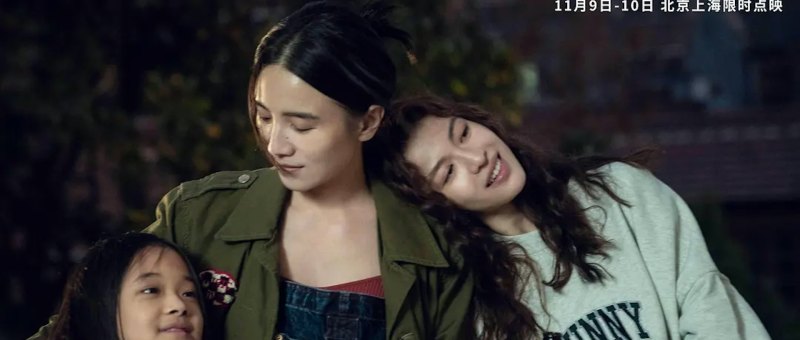
Nine-year-old Molly (Zeng Mumei) says she doesn’t have any dreams anymore and is content to remain a member of the audience which is the role she’s been assigned as part of orchestra class. In truth, that might be something she’s picked up from her mother, Tiemei (Song Jia), who also says that she no longer has dreams because she’s seen the reality. Shao Yihui’s Her Story (好东西, is being hailed as something of a landmark film given that mainstream Chinese cinema does not often engage with feminist issues or at least not quite so directly as in this strangely joyful celebration of female solidarity and found family.

Indeed, the Chinese title of the film is “good things” which Tiemei and Molly begin to find after being forced to move to a cheaper apartment in an old-fashioned walk-up building because Tiemei is struggling to find work in a shrinking journalism industry. She later tells a colleague at her new job working for a friend’s online news outlet that she took a break from her career as an investigative reporter not because she had her daughter but because she realised she didn’t have the strength to go on fighting the system. 

Yet in a way she’s fighting the system solely in the way she lives as a divorced woman raising her daughter alone. It later transpires that it was her husband who wanted the divorce because he got fed up with living with as househusband even though that was his choice, though he seems to regret the decision and randomly tells Tiemei that he’s getting a vasectomy as some kind of strange proof of loyalty in insisting Molly will be his only child. Since they’ve split up, he’s apparently come to a feminist awakening and is cognisant of his male privilege thanks to actually reading Tiemei’s articles but ironically still feels the need to insert himself into conversation. 

In any case, after moving into the apartment, Tiemei and Molly become friends with the bohemian woman who lives upstairs and is the singer of a rock band. Ye (Zhong Chuxi) is a very chaotic presence and the total opposite of Tiemei’s defiant practicality, but despite herself Tiemei becomes a kind of maternal figure to her after scaring off a creepy guy who was following her late at night. But equally Ye becomes a kind of big sister or secondary maternal figure to Molly, offering her a more relaxed vision of womanhood along with a creative space to express herself. 

Perhaps surprisingly for a mainstream Chinese film in which LGBTQ+ themes, the two women effectively end up raising this child together almost as if they were a couple in a happy familial environment. They often share a bed and at one point are actually mistaken for lesbians by Ye’s sometime optometrist boyfriend Hu to whom she lied about having a child so that he wouldn’t see her as clingy, effectively adopting Tiemei’s persona. Tiemei even helps Ye sort of break up with him by posing as the scorned lesbian partner, hilariously laying it on thick to get Hu to trip himself up and admit to being a playboy womaniser. Though it’s obviously true that they are not in fact romantically involved, the film nevertheless does not only acknowledge the existence of lesbian women and even lesbian women raising children but tacitly approves and accepts them as part of its broader feminist themes. It even opens on a shot of what appears to be queer longing in lingering on a very striking Ye leaning out of her window drinking in the daytime as Molly looks up from below in wonder. 

It is in fact Molly who becomes the centre of the film as she regains the ability to have dreams again while discovering herself and gaining the courage to take risks in search of happiness in a society all too keen to slap women down. Tiemei writes an article about what it’s really like to be a working single mother but is quickly attacked by internet trolls causing Molly to retreat into herself, realising that if her mother hadn’t written the article she wouldn’t be getting trolled. But thanks to the supportive environment around her and the relationship between Teimei and Ye, Molly resolves not to let the world beat her into submission. The scenes of her rocking out on her drums while the drippy boy who keeps “denouncing” her at school flounders at the dull music club concert speaks volumes. She may realise that she prefers being in the audience anyway, but that’s alright. Writing is her outlet, something else she may have have picked up from her mother, and she’s less of a bystander than observer humorously recording the compromises and contradictions of the world around her while bolstered by her found family and a gentle sense of female solidarity.


Original trailer (English subtitles)

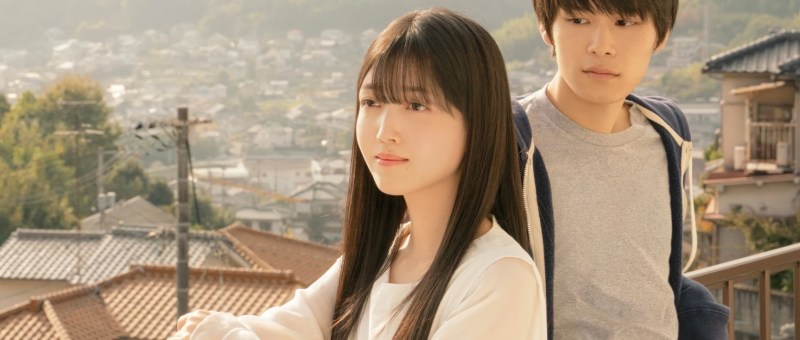
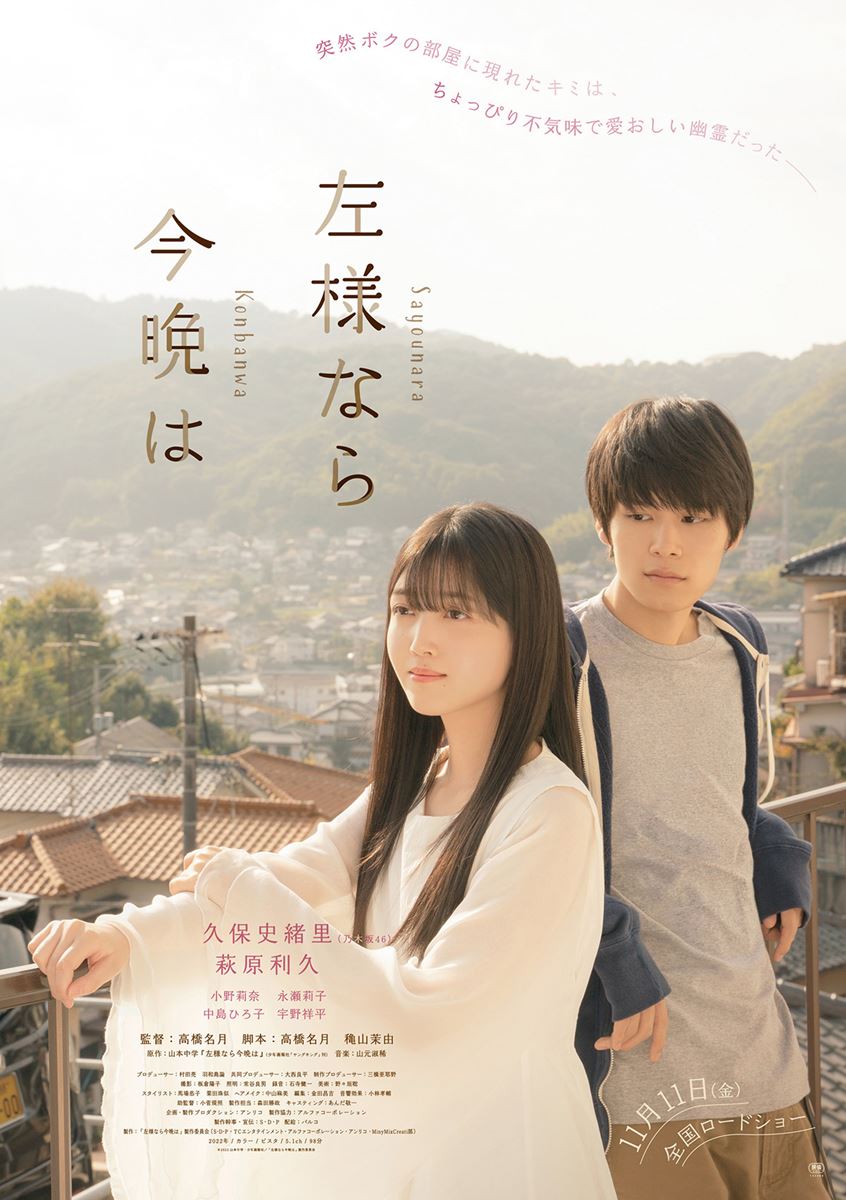
A Girl in My Room (左様なら今晩は, Natsuki Takahashi, 2022)

A young man reeling from a breakup is suddenly confronted by the literal ghost of lost love in Natsuki Takahashi’s supernaturally-inflected romantic drama A Girl in My Room (左様なら今晩は, Sayonara Konbanwa). Set in the peaceful town of Onomichi, the film finds its hero wasting away pining while wondering if falling in love with a ghost is all that bad only to later ask himself if any of it was real or just a fantasy of his lovelorn mind. 

As the film opens, Yohei’s (Riku Hagiwara) girlfriend of two years, Rena (Riko Nagase), moves out of their apartment apparently sick of his superficiality and inconsiderate nature. Soon after, Yohei becomes aware that a ghost has been living in their apartment with them the whole time only should she couldn’t manifest because Rena apparently had unusually strong spiritual energy. Though originally frightened by the new presence, Yohei soon warms to the woman he names “Aisuke” (Shiori Kubo) and becomes determined to find out who she was and how she died only no one will tell him. 

Of course, Aisuke could just be the symbolic ghost of Rena, a spectre of lost love confronting him with his romantic failure, but also seems to have an inner life of her own even if she can’t remember much about who she was when she was alive and how it was she came to die in the apartment. Fleeting memories seem to hint at a life of loneliness marked by romantic longing in which she wanted nothing more than a regular grown-up relationship though sadly it never happened for her. If she has unfinished business, then falling in love may be part of it but then it’s clear that any potential relationship between herself and Yohei is doomed to failure seeing as she is already dead. 

Aisuke chose Yohei because she thought he was a good boyfriend after seeing him with Rena, but even so agrees that though he seems nice on the surface he never really thinks about anything and responds to criticism by smoothing it over with an apology rather than reflecting on his actions or trying to better himself. Work colleague Kanan (Rina Ono), who also has a crush on him, conversely claims that Yohei shows his kindness too easily though also remarking that kindness in itself can also be problematic. In any case, as he bonds with Aisuke, Yohei does seem to engage more with his flaws and reflect on the mistakes he may have made in his relationship with Rena in order to become not just a better boyfriend but a better person. 

In these respects, Aisuke becomes a romantic mirror confronting him with the problematic aspects of his own personality but somehow gaining in corporeality as the relationship progresses as if love were bringing her back to life. But then Kanan also claims that that’s because Aisuke is unwittingly sucking the life out of him which is why he looks tired and gaunt. A picture she took of him on her phone has a dark aura over his face hinting at something malevolent at work that’s taking a toll on his health. But as much as he’s warned, Yohei determines to stay with Aisuke, slowly falling in love with her in the wake of his failed relationship.

Partly a fable about the dangers of remaining trapped by the ghost of lost love rather than resolving to move on, the film is also a poignant love story in which the pair must help each other overcome their mutual unfinished business while becoming aware that their liminal romance cannot continue forever. A side plot involving an estate agent and his endless calls from a confused older gentleman randomly asking him for legal and life advice hints at other kinds of living ghosts and urban loneliness but also at those willing to take care of them as perhaps the estate agent did with Yohei and Aisuke in a bit of supernatural matchmaking helping each of them to begin moving on with their lives on either side of the mortal divide. Charmingly quirky and comforting in its tranquil setting, Takahashi ends on a poignant, bittersweet note but also one of warmth in which the ghost of lost love doesn’t so much haunt as abide, a constant source of comfort in a lonely existence.


Original trailer (English subtitles)

Hiroshima (ひろしま, Hideo Sekigawa, 1953)

During the post-war occupation of Japan which lasted until 1952, the censorship regulations which replaced those of the militarist era perhaps ironically made it more or less impossible to criticise the US presence or depict the extent of wartime devastation lest it raise hostility towards American forces or reinforce a feeling of victimisation. For this reason, images of the atomic bombings were tightly controlled and the events rarely referenced in mainstream media, Hiroshi Shimizu’s Children of the Beehive being a notable if brief exception. Once the occupation was over, however, many assumed it would become easier to broach such taboo subjects. 

Hiroshima native Kaneto Shindo’s comparatively better known Children of Hiroshima, inspired by the book Children of the A Bomb: Testament of the Boys and Girls of Hiroshima, was released in 1952 shortly after the censorship regulations were lifted and stars his later wife Nobuko Otowa as a teacher who returns to Hiroshima to visit the graves of her parents killed in the atomic bombing and thereafter several of the children from a nursery school she once taught at who have survived but continue to suffer in various ways due to their experiences. Despite Shindo’s well known leftist credentials, many including the Japan Teachers’ Union who apparently owned the rights to the book though there is some dispute as to their involvement in the production, were disappointed with the film which they felt to be an overly sentimental studio melodrama that was ultimately unhelpful in supporting the anti-war political movement or accurately representing the hibakusha community. 

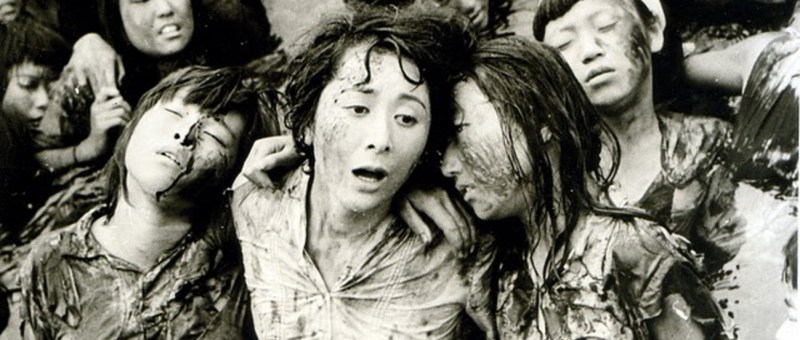
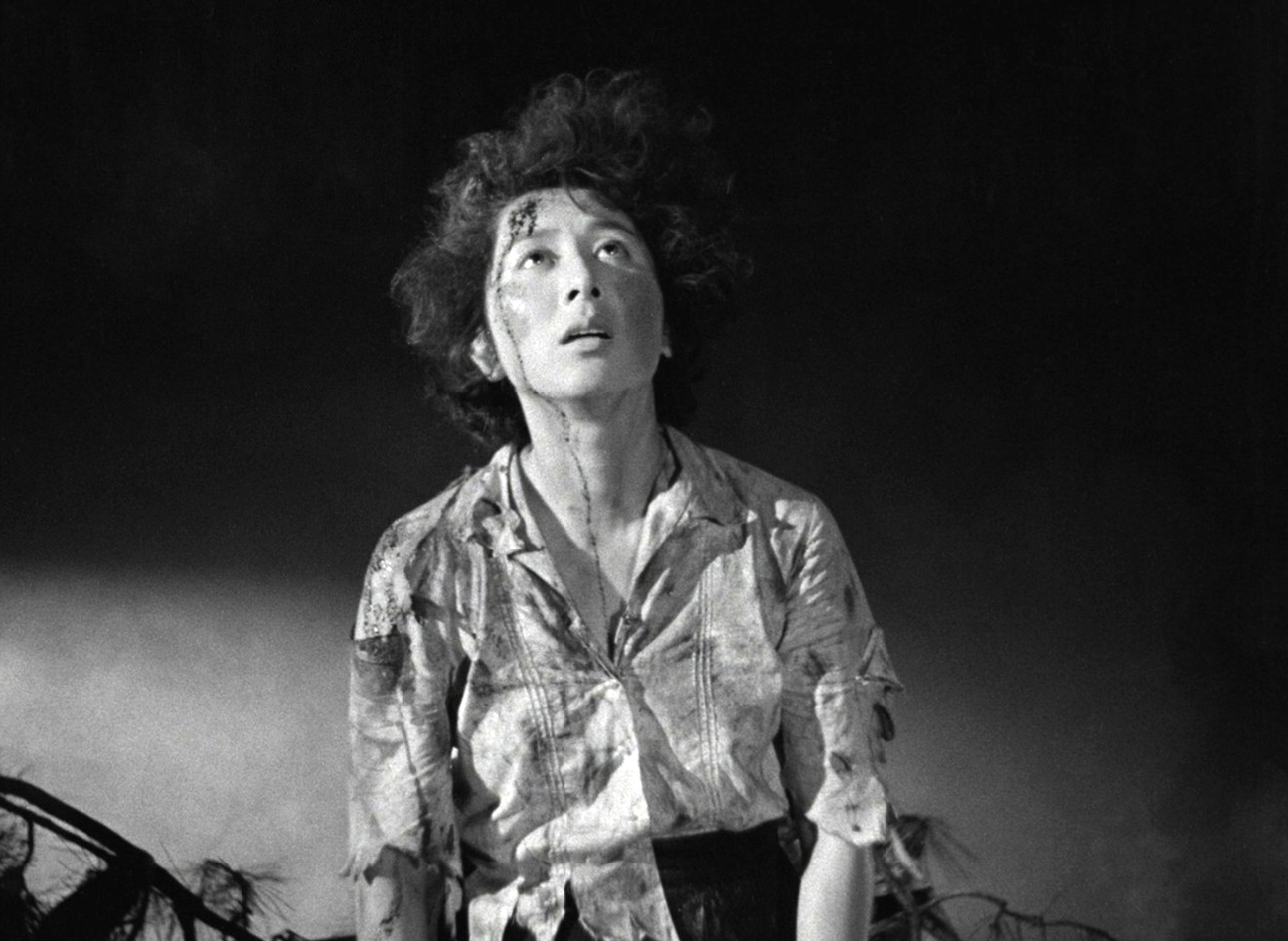
In response, the JTU commissioned a second version in order to better reflect their aims and ideals. Long unseen in either Japan or internationally prior to its recent restoration, Hideo Sekigawa’s Hiroshima (ひろしま) adopts a much more strident docudrama approach while, like Children of Hiroshima, maintaining a focus on the plight of children during the bombing and beyond though it seems somehow unlikely that teachers and parents would be wholeheartedly enthusiastic about showing such a deliberately harrowing piece to a sensitive younger audience. One criticism of Shindo’s film had been that he’d dodged dealing with the bombing itself by concerning himself only with the present-day aftermath. Sekigawa meanwhile focuses directly on the traumatic instant of the attack, utilising expressionistic techniques to recreate the living hell to which the city was reduced literally in flash. 

It’s clear however that the normal of that day was already far from normal. Rather than go about their studies, school children are working hard for the war effort helping to clear extensive bomb damage. A teacher and a class of school girls salvaging roof tiles from a ruined building pause to look at the sky. They can hear bombers but no sirens and it’s in that moment of stillness that everything changes. The world as it was implodes and is left in total collapse. Survivors search desperately for loved ones while stumbling through an unfamiliar landscape filled with crying children, charred bodies, rubble and fire. “This is hell” an injured man groans after managing to make his way to the field hospital, “hell”. 

Sekigawa bookends his tale with a contemporary framing sequence in which an idealistic teacher tries to instil compassionate values in his students some of whom are survivors of the bomb and still living with its effects including one suffering with radiation-related leukaemia who becomes very upset on listening to a radio lesson recounting the morning of the bombing from the point of view of the pilot flying the plane. Another of the students later comes to her defence, taking some of the others to task and lamenting that the suffering of those affected by the A Bomb is not taken seriously while victims still undergo a degree of social stigma even if they have no visible wounds. He is also very worried about his friend, Endo (Yoshi Kato), who later appears in the flashback to the aftermath of the bombing and has apparently gone off the rails, working in a cabaret bar and addicted to pachinko after losing his entire family. 

It’s through Endo that Sekigawa dramatises many of the secondary effects of the bombing in that he was not physically injured but is consumed by a sense of hopeless anxiety, intensely concerned about the prospect of another war and unable to envisage a successful future for himself in a world in which such horror can occur seemingly at random. It’s he who first introduces us to the parasitical disaster tourism that generates a grim trade in A-Bomb “souvenirs” as he passes a stall selling fake skulls as a child and then later attempts to sell actual human remains with inspirational stickers plastered on the top. The “better” future they have imagined for him is however in itself problematic, harking back to the traditional post-war solution of a factory job which directs aligns him with the nation’s push towards a capitalistic society, but is then undercut when he quits not because he is bored or lazy but because he discovered the factory was being used to produce artillery shells and he felt he could have nothing to do with it. 

Endo is also among a group of post-war street kids who learn to say the word “hungry” without knowing what it means to get bread and chocolate from passing Americans. A later more direct speech has them make a formal accusation that the Americans are responsible for the deaths of their parents and therefore bear a responsibility towards them which they should immediately repay with food. Some, including Shochiku who were originally set to distribute but later declined, described the film as overly anti-American, but Hiroshima largely refrains from mentioning the Americans other than a suggestion that the dropping of the bomb was itself a racist act in which they used the Japanese people as guinea pigs to test their new weapon, and focuses on the failure of the militarist authorities to respond in an appropriate fashion. We see a soldier read out a proclamation telling a ragged queue of survivors queuing up for food that the situation is “not unusual” in time of war and they should all return to their jobs despite the fact that there are no longer any buildings in which to work. Meanwhile, militarists talk of using the disaster to foment the war effort by marshalling hate and resentment towards the enemy while commanders refuse to take scientific advice that tells them Hiroshima may be uninhabitable for the next 70 years, obsessed only with continuing the war at all costs ironically insisting that their “fervent will” which “burns as brightly as a million stars” will bring them an assured victory.  

In the face of a second bombing, however, they are forced to accept that the war cannot continue, many of the victims left perplexed and defeated that despite their suffering the government has unconditionally surrendered and seemingly abandoned them. An abnegation of responsibility is also suggested by the presence of the street kids abandoned by their society and left to fend for themselves though Endo is eventually taken into a progressive care home from which he and other boys make numerous attempts to escape, in his case in the hope that he can find the sister from whom he became separated. Sekigawa does not make suggestions for the future, merely depict the difficult post-war reality while arguing for greater compassion in the contemporary era, one bomb survivor describing her despair in the knowledge that her disability is a barrier to marriage while finding work that can be done with her physical limitations is also difficult as is accessing government support. Sekigawa too may give in to a particular kind of sentimentality in the closing moments but it is indeed undoubtedly effective as a reminder of the human cost of war and our collective responsibility to ensure that it never happens again.


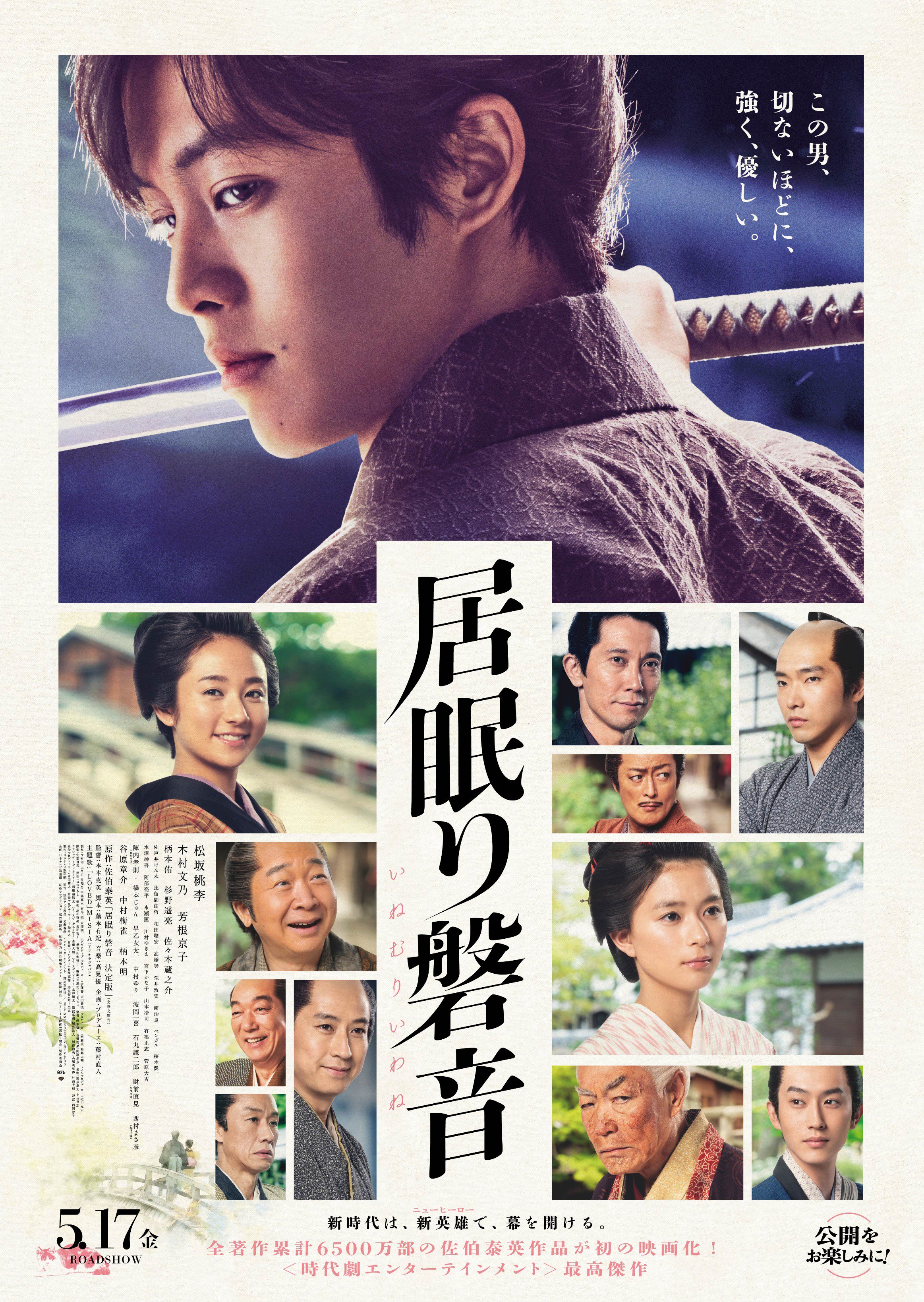
Iwane: Sword of Serenity (居眠り磐音, Katsuhide Motoki, 2019)

The contradictions of the samurai code conspire against one noble-hearted young man in Katsuhide Motoki’s adaptation of the long running series of historical novels by Saeki Yasuhide, Iwane: Sword of Serenity (居眠り磐音, Inemuri Iwane). Yet this truly serene samurai is a stoical sort, learning to bear his pain with fortitude while standing up for justice in an increasingly corrupt Edo where money rules all while an ascendent merchant class continues to challenge the fiercely hierarchical social order. 

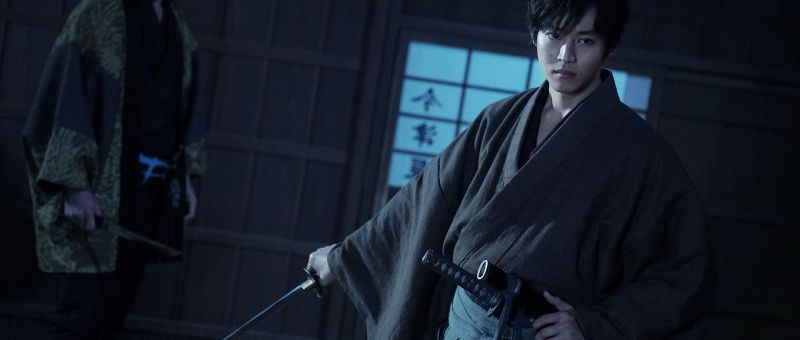
Beginning in 1772 which turned out to be a disastrous year, the tale opens as hero Iwane (Tori Matsuzaka) prepares to return home after completing his three year rotation in Edo in the company of childhood friends Kinpei (Tasuku Emoto) and Shinnosuke (Yosuke Sugino). Shinnosuke is in fact married to Kinpei’s sister Mai, while Iwane will himself be married to Kinpei’s other sister Nao immediately on his return so close are they. As Iwane’s father tells him, there are great hopes for these young men that they can “turn our outdated clan around”, but events will conspire against them. Spoiling the happy homecoming, Shinnosuke is accosted by a drunken uncle who convinces him Mai has been unfaithful in his absence with the consequence that he kills her immediately on his return home. Unable to understand this turn of events, Kinpei confronts his friend but eventually kills him, while Iwane is then forced to kill Kinpei after he goes on murderous rampage in revenge for the wrong done to his sister. 

In trying to mediate the case, the argument is put forward that Shinnosuke acted rashly and should have brought his suspicion to the authorities rather than opting for summary execution. The lord however disagrees, condoning Shinnosuke’s actions under the rationale that to do so would have been considered “weak minded” while as Shinnosuke himself had claimed he acted in accordance with the samurai code in which female adultery is illegal and punishable by death. By contrast, he finds Kinpei’s rashness offensive, insisting that he also should have recognised the legitimacy of his sister’s murder and simply left quietly with her body. Having learned the truth in which his childhood friends became victims of clan intrigue, romantic jealousy, and tragic misunderstandings in this Othello-like plot, Shinnosuke and childhood sweetheart Nao are also consumed by the rashness of samurai law each exiled from their clan and cast adrift in Edo-era society. 

Edo-era society is however also itself corrupt. Some months later, Iwane has returned to Edo as a lowly ronin lodging with a kindly old man, Kinbei, who helps him find a job firstly gutting eel then as a bodyguard at a money exchange which has been receiving anonymous threats they assume are from rival broker Awaya who has hatched a nefarious plan to manipulate the currency market to stop the current Shogun introducing a new unit which can be used in both Edo and Kyoto which would understandably cut into his already corrupt business model. Luckily, Imazuya is an honourable man who backs the new currency plan and wants to do the right thing which makes him a perfect fit for Iwane’s innate sense of justice. “You don’t know the way of the merchant” Awaya snaps at him, suggesting both that the samurai are already on their way down as the merchants rise and that his unwillingness to play dirty will be his downfall. Nevertheless, Iwane is the type to adapt quickly, instantly coming up with a way to play Awaya at his own game and kick his destructive amoral capitalism to the curb. 

Meanwhile, he continues to pine for Nao while drawing closer to Kinbei’s earnest daughter Okon (Fumino Kimura). As we discover Nao is also a victim of an intensely patriarchal social order but through the tragedy that befalls them also finds strength and agency making a life changing decision that allows her to become independent while looking after her family if in the knowledge that the childhood romance she shared with Iwane is a thing of the past. Iwane too agrees that he is trapped in a living hell of guilt and grief, yet choosing to go on living anyway as calm and cheerful as he’d ever been while standing up to Edo-era corruption though uncomfortably enough this time against the destabilising influence of the rising merchant class and therefore in contrast to most jidaigeki reinforcing the legitimacy of the samurai order which has paradoxically also ruined his life with its rigid and implacable social codes. In any case, Motoki’s classic chanbara melodrama has a serenity of its own as the cheerfully laidback hero resolves to live his life by a code of his own free of samurai constraint. 


Trailer (no subtitles)

The Housemaid (하녀, Im Sang-soo, 2010)

Kim Ki-young’s landmark 1960 film The Housemaid (하녀, Hanyeo) was a gothic tale positioning the source of its horror in the temptations of an increasingly consumerist society as a moderately wealthy man acquires the means to hire a domestic servant only to give in to sexual temptation which brings about his ruin. Kim’s moralising drama may cast a young woman as a salacious femme fatale, but it also ends with a perhaps surprising coda that reminds the male members of the audience that rules exist for them too and they can’t expect to escape unscathed should they break them. 

Im Sang-soo’s 2010 “remake”, perhaps more accurately described as a re-imagining, updates the tale for the modern day in which a class of super elites has become almost entirely detached from regular society and with it any sense of conventional morality. The heroine, Eun-yi (Jeon Do-yeon), is not a naive schoolgirl but a mature woman once divorced, while the head of the household, Hoon (Lee Jung-jae), is in fact absent for most of the picture which otherwise features only women engaged in accidental class warfare and desperate, internecine fights for survival. 

Im opens, however, with a tense and prophetic scene roving around the night market where Eun-yi is temporarily working alongside a friend while waiting for another opportunity. A young woman hovers over a rooftop railing, eventually falling to her death. Eun-yi is oddly fascinated, asking her friend to come with her to check out the scene on their way home. This odd reaction may fit with later characterisations of her as “childlike”, though otherwise in conflict with constant reminders that Eun-yi is a “good person” despite the potential for corruption offered by the Goh mansion. While Mrs Goh, Hae-ra (Seo Woo), is heavily pregnant with twins and unable to satisfy her husband sexually, he turns to the maid who is much older than she is but also more experienced, earthier, and freer in spirit. Eun-yi is a willing participant in their affair, but is surprised when Hoon leaves her a cheque the next morning as if he were paying her an overtime bonus or merely trying to justify his sexual transgression as a transaction sealed off from his family life. 

Nevertheless, the situation reaches a crisis point when veteran housekeeper Mrs Cho (Youn Yuh-jung ) discovers the affair and suspects that Eun-yi may be pregnant. While as Hae-ra’s mother Mi-hee (Park Ji-young) puts it, affairs are part of the package with a rich husband, a child is an existential threat yet for all her plotting Mi-hee may be overplaying her hand pushing Eun-yi from a second floor ladder in full view of her daughter and granddaughter hoping to engineer if not a death then at least a miscarriage. Victims of this same system of class and patriarchy, Hae-ra and her mother believe they must destroy another woman to ensure they hang on to their position which they only occupy in their relationship to Hoon. 

Mrs Cho, meanwhile, once felt something similar, in essence a turncoat believing that her only possibility lies in toadying for the super rich but now that her son has been made a prosecutor she’s beginning to tire of a life of constant degradation. “R.U.N.S.” is her favourite acronym for describing her existence, “Revolting, ugly, nauseating, and shameless”. Fearing for her safety, she advises Eun-yi not to linger too long in the house, but is finally forced to admit that she feels ashamed in her complicity with the shady machinations of her employers whom she describes as “scary people” willing to act with absolute impunity when it comes to protecting their wealth and position. “Why’d you just stand still and let her slap you like that?” she asks of Eun-yi confronted by the jealous wife, indigent on her behalf but also unable to deny that it’s an apt metaphor for the way she has lived her life trapped in the house of Goh. 

As for the house itself, its fierce modernity makes for a cold home along with its sense of spotless sterility in which everything, and everyone, must have a place. The only source of heat provided is by a raging fire in front of which Hae-ra and her mother plot their “revenge” behind the back of an otherwise emasculated Hoon who is later forced to confront the reality that he is largely without power in this matriarchal household. Im’s camera tilts at these destabilising moments, a degree of unease lurking in the house’s shadowy interiors. Eun-yi wanders around in her white nighty like a living ghost now defined by her complicated status straddling a class divide. Yet she really is a “good person” with a “pure heart”, her desire for revenge largely turning inward but also doomed to fail in that you cannot shame the shameless into recognising their own immorality. Eun-yi never considers digging in and taking over the house herself, while her opposing numbers operate under a misplaced terror of her potential to unseat them. Their ongoing oppression is both modus vivendi and ingrained defence mechanism. 

Yet they are all victims of the same systems of entrenched class privilege and patriarchy that set one person against another driven by fear and desperation. Only Mrs Cho finally has the courage to reject the system altogether by removing herself from it, no longer willing to be complicit with her own degradation. “That’s what these people are like,” Hoon sneers, almost offended but perhaps shaken by Mrs Cho’s quiet revolution in realising he holds no power over those who’ve decided to be free. 


International trailer (English subtitles)

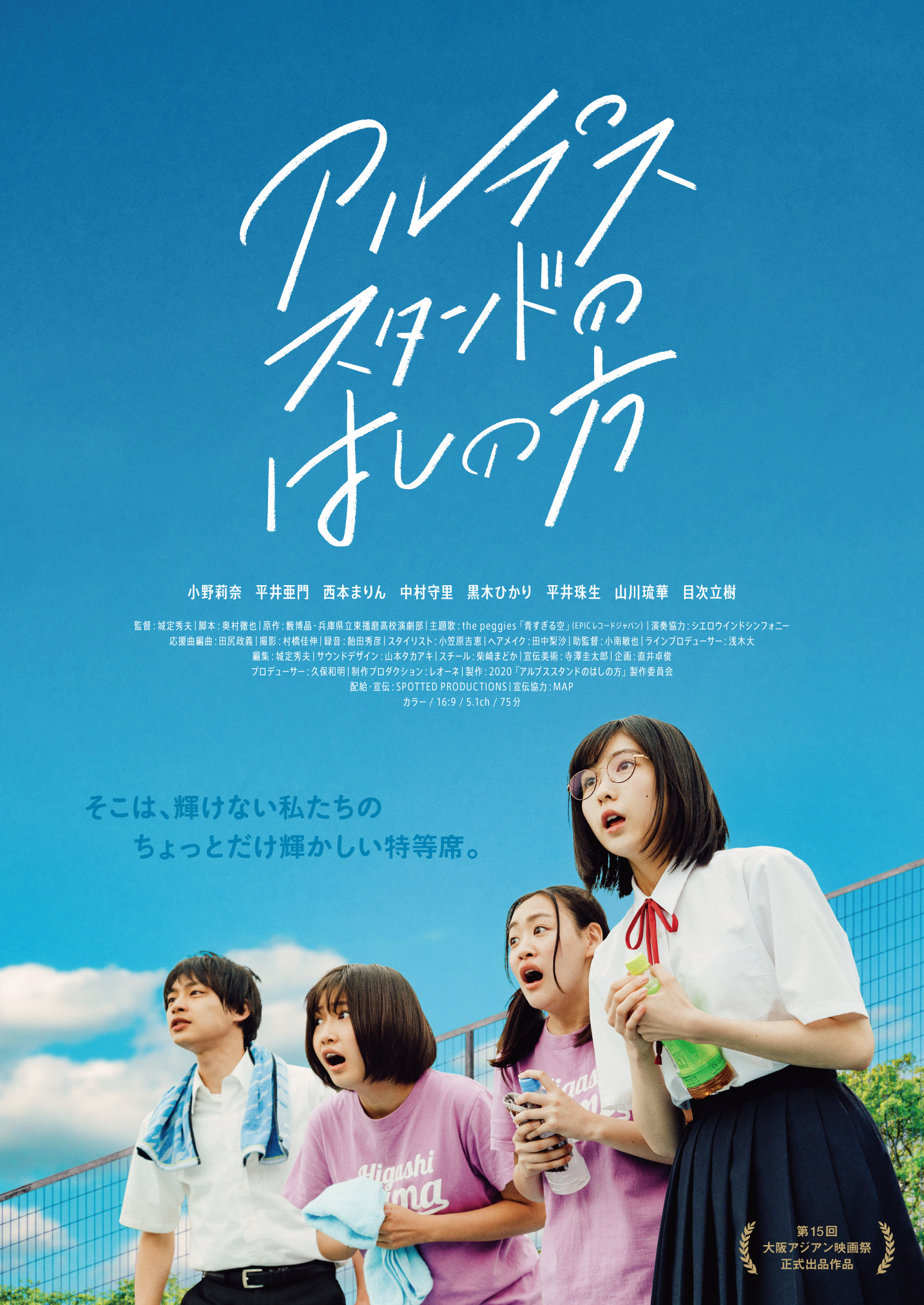
On the Edge of Their Seats (アルプススタンドのはしの方, Hideo Jojo, 2020)

It’s only natural to be a little anxious in the last year of high school but a collection of his school students are in danger of giving up before their lives have even started in Hideo Jojo’s zeitgeisty dramedy On the Edge of their Seats (アルプススタンドのはしの方, alps stand no hashi no kata). Adapted from a stage play written and performed by a high school drama club, the effortlessly witty dialogue has a lived-in quality while pregnant with its own anxieties as the teens each deal with their private disappointments while wondering if there’s any point in trying when all their efforts are doomed to failure. 

Best friends Asuha (Rina Ono) and Hikaru (Marin Nishimoto) for example are still dealing with the fallout from losing their place in a regional drama competition when one of them got sick and couldn’t perform. Fujino (Amon Hirai) quit the baseball team after realising he’d never be as good as the lead pitcher, and the shy Megumi (Shuri Nakamura) struggles with social interaction while unexpectedly having her thunder stolen by popular girl Tomoka (Hikari Kuroki) who not only beat her to first place in the last exams but is also dating her crush, Sonoda who is the star of the baseball team. 

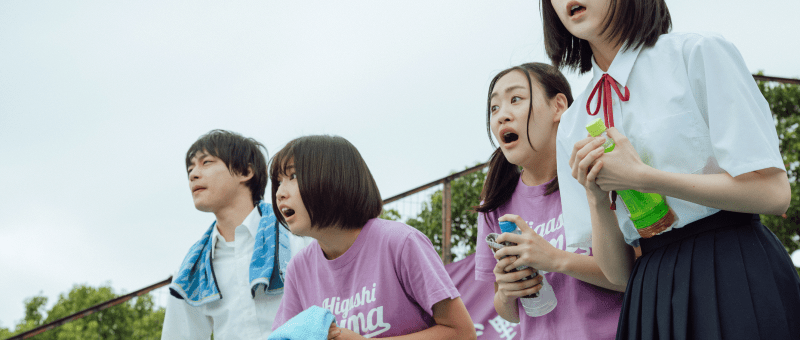
None of them exactly wanted to come and watch their high school baseball team anyway which is why they’re way up in the bleachers. “Is the fabled last summer of high school meant to be so boring?” Asuha sighs, reflecting on the disappointing ordinariness of the end of her youth. It’s just one more thing she claims “can’t be helped” like the cancellation of the play or life’s myriad other disappointments. The ironic thing is that they’ve been bussed all the way into school in the middle of summer to watch their team lose, badly, to one that reached the national finals the year before. Perhaps you can’t blame them for their sense of futility. 

Yet it’s just this kind of defeatism that they end up facing, encouraged by their over-enthusiastic English teacher and the school band to shout their hearts out for their friends on the field. “Life is all about swinging and striking out” their teacher tells them, trying to reassure the teens that it’s worth taking the risk as they continue to meditate on disappointment and inertia. Fujino quit baseball because he thought it was pointless to continue when he’d always lose out to Sonoda, but his teammate Yano, who is objectively bad, stayed on and continued to train intensively despite his low prospects of ever being allowed on the field. He wonders who had the right idea, him or Yano, and whether it’s wiser to switch tracks when something doesn’t work for you or really it was just petulant resentment that led him to give up without putting up much of a fight. 

Though none of them were particularly invested in the game to begin with, when they talk about “baseball” they’re really talking about a lot of other things and gradually begin to rebel against the “can’t be helped” philosophy that led them to give in to disappointment. The shy and secretly lonely Megumi discovers that Tomoka doesn’t have it all that great either, eventually forging a spiritual bond in their shared desire to support Sonoda who after all is not having a great day on the mound. There’s something a little ironic in the choice of Sonoda’s favourite intro song, Train-Train by the Blue Hearts, which neatly reflects the teens’ internal anxiety along with the messages of living in the moment. 

What they learn is in essence that if you’ve done your best and it still doesn’t work out then that’s alright and there’s nothing to be afraid of so you might as well swing for the fences even if you miss. They remain “spectators” in one sense, but in becoming emotionally involved in the baseball game that we never see but only hear about the teens regain the courage and desire to take a more active part while gently bonding in their shared sense of solidarity and renewed hope for the future. Witty and warmhearted, Jojo’s innovatively lensed coming-of-age drama has a poignant quality of youthful nostalgia but also genuine heart in its gentle advocation for the art of perseverance. 


Original trailer (English subtitles)

Train-Train by the Blue Hearts

Raffles Hotel (ラッフルズホテル, Ryu Murakami, 1989)

An actress gradually dissolves into her own image while wandering around Singapore in search of lost love in Ryu Murakami’s adaptation of his own novel, Raffles Hotel (ラッフルズホテル). Ryu Murakami may generally be more associated with the extreme revolving around transgressive sex and violence, yet like its namesake the film is a more elegant affair indulging in its own sense of mystery tinged with a melancholy eeriness in its heroine’s apparent instability. 

Moeko (Miwako Fujitani) later admits that she is no longer an actress, and therefore no longer quite herself uncertain who it is she’s meant to be. In one sense perhaps that’s why she’s come to Singapore though in another it’s someone else she’s looking for though to begin with we may think she’s there to escape him, and it could be that too. “Maybe I’d feel better if he were,” she muses when her tour guide, Yuki (Masahiro Motoki), explains that there are no Japanese people near the gravestones she’s just been looking at trying to assure her that the man she’s seeking is not dead. She thinks she sees him everywhere, dropped into typical Singaporean scenes appearing as a durian seller or a man restoring a church while more literally haunted by the spectre of a friend who apparently died in Vietnam while covering the war. Kariya (Jinpachi Nezu) later tells her that he can’t forget the jungle while she asks to be taken there with him and travels to a mountain lodge where they hunt wild game with a crossbow. 

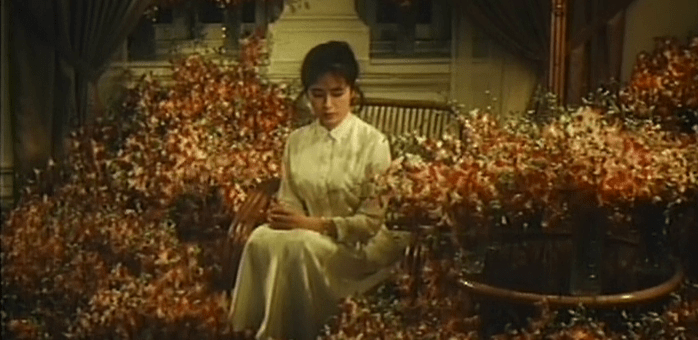
Yuki first becomes worried about her when her hotel room is filled with orchids she claims are from Kariya only to discover she ordered them herself when the orchid house contacts the hotel to complain that the bill has not been paid. Even so, she continues to believe they are from the man she’s looking for, even going so far as to thank him for them as if unable to process the gap between her realities. We often see her looking at photos from her photo shoots, while she later complains to Kariya that she wants to laugh when she wants to laugh and cry when she wants to cry as if making plain her disconnection with her self and desire to reassert her own identity over those she is forced to assume as an actress. 

This abstraction may also explain her words to Kariya that the sky is full of stars but that they are distant from each other and therefore the sky is only make-believe as if the image of Moeko that we see is only an illusion we’ve patched together from the various components available to us. It speaks of her alienation and loneliness, two qualities only deepened by her presence in an unfamiliar culture where she cannot speak the language. Acting as her guide, Yuki describes her as a polar opposite to his Singaporean girlfriend (Fawn Wong), the daughter of a wealthy family who is bold and confident, unafraid to chase her desires be they dancing or “Japanese hoods” as her father describes them. 

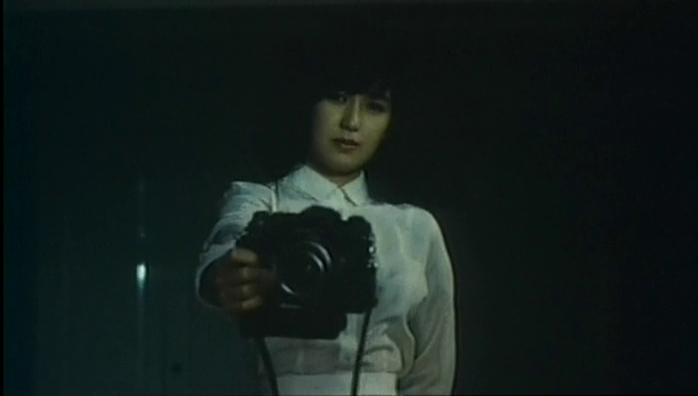
Murakami semi-exoticises Singapore if at times ironically in homing in on the portraits of famous authors in the bar and a man who always seems to be banging away on a typewriter. He sends Moeko all around the island and follows her as she takes in tourist sights, tries durian, and watches Chinese opera but lends an eerie quality to her place within the hotel implying finally that her room has in a way swallowed her as her name is added to the list of famous people who have stayed there even as she remarks that she feels as if the ceiling fan has become sentient in its movement. In any case, the camera is something that she both fears and craves as it both gives and takes her identity. She tries to pick it up herself but points it without looking, finally asking Kariya to take her picture only to find herself becoming one with her image just as Kariya is reduced to shadow as if her very essence had dissipated into the atmosphere as symbolised in a swimming pool full of orchids. “Lost in a fantasy” she may be, but so are we, led astray by a vision of a woman we can never really see. 


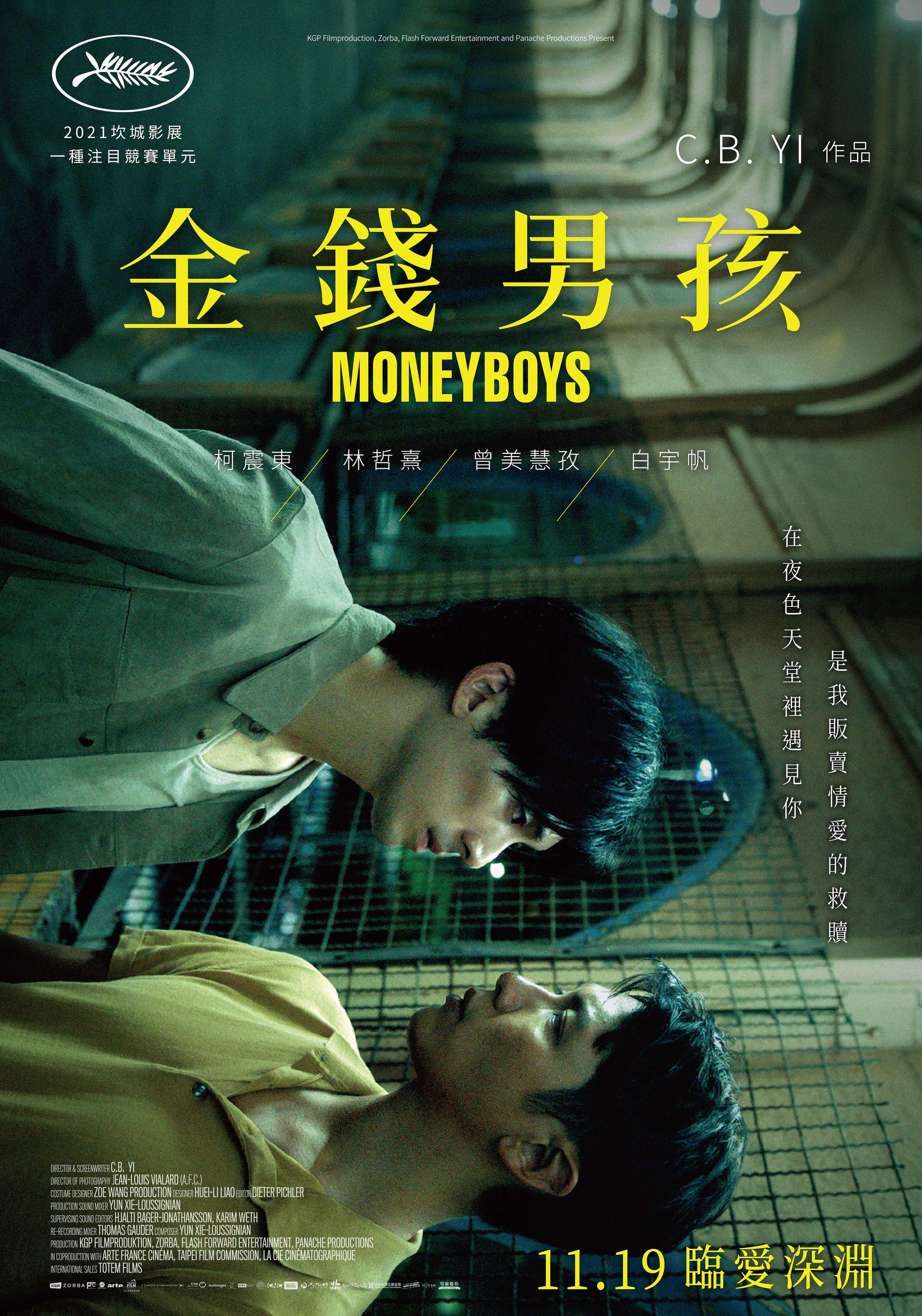
Moneyboys (金錢男孩, C.B. Yi, 2021)

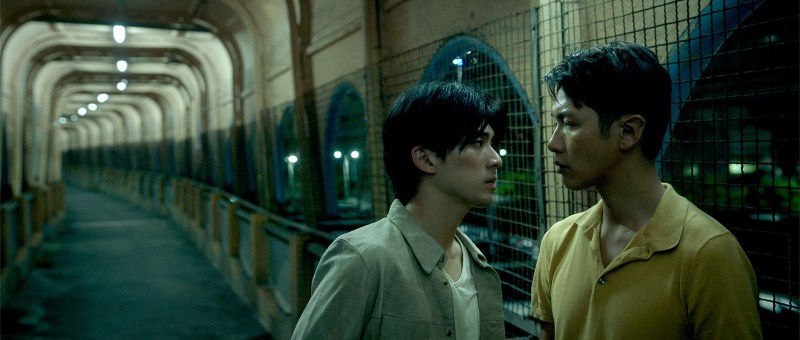
“Who doesn’t sell themselves to make money?” a young man asks in C.B. Yi’s melancholy mainland-set drama Moneyboys (金錢男孩, Jīnqián Nánhái) relating the story of a relative who worked as a tanner all his life, became ill from the effects of the chemicals, and died alone far from home. He may suggest that the exploitative nature of contemporary capitalism will eventually consume you, but it’s an older set of social codes that do for Fei (Kai Ko) who consumes himself in a pathological desire for self-sacrifice as if constantly trying to prove himself worthy of acceptance.

As we first meet Fei he introduces himself as “Jackson”, a naive country boy in the city seeking a means to support his struggling rural family which he finds in sex work. Through his job, he encounters the swaggering Xiaolai (JC Lin) who introduces himself as “Max” and takes him under his wing. Soon they fall head over heels in love, but Xiaolai fears Fei’s desperation and lack of judgment in his choice of client, an anxiety which is later borne out when Fei is badly beaten by a local gangster. Filled with rage, Xiaolai attacks him with a metal bar but ends up badly beaten himself and thereafter sought by the police. Not wanting any trouble, Fei skips town and five years later has started a new, apparently much more successful life, in another city. 

“You’re always living for others” he’s later told by a childhood friend, Long (Bai Yufan), whose long-term crush on him Fei seems to be wilfully ignoring, “the way you sacrifice yourself, you constantly hurt yourself and sometimes others too”. Fei’s self-sacrificing nature does indeed seem to have a masochist component as he wilfully puts himself in dangerous situations to get money to provide for his family. His family, however, reject him precisely because of the nature of the sacrifices he is making. Returning to his home town after being unjustly hassled by local police who attempt to entrap him by getting an undercover officer to pose as a client and searching his home for drugs, Fei is physically attacked by a belligerent uncle who can’t stop ranting about Fei’s marital status beginning by berating him that his family is embarrassed because he has no wife before revealing that they all know about “what you did in the city” and are shamed by it. His father barely looks at him, though his sister appears to know and encourages him to find the right person and hold on to them because life is long and she doesn’t want him to be lonely. 

Later, another woman reassures him that he is “someone who deserves love” though he struggles to accept it. He feels indebted to Xiaolai because he lost a leg for him, unable to move past the transactional nature of love to accept it from someone who wants only the same in return. Consumed by internalised shame he struggles to let go of outdated traditional social codes and unlike Long is unwilling to abandon them in order to live the life he wants. One of his sex worker friends in his new city eventually enters into a sham marriage with a woman who is fully aware of the realities and later pledges to move back to the country and raise a child as a conventional husband and father while tearfully explaining that six years with the gay community have been the best of his life. He too has made a sacrifice of himself for his family but is already torn apart with disappointment and resentment. 

Fei’s tragedy is that he tries to please everyone but himself, revelling in his self-sacrificing suffering and barely noticing when others are caught in the crossfire. Unable to let himself go, he is left only with the memory of the one time he was happy, which wasn’t the one he originally thought it was, and the simultaneous knowledge that he has lost It forever through his own thoughtlessness. Trapped in the past both by the traditional social codes and his thwarted romance with Xiaolai he envisions an ironically progressive compromise but is unable to see the selfishness in his desires perhaps for once putting himself first in failing to consider the feelings of those around him. A neon-lit vista of loneliness, C.B Yi’s melancholy tale of self-imprisonment and the commodification of love discovers only unhappiness in the midst of a repressive social culture defined by the twin poles of rampant consumerism and the filial imperative. 


Trailer (English subtitles)

Haunted Samurai (土忍記 風の天狗, Keiichi Ozawa, 1970)

An exiled spy is confronted by the cruel inequalities of the feudal era in Keiichi Ozawa’s possibly mistitled ninja drama Haunted Samurai (土忍記 風の天狗, Doninki Kaze no Tengu). There is a kind of fatalism that follows him, and he is in some senses haunted not only by men like himself charged with the neutralisation of a deserter but by the ills of a corrupt society, though the only ghost here may be himself. Based on a manga by Goseki Kojima who illustrated Lone Wolf and Cub, the film ultimately suggests that to be a good man necessarily means to walk alone as a melancholy exile from a society founded on greed and power.

Indeed, Rokuheita’s (Hideki Takahashi) sole desire is to live a “simple and decent” life as an ordinary farmer. The film opens with him squaring off against a childhood friend, who is also his sister’s love interest, having been ordered to execute him for deserting from their ninja clan. His friend no longer wants to live “like a beast”, and so there’s nothing more either of them can really do in this situation. Rokuheita carries out his duty, and his sister takes her own life in despair. When he’s given another similar mission, he questions it but again resolves that he has no real choice. Only he discovers that his target, Ushizo (Yuji Odaka), has chosen to desert after marrying and having a child. When his family suddenly show up just as he’s contemplating delivering the final blow, Rokuheita decides to let him go warning Ushizo that the Yagyu will never give up and he’ll be haunted all his life so he should try to live it well for as long as it lasts. 

But this also makes Rokuheita an exile too, himself now a target and on the run from the Yagyu and his clan. On his travels, he runs into a small family who’ve been attacked by bandits while returning from town to buy wheat seeds because their harvest has failed in the drought and they’re facing onerous taxes from an unforgiving lord. Rokuheita decides to stay in the village hoping to become an ordinary farmer but is regarded with suspicion by some because of his samurai status, while there is also another samurai exile in town, Tarao (Seiichiro Kameishi) who first worked hard to be a part of the community but has since become lazy and aloof.

Tarao is also suspicious of Rokuheita but mostly fearing that either he’s come to make trouble for him or is a fugitive who will lead trouble their way. Unlike Rokuheita, Tarao was kicked out of his clan for stealing and now lives a slightly disreputable life made all the more so by his attempts to pan gold from the local river. Rokuheita fears that if the villagers find out about Tarao and the gold it will only cause chaos and the obsession with easy riches will in the end be much worse for them than the famine. Even Tarao’s wife Oryo (Utako Shibusawa) insists they’ve already got plenty to live on and should simply go somewhere else to lead a quiet life but Tarao wants more, his hand reaching out for his purse even while attacked by corrupt retainers themselves intent on discovering the gold and keeping it a secret from their lecherous lord. 

The retainers have been taking one life for every bale of “hidden” rice, carting off young women from the village to place into sexual slavery. Rokuheita tries to teach the villagers how to skirt the feudal order by secretly farming on rough terrain to evade taxes and ensure their own food supply, but this simply incurs harsher penalties even as one of the young men points out hungry farmers can produce nothing at all. Yet there’s nothing Rokuheita can really do for the villagers because it is the feudal order which is most at fault, an order which his ninja clan supports through their spy activities. The man who tracks him, Matahei (Isao Natsuyagi), says he does so as a means of appeasing the Yagyu and protecting his home territory from them but to do he must choose a lesser evil in killing those who have chosen to try to live “simple and decent” lives outside of this system.

Ozawa brings them together in a supernaturally charged conclusion which takes place during a solar eclipse marked by the eerie winds of the Japanese title but finds them both defeated, left with only the melancholy acceptance of their rootlessness as men who will always be pursued by the invisible hands of the feudal order. Utilising wuxia-esque jump cuts to recreate the ninja magic of Rokuheita’s spy craft along with a degree of surrealism in the underwater sequence in which he is attacked by a band of topless female ninjas the film seems to edge towards a more contemporary reading of jidaigeki and not least in the unexpected violence of its final scenes.