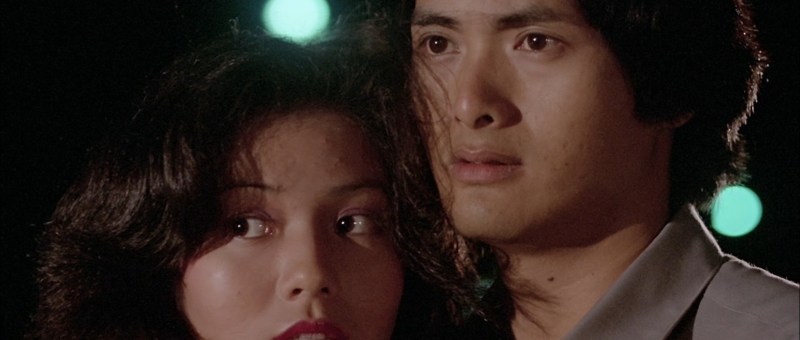
Sheep Without a Shepherd (误杀, Sam Quah Boon Lip, 2019)

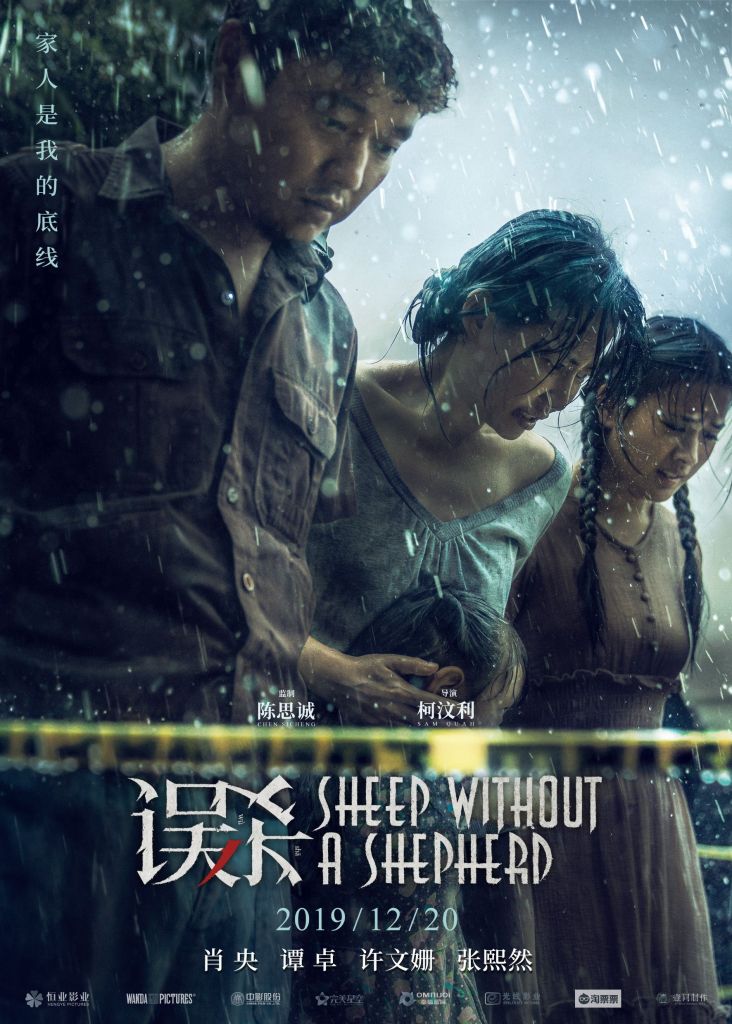
“Sheep are happy as long as they have grass to graze, they don’t care if you shear their wool” according to a vox popped farmer in the ironically titled Sheep Without a Shepherd (误杀, Wùshā). Inspired by the Indian film Drishyam, the Mandarin title of Malaysian director Sam Quah’s Chinese remake is simply “manslaughter”, but as the English title perhaps implies if ironically Quah circumvents the censors to issue an oblique broadside to oppressive authoritarianism largely by setting the film in Thailand. 

As the film opens, affable Chinese-Thai IT and internet business owner Weijie (Xiao Yang) is chatting about his favourite thing, movies, with the regulars at his usual haunt, a restaurant run by Uncle Song. Meanwhile, Song tells him about the latest local gossip, the murder of a man who’d recently won the lottery, which is why corrupt cop Sangkun (Shih Ming-Shuai) has been hanging around but not actually doing much investigating. It’s rumoured that hotshot female police chief Laoorn (Joan Chen), who has a fearsome reputation for being able to solve any case, is going to take over. She eventually does just that, fabricating evidence to push the suspect into confessing. Her tactics may be underhanded and unethical, but at the end of the day, as she points out, it doesn’t really matter. She wasn’t framing anyone and isn’t intending to submit the evidence in court, she correctly solved the crime and exerted psychological pressure to trick the suspect into thinking she had something she didn’t so he’d know the game was up. 

“As long as you are not scared, they can’t do anything” Weijie tells his daughter, reminding her that fear is the only leverage of those like Laoorn when they have no real evidence. Unfortunately for him, he’s become involved with the disappearance of Laoorn’s odious son Suchat (Bian Tian Yang) who, we discover, drugged and raped Weijie’s teenage daughter Pingping (Audrey Hui) during an excursion for bright high schoolers, going so far as to film the whole thing in order to blackmail her into providing further sexual favours. Pingping had been keen to go on the trip, somewhat snobbishly looking down on her lower-class family and seeing it as a networking opportunity to make elite friends. She is perhaps the film uncomfortably implies being punished for her unfilial elitism, but eventually finds the courage to tell her mother Ayu (Tan Zhuo) what happened. Ayu accompanies her to the rendezvous with Suchat and confronts him but he is unrepentant, reminding them that his mother is the police chief and his father a politician so he can do as he pleases before trying to force himself on Ayu at which point Pingping hits him with a hoe and knocks him out. Believing that he’s dead, Ayu buries the body with a recently interred family friend and waits for her husband to come home from a business trip repairing the internet in a hotel the next town over. He eventually returns early, worried that he couldn’t get though on the phone because youngest daughter Anan (Zhang Xiran) had left the receiver off the hook. 

A decent and kind man, well liked by everyone, all Weijie wants is to protect his family. What’s done is done, all he can do is try to mitigate it by utilising all his movie knowledge to change the narrative so that they are merely implicated in the crime rather than active suspects. In this, the mini-feud with useless cop Sangkun actually works in his favour. An earlier episode had him offer some advice gleaned from movies to an old man whose grandson had been assaulted by Suchat. Sangkun was in the process of pressuring him to accept a payoff to drop the charges (most of which he’d have pocked for himself). Another business owner privy to the incident apparently reported him anonymously and was attacked in the street only for Weijie to come to his rescue and be accused of assaulting a police officer. It’s very easy for him to claim that Sangkun is trying to frame him out of pettiness, and very easy for people to believe him because that’s exactly something Sangkun would do. 

Sangkun is the embodiment of casual abuse of power. He doesn’t care about serving the people or protecting the vulnerable, he is only interested in validating himself through authority. Laoorn is not quite the same, but she too is an aspect of the all-powerful state as she marshals all her resources against Weijie, an ordinary husband and father, against whom she has no hard evidence only her much vaunted intuition. She will stop at nothing to find out what’s happened to her son, while Weijie is determined to do everything in his power to protect his family. Laoorn underestimates him, as Pingping had, because he is a poor orphan with no education, only later realising that he is clever and resourceful even if he’s pinched his defence strategy from a lifetime of watching crime movies. The pair are engaged in a perfectly matched battled of wits, but only one of them has the power of the state behind her and a gradual erosion of civil rights to allow her to wield it against a personal enemy. 

Filming in Thailand, Quah has a much freer hand to broach the subject of official corruption even if it’s quite obvious that he’s making a point about the overreach of the Chinese state rather than that of Thailand. Weijie’s plight eventually sparks a large scale riot that spreads throughout the country as the populace declares itself thoroughly fed up with the Sangkuns of the world, not to mention the Laoorns or her mayoral candidate husband Dutpon (Philip Keung Ho-Man) who is almost entirely absent from the crisis because all he cares about is the election even if it’s a minor inconvenience not to have his family on show at hustings. Dutpon’s disinterested authoritarian parenting coupled with Laoorn’s indulgence and willingness to enable her son’s crimes through covering them up is perhaps blamed for the “monstrous” young man Suchat was becoming, himself standing in for a generation of wealthy, pampered sons of elites raised with improper boundaries who think they can do as they please because they are somehow above the normal morality. “Good parents” Weijie and Ayu meanwhile find themselves at the mercy of a corrupt faux-aristocracy, abused by Suchat and then rendered powerless in the face of an authoritarian regime. 

Weijie, however, rejects his powerlessness in an attempt to think himself out of the cage in which he finds himself imprisoned. A perfectly plotted psychological thriller, Sheep Without a Shepherd ironically satirises the much cited claim of authoritarians that humanity flounders without a leader as the populace begins to fight back against its toxic relationship with those in power. Nevertheless, its admittedly compassionate and humanitarian conclusion cannot help but feel like an overt concession to the Mainland censors’ requirement that crime can never pay and all transgressions must be owned (even if not directly by those who are literally guilty). Ultimately, however, Weijie redeems himself in the eyes of his daughter, and in doing so subtly reinforces the anti-authoritarian message in instructing Pingping never to be afraid of anything again, freeing her from the oppressive leverage of fear which itself constitutes authoritarianism.


Sheep Without a Shepherd opens in UK cinemas on 21st August courtesy of Cine Asia.

UK release trailer (English / Simplified Chinese subtitles)
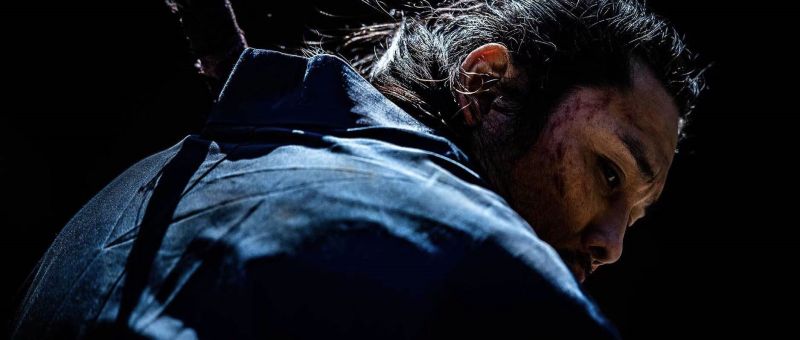
Crazy Samurai Musashi (狂武蔵, Yuji Shimomura, 2020) [Fantasia 2020]

Action star Tak Sakaguchi rose to fame in Ryuhei Kitamura’s low budget zombie movie Versus, thereafter starring in a series of similarly pitched splatter and exploitation films as well as appearing in long running tokusatsu series Kamen Rider and making his own directorial debut with manga adaptation Be a Man! Samurai School in 2008. Much to fans’ disappointment, Sakaguchi announced his retirement as a performer in 2013, but has since made several high profile returns to the big screen including Yuji Shimomura’s Re:Born in which he played a former JSDF elite soldier living quietly in the countryside until an old enemy tracked him down. 

Again emerging from semi-retirement, Crazy Samurai Musashi (狂武蔵, Kurui Musashi) sees Sakaguchi reunite with Shimomura to play the most famous of legendary samurai Miyamoto Musashi in an all out action fest including a 77-minute one cut assault during which he singlehandedly kills 588 men. Unsurprisingly light on dialogue, the film credits Sion Sono with original concept and Atsuki Tomori with screenplay who do at least add a little context which frames this, to an extent, as a tale of merciless samurai hypocrisy and the fallacy of “honour” as a code for living. 

As the film opens, a small boy stares in wonder at a white butterfly before being reminded that he has, as the head of this clan, apparently challenged the great Miyamoto Musashi to a duel in revenge for his murder of two of their previous leaders. Affable retainer Chusuke (Kenta Yamazaki) tells the boy not to worry, he’s not going to let anything happen to him, but stops short of explaining that he’s really just a kind of bait. Nevertheless, Chusuke has his reservations about their plan. After all, it’s not very befitting of a samurai’s honour to challenge someone to a private duel but invite 400 retainers to the surprise party. 400 against one seems faintly ridiculous. It might even be embarrassing if anyone else finds out, but then as the priest (Yosuke Saito) says you can just kill them too. In any case, while Chusuke is talking to the priest and the mercenaries are busy arguing with the retainers, Miyamoto Musashi sneaks through the perimeter and fells the small boy who is technically the “leader” of the clan with one flying sword blow, kickstarting a scene of utter carnage as he attempts to fight his way out of the compound.   

“How many more?” Musashi asks in exasperation during a momentary pause, later doing a few calculations. He thought there’d be about 70, but it feels like he’s killed a few more than that. True to form, the samurai warriors largely follow the protocols of honour. They fight one-on-on, and only at the end does anyone attempt to attack Musashi from behind. He makes swift work of them, taking each man out with maximum economy, occasionally challenged by complete randomers who apparently aren’t even part of the clan, they just really don’t like him. Though necessarily repetitive, Shimomura’s innovative, non-stop fight choreography follows a realtime, broadly naturalistic logic in which duels are generally brutish and short. Musashi begins to tire as he continues to fight for his life, taking brief breaks for water, food, and existential questioning, before heading back into the fray. 

“Duty? Honour? Who gives a crap? I just wanna win” he later says in what is simultaneously a rejection and an embodiment of the samurai code. “I’ll die one day anyway” Musashi chuckles to himself before rejoining the fight, wilfully embracing the nihilism of the samurai existence that allowed him to kill a child without thinking twice. Chusuke failed to protect his honour, or save his clan, his earnestness perhaps betrayed by his mentor’s underhandedness in unwisely hiring vast numbers of mercenaries and sending his own unprepared students, many of whom simply flee (a wise decision), to face off against an unstoppable killing machine. Paradoxically, Miyamoto Musashi will survive because he doesn’t care about playing fair, he may not even care about surviving, all he wants is to win. “A kid who knows nothing of war”, Chusuke’s stubborn insistence on illusionary samurai honour will lead only to more suffering and violence while all Musashi can do is sigh in resignation and ready his sword. 


Crazy Samurai Musashi streams in Canada from 20th August to 2nd September as part of this year’s online edition of Fantasia International Film Festival.

International trailer (English subtitles)

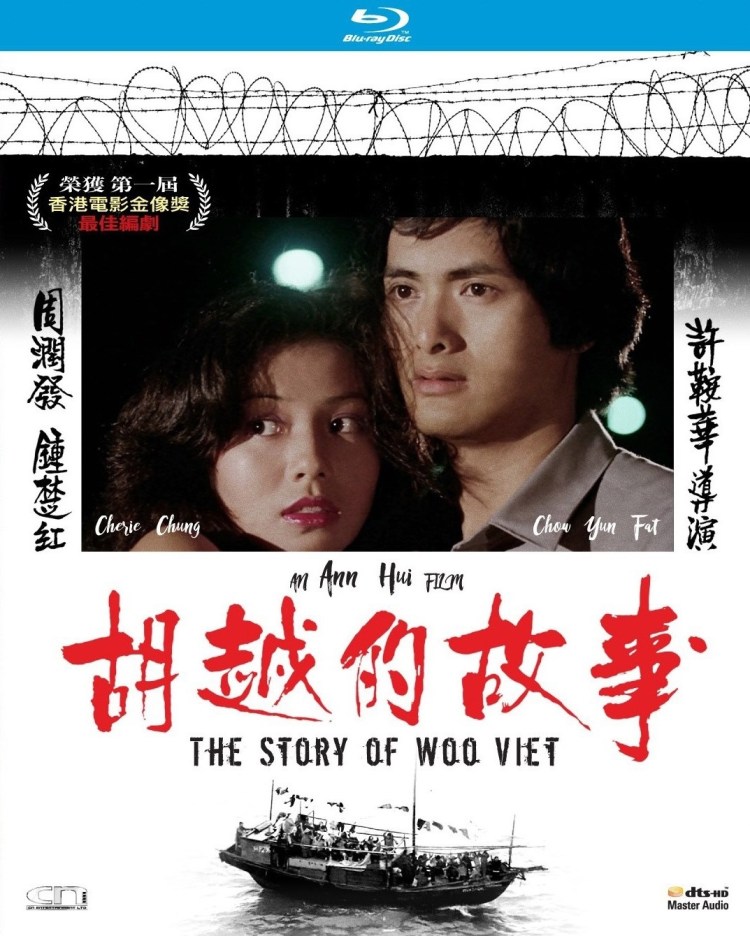
The Story of Woo Viet (胡越的故事, Ann Hui, 1981)

Displacement and a legacy of violence conspire against a young man attempting to escape the trauma of war in the second in Ann Hui’s “Vietnam trilogy”, The Story of Woo Viet (胡越的故事, AKA God of Killers). Starring a young Chow Yun-fat as Chinese-Vietnamese refugee headed to Hong Kong with a hope of making it to the US, Woo Viet’s story suggests that violence may be impossible to escape in a world increasingly corrupted by human indifference while only crushing disappointment awaits for those who live on dreams alone. 

After years fighting for the South Vietnamese army, Woo Viet (Chow Yun-fat) is one of many young Chinese-Vietnamese men attempting to escape through claiming asylum in Hong Kong so that he can eventually apply for a visa to the US. The reasons he needed to leave are readily apparent. Even on the overcrowded, primitive boat on which he arrives in Hong Kong, Woo Viet has already witnessed several atrocities in which fellow passengers were dumped overboard, killed, or marooned on isolated islands. He has become the surrogate father to a little boy who is now alone on the boat because his dad was killed by the guards, and subsequently becomes a target for Viet Cong “special agents” after they strangle his friend in his sleep for having seen something he shouldn’t have.  

Luckily, Woo Viet has a friend in Hong Kong, a female “penpal” Lap Quan (Cora Miao Chien-Jen) who sent him letters he rarely answered all through the war. After Woo Viet is forced to kill a special agent in the refugee camp in order to ensure his own survival, he finds himself relying on Lap Quan to help him organise a fake passport. He no longer has the luxury of waiting to do things properly, he needs to leave the country as soon as possible. The fake passports available are, for some reason, Japanese meaning he has to learn to at least sound plausible by picking up a few handy phrases to fool the border guards. It’s in the language classes that he meets fellow refugee Shum Ching (Cherie Chung Chor-hung) who is travelling to the US because a former customer who has already emigrated told her that he wanted her to come no matter what the cost. The problem is the HK trafficker has not been honest with either of them. Woo Viet may have a decent shot at actually making it to the US, but the girls are to be sold on at the first available Chinatown, which in this case is Manila where they’re waiting for a connecting flight. Having bonded with Shum Ching, Woo Viet surprises the traffickers by giving up his chance to go to America to stay in the Philippines to try and rescue her. 

“Whichever Chinatown it is, I think my situation will be the same” Woo Viet writes back to Lap Quan, keeping up a correspondence which becomes increasingly dishonest as he struggles come to terms the shattering of all his dreams. Trapped in a Philippine Chinatown, he discovers the only way he can save Shum Ching is by serving the gangsters that “bought” her from the HK trafficker. Yet, also in his letter to Lap Quan he claims that “it is much simpler to kill people here compared to Vietnam”, while suggesting that the reason his situation is “the same” in Chinatowns the world over is that he has no real identity and can therefore “solve people’s problems with no problem” which is why he’s ended up working as a hired gun for HK gangster Chung. 

Even so, he still harbours hopes of making it to the US when he’s made enough money to “redeem” Shum Ching who is already dreaming of finding a tiny house for them both where she can cook him proper Vietnamese food. While in Manila, he’s partnered with a slightly older man, Sarm (Lo Lieh), who came from Hong Kong a decade earlier. Woo Viet thinks he should have earned plenty of money after a decade making kills for Chung, so he doesn’t understand why he’s still here rather than off somewhere else enjoying a better life. He still doesn’t quite see that Sarm is a vision of his possible future, a man so beaten down by life that his only goal is to drink himself into an early grave. Sarm no longer believes in a future for himself, but he wants to believe in one for Woo Viet, and so he tries to help him but brotherhood, like love, is no match for the casual cruelty of the world in which they live. 

Woo Viet’s floating rootlessness is perhaps an echo of a potential anxiety in a Hong Kong facing its own sense of displacement with the handover less than 20 years away, as perhaps are his feelings of hopelessness as he attempts to write himself into a better future in his now constant letters to Lap Quan in which he somewhat insensitively talks of his love for Shum Ching born precisely out of that same sense of rootless desperation. Soon after they meet, the pair attempt to visit a flower market at night but their romantic moment is disrupted by another refugee couple being caught and dragged away by police, instantly throwing a fatalistic shadow over their innocent connection. All Woo Viet wanted was an ordinary settled life, perhaps adopting that orphaned little boy from the refugee camp and bringing him with them as he and Shum Ching claim a better life in the US, but even small dreams are seemingly impossible in a world in which the predominating force is not love or compassion but violence.  


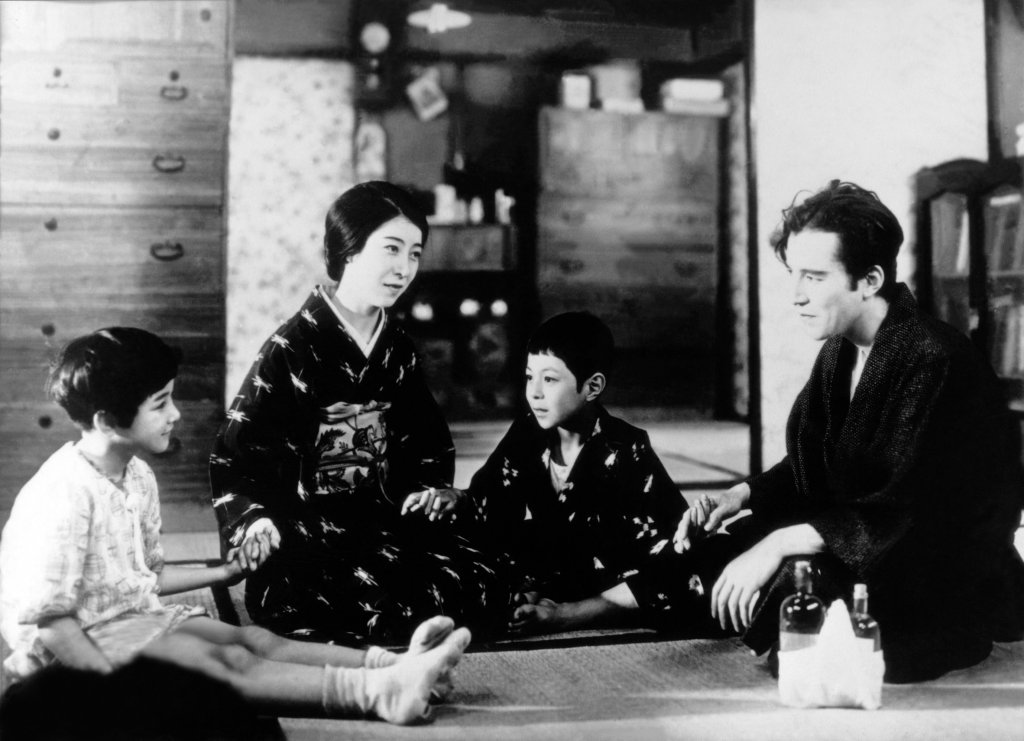
Tokyo Chorus (東京の合唱, Yasujiro Ozu, 1931)

“Tokyo – city of the unemployed” runs a rather unexpected caption part way through Yasujiro Ozu’s depression-era silent comedy, Tokyo Chorus (東京の合唱, Tokyo no Chorus). Putting an unconventional spin on the reality of the contemporary capital, Ozu nevertheless retreats into his favourite themes as good people attempt to remain cheerful in the face of increasing adversity while embracing an often latent interest in class politics as the hero finds himself losing out at the hands of heartless capitalists when he alone is brave enough to stand up for a friend treated unfairly. 

Ozu opens however with an amusing prologue set some years before the main action in which the hero, Okajima (Tokihiko Okada), is a poor student goofing off during a military-style drill. While another boy arrives late to practice and is mocked for having arrived in geta, Okajima’s problem is that he didn’t want to take his jacket off because he isn’t wearing a shirt. A little less well off than some of the others, he brazens things out by ribbing the teacher, Mr. Omura (Tatsuo Saito). Flashforward some years and Okajima has become an insurance clerk, married with three children. His oldest child, a son, is desperate for a bicycle because the other kids have one and as Okajima is supposed to be getting his bonus today, the parents have decided to give in. 

Things do not, however,  go quite to plan. After picking up his pay packet, Okajima gets talking with an old timer who laments he’s just been fired. He thinks it’s because he sold some unlucky policies in which the beneficiary died shortly after signing the paperwork, but it seems obvious to Okajima that they’re firing him because they don’t want to pay his pension. He talks things over with the other employees who all agree it’s unfair, but is the only one brave enough to march into the boss’ office and say so. Unfortunately, Okajima gets nowhere and loses his own job in the proccess. Dejected, he buys his son a much cheaper scooter on the way home but the boy is unimpressed, as is his wife (Emiko Yagumo) when he hands her his notice of termination. 

It is of course a good and proper thing that Okajima stood up for colleague, but he’s lost out because of his pride, smugly explaining to his wife that he was in the right while arguing with his boss and resentfully refusing to admit the irresponsibility of his actions as a husband and a father. Pride becomes a persistent secondary concern as he tries to find another steady job in the economically straitened world of 1931. Despite telling his colleague he envied him for his job as a sandwichboard man and claiming that having a college degree makes him overqualified for casual work, Okajima struggles with himself intellectually knowing that any job will do to feed his family but embarrassed in having to resort to work he feels is beneath him. When he runs into Mr. Omura and he offers to help him with a job in the curry rice restaurant he now owns after retiring from teaching, Okajima is conflicted, telling him he won’t accept help if it’s offered out of pity but only if extended in friendship. When his wife spots him out delivering leaflets, however, she is scandalised and humiliated rather than proud or grateful, only later coming round and agreeing to help out in the Omuras’ restaurant herself. 

Meanwhile, family life is obviously strained by their ongoing financial predicament. When their daughter is taken ill and needs hospital treatment, Mrs. Okajima is upset to discover that her husband sold all her kimonos to pay the fees, their eyes aflash with anger and despair as they put on a brave face for the children but eventually brightening as they continue on with a family game of pat-a-cake. Despite her distress, Mrs. Okaijma maintains faith in her husband and the family is as happy as it can be under the circumstances. At a reunion organised for some of his former students now no longer the rambunctious young men they were at the film’s opening but wistful for the spent freedoms of their youth, Omura makes a toast hoping that everyone continues to prosper through “hard-work and self-reliance”, but it is the mutual solidarity which Okajima showed when he stood up for his mistreated colleague which eventually proves his salvation. Humbled by his experiences, no longer looking down on honest work, he gets the offer of another job which is not quite of the kind he was hoping for, but is perhaps a new start even if it means leaving Tokyo, city of the unemployed, behind for the greener pastures of provincial Tochigi and a simpler, but perhaps kinder, existence. 


Taiwan Film Festival Edinburgh Announces Lineup for First Ever Online Edition

Originally scheduled to take place in physical form for the very first time this year, the Taiwan Film Festival Edinburgh has reconfigured itself as an online event showcasing a host of underseen classics from throughout the island’s cinematic history.

Taiwanese Hokkien-Language Cinema 

The Husband’s Secret (1960), dir. Lin Tuan-Chiu

A happily married woman tries to help a school friend who has fallen on hard times after becoming a single mother, but the situation is complicated when it turns out the father of her friend’s baby is actually her husband…

Six Suspects (1965), dir. Lin Tuan-Chiu

Stylishly shot noirish pro-police crime movie in which a blackmailer is offed leaving a series of suspects all annoyed by him because of his capacity to expose their dodgy dealings in the increasingly amoral post-war economy. Review.

The Bride Who Has Returned From Hell (1965), dir. Hsin Chi

Gothic mystery based on Mistress of Mellyn in which an entrepreneur believes that his wife has drowned after trying to elope with another man whose body was found after a boating accident along with a woman’s purse while she remains absent…

A Borrowed Hong Kong, the Imagined China in Taiwan, and Trans-regional Cinema 

A City Called Dragon (1970), dir. Tu Chun-Hsun

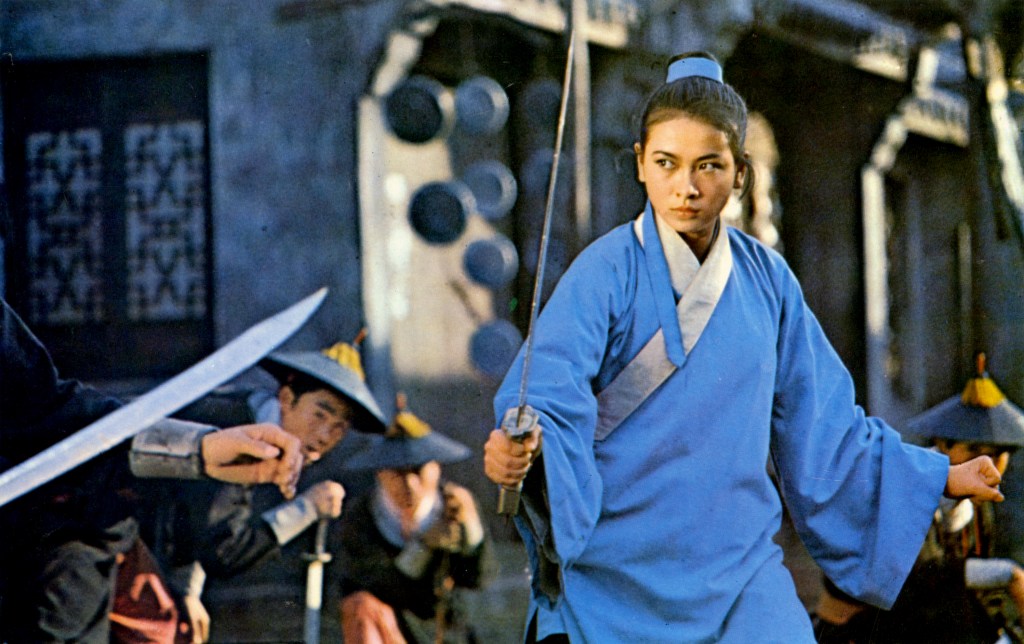
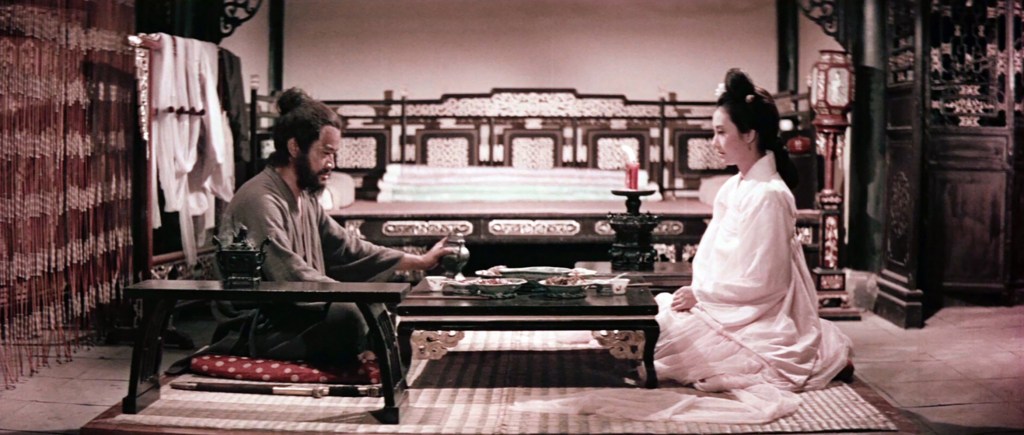
Sumptuous Taiwanese wuxia starring A Touch of Zen’s Hsu Feng as a revolutionary who ventures to the capital to meet up with a comrade and retrieve a secret map, only she later learns that he along with his whole family has already been executed…

Four Moods (1970), dir. Li Han-Hsiang, Pai Ching-Jui, Li Hsing, King Hu

Four-part portmanteau movie featuring folklore-themed contributions from Li Han-Hsiang, Pai Ching-Jui, Li Hsing, and King Hu.

Melodrama Divas

Where the Seagull Flies (1974), dir. Li Hsing 

A Taiwanese journalist encounters three identical young women but they each disappear right after he falls in love with them. In Hong Kong she is a woman attempting suicide after killing her husband, in Singapore a Filipina bar hostess, and in Taipei his younger sister’s uni friend. After discovering her identity and that she likes to play tricks on men, he plots his revenge…

Cheerful Wind (1981), dir. Hou Hsiao-Hsien

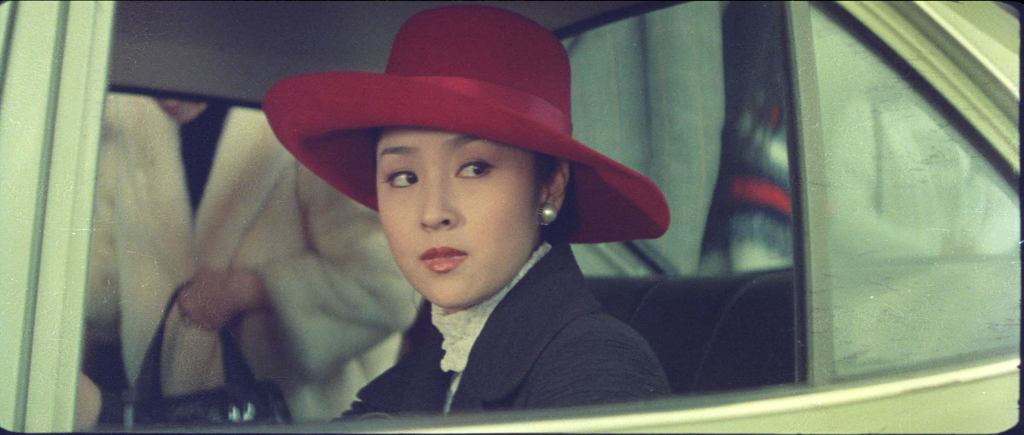
Early idol drama from Hou Hsiao-Hsien starring Fong Feifei as an independent young woman working in advertising who falls for Kenny Bee’s blind musician. Review.

Taiwan New Cinema and Its Legacy

The Sandwich Man (1983), dir. Hou Hsiao-Hsien, Tseng Chuang-Hsiang, Wan Jen

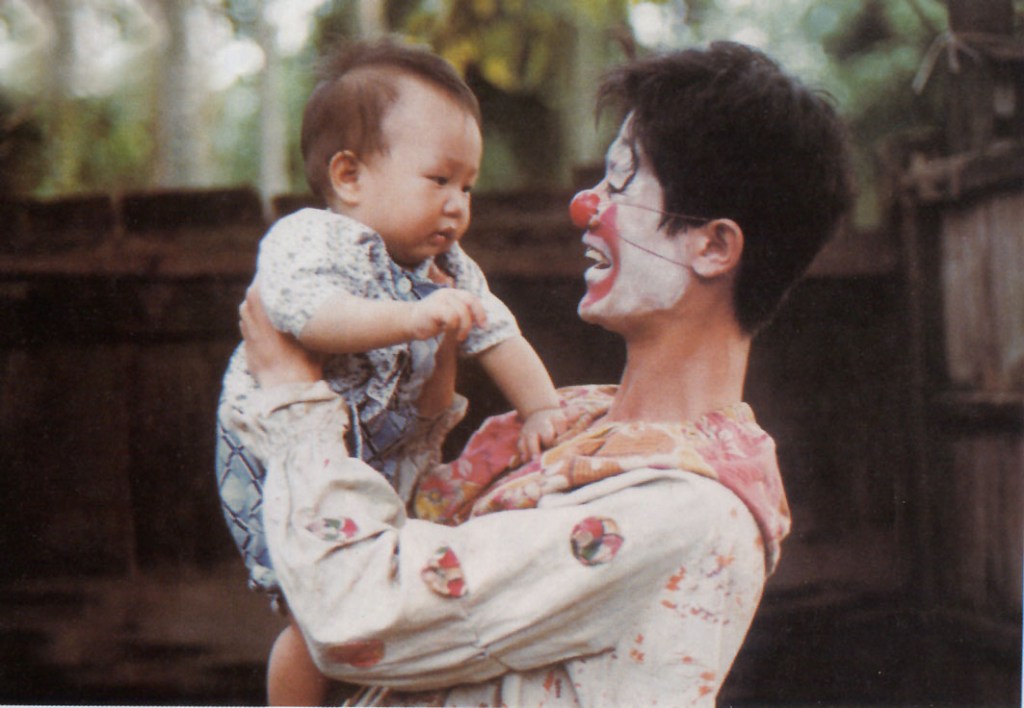
Tripartite portmanteau film inspired by the short stories of Huang Chun-Ming and exploring the changes in Cold War Taiwanese society. Features contributions by Hou Hsiao-Hsien, Tseng Chuang-Hsiang, and Wan Jen.

Kuei-Mei, a Woman (1985), dir. Chang Yi 

Melodrama inspired by the Xiao-Sa novel in which the heroine, Kuei-Mei escapes the Mainland for Taiwan to live with her cousin but is married off to a widowed Chinese refugee who already has three children and a massive gambling addiction leaving her with no choice other than to seek a better life in Japan.

When Love Comes (2010), dir. Chang Tso-Chi

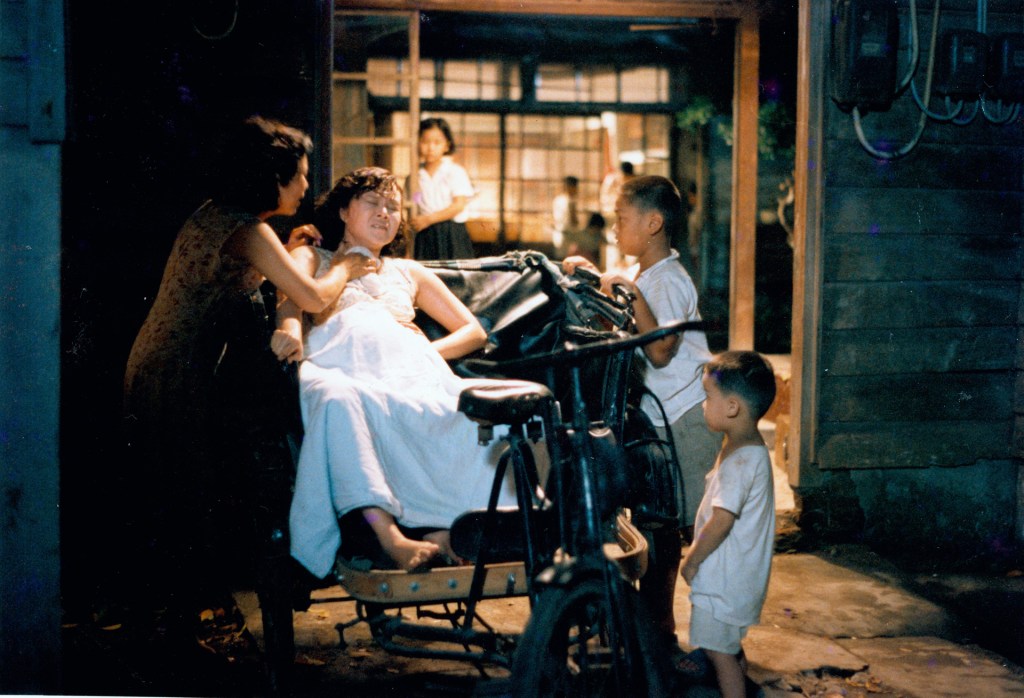
A young woman living with her two mothers, father, uncle, and grandfather comes to understand more about her family when she is abandoned by her boyfriend after becoming pregnant.

God Man Dog (2007), dir. Chen Singing 

A hand model suffering from post-natal depression, a bereaved indigenous couple, their daughter in the city, and a one-legged man driving a giant Buddha bus, are brought together by a stray dog. Review.

Midi Z Selection

Jade Miners (2015), dir. Midi Z

Midi Z’s first documentary focusses on the jade miners continuing to work against the back drop of the continuing conflict with the Kachin Independence Organization which had brought the industry to a halt.

Ice Poison (2014), dir. Midi Z

When economic forces render his farm unviable, an old man sells his cow to buy a motorcycle for his son so he can make money taking people into town but he ends up becoming involved in drug trafficking to help a woman trying to bring her child back to Myanmar after being tricked into marriage in China.

The Palace on the Sea (2014), dir. Midi Z

Experimental short in which a Buddhist monk tries to free the ghost of a woman from a floating restaurant.

Docs: Exploring Diversity in Pursuing the Taiwanese Identity 

How Deep is the Ocean (2000), dir. Tang Hsiang-Chu

Documentary following a young man from the Tao indigenous minority who returns home to Orchid island after pursuing a better life on the Mainland.

Out/Marriage (2012), dir. Nguyen Kim-Hong

Documentary following a Vietnamese woman who came to Taiwan to marry but endured years of domestic abuse before escaping and becoming a single-mother to her son.

The Mountain (2015), dir. Su Hung-En 

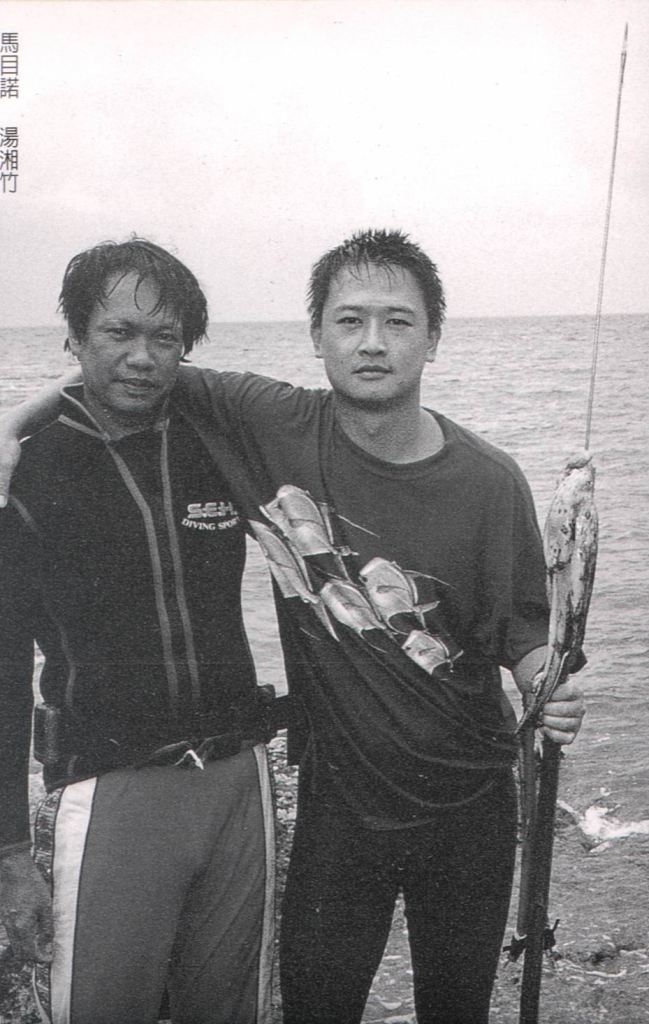
Documentary following the director’s grandfather, Teymu Teylong, a hunter from an indigenous community.

The Taiwan Film Festival Edinburgh will take place online from 18th to 27th September with all films streaming for free! Full details are available via the official website and you can also keep up with the festival via the official Facebook Page and Twitter account.

Blueprint of Murder (暗黒街の弾痕, Kihachi Okamoto, 1961)

Alongside its trademark tokusatsu Toho also had a sideline in genre-hopping B-movie comedy of which Kichachi Okamoto’s Blueprint of Murder (暗黒街の弾痕, Ankokugai no Dankon) is a prime example. Playing into a zeitgeisty anxiety about corporate corruption which led to several series of films revolving around industrial espionage such as Yasuzo Masumura’s Giants & Toys and the later Black Test Car, Okamoto’s ironic take on noir and globalisation anticipates the spy spoofs Toho would produce in the wake of Bond fever while quietly also perhaps poking fun at Nikkatsu’s crime melodramas.

The film opens with a young man, Kusaka (Ko Mishima), and his boss Komatsu (Ichiro Nakatani) testing an experimental car engine that would be ultra efficient and cheap to produce. The test goes well, but Kusaka is run off the road on the journey home, caught between a truck and a mysterious man on a motorcycle. Meanwhile, Kusaka’s brother Jiro (Yuzo Kayama), a whale hunter, is busy working on a new kind of harpoon when he gets a telegram from an old friend telling him to come home right away because his brother is dead. On meeting with Komatsu, Jiro starts to think perhaps his brother’s death wasn’t an accident. It seems there are a lot of people interested in this technology, some of whom would rather it not see the light because cheap, efficient engines are not good news for the oil industry. 

Hearing that Kusaka was recieving threatening letters, Jiro wonders why he wouldn’t go to the police, but Komatsu points out that it would have made no difference. Firstly, the police rarely get involved with cases of corporate espionage, and secondly if they did the blackmailers would win anyway because if there were a court case they would have to make full disclosure of their plans. Jiro tries going to the police himself and showing them that he has evidence, as well as the “instinct of a whale hunter”, which suggests that his brother was murdered, but nonchalant policeman Azuma (Tatsuya Mihashi) doesn’t seem very interested. Teaming up with an old uni friend, Sudo (Makoto Sato), who now runs some kind of scandal rag newspaper and is well connected around town, Jiro tries to investigate but soon becomes entangled in a complicated web of corporate intrigue.

Sudo, whose paper seems to be on the verge of bankruptcy, has some sort of game going with corrupt businessman Otori (Seizaburo Kawazu) who runs Goei Economic Reporting Agency which was one of three companies bidding for Komatsu’s engine. Later, Sudo’s main squeeze Tomiko (Kumi Mizuno) also tries to blackmail Otori by posing as the daughter of a man he drove to suicide after poaching technology from his company. Played at his own game, Otori is extremely disturbed to have this traumatic incident thrust in his face, and it quickly becomes clear that although he was onboard with various kinds of corporate duplicity, he had his lines and is worried to think someone might have crossed them on his behalf. 

Otori is right to worry, they are coming for him too. Eventually unmasked, it will come as no surprise to know that the big boss is from Hong Kong making this another quiet instance of Sinophobia betraying an essential anxiety about a newly global Japan. Meanwhile, Jiro’s problems are closer to home. He starts to doubt Sudo, warned off him as man only interested in money, and witnessing him play every angle to his own advantage. Sudo may be playing his own game but has his friend’s interest at heart and is simply trying to protect him from endangering himself in a world he does not understand. 

Rather than the fulfilment of a dangled romance, what we’re left with is the restoration of the friendship between the two men in which they ultimately re-inhabit their innocent student selves complete with a surreal game of air baseball while Tomiko and Komatsu’s sister Kyoko (Mie Hama) cheer excitedly from the sidelines. Okamoto throws in a killer punchline to an early whale hunting gag while piling on the absurdist humour in characteristic style with one unexpected pay off after another even as the guys find themselves in an increasingly murky world of corporate double cross, femme fatale nightclub singers with their own identical minions/backing bands, and rowdy gangsters while trying to ensure the little guy is still free to innovate outside of consumerist concerns.  


Original trailer (no subtitles)

Six Suspects (六個嫌疑犯, Lin Tuan-Chiu, 1965)

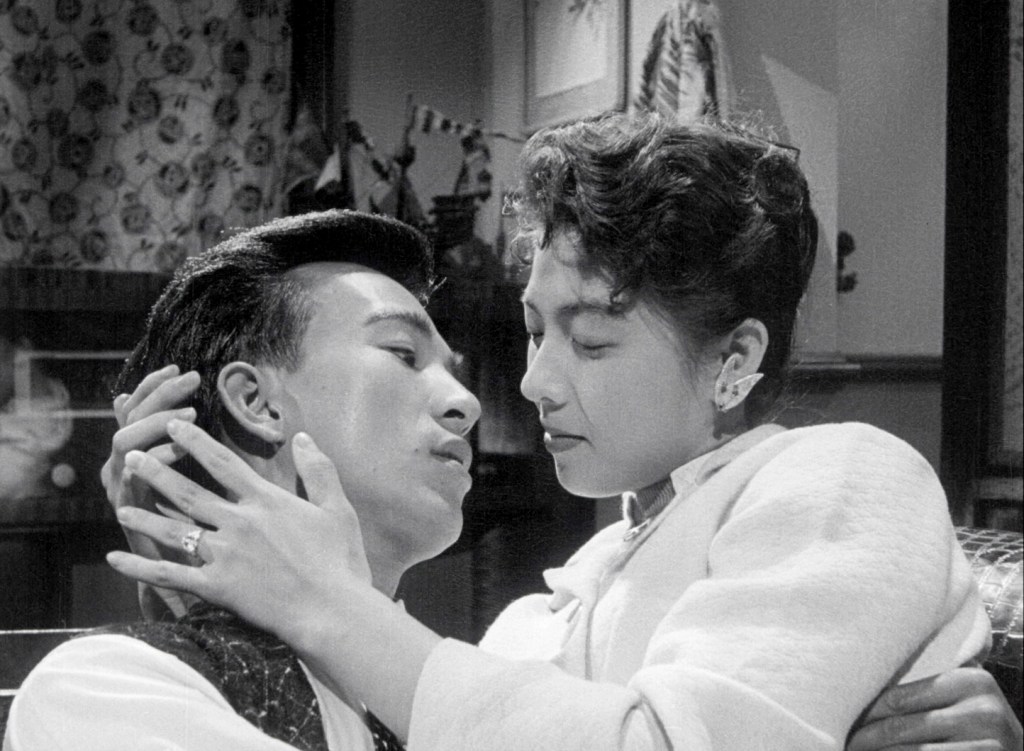
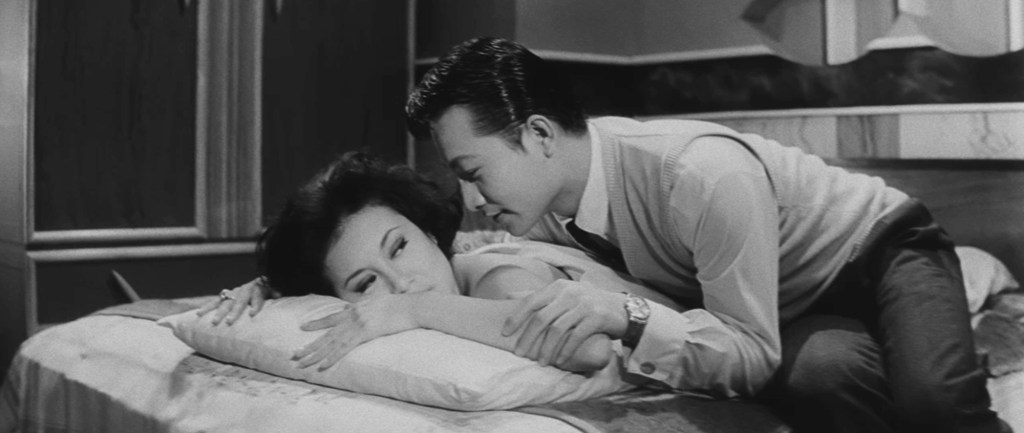
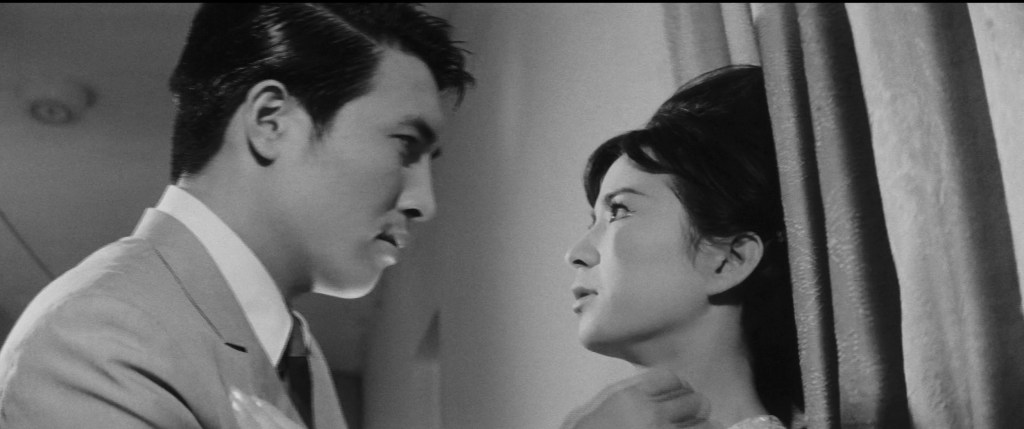
“Crime doesn’t pay” is the moral of many a film, but few of them care to state as much upfront. Not perhaps since The Public Enemy has a moral message been declared so baldly on screen as it is in the title card overlying the opening of Lin Tuan-Chiu’s Six Suspects (六個嫌疑犯) which tells us in no uncertain terms not only that you reap what you sow, but also that we law abiding citizens have nothing to fear because we are “well protected” by the police. In the end, Six Suspects was never released (apparently because Lin was unhappy with it rather than any censorship issues), but is perhaps a curious example of a pro-police drama masquerading as a noirish crime thriller with a surprisingly leftist message that dares to suggest the new middle class is inherently corrupt. 

Our anti-hero is a roguish blackmailer, Tenn Kong-Hui (Wu Dongru), who has a habit of following people around and taking photos he can use as leverage against them later. His ex-girlfriend Tai-Giok (Zhang Qingqing) has moved on and attempted to go straight with a job as the secretary to the CEO of a steel firm, but is also having a “serious” affair with the man who hopes to become his son-in-law, Lap. Meanwhile, the chairman’s brother, Khe-bing, has troubles of his own. He’s already being blackmailed by a bar hostess who may have lied about conceiving a child with him before he was married to his elegant wife, who is also a target for Kong-hui after he spots her meeting with a beatnik artist. The real problem, however is that through all his various investigations, Kong-hui has stumbled on a deeply entrenched system of corruption running between the steel company and local contractors. 

It will come as no surprise that Kong-hui is eventually bumped off. Someone knocked him on the back of the head and then turned the gas on to make it look like he killed himself. His roommate, actually in love with the chairman’s daughter even though she’s still planning on marrying Lap to please her dad, freely admits Kong-hui was “scum” but thinks it’s unlikely he did himself in. The police eventually agree, but have the luxury of too many suspects. Who did it? Two yakuza-esque petty gangsters going by the names “Snake” and “Turtle” because of their tattoos, Lap, his old flame Tai-Giok, the roommate who apparently argued with him on the night in question and then passed out drunk in a park, Khe-bing and/or his wife, or someone else entirely? 

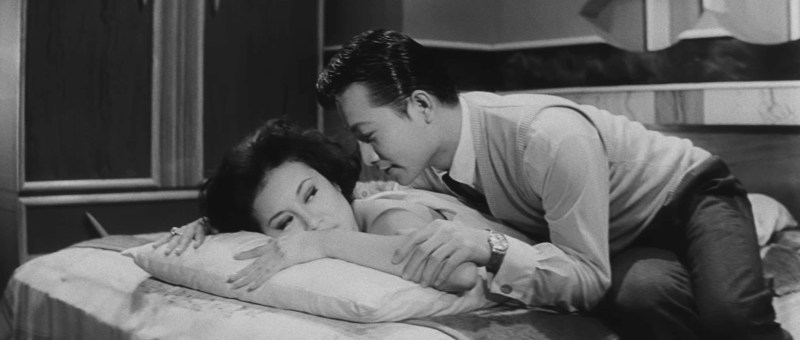
In some senses, it doesn’t really matter. The society here is so inherently corrupt that no one is really “innocent” except perhaps the pure-hearted roommate who remains shocked and disgusted by the results of his police detective friend’s investigations and innocently in love with the chairman’s unobtainable daughter. The ambition that comes from the widening wealth gap is instantly on display as the film opens with Lap in bed with Tai-Giok but brushing off her suggestions that they marry by reminding her she’ll be the most comfortable of mistresses when he marries the chairman’s daughter. In another kind of film, they would be our central couple – their pure love corrupted by post-war greed, but we later realise neither of them is very much in love at all and their “relationship” must be based on some other factor. Lap isn’t betraying Tai-Giok to marry the boss’ daughter, though there may be other casualties of his all too willing complicity in an increasingly amoral economy which sees him gleefully accepting kickbacks and wining and dining clients in restaurants where you can hire scantily clad dancers to entertain you while you eat. 

Despite his rather obvious villainy, Kong-hui wasn’t really all that bad, just a product of the world in which he lived. In fact, the film almost sides with him in his one man crusade against “immorality”. In any case, the real villain as we later see is equal parts prudery and an elitist entitlement that enables this level of corruption to prosper. Our “heroes” are of course the police, turning their collars to the cold as they work tirelessly to fight “crime” but also, it has to be said, acting on behalf of an oppressive regime which may be the biggest villain of them all. 


Six Suspects screened as part of touring retrospective Taiwan’s Lost Commercial Cinema. It will also be available to stream in the UK as part of the Taiwan Film Festival Edinburgh from 18th to 27th September.

Restoration trailer (English / Traditional Chinese subtitles)
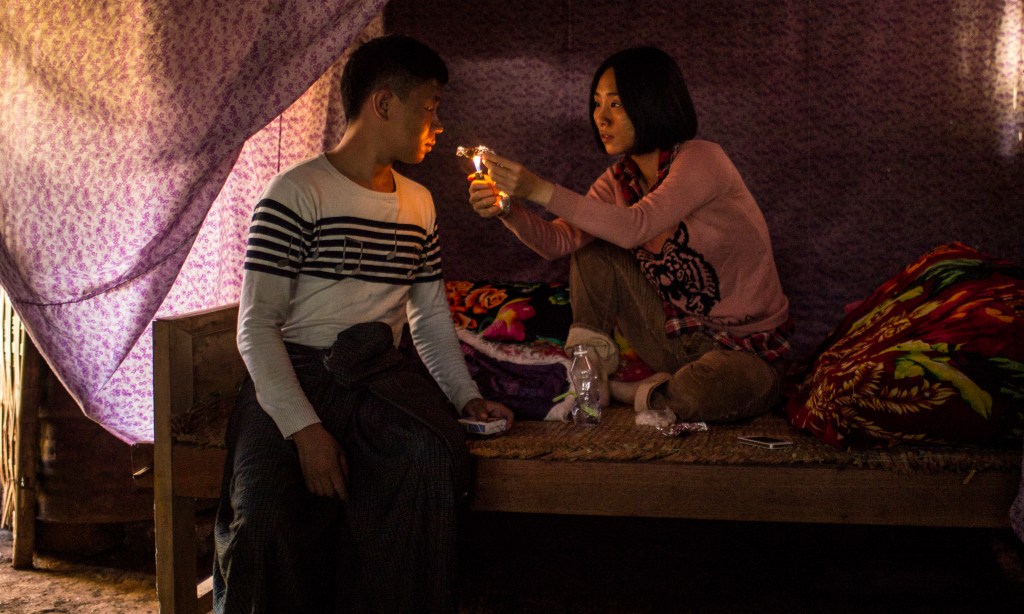
Infinite Foundation (無限ファンデーション, Akira Osaki, 2018)

Sometimes the music finds you when you need it most. So it is for the heroine of Akira Osaki’s wistful coming-of-age drama Infinite Foundation (無限ファンデーション, Mugen Foundation). To better capture the teen experience with an immediate naturalism, Osaki’s cast was provided with no script only a vague outline inspired by the songs of singer-songwriter Cosame Nishiyama and asked to improvise each individual scene. What results is suitably intense tale of complicated teenage female friendships, frustrated ambitions, and fear for the future in which a shy, introverted young woman gradually finds the courage to chase her dreams with the help of an ethereal songstress and unexpected solidarity. 

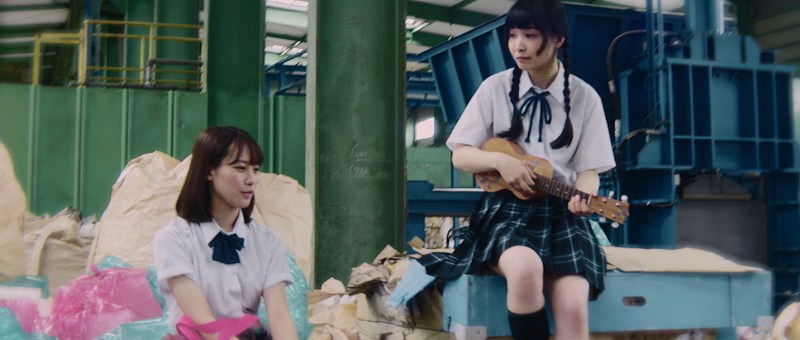
Mirai (Sara Minami), whose name literally means “future”, is a dreamy young girl who thinks she’s not much use for anything so usually idles away her time in school drawing dress designs in her sketchbook when the teacher’s not looking. In fact, she’s technically in summer school catch up, but every time the teacher returns to check on her he notices that she still hasn’t got round to filling in the answers on her maths test. Wandering home one day she hears the gentle strains of a ukulele coming from a nearby recycling plant and strikes up a friendship with a strange girl, Cosame (Cosame Nishiyama), with her hair in long plaits and dressed in a school uniform. Meanwhile, she’s also unexpectedly approached by the stylish Nanoko (Nanoka Hara) who, taken with her beautiful designs, insists that she join the drama club to help them come up with costumes for their imminent production of Cinderella. 

Perhaps Mirai will be going to the ball after all. Before that however she’s still contending with a sense of insecurity while her cheerful and supportive mother (Reiko Kataoka) tries to encourage her to pay more attention to her studies. Pushed towards conventional academic success, Mirai had been a little embarrassed about her love of drawing, particularly as it’s something as “frivoulous” as dress designs which she can’t believe anyone else would value. Rather than hanging out with friends, she spends most of her time sewing in her room, retreating into comfortable fantasy but also lonely and a little bit lost. So when Nanoko is so enthusiastic about her artwork it gives her a much needed confidence boost showing her that someone at least thinks her drawings have value and are not silly or embarrassing wastes of time. 

The drama club, however, is something of a baptism of fire for someone who feels themselves not good with people and at sea with interpersonal relationships. Mirai sticks fast to Nanoko, but Nanoko’s longterm bestfriend Yuri predictably doesn’t like it that she’s abruptly dragged this other person into their shared activity while the other members of the group struggle to relate to her, describing her as difficult to talk to and leaving her sitting in the corner doing her own thing while they get on with rehearsing. The main drama occurs when Nanoko makes a surprising announcement that puts the show in peril. She has a big audition lined up in Tokyo for a part in a film which makes it impossible for her to also star in the play. Nanoko asks for understanding, but does so with a degree of entitlement and superiority that cannot help but annoy her friends. She implies that she’s in this because she’s a real actress, while they’re only messing around in a school play. Mirai isn’t sure where to put herself, her new friend has just betrayed her and now she doesn’t know if they were ever friends at all or she was just using her to increase her hold over the drama club. 

The message that Mirai begins to get is that she may have real talent, but it’s up to her to achieve her dreams. She begins to feel that everything she’s been doing with her life has been superficial and incomplete because she never had the confidence to follow through, living in her own tiny bubble alone in her room for fear of getting hurt out in the big wide world. While the mysterious ukulele player sings her inspirational songs about living with loneliness, Mirai begins to build her infinite foundations towards a more confident future as a young woman determined to fight for her dreams.


Infinite Foundation streamed as part of this year’s online Nippon Connection Film Festival.

Original trailer (no subtitles)

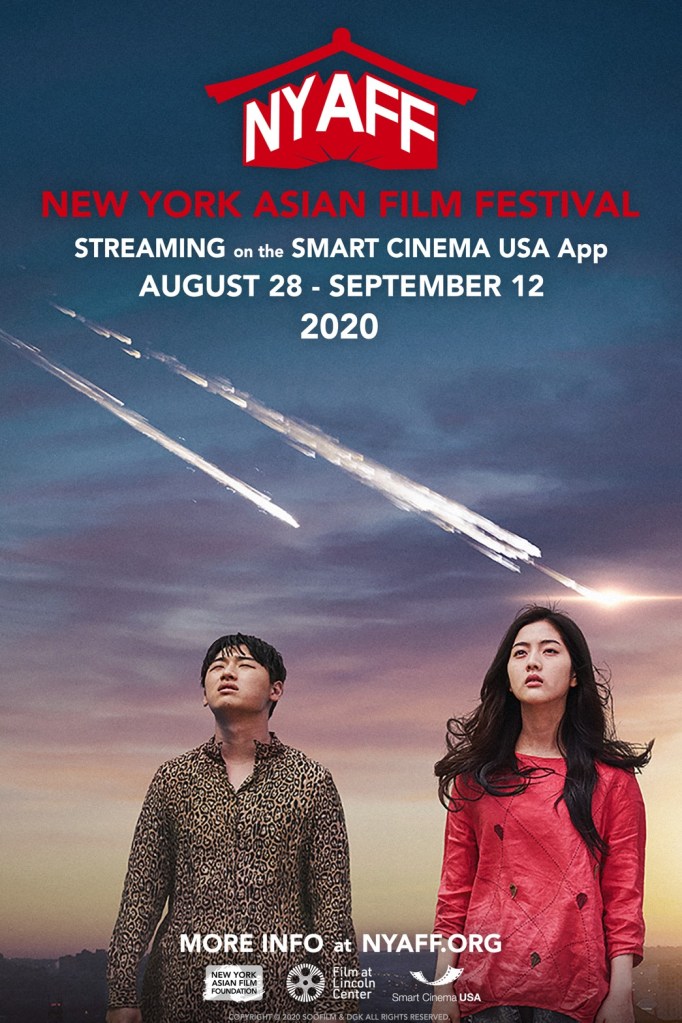
New York Asian Film Festival Confirms Lineup For 2020 Virtual Edition

Shifting from its usual spot in the early summer, New York Asian Film Festival becomes the latest to go online partnering with the Smart Cinema app to bring another fantastic selection of recent East Asian hits to homes around the US from Aug. 28 to Sept. 12.

The programme in full (titles in italics included in “Uncaged” competition):

Bhutan

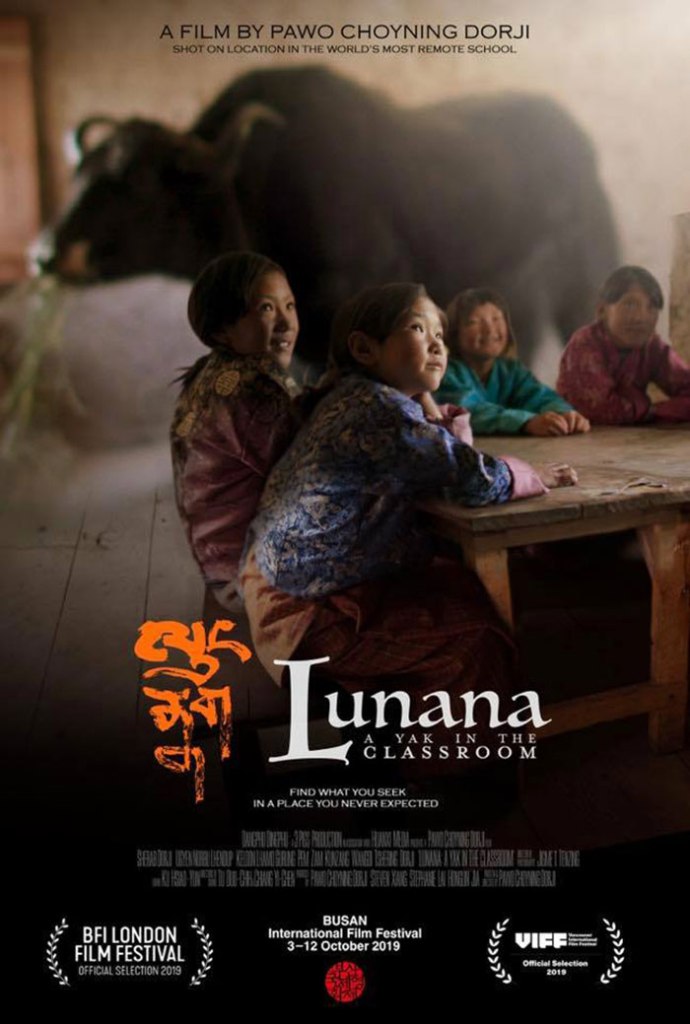
  • Lunana: A Yak in the Classroom – a frustrated teacher is dismayed to learn he’s being sent to a remote mountain outpost but is eventually won over by the kids. Review.

China

  • Gone With the Light – sci-fi drama starring Huang Bo in which ordinary citizens mysteriously disappear in a flash of light.
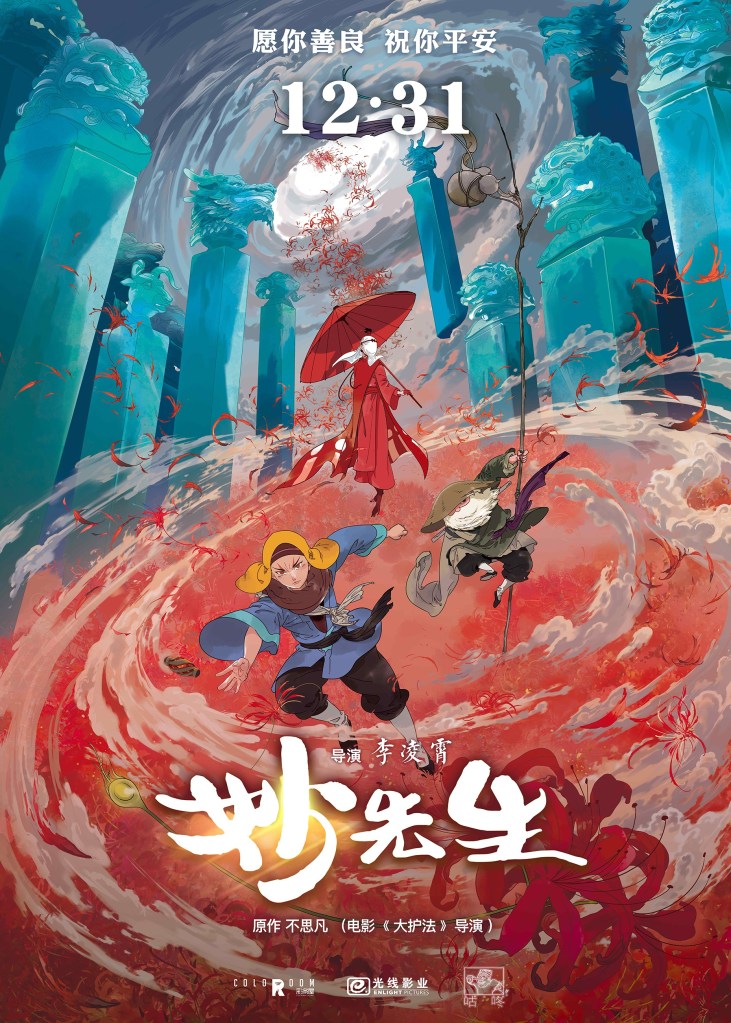
  • Mr. Miao – animated historical adventure aimed at adults in which a team of martial artists faces an ethical dilemma caused by a plant which corrupts those who come close to it but only attracts kindhearted people.

Hong Kong Panorama

Presented with the support of Hong Kong Economic and Trade Office in New York

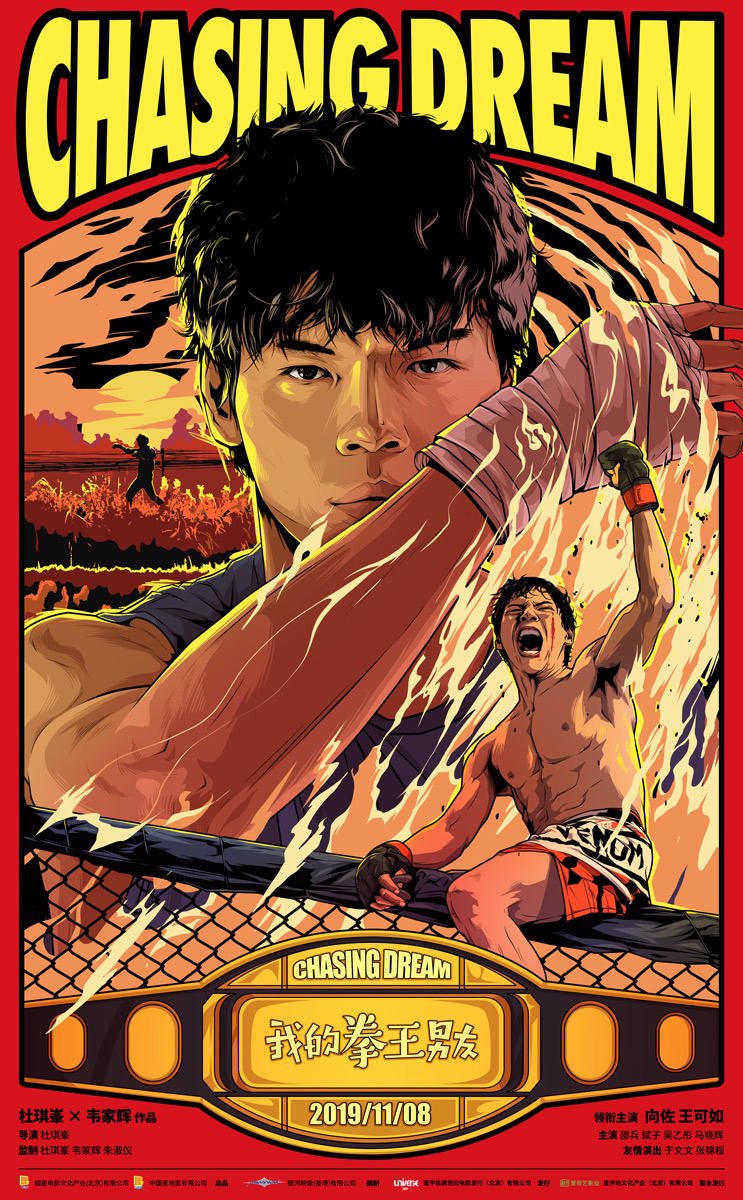
  • Chasing Dream – two crazy kids chase the Chinese Dream in the ring and on the stage in Johnnie To’s completely absurd but infinitely charming musical MMA rom-com. Review.
  • My Prince Edward – a young woman begins to consider her choices when her controlling boyfriend proposes and she’s forced to deal with the fallout from a sham marriage she entered into years earlier in Norris Wong’s humorous exploration of contemporary relationships. Review.
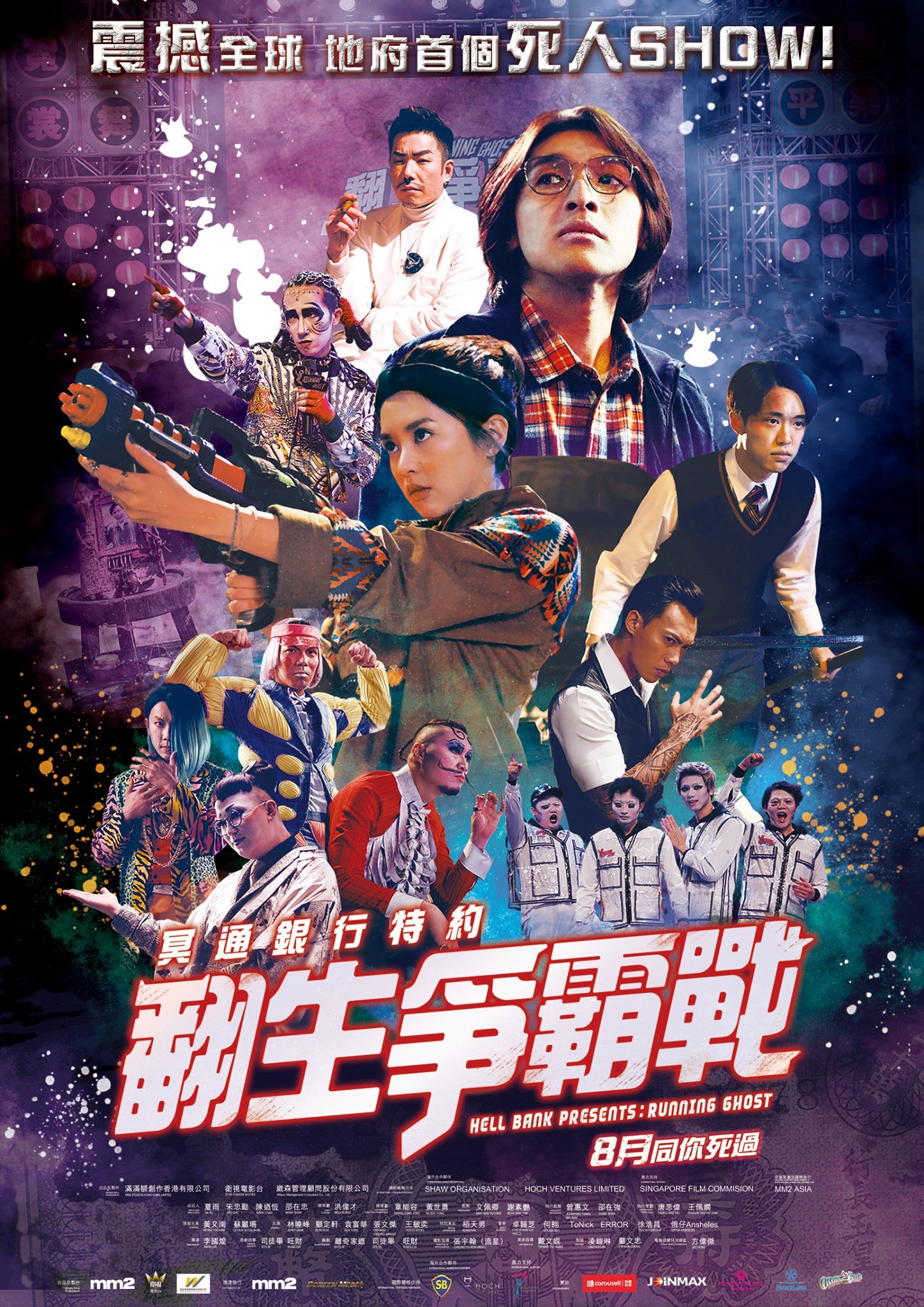
  • Hell Bank Presents: Running Ghost – supernatural horror comedy.
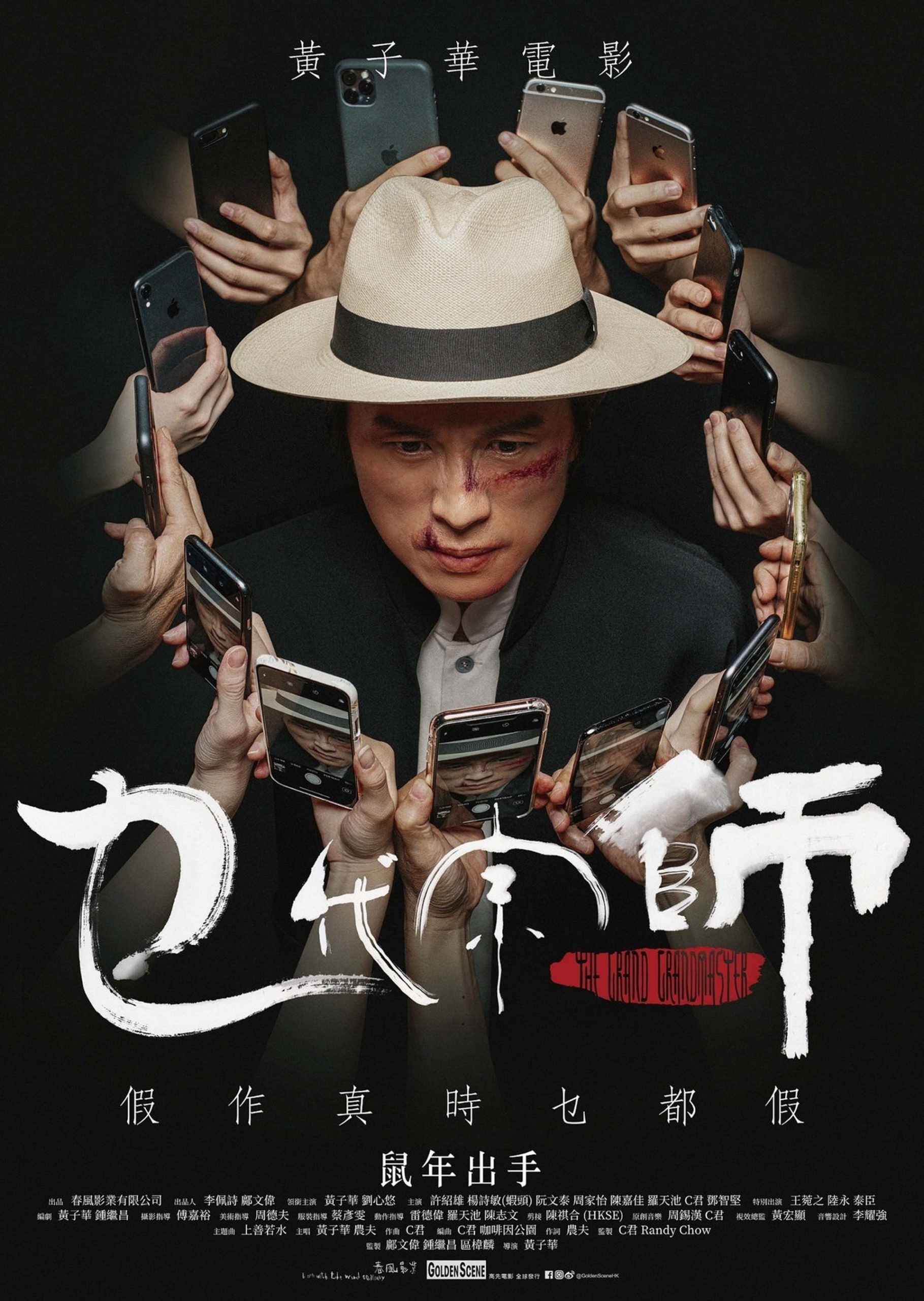
  • The Grand Grandmaster – martial arts New Year comedy. 
  • Legally Declared Dead – HK adaptation of Yusuke Kishi’s novel The Black House in which an insurance broker descends into paranoia after suspecting a client has faked his son’s suicide to collect on a policy.
  • Memories to Choke on, Drinks to Wash Them Down – four stories from contemporary Hong Kong.
  • Unleashed – boxing revenge drama starring Sam Lee.
  • A Witness out of the Blue – Louis Koo is a criminal mastermind on the run after a botched robbery while an eccentric cop tries to crack the case with the help of its only surviving witness – a parrot!

Indonesia

  • Abracadabra – charming family film in which a magician who’s lost faith in magic accidentally makes a child “disappear” and has to go on the run to figure out how to get them back.

Japan

  • Family Bond – a big hearted carpenter’s desire to help a single-mother doesn’t go down well with his family or apprentice.
  • A Beloved Wife – an unsuccessful screenwriter is henpecked by his understandably irate sake-guzzling wife in this autobiographical take on a toxic marriage. Review.
  • Miyamoto – sequel to a TV drama directed by Tetsuya Mariko (Destruction Babies) starring Sosuke Ikematsu as a shy salesman who falls for Yu Aoi’s office worker.
  • Dancing Mary – a jaded civil servant is awakened to the meaning of being alive through communing with the dead in SABU’s melancholy lament for an increasingly soulless society. Review.
  • Forgiven Children – societal bullying becomes a spiralling vortex of pain and anger in Eisuke Naito’s raw examination of the consequences of hate and the impossibility of redemption. Review.
  • One Night – drama from Kazuya Shiraishi in which grown-up siblings attempt to process the traumatic night that broke their family apart. 
  • Beneath the Shadow – friendship drama starring Go Ayano and Ryuhei Matsuda in which an introverted young man makes friends with a co-worker who abruptly disappears.
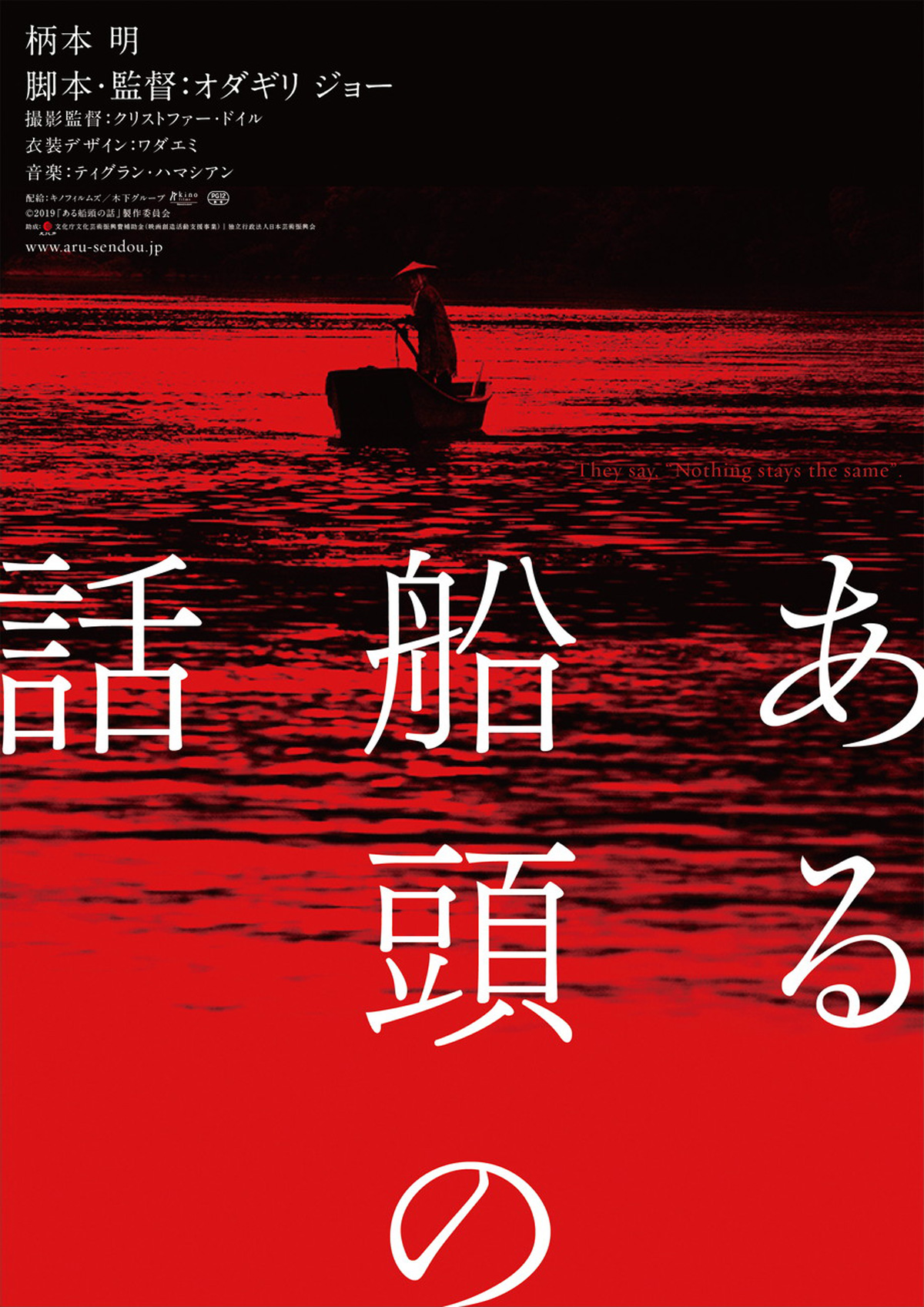
  • They Say Nothing Stays the Same – second directorial effort from actor Joe Odagiri following 2009’s 64-minute Looking for Cherry Blossoms shot by Christopher Doyle and starring Akira Emoto as a Meiji-era boatman about to be eclipsed by a bridge who rescues a young woman from the water.

Kazakhstan

  • Tomiris – historical epic inspired by the legendary Kazak warrior queen.

Malaysia

  • Geran – martial arts drama showcasing Malaysian Silat in which two men try to find their younger brother and bring him home after he runs off with a land grant
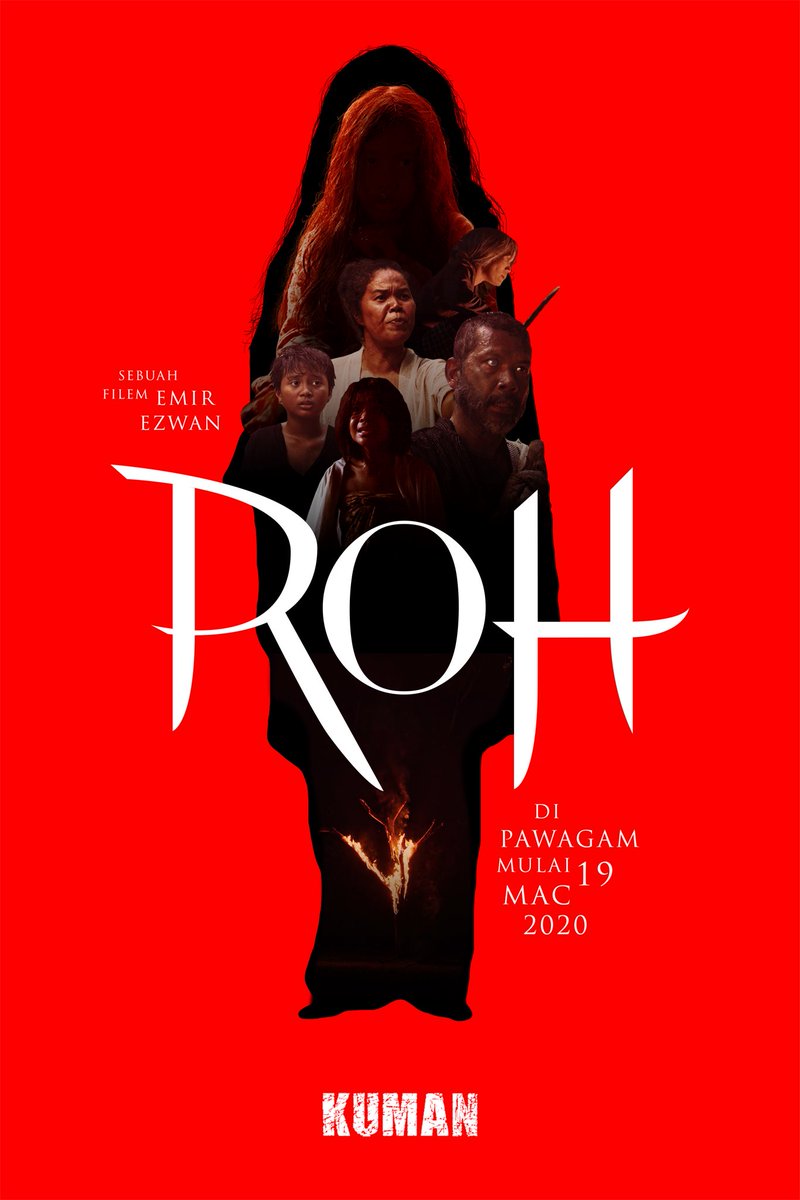
  • Soul (Roh) – A single-mother and her two children find themselves beset by darkness after taking in a little girl who wandered out of the jungle in Ezwan’s atmospheric folk horror. Review.
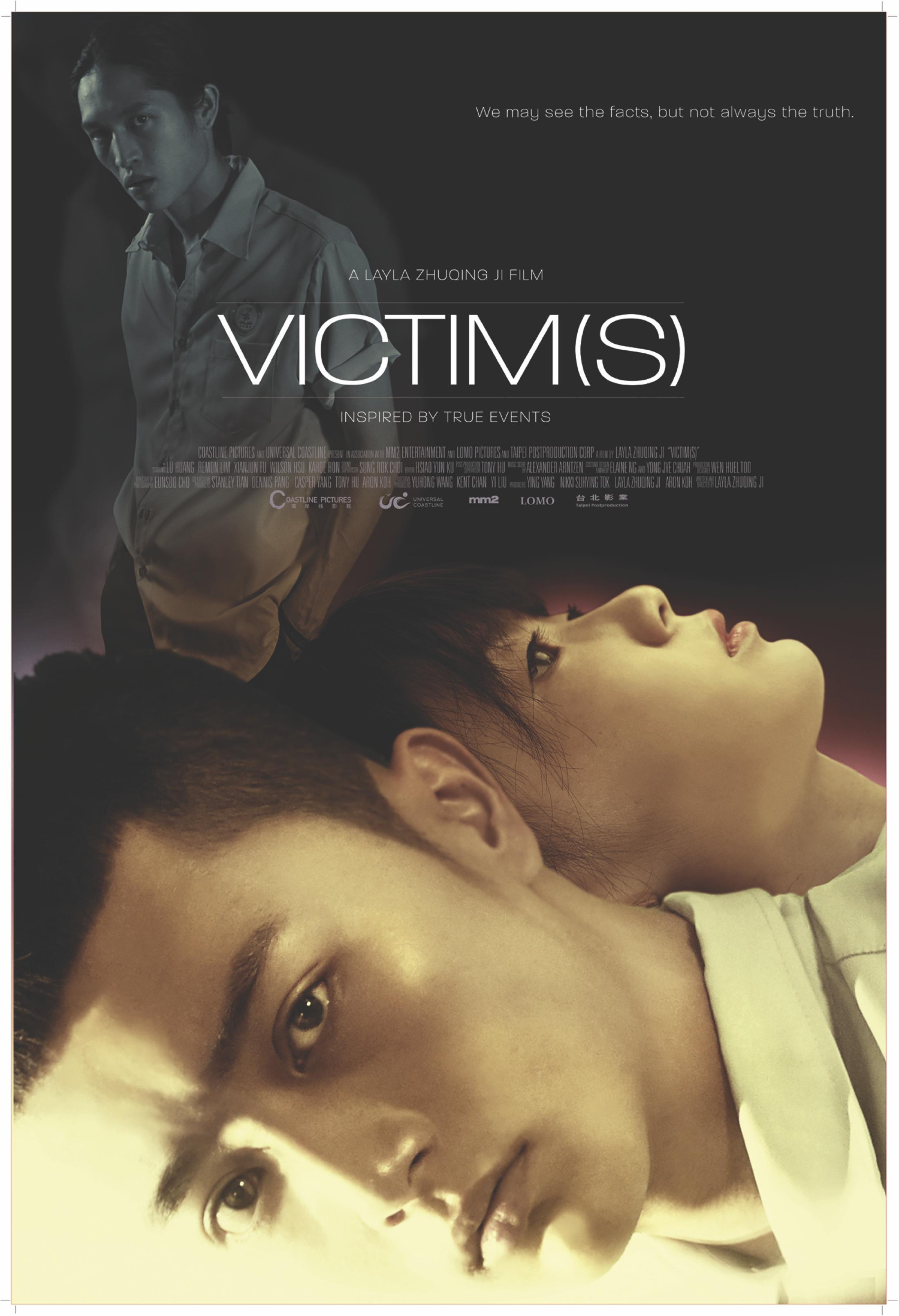
  • Victim(s) – Nothing is as it first appears in Layla Zhuqing Ji’s thorny interrogation of a bullying society. Review.

Philippines

  • The Girl and the Gun – a saleswoman finds a gun on her doorstep and decides to use it to take revenge on a patriarchal society.
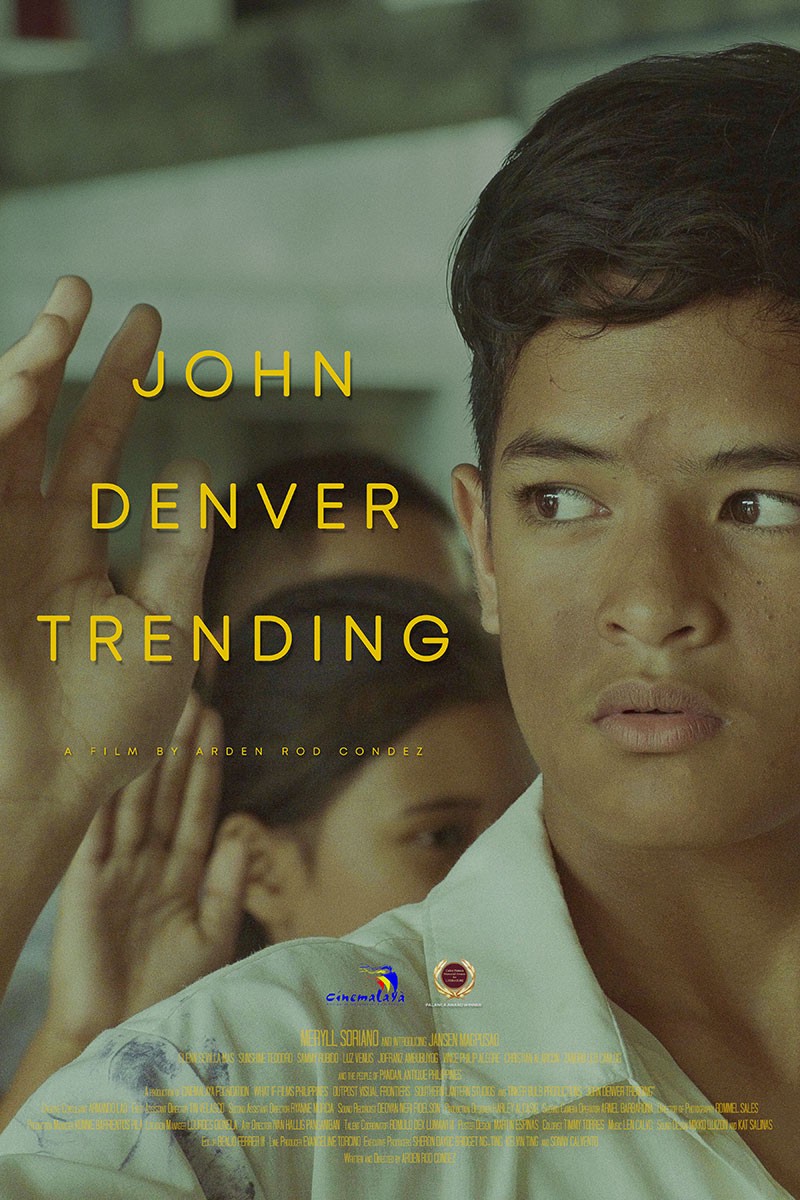
  • John Denver Trending – A teenage boy becomes the subject of a witchhunt after a video of him beating up a classmate goes viral on Facebook in Condez’s heartbreaking exploration of growing up in the post-truth internet age. Review.

SOUTH KOREA

Presented with the support of the Korean Cultural Center New York

  • Secret Zoo – a rookie lawyer comes up with an innovative solution when he’s randomly sent to work in a zoo and discovers that actually it has no animals. 
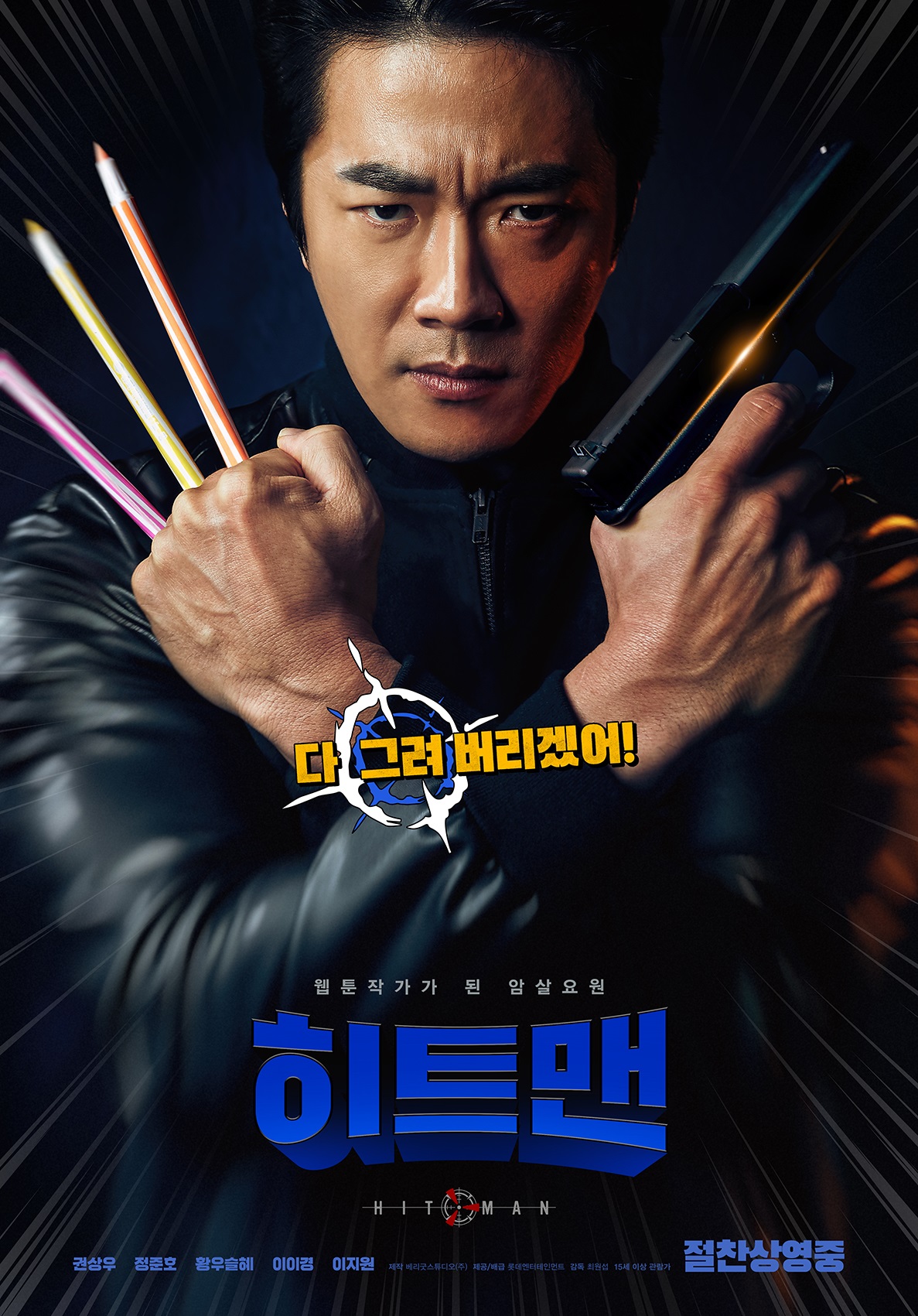
  • Hitman: Agent Jun – action comedy in which a hitman retires to become a webtoon artist.
  • Forbidden Dream –  historical drama from Hur Jin-ho inspired by the life of legendary king Sejong
  • Lucky Chan-sil – film producer Chan-sil finds herself unemployed after the director she’d been working with suddenly dies, taking a job as a cleaning lady for an actress and bonding with a handsome French teacher.
  • Baseball Girl – sports drama following a young woman’s quest to become the first female player in the majors
  • Beasts Clawing at Straws – darkly humorous thriller in which a collection of desperate people are connected by a missing bag full of cash.
  • Beauty Water – animation in which a woman who believes herself ugly tries an experimental treatment to make herself beautiful.
  • Moving on – family drama in which a teenage girl moves in with her grandfather and divorced aunt after the breakup of her parents’ marriage
  • Kim Ji-young, Born 1982 – feminist drama following an ordinary woman’s path into middle-age in a fiercely patriarchal society.

SF8 Series: An anthology of eight science fiction films

  • The Prayer (Min Kyu-dong, 2020)
  • Empty Body (Kim Ui-seok, 2020)
  • Love Virtually (Oh Ki-hwan, 2020)
  • White Crow (Jang Cheol-soo, 2020)
  • Blink (Han Ga-ram, 2020)
  • Baby It’s Over Outside (Ahn Gooc-jin, 2020)
  • Joan’s Galaxy (Lee Yoon-jung, 2020)
  • Manxin (Noh Deok, 2020)

Taiwan

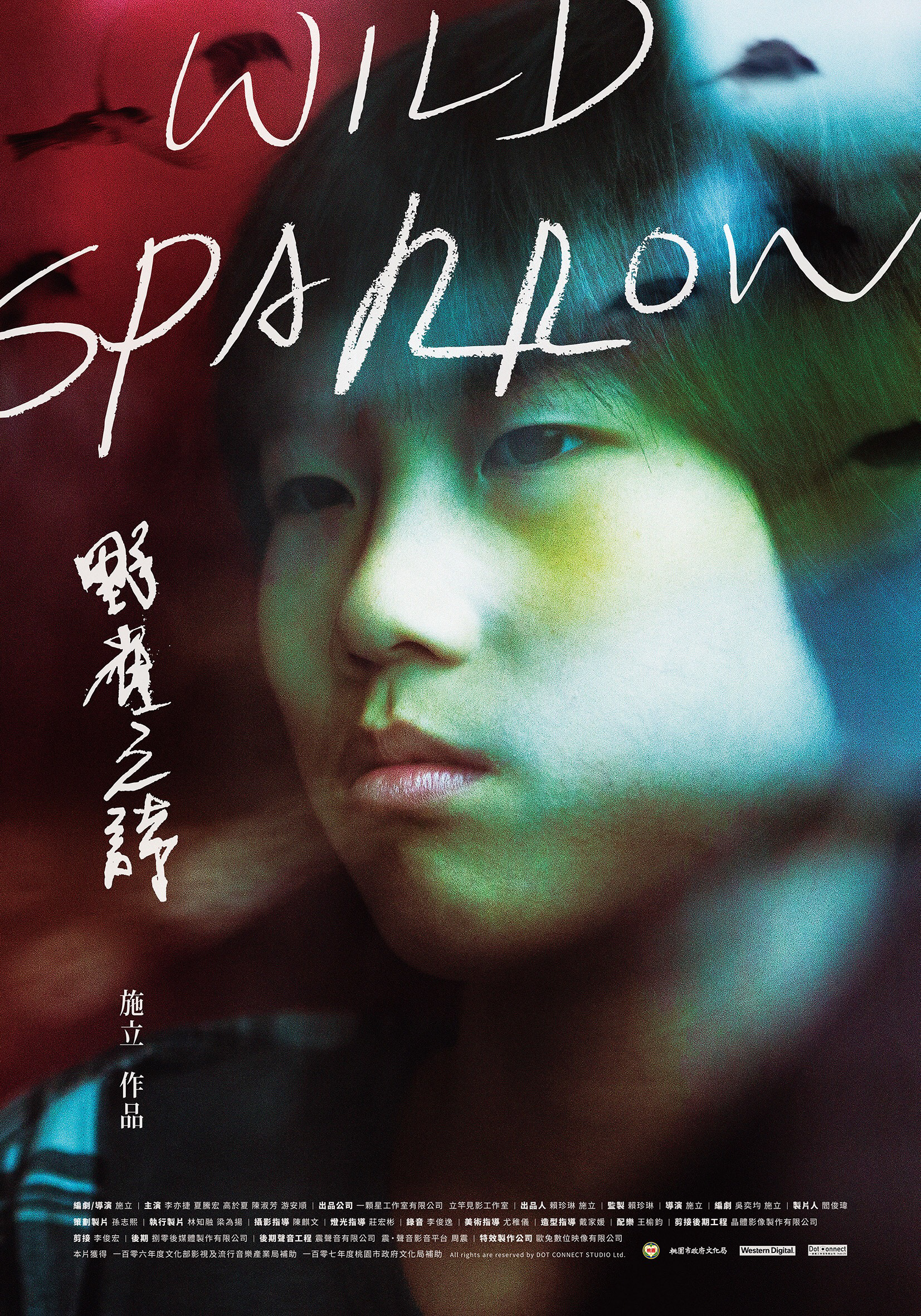
  • Wild Sparrow – a mother takes her 12-year-old son with her to the city so he can attend school but is forced into a series of degrading jobs and relationships in order to make ends meet.
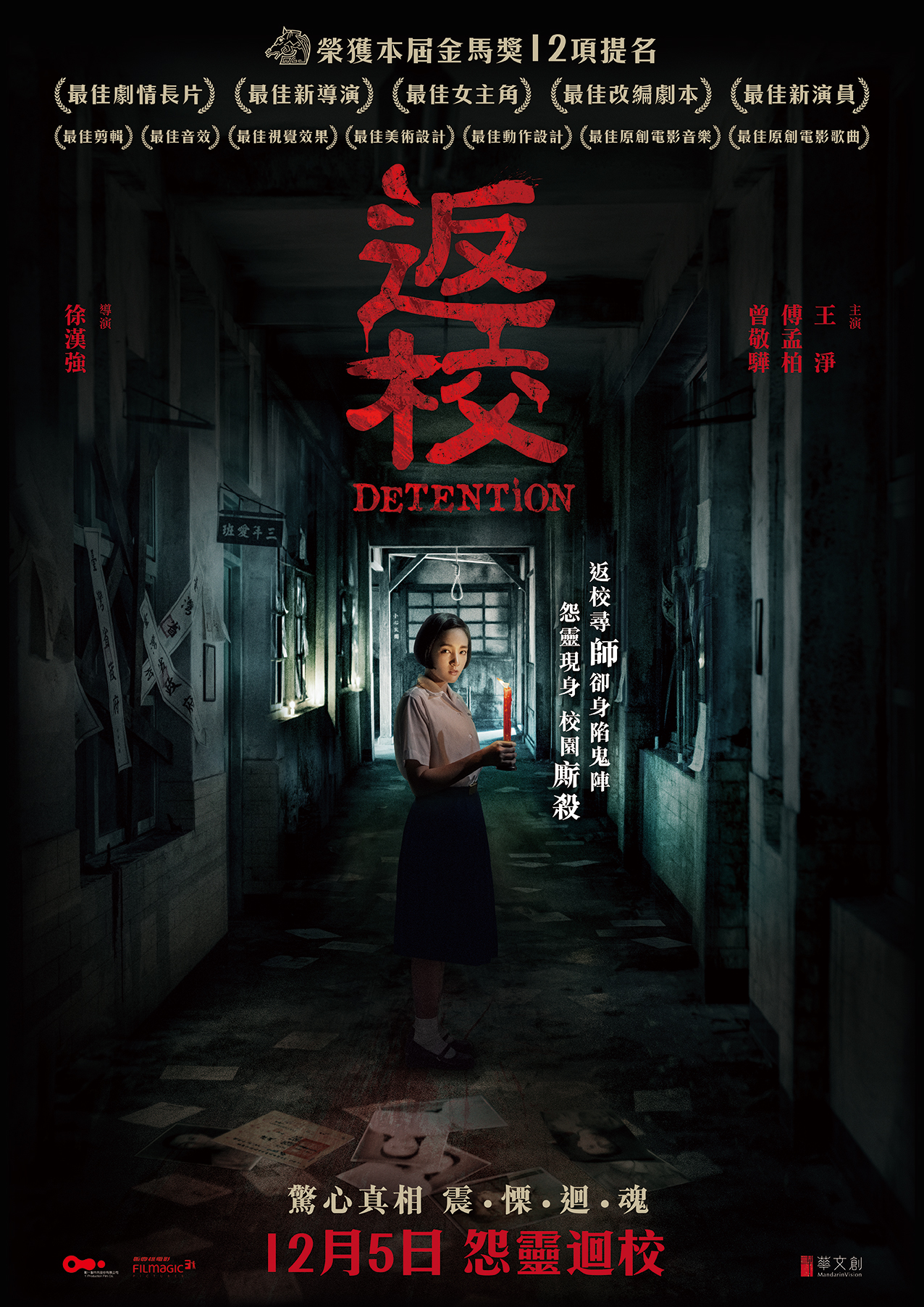
  • Detention – Two teens try to fight their way out of the nightmare of the White Terror in John Hsu’s dramatisation of the hit video game. Review.
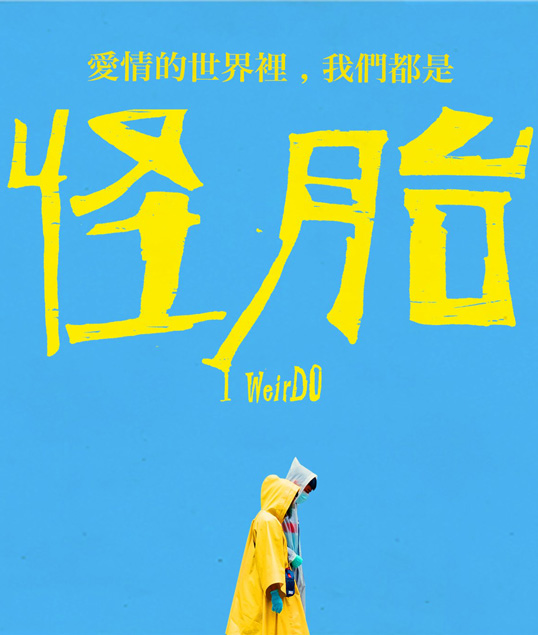
  • IWeirDO – madcap OCD rom-com shot on an iPhone.
  • Heavy Craving – a lunch lady hoping to lose weight strikes up unexpected friendships with a deliveryman and cross-dressing student. Review.
  • The Gangs, the Oscars and the Walking Dead – madcap comedy in which two aspiring filmmakers end up making a zombie film with a gangster who insists that his wife play the leading role. Review.
  • Dear Loneliness – an introverted bookseller quietly supports his customers through the art of letter writing.
  • Miss Andy – a transgender woman takes in a woman and her child after they escape from an abusive relationship.

Vietnam

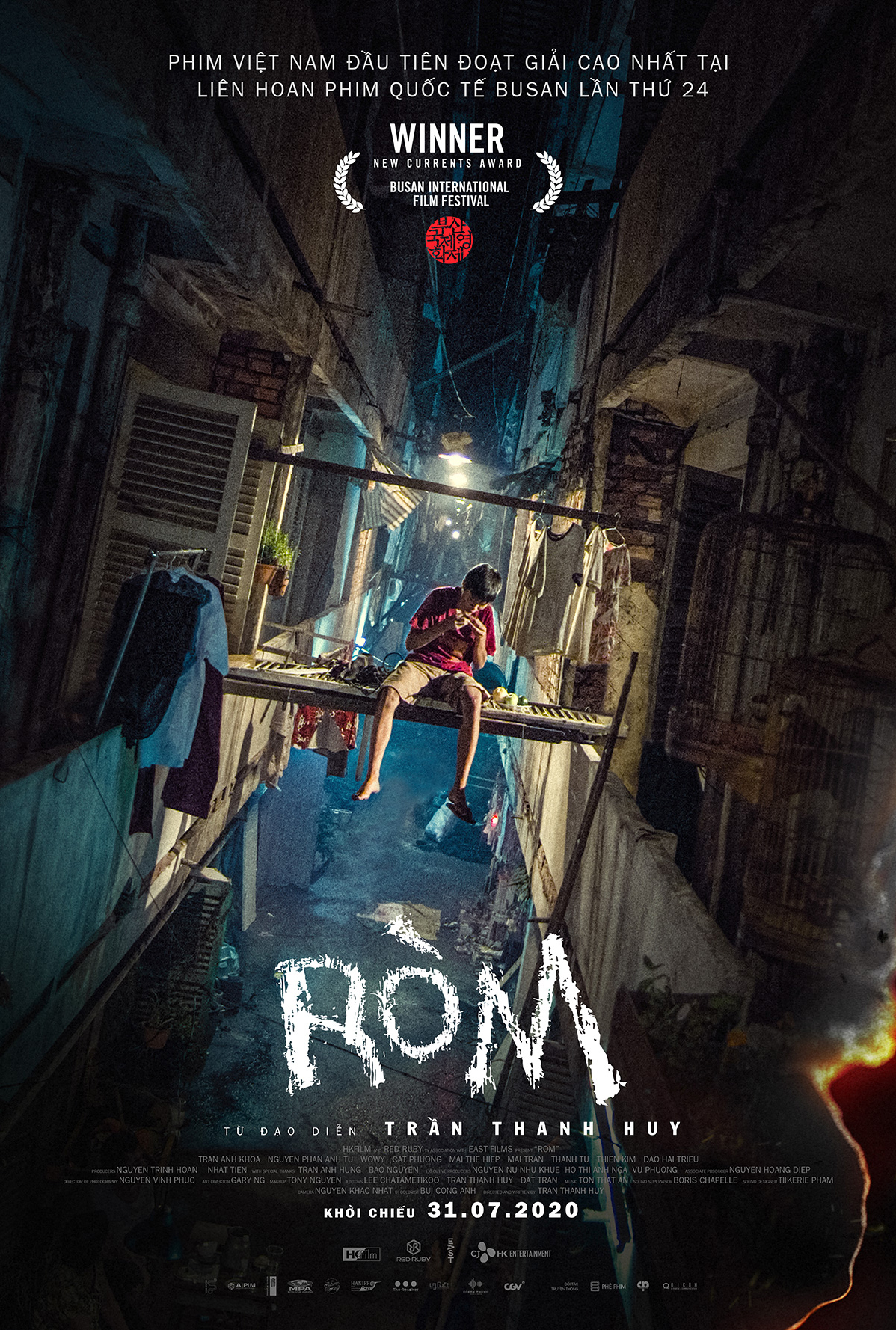
  • Rom – a 14-year-old boy hopes to earn enough money to reunite with his parents through running lottery numbers while living a precarious existence in a rundown tenement.

Full details regarding ticket pricing and purchasing procedure will be announced shortly via the official website while the movies will be available to stream within the US via the Smart Cinema app for iOS, Android, and Smart TVs from Aug. 28 to Sept. 12. You can also keep up with all the latest festival news via the official Facebook Page and Twitter account.

Tamaran Hill (たまらん坂, Tadasuke Kotani, 2019)

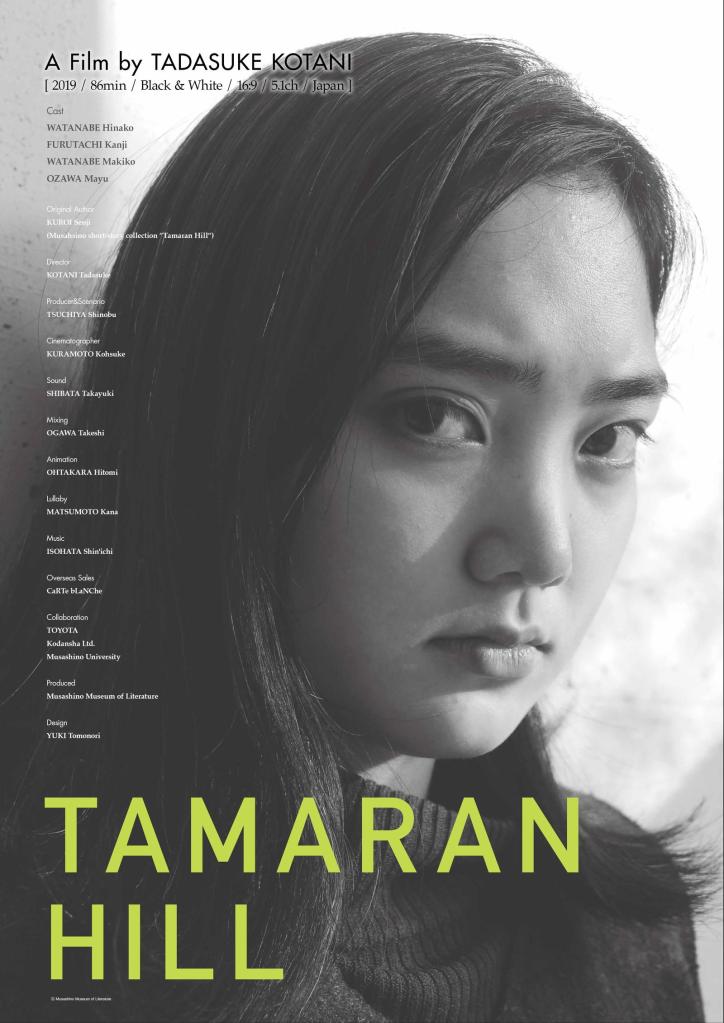
Does Japan have more uphills or downhills? You have to think about that one for a second, like one of those trick questions they put in books for children. Nevertheless, you can’t argue with the idea that so much of life is really about perspective and perhaps perspective itself can also be a subjective choice. Shot in crisp black and white with occasional animation and adapting the novel by Seiji Kuroi who actually appears at one particularly meta moment, Tadasuke Kotani’s Tamaran Hill (たまらん坂, Tamaranzaka) follows a young woman’s path towards forging, or perhaps rediscovering, her identity through a meditation on the word “unbearable”, its association with her father, and the long buried memories of a potential hometown. 

Hinako (Hinako Watanabe), a college student, lost her mother at four years old and is at something of a crossroads as she contemplates her future. Her teacher (Makiko Watanabe), who for some reason has an ever present robot assistant at her side, advises Hinako and her fellow students that if they want to get a good job what they need to get good at is the art of narrative lying. They need to assert their individuality in inoffensive ways, quantify their experiences in concrete numbers, but avoid embellishing facts in which hard evidence is available. Her advice to Hinako is that she needs to create a convincing “character” to pep up the self intro on her CV, perhaps paint herself as a survivor who lost her mother not to cancer of the vocal chords but in a natural disaster. 

Hoping to start at the beginning in rebuilding herself, Hinako begins researching the idea of “hometowns” only to be sidetracked by a book titled “Tamaran Hill”. The title catches her eye because “tamaran” which means “unbearable” is one of her father’s catchphrases, indeed we heard him say it numerous times after getting stuck at the airport by a typhoon meaning that he couldn’t get back for his late wife’s memorial service. In the book, the narrator details his friend’s increasing obsession with a slope near his home by the name of Tamaran Hill, something with which Hinako also becomes intrigued as she finds herself sliding into the narrative, the narrator detailing her own experiences as if she were reading them. 

It seems that for most, “tamaran” does indeed mean “unbearable”. The explanations for the name run from a deserting samurai decrying the folly of war as he ran from a nearby battlefield to Showa-era students resentful at having to climb uphill to gain their education but Hinako is disappointed to learn that the answer may be far more prosaic than she’d hoped. Reality and fiction begin to blur. She finds herself asking if an old man is merely a character from her imagination only to receive a philosophical answer that characters are composed of words but that words have vitality, warmth, and power. Meanwhile she begins to have visions of a mysterious past which mingle with those of the narrator’s friend leading her towards the “hometown” she has long been looking for. 

Hinako’s “unbearable” Buddhist priest father (Kanji Furutachi) apparently doesn’t like to talk about the past, which might be why she feels so lost, while he also berates her for not properly looking after her seemingly adopted younger brother. He actively hides from her the keys to her history, offhandedly remarking on the reappearance of a long absent relative in Hinako’s questions about a mysterious cosmos flower placed on her mother’s grave. Hinako wonders if it’s her mother’s fault that she can’t love anyone, retracing her steps inspired both by the novel and a letter hidden by her father in order to make sense of the brief and fragmentary memories which comprise her visions and thereby reconstruct an image of herself which is, essentially, narrative. 

Hinako’s process towards self identification hints at personal fictions and the strange alchemy of fantasy and reality that is memory, but she does at least seem to have straightened her story as per her teacher’s instruction, confidently stating that she has “decided” on her hometown. Perhaps the fiction is more reliable than truth in its manufactured certainties, and after all no one takes “just be yourself’ at face value. Does the slope go up or down, or is it actually on the level and it’s just that everything else is tilted? It’s all a matter of perspective, “unbearable” only in its inscrutability. 


Tamaran Hill streamed as part of this year’s online Nippon Connection Film Festival.

Original trailer (English subtitles)